Home Blog Page 2339

Angry with Mamata govt over delay in probe of a minor girl’s rape and murder, irate locals block roads and vandalise police vehicles in Kolkata

0

On Sunday, March 26, angry neighbours of a seven-year-old girl who was allegedly killed after being sexually molested in Kolkata’s Tiljala area, took to the streets to protest against Kolkata police, working at the behest of TMC supremo and WB CM Mamata Banerjee. The minor girl had reportedly gone missing on Sunday morning and locals accused the police of delaying the probe into the matter.

Alleging that the police “delayed” in searching for the missing girl, locals staged protests outside the Tiljala Police Station and carried out vandalism in the area damaging several vehicles on Sunday night demanding strict action against the culprit.

On Monday morning the locals once again put up blockades on the roads of the Tiljala area accusing the Kolkata police of taking action against the protestors rather than the culprits.

The police had actually detained three persons including a woman for their alleged involvement in the vandalism on Sunday night. Demanding the release of the detained persons, local people on Monday morning put up blockades on the roads of the Tiljala area.

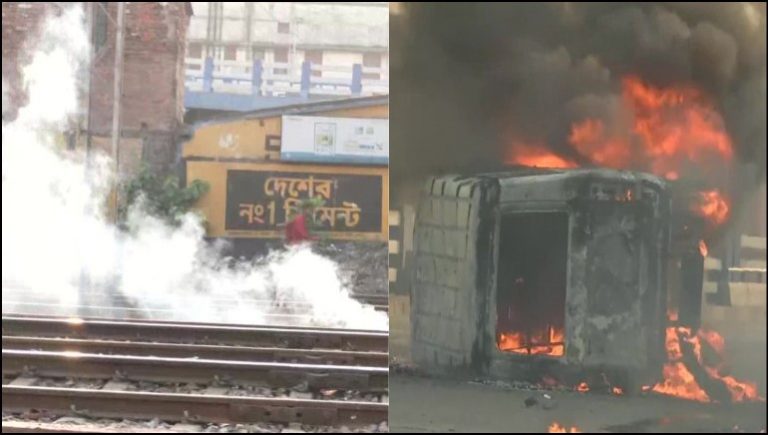
The protestors also blockaded the key EM Bypass and railway tracks in the South Sealdah section disrupting road traffic and train services, on Monday afternoon.

The police officers claimed that three police vehicles were ransacked while one of them was torched. They also said that the locals pelted policemen with stones when a huge team of security forces reached there in order to disperse them.

In the midst of the chaos, a video of a local woman accusing the Tiljala police of callousness has surfaced. She blamed the Kolkata police for siding with the offender and acting arbitrarily against those calling for justice.

Reportedly, the protests erupted following the sudden disappearance of a seven-year-old girl on Sunday morning. After an extensive search, policemen reportedly found her body in one of the flats in an apartment block in the locality. The girl, a resident of Kustia’s Shri Dhar Roy Road in Kolkata’s Tiljala area, was allegedly killed after being sexually molested by one of her neighbours.

The police said that are discovering the body of the child, they arrested the flat owner and sent the deceased’s body for post-mortem examination.

Ro Khanna, doesn’t matter what your nanaji told your mom ‘personally’, he officially supported Emergency

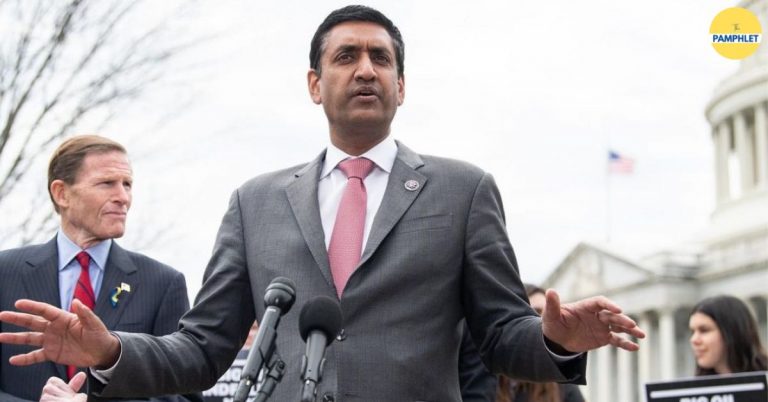
On Monday, March 27, American politician Ro Khanna claimed that his maternal grandfather had ‘personally’ informed his mother that he opposed the Indira Gandhi imposed Emergency and reprimanded scientist and author Dr Anand Ranganathan for pointing it out. Khanna accused Dr Ranganathan of ‘attacking’ a freedom fighter, when in reality, all Dr Ranganathan did was put across facts which are on record.

Dr Ranganathan was referring to the Lok Sabha records extracted by defence analyst Abhijit Iyer Mitra which proved how Ro Khanna’s maternal grandfather, Amarnath Vidyalankar had indeed extended support to the Emergency, the dark period in Indian politics where freedom of citizens was curbed.

The documents from the Lok Sabha archives were shared by Iyer-Mitra in a tweet.

As seen above, the relevant portion of the document states the list of Members of Parliament who had supported the Emergency. On page 40, one can see the ‘aye’ from Amarnath Vidyalankar, who is the maternal grandfather of Ro Khanna.

Hence, no matter what Vidyalankar told his daughter or what his daughter told Ro Khanna about him ‘not being in favour of Emergency’, he did on Lok Sabha records, vote in favour of it. The Chinese whispers, therefore, do not hold water.

What was Emergency?

In 1975 that Fakhruddin Ali Ahmed, the then President of India, under the auspices of the then Prime Minister Indira Gandhi, announced a countrywide Emergency, plunging the country into an era of crushed individual freedoms, arbitrary arrests of dissidents and political opponents, and draconian centralisation of power.

The Emergency came into force on 25 June 1975 and remained in effect till 21 March 1977. To this date, it remains one of the highly contested chapters in the country’s modern history. The Emergency was marked by unchecked state incarceration of political dissidents who raised their voices against Mrs Gandhi or refused to comply with her autocratic impulses. There were reports of frequent human rights violations and widespread repression as the Indira Gandhi-led regime imposed sweeping measures to suppress criticism, jail political rivals and censor the press.

Ro Khanna controversy

It started with Khanna’s unsolicited inputs on India’s internal affairs. Soon after Rahul Gandhi’s conviction in ‘Modi surname’ defamation case, as per the section 8(3) of the Representation of the People Act, he stood disqualified as an MP. Khanna, then alleged that this was ‘deep betrayal of Gandhian philosophy’. He claimed that this is not what his grandfather sacrificed ‘years in jail’ for.

To this, many pointed out how for all his pontification, the grandfather in context also supported Indira Gandhi imposed Emergency that is the darkest chapter in history of independent India, the same independence he claims his grandfather fought for. To that, Khanna claimed that his grandfather had in fact opposed the Emergency and how he had written two letters to Indira Gandhi opposing it and ‘left Parliament soon after’.

Except, as can be seen above, he supported the Emergency on the only official record that exists. And he continued to remain an MP and ceased being one after he did not contest the 1977 elections held after Emergency was lifted.

Upset at being made aware of facts, Ro Khanna continues to stick to the version of history his mother told him and not which exists on record.

Sasha, the female cheetah who was suffering from a deadly kidney ailment when she came to India, passes away at MP’s Kuno National Park

0

On Monday, it was reported that Sasha, who was one of the eight cheetahs brought from Namibia and introduced in Kuno National Park last year, passed away due to a kidney ailment. It was noted that Sasha had been suffering from this ailment even before her arrival in India.

Sasha was exhibiting signs of fatigue and weakness on January 23, leading to her being tranquillized and moved to a quarantine enclosure for treatment.

As a part of India’s cheetah reintroduction programme, Sasha was released into Kuno National Park on September 17th of last year at the age of three.

After being brought to Kuno National Park, all the cheetahs were kept in quarantine for observation. By November, they were released into larger hunting enclosures. Since then, the cheetahs have adapted well to their new home, hunting on their own and displaying signs of successful acclimatization.

Sasha was a captive-bred cheetah.

The cheetah reintroduction project is a high-profile program that has attracted the attention of the international conservation community. The next batch of 12 cheetahs is expected to arrive in India very soon.

Kolkata: Man kills a neighbour’s child in human sacrifice to prevent his wife from suffering another miscarriage

In a disturbing story that has left Kolkata in shock and disbelief, a man named Alok Kumar has allegedly sacrificed his neighbour’s child in a bid to ensure that his wife doesn’t miscarry their baby this time. The shocking incident took place in a small town named Tiljala in Kolkata

On Sunday night, in Kolkata’s Tiljala neighbourhood, Alok Kumar brutally attacked and killed a 7-year-old girl after being instructed to do so by a Tantrik. According to the authorities, the accused was asked to sacrifice a child in order to guarantee that his wife would give birth to a healthy child.

The cops located the minor’s body in the same building from where she had been kidnapped earlier in the day. To ascertain whether or not the youngster had been sexually tormented, the body was sent for post-mortem examination.

According to sources, the man and his wife had been trying to conceive for a while and had suffered a miscarriage in the past. They consulted a Tantrik or spiritual healer, but nothing seemed to work. It was then that the Tantrik suggested the unthinkable – to sacrifice a child in order to appease the gods and ensure a healthy pregnancy.

The man allegedly acted on the advice of the Tantrik and abducted his neighbour’s daughter, who was just 7 years old. “The man originally hails from Bihar The Tantrik is also based out of Bihar and a team of our officials will on Monday leave for Bihar to track and arrest him,” said a senior official of the city police.

According to the girl’s parents, she was sent to dump the garbage at the nearby garbage- bin on Sunday morning and since then she went missing. The police were informed and the cops doubted that the girl or her body might have been hidden in one of the adjacent residences. After hours of searching, the police found the child’s body in the same building from where she went missing earlier.

The man has been arrested and he has confessed to his crime. He will be charged under the relevant sections of law.

Locals got upset by the occurrence and protested outside the Tiljala Police Station, asking that the offender be turned over to them. The police resorted to the lathi charge to put an end to the turmoil.

The incident has sent shockwaves through the community, with many expressing disbelief that such a heinous act could be committed. The parents of the child are devastated and have demanded justice for their daughter.

This incident serves as a reminder of the dangers of blind faith and the need for greater awareness about superstitions and the harm they can cause. It is also a reminder of the need for swift and just punishment for those who commit such horrific acts.

Sanatan Sanstha not a terrorist outfit but a spiritual organisation imparting education on dharma and religion: Bombay HC

0

On Friday, March 24, the Bombay High Court observed that the Hindu outfit Sanatan Sanstha is not a banned terrorist organisation or a frontal organization of any banned terrorist group under the Unlawful Activities (Prevention) Act, 2004, but a spiritual organisation imparting education on dharma, spirituality and religion.

The division bench of Justice Sunil B Shukre and Justice Kamal Khata made the observation while granting bail to a member of the Hindu outfit who was arrested by the Maharashtra Anti Terrorism Squad (ATS).

According to reports, the member had filed a plea in the Bombay HC challenging the order of the Special Court denying bail to him.

The bail was reportedly denied over allegations levelled by the Maharashtra ATS that the appellant, namely Liladhar alias Vijay Lodhi, was an active member of the organisation Sanatan Sanstha whose objective is to form a ‘Hindu Rashtra’ by secretly forming a terrorist gang within Maharashtra and adjoining states. The state’s Anti-Terrorism Squad had alleged that Lodhi is part of a conspiracy to destabilise India.

It was further alleged that in order to achieve the objective of Sanatan Sanstha, the accused persons, including the appellant, collected or prepared crude bombs and stored explosives and firearms.

Furthermore, it was claimed that some training camps were created in order to provide instruction to members of the ‘Sanatan Sanstha’ in the handling of explosives and the use of firearms and that the appellant benefited from this training.

The counsel representing the member of Sanatan Sanstha had contended that there is no evidence gathered by the police order to prove any relationship between the appellant and the alleged conspiracy. He further asserted that there is no indication that the recovery of crude bombs made from the appellant’s ancestral home was linked to the appellant.

After hearing the arguments presented by both sides, the division bench of Justice Sunil B Shukre and Justice Kamal Khata rejected the contention of the State calling the evidence collected by the Maharashtra ATS “quite disappointing” and granted bail to the accused.

“The most intriguing part of this case is that ‘Sanatan Sanstha’ is an organization which has not been declared to be a banned or terrorist organization or a frontal organization of any banned terrorist group within the meaning and contemplation of Unlawful Activities (Prevention) Act, 2004. In fact, the official website of ‘Sanatan Sanstha’ shows that it is a registered charitable trust and its aim is to impart spiritual knowledge to the curious in society, inculcate religious behaviour in the masses and provide personal guidance to seekers for their spiritual upliftment. The official website also throws light upon the activities of ‘Sanatan Sanstha,” the court order read. 

Furthermore, the high court noted that the organization’s initiative was aimed at spreading spirituality in society.

“These activities include such initiatives as are taken for spreading spirituality in the society, organizing free of charge lectures and guidance camps on various aspects of spirituality and for initiating interested into spiritual endeavours, holding weekly Satsangs in local languages, guiding about the spiritual science, organizing ‘Bal Sanskar Varg / Moral Education Class for children, conducting education on dharma/righteousness and so on”, the order added.

Dear NYT, Chicken Manchurian is as much Pakistani as Gobhi Manchurian is Chinese

The New York Times, one of the enduring symbols of the global left ecosystem, has a perverse fascination with stripping India of its legacy and, at times, falsely attributing it to other countries. Any revered customs, ancient knowledge and wisdom, or even indigenously prepared delicacy native to India that is worth celebrating gets denuded of its Indian connection and portrayed as a heritage from South Asia.

But in some cases, they are falsely ascribed to an altogether different country. Recently, the American daily published an article on the Indian delicacy ‘Chicken Manchurian’, a spicy, combustive dish that is usually made of Chicken but also done with cauliflower and paneer and is universally available at any restaurant serving Chinese food in India, was described as a ‘stalwart of Pakistani Chinese cooking’ in the New York Times Cooking, a subscription-based cooking guide service by the NYT. 

Source: Twitter

The article was authored by one Ms Zainab Shah, a Pakistani by origin, which also explains her penchant for distorting facts and falsely claiming the origins of Chicken Manchurian to Pakistan. 

Many social media users were quick to admonish the American daily for not checking facts before going ahead and publishing the report.

A Twitter user responded to the New York Times saying that the dish was invented by a man named Nelson Wang, who was born in Calcutta, erstwhile Kolkata.

Actor Ranvir Shorey expressed his disdain for The New York Times, suggesting that while they cannot fact-check the origins of Chicken Manchurian, they proclaim to uphold democracy.

The origins of Chicken Manchurian

Contrary to what the New York Times and the Pakistani author would have us believe, the origins of the Chicken Manchurian date back to the 1700s—the times when the idea of Pakistan or the Two Nation Theory was not even conceived. Indian Chinese cuisine first originated in Kolkata in the 1700s when the Hakka Chinese, who were facing oppression, settled in the city. To satisfy their longing for home-cooked meals, these Chinese traders and immigrants began selling noodles, rice, dumplings, and dim sums as street food to their community in places like Tiretta Bazaar. 

Even today, Tiretta Bazaar, also known as Old Chinatown, remains a popular spot for a delicious breakfast at 5 in the morning. The place serves a variety of homemade steaming hot dumplings, siu mai, fish ball soup, rice, sesame seed sweet balls, coconut balls, breaded pork chops, stuffed steamed bread, and dim sums and other Indo-Chinese food.

Critically, as we delve into the history of Indian Chinese food, it is important to circle back to our initial topic—the origins of Chicken Manchurian. The story begins with Nelson Wang, the son of Chinese immigrants in Kolkata. After moving to Bombay, Nelson started his career as an assistant cook in a Chinese restaurant and quickly rose through the ranks. Eventually, he opened his own restaurant in Kemps Corner called China Town and secured a Chinese catering contract at the Cricket Club of India.

It was at the Cricket Club of India where Nelson’s creativity was put to the test. A club member requested something spicy and different, and Nelson decided to toss chicken pakoras in a red sauce with onions, green chillies, and garlic. He added vinegar and soya sauce to create what is now known as the most memorable, unforgettable, and beloved Indian Chinese dish – Chicken Manchurian.

It is intriguing that while New York Times often brands everything related to India as ‘South Asian’, aimed at downplaying its rich cultural history and civilisational ingenuity, it chose to highlight a manifestly Indian-origin dish as Pakistani, overlooking the basic need to verify facts before their publication. In essence, anything that shows India in a positive light gets either generalised with a ‘South Asian’ reference or gets attributed to an altogether different country and civilisation.

India boasts a rich and diverse Chinese culinary tradition that has deep roots in its history and culture. Several Chinese cuisines have been modified to make them compatible with Indian taste buds and provide them with distinctly Indian flavour. Chicken Manchurian is also one such cuisine that is a fusion of Indian and Chinese cookery. To attribute its origins to Pakistan is like calling Gobi Manchurian and Chinese Bhel native Chinese cuisines.

Khalistanis mirror Islamists, use brainwashed kids to further their anti-India propaganda

0

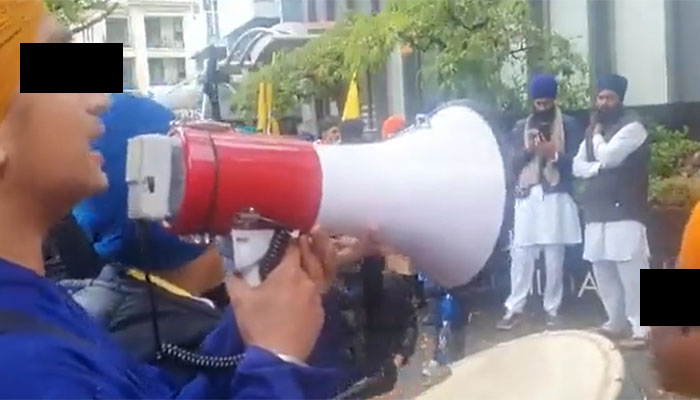
On March 27, a video of children attending a pro-Khalistani protest against the crackdown on separatist leader Amritpal Singh went viral on social media. In the video, young children who appeared to be between the ages of 5 to 15 were raising slogans against India.

The video was shared by Stop Hindu Hate Advocacy Network (SHHAN) on Twitter. SHHAN wrote, “#Khalistanis today protested outside Indian Embassy, Melbourne, Australia. Radicalised #Khalistani kids are chanting “Gali Gali Me Shor Hai – Bharat Mata Chor Hai.” Inculcating hate for other communities and countries, @AusHumanRights, are you watching this?”

As per the information added by SHHAN, the protest took place in Melbourne. Furthermore, a Twitter hand WPDAustralia, which has been withheld in India, also shared the video.

OpIndia came across similar videos where children brainwashed by pro-Khalistani elements were seen raising anti-India and anti-Hindu slogans. In another video shared by Sarah L Gates, children could be seen hitting posters with the slogan “Hindu nationalists now pose a global problem”.

Other Twitter users, like Dhairya Maheshwari, shared a photograph of a Sikh child wrapped in the Khalistani flag.

Brainwashed children during farmer protests

This is not the first time children have been brainwashed against India and Hindus. During farmer protests, several videos surfaced where children were abusing and using foul language for Prime Minister Narendra Modi, Hindus, and India.

Islamist propaganda to brainwash children

In May 2022, OpIndia reported how Islamists were brainwashing children who were being taught how to kill Hindus. We listed several publicly available videos of Muslim children propagating hate against Hindus. Catchy pro-Islamist and anti-Hindu songs for reels and children raising anti-Hindu slogans during PFI protests surfaced from time to time. 

Disqualified MP Rahul Gandhi asked to vacate his government bungalow in Delhi by the Lok Sabha Housing Committee

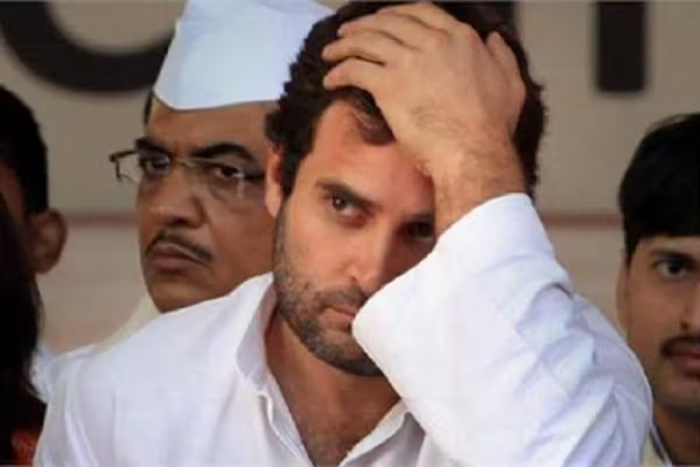
Days after being disqualified from the Lok Sabha after his conviction in a criminal defamation case, Congress leader Rahul Gandhi has been asked to vacate his 12, Tughlaq Lane bungalow in Lutyens’ Delhi, reported ANI. The news agency quoted a source saying that the Lok Sabha Housing committee has issued a notice to the Gandhi scion asking him to vacate his government-allotted bungalow. According to reports, the Lok Sabha Housing Committee has asked Rahul Gandhi to vacate the bungalow by April 22.

Rahul Gandhi is occupying the bungalow since he was allotted the same after he became a member of Lok Sabha from Amethi in 2004.

Rahul Gandhi was convicted and sentenced to two years in jail on Thursday (March 23) for his remarks insulting the Modi surname. During an election rally in 2019, Rahul Gandhi alleged that everyone with the Modi surname, including Nirav Modi, Lalit Modi, and Narendra Modi, are thieves. Following this, Gujarat BJP leader Purnesh Modi filed a criminal defamation case against the Congress leader, accusing him of defaming the entire Modi community. The court, however, granted him bail immediately and suspended the sentence for a month.

Notably, the Representation of the People Act, of 1951 specifies the qualifications and the disqualifications of Members of Parliament and state legislatures. Section 8 of the Representation of the People Act (RPA), 1951, contains provisions aimed at decriminalizing electoral politics. According to section 8(3) of this law, any MP or MLA convicted of any offense and sentenced to imprisonment for not less than two years shall be disqualified from the date of conviction.

In accordance with the law, the Lok Sabha Secretariat disqualified Rahul Gandhi and declared his constituency vacant in response to the Surat court judgment. It was reported that the Election Commission can now call a by-election for the seat. It is now also expected that Gandhi would have to vacate his 12, Tughlaq Lane government bungalow in Delhi. 

IPL: Nitish Rana to be the captain of Kolkata Knight Riders in the absence of Shreyas Iyer

0

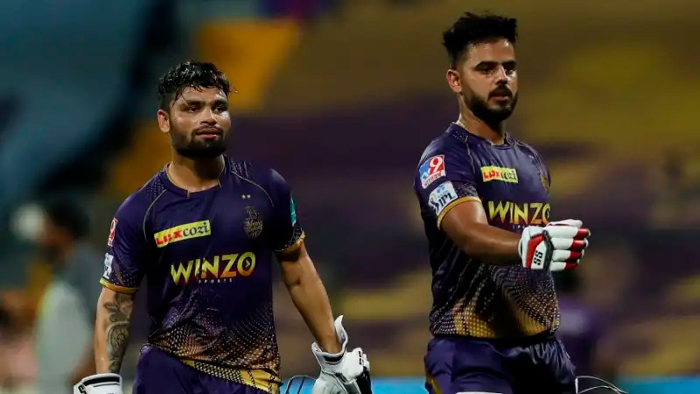
Batter Nitish Rana will be the captain of Kolkata Knight Riders (IPL) in the absence of regular skipper Shreyas Iyer, who is currently recovering from a back injury, the franchise announced on Monday.

The announcement was made on official Twitter handle of the franchise. Though the franchise hopes that Shreyas will make a comeback at some stage during the league, they have chosen to bank on Nitish’s experience as a skipper for Delhi in domestic cricket in the shorter format. They also wished Iyer a full and speedy recovery.

“Kolkata Knight Riders today announced that Nitish Rana would captain the side in the absence of Shreyas lyer, who is recovering from a back injury. While we are hopeful that Shreyas will recover and participate at some stage in the IPL 2023 edition, we feel fortunate that Nitish, with the captaincy experience having led his state side in white ball cricket and the IPL experience he has had with KKR since 2018, will do a great job. We are also confident that under Head Coach Chandrakant Pandit and the support staff, he will get all the support needed off the field, and the highly experienced leaders in the squad will provide all support that Nitish may need on the field. We wish him the best in his new role and Shreyas a full and speedy recovery,” said KKR in a statement shared on twitter.

Rana has been with KKR since 2018. He has scored a total of 1,744 runs for the team in 74 matches at an average of 26.02. He has scored 11 half-centuries for the side with the best score of 87. In his IPL career, which also saw him play for Mumbai Indians from 2015-17, he has scored 2,181 runs in 91 matches at an average of 28.32, with 15 half-centuries and the best score of 87. His strike rate of 134.22 makes him a valuable asset for the side at the top.

Rana has a solid win-loss record as a captain. He has led Delhi in 12 T20Is in the Syed Mushtaq Ali Trophy, the country’s top T20I domestic competition, winning eight matches, and losing four.

Iyer is likely to miss the first half of the Indian Premier League (IPL) 2023, reported ESPNCricinfo last week.

Iyer has opted out of back surgery for his recurring lower-back injury. He has been advised to rest and is continuing his rehab. The injury had first ruled him out of the final Test against Australia during the recently-concluded Border-Gavaskar Trophy and he also missed the ODI series against the visitors.

There is no definite return date marked for Iyer and he will be under the supervision of the Board of Control for Cricket in India (BCCI) medical staff at the National Cricket Academy (NCA) in Bengaluru. KKR, however, expects their skipper to be back for the second half of the cash-rich league.

Iyer’s issues concern a disc bulge in his spine, which has resulted in an impinged nerve. The nerve runs along the right leg and has caused extreme pain in Iyer’s calf. The batter has received six injections in the recent past to numb his back pain, according to ESPNCricinfo.

Iyer, 28, first experienced back discomfort last December just after the conclusion of the Bangladesh tour. He missed the series against New Zealand at home and the first BGT test against Australia. Though he returned to play the second and third tests, the pain resurfaced during the final test, where he fielded for two days. He did not come out to bat during India’s only innings in the match which ended in a draw.

Kolkata Knight Riders will start its IPL 2023 campaign against Punjab Kings on April 1 at the Punjab Cricket Association IS Bindra Stadium, Mohali.

On April 6, they will be playing their first match at the home arena of Eden Gardens, Kolkata against Royal Challengers Bangalore.

Last year, KKR managed a seventh-place finish in the points table with six wins, eight losses and 12 points in their 14 games. They failed to make it to the playoffs.

Kolkata Knight Riders: Squad strength 22 players (Overseas 8)

Players bought in IPL 2023 auction- Shakib Al Hasan (Rs 1.50 crore), N. Jagadeesan (Rs 90 lakh), Vaibhav Arora (Rs 60 lakh), Suyash Sharma (Rs 20 lakh), David Wiese (Rs 1 crore), Kulwant Khejroliya (Rs 20 lakh), Litton Das (Rs 50 lakh), Mandeep Singh (Rs 50 lakh).

Players retained ahead of IPL 2023 auction: Shreyas Iyer (c), Nitish Rana, Rahmanullah Gurbaz, Venkatesh Iyer, Andre Russell, Tim Southee, Sunil Narine, Shardul Thakur, Lockie Ferguson, Umesh Yadav, Harshit Rana, Varun Chakravarthy, Anukul Roy, Rinku Singh.

(This news report is published from a syndicated feed. Except for the headline, the content has not been written or edited by OpIndia staff)

BJP worker Senthil Kumar bombed and hacked to death in Puducherry, seven assailants later surrender in court

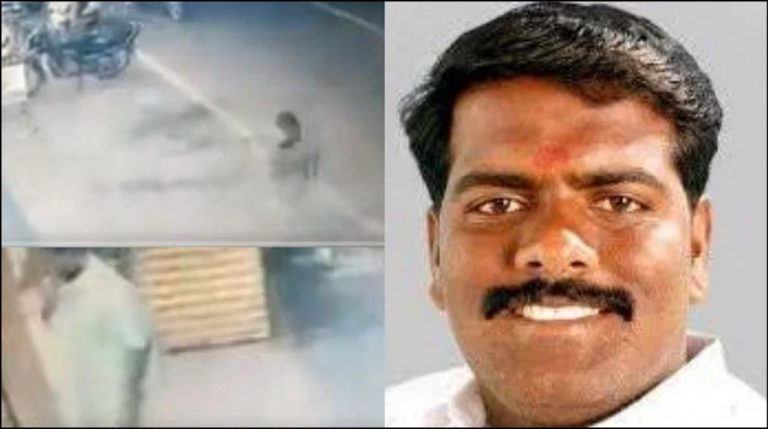
On Monday, March 27, a video emerged wherein some unidentified bike-borne assailants could be seen hacking a person to death. The victim was identified as Senthil Kumar, a BJP functionary in Puducherry. In the incident that took place on Sunday (March 26) night.

According to reports, Senthil was attacked while he was standing near a bakery adjacent to Kannaki Government Higher School in Villianur. The assailants first hurled country bombs at Senthil Kumar and subsequently, stabbed him to death.

The video of the incident showed the seven assailants, who were on three motorbikes, first hurling bombs at the  BJP worker and then hacking him on his neck with lethal weapons while he was standing near a bakery adjacent to Kannaki Government Higher School at Villianur. He died on the spot, police said. 

The police formed four special teams to nab the assailants and police are scanning the footage from the nearby tea stall.

Later in the day, the seven assailants who were involved in the murder of the BJP functionary in Puducherry reportedly surrendered in a court in Trichy. Their identity has not been revealed yet.

Senthil Kumar is a distant cousin of Puducherry home minister Namachivayam. Senthil Kumar formerly worked for Congress before joining the BJP with Namachivayam.