Home Blog Page 2350

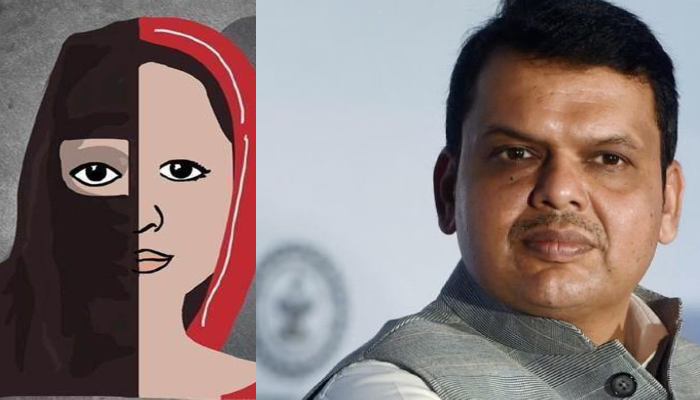
Maharashtra considering a law on ‘Love Jihad’, studying similar laws passed by other states: Deputy CM Devendra Fadnavis

During the current budget session, the issue of ‘Love Jihad’ was once again front and centre in both houses of the Maharashtra Assembly, with the ruling Bharatiya Janata Party MLAs and MLCs calling for legislation to outlaw it.

Gopichand Padalkar, a BJP Legislative Council Council Member, proposed the adoption of an anti-conversion law in the Legislative Council (Upper House of Maharashtra Assembly) after raising concerns about forced conversions in rural Maharashtra and an increase in ‘Love Jihad’ instances. He urged the administration to treat the cases seriously and prevent conversions.

In response to the demand, Devendra Fadnavis, the Deputy Chief Minister, on Thursday, announced that information would be gathered from the various states that had already passed anti-conversion laws.

“This is very serious. So we have taken cognisance of the sentiments of the people. We are studying ‘Love Jihad’ type laws that have been passed by other states and an appropriate decision on bringing such a law in Maharashtra will be taken soon. This law will be within the constitutional framework,” he remarked.

He noted that there appears to be a strategy behind the instances that resemble such cases in the state. He informed that the state government has taken note of the 50 Hindu Jan Aakrosh Morcha rallies that have taken place across the state in demanding a law prohibiting ‘Love Jihad.’

He observed, “It is a fact that between 30,000 and 50,000 people have taken part in these morchas in various districts. We don’t think that there should be no interfaith marriages. They can do it, but this must not be done with the intention to cheat.”

Fadnavis made it clear that the women and child welfare department’s interfaith marriage-family coordination committee does not supersede any existing laws and that its sole purpose is to reunite families of girls like the late Shraddha Walkar, whose parents were unable to reach her.

“The interfaith marriage-family coordination committee will not supersede any existing law. It is only to establish contact between parents of girls and the girl if she is not at her home like it happened in the Shraddha Walkar case,” he stated.

He emphasised that she (Shraddha Walkar) most likely could have been saved if the police had acted quickly and her parents had been able to find her and added, “The parents were saying they only wanted to contact her one time and see if she was well or not.”

The new law against ‘love jihad,’ which was being actively considered, will fall within the bounds of the constitution, according to the deputy CM.

He also explained that a standard operating procedure (SOP) will soon be prepared for taking prompt action in cases where parents report their daughters have been duped in cases of ‘Love Jihad’ and can’t be contacted.

He further declared that the director general of police will be instructed to sensitise the police to deal with such matters.

“If the existing laws are not able to provide enough protection, then there is a need for a special law. The government is serious about this issue. If so many people are taking part in morchas, then there is a sentiment in the people and the government has taken note of it,” the BJP leader asserted.

Notably, many BJP-led governments, including Uttar Pradesh, Uttrakhand and Haryana, have constituted laws against ‘Love Jihad’ in their respective states to tackle the problem of forced and illegal conversions of Hindus at the hands of their Muslim partners.
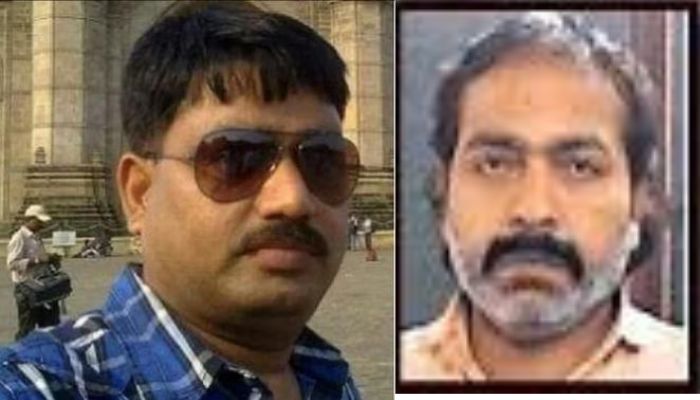
Umesh Pal was betrayed by his ‘childhood friend’ Mohammad Sajar, informed Atiq Ahmed’s gang about Pal’s location

With every passing day, new revelations are surfacing in the Umesh Pal murder case of Prayagraj in Uttar Pradesh. Umesh Pal was the key witness of the Raju Pal murder case and the Atiq Ahmed gang killed him on 24th February 2023. On 21st March 2023, Prayagraj police arrested five associates of the Atiq Ahmed gang, Mohammad Sajar being one of them. Now it has also come to light that the informer in Umesh Pal’s murder was none other than his childhood friend Mohammad Sajar.

In the Umesh Pal murder case, the police encountered two criminals. Several arrests have been made in the case so far. Police and SOG arrested five people from near Subedarganj on Tuesday, March 21, in connection with the murder conspiracy case. Among the arrested suspects are Atiq Ahmed’s household workers and others. The names of the arrested accused are Niyaz Ahmed, Mohammad Sajar, Kaish Ahmed, Rakesh Kumar, and Arshad Katra alias Arshad Khan. Mohammad Sajar turned out to be a shock to Umesh Pal’s family and close associates.

Sajar’s house is very close to Umesh Pal’s house in the Jayantipur area. They knew each other since childhood. Umesh Pal used to drive an auto two decades ago. At that time, Mohammad Sajar also used to drive an auto. They used to meet every day and had become close friends. After Raju Pal’s murder, Umesh Pal stopped appearing in public.

Umesh Pal was facing a threat to his life from the Atiq Ahmed gang as he was the key witness in the Raju Pal murder case. Umesh Pal’s all efforts to be alert of any possible attack failed because his old friend and neighbour Mohammad Sajar became an informer of the Atiq Ahmed gang.

Mohammad Sajar was often seen in a pan shop or a grocer’s shop in the Sulemsaray area. It is now revealed in the police investigation that he used to monitor Umesh Pal’s movements. On 24th February 2023, Mohammad Sajar gave Umesh Pal’s location to the shooters using the iPhone given by Asad Ahmed. The shootout was carried out after the information was provided by Mohammad Sajar. Everyone in Umesh Pal’s family is shocked and angry with his actions.

Police are continuing the investigation of the Umesh Pal murder case. The police of seven states are informed to arrest the absconding shooters. A reward of Rs 5 lakh has been announced for getting the absconding shooters.

This is not the first time that a friend has turned out to be a key conspirator in the murder of a victim. In the Umesh Kolhe murder case of Amravati in Maharashtra, the victim’s friend Dr. Yusuf Khan turned out to be a key conspirator in his murder. Dr. Yusuf Khan was a good friend of Umesh Kolhe who had helped him many times. Dr. Yusuf Khan was the admin of the WhatsApp group in which Umesh Kolhe had shared a post supporting former Bharatiya Janata Party spokesperson Nupur Sharma, which led to his murder.

Veterinary doctor Yusuf Khan and chemist Umesh Kolhe knew each other for the past several years, and they were good friends. Yusuf Khan often sought help from Umesh Kolhe who seldom disappointed his friend. He used to lend money to Yusuf Khan in hours of need. Umesh Kolhe had helped Dr. Yusuf Khan at the time of his sister’s wedding and his children’s admissions too. Despite such good relations, Dr. Yusuf Khan conspired to kill Umesh Kolhe. Now, Mohammad Sajar – friend of deceased Umesh Pal – turned out to be the key informer of the Atiq Ahmed gang that killed Umesh Pal.

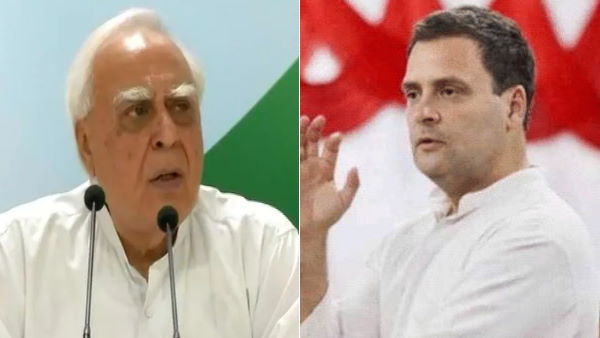
As Rahul Gandhi gets disqualified from Lok Sabha, here is what Kapil Sibal said about the legality of the move after his conviction

0

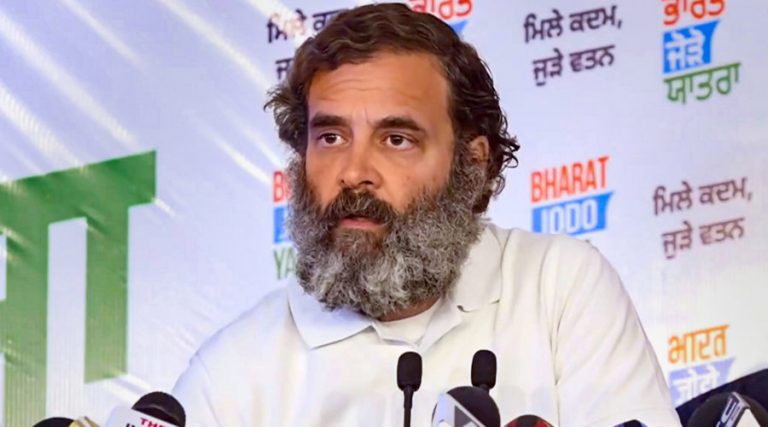
After his conviction and sentencing in a 2019 defamation case by a Gujarat court, India’s parliament disqualified Congress senior leader and Wayanad MP Rahul Gandhi from the Lok Sabha on Friday. While numerous Congress leaders and Gandhi supporters suggested that the disqualification can be staved off if Gandhi’s sentence is stayed or suspended, Kapil Sibal, a former Congress politician and Union law minister, stated otherwise. He said that as per law, Gandhi stood automatically disqualified with his conviction.

Speaking to NDTV, Sibal, who has represented several high-profile cases in the Supreme Court of India and is widely regarded as one of the most famous lawyers in India, stated that a mere suspension of his sentence would not suffice; his conviction also needed to be suspended or stayed. According to Sibal, if Rahul Gandhi’s conviction order is not sustained or stayed, Gandhi cannot continue as a member of Parliament.

“I don’t know what the order states…if it only suspends the sentence that’s not enough, there has to be a stay or a suspension on conviction. Only if there is a stay on conviction can he continue to be a member of the Lok Sabha.”

“…the law states that the moment you are convicted in any offence for two years, then your seat will stand vacant,” Sibal told a journalist who questioned him about the legality of the move after Rahul Gandhi’s conviction.

When asked if the Lok Sabha Secretariat must move or if it happens automatically, Sibal asserted that the law requires it, so it is only natural that the speaker of the Lok Sabha will move in accordance with the law.

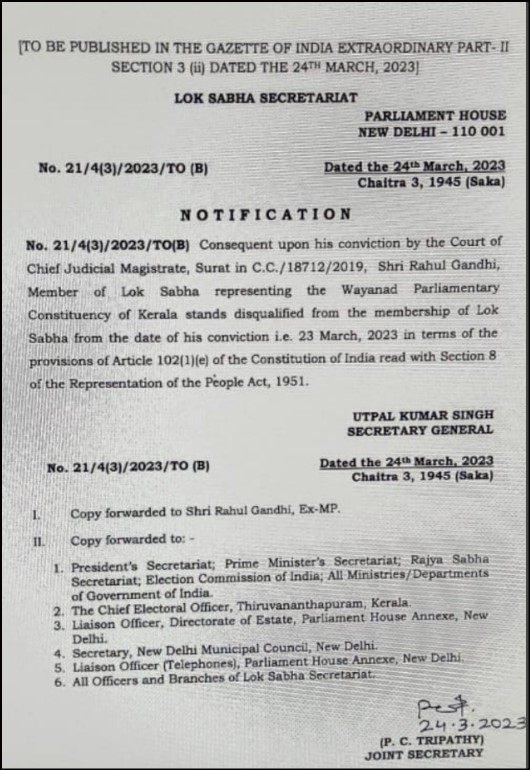
Notably, the Lok Sabha Secretariat issued a letter on Friday that stated, “Rahul Gandhi, Member of Lok Sabha representing the Wayanad Parliamentary Constituency of Kerala, stands disqualified from the membership of Lok Sabha from the date of his conviction i.e. 23 March 2023…”

Letter issued by LS Secretariat disqualifying Rahul Gandhi from membership of the lower house (Source: Shiv Aroor’s Twitter handle)

Gandhi, a scion of the Nehru-Gandhi political dynasty, was convicted on Thursday (March 23) for over his remarks insulting the Modi surname. During an election rally in 2019, Rahul Gandhi alleged that everyone with the Modi surname, including Nirav Modi, Lalit Modi and Narendra Modi, are thieves. Following this, Gujarat BJP leader Surat Purnesh Modi filed a criminal defamation case against the Congress leader, accusing him of defaming the entire Modi community. The court, however, granted him bail immediately and suspended the sentence for a month.

Notably, the Representation of the People Act, of 1951 specifies the qualifications and the disqualifications of Members of Parliament and state legislatures. Section 8 of the Representation of the People Act (RPA), 1951, contains provisions aimed at decriminalizing electoral politics. According to section 8(3) of this law, any MP or MLA convicted of any offence and sentenced to imprisonment for not less than two years shall be disqualified from the date of conviction.

In accordance with the law, the Lok Sabha Secretariat has disqualified Rahul Gandhi and declared his constituency vacant in response to the Surat court judgement. The Election Commission can now call a special election for the seat. Gandhi can also be asked to vacate his 12, Tughlaq Lane government bungalow in Delhi. Rahul Gandhi is occupying the residence since he was allotted the same after he became a member of Lok Sabha from Amethi in 2004.

Ramzan in Pakistan: No cooking gas to make sehri or iftar, 1 person dies in stampede for Atta

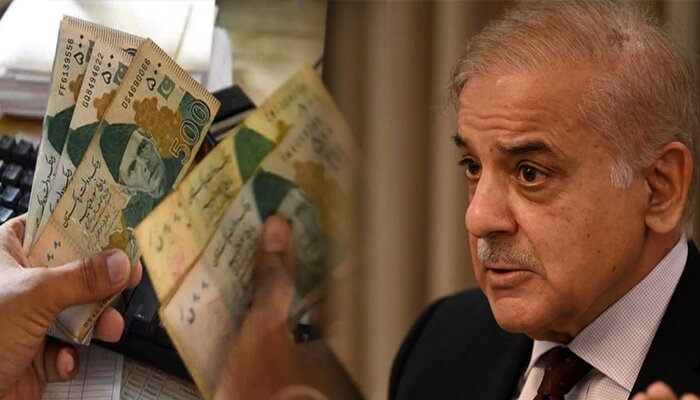
The International Monetary Fund (IMF) bailout talks have given way to clashes between Imran Khan’s supporters and security forces, but the country’s spiralling economic crisis and skyrocketing inflation are the only things that haven’t changed in Pakistan’s news cycle.

According to the latest reports coming out of the country, people in Karachi, Quetta, and Rawalpindi were left without cooking gas on the first day of the Islamic holy month of Ramazan. People complained that it abruptly stopped flowing into their stoves as soon as the Ramazan moon was visible.

The government affirmed that gas would be accessible to consumers for ‘sehri’ (the morning meal) and ‘iftar’ (meal at sundown to break the daily fast) but throughout the day, people from all around the country complained about low or no gas pressure.

Sui Southern, the company that supplies gas, officially announced the times for what it dubbed as ‘gas profiling’ throughout the month of Ramazan.

“For this purpose, to ensure better gas pressure, gas profiling will continue from 8 am to 2:30 pm,” Sui Southern Gas Company (SSGC) stated.

Despite the assurances that gas would be available for consumption during the meal timings, the company noted a shortfall in its system due to a yearly 8–9% depletion in the country’s gas reserves.

Lyari resident Saba Naveed was quoted by Dawn saying that her house has been without gas for almost four months. “When you switch on the stove, there is only a stale smell that comes out of it. There is no gas pressure at all.” She mentioned that her family has permanently shifted to using gas cylinders.

Saba highlighted that a 2.5 kg gas cylinder, which lasts for only two weeks, costs her Rs. 600 (PKR). She also conveyed her concerns about using a cylinder. “It is not just about the money, it is a real risk using a gas cylinder with three children, under the age of 10 around.”

Safdar Khooharo, an SSGC spokesman, informed that the company had not used load shedding anywhere in the country but noted that some areas may experience low pressure due in part to the simultaneous lighting of between 20 million and 20.5 million stoves before ‘sehri.’ Old gas pipes may therefore experience low pressure, he added.

There was no improvement in the situation at the Garrison City, according to Ali Abbas, a resident of Dhoke Ratta, who reported that despite complaints made by locals to the Sui Northern Rawalpindi office, no action was being taken.

He claimed that the low pressure was caused by the mushrooming of CNG filling stations on a nearby road, which were supplied with gas from the main line intended for home consumers.

Many Pakistanis in Rawalpindi had to buy coal to cook the Ramzan meals.

SNGPL stated that things will get better in the upcoming days and declared that the corporation was prioritising domestic customers in accordance with special federal government orders.

On the first day of Ramazan, several areas of Karachi lacked access to gas. Abdullah Zehri, a resident of Prison Road, commented, “We had no other option when we woke up and found no gas pressure to cook ‘sehri.'”

Low gas pressure was a problem in the Jinnah Road, Kasi Road, Jail Road, Jinnah Town, and Model Town regions of Quetta, while the complete suspension and unexpected load shedding occurred in places beyond the province capital on the first day of the Muslim holy month.

There have been allegations of load shedding and poor gas pressure in the towns of Bolan, Pishin, Ziarat, Mastung, Kalat, and Sibi.

One person dies in the stampede for free flour

On the first day of Ramazan, a stampede for free flour left one person dead and eight others hurt in Peshawar, when a wall where people were sitting on collapsed as crowds amassed for free flour. However, the reason behind the fall was unclear.

In the Charsadda area of northwest Khyber Pakhtunkhwa province where the incident occurred, nine people were trampled and rushed to a hospital where one person passed away, informed Muhammad Arif, the local police chief.

He notified that hundreds of people gathered at the local market for the handouts, one of the hundreds of distribution points set up by the government during Ramzan. Millions of low-income families across the country are registered under the scheme.

Years of financial mismanagement and political turmoil have destroyed Pakistan’s finances, which have been made worse by the global energy crisis and devastating floods that submerged a third of the nation last year.

To access a $6.5 billion IMF bailout and avoid defaulting, the South Asian country, which is heavily indebted, must enact strict tax and utility price rises.

The risk of the Pakistani economy entering a recession was estimated at 70% in the consensus forecast from a Bloomberg survey of 27 analysts, which was released on March 15. The Pakistani Rupee has depreciated by 55% since February 2022. The country’s GDP is to grow at 3.5% in 2023 against 6% in 2022.

Pakistan’s inflation has surged to 31.5% in Feb from 12.2% in Feb ’22, the highest annual rate in nearly 50 years, as food, beverage and transportation prices surged more than 45%. The State Bank of Pakistan increased its benchmark interest rate to 20% in March, making it the greatest in 25 years.

It is proving to be very difficult for Pakistan to recover from the economic chaos, the devastating aftermath of the catastrophic 2022 floods, and the worsening political mess in the country.

‘Hinduism is inferior. It will never develop’: Christian missionary arrested for attempting forceful conversions of villagers near Indore

On 23rd March 2023, a 23-year-old Christian missionary named Rahul Bargunda was arrested from the Khudel area near Indore for attempting forceful conversions of more than 24 people living near the Kampel Chowki area. The arrested accused abused Hindu deities and lured the villagers with money and facilities for education and healthcare. the police arrested the accused missionary and registered a case of forced conversions and threats.

The case is from the Khudel area near Indore. On March 23, more than 24 people were gathered in a house in the Kampel Chowki area and forced to convert. According to the Khudel police, a case has been registered against Rahul Bargunda of village Selani, for converting and threatening. Rohit Gopal Kanosia, a resident of the village Telia Khedi, had complained in this regard. The accused missionary Rahul Bargunda is a local farmer in the village itself. The villagers brought Rahul to Khudel police station on Thursday.

The complainant, Rohit Kanosia, told the police that the accused Rahul Bargunda had been visiting the area for several days. He used to tell the villagers that he knows such rituals, by which he can cure the disease, and can make money, and bring happiness to all. The accused Rahul then gathered people at the house of Sandeep, a resident of the Dussehra Maidan area. Rohit Kanosia also reached there as part of the planning.

Addressing the people in this meeting, this missionary Rahul Bargundii said, “Hinduism is inferior. Hinduism will never develop. You will never be happy here. The Lord Jesus gave this message. Everything will be fine if you seek his refuge. Jesus is the truth. Come to his religion. Otherwise, you will die in agony. After some time there are going to be many diseases. The Lord Jesus sent the ladder of heaven for all. Everyone is welcome in Christian missionaries. Every family that converts to Christianity will get Rs 1 lakh, free education in a missionary school, and free treatment in a hospital.”

When complainant Rohit Kanosia tried to stop this preaching, missionary Rahul Bargunda opposed him. Rahul Bargunda’s associates also opposed Rohit Kanosia. Meanwhile, Rohit Kanosia informed his friends who came on the spot and took Rahul Bargunda to the police station. the police arrested him and te further investigations, in this case, are going on.

It is notable that the number of cases reported for forced conversions in the Indore area are constantly increasing in the last few months. Police are also checking if there are any foreign funding agencies involved in the conversion racket. A pastor of a church in the Jhabua district and his associates were arrested in January 2023 for attempting religious conversion under the garb of treatment.

NIA files chargesheet against Lawrence Bishnoi, Goldy Brar and 12 others, charges them with criminal conspiracy to unleash terror and targeted killings

0

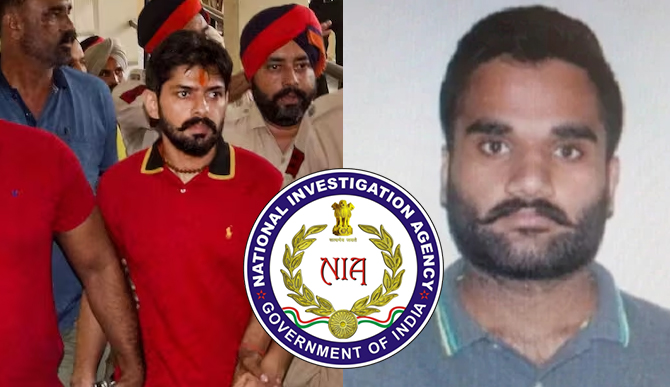
The National Investigation Agency (NIA) on Friday filed a chargesheet against notorious gangsters Lawrence Bishnoi and Goldy Brar and 12 others having links with the proscribed Babbar Khalsa International (BKI) and several other pro-Khalistani terrorist outfits, in the second of the three terror-gangster nexus cases.

All the 14 accused have been charged with criminal conspiracy to unleash a wave of terror and carry out targeted killings of well-known social and religious leaders, movie stars, singers and businessmen, said the NIA. Besides having links with conspirators in Pakistan, the accused were also in contact with pro-Khalistani elements based in Canada, Nepal and other countries, NIA investigations have revealed.

Bishnoi, in custody since 2015, has been operating his terror-crime Syndicate from Jails in different States, along with Canada based Goldy Brar, who is an accused in the killing of Pradeep Kumar, a Dera Sacha Sauda follower, in Faridkot in November 2022, said the NIA.

Bishnoi terror-crime-extortion syndicate was also responsible for providing killers for the Rocket-Propelled Grenade (RPG) attack case on Punjab State Intelligence headquarters at Mohali, which was carried out on directions of Harwinder Singh alias Rinda, a Pakistan-based BKI terrorist, the NIA investigations have revealed.

The anti-terror agency said Brar was found to have direct links with Lakhbir Singh alias Landa, another BKI operative working closely with Rinda.

“Landa is also an accused in the Mohali RPG attack as well as the December 2022 RPG attack on police station Sirhali in Tarn Taran, Punjab,” said the NIA, adding “Investigations against Landa and three others are continuing.”

NIA has seized a huge cache of nine illegal and sophisticated weapons, 14 magazines, 298 rounds of ammunition and 183 digital devices and other incriminating material in raids across 74 locations in Punjab, Haryana, Uttar Pradesh, Rajasthan, Gujarat, Chandigarh and Delhi in the case.

The investigating agency had conducted large-scale searches over a period of six months and examined around 70 members of different Organised Crime Support networks during the course of its investigations.

Seven Look Out Circulars and five Non Bailable Warrants have so far been issued in the case by the NIA, which has also attached and seized seven immovable properties under Section 25 Unlawful Activities (Prevention) Act and frozen 62 bank accounts.

The agency said the investigations further led the NIA to the hideouts set up across Haryana and Punjab, which were being used to harbour the gangsters and store weapons.

Besides Bishnoi and Brar, other chargesheeted accused have been identified as Jagdeep Singh, Sachin Thapan, Anmol Bishnoi, Vikramjeet Singh, Sandeep Jhanjariya, Virender Pratap Singh, Joginder Singh, Rajesh Kumar, Raj Kumar, Anil, Naresh Yadav and Shahbaaz Ansari.

Earlier, on March 21, the NIA had filed its first chargesheet against 12 accused in the terror-gangster nexus cases under investigation. The accused in that case were identified as Arsh Dala, Gaurav Patyal, Sukhpreet Buddha, Kaushal Choudhary, Amit Dagar, Naveen Bali, Chhotu Bhat, Asif Khan, Jagga Takhatmal, Tillu Tajpuria, Bhupi Rana and Sandeep Bandar.

Today’s action takes the total number of accused chargesheeted by the NIA so far in these cases to 26.

(This news report is published from a syndicated feed. Except for the headline, the content has not been written or edited by OpIndia staff)

Delhi HC seeks NCPCR’s response in PIL against Rahul Gandhi for revealing the identity of parents of a minor rape and murder victim

0

The Delhi High Court on Friday sought a response from the National Commission for Protection of Child Rights (NCPCR) on a plea filed against Congress leader Rahul Gandhi in connection with his tweet revealing the identity of the relatives of a minor who was raped and murdered in 2021.

The Bench of Justice Satish Chander Sharma and Justice Sachin Datta on Friday listed the matter for July 27, after issuing notice to the NCPCR. Earlier NCPCR counsel submitted that it wants to support and joint hand with the petitioner in the matter. The lawyer had requested the court to issue a notice in the matter so that it can file an affidavit “as we believe that the offence survives.”

The Delhi HC is presently examining a Public Interest Litigation (PIL) seeking directions to Twitter and the Delhi Police to take action against Rahul Gandhi’s tweet allegedly revealing the identity of the relatives of a rape and murder victim.

The predecessor bench had earlier issued notice to Twitter only made “explicitly clear” that no notice is being issued to other respondents.

Senior Advocate Sajan Poovayya earlier appeared for Twitter had informed the Court that “nothing survived” in the petition as the tweet in question was taken down.

Earlier Twitter counsel had submitted that Rahul Gandhi’s tweet violated its policy also, we have already removed that tweet and his Twitter account was also blocked for some time.

The bench had also refused to issue notice to Rahul Gandhi and Delhi Police on the public interest litigation (PIL) at this stage.

The petitioner Makarand Suresh Mhadlekar claimed to be a social activist had approached Delhi HC seeking its intervention for appropriate legal action against Rahul Gandhi for allegedly disclosing sensitive information about a rape victim and her family members by publishing a photograph of her parents on his Twitter handle.

The Petitioner stated that Rahul Gandhi has violated Section 74 of the Juvenile Justice Act, 2015, and section 23(2) of the POCSO Act, 2012, both of which mandate that the identity of a child victim of a crime shall not be disclosed.

The law in this regard is very well-settled in a catena of judgments including in the case of Nipun Saxena vs Union Of India wherein it was held by the Supreme Court of India, that the name, address, school or other particulars which may lead to the identification of the child in conflict with law/victim cannot be disclosed in the media. No picture of such a child, or any such particular which can directly or indirectly disclose her identity, can be published.

A child who is not in conflict with the law but is a victim of an offence, especially a sexual offense needs this protection even more, plea read.

In August 2021, Congress leader Rahul Gandhi met the family of the minor girl who was allegedly raped, murdered, and cremated without her parent’s consent in Delhi’s Old Nangal crematorium. After meeting with the family, he assured his support to the family. Rahul Gandhi also tweeted about his meeting and shared a picture of him with the victim’s parents on Twitter. 

(This news report is published from a syndicated feed. Except for the headline, the content has not been written or edited by OpIndia staff)

J&K bars govt employees from publishing, sharing any political or ‘anti-secular’ content, criticising govt policies on social media

On Friday, the government of Jammu and Kashmir issued a special notification barring all the government employees of the Union Territory from criticizing the government or engaging in any discussion against the government over social media. The authorities stated that no such discussion or criticism shall be conducted by government employees on social media pages, communities or microblogs.

According to the notification, any govt employee who would violate the directions shall be charged with the Information Technology Act, The Jammu and Kashmir Government Employees (Conduct) Rules, 1971 and the Jammu and Kashmir Civil Services (Classification, Control and Appeal) rules, 1956.

The direction further asks the government employees to stop posting or sharing any content that is political or anti-secular and communal in nature. It also asks them not to follow or subscribe to pages, communities, Twitter handles and blogs that share or post political or anti-secular content.

“No government employee shall publish in his name or any other person’s name an opinion that might create embarrassment between the Government of Jammu and Kashmir, Government of India or Government of any other state. No opinion shall be criticism of any policy or action of the state or national government,” the notification reads.

It adds that any government employee found posting illegal content on social media shall be liable to imprisonment for a term which may extend to three years with fine under the IT Act. Also, the employee may face the risk of pre-mature retirement or lower increments or demotion to lower post under the Jammu and Kashmir Civil Services (Classification, Control and Appeal) rules, 1956.

As per the official statement, the notification applies to all the government employees of the UT using any social media platform like Whatsapp, Facebook, Twitter, Telegram or any other Instant messaging application.

Biological men who medically transitioned into “women” after puberty banned from female events to protect future of female category: Rules World Athletics

On Thursday, March 23, World Athletics, the international governing organisation for athletics, banned transgender women (men who have transitioned to women) from competing in the female category at international events. It said that transgender women who have been through male puberty will not be able to compete in female events starting March 31.

The governing body of the organisation stated that men who became women after puberty as male have been banned from women’s events to “protect the future of the female category” in sports.

Speaking about the decision, World Athletics President Sebastian Coe said that they know that the decision would be contentious, but it was necessary. He added that it was guided by the “overarching principle” of fairness, as well as the science around physical performance and male advantage.

“Decisions are always difficult when they involve conflicting needs and rights between different groups, but we continue to take the view that we must maintain fairness for female athletes above all other considerations. We believe the integrity of the female category in athletics is paramount,” he said.

However, he added that the body will be open to any new research findings in the future. Coe said that he would set up a working group that would consult with transgender athletes and review any fresh research that emerged. “We’re not saying no forever,” he said.

The governing body also stated that it had tightened testosterone restrictions for other athletes. It has cut down the testosterone plasma to 2.5 nanomoles per litre, which was earlier 5 nanomoles per litre.

Now, it requires DSD athletes to have a blood testosterone level of 2.5 nanomoles per litre for a minimum of 24 months across all events to compete, double the previous time.

Several women who were formerly men will be unable to compete at the World Athletics Championships in August due to the new restrictions.

Notably, this is not the first time that trans women had to face restrictions in elite competition. Last June, the World Aquatics Federation voted to prohibit transgender women from the elite competition if they had gone through any stage of male puberty. A scientific panel discovered that transgender women had a considerable advantage even after lowering their testosterone levels using medication.

The vote was approved by 71% of the national federations.

Tension in Leicester due to Muslim enclaves and their majoritarianism: Report submitted in House gives 4 key recommendations to protect Hindus

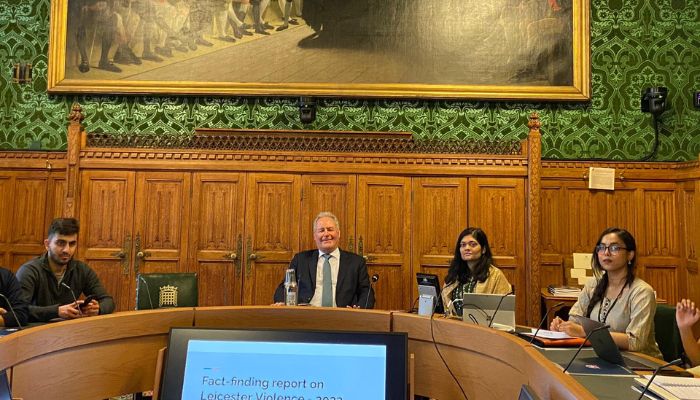
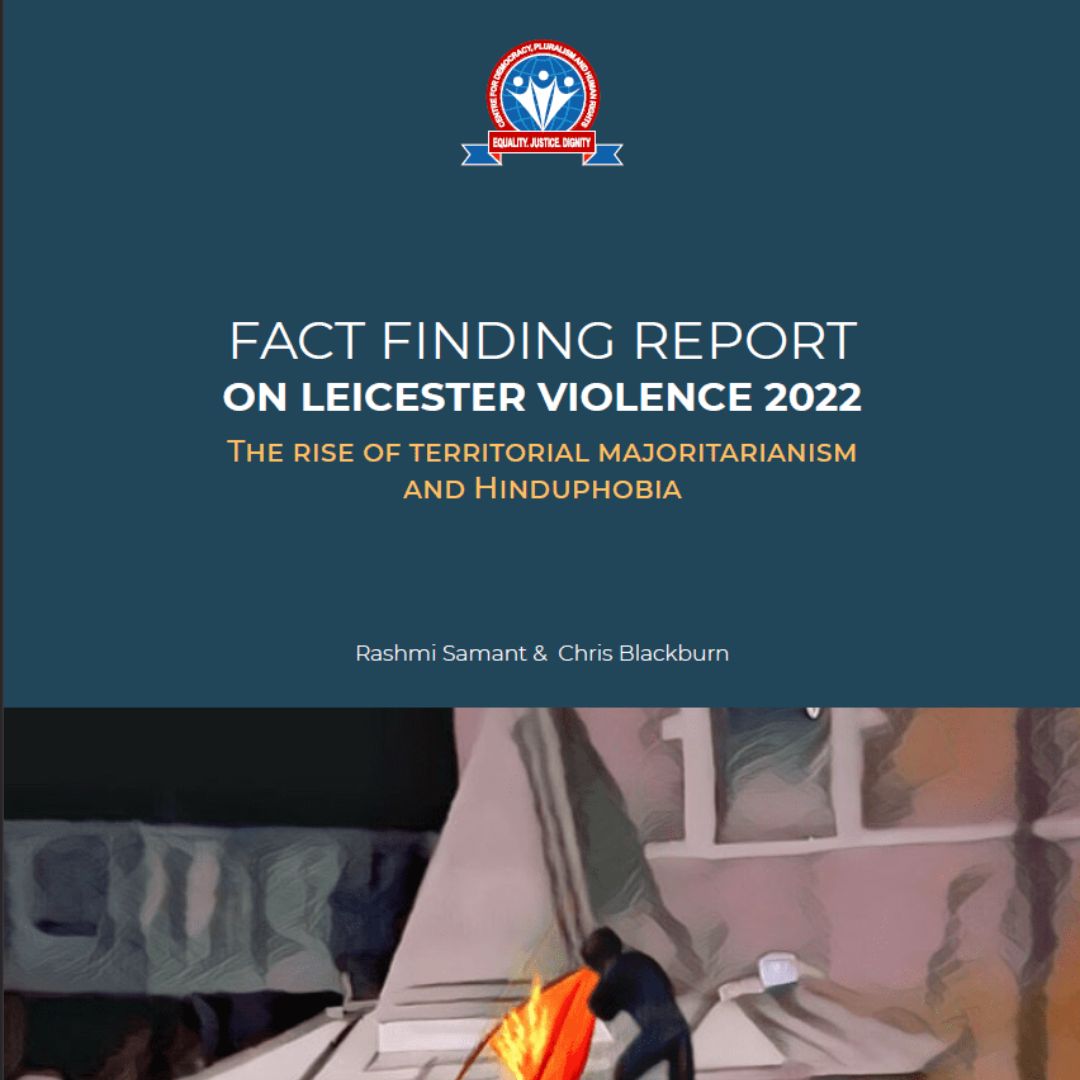
On Thursday (March 23), the Centre for Democracy, Pluralism and Human Rights (CDPHR) tabled a fact-finding report [pdf] on the anti-Hindu violence, which took in Leicester last year, before the UK’s House of Commons. The report, prepared by activist Rashmi Samant and political analyst Chris Blackburn, highlighted how the Leicester attack on the Hindu community was a direct assault on “democratic institutions and rule of law.”

It pointed out how the Islamists weaponised misinformation to undermine freedom of expression, committed human rights violations by targeting practitioners of Hinduism and attempted ethnic cleansing that resulted in the temporary displacement of Hindu families.

To ascertain the reasons and key circumstances that led to the anti-Hindu Leicester violence, CDPHR sent a team of researchers to ground zero. In their report, Rashmi Samant and Chris Blackburn found that the unrest took place primarily in the East Leicester area.

The findings reveal that East Leicester is a Muslim-dominated area with a minority presence of the Hindu community. The report noted that the attack on Hindus was a direct fallout of territorial tensions and localised majoritarianism (of the Muslims in East Leicester).

“Symptoms of territorial ethnic cleansing were found through the analysis of the different slogans and speeches made by the majority community of East Leicester and the temporary displacement of Hindu community as a result of the unrest,” CDPHR said in its report.

Screengrab of the CDPHR report

The report also found that a concerted attempt was made to defame the Hindu community as ‘Hindutva nationalists’ and nationwide mobilisation outside of Leicester (only succeeded in Birmingham)

“There was an increased misuse of law enforcement and security measures and appropriation of public good by false reporting to the police and local media bodies regarding the actions of the Hindu community,” CDPHR emphasised.

“Institutional Hinduphobia and bias was deduced through the analysis of the reporting of the Leicester unrest by the media houses BBC and the Guardian when compared to the verified police reports, witness accounts and corroborating reports from think tanks,” it added.

Recommendations given by the fact-finding report

The fact-finding report by Chris Blackburn and Rashmi Samant gave 4 recommendations to prevent unrest and targeted violence, as witnessed in Leicester between August and October 2022.

  1. The report emphasised the need to tackle misinformation on social media by promoting media literacy among the general public and increasing collaboration between social media platforms, governments and civil society organisations.
  2. It further stated that biased media reporting must be curtailed by holding media outlets accountable, supporting independent media that report facts, enforcing regulations to promote impartial reporting and encouraging transparency.
  3. CDPHR sought curtailing sentiments of majoritarianism and transnational political externalities by promoting tolerance, and pluralism and educating the public about democratic values and the dangers of majoritarianism.
  4. Lastly, the report highlighted the need to stop growing Hinduphobia and secure the vulnerable mico-minorities by developing laws that prohibit hate speech, and discrimination, providing legal recourse to victims and adopting the definition of Hinduphobia.

Think tank found no evidence of RSS, or Hindutva gangs in Leicester

In November 2022, a UK-based think tank debunked the false claims made by Islamists about the presence of ‘RSS terrorists’ and ‘Hindutva extremist organisations’ in Leicester city.

The disinformation was peddled by Islamists to rationalise their targeting of the Hindu community and camouflage their acts of aggression as violence perpetrated in self-defence.

The Henry Jackson Society (HJS), founded in 2005, released a 39-page report [pdf] on November 3 and concluded that the false allegations had exposed the Hindu community in Leicester to hate, vandalism and assault.

“Contrary to press reports at the time, the investigations did not find Hindutva extremist organisations operating in Leicester, but instead discovered a micro-community cohesion issue falsely presented as an issue of organised Hindutva extremism and terrorism,” the summary of the report read.

HJS emphasised, “It finds that false allegations of RSS terrorists and Hindutva extremist organisations active in the UK has put the wider Hindu community at risk from hate, vandalism and assault.”

“Some members of the Hindu community in Leicester imposed a voluntary curfew, some relocated to stay with family or friends until they felt safe to return, while still others were unable to return to work owing to fears for their personal safety,” it further added.