Home Blog Page 2351

India seeks deportation of Khalistani separatists involved in the attack on the High Commission in London: Report

The Indian government has told the UK administration that people involved in the acts of attack and vandalism against the Indian High Commission building in London last week should be deported, as per a report in news 18.

Some of those have Indian passports and had applied for asylum in the UK under the pretext of ‘political persecution.’ They are implicated in attacks on people from the Indian diaspora in the UK and elsewhere and are members of the Khalistani movement.

Avtar Singh Khanda, one of the Khalistanis, has lived in the UK for several years and is a significant leader of the separatist movement. He requested sanctuary in the UK, claiming political harassment in India.

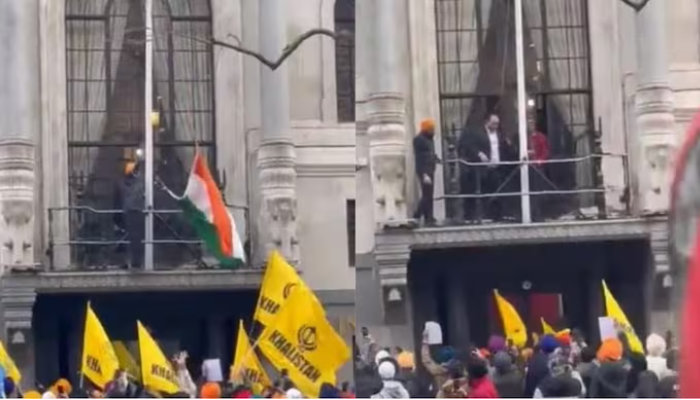
Khanda was arrested in London for attacking the Indian High Commission building. Khanda, on March 19, climbed onto the balcony of the Commission, brought down the Indian national flag and tried to install the Khalistani flag.

He is a close associate of Khalistani terrorist Parmjit Singh Pamma and is behind the radicalisation of Sikh youths overseas. It also said that he is the ‘main handler’ of ‘Waris Punjab De’ chief and radical Sikh leader, Amritpal Singh. He is in fact, the link between Amritpal and Pakistan’s (Inter-Services Intelligence) ISI, as per reports.

Harjeet Singh, Manroop Singh, Mandeep Singh, and Rajinder Singh are recognised by British authorities in London. These four also hold Indian passports in addition to their British ones, and have lived in the country for some years while actively supporting the secessionist agenda, the News 18 report said.

They have OCI (Overseas Citizenship of India) cards, which are issued to Indian citizens living abroad.

They were instrumental in planning the most recent demonstrations and encouraging violence against the Indian government.

They have been teaching live classes in Glasgow and Brihimgam on how to construct improvised explosive devices (IEDs) using common chemicals with the intention of carrying out IED explosions to garner international attention.

The government wants to hold them accountable and bring them back to India to probe their involvement in the protests. It has urged the UK counterpart to repatriate them back to India as soon as feasible.

Delhi Police files case in IHC vandalism case

in the meanwhile, the Delhi police have registered a case and started an investigation against the individuals who were involved in the vandalization and attack against the Indian High Commission building in London. As per reports, the case has been filed under relevant sections of the IPC, UAPA and PDPP Acts. The government is set to proceed and eventually cancel passports and OCI cards held by the offenders.

Khalistanis living abroad have resorted to assaults on Indian High Commissions after Indian law enforcement agencies initiated action against Khalistani leader Amritpal Singh.
As the 2024 general elections draw closer, opposition parties start whining about EVMs preemptively

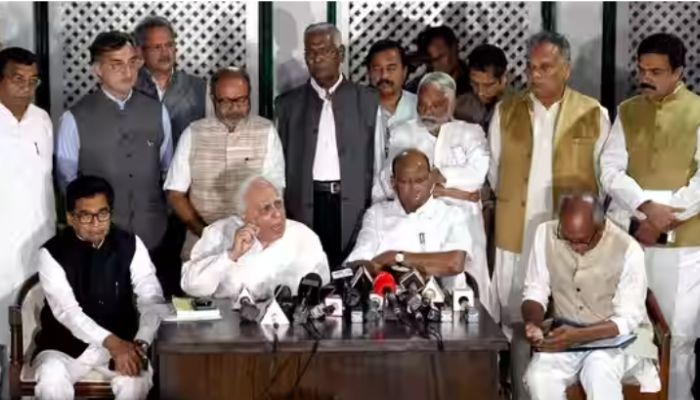
Ahead of the Lok Sabha elections in 2024, the opposition parties have started the familiar attack on electronic voting machines (EVMs). On Thursday, 23rd March 2023, the opposition parties held a joint meeting and decided to approach the election commission to raise their concerns over using EVMs to conduct elections. The concerns were particularly regarding the election commission’s plan to allow remote voting for migrant voters.

Congress leader Digvijay Singh, Independent Rajya Sabha member Kapil Sibal, Samajwadi Party leader Ramgopal Yadav, Shiv Sena (Thackeray faction) member Anil Desai, and BRS member K Keshav Rao were among those who attended the meeting of leaders of opposition parties in the Rajya Sabha, which was called upon by NCP supremo Sharad Pawar. Trinamool Congress didn’t send a representative to the meeting.

In the media interaction after this meeting, Sharad Pawar said, “We just raised certain questions and we expect a reply from the Election Commission.” Congress leader and former chief minister of Madhya Pradesh, Digvijay Singh said that all opposition parties have opposed the Election Commission’s idea to use remote EVMs to enable migrant voters to vote in elections.

Digvijay Singh said, “The opposition parties had even turned down the EC’s plans to make a demonstration about the remote-EVMs. There is doubt among voters about EVMs. Earlier they used to say that this is a standalone machine but now they accept that it is not a standalone machine because the candidate’s name and symbol are inserted through the internet. They used to say that it has a one-time programmable chip. But now they accept it has multiple programmable chips.”

He added, “Citizens Commission on Elections chaired by retired Supreme Court judge Madan Lokur had raised doubts about EVMs and petitioned the Election Commission but had received no response from the Commission. All political parties present here agree that we need to ask this from the EC and that the suspicions in our mind should be done away with”

Kapil Sibal said, “It is a fact that no other country in the world uses EVMs for voting. Then why are these machines being used in our country? The foundation of democracy is at stake if the ‘one man, one vote’ can be manipulated.” However, Sibal and Singh dodged media questions about whether they doubted the electoral victory of opposition parties in jurisdictions where EVMs were used for the election process.

Kapil Sibal said, “We have decided to move the Election Commission one last time. We want to hear from the Election Commission on our concerns. If the EC does not address our concerns, we will take political action.” It is notable that the opposition parties have often blamed EVMs for the electoral defeats in various polls in the recent past.

It is notable that while the Election Commission has developed a Remote EVM to enable people living outside their constituencies to vote, the term is misleading, as the EVM is not connected to a network, as the word ‘remote’ usually denotes. The EVM for remote voting is similar to the existing EVMs, the only difference being that one single machine can be used for several constituencies.

Just like the regular EVMs, RVMs are also standalone, non-networked voting machines, they do not have any network interface and can’t be connected to any network. While EVMs are used for voting in a single constituency, RVMs can run elections for several constituencies, up to 72. Using RVMs, people from different constituencies in a state living in a different state can cast their votes during elections. The details about how remote EVMs work can be read in our previous report.

Opposition MPs protesting at Vijay Chowk detained by Delhi police after warning issued to cease protest owing to imposition of Sec 144

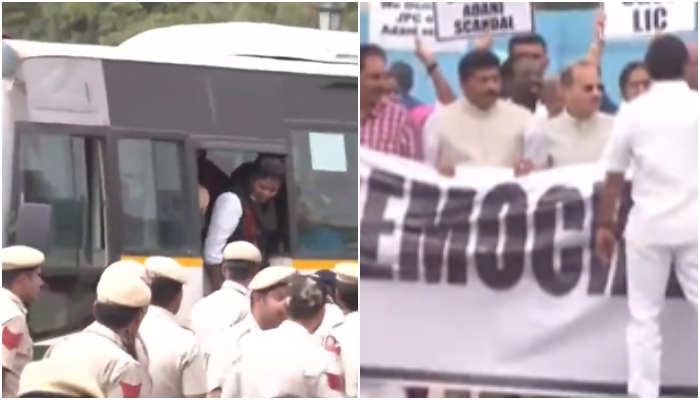
On Friday, Delhi Police detained the opposition MPs after it issued a warning not to carry out the protest march citing the imposition of section 144 in the Vijay Chowk area of Delhi. The opposition parties such as the Congress, CPI, CPI(M), Shiv Sena (Uddhav Thackeray), JD(U), and Aam Aadmi Party held a protest march against the ruling BJP government and demanded Joint Parliamentary Committee (JPC) inquiry on the Adani-Hindenberg issue in the parliament.

According to the reports, the prominent opposition leaders including Congress chief Mallikarjun Kharge marched in the protest and raised slogans against the ruling government. The leaders also held placards with ‘We demand JPC’, ‘Save LIC’ and ‘Democracy in Danger’ written on them. The opposition also meanwhile condemned the conviction of Congress leader Rahul Gandhi in the 2019 defamation case.

The videos of the protest march went viral over the internet in which the MPs could be seen marching at Delhi’s Vijay Chowk while carrying signs and pamphlets that advocated for a JPC enquiry into the Adani matter. A police officer could also be heard imploring the political leaders to put an end to the protest in the meanwhile, citing Section 144 of the Criminal Procedure Code, which prohibits gatherings, rallies, and unrest in the region.

Congress Chief Mallikarjun Kharge commented on the issue and said, “We’re fighting for JPC into Adani issue for months. They have a majority but the BJP is scared as there’s something fishy. Centre has a clear majority then why are they fearing the JPC probe? We’ll keep fighting unitedly for it.”

In addition, he also criticized J P Nadda, the president of the BJP, for allegedly blaming Congress for comparing OBC people to robbers and accused the BJP instead of engaging in “caste politics.” Sanjay Singh of the AAP also claimed that Gandhi’s conviction in the defamation case demonstrates the government’s intention to silence the opposition by bringing legal charges against them. Several Youth Congress members also raised slogans in support of Rahul Gandhi.

On Thursday, the Surat Court convicted Rahu Gandhi of criminal defamation and sentenced 2 years of jail. However, the leader was immediately granted bail and the ruling was postponed for 30 days so that he could file an appeal with a higher court.

The defamation suit was filed by Purnesh Modi after Gandhi made derogatory remarks against ‘Modi surname’ at a Lok Sabha election rally in Karnataka’s Kolar on April 13, 2019. “Why all the thieves, be it Nirav Modi, Lalit Modi or Narendra Modi, have Modi in their names,” the leader had said during the rally. However, today the Congress leader was qisqualified from the lower house of the parliament owing to the case from 2019.

To note, section 144 was imposed in the Vijay Chowk of Delhi on March 15 after opposition began their march to the Enforcement Directorate office. The Opposition leaders called for the protest march to hand over a complaint to the probe agency on the Adani issue.

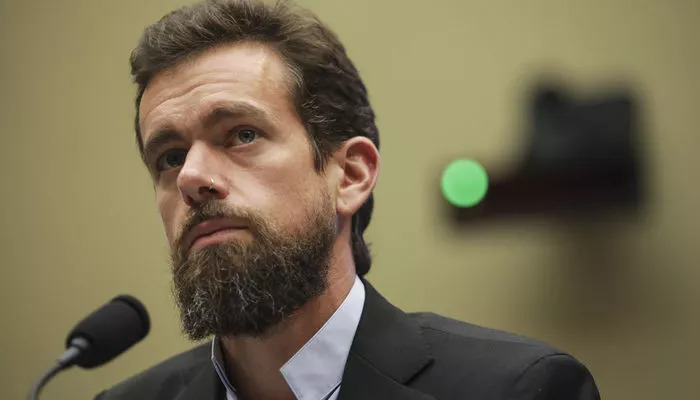
Jack Dorsey loses $526 million in a single day after Hindenburg publishes report alleging fraud in Block Inc

Hindenburg Research on Thursday released a report on Block Inc., formerly known as Square Inc., which is a $44 billion market cap company that claims to have developed a “frictionless” and “magical” financial technology with a mission to empower the “unbanked” and the “underbanked”. The Publishing of the report was bad news for Jack Dorsey as it led to a dip in his net worth.

According to Bloomberg, Dorsey lost wealth amounting to $526 million in a span of one day.

Jack Jorsey’s wealth plummeted by $526 million after the short seller published its report. His net worth now stands at $4.4 billion after an 11 per cent fall.

Hindenburg’s 2-year investigation into Block.Inc claimed that Block has systematically taken advantage of the demographics it claims to be helping. The “magic” behind Block’s business has not been disruptive innovation, but rather the company’s willingness to facilitate fraud against consumers and the government, avoid regulation, dress up predatory loans and fees as a revolutionary technology, and mislead investors with inflated metrics.

The report says “CEO Jack Dorsey has publicly touted how Cash App is mentioned in hundreds of hip-hop songs as evidence of its mainstream appeal. A review of those songs shows that the artists are not generally rapping about Cash App’s smooth user interface—many describe using it to scam, traffic drugs or even pay for murder”.

The report further claims, “Beyond facilitating payments for criminal activity, the platform has been overrun with scam accounts and fake users, according to numerous interviews with former employees.

Examples of obvious distortions abound: “Jack Dorsey” has multiple fake accounts, including some that appear aimed at scamming Cash App users.  “Elon Musk” and “Donald Trump” have dozens.

To test this, we turned our accounts into “Donald Trump” and “Elon Musk” and were easily able to send and receive money. We ordered a Cash Card under our obviously fake Donald Trump account, checking to see if Cash App’s compliance would take issue—the card promptly arrived in the mail.”

Former Block employees estimated that 40%–75% of the accounts they reviewed were fake, involved in fraud, or additional accounts linked to a single person, according to the US short-seller, who was responsible for a market cap collapse of over $100 billion for India’s Adani Group.

Hindenburg report claims that Block obfuscates the number of users on the Cash App platform by submitting false “transacting active” metrics that contain duplicate and fictitious accounts. Hinderburg added that as the company’s stock price soared during the pandemic, co-founders Jack Dorsey and James McKelvey collectively sold over $1 billion of stock. The report also stated that other executives, including the head of finance Amrita Ahuja and the lead manager for Cash App Brian Grassadonia, sold millions of dollars worth of stock.

In sum, the Hindenburg report claims that Block has misled investors on key metrics, and embraced predatory offerings and practices in order to fuel growth and profit from the facilitation of fraud against consumers and the government.

The report states that Jack Dorsey has built an empire and amassed a $5 billion personal fortune—professing to care deeply about the demographics he is taking advantage of. With Dorsey and top executives already having sold over $1 billion in equity on Block’s meteoric pandemic run higher, they have ensured they will be fine, regardless of the outcome for everyone else.

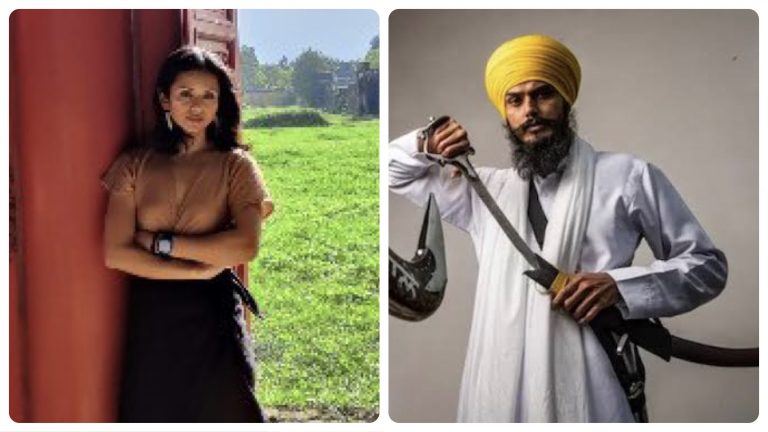
Indian journalist for Vice simps on Khalistani leader Amritpal Singh, describes him as a ‘charismatic activist’ fighting for ‘self-determination’

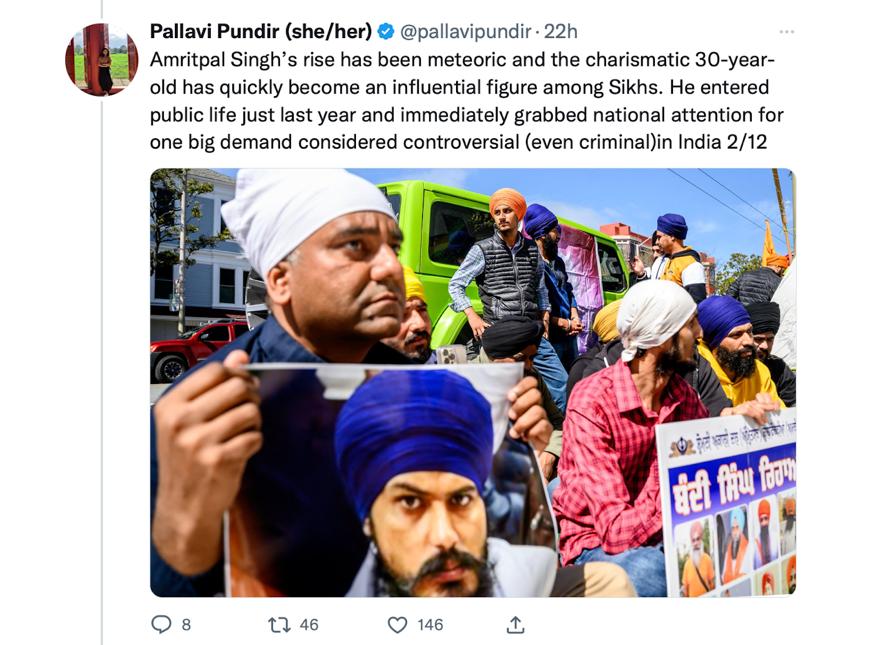
Pallavi Pundir, an Indian journalist working as a Senior reporter at Vice World News, a media organisation based out of the United States, recently penned an article sympathising with the fugitive Khalistani leader Amritpal Singh, describing him as a ‘charismatic Sikh activist’ and downplaying his secessionist activities as a fight for ‘self-determination’ for India’s Sikh minority.

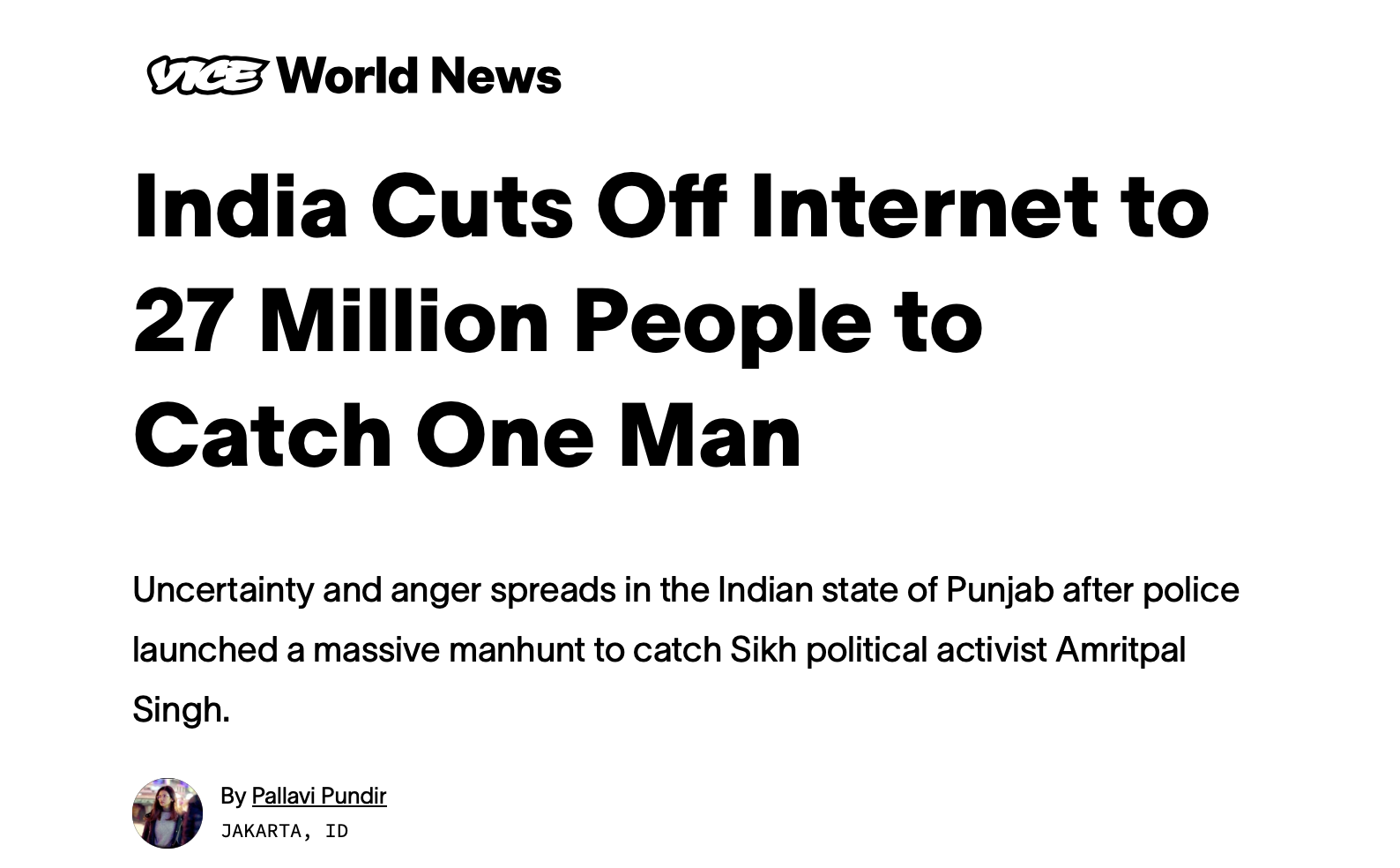
Titled ‘India Cuts Off Internet to 27 Million People to Catch One Man’, the article was published on Vice on March 22 and seeks to paint a sympathetic case for Waris Punjab De chief Amritpal Singh, who is currently on the lam after police launched a crackdown against his group.

Source:vice.com

Pundir, who graduated from the Asian College of Journalism and St Stephens’ College, institutes infamous for being leftist bastions, provides a favourable paradigm for Amritpal Singh, the Waris Punjab De head who made no bones about his disregard for India’s territorial sovereignty and support for the creation of a separate homeland for Sikhs, Khalistan.

In an attempt to brand Amritpal Singh as a victim of state excesses, Pundir goes on to claim that India has cut off internet services to 27 million people, a big fat lie as social media users on Twitter corrected her, highlighting how internet services continue to remain operational in Punjab.

While the Indian government had indeed temporarily suspended internet services in some parts of the state to trace down the fugitive Khalistani leader and throw a monkey wrench for his Khalistani aides, based out of India and abroad, who demonstrated a superior level of organisational and social media skills to vilify the Centre’s move to weed out separatist elements as ‘fascism’, ‘oppression’, and ‘majoritarianism’, as witnessed during the farmers’ protests when the Khalistani supporters and their leaders abroad mounted a social media campaign to push back against the government for arresting lumpen elements who resorted to rioting and vandalism under the pretext of peaceful demonstrations.

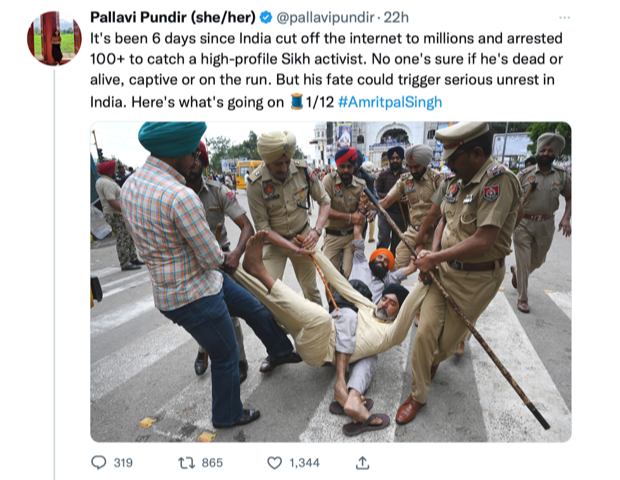
The Vice journalist, who also seems to be informed by woke gender politics currently taking root in the US, as witnessed in her Twitter bio where she identifies herself with pronouns she/her, posted a string of tweets, essentially excerpts from her article, providing a hagiographic account of Khalistan supporter Amritpal Singh and indulged in scaremongering with denigrating a pluralistic Indian society as a ‘Hindu-majority’ nation.

Pallavi Pundir of Vice World News simps on Amritpal Singh

Her article and Twitter thread, replete with lies and exaggerations, attempt to stoke paranoia among the assured and confident Sikh population of the country, who had never faced any religious persecution in the history of independent India, barring the 1984 pogrom when Congress leaders and supporters targeted the community after the assassination of former PM Indira Gandhi.

Source: Twitter

Pundir believes the fate of Amritpal Singh, who is on the run, could precipitate a serious crisis in India and touch off massive unrest—a dog-whistling of sorts to Singh’s supporters and a veiled threat to the Indian government should they decide to bring the fugitive Khalistani leader to book.

The author also seems enamoured by the ‘meteoric’ rise and the ‘charisma’ of Amritpal Singh, notwithstanding reports that said he was disloyal and unfaithful to many of her partners and even resorted to blackmailing them with obscene pictures to get rid of them.

“Singh called for self-determination for India’s Sikh minority & even separation of Punjab (India’s only Sikh-majority state) from the rest of the country. Is he a civil rights figure fighting for Sikh rights or a “national security threat”? The answer depends on who you ask,” Pundir tweets.

Source: Twitter

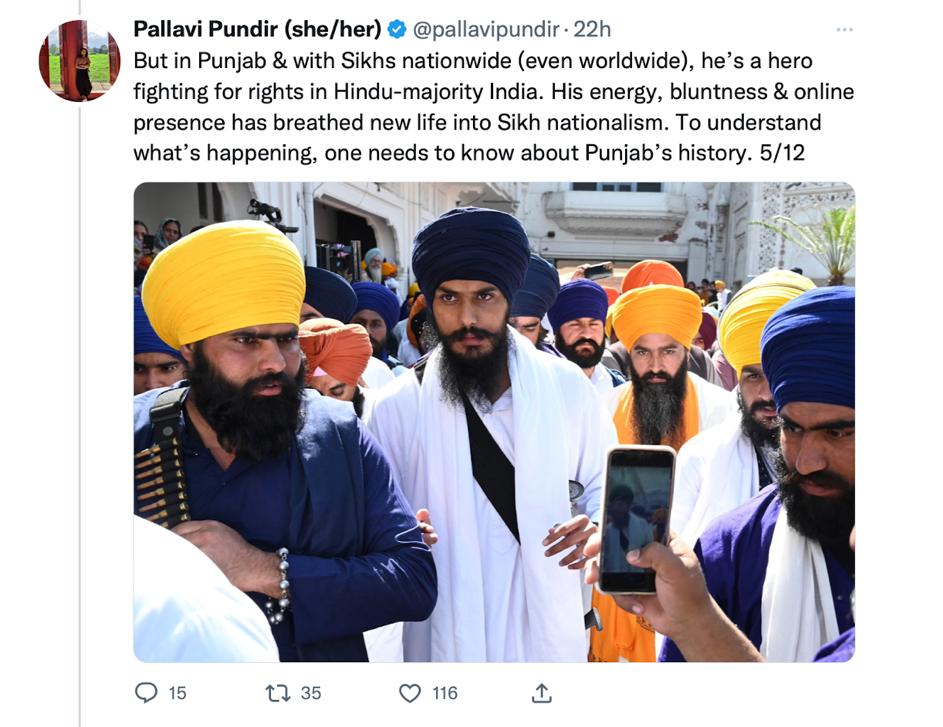
While the Indian government had termed Amritpal Singh a ‘national security threat’, given his ability to mobilise Khalistani elements to create unrest in India, Pundir goes on to lionise the wanted Waris Punjab De leader, creating a hero out of him as she characterises him as a ‘Sikh activist’ fighting for the rights of Sikhs in a Hindu-majority India.

“His energy, bluntness & online presence has breathed new life into Sikh nationalism,” says Pundir, trying to legitimise separatist propaganda that is propped up by neighbouring Pakistan and its Khalistani stooges based out of Canada, the United States, the UK, and other countries.

Source: Twitter

The author then goes on to downplay the character of the Khalistan movement, minimising it as a ‘decades-old struggle’ to achieve greater Sikh autonomy in India. What she would not say is that the ultimate goal of the Khalistan movement is to secede Punjab out of the Indian Union and create a separate nation for Sikhs. But for American and western readers who may not be aware of the real intentions and aims of the movement, she scrupulously portrays it as a struggle for “greater autonomy” and “rights” for the Sikh minority. 

To lend credence to her separatist narrative sympathetic to the Khalistan movement, Pundir vilifies the Indian government and alludes to its actions to protect her sovereignty as unjust, alleging that there have been enforced disappearances, arbitrary arrests, alleged torture, and extrajudicial killings in their attempt to quell Khalistan sentiments. As expected, she does not bother to furnish proof for the same and cites propagandist tweets by Khalistani leaders such as Jagmeet Singh to continue maligning the Centre.

She quotes Amritpal Singh’s venomous assertions against India and couches them as a fight for ‘Sikh empowerment’. “Whenever you depend on state structures, they control your fate, including your politics as a community. Our hope is to provide alternative parallel structures that provide us independence,” Pundir quotes Singh as saying.

And quite predictably, Singh is also hailed for his involvement in ‘drug rehabilitation campaigns’, a hackneyed trick often used by cheerleaders of Khalistani supporters to project them as innocents and stoke public sentiments against police action against such anti-social elements. 

The Vice author even tried to make light of the threat issued by Amritpal Singh against PM Modi when he warned him of meeting a similar fate as former PM Indira Gandhi, who was assassinated in 1984.

Pakistan-backed ISI trained Khalistan leader Amritpal Singh

On March 21, a Hindustan Times report revealed that Pakistani spy agency ISI trained pro-Khalistan separatist leader and chief of Waris Punjab De Amritpal Singh in Georgia before coming to India. Furthermore, it has been revealed that Singh had close links to the banned Khalistani terrorist organisation Sikhs For Justice. HT quoted unnamed officials in India’s counter-terrorism apparatus saying key portions of the conspiracy were hatched in Dubai.

A person aware of intelligence analysis of Waris Punjab De chief Amritpal said, “During his stay in Dubai, which is a hub for ISI agents, Amritpal Singh was offered money as part of a well-orchestrated plan to revive militancy in Punjab. He was sent to Georgia for training by ISI before his flight to India.” Amritpal Singh is a part of the conspiracy hatched by Pakistan to revive militancy in Punjab, the officer said.

He added, “Amritpal Singh also has links with SFJ and even campaigned for the latter’s activities on social media.” Singh was close to Gurpatwant Singh Pannu, founder of SFJ, who is a designated terrorist under the Unlawful Activities Prevention Act (UAPA).

The motive of the article in the international media organisation cannot be mistaken. At a time when Indian law enforcement officials are involved in finding the whereabouts of Khalistan leader Amritpal Singh, secessionists and their lackeys in the media are busy painting him as a hero and a “rights activist” in a desperate hope that such propaganda efforts would help legitimise their cause of Khalistan and scrub clean Singh’s antecedents to pressurise the Centre into being lenient against him.

As court frames charges against Tahir Hussain, here are 10 apologists who supported the ex-AAP councillor in the aftermath of the Delhi riots

On Thursday (March 23), the Karkardooma court in Delhi framed murder and conspiracy charges against Aam Aadmi Party leader Tahir Hussain and ten others for the murder of Intelligence Bureau official Ankit Sharma during the 2020 anti-Hindu Delhi riots.

They were charged under sections 147, 148, 153A, 302, 365, 120B, 149 & 188 of the Indian Penal Code (IPC). Tahir Hussain was additionally booked under IPC Sections 104,109 and 505.

While framing the charges, the court noted, “Tahir was continuously acting in a manner of supervising & motivating this mob. All these things were done to target Hindus. Every member of the mob assembled there participated in achieving the objective of targeting Hindus.”

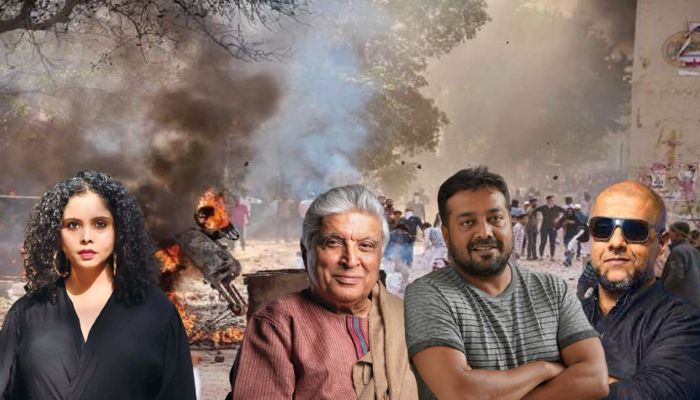
When the role of Tahir Hussain first emerged in the immediate aftermath of the Delhi riots, the cabal of left-liberals dismissed all evidence against him and tried to paint him as a victim of Hindu majoritarianism. Leading the pack of wolves was Washington Post ‘columnist’ Rana Ayyub.

In a tweet, she claimed (archive), “Tahir Hussain arrested. Kapil Mishra gets Y plus security, Anurag Thakur is free, no one seeking accountability from Amit Shah, and Modi is being celebrated. We call this majority privilege.”

‘Journalist’ Rajdeep Sardesai resorted to ‘monkey balancing’ and lamented how everyone was fixated only on the brutal murder of IB officer Ankit Sharma by Tahir Hussain and his aides.

He tweeted (archive), “35 people have died in riots till now; but for RW Internet army, only Ankit Sharma matters because needle of suspicion is on AAP councillor, Tahir Hussain. The day we seek justice for each and every innocent victim of riots, Hindu or Muslim, we will build a ‘new’ better India!”

‘Filmmaker’ Anurag Kashyap also tried to give a clean chit to Tahir Hussain in June 2020.

In a tweet (archive), he wrote, “Claim by Delhi Police: Conspiracy of Riots hatched on Jan 8 by Umar Khalid, Khalid Saifi & Tahir Hussain to coincide with Trump’s Feb visit. Fact: News that Trump may come to India was first announced tentatively only on 13 Jan.”

Similarly, Bollywood singer and former AAP leader, Vishal Dadlani, claimed that Tahir Hussain was being falsely implicated in the Antii-Hindu Delhi riots cases. He cast aspersions on the AAP councillor’s arrest by suggesting that he called the police at the time of violence.

“Let’s be very clear. Tahir Hussain is the guy that “they” are trying to blame for rioting and violence. Many of you have also bought that narrative. BUT…ask yourself…why would HE call the Police 5 times? Let the public hear those calls!! That will clarify a LOT!” he said in a tweet (archive).

The ‘phone call to police’ alibi was also used by ‘entitled journalist‘ Sakshi Joshi to claim the innocence of the AAP leader. She tweeted (archive), “So what #TahirHussain claimed that he called cops and they rescued him was true! Police is accepting his claim!”

Her husband, Vinod Kapri, used the same line of argument to cast aspersions on Tahir Hussain’s role in the Delhi riots.

In a tweet (archive), he wrote, “The video was shot during the riots. If he was involved in the violence, then, why did he keep calling the police home? A police investigation has revealed that Tahir called them several times.”

‘Journalist’ Arfa Khanum Sherwani attempted to downplay the severity of crimes committed by Tahir Hussain, and painted him as a law-abiding citizen in a ‘fixed’ interview.

On March 5, 2020, she said in a tweet (archive), “Surrender plea rejected by the court. Tahir Hussain is arrested by Delhi Police. Have full faith in the justice system of my country…Am surrendering before the court today. Tahir Hussain told this to The Wire this morning.”

In the aftermath of the deadly Delhi riots, lyricist Javed Akhtar cried foul over the sealing of the house of Tahir Hussian and suggested that the police action was motivated by the accused’s Faith.

In a tweet (archive), he wrote, “So many killed, so many injured, so many houses burned, so many shops looted so many people turned destitute but police has sealed only one house and looking for his owner. Incidentally, his name is Tahir. Hats off to the consistency of the Delhi police .”

Aam Aadmi Party (AAP) MLA, Amanatullah Khan, had also defended Tahir Hussain and played the ‘religion card’ in the hopes of scoring political brownie points. In a tweet (archive), he wrote, “Tahir Hussain is innocent, BJP is implicating Tahir Hussain in a false case to save its leaders and defame Aam Aadmi Party.”

“Today Tahir Hussain is serving the sentence just because he is a Muslim. Perhaps the biggest crime in India today is being a Muslim, it is also possible that in the coming times, it will be proved that Delhi violence was done by Tahir Hussain,” he claimed in another tweet (archive).

In February 2020, AAP leader Sanjay Singh appeared before the media to defend Tahir Hussain and claimed that the accused AAP councillor was supposedly calling the police.

In a statement, Singh claimed, “Tahir Hussain has already given his statement in which he said that he gave all details to police and media about mob entering his house during the violence. He had asked the police for protection. The police came eight hours late and rescued him and his family from his house.”

He further alleged, “The police helped him and (his) family to get out of his house. They were not there for 2 days. When they were not in the house, the question on stones and all should not arise at all.”

Sanjay Singh had blamed the police instead of Tahir Hussain for supposedly not taking action to stop the anti-Hindu riots. He claimed, “Police action did not happen in time, it is definitely a serious mistake, why it was late, who said it was the subject of investigation.”

Role of Tahir Hussain in Delhi riots

OpIndia had earlier reported how Tahir Hussain had confessed in a disclosure statement that he chose his own house as a launchpad for the riots. Given that his house was a high-rise building and was under construction at that time, it was easy to collect stones and bricks without raising any suspicion. 

While gearing up for the riots and collecting ammunition to teach Hindus a lesson, Tahir Hussain instructed his supporters to be “ready for anything and in every manner” and also ensure that all the CCTV cameras in the area were broken (so the evidence of the riots could not be captured).

Kerala MP Rahul Gandhi disqualified from Lok Sabha following his conviction in criminal defamation case

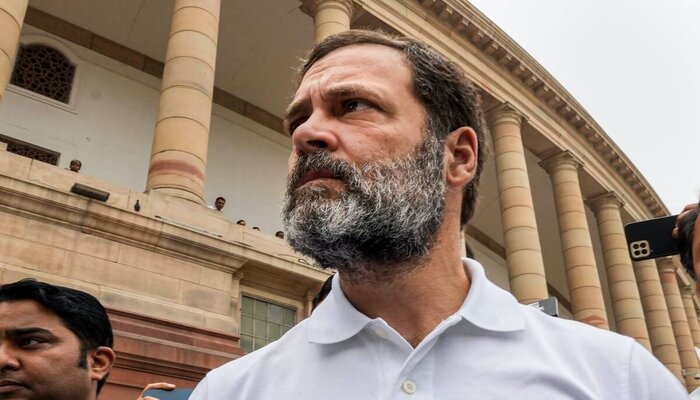
Congress MP Rahul Gandhi has been disqualified from Lok Sabha following his conviction in a criminal defamation case. He was disqualified under section 8(3) of the Representation of Peoples Act, 1951, which states that any MP or MLA convicted of any offence and sentenced to imprisonment for not less than two years shall be disqualified from the date of conviction.

Rahul Gandhi, the Lok Sabha MP from Wayanad in Kerala, has been disqualified with immediate effect, as section 8(3) of the Representation of Peoples Act states that an MP or MLA will be disqualified from the date of conviction, if the jail sentence awarded is two years or more.

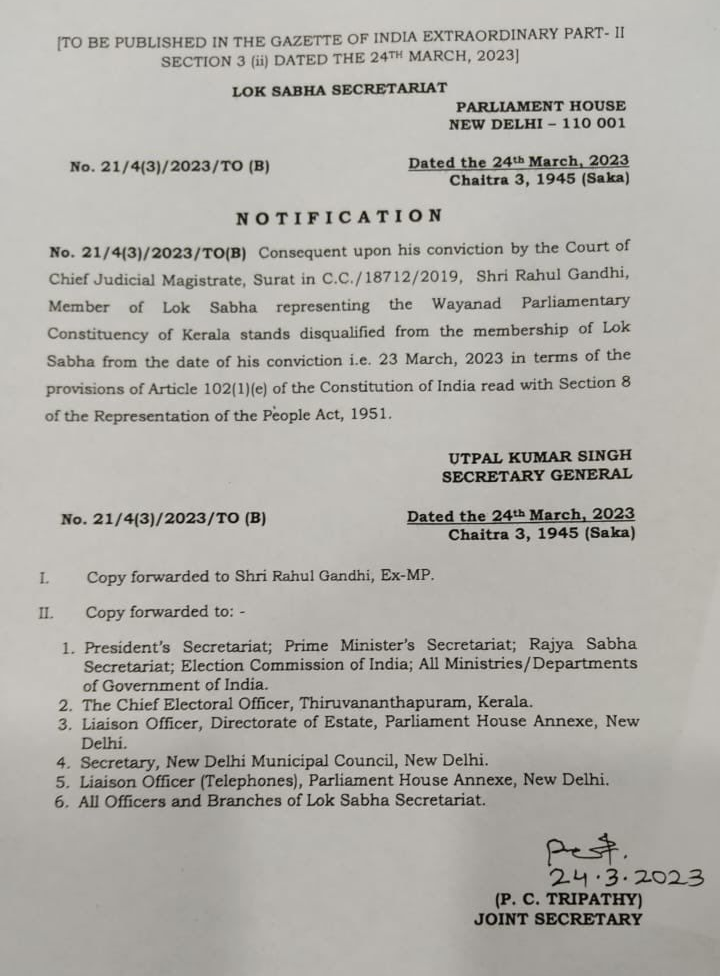
The notification

The notification issued by the Lok Sabha secretariate says:

Consequent upon his conviction by the Court of Chief Judicial Magistrate, Surat in C.C./18712/2019, Shri Rahul Gandhi, Member of Lok Sabha representing the Wayanad Parliamentary Constituency of Kerala stands disqualified from the membership of Lok Sabha from the date of his conviction i.e. 23 March, 2023 in terms of the provisions of Article 102(1)(e) of the Constitution of India read with Section 8 of the Representation of the People Act, 1951.

Apart from the current disqualification, Rahul Gandhi will also not be able to contest the next general election, and also perhaps the 2029 elections, if the conviction is not overturned by a higher court. According to the law, the disqualification will continue for six years after release from jail.

Therefore, if Rahul Gandhi does not appeal and goes to jail now, he will remain disqualified for eight years, 2 years in jail and 6 years after that. If he appeals, which he will, as announced by the Congress party, it will depend on how long it stays in the courts till the Supreme Court, and what is the final verdict. Theoretically, if Rahul Gandhi does not get relief from the courts up to Supreme Court, the length of his disqualification will increase by the time taken in the appeal process. However, if any subsequent court overturns the verdict or even reduces the sentence, his disqualification will be withdrawn.

Rahul Gandhi was convicted and sentenced to two years in jail by the court of Chief Judicial Magistrate in Surat yesterday for his defamatory comments against people with Modi surname in a speech in 2019.

A criminal defamation case was filed by Gujarat BJP leader Purnesh Modi after Rahul Gandhi in an election rally had asked why everyone with the Modi surname is a thief, mentioning Nirav Modi, Lalit Modi and Narendra Modi.

It is notable that the Representation of Peoples Act earlier had a provision under section 8(4) which had said that if the convicted lawmaker appeals against the conviction, such a lawmaker will not be disqualified. But the Supreme Court of India had struck down this provision in 2013.

The UPA-II government at that time had tried to overturn this judgement by bringing an amendment, and an ordinance was also issued to make it applicable immediately. But Rahul Gandhi himself had objected to this amendment, called it a nonsense, and had trashed it in front of the media. The amendment was withdrawn after this public humiliation of the government by its own leader.

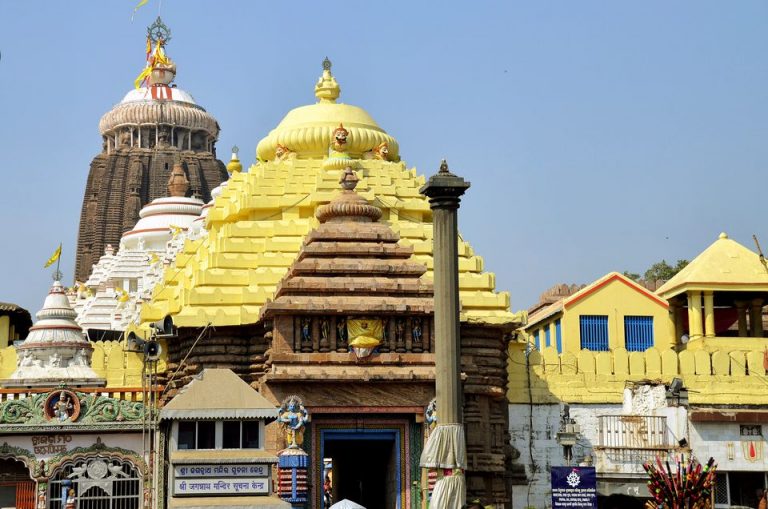
Bengal man Rahman Khan forcibly enters Jagannath Puri temple and climbs atop a dome violating ban on entry of non-Hindus, arrested

0

On Thursday, March 23, the Odisha police arrested a 25-year-old youth named Rahman Khan for entering the Jagannath Puri temple, violating the ban on entry by non-Hindus. Khan, a resident of Murshidabad in West Bengal, forcibly entered the city’s famous Jagannath Puri temple when the security personnel caught him, reports TOI. He has been charged with violating the norms of the temple banning entry of non-Hindus, and also hurting religious sentiments.

The accused reportedly misbehaved and hurled abuses at the authorities when they tried to evict him. He was taken to Singhadwar police station later that night and detained for questioning. The incident reportedly took place around 8.30 pm on Wednesday, hours after West Bengal CM Mamata Banerjee, who is on a three-day visit to the state, offered prayers at the Hindu shrine.

The police said that Rahman Khan forcibly trespassed into the revered Jagannath Puri Temple by dodging the security personnel and climbed atop the temple dome, with the apparent intention to commit suicide.

The police said that Rahman Khan tried to climb atop the temple’s dome in an attempt to kill himself, however, could not give a convincing reply when authorities asked him about the motive for his plan to commit suicide.

The temple authorities had temporarily closed the facility for deity darshan because an important ritual was about to take place. Challenging the security guards, Khan ran into the temple through its southern gate and as the police authorities ran after him, he started climbing the dome at the Beheran Dwar.

“We arrested him on charges of flouting the temple’s norms and hurting religious sentiments. His intention of forcibly entering the temple is being investigated. We have seized his mobile phone for verification,” a senior police officer said.

The state police are verifying his antecedents with the help of their counterpart in Bengal. Khan’s family has also been briefed about the occurrence. “Our personnel eventually caught hold of him and just as he was being evicted, he started hurling abuses at us,” the police officer said.

“His conduct towards our staff was unpleasant. We do not think he was mentally unstable. He was aware of the temple’s ban on the entry of non-Hindus and yet he forcibly entered the premises,” the police officer added.

Why Jagannath Temple restricts entry of non-Hindus

Jagannath temple is one of the most revered Hindu temples in Odisha and is devoted to Jagannath, a form of Lord Vishnu. Notably, only Hindus are allowed to enter the 12th-century shrine to offer prayers to the sibling deities in the sanctum sanctorum, a norm which has been effective from 1 June 1660. Hindu refers to the Hindu, Buddhist, Jain, and Sikh communities, basically, those covered by the Hindu Marriage Act. Simply put, the temple is open to the followers of Sanatan Dharma (Hinduism) or Indic religions.

The restriction, which was introduced after repeated instances of temple destruction by Muslim invaders, is followed so strictly that even a Gajapati King was not allowed to enter the temple since he was married to a Mughal soldier’s daughter. Similarly, former prime minister Indira Gandhi was also denied entry due to her marriage to a Parsi man.

For the record, Jagannath Temple was invaded 18 times by Mughal tyrants and foreign invaders. The first Muslim invasion was waged by Illlias Shah, the Sultan of Bengal, in 1340. Firuz Shah demolished the temple of Jagannath and desecrated the images around 1360. Sultan Husain Shah of Bengal captured Puri in 1509 and destroyed the idols in Jagannath Temple. The fifteenth invasion was waged by Amir Fateh Khan in 1647. It was only after the Marathas made their way into Odisha that the constant invasions of the Jagannath temple stopped. 

Every such raid resulted in destruction, loot and damage to the deities of Puri. During various attacks, the deities were hidden in distant places or shifted from one place to another.

The pain caused by repeated instances of destruction and loot, and efforts by the people of Odisha to save the temple of Lord Jagannath deliberated temple authorities to limit the entry into the temple to only Hindus. 

France rocked by nationwide protest over pension reforms after govt plans to raise the minimum retirement age to 64 from 62

0

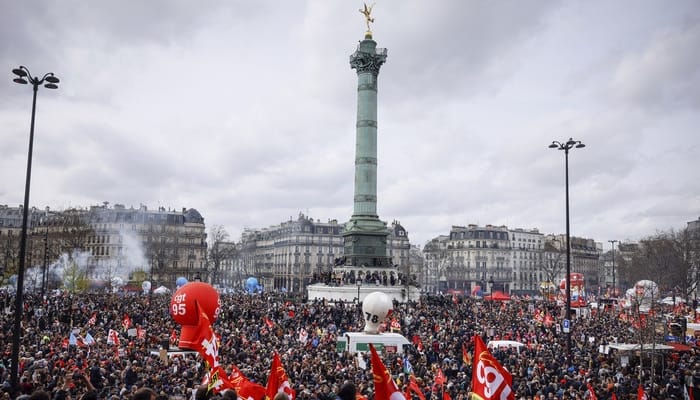
France has been hit by nationwide protests over the pension reforms, with demonstrators blocking access to transportation networks, oil refineries, and schools. The government is seeking to increase the minimum age for retirement from 62 to 64, which has been met with strong opposition from the public.

“I oppose this reform and I really oppose the fact that democracy no longer means anything,” a demonstrator told Reuters. “We’re not being represented, and so we’re fed up.”

Violent protests are underway in France after President Macron used his emergency presidential decree to push through a rise in the pension age from 62 to 64. The Senate passed the legislation on Thursday morning, and it was due to go to a National Assembly vote in the afternoon. Instead, Macron used an emergency presidential decree to allow the legislation without a vote.

The protests have caused widespread disruption, with transport networks severely affected. Demonstrators sat on train tracks, causing delays and cancellations, and some even blocked access to an airport terminal. Oil refineries have also been targeted.

On Thursday, the Bordeaux town hall was set on fire by protestors. More than a million people have taken to the streets against the reforms.

The protests have not been peaceful, with clashes reported between demonstrators and police in various parts of the country. Tear gas was used on crowds in some areas, and there have been reports of arrests and injuries.

The government has defended its proposed pension reforms, saying they are necessary to ensure the sustainability of the pension system. However, critics argue that the changes will disproportionately affect those in lower-income brackets and will be a setback for workers’ rights.

Macron had earlier said “When I started working, there were ten million retirees; today there are 17 million, and by 2030 there will be 20 million,” he said. “Do you really think we can continue with the same rules?” “When groups, as they have this week, use violence without any rules because they are not happy with something, then that is no longer a democracy,” Macron said.

This hasn’t gone down well with the public and the protests have received support from labour unions, who have called for further strikes and demonstrations in the coming days. The situation remains tense, and it is unclear how the government will respond to the growing public unrest.

Earlier OpIndia had reported that due to sanitation workers joining the protests, there was a garbage pile-up in Paris. The workers’ strike has impacted half of the districts in Paris, Nantes, Rennes, and Le Havre. The city’s waste piles weighed more than 7,000 tonnes, as per reports. While comparable issues are present in other French towns as well, the shambles in the nation’s capital are drawing attention globally.

While these protests have been ongoing for two months since the government unveiled the pension reforms proposal in January this year, Thursday marked the first day of coordinated action by Public and Labour Unions. It followed Macron breaking weeks of silence on the new policy to say he would not back down and the law would come into force by the end of 2023.

Macron and his government have defended the retirement reform and said that it is necessary to keep the pension system funded, claiming it would otherwise eventually go bankrupt.

‘Even after being asked by Supreme Court to be careful, his behaviour has not changed’: What Surat Court said while convicting Rahul Gandhi

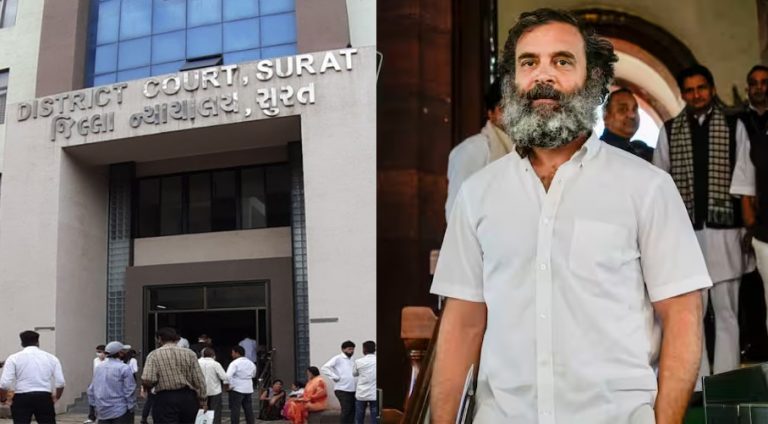
Congress MP Rahul Gandhi is facing disqualification from Lok Sabha after Surat Court convicted him in a criminal defamation case and sentenced him to jail for two years. According to section 8(3) of the Representation of Peoples Act, 1951, any MP or MLA convicted of any offence and sentenced to imprisonment for not less than two years shall be disqualified from the date of conviction. Therefore, Rahul Gandhi could be disqualified for his 2019 speech where he alleged that everyone with the Modi surname is a thief.

Harsh Hasmukhbhai Varma, the Chief Judicial Magistrate of Surat who delivered the verdict, made some scratching remarks on the Congress leader in the judgement. In the judgement issued in Gujarati, the CJM explained why Rahul Gandhi has been found guilty, and why he has been awarded maximum punishment.

The court said that even after being asked by the Supreme Court to be careful, Rahul Gandhi’s public conduct has not changed and he made defamatory comments, and as he is a parliamentarian, strong punishment is needed.

The court said that when Rahul Gandhi was asked about the crime, he had answered that the speech he gave was for the overall good of the citizens, and it was part of his duty towards the people. Rahul Gandhi denied discriminating against people, saying that he loves all people in the country equally.

Rahul Gandhi further claimed that he had no intention to insult any caste, and moreover, the complainant has not faced any loss or mental harassment due to his statement. The Congress MP also claimed that he has not been held guilty previously in any such cases, and he will not seek an apology.

But the court noted that Rahul Gandhi was earlier asked by the Supreme Court to tender a written apology for attributing his ‘Chowkidar Chow hai’ jibe against Prime Minister Modi to the Supreme Court. Gandhi had submitted an unconditional written apology to the apex court in May 2019, for saying in a speech that the Supreme Court had said that Chowkidar is involved in the theft (Chowkidaar ne chori ki hai).

The magistrate noted that Rahul Gandhi was asked by the Supreme Court to be careful in his speeches in future, but he still went ahead and said that everyone with Modi surname is a thief.

The order states that the accused is a Member of Parliament and if he is given lesser punishment, it would send out a wrong message in the society. Hence, taking into consideration the accused’s conduct, he is given highest punishment and also pay a fine.

“Considering the submissions of both the parties and facts of the case and various comments given by the accused and directions of the Supreme Court to be careful, one can see it has not impacted the accused’s public conduct and behaviour,” the CJM said.

“Further, he is a Member of Parliament and addressing people as an MP is a serious matter. When someone of an MP level addresses common people, the intensity of crime increases. If he is given lesser punishment, it gives out a wrong message to society that anyone can say anything and get away with it without consequences. Hence, keeping in mind everything, the accused is given two years imprisonment and is asked to pay a fine,” the judgement stated.

It is notable that the petitioner refuted the claims of Rahul Gandhi’s lawyer that the petitioner was not personally hurt and he didn’t defame any community. The audio-visual evidence clearly shows Rahul Gandhi accusing everyone with Modi of being thieves, comparing Narendra Modi with Nirav Modi and Lalit Modi. The court noted that the evidence presented has to be found genuine and not tampered with.

The petitioner stated that his name is Surat Purnesh Modi, and therefore Rahul Gandhi’s comments were defamatory to him also. The court agreed with these arguments and ruled that the petitioner has been able to prove the accusations in the court.