Home Blog Page 2415

JNU withdraws new disciplinary rules that imposed fines up to Rs 50,000 for violence, abuse, dharna on campus

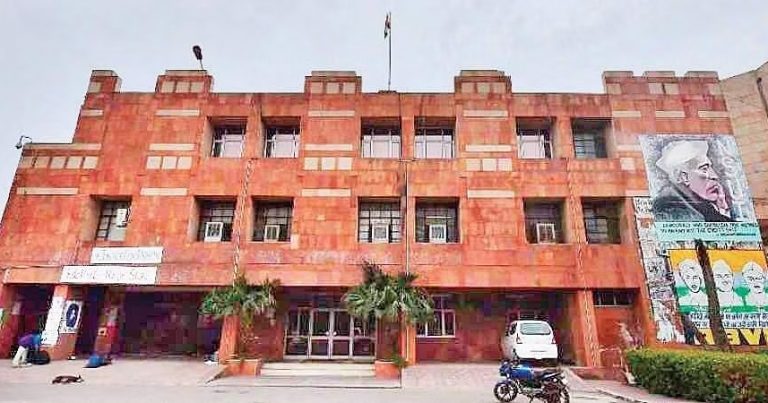
The Jawaharlal Nehru University has withdrawn the disciplinary rules that it had introduced recently imposing fine of upto Rs 50,000 on students for physical violence, abuse and holding dharna on campus. The JNU had announced the ‘Rules of Discipline and proper conduct of students of JNU’ on 28 February, saying that it will come into force from 3 March.

But on 2 March, JNU chief proctor Rajnish Kumar Mishra issued a notification announcing that the notification dated 28.2.2023 has been withdrawn on the directions of the vice-chancellor. The notification said that the ‘Rules of Discipline and proper conduct of students of JNU’ has been withdrawn in view of administrative reasons.

The rules had stipulated various punishments for students for various acts like violence, forgery, protests etc. It had said that the rules have been introduced to regulate and enforce discipline among students and employees of the University and to take such disciplinary measures in this regard as may be deemed necessary.

The rules were to be applicable for any breach of discipline and conduct committed by a student inside or outside the JNU Campus. The rules had specified various such violations under different categories, and the punishment for those offences ranged from fines of Rs 5,000 to Rs 50,000, rustication and cancellation of admission.

According to the 10-page rules which have been withdrawn now, fine for wrongful confinement of any member of the faculty, staff, student or anyone camping inside the campus, and any physical violence, abuse, manhandling etc would have been punished by a fine of Rs 50,000.

The fine for any act of moral turpitude, gambling, disruptions was set at Rs 20,000, while the fine for forgery, tampering documents, improper behaviour during tours and use of abusive, defamatory, derogatory or intimidatory language was to be punished with a fine of Rs 10,000.

Unauthorised occupation of hostel room, use of university property or accommodating unauthorised persons in hostel would have caused ban in entry, while repeat offences would have caused rustication for minimum one semester.

The rules mentioned that it had been approved by the Executive Council, the highest decision-making body of the university, in accordance to powers vested as per statute 32(5) of the statutes of the university.

However, Executive Council members had told the media that it was not discussed, and was only brought as an additional agenda item. They said that the rules were presented in the council saying that it has been prepared for ‘court matters’.

Even Vice Chancellor Santishree D Pandit said that she was not aware of the development, and that is why it was withdrawn. “I was not aware of such circular. I am in Hubli for some international conference. The chief proctor did not consult me before releasing the document. I was not aware that such document is being drafted. I got to know about the document through newspapers. That is why, I have withdrawn it,” the VC told PTI.

The rules had triggered outrage among students, who termed it draconian and authoritarian. Akhil Bharatiya Vidyarthi Parishad’s JNU secretary Vikas Patel had demanded a rollback of the rules.
SEBI bans 45 individuals, companies from stock market owing to a YouTube scam, list includes actor Arshad Warsi and wife Maria: Full details

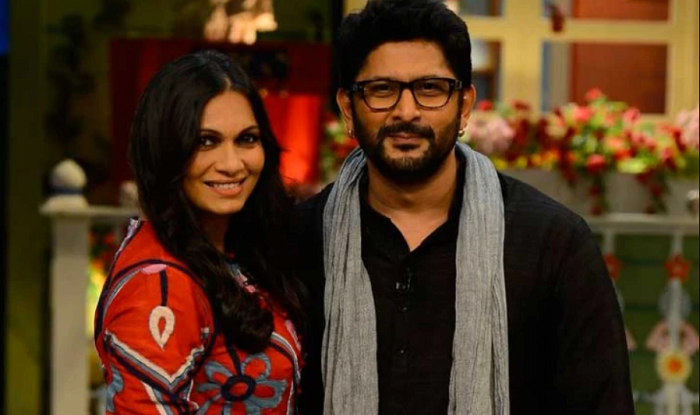
On Thursday, the Securities and Exchange Board of India (SEBI) banned Bollywood actor Arshad Warsi and his wife Maria among 45 individuals and companies from participating in the securities market. The decision was rendered following an examination into claims that two firms, Sharpline Broadcast Ltd. and Sadhna Broadcast Ltd., through specific entities, had manipulated share prices by posting deceptive videos on YouTube channels.

The SEBI discovered that a few people published videos urging viewers to purchase shares of Sharpline Broadcast Ltd. and Sadhna Broadcast Ltd. in order to make tremendous gains. According to the reports, several promoters of Sadhna Broadcast Ltd. have also been prohibited from trading in securities, in addition to Arshad Warsi and Maria Goretti.

In addition to the ban, SEBI has seized unlawful earnings totalling Rs 54 crore that the organizations made as a result of deceptive videos that were published on YouTube channels. The investigation’s conclusions are described in two distinct interim orders.

Arshad Warsi made a gain of Rs 29.43 lakh, Maria Goretti made a gain of Rs 37.56 lakh and his brother Iqbal Hussain Warsi made a gain of Rs 9.34 lakh, as per the interim order. SEBI has identified a handful of individuals as volume makers, including these three.

Meanwhile, the actor took to Twitter and said that he and his wife had very less knowledge about the stocks and that he took the advice and invested in Sharda stocks. “Please do not believe everything you read in the news. Maria and my knowledge about stocks are zero, took the advice and invested in Sharda, and like many others, lost all our hard-earned money,” he tweeted.

Following reports to SEBI that some companies were selling shares of Sadhna Broadcast Ltd. and Sharpline Broadcast Ltd. while manipulating prices, the probe got underway. According to the allegations, fraudulent films containing deceptive information about the two firms were released in an effort to entice investors.

The price and volume of shares of the two firms increased significantly between April and mid-July 2022, according to a study done by SEBI from April to September 2022. During the second part of July 2022, two YouTube channels called ‘The Adviser’ and ‘Moneywise’ posted false and deceptive videos concerning Sadhna Broadcast Inc. Similar films concerning Sharpline Broadcast Ltd were also posted in the second part of May 2022 on the ‘Midcap calls’ and ‘Profit Yatra’ YouTube channels.

The entities were categorized by SEBI into groups such information carriers, net sellers, promoters, and profit-makers, as well as creators of YouTube channels. SEBI alleged that these organizations worked together to increase trading activity and investor interest in the shares, disseminate false and misleading YouTube videos, and persuade investors to purchase the shares at inflated prices, all in violation of the PFUTP (Prohibition of Fraudulent and Unfair Trade Practices) regulations. As a result of this method, net sellers/promoters as well as certain volume creators generated exceptional gains.

In the case of Sadhna Broadcast Ltd, SEBI discovered that the complex business practices used by the entities, including the gross misuse of false and deceptive YouTube videos, had resulted in a sharp rise in the number of small shareholders—from 2,167 to 55,343, who ultimately purchased shares at a premium. In the case of Sharpline Broadcast Ltd., there were 20,009 more minor owners than there were 517, years ago.

Until further orders, the SEBI has prohibited the 45 firms including Warsi and his wife from buying, selling, or dealing in securities either directly or indirectly, in any form whatever. Also, until the impounded sum is put in the escrow account, the businesses and the individuals have been instructed not to dispose of any assets, including money in bank accounts, without first receiving consent from SEBI.

Warsi, Goretti, and the other accused in the scam have been asked to deposit their gains with a designated bank within 15 days, with a lien being put in place in SEBI’s favor. They are also prohibited from trading on the stock market.

CJI refuses urgent hearing for Karnataka hijab lobby, sets date after Holi vacation while state govt says no hijabs allowed in exam centres

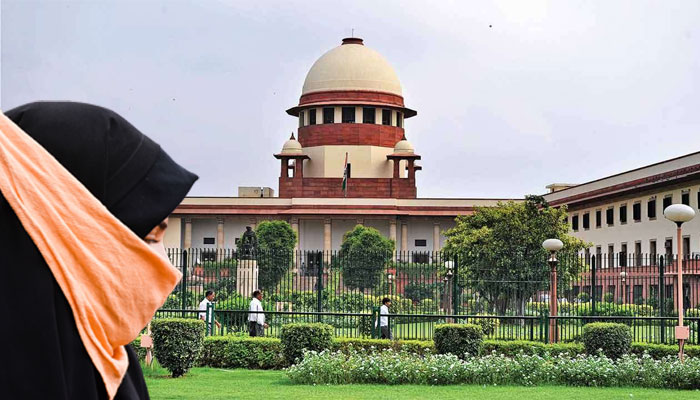
The Supreme Court today said that it will set up a bench to hear the plea against the hijab ban in schools in Karnataka after the Holi vacation. The lawyer appearing on behalf of the Shariat committee said that the matter required an urgent hearing as the Pre University exams in the state will begin on the 9th of March. Chief Justice DY Chandrachud recognized the urgency of the matter but said that it should not have been brought up on the last day of work before Holi Vacation.

It is to be noted that the matter was brought before the court in January after the Karnataka High Court upheld the Government Order banning the wearing of hijab in government schools and colleges.

The lawyer representing the Shariat committee said ” The exams will begin in five days”, to which the CJI replied, “why are you coming on the last day?”

The lawyer further added that many girls had shifted from government colleges to private ones just so they could go to college wearing hijabs. But exams happen in government colleges and girls are barred from wearing hijabs there.

The SC refused to grant the wishes of the counsel for an urgent hearing, and gave the next date of hearing for March 17, after the Holi vacation.

On the counsel’s pleading that the Hijab girls have missed one year of college and might miss another year if they are not allowed to wear hijab inside the exam halls, and what would they do now as the exams are starting in 5 days, the CJI said that he cannot answer that question.

As per reports, on February 22, advocate Advocate Shadan Farasat had mentioned the matter for seeking interim directions to allow the hijab-wearing Muslim students to attend the PUC exams by wearing their religious headscarves.

The Karnataka government has made it clear that no hijabs will be allowed inside exam centres. The Karnataka hijab controversy had broken in 2021 when a few Muslim girls in Udupi suddenly started wearing hijabs inside the college in defiance of the uniform dress code. The college and the government had clear orders that all students have to comply with the uniform dress code and no religious garments will be allowed. The matter soon snowballed into a debate, then a political controversy.

Eventually, the Taliban, which has restricted girls in Afghanistan even from basic education, also started supporting the hijab girls.

Earlier, the High Court of Karnataka upheld the government order stating that all students will have to comply by the uniform dress code inside educational institutions.

The hijab girls, who are just a few among over a hundred Muslim girls in that college in Udupi, had stated that the hijab is more important to them than their education and had preferred to miss their exams last year too.

Kerala: As Christian organization CASA undertakes awareness campaign against love jihad, Muslim outfit SIO files a complaint

On 24th February 2023, the Muslim outfit Students Islamic Organization (SIO) filed a complaint against a Christian organization, Church’s Auxiliary for Social Action (CASA) in the Wayanad district of Kerala. SIO Wayanad district president Muneeb N Azhari filed this complaint to the Pulpally police against the Wayanad district CASA committee office bearers. CASA is running a campaign against love jihad and narcotics jihad in Kerala. SIO has accused CASA of spreading hate propaganda against the Muslim community in Kerala.

In Wayanad, the Muslim population is growing more rapidly than the Christian population. Muslims predominate in the majority of taluks and villages. CASA’s aggressive effort against grooming and narcotic jihad has awakened many Christian community members. But now the police have received a complaint from the Students Islamic Society of India (SIO).

Muneeb N Azhari said in his complaint that CASA continuously engages in anti-Muslim initiatives in an effort to destroy Kerala’s social cohesion. SIO claims that both “love jihad” and “narcotic jihad” are propaganda campaigns against Muslims.

On the other hand, CASA calculates that 20,000 girls from various Christian churches have fallen prey to love jihad in Kerala since 2010. According to CASA, at least 15,000 of these girls continue to live with the conviction that their decision was misguided. One of the main objectives of CASA is to convert them all back to Christianity.

SIO asserted that CASA promoted “misunderstanding” regarding the Muslim community among young Christians. CASA has adopted a tough approach and claims that love jihad should end immediately. In the meantime, Kerala-based CASA is waging a fierce campaign against jihad. They had an awareness event last week, and more than half of the attendees were teenagers.

CASA is fighting against love jihad since 2010. CASA also participated in the 10th Ananthapuri Hindu Maha Sammelan held in Thiruvananthapuram in Kerala on Friday, April 29, 2022. The group was part of a discussion on ‘love jihad, land jihad, and halal economy.’ SIO, the student branch of the Jamaat-e-Islami Hind (JIH), was established in 1982. It is notable that Congress scion Rahul Gandhi is the Lok Sabha MP from the Wayanad constituency in Kerala where this complaint has been registered by SIO against CASA.

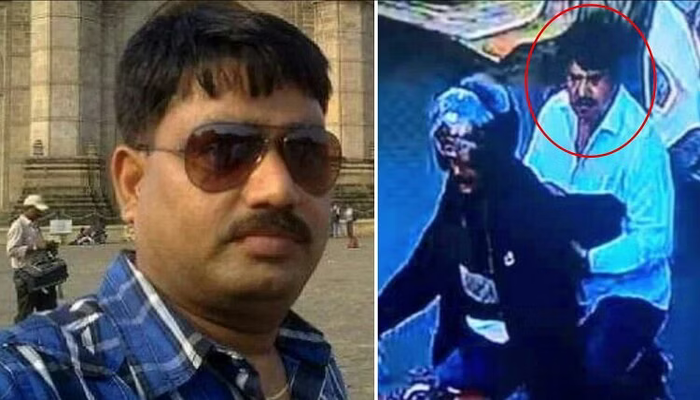
Umesh Pal murder case: Who is Guddu Muslim, a history-sheeter who threw bombs during the shootout

The primary witness in the 2005 BSP Lawmaker Raju Pal murder case, Umesh Pal, was killed, on Friday, along with one of his police gunners, last week in Prayagraj, Uttar Pradesh.

The three assailants, who had crude bombs in their luggage, were reported to have been pursuing Umesh Pal’s vehicle nonstop.

Guddu Muslim has been named as one of the accused who purportedly threw the bombs during the shootout.

Who is Guddu Muslim?

He was born in Allahabad and began participating in illicit activities at the age of 15 by engaging in robberies and extortions. His family sent him to Lucknow to study in order to keep him out of the criminal underworld he had become involved in.

The gangster had positioned himself in the criminal underworld by the mid-1990s. He used to win every contract for installing railway mobile towers while residing in Lucknow.

He had connections to major figures in the underworld.

Guddu Muslim is infamous for his skill in making hand grenades, even while riding a pillion on a moving motorcycle. Police sources claimed that Guddu was quite unusual in the way he put together a bomb and could manage it in just 4-5 minutes.

He would assemble the bomb while on the road and would carry the raw materials, nails, shards, gunpowder, jute twine, etc., in separate packs to avoid being discovered. He learned how to make bombs from a professional in Nepal’s underground, according to sources.

According to a police officer with extensive experience working in Prayagraj’s crime section, “Guddu developed his skills in making crude bombs in the early 1990s.”

He once intended to target deceased mobster Shri Prakash Shukla at the direction of a Barabanki-based gangster. He was involved in the murder of a Lucknow teacher.

The murder of Frederick Gomes, a physical education instructor at La Martiniere College in Lucknow, on March 7, 1997, is where the name Guddu Muslim first appeared, according to retired inspector general of police Rajesh Pandey, who was a part of the first Special Task Force (STF) constituted in the state.

He recalled that the former was a member of Satyendra Singh’s gang, a Faizabad history sheeter who was assassinated in 1996–1997 after Shriprakash Shukla shot him multiple times with an AK–47.

“We had also taken Guddu on remand when the STF was formed to know the whereabouts of Shriprakash,” he remarked.

Another senior police official remarked, that Guddu harboured resentment following the incident and even attempted to attack Shriprakash using crude bombs.

“Guddu spent several years residing at Hussainganj’s OCR building. He was arrested for Gomes’ killing. Even so, he admitted to the crime. Yet, he soon received bail,” as per the police.

“After being released from custody, Guddu escaped to Bihar. He used to produce bombs for the infamous Gorakhpur mafia don Parvez Tada. He first met Udaybhan, a mafia don in Bihar, through Parvez, and teamed up with him,” police added.

Guddu was sought by UP Police at all times. He was involved in carrying out a number of horrific acts in Bihar. He committed dozens of crimes in the state, within a short period of time, including kidnapping, murder and bombing.

Moreover, he used to travel to Gorakhpur to carry out crimes as directed by Parvez Tada. He was arrested by Gorakhpur police in front of Patna’s Beur prison in 2001 as a result of a tip-off. Yet shortly after, he was released on bail.

The CBI filed charges against Guddu Muslim in 2019 for the shocking murder of former BSP member of the legislative assembly, Raju Pal in January 2005.

Raju Pal and Umesh Pal murder cases

On January 25, 2005, Pal was murdered months after winning the Allahabad (West) assembly seat in his electoral debut by defeating former MP Atiq Ahmed’s younger brother Khalid Azim.

The main perpetrators in the homicide case are Atiq Ahmed, his brother and ex-MLA Ashraf. All of the accused are currently being held in jail.

Umesh Pal was shot dead by an unidentified man as he exited the Hyundai Creta SUV’s backseat. CCTV cameras recorded the entire incident. The attackers arrived in a car and a motorcycle. He was taken to Swaroop Rani Nehru Hospital, where he passed away while receiving medical care.

Police shot and killed one of the prime accused, shooter, Mohammad Arbaaz, 24, on Monday in an encounter in Prayagraj, three days after the murder.

Bulldozers plough through the properties of mafia Atiq Ahmed’s associates accused in the murder of Umesh Pal, as part of the Uttar Pradesh government’s stern action against the offenders.

Today, the Prayagraj administration demolished the house of Safdar Ali, a gun store owner and alleged aid of Atiq Ahmed.

Ahmed’s wife, Shaista Parveen, another accused in the case is currently on the run and police are searching for her.

Bihari migrant workers share their ordeal, TN DGP calls reports of attacks fake

There have been reports in the media of hate crimes targeting Hindi-speaking migrant labourers, especially from Bihar, working in Tamil Nadu. Although the TN Police have dismissed these reports as fake, terrified labourers returning to Bihar have a different story to tell.

It is pertinent to note that a report by the Hindi daily Dainik Bhaskar that was published on March 2, 2023, had earlier claimed that as many as 15 people have lost their lives in “Talibani” style attacks being carried out against the Hindi-speaking migrant labourers in the state. However, the Hindi newspaper has retracted that report and now, in its updated version, presented testimonies of the migrant labourers who have said that they are fleeing Tamil Nadu because of the violence that has been unleashed on Hindi-speaking migrant labourers in the state because of their linguistic identity.

Allegations of Bihari migrant labourers

When told that the Tamil Nadu DGP has called reports on the attack on Bihar migrant workers in Tamil Nadu fake, Arman, a labourer from the Jamui district who was returning home with 20 other labourers, told Bhaskar, “if the news is false, then why are so many people returning to Bihar from TN.”

According to Arman, migrant labourers have returned to Jamui, Nawada, and Lakhisarai districts in Bihar from TN. Biharis are fleeing TN on one pretext or the other, which is why it is becoming difficult to even get train tickets, said Arman.

Shravan Kumar, another Bihari labourer who worked in Tamil Nadu and returned home two days ago, claimed the situation in the state is exceedingly dangerous, with Bihari migrant labourers being targeted. “Locals want us to return to Bihar, accusing us of snatching their employment…they are attacking us wherever they see us, and our employers and local officials are of no help. “We were terrified,” Shravan Kumar lamented.

“The situation of Hindi-speaking labourers in Tamil Nadu is quite dismal,” Rohit Kumar, a resident of Sikandra village who returned from Tiruppur today, stated. They intend to drive away all Hindi-speaking people from the state.”

“Locals claim they don’t have jobs, therefore they’re upset and driving us away,” said Pramod Kumar of Jamui. “Hindi-speaking people are under attack. No work is being given to those people,” he too bemoaned.

Bihar CM expresses concern

Significantly, in addition to the Dainik Bhaskar article, two videos have also gone viral on social media. One video showed one man being attacked by a group of people who flee the scene immediately after the assault. Another video showed a grievously injured man being laid down on the floor while onlookers say that he needed to be rushed to the hospital. The identities of the injured men in both videos are unclear.

Sharing these videos, a Twitter user claimed that Hindi-speaking north Indian workers were being attacked in Tamil Nadu. 

Since then, this issue gained immense traction. The matter was also addressed in the Bihar assembly, with the BJP criticising the administration and requesting a debate to secure the safety and security of Biharis working in Tamil Nadu.

Soon after, Bihar Chief Minister Nitish Kumar expressed concern over the safety of workers from his state in Tamil Nadu. Nitish Kumar said in a tweet, I have come to know from newspapers that people from Bihar working in Tamil Nadu are being attacked. I have directed the Chief Secretary and DGP to contact their respective counterparts in Tamil Nadu and ensure the safety of the workers from Bihar living there.

The Bihar CM directed the chief secretary and DGP to speak to their counterparts in the southern state and ensure the safety and security of people from Bihar working there.

DGP denies allegations of Hindi-speaking migrant labourers being attacked in Tamil Nadu

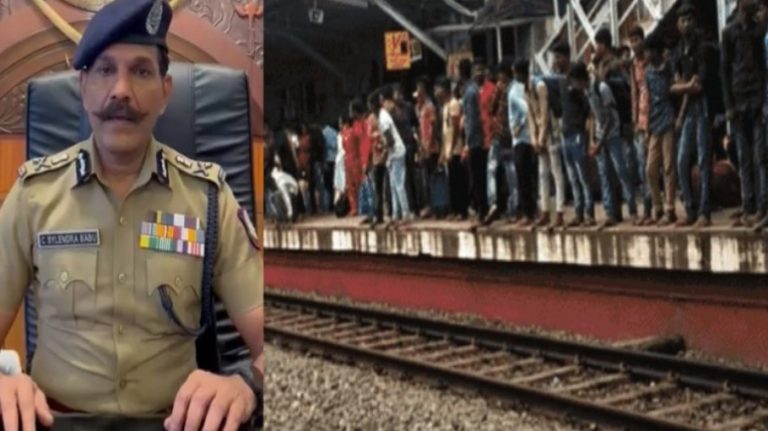
Hours after Nitish Kumar expressed his concerns, Tamil Nadu Director General of Police (DGP) Sylendra Babu issued a statement on Thursday, March 2 refuting allegations that Bihari migrant workers were being attacked in Tamil Nadu. The DGP stated that the videos circulating on social media regarding labourers from Bihar being killed were fake.

Posting a video on social media, DGP Tamil Nadu Shailendra Babu said, “Somebody in Bihar has posted a false and misleading video regarding migrant workers from Bihar being attacked in Tamil Nadu. Two videos which are circulating on social media regarding the incident are false. The facts of the videos are twisted so as to appear that migrant workers living in Tamil Nadu are being attacked.”

“These two incidents happened earlier in Tirupur and in Coimbatore. In both cases, it was not a clash between the local people and migrant workers. One was a clash between two groups of north Indian migrant workers. The other was a clash between two groups of local residents in Coimbatore.”

Update: The claims about murders and killing as well as the fingers of the Hindi-speaking migrant labourers being chopped and the labourers being locked in a room and hanged, which were reported by Dainik Bhaskar were retracted after the incident caused nationwide controversy. Since our reports were based on Dainik Bhaskar’s report and were reproduced here crediting them explicitly, we have removed those claims as well because Bhaskar doesn’t seem to be standing by it anymore.

Was Ayushman Kaul of Tek Fog fame behind the DFR Lab report that wanted to censor Hindu nationalists on Twitter

On Thursday (March 2), a new tranche of ‘Twitter Files’ was released, which revealed how the US-based Digital Forensic Research (DFR) Lab wanted to censor Twitter handles, allegedly associated with ‘Hindu nationalism’, and particularly with the BJP.

An analyst named Andy Carvin wrote to top Twitter executives on June 8, 2021, “Hi guys. Attached you will find… around 40k Twitter accounts that our researchers suspect are engaging in inauthentic behaviour… and Hindu nationalism more broadly.”

The DFR Lab analyst flagged over 40,000 accounts, claiming that they were paid employees/ unpaid volunteers of India’s largest party, namely, the BJP.

Opindia had found that at least 66 prominent and verified Indian Twitter handles were sent by US-funded Digital Forensic Research (DFR) Lab to the top executives of the social media giant for censorship. And the reason cited by the organisation was that they were connected to the BJP and the cause of Hindu Nationalism.

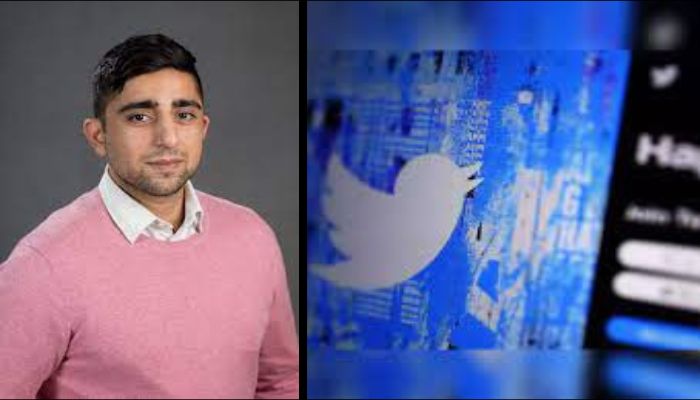
Interestingly, the timing of the internal communications coincides with the tenure of a controversial figure named Ayuhsman Kaul as the South Asia research analyst of DFRLab. According to his LinkedIn Profile, Ayushman Kaul was working as South Asia Research Analyst at the Digital Forensic Research Lab from April 2019 to January 2022, where he worked on “Monitoring disinformation, influence operations and hostile interference in the regional information environment. Particular focus on intersection of security, democracy and cyber space.”

Screengrab of the LinkedIn profile of Ayushman Kaul

This has left social media users speculating whether he was the one behind preparing the list of Twitter handles allegedly linked to Hindu Nationalism and the ruling BJP dispensation.

Popular Twitter user, Alok Bhat, informed, “Most likely it was based on the work done by Ayushman Kaul and released by DFR a few days prior to sending of this email.”

It must be mentioned that in May 2021 (two months before the Twitter email exchange), Kaul published a Medium blog post alleging the role of a Toronto-based PR firm in supposedly promoting narratives supporting the Modi government.

Popular Twitter handle ‘The Hawk Eye’ also questioned the role of Ayushman Kaul in creating a hit list of BJP supporters and Hindu nationalists for the Digital Forensic Research (DFR) Lab.

Ayushman Kaul and the malicious Tek Fog story

Ayushman Kaul is a senior analyst at Logically.ai, a dubious website that has been involved in the anti-India narrative. Based out of London, Kaul had collaborated with The Wire on many tech-related projects, including the one on Tek Fog, a dubious, non-existent app, in January 2022, along with Devesh Kumar, the man behind the fake Meta story published on Wire.

During Tek Fog reporting, Ayushman and Devesh did ‘Ask Me Anything (also called AMA)’ sessions on YouTube and Reddit to answer questions about the reports. Those AMA sessions are still available to check.

Kaul has contributed to multiple stories on The Wire such as “What the SOS Tweets Tell us About the Second Wave of COVID-19”, “Tek Fog: An App With BJP Footprints for Cyber Troops to Automate Hate, Manipulate Trends”, and “Anonymous Complainant Targeting Zubair Tweet Linked to Tek Fog App, BJYM Leader in Gujarat”.

In fact, Devesh and Kaul along with The Wire’s Naomi Barton had claimed how Alt News co-founder Mohammed Zubair was ‘attacked’ online using Tek Fog, a super app which does not exist as evidenced later. The Wire had to withdraw all these stories.

In November 2022, the United States Commission on International Religious Freedom (USCIRF) published a report citing the ‘dubious’ Tek Fog allegation as an example of a lack of religious freedom in India. 

Ayushman Kaul, as per his LinkedIn account, now works as a Senior Analyst at Logically. He joined the company in January 2022. In May last year, OpIndia explained how Logically was involved in sponsoring an anti-India stunt event where Rahul Gandhi was one of the guest speakers. 

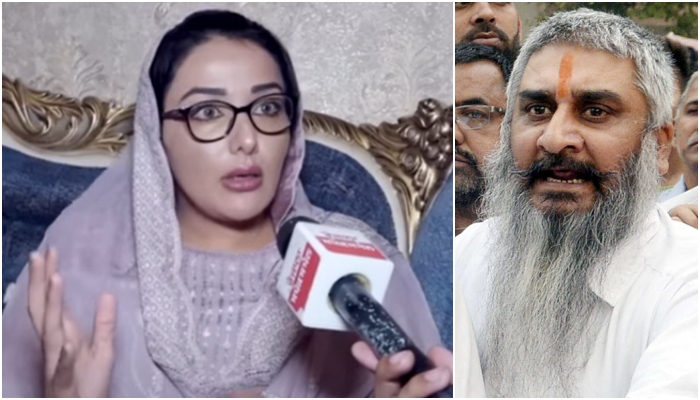
Punjabi actress Sonia Mann justifies killing of Hindu leader Sudhir Suri, says ‘it was a good job, he deserved to be killed’

On Thursday, Punjabi actress turned activist Sonia Mann justified the killing of Shiv Sena (Taksali) leader Sudhir Suri and said that he deserved to get killed. She also showered praises on culprit Sandeep Singh who shot Suri outside Gopal Mandir on Majitha Road, one of the busiest places in the city of Amritsar, where he and some other leaders of the party were holding a protest.

In an exclusive interview with a local Punjabi news channel named Rozana Spokesman, Mann said that Singh did a very good job by killing Suri. “Sandeep ji killed Suri. He did a good job. One should not indulge in killing and violence, but killing Suri was necessary,” she said. This is when she criticized Amritpal Singh, a pro-Khalistan preacher and the current head of ‘Waris Punjab De’ saying that he did nothing to stand behind Sandeep Singh.

“Singh was influenced by your speeches and your activities. What did you (Amritpal Singh) do for him. He was hurt that his close aide Lovepreet Toofan was in jail for three days, why didn’t he raise his voice back when police held Sandeep Singh for murdering Suri?” she questioned.

She also indicated that the current pro-Khalistani leader Amritpal Singh was selfish and possessed a weakened ideology of Khalistan. She said she would nurture and further the idea of ‘Khalistan’ put forth by Ranjit Singh, the first Maharaja of the Sikh Empire, and not that of Amritpal Singh. “The ideas of Khalistan of both these leaders are as if two ends of one line. They can never meet. Raja Ranjit Singh aimed for an empire in which every person would be treated equally, education would be given importance there and there would be respect for all. Today what Amritpal Singh is fighting for is just power. He is a fanatic leader and has a different idea of what Khalistan should be,” she said.

According to Mann, Amritpal Singh is also confused about whether he wants to keep his life private or work for the Sikh community. She criticized Singh saying, “You say you have a private life. Fair. But then you portray yourself as a ‘Sikh’ leader? Our Sikh Guru had in the past sacrificed their respective families for religion. They didn’t have any private life. Guru Gobind Singh ji sacrificed his four Sahibzadas to protect our culture and religion. He didn’t discriminate. He said all are my Sahibzadas and I have to protect all. What is Amritpal Singh doing? Just spreading fear and fanaticism?” she pondered.

She also said that Amritpal Singh was ruining the image of Punjab by raising pro-Khalistani slogans. “The recent Ajnala protests were the outcome of fanaticism. He jammed the Police station as his close aide was in jail. Where was he when Sandeep ji was jailed,” she reiterated extending support to culprit Sandeep Singh who killed Hindu leader Sudhir Suri.

Interestingly, Sonia’s father Baldev Singh Mann was killed by Khalistanis in the year 1986, while he was on his way to his village, Chinna Bagga, in Amritsar district, to meet his one–week–old daughter (Sonia).

Sudhir Suri was shot dead in broad daylight in Amritsar, Punjab on November 4 outside the Gopal temple in Amritsar while Shiv Sena leaders (Taksali) were protesting against the temple’s authorities after some broken idols were found in the garbage outside the temple premises. His son later stated that his father had received a threatening call in the name of Amritpal Singh and that his murder was pre-planned.

“There was a threat call the night before the incident. My father received a call from the UK. The caller introduced himself as Amritpal Singh and said he was sending some men and that his ‘deal is done’… It was planned, four bullets hit him,” Manik, Sudhir’s son was quoted.

Earlier a pro-Khalistani group named Justice League India had claimed responsibility for the killing and had celebrated the murder. Also, Gopal Singh Chawla, a Pakistan-based pro-Khalistan leader intimately affiliated with the ISI had celebrated the murder. Later Sandeep Singh was arrested by the Punjab Police in connection with the murder of the Hindu leader.

Notably, on February 23, tension gripped Ajnala, Amritsar, as the supporters of pro-Khalistani self-proclaimed religious leader Amritpal Singh surrounded the Police station in massive numbers. Singh’s followers congregated in the morning to hold a demonstration at Ajnala police station concerning an FIR lodged against Amritpal and associates. They demanded the cancellation of the FIR and release of Lovepreet Toofan who was arrested by the Punjab Police based on a complaint filed by Varinder Singh, a resident of Chamkaur Sahib. The complainant accused Amritpal and his gang of abducting and attacking him when he came to Ajnala for a spiritual event.

The police later surrendered to the pro-Khalistani supporters and announced the cancellation of the FIR after the latter injured several Police officers.

FBI clubs India under ‘rogue states’ along with Russia and China, forces MIT researchers to act against them: Report

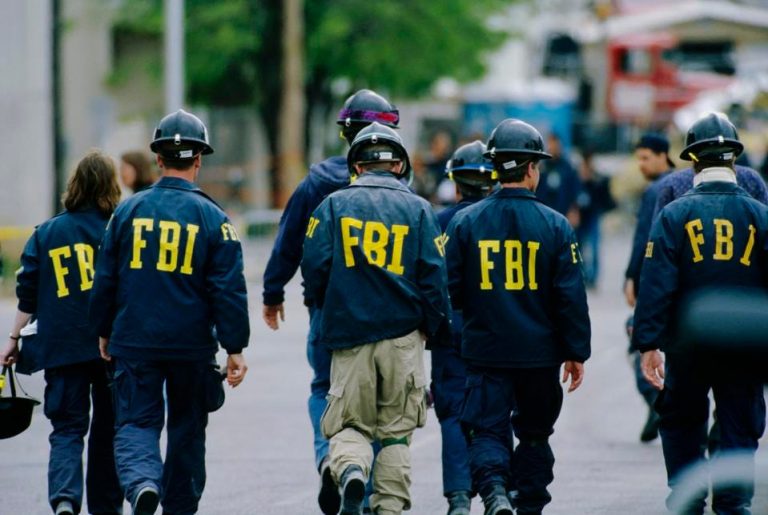
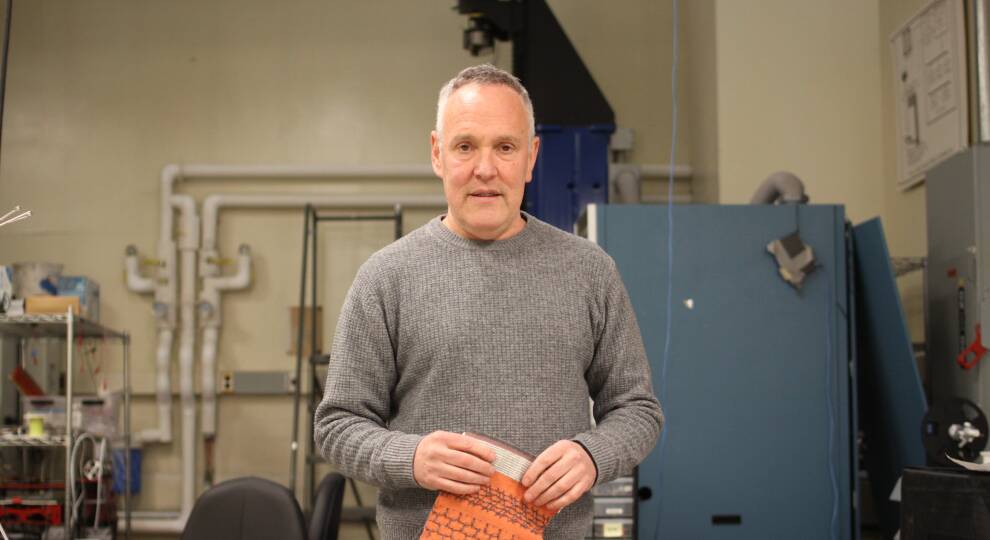
MIT researcher Yoel Fink in an interview with GBH news said that in the fall of last year, FBI agents visited the campus and in a closed-door meeting with him and other researchers asked them to stop Intellectual Property theft. The countries involved in this alleged IP theft were Russia, China and India. He said that he had never seen anything like this before in his 30 years of career in the premier engineering institution.

Yoel Fink teaches fabrics at MIT, image credits GBH News

Yoel Fink went on to say that Law Enforcement authorities should only visit the campus if there is clear evidence of crimes/theft committed inside the labs. In conjectural cases like this, the administration should be the one talking to researchers, not the FBI.

A section within the United States that align with the woke leftist ideology, considers India a rogue state and its hostility and policies (at least some of them) towards India reflect this view. The Left, with many of its NGOs, which work as an extended arm to exert their hegemony, have tried since 2014—the year Modi came to power—to convince the world that the Indian state is a totalitarian one and the voices of dissent are being suppressed here. Amnesty, Compassion International, Human Rights Watchdog etc. are some of the tools used to vilify countries that do not conform to their worldview, without paying heed to the indigenous cultural norms, traditions, and social and moral ethics.

Every year they publish skewed indices to reinforce their agenda, which entails defaming countries by judging them on parameters that are alien or immaterial to the population of the said country.

The Left, which is formidably entrenched within the US government, especially after the election of Democrat Joe Biden, with its inflated ego and neo-colonial mindset, sees nations in three ways a) Client States, b) Potential Client States and c) Rogue States. India with its growing prowess in tech, industry & research and immense human capital and its collective self-respect obviously doesn’t fit in the first two categories and consequently, relegated to the imagined rogue state.

This revelation is serious but becomes laughable especially when read with recent interviews of External Affairs Minister S. Jaishankar who has been schooling the west and other aspiring neo-colonialists day in and day out and asserting India’s sovereignty and strength at global forums.

The global left with its provincial vision sees nations as clients or rogue states. New Delhi should tread forward with unswerving strides and remain unmoved by these labels and keep working for its self-interest (s) the way it has been doing in the last half a decade.

Uttar Pradesh: Prayagraj development authority demolishes the house of a gun store owner, Safdar Ali, and alleged aid of Atiq Ahmed

Prayagraj Development Authority (PDA) in Uttar Pradesh picked up its demolition campaign again on Thursday, sending bulldozers to tear down a two-story house valued at three crores. The building that was demolished was in the Chakia area of the Dhumanganj police station and belonged to a gun store owner, Safdar Ali, who is allegedly close to mafia politician Atiq Ahmed. The gun store is in Jhonstonganj. The news came the day after the demolition of a part of the residence where the former MP’s absconding wife Shaista Parveen supposedly resided.

PDA officials said that the house was illegally constructed. They further said that Safdar Ali possessed the property and there has been litigation regarding the illegal building since 2020. Ajeet Kumar Singh, the PDA secretary, reported that the decision was taken because the authority had not approved the building’s map.

Singh stated, “The proceedings against the illegal construction were started in 2020. He was served multiple notices and was asked to vacate the house several times. He ignored these notices. Today, the house was demolished by our team.” Ali insisted to be completely oblivious to the proceedings, nevertheless.

“I had no clue,” Ali remarked when speaking to the journalists. He continued, “By 11.30 am, I was informed that the house will be torn down and that I should leave. The policemen who arrived here didn’t even provide me with a justification for the demolition.”

He also argued that the house belonged to his sons. “The house is not mine; it belongs to my boys. It’s improper that I received a notice. I should be informed of the offence I have committed after an investigation is completed,” he persisted. He added, that the action was taken in haste without any investigation.

Safdar and his family resisted leaving the building. However, the authorities cut the house’s power supply and began to sweep the vicinity.

Ali refuted accusations of supplying any weapons or bullets either to Atiq or his aides. “I have absolutely no relations of any kind with Atiq Ahmed or anyone. I believe someone has made a false complaint against me in this regard and that is why this action is being taken,” Safdar said.

PDA vice-chairman Arvind Kumar Chauhan, however, maintained that the house was constructed in violation of the norms. “The house was illegally constructed in violation of set norms and is therefore being demolished. Notice was issued to the owner of the house as per norms and all the required process has been followed,” he confirmed.

According to a senior police officer, Ali and Atiq have no known connection as of now. “We can’t say if he has any connection with Ahmed at this stage,” he proclaimed.

Umesh Pal and his gunner were killed in the Dhoomanganj area of Prayagraj on February 24. Shaista Parveen, Atiq Ahmed, and their two sons Aizan Ahmed and Aban Ahmed, are accused of the crime. Umesh Pal, according to the police, was the key witness in the 2005 murder of BSP lawmaker Raju Pal.

Khalid Azeem, alias Ashraf, Atiq’s younger brother and a former legislator, as well as two other people, are also mentioned in the FIR.

While Ashraf is incarcerated at the Bareilly Central Prison, Atiq is locked in a Gujarat jail. Shaista Parveen is currently on the run, and police raids are being carried out to find her.