Home Blog Page 2419

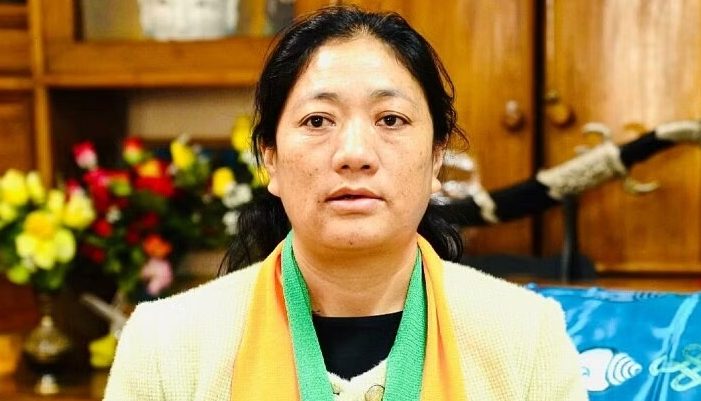
As results from elections in 3 North-Eastern states trickle in, read how Lumla in Arunachal Pradesh got an MLA without even voting

0

As the results for the 3 north-eastern states Tripura, Nagaland, and Meghalaya trickle in, the Bhartiya Janta Party (BJP) candidate from the Lumla constituency in Arunachal Pradesh emerged victorious uncontested in the by-polls held on February 27. BJP fielded Tsering Lhamu in the Lumla assembly constituency in Tawang district and no opposition party fielded a candidate.

It is notable that in 2019, BJP leader Jambey Tashi was elected from Lumla after he defeated National People’s Party (NPP) candidate Jampa Thirnly Kunkhap by a margin of 1288 votes.

What necessitated the recently held by-polls was the sudden demise of the incumbent BJP leader in November last year at the age of 48. Jambey Tashi had represented the Lumla constituency for three consecutive terms since 2009.

The People’s Party of Arunachal (PPA) had fielded a ‘gaon burha’ or village headman Leki Norbu as its candidate, however, Norbu withdrew his nomination at the last moment. Lhamu was announced as the unopposed winner of the bypoll on February 10 and received the certificate of election from the returning officer, RD Thungon.

Union Minister of Law and Justice, Kiren Rijiju in a tweet on February 10 congratulated Lhamu on her victory and wrote, “Congratulations to BJP Candidates Smt Tsering Lhamu of 1-Lumla Assembly Constituency (Bye-election) in Arunachal Pradesh and Shri @KazhetoKinimi of 31- Akuluto Assembly Constituency of Nagaland on getting elected unopposed. I wish both of them for a successful tenure.”

On February 16, Lhamu was sworn in as a member of the Arunachal Pradesh Assembly. At a ceremony held in the assembly, Speaker P D Sona administered the oath to Lhamu. S Sona congratulated Lhamu on winning the Lumla assembly seat without facing any opposition and expressed her hope that the MLA will uphold the dignity of the assembly and represent the interests of the people of her constituency. 

In a tweet posted on February 16, Arunachal Pradesh CM Pema Khandu extended his best wishes to the newly-elected representative from Lumla and wrote, “Hon Speaker Shri @pasang_sona ji administered the oath to Smt Tsering Lhamu ji, MLA, Lumla Assembly seat at Nokmey Namati Hall, which I attended along with DCM Shri @ChownaMeinBJP ji, Parliamentary Affairs Min Shri Felix Bamang ji & other esteemed guests. Best wishes to her!”

After Lhamu’s win, the ruling BJP now has 49 seats in the 60-member assembly. There are three Independent MLAs in addition to the four MLAs each of the opposition Congress and National Peoples’ Party (NPP).
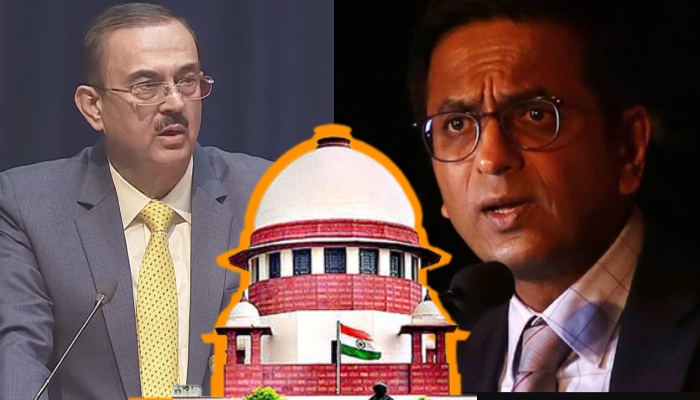
CJI Chandrachud loses his cool against SC Bar Association President in court over land allocation issue: here is what happened

On Thursday, Chief Justice of India DY Chandrachud lost his calm while considering the SCBA land allocation case for hearing. “One cannot expect the bench to be cowered upon. I have never been browbeaten and I will not let this happen in the final two years of my career,” said CJI Chandrachud as senior advocate Vikas Singh pressed the court to take up the SCBA land allocation case.

Advocate Vikas Singh who is also the president of the Supreme Court Bar Association of India (SCBA) stated that the SCBA land allocation case wasn’t taken up 9 times and that it needed immediate attention. “..just because the bar doesn’t do anything doesn’t mean it should be taken for granted. I feel strongly for this. 20 years lawyers have been waiting to be allotted chambers,” Singh said.

He also said that he would barge into CJI’s home for the case. “..then I have to escalate it. I will have to come to your residence,” he added. To this, CJI furiously replied saying, “Sit down. Keep quiet. Leave this court right now. You cannot expect the bench to be cowered on. I have never been browbeaten and I will not let this happen in the final two years of my career.”

The CJ further said that this is not how an SCBA president is supposed to behave. “Please don’t raise your voice. This is not the way to behave as the President of SCBA. You’re asking for land allotted to the SC to be given to the bar. I have made my decision. It will be taken on the 17th and it will not be first on board,” he ruled.

He also said that Singh would be treated as an ordinary litigant now. The case pertains to the conversion of buildings across Bhagwan Das Road into lawyer’s chambers. In September 2022, the Supreme Court declined to issue a notice to a petition seeking it to order the Ministry of Urban Development to build legal chamber blocks on the full 1.33-acre parcel of property that was recently allocated to the apex court and is located behind a gas station next to ITO on the Ring Road.

However, after the heated exchange today, Senior Advocate Kapil Sibal issued an apology in the case and said that the Bar shouldn’t have transgressed the limits of decorum. “I am sorry for what happened this morning. I don’t think that bar should transgress the limits of decorum. I apologize,” said Sibal.

The Supreme Court stated that the matter would be heard next on March 17 and it will not be first on board.

SC, which rejected NJAC for appointment of judges, orders a similar system for Election Commission appointments

On March 2, the Supreme Court of India ordered a new format for appointing Chief Election Commissioners and Election Commissioners. As per the SC orders, the appointment will be made by a committee comprising the PM, the Leader of Opposition and the Chief Justice of India.

With this order, the apex court has asked the government to follow a format that the Court itself rejected for appointing judges under National Judicial Appointment Commission (NJAC).

The Supreme Court discussed the importance of “fair and legal” conduct during the electoral process. It added that the ECI is charged with the humongous task of conducting elections in the Parliament and the State Legislatures. The power that ECI has under Section 324 is plenary, subject only to any law made by the Parliament of the State Legislature. The Election Commission is duty-bound to act fairly and legally, abiding by the provisions of the Constitution and the directions of the Court.

The apex court said that the fate of the political parties, political leaders and democracy rests in the hands of the Election Commission. The power to the people through the ballot is central to democracy, and the means to gain power in a democracy must remain pure and abide by the Constitution and the laws, the Court said. Hinting towards “treating political parties with an uneven hand unfairly and arbitrarily”, the Court called the possibility of such aspects would breach the mandate of Article 14 that guarantees equality.

The Court emphasised that the EC must act within the Constitutional framework and the laws and cannot transgress either mandate and still claim to be independent. Moving ahead, the Court said that the appointment of CEC and ECs must be impartial, and anything that might give an impression that the Election Commission is appointed by less than fair means must be banished.

The Court said, “There cannot be any doubt that the ECI is to perform the arduous task of remaining aloof from all forms of subjugation by interference by an executive. An executive can bring an otherwise independent body to its knees by starving it off and cutting off the financial wherewithals and resources required for its efficient and Independent functioning.”

In its order, the Court said, “As far as the appointment to the post of Chief Election Commissioner and Election Commissioners are concerned, the said shall be done by the President of India based on the advice tendered by the committee consisting of the Prime Minister, Leader of Opposition in the Lok Sabha, if no such leader then the leader of the largest party in opposition in the Lok Sabha having largest numerical strength and the CJI.”

The Court added that the orders would remain in place until the Parliament makes a law. It added, “As regard to the relief relating to putting in place a permanent Secretary for the ECI and charging its expenditure to the consolidated fund of India is concerned, the Court makes a fervent appeal that the Union of India and the Parliament make necessary changes so that the ECI becomes truly independent.”

It is interesting to see that the apex court ordered the government to make “necessary changes” to ensure ECI becomes “truly independent”, suggesting ECI, to date, was not working independently. The same can be applied to the appointment of the Supreme Court and the High Court as a closed group of judges known as the collegium does it.

Appointment of CEC in India

CEC heads the Election Commission of India and is appointed by the President. CEC is mostly an IAS officer. Once elected, it is not easy to remove the CEC from its post as two-thirds of the Lok Sabha and Rajya Sabha must be present to vote against him/her.

Video of madarsa teacher Fahad Noorie assaulting a student 70 times in 70 seconds goes viral, FIR registered

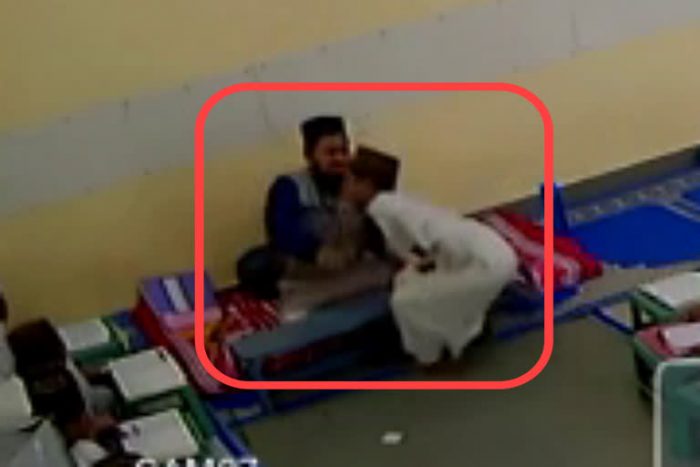
In Bhiwandi, Thane district, Maharashtra, an FIR has been lodged by the Nizampura Police against 32-year-old madarsa teacher Fahad Bhagat Noorie. He is charged with brutally assaulting a 14-year-old kid for failing to study properly.

CCTV cameras captured the entire ordeal of the child. Noorie can be seen assaulting the student with a stick in the video. He struck the latter at least seventy times in only seventy seconds.

Nizampura police station sub-inspector RK Dalvi confirming the development said, “An FIR has been filed against the teacher, and we are looking for him.” Police reported that the perpetrator is currently on the run.

The incident took place on November 24 of last year, but the trustee of ‘Dini Madarsa’ only filed a police report after a video of the assault went viral on social media. The Islamic school is attached to ‘Darul Ulum Hasnain Kariman.’

In the clip, the boy can be seen pleading with the teacher to stop hitting him, but to no avail. The footage also revealed that Noorie ignored requests to let go of the child from two other teachers. Noorie had been teaching at a madrasa for the last 12 years.

Noor Ali Sayyed, the trustee of Dini Madarsa, responded to the video of the assault and said, “The assault took place last year on November 24 and when we came to know about the incident through the parents the next day, we immediately sacked Noorie and two other teachers who did not stop him as they should have stopped him,” he said in his defense.

He added that they asked the parents if they wanted to file an FIR at the time, but they were satisfied with madarsa’s response so FIR wasn’t filed. He further said, “But since someone had made the video viral, we took cognizance of the same and approached police and lodged an FIR.”

Chhattisgarh: Maoists kill army jawan to protest against Agniveer scheme

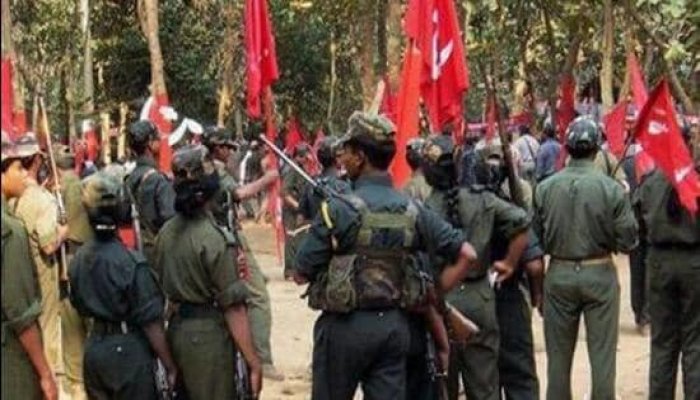
An army jawan, Moti Ram Anchla was gun down by Maoists in at the Useli village fair market, Bastar, Chhattisgarh, on February 25. He was on leave at his home town of Kanker.

The Maoists of the Kuwemari area committee claimed responsibility, stating it was done in retaliation for the central government’s Agniveer project.

In the midst of the ongoing investigation into the tragedy, a banner bearing the words “We killed Army jawan Motilal Anchla to protest Agniveer scheme” was found in the forests of Amabeda on Fufgaon.

The police said, that the discovery of the banner opened them fresh avenues for their inquiry.

It was the first instance, according to authorities, in which Maoists allegedly mistaken an army soldier for a member of a paramilitary force and attacked him.

The banner read, “Anchla was killed by our cadres in the Useli fair as a protest against Agniveer scheme, encouraging corporate houses for industrialization in Bastar and security forces. We protest against Agniveer recruitment in Army.”

Sundarraj Pattilingam, the inspector general of police for Bastar Range informed, that the Maoists have made a banner taking responsibility for the murder. The probe is in its early stages, he added.

Earlier, banned terror organisation PFI had opposed the Agnipath scheme claiming it was a scheme for ‘Muslim genocide’. In a charge sheet filed by the ATS, the authorities had stated that anti-Agnipath/Agniveer propaganda was being used by the PFI to mobilise Muslims against Indian State. The Agnipath scheme was likened to “Satan Israel like policy” where in every corner of the country, Hindus with army training would form groups. “This would be an army of rioters, who, because of their army training, would not run away if push comes to shove”, the message said.

In 2022, the government of India proposed Agnipath scheme to make the youth of India defence ready especially those who dream of joining the Indian armed forces. As per the scheme, selected candidates will be enrolled for four year period for training and will be known as ‘Agniveers’. After four year period, they could leave and join career of their own choice. 25% of these would also get opportunity to become regular cadre in Armed Forces.

FIR filed against Bollywood superstar Shah Rukh Khan’s wife Gauri Khan in Lucknow over a property she was the brand ambassador of: Details

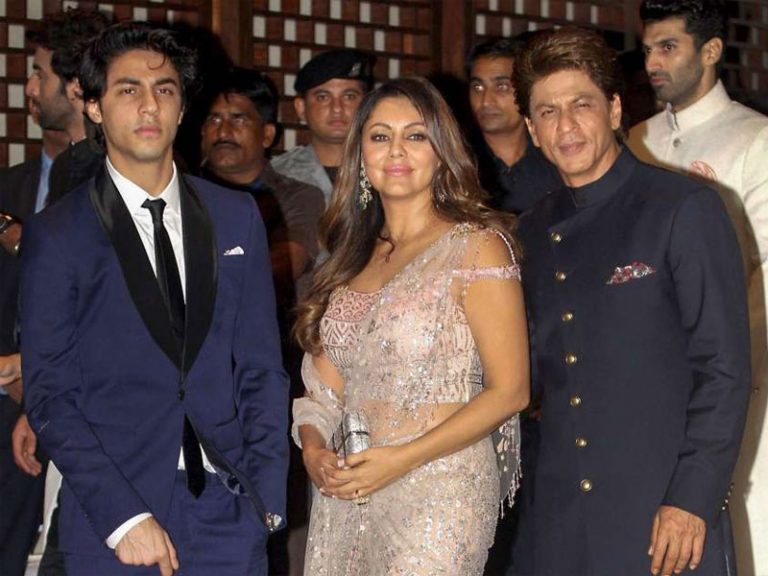
On March 1, Wednesday, an FIR was filed in Lucknow, Uttar Pradesh, against Bollywood superstar Shah Rukh Khan’s wife, Gauri Khan over a property dispute. The case against Gauri Khan has been filed under Indian Criminal Code section 409 (criminal breach of trust) (IPC). Tulsiyani Construction and Development Company CMD Anil Kumar Tulsiyani and its director Mahesh Tulsiyani were also named in the FIR.

Jaswant Shah, a Mumbai resident, filed the case, alleging that he invested in a property at Tulsiyani Golf View in Lucknow’s Sushant Golf City region but did not receive ownership despite paying Rs 86 lakh. He alleged that he purchased the apartment from Tulsiyani Construction and Developers Group because Gauri Khan was its brand ambassador.

The complainant said he bought the flat after being influenced by brand ambassador Gauri Khan. The complainant asserted that the flat at Tulsiyani Golf View, Sushant Golf City, Lucknow, was given to someone else.

Gauri Khan is a film producer and entrepreneur who runs her own company called Gauri Khan Designs. 

Prior to this, the Narcotics Control Bureau (NCB) apprehended Aryan Khan, son of Bollywood superstar Shah Rukh Khan,  on October 2, 2021, after raiding a cruise ship en route to Goa from Mumbai.

He was arrested for violating the Narcotic Drugs and Psychotropic Substances (NDPS) Act’s Sections 8(c), 20(b), 27, 28, 29, and 35 after NCB alleged that it has seized 13 grams of cocaine, 5 grams of mephedrone MD, 21-gram charas and 22 pills of MDMA ecstasy.

A battery of India’s top lawyers including former attorney general for India Mukul Rohatgi, Karanjawala & Co. team and eminent lawyer Satish Maneshinde and his team had steered the bail proceedings in the Bombay HC on October 28. Finally, Bombay HC granted bail, however, imposing 14 stringent bail conditions on him.

Andhra Pradesh pledges to build 3000 new temples, says state showing interest in ‘protecting and spreading Hindu faith’

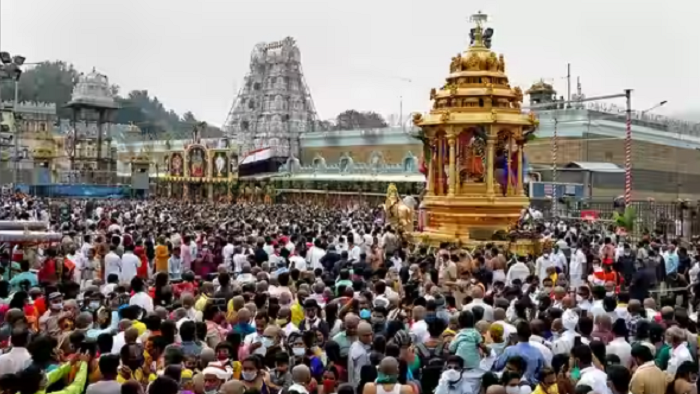
The state government of Andhra Pradesh has put forth efforts to guarantee that each of the state’s 26 districts is home to at least one significant Hindu temple. According to the administration, the state has greatly increased its interest in building shrines in every village of the state. 

According to Deputy Chief Minister Kottu Satyanarayana, the endeavour to ‘protect and spread the Hindu faith’ has been launched across the state on the orders of Chief Minister YS Jagan Mohan Reddy and that the state would build 3000 temples in coming years. Deputy Chief Minister Kottu Satyanarayana who is also the Endowments Minister confirmed the initiative by releasing an official statement which read, “To protect and propagate the Hindu faith on a massive scale, construction of Hindu temples in the localities of weaker sections has been initiated.”

The Sri Vani Trust of Tirumala Tirupati Devasthanams, which was established to build Sri Venkateswara Swamy temples at various sites around India, has allotted Rs 10 lakh for the construction of each temple.

The state administration had already stated that it would start building 1,330 temples. This list now includes 1,465 more temples. At the same time, 200 other temples will be constructed throughout the state at the request of certain politicians. “The construction of the recently added temples and the ones requested by the individual legislators will be done with the cooperation of voluntary organisations”, the deputy chief minister of the state said.

The minister claims that the Endowments Department is in charge of building 978 temples, and that work is proceeding at a rapid pace. Further, the state government has allotted Rs 270 crore to renovate temples and to carry out ceremonies there. Rs 238 crore of this has already been released.

Many Hindu temples vandalized in the state in the past few years

To note, there have been severe attacks on temples in the state of Andhra Pradesh leaving Hindus all over the country horrified and shaken. The unprovoked, systematic attacks on Hindu temples across the state, whose numbers have increased both in magnitude and seriousness over the recent years are troubling.

In October 2022, a Nandi idol in a prominent Shiva temple in Kanaparthi Village of the Prakasam district was vandalised. Authorities in the area said that the unidentified culprits had broke into the temple’s premises and vandalised the Nandi idol in an effort to steal it. Reportedly, no arrests had been made in the case.

In December 2020, a 400-year old mūrti of Sri Rāma at Ramathirtha, Vizianagaram District was vandalized and the head of Lord Rama was found lying in the temple tank. Prior to this incident, a 12th-century Nandi was also found broken to pieces at a Śiva temple in Chittur district; two old Hindu temples in Suryaraopeta, East Godavari district illegally demolished by neighbouring Church’s Pastor, who also stole the antique idols housed within, and 23 idols of small shrines in Pithapuram, East Godavari district were brutally vandalized. There are countless other similar incursions across the state.

As reported earlier, about 228 cases of attacks on temples were registered in Andhra Pradesh in the year 2020, 305 cases in 2019, 267 in 2018, 318 in 2017, 332 in 2016 and 290 in 2015. Also in September 2020, YS Jagan government had dissolved 2500 temple trusts across the state, which goes against the provisions of the Endowments Act.

While the state government of Andhra Pradesh has pledged to ‘protect the Hindu faith’, it is unclear whether the temples will be looked after by the state authorities who have history of digging deeper into the temple coffers, or the Hindu trustees and devotees.

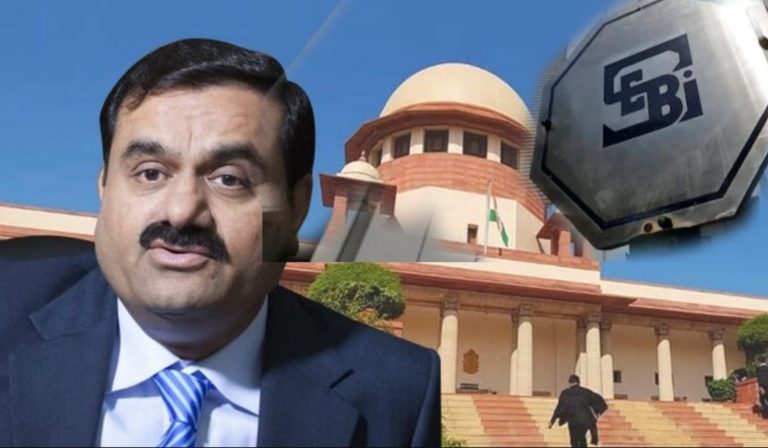
Adani-Hindenburg row: Supreme Court asks SEBI to conclude investigation in 2 months, constitutes committee to review the regulatory framework

The Supreme Court Thursday, March 2, directed market regulator SEBI to complete in 2 months its enquiry proceedings in the Hindenburg research report on the Adani Group of companies and submit the status report in a sealed envelope before the court within the stipulated time frame.

It asked SEBI to investigate whether the Adani Group of companies have violated Section 19 of SEBI rules and whether there was any manipulation of stock prices, as alleged in the Hindenburg research report.

In the wake of the Adani-Hindenburg row, to review the regulatory mechanism, the apex court bench comprising Chief Justice of India (CJI) DY Chandrachud, Justice PS Narasimha, and Justice JB Pardiwala also constituted an expert committee consisting of OP Bhat, Justice Devdhar, KV Kamath and Nandan Nilekani. The committee will be headed by former Supreme Court judge Abhay Manohar Sapre.

CJI DY said that SEBI shall apprise the court of its progress and also inform the expert committee of the progress. He added that the constitution of the committee does not hamper the independence of SEBI and its probe processes.

The bench noted that the report alleged that Adani manipulated share prices. The report further said Hindenburg Research took a short position in the Adani shares as well. The bench further noted that the complaints address the loss of investor capital over the last few weeks as a result of the steep decline of Adani group companies, caused by the Hindenburg Research report, which alleged manipulations and malpractices by Adani group companies. It is in this background these petitions have been filed, said CJI DY Chandrachud.

SC declined to gag media reporting on the issue

Notably, earlier the apex court made it clear that it will not issue an injunction against the media in connection to the recent Hindenburg Research report on the Adani Group of firms and its market impact.

Pronouncing the decision Chief Justice of India (CJI) DY Chandrachud said there is no question of gagging the media till the court pronounces the order. “We are not going to issue any injunction to the media ever. We will pronounce orders shortly,” the CJI said.

The apex court was responding to a plea filed by Adv ML Sharma on February 3. The plea had sought a gag order to prevent media from carrying statements or allegations related to the Adani group firms unless they are filed with and verified by market regulator SEBI.

Adani-Hindenburg row: SC rejects centre’s sealed cover suggestions over expert panel

On Friday, February 17, the Supreme Court turned down the Centre’s suggestion in a ‘sealed cover’ regarding a proposed panel of experts recommending steps to tighten regulatory measures in order to minimise any loss to Indian investors due to market volatility, as witnessed during the Adani-Hindenburg row.

Notably, the SC has been hearing four petitions regarding a report written by short-seller Hindenburg Research, alleging conglomerate fraud that cost the Adani Group losses of over $100 billion in market value.

The Adani Group equities have suffered on the stock exchanges following a slew of accusations from Hindenburg Research against the corporate behemoth, including illegal transactions and share-price manipulation. The Adani Group has denied the accusations, claiming that it abides by all legal and transparency obligations.

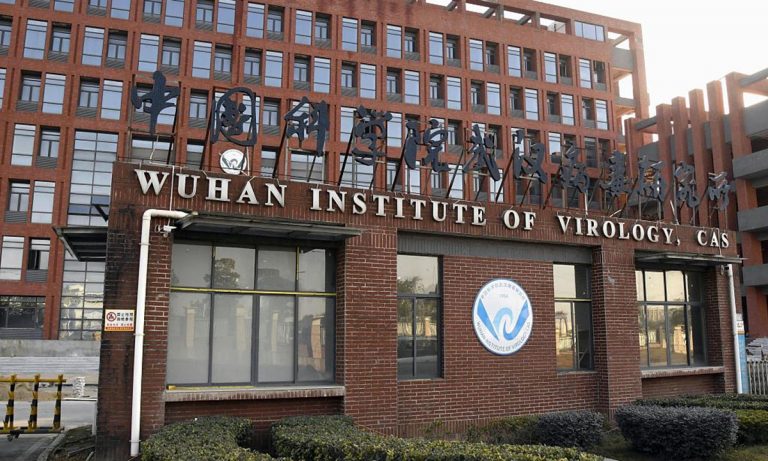
US senate passes bill to declassify all intelligence on Covid origins, a day after FBI said pandemic leaked from Wuhan lab

The United Senate has unanimously voted to call for a bill to declassify all intelligence regarding the origins of Covid 19, more than 3 years after the pandemic broke and killed millions of people around the world. As per reports, Republican Senators Josh Hawley and Mike Braun reintroduced the bill that requires Presiden Biden to declassify all intelligence related to the Wuhan Institute of Virology and possible origins of the SARS Cov 2 virus.

The development comes a day after the US Department of Energy and later the FBI confirmed that the ‘Wuhan lab leak’ is the most likely origin of the pandemic.

In an interview with Fox News, FBI director Christopher Wray confirmed that the probe agency has known for some time that a ‘Wuhan lab leak incident’ is the most probable origin of the Covid-19 pandemic.

Though the claim has just become mainstream, a number of journalists, scientists and politicians have been saying for more than a year that the SARS-COV 2 virus had most likely leaked from the BSL4 lab inside the Wuhan Institute of Virology where the US govt’s NIAID had funded a gain of function research through the EcoHealth Alliance and the Chinese government.

In a classified report provided to the White House, the US Department of Energy has also affirmed the same.

“For nearly three years, anyone asking whether COVID-19 originated as a lab leak outbreak was silenced and branded as a conspiracy theorist. Now, these prudent skeptics stand vindicated. The Biden administration must immediately declassify all intelligence reports pertaining to the origins of COVID-19 coronavirus and the Wuhan Institute of Virology. The American people deserve to know the truth.” Senator Josh Hawley told Fox News.

US govt, media and so-called ‘scientists’, everyone had labelled the Wuhan lab leak theories as ‘conspiracy and false news’

It is notable here that despite repeated claims by several experts and journalists, the ‘mainstream’ government and media voices, including Dr Fauci, have been labelling the lab leak theory as a conspiracy.

A detailed report in OpIndia had explained how Peter Daszak, the head of EcoHealth Alliance, which was carrying out gain of function research in Wuhan lab, was one of the first persons to denounce the lab leak theories and had gone so far as to publish a letter in Lancet, declaring all ‘lab leak’ claims as baseless.

Interestingly, Daszak had also made himself a part of the WHO team sent to the very Wuhan lab to investigate the Covid origins, which was unsurprisingly unsuccessful in making any significant headways. Daszak was one of the most vocal influencers in setting down and dismissing the claims of ‘lab leak’.

Old videos and articles show Daszak even boasting about how his research is trying to ‘create’ antibody-resistant variants of the Coronavirus. Emails between Fauci and Daszak obtained by some media organisations under the Freedom of Information Act showed Daszak thanking Fauci for shutting down and dismissing the ‘lab leak’ theories.

Now that the US government is finally warming up to admitting the ‘lab leak’ claims, even validating them, the important question is, despite all the evidence, documentation and repeated claims, why had the same US government and media establishment worked for years to cover this up?

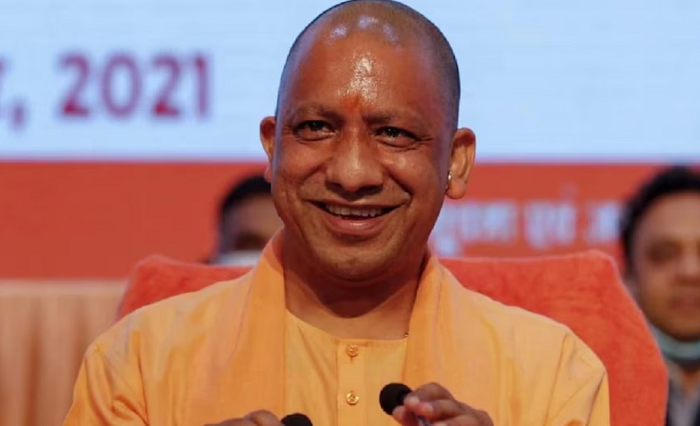
CM Yogi Adityanath registers new record, serves longest unbroken term in the state completing 5 years, 347 days in office

On Tuesday, Uttar Pradesh CM Yogi Adityanath registered a new record in his name of serving the longest unbroken term in the state after Independence. CM Yogi Adityanath completed 5 years and 347 days in the office yesterday and outlasted Dr Sampurnanand of the Congress, who had served the office for 5 years and 345 days from 1954 to 1960.

Dr Sampurnanand, Mayawati of the BSP was the first CM to serve out the entire tenure. Nonetheless, she served from 2007 to 2012, a period of 4 years, 307 days, until her party was defeated in the elections.

The following chief minister, Akhilesh Yadav of the SP, also served for the full term and his administration lasted 5 years, and 4 days. CM Yogi then became Chief Minister in 2017 when the BJP won the election with a landslide victory. The incumbent chief minister led the BJP to a record third straight victory in March 2022 as well.

Govind Ballabh Pant, the state’s first CM, held the position for the longest period of time without an interruption in the area, however from April 1, 1946, to January 23, 1950, he served as the chief minister of the United Provinces. After serving as the CM of Uttar Pradesh from January 24, 1950, to December 28, 1954, for a total of 4 years, and 336 days, he was appointed the Union’s home minister.

In terms of cumulative tenure, Mayawati, who held the position of chief minister of Uttar Pradesh four times, is in the lead with a total run of more than seven years. However, during three terms as chief minister, Mulayam Singh Yadav held office for little under seven years.

Yogi Adityanath has already broken the Noida jinx of the former UP CMs, which stated that going to the district guaranteed that the incumbent and their party would not be returned to power. Reports mention that Yogi Adityanath travelled to the district over a dozen times in his previous tenure and returned as the UP CM for a second historic time in March 2022.

“Due to his vision, the CM broke the Noida jinx It was believed in UP that if a CM visited Noida, he or she would lose their seat. Due to this fear, many CMS never visited Noida, However, in the past six years, Yogi Adityanath must have visited Noida at least 25 times and also took oath as CM for the second time on March 25, 2022,” a government spokesperson was quoted as saying.

Here’s the broad list of state Chief Ministers who held the office for more than 3 years

Yogi Adityanath (BJP) — 5 years 347 days (serving) — 2017-23
Dr Sampurnanand (Congress) — 5 years 345 days — 1954-60
Akhilesh Yadav (SP) — 5 years 4 days — 2012-17
GB Pant (Congress) — 4 years 336 days –1950-54
Mayawati (BSP) — 4 years 307 days — 2007-12
MS Yadav (SP) — 3 years 257 days — 2003-2007