Home Blog Page 2428

Fit for 55: EU approves proposal to ban petrol and diesel cars from 2035 onwards to ensure zero CO2 emissions in mobility

0

On Tuesday, February 14, the European Parliament approved a ban on new sales of carbon-emitting petrol and diesel cars by 2035 through a vote. The ban comes in an effort to accelerate the shift to electric vehicles and fight climate change. 

By 2035, the historic regulations will mandate automakers to achieve a 100% reduction in CO2 emissions from new sold vehicles, making it impossible to sell new fossil fuel-powered cars in the 27-nation bloc.

In addition, the law will set a far higher goal of a 55% reduction in CO2 emissions than the current aim of 37.5% for new automobiles sold from in 2030 compared to 2021 levels.

MEPs approved the agreement negotiated with the Council on revised CO2 emission performance standards for new vehicles and vans in line with the EU’s climate ambition with 340 votes in favor, 279 against, and 21 abstentions.

By 2030, CO2 emissions from automobiles are to be cut by 55% compared to levels in 2021, and those from vans are to be cut by 50%.

Up to the end of 2035, low-volume producers—those who produce between 1000 and 10,000 new cars or between 1000 and 22,000 new vans annually—may be excused from the regulations. After that, those who register less than 1000 brand-new automobiles each year will still be exempt.

The European Commission will introduce a technique by the year 2025 for calculating and reporting the lifetime CO2 emissions of new cars and vans. It will then provide a report every two years to assess the EU’s advancements toward zero-emissions road mobility.

Then, by December 2026, it will monitor the discrepancy between actual fuel and energy consumption data and the legally mandated emissions limitations; and develop a methodology for adjusting manufacturers’ specific CO2 emissions.

According to a statement from the EU Parliament, current incentives for automakers to sell more ZLEV or zero- and low-emission vehicles (0-50g/km of CO2) will be modified in accordance with sales trends. As the usage of battery-electric and plug-in hybrid vehicles rises, these are expected to drop.

It is notable that in October last year, the European Union’s proposal to reach zero-emission road mobility by 2035 was approved by the member states. Now, after the final voting, the legislation will be sent to the Council of the European Union for approval which is likely to happen in March. 

Jan Huitema, the chief negotiator for the law in the EU Parliament stated that this legislation promotes the development of low- and zero-emission automobiles. To achieve climate neutrality by 2050, it comprises a zero-emission objective for 2035 as well as an ambitious modification of the 2030 targets. These goals bring clarity to the automotive sector and encourage investment and innovation among automakers.

“Purchasing and driving zero-emission cars will become cheaper for consumers and a second-hand market will emerge more quickly. It opens up sustainable driving to everyone,” Huitema said.

Fit for 55

As part of the “Fit for 55” initiative, the Commission presented a legislative proposal on July 14, 2021, to update the CO2 emission performance standards for new cars and light trucks. The proposal intends to benefit citizens, advance zero-emission technology innovation, and support the EU’s 2030 and 2050 climate goals.

With regard to a variety of policy areas and economic sectors, including climate, energy and fuels, transportation, buildings, land use, and forestry, “Fit for 55” aims to reinforce eight current pieces of law and introduces five new initiatives. The reason for the moniker is that the package is meant to put the Union on track to achieve its 2030 emission reduction target of a 55% decrease from 1990 levels.

According to Fit for 55, a separate Emissions Trading System (ETS) from the EU’s current ETS must be formed for buildings and road transportation, and it should start operating from 2026 onwards. ETS are market-based tools that incentivize the reduction of emissions in areas where these are quite cost-effective.

The EU proposes the establishment of a Social Climate Fund, which will take several forms, ranging from money for building renovations and access to low-carbon transportation to direct income support, to assist low-income residents and small companies in adapting to the new ETS. 

EU aims to utilize 25% of the revenue generated from the new ETS to finance the formation of this fund. Between 2023 and 2025, it is suggested that the current ETS be extended to the maritime sector.

Carbon border adjustment mechanism: The EU has proposed a carbon-border adjustment mechanism, which will charge imports from regions with carbon-intensive production processes in addition to other market-based mechanisms.

The phase-out of the free allowance distribution under the EU Emissions Trading System (ETS) to encourage the decarbonization of the EU industry is coordinated with the progressive implementation of the CBAM.

With a three-year transition period, it will go into effect in October 2023 and, in its initial phase, will be applied to five important industries: iron and steel, aluminium, cement, fertilizers, and power.

The proposal from the Commission aims to enhance the sector’s contribution to the EU’s higher overall climate ambition. This sector includes land use, land-use change, and forestry (LULUCF).

EU aims to set an EU-level target for net removals of greenhouse gases of 310 million tonnes of CO2 equivalent by 2030. Additionally, the ReFuelEU Aviation initiative seeks to lessen the environmental impact of the aviation industry.

Recently, Volkswagen announced it to manufacture electric vehicles only from 2033 onwards in Europe. Volkswagen chief executive Thomas Schaefer made this announcement in October last year. Volkswagen, however, does not aim to totally transition to electric drives in other sales regions, such as China or North America anytime soon.

Kotak Group withdraws ad featuring Tanmay Bhat: How media organisations shielded the ‘comedian’ by glossing over his pedophilic tweets

0

Mainstream media in India and elsewhere has for long relinquished its responsibility of presenting the news in an unbiased manner and instead wielding its influence to shape narratives that suit its agenda, which at times, involves shielding people who belong to their ideological spectrum.

Grave misconduct and serious allegations against a person are either downplayed or swept under the rug by supportive media organisations who are more engrossed in salvaging the person than presenting the truth to their patrons.

The conduct of several mainstream media organisations over the withdrawal of Kotak Group’s ad campaign featuring controversial ‘comedian’ Tanmay Bhat has been problematic. Instead of reporting the truth, many organisations have sought to draw a veil over the reason for the withdrawal by resorting to obfuscation.

For instance, a report published in The Hindustan Times about the Kotak Group’s decision to discontinue the ad campaign with Tanmay Bhat had an ambiguous headline, almost painting the ‘comedian’ as a victim of social media cancel culture. The headline read “Kotak Mahindra Bank withdraws Tanmay Bhat advt after decade-old tweets stir row”, which gave the impression that Tanmay Bhat was a victim in the entire saga and that his advertisement was removed after “decades-old tweets” triggered a controversy. 

Hindustan Times

The article mentions that Tanmay Bhat’s ad suffered an online backlash for his past tweets on Ganesha. While his disparaging tweets on Hindu Gods were indeed despicable, his tweets on child porn and child rape, which are far more serious matters and warranted greater attention, were summarily brushed aside. 

Though the article does include reactions from Twitter users who were scandalised to watch the ‘comedian’ who made jokes on child rape legitimised by a reputable business group, the article conspicuously downplayed the matter.

Similarly, a report on the same topic by Afaqs had no mention of the paedophilic content uploaded by Bhat in the past. The report said Kotak pulled down the ad campaign because his old tweets on Lord Ganesh had the social media users riled up.

Source:afaqs.com

The deliberate attempt to highlight “decades-old tweets” is a psychological attempt by media organisations to extenuate Tanmay’s culpability and paint his critics as unjust and unfair. By pointing out that Tanmay’s tweets were “decades-old”, the MSM organisations try to imply that those outraging against Kotak for enlisting the ‘comedian’ for its ad campaign are snowflakes, predisposed to taking offence at the minutest of the transgressions.

The Indian Express too published a report that glossed over the more problematic antecedents of Tanmay Bhat and highlighted his offensive tweets against Lord Ganesha as a cover for his paedophilic tweets. The article said the Kotak Bank withdrew its campaign after an old tweet on Ganesha resurfaced. 

Source: Indian Express

The Mint also had a similar stand on the issue, with its article claiming that the Kotak Group had pulled down its ad featuring Tanmay Bhat after outrage at his old tweet on Ganesha.

Source: Mint

It is patently clear that ignorance is not the reason why the media organisations have not included the ‘child rape jokes’ as the cause of Kotak’s withdrawal of the advertisement, for that would stigmatise the ‘comedian’ who remains a darling of the liberal firmament as evidenced by propagandist Kunal Kamra’s sympathising tweet for Bhat.

Expressing his disappointment on Kotak’s withdrawal of the ad, Kamra tweeted: “I can’t believe no comedians are siding with victim Tanmay Bhatt he has faced so many atrocities in life & still counting. Sad day for the comedy world over. Shame on the Indian comedy scene.” However, after being called out for supporting a controversial ‘comedian’ who had made child rape jokes, Kunal Kamra went into damage control mode, stating that his tweet was meant as sarcasm.

Self-described comedians and fact-checkers often resort to such means where they lean on ‘sarcasm’ when caught on the wrong foot. Kamra, too, appeared to manage the backlash by claiming that his tweet lauding the controversial AIB ‘comedian’ known for his vulgar and derogatory jokes was sarcastic.

By concealing his far more problematic paedophilic tweets, the media organisations and Bhat’s supporters are banking on the evanescent public memory to scrub clean the image of one of their own and paint him as a martyr of online fury, which is why the media outlets give a pass to his controversial ‘jokes’ and focus on his lesser offensive comments, believing that it would enable them to bring him out of the woodwork and to greater social acceptability.

Kotak Group withdraws its ad campaign featuring Tanmay Bhat

On February 12, Kotak Mahindra Bank’s digital banking handle Kotak811 withdrew the campaign featuring controversial former AIB comedian Tanmay Bhat after it received a backlash on social media. In a tweet, Kotak811 said, “We at Kotak Mahindra Bank Ltd. do not support or endorse the views of actors made in their personal capacity that harm or offend any individual or group. We have withdrawn the campaign.” The ad campaign also featured comedian Samay Raina.

While the mainstream media organisation would have us believe that his advertisement was pulled down for his offensive tweets against Ganesha, it is notable to mention that Bhat has attracted online wrath for his child rape ‘jokes’ and pedophilic content. Tanmay Bhat has a history of making derogatory and problematic tweets. He not only insulted legendary singer Late Lata Mangeshkar at one point but also made casual jokes about child sexual exploitation.

His group AIB was infamous for making controversial jokes, and it was closed down after one of its members was accused of sexual harassment. Notably, the other members, including Bhat, were aware of the accusations before they were made public, but they decided not to act strictly upon them. The accusations were made public in the wake of the MeToo movement that swept the country in 2018.

The Wire editor Seema Chishti sends notice to Organiser editor, Vijay Patel and Twitter for alleging links with anti-Adani campaign

On 8th February 2023, Seema Chishti – the editor of the propaganda website ‘The Wire’ and wife of communist leader Sitaram Yechuri – sent a legal notice to The Organiser’s editor, Vijay Patel, and Twitter for exposing her connections with a foreign-funded NGO allegedly involved in a hitjob against businessman Gautam Adani.

An article titled ‘Decoding the hit job by Hindenberg against Adani Group‘ was published in The Organiser on its website on 4th February 2023. Also, Vijay Patel – the founder of fact-checking website ‘Only Fact India’ – wrote a thread on 2nd February 2023, exposing the connections between the torchbearers of the anti-Adani propaganda campaign and foreign-funded NGOs. Seema Chishti has also made Twitter an answerable party for publishing the thread by Patel.

In the article published by The Organiser and the tweet thread shared by Vijay Patel, it is explained how the Hindenburg report is a part of coordinated and well-planned attacks against the Adani Group. It was claimed in both of them that there exists a cartel in India that operates in the form of an NGO named ‘National Foundation for India’ that runs on the money funded by some Indian and other foreign NGOs and billionaires including Bill Gates, Azim Premji, George Soros, Ford Foundation, Rockefeller, Omidyar, etc.

There were multiple pieces of evidence in both this article and the tweet thread to show how the anti-Adani cartel in India operates and how many known persons and organizations in the media are involved in it. The list includes names like Ajit Anjum, Abhisar Sharma, and others. Seema Chishti, in her notice, has denied all the allegations and threatened the editor of The Organiser and Vijay Patel, and Twitter to take down the said article and thread of tweets. She has also warned that she will go for a defamation case against the three if they fail to apologize to her.

Vijay Patel has come up with a strong reply to this notice from his Twitter handle and wrote another thread in which he asked pointed questions to Seema Chishti. He wrote, “In this notice, Seema Chishti claims that she doesn’t get financial benefits from NFI and she is working with them on a pro-bono basis. I have a few questions about this claim to Seema Chishti. I hope she will reply. Why she is working with the organization on a pro-bono basis which is funded by foreign elites? Isn’t this against the ideology of your husband and Marxism? How can you work with an organization which was started by the American elite (Ford Foundation)? Let me know if you have ever written any article against any foreign elites who are on the list of donors!”

Vijay Patel further asked, “You are working with a foreign-funded NGO as a fellowship adviser, so do you get any non-financial direct or indirect benefits from them? As a fellowship adviser, you and your team members have chosen fellows and most of them are working for the same propaganda websites with which you are very well connected. Is this just a coincidence? Or you are helping their financial support via a fellowship?”

It is notable that Hindenburg’s report on the Adani Group was published on 23rd January 2023. The Adani Group equities have suffered on the stock exchanges following a slew of accusations from Hindenburg Research against the corporate behemoth, including illegal transactions and share-price manipulation. The Adani Group has denied the accusations, claiming that it abides by all legal and transparency obligations.

Apology on Twitter not acceptable – Pakistan’s ambassador to UN asked to tender formal apology for equating Taliban with Pashtun community

On February 14, Pakistan’s National Assembly’s standing committee on Foreign Affairs chaired by MNA Mohsin Dawar refused to accept the apology tendered on Twitter by the permanent representative to the UN of Pakistan, Munir Akram and asked him to formally apologise for insulting the Pashtun culture. Notably, Akram has used ‘Pashtun’ instead of the Taliban during his address at the United Nations, claiming ‘Pashtun culture requires women to be kept at home’. His statement sparked controversy, after which he apologised on the social media platform Twitter.

In its statement, the committee said an apology rendered on the social media platform could not reflect the grievances expressed by the Pakhtuns worldwide. Expressing his dismay over Akram’s remarks, Dawar said banning women from public places is a practice followed by the Taliban, and it is not part of the Pashtun culture. He blamed Akram for putting the Pashtun culture in a negative light at the UN in a “proper speech”.

At the committee meeting, Akram said, “I took a balanced view as Taliban are not represented in the UN body. If restrictions are imposed on humanitarian assistance, it would add problems for Pakistan. (And in doing so) I mistakenly used the word Pashtun instead of Taliban. I tendered the apology on Twitter.” Unsatisfied with Akram’s reply, Akram confronted him and asked if he was representing the Taliban at the UN. He added as the Taliban seized power at gunpoint, they should not be allowed at the UN.

Sindhi member of the committee Ghulam Ali Talpur urged Akram to resign from his post. He said, “Since you have hurt Pashtuns, don’t you think that you should resign?” However, Akram threw the ball in the Government of Pakistan’s court and said they had the power to remove him if the government wanted to remove him.

State Minister for Foreign Affairs Hina Rabbani Khar had different views at the committee meeting. She came forward to support Akram and requested the members to accept his apology. She claimed everyone makes a mistake, she gave an example of how Americans made a mistake in Afghanistan. Dawar did not take the comparison well and alleged that Pakistan was equally responsible for what happened in Afghanistan, referring to the Taliban’s takeover of the country after staying out of power for 20 years. He said, “We are equally responsible for what happened in Afghanistan, as we kept helping the Taliban for 20 years. The entire world was responsible for what happened in Afghanistan.”

The statement made by Munir Akram

On February 1, speaking on the Humanitarian situation during a UN meeting, Akram claimed that the ban imposed on women from going to public places was not from a religious perspective but a ‘peculiar cultural perspective of the Pashtun Culture’. He said, “From our perspective, the restrictions that have been put by the Afghan interim government flow, not so much from a religious perspective, as from a particular cultural perspective of the Pashtoon culture, which requires women to be kept at home.”

He added that the cultural norms had been part of Afghanistan for hundreds if not thousands of years. “So to expect a complete transformation overnight on the condition that aid will stop to the Afghan people if they do not adhere to international standards, I think that is a rather optimistic expectation,” he added.

He urged the donor community not to walk away from Afghanistan and “hoped” the Secretary General’s appeal to provide monetary help worth $4.4 Billion to Afghanistan would be fulfilled.

Akram was criticised extensively for using ‘Pashtun’ instead of the Taliban. Following the flak he received online and offline, Akram tendered an apology on Twitter on February 3, two days after his remarks. He wrote, “My apologies for the hurt caused by my comments at the humanitarian briefing on Afghanistan. I misspoke, and my words did not accurately reflect Pakistan’s position. I have deep respect for Pashtun culture. Denying women and girls access to education is neither Islamic nor Pashtun culture.”

Pashtuns, or Pakhtuns, popularly known as Pathans, are a predominant ethnic group of Afghanistan. Pakistan’s Khyber Pakhtunkhwa shares a border with Afghanistan and has a notable Pashtun population.

BBC raids: A look into the broadcaster’s long track record of tax avoidance and unscrupulous financial practices in the UK

Several weeks after the Indian government blocked the BBC’s contentious documentary about Prime Minister Narendra Modi and the Gujarat riots of 2002, Indian tax authorities raided the BBC’s headquarters in New Delhi and Mumbai on Tuesday. The Income Tax department’s overnight and ongoing inspection of the BBC’s offices in Delhi and Mumbai has not yet been completed. The survey was conducted as a result of BBC’s willful disregard for the Transfer Pricing Rules and its massive profit-diversion practices.

Interestingly, this is not the first time the BBC has come under fire for adulterated tax affairs. The British Broadcaster has a notorious history of similar allegations that have surfaced from time to time.

Thousands of public employees, including those at the BBC, were not paying their taxes at the source, according to a 2012 report from the public accounts committee in the United Kingdom (UK).

David Smith, the then BBC’s head of employee tax, had admitted that 25,000 contracts covering roughly 1500 staff had been granted on an off-book, freelancing basis, but he argued that the company abided by the laws. He acknowledged, however, that the BBC was able to reduce its liability in cases where the UK’s tax, payments and customs authority, HMRC determined that the person involved was not a true freelancer due to the usage of so-called service companies, particularly by on-air talent.

BBC had accepted, that 148 of its 467 presenters were employed through personal service companies, despite them often being employed long-term. Their contracts shared characteristics with typical pay-as-you-earn (PAYE) contracts.

In 2016, HM Revenue and Customs had reportedly begun an investigation into more than 100 BBC broadcasters amid allegations that they had underpaid their income tax and National Insurance contributions. An investigation of “a very significant number of BBC news presenters” had been started by the officials.

Following the decision in a tax tribunal case brought by BBC newsreaders, Tim Wilcox and Joanna Gosling, who were appealing against a previous ruling that they failed to pay enough tax during the period when they were classified as “self-employed,” it was revealed that HMRC was conducting an investigation.

In a hearing at the First Tier Tax Tribunal, it was discovered that the agency had started looking into 23 BBC presenters in May 2015 to determine whether they had broken the IR35 laws that govern self-employment. However, Jennifer Henderson, the head of global mobility and employment at the BBC, produced evidence suggesting that this has increased to “around 100 extra cases.”

Stars, in 2018, who were dealing with hefty debts following a tax investigation accused BBC of engaging in “industrial level tax avoidance.” To get payment, freelance presenters established personal service firms, which also spared the BBC from having to cover National Insurance. The presenters, however, claimed that they only agreed to the tax arrangement because the BBC instructed it.

“But we have sat by for years watching the BBC say this is nothing to do with them, as if we all spontaneously and independently decided to set up personal service companies at the same time. We were never given the option of being staff. This was industrial level tax avoidance by the BBC,” they had claimed.

A 41-page official report by the Comptroller and Auditor General was released in November of 2018, which dived into the investigation of BBC’s engagement with personal service companies. It laid forth the facts regarding the types of people the BBC employed on a freelance basis and related problems involving such individuals, especially those it hires through personal service businesses.

The BBC was involved in yet another dispute in 2019. According to the BBC annual report, the media organization had set aside up to £12 million to settle the past tax debts of BBC broadcasters who were being investigated by HMRC for using personal service firms to evade taxes.

The National Audit Office (NAO), on the other hand, had questioned whether the payments were a proper use of BBC funds and as a result had provided a cautious assessment of the latter’s accounts.

The NAO underscores the challenges that the BBC and other organizations have encountered when attempting to avoid paying taxes, as well as the complex question of who bears the financial burden of failed tax avoidance strategies.

From the late 1990s onward, the BBC began to hire presenters through personal service businesses. A personal service company is a business created specifically to handle an employee’s affairs. The BBC entered into a contract with their firm rather than the individual employee.

The BBC would profit since the employee would be in charge of their tax affairs and the company would no longer be required to run PAYE or make employers national insurance payments. By paying themselves a modest salary through their company and getting the remainder of their income in dividends, the presenter might reduce their tax obligations. There was a hefty tax advantage from this.

The Auditor General, Gareth Davies, had reaffirmed in his audit statement, that it is evident from the testimony of individuals participating in these schemes that the BBC was a part to the agreements. The company created the contracts and actively pushed its presenters to set up their businesses in this manner. In fact, some of them have claimed that they were compelled to utilize certain arrangements. The BBC certainly benefited from these deals.

Income Tax Dept survey in BBC office in India enters second day

The income tax (I-T) department on Wednesday continued its survey at the offices of the BBC in Delhi and Mumbai for the second day, sources say. 

On Tuesday, the I-T department conducted a survey at BBC’s offices in Delhi and Mumbai in view of the British public broadcaster’s “deliberate non-compliance” with the Transfer Pricing Rules and its vast diversion of profits. Yesterday, the sleuths arrived at the BBC offices located at the national capital’s KG Marg and Mumbai’s Kalina Santacruz for the survey. In the case of the BBC, sources said there has been persistent non-compliance with the above mentioned rules for years. As a result of the same, several notices have been issued to the BBC. However, the BBC has been continuously defiant and non-compliant and has significantly diverted its profits, sources said. 

Sources said the above exercise, conducted by the tax authorities, is called “survey”, not search or raid as per the provisions of the Income Tax Act. Such surveys are routinely conducted and are not to be confused to be in the nature of a search/raid, said sources. 

The key focus of these surveys is to look into the manipulation of prices for unauthorised benefits, including tax advantages. These surveys have been undertaken due to BBC’s persistent non-compliance of the norms, making it a repeat offender. 

In this case, sources said BBC has been, “non-compliant under transfer pricing rules; persistent and deliberately violative of transfer pricing norms; and deliberately diverted a significant amount of the profits and have not followed the arm’s length arrangement in the case of allocation of profit.” 

Accordingly, the surveys have been conducted with a view to investigating BBC’s violation of the Transfer Pricing Rules and its diversion of profits. 

After the I-T department survey, sources in the United Kingdom government said they are monitoring the developments closely. 
“We are closely monitoring reports of tax surveys conducted at the offices of the BBC in India,” UK government sources said. 
Meanwhile, BBC has said it is cooperating with the income tax department, which is conducting a survey at its offices in New Delhi and Mumbai. 

“The Income Tax Authorities are currently at the BBC offices in New Delhi and Mumbai and we are fully cooperating,” the BBC News Press Team said in a statement. 

The development comes weeks after the BBC released a documentary on Prime Minister Narendra Modi – ‘India: The Modi Question,” which caused controversy. 

The Centre had issued directions for blocking multiple YouTube videos and Twitter posts sharing links to the controversial BBC documentary on PM Modi. 

The Supreme Court had on February 3 directed the central government to produce original records relating to its decision to block the BBC documentary.

(This news report is published from a syndicated feed. Except for the headline, the content has not been written or edited by OpIndia staff)

Landmark Air India deals: US President Biden, French President Macron, and UK PM Sunak hail partnership with India, thank PM Modi

On Tuesday, February 14, US President Joe Biden, French President Emanuel Macron, and British Prime Minister Rishi Sunak hailed the ‘historic’ Air India deals with Boeing, Airbus and Rolls Royce. As per the multi-billion dollar deal, Air India will be buying 250 passenger aircraft from Airbus and 220 from Boeing. The airline has signed letters of intent with Airbus and Boeing.

Prime Minister Narendra Modi spoke to US President Biden over a phone call as the two leaders welcomed the landmark agreement that will ‘help create opportunities’ in both countries. 

‘Deal with Air India will support one million jobs in the US‘, says Biden

A press release issued by the Prime Minister’s office states that the two leaders welcomed the announcement of a landmark agreement between Air India and Boeing as a shining example of mutually beneficial cooperation that will help create new employment opportunities in both countries. PM Modi also invited Boeing and other US companies to “make use of the opportunities arising due to the expanding civil aviation sector in India.”

President Biden in a statement said the United States can and will lead the world in manufacturing. President Biden highlighted how the deal will support over one million American jobs across 44 states and assist Air India in meeting the country’s rising demand for air transportation adding that this deal reflects the strength of the economic partnership between the two countries.

“Together with Prime Minister Modi, I look forward to deepening our partnership even further as we continue to confront shared global challenges, creating a more secure and prosperous future for all of our citizens,” Biden said.

Prime Minister Narendra Modi to Twitter to welcome the Air India-Boeing agreement and tweeted, “Glad to speak with @POTUS @JoeBiden. Excellent discussion to review the ongoing and new initiatives to further deepen India-US Comprehensive and Global Partnership. We welcome the landmark @airindiain, @Boeing agreement which will help create new opportunities in both countries.”

Macron thanks Modi

On Tuesday, PM Modi and French President Emmanuel Macron virtually attended the launch of the Air India-Airbus deal. President Macron thanked PM Modi for having confidence in France. The two leaders were joined by Ratan Tata, Chairman Emeritus, Tata Sons, Shri N. Chandrasekaran, Chairman of the Board, Tata Sons, Campbell Wilson, CEO of Air India, and Guillaume Faury, CEO of Airbus.

The Air India-Airbus agreement, according to French President Emmanuel Macron, “marks a new stage in India and France’s strategic alliance.” In a tweet, Macron said, “The agreement between Airbus and Tata Sons this morning marks a new stage in the strategic partnership between France and India. Thank you Narendra Modi for your confidence in France and our industry.”

Meanwhile, PM Modi also thanked President Macron his role in taking the Indo-French relationship forward adding that the Air India-AirBus deal that reflects the robust Indo-French ties will “further strengthen the Indian sector and will also create opportunities for both the countries.”

‘Building trade ties with growing economic powers like India’

In a tweet about Air India’s multi-billion contract with Air Bus and Rolls Royce, Rishi Sunak, the Prime Minister of the United Kingdom on Tuesday welcomed what he called a huge win for the UK’s aerospace sector.

“This landmark deal between Air India, Airbus, and Rolls-Royce demonstrates that the sky’s the limit for the UK’s thriving aerospace sector,” Sunak said.

The British Prime Minister also stated that fostering commercial ties with emerging economic powers like India will support UK firms in maintaining their leading positions in innovation and growth around the world.

“The United Kingdom is already a top investment destination, and by building trade ties with growing economic powers like India we will ensure UK businesses remain at the forefront of global growth and innovation.”

In an official statement, Boeing said that Air India has selected 190 737 Max, 20 787 Dreamliners, and 10 777 X aircraft as part of the purchase agreement.  The deal between Boeing and Air India includes an option for 20 787-9S and 50 more 737 MAX aircraft.

Air India and Air Bus deal

On February 14, Air India, India’s flagship carrier and part of the Tata Sons conglomerate, announced that it had signed letters of intent with Airbus and Boeing to acquire both widebody and single-aisle aircraft.

According to an official release, the order comprises 40 Airbus A350s, 20 Boeing 787s, and 10 Boeing 777-9s widebody aircraft, as well as 210 Airbus A320/321 Neos and 190 Boeing 737 MAX single-aisle aircraft. The A350 aircraft will be powered by Rolls-Royce engines and the B777/787s by engines from GE Aerospace. Engines from CFM International will power all single-aisle aircraft. 

The first of the new aircraft will enter service in late-2023, with the bulk to arrive from mid-2025 onwards. In the interim, Air India has already started taking delivery of 11 leased B777 and 25 A320 aircraft to accelerate its fleet and network expansion.

The acquisition of new aircraft, which will come with an entirely new cabin interior, complements Air India’s previously announced plan to refit its existing widebody B787 and B777 aircraft with new seats and inflight entertainment systems. The first of these refitted aircraft will enter service in mid-2024, as per an official release.

Guillaume Faury, CEO of Airbus said that “Airbus has been a longstanding partner of Air India. AI, Air India’s comprehensive growth and transformation strategy. Today marks a historic moment for Air India, Airbus, and India. The Tata Group’s decision to revive Air India with the A350 and the A320neo makes us at Airbus very proud and grateful. The magnitude of the Air India deal indicates the Indian aviation industry’s appetite for growth.  It is the fastest-growing in the world.”

For more than 17 years, Air India has not ordered an aircraft till now. Additionally, it is the carrier’s first purchase made while under Tata Group ownership. The airline had placed a $10.8 billion purchase order in 2005 for 111 aircraft, 68 from Boeing and 43 from Airbus.

Kunal Kamra hails Cred for still keeping Tanmay Bhat onboard after his problematic jokes on child rape resurface, deletes tweet later

On February 14, propagandist ‘comedian’ Kunal Kamra hailed fintech company Cred for continuing to work with controversial comedian Tanmay Bhat after his problematic jokes on child rape resurfaced. Kamra was later deleted, but by then, it was picked up by netizens. In a tweet, author Shefali Vaidya questioned why Karma deleted the tweet. She also questioned Cred for continuing its association with “pervert” and possibly “a closet paedophile” like Tanmay “who has made sick jokes about children enjoying rapes.

In a tweet, Kamra said, “We must give credit to brave brands like CRED who’re still running with victimised comedian Tanmay’s campaigns… Salute to their bravery for not caving into popular opinion & working with meritorious comedian Mr Tanmay Bhatt.” The tweet has now been deleted.

Following the tweet by Vaidya, many netizens called out Cred for working with Tanmay. Dr Swathi Bellam said, “I am a big user of Cred with nearly 2 million points. I am uninstalling the app because they use some brand ambassadors like #tanmaybhat, who make rape jokes about children. As a Hindu & parent of a small daughter, I can’t use a product endorsed by such people.”

Twitter user AkhandaBhartiya said, “Thank you, Shefaliji, I have uninstalled the app by Cred, will never associate myself again with them, and have also stopped making any payments through their gateway. Cred cannot have my money and make fun of me, my belief and my faith.”

Twitter user Dr Manoj Kandoi said, “Shame on you, Cred!! This is definitely not bravery but suicide to remain associated with a paedophile like @thetanmay.”

As of now, there are no running active Cred campaigns that involve Tanmay Bhat. However, Bhat and his team had earlier written ads for Cred, including the one with Rahul Dravid and Venkatesh Prasad.

Kamra criticised Kotak for withdrawing the ad featuring Tanmay Bhat

Kamra earlier expressed his disappointment as he saw no comedian defending Tanmay Bhat, who was removed from Kotak Mahindra Bank’s advertisement. On February 14, Kunal Kamra tweeted, “I can’t believe no comedians are siding with victim Tanmay Bhatt he has faced so many atrocities in life & still counting. Sad day for the comedy world over. Shame on the Indian comedy scene.”

After being called out for supporting a controversial ‘comedian’, Kunal Kamra went into damage control mode, stating that his tweet was meant as sarcasm.

Kotak withdrew the campaign featuring Tamnay

On February 12, Kotak Mahindra Bank’s digital banking handle Kotak811 withdrew the campaign featuring controversial former AIB comedian Tanmay Bhat after it received a backlash on social media. In a tweet, Kotak811 said, “We at Kotak Mahindra Bank Ltd. do not support or endorse the views of actors made in their personal capacity that harm or offend any individual or group. We have withdrawn the campaign.” The ad campaign also featured comedian Samay Raina.

Coimbatore and Mangaluru blasts: NIA raids nearly 60 locations across Kerala, TN and Karnataka, ISIS sympathisers targeted

0

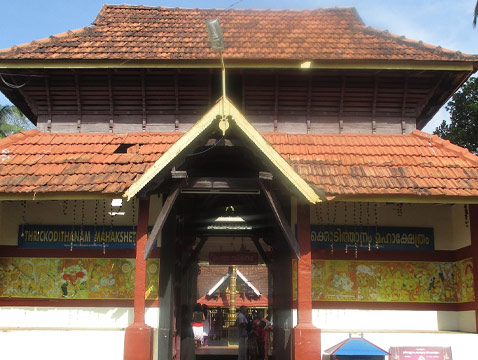
In a major crackdown against ISIS sympathisers, the National Investigation Agency (NIA) early Wednesday morning started raids at multiple locations across Kerala, Karnataka and Tamil Nadu in two separate blast cases under investigation, sources said.

According to sources in the elite anti-terror probe agency, the searches are being conducted in connection with last year’s blasts in Tamil Nadu’s Coimbatore and Karnataka’s Mangaluru which occurred on October 23, 2022, and November 19, 2022, respectively.

Sources said that nearly five dozen locations across the three states were raided simultaneously, including those of Kodungaiyur in Tamil Nadu and Mannadi in Kerala.

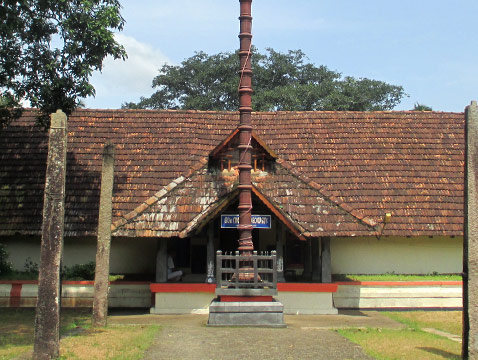
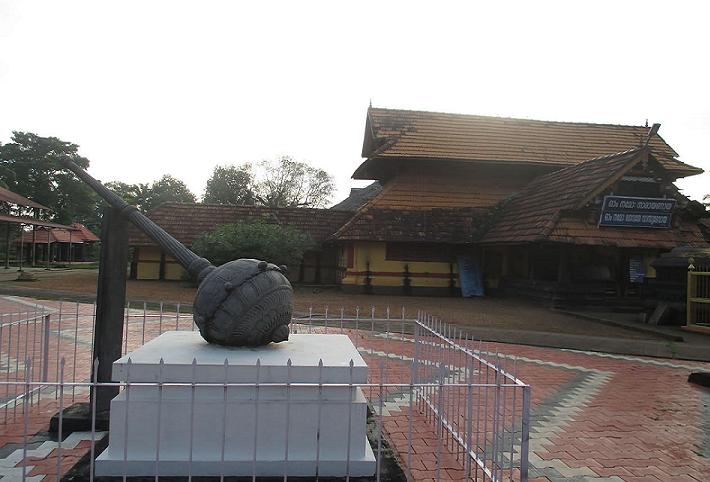
The NIA began a probe on October 27 last year in a bomb blast in a car laden with explosives in front of Kottai Eswaran Temple of Coimbatore district in Tamil Nadu on October 23, last year.

Eleven accused persons were arrested earlier by the anti-terror agency in the case in which Tamil Nadu Police initially registered a complaint on October 23 last year.

The deceased accused, Jamesha Mubeen, after swearing bayath (allegiance) to ISIS was planning to carry out a suicide attack and cause extensive damage to the Temple Complex with the intention to strike terror in the community, said the NIA in a statement.

“Investigations have revealed that the accused persons had entered into a criminal conspiracy in the interior of forested regions of Asanoor and Kadambur areas of Sathyamangalam forest, Erode district, in February 2022,” the NIA stated.

“The meetings were led by previously arrested accused Umar Farook and participated by deceased accused Jamesha Mubeen, Mohammed Azharudin, Sheikh Hidayatullah and Sanofar Ali, where they conspired to prepare for and execute terror acts,” it added.

In December last year, the NIA took over the investigation into the November 19 pressure cooker blast in an autorickshaw in Mangaluru wherein a passenger, identified as Mohammed Shariq, was carrying a pressure cooker bomb made from an Improvised Explosive Device (IED).

The auto-rickshaw exploded leading to injuries to the passenger, Mohammed Shariq, who was carrying a pressure cooker turned into an improvised IED, and the auto-rickshaw driver Purushottam Poojari.

The cooker bomb was designed to carry out a large-scale attack to fuel communal tensions in the coastal region and in the state, the agency said.

Shariq was en-route to a pre-decided location for carrying out the blast when the explosion took place.
The NIA started its investigation under the provision of the Unlawful Activities (Prevention) Act and the investigating officers then questioned the main accused Shariq, as the state police found his links with the Islamic State (IS) during its investigation. It also learned that he had radicalised his schoolmates, Syed Yasin and Muneer Ahmed, and introduced them to IS as well.

Together, the three of them had experimented and rehearsed the explosion on the banks of the Tunga river in the Shivamogga district, sources said, adding that the practice explosion was also reportedly successful.
Further, according to sources, the main accused, Shariq, had a handler who was orchestrating and instructing him regarding all these activities.

(This news report is published from a syndicated feed. Except for the headline, the content has not been written or edited by OpIndia staff)

Statue of Chhatrapati Shivaji Maharaj to be installed near the LoC, soil from his forts to be taken for Bhoomi Poojan

0

The ‘Amhi Punekar’ (We Punekar) NGO said on 14th February 2023 that it will erect the statue of Chhatrapati Shivaji Maharaj near the India-Pakistan line of control. the motive behind this is to ensure that the soldiers fighting the enemies get motivated by the ideal and moral values of Chhatrapati Shivaji Maharaj by looking at his statue on a daily basis and that they remember the bravery of the Hindu king and get the strength to fight against the enemies.

In order to achieve this feat, the Amhi Punekar NGO has taken up this initiative. The statue of Chhatrapati Shivaji Maharaj will be installed along the Line of Control at two places in the Kiran and Tangdhar-Titwal valleys of Kashmir as per reports.

The statue will be installed under the permission of Kupwara district collector Dr Sagar Dattatreya Doiphode in Kashmir. Chhatrapati Shivaji Maharaj Atakepar Smarak Samiti chief Abhayraj Shirole and We Punekar NGO president Hemant Jadhav have planned the initiative.

Hemant Jadhav said, “The Bhoomi Poojan of the statue installation work will be held by the end of March. The soil and water from Raigad, Torana, Shivneri, Rajgad, and Pratapgad forts, which have become holy by the footsteps of Shivaraya, will be taken to Kashmir for the Bhoomi Poojan by the Amhi Punekar NGO.”

Abhayraj Shirole said, “Chhatrapati Shivaji Maharaj, with his tactics and daring deeds, drove away the enemies. Various countries around the world follow his guerrilla warfare techniques. The statue of Chhatrapati Shivaji Maharaj is being installed on the Indo-Pakistan border to provide inspiration to the Indian soldiers on the border with the ideals of Shivaraya and the motivation through the statue.”

It is notable that two statues of Chhatrapati Shivaji Maharaj were established in Jammu and Kashmir in January 2022 by the Maratha regiment. One of these statues has been installed near the LOC at a height of 14800 feet above sea level. Now, two more statues will be erected by Pune-based NGOs.