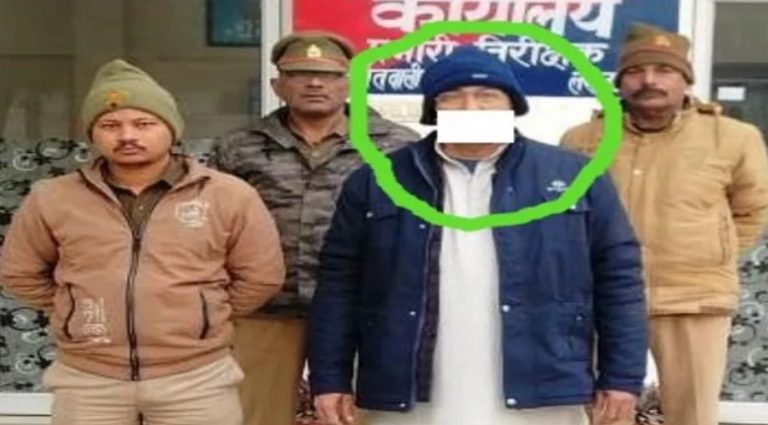
The Chinhat police in Lucknow, Uttar Pradesh, have arrested a man named Tayyab Ansari based on a complaint lodged against him in November 2022, wherein a woman accused him of cheating and rape. The victim said that Ansari posed as a Congress MP and sexually assaulted her, and promised her a Lok Sabha ticket.
The victim also accused Ansari of extorting money and defrauding her on the pretense of marriage. Tayyab Ansari (52), a resident of Madianv Mohibullahpur, who went missing after the complaint was filed against him, was finally arrested on Friday (January 13, 2023) from Hotel Moti Mahal in Bareilly, ADCP (East) Syed Ali Abbas said.
According to the police, the woman alleged that Tayyab Ansari alias MT Hasan pretended to be a Congress Rajya Sabha MP. The accused convinced the woman that he had a good reputation and significant connections with the party’s top leadership. He told her that he can use his connections to secure her a Lok Sabha seat. The woman fell into his trap.
Ansari kept sexually exploiting the woman on the pretext of getting her a Lok Sabha seat and also kept extorting money from her. After a considerable amount of time, the woman understood that the man was simply fooling her. She approached the Chinhat police with a complaint against him. The police filed an FIR under sections 120B, 376, 328, 342, 506, 406, and 420 of the IPC and began a manhunt.
The police launched many raids over the course of two months. On Friday, January 13, the Chinhat police ultimately received a tip about his whereabouts. Based on the tip, they raided Hotel Moti Mahal in Bareilly, where the accused was staying in room 110, and detained him. The accused has been sent to jail.
Late on Saturday, allegations of sexual harassment emerged on cofounder of propaganda website, Alt News, Pratik Sinha. An anonymous note was published on an Instagram handle where a woman had accused Sinha of being a ‘sex maniac’ and highly manipulative so as to get women to have sex with him.
The woman had also stated that her allegations would be rubbished by the ecosystem and she’d be labelled as a BJP/RSS stooge. However, she was all praises for another Alt News cofounder Mohammed Zubair and the website itself. In fact, it was the ideology they pretended to stand for that had attracted her to Sinha in the first place. She said she was ‘impressed by his crusade against false news’. So at this point it would be safe to say she is not a ‘Sanghi’. A ‘Sanghi’ woman’s allegations of sexual harassment are usually laughed at or dismissed because Left has often suggested and asserted that ‘Sanghis’ deserve to die.
Coming back to Sinha, from what the woman has revealed in her post, it appears more like a case of relationship gone sour than Sinha using his place of influence to sexually exploit or abuse a woman. It is likely his ideology attracted the woman towards him to initiate relationship, but not responding to messages or not being in an ‘exclusive’ relationship with someone or generally gaslighting and cheating on girlfriend or ghosting her is more reflective of his interpersonal relationship and shows he’s likely a despicable person personally as well.
It has been over 36 hours and by the time this article is being published, neither Pratik Sinha, nor Mohammed Zubair have tweeted anything or issued any refutal. Even Alt News has not issued any statement on the allegations against their cofounder. Which is quite interesting since Zubair, whose tweets have now led to riots and murders in the country, is also quite quick to point fingers on others and cry murder whenever any woman accuses someone of opposing political and/or religious ideology of sexual harassment.
However, what is even more damning, but not too surprisingly, is the silence of the entire ecosystem. No one is calling out Sinha’s terrible behaviour with a woman. Whether or not it is sexual exploitation, the gatekeepers of morality and flagbearers of feminism, who keep talking about problematic behaviour of men, emotional manipulation and general toxicity which comes with ‘men are trash’ brigade are silent.
In 2017, a year before the MeToo movement hit India, Raya Sarkar, then a law student in the US with her roots in India, put up a post on Facebook where she had named and shamed Indian academics who had been accused of sexual harassment. Subsequently, many other women came forward to retell the tales of their own abuse. However, the entire Leftist cabal had taken it upon themselves to shield the men.
Prominent Leftists and other professors of educational institutes like JNU had cautioned women calling our predatory behaviour of Leftist professors and urged to follow due process instead of ‘naming and shaming’ them. They argued against adopting ‘vigilantism’. In fact, JNU Teachers Association rallied behind Arshad Alam, a professor at JNU who was found guilty of sexually molesting a student.
You see, there’s this sense to empathise with the men of same political ideology accused of sexual abuse or exploitation. Because men of Leftist and Left-leaning ideology often talk about ‘feminism’ and ‘women empowerment’ and how they are ‘superior’ to men from ‘Right’ or ‘Sanghis’ who ‘do not respect’ women.
When Veteran journalist Vinod Dua was accused of sexual harassment, his daughter, ‘comedian’ and Bollywood entertainer Mallika Dua had rallied behind him. In her statement, soon after the allegations rose, addressed to the victim, Mallika Dua reiterated that she supported #MeToo movement but rued the fact that the victim had “dragged her name” in a controversy involving her father.
After expressing displeasure with the victim naming her, Mallika Dua went on to abuse people who were asking her to speak up. She termed these people as ‘bhakts’ and ‘RW trolls’ and asked them to ‘f*ck off’. She reiterated that she stands by the #MeToo movement. A liberal, feminist woman abusing ‘bhakts’ because a woman (who was not really a ‘bhakt’ herself by a long stretch of imagination) had accused her father of sexual harassment.
She ended her statement by saying that she stood by her father in this battle. Eventually, the left propaganda website The Wire, where Vinod Dua was then employed, disbanded the probe committee set up to look into the allegations of sexual harassment against Dua after he refused to face the woman.
A year later, Mallika Dua engaged in victim shaming. She took digs at the woman who had accused her father of sexual harassment. Vinod Dua passed away a few months later without really facing any ramifications of the allegations of sexual harassment against him.
Like Dua, another feminist-liberal filmmaker Nandita Das has also stood by her father, Jatin Das, accused of sexual harassment. Noted Conservationist Nisha Bora had accused Jatin Das of grabbing her and forcefully kissing her during a dinner in 2004. When the allegations surfaced, many questioned the silence of Nandita Das, who had earlier issued a statement to take a firm stand against sexual harassment and not to work with those people who are accused of sexual misconduct against women.
However, when her own father was accused of sexual harassment, she said that one should be sure about these allegations to make sure that the ‘movement’ is not diluted. She stayed clear from criticizing her father for his alleged sexual conduct but instead stands by him terming it as ‘allegations just to dilute the movement’.
But Sinha is a ‘liberal’. You know how the ‘comedians’ in India like to believe they are the most liberal and feminist of the lot and are all about equality and how they spout gyaan on consent? Well, a lot of women accused a lot of these comedians of sexual abuse in 2018 during the #MeToo wave. Know what some women revealed? All India Bakchod’s Tanmay Bhat knew about sexual misconduct of one of their collaborators but did nothing.
What is it about the so-called liberals who are otherwise champions of women’s rights suddenly go silent when someone they know is accused of rape? Where does the ‘believe her’ go? From Tehelka’s Tarun Tejpal to former TERI (The Energy and Resource Institute) chief R K Pachauri, the ‘liberals’ have downplayed the molestation charges and tried to silence those who spoke up.
At a time when it takes tremendous courage for victims to speak up on sexual abuse, why are the ‘liberals’ always around to silence a victim?
And till we know more about what transpired between Sinha and the woman, going by what is there in public domain, it just appears like problematic behaviour of Sinha that borders on being manipulative and emotionally abusive. But he is not cancelled and nor will he be. Because he is ‘fighting a cause’, that is ‘exposing the fascist Sanghis’ and destroying Sanghis is more important than dignity of a woman and protecting her from ‘sex maniac’.

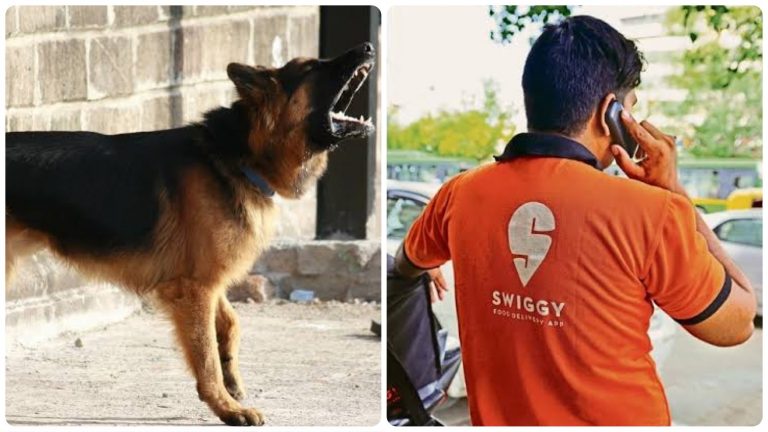
A delivery agent for Swiggy died from injuries sustained in a fall from the third floor of a building while trying to flee an alleged attack by a pet dog, according to police reports on Monday.
Rizwan, a delivery agent for Swiggy, was killed after he was attacked by a pet dog while making a delivery. He fell from the third floor of a building while attempting to flee the attack.
Banjara Hills Police has registered a case against Shobana, the dog’s owner.
“It has been four days since the incident took place. The delivery boy named Rizwan died at the hospital while getting treatment. We have registered a case under IPC Section 304(A) against Shobana, the dog’s owner,” Banjara Hills Inspector of Police, Narender told ANI.
The victim’s brother said, “My brother was working at Swiggy. He died after being treated for a few days. He went to Banjara hills to deliver a parcel but fell trying to escape from the dog. I appeal to the Telangana government that we want justice. The Banjara hills police should take necessary action.”
As per reports, the 23-year-old victim fell off the third floor of the apartment building in the city’s Banjara Hills when he had gone to deliver food on Wednesday, January 11. The customer’s pet dog, a German Shepherd, who was not on a leash, charged the delivery agent when he knocked on the door. In a rush to avoid the dog attack, Rizwan jumped over the fence holding the railing. However, his hands slipped and he fell off the building. The incident occurred at Lumbini Rock Castle apartment, Banjara Hills Road number 6.
The Telangana Gig and Platform Workers Union accused Swiggy of apathy over their delivery agent’s death. Speaking to TNM, president Shaik Salauddin said, “Swiggy has neither reached out to us nor acknowledged his death yet.”
The organisation has also demanded compensation for the deceased delivery agent.
We @TGPWU demand The Workmen Compensation Act stipulates amount of compensation as 40% of wage multiplied by the relevant age factor, which according to @Swiggy and Pet Owner Both claims of Rs.25000 per month earnings will be Rs. 21,99,500
The National Investigation Agency (NIA), on January 7, filed a chargesheet against 14 people in connection with the October 9 communal violence in the Mominpore locality of Kolkata, West Bengal. The anti-terror agency submitted the chargesheet relating to the targeted attacks by Islamists on the Hindu community in Mominpore at NIA’s special court in Kolkata.
The complaint was originally filed on October 10 at the Ekbalpur Police Station in Kolkata, West Bengal, and was re-filed by the NIA on October 18 last year. Those named in the chargesheet have been identified as Md Fakruddin Siddique, Md Salauddin Siddique, Md Sahabuddin Siddique, Md Idul Siddique, Md Ziauddin, Badrul Hossain, Ohab Hossain, Mustafa Hussain, Zakir Hossain, Gholam Md Izhar, Md Faiyaz, Sunny, Raju, and Imamul Haque.
The accused have been charged under Indian Penal Code sections 120B, 147, 149, 152, 332, 353, and 436, as well as Sections 3 and 5 of the Explosive Substances Act, 1908. Investigations indicated that the accused plotted a criminal conspiracy and met in an unlawful assembly to attack people’s homes and stores in Gali No. 8, Bhukailash Road, Kolkata, using crude bombs, petrol bombs, wooden sticks, brickbats, and stones.
According to the chargesheet, the accused people, as part of an unruly crowd, blocked the police force from accessing Bhukailash Road to contain the disturbances and even attacked Kolkata Police officials. Reports mention that the chargesheet was submitted three days after the NIA conducted searches at 17 places in Kolkata on January 4 and confiscated Rs 33.87 lakh in cash from the house of three absconding accused.
During the searches, the NIA recovered a total of Rs 33,87,300, and sharp-edged weapons and other incriminating materials were seized. Rs 30,55,000 were recovered by NIA from accused Md Salauddin Siddique’s house and Rs 1,59,300 from Zakir Hossain’s house, and Rs 1,73,000 from Tipu’s house.
The NIA took up the case after the Ministry of Home Affairs’ (MHA) Counter Terrorism and Counter Radicalization (CTCR) division instructed it to record an FIR and conduct a comprehensive investigation due to the seriousness of the situation. The MHA’s ruling followed a directive issued by the Calcutta High Court in October while hearing a writ petition about the communal violence in Ekbalpore and Mominpore. The Court directed the state police to assemble a Special Investigation Team (SIT) of experienced police officers to investigate the occurrence.
The petitioners had moved the Court, saying that the state police administration stood by while communal violence erupted in Kolkata’s Ekbalpore-Mominpore district on the occasion of Laxmi Puja. As a result, the petitioners requested that the Central Paramilitary Forces be deployed to maintain peace in the area. They also asked the investigation of the crimes to be transferred to the NIA, citing the State Police’s inability to conduct a fair probe.
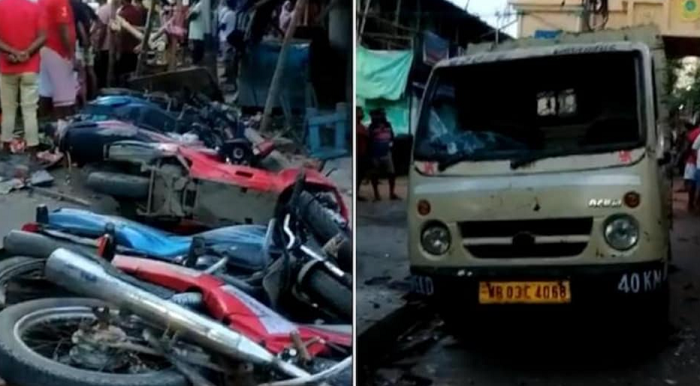
On October 9 the Hindu community in the Mominpore locality of Kolkata in West Bengal came under attack as they geared up to celebrate the annual Lakshmi Puja. As reported earlier, bikes and shops belonging to Hindus were vandalized by Islamists at Maila Depot in Mominpore. The Hindu community was forced to flee after their houses came under attack in Mayurbhanj in the Kolkata port area.
Under the false allegation that an Islamic flag was desecrated, the accused also ambushed the Ekbalpur police station and forced the cops to flee.
According to the NIA press release, the case was first registered on October 10, 2022, at the Ekbalpur Police Station in Kolkata, West Bengal, and was then re-registered by the NIA on October 18, 2022.
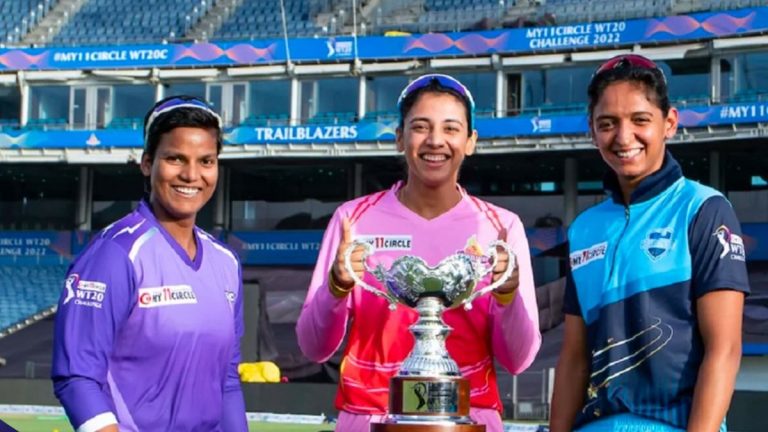
The Viacom18 secured the Women’s Indian Premier League (IPL) media rights value for the 2023-2027 cycle for a whopping Rs 951 crore which means per match value of INR 7.09 crore for next 5 years.
The BCCI will unveil the five WIPL franchises on January 25. The news comes as a massive development for women’s cricket on Monday as Women Indian Premier League (WIPL) media rights was auctioned. The news was confirmed by Board of Control for Cricket in India (BCCI) secretary Jay Shah on his Twitter account on Monday.
“Congratulations @viacom18 for winning the Women’s @IPL media rights. Thank you for your faith in @BCCI and @BCCIWomen. Viacom has committed INR 951 crores which means per match value of INR 7.09 crores for next 5 years (2023-27). This is massive for Women’s Cricket,” Jay Shah tweeted on Monday.
Viacom has pledged INR 951 crore, and INR 7.09 crore for each match, for the next five years.
The Women’s T20 Challenge was initially held as an exhibition tournament, but the BCCI last year eventually made the decision to introduce the WIPL, with the first season’s opening match scheduled for March. The BCCI has not officially released the tournament’s schedule, but it is widely believed that the first season, which would consist of 22 matches, will take place between March 5 and March 23.
Uncapped cricketers have been given two alternatives, while players with caps–those who have represented India or are currently on a central contract–can select either Rs. 30 lakh, Rs. 40 lakh, or Rs. 50 lakh as their base pricing (Rs. 10 lakh and Rs. 20 lakh).
Prior to the WIPL, the base price has been separated into five categories, ranging from Rs. 10 lakh to Rs. 50 lakh. The auction’s registration cutoff date is January 26.
(This news report is published from a syndicated feed. Except for the headline, the content has not been written or edited by OpIndia staff)
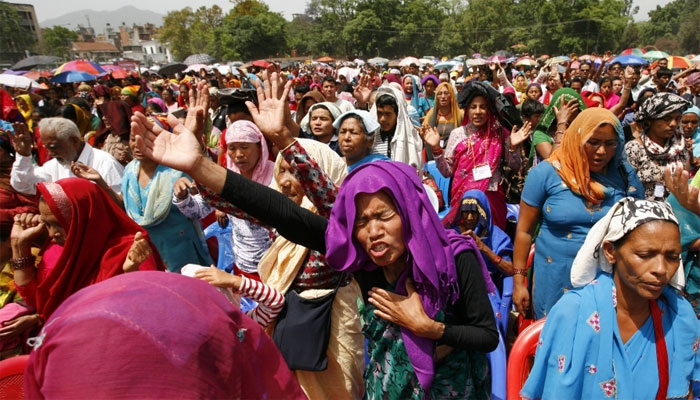
On January 14, BBC published a shocking report that said the Christian population has possibly increased by 68 per cent in Nepal in less than a decade, thanks to Christian missionaries, especially from South Korea. A report titled ‘Christian missionaries target birthplace of Buddha in Nepal’ explained how South Korea, in particular, has been sending a tsunami of evangelists to Nepal.
As per the report, Nepal had 3,76,000 Christians in 2011 (census numbers), which has increased to approx 5,45,000 now, a jump of 68 per cent. Notably, Christians make up 2 per cent of the total population in Nepal, while Hindus are 80 per cent and Buddhists are 9 per cent. The number of Christians in 1951 was zero, which rose to 458 in 1961. Since then, the number has exponentially increased. In 2008, the 240-year-old Hindu monarchy ended in the country, and it became secular. The report suggests that the change in the country’s religious status helped a lot in increasing the Christian population.
South Korea’s role in conversions in Nepal
South Korea started sending evangelists to Nepal around two decades ago. Since then, around 20,000 Korean missionaries have joined the movement to convert Hindus to Christianity. The so-called caste system has been blamed for the conversions. Quoting a Korean missionary couple, BBC noted they are converting village after village to Christianity. Korean Pastor Pang Chang-in claimed that after watching a single alleged “miracle”, the whole village converted to Christianity.
Pang noted that despite the anti-conversion law in the country, the missionaries are converting Hindus at a rapid pace. The birthplace of Bhagwan Buddha is facing an attack on its culture and history which makes him delighted. In around 20 years, Pang alone has overseen the construction of over 70 churches in the country, most of them located in the district Dhading, which is 2 hours away from Nepal’s capital Kathmandu.
As per the latest data, there are around 7,758 churches in Nepal. Imagine a country where Christians had a negligible population, now facing a parasitic conversion rate. Notably, Korean missionaries are known for being aggressive. They mostly target places that are known to be “hardest to convert”. Lee Jeong-hee, wife of Pang, said, “We are always working with the anxiety and nervousness we feel from the anti-conversion law. But we can’t stop the spread of the gospel because of this fear. We will not stop saving souls.”
Both Pang and Joeng were bankers before turning evangelists. In 2003, Pang first came to Nepal. He was “shocked” to see the country’s idols being worshipped at a large scale. The funny thing is, Christians themselves worship an idol of Jesus Christ, Mother Merry and the Cross. He said, “I was shocked to see so many idols being worshipped. I felt Nepal was in desperate need of the gospel.” According to Pang, the end of the Hindu monarchy was the beginning of “the golden age for missionary work”.
There are around 300 Korean families in Nepal who indulge in missionary work. However, BBC could interview only Pang and his wife as others preferred to stay under the curtains out of fear of the anti-conversion laws.
An OpIndia report mentioned how the communist government was hand in glove with the Christian Missionaries. Notably, in 2018, former Prime Minister Oli attended the Asia Pacific Summit, organised by Universal Peace Foundation, a South Korean NGO accused of funding and promoting conversions to Christianity.
‘The culture is at stake’
BBC spoke to former Deputy Prime Minister of Nepal Kamal Thapa about the rapid conversions that have been happening in the country. Thapa said the culture of the country was at stake. He said, “It’s spreading like wildfire. Cultural identity is at stake. The fabric of the national unity is at stake.” He called out the Korean missionaries and said their work was an “organised attack on the country’s cultural identity”. He said, “Missionaries are working behind the scenes, exploiting the poor and ignorant people and encouraging them to convert to Christianity. This is not a case of religious freedom. This is a case of exploitation in the name of religion.”
Thapa is one of the leaders lobbying for Nepal to return to becoming a Hindu state. In a recent tweet, he said, “I have repeatedly been saying Sanatan Dharma culture and tradition have been in crisis due to organised religious conversion. However, our attention has not gone. We are united to control organised proselytism and protect Sanatan Dharma culture and tradition.” (Translated from Nepalese using Google Translator)
बारम्बार भन्दै आएको छु-संगठित धर्मपरिवर्तनको डढेलोमा सनातन धर्म संस्कृति र परम्परा संकटमा परिसक्यो।तर,हाम्रो ध्यान गएको छैन।यसवारे आवाज उठाउँदा धर्मको नाममा राजनीति गर्यो भन्ने आरोप लगाईन्छ। संगठित धर्मपरिवर्तन नियन्त्रण गर्न र सनातन धर्म संस्कृति र परम्पराको रक्षागर्न एकजुट हौँ https://t.co/7o85Eknigs
Though an anti-conversion law is in place, no convictions have taken place since it was imposed. There are currently five active cases in the country. Four cases against Koreans, including two nuns, were dropped last year. As per UCA news, the two nuns were held under the charges of converting Hindus under the guise of allurement. They were detained for six weeks before the formal arrest was made in October 2021. Later in November 2021, both of them were granted bail. In 2022, the charges against them were dropped.
The rampage conversion has reached the level that they have managed to convert Hindu priests as well. When Nepal faced a deadly earthquake in 2015, the missionaries got into action and used the calamity to convert Hindus to Christianity.
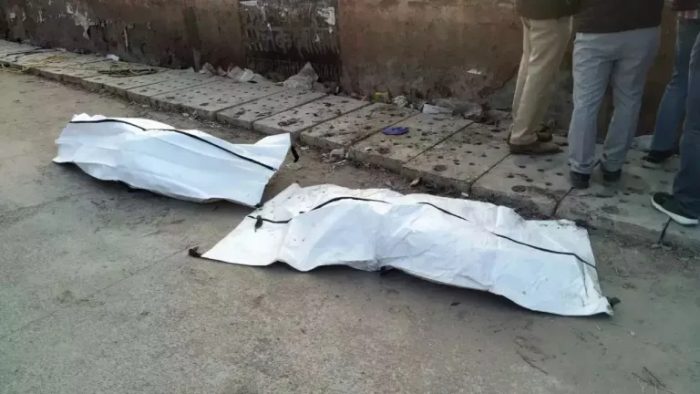
Last week, on Thursday, January 12, Delhi Police suspected two suspected terrorists, Jagjit and Naushad, from Bhalswa Dairy area in Delhi. Now it has emerged that the duo killed a Hindu man, chopped up his body, and sent the video of the murder to their handlers in Pakistan. The aim of sharing the video was to impress their handlers across the border with their capability.
Though the deceased’s identity is yet to be ascertained, the Delhi police said that his religious identity (Hindu) could be established by the trishool (trident) tattoo on his arm. The recovered body parts of the deceased have been sent for forensic examination. Efforts are on to identify him using the missing persons’ record from mid-December, said the police.
According to an India TV report, the two suspects, Naushad and Jagjit Singh, who were arrested under the Unlawful Activities Prevention Act (UAPA) on Thursday, confessed to their crimes in front of Delhi Police and added that they chose a Hindu man intentionally intending to spread communal violence before Republic Day.
The Delhi police further revealed that the duo were also planning to target some Shiv Sena leaders in Punjab in the coming month.
According to police, the duo was given four to five names by their Pakistan-based handler Sohail, who is associated with the terror outfit Lashkar-e-Taiba and linked to Pakistan’s Inter-Services Intelligence, ISI. The targets included a local RSS worker, a senior Punjab-based Shiv Sena party leader, and a Sikh group member who is opposed to the Khalistan movement. Sohail allegedly informed the duo that he would transfer money to them after each murder, said the police, adding that they have discovered a list of some names.
As per a report by TOI, a probe by the intelligence agency revealed that the duo, Jagjit alias Yakub and Naushad, was being handled by the K2 (Kashmir-Khalistan) desk of the ISI.
Naushad and Jagjit alias Yakub killed the Hindu man to impress their terror “bosses” in Pakistan
Earlier on Thursday, Special cell of the Delhi police arrested the two — identified as Jagjit Singh (29) and Naushad (56) — from the Bhalswa Dairy area of Jahangirpuri in Delhi. The police recovered two hand grenades, three pistols, and 22 live cartridges from the suspects. The police also found traces of blood at their house, following which the two were questioned.
Further, Delhi Police said it has information that Jagjit Singh has links to Khalistani terrorist Arshdeep Dall. He is also a member of the notorious Bambiha gang and has been receiving instructions from anti-national elements based abroad, the city police said, adding that he is also a parole jumper in a murder case in Uttarakhand.
Naushad is also associated with Harkat-ul-Ansar (HUA), a terror group that is based in Pakistan and primarily operates in Jammu and Kashmir. He has been a life convict in two counts of murder and has also served a 10-year sentence in connection with a case under the Explosive Act.
During their questioning, they confessed to their terror activities, and when the police searched their residences and nearby areas, the chopped-up body was found in a drain.
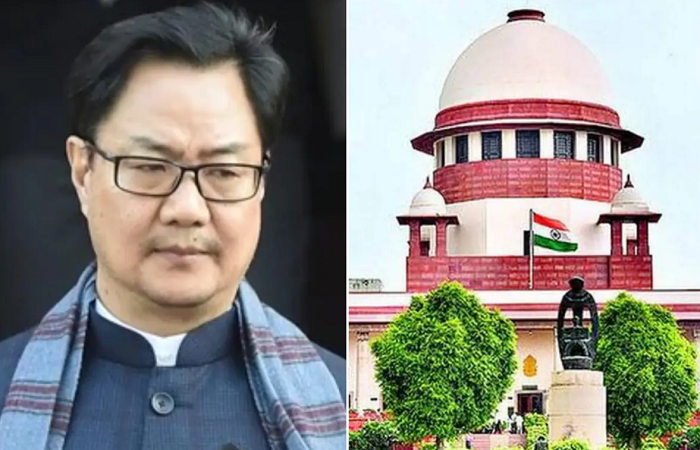
On Monday, the Centre wrote a letter to Chief Justice of India (CJI) D Y Chandrachud, proposing the inclusion of government representatives in the 25-year-old Supreme Court-created two-tiered system for the selection of judges for infusing openness and public accountability into the recruitment process of constitutional court justices.
The letter from Law Minister Kiren Rijiju to the CJI is the latest in a string of criticisms from constitutional officials, including the Vice-President and Lok Sabha Speaker, who often say that the Supreme Court seems to be intruding into the jurisdiction of the legislative.
This is almost a month after the Minister publicly stated that the collegium system lacked transparency and accountability. In the letter issued on January 16, the minister has proposed including representatives from the government in the “evaluation committee” for Supreme Court and High Court judges to dispel the notion that the process for selecting constitutional court judges is opaque.
According to the reports, the letter’s thrust is consistent with government thinking, based on a decade-old comment by renowned Justice Ruma Pal. “As I have said elsewhere, the process by which a judge is appointed to a superior court is one of the best-kept secrets in this country,” the former Supreme Court justice remarked on November 10, 2011.
“The very secrecy of the process leads to an inadequate input of information as to the abilities and suitability of a possible candidate for appointment as a judge… The consensus within the collegium is sometimes resolved through a trade-off resulting in dubious appointments with disastrous consequences for the litigants and the credibility of the judicial system,” she had said.
Former Supreme Court Justice Ruma Pal had stated in a speech made a decade ago, “Besides, institutional independence has also been compromised by growing sycophancy and ‘lobbying’ within the system. The view that the collegium process of selection operates on you scratch my back, I scratch yours’ – is fast gaining ground.” She had said this in a speech denouncing the collegium regime.
However, the law minister’s proposals for changes to the method of the process (MOP) were rejected by the CJI-led five-judge collegium, which includes Justices Sanjay Kishan Kaul, K M Joseph, M P Shah, and Ajay Rastogi. Since none of these four justices moved on to become CJI, the collegium now includes Cl Chandrachud’s successor, Justice Sanjiv Khanna.
The Supreme Court believes that the proposal to include government representatives in the two-tier judge-selection framework is a new attempt to incorporate backdoor shades of the National Judicial Appointment Commission Act, which was unanimously approved by Parliament but deemed unconstitutional by a five-judge SC bench in October 2015. The NJAC was to be led by the GI and comprised two of the most senior judges, the law minister, and two notable people chosen by a panel consisting of the Prime Minister, the Leader of the Opposition, and the GI.
Reportedly, Justice Pal’s more than two-decade-old opinions regarding the secrecy of the judge-selection process gained significance after they were cited in the decisions of two justices on the five-judge bench that overturned the NJAC Act. The SC took over the judge selection process from the executive and committed it to the collegium in two Constitution bench decisions in 1993 and 1998. Prior to the creation of the collegium system by the Supreme Court, Article 124 of the Constitution stated that the President (read government) shall select SC justices in consultation with the CJI and such other SC and HC judges as may be necessary.
Earlier on November 25, 2022, the Law Minister at the Times Now Summit had asked, “What is the difference between consultation and concurrence?… If you expect the government to accept names recommended by the collegium, what is the government’s role?”
Also on December 15, he had flagged concerns over the government’s limited role in appointing judges and stressed that it is at odds with the spirit of the Constitution. He also expressed concern that more than five crore cases were pending in the country. The primary cause, according to him, was a lack of judges.
“The government took many steps to reduce the pendency of cases, but the government has a very limited role in filling vacancies of judges. The collegium chooses names, and apart from that, the government has no right to appoint judges,” Rijiju was quoted as saying.
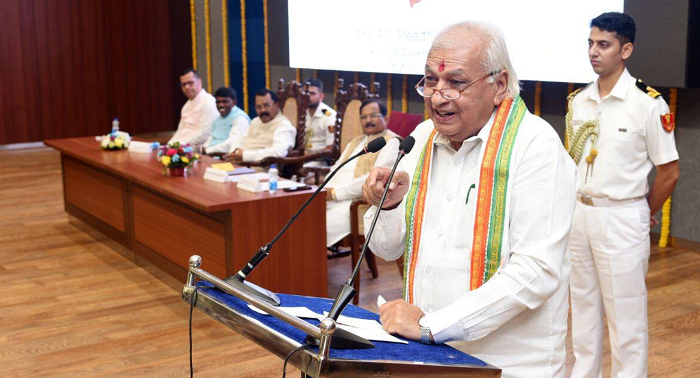
On Sunday, Kerala Governor Arif Mohammad Khan criticized Islamic religious edicts and said that ‘fatwas’ are being used as a political tool or weapon by the politicians. He said that all fatwas of kufr (apostacy) were political and that Islam had no place for it. Khan further stated that fear frequently leads to violence, and individuals become adversaries of those they do not know.
“Kufr fatwas are actually only given for political reasons and have been used as political weapons. Islamic history shows that fatwas were given to weaken the opponents,” he said at an event organized to mark 75 years of the weekly publication named Panchjanya in Delhi.
Hitesh Shankar, the editor of Panchjanya, who was conducting a question-and-answer session with Khan, cited a recent interview with RSS supremo Mohan Bhagwat on the Hindu-Muslim relations. According to the reports, Bhagwat had warned Muslims to stop boasting about their ‘religious supremacy,’ while assuring them that Islam and its adherents face no danger in India. Hitesh Shankar questioned Arif Mohammad Khan on the role of Maulvis and Ulema in fostering a sense of ‘superiority’ in the minds of Muslims.
Quoting Islamic ‘Kaul’ (Sayings), Khan said, “Violence is born out of fear. People become enemies even of those whom they do not know.” He also added that Fatwas of Kufr are issued to stop those who do good deeds. “Fatwas have also been issued against me several times,” he said.
According to Khan, the first fatwa for kufr in Islam was issued against a Muslim. “The first fatwa for kufr in Islam was not against a non-Muslim. It was against the man who had been brought up by Prophet Mohammed and who was also his son-in-law, Hazrat Ali. And he was murdered. There are at least 200 instances in Quran where it is said that right and wrong will be decided when people die and meet their Creator. No human being, not even the Prophet, has been given the right to decide this according to Quran,” he was quoted.
Delhi| ‘Fatwas’ are never used because of religious reasons. There are 200 instances in Quran & no human being can decide who is right and who is wrong. ‘Fatwas’ are being used as a political weapon: Kerala Governor Arif Mohammed Khan (15/01) pic.twitter.com/xZWmZPd3QD
The Governor stated that he had several kufr fatwas issued against him since his time in Congress. “I was not part of the BJP. I used to make my speeches in Hindi. In those days, even for using Hindi words you could get kufr fatwa. Dara Shukoh had to also suffer kufr fatwa and was murdered. But the one who got him murdered also buried him beside Humayun. So if Shukoh was Kafir, why was he buried beside Humayun? So, kufr fatwas are actually only given for political reasons and have be used as political weapons. This happened because unfortunately, under the Muslim law that was written, the rights of Muslims and non-Muslims are not the same. So, to deprive others of their rights, these fatwas are given,” he said.
In a jab at people who issue fatwas, he noted that Maulana Shibli used to remark that the doors of paradise would only open for those who had received two or four fatwas. He blamed politicians rather than ulemas and clerics for the endeavour to foster a sense of superiority among Muslims.
Terming the politicians as ‘the middlemen’, he claimed that Prophet Muhammad had arrived in the world simply to destroy ‘middlemen’. He reiterated that a section of Sufi exponents were misusing the term ‘kufr’ to score over their rivals and said that the Islam religion has been taken over by politics since the death of the Prophet.
Khan meanwhile also echoed the words of RSS chief Mohan Bhagwat who earlier had said that all those who live in India are Hindus. “Sir Syed (Ahmed Khan), when invited by Arya Samaj, said why don’t you call me Hindu. He said anyone born in Hindustan should be called a Hindu,” he was quoted. He also stated that Muslims were responsible for their backwardness and that no one else could be blamed for their backwardness.
मुसलमानों के पिछड़ेपन के लिए मुसलमान ही जिम्मेदार है।
At the event, the Governor also talked about the differences between him and Kerala Chief Minister Pinarayi Vijayan. He stated that the disagreement between him and the Pinarayi Vijayan government began because of the Citizenship Amendment Act (CAA), and that there is no longer any conflict.
“There is no conflict with the Kerala government. The moment I reached there, the CAA came. They could not digest that a constitutional office in Kerala could support the CAA. My job is not to support, but to defend. It is my oath to preserve the Constitution and protect the law. So if there is an attack on that, something to which the President has given his assent, on wrong grounds and by spreading misinformation, then it is my constitutional duty to defend it,” the Governor stated at the Panchjanya event.
During this time, he said he met with Chief Minister Vijayan and informed him he was merely performing his constitutional duties. “I told the CM that I know you are a Communist. But even I am not a believer in organised religion. I am rather a believer in spirituality. I told him the meaning of dharma is accountability. And I told him my accountability is Constitution. I told him you publicly criticise me and I will not feel bad. You do your duty and I will do mine. But since then there has been no tension,” he said.
The Vidhan Sabha election in the northeastern State of Tripura is just a couple of months away. Dr Manik Saha, the incumbent Chief Minister, has been faced with the mammoth task to ensure victory for the BJP.
A dental surgeon by profession, he was called upon by the BJP high command to steer the party through its rough patch. In an overnight decision, he was brought back from the Rajya Sabha to serve as the Chief Minister of the State.
Dr Saha had always remained connected to the people. He was well aware of the growing anti-incumbency and grievance among the state government employees.
After assuming charge of the State, he began to unveil policies and schemes to win over the trust of the people. Dr Saha is an eloquent speaker, focused on the welfare of Tripura and its residents.
Ahead of the upcoming elections, Opindia caught up with Chief Minister Dr Manik Saha during his interaction with social media influencers on Sunday (January 15) night.
Question: Thank you Dr Saha for your time. You have recently announced a 12% hike in DA/DR which will directly impact 1.8 lakh employees and pensioners in the State.
The reception has been highly positive. It is a political masterstroke in a sense. Even though the BJP is on a strong footing, we have seen some party leaders defecting to the Opposition camp.
While there is no dearth of political opportunists, will such last-minute rebellion by some BJP leaders dent the political outcome of the party in the 2023 elections?
Response of Dr Manik Saha:
“This is like a ‘toad cycle’. First, they joined BJP, then defected to the Trinamool Congress, then, Congress and then CPIM. There must be some principle in politics.
You had seen the turnout of people when Amit Shah ji came to Dharmanagar (North Tripura district). Or the massive support received by JP Nadda ji in West Tripura district during the ‘Jana Biswas Ratha’ Yatra.
Tripura | BJP national president JP Nadda along with CM Manik Saha holds a roadshow in West Tripura district. pic.twitter.com/9vv65GgoM3
People felt connected to us through our outreach programme. We have touched upon all sections of society through our schemes. People may come and go but we won’t compromise on our principles.
We are confident that the defection of some leaders will not impact the electoral outcome. You have seen the bypoll results, where we have bagged 3 out of 4 seats. We have the popular support.”
Question: One of the major concerns in recent times has been the rising anti-Bengali sentiment in Tripura, raked up by the likes of Tipraha Indigenous Progressive Regional Alliance (also called Tipra Motha).
We have seen demands for a separate homeland for the indigenous people (called Tipraland/Greater Tipraland), even though they know it will never be a reality. Tripura has witnessed deadly ethnic tensions between Bengalis and tribal communities in the past.
We have gone past those dark days and have been able to maintain ethnic harmony in the State. How do you as a Chief Minister plan to win the trust of the indigenous people, diffuse the growing tensions and maintain harmony in the State?
Response of Dr Manik Saha:
“The past ruling regimes in Tripura, be it the Congress or the Left, had exploited the tribal community and used them as a vote bank. Yes, I am aware of an increasing anti-Bengali sentiment among the indigenous communities, created by some vested interests.
I recently took part in a programme in Khumulung which falls under ADC (Autonomous District Council). A woman walked up to me and told me that it was the first time that she felt a sense of inclusivity.
Yes, a lot needs to be done to bridge the gap. We need better forms of communication and something concrete will be done in this regard in a few days’ time. This has been our top priority so that the indigenous people do not feel left out.”
The present state government is committed to ensure various Agri facilities across Tripura.
Took part in the inauguration of newly-built Primary Rural Market at Belbari in Khumulwng today.
I am happy to see the spirit among the Janajati mothers & sisters towards self-reliance. pic.twitter.com/ADPZG4F9cr
During the interactive session, Dr Manik Saha also spoke about how he had served only 3 days in Rajya Sabha before being called upon by the BJP to serve as the Chief Minister of the State.
“I had no idea that I was going to be the Chief Minister even 30 minutes before the decision. I had served the party in various capacities and did whatever task was assigned to me with utmost sincerity,” he reflected on his political journey.
The Tripura Chief Minister also informed us how he was hounded by the Left regime and was forced to fight them in a court of law. “I despise vindictive politics. If anyone from the Opposition makes any request or raises any problem, I take it up in all earnest,” he added.
On being told that the rival political parties may not respond in the same manner if they were to come to power, Dr Manik Saha calmly responded, “That’s fine. As long as I am there, I am teaching them how to behave in a civil manner despite political differences.”
He also touched upon the HIRA (Highways, Internet, Railways and Airport) model that PM Modi had promised to the residents of Tripura during the Vidhan Sabha elections of 2018.
New airport terminal, image via Dibakar Dutta/ Opindia
Today, Tripura has better connectivity, high-speed internet, an extensive broad-gauge railway network with direct trains to the National Capital and a state-of-the-art airport terminal.
Opindia had also reported how the 12% hike in DA/ DR has turned out to be a game changer for the Tripura BJP at a time when the Left, TMC or Congress has failed to promise a better alternative.
While concluding his address, Dr Manik Saha spoke about how his government almost doubled the wages of contractual and part-time workers, laid out initiatives to encourage the participation of youth in sports and make the State safer for women.
He also elaborated how his long-standing dream of starting a dental college in the State was made possible by the double-engine government of the BJP.