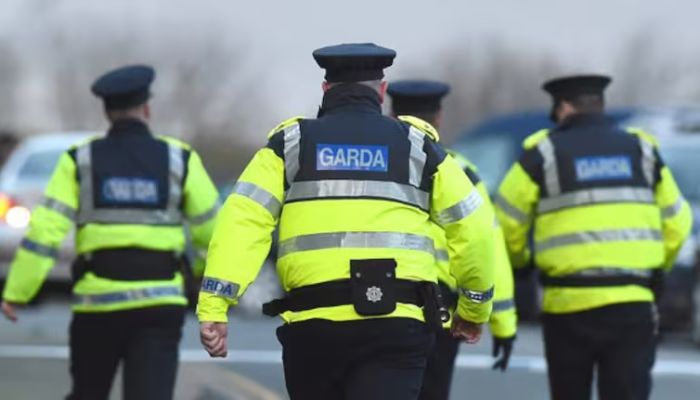
Attacks on Indians in Irelandcontinue to grow, with yet another alarming incident taking place in Dublin. In this case, a 60-year-old man was the victim of racial harassment while he was waiting at a bus stop with his family.
One of the victim’s friends posted the story on Reddit. The daughter of the man described how she, her sister, and her father were waiting at the bus stop when two young boys, about seven or eight, came up to them. Initially, the boys asked to take selfies with her father. However, the atmosphere soon soured. They started teasing him, and one of them even seemed to reach into his wallet.
“We tried to remain calm and ignore their behavior. But then one of the boys blocked my father’s way and made grabbing gestures towards his crotch,” the girl said.
The girl stated that the experience left the family in a state of helplessness. “My father was harassed by a child in front of his daughters. Given the present atmosphere for people of colour in Ireland, and being cognizant of the laws, it was disappointing that there was no recourse available. No one should be made to feel threatened in public places regardless of where they are from,” she added.
Second such case within a week
This is the second instance in a week that an Indian citizen living in Ireland has been attacked in a racist manner. Previously, in Waterford City, an Indian-origin six-year-old girl, Nia Naveen, was physically attacked and abused verbally by a gang of 12- to 14-year-old children. The assailants punched her face and neck, they pulled her hair, and inserted a bicycle wheel into her private area while using racial abuse, directing her to “go back to India.”
Her mother, Anupa Achuthan, said that the experience left Nia highly traumatised and afraid to venture out. “She is not sleeping well, and she’s afraid to play outdoors now,” Anupa said. Although familiar with the children who carried out the attack, she does not want them punished but would like them to undergo counselling so that they learn the damage that they have inflicted.
A series of racially motivated attacks
Sadly, these two are part of an alarming trend. At least five racist attacks on Indians in Ireland have been known since July 2025.
Just a day after the attack on Nia, an Indian-origin cab driver, Lakhvir Singh, was brutally assaulted in Ballymun, a suburb of Dublin on 5th August. Two men in their early twenties attacked Singh with a bottle, leaving him bleeding heavily from the head. Singh, who has lived in Ireland for 23 years, said the men shouted “go back to your own country” before fleeing.
Laxman Das, a Kolkata-born sous chef who works in Dublin, was assaulted by three individuals close to the Hilton Hotel on his way to work on 3rd August. They made off with his phone, cash, and electric bicycle, and he was left with injuries.
On 19th July, a 40-year-old Indian citizen who was employed at Amazon was attacked, stabbed in the face, and robbed partly naked by a group of teenagers in Tallaght, Dublin. He was in Ireland for just three weeks.
A 32-year-old data scientist named Santosh Yadav was assaulted by six teens outside his apartment in Dublin. He was beaten over his head, neck, chest, and legs and sustained a broken cheekbone along with several other injuries.
Community concerns growing
The assaults have raised concern among Ireland’s Indian community. The Indian Embassy in Ireland has already released an advisory suggesting citizens exercise caution, particularly at night and in less populated areas.
Prashant Shukla, head of the Ireland India Council, claimed anti-immigrant politics in Ireland have been stoking such hostility. “Indian-origin individuals are being blamed unjustly for issues like the housing shortage. It is a false and dangerous narrative,” he said.
The Council has also sent a letter to Irish ministers calling for tougher legislation to hold parents responsible when their children are involved in racist attacks.
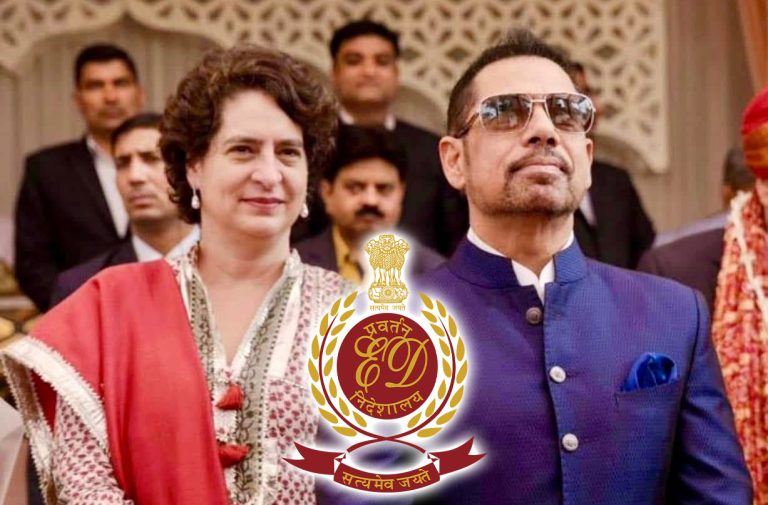
The Enforcement Directorate (ED) has filed a chargesheet against Robert Vadra, husband of Congress MP Priyanka Gandhi Vadra, alleging he generated and laundered ₹58 crore in illicit proceeds from a fraudulent land transaction in Shikohpur, Gurugram.
According to the ED’s investigation, the proceeds of crime were routed through two companies linked to Vadra, ₹5 crore via Blue Breeze Trading Private Limited (BBTPL) and ₹53 crore via Sky Light Hospitality Private Limited (SLHPL). These funds, derived from alleged criminal activities, were reportedly used by Vadra to acquire immovable properties, make investments, provide loans, and settle liabilities for his group companies.
The investigation precisely quantified the Proceeds of Crime (PoC) generated from the alleged criminal activities. Robert Vadra was found to have received PoC amounting to Rs 58 crores. This amount was received through two channels. The PoC amounting to Rs 5 crores were routed…
The case stems from a 2018 First Information Report (FIR) filed by Haryana Police, which accused former Chief Minister Bhupinder Singh Hooda, DLF Ltd., and others of cheating, forgery, criminal conspiracy, and corruption. The ED registered its money laundering probe in December 2018.
Details from the chargesheet reveal that Sky Light Hospitality purchased 3.5 acres of land from Onkareshwar Properties Pvt. Ltd. for ₹7.5 crore as per the sale deed, though the actual agreed amount was Rs ₹crore. The cheque mentioned in the deed was never encashed.
As per the chargesheet, this deal led to an alleged stamp duty evasion of ₹45 lakh. The ED says this was part of a quid pro quo arrangement, where the land transfer occurred without genuine payment in exchange for Vadra’s influence to secure a commercial license for Onkareshwar Properties in the same area.
Vadra’s associates, Satyanand Yajee and Kewal Singh Virk, along with companies such as Sky Light Realty and Onkareshwar Properties (now SGY Properties), are also named in the chare sheet.
The charges highlight misrepresentation in the transaction, which the ED says facilitated the laundering of funds into various assets.
ED has already attached 43 immovable properties worth ₹38.69 crore, including land in Bikaner, commercial units in Gurugram, Mohali, Noida, and residential flats in Ahmedabad. Some of these assets are held directly by Robert Vadra, while others are in the names of his companies like Sky Light Realty, Real Earth Estates, and Artex etc.
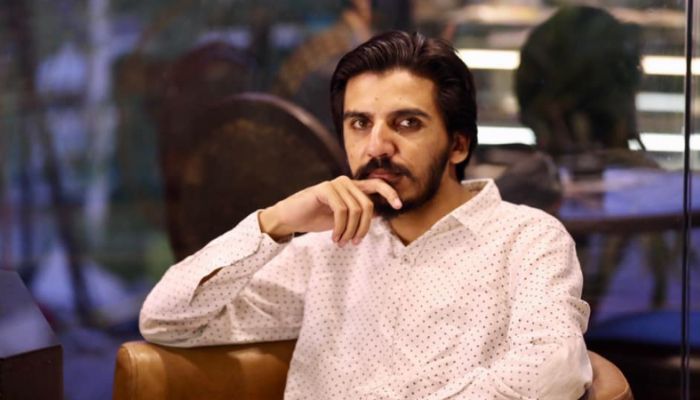
Pakistani journalist Asad Ali Toor was stopped from boarding his flight to Washington, US, late on Friday, 8th August (local time) at Islamabad International Airport. He was on his way to attend a 12-day International Visitor Leadership Program (IVLP) arranged by the US State Department, an established exchange program that brings together professionals from across the globe for discussion and learning.
According to Toor, immigration officers informed him that his name was on Pakistan’s Exit Control List (ECL), which is also referred to as the Provisional National Identification List (PNIL). It meant he would be unable to fly. He repeatedly inquired why his name appeared on the list, but nobody gave him any answer.
Journalist @AsadAToor was off loaded from a US bounded flight at New Islamabad International Airport.
Asad Ali Toor is know as blistering commentator against policies of government and establishment. pic.twitter.com/rEDPAWTQno
For him, it was not just about being prevented from travelling; it was another means of silencing him and stopping him from voicing his opinions. “In Pakistan, journalism and speaking truth to power have been turned into crimes,” journalist Toor said in a statement after the incident. “Yes, I committed this crime and I will keep committing it”, he said.
Asad Ali Toor also referred to Pakistan’s fall in the World Press Freedom Index, where the country fell from rank 152 to rank 158 this year. He attributed this to what he refers to as a “hybrid regime” for making it more difficult for journalists.
This is not the first time Toor has been in trouble due to his profession. His life has been one of threats, harassment, and even violence. One of the most dangerous incidents involved him being attacked at his apartment in Islamabad in May 2021.
Journalist Asad Ali Toor said in a statement to police that at about 11 p.m., the doorbell rang. Upon opening the door, a man trained a pistol on him and instructed him to step aside. When he attempted to flee, the man threatened him with a gun. Two other men entered almost immediately. They pushed him into his bedroom, bound him, gagged him, and beat him.
“They threw me to the ground and instructed me to remain silent or else they would shoot me,” Toor explained to police later. One of the attackers repeatedly hit him on the elbows with the butt of the pistol, he said, so he was in severe pain.
Toor said that the men identified themselves as members of Pakistan‘s influential military intelligence agency, the ISI. The ISI has previously been accused by rights groups of being involved in kidnappings, torture, and even murders of reporters.
The assailants asked Toor how he supported himself and was funding himself, and compelled him to recite slogans in honour of the army and the ISI, and against India, Afghanistan, and Israel.
#AsadToor says one of the assailants identified himself as an ISI official, as they entered his home. They made him chant “Pakistan Zindabad” & “Israel, Afghanistan murdabad” slogans while badly beating him up. Asad Toor is a Pakistani Journalist. He was tortured by ISI goons. pic.twitter.com/JybAo2KrHM
— Major Gaurav Arya (Retd) (@majorgauravarya) May 28, 2021
The army’s press centre did not issue a reaction to the accusations then. The assault outraged media practitioners and human rights activists, who viewed it as an extension of a consistent campaign to silence the media.
Almost four years on, Toor says there is little difference. Pakistani journalists continue to receive threats, get arrested, and get barred from travelling. Being prevented from travelling abroad to attend an international programme, he feels, is no arbitrary act; it’s a message.
That message is straightforward: you may voice your opinions, but only within the boundaries established by the powers that be. Cross them, and you will be reminded precisely who owns the gate.
India has emerged as the leading supplier of smartphones to the United States, Union Minister Ashwini Vaishnaw said on Sunday, adding that the country’s electronics manufacturing sector has now touched a valuation of Rs 12 lakh crore.
Electronics production sees sixfold growth
Speaking at the inauguration ceremony of metro projects in Bengaluru, Vaishnaw highlighted the government’s efforts to boost domestic electronics production. He noted that India’s electronic manufacturing has grown six times in the past 11 years, with exports alone recording an eightfold jump to reach Rs 3 lakh crore.
India’s rise in mobile manufacturing
The minister underlined India’s position as the world’s second-largest mobile phone manufacturer. In 2014, India had just two mobile manufacturing units. Today, that number has expanded to over 300, marking a dramatic transformation in the sector. Mobile phone production value, he added, has risen from Rs 18,900 crore in FY14 to Rs 4,22,000 crore in FY24.
Vaishnaw also emphasised how the domestic market has shifted, with 99.2 per cent of mobile phones sold in India now being manufactured within the country, compared to just 26 per cent in 2014-15. This, he said, reflects India’s growing self-reliance in technology manufacturing.
Support for inclusive technology
According to Vaishnaw, this growth is part of the broader vision to make India a global hub for technology production. He said that Prime Minister Narendra Modi’s focus on inclusive access to technology has ensured that advanced electronics are increasingly within reach for all citizens.
Three more Vande Bharat trains flagged off
Meanwhile, Prime Minister Modi flagged off three new Vande Bharat trains earlier in the day, the Ajni (Nagpur)-Pune, KSR Bengaluru-Belgavi, and Shree Mata Vaishnodevi Katra-Amritsar services — from the KSR Bengaluru railway station. With these launches, India’s Vande Bharat fleet has expanded to 150 trains (75 pairs), Vaishnaw confirmed in a post on X.
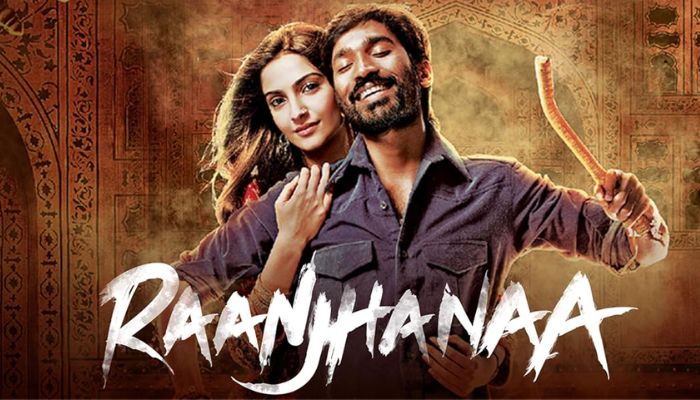
Recently, Eros International re-released the 2013 romantic drama Raanjhanaa with a new, AI-generated climax. The company’s decision to alter the ending, without discussing it with the creators and lead actor involved, led to controversy that raised a serious question: is Artificial Intelligence going to negate original creativity from the past?
The controversy over the altered ending of Raanjhanaa is not merely about technology clashing with creativity. It is about a deeper, more dangerous precedent, the rewriting of art without the consent of those who created it. Notably, none of the film’s original creative team, including director Aanand Rai, writer Himanshu Sharma, or lead actor Dhanush, were informed about the decision to re-release the film with an altered, AI-generated ending.
It has to be emphasised that this is not a debate about whether AI will replace artists in the future. It is about whether the art that has already been created will be taken from them, reshaped, and served to audiences as if the original intent never existed, or was not good enough.
The original ending and why it mattered
In the film Raanjhanaa, Dhanush’s character Kundan dies in the arms of his unrequited love. His story closed in tragedy. The film broke many hearts, made viewers emotional, and stayed with fans, well, till now.
The climax was not a throwaway twist. It was the emotional spine of the film. It anchored its themes of sacrifice, longing, and futility. When the Tamil version Ambikapathy was re-released earlier this month, this emotional resolution was erased. AI stitched together a happy hospital scene, jarringly out of step with the film’s tone.
Pained by the change, director Aanand L Rai called it a “betrayal” and “deeply disrespectful”. He stressed that the ending was deliberate, built into the film’s moral and emotional architecture.
Legally speaking, Eros International owns the rights to Raanjhanaa. In the world of contracts, that ownership can include the ability to modify, re-release, or adapt a work. However, cinema is not an assembly line product. It is a complex equation of creative labour, vision, and artistic voice. The question here is not whether the studio could do this. It is whether they should.
There were no meetings, no warnings, no conversations, only the fait accompli of seeing his work rewritten by a machine. Such exclusions speak to a widening gulf between the corporate entities that own films and the humans who gave them life. However, Group CEO of Eros Media World, Pradeep Dwivedi claimed that it is not a “replacement” but a “reinterpretation”.
Source: LinkedIn
Emphasising on the legal rights, he wrote in a LinkedIn post, “Eros, as the exclusive producer and copyright holder, holds full legal and moral rights under Indian Law. This project was executed with sensitivity to the original vision, but also with creative freedom to offer a new emotional lens to today’s audiences. This is in sync with global cinematic practices—like anniversary cuts or sequels—and to resist the evolving reality of how stories live on.”
The dangerous precedent
Those who defend AI-edited endings may argue that re-releases with altered content are nothing new. Films have been re-cut for television, edited to meet censorship demands, or repackaged for different markets. However, those changes, no matter how controversial, were done by human editors interpreting material within a cultural and creative context.
In this case, an algorithm was given the task of rewriting a creator’s definitive vision without their blessing. This was done not for artistic reinterpretation but for marketing. The line between restoration and revisionism is no longer blurred, it has been erased.
More than a moral rights issue
At the heart of the controversy is the concept of moral rights, the rights of authors, creators and all the stakeholders who were involved in making the film. These people have the right to protect the integrity of their work and to object to derogatory treatment of it. In many jurisdictions, moral rights are weak or non-existent for filmmakers. In India, where contractual obligations override such protections, the balance tilts heavily towards rights-holding corporations.
If this action of Eros International stands unchallenged, filmmakers will have to reckon with the possibility that their works, even celebrated ones, can be fundamentally rewritten years later, without them ever being consulted.
Industry backlash
The backlash has been swift. After Dhanush, Rai and other stakeholders, filmmaker and actor Farhan Akhtar publicly sided with Rai and stated that if the creator is unhappy, that sentiment should matter. Other voices in the industry have warned that this will not be the last time AI is used to “improve” or “update” older works for contemporary tastes. Filmmaker Neeraj Pandey has also come out in support of the original team.
Reportedly, Rai and Dhanush are also considering legal remedies to protect not only Raanjhanaa but also their other films from similar treatment. However, legally speaking, the studios have the upper hand as they own the rights to the film.
A future of algorithmic revisionism
The implications reach far beyond the Indian film industry. AI technology is now capable of altering performances, rewriting dialogue, and generating photorealistic scenes. While some may see this as harmless enhancement, the danger lies in the potential for cultural revisionism. With AI, the meaning of a work can be changed, uncomfortable truths can be erased, or endings can be sanitised to fit commercial formulas.
Think about it. If studios start treating films as endlessly editable assets, then history itself becomes mutable. Tomorrow’s audiences may never see the works as they were meant to be experienced.
The need for boundaries
With this controversy, there is a rising demand to create boundaries. Technology will keep evolving and AI will undoubtedly play a role in future filmmaking. In fact, many studios and creators have already started using AI to generate full-length movies. However, past works that have been completed and released must be protected from unauthorised tampering. This means there is a need for stronger moral rights protections, industry-wide ethical guidelines, and public pressure on studios to respect creative intent.
Art cannot become a living document that is constantly at the mercy of market trends and new tools. Its permanence is part of its value. Altering the climax of Raanjhanaa may seem like a marketing stunt, but it is a signal that the future holds much larger use of AI to alter previously published work.
The final frame
In the end, this controversy is not about nostalgia or fan outrage. It is about the sanctity of creative vision. The original ending of Raanjhanaa was a statement, an emotional truth shaped by its makers. By replacing it with an AI-generated smile, the studio has done more than change a scene, it has rewritten the meaning of the story.
If creators cannot trust that their finished work will remain as they intended, then every film, every song, every piece of art is vulnerable to silent, unconsented rewrites. Once we accept that, we risk living in a cultural archive where nothing is truly original and nothing is truly safe.
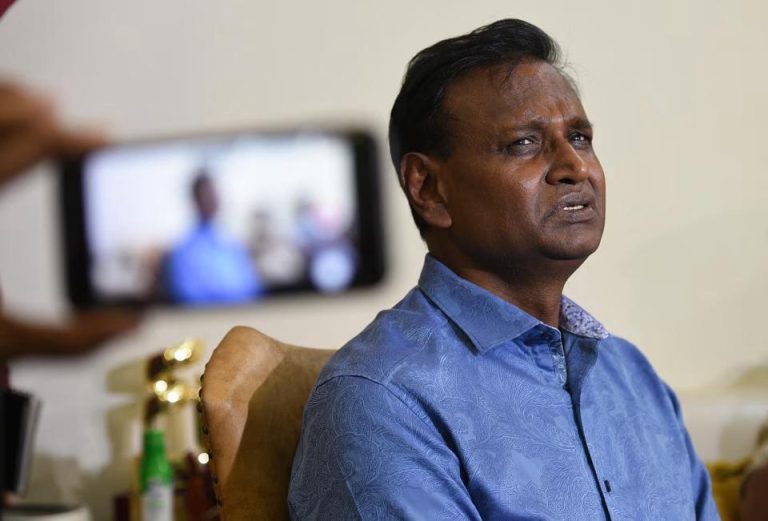
Congress leaders Udit Raj and Imran Masood on Sunday questioned the timing of Indian Air Force (IAF) chief Air Chief Marshal AP Singh’s statement on Operation Sindoor, linking it to the ongoing “vote theft” controversy.
Udit Raj questions missed opportunity on PoJK
Udit Raj said while the IAF’s feat was commendable, the timing of the disclosure was suspicious. Speaking to ANI, he said, “This is definitely good news. But why is he saying this now when the matter of vote theft is coming up? When Pakistan’s situation worsened, the BJP should have fulfilled its promise and taken PoK. Why was PoK not taken?”
The Congress leader repeated his charge that Prime Minister Narendra Modi had “betrayed the nation” by not reclaiming Pakistan-occupied Jammu and Kashmir (PoJK) when the opportunity arose. “Pakistan’s condition was bad, so we should not have declared a ceasefire on Trump’s saying and should have taken PoK,” Raj alleged.
Imran Masood accuses BJP of diversion
Congress MP Imran Masood echoed similar concerns, alleging that the IAF chief’s remarks might be intended to shift focus from the Election Commission controversy. “Is this being said to shift the narrative and hide the allegations against the Election Commission? … We have complete confidence in our army. But despite their courage, why has PoK not been taken?” Masood asked.
Air Chief Marshal’s statement on Operation Sindoor
The controversy began after Air Chief Marshal AP Singh disclosed that during Operation Sindoor, India downed at least five Pakistani fighter jets and one large aircraft at a distance of around 300 kilometres. He described it as the “largest ever recorded surface-to-air kill.”
The Congress leaders, however, insisted that while the military’s achievement was beyond question, the government’s political handling of the situation, particularly its failure to act on PoJK, amounted to a betrayal of national interest.
Social media and a few news outlets have been buzzing with the claim that the BJP-led Uttarakhand government has given only ₹5,000 as compensation to families affected by the recent Uttarkashi flash flood. The truth, however, is quite the opposite.
An unexpected cloudburst hit the village of Dharali in the district of Uttarkashi on 5th August, triggering a devastating flash flood that covered the entire village. NDRF and district administration rescue efforts have been on since then.
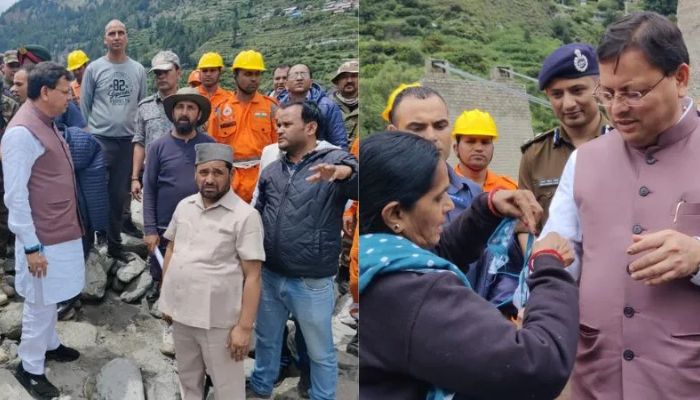
Chief Minister Pushkar Singh Dhami have visited the affected regions in the aftermath of the tragedy, interacting with survivors and assuring them that the government would spare no effort in assisting them in rebuilding their lives. Union Home Minister Amit Shah also contacted CM Dhami to discuss the situation.
On Saturday, 9th August, the Chief Minister declared a compensation package of ₹5 lakh per affected family. On X (formerly Twitter), he assured that compensation would be provided to the affected and that the administration had already begun evaluating the damage to homes, agricultural lands, and other belongings. He also assured that payments for the losses would be out soon.
धराली (उत्तरकाशी) में आई आपदा में पूर्ण रूप से क्षतिग्रस्त मकानों के लिए ₹5 लाख की तत्काल सहायता राशि प्रदान की जाएगी। साथ ही स्थानीय लोगों के मकान, जमीन, खेती व अन्य नुकसान का आकलन शुरू कर दिया गया है, जिसके मुआवजे का वितरण भी हम शीघ्र शुरू करेंगे। इसके अतिरिक्त, आपदा में…
In spite of this open declaration, within 24 hours, reports started surfacing in the media that villagers had been given only ₹5,000 each and started protesting against the state government.
Sources informed OpIndia that this ₹5,000 is an immediate relief amount distributed under normal disaster management rules by organisations such as the NDRF and SDRF. It is designed to give immediate relief for necessities upon the occurrence of a calamity. The ₹5 lakh that CM Dhami has promised is a distinct, far greater amount that will be released after verification and assessment of damage is done.
A video from Dharali during CM Dhami’s visit further contradicts the negative reports. In it, a woman is seen tearing a piece from her sari’s pallu to tie a rakhi on the Chief Minister’s wrist, offering him her blessings. Locals are also seen engaging with him warmly, reflecting trust and appreciation rather than resentment.
धराली आपदा अकस्मात थी। मुख्यमंत्री @pushkardhami जी ने लेकिन हृदय जीत लिया। जब हेलीकॉप्टर को भारी बारिश में उड़ने की अनुमति नहीं थी तब वे निरन्तर प्रभावित इलाक़ों का दौरा कर रहे हैं। लोगों के बीच में हैं। हमें अपनी नकारात्मकता के चश्मे से ही राजनीति की हर बार नहीं देखना चाहिए। CM… https://t.co/pAeYAqiSnppic.twitter.com/gilCpj5pQ9
State government officials maintain that the administration has been in high alert mode since the instant the calamity occurred. Rescue forces were sent there without delay, and the CM has remained in touch with the district authorities and NDRF units to track progress. He has personally gone to the affected area to see to it that relief reaches each of the affected families.
However, some segments of the media have promoted a campaign portraying the government as callous or complacent, dwelling only on the ₹5,000 interim relief and not on the overall compensation scheme that is already on the go.
The reality is that the Uttarakhand government has had an active and multi-dimensional response, ranging from immediate rescue efforts to sizeable financial assistance and a rehabilitation strategy. While the journey will be long, the government has made it amply clear that it will support the victims at every step.
Rescue work in Uttarkashi entered its fifth day on Saturday, 9th August, with helicopters flying in and out of the disaster-hit area. Choppers were used to airlift stranded villagers and drop food packets to places still cut off. On the ground, State Disaster Response Force (SDRF) teams, backed by a dog squad and thermal imaging devices, searched through the debris in Dharali bazar, where a massive mudslide on Tuesday flattened hotels, homestays, and shops.
Officials said five people have been confirmed dead so far, two bodies have been recovered, and 49 others are still missing. Over 1,000 residents have already been rescued from parts of Dharali that remain isolated because of the disaster. The administration is now assessing the damage to houses, farmland, and other property so that more compensation can be given.
“Our first job was to get everyone to safety, and that’s almost done,” Chief Minister Pushkar Singh Dhami said. He added that electricity, phone lines, and roads are being restored, while community kitchens are providing food, clothes, and other essentials to those who lost everything.
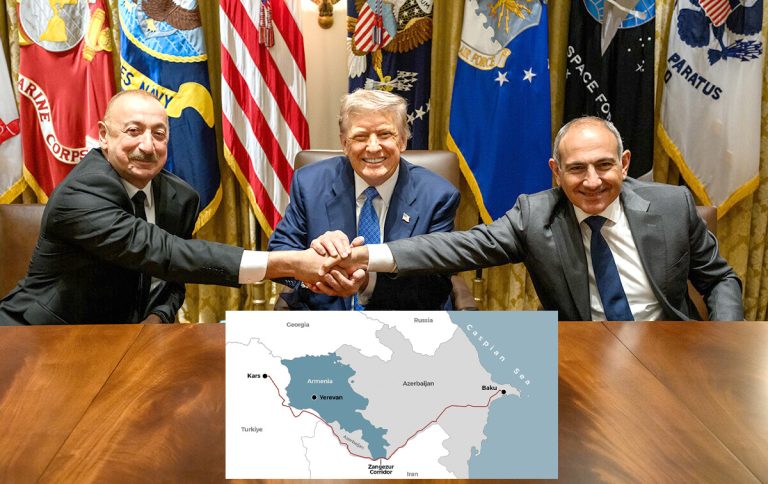
Iran has sharply opposed a newly announced US-brokered peace accord between Armenia and Azerbaijan, declaring it will block a planned transport corridor running through the Caucasus. The project, unveiled at the White House and named the Trump Route for International Peace and Prosperity (TRIPP), has been described by Tehran as a direct threat to Armenia’s sovereignty and regional balance.
Iran’s strong warning
Ali Akbar Velayati, senior adviser to Iran’s supreme leader, said the passage would be obstructed “with or without Russia” and denounced it as “political treachery.” Speaking to state-affiliated Tasnim News, he accused Washington of treating the Caucasus “as a piece of real estate” and warned that the route would not become a gateway for American influence but “their graveyard.”
The corridor is set to pass close to Iran’s border, linking Azerbaijan to its Nakhchivan enclave under Armenian law but with exclusive US development rights. Velayati argued this would allow NATO to position itself “like a viper” between Iran and Russia.
Regional reactions
Iran’s foreign ministry stressed that while it welcomed peace initiatives, projects near its borders must respect sovereignty and avoid “foreign interference.” Russia also welcomed the deal cautiously, supporting stability but warning against external involvement. Moscow invoked the “unfortunate experience” of Western-led interventions in the Middle East as a cautionary tale.
Turkey, by contrast, hailed the agreement as a chance to enhance regional connectivity. President Recep Tayyip Erdogan, in talks with Azerbaijani President Ilham Aliyev, voiced Ankara’s support. Foreign Minister Hakan Fidan described the route as a vital bridge linking Europe to Asia via Turkey.
Prospects for a final peace
The deal is being seen as a roadmap to end decades of hostility between Armenia and Azerbaijan, who have fought repeatedly over Nagorno-Karabakh since the late 1980s. Last year, Armenia ceded several villages to Azerbaijan in what Baku celebrated as a historic step.
Ahmad Shahidov of the Azerbaijan Institute for Democracy and Human Rights told Al Jazeera that a final peace declaration is expected in the coming weeks, with no outstanding territorial disputes left between the two neighbours.
The corridor, however, risks becoming the latest fault line in a region where the interests of Washington, Moscow, Tehran and Ankara intersect uneasily.
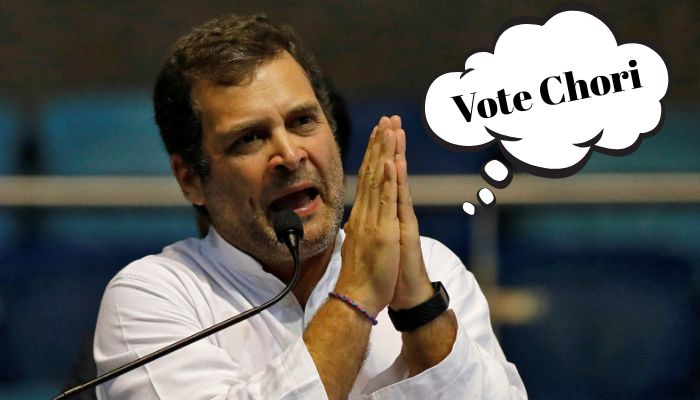
The Congress party, led by Rahul Gandhi, is leaving no stone unturned to mislead the Indian public through his dubious ‘vote chori’ conspiracy theories. The objective has been to tarnish the integrity of the Election Commission and rationalise the party’s unbeaten streak of losing elections.
Congress party leader Rahul Gandhi has recently accused the Election Commission of contributing to the creation of fake voters. At a press conference on Thursday, 7th August, he produced statistics from Karnataka’s Mahadevapura Assembly constituency in Bengaluru Central Lok Sabha constituency, saying that several voter entries in the voter list had “house number 0” and that numerous voters were listed at the same address. He called it a major conspiracy to steal elections in favour of the BJP.
However, it has now come to light that Rahul Gandhi’s constituency, Rae Bareli in Uttar Pradesh, also has the same kind of entries in its voter list. This is the seat that Rahul currently represents in Parliament, which his mother, Sonia Gandhi, held before him for multiple terms.
According to a report of Times Now Navbharat, the Rae Bareli Assembly constituency voter list under the Rae Bareli Lok Sabha seat has a huge number of “house number 0” voters, the very anomaly Rahul had pointed out in Karnataka.
Multiple voters at the same address
The report also shows that there are a number of instances where numerous voters are registered at the same location in Rae Bareli. For example, for one polling station, “House Number 8” has 27 voters registered. There are two other booths with “House Number 80” and “House Number 4”, each having 18 registered voters.
This is parallel to Rahul’s allegation in Mahadevapura, where he had accused 80 individuals of being registered at a single address. He had then held this up as evidence of extensive electoral cheating. The revelation of parallel trends in his constituency has raised questions: if Rahul is convinced that such entries are evidence of fraud elsewhere, then is the reverse also true in his election victory?
Why do ‘House number 0’ entries exist?
Election officials and analysts have observed that “house number 0” in the voters’ roll does not necessarily indicate voter fraud. In most villages, people have no records of their official house numbers, so they fill in a “0” as a placeholder in the voters’ list. This happens in both rural and urban India.
Also, several voters with the same address are not uncommon in India. Joint families, paying guests, or rental accommodations tend to result in lots of individuals being enrolled under a common address. The voter list is updated and edited regularly by the Election Commission to eliminate such stale entries.
The Mahadevapura case
Rahul’s strongest complaint was that a house in Mahadevapura had 80 duplicate voters enrolled. But when local Booth Level Officer (BLO) Muniratna was approached, he informed that there was no duplication.
This house, according to him, is mostly tenanted out, and the tenants keep changing every year. No family has resided there permanently for the last 14 years. Most individuals use their rental contract as an address to vote, but end up leaving the place. The BLO revealed that the list of individuals who are no longer staying at that location has already been submitted to the Election Commission, and names will be struck off.
As per the India Today factcheck report, a large number of voters are indeed registered with the address in question— House No. 35 in Muni Reddy Garden. However, the report shows that there is no scam in it, because it is a rental house, and various tenants who lived there at various times used the address to register themselves to the voter list.
The house is at present occupied by a food delivery worker named Dipankar. The present occupant of the house is originally from West Bengal and moved here one month ago.
The house in question is owned by one Jayaram Reddy, who claims to be a BJP voter-supporter. As per IndiaToday report, “He (Reddy) admitted that several tenants had lived there over the years and enrolled themselves as voters, but most had since moved out. Despite this, he said some return during elections to cast their votes.”
“He confirmed that the voter list shows 80 people at the address, even though the house could not physically accommodate them. He claimed many had relocated to other states or districts, including Odisha, Bihar, and Mandya, but acknowledged that “a few of them” still return during polls to vote,” the report adds.
However, the claims of ‘fraudulent’ voter registration or “vote chori” as alleged by Rahul Gnadhi, seem unfounded since BLO Munirathna has clarified that several migrant workers living in small houses along the IT corridor use rental agreements to obtain voter IDs. “These occupants are typically job seekers working as security guards, housekeepers, or domestic helpers. After acquiring voter IDs, many vacate the premises, but their names remain on the electoral rolls,” the India Today reported.
Many these voters who have moved from here, refuse to have their names removed saying that they need the voter ID and return to cast votes during elections. Contrary to Rahul Gandhi’s insinuation that these 80 ‘fraudulent’ voters live together in 10 sq. ft. house, although these people have their voter IDs registered at the same address, these voters, mostly security guards, house helps etc, are not living together at the same time. They came, stayed for some time and moved to other places for some or the other reason.
This does not imply any ‘fraud’ and also does not prove that they may or may not be essentially voting for the BJP. Clearly, Rahul Gandhi and his media cheerleader Rajdeep Sardesai have labelled migrant voters as ‘fraudulent voters’. Moreover, the SIR exercise conducted by EIC in Bihar, is specifically aimed at addressing issue of migrant voters. But Rahul Gandhi and Congress party have been opposing the move.
As reported earlier, Rahul Gandhi while alleging ‘vote chori’ had zeroed in on Mahadevapura, one of eight Assembly segments under Bangalore Central Lok Sabha constituency, claiming that over 1 lakh votes out of 6.5 lakh were either duplicated or linked to fake addresses.
As an example, Rahul Gandhi cited the case of one Gurkirat Singh Dang, whose name allegedly appeared on voter rolls at four different booths. From this single instance, he extrapolated a sweeping claim of “thousands” of such cases, without presenting any independently verified evidence. What Gandhi fails to acknowledge, however, is the very real and common phenomenon of intra-city and inter-state migration, particularly in urban hubs like Bengaluru, where people frequently shift residences for work, education, or housing constraints.
In such cases, it’s not unusual for individuals to be enrolled at their new address without having formally applied for the removal of their names from earlier rolls. This administrative overlap can result in multiple entries, but it does not automatically mean that the person voted more than once, let alone that they were part of any coordinated fraud. To conflate registration anomalies with actual voting malpractice is not just misleading; it grossly misrepresents how electoral rolls evolve in dynamic urban settings.
Moreover, Gandhi also conveniently overlooked the fact that parties receive voter rolls well in advance and are free to raise objections during the verification phase. If such large-scale discrepancies truly existed, why weren’t they flagged before polling day? Clearly, Congress is manufacturing outrage by alleging ‘vote chori’, while the party’s media allies are amplifying its conspiracy theories.
The political twist
What makes the story politically charged is the irony: Rahul Gandhi has been strongly criticising the Election Commission and the BJP for voter list tampering, but the same trends are evident in his constituency.
In Bihar, the Election Commission is already conducting a Special Intensive Revision (SIR) exercise to purify the rolls of voters. Rahul has also attacked that process, but although invited by the EC to lodge written complaints, he has not yet lodged any formal evidence.
The scandal raises a fundamental question: are these “irregularities” evidence of intentional fraud, as Rahul asserts, or merely a function of administrative loopholes and India’s twisting voter registration system? For the present, the same problems Rahul highlighted in other seats appear to be present in Rae Bareli too, and that has triggered a new round of political debate.
Rahul Gandhi targets common man to amplify his ‘vote chori’ conspiracy theory
On Thursday (7th August), Rahul Gandhi conducted a press conference wherein he claimed that a man named Aditya Srivastava was voting in 3 different States simultaneously.
“He is Aditya Srivastava. His name is in the electoral rolls of Maharashtra, Karnataka (Bengaluru Urban) and Uttar Pradesh (Lucknow). His name appears 4 times. Same photo and same address,” the Congress leader alleged.
“And there are thousands of such people. 11,000 votes have been stolen like this,” he claimed. Rahul Gandhi defamed Aditya Srivastava by suggesting that the latter is somehow a part of a vote fraud scheme.
On Friday (8th August), the victim debunked the lies peddled by the Congress leader during a telephonic interview with India TV.
Aditya Srivastava hails from Lucknow in Uttar Pradesh. As such, his first voter ID was registered in that city. In 2016, he began living in Mumbai and had transferred the voter ID to his new address in Maharashtra.
He had cast his vote from Mumbai during the 2019 Lok Sabha election. Later, he shifted to Bengaluru for work in 2021 and re-transferred his voter ID to new address in Karnataka.
Aditya Srivastava had voted from Bengaluru during the 2024 Lok Sabha election. He had updated all details on the website of the Election Commission of India as per the facility provided by the nodal election body.
The common man lashed out at Rahul Gandhi for leaking his personal details to the world. He clarified that he never cast his vote in multiple States at one time.
Aditya Srivastava even dared Rahul Gandhi to show call records and CCTV footage from polling booths, which can prove that he cast votes in Uttar Pradesh, Maharashtra and Karnataka at the same time.
He pointed out that his EPIC number (10-digit unique identification number) on his voter ID cards has remained consistent during all constituency transfers, and there is no evidence of fraud.
A team from India TV visited the Mumbai address of Aditya Srivastava. The tenant confirmed that he left the apartment back in 2021. This coincides with the victim’s own testament of leaving the city in the same year.
OpIndia had previously reported how claims of Rahul Gandhi about Aditya Srivastava are not supported by publicly available data on Voter’s Services Portal on Election Commission.
Election Commission debunks lies of Congress leader Rahul Gandhi
On Friday (8th August), the Election Commission of India (ECI) debunked the lies peddled by Congress leader Rahul Gandhi as part of his campaign to undermine the integrity of the nodal election body.
At the very onset, the Election Commission of India made it clear that the Supreme Court had turned down Congress’ petition for providing machine machine-readable voter list in 2019. As such, the nodal election body is under no compulsion to entertain this demand of the grand-old party.
It pointed out why CCTV footage is destroyed after 45 days and the rationale behind its preservation in specific case.
— Election Commission of India (@ECISVEEP) August 8, 2025
The Election Commission of India stated, “Any aggrieved Candidate can file an election petition (EP) to challenge his election in the concerned High Court within 45 days. If an EP is filed, CCTV footage is retained; otherwise, it serves no purpose unless someone intends to breach voter privacy. For example, reviewing CCTV footage from 1 lakh polling stations would take 1 lakh days-that’s approximately 273 years-with no legal outcome.”
While responding to the claim of ‘committing mass fraud’, ECI pointed out how almost no appeals were made by the Congress party across 36 States and Union Territories, following the 2024 Lok Sabha election. This was despite the fact that the grand-old party had the legal sanction to challenge the nodal election body.
The Election Commission further stated, “Many such allegations are being made by Shri Rahul Gandhi and are being reported by the media, despite no written complaint ever being submitted by him. In the past as well, he has never personally sent a self-signed letter. For example, he raised the Maharashtra issue in December 2024. Subsequently, an advocate from AICC wrote to ECI. Our reply, dated 24 December 2024, is publicly available on ECI website. Yet, Shri Rahul Gandhi claims that ECI never responded.”
The nodal election body has therefore requested the Congress leader to submit his specific claims and objections against voters and sign the Declaration/Oath as per Rule 20(3)(b) of the Registration of Electors Rules, 1960.
“If Shri Rahul Gandhi does not sign the Declaration, it would mean that he does not believe in his analysis, resultant conclusions and is making absurd allegations. In which case, he should apologise to the nation,” it concluded.
Pakistan’s Ministry of Defence has told the National Assembly that the country has suffered a financial blow exceeding Rs 1,240 crore or PKR 4.1 billion after shutting its airspace to Indian-registered aircraft. According to a report in Dawn, the ban came into effect on 24th April after India suspended the Indus Waters Treaty on 23rd April in response to the Pahalgam terrorist attack that claimed the lives of 26 innocent Hindus. Following the suspension of the treaty by India, Islamabad withdrew overflight permission for all Indian-registered aircraft and those operated, owned or leased by Indian carriers.
Revenue plunge and reduced air traffic
As per reports, 100–150 Indian aircraft used to pass through Pakistani airspace. The Pakistan Airports Authority saw its overflying charges collapse between 24th April and 30th June. Pakistan’s transit air traffic reduced by almost 20% following the ban. While the defence ministry of Pakistan claimed “sovereignty and national defence take precedence over economic considerations”, losing PKR 4 billion in revenue is a major loss for a country already in a major financial crisis.
Losses worse than previous standoff
In 2019, PAA’s average overflight revenue was $508,000. At that time, there were airspace restrictions were imposed by both sides following military standoff in response to the deadly Pulwama attack. The airspace remained closed for around five months and was reopened in July 2019. However, the revenue in 2025 was $760,000 before the ban. That means the current ban is proving more costly than the previous India–Pakistan airspace restrictions. The ban has been extended twice and will remain in force until the last week of August.
Continuing restrictions on both sides
Notably, not only Pakistan, but India has also banned all Pakistani-operated, owned or leased aircraft, including military flights, since 30th April. Minister of State for Civil Aviation Murlidhar Mohol confirmed India’s ban will remain until at least 23rd August 2025, citing “prevailing security protocols and strategic considerations.”