Pakistan’s Ministry of Defence has told the National Assembly that the country has suffered a financial blow exceeding Rs 1,240 crore or PKR 4.1 billion after shutting its airspace to Indian-registered aircraft. According to a report in Dawn, the ban came into effect on 24th April after India suspended the Indus Waters Treaty on 23rd April in response to the Pahalgam terrorist attack that claimed the lives of 26 innocent Hindus. Following the suspension of the treaty by India, Islamabad withdrew overflight permission for all Indian-registered aircraft and those operated, owned or leased by Indian carriers.
Revenue plunge and reduced air traffic
As per reports, 100–150 Indian aircraft used to pass through Pakistani airspace. The Pakistan Airports Authority saw its overflying charges collapse between 24th April and 30th June. Pakistan’s transit air traffic reduced by almost 20% following the ban. While the defence ministry of Pakistan claimed “sovereignty and national defence take precedence over economic considerations”, losing PKR 4 billion in revenue is a major loss for a country already in a major financial crisis.
Losses worse than previous standoff
In 2019, PAA’s average overflight revenue was $508,000. At that time, there were airspace restrictions were imposed by both sides following military standoff in response to the deadly Pulwama attack. The airspace remained closed for around five months and was reopened in July 2019. However, the revenue in 2025 was $760,000 before the ban. That means the current ban is proving more costly than the previous India–Pakistan airspace restrictions. The ban has been extended twice and will remain in force until the last week of August.
Continuing restrictions on both sides
Notably, not only Pakistan, but India has also banned all Pakistani-operated, owned or leased aircraft, including military flights, since 30th April. Minister of State for Civil Aviation Murlidhar Mohol confirmed India’s ban will remain until at least 23rd August 2025, citing “prevailing security protocols and strategic considerations.”
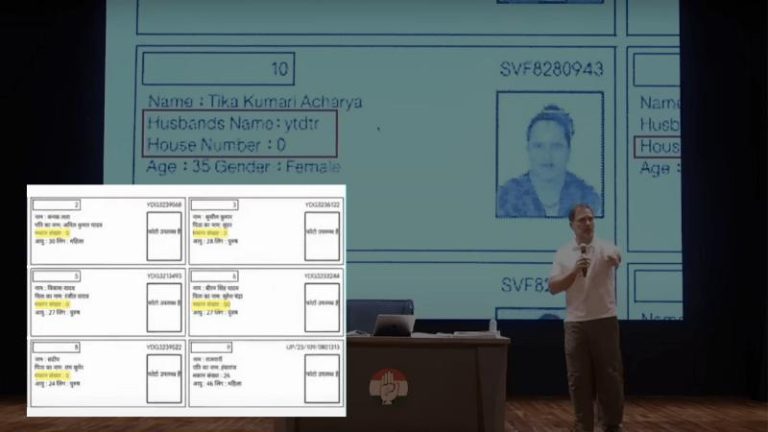
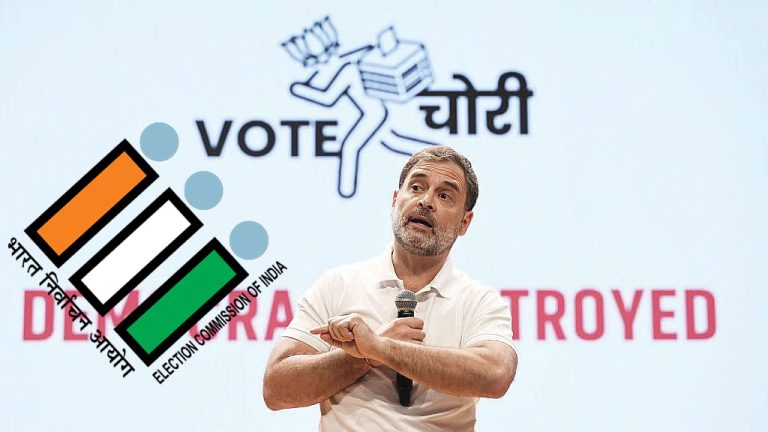
Just days ago, Congress leader Rahul Gandhi accused the Election Commission of creating fake voters, citing anomalies such as “House Number 0” entries in voter lists. He showcased data from Mahadevapura in Karnataka’s Bangalore Central constituency, calling it a grand conspiracy.
But now, a Times Now Navbharat report has revealed an embarrassing twist, the same pattern exists in Rahul Gandhi’s own constituency, Rae Bareli, Uttar Pradesh. The voter list there also has a large number of entries with “House Number 0” and even clusters of dozens of voters registered at the same address.
Voters with “House Number 0” found in Rahul Gandhi’s Lok Sabha constituency too
In Rae Bareli’s Assembly voter list, one address has 27 names, while two others have 18 each, eerily similar to the cases Rahul himself cited as proof of “electoral fraud” elsewhere. For years, Rae Bareli has been a Gandhi family stronghold, first Sonia Gandhi, now Rahul. The discovery raises the obvious question: if these patterns mean fraud in BJP-won seats, do they also mean fraud in Rahul’s own victory?
Experts point out that “House Number 0” in rural voter rolls often happens simply because homes have no official numbering, not necessarily due to foul play. Likewise, multiple voters at one address are common in joint families, shared housing, or rented accommodations, especially in semi-urban and rural India. The Election Commission regularly conducts corrections to update such records.
Ironically, Rahul has opposed the Commission’s SIR (Summary Intensive Revision) process, meant precisely to clean up such anomalies, and has refused to file a written complaint despite being asked.
Multiple voters registered at one address in Rae Bareli: Did Rahul Gandhi commit electoral fraud?
In his press conference, Rahul Gandhi claimed that the voter list contained 80 voters registered at a single address, linking it directly to electoral fraud. But in his own Rae Bareli constituency, a similar pattern has emerged just like the ones he cited while accusing others. At one booth, House No. 8 had 27 registered voters. At two other booths, House No. 80 and House No. 4 each had 18 registered voters.
It is a political irony that the very “fraud” he alleges is also present in his own constituency. In India’s vast electoral system, such situations are not uncommon. In both rural and urban areas, joint families or multiple tenants often result in several voters sharing the same address. The Election Commission routinely updates and corrects its rolls to address such issues.
In Bihar, the detailed SIR (Summary Intensive Revision) process for voter lists is part of this corrective mechanism. Rahul Gandhi, however, has opposed this reform and is actively campaigning against it. When the Election Commission asked him to file a complaint, he has refused to submit one in writing in any case.
What’s the truth behind Rahul Gandhi’s claim of 80 voters at a single address?
Meanwhile, his most dramatic allegation, that one house in Mahadevapura had 80 “fake voters” has also crumbled. Local Booth Level Officer Muniratna told the media that this address is a rented property where tenants change frequently. People register to vote using rental agreements, then move away, leaving outdated entries. The EC has already listed such names for removal.
In short, Rahul Gandhi’s attempt to paint the voter list issue as a BJP conspiracy may have backfired spectacularly, showing that the very “evidence” he cites against others exists in his own backyard.
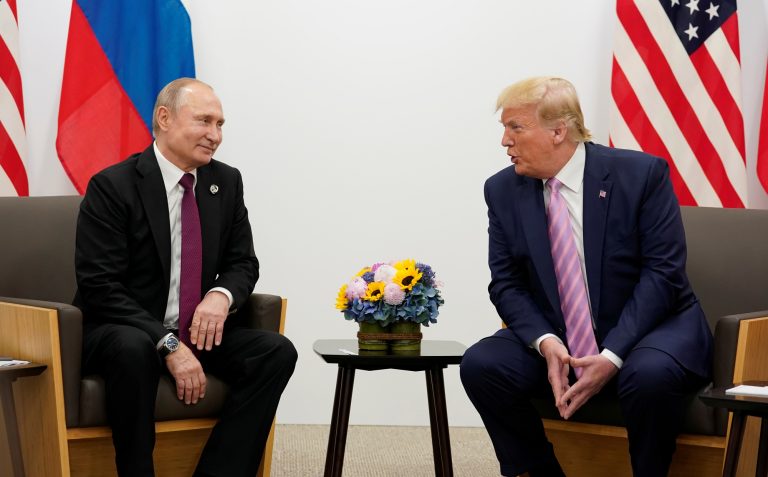
The government of India has welcomed the upcoming meeting between American president Donald Trump and Russian President Vladimir Putin. A statement issued by the official spokesperson of the Ministry of External Affairs said that “India welcomes the understanding reached between the United States and the Russian Federation for a meeting in Alaska on 15th August 2025.”
The statement said that the meeting holds the promise of bringing to an end the ongoing conflict in Ukraine and opening up the prospects for peace. The spokesperson also recalled Prime Minister Narendra Modi’s remarks that ‘This is not an era of war’.
“This meeting holds the promise of bringing to an end the ongoing conflict in Ukraine and opening up the prospects for peace. As Prime Minister Narendra Modi has said on several occasions, ‘This is not an era of war’,” the spokesperson said.
“India, therefore, endorses the upcoming Summit meeting and stands ready to support these efforts,” the statement added.
Notably, US President Donald Trump on Saturday announced that he will meet Russian President Vladimir Putin next Friday, August 15, 2025, in Alaska. The meeting is expected to focus heavily on efforts to broker a peace deal between Russia and Ukraine.
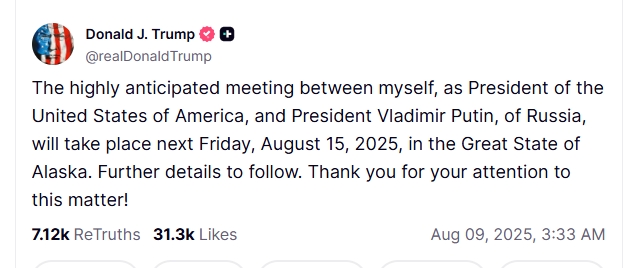
Trump said in a post on his Truth Social account, “The highly anticipated meeting between myself, as President of the United States of America, and President Vladimir Putin, of Russia, will take place next Friday, August 15, 2025, in the Great State of Alaska. Further details to follow. Thank you for your attention to this matter!”
The meeting was later confirmed by a Kremlin spokesperson, saying that the location was “quite logical” given Alaska’s relative proximity to Russia. Alaska was originally owned by Russia, but the country sold the region to USA in 1867.
In July 2024, Finance Minister Nirmala Sitharaman stunned markets by slashing India’s gold import duty from 15% to 6%, a surgical strike aimed at dismantling the country’s most entrenched smuggling racket. While the move targeted a national menace, investigative reporting by Palak Shah of Business World reveals it also dealt a body blow to Kerala’s shadow economy, long fuelled by illicit gold.
For decades, Kerala’s four international airports, Thiruvananthapuram, Kochi, Kozhikode, and Kannur, served as prime entry points for smuggled bullion from Gulf nations. The state’s deep diaspora links, proximity to gold hubs like Dubai, and a political climate tolerant of illicit trade created what Shah calls “a smuggler’s paradise.” Between 2020 and 2023, over 3,100 smuggling cases were recorded, but seizures barely dented the estimated 200–400 tons of gold worth $15 billion entering India annually through illegal channels.
High duties made smuggling hugely profitable, up to ₹9 lakh per kg, even after carrier payments. These profits didn’t just enrich gangsters; they lubricated Kerala’s informal economy, funding unaccounted real estate deals, jewellery networks, and hawala operations. In one notable case, a major unlisted jewellery chain allegedly operated with 4,000 shadow investors, far beyond SEBI’s regulatory limits, prompting money laundering suspicions.
Sitharaman’s duty cut collapsed this model almost overnight. Profits per kg fell to ₹3 lakh, carrier fees plunged, and Gulf gold trade to Kerala shrank. The Central Board of Indirect Taxes and Customs confirmed a sharp decline in seizures post-duty cut. Air traffic data shows fewer Gulf passengers, with Gulf Air even cancelling Calicut flights in 2025 due to reduced demand, a sign the smuggling pipeline had been choked.
While legal gold trade surged, the World Gold Council reported an 18% year-on-year jump in Q3 2024, the abrupt disappearance of illicit liquidity hit Kerala’s economy hard. The state’s Gross State Domestic Product growth fell to 6.19% in 2024–25, the slowest in South India, with real estate, construction, and luxury retail all showing marked declines.
According to Shah’s findings, the slowdown exposed Kerala’s dangerous dependence on black money. Property transactions dropped 18%, luxury housing prices corrected by 25%, and construction growth lagged the national average. With Gulf remittances also down 10% in 2024, the state’s twin cash pipelines, legal and illegal, both weakened.
The gold duty cut was more than a fiscal tweak; it was a strategic strike that crippled a criminal ecosystem linked to terror financing and political corruption. As Shah notes, it has forced Kerala to confront an uncomfortable truth: much of its apparent prosperity rested on an illicit trade that could vanish with the stroke of a pen.
Adding to the murky picture are explosive allegations linking Kerala’s political elite to the very smuggling racket Sitharaman’s policy helped cripple. Swapna Suresh, one of the prime accused in the 2020 Kerala gold smuggling case, claimed in 2023 that she was offered ₹30 crore to keep Chief Minister Pinarayi Vijayan’s name out of the case. In a Facebook Live broadcast, she alleged being threatened by the CM himself to leave the country, with CPM state secretary Govindan Master allegedly directing party intermediaries to intimidate her into silence. According to Suresh, she was told to relocate to Haryana or Jaipur with state-backed assistance, including a flat and fake passports to facilitate her exit.
Suresh has repeatedly named CM Vijayan, members of his family, and three cabinet ministers in connection with the smuggling and related hawala transactions. In earlier testimonies, she alleged that in 2016 a bag containing cash was sent to the CM while he was in Dubai, detected during airport scanning under consular protocol. She also claimed that under orders from then principal secretary M. Sivasankar, heavy metal-laden biryani vessels were moved from the UAE Consulate to the CM’s official residence, Cliff House. These claims, which surfaced ahead of the 2021 assembly elections and resurfaced with renewed force in 2024, have kept the political dimensions of Kerala’s gold smuggling scandal very much alive, even as the central government’s fiscal strike has eroded the racket’s economic foundations.
The Election Commission of India (ECI) has once again pressed Congress MP Rahul Gandhi to either back his allegations of “vote theft” with a formal declaration or apologise for making what it termed “absurd” claims against the poll body.
Gandhi’s allegations of vote theft
At a press conference on 7 August, Gandhi accused the ECI of choreographing the 2024 Lok Sabha elections to benefit the BJP, which he claimed appeared “immune to anti-incumbency.” Presenting Congress’s internal findings, Gandhi alleged that in Karnataka’s Mahadevapura seat alone, 100,250 votes were stolen through duplicate names, fake addresses and bulk registrations at single properties. He pointed to discrepancies between Congress’s expected and actual tally in the state, claiming the party lost seven seats under suspicious circumstances.
Election Commission’s response
The poll body said Gandhi must sign declarations prepared by the Chief Electoral Officers of Maharashtra and Karnataka if he believed his own analysis. “If Rahul Gandhi does not sign the Declaration, it would mean that he does not believe in his conclusions. In that case, he should apologise to the nation,” sources said. Officials also reminded that the Congress-led Karnataka government itself uses electoral rolls to frame its caste census policy.
Congress and allies stand by claims
Karnataka Minister G Parameshwara confirmed the state unit would file a complaint with the poll body on Gandhi’s behalf. “There is a difference in the voter list, which the commission should accept,” he insisted, while suggesting Rahul Gandhi need not personally provide the documents. Meanwhile, NCP-SCP chief Sharad Pawar lent weight to the Congress leader’s concerns, revealing that before the Maharashtra Assembly polls, two individuals had offered him and Gandhi a “guarantee” of 160 seats out of 288, which they both rejected.
BJP dismisses allegations as baseless
The BJP accused the Congress of playing the blame game. Party spokesperson Gaurav Bhatia argued that the Congress routinely blames EVMs, VVPATs, the public, or the ECI when it loses elections. “If you want to seek a remedy in law, Mr Rahul Gandhi, you must follow due procedure. Baseless allegations in the media are not proof,” Bhatia said, demanding a formal complaint rather than public statements.
The row has added fresh fuel to the ongoing political battle, with the ECI holding firm that Gandhi must either substantiate his charges through official channels or retract them before the nation.
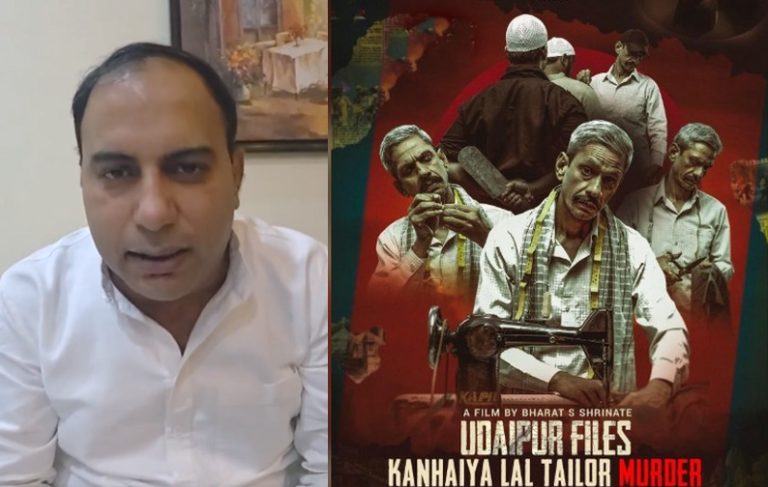
Producer Amit Jani, who backed the controversial film Udaipur Files, has alleged that he has received repeated death threats, just a day after the film was released across India.
Threat claims after release
In a post on X on Saturday, Jani claimed he was receiving persistent calls from an unknown number. According to him, the caller, identifying himself as Tabrez from Bihar, threatened to kill him either by shooting or by a bomb attack. Jani urged authorities to register a case and arrest the accused immediately.
Security already in place
Only last month, the Central government had extended Y-category armed security cover to Jani in Delhi and Uttar Pradesh, after he petitioned the Supreme Court citing life threats. The protection detail, which consists of 8 to 11 personnel including commandos, was sanctioned following the Court’s direction allowing him to seek police protection.
+971566707310 number se lagatar aaj bomb se udaane ki, goli maarne ki dhamki aur gaali galauch ki jaa rhi hai , Ye khud ko Bihar ka rahne wala bata rha hai khud ka naam tabrej bata rha hai ispar mukdma kayam karke isko giraftar kiya jaye @HMOIndia@PMOIndia@Uppolice@UPGovt…
The film finally released on Friday, 8 August, following a clearance from the Delhi High Court a day earlier. It had originally been slated for release on 11 July but was repeatedly delayed owing to censorship hurdles and legal battles. The Supreme Court had also instructed the Delhi High Court to deal with challenges to the government’s approval of its release.
Based on Udaipur murder case
Udaipur Files depicts the 2022 murder of Kanhaiya Lal, a tailor in Udaipur, Rajasthan. Lal was brutally killed in his shop by two men after he allegedly shared a social media post supporting former BJP spokesperson Nupur Sharma, whose remarks on Prophet Mohammed during a television debate had sparked a national controversy.
Police reports state that the accused, Mohammad Riaz Attari and Ghaus Mohammad, posed as customers before attacking Lal with knives and slitting his throat. They filmed the murder and posted the video online, boasting of their act. The crime shocked the nation and drew attention to the dangers of radicalisation and communal tensions.
Initially investigated by Rajasthan police, the case was later transferred to the National Investigation Agency (NIA) and is currently under trial before a special court in Jaipur.
Cast and production
The film features Vijay Raaz in the lead role and has been directed by Bharat S Shrinate and Jayant Sinha. Amit Jani, now at the centre of the security row, has produced the project.
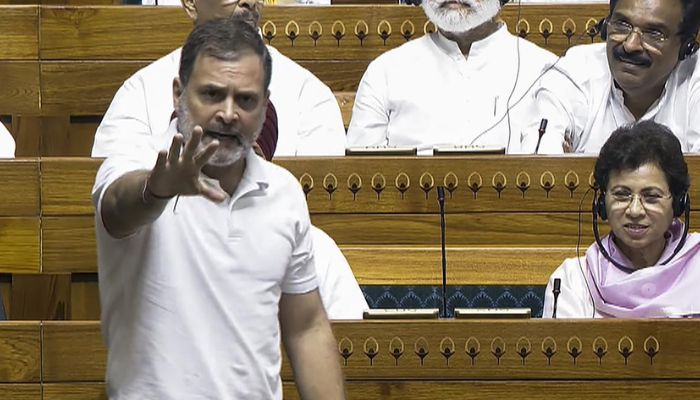
Leader of Opposition in the Lok Sabha, Rahul Gandhi, has taken sharp aim at the government’s handling of Operation Sindoor, India’s military response to the deadly Pahalgam terror attack. Speaking in the Lower House on 29th July, Gandhi accused the ruling BJP of showing weak political will and putting unnecessary restrictions on the armed forces.
The heated debate in Parliament saw the Opposition accusing the government of lacking strategic clarity, while the BJP hit back, accusing Congress of politicising national security and disrupting proceedings. Gandhi, however, insisted that the Opposition had always stood with the armed forces and the government on matters of national security.
“Even before Operation Sindoor began, the Opposition committed itself to stand like a rock with the government and the forces,” he said.
“Political will” and “Freedom of Operation”
Gandhi’s criticism focused on two key points: political will and freedom of operation for the armed forces.
“There are two words: ‘Political Will’ and ‘Freedom of Operation’. If you want to utilise the Indian Armed Forces, you need 100% political will and full freedom of operation,” he said, pointing to the 1971 war as an example.
He recalled how then Prime Minister Indira Gandhi had told General Sam Manekshaw to take as much time as needed to prepare and act, and how that decision led to a decisive victory where 1 lakh Pakistani soldiers surrendered, resulting in the creation of Bangladesh.
Gandhi contrasted that with Operation Sindoor, claiming that the government tied the hands of the military. “You went into Pakistan and told our pilots not to attack their air defence. It was bound that the aircraft would be downed. You tied the hands of our pilots,” he alleged.
He was quick to clarify that the Indian Air Force (IAF) had done no wrong, blaming instead the “political leadership” for restricting them from hitting military targets.
Background of Operation Sindoor
Operation Sindoor was India’s swift and strong military retaliation after the Pahalgam terror attack on 22nd April, in which 26 tourists were killed in Kashmir.
On the night of the attack, India launched 24 precision missiles targeting nine terrorist bases across Pakistan and Pakistan-Occupied Kashmir. These included terror launchpads, training centres, and safe houses. According to Indian government sources, more than 70 terrorists were killed and at least 60 others injured.
One of the worst-hit sites was the Jaish-e-Mohammed (JeM) camp in Bahawalpur. The strikes were meant to send a strong message that India would not tolerate attacks on civilians and would respond with precision and force.
IAF Chief counters claims of “Tied Hands”
Rahul Gandhi’s claim that the government restricted the military was directly contradicted by Indian Air Force Chief Air Marshal AP Singh.
Addressing the 16th Air Chief Marshal LM Katre Memorial Lecture in Bengaluru, the IAF chief credited the success of Operation Sindoor to strong political will and full operational freedom given to the armed forces.
“I was present at the meetings. There was very clear political will, and there were no restrictions imposed. If there were any, they were self-imposed by the defence forces,” he said.
According to him, the military had full freedom to plan and execute the attacks on terror bases and Pakistani air bases. He praised the coordination between the Army, Navy, and Air Force, as well as the role of the Chief of Defence Staff and National Security Advisor Ajit Doval.
Air Marshal Singh revealed that during the operation, Indian forces shot down five Pakistani fighter jets and an AWACS aircraft in the air, destroyed a few American F-16s undergoing maintenance, and hit another large aircraft on the ground.
Addressing doubts over the operation’s success
The IAF chief also addressed the scepticism around Operation Sindoor, saying it was “unfortunate” that some people in India doubted the operation’s success. He explained that since the targets were deep inside Pakistan, over 100 km from the border, getting definitive proof was challenging.
However, he pointed to satellite images and pictures from Pakistani media and social media showing massive damage to the terror bases and air force facilities. He also compared the operation to the 2019 Balakot air strikes, saying that this time the military had much more evidence of success.
Rahul Gandhi’s broader attack on the government’s strategy
Rahul Gandhi didn’t limit his criticism to the military aspect. He also questioned the government’s foreign policy and strategic messaging.
He accused the government of telling Pakistan, “we don’t want to fight” after the operation and mocked what he called the “new normal”, that the mastermind of the Pahalgam attack was having lunch with the US President even before the operation ended.
Gandhi challenged Prime Minister Narendra Modi to directly call out former US President Donald Trump for claiming that he brokered the ceasefire 29 times. “If Trump is lying, let the PM stand here and say: ‘Donald Trump, you are a liar.’ If he has the courage of Indira Gandhi, let him say it here in Parliament,” Gandhi said.
He also warned that India had failed in its biggest foreign policy challenge, keeping Pakistan and China apart and accused the government of underestimating the China-Pakistan partnership.
Congress leaders join in the criticism
Several Congress leaders have echoed Gandhi’s scepticism about Operation Sindoor. Kothur Manjunath, the MLA from Kolar City in Karnataka, asserted that the action has proven ineffective and failed to deliver justice to the family of the victims of the Pahalgam terror attack. “If terrorists can enter our country, kill our people, and escape unscathed, isn’t that a glaring security failure? What was our army doing at the border? Did they have any plan at all?” he asked.
?"Operation Sindoor was a show-off; nothing was done."
Karnataka Congress MLA Kothur Manjunath questioned the effectiveness of Operation Sindoor and the government's claims.
Congress veteran Prithviraj Chavan accused the government of using the name ‘Sindoor’ for emotional or religious gain. Congress leader Udit Raj also levelled similar allegations and accused, “During discussions with intellectuals, it was pointed out that Sindoor is associated with a specific religion, and it would have been better if a different name was chosen.”
Delhi: When asked about the name "Operation Sindoor" for the operation targeting terrorists
Congress leader Udit Raj says, "During discussions with intellectuals, it was pointed out that Sindoor is associated with a specific religion, and it would have been better if a different… pic.twitter.com/ef58ZH3mph
Controversial Congress MP Imran Masood went even further, suggesting that the results of the operation should be made public. He referred back to the Balakot air strike, saying, “The world mocked us. People said we only killed three crows.” His comments aimed to downplay India’s earlier efforts against cross-border terrorism and added fuel to the ongoing debate.
Accusations of spreading conspiracy theories
The ruling BJP has accused Congress, and Rahul Gandhi in particular, of echoing the narratives of Pakistan and China by questioning the success of Operation Sindoor.
They pointed to how Congress leaders raised doubts similar to those made by Pakistan after the Balakot strikes, and accused the Opposition of undermining the armed forces for political gain.
Government sources have also said that by constantly questioning the operation and suggesting that “nothing much was achieved,” Congress is damaging India’s position on the global stage and giving ammunition to enemy propaganda.
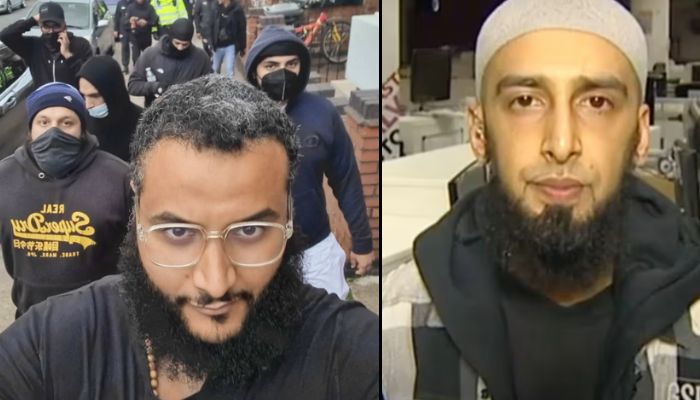
Three years after Islamists and their cheerleaders in the media blamed Hindutva for the 2022 Leicester riots, the High Court of Justice in England on Tuesday (5th August) debunked the fake news aimed at giving a clean chit to Islamic extremists.
The court made the observations during a defamation case, filed by an Islamist named Mohammed Hijab against weekly British political and cultural news magazine, The Spectator.
In an article titled ‘Leicester and the downside with diversity’, which was published by the magazine on 24th September 2022, columnist Douglas Murray referred to Mohammed Hijab as ‘street agitator.’
Claims held by Mohammed Hijab, of Hindutva to be the cause of the Leicester unrest, to be false: Case of Hijab v. Spectator. pic.twitter.com/Jtugblj7Ae
While recounting the Islamist’s past attempts to whip up a mob on the streets of London, the article stated, “This week Hijab cropped up in Leicester to whip up his followers. Among other things he told them that Hindus are ridiculous people, not least because of their belief in reincarnation. Hijab claimed that the Hindus must live in fear because they have been reincarnated as such ‘pathetic, weak cowardly people’. ‘I’d rather be an animal,’ he went on.“
Hijab claimed that The Spectator article resulted in loss of thousands of pounds in fees and thus sued both the magazine and the columnist.
In the end, the Islamist lost the defamation suit and the court held that the article is “substantially true, and it is not materially inaccurate.”
Findings of the High Court of England & Wales
However, the most significant observation of the court was that Hindutva was not responsible for the 2022 Leicester riots.
In Paragraph 53 of the judgment copy, the Judge noted, “The claimant’s (Mohammed Hijab) account as to his basis for attributing responsibility to the Hindutva does not withstand scrutiny. He had not been in Leicester in the days and weeks leading up to his speech. He had no first-hand knowledge of the events and was not in a position to make a direct first-hand informed assessment.”
Mohammed Hijab claimed to have based his theory of ‘involvement of Hindutva’ on a video clip of masked men chanting ‘Jai Shree Ram’ and marching past a Muslim neighbourhood. The court pointed out that the video was posted online, two days after his inciteful speech targeting the Hindu community.
“A difficulty with that account is that this video was only posted online two days after the claimant’s speech. It cannot therefore have informed his knowledge of events at the time he gave his speech. When that was pointed out, the claimant said he did not know if this was the “exact video” that he had seen, but that he had seen material with the same elements,” the court observed.
It further added, “The claimant relied on the chants of “Jai Shree Ram” but he did not have any convincing reason for asserting that this was necessarily an indicator of the Hindutva as opposed to Hindus who do not subscribe to the Hindutva ideology. The claimant, in his oral evidence, said he had seen Hindutva flags when he was in Leicester. This was not in his witness statement. In any event, he did not profess any detailed knowledge of Hindu vexillology, and he was in no position reliably to attach particular significance to individual flags.“
In reality, the said flags were saffron in colour and were put up in the temples on the occasion of Krishna Janmashtami celebrations.
The court highlighted that Mohammed Hijab based his claims of Hindutva on social media posts of Islamist Majid Freeman (whose identity in the court documents was protected and his name replaced with ‘CVB’).
“It is clear that the claimant followed CVB’s social media posts, and CVB asserted that there was Hindutva involvement. But CVB’s tweets elicited responses from the police which warned that unsourced assertions should not be taken at face value. The claimant has had sufficient academic training to know about the dangers of placing any great weight on CVB’s contested tweets,” it stated.
The High Court of England & Wales contended, “The fact is that the claimant was in no position to make a reliable assessment of the political or ideological views of each of the individual men who were involved in the disturbances…He denounced the opposing faction of Hindu men as “the Hindutva” for his own rhetorical and propaganda purposes, just as he described the Jewish people he encountered in Golders Green as “Zionists” without any objective basis, and to suit his own narrative.“
The Judge also exposed the anti-Hindu mindset and ideology of Mohammed Hijab.
“The phrase “if they believe in reincarnation” was not a genuine conditional clause that sought to distinguish Hindu Hindutva from non-Hindu Hindutva. It was a rhetorical device intended to inflame sectarian tensions by inviting ridicule of a central tenet of Hinduism,” he concluded.
When Mohammed Hijab incited Muslims to attack Hindus in Leicester
In September 2022, Islamist ‘scholar’, Mohammed Hijab, was seen mocking Hinduism and inciting Muslims to attack the Hindus in Leicester.
In a video that surfaced on social media, he was seen interacting with mask-clad Muslim men and encouraging them to teach the local Hindu population ‘a lesson’.
“When I was on social media, I saw these people (Hindus) getting brave. How come today it is like pin-drop silence?” the British Egyptian ‘scholar’ was heard as saying.
Muslim fundamentalist Mohammed Hijab who previously had led violence against Jews in London, is now in #Leicester with a mob of masked men and planning similar assault on local Hindu community. We demand arrest of Mohammed Hijab immediately.@leicspolicepic.twitter.com/Nl8kmupY5b
He claimed that no Hindus were in sight after realising that Muslim mobs were coming at them in hordes. “Cause they (Hindus) fear us when they are near us”, responded an Islamist from the crowd.
Pumped by the support of the like-minded people in the crowd, Hijab said, “Deep down, they know we got the truth. If you want respect, then, learn to respect.”
“If they (Hindus) believe in reincarnation, what a humiliation of them to be reincarnated into some pathetic, weak, cowardly people like that,” the Islamist went on an anti-Hindu tirade.
“Hindutva (Hindus), you are trying to act like gangsters…Don’t ever come out like that again (referring to the protests by Hindus in Leicester). Do you understand? Are they going to come out again?” he continued his threats.
Amidst the war cry of Allah hu Akbar, Mohammed Hijab cautioned that he and his supporters would be there if Hindus ‘dared’ to protest against the violence, committed by his co-religionists.
In an Instagram post, Hijab was seen leading a frenzied mob of Islamists, with their faces covered in masks. “Muslim patrol in Leicester,” he wrote in his post.
He has since then given clean chit to Muslim grooming gangs in UK and appealed to Indian Muslims to betray their country and side with Ummah.
Majid Freeman was at the forefront of instigating violence against Hindus in Leicester
Throughout the Leicester violence, Islamist Majid Freeman (referred to as CVB in court document) was at the forefront of spreading fake news that instigated violence against Hindus.
It was on 28 August 2022 that a scuffle broke out after India defeated Pakistan in a T20 match after the Indian flag was desecrated. After the scuffle, Hindus had even calmed the situation down and tended to the individual who had snatched and desecrated the Indian flag. Majid Freeman, however, had a different story to tell.
On the 30th of August, after the Leicester police got influenced by the Muslim organisations and lied about “death to Muslims” being chanted by Hindus (they later clarified their investigation found no such chants were heard), Majid took to Twitter to rabble-rouse against Hindus.
Source: X
In September 2022, the rabid Islamist alleged that 3 men had tried to abduct a teenage Muslim girl. “CONFIRMED: An incident took place this morning not far from a college in Leicester,” he tweeted.
Source: X
“A Muslim teenager was approached by 3 men but she ran away into the school. The college & police are aware of it and the family have been given an incident number by Leicester Police,” he claimed.
The conspiracy theorist even claimed to have met the family of the girl, who was traumatised by the alleged kidnapping attempt. “The girl is very shaken but she is ok alhamdulillah. They’ve reported the incident to the police. Hopefully, we’ll get to the bottom of this and the people behind it are caught,” he said.
The fake news was then amplified by other Islamists, who alleged the role of the Rashtriya Swayamsevak Sangh (RSS) in the alleged abduction attempt. The Hindu man, falsely accused of kidnapping the Muslim girl, was doxxed on Facebook and his residential address was leaked on social media.
Source: X
Later, the Leicester police debunked the disinformation through a press release. It said, “Yesterday we issued an appeal following a report that a teenage girl had been approached by three men in the area of Richmond Way, Leicester, on Monday morning.”
“A full investigation has been carried out. Following extensive enquiries, we have established that the incident did not take place and no offence was committed,” the cops confirmed.
Islamists also tried to use the trope of provocation to justify their attacks on the Hindu community. They claimed that Hindus raised anti-Islamic slogans whereas they only chanted ‘Jai Shri Ram’ and ‘Vande Mataram.’
Majid Freeman was yet again at the helm of this fake news. Interestingly, Majid Freeman was also interviewed by the BBC to set the narrative in favour of the perpetrators.
Source: X
The deliberate attempt by Majid Freeman to stoke hysteria in the Muslim community and lay the foundation of violence against the Leicester Hindus did not stop the then-city Mayor from arranging a meeting with him.
He was arrested on suspicion of counter-terrorism offences, including encouraging acts of terrorism in July 2024.
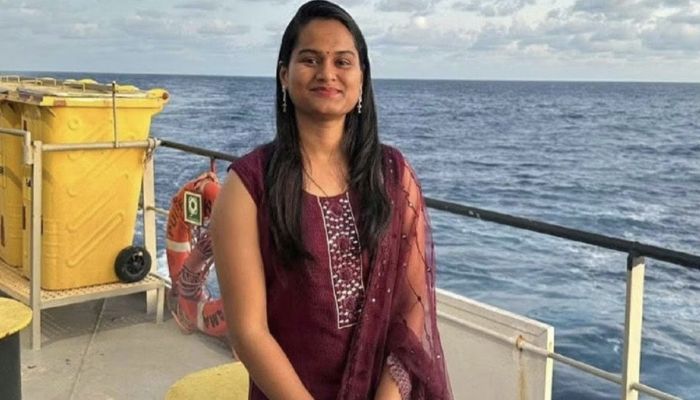
A 26-year-old pregnant woman from a Hindu family ended her life in Sangli district, Maharashtra, on 6th June. The case of suicide has shaken West Maharashtra. Her father described it as an unfortunate outcome of the pressure of following Christianity, harassment over dowry, and physical assault.
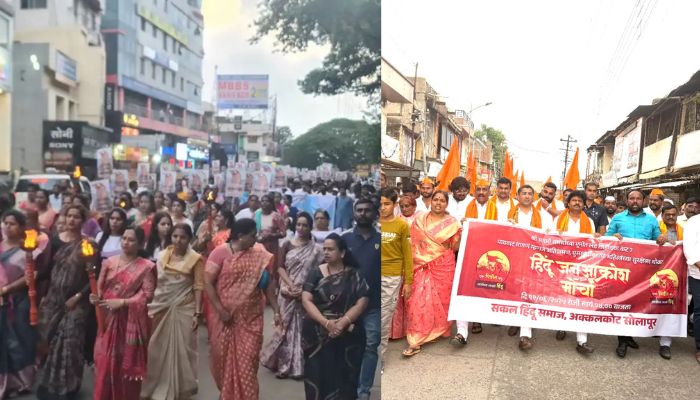
In the last few days, over a dozen protests were held. Thousands of protesters took to the streets, shouting slogans and demanding justice for Rutuja Rajge.
Rutuja Rajge was seven months pregnant. She had married into a family from the same Dhangar caste in an arranged marriage. According to media reports, her father, Dr Chandrakant Laxman Patil, said that the groom’s family had concealed one critical truth that they were practising Christians; something never disclosed before the wedding.
Rutuja wed Sukumar Suresh Rajge, a Merchant Navy officer, on 24th May, 2021, in a Hindu Dhangar ceremony in Malgaon village of Sangli. Dr Patil claims he was given to understand that the groom’s family believed in the same religion and traditions. But within weeks of the union, disturbing signs began to appear.
On the occasion of Vat Pournima festival in June 2021, Rutuja’s mother-in-law, Alka Rajge, prevented her from conducting Hindu rituals. Subsequently, when Dr Patil invited the couple to his residence, they declined, reportedly after Sukumar’s father replied they would come only if offered a gold ring.
Pressure to convert and early harassment
During the following months, Rutuja was forced to abandon her Hindu religion and embrace Christian rituals. For her first Diwali after marriage, she was forced to join church worship and was dissuaded from celebrating Hindu festivals.
During a housewarming party for Sukumar’s new apartment in Pune in November 2021, Dr Patil’s family members discovered that Christian rituals had already taken place, and Hindu visitors were dealt with disdain.
The harassment went on in January 2022, when Rutuja’s mother-in-law, Alka, purportedly blamed Rutuja for Sukumar’s bad luck, including having his phone go into a ship toilet, claiming it was Jesus’s revenge for not praying to him.
As of April 2023, the tension had increased. Rutuja was forced to go to church in Miraj, Khatibnagar, and when she did not, she was emotionally and physically abused.
Temporary relief, but old pressures return
Worried for the safety of his daughter, Dr Patil brought Rutuja to her parental house in Gundewadi, where she remained for a few months. A meeting held in July 2023 with Sukumar and his family members, and elderly people from the village, resulted in Sukumar making guarantees that he would treat her well.
But within days of being back at her husband’s house, Rutuja is said to have informed her father that Christian priests used to be regular callers and pressure to convert had begun again.
Abuse during pregnancy
The harassment is said to have continued even after Rutuja had become pregnant. In March 2024, she was scolded by her in-laws after she attended a Hindu temple to watch her brother get married.
Between September 2024 and February 2025, Rutuja travelled with Sukumar on his vessel. She had come back pregnant, but her father claimed to experience no happiness or affection, merely increased demands for cash. On 17 February 2025, Dr Patil sent ₹50,000 to his daughter through PhonePe, but the demands continued unabated.
In March, when Rutuja had gone to a conventional Kakan Choli ceremony at her maternal uncle’s place, the event had been allegedly derided by her in-laws, who said such Hindu rituals had no place within their residence.
By May 2025, Sukumar was allegedly insisting on taking Christian pregnancy rituals (garbha sanskar). When Rutuja protested, Sukumar allegedly attacked her on May 22. On their wedding anniversary a few days later, he allegedly drank heavily and made a scene at a relative’s home and then attacked her again when she objected.
Dr Patil and a cousin went to see Rutuja on 3rd June, 2025. Sukumar and his parents were at church, and she was all alone. She seemed disturbed and informed her father that Alka had taken all her jewellery, saying the Patil family had not contributed enough during the wedding. She added that she was being instructed to ask her father for money to finance their house.
Rutuja added that, was being accused by her mother-in-law of “destroying Sukumar’s life” because she had not converted to Christianity, an accusation levied just after Sukumar’s phone fell into a commode accidentally.
Three days after that, on the night of 6th June, Sukumar called Dr Patil to inform him that Rutuja had been found hanging from a ceiling fan in her bedroom. Upon arrival, the family discovered her dead body. Together with her, the unborn child she was carrying had also passed away.
Police action and arrests
Following Dr Patil’s complaint and what the police claim is a suicide note written by Rutuja, an FIR was registered at MIDC Police Station. The case was lodged under Section 108 of the Bharatiya Nyaya Sanhita (abetment of suicide), Section 85 (hurt by husband or relatives) and Sections 35(2) and 35(5) of the Bharatiya Nagarik Suraksha Sanhita.
Rutuja’s husband, Sukumar, mother-in-law Alka, and father-in-law Suresh were all accused and have been arrested. Police have confirmed the presence of a suicide note.
Public outrage and demands for justice
The case has also triggered protests by women’s groups, legal activists, and Hindu groups. Most are calling for strict enforcement of laws against religious coercion in intermarriage and against so-called “crypto-conversion”, instances wherein a family conceals its real faith when fixing up the marriages.
Protest in Sangli and Akkalkot (Image via Rashtra Jyoti)
Dr Patil describes his daughter’s death as not a spontaneous choice but the culmination of years of constant harassment, humiliation, and religious pressure. “She attempted to adapt, she attempted to make the marriage succeed,” he explained to the press, “but they crushed her spirit. And ultimately, they took the life of my daughter and my grandchild before either had a chance to fulfil their life.
The investigation is still underway, and authorities indicate that more information will come out as they investigate the suicide note and other evidence.
A shocking incident of violence has come to light from Saidhari village of Lakhimpur Kheri district in Uttar Pradesh, where a young Hindu Dalit man was fatally attacked by the family of a Muslim girl over interfaith relationship. The case was registered in the matter on 2nd August. The assault has triggered tensions between the two communities in the region.
As per the media reports, the victim, Nitin, son of Mahesh, had gone to meet his girlfriend on Saturday, 2nd August, on a river bridge in the Mahevaganj police station area. He was with two friends.
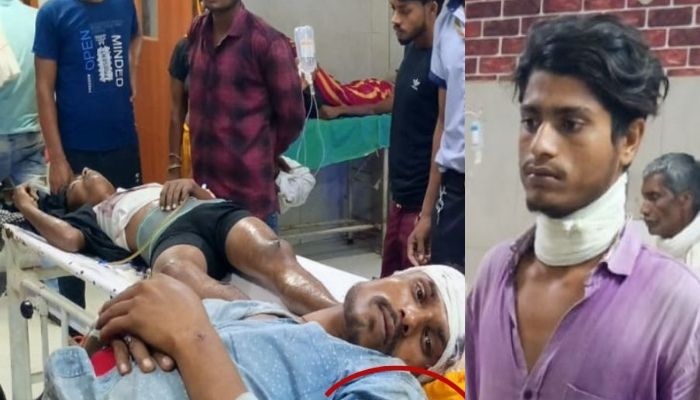
While they were meeting, members of the girl’s family reached the spot. Suddenly, they struck Nitin with a sharp weapon. The attack was so brutal that his clothes were torn, his neck was injured, and he lost consciousness.
His two friends, who fled for their safety, ran to Nitin’s home, which was around a kilometre away, and told his family about the attack. Nitin’s family members went to the place in a rush and found him unconscious in the river. They pulled him out and rushed him to the hospital for immediate medical care.
Violent clashes erupted between Nitin’s family and the girl’s relatives, leaving Nitin’s brother critically injured; he later succumbed to his wounds.
The horrific incident has created unrest in the village, with locals outraged by the incident. Additional Superintendent of Police (East) Pawan Gautam confirmed that a case was registered in the case on 2nd August and one of the accused had been arrested. “The investigation is underway, and a bid is being made to arrest the remaining accused,” he added.
Meanwhile, the victim’s family has demanded bulldozer action against the accused.