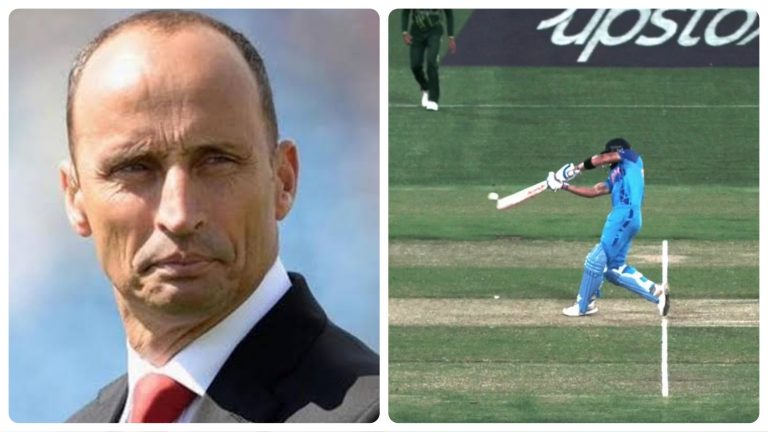
A vintage Virat Kohli innings powered India to a thrilling victory over its arch-rivals, Pakistan, immersing India into a festive mood on the eve of Diwali. Pakistani fans were predictably disappointed by the loss after Kohli and company racked up a nail-biting victory from the jaws of defeat, with many making unsubstantiated allegations and weaving fiction to rationalise their loss.
One such Pakistani fan went to the extent of pulling off a ‘The Wire’, a far-leftist publication recently in the news for its Meta fiasco where it had made preposterous allegations against the social media behemoth based on ‘verification’ from independent researchers, who later denied claims and forced The Wire to retract its stories.
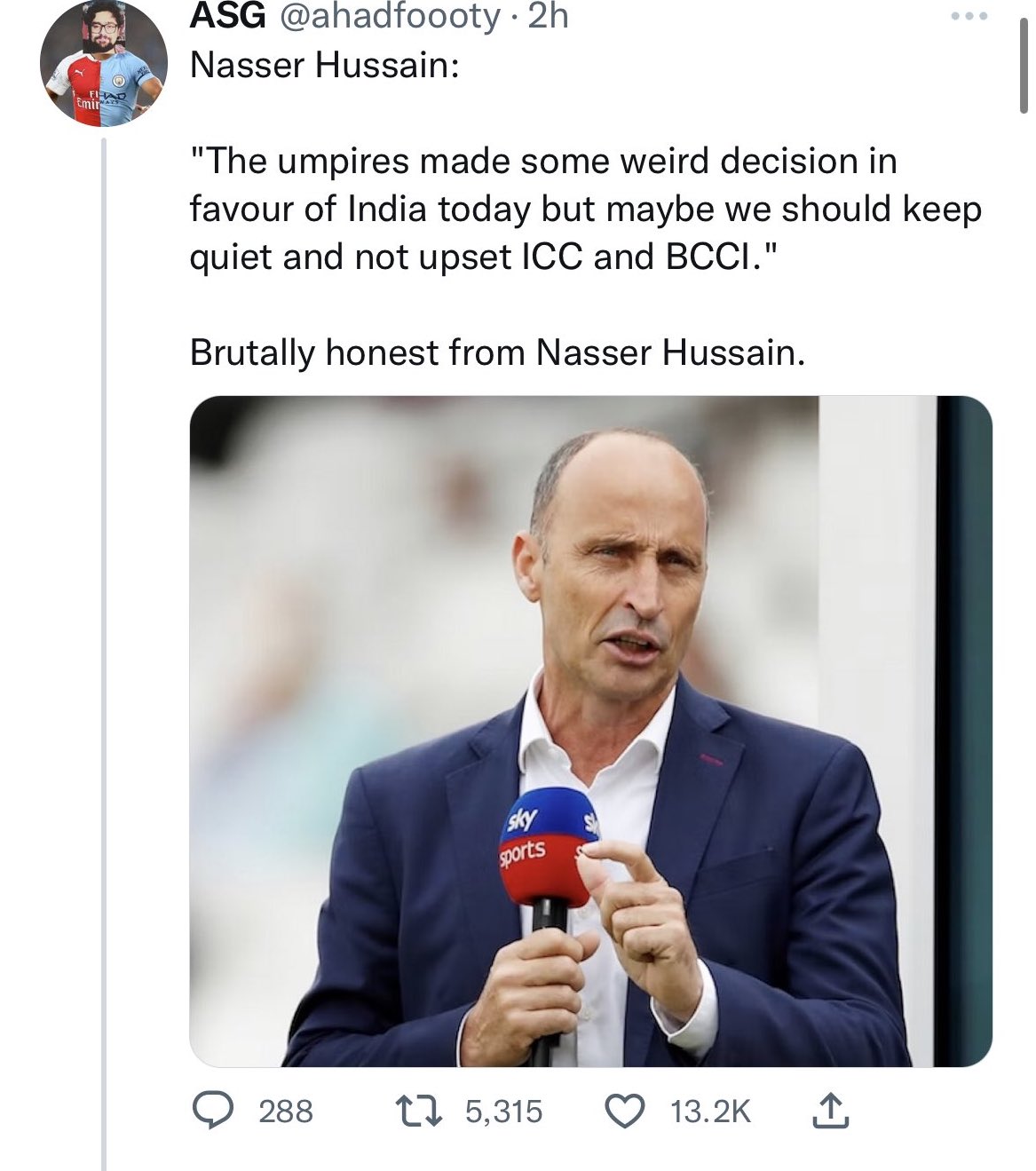
A Pakistani fan attributed a fake quote to British cricketer Nasser Hussain to raise aspersions on India’s win over Pakistan. “The umpire made some weird decision in favour of India today, but maybe we should keep quiet and not upset ICC and BCCI,” a Pakistani fan who went by Twitter account @ahadfooty claimed that former British cricketer-turned-commentator Nasser Hussain said it.
Source: Twitter
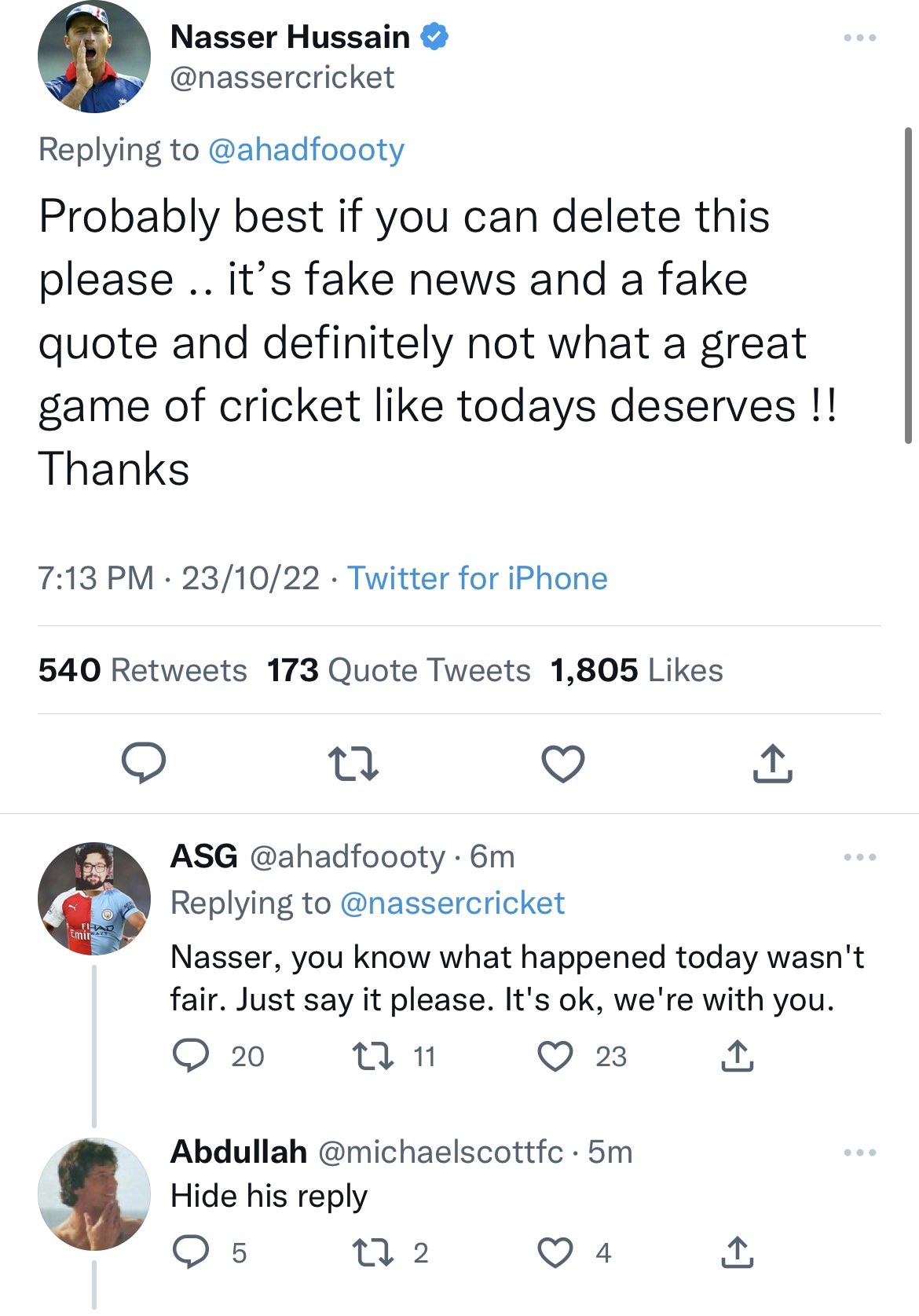
As retweets mounted and deluded Pakistani fans vented out their frustration on the loss, Nasser promptly clarified, saying that he had not issued the said quote and it was a fake quote and fake news.
Calling out the Pakistani fan’s attempt to sully India’s win, Nasser said, “Probably best if you can delete this please .. it’s fake news and a fake quote and definitely not what a great game of cricket like today’s deserves !! Thanks.”
Source: Twitter
However, Nasser’s explicit denial did little to knock sense to the Pakistani fan who had ascribed a fake quote to the British commentator. After being called out for an imaginary quote, the Pakistani fan requested Nasser Hussain to admit what he had wrongly quoted him for. “Nasser, you know what happened today wasn’t fair. Just say it, please. It’s ok, we’re with you,” he replied.
With many Twitter users slamming the Pakistani fan for conjuring up a fake quote about Nasser Hussain, the social media user quietly turned his Twitter account private.
Kohli powers India’s victory in an edge-of-a-seat thriller
The Pakistani fan’s attempt to attribute the fake quote to Nasser Hussain came in the wake of an edge-of-a-seat thriller between India and Pakistan that resulted in the former’s victory, thanks to the heroics of Virat Kohli, one of the best batsmen in the world.
King Kohli, as his fans affectionately call him, was in sublime form as he blunted the fearsome Pakistani bowling attack, taking India beyond the victory line, which at one point seemed all but impossible. With 48 runs to be scored in the last three overs, many had written off an Indian victory, but not Kohli and his partner, Hardik Pandya, had other plans up their sleeves.
Kohli’s back-to-back sixes to Pakistan’s chief bowler Haris Rauf nearly sealed the game for India. With India needing just 16 off the last over against a left-arm spinner, Hardik and Virat fancied their chances of getting the result in their favour.
But then, Hardik got out of the first delivery, swinging the ever-shifting pendulum in Pakistan’s favour. Dinesh Karthik or DK as he is popularly known, walked off on the pitch to get India home. But it was Kohli’s night as he heaved a massive six of a no-ball to bring the match back into India’s grasp. But the thrill did not end there. With DK getting run out, the equation was down to 2 runs in 1 ball.
Ravichandran Ashwin came in next. An astute cricketer, Ashwin dug deep inside the crease and waited for the bowler to commit a mistake. Nawaz, the Pakistani bowler, played a gamble by firing the bowl on the leg side. But Ashwin went inside the line of the ball and allowed it to travel to Mohammed Rizwan, the Pakistani wicket-keeper, earning the all-important one run of wide that levelled the scores. On the next ball, Ashwin lofted it above mid-off, taking India home.
On October 23 (local time), Salman Rushdie’s agent Andrew Wylie said in a statement that the author had lost vision in one eye and movement in one hand following the attack that happened at a literary event in August this year. While speaking to the Spanish newspaper El Pais, Wylie detailed the extent of Rushdie’s injuries after the attack.
He said, “He had three serious wounds in his neck. One hand is incapacitated because the nerves in his arm were cut. And he has about 15 more wounds in his chest and torso.” Wylie refused to comment if Rushdie was still in the hospital or not.
Notably, a 24-year-old Hadi Matar from New Jersey stabbed Rushdie just before he was to start his lecture at a literary event at Chautauqua Institution in western New York on 12 August 2022. He pleaded not guilty to second-degree attempted murder and assault charges. Currently, he is being held without bail in a jail in western New York.
Author Salman Rushdie is best known for ‘The Satanic Verses‘, a book that led to death threats from Islamists around the world, particularly from Iran in the 1980s. The book was banned in India in 1988 by the Rajiv Gandhi government.
He sustained severe injuries and was rushed to the hospital. As per reports, the nerve in his arm got damaged in the attack. He also sustained liver wounds, and the doctors said he might lose an eye, which seems to have happened eventually.
It is noteworthy that 33 years ago, then-Iran’s supreme leader Ayatollah Ruhollah Khomeini issued a fatwa against Rushdie, calling on Muslims to kill him. The fatwa was issued in response to the release of the controversial book “The Satanic Verses” by Salman Rushdie. The Islamists deemed some of the passages in the book about the Prophet Muhammad to be blasphemous.
Then-President Mohammad Khatami’s government distanced itself from the fatwa in the late 1990s. However, it was never lifted, and the multimillion-dollar bounty issued with the fatwa kept growing over time.
Khomeini’s successor, Supreme Leader Ayatollah Ali Khamenei, in 2019 said that the fatwa was “irrevocable”, following which he was deplatformed from Twitter.
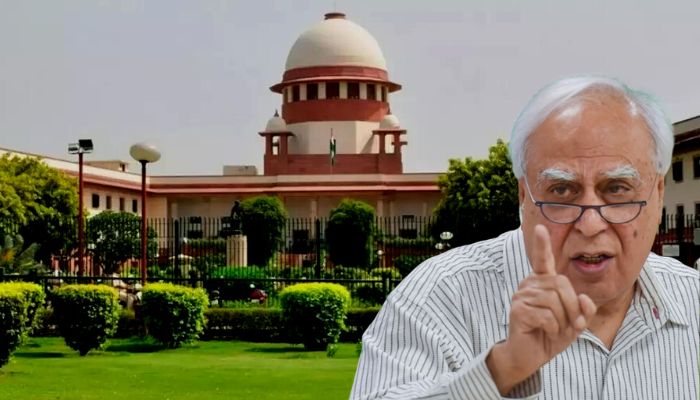
On Friday (October 21), a 2-Judge Bench of the Supreme Court heard a petition filed by one Shaheen Abdullah wherein he sought urgent intervention against the ‘targeting’ of Muslims in India.
The petitioner also sought direction in order to take proper legal action against the speakers and organizations committing such alleged hate crimes against Muslims under the Unlawful Activities Prevention Act and other criminal laws.
The Court accordingly directed the Governments of Uttar Pradesh, Uttarakhand and Delhi to take suo motu action against hate speeches (irrespective of religion) without waiting for a complaint.
The petitioner was represented in the apex court by former Congress leader Kapil Sibal. OpIndia had earlier reported how the former Congress leader lied in court and falsely claimed that BJP leader Parvesh Verma called for a boycott of the Muslim community (even though he did not name any community).
Sibal: No, if they do, they should not make hate speech equally.
Bench: This is the 21st century. Where have we reached in the name of religion? Art 21 speaks of scientific temper. #SupremeCourtOfIndia
When Justice KM Joseph asked Sibal whether Muslims have been making hate speeches, he denied knowledge of such a development. He later tried to undo the damage by claiming that Muslims must refrain from making hate speech equally.
“No, if they do, they should not make hate speech equally,” Sibal was quoted as saying. In order to refresh his selective memory, we are pointing out just 15 instances wherein leaders and public figures from the Muslim community made open hate speeches against Hindus.
AIMIM (Inquilab) leader mocks Hindu deities, asks Muslims to buy only from co-religionists
In April this year, AIMIM (Inquilab) leader MA Qavi Abbasi appealed to his community members to buy things only from Muslim-owned shops during the month of Ramzan.
“When they boycott us, we should also boycott them…The sleep of people gets disturbed in the morning. If they have objection to Masjid loud speakers, let there be tit for tat. They have started and we will end it. Lodge a complaint with the police and Pollution Control Board,” he had remarked.
He was also booked by the Hyderabad police but was not arrested in connection to the case. Bolstered by the police inaction, he went on to mock Hindu beliefs and issue death threats to former BJP spokesperson Nupur Sharma in May.
Hyderabad based M leader Qavi Abbasi asks Muzlims to do Ramzan shopping at establishments owned by their community & boycott Hiπdus completely@KTRTRS do you have anything to say on this? pic.twitter.com/KT8AGomHrX
In a viral video, Abbasi was seen making derogatory remarks about Hinduism and labelling the BJP leader as a ‘white-collar prostitute.’
At the very onset, he said, “As you know, the punishment for insulting Prophet Muhammad is death in Islam. Whoever commits blasphemy, we announce a bounty of ₹1 crore for killing him/her. We had earlier made a similar announcement for Waseem Rizvi.”
“I announce a bounty of ₹1 crore for killing Nupur Sharma. I want to ask you what was the age of Sita when she married Ram? She was 6. How many wives did King Dasharath have? More than 100. If we start exposing your religion, then, you will be on the road. You are a white-collar prostitute,” he said during his misogynist tirade.
Abbasi then went on to claim that BJP has become a hub of male and female prostitutes. “We have your records. We know how male BJP workers are exploiting their female counterparts. She (Nupur Sharma) is a white-collar prostitute.”
“Whosoever brings disrepute to the honour of Prophet Muhammad, we do not leave him alive. We also don’t let go of the dead easily. This is what Islam teaches us. I am keeping a bounty of ₹1 crore on Nupur Sharma. I am a High Court advocate,” he announced.
Aadil Chishti insults Hindus over ‘animal Gods’ and ‘333 crore Gods’
In June 2022, a Khadim of the Ajmer Dargah named Syed Aadil Chishti was heard insulting Hindu deities in a viral video. “If Nupur Sharma is a Hindu, I have a few questions for her. How can one believe in the existence of 333 crore gods? How is this logical?” he had remarked.
He further said, “Secondly, I would also like to remind Nupur Sharma that in Hindu mythology there is also a mention of Lord Vishnu’s 10 avatars. A few of these incarnations are in human form, a few in the form of animal, and a few are hybrids of human and animal forms. I would like to ask her, are these 10 avatars possible or believable? You say that he is one God and then he appears in ten different forms. Some in the form of humans, some in the form of animals and then some in a fusion form.”
Aadil Chishti mockingly claimed, “Thirdly, how will she justify the existence of Lord Ganesh or Lord Hanuman? What I am trying to say that they were not of human form, but you consider them to be your deities. Do these things sound logical? No, they do not.”
Amid the irony of Sarwar Chishti joining a peace march after alleged provocation, his son, Syed Aadil Chishti can be heard apparently mocking Hindu gods@bhanwarpushpen2 joins @Kritsween with analysis. pic.twitter.com/DHMyB1U4Uu
Khadim Sarwar Chishti of Ajmer dargah threatens to shake Hindustan, calls for economic boycott of Hindus
Sarwar Chishti, a member of the Anjuman Committee of the Ajmer dargah and father of Aadil Chishti, had also threatened to ‘shake’ Hindustan in July this year. In a video, he said, “The situation in the country right now, is such that people are committing blasphemy. They are doing mischief in the glory of the Prophet, in the glory of the Khwaja.”
“We will not tolerate this at all. We will launch such a massive agitation that the whole Hindustan will shake,” he had threatened. Later, an audio clip surfaced on social media wherein Chishti was heard calling for an economic boycott of the Hindu community.
Another cleric, Sarvar Chishty of the Anjuman committee said that if there is mischief in the glory of the prophet it will not be tolerated.
“Hindus of Nalla Bazar and Dargah Bazar in the Ajmer Sharif organized a rally supporting Nupur Sharma. They have called to close the shops till 12 in the noon. I request you all to make these people (Hindus) look miserable. Do this work through our groups of KGN (Khwaja Garib Nawaj),” he was heard as saying.
Sarwar Chishti continued, “No one should buy anything from their shops in the Dargah Bazar area and the Nalla Bazar area. They earn only through the lovers of the Khwaja Sahab. And see what courage they are attempting, they are closing the shops in front of us. They are supporting Nupur Sharma. Spread this word everywhere you can, so that no one transacts a single rupee with them.”
Ajmer Dargah calls for economic boycott of Hindus. First killings & now boycott. pic.twitter.com/PKxaLq2U8d
In April 2021, Sarwar Chishti tried to humiliate the Hindu community by claiming that they were slaves to the Islamic rulers for centuries. “We ruled over you for centuries. We were the rulers, you were the subjects. Don’t try us, or we will rule over you again,” the Khadim of the Ajmer Dargah was heard as saying.
“You will fight with us? With us? You come and bow your head in front of this grave of Khwaja Moinuddin Chisty,” Sarwar Chishti continued his vitriolic tirade against the Hindu community. In 2020, he defended the radical Islamist organisation, Popular Front of India (PFI), and claimed that it was ”saving India’s constitution”.
After friendly warnings of “will rule over you again”, a message of love from Ajmer dargah khadim Syed Sarwar Chisty – “You will fight with us? With us? You come and bow your head in front of this grave of Khwaja Moinuddin Chisty” pic.twitter.com/59ys2IE2Qs
J&K official uses beef jibes to mock eating habits of Hindu colleague, forces him to convert
In September this year, a complaint was filed by Secretary Panchayat (Rajouri) Sanjeet Sharma against his colleague Abdul Rashid for making derogatory remarks about Hindu beliefs.
He informed that the incident took place when his colleagues, namely, Zaheer Malik (Secretary Panchayat), Utish Ashok(Secretary Panchayat), and Tahir Mirza, MIS Operator and Abdul Rashid went for lunch at Hotel Blue Star in Muradpur.
When they ordered food, only Sharma chose vegetarian options while others ate non-vegetarian food. His refusal to eat non-veg irked Assistant Commissioner Panchayat (Rajouri), who then went on to use “objectionable and un-parliamentary language against Hindu religion”.
Good to see instant action and justice in Jammu & Kashmir after Sanjeet Sharma complained that one Govt official Abdul Rashid Kohli (JKAS) mocked Hindu religion and eating habits of vegetarians in Rajouri. Abdul Rashid Kohli suspended. Inquiry ordered. ?? pic.twitter.com/5dDugYRRu5
Sharma said, “By (mockingly) quoting Vedas, he said if you eat eggs, you will become holy(Pure) for one day, If you eat chicken you will become holy for seven days, If you eat mutton you will become holy for one Month, but I was shocked when he told me that if you eat beef (Cow meat), you will become holy for one year. When I objected to his words, he repeatedly told me it’s a fact which is written in your religious scriptures. He said you didn’t read them.”
He mentioned that the other colleagues present at the table did not intervene. Sharma pointed out, “The others colleagues were mute spectators. He said to go through your religious scriptures, you will convert to Islam. These objectionable comments on religious sanctity shocked me, which was unbearable and unacceptable at any cost.”
Rashid threatened the Hindu officer with administrative action. Sharma wrote to the DM, “Sir, is the services of an employee being ruled as Islamic rule or by laws framed by the Indian constitution? I wondered how an officer can force someone to convert and do against the principles of one’s religion.”
Sanjeet Sharma further asserted that he would resign from his post but would not convert or eat anything undesirable. Later, Abdul Rashid was suspended by District Magistrate Rajouri for hurting the religious sentiments of a Hindu colleague.
Islamic cleric uses derogatory remarks against Shivling
In May, controversial Islamic preacher Ilyas Sharafuddin compared the Shivling to a male body part and said that Hindus had a habit of worshipping the idol and male private organ. He was one of the participants at the ‘Taal Thok Ke‘ debate hosted by Zee News.
Falsely citing the Vedas, Geeta, and Upanishads, Sharafuddin first argued that the Hindu texts mention that ‘people who would worship idols would be sent to hell’. “Hindus should not worship idol, ling and private parts of a human body”, he blatantly said in the debate titled ‘Gyanvapi Survey video reveals the presence of Shivling?’
While refusing to listen to other participants, the cleric burst into laughter and said, “Private parts ki puja nahi honi chahiye (private parts should not be worshipped)”.
When will @hydcitypolice take action against Maulana Ilyas Sharafuddin for insulting & spreading misinformation about Hinduism and for hurting the religious sentiments of Hindus? pic.twitter.com/oWAu5wYwfV
Sharafuddin called Hindus brainless for worshipping the Hindu deities. “Hindus are ruining the country by worshipping the ling and by performing Yoni Pujan”, he stated this time comparing the Shivling to a stone. He also argued with the other panellists and abused them and was later removed from the debate by the channel.
Maulana Tauqeer Raza Khan bays for Hindu blood in Bareilly
Threats of violence, blatant calls for ‘jihad’ and Hindu genocide are becoming the new normal among Islamic leaders and clerics, despite the best efforts of left-leaning liberals and the so-called ‘secular’ intellectuals to turn a blind eye.
Earlier in January 2022, Maulana Tauqeer Raza Khan, a prominent Muslim cleric and chief of the Ittihad-e-Millat Council party (IMC) has once again been seen brazenly provoking Muslims against Hindus. Tauqeer Raza Khan, once an ally of the Samajwadi Party and Congress, was heard flagrantly threatening Hindus, “If we rise, you can’t hide”.
“I see the anger within my Muslim youths and I am afraid that the day this anger bursts out, the day I lose control over them… I want to warn my Hindu brothers that I’m scared that the day my Muslim youths are forced to take the law into their hands, you will not find a place to hide anywhere in India”, said the Islamic leader, while displaying his extreme hate for the Hindus.
’20 lakh Muslims listening … I’m afraid my Hindu brothers, if my youth takes law into their hands, you won’t find any place to hide in India’, Maulana Taukeer Raza Khan over the ‘Dharam Sansad’ controversy.
This brazen display of Hinduphobia by Maulana Tauqeer Raza Khan isn’t new. In December 2021, the radical Islamist had brazenly urged for a bloodbath in the country if CAA is not repealed. “We are Allah wale, what we say it happens, there will be blood bath Inshallah”, the Islamic leader had said while admonishing PM Modi for bringing in the Citizenship Amendment Act (CAA).
Amanatullah Khan calls for the beheading of Yati
On April 1, 2021, Yati Narsinghanand Saraswati, head priest of Dasna Devi Temple in Ghaziabad, Uttar Pradesh, had spoken at an event held at the Press Club of India when he urged Hindus to be fearless in highlighting the character of Prophet Muhammad. In accordance with the Sharia (Islamic law), AAP MLA Amanatullah Khan issued a death threat calling for his beheading.
In a tweet, Khan said, “We can not tolerate such impertinence for our beloved Prophet Muhammad. This hateful insect should be awarded the most severe punishment by slitting his tongue and neck. But the law of the land does not permit us to do this, we have faith in the Indian constitution, and I want Delhi Police to take note of this.”
Amanatullah Khan Facebook post
In a video posted by ‘Hindustan LIVE Farhan Yahiya’, Amanatullah Khan could be seen giving threats of violence. “If Muslims are silent today, then, it is only because they are tackling the issue shrewdly. If Muslims hit the streets, they will teach a lesson (eenth se eenth baja denge).”
“Muslims of the world cannot tolerate insult to Prophet Muhammad. If you believe otherwise, then, it is your misunderstanding. Muslims are dealing with the issue shrewdly as they don’t want the harmony of the country to be destroyed,” he cautioned.
Amidst chants of ‘Allahu Akbar’ and ‘Naara-e-Takbir’, the AAP MLA said, “There will be sermons in every mosque during jummah and the government will wake up then. I strongly believe this will happen in every nook and corner of the country and a memorandum will be submitted (against Swamy Yati Narsinghanand Saraswati).”
Islamic cleric wishes death upon 50 crore Indians
During the outbreak of the deadly Coronavirus pandemic, a video of Peerzada Abbas Siddiqui dating February 26, 2020, went viral on social media. He was seen addressing a large gathering of followers and praying to Allah to kill 50 crore Indians with the virus. Siddiqui is an Islamist from Furfura sharif
In the video, the cleric was heard referring to anti-Hindu Delhi riots and saying, “Recently I have got the news that mosques are being set on fire, mosques are being burnt for the last two days. I think something is going to happen within a month. May Allah accept our prayers. May Allah send such a terrible virus to India that ten to twenty to fifty crore people die in India. Am I saying something wrong? It is absolutely blissful.”
রাজনীতি শুধু রাজনীতি না, জনসেবা! জনগনের কল্যাণের জন্য একজন প্রতিনিধি কে জনতা বেছে নেন। আজ এই সকল মানুষেরা রাজনীতি তে এসে মানুষের মৃত্যু কামনা করে। মানুষ ই এর বিচার করবেন।@tathagata2pic.twitter.com/RO375Zn1w5
His genocidal statement was well-received by his followers as they applauded in unison. Siddiqui also said that he did not mind whether he would die or survive but he would surely take Hindus with him.
However, he later claimed that he was quoted ‘out of context.’ In an attempt to water down the vitriol that he spewed earlier, Siddiqui went on to say that he respected “India’s secularism” and that he had worked for the people, irrespective of religion and caste.
Siddiqui yields strong influence over young Muslim voters in the four districts of Hooghly, Howrah, North 24 Parganas and South 24 Parganas. Sensing an opportunity to make his way to the State Legislative Assembly, he floated the Indian Secular Front (ISF) party in January 2021 and joined hands with Congress and CPIM.
15 crore Muslims can dominate over 100 crore Hindus: Waris Pathan
In February 2020, AIMIM leader Waris Pathan was seen inciting Muslims at an anti-CAA rally in Gulbarga city of Karnataka, in the presence of party supremo Asaduddin Owaisi.
He incited Muslims by claiming that the time had come for them to unite and ‘achieve freedom’. He added that even though Muslims are just 15 crore in the country, they can still dominate over 100 crore Hindus. Waris Pathan further warned Hindus to be scared of Muslims and reminded them of the brutal consequences if his co-religionists united together.
“We need to work together, we need to snatch our Azadi. The time has now come to achieve Azadi, if we cannot achieve it, we should snatch it. They were mocking us for hiding behind women (during anti-CAA protests). Do not forget, these are lionesses who have come out yet and you are already afraid of these women. Be aware and know what happens if we all (Muslims) unite together,” he continued.
Pathan threatened, “We are 15 crores but be aware we can still dominate over 100 crore Hindus and imagine what we can do to you.” It was not unsurprising to hear such blatant Hinduphobic hate speech from AIMIM leader Waris Pathan as his party and its leadership had been issuing such venomous statements to incite Muslims of the country.
Akbaruddin Owaisi and his threat of ’15 minutes’
AIMIM leader Akbaruddin Owaisi made an inflammatory and inciteful speech against Hindus in 2012. In his speech, he made an open challenge to Hindus and warned that they would not survive if the police were to be removed for 15 minutes.
“Dear Hindustan, we are 25 crores and you all are 100 crores, right? Fine. You are far ahead of us in numbers. Remove the police for 15 minutes and we will see who is more powerful.” Owaisi junior’s remarks were received amidst thunderous applause from his fanatic supporters.
“Remove the Police for 15 minutes! Be it a thousand, a lakh or even one crore impotent(Hindus), even if they try collectively, they will not be able to give birth to a single one. These people are not able to see us face to face. When the Muslim becomes weak, only then these impotent (Hindus) arrive,” Owaisi remarked in his hateful incitement against Hindus.
He says about Hindu gods & goddesses “Main unke manhoos naam iss mubarak mehfil mein nahi lena chahta”. The crowd roars in approval.
— Major Gaurav Arya (Retd) (@majorgauravarya) June 8, 2022
Despite the videographic evidence, a court in Hyderabad ruled that the speech of Akbaruddin Owaisi did not constitute hate speech and thus acquitted him of all charges.
‘Allah has given us the right to Jihad’, cleric incites Muslims to take up arms
On December 18, 2019, an Islamist youtube channel named ‘MK Islamic’ uploaded a repugnant speech by one Maulana Jarjis Ansari Hafizullah in which he was seen openly threatening to wage ‘jihad’ in India. He rationalised his dangerous remarks by falsely claiming that the Citizenship Amendment Act (CAA) and the National Register of Citizens (NRC) are anti-Muslim.
In the middle of his hate speech, the Maulana was heard boasting that the rioters, who burnt down the deputy CM’s headquarters in Assam and gheraoed the chief minister’s residence, were his co-religionists. He said that the panic created in Assam by the Muslims was just a teaser and warned that his community members could create a similar situation in the entire country.
Last month, a fast-track court in Uttar Pradesh’s Varanasi sentenced the Islamic cleric to a ten-year prison sentence for sexually assaulting and blackmailing a woman from Varanasi. He was also fined ₹10,000 by the court.
Islamists raise ‘Sar Tan Se Juda’ slogans across India on Milad un Nabi
On October 9, a procession was taken out in Pipad town of district Jodhpur, Rajasthan, in which the participating Islamists raised ‘Sar Tan Se Juda’ slogans on the occasion of Eid-e-Milad-un-Nabi.
The video of the incident went viral on social media, following which the main accused was arrested. Identified as Roshan Ali, the accused was reportedly involved in communal violence in the past as well.
Controversial slogans were raised during procession for Eid Milad-un-Nabi in Pipar city of Jodhpur.
Police has arrested Roshan Ali, the main person who raised the controversial slogans and others are being identified: Anil Kayal, SP Rular Jodhpur pic.twitter.com/aCbGspVDyv
Notably, All India Muslim Jamaat had issued a decree on October 8 in which they had asked not to raise ‘Sar Tan Se Juda’ slogans during the procession on the occasion of Prophet Muhammad’s birthday. The decree was issued for Muslims across the country.
Opindia had reported about 8 instances where the contentious slogan was raised on the occasion of Prophet Muhammad’s birth anniversary.
The hate speeches by Islamists have led to real-life acts of violence against adherents of the Hindu Faith. Several such Islamists have remained immune to both police and judicial action. This has however not prevented their co-religionists to weave an imaginary tale of ‘Muslim genocide’ in India.
It serves well to remember that if these extremists are allowed to have their way, they won’t flinch from pulling off another Kishan Bharwad, Kanhaiya Lal, or Kamlesh Tiwari.
It is indeed alarming that despite open calls of violence and threats against the majority community, the Islamist leaders still portray false victimhood and senior advocates and politicians like Kapil Sibal try to false claims in court.
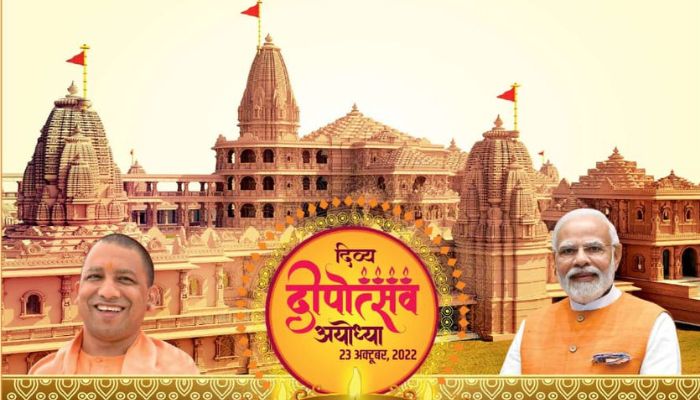
As Prime Minister Narendra Modi participates in the Ayodhya Deepotsav on 23rd October 2022, it is a good time to recall his special bond with Bhagwan Shri Ram and the ancient city of the deity that is Ayodhya. Twitter handle Modi Archive has published a thread mentioning the details of the same.
India’s politics took a sharp Dharmic turn after Somnath to Ayodhya Ram Rath Yatra was undertaken by Bharatiya Janata Party leader LK Advani for the righteous demand of building a grand Ram Mandir at the Shri Ram Janmabhoomi site in Ayodhya. Narendra Modi was Gujarat BJP’s General Secretary at that time. For the Gujarat section of this Yatra, Modi was the charioteer. As can be seen in the old photographs, he was one of the key motivators who inspired people to come together for the noble cause of building the Ram Mandir in Ayodhya.
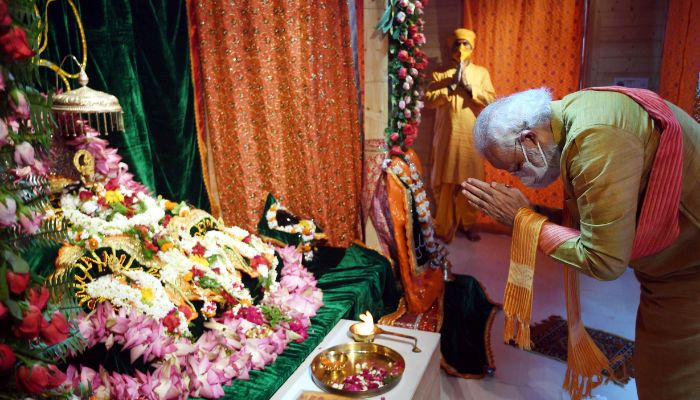
To mark Diwali, PM Modi will today offer prayers to Bhagwaan Sri Ram Lalla Virajman in Ayodhya.
Some pages from the archives..
Somnath-Ayodhya Ram Rath Yatra began on 25th Sep’1990. Then Gujarat BJP’s General Secretary, Modi was the charioteer for the Gujarat leg of the Yatra. pic.twitter.com/xjezvZoK73
Prime Minister Narendra Modi was first noticed on the national spectrum of politics with his Ekta Yatra which started from Kanyakumari and culminated by raising the tricolor at Lal Chowk in Srinagar in Kashmir on 26th January 1992. Days before that, on 14th January 1992, Modi was in Ayodhya with this Yatra to seek blessings of Lord Shri Ram. At that time he vowed, “I’ll only return when Ram Mandir construction begins”.
At Kashmir’s Lal Chowk, Modi raised the tricolor, culminating the Ekta Yatra on 26th January 1992.
Just days earlier, on 14th January, soon after seeking Bhagwaan Sri Ram’s blessings in Ayodhya Ram Janmabhoomi, Modi vowed “I’ll only return when Ram Mandir construction begins”! pic.twitter.com/bZea6XMdcw
Narendra Modi’s personal collection contains handwritten heartfelt poetry noted on the letterhead of the Jammu and Kashmir state unit of the Bharatiya Janata Party. The poetry means, “Ram is not a person’s name but a name given to an instinct. Ram is our thought, philosophy, love, nature, and wisdom. Ram is the golden peak of eternal life values. Ram is the essence of our culture. Ram is our religion, our karma, and our conclusion. Ram is our devotion, our power, and our mind. Is there any climate of prosperity without the ideals of Ram? Where is Bharatvarsh in this India without Ram?”
Modi’s personal effects contain an insightful handwritten note, a poem dedicated to Bhagwaan Sri Ram.
In October 1998, Mauritius hosted the ‘International Ramayana Conference’. Narendra Modi was invited to attend the conference in Moka. Modi spoke with great zeal about the life of Bhagwaan Shri Ram, leaving a lasting impression on those in attendance.
In 1998, Mauritius hosted the ‘International Ramayana Conference’. Narendra Modi was invited to attend the conference in Moka.
Modi spoke with great zeal about the life of Bhagwaan Sri Ram, leaving a lasting impression on those in attendance. pic.twitter.com/tn6A5ceaa1
The 500-year-old Ram Mandir movement, and Modi’s personal journey of devotion, culminated on 5th August 2020 when the foundation stone for Bhagwan Shri Ram’s bhavya mandir in Ayodhya was laid by him.
The 500-year-old Ram Mandir movement, and Modi’s personal journey of devotion, culminated on 5th August 2020. The foundation stone for Bhagwaan Sri Ram’s Temple in Ayodhya was laid by Modi.
[Modi seeks Ram Lalla Virajman’s blessing prior to laying the foundation for Ram Mandir.] pic.twitter.com/JK0lyqAHCs
Narendra Modi has always been vocal about his Dharmic and civilizational identity. In his second tenure as the Prime Minister, he is addressing many civilizational issues and putting efforts to decolonize Indian society. Participating in Deepotsav 2022 at Ayodhya, he is expected to motivate the masses and energize this movement in his unique style.
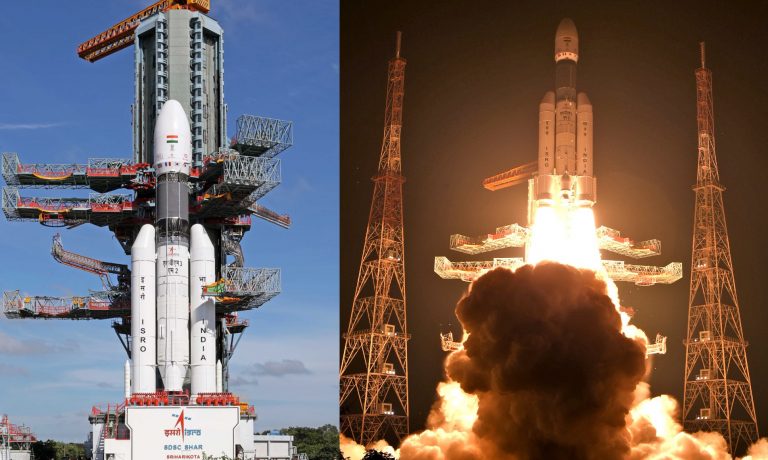
The Indian Space Research Organization (ISRO) scripted history on Sunday morning when it launched its heaviest rocket, the LVM3-M2, on its debut commercial mission. The rocket carrying 36 satellites was launched from Satish Dhawan Space Centre in Sriharikota as part of the space agency’s OneWeb India-1 mission.
ISRO has successfully launched 36 broadband communication satellites of a UK-based customer into the targeted orbits with the LVM3-M2 rocket, making the mission “historic” for the country, said the space agency.
OneWeb Ltd is a UK-based customer of NewSpace India Ltd (NSIL), ISRO’s commercial arm and a worldwide communication network powered by space that enables governments and businesses to connect to the internet. Bharti Enterprises is a significant investor in OneWeb.
The Launch Vehicle Mark 3 (LVM3) is ISRO’s latest medium-heavy lift launch vehicle and the space agency’s heaviest rocket. The rocket, formerly identified as the Geosynchronous Satellite Launch Vehicle Mark III (GSLV Mk III), is designed to primarily launch satellites into geostationary orbit at 35,000 kilometres.
This was the heaviest payload carried by an Indian launch vehicle, weighing 6 tons. ISRO declared the mission success at 0142 hours IST.
The rocket is a three-stage launch vehicle with two solid propellant strap-ons on its flanks and a core stage with an L110 liquid stage and a C25 cryogenic stage. OneWeb is installing a Low Earth Orbit constellation of 648 satellites.
Early on Sunday, ISRO Chairman S Somanath said that Deepavali had begun early for the space agency’s scientists.
“The LVM3 M2/OneWeb India-1 mission is successfully completed. All 36 satellites have been placed into their intended orbits. @OneWeb @NSIL India,” ISRO announced in a tweet minutes after Somanath’s announcement that 16 satellites had been deployed in the appropriate orbits, with the rest taking some time.
LVM3 M2/OneWeb India-1 mission is completed successfully. All the 36 satellites have been placed into intended orbits. @NSIL_India@OneWeb
Interestingly, ISRO Chairman S Somnath performed a special Pooja for the mission’s success on Saturday at the Chengalamma Parameshwari Devi Temple in Sullurpeta, Tirupati district.
Former ISRO chiefs K Sivan and A S Kiran Kumar, as well as Sunil Mittal, founder-chairman of Bharti Enterprises, witnessed the launch from the Mission Control Centre. Somnath, also the Secretary of the Department of Space, described the mission as “historic,” and credited Prime Minister Narendra Modi’s backing for the mission’s success.
In complementing the ISRO team for a ‘commendable’ mission of LVM3, NSIL Chairman and Managing Director D Radhakrishnan stated, “the three major stakeholders to this particular mission, the NSIL, ISRO, and OneWeb India, have shown the entire world how to contract and execute the mission in less than 3-4 months.”
PM Modi took to Twitter to congratulate ISRO and the team for the success of the mission. “Congratulations @NSIL_India @INSPACeIND @ISRO on the successful launch of our heaviest launch vehicle LVM3 with 36 OneWeb satellites meant for global connectivity. LVM3 exemplifies Atmanirbharta & enhances India’s competitive edge in the global commercial launch service market,” he tweeted.
Congratulations @NSIL_India@INSPACeIND@ISRO on the successful launch of our heaviest launch vehicle LVM3 with 36 OneWeb satellites meant for global connectivity. LVM3 exemplifies Atmanirbharta & enhances India’s competitive edge in the global commercial launch service market.
The GSLV Mk III’s development began in the early 2000s, along with the development of the cryogenic upper stage, which ISRO has been attempting to develop in a bid to decrease dependence on the currently-used Russian design. The inability of the upper stage to ignite in consecutive GSLV MkII flights resulted in a delay in the first test flight of the GSLV MkIII.
The rocket’s maiden experimental flight (also known as a developmental or test flight) was originally planned for the early 2010s but was pushed back to accommodate the Mars Orbiter Mission, which launched in 2013.
Notably, the rocket and its boosters were static fire tested in 2010, 2011, and 2015. This year also saw static fire tests for the human-rated variant of the rocket, which is being developed for the Gaganyaan program. In 2017, the cryogenic upper stage was also successfully tested.
The launch vehicle made its maiden operational flight on July 22, 2019, with Chandrayaan 2. This mission’s 4-tonne payload was the heaviest payload taken to orbit by ISRO at the time.
A 5-year-old Hindu child was forcibly circumcised by an Islamic cleric in the Unnao district of Uttar Pradesh. As per reports, a maulana named Aslam has been arrested by Police for forcibly circumcising the 5-year-old who used to attend a Madrasa. Hindu organisations have expressed their displeasure over the matter.
As per reports, the incident happened in Shuklaganj of Gangaghat police station area, Unnao. The 5-year-old Hindu boy lives in the Champa Purva locality with his grandparents and his father. The mother of the child is no more. According to reports, the youngster was put to a madrasa in the village itself to learn. Maulvi Aslam, who taught here, is believed to have taken the boy out of the village and circumcised him.
As per accounts, the child’s family members were first unaware of this. They eventually discovered the child had been wounded. Following this, the kid was brought to the doctor, where they learned that the boy was circumcised. The child revealed that it was done by Maulvi Aslam.
The police registered a case against Maulvi Aslam and arrested him after receiving a complaint from the victim’s relatives. “The accused in this case of conversion has been arrested,” said the DSP of Unnao Police. He stated that the investigation is still underway and that action would be done in accordance with the laws based on whatever facts are unearthed.
In the meantime time, a woman named Shashi, who claimed to be a relative of the boy, alleged in another video relating to the case that the kid was converted by his grandparents. Shashi explained that the child’s grandmother was also engaged in the conversion, and that everything happened at someone’s behest, but that the conversion took place in the same child’s residence.
थाना गंगाघाट पुलिस द्वारा सुसंगत धाराओं में अभियोग पंजीकृत कर अभियुक्त को गिरफ्तार कर लिया गया है। अग्रेतर विधिक कार्यवाही की जा रही है।
Shashi went on to say that the child’s grandmother sends three of the family’s children to study in a madrasa. Hindu organisations are demanding strict action against the people complicit in the incident.
Diwali, the biggest festival of the year, is being celebrated in the country with full enthusiasm. Lord Rama’s comeback to Ayodhya after 14 years of exile is celebrated as the festival of light symbolizing the victory of the divine over evil. No wonder the Diwali celebration in Ayodhya especially the one branded by Yogi Adityanath after he became the chief minister of the state in 2017 carries a special message and meaning along with its grandeur and divinity. Ayodhya is all set to make a record of lighting up more than 17 lakh lamps in the Diwali celebrations of 2022.
Informing about this, the government of Uttar Pradesh tweeted from its official Twitter handle, “Shri Ayodhya Ji is ready for ‘Bhavya-Divya Deepotsav-2022’. Let’s witness Deepotsav-2022, equipped with innumerable lamps of faith. Bow down to Lord Shri Ram, worship Lord Shri Ram. Divine Ayodhya. Modern Ayodhya.”
श्री अयोध्या जी तैयार हैं ‘भव्य-दिव्य दीपोत्सव-2022’ के लिए…
आइए, आस्था के असंख्य दीपों से सुसज्जित दीपोत्सव-2022 के साक्षी बनें
प्रभु श्रीराम को नमन करें, प्रभु श्रीराम का वंदन करें…
The video shared in this tweet shows the preparations for the festive celebrations which include Diwali at the Sharayu riverfront. Besides lighting up the lamps, a light and music show depicting the story of Lord Rama is also one of the key attractions. Local earthen lamp makers have been busy in the last few weeks delivering huge demands.
With the construction of a grand Ram Mandir at the Shri Ram Janmabhoomi going on in full swing, the Diwali celebrations of Ayodhya will reach new heights next year. The temple is expected to complete by December 2023 and the idols of the deity will be ceremoniously consecrated in the temple in January 2024. But the people of Ayodhya and Uttar Pradesh are charged up from now itself for making Ayodhya the most sought-after destination in the world.
The beauty of art is at peak in #Ayodhya! With #Deepotsav in the upcoming, the land of Lord #Rama is preparing the most beautiful matkas.
Prime Minister Narendra Modi’s government in the center and Yogi Adityanath’s government in the state are leaving no stone unturned to make Ayodhya a world-class city by 2024. Development projects worth Rs 20000 crores are planned to revamp this ancient city. Projects worth Rs 1700 crores will complete by the end of this year.
The lining of the diyas, The formation of art, Here’s to #Deepotsav‘s start!
In this year’s celebrations, Prime Minister Narendra Modi will be present in Ayodhya as the chief guest. He will give a time slot of more than three hours for Ayodhya’s Deepotsav 2022. Chief Minister Yogi Adityanath, Governor Anandiben Patel Deputy Chief Ministers Brajesh Pathak and Keshav Prasad Maurya, and state’s Tourism and Cultural Affairs minister Jaiveer Singh will share the stage with the Prime Minister.
The program will start at 4:30 pm on 23rd October 2022. There will be a Shobhayatra depicting Lord Rama and an exhibition on Ramayan. Artists from 8 countries including Russia and 10 states will present cultural programs. There will also be a musical laser show, projection mapping, and a three-dimensional holographic show based on Ramayan. This will be followed by digital fireworks and green firecrackers. After the cultural program, the celebrations will conclude with the Sharayu Aarti in holy chants of Vedic Mantras.
Ayodhya’s walls speak about Ram. Ayodhya’s roads lead to the Ram Mandir. Ayodhya’s outskirts development is facilitating Chaurasi Kos parikrama path. Ram Leela on the occasion of Navratri and Dussehra is famous. With Yogi Adityanath’s vision for the Diwali celebrations, it is now established that Ayodhya breathes Ram and so does India as Ayodhya’s Deepotsav is the festive celebration discussed the most on social media.
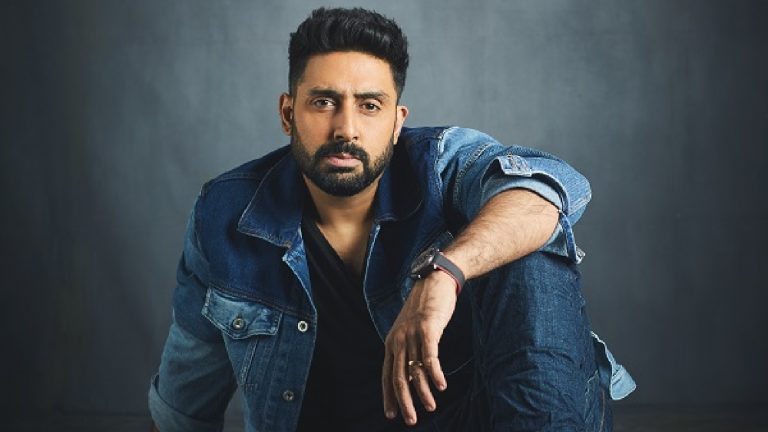
Bollywood actor Abhishek Bachchan gave a befitting reply to a social media user who attempted to troll the actor. On Twitter, a user commented on a tweet by Bachchan implying that he was not intelligent and unemployed, to which the actor gave a reply saying that intelligence and employment are not related and the user might be employed but not intelligent.
Oh, I see! Thank you for that input. By the way, intelligence and employment aren’t related. Take you for example. I’m sure you’re employed, I’m also sure (judging by your tweet) that you’re not intelligent! ??
The conversation started through a tweet by former WION Journalist Palki Sharma, who wished Dhanteras and raised the issue of a large number of ads printed in newspapers today. Palki wrote, “Happy Dhanteras!! How many pages did you have to flip to get to the news today? Can you tell the main page from the supplement(s)? How many front pages does your newspaper have? Do Diwali sale ads influence your buying decisions? (Asking for a friend).”
Abhishek Bachchan replied to the tweet asking if people still read newspapers. “Do people still read newspapers??,” Abhishek Bachchan said. Following this, a Twitter user by the name CJain (@CJain3018) responded to the reply by Bachchan writing, “Intelligent people do. Not unemployed people like you.”
After this remark by the user, Amitabh Bachchan wrote, “Oh, I see! Thank you for that input. By the way, intelligence and employment aren’t related. Take you for example. I’m sure you’re employed, I’m also sure (judging by your tweet) that you’re not intelligent!”
Following this reply by Abhishek Bachchan, several other rulers lauded him for his remarks. A user wrote, “Well said Junior B…I am not surprised with the audacity of some people to make an attempt of showing some one down in the name of freedom of speech.. sad reality”
Well said Junior B…I am not surprised with the audacity of some people to make an attempt of showing some one down in the name of freedom of speech.. sad reality
Another user wrote, “I’m surprised that AB actually bothered to respond to a troll. People don’t event think when they’re spitting out rubbish on this platform. I don’t think, as remote a thought this maybe, the conversation would have been same if both of them were speaking to each other in person.”
I’m surprised that AB actually bothered to respond to a troll. People don’t event think when they’re spitting out rubbish on this platform. I don’t think, as remote a thought this maybe, the conversation would have been same if both of them were speaking to each other in person.
Abhishek Bachchan was last seen in the movie Dasvi, co-starring Yami Gautam and Nimrat Kaur. The streaming of the film was started on Netflix and Jio Cinema on 7 April 2022. Abhishek Bachchan has played the role of Ganga Ram Chaudhary the CM of a fictional Harit Pradesh, who is sent to judicial custody for the teacher recruitment scam. While languishing in jail, Ganga Ram Chaudhary, whose schooling stopped after Class 8, decides to give the Standard X (Dasvi) examination a shot. Jyoti Deswal (Yami Gautam Dhar), the uncompromising and intrepid superintendent, ultimately helps Chaudhary in his endeavour.
Since October 10, social media in India and abroad has been abuzz with the reports published by left-leaning propaganda website The Wire claiming Meta provides “superpowers” to Bharatiya Janata Party’s office on its platforms to set narrative.
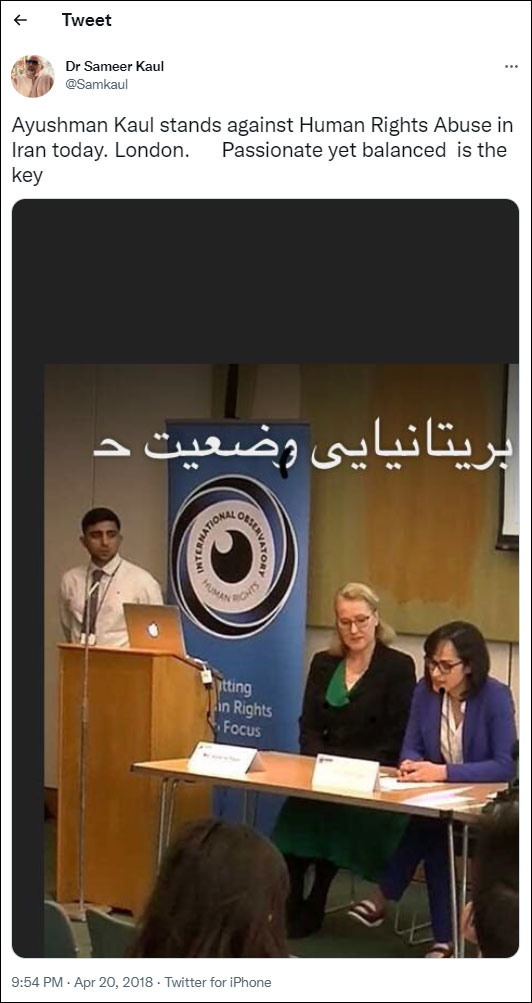
Though the reports linked to this particular case have been suspended pending an internal inquiry by The Wire, questions have been raised over the story’s contributors. One of the main tech contributors to Meta Vs The Wire reports was Devesh Kumar. There is a possibility that analyst with dubious research website Logically.ai Ayushman Kaul also provided support for the report, as one of the videos where The Wire allegedly verified DKIM signatures and internal URLs Kaul provided voiceover.
Notably, Ayushman Kaul and Devesh Kumar were authors of the series of reports on the application ‘Tek Fog’ that were released earlier this year by The Wire. In those reports, The Wire claimed that BJP was using a “not for public” application named ‘Tek Fog’ to manipulate social media platforms in their favour. The allegations are yet to be proven true. However, The Wire has now withdrawn all the stories in Meta controversy as well as Tek Fog absurdity.
Ayushman’s father and conflicts of interest
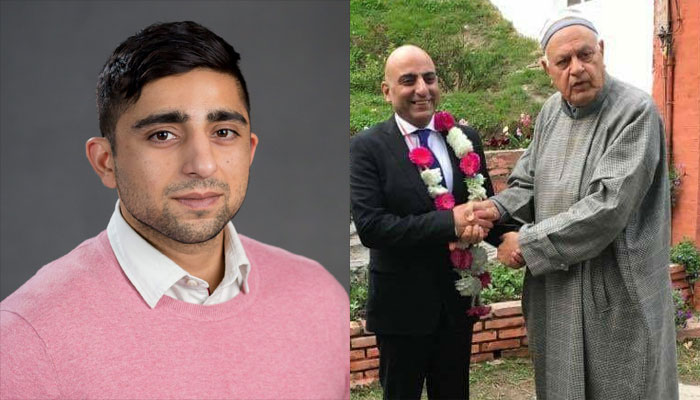
Hailing from Kashmir, Ayushman Kaul is the son of National Conference leader and spokesperson Dr Sameer Kaul, an oncologist by profession. Dr Kaul was previously with Muftis’ Peoples Democratic Party but had resigned in 2015 after PDP allied with the BJP in Jammu and Kashmir to form a government. He has been very vocally anti-BJP. In 2017, he joined National Conference.
Following his resignation, he blamed PDP for going against the mandate in the valley. He said, “The party (PDP) has compromised on the very principles it was created. The primary being alliance with the BJP after fighting elections on an anti-BJP agenda.” Kaul, who saw PDP as an “honest party” when he joined it in 2011, said PDP failed to give representation to minorities, including Sikhs and Kashmiri Hindus, something that the party had promised.
Despite being a Kashmiri Pandit himself, Kaul has been a strong critic of the revocation of Article 370 from the Kashmir valley that removed riders attached to it as being part of India. A stand that he might have taken because of his political ideology.
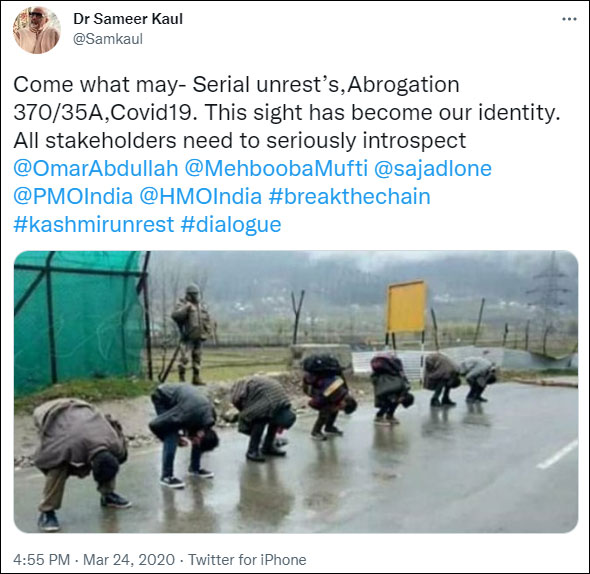
One of the tweets by Dr Kaul criticising the abrogation of Article 370. Source: Twitter
For instance, when Article 370 was revoked in August 2019 by Home Minister Amit Shah, he told The Quint that he believed the central government committed ‘treachery.’ He said, “I don’t feel good about it. And I believe that the rural Kashmiri Pandit will now face multiplied acrimony from the local Kashmiri Muslims who is the majority. Their whole future, whether it was in the camps or wherever else they are in the country or abroad, depended completely on future where they go and live with Kashmiri Muslims. That, unfortunately, has been dealt a complete death blow.”
Speaking to The Wire, he had said, “Pandits feel that Kashmiri Muslims have not been fair towards them, collaborated with mobs and succumbed to mass hysteria at that time. That is not completely true. There was mass hysteria and some Muslims did join the mobs, but not all Muslims. The hysteria was also engineered very meticulously. There were many Muslims who didn’t like what was happening but they were also scared and could not rise to the occasion.”
He added, “With the reading down of Article 370, Pandits are questioning the Centre’s move. Pandits still stand where they are, nothing has been done to empower them.”
In a discussion at India Today during a debate session hosted by Journalist and Author Shiv Aroor, Kaul defended NC chief Farooq Abdula’s statement where he had said that he hoped with the help of China, Article 370 would be restored. In his remarks, Kaul refused to accept Abdulah said anything wrong. Kaul pointed out that PM Modi had spent quality time with China’s President when he visited India, to which Aroor said he was trying to dilute what Abdulah said. Kaun repeatedly said he did not find anything wrong in Abdullah’s statement.
It is pertinent to note that Sameer Kaul was the personal physician of the separatist Hurriyat leader Syed Ali Shah Geelani. He had operated on him when Geelani was diagnosed with cancer in 2010. Speaking to Rediff, Kaul profusely praised Geelani and called him an “uncorrupted” politician.
He said though the political ideology was different and he did not agree with the “Kashmir Banega Pakistan” slogans often raised by Geelani, he appreciated his zeal as he did not step back from his stand even after 20 years since he remembered hearing about Geelani from his father. Nowadays, we talk about media houses painting a “good picture” of terrorists too often. What Rediff was told by Dr Kaul about Geelani was no less than a whitewash of the crimes committed by Geelani.
In multiple reports on Tek Fog, that now been suspended by The Wire, the portal failed to mention that one of the authors, who worked on the Tek Fog investigation, has a direct link to a political party from Jammu and Kashmir.
As per his LinkedIN profile, Ayushman Kaul joined London based Logically.ai as a senior analyst. Logically is a dubious website that has been pushing an anti-India narrative. Kaul has contributed to multiple stories on The Wire such as “What the SOS Tweets Tell us About the Second Wave of COVID-19”, “Tek Fog: An App With BJP Footprints for Cyber Troops to Automate Hate, Manipulate Trends”, and “Anonymous Complainant Targeting Zubair Tweet Linked to Tek Fog App, BJYM Leader in Gujarat”.
He joined the company in January 2022. It is unclear if he joined Logically after the Tek Fog exposes which were reported in first week of January or after. In Meta story, Devesh Kumar, one of the co-authors in Meta saga revealed that Kaul gave voice to the DKIM verification video they published in one of the reports.
Devesh Kumar revealing Ayushman Kaul’s involvement in Meta story
The report as well as the video shared by The Wire on its Twitter handle have now been removed. Devesh, however, has deleted the tweet now, like many other tweets he has deleted.
It is unclear how much Kaul individually or as part of Logically was involved in the reports linked to ‘Meta Vs The Wire’ with technical aspects of the investigation.
The link between Logically and Congress
In May 2022, OpIndia explained how Logically was involved in sponsoring an anti-India stunt event where Rahul Gandhi was one of the guest speakers. The company was one of the sponsors of the event. Gandhi’s session was on May 21, which was reported by us. Rahul Gandhi spoke at the event ‘Ideas of India’ in the United Kingdom, organized by Bridge India. Resorting to his usual scaremongering, Rahul Gandhi asserted that a civil war in India would not surprise him because the country was extremely unstable. He stated that India was in a horrible position and that a political revolution was required.
To substantiate his contention, he stated that the Bharatiya Janata Party has “poured kerosene around the country” and that a single spark is enough to blow the country up.
“We have a massive level of polarization, huge unemployment. We have the backbone of employment broken, and we have a massive concentration of wealth. We are going to have social problems, and they’re coming. There’s no doubt about it,” he further said.
He even supported the US interfering in internal matters of the country. Gandhi was then asked about the US Secretary of State Antony Blinken speaking about human rights violations in India in a press conference. To that, Rahul replied, “I’m glad that the United States has woken up to this idea.” Tweaking the course of his answer, he said that the US is not needed in order to make us realize the issue. “It has been quite a long time since to sense it,” he stated.
Tek Fog, the ‘app’, which Logically employee worked on and published by The Wire, was used by Congress leader Rahul Gandhi to attack the BJP.
Meet Logically, the company where Ayushman Kaul works
Founded by Lyric Jain, Logically is a British Multinational technology startup company that claims to combine AI and expert analysts to “tackle harmful and manipulative content at speed and scale.” The company was founded in 2017. The headquarters are based out of Brighouse, England, and offices are spread across London, Mysuru, Bengaluru, and Virginia.
The problematic portfolio of Logically
Logically also provides ‘doxxing’ services to ‘uncover’ the identity of anonymous accounts and proudly gloats about it in the description of one of its case studies.
More worryingly, @Lyric_Jain offers a doxxing service. For those who are willing to pay and are perhaps politically aligned, the service is designed to reveal the identities of anonymous handles. Claiming Covid is a bioweapon is apparently enough to invite an “investigation.” pic.twitter.com/cU3Phnx7gY
Logically India has been accused of running a disinformation campaign against Union Ministries. The account follows the usual regime change agents, including Mohammad Zubair of Alt News, Rana Ayyub of Washington Post (Amazon, which owns Washington Post, also funds Logically), News Laundry, Arfa Khanum Sherwani, Barkha Dutt, and The Quint, and many others.
Normalizing Bengal post-election violence
In May 2021, they published a report titled ‘Stop The Steal, West Bengal Style: Disinfo Narratives Around Political Violence’ in which they tried to blame the BJP for misinformation after its workers experienced waves of violence post-poll.
While asserting that post-poll violence is common in Bengal, Logically said, “As swathes of fake images and videos of the violence gained traction on social media, hashtags such as #PresidentsRuleInBengal, #BengalBurning and #ArrestMamataBanerjee trended on Twitter. The flood of misinformation and disinformation amplified by pro-BJP handles appears carefully crafted and coordinated to portray the state’s grip on law and order as lacking, hence justifying the invocation of the President’s rule in the state.” They clearly blamed BJP leaders for the misinformation.
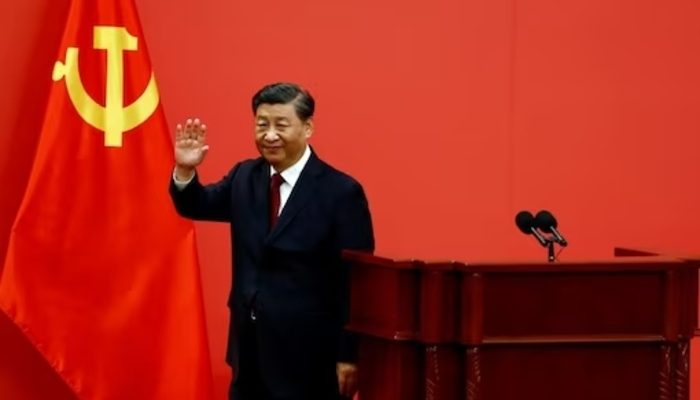
Chinese President Xi Jinping was re-elected for a third term in power on Sunday, becoming the first leader of the ruling Communist Party to do so since party founder Mao Zedong. Xi Jinping was also re-elected as the Communist Party’s General Secretary for a historic third five-year term.
On Saturday, China’s Communist Party Congress concluded, with Xi Jinping solidifying his iron hold on the party. Xi, 69, has emerged as the party’s most powerful leader since Mao Zedong.
Despite reaching the formal retirement age of 68 and completing a 10-year term, he was elected to the powerful Central Committee a day earlier by the party Congress.
The “election” of Xi Jinping to a third term in power officially ends the three-decade tradition followed by his predecessors, with the exception of Mao, of retiring after a 10-year tenure. Xi was elected in 2012 and will finish his 10-year term this year.
A seven-member Standing Committee, which was elected by the Political Bureau, elected Xi for a third, five-year term as General Secretary. The Central Committee members also chose a 25-member political bureau, which chooses the members of the Standing Committee to rule the country.
President Xi also promoted several of his loyalists to the seven-member Politburo Standing Committee, the apex of power in the ruling Communist Party. State media reported from Beijing’s Great Hall of the People that Shanghai Party chairman Li Qiang, close aide Ding Xuexiang, and Guangdong Party chief Li Xi were among the new lineup. Notably, no women have been inducted into the lineup.
China: Xi loyalists promoted in CCP Politburo Standing Committee, no woman in top party lineup
According to observers, Xi’s emergence as China’s President, party leader, and military chief, with the prospect of becoming the leader for life in the footsteps of Mao, whose extremist ideological campaigns like the Cultural Revolution resulted in the extermination of millions, is widely expected to be viewed with unease and concern as the one-party state has now become a one-leader state.
On Saturday, former President Hu Jintao was physically dragged out of the party congress in the presence of the media. Hu Jintao, 80, was placed to the left of his successor, Chinese President Xi Jinping. Two stewards escorted him off the stage of Beijing’s largest auditorium, the Great Hall of the People.
A steward was seen repeatedly attempting to take Hu from his seat in video footage from the event. Hu Jintao then placed his hand on a piece of paper in Xi’s folder, but Xi moved quickly to lay his palm there. The episode is ironic given that Hu, 79, peacefully passed over control to Xi ten years ago in 2012.
Early drama: Hu Jintao seen being led out soon after reporters are led into the main hall pic.twitter.com/pRffGZF60I
The Congress also established a new anti-corruption department of the party called the Central Commission for Discipline Inspection (CCDI), which reports directly to Xi. According to official figures, the CCDI has sentenced about five million officials, including many high army generals, over the last ten years.
Several resolutions adopted by the Congress lauded Xi and his ideals, which combined Marxism and Socialism with Chinese characteristics.
“Xi Jinping thought on Socialism with Chinese Characteristics for a New Era is the Marxism of contemporary China and the twenty-first century, embodying the best Chinese culture and ethos of our era,” the resolution stated. A resolution adopted at the Congress on an amendment to the CPC Constitution said that all party members should follow Xi’s leadership.
The Congress emphasizes that attaining the goals for the People’s Liberation Army’s centennial in 2027 and promptly lifting the people’s armed forces to world-class levels are critical challenges for constructing a modern socialist society in every way, according to the resolution.
The Congress urges the entire party, the entire military, and the Chinese people of all ethnic groups to remain tightly united around the Party Central Committee, with Comrade Xi “at its core, to remember that empty talk will do nothing for our country and that only solid work will make it flourish,” it said.
The resolution lauded efforts to contain COVID-19 while also expressing strong opposition to Taiwan’s independence. China asserted its claim on Taiwan calling it a part of its mainland.
Ahead of the 20th Congress, Beijing witnessed rare public protests with banners hung on overpasses of major thoroughfares, protesting against Xi’s unpopular zero-COVID policy and authoritarian rule.
Battery-operated loudspeakers were also hung in some places blaring anti-Xi and anti-Zero COVID slogans. Police quickly moved to remove the banners and loudspeakers. Similar reports of protests had also come from different cities in China.
This week, a rare protest in Beijing featured enormous posters on a flyover calling for boycotts and the removal of Xi Jinping, in addition, some protestors in China are sharing anti-Jinping posters using AirDrop.
Notably, The Guardian reported last week that multiple images and videos on social media showed plumes of smoke billowing over a bridge over a key street in the capital’s Haidian area.
Thousands of WeChat users hyped up anti-Xi narratives after this “bridge man” burned a tyre and draped two banners from the bridge calling for the ouster of “dictator and traitor Xi Jinping.”
China has a history of controlling not only its local media space through state-supervised content delivery but also the global media through harassment and intimidation of international correspondents operating in the country. However, it is frequently difficult for China to coerce the international media into toeing the establishment’s stance. As a result, the Chinese government uses intimidation and scare tactics to harass them.