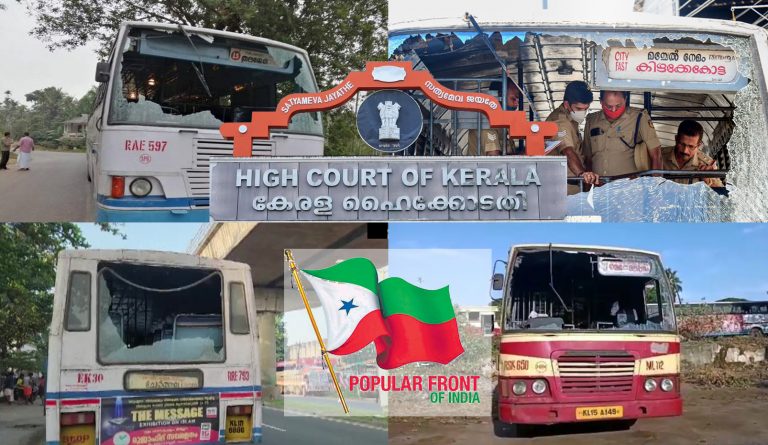
On Thursday, the Kerala High Court ordered the now banned organisation Popular Front of India (PFI) to pay Rs. 5.20 crores for the damages estimated by the State Government and the Kerala State Road Transport (KSRTC) as a result of the violent flash hartal in the state on called on September 23 by the banned organisation. The PFI has been ordered to deposit the fine within a period of two weeks with the Additional Chief Secretary, Home Department.
The directive was given by Kerala High Court during suo motu proceedings against PFI leaders for calling an illegal dawn-to-husk hartal and for the vandalism and damage done to both public and private property. The now banned group has called the bandh in protest against the arrest of its leaders during a nationwide raid on its offices in several states. PFI was banned for five years by the union govt on September 27 following the raids and arrests.
Political parties who engage in flash hartals in direct defiance of the Court’s prior direction will suffer severe repercussions, according to a division bench comprising Justices AK Jayasankaran Nambiar and Mohammed Nias CP.
“Regardless of the political parties, flash hartals in the State are not going to happen. Citizens’ daily lives cannot be harmed. The message is unmistakable. Anybody who does this will face repercussions. The Constitution allows for organizations to hold protests in support of any cause, but it forbids flash hartals. Any demonstration that causes inconvenience to the public by way of blockage of roads, traffic, etc. is not permitted,” the bench observed.
It is noteworthy that the Kerala High Court in a 2019 order had banned flash hartals in the state. The Division Bench of Chief Justice Hrishikesh Roy and Justice A K Jayasankaran Nambiar ordered that hartals can be declared only after giving prior notice of seven days and that any citizen can challenge the declaration of hartal within seven days.
Flash hartals, or strikes called without following the protocol of giving seven days’ clear public notice, would be declared illegal or unconstitutional and would have detrimental ramifications for the person(s) or party initiating the strike, the Court had stated.
On Tuesday, the Kerala State Road Transport Corporation (KSRTC) moved to the Kerala HC seeking reimbursement of Rs 5.06 crores from the Popular Front of India (PFI) for losses caused to the corporation during the strike called by the PFI. On September 13, the PFI staged statewide demonstrations against the NIA raids and damaged around 71 KSRTC buses.
Taking up the matter today, the court ordered the State Government to make PFI General Secretary Abdul Sattar an additional accused in all the cases registered in connection with the flash hartal.
Every time the word hartal is said, the meaning among the populace varies. People are living in perpetual fear. What does a common man have to do with all this? Ordinary citizen suffers, and for what? Not supporting your ideology?” the Court asks.
The court strongly condemned the act of terror that caused mayhem in the state during the PFI’s flash hartal and stated that immediate and swift action will ensure that such an act never occurs again.
The court also criticized the government for failing to enforce its clear ruling prohibiting flash hartals in the order it issued today. It asserted that if the government had acted in this way, significant damage to citizens’ daily lives and property would have been averted.
In the order, the Court directed Magistrates and Sessions courts in the State to ensure that payment of any amount quantified toward damage or destruction of property by any of the accused is insisted upon by the accused in question as a condition for the grant of bail to him when considering the applications for release on bond of those people against whom the police have registered cases in connection with the PFI’s flash hartal.
The court further clarified that the fine amount imposed on the PFI shall be purely provisional and duly accounted for and held by the state government in a separate and dedicated account for disbursal to those claimants who are identified by the Claims Commissioner to be entitled to such amounts. Additionally, the respondents will also be liable for any additional sums determined to be due to the claimants during the adjudication process before the Claims Commissioner.
While delivering a verdict in support of an unmarried woman seeking termination of her pregnancy, the Supreme Court today made significant remarks regarding marital rape. A bench led by Justice DY Chandrachud said on Thursday that for the purpose of the Medical Termination of Pregnancy Act and Rules, rape includes ‘marital rape’.
The court was delivering its verdict on a plea filed by an unmarried woman challenging a Delhi High Court judgement denying her permission to terminate her pregnancy because it was result of consensual sex. Overturning the HC order, the apex court said that all women, both married and unmarried, have the right to abortion, saying that “All women are entitled to safe and legal abortion”.
The issue that the court was deliberating was whether the exclusion of unmarried women from Rule 3B of the Medical Termination of Pregnancy Rules is valid. This specifies the categories of women who can seek termination of pregnancy. Rule 3B mentions the categories of women whose pregnancy in the duration of 20-24 weeks can be terminated. The categories include survivors of (a) rape and incest, (b) minors, (c) change of marital status during pregnancy like widowhood and divorce, (d) women with physical disabilities, mentally ill women, (e) mentally ill women, (f) foetal malformation, (g) pregnant women in humanitarian settings or disaster or emergency situations.
The Supreme Court was defining the term ‘rape’ in this context of rule 3B of the abortion law. The Court said that married women who become pregnant due to forced sex by their husbands, will also come within the ambit of “survivors of sexual assault or rape or incest” mentioned in Rule 3B(a) of the Medical Termination of Pregnancy Rules.
The para on marital rape in the judgement said, “Married women may also form the part of the class of survivors of sexual assault or rape. The ordinary meaning of the word rape is sexual intercourse with a person without consent or against their will. Regardless of whether such forced intercourse occurs in the context of matrimony, a woman may become pregnant as a result of non-consensual sexual intercourse performed upon her by her husband.”
The judgment also mentioned that violence in marriage is a reality, saying, “We would be remiss in not recognising that intimate partner violence is the reality and can take the form of rape. The misconception that strangers are exclusively or almost exclusively responsible for sex and gender based violence is a deeply regrettable one. Sex and gender based violence in all its form in the context of family has long formed a part of the lived experiences of women.”
The court said that Indian law already recognises various forms of domestic violence. “We have also briefly touched upon the Exception 2 of Section 375 of IPC. Notwithstanding Exception 2 to Section 375 of IPC, the meaning of the word “sexual assault” or “rape” in Rule 3B(a) includes the husband’s act of sexual assault or rape committed on his wife,” the bench stated.
By this, the court said that while forced sex by a husband is not defined as rape under IPC section 375, it is considered rape for the purpose of the abortion law. The bench further clarified that marital rape has been included in rape only for the purpose of defining rape under Medical Termination of Pregnancy Rules, and not for rape related laws.
“The meaning of rape must therefore be understood as including marital rape solely for the purpose of the MTP Act and any other rules and regulations framed thereunder. Any other interpretation would have the effect of compelling a woman to give birth to and raise a child with a partner who inflicts mental and physical harm upon her,” the bench clarified.
The Supreme Court also said that a woman need not prove that she was raped to seek an abortion under the law. A woman can seek to terminate her pregnancy resulting from rape without proceeding with legal procedures for the rape. For the right to abortion to be granted to a woman, the accused need not be convicted of rape charges under IPC.
Only for the purpose of the abortion act, such an act of rape need not be proved in a court or any other forum, because such a requirement will be in conflict with the MTP Act, the court said.
It may be noted that the Supreme Court is already hearing petitions relating to terming marital rape as rape. The matter went to the apex court after a two-judge bench of Delhi High Court delivered a split verdict in May this year. The apex court issued notices to in the case earlier this month.
In a major development, the Central Government on Wednesday banned the Islamist outfit Popular Front of India (PFI) and its associate organizations for 5 years. The government maintained that the organizations operated as unlawful associations under the Unlawful Activities (Prevention) Act (UAPA).
The action by the Ministry of Home Affairs came days after the NIA in its two rounds of raids arrested around 250 persons associated with the PFI and also recovered several incriminating documents from PFI hideouts settled in almost 17 Indian states. The documents included a training module to make IEDs and bombs from available domestic material and also the ‘Mission 2047’ document underlining the PFI goal in the Indian subcontinent for the years to come ahead.
According to the TOI report, the arrested PFI jihadis posed as civil beings and led a normal life, ultimately hiding their agenda to make India the Islamic Republic by 2047. They also influenced the Muslims to wield weapons against the Hindus residing in the country. They employed themselves in government jobs and services and also served as the crucial fanatic segment of the now banned organization.
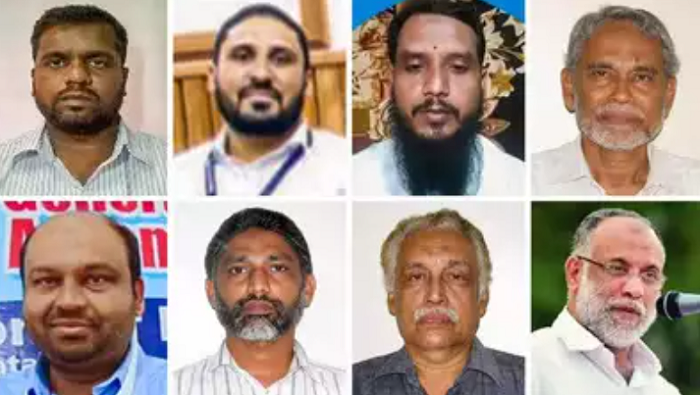
Among the 250 arrested PFI leaders are OMA Salam, E M Abdur Rahiman, V P Nazarudeen, and P Koya. These PFI jihadis were arrested from Kerala and they worked as employees at government or private institutions. Reports mention that PFI Chairman OMA Salam was a Kerala government employee who was suspended in the year 2020. Whereas the others, E M Abdur Rahiman, V P Nazarudeen, and P Koya served as retired librarians at Cochin University, clerical staff in Madhyamam daily, and a lecturer in a government college in Kozhikode respectively. P Koya had also worked as an employee at a private company in Qatar.
On the other hand, two arrested Karnataka-based PFI Islamists Abdul Wahit Sait and Anis Ahmed were techies. Sait who is one of the founding members of the PFI operated a software company dealing in accounting software in Bengaluru. Meanwhile, Ahmed worked in a private company named Ericson. He was a global technical manager there until he was suspended recently. Ahmed was also active on social media and commented on current issues on TV news channel debates.
OMA Salam who worked as an employee at the Kerala State Electricity Board was suspended in December 2020 after the state knew that he was chairman of the PFI. Reports mention that Salam is associated with PFI since 2007 and has a case registered against him. He also is associated with Rehab India Foundation which has been banned by the MHA.
E M Abdur Rahiman who worked as a retired librarian at Cochin University in Science and Technology department hails from the Ernakulam part of the state. He had joined the SIMI in the 1970s and later became its all-India President. He was the one who suggested the formation of NDF and other PFI fronts like Campus Front of India and Confederation of Human Rights Organisation. He is a director member at Students Islamic Trust, New Delhi, and also is a member of the All India Milli Council.
Further, one arrested individual named E Abubacker hails from Calicut but was Kerala state president for two years from 1982 to 1984. He has been the founder member of NDF, Rehab India Foundation, SDPI, and All India Muslim Personal Law Board. He also worked as an editor of India Next Hindi magazine and Thejas daily newspaper.
P Koya also was an active member of SIMI and also the national general secretary of now banned PFI front NCHRO. However, VP Nazarudeen who worked at Madhyamam daily was first a teacher at MES College in Aluva and Calicut Orphanage. He also contested the 2014 Lok Sabha election as an SDPI candidate from Malappuram.
Minarul Sheikh who was arrested from West Bengal was state PFI president and focused on organizational activities in Murshidabad, Malda, and Kolkata. He pursued his Ph.D. in History from AMU and operated a coaching center for students.
Law enforcement agencies have recovered hundreds of incriminating materials from the hideouts of the accused organization. Prominent amongst them include a brochure and CD related to ‘Mission 2047’. A huge amount of undocumented cash has also been recovered from the PFI leaders of Karnataka and Tamil Nadu and also document in a ‘short course on how to make IEDs using easily available materials’.
PFI has a long history of claiming victimization on behalf of Muslims in India everywhere at times. However, the violence engineered by its leaders and cadres following the arrest of its leaders exposed the organization’s violent inclinations and demonstrated to the public that the arrests were conducted in the right direction.
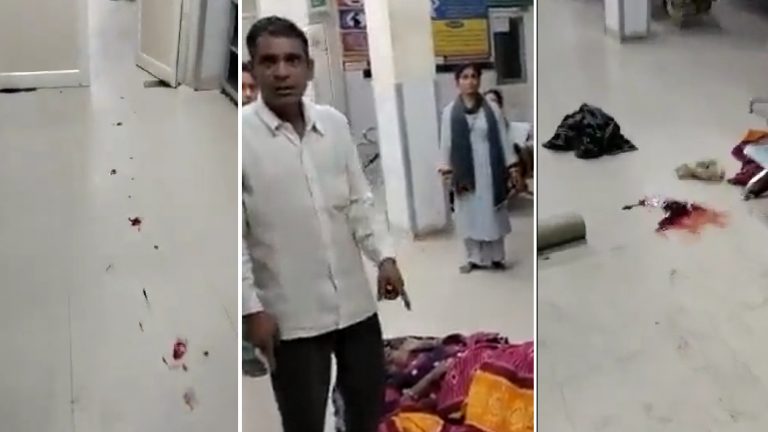
On Tuesday night, a 38-year-old pregnant lady, who was reportedly denied access to the labour room, was forced to give birth on the floor of the corridor of Pathankot Civil Hospital, Punjab. Video footage of the lady and her newborn baby girl laying on the floor has also gone viral on social media. The video was also shared by Bharatiya Janata Party (BJP) spokesperson Shehzad Poonawalla.
Sach me Bhagwant Mann ji
“sada kaam bolta hai”
Twada karnama bol raha hai!
In Delhi it is no better! Ho-halla on Mohalla Clinics but where are the world class hospitals?
The woman’s husband can also be heard in the video alleging that the attendants threw them out of the labour room. Presumably, other patients in the hospital recorded the video. The person who was shooting the video can also be heard alleging that the senior medical officer (SMO) at the hospital refused to admit the pregnant patient.
The incident happened on Tuesday, September 27, at around 11:30 PM when Jangi Lal (51), a labourer from Pipli Mohalla in Pathankot, used the 108-Ambulance service to bring her pregnant wife to the hospital.
“My wife was suffering from labour pain and I took her there for the delivery. Instead of admitting my wife, the hospital staff behaved rudely and closed the labour room’s doors. They asked me to take my wife to Amritsar. The driver of the ambulance also requested the staff to admit my wife, but to no avail,” Jangi Lal said while talking to Hindustan Times.
“It was not possible for me to take my wife to Amritsar during the night. I was left with no other option, but to depend on the mercy of the hospital staff. My wife was crying in pain while lying on the floor, but no staff member came to provide us even a bed,” he further said.
The victim’s husband appealed that the hospital workers and administration be held accountable for their heinous behaviour. “I may have lost my wife and the baby’s life due to the inhumane behaviour of the medical staff,” he stated. He further said that staff workers threatened to call the police if they did not leave the facility.
Dr Sunil Chand, the hospital’s senior medical officer (SMO), rejected the charges about the staff’s poor attitude but confirmed that the woman had given birth on the floor. “The woman was nine months pregnant, but she had never had her medical tests and ultrasound,” he explained.
“As soon as they came to the hospital, we asked them to conduct medical tests required for delivery, from a lab which is in tie-up with us for giving free service, but the woman’s husband refused this. He was in an inebriated state and even refused to let his wife be admitted to the labour room,” he further said. Dr Sunil stated that they were attempting to find the victim for more healthcare coverage, but the woman’s husband was not answering their calls.
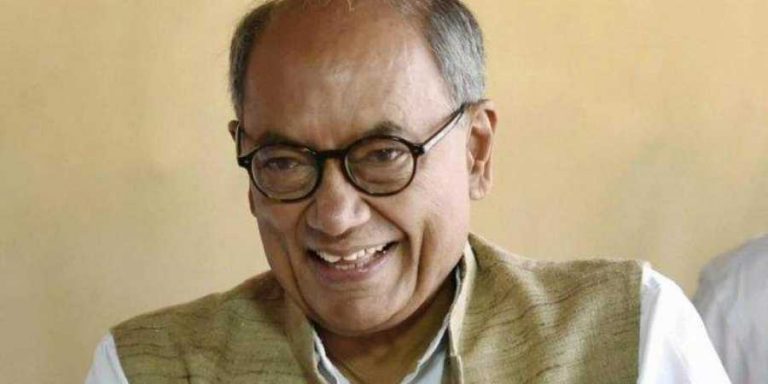
The high-voltage drama surrounding the Congress party’s presidential chair is clearly heating up. Until today, Rajasthan Chief Minister and Congress senior leader Ashok Gehlot and the party’s loyalist Shahi Tharoor were being regarded as the race’s frontrunners. Now, if reports are to be believed, Congress loyalist Digvijaya Singh has injected a new twist into the battle.
As per reports, the veteran Congress leader Digvijaya Singh has confirmed that he was at the AICC headquarters in Delhi on Thursday, September 29 to collect the nomination papers. Speaking to reporters at the AICC headquarters in Delhi, he added that he will likely file the nomination on Friday.
Congress President poll: Digvijaya Singh to contest, file nomination tomorrow
“Today I have come here to collect the nomination form and will possibly file it tomorrow,” Singh said. Singh further maintained that the choice to run for the Congress President was his own and that he had no discussions with the Gandhi family about it.
Until now, Ashok Gehlot and Shashi Tharoor were being regarded as the two prominent prospects for the position. According to PTI, senior party leaders Mallikarjun Kharge, Kamal Nath, Sushilkumar Shinde, Mukul Wasnik, and Kumari Selja are all being considered for the position.
Now, the presence of Digvijaya Singh has heightened the stakes in the race, since G23 leader Shashi Tharoor is expected to register his nomination on Friday as well.
The news of Digvijaya Singh entering the fray started doing the rounds immediately after Rajasthan Chief Minister Ashok Gehlot announced Thursday that he will not contest the Congress presidential polls.
Will not contest Congress president polls, says Ashok Gehlot
“I met Rahul Gandhi in Kochi & requested him to fight in the polls (for Congress President). When he didn’t accept, I said I’ll contest but now with that incident (Rajasthan Political Crisis), I’ve decided not to contest the elections,” Gehlot was quoted by ANI as saying.
I met Rahul Gandhi in Kochi & requested him to fight in the polls (for Congress President). When he didn’t accept, I said I’ll contest but now with that incident (#RajasthanPoliticalCrisis), I’ve decided not to contest the elections: Rajasthan CM Ashok Gehlot, in Delhi pic.twitter.com/2VnqTcQUAu
I won’t contest these elections in this atmosphere, with moral responsibility, said Rajasthan CM Ashok Gehlot. On being asked if he will remain Rajasthan CM, Gehlot said, “I won’t decide that, Congress chief Sonia Gandhi will decide that.”
It may be recalled that last week, the Congress party has declared that no one from the Gandhi family will run for the post of the President of the age-old party.
On Wednesday, September 21, CM Gehlot expressed his intention to continue as the CM of Rajasthan even if he is elected as the chief of the Congress party. However, he gave up on his plan as Rahul Gandhi had made it clear that one person will hold a single post in the party. The confirmation of Gehlot had contributed to the bustle around the Rajasthan chief minister’s office, which the senior politician would have had to leave in accordance with the party’s Chintan Shivir reforms, which called for “one party, one post.”
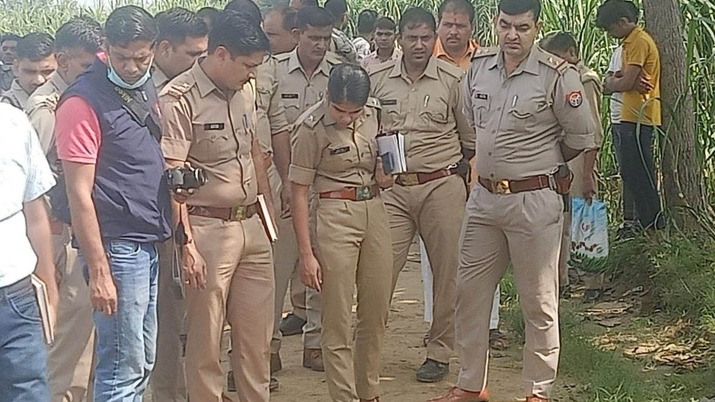
A shocking case of Taliban-style beheading in Parikshitgarh in Uttar Pradesh’s Meerut district has come to the fore in which 20-year-old Deepak Tyagi was murdered. Deepak Tyagi’s father has filed a complaint against unknown attackers. So far the police have not been able to find the head despite many efforts. Based on the nature of the murder, the police suspect that the perpetrators are from another village. The police started interrogation by taking six people of Ahmedpur Badhala into custody.
The outraged villagers protested against the murder after the discovery of the dead body. SSP Rohit Singh Sajwan, SP Dehat Keshav Kumar, SP Crime Anit Kumar, and CO Amit Rai arrived at the scene and spoke with the residents. Even Dinesh Khatik, Jal Shakti Minister of State, reached out to the people and consoled them. The dog squad was also pressed into service, but the head was not found.
Locals had blocked the road in protest and it was only after minister Dinesh Khatik assured strict action that the road was cleared.
According to a Dainik Jagran report, Deepak Tyagi had many acquaintances from the Muslim community in the nearby Ahmedpur Badala village. Following the discovery of the dead body, 6 people belonging to the Muslim community were taken into custody by the police.
As per a report, Deepak Tyagi had an affair with a daughter of a hairdresser from another community. Police have taken the girl’s relatives into custody and are questioning them to follow this lead. Deepak’s family members had opposed this relation but to no avail.
Deepak Tyagi was the youngest of Dhirendra aka Bhagatji’s four daughters and two sons. He and a family servant had gone to their fields to get fodder. Although he returned after a while, but went missing again, as per the reports.
The family of Deepak Tyagi has refused to conduct the last rites until the head is found. SSP Rohit Sajwan said that the police are operating on four fronts. On each line, different teams have been deployed. The informer system has been used to deploy all police teams. Following the family’s refusal to carry out the last rites, SSP Rohit Sajwan and SP Dehat Keshav Kumar set up camp at the police station. The Crime Branch and the local police are working together to solve the murder.
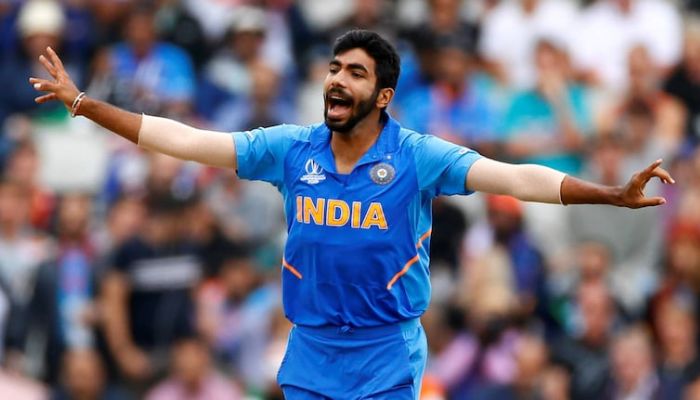
Jasprit Bumrah, Team India’s star bowler, has been ruled out of the T20 World Cup 2022 owing to a stress fracture. This can be devastating for the Indian cricket team as Jasprit Bumrah is the leading bowler in India’s pace attack.
A BCCI official told PTI that Bumrah has a stress fracture and he could be out of the cricket field for months. “Bumrah is not going to play the World T20 for sure. He has a serious back condition. It’s a stress fracture and he could be out for a period of six months,” a senior BCCI official told the news agency.
BCCI had informed about Jasprit Bumrah’s injury yesterday, saying that he was not playing the first T20 match against visiting South African team. While there won’t be a need for surgery, Bumrah’s recovery from the wound is anticipated to take 4-6 months.
? UPDATE ?
Jasprit Bumrah complained of back pain during India’s practice session on Tuesday. The BCCI Medical Team assessed him. He is ruled out of the first #INDvSA T20I.#TeamIndia
On 28th September 2022, BCCI tweeted, “Jasprit Bumrah complained of back pain in during India’s practice session on Tuesday. The BCCI Medical Team assessed him. He is ruled out of the first India versus South Africa T20I.”
Due to the injury, Jasprit Bumrah has been eliminated from the entire series, where India and South Africa will play 3 T20 and 3 one day matches. According to reports, he did not go with the squad to Thiruvananthapuram for the opening T20I between South Africa and India.
This is the second consecutive ICC tournament Jasprit Bumrah is missing because of an injury. Due to a back ailment, Bumrah already missed the whole Asia Cup 2022. He recuperated for almost a month at the National Cricket Academy in Bengaluru. After that, he was selected to participate in the T20 series against Australia. He participated in the final two games but missed the first T20I at Mohali.
According to a report by The Indian Express, a BCCI official said, “We have been told that his injury is not good and at the moment and it looks like he won’t be travelling to Australia with the Indian team. The medical team will submit a detailed report soon.”
The senior national selection committee will have to choose between Mohammad Shami or Deepak Chahar, added as standby players for the T20 World Cup to be played in Australia next month as Jasprit Bumrah is unavailable.
The T20 World cup starts on 16th October, but India’s first match is scheduled on October 23rd, against Pakistan in Melbourne.
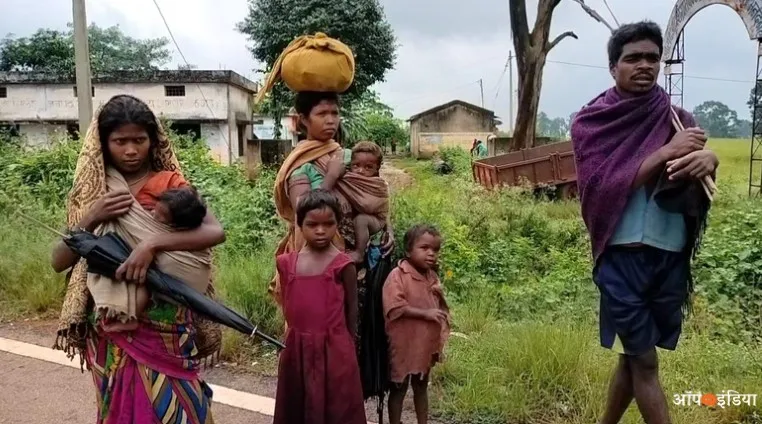
Pahadi Korba, belonging to the Scheduled Tribes, are referred to as the President of India’s ‘adopted children’. Agriculture and animal husbandry are their primary sources of income. In Chhattisgarh, this tribal community committed to Sanatan Dharma struggles to save its homeland.
“Korba and Nagesia are tribes with little to no conversion,” manager Ram Bhagat told OpIndia. “The Churches exert pressure on them in a variety of ways, but they are adamant that they will survive by eating roots, fruits, and flowers but would not convert. However, their properties are now being taken over as part of a conspiracy,” said Bhagat, who now serves as the vice-president of the Jashpur District BJP Tribal Morcha (BJP ST Morcha). He is also the District Vice President of the Vanvasi Kalyan Ashram’s Sarhul Puja Committee.
Pahadi Korba.
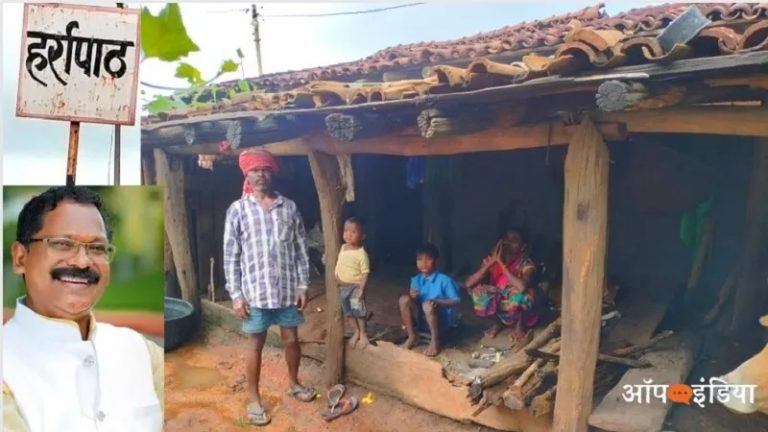
To understand the threat Bhagat is referring to, we travelled to the village of Harrapath. This village is located in the Manora Block of Chhattisgarh’s Jashpur District, which borders Jharkhand. Pahari Korba dwells in this settlement beside the road. Except for a few Yadav houses, the majority of the population is tribal.
In a conversation with OpIndia, Nandkumar Yadav of Harrapath, who claims to be affiliated with the BJP, stated, “The people of the tribal class who dwell in this village are the adherents of Hindu Sanatan culture. However, with the arrival of the Congress government, Christian missionaries have been attempting to convert people here as well. They are deceiving people. They were also seizing the land of Pahadi Korba in my village to build a cathedral.”
Pahadi Korba’s 24.88 acres of property in Harrapath was illegally registered in the name of Ashish Bhagat, son of Amarjeet Bhagat, the state’s Food and Culture Minister. Bhagat was also the minister in charge of Jashpur at the time of the scam.
Lal Sai Ram is one of those whose land was lost as a result of this deception. “That entire land (approximately 25 acres) belongs to our ancestors,” he told OpIndia. “We have several family members involved in this. We were transported to Jashpur under the guise of obtaining a government grant. They received our approval and signed some documents there. We just found out about the land transaction when the patwari arrived to measure it,” he further said.
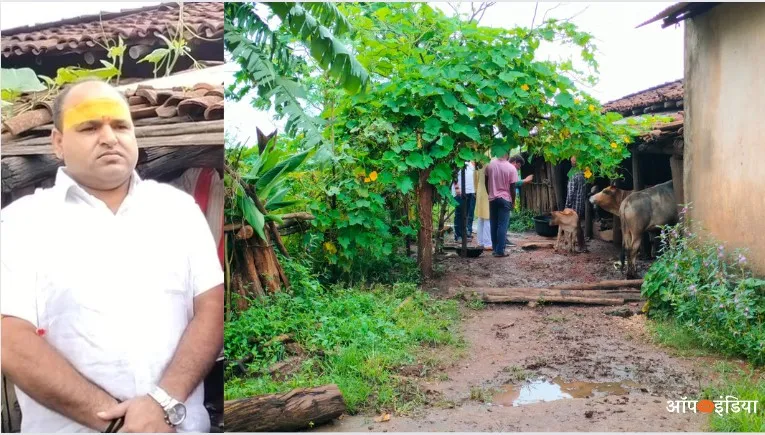
Pahadi Korba Lal Sai’s house and BJYM leader Nitin Rai
When they learned about the land transaction through the patwari, the family proceeded to the home of local BJP politician Krishna Kumar Rai with a cheque. Rai held the position of minister in the preceding Raman Singh cabinet. “We have an attachment to these villages since our forefathers,” Rai’s nephew and BJYM’s Surguja division in-charge Nitin Rai told OpIndia.
“These individuals presented us with cheques. When we investigated, we discovered that Amarjit Bhagat, the minister in charge here, had purchased land in the name of his son by duping the tribals. In this scenario, the brokers informed them that a mighty minister has taken their property and nobody can take the land back. We were ignored by the district administration. We then took these individuals to Governor Anusuiya Uikey. As the conflict escalated, Amarjit Bhagat was forced to return the land,” Rai further added.
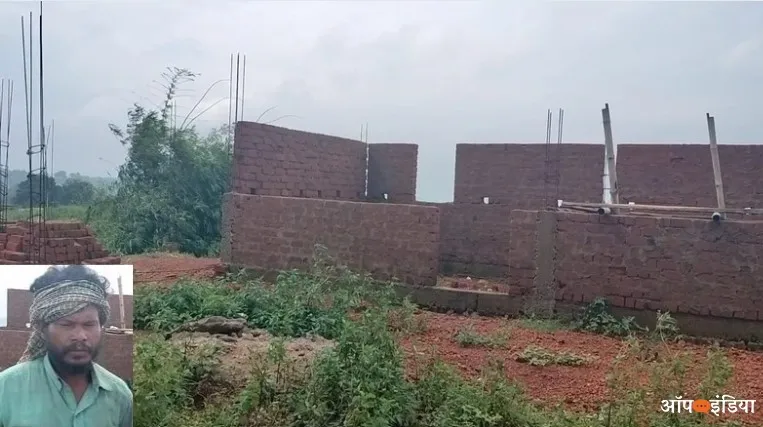
According to Nitin Rai, Christian missionaries are also occupying Pahadi Korba lands. Bhuneshwar Ram is the Korba of this village (Harrapath), and there was an effort to seize his land as well. This case is also ongoing. Bhuneshwar showed OpIndia his acreage next to the road, which is still under construction. He informed us that Ghuda Ekka and Daya Kujur were occupying their property. When he chased them away, the work came to a halt. “These folks have become Christians. They wanted to construct a cathedral here. When BJP leader Prabal Pratap Singh Judeo interfered in this matter, the administration took action in the matter”, he said.
Construction on the plot of Bhuneshwar Ram.
These are the Pahadi Korba-related issues that have come to light, whether in the case of Lal Sai or Bhuneshwar Ram. Due to political pressure, the tribal class’s land was eventually spared. Hundreds of similar examples of fraudulent land registration of Scheduled Tribes have been documented. “The brokers are keeping a careful check on the lands here,” Nitin Rai told OpIndia. Bauxite is the explanation behind this. Thousands of acres of land in Pandara Pat’s Garden region have been fraudulently registered. If it is checked, all of the property of Pahadi Korba can be restored.
The questions don’t end with Amarjit Bhagat handing over the land. His misdeeds are not wiped away by his removal as the minister in charge of Jashpur. The regulation states that the judge must provide this information prior to purchasing the property. Was this done by his son Ashish Bhagat? In this case, people who acted as brokers and identified as Congress employees, was any action taken against them? Was Amarjit Bhagat’s friendship with them investigated? When it came to surrendering the land, Amarjit Bhagat maintained that the regulations were followed in this transaction.
The Pahadi Korba, on the other hand, is a protected tribe. Even other tribes cannot purchase their land. So, how did Amarjeet Bhagat’s son, from the Oraon tribe, manage to do this? Obviously, there was administrative complicity in this deal as well. However, after a year, no action has been taken against any officer in this incident. After all, what is the ‘qualification’ that keeps Amarjit Bhagat in Bhupesh Baghel’s cabinet even today? The answers to these questions are yet to be uncovered.
Rajasthan Police’s Special Investigation Team (SIT) has arrested six people, including a woman, in a minor Dalit gang rape case. 18-year-old Salman of Kothdi Police station area, 19-year-old Sameer of Gumanpura Police Station area, 27-year-old Shahrukh Khan of Indra Nagar DCM Udyog Nagar Police Station Area, 23-year-old Sahil of Kothdi Gumanpura Police Station area, 18-year-old Arbaaz of Bombay Yojna Udyog Nagar Police Station Area, 25-year-old Sangeeta of Raipur Yojna Police Station area have been arrested in the matter. As per reports, the victim is from the Ramganj Mandi Police Station area of Kota. She had gone missing from her house on September 14 and was found on September 18.
Furthermore, Assistant Sub-Inspector Raunak Ali of Kota Police, who was investigating the matter, has been accused of molesting the victim. He has been suspended, and an investigation into the matter is underway.
The victim is a 14-year-old studying in class 10. On September 14, she left her house and reached Kota via train. She met a friend who was a senior in her school. She forcibly kept her in Kota till September 18, during which she was allegedly raped several times by multiple accused. After her disappearance, her family members filed a complaint at the Police station. On September 18, the accused dropped the victim outside a park and fled the scene.
The girl was handed over to the police. ASI Raunak Ali was investigating the matter of who took the girl to the ‘Child Welfare Committee’ in Kota on September 19 after taking her to the Police station. On September 23, the victim was handed over to the family members after counselling. When Hindu organisations came to know about the matter, Bajrang Dal demanded strict action against the culprits. The victim’s medical was done, and her statement under Section 164 was recorded before the magistrate.
ASI was accused of molesting the girl
The family members of the victim accused the police of negligence. They alleged that the police were trying to suppress the matter and save the accused. Reports suggest that ASI Raunak Ali was also accused of molesting the girl at the police station. ASI Ali was also accused of using abusive language with the victim and her family. Following the allegations, he was suspended by senior officials.
उक्त घटना के संबंध में मुक़दमा दर्ज कर लिया गया है मामले की जाँच सहायक पुलिस अधीक्षक रामगंजमंडी को सौंपी गई है अग्रिम अनुसंधान जारी है
On September 25, BJP MLA and other leaders filed a complaint to the IG in the matter, following which SIT was formed for fair investigation by SP Kota Rural Kavendra Singh under the supervision of ASP Saurabh Tiwari. SIT raided several locations linked to the accused, who were identified with the help of CCTV footage.
The Enforcement Directorate has filed a charge sheet before a special court in Mumbai in which it confirmed that no evidence was found against Republic Media Network and Arnab Goswami in the fake TRP case. On Wednesday, Judge MG Deshpande of the special Prevention of Money Laundering Act (PMLA) court took cognizance of the charge sheet.
The charge sheet that has been filed by the ED categorically said that the investigation by the Mumbai Police and the charge sheet filed thereof was at “variance” with the findings of the ED. According to the charge sheet, the panel households denied taking money to watch Republic TV or Republic Bharat. The charge sheet said that the regional managers who admitted to paying household panels to watch particular television channels denied doing the same for Republic TV. There was no indication of Republic TV or Republic Bharat engaging in these practices, “either by a statement or by digital data evidence,” it noted.
The charge sheet by ED also elaborated how the Mumbai Police, especially Sachin Vaze had accepted bribes during the investigation of the TRP case. It details how BARC had paid Rs 25 lakhs as a bribe to Sachin Vaze to spare them the harassment during the investigation. “Thus, it appears that illegal gratifications have been received by investigator-A of the Mumbai Police. As the matter was of serious nature, the same was referred to CBI on 01.07.2021. The outcome of CBI investigation on the above-said input is awaited for further action at this end”, the charge sheet says.
While Republic TV has been given a clean chit by the Enforcement Directorate, the charge sheet also details which channels could have been manipulating TRPs and other channels that are under investigation for manipulation.
As reported earlier by OpIndia, The raw data of the panels where the alleged manipulation in favour of Republic TV took place were sought and analysed by the ED. The ED then places a table where it is evident that these households, that Mumbai Police said were paid to watch Republic, were watching other channels and not Arnab Goswami. The channels that were being watched by these households were Box Cinema, Fakt Marathi, Mahamovie, Aaj Tak, India Today and News Nation. Apart from these channels, another name that comes up in the ED charge sheet is that of TimesNow, saying that this channel is now under investigation.
What the ED charge sheet says about India Today and TRP manipulation
It is pertinent to note here that the initial complaint by Hansa Research had named India Today, however, the Mumbai Police had held a press conference, falsely blaming Republic TV for TRP manipulation. During the investigation by the ED, data of households were analysed for the period between November 2019 to June 2020. This was done to analyse the basis of the data provided by BARC to ED. It is in this investigation that ED said no evidence was found against Republic TV and Arnab Goswami. The same portion of the ED, however, says the following about India Today:
“During the course of the investigation, ED has come across certain leads indicating that certain Households were watching News Nation and India Today Channels in lieu of receiving cash amounts from RMS. Further investigation in this regard is under progress”, cites the charge sheet.
During the PMLA investigation by the ED, Nitin Deokar, the Deputy General Manager of Hansa Research was spoken to. Deokar revealed that “Vishal Bhandari admitted that he has been approached telephonically by a person named Shri Vinay to convince 05 Panel Homes in Mumbai to watch India Today Channel daily for two hours and for the said task Shri Vishal Bhandari was paid Rs. 5000 as a commission and Rs. 200 per month were distributed to each Panel Household; that as per Shri Vishal Bhandari’s confession before BARC team, he has done this work of paying panel Households for watching India Today channel for the period from November 2019 till May 2020; that Shri Vishal Bhandari also confessed distributing the money to certain other Panel Households; that Shri Vishal Bhandari also provided the details of Panel household where the money was distributed”. Vishal Bhandari in this case is an employee of Hansa Research.
The charge sheet further says, “Statement of Shri Dharamveer Mahecha, Head-Vigilance and Investigations of M/s Broadcast Audience Research Council: On being asked about his directions to Shri Abhijeet Mehendale for conducting investigation of Household Panel of Shri Ved Bhandari, he stated that on 25.02.2020, the Market Analytics Team of BARC informed the Vigilance Team about the abnormal viewership growth during Middle of January, 2020 to Middle of February, 2020 of India Today in Mumbai; that the information was received by Shri Arijeet Banerjee, Manager of Market Analytics Team of BARC, who looks after the Viewership Trend of English News genre; that the BARC vigilance undertook field investigation for the same; that as per process, the channel was again re-investigated after 13 weeks and therefore, top 25 household panel were selected wherein the higher viewership with respect of India Today Channel was observed and the above mentioned panel homes information was provided to Shri Abhijeet Mehendale for conducting panel home investigation; that during the course of above investigation, Shri Abhijit Mehendale found that one of the panel homes had an additional meter lying in the house; the house belongs to Mr. Vishal Bhandari, who was working as Relationship Manager with Hansa and that Shri Vishal Bhandari was questioned by Mr. Abhishek Sarkar from M/s Hansa Research Pvt ltd and Mr. Abhijit Mehendale, AVP BARC India, about the presence of another meter in his house. Shri Vishal Bhandari stated that he had been approached by an unknown person and paid money to induce panel homes to watch India Today channel“.
What the ED charge sheet said about TimesNow and TRP manipulation
A surprising channel name that has emerged in the ED charge sheet is that of TimesNow. The PMLA investigation intothe forensic report that was made on the instruction of BARC has revealed some troubling details. ED in its conclusions about the forensic report, that had apparently implicated Republic TV, says, “From the above discussion and table, it becomes apparent that the allegations made in the report are superficial and based on the analysis of limited aspects. Various other aspects such as the response of the Key Management Persons, video recording regarding allurement to three Households & show cause to Times Now, software developed by BARC to counter the TRP due to Landing Page, Vigilance Complaints, impact from surveying companies such as M/s Chrome were not taken into account while preparing the report”.
The charge sheet says there are two video recordings of two households that point towards the fact that TimesNow had paid them to watch their channel. “A Show Cause was also issued to Times Now in this regard. This indicates certain irregularities vis a vis Times Now, which needs to be properly investigated”, it said.
“From the plain reading of these showcase notices and replies therein, it is apparent that there were three video clips of panel households wherein the panel households were supposedly indicating malpractices in viewing Times Now. There was further raw data analysis which showed an abnormal increasing average time spend watching Times Now vis-a-vis other English News Channels. The time period of this alleged maleficence on part of Times Now coincides with the period taken in the BARC audit report. In this regard, it may also be added here that viewership of English News Channel is very limited and even few compromised Households can increase TRP manifolds”, it says.
Further, the charge sheet says, “Further, BARC has also reported that they had received several complaints regarding certain Households that they are being paid money for watching Times Now channel and it is learnt that BARC vigilance team recorded videos of these Households stating that they are being paid for watching Times Now Channel. Further, BARC was requested to provide the said video through mails, however, the same has not been provided yet. Further investigation in this regard is under progress”.
Interestingly, the charge sheet alludes to the statement issued to ED by Dharamveer Mahecha (Retired Lt. Col.), Head-Vigilance and Investigations of BARC. On being asked about the investigation, he said that there were vigilance inputs regarding TimesNow manipulating TRPs and thus, an investigation was carried out. The field investigation confirmed that TimesNow had paid certain households to watch their channel.
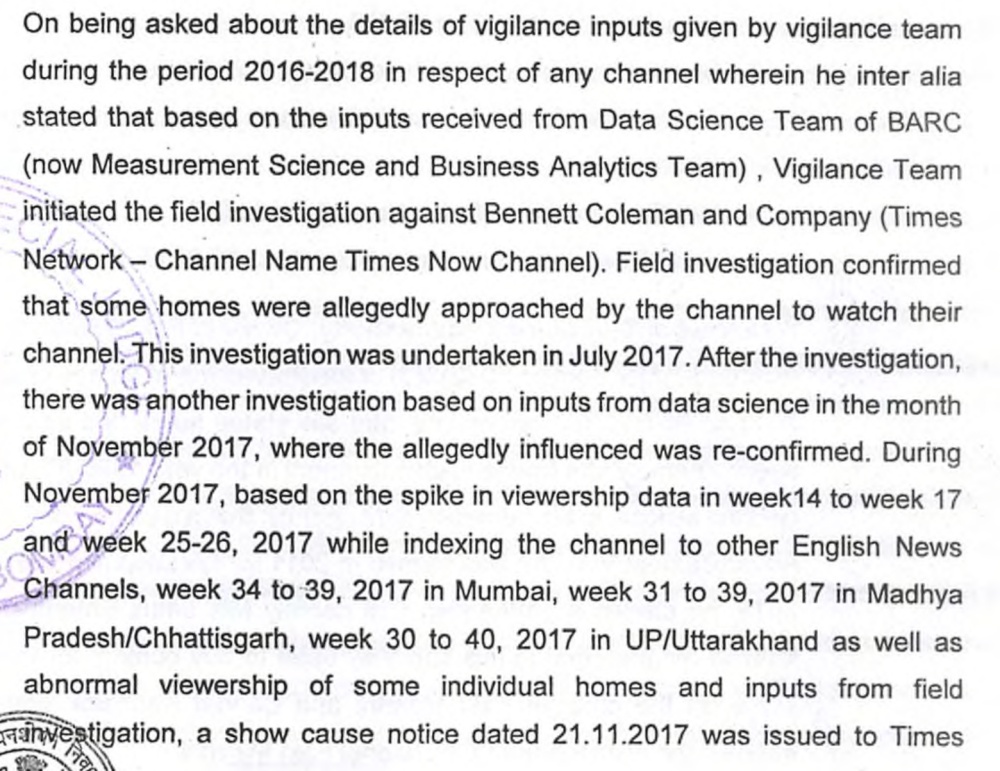
ED charge sheet
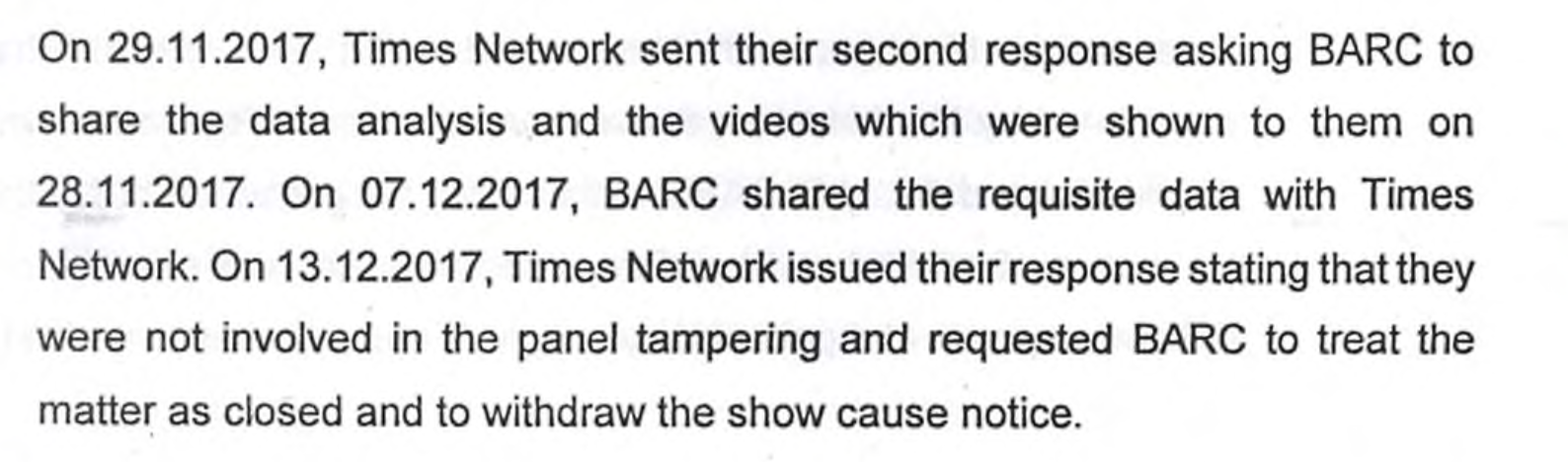
The charge sheet then says, “On 28.11.2017, representatives from the channel visited BARC office, where they were shown the Times Now data Analysis (raw data) reflecting a spike in the viewership in week 15 to week 16 and week 25-26, 2017 while indexing the channel to other English News Channels, Week 34 to 39, 2017 in Mumbai, week 31 to 39, 2017 in Madhya Pradesh/Chhattisgarh, week 30 to 40, 2017 in UP/Uttarakhand. The channel representatives were also shown videos of three-panel homes, where the household alleged that certain individuals approached them and asked them to watch Times Now. He further stated that Shri Romil Ramgarhia, then COO of BARC was aware of the above vigilance proceedings on Times Now”.
ED chargesheet
In November 2017, the charge sheet says that Times Network sent their second response to these charges after being shown the videos of their manipulation. In December, they sent another response saying that they were not involved in the manipulation of TRP. Interestingly, there is no further information available on this. It is clear that BARC had evidence of TRP manipulation, but no information is available as to what steps were taken by BARC after Times Now said they were not involved in manipulation, despite being faced with video and data evidence.
Interestingly, when BARC got ACPCL to conduct a forensic audit, the ACPCL ex-founder and Managing Director told ED that they were not given the information regarding the vigilance inputs regarding TimesNow’s manipulation of data or the video evidence that BARC had in its possession. “On being shown the inputs/documents relied upon in vigilance proceedings conducted against Times Now during 2017 and asked whether the said inputs related to vigilance proceeding was shared with him during the forensic audit. he stated that he was not shared with any specific inputs to vigilance proceedings against Times Now for the audit period”, the charge sheet says.
It is to be noted that ED has asked BARC to produce the video evidence in its possession against TimesNow, however, the same has not been furnished yet. The ED says that investigation in this matter is on, therefore proving that TimesNow is now under ED investigation as far as the TRP case is concerned.
Sachin Vaze and Param Bir Singh had revealed that Anil Deshmukh wanted Arnab Goswami falsely implicated and arrested in the TRP case
While the ED has given a clean chit to Arnab Goswami, it is pertinent to remember why this saga had erupted. In September 2021, Sachin Vaze, the Maharashtra police officer currently under arrest had told the Enforcement Directorate that the former Maharashtra Home Minister and NCP leader Anil Deshmukh had wanted Republic TV Editor-in-Chief Arnab Goswami to be arrested in the TRP rigging case.
The tainted cop had revealed that Anil Deshmukh, NCP leader and former Maharashtra Home Minister, had been personally involved in the attempt to get Arnab Goswami arrested, apart from demanding bribes and extortions worth crores from business owners.
Sachin Vaze had submitted before the ED that after he was reinstated into the force by Mumbai Police Commissioner Param Bir Singh after paying Rs 2 crores, Anil Deshmukh used to personally call him at his office or home to brief him on various cases. These included the TRP rigging case, Arnab Goswami’s arrest in the abetment to suicide case regarding the death of architect Anvay Naik, Dilip Chhabria’s case, and the social media fake follower case.
“In the TRP case Anil Deshmukh wanted to arrest Arnab Goswami. In the Dilip Chhabria Case, Anil Deshmukh wanted me to get some kind of settlement with his partner of approx. Rs.150 crores. In Social Media Fake follower case he wanted to have all-out action against the culprits.” Vaze revealed this in his statement to the ED.
It is also pertinent to note that recently, the tainted ex-Police Commissioner of Mumbai Param Bir Singh, facing a probe by central agencies in the Antilia bomb scare and Mansukh Hiren murder case, confirmed that the TRP case against Republic Media Network was a hoax and part of a planned conspiracy against Journalist Arnab Goswami. During an interrogation by the Enforcement Directorate (ED), Singh also alleged that ex-Police Officer Sachin Vaze was taking instructions from the then Home Minister Anil Deshmukh in the TRP case along with other cases.