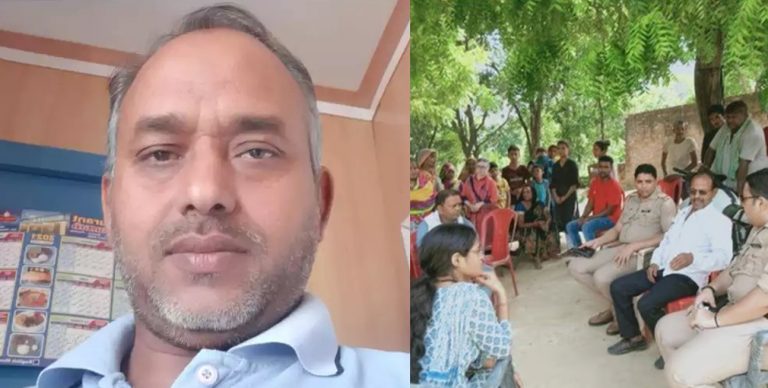
Jang Bahadur, a driver from the Amethi district in Uttar Pradesh, who had been employed in Riyadh since 2017, was reportedly murdered by a Pakistani colleague over a work-related issue in Saudi Arabia. Following the murder, a young man staying with him shared this news with his family members.
The 43-year-old Jang Bahadur’s elderly father has written to Union Minister Smriti Irani, seeking that his son’s remains are recovered and the incident is probed. Vinod Yadav, Jang Bahadur’s younger brother, lives and works in Kuwait. On the night of July 6, Arvind, an Indian who lived with Jang Bahadur, contacted Vinod and informed him of Jang Bahadur’s death.
Arvind informed Vinod that Jang Bahadur was murdered by a Pakistani man who worked as a driver along with him. Vinod immediately informed his family members about his brother’s murder. After learning of Jang Bahadur’s murder, there spread despair in the family. Jang Bahadur’s father, Rajnarayan, wrote to Smriti Irani on Friday, detailing the situation and demanding that his son’s remains be returned.
Jang Bahadur, who left for Saudi Arabia on October 19, 2017, hoped to return home in 2020. However, because of the outbreak of Covid, he canceled his plans to return. Jang Bahadur discussed returning home on Janmashtami with his father Raj Narayan in the morning and his son Saurabh in the afternoon on July 6.
As soon as the knowledge about the incident became public, SHO Arun Kumar Dwivedi, together with SDM Savita Yadav and CO Arpit Kapoor, went to the victim’s residence and gathered information about the incident whilst also counseling family members.
Jang Bahadur’s family consists of his elderly father Raj Narayan and mother Ramavati, his wife Manju Devi, his 19-year-old son Saurabh who is studying for his graduation, his 17-year-old daughter Anjali who is studying for her intermediate, and his 12-year-old son Gaurav who is studying in class 7. The family was stricken with grief as soon as they learned of Jang Bahadur’s death.
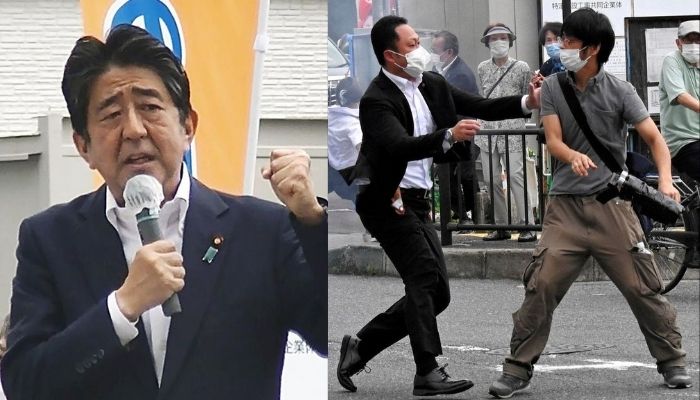
Hours after former Japanese Prime Minister Shinzo Abe was assassinated, the Opposition parties in India, especially the Congress, began casting aspersions on the newly launched Agnipath scheme using the tragic incident.
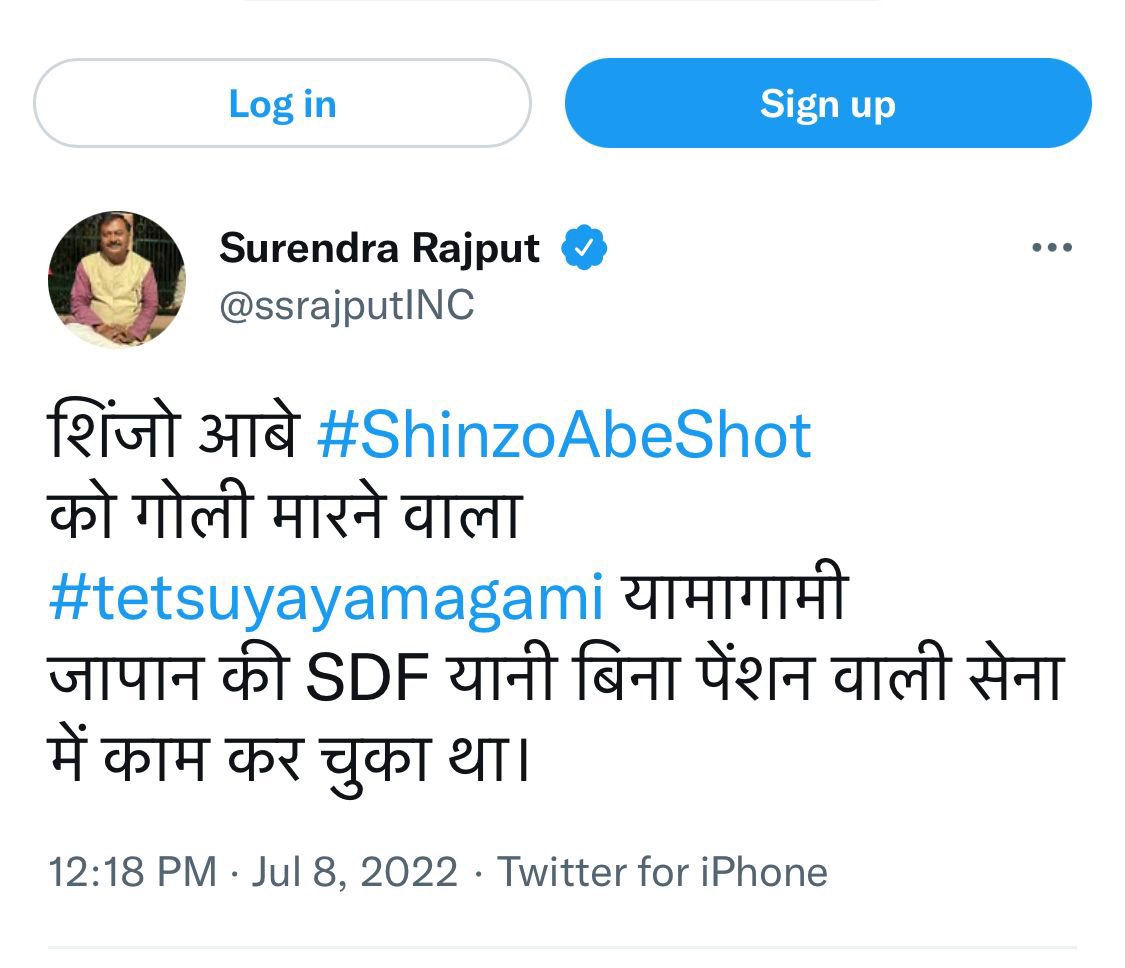
National Media Panelist of the Congress Party, Surendra Rajput, claimed the murder of Shinzo Abe was committed by a former member of the Japanese Self Defence Forces (SDF), and compared the SDF with the Agnipath scheme. He claimed that the SDF does not have a pension, thereby insinuating that those soldiers enrolled under the Agnipath scheme will be same as the soldiers working in the SDF.
Screengrab of the tweet by Surendra Rajput
Similar claims were made by the ruling Trinamool Congress (TMC) in West Bengal through its mouthpiece ‘Jaago Bangla’ (Wake up Bengal). The newspaper carried an article titled, ‘Shinzo er khune Agnipath er chaya (Shadow of Agnipath in Shinzo Abe’s murder).’
#TMC mouthpiece draws parallels between #ShinzoAbe killing & India’s #Agneepath scheme, highlights killer of Abe was into short term defence service, worked for 3 years & then was unemployed without any pension.The title of the article reads “AGNEEPATH SHADOW OVER #ShinzoAbeShot” pic.twitter.com/2ycbJoo8Y5
The assassin of ex-Japanese Shinzo Abe has been identified as 41-year-old Tetsuya Yamagami. It is indeed true that Yamagami served in the Maritime Self-Defense Forces (MSDF) for a short period of 2 years and 9 months.
Having said that, his brief stint with the Navy was not recent and ended 15 years ago. The Opposition parties tried to suggest that the military training received by Yamagami, coupled with lack of work and pension benefits, made the assailant to take such a drastic step.
It must be pointed out that the same parties had earlier floated conspiracy theories about the ‘potential’ of Agniveers to turn into terrorists. They had claimed that a lack of job opportunities, post-retirement from the armed forces, will force the soldiers to indulge in anti-social activities.
While a similar aspersion was cast about the assassination of Shinzo Abe, it has come to light that his assassin Tetsuya Yamagami was not ‘jobless.’ He started working in the fall of 2020 at a manufacturing firm in the Kansai region on the Honshu island of Japan.
The assassin quit his job only in May this year, citing poor health. As per a report in CNN, the motive of the crime was not political and certainly nothing to do with his early retirement from the Navy. In fact, the probe has found that the motive of the murder was religious and the crime has nothing to do with his past association with SDF.
He harboured hatred toward a religious group and believed that former Japanese Prime Minister Shinzo Abe was linked to it.
Screengrab of the news report by South China Morning Post
“The man who fatally shot former Japanese prime minister Shinzo Abe told police that he initially planned to attack a leader of a religious group that he believed caused his mother to become bankrupted through donations, investigative sources said on Saturday,” read a report in South China Morning Post.
The assassin was under the impression that Abe promoted the group in Japan and therefore wanted to eliminate him. Yamagami dismissed claims of killing the former Prime Minister over ‘political beliefs.’
As such, it becomes clear that attempts to draw parallels to the Agnipath scheme and insinuate that lack of job opportunities, financial security and training in the use of weaponry contributed to the assassination of Shinzo Abe are dubious. Even though the SDF, which is the national military of Japan, does not have pension, it has nothing to do with the assassination.
The benefits of the Agnipath scheme
One of the grievances of the armed force aspirants is that only 25% of the Agniveers, recruited under the new scheme, will get the opportunity to continue for a full term. Many have also cried foul over the lack of pensionary benefits.
The early exit option for Agniveers will leave them with a SevaNidhi fund of ₹11.71 lakh and the ability to start a new career, and get priority selection in police services, government agencies, and PSUs.
Apart from that, Agniveers will also get a non-contributory Life Insurance Cover of Rs 48 lakh for the duration of their engagement period in the Indian Armed Forces. During the period of service, the recruits will learn various military skills, including discipline, physical fitness, leadership qualities, courage and patriotism.
Although around 25% of the recruited Agniveers will be enrolled in Armed Forces as regular cadres post the four-year service, all candidates can apply on a volunteer basis to enrol in the regular cadre.
In association with IGNOU, the Armed Forces will provide graduation degrees to Agniveers that will help them if they want to go for higher studies after completion of four years of service.
In Bhilwara, Rajasthan, two friends reportedly fabricated a communal post on a 23-year-old Hindu man’s social media account in order to have him arrested on false charges of fostering communal unrest. The 23-year-old was arrested by the police following the complaints received after his post. He was released after a week after it was discovered that he was not responsible for the post.
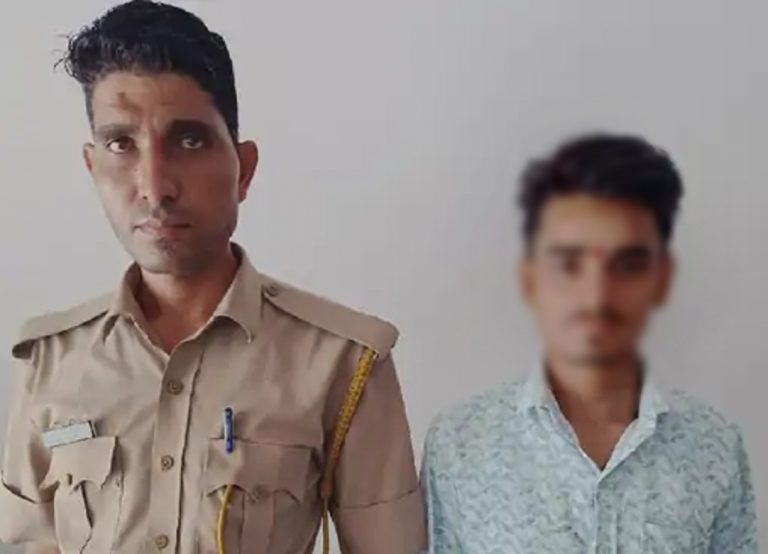
Danish and Taufiq had old animosity with Vishal Khatik, a 23-year-old Hindu man. The two friends grabbed a screenshot of Vishal’s social media account, manipulated it, and made it viral by adding communally offensive statements.
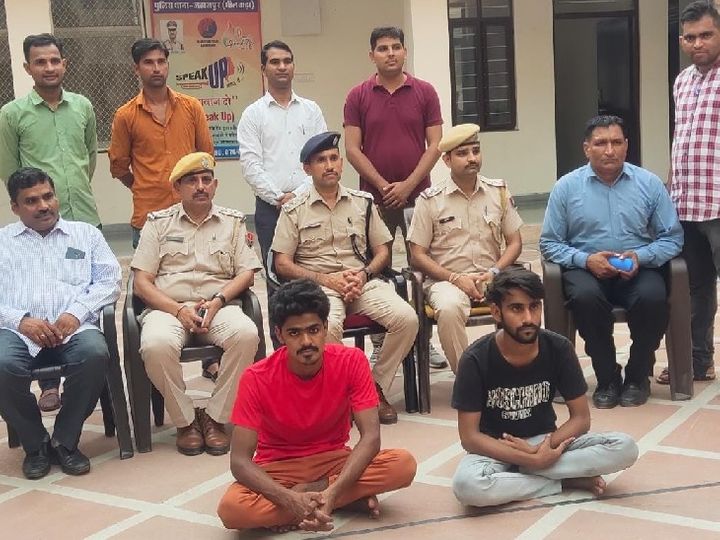
Vishal was then criminally charged at the Jahazpur police station in Bhilwara. He was subsequently arrested and sent to jail by the police. When he was released from jail, he notified the police about the entire matter. An inquiry by the police revealed that the youngster was totally innocent and had to go to jail because of a fabricated social media post. Following this, the police registered another case against the two and arrested them.
Danish and Taufiq implicated Vishal in the false case in Bhilwara
According to Chanchal Mishra, SP Shahpura, the police have detained Danish of Jahazpur’s Deshwali Mohalla and Taufiq alias Guddu alias Lala of Jahazpur’s Gol Hathai Mohalla. He said that they both took a screenshot of Vishal Khatik’s social media account, edited it, and then posted insulting comments that quickly went viral in the area.
The two were arrested.
These two young people sought to punish Vishal over their enmity. They developed a strategy to blame Vishal for this after seeing how strict the police are about communal offenses. Vishal was detained as a result of Abdul Sattar of the Anjuman Committee filing a case against him due to the post getting viral in his name.
Death threats to Vishal
Vishal was arrested on June 20 and was sent to jail on orders of the court. Vishal was released after seven days following which, he filed a complaint against Danish and Taufiq. Vishal has been receiving endless death threats over call and otherwise. Upon his release from jail, he said, “I’ve been locked up. It cannot be erased. After spending seven days in jail for a crime I did not commit, I have returned. How the seven days in jail went down is a secret only I know. I’m currently receiving threatening calls. I am convincing people on the phone that I didn’t do it. Now I have to explain to every new contact I make that I have not done anything wrong.”
The police have now provided Vishal with security after he received death threats. Vishal has been provided two gunmen for his protection, he will be protected by these gunmen for eight hours a day.
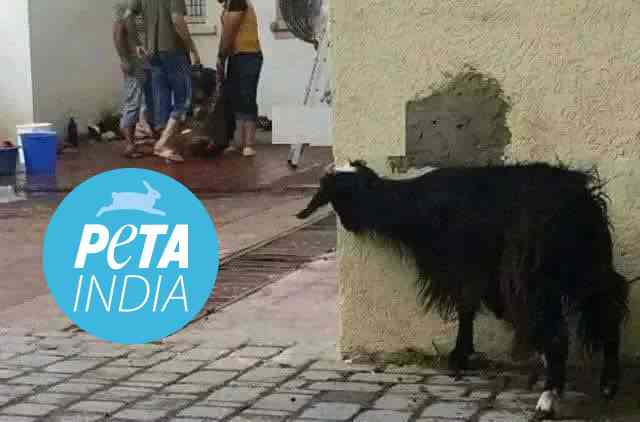
On July 10, Muslims around the world celebrate Eid-Al-Adha, also known as Bakri Eid, because of the ceremonial sacrifice of an animal, mainly a goat. To this day, the animal rights activism of People for the Ethical Treatment of Animals (PETA) often gets toned down. So much so that if we compare their aggression against the practice of sacrificing animals on Bakri Eid to the noise they make at Hindu festivals, it would look as if they become ostriches on this day.
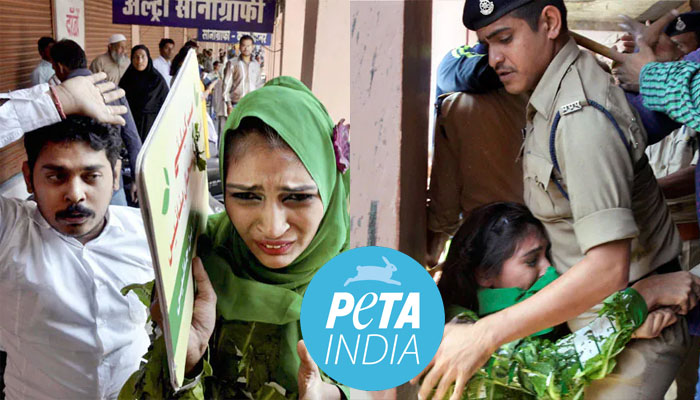
In 2014, PETA’s India chapter “dared” to stand against animal sacrifice on Bakri Eid in Bhopal. A female activist of the organization wore a burqa made of lettuce leaves and vegetables and went for a “peaceful awareness campaign” near Taj-Ul Masjid in the old city along with other ‘activists’. The “attack” on the practice was not “welcomed” by the community, and a mob allegedly assaulted the activists, including the woman in lettuce-burqa.
The PETA activists were outnumbered, and the Police had to intervene to save them. They were taken to the nearby Police station. Then-Inspector General of Police Yogesh Choudhary had said that a case was filed against PETA activists for hurting religious sentiments under Section 295A of the Indian Penal Code.
Shocked by the attack, PETA India’s then-CEO Poorva Joshipura had said, “PETA organises peaceful animal protection awareness programs for Christmas, Easter, Diwali, Janmashtami and other holidays, as well as Eid. It is shameful that in working to stop violence, our volunteers were made to suffer violence.”
The activists of the organization seemed to have gotten scared by the attack, and since then, there have been virtually no reports of them taking on the streets to protest against animal sacrifice on Eid. They may post something online and subtly tell their followers not to sacrifice animals, but they never dare to repeat it again. On the contrary, when it comes to Hindu festivals, they gather all the courage they have hidden somewhere under the carpets and oppose even 100% vegetarian Hindu festivals, including Diwali, Janmashtami, Rakshabandhan, and more.
In the Bareilly district of Uttar Pradesh, a case of forced religious conversion has come to light. As per reports, planning and scheming for this spanned from Bareilly in Uttar Pradesh to Kaliyar Sharif (Uttarakhand) to target a Hindu girl student. During the two-year plot, every effort was made to brainwash the girl as per reports.
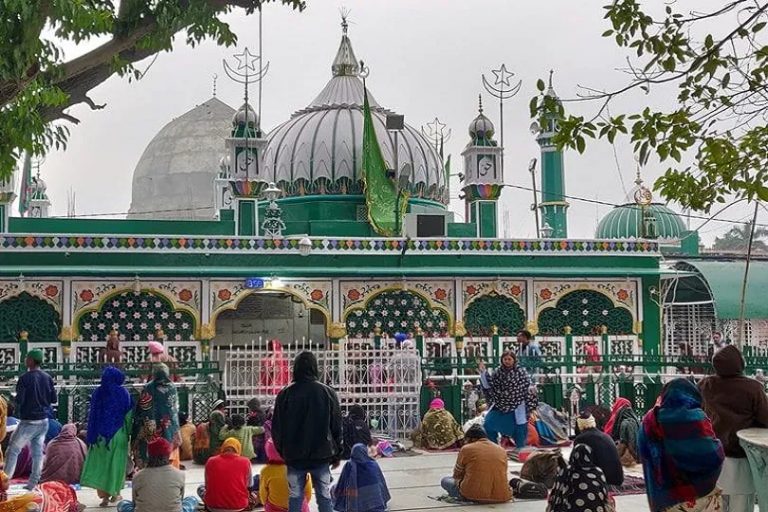
On June 23, one Muslim man took a girl from Bareilly to Kaliyar and forcibly taught her how to pray in the Islamic manner while she was forced to stay at a Mazaar. The Muslim man also put pressure on her to convert and marry says the report.
As per the report, a Hindu girl student studying in a nearby town became friends with a Muslim boy. The Muslim boy informed his acquaintances about it. The boy failed class IX and began working as a driver in Kichha, Uttarakhand, but he maintained contact with the girl in Bareilly over the mobile phone. He used to talk about his future plans with her and kept urging her to marry him.
He reassured the girl that she could continue to be a Hindu and pray in the house and that he had no objections to this. However, on the afternoon of June 23, he arrived in her town and invited the girl to the market, where she was kidnapped. Following this, the boy’s aides suggested him to take the girl to Kaliyar Sharif in Uttarakhand.
To alter the girl’s thinking and convert her, she was forced to spend five days in the Mazaar from sunrise to dusk. She was also forced to learn Islamic devotional practises. All of this was done violently as the girl’s psyche began to disintegrate. She was also coerced to convert to Islam and marry the Muslim boy.
The girl was raped in Kaliyar
Reports also mention that the girl was raped by the Muslim boy in Kaliyar. His aides also shot several videos and kept circulating in between them. On the evening of June 30, the boy tried to take her to some other place but he was caught by the police at Haridwar railway station.
After giving her statement and professing to have been misled and betrayed, the girl was returned to her parents. She was brought before the Child Welfare Committee, which, after evaluating the girl’s situation, handed her to her parents.
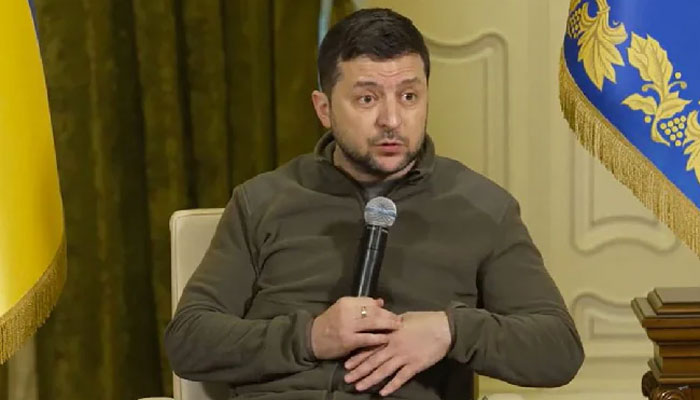
ON July 9 (local time), Ukrainian President Volodymyr Zelensky dismissed ambassadors to five nations, including India, Germany, the Czech Republic, Norway, and Hungary. He added new candidates were being readied to take up the positions.
During his address to the nation, Zelensky said, “Today, I signed decrees on the dismissal of some ambassadors of Ukraine. This rotation is a normal part of diplomatic practice. New representatives of Ukraine will be appointed to the Czech Republic, Germany, Hungary, Norway, and India. Candidates are being prepared by the Ministry of Foreign Affairs.” There was no specific reason for removing any of the ambassadors from their respective posts. It is unclear if the ambassadors would get new positions upon returning to Ukraine.
Ukraine’s former ambassador to India was ‘dissatisfied with India’
In February this year, a day after Russia announced military action against Ukraine, Igor Polikha, now-former ambassador to India, expressed dissatisfaction with India’s reaction. India had said it was closely monitoring the situation. Notably, there were over 20,000 Indians, especially students, stuck in war-hit Ukraine.
He had said, “I am following all the reports from the side of your ministry and the latest advisory to your citizens in Ukraine was just not to go out, not to go to Kyiv, and the statement of your Minister of External Affairs was that India is closely following the development of events. We are deeply dissatisfied with their positions. What does it mean? Closely following or more closely? Now, 10-15 people are killed. When hundreds of thousands are killed, what will happen? We are waiting, we are asking, we are pleading for the strong voice of India.”
Police had urged India to convince Russia’s President Putin to stop the attack suggesting there were only a few leaders, including India’s Prime Minister Narendra Modi, whom he might listen to.
Speaking to the Hindu, Polikha said he was not surprised or disappointed as he was expecting his unusually long tenure in India to end. He said, “After seven years as ambassador of any country, it is normal to return home. I am a career diplomat. I will return whenever the official process is completed.”
Controversies around now-former Ukraine’s ambassador to Germany
Ukraine’s ambassador to Germany, Andriy Melnyk, has also served for a long time. He was appointed in late 2014 and is well known for his outspoken nature during interviews and on social media. In recent times, he had branded intellectuals and politicians opposing arms being sent to Ukraine as appeasers.
Last week, he stirred a major controversy by defending Stepan Bandera, a Ukrainian nationalist leader, and Nazi collaborator. Bandera was killed in 1959. Melnyk said, “Bandera was not a mass murderer of Jews and Poles,” and argued there was evidence of accusations against him. His remarks sparked controversy not only in Germany but also in other nations, including Poland and Israel.
Following the controversy, Ukraine’s Foreign Ministry distanced itself from the remarks by Melnyk and said, “the opinion that the ambassador. Melnyk expressed in an interview with a German journalist is of his own and does not reflect the position of the Ministry of Foreign Affairs of Ukraine.”
Furthermore, there is an ongoing tension between Ukraine and Germany over a German-made turbine that belongs to Russia. It is currently undergoing maintenance in Canada, and Germany wants Canada to return it to Russia. On the contrary, Ukraine is pursuing Canada not to fulfill the demand by Germany as sending turbine to Russia would be against the sanctions imposed on Moscow. However, Canada made it clear on July 9 that it would send the turbine back to Russia.
It is notable that the turbine is for extracting natural gas from Russian state-owned energy giant Gazprom. The broken turbine has caused a production drop of 40% in the Nord Stream 1 pipeline that is used to pump gas to Germany.
Russia-Ukraine war
On February 24, Russian President Vladimir Putin announced military action against Ukraine. It has been over five months since the war started. There were over 20,000 Indians stuck in Ukraine who were rescued by the Government of India. While Russia is currently facing Sanctions from western countries, India has kept its stand neutral and called for peace between the two countries.
PETA India, the Indian outfit of ‘animal rights organisation’ has decided to not antagonise the Muslim community in India ahead of Bakri Eid, where goats and other animals are slaughtered as sacrifice and eaten in the feast. In fact, PETA India did not even appeal for ‘painless slaughter’ of animals for Bakri Eid.
Instead, it just dished out gyaan in general direction stating that ‘all religions call for compassion’.
PETA India did not appeal to the Muslim community to not slaughter animals in name of religion. Recently, there have been incidents of violence by Islamist mobs in India where calls for beheading were raised over allegations of blasphemy for allegedly derogatory remarks on Prophet Muhammad. Bakri Eid or Eid Al Adha is celebrated for Abraham’s (Ibrahim) willingness to sacrifice his son, Ismael (Ismail) for Allah. Bakri Eid tradition involves slaughtering an animal, especially a lamb, as per Halal procedure as prescribed in Islamic scriptures and sharing the meat in three parts, one for family, one for relatives and one for the poor so that all Muslims get to eat meat.
However, PETA India, which regularly holds demonstrations and floats petitions asking people to turn vegan and not kill animals for food, as it amounts to cruelty, has not appealed to the 20 crore Muslim population of India to not kill goats and other animals.
Halal slaughter procedure
The halal system of ‘animal slaughter’, also called Zahiba, lays special emphasis on the ‘bleeding’ of animals. This is particularly due to the Islamic belief that blood is ‘impure’. Blood drainage from slaughtered animals forms the key basis of halal slaughter. There are several Quranic verses, which reiterate that the consumption of blood must be avoided at all costs.
As per Islamic law (Sharia), the ‘halal’ slaughter of an animal requires the use of a sharp knife, which is free of nicks and scratches. Although there is no directive to use any special kind of knife unlike kosher, it is recommended that the blade of the knife be 2-4 times larger than the neck of the animal. The animal must be fed well, provided with drinking water and soothed before turning it lifeless.
Halal slaughter must be performed by only a sane, adult Muslim, who is familiar with Islamic rituals. “Animals slaughtered by a Non-Muslim will not be Halal. The name of Allah must be invoked (mentioned) at the time of slaughtering by saying: Bismillah Allahu Akbar,” says the Department of Halal Certification in the European Union. As per the halal procedure, the animal must be rested on its left flank to maximise blood loss. It must also be facing the direction of Mecca (Qiblah).
PETA India shames Hindu festival celebrations
In contrast to above wish which does not urge the Muslim community to not slaughter an animal till it bleeds painfully, PETA India has regularly indulged in shaming Hindu festivals and how they are celebrated.
This #Holi, be compassionate towards animals. Please DO NOT throw colours on them.
In March 2020, PETA India urged everyone not to throw colours on animals, and fairly so. One should be compassionate towards animals and not hurt them. In 2019, PETA India asked those who celebrate Holi, i.e. Hindus, to turn vegan and drink vegan thandai, a milk-based drink. They’ve made similar appeals over the years. However, there were no appeals for compassion for Eid slaughter, no urging the Muslim community to turn vegan.
Similar ‘compassion’ has been shown during Diwali as well.
Surely, getting slaughtered and bled to death would be more terrifying for animals than firecrackers. Wonder what could be animal-friendly Bakri Eid.
Amusingly, in 2020, PETA India had issued guidelines on how to slaughter animals ‘kindly’. Do note that on other days including Hindu festivals, PETA India has urged everyone to go vegan, that is give up dairy products as well. Over the years, PETA India has received flak for its double standards and hypocrisy over its stand on animal cruelty but that hasn’t stopped them from choosing ‘peace’ for Eid, likely because everyone is afraid of antagonising the community where people call for beheading over ‘hurt religious feelings’
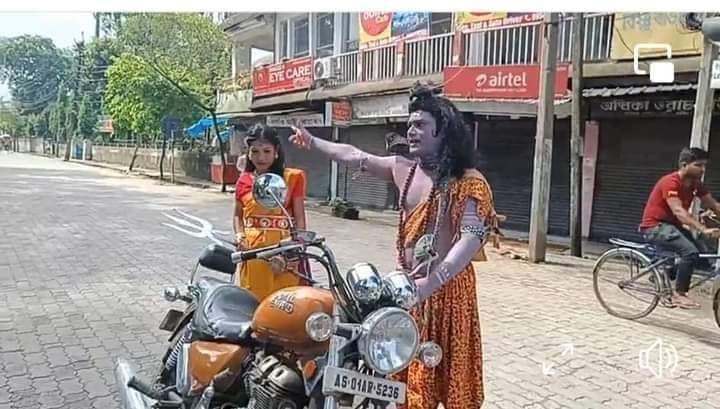
A man was arrested by Nagaon Police in Assam after he was accused of hurting the sentiments of Hindus by dressing as Lord Shiva for political purposes. The man named Birinchi Bora and a female actress had dressed as Shiva and Parvati to enact to street play on the roads on Nagaon, where they had complained about price rise under the Modi government.
However, Hindu groups were not happy with this and Vishwa Hindu Parishad, Bajrang Dal, BJYM and other Hindu groups protested against the act. Birinchi Bora was arrested and taken to Nagaon Sadar Police Station after the Hindu groups lodged a complaint against the actor accusing him of hurting religious sentiments and misusing religion for political purposes.
In the street play, Birinchi Bora and his co-actor Parishimita had dressed as Shiva and Parvati, and was riding a two-wheeler on a road. At the designated spot for the street play, the vehicle stops apparently because it ran out of fuel. What follows was an argument between Shiva and Parvati over the issue, where ‘Shiva’ starts to attack the Modi government over rising fuel prices and other issues.
‘Shiva’ says that while Modi had promised to bring fuel prices down, prices of petrol, diesel and kerosene have reached Rs 100. He said that from medicine to food to fuel, everything was cheaper earlier, but now prices of everything have gone up after the Modi govt came to power.
After the street play was over, Birinchi Bora talked to media, still in the role of Shiva. He continues to rant against Narendra Modi and his govt in his speech. He said, ‘We had sent Modi here, but he has been a failure, and we will need to send someone else in his place’. He alleged that the Narendra Modi govt has looted the people of India causing price rises. Some of his allegations were same as what the Congress party has been alleging against Modi govt.
The ‘Shiva’ appealed the public to come out to protest against the Narendra Modi government to get rid of rising prices.
The ‘Parvati’ Parishimita also talked to media saying that they did the skit to raise awareness among people on price rise. She said that as people will not listen to them otherwise, they decided to do the stunt by dressing as Shiva and Parvati.
The blatantly political speeches made by Birinchi ‘Shiva’ Bora had caused massive outrage among people, including Hindu groups like VHP and Bajrang Dal. But what made the matter worse was Bora’s comments in a WhatsApp chat, where he said that he did the stunt for money, and that he also mocked Hindu gods.
In the chat that went viral on Facebook, Birinchi Bora had informed someone that the video of his street play has been covered by news channels. When that person asked what is it about, he replied, ‘watch the news, today did lots of comedy on your Shiva Parvati’. He implied that Shiva and Parvati are not his Gods, as he referred to them as ‘your Shiva and Parvati’.
He also sent the video. Seeing the video, that person was outraged, and admonished Birinchi Bora for doing such a street play. To that, Bora replied that there is nothing wrong in it as anything can be done for money. When the person asked how can he stoop so low for money, Bora said that he has done a street play, and received money for that. He asked why he was jealous of him.
When the person asked why Bora mocked their Gods, and that a case will be filed for it, Birinchi Bora abused him. He also challenged that person to file the case first.
When this chat appeared on social media, outrage against Birinchi Bora reached its peak, and a case was filed against him by BJYM and other Hindu groups. Following the complaint, he was arrested and taken to the court.
However, he remained defiant even in custody. When the Hindu activists chanted Jai Shri Ram after he arrived the police station, he responded by chanting ‘Jai Aai Asom’ (Jai Mother Assam).
Till now it is not known who had paid him to do the street play against Narendra Modi govt while dressed as Shiva.
Agitation against the government in Sri Lanka has taken a violent turn as the protestors set the private residence of Prime Minister Ranil Wickremesinghe on fire on 9th July 2022. Earlier in the day, the protestors had stormed the official residence of Sri Lankan President Gotabaya Rajapaksa and forced him to flee. With protests already taking place across the country for months after the collapse of the economy in the country, the agitations peaked after the government said that the country has gone bankrupt.
After his residence was surrounded by the protestors, President Rajapaksa was reportedly evacuated to a safer location before the protestors could enter. Later, protestors took over the control of the President’s house. People were seen using the swimming pool and the kitchen of the President’s house. However, there were no reports of any violence there, but, the agitations at the Prime Minister’s private house took a dangerous turn as the protestors set the building on fire.
#SriLankaEconomicCrisis | Protesters have broken into the private residence of Sri Lankan Prime Minister Ranil Wickremesinghe and have set it on fire.
Besides Prime Minister’s house, violent protests are continuing at various places in Sri Lanka. Police have lathi-charged and used the tear-gas against the angry protestors. Both the President and the Prime Minister of the island country have resigned to form an all-party government.
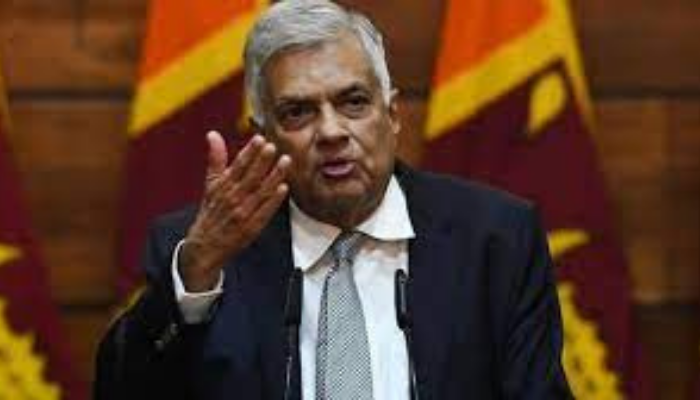
Ranil Wickremesinghe tweeted, “To ensure the continuation of the Government including the safety of all citizens I accept the best recommendation of the Party Leaders today, to make way for an All-Party Government. To facilitate this I will resign as Prime Minister.”
To ensure the continuation of the Government including the safety of all citizens I accept the best recommendation of the Party Leaders today, to make way for an All-Party Government.
To facilitate this I will resign as Prime Minister.
Sri Lanka is facing the worst economic crisis in its history as the country has run out of food, medicine, and fuel, and unrest among the citizens continues to grow. Due to shortages, the govt even banned the sale of fuel for private vehicles. After the fierce protests by the people, President and Prime Minister resigned making way for an all-party government and elections.
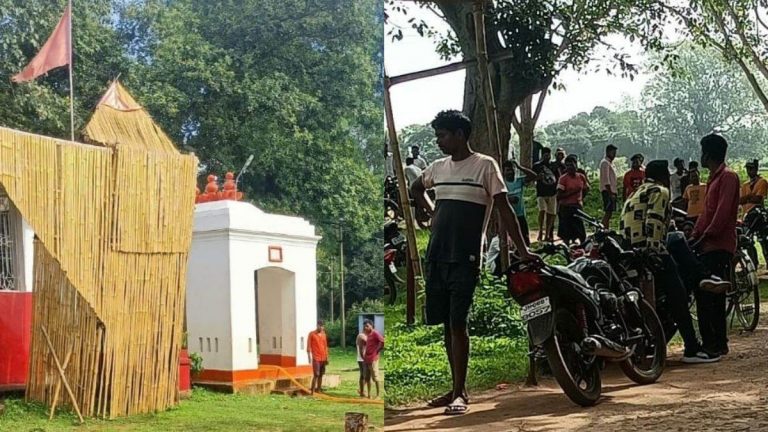
Communal tensions prevailed in Rampur village of Lohardaga district of Jharkhand after antisocial elements belonging to another community hurled a piece of meat inside the premises of the local Shiv temple.
Hindus living in the village are angry with the miscreants for attacking their faith and hurting their sentiments by throwing meat pieces inside their temple premises.
The incident sparked a face-off between members of the two communities as the police rushed to defuse the simmering tensions.
As per reports, the local police authorities undertook pacifying efforts to alleviate the communal flare-up that erupted in the wake of meat pieces thrown inside the temple.
Reportedly, village elders also tried to broker peace between the two sparring sides following the incident, which has the potential of plunging the region into a wider communal conflict, leading to injuries and possibly deaths.
It is worth noting that this is not the first time that miscreants have thrown meat pieces inside temple premises in a desperate attempt to provoke Hindus. In fact, errants have long used meat as a weapon to convey their disrespect and contempt for Hindu temples, where bringing meat inside the premises is considered taboo and religiously disallowed.
Earlier this year, in February 2022, a group of unidentified miscreants threw an objectionable thing suspected to be meat inside the Kalibari Durga Temple located in Phulbaria of Rajmahal police station area in Sahibganj district of Jharkhand, raising tensions in the region.
The temple authorities had called up the local police and informed them about the incident, following which SDO Roshan Sah, Police Inspector Rajiv Ranjan, Rajmahal police station in-charge Praneet Patel, Teenpahar police station in-charge Anupam Prakash and Radhanagar police station in-charge Kundan Kant Vimal rushed to the spot. However, even before their arrival, a local resident, sensing soaring tensions in the region, prudently removed the objectionable thing from inside the temple.