Home Blog Page 3186

Nashik: Youth arrested after MVA minister Jitendra Awhad asks police to act on his social media post against Sharad Pawar

Police have detained a youth named Nikhil Bhamre from Nashik for a critical social media post made against NCP president Sharad Pawar. The youth had posted a tweet against Sharad Pawar after which NCP leader and housing minister Jitendra Awhad had demanded action against him.

In his tweet, Nikhil Bhamre wrote, “It is time to create a Nathuram Godse of Baramati for a ‘Gandhi’ of Baramati. Uncle, do apologize.” It is notable that Baramati in the Pune district of Maharashtra is the hometown of Sharad Pawar. The tweet by Nikhil Bhamre is probably intended to the recent incident in which Sharad Pawar quoted poetry by Marathi poet Jawahar Rathod to make derogatory remarks against Hindu deities.

NCP leader and housing minister of Maharashtra Jitendra Awhad took cognisance of Nikhil’s post and tweeted, “At what level is it all happening… Take strict action against this perverted man.” Jitendra Awhad tagged in his tweet the official Twitter handles of the Mumbai police, the commissioner of the Mumbai police, Maharashtra’s director general of police, Pune city police, and Thane city police.

After Jitendra Awhad’s tweet, the Dindori police in Nashik tracked down the 21-year-old youth Nikhil Bhamre who is a pharmacy student with no prior criminal record. He was arrested from his rented accommodation in Nashik. He is from Dindori and belongs to a farmer’s family and was living in Nashik to pursue his studies.

An FIR was registered against Nikhil Bhamre under sections 153A, 500, 501, and 506 of the Indian Penal Code. He will be produced before the magistrate’s court soon.

A Dindori police official said that Nikhil Bhamre was affiliated with a right-wing group in the past but refused to name it. According to the police, Bhamre deleted all his social media accounts after learning that the police were on the lookout for him. His phone has been seized and police are trying to retrieve his chats. Police said that he has made several such comments in the past as well.

It is notable that Jitendra Awhad has followed his own way in the past to deal with the people who make criticizing posts on social media. In April 2020, Jitendra Awhad deployed some police personnel to call 40-year-old Anant Karmuse to his bungalow where he was brutally beaten up in the minister’s presence over for allegedly posting a morphed picture of Awhad on Facebook. Jitendra Awhad was arrested in this case and later released on submitting a bond. Now, he has tagged police officers and social media accounts of various city police to arrest the youth for a social media post against Sharad Pawar.

Survey of disputed Gyanvapi Mosque structure: As petition against survey gets listed before Justice DY Chandrachud, here is how it is likely to go

The Supreme Court on Friday directed the listing of the petition filed against the survey ordered by a Varanasi court in Gyanvapi Mosque before a bench presided over by Justice DY Chandrachud. The petition against the survey of the disputed Gyanvapi Mosque structure has been filed by Anjuman Intezamia Masajid Committee, represented by Senior Advocate Huzefa Ahmadi, Senior Advocate Fuzail Ahmad Ayyubi, Advocate Nizamuddin Pasha, Advocate Ibad Mushtaq and Advocate Kanishka Prasad.

The main contention of the petition is rather simple – the Supreme Court should stop the survey of the disputed Gyanvapi Mosque structure because it violates the Places of Worship Act 1991. The petitioners, before the CJI, had said, “Survey has been directed in relation to Varanasi property. This is covered by Places of Worship Act. Now the Court has ordered Commissioner to conduct a survey”. CJI first remarked with “let me see” according to reports. Later, he said that he does not know what the case is and has not gone through the papers. It was after this that the CJI had ordered the listing of the special leave petition before a bench presided by Justice Chandrachud.

It is important to note that while we refer to the Gyanvapi Mosque as a “disputed structure”, the existence of a Hindu temple is visible to the naked eye. Besides that, several eyewitnesses have confirmed the existence of Hindu symbols on the premises of the disputed structure. The former Mahant of the Kashi-Vishwanath temple has said, “There are Bhagwan Vishnu, Mata Lakshmi and even the wheel of Buddhists etc., engraved on the Pillars. When I saw it back then, there used to be a coal shop at that time. The woman who ran the shop used to make food and then sell it to the customers.”

He further added, “The government tried to keep this temple safe in any way possible, so they got barricading done all around this temple. They [Muslims] say that the masjid is theirs. But those who offer namaz in the masjid, have forcibly occupied the premises. They come in large numbers to offer prayers and try to show the power of their community. I am sure that there is a temple. They are not allowing us to go to the basement because of their anarchy and polluted thinking.”

Another eyewitness, Ram Das Khatri, said, “It was a temple before. There is no doubt about it. The temple has been forcefully snatched from us (Hindus). This temple is of Hindus. You can clearly see that it is Mata Gauri, whom we call Shringar Gauri as well.”

Therefore, it is safe to say that there is no dispute regarding the fact that a Hindu temple, visible to the naked eye, existed where the disputed Gyanvapi Mosque structure stands today, destroyed by Islamic invaders.

In the light of this, the petition by Anjuman Intezamia Masajid Committee becomes incredibly important, since if the survey of the disputed structure is halted, the reclamation of the Kashi temple comes into question.

Given that this petition is listed before Justice DY Chandrachud, one could perhaps make a calculated guess as to how the case would proceed. During the Ram Janmabhoomi verdict, the 5 Judge bench had included a long-winded unanimous opinion on the Places of Worship Act, 1991. The 5 Judges who unanimously passed the verdict included Justice DY Chandrachud.

The decision to address the Places of Worship Act, 1991 in the Ram Janmabhoomi verdict was widely criticised by lawyers. Advocate J Sai Deepak had penned an article at the time in the New Indian Express detailing how the RJB verdict was beyond the scope of the Act and therefore, there was no need to discuss the act at all.

Sai Deepak had written:

The appeals before the Supreme Court arose from the 2010 judgment of a three-Judge Bench of the Allahabad High Court delivered in a batch of title suits over the then-disputed land in Ayodhya. The PoW Act, on the other hand, is a statute designed to “prohibit conversion of any place of worship and to provide for the maintenance of the religious character of any place of worship as it existed on the 15th day of August 1947…”. Pertinently, Section 5 of the said Act expressly exempts the legal proceedings in relation to Shri Ramjanmabhoomi from the application of the Act. This is recognised by the Supreme Court itself in Paragraph 80 of the Ayodhya judgment. In light of this, there was no need for the court to discuss the Act in the context of Shri Ramjanmabhoomi. And yet, the court deemed it fit to discuss the Act in over 10 pages, with the central thrust of its deliberation being “the Constitution’s commitment to secularism”. 

In his article, Sai Deepak had argued that since the PoW Act was irrelevant to the Ram Janmabhoomi case, the deliberation on the act in the RJB verdict should not be considered legally binding.

What the Judges had said regarding the Places of Worship Act, 1991, in the Ram Janmabhoomi verdict

The central focus of the Places of Worship Act, 1991 was to ensure that Temples, Mosques, Churches etc maintain their character as it was on the 15th of August 1947. So, if a Temple was destroyed by the Mughals and a Mosque was built in its place, the Places of Worship Act essentially said that the Mosque should continue to maintain its character and can’t be turned back into a Temple.

The Ayodhya judgement unanimously said that the Act had two purposes:

  1. “First, it prohibits the conversion of any place of worship. In doing so, it speaks to the future by mandating that the character of a place of public worship shall not be altered”, the judgement had said. The court further said that Section 3 of the Act prohibits the change of a place of worship “into a place of worship of a different religious denomination or of a different segment of the same religious denomination”.
  2. The law “seeks to impose a positive obligation to maintain the religious character of every place of worship as it existed on 15 August 1947 when India achieved independence from colonial rule”. 

Invoking mythical “secularism”, the 5 judge bench in the Ayodhya verdict also said that the Act seeks to maintain the “secular character of the constitution of India”.

“The law is hence a legislative instrument designed to protect the secular features of the Indian polity, which is one of the basic features of the Constitution”, the court said, adding that “non-retrogression is a foundational feature of the fundamental constitutional principles of which secularism is a core component”.

Criticising the demolition of the illegal structure called Babri, the court said, “Historical wrongs cannot be remedied by the people taking the law in their own hands”.

Essentially, in its judgement, the Supreme Court unanimously said that the Places of Worship Act is sacrosanct and then also chastised the event where “law was taken into their own hands” since that cannot remedy historical wrongs, leaving Hindus with no option, legal or otherwise.

How is the Ayodhya verdict and the observations on the Places of Worship Act, 1991, likely to affect the Gyanvapi Mosque petition by Anjuman Intezamia Masajid Committee

One has to bear in mind that the Ayodhya verdict was unanimous, therefore, the opinion cited in the judgement regarding the Places of Worship Act was also unanimous. This essentially means that Justice Chandrachud believes that the Places of Worship Act is sacrosanct and is essential to maintain the secular nature of the Constitution of India. He believes that the Places of Worship Act bars Hindus from approaching the courts to reinstate their religious rights as far as historical structures are concerned.

The current petition in the Supreme Court by Anjuman Intezamia Masajid Committee essentially pleads that the survey of the disputed Gyanvapi Mosque structure is in violation of the Places of Worship Act. Given that we know what Justice Chandrachud thinks about the sanctity of the Act and how the Bench misinterpreted the observations by Justice DY Sharma, it is likely that the petition by the Muslim organisation would be accepted, much to the detriment of Hindus.

One must also remember that Justice Chandrachud had made this infamous observation during the Ayodhya hearing.

He had said that Hinduism is different and while Islam prohibits worship of anything apart from Allah, Hindus can worship in a place where Namaz is offered.

These facts, including the Ayodhya judgement comments on the PoW Act, are bound to play a role while hearing the petition against the survey at the disputed Gyanvapi Mosque structure.

No trace of Malayalam actor Vijay Babu, Kochi police had issued Blue Corner notice to Dubai police to track down the rape accused: All we know so far

The Dubai police have been unable to track down Malayalam actor Vijay Babu, who has been accused of sexual abuse and assault. The Dubai police have been on the lookout for the Malayalam actor ever since the Kochi police on April 28 issued a Blue Corner notice to Dubai police through Interpol requesting them to track down Vijay Babu. It is believed that the actor went into hiding somewhere in the Gulf Emirate after Kochi police registered a rape case against him following a complaint by a young female actor.

Kochi City Police Commissioner C H Nagaraju said that the Dubai police are yet to provide any information about Vijay Babu’s whereabouts. “We have also sent a request to its embassy here seeking to expedite the tracing process,” he said.

When the case was filed on April 22 and the actor-producer learnt about the same, he was in Goa. He then quickly fled to Bengaluru and finally to Dubai. The Kochi city police had given the Dubai police all of the essential information, including the specifics of his travel. The Kochi city police had gotten an arrest warrant from a court and passed it over to the Dubai police through Interpol to speed up the process of allowing the Dubai police to detain Vijay Babu once he was located.

According to a state Special Branch officer, Babu chose Dubai as his hiding place because he was told by a few influential people in the city that he would be secure until the HC or Supreme Court decides on his anticipatory release request.

Malayalam actor Vijay Babu accused in a second #MeToo harassment case

It may be noted that on May 1, Vijay Babu was accused of sexual abuse and assault of a woman for the second time in a row. The Instagram page ‘MeToo Kerala’ featured the story of the victim in which she revealed that the actor leaned forward and forcefully kissed her without her consent in a meeting.

Prior to this, in April, a woman accused Vijay Babu of assaulting her after she refused to have sex with him.

Soon after the news broke, Babu went live on social media, claiming that he was the “true victim” in this case and that he would pursue legal action against the complainant, whom he also named.

The police then, apart from the victim’s complaint, also registered a second case against the actor for disclosing the name of the complainant. While on the run, Babu filed an anticipatory bail petition, but the Kerala High Court gave him no recourse, posting the matter to be taken up after the summer recess on May 18.

In his defence, Babu stated in his anticipatory bail plea that the actor was attempting to blackmail him. Vijay Babu further stated that he has all of the proof necessary to prove his innocence, including chat conversations between him and the complainant, and that he is prepared to present it to the court.

Russia suspends electricity supply to Finland amid growing NATO tensions

0

Russia has suspended electricity supply to Finland after the Finnish operator refused to pay in Rubles to Inter RAO, Russia’s largest electricity company. While the official reason provided is the non-payment of supplied electricity by the Finnish, the move comes as Finland gets closer to joining NATO in the aftermath of the Russia-Ukraine war.

RAO Nordic, the local subsidiary of the Russian electricity giant, said in a statement, “Unfortunately, we are forced to note that for the volumes which have been sold on the Nord Pool exchange since May 6, funds have not yet been credited to our bank account, We hope that the situation will improve soon and the electricity trade with Russia can resume.”

Earlier, Finland’s transmission system operator Fingrid had said that there was no threat to the electricity supply in the country as a result of the move. The grid company added that electricity imported from Russia accounted for around 10% of the nation’s total consumption and they will be able to replace it from Sweden or through local production.

The relationship between Russia and Finland has deteriorated rapidly ever since Russia decided to invade Ukraine as part of its ‘Special Military Operation’. Finland, along with Sweden, has edged closer and closer to a NATO membership ever since the Russian war in Ukraine began. This latest development comes after days of simmering tensions between the 2 countries.

Following this decision from Russia, Finland’s President Sauli Niinistö spoke to Russian President Vladimir Putin, in talks that were described as ‘straightforward and direct’ by the Finnish President. He also mentioned that the talks were held without aggravation.

Tripura Chief Minister Biplab Kumar Deb resigns, BJP legislative meeting today to elect new CM

In a surprise move, Tripura Chief Minister Biplab Kumar Deb announced today that he has resigned from the post. The CM of the North Eastern state submitted his resignation to governor Satyadev Narayan Arya today.

After submitting his resignation with the governor, BJP leader Biplab Kumar Deb said that he wants to work for strengthening the party. The resignation by the CM comes just a year before Tripura goes for polls. BJP had formed the government after a historic win 2018, which was under the rule of the Communists for a long time.

Before resigning today, Deb had met Union home minister Amit Shah and BJP president JP Nadda in Delhi on Friday, where he had discussed the position of the party in the state ahead of the polls.

While the reason for the step is not known yet, there were rumours that he might go as there were reports of some infighting and dissent within the party in Tripura. Some were of the opinion that Biplab Deb won’t be able the lead the party to a second victory in the state, and a change in leadership is needed.

BJP is expected to announce a new CM soon after a meeting of the legislative party, which is scheduled for today evening. Reportedly, Union Minister Bhupendra Yadav and Party General Secretary Vinod Tawde have been appointed as central observers for the meeting, and they have already reached Agartala.

Netflix tells its ‘woke’ staff to tolerate diverse views or quit if they find content on the streaming platform ‘provocative’

The streaming platform Netflix has directed its ‘woke’ staff to either tolerate different points of view or find another job if they disagree with the content they find “provocative”. According to reports, Netflix has sent a memo to left-wing ‘woke’ employees asking them not to ‘censor’ content that they disagree with even if they find it ‘provocative’.

The warning letter comes after Netflix executives and junior workers had clashed over remarks made by stand-up comedian Dave Chappelle about transgender people. Last year, Netflix employees had staged a walkout after Dave Chappelle made ‘transphobic comments’ in his special ‘The Closer’. The special had incensed the ‘Woke’ camp, and ‘Woke’ employees at Netflix had staged a walkout in protest. 

However, their demands to remove the programme were rejected by Netflix’s bosses Reed Hastings and Ted Sarandos, who argued that such a move would have impinged on artistic expression.

In the latest memo, the Netflix management appears to have formalised this stance in an internal memo. This memo comes just weeks after the streaming platform had disclosed that they had a drop of 200,000 subscribers in the first three months of 2022. Netflix has recently witnessed a massive slump in the growth of its subscriber base. The investors have lost a whopping $45 billion in market value due to the aspersion that the company was going to enter a period of slow growth.

The company has also updated its webpage on Netflix Culture with the content of the memo, and under the section Artistic Expression, it says, “as employees we support the principle that Netflix offers a diversity of stories, even if we find some titles counter to our own personal values.”

The memo says, “Entertaining the world is an amazing opportunity and also a challenge because viewers have very different tastes and points of view. Not everyone will like — or agree with — everything on our service”.

Further, the memo read, “While every title is different, we approach them based on the same set of principles: we support the artistic expression of the creators we choose to work with; we program for a diversity of audiences and tastes; and we let viewers decide what’s appropriate for them, versus having Netflix censor specific artists or voices.”

Bluntly stating that employees who disagree with titles being streamed by the company can leave their jobs, the memo states, “Depending on your role, you may need to work on titles you perceive to be harmful. If you’d find it hard to support our content breadth, Netflix may not be the best place for you.”

It is important to note that on January 20, Netflix co-founder and CEO Reed Hastings had expressed his ‘frustration’ during an investor call over the slow growth of the video streaming company in the Indian market.

“In our experience in Brazil, it was brutal for the first couple of years. We thought we’d never break even. I know we’ve got this great business. The great news is that in every single other major market, we’ve got the flywheel spinning. The thing that frustrates us is why haven’t we been more successful in India”, he had said.

This development also comes in the backdrop of Elon Musk’s recent statement where he had accused Netflix of becoming infected with a “woke mind virus”.

Assam govt distributes 22,958 appointment letters in mega recruitment ceremony, to deliver poll promise of 1 lakh jobs soon

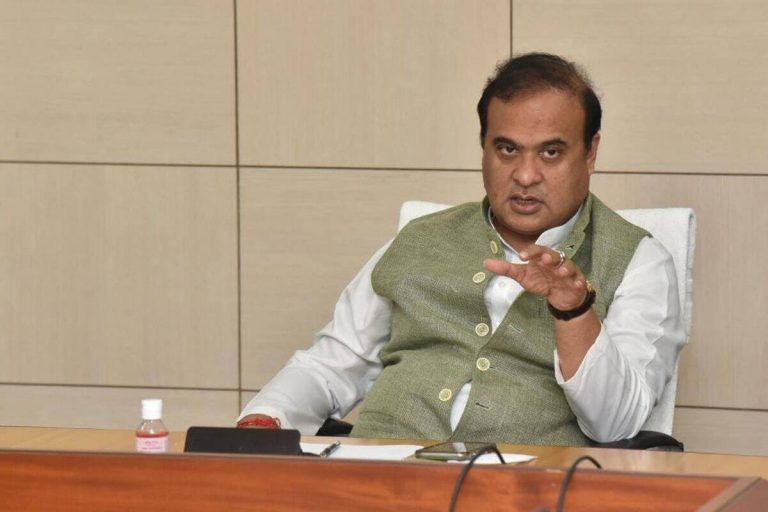
The BJP-led Assam government today distributed appointment letters to almost 23000 youths who have been recruited in various departments of the state govt. A mega ceremonial appointment letter distribution program was organised at Khanapara in Guwahati, where chief minister Himanta Biswa Sarma handed over the much sought after appointment letters to a few of the new state govt employees.

Before the assembly elections, BJP had promised to give 1 lakh government jobs within one year of coming to power, and today this was the first large batch in achieving that goal. A total of 22,958 candidates were recruited into various government posts across 11 departments of the state government. The new recruits assembled today at the Veterinary College ground in Khanapara in Guwahati to collect their appointment letters in the ceremony.

The recruitments include 8,867 in Assam police under the home department, 11,063 in the education department including teachers and professors in schools and colleges, 2419 in the health department, 330 in public health and engineering dept, 105 in water resource, 69 in social welfare, 55 in agriculture, 23 in forest department, 17 insurance medical officers in labour welfare, 8 in public works department, and 2 in mines and minerals.

With this, Assam govt has achieved almost 25% of its poll promise of one lakh govt jobs. While the govt has already completed one year this week, the process for these recruitments is already going on, with more than 1 lakh posts already identified in various departments. The govt has already recruited around 1200 people earlier, and today 23000 were recruited.

Apart from that, advertisements have been already issued for the second batch of the rest of the targeted appointments. In March this year, applications were invited for 13,141 grade III and 13,300 grade IV posts across several departments. Which means, another advertisement has been already issued for a total of 26,441 more posts, and youths in the state are already applying for those jobs online.

In her budget speech in March this year, finance minister Ajanta Neog had said that the government had already hired 1,157 youths, while recruitment for 84,244 posts was in process and the remaining 14,599 posts will be filled up soon. Which means, another advertisement for around 34000 government jobs will be issued soon.

Explaining the delay in the recruitment process, CM Himanta Biswa Sarma said that due to the Covid-19 pandemic, his govt’s only priority in the first 5 months of his govt was controlling the pandemic, and other works including the recruitments took a back seat. “We will recruit another 7000-8000 with July 15 next and will start the selection process for another 26,000 post within July end,” the CM announced in his speech.

He also said that the recruitment for the 22,958 posts was done in utmost transparent manner and no one had to pay a single penny as bribe to get the jobs.

The candidates who got the jobs have hailed the Himanta Biswa Sarma government for fulfilling a major poll promise. Notably, they also said that they got the jobs without paying any bribe. This has been a major development in the state after BJP came to power, because during the earlier Congress governments, government jobs were available only after paying bribes.

In a major reform in recruitment process, the state government has also formed two direct recruitment commissions for recruitment into grade 3 and 4 posts, in line with the public service commission for higher level jobs. Earlier, all grade 3 and grade 4 posts were filled by the departments individually, but now that is done centrally by the two Commissions under the provisions of The Assam Direct Recruitment commissions for Analogous posts in Class-lll and Class-lV Act, 2021.

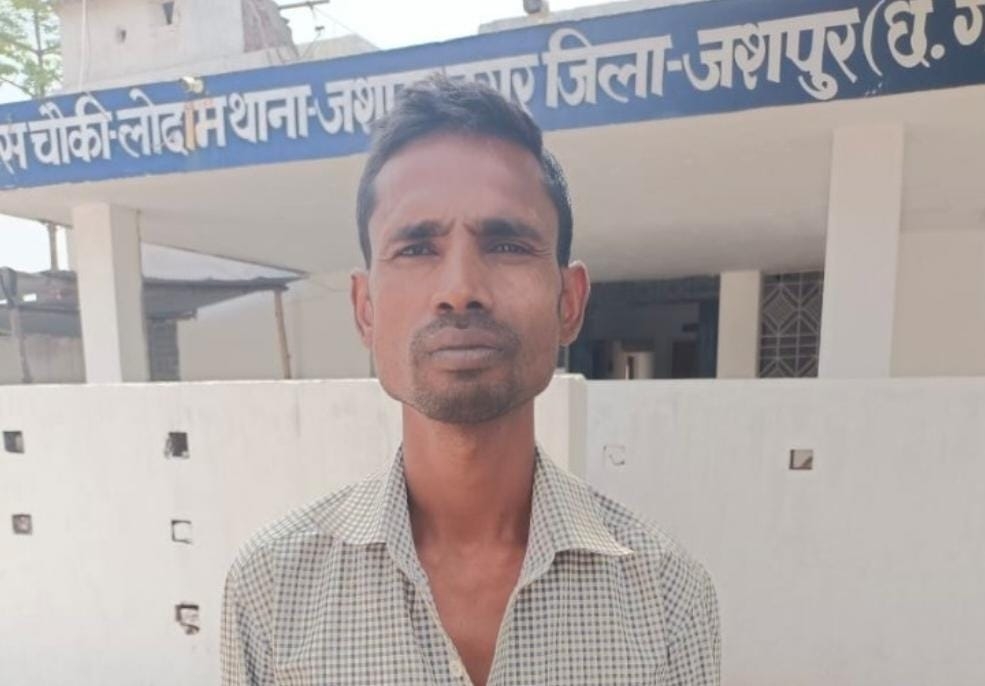
Delhi Police arrest Farhan Khan for defrauding over 100 women of nearly Rs 1 crore by creating fake profiles on matrimonial sites

The Delhi cyber police Thursday (May 12) arrested a 35-year-old man identified as Farhan Taseer Khan, for duping more than 100 women from across 13 states of nearly Rs 1 crore under the pretext of marrying them. The accused, a native of Chhattisgarh currently living in Odisha, was arrested from Delhi’s Paharganj area. The police recovered a luxury car (with a Chhattisgarh special series number plate), nine debit cards and an expensive wristwatch from Khan.

News agency ANI quoted deputy commissioner of police (south) Benita Mary Jaiker as saying, “We’ve arrested one Farhan Khan who used to create fake profiles on a matrimonial website & cheat young women. He had taken around Rs 13-15 lakhs from a woman & different amounts from others. We’ve identified around 36 women who have been duped by him.”

The action was initiated against Farhan Taseer Khan following a complaint filed by a lady doctor from AIIMS with South Delhi Cyber Police on March 26. In the complaint, the victim alleged that she met a person on Jeevansathi matrimonial portal and started talking to each other on social media and on the phone. After promising to marry the woman, Khan allegedly convinced her to pay Rs 15 lakh, over several transactions, to support his fake business, after which he started ignoring her calls and messages.

The cyber cell team gathered Khan’s information from the matrimonial site based on the complaint and discovered that he had created numerous fake profiles on such sites and communicated with women from Delhi, Maharashtra, Uttar Pradesh, Bihar, West Bengal, Gujarat, Punjab, Odisha, Karnataka, and other states.

Police revealed that Farhan, who is a resident of Odisha, had created a fake profile on matrimony websites to lure working women. The accused is only a Class 12 pass. He had an extremely wealthy lifestyle. The accused, who claimed that his parents had died, used matrimony websites to contact his targets and successfully sway them on one or the other pretext.

The information provided by matrimony websites and bank transactions, according to police, assisted them in tracking down and arresting Khan. He was tracked from Kolkata and finally arrested from a hotel in Paharganj on Thursday, the DCP informed.

“Khan confessed to having duped over 100 women to the tune of around Rs 1 crore in the past one and a half years. We are trying to find out if more women had filed complaints against him in other states,” added the DCP.

Khan used to attract women by flaunting a high-end car with a VVIP registration number and claiming ownership. According to the authorities, the car is actually owned by one of his relatives.

To give the impression that he was wealthy, he travelled from city to city and talked with the victims via video calls. According to the DCP, he told the women that he earned between 30 and 40 lakh per year.

In reality, Khan is married and has a three-year-old daughter, a father and a sister. However, to gain sympathy, he used to tell his targets that his parents had died in a road accident, the officer said.

Who is Dot: The new actor in the Netflix movie ‘The Archies’

On May 14, filmmaker Zoya Akhtar and Netflix announced a new film based on The Archies comics. The film is going to be a Hindi-Urdu adaption of the comics. Starring Shah Rukh Khan’s daughter Suhana Khan, Amitabh Bachchan’s grandson Agastya Nanda and Boney Kapoor’s daughter Khushi Kapoor among others, the upcoming film is getting a lot of mixed reactions on social media since its announcement.

Despite the presence of several high-profile star kids in the cast, one name is getting even more attention than them – Dot. The actor Dot in the list of names has confused quite a few people, and we decided to help everyone by getting some details on Dot.

Who is Dot?

Dot, who goes by the username @/dotandthesyllables on Instagram, is a musician, songwriter and singer. She uses she/her as her pronouns. Dot, who also goes by Aditi Dot, has been active since 2017. She is the daughter of late Indian rock musician Amit Saigal. Her original composition ‘Everybody Dances to Techno’ made her famous among the genre-lovers. Anyway, she has a decent fan following on her social media accounts. Dot has been into music since she was six. Her music has been featured on Netflix before in the 2019 Valentine’s Day video.

Dot shared the trailer of the upcoming film on her Instagram stories and wrote, “So I wrote some music and sung some songs for #thearchies, a film by Zoie Akhtar. Oh… and also… I’m in it.”

Source: Dot’s Instagram story

About The Archies

The Archies will be a live-action musical set in 1960s India. Other actors include Super 30 fame Mihir Ahuja, Vedang Raina and Yuvraj Menda. It was announced last year, and the shooting for the film was completed on April 18. The first trailer of the movie was released on May 14, 2022. Agastya is reportedly playing the role of Archie Andrews. Suhana will play Veronica, and Khushi will play Betty in the film. The Archies is set for release in 2023.

Tamil Nadu govt assures Madras HC it won’t appropriate temple funds to build senior citizen homes: Details

The Tamilnadu government gave the Madras High Court an undertaking that it would not appropriate the excess temple funds to build senior citizen homes at three places in the state.

The government submitted the undertaking before the bench of Justice GR Swaminathan and Justice Senthilkumar Ramamoorthy while responding to a public interest writ petition filed by the President of Indic Collective Trust and the Temple Worshippers Society, Mr T.R Ramesh challenging the government order issued by Tourism, Culture, and Religious Endowments Department on January 12, pursuant to the announcements made during the Budget Session of the Tamilnadu Assembly in 2021-2022. The government order said, “In Chennai, Pazhani, and Tirunelveli, senior citizens’ homes with all amenities will be commenced at Rs 5 Crores.”

The petitioner submitted the plan to build homes for senior citizens at Sri Dhandayuthapani Temple in Palani for Rs. 15.2 crore, Sri Kanitmati Sameta Sri Nellaiappar Temple in Tirunelvelli at a cost of Rs. 13.5 crore and at Sri Devi Baliamman and Sri Ilangaliamman Temple in Villivakkam in Chennai for Rs. 16.3 crore utilizing the commissioner’s common good fund and donor funds was illegal.

The petitioner also submitted that none of the three temples in these areas have a board of trustees and the functioning of these temples has been carried out by a government fit person and government officers who have been holding the posts illegally. The petitioner also drew the attention of the court to the fact that these interim appointees cannot take major decisions with regard to the Temples and in the absence of any validly constituted Board of Trustees, no major policy decisions can be taken. Utilizing crores of rupees out of temple funds would amount to a major policy decision and therefore ought to be halted.

It was further said in the petition that sections 36,36-A and 36-B of the Tamilnadu Hindu Religious and Charitable Endowments Act, 1959 specifies the utilization of the surplus funds. According to section 36, the trustees of religious institutions may appropriate any portion of the accumulated surplus of temple funds for various purposes listed in section 66 of the same act. For utilization of these funds, a proposal should be made by a trustee; public notice of such notice should be published to invite suggestions and objections from the persons interested within a period of 30 days.

Approval of the commissioner to utilize the funds for specific purposes is only after completion of these steps. The specific purposes of utilizing the funds as mentioned in the law do not include the construction of senior citizens’ homes. The petitioner contended that, therefore, the order is illegal.

Advocate General R Shunmugasundaram represented the Tamilnadu government. He assured the Madras High Court that the scheme will not be implemented for six weeks. He said, “no appropriation from any source pursuant to the impugned Government Order will be made for a period of six weeks.”