Home Blog Page 3364

Congress leaders attack AAP for sending “non-Punjabis” to Rajya Sabha, outgoing RS member and veteran Congress leader disagrees

With five Rajya Sabha seats from Punjab falling vacant in April, Aam Aadmi Party (AAP) has announced its candidates for these 5 vacancies. Having won Punjab with an overwhelming majority, AAP’s candidates are expected to sail through to Rajya Sabha.

AAP has nominated academician Sandeep Pathak, AAP’s Delhi MLA and national spokesperson Raghav Chadha, cricketer Harbhajan Singh, industrialist Sanjeev Arora, and Lovely Professional University’s chancellor Ashok Mittal. These 5 Rajya Sabha seats are currently held by Congress (2), Shiromani Akali Dal (2), and Bharatiya Janta Party (1).

However, immediately after the announcement, Congress party leaders have attacked AAP for promoting “Non-Punjabis” over Punjabis. Senior Congress leader Sukhpal Singh Khaira, who once left Congress to join AAP before returning to Congress, has said in a tweet, “If this list of probable Rajya Sabha candidates by @AamAadmiParty is true its most saddening news for Punjab n will be the first discrimination for our state. We’ll oppose tooth n nail any non punjabi being nominated. This is also a joke with Aap workers who have worked fr d party”

In a subsequent tweet, Khaira reminded Bhagwant Mann of his statement on Bibi Khalra. He tweeted, “Instead of sending non punjabi’s and businessmen to Rajya Sabha @BhagwantMann should have honoured his commitment to nominate Bibi Paramjit Khalra victim of police brutality and champion of human rights in Punjab.”

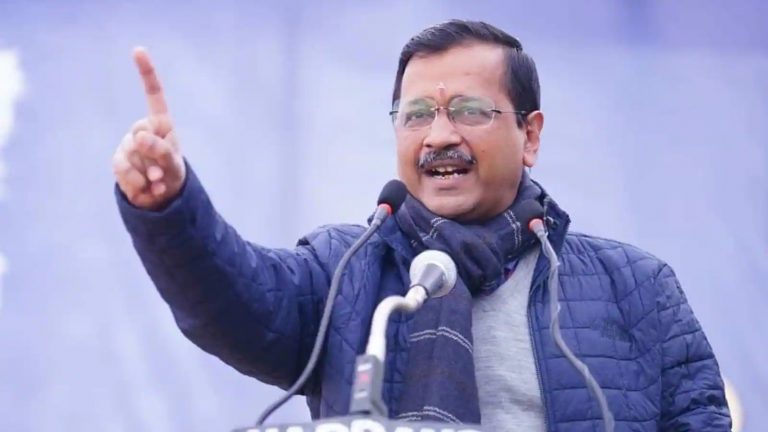
Sukhpal Khaira was not the only Congress leader to raise this bogey of “Non-Punjabis”. Veteran Congress leader and former Indian Hockey captain Pargat Singh also expressed similar sentiments. In his tweet, Pargat Singh accused Arvind Kejriwal and Bhagwant Mann of disrespecting the Punjab mandate by nominating people who have never stood up for Punjab.

Pargat Singh tweeted, “Rajya Sabha is a forum where the interests of the states are raised. @ArvindKejriwal has shown his real face by nominating those who have no history of standing up for Punjab. A couple of them even does not belong to Punjab. This surely is a betrayal of Punjab mandate. @BhagwantMann

However, not every Congress leader was willing to attack AAP for their choice of Rajya Sabha candidates. Outgoing Rajya Sabha MP and veteran Congress leader Pratap Singh Bajwa said, “AAP reps got elected, it’s their call to nominate in RS. They had the strength, so they chose their people, whether from inside or outside, I don’t want to comment on it. 1st day should be of constructive Opposition, not my job to oppose for the sake.”

As several Congress leaders raise this issue of non-punjabis representing Punjab in Rajya Sabha, important to remember that former Prime Minister Dr Manmohan Singh was a 5 term Rajya Sabha MP from Assam.

Vision IAS Series, Part 1: How faculty is subtly brainwashing students, from ‘Ram Rajya has nothing to do with Ram’ to Muzaffarnagar riots

In the last week of February 2022, several videos emerged on social media where faculty of UPSC training centres were feeding left-leaning and Islamist propaganda to their students. OpIndia published multiple reports on the issue, especially about Delhi based Vision IAS, where a faculty named Smriti Shah’s videos went viral. Recently, a whistle-blower, who took admission at Vision IAS, contacted us and informed us how the faculty has been feeding propaganda to the UPSC aspirants.

Sagar (we are using a pseudo name for the whistle-blower) told us how he found several training sessions by Smriti Shah problematic as she repeatedly mocked Hinduism and Hindu Gods. He sent us multiple videos of training sessions held by different teachers, which we are still scanning. In this series, we have extracted specific portions of the sessions where Shah subtly implanted the propaganda while teaching different topics.

Process of correcting history books deemed wrong

Shah conducted lectures on multiple topics, out of which several sessions were on Ethics. In session three of Ethics, she talked about how the content of education should be without any ideological colouration, however, she doesn’t seem to follow her own advice. She mentioned how NCERT books are undergoing a change as a part of correcting History books, to give more space to historical figures and events that happened before Mughals came to India.

Visibly pained by the fact that ancient Indian history is being included, and the period of Mughals is being reduced to have a balanced perspective of Indian history, she said, “If your NCERT content undergoes a change and it is being projected as everything about ancient Indian history, it is being glorified, and medieval Indian history has been undermined. You are distorting the history to satisfy your own ideological bias.”

Vision IAS | Smriti Shah | Process of correcting history books deemed wrong from OpIndia Videos on Vimeo.

She further said, “What kind of society are you going to create when you have projected that ancient Indian history is Indian history whereas medieval Indian history was nothing but invasions and exploitation which happened. You want to create a certain religious ideology in your country. And accordingly, you are distorting the content of NCERT on how to challenge democracy, secularism, demonetization, all that has been removed from the content of NCERT. So what you are doing now is that the content of education is not driven by the scientific temper but ideological colouration.”

While Shah, unfortunately, did not explain whether demonetization was a part of ancient India or medieval India, her hypocrisy was very much visible. She was pained by the fact that more space was given to the ancient history of India, which the content creators of NCERT ignored for decades. The older generations do not know much about the Hindu kings that ruled the region before the Islamic invasions began. They do not know what atrocities native Indians faced at the hands of the invaders. All they know is the highly glorified history of the invaders who came to plunder the land.

Unnecessary bashing of Ambani-Adani

For some reason, the left-leaning section of the society has deep-rooted hate for Ambanis and Adanis. The case is the same with Shah. In the same session, she talked about the role of media in spreading propaganda on the behest of corporate houses and the government. She said the media is not giving the correct information. According to Shah, because the media has failed to show how corporate houses survived the pandemic, but the middle and lower class is suffering, no one is questioning the corporate houses and the government.

Vision IAS | Smriti Shah | Targeting Ambani Adani from OpIndia Videos on Vimeo.

In this context, she openly targeted Ambani and Adani groups. She said, “Nobody is talking about the farmer crisis. Nobody is talking about how the economy has gone down. Nobody is talking about it. As a result, we think that maybe this is God’s act. It is an act of God that the economy has taken a downturn. None of us is questioning the government. None of us is questioning corporate sectors. Why? Because we believe all of us are equally deprived because there has been an act of God which is nothing but this pandemic.”

She added, “But when you are told that the others are gaining profit and it is only you who are suffering. Do you realize rich people have been able to sail through? Ambani Adani, all of them are growing at a different rate. Then you will be made to realize that approximately one per cent of rich people have more than 40 per cent of the national wealth or assets. When we discuss these topics, then you will realize something wrong is happening to us. We should raise our voices. So media is playing the role of social management tool. They are under the influence of either politicization or corporatization of media. More than half of them are owned by business houses. Who has invested in Network 18? Media has become a tool in the hands of corporate houses and political parties to serve their vested interests.”

Here, in this clip, Shah repeated the same anti-corporate line that the Indian left continues to repeat. Vilifying Indian businesses is a favourite pass time for the left. Tata and Birla were the targets once upon a time, now it is Adani and Ambani. Contrary to her thought process, these corporate houses, including Ambani and Adani, opened their wallets to help the government and the people of India during the pandemic.

These much-vilified corporates were setting up hospitals, providing Oxygen for patients, helping feed the poor. All these corporate houses provided employment, kept the wheels of the economy running, and helped the country survive the pandemic. Someone should ask her whether India would have been able to develop a vaccine without corporate houses. If she thinks SII is not a corporate house, then it is a whole different case.

Bizzare statement on Muzaffarnagar riots

Talking about the role of social media in spreading fake news, she alleged that the Muzaffarnagar riots happened in 2013 because it was given a communal colour on social media. She said, “It was a case of eve-teasing. A girl was eve teased by a boy. However, it was presented as a Hindu girl who has been eve teased by a Muslim boy. The communal colour was given to the case which resulted in riots.”

It is very important to mention here that the riots broke out in 2013 due to the events that followed the incidents of eve-teasing of a Hindu Jat girl by a Muslim man who got killed when the girl’s brothers Sachin and Gaurav went to confront him.

Vision IAS | Smriti Shah | Muzaffarnagar riots from OpIndia Videos on Vimeo.

In retaliation, both Sachin and Gaurav were mob lynched by seven men, named Muzassim, Muzammil, Furquan, Nadeem, Jehangir, Afzal and Iqbal. This incident led to one of the bloodiest communal clashes in Muzzafarnagar, killing at least 60 and leaving around 55,000 homeless.

The Sessions Court in 2019 had declared the seven accused guilty in Kawal double murder case. They were charged under sections 147, 148, 149, 302 of the IPC. The seven had slaughtered Sachin and his 17-year-old cousin Gaurav by hitting them with rods and had brutally crushed their faces with heavy stones. The issue had a communal colour from the very beginning. OpIndia recently met the family of Sachin and Gaurav. Details can be read here.

‘Ram Rajya has nothing to do with Lord Ram’

During the first training session on Ethics, Shah claimed that the concept of Ram Rajya has nothing to do with Lord Ram. She said, “In general, the best thing about following ethics is, first of all, the incidents of social strive would be less. The social conflict in the society would be less. Because you are also following a set of ethics, and I am following the same prescribed set of ethics. So in that situation, the chances of a conflict between us would be less.”

Vision IAS | Smriti Shah | Claims Ram Rajya has nothing to do with Lord Ram from OpIndia Videos on Vimeo.

She added, “That is why we always talk about creating a virtuous society. The concept of Ram Rajya has nothing to do with Lord Ram, to be very precise. The idea of Ram Rajya was to construct a virtuous society. A society in which every individual is ethical in their action. Automatically the incidences of crime, the incidences of conflict, [and] incidences of chaos would come to an end, and you will establish a peaceful society. You will establish a society where there exists harmony and tolerance towards each other’s diversity.”

The whole concept of Ram Rajya is based on the life of Bhagwan Ram as a king. How can someone with so much “knowledge” like Shah cannot see that in the word “Ram Rajya” there is literally the name of Bhagwan Ram!

‘Valmiki was a dacoit’

In the same session, Shah called Maharishi Valmiki, who wrote Ramayana, a dacoit. She was talking about how education plays a role in building ethics in an individual. She said, “Value-based education is the need of the hour. Because right from childhood you have to give right kind of value system because more or less values remain permanent and it is very challenging to change. However, I will not say it cannot change.”

Vision IAS | Smriti Shah | Called Maharishi Valmiki a dacoit from OpIndia Videos on Vimeo.

She added, “It can change, but it will be a taxing job. So how it can change, the environment goes under a change. If all of a sudden some enlightenment happens. For example Valmiki, he was a dacoit. But his circumstances changed, and later, he was the one who wrote Ramayana.”

The Valmiki Samaaj, especially those who live in Punjab, disagree with the part of the story that he was a dacoit at any given time. In fact, Punjab and Haryana High Court had delivered a judgment in 2010 stating he was never a dacoit.

Whitewashing the problematic Tanishq ad

In a clip from the fourth session of Ethics, Shah ranted out her frustration over the fact that a problematic ad by Tanishq was taken down after public protests. The particular ad had promoted a Hindu woman being married into a Muslim household. The Hindu outfits raised objections against the ad due to the fact that cases of Love Jihad are on the rise in India and this ad seemed to promote it.

Vision IAS | Smriti Shah | Whitewashes problematic Tanishq ad from OpIndia Videos on Vimeo.

She was talking about how accepting is a society to changes. Pointing out that there was no use of policies if the society is not ready to accept the change, she said, “Tanishq ad was taken down. Those people came, right? Those who protested against Love Jihad? What did we do? They had to remove the ad.”

She added, “On one hand, you talk about unity in diversity and cultural integrity. Then-government allowed inter-religious marriages in the constitution. But did society change? Even today, inter-caste marriages do not happen. Honor killing is common. They call it Love Jihad. Moral policing happen. What have we done? Nothing.”

She further pointed out the role of NGOs, civil societies and pressure groups in “bringing change to the society”.

Though no one should have a problem with that when it comes to interfaith marriages, if the male from a particular community hides his identity and presents himself as a Hindu to lure a Hindu girl and marries her without revealing his true identity, should it be acceptable in the society? Marriage based on lies that have led to Hindu women being tortured and even murdered should be acceptable? These are the questions that should be asked to these faculty members.

OpIndia is scanning through the videos we have received and will soon publish the next report in the series.

Israeli lawmakers slam Ukrainian President Zelenskyy for comparing Russian invasion to the Holocaust

Ukraine’s President Zelenskyy has invited the ire of several Israeli lawmakers for his comments on the Holocaust. Addressing the Knesset (Israel’s legislative body), Zelenskyy drew comparisons between the Russian invasion of Ukraine and the Holocaust, infuriating several lawmakers in the Knesset.

In a video conference, Zelenskyy asked Israel to join the western economic sanctions against Russia, and to provide weapons to Ukraine. During his speech, Zelenskyy claimed that Russian President Vladimir Putin is attempting to carry out a “final solution” in his country, evoking the deliberate, planned mass murder of Europe’s Jews by the Nazis.

“You remember it and will never forget it for sure,” he said. “But you should hear what is coming from Moscow now. They are saying the same words now: ‘final solution.’ But this time it’s about us, about the Ukrainian question”, he said, as per the associated press.

However, the Ukrainian President’s plea didn’t go down well with everybody with several lawmakers criticizing Zelenskyy for drawing comparisons between the Holocaust and Russia’s invasion of Ukraine, and ignoring some Ukrainians’ complicity in the Nazi-led genocide.

Israel’s Communications Minister Yoaz Hendel tweeted ,”I appreciate the President of Ukraine and support the Ukrainian people in heart and deed, but it is impossible to rewrite the terrible history of the Holocaust. Genocide also committed on Ukrainian soil. The war is terrible but the comparison to the horrors of the Holocaust and the final solution is outrageous.”

Opposition Likud’s member of Knesset (MK) Yuval Steinitz said that Ukraine President’s comments border on Holocaust denial. He further added ,”The same is true for the claim that Ukrainians helped Jews in the Holocaust. The historic truth is that the Ukrainian people cannot be proud of its behavior during the Holocaust towards the Jews.”

Another Likud MK Yoav Kisch tweeted ,”War is bad, difficult, and creates unnecessary victims and bloodshed. It is not a holocaust. A holocaust is, among other things, intentional genocide, ovens, gas chambers, mass graves and the premeditated murder of women and children. The only word to describe the Holocaust is holocaust. A holocaust is not war.”

Zelenskyy’s speech was also called out by several journalists for his attempts at historical revisionism with people reminding Ukraine’s President about Ukraine’s role in the Holocaust.

President Zelenskyy, who is himself a Jew, has also lost members of his family during the Holocaust when vast majority of Ukrainian Jews were killed, among others around Europe.

Ukraine: Deputy Mayor of Dnipro city threatens to bury Muslim Chechen soldiers in pigskins

The Deputy Mayor of the Central Ukrainian city of Dnipro has threatened to bury Muslim Chechen soldiers, who are fighting for the Russian side, in pigskins. The threat is aimed at hurting the religious feelings of Muslim fighters because pig is Haram (prohibited) in Islam.

In a message posted on his Telegram group, Deputy Mayor Mykhailo Lysenko wrote, “It is official. The decision has been made. All Kadyrovites (Chechen paramilitary affiliated with the National Guard of Russia) killed on the territory of Dnipro region will be sewn up and buried in pigskins.”

He further added, “Thanks to the meatpackers of the city. Let us see how they (Muslim Chechen soldiers) will be received there in heaven. Bastards.”

A German journalist by the name of Lars Wienand inquired whether the Deputy Mayor was serious about his remarks. “Are you serious or is this a somehow rude joke?” he asked. An unapologetic Mykhailo Lysenko had claimed, “There is a parallel. Putin did it in Russia.”

Screengrab of the Facebook comment by Mykhailo Lysenko

Chechnya is a Russian republic located north of Georgia. Chechen forces are the military force in charge of Chechenya’s defence. The republic is not an independent entity and is subject to Russian laws and regulations. The majority of them are Muslims. Ramzan Kadyrov is the head of the Chechen Republic. Kadyrov refers to himself as Russian President Vladimir Putin’s foot soldier.

Chechen forces are regarded as one of the most violent and battle-hardened troops in the world with several stories claiming that many of them were once members of ISIS. Several sources have also indicated that they have been marching towards Kyiv following their deployment in Ukraine.

The controversial Ukrainian leader was also seen unveiling a tombstone of Russian President Vladimir Putin, where the year of death was mentioned as 2022. The Russian President’s face was juxtaposed with that of former Nazi leader Adolf Hitler.

Ukraine National Guard greased bullets with pig fat for use against Muslim Chechen fighters

Last month, the National Guard of Ukraine’s Twitter account published a video stating that Azov fighters of the National Guard had coated their bullets with pig fat for using them against Muslim Chechen forces.

The actual tweet read, “Azov fighters of the National Guard greased the bullets with lard against the Kadyrov orcs.” Although Twitter claimed that the video violated the standards and promoted hateful behaviour, it allowed it to stay accessible in the “public’s interest.”

61 out of 73 farmer unions had supported the 3 farm laws: SC appointed committee releases report a year after it was submitted, says it has no relevance now

The Supreme Court-appointed committee on the three farm laws has said that around 84% of the farmer unions, that talked to the committee, representing more than 3 crore farmers in the country had supported the farm laws which were repealed after agitations broke in the states of Punjab, Haryana and parts of UP. The SC panel had advocated for the retention of the three acts while allowing flexibility to the states in implementing and designing them with the central government’s approval. The report was made public by the committee on Monday.

The four-member committee stated that repealing the essential Farm laws would be unfair upon the silent majority of farmers who supported the laws all across the country. In January 2020, after putting a stay on implementation of the farm laws which had stirred much controversy within a section of farmers, The apex court set up a panel of distinguished experts to study the aspects of the laws. The panel constituted four members including agriculture economist Ashok Gulati, Anil Ghanwat, President of Shetkari Sanghatana (Maharashtra), International Food Policy Research Institute’s Pramod Kumar Joshi and Bhupinder Singh Mann, president of a faction of the Bhartiya Kisan Union who later left the panel.

Anil Ghanwat said that while the observations of the committee hold little significance in terms of its impact on the laws as they have already been repealed, it is significant for policy makers and farmers in general. The report says that committee had reached out to 266 farm organisations, including the unions agitating against the farm laws. The committee had also received 19,027 representations on the dedicated portal and 1,520 emails.

Reportedly, the panel had submitted the report on March 19, 2021, in a sealed envelope to the Supreme Court, several months before the three farm laws were withdrawn by the central govt. Anil Ghanwat had also written to the Supreme Court and PM Modi to release the report. As it was not done, the panel decided to make it public a year after it was submitted. “On March 19, 2021, we submitted the report to the Supreme Court. We wrote letters to the apex court three times requesting it to release the report. But we did not get any response,” Ghanwat said. He added that he is releasing the report today as it has no relevance now after the laws are already withdrawn.

According to the report of the panel, out of 73 farmer unions representing 3.83 crore farmers, 61 organisations had supported the farm laws. Only four unions representing 51 lakh farmers had opposed them, and the rest 7 unions wanted some amendments in the laws. However, the panel informed that the farmer organisations leading the protests in Delhi didn’t attend the interactive sessions with the committee, despite repeated invites sent to them. 40 unions, which had organised agitations against the laws under the banner of Samyukt Kisan Morcha (SKM), didn’t made any representations to the SC-appointed panel.

“It may, however, be noted that in these interactive sessions with Farmers Organizations, the agitating farmers’ organizations at the periphery of Delhi did not join the discussions with the Committee despite repeated invites sent to them. The Committee was informed that the organizations were not willing to present before the Committee and preferred bilateral discussions with the Government. The Committee respects their decision of not participating in its deliberations. However, their concerns, as ascertained from media reports and interactions with Government, have been kept in mind by the Committee, while formulating its recommendations,” the report said.

The report stated that around two thirds of the suggestions received on the dedicated portal supported the farm laws. Moreover, only only 27.5%of the farmers sold their produce at Minimum Support Price (MSP) and they were mainly form Chhatisgarh, Punjab and Madhya Pradesh.

The report also contains multiple suggestions made by the members on the implementation of the laws and collaborations between different parties involved over the acceptance of the laws. The report suggests that alternative mechanisms for dispute settlement, through civil courts or arbitration mechanisms such as farmer courts may be provided to the stakeholders. It suggests that agricultural infrastructure in the country can be strengthened by the formation of cooperatives and Farmer Producer organizations (FPOs), while an agriculture marketing council with all states and UTs as members may be formed for implementation of the farm laws.

The committee also recommended to cap procurement of wheat and paddy by Food Corporation of India (FCI). The committee said that the model adopted by the National Cooperative Agricultural Marketing Federation (NAFED) in terms of procurement of oilseeds and pulses can be adopted for wheat and paddy. NAFED procures 25 per cent of the total produce with a cap on individual procurement from farmers.

On November 19, 2021, In a video address, Prime Minsiter of India Narendra Modi had announced the repeal of the farm laws on account of Guru Nanak Jayanti. The laws already stayed by the Supreme Court, and as the farmer unions continued to block roads around Delhi, the govt had decided to relent. For over a year, agitating farmers had taken hostage the major arterial roads leading to Delhi while in many instances violence broke out inside the camps. The protesters lost national sympathy for their cause after they stormed the Red fort and surrounding streets on January 26, 2020, which resulted in riots after the republic day parade.

Several recommendations by the SC panel include the Development of price information and market intelligence system to strengthen the bargaining power of the farmers, Converting existing APMCs to revenue-generating entities, and abolishing the Essential Commodities Act, 1995.

‘That’s how my Mama escaped being shot by Bitta Karate’: HAF Director narrates how Karate mistakenly killed someone else instead of his uncle

On March 21, Rajiv Pandit, a Kashmiri Pandit and member of the Board of Directors at Hindu American Foundation, narrated the story of how his uncle, Ashok Tikoo, escaped getting killed by terrorists Bitta Karate in February 1990. Though Pandit had talked earlier about Tikoo’s escape and how another Kashmiri Pandit, Anil Bhan, was killed instead, he never narrated how his uncle had known Karate before he became a terrorist.

Pandit, in a tweeted threat, said before Farooq Ahmed Dar alias Bitta Karate became a ‘psychopath terrorist’, he was just another kid in the valley who was popular by the name Bitta. He used to play cricket with Pandit’s family, and his uncle used to give him money for school.

After being radicalized, Bitta went for training at a terrorist camp. Upon returning from the camp, he was directed to kill Tickoo. Pandit said, “After Bitta returned from terror training in PoK, he was given orders to assassinate my uncle. Bitta had another JKLF terrorist watch my uncle leave his home for work, walking through an intersection in Haba Kadal. The plan was to shoot my uncle from behind at close range.”

On a fateful day, i.e. February 16, 1990, the terrorist who was watching Tickoo saw him leaving the house at 9:30 AM. Tickoo was wearing a leather jacket that became the identification mark. The information was passed on to Bitta, who then left to assassinate Tickoo. While going to the office, he remembered it was his brother’s birthday, so he went back home to participate in Pooja.

The spotter did not see him returning back home. At the same time, another Kashmiri Pandit, Anil Bhan, had left his house to Haba Kabal for office. 26-years-old Bhan was to get married soon.

Arvind Dhar, a Kashmiri Pandit refugee, quoted Pandit and said Bhan was engaged to a girl from a reputed family in Rainawari. Without indulging in more details, he said the incident shook the entire area.

Incidentally, he was also wearing a leather jacket. Pandit added, “Bitta Karate saw the Kashmiri Hindu man in a leather jacket at the Habal Kadal intersection, believing it was my uncle. He walked from behind, drew his pistol, & fired at point-blank range. You can never forget a mother’s cries at the sight of her dead son in a pool of blood.”

Later, the terrorists had acknowledged killing Bhan under the pretext of mistaken identity. In an opinion piece Pandit wrote in August 2019 after the abrogation of Article 370, he said the incident was a wake-up call for his family. They left the valley the same night with a few suitcases leaving behind everything they owned. A few months later, they came to know that their home was looted and destroyed.

He added when the Government of India abrogated Article 370 and 35A, his family celebrated. “In those Articles lay the seeds of a cleavage between Kashmir and the rest of the Indian nation—one that allowed the state to render many of its residents, second-class citizens,” he wrote.

In his tweet thread, while thanking Vivek Agnihotri for making the film, he said he did not narrate the story earlier as he did not think anyone would really listen.

Who was Anil Bhan?

Anil Bhan was a bright young Kashmiri Pandit with an excellent academic record. Born on June 8, 1963, Bhan had completed his master’s in Agriculture and got appointed as Agricultural Technical Officer in the United Commercial Bank. At a young age, he was promoted to Assistant Branch Manager in the same branch.

On February 6, 1990, when he was walking towards his office at Badshah Chowk, Srinagar, Bitta Karate approached him from the back and shot him at point-blank range. His dead body was discovered by his mother. Pandit mentioned in his thread that her screams were hard to forget. Though the terrorist claimed he was killed due to mistaken identity, his family never believed it. He was survived by his mother, father and sister.

In a research paper by Tajamul Maqbool titled “Narrating the Pandit Exodus: A Study of Indian Administrate Kashmir”, Bhan’s cousin Sanjay Moza was quoted. He said the main reason for his family to leave the valley was his cousin Anil Bhan’s murder, who was shot dead by Karate.

The Kashmir Files

Vivek Agnihotri’s The Kashmir Files was released in theatres on March 11, 2022. Since its release, it has brought the atrocities faced by Kashmiri Pandits to the mainstream. Many Kashmiri Pandits, who never shared their ordeals are coming out and telling their stories of the exodus of Kashmiri Pandits in 1990s.

China Eastern Airlines flight MU5735 with 132 people onboard crashes, horrifying visuals emerge on social media

A China Eastern flight MU5735 (Boeing 737) with 132 people on board crashed today in Guangxi Zhuang Autonomous Region, South China. It is unclear if there were any survivors or not. The flight MU5735 originated from Kunming Changshui Airport, Yunnan Province, Southwest China, at 1:15 PM. It was scheduled to reach Guangzhou, South China, at 3:07 PM.

As per Chinese media, rescue teams have been deployed to the accident site. So far, there is no confirmation of the casualty figures in the crash. The Boeing 737-800NG plane had 132 people onboard, including nine crew members.

After taking off from Kunming airport, the flight was cruising at an altitude of about 8869 meters. But at 2:19 p.m, the aircraft suddenly descended from cruising altitude, and its flight speed also began to decrease. At 2:21, The flight MU5735 lost its ADS-B radar signal, and also lost contact with the ground.

Horrifying visuals, reportedly of the crash site have emerged on social media.

This is the first air crash in China since a fatal incident in Yichun, Northeast China’s Heilongjiang Province back in 2010.

OpIndia does not confirm the visuals. This is a developing story.

“Unnecessary controversy created around The Kashmir Files”: Indian High Commissioner in New Zealand writes to the chief censor over review of the movie

After the chief censor of New Zealand David Shanks said that he will be re-evaluating the certificate issued to The Kashmir Files after Muslim organisations raised objections to it, Indian High Commissioner to New Zealand Muktesh K Pardeshi has written to him regarding the matter. The High Commissioner has said that an unnecessary controversy has been created around the movie in New Zealand, and asked the censor to take a balanced and fair view in the matter.

The High Commissioner wrote to after the Chief Censor of New Zealand had said that the R16 certificate issued to The Kashmir Files was under review. The censor had said that after the certificate was issued, concerns were raised about potential risk of harm to the Muslim community in relation to the release of the film. David Shanks had added that these concerns appeared to them to be genuine, “and sufficiently serious to cause us to pause and review our classification for this film.”

While the chief censor had said that the movie will not be banned, he had said that it will be reviewed due to the concerned raised. As a result, the release of the movie in New Zealand was also postponed. The Indian High Commissioner to New Zealand has objected to this move, saying that “an unnecessary controversy has been created in New Zealand during the weekend regarding the film and its planned release.”

The High Commissioner said that he has been informed that some organizations led by the Federation of Islamic Associations of New Zealand (FIANZ) have approached the New Zealand Government, including the Prime Minister, urging to stop the release of the film. “There are concerning reports that the Office of the Chief Censor is under tremendous political pressure,” he added.

Muktesh K Pardeshi said that he has been receiving calls and emails from Kiwi moviegoers and members of the Indian diaspora who have been looking forward to watch the movie in theatres. Talking about the movie, he states that the movie is about exodus of Kashmiri Hindu Pandits and gruesome atrocities perpetrated by the extremists on them in the 1990s, and it intends to educate future generations about the menace of extremism and terrorism.

He said that the movie has been watched by the Indian political leadership including PM Narendra Modi, who said that “it is not an issue about a Film, but that of ‘bringing out the truth’ and ‘presenting history’ in its correct perspective”. Pardeshi also informed that several leaders in New Zealand have supported the movie and opposed any censorship, including former Deputy PM Winston Peters, MP Melissa Lee and MP David Seymour.

The letter states that the movie has been released in several countries worldwide where it has been received well by the audience.

The High Commissioner added that an erroneous, biased and politically- motivated impression is being created in the minds of New Zealand audience that the film is likely to create a sense of disharmony and Islamophobia. He said, “the film is about a tragic episode which occurred more than 3 decades ago and the present generation deserves to know historical events in a correct and truthful perspective. There has been no cases of disharmony and any breach of peace in India or elsewhere in the world where the film is currently being shown.”

The letter to the chief censor emphasizes, “We all believe in the fundamental principle of freedom of expression. If there were no freedom of expression, the human kind would have not seen films and books on wars, holocaust, political conflicts and other tragic historical events”.

Therefore, Muktesh K Pardeshi requested David Shanks to take a holistic, balanced and fair view of the matter within the remit of the Films, Videos, and Publication Classification Act 1993, and not as a result of “disinformation and political activism led by some sections of vested interests”.

Petition launched to prevent censorship of The Kashmir Files in New Zealand

In the meanwhile, an online petition has been launched on Chgange.org to urge the New Zealand government to allow release of the movie The Kashmir Files, and not surrender to the pressures of radical Islamist groups.

The petition states that many Organisations with malicious intents are blocking the release of the film in New Zealand. Therefore, it urges people to show support for release of the movie in New Zealand.

After ‘Bulldozer Baba’, time for ‘Bulldozer Mama’, Shivraj Singh Chouhan govt in MP demolishes houses of the accused in Raisen violence

Yogi Adityanath had earned the nickname of ‘Bulldozer Baba’ in Uttar Pradesh due to his strict action against the criminals operating in the state. Bulldozers had become almost as famous as BJP’s symbol lotus in the run up to the assembly elections in Uttar Pradesh. Now it looks like the love for bulldozers is spreading to the neighboring state of Madhya Pradesh as well.

After the violence in Raisen, Madhya Pradesh, Shivraj Singh Chouhan government has taken strict action against the people involved in the violence. After receiving the instructions from the government, local district administration got into action mode and demolished the illegal homes and shops of the culprits. Out of the 16 accused, 13 have been arrested as well so far, with 3 still absconding.

Till now, Uttar Pradesh government headed by Yogi Adityanath was known for such swift action of demolishing illegal structures constructed by criminals, now looks like ‘Bulldozer Mama’ version of Shivraj Singh Chouhan has been unleashed as well.

In another case of a rape of a minor girl in Sheopur as well, government has demolished the illegal houses of the accused Mohsin, Riyaz and Sehwaj. The accused are absconding and efforts are on to nab the accused.

Earlier, in Raisen, violence had broken out after a minor spat between tribal and Muslim communities took a violent turn. In the Khamaria Khurd village of Raisen district on Friday night, a Muslim man riding a motorcycle along with his sister was passing by the village when a few men passed a comment on his alleged rash driving. The man soon returned with a few others to confront those who passed comment on him. Reportedly, violent skirmishes broke out between the two sides as they took to fighting with each other.

In the violence that followed, 1 tribal youth was shot dead while over 50 others were injured. Several shops and motorcycles in the vicinity were burned down during the clashes. It took police force of 4 police stations to finally bring the situation under control.

Kerala Medical students who were evacuated from Ukraine now demand admission to medical colleges in India, as many as 3,000 students affected in the state

0

Medical students in Kerala who returned from war-torn Ukraine this month, have taken to protest demanding admission to medical colleges in India. On Sunday, students pursuing bachelor’s medical education in Ukraine and China gathered in front of the State Secretariat building in Thiruvanathapuram in a protest organised by the Foreign Medical Graduates’ Parents’ Association demanding government intervention in the continuation of their studies.

After disruption in their studies after the war between Russia and Ukraine broke out, Indian returnees from Ukraine are uncertain about their future as their continuation of studies has posed many challenges. It has been learnt that many students are attending online lectures hosted by their teachers from bunkers, but the assurance for prolonged conduction of classes looks abysmal. As many as 3,000 medical students from Kerala have been directly affected by the war.

On Saturday, A group of medical students from Ukraine addressed a press conference in Ernakulam putting their demands ahead of the authorities. Many students along with their parents reiterated their demand that students from Ukraine whose education is affected after evacuation in India be admitted to medical colleges in the country. “Though the university is offering us online classes, there is no assurance about what will happen next as our teachers are attending the online sessions from bunkers. We request the authorities here to admit us into medical colleges in the country as we will not be able to go back to Ukraine in the near future,” Anikha Thomas, A third-year student of Bogolomets National University in Kyiv said.

One of the students stated that if remedial measures are not taken before the annual exams which happen March-April, it will result in a loss of the academic year. Furthermore, students have also demanded admission to the precious government college seats since a high fee structure in private medical colleges will be a costly affair. “As we will not be able to meet the high fee structure in private medical colleges, we urge them to permit our children to complete the course paying the fee for government merit seats,” demanded a parent during the press conference.

Admission to Government colleges in India is a sought after dream for medical aspirants since the seat to applicants ratio is huge. Moreover, the national medical entrance examination NEET (National Eligibility cum Entrance Test) for undergraduate medical courses hence becomes a tough nut to crack. Owing to the shortage of medical seats in the country, aspirants divert to countries like Ukraine for cheaper medical education. People are arguing that to grant such a valuable position away which is often contested by thousands of others through a common entrance test is not a fair proposition.

Education in a foreign country is often made possible for the middle class through education loans offered by the banks. Many students who went abroad for a six-year MBBS course offered by Ukrainian universities have already paid the entire fee for all six years. The Russian invasion has put Indian parents into a puzzle while they are worried about the money invested in their children’s education. The Kerala Ukraine Medical Students’ and Parents’ Association has been formed to collectively address the concerns of the students from the state.