Home Blog Page 3368

Uttar Pradesh: 3 Hindu youth stabbed by local Muslim men for raising nationalist slogans after the screening of ‘The Kashmir Files’

On Friday (March 18), three Hindu youths were gravely injured in a knife attack while they were exiting the cinema hall after watching the movie, ‘The Kashmir Files’. The incident took place in the Fazilnagar block in the Kushinagar district of Uttar Pradesh.

As per a report in Live Hindustan, the victims were identified as Sachin, Krishna and Sahul. The youths had gone to the cinema hall to watch the last show of “The Kashmir Files.’

After the screening of the movie was over, the trio raised nationalist slogans while exiting the cinema halls. Irked by the sloganeering, the local Muslim men first argued with the Hindu youths. When the arguments turned heated, they attacked the Hindu youths with knives and inflicted severe injuries.

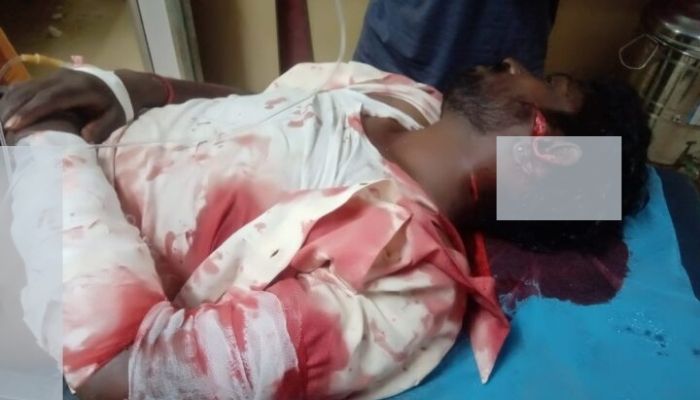
Hindu youths injured in knife attack

The victims were then rushed to the Community Health Centre (CHC) in Fazilnagar block. After preliminary treatment, the doctors referred the three Hindu youths to the nearby medical college.

The Patherwa Police had launched a probe into the matter. A First Information Report (FIR) was registered and a search operation was initiated to nab the accused men. Station House Officer (SHO) Akhilesh Kumar Singh assured that the perpetrators would be brought to justice.

‘The Kashmir Files’ movie narrates the 1990 genocide of Kashmiri Pandits

The Kashmir Files’ is inspired by the true stories of Kashmiri Pandits. It takes viewers back to 1989, when conflict erupted in Kashmir due to rising Islamic Jihad, forcing the great majority of Hindus to flee the valley.

According to estimates, roughly 100,000 of the valley’s total 140,000 Kashmiri Pandit inhabitants migrated between February and March 1990. More of them fled in the years that followed until just about 3,000 families remained in the valley by 2011.

The movie based on video interviews with first-generation Kashmiri Pandit victims of the Kashmir Genocide was released in India on March 11 and is open to watch in theatres.

Japan will invest 3.2 lakh crore rupees in India in upcoming 5 years: PM Modi

Prime Minister Narendra Modi said on Saturday 19th March 2022 that Japan will invest Rs 3.2 lakh crore in India in coming 5 years. He also said that the two countries have achieved the targets that were set in 2014. He was giving a joint press statement with the Japanese prime minister Fumio Kishida who is on his visit to India for the 14th summit between India and Japan.

PM Modi said, “I am happy that we have crossed the investment target of 3.5 trillion Yen set in 2014 and we have decided to increase our aspirations. In the coming five years, we have set a new target of 5 trillion Yen investment i.e. about 3.20 lakh crore.”

He further said, “the world is still coping with the ill effects of COVID-19. “There are obstacles in the global economic recovery process. The geopolitical developments are also posing new challenges. In this context, it is not only important for India and Japan to strengthen their bilateral partnership but it will encourage peace, prosperity, and stability in the Indo-Pacific region and in the world.”

Underlining the friendly relations with the Japanese prime minister, PM Modi said, “PM Kishida has been an old friend of India. I have had the opportunity to exchange views with him when he was the Foreign Minister of Japan. Japan is one of the largest investors in India.”

Taking cognizance of the high-speed rail corridor development work between Mumbai and Ahmedabad, the project that is being completed with the help of Japan, PM Modi said, “Japan has made a notable contribution in the flagship projects like Dedicated Freight Corridor and Mumbai-Ahmedabad High-Speed Rail project. Good progress is being made on Mumbai-Ahmedabad High-Speed Rail.”

The two countries also signed six agreements including one for cyber security cooperation. A sustainable development initiative was also launched for India’s northeast and clean energy partnership.

The previous India-Japan Annual Summit took place in Tokyo in October 2018.

In 2014, Japan had announced investment of USD 33 million in India.

Mahabharata lesson and reference to Hindu icons – Did you catch these hidden symbols in The Kashmir Files?

Director Vivek Ranjan Agnihotri’s film ‘The Kashmir Files’ has stirred up the public discourse within a week of its release on 11th March 2022. The film depicts the genocide of the Kashmiri Hindus by Islamic terrorists that happened in the 1990s and their subsequent exodus. The movie is drawing more viewers to the cinema halls with every passing day. ‘The Kashmir Files’, directed by Vivek Ranjan Agnihotri, has been declared tax-free by many state governments like Uttar Pradesh, Goa, Gujarat, Haryana, Madhya Pradesh, Karnataka, Bihar, and Uttarakhand. 

The box office collection of the film crossed the mark of rupees 100 crores on the 8th day. But the mark it has left in the minds of people is priceless and it is, therefore, necessary to keep an account of the subtle nuances people have noticed in the film and have talked about, along with the ones people must not miss while watching and even after watching this film. Some of these details trace their references in the Indic mythology and faiths, especially from Mahabharata. Let us have a look at them as the film unfolds itself.

The film opens with a boy called Shiva playing cricket. Shiva is believed to be the ultimate force in the Indic faiths. Shiva is Anadi and Ananta that is Shiva does not have any beginning or end; it is Sanatan that is perpetual. This very name in the beginning scene subtly establishes the existence of the oldest surviving civilization in Kashmir that is essentially Hindu civilization and in a true sense the cradle of human civilization.

A viewer named Ganraj tweeted in detail, the nuances he noticed. He wrote, “Mithun Chakraborty’s name is Brahma Dutt. Punit Issar’s name is Hari Narayan. Atul Shrivastava is Vishnu Ram. Finally, Prakash Belawadi is Mahesh Kumar.”

This character establishment underlines the three lords Brahma, Vishnu, and Mahesh. In the film, Brahma Dutt is an IAS officer. Hari Narayan is a police officer of DGP rank. Vishnu Ram played by Atul Shrivastava is a media person and Mahesh Kumar played by Prakash Belawadi is a doctor. Mrunal Kulkarni’s character in this film is named Lakshmi Dutt. Ganraj explained his observations in the subsequent tweet. He wrote, “Brahma Dutt represents the Govt. Hari Narain represents the Police or Law and Order. And finally, Vishnu Ram represents the Press of India. The movie shows – in very clear terms the inactions or helplessness of these institutions while the atrocities were happening.”

Ganraj wrote in his next tweet, “Finally the movie depicts the fight between two narratives. On one side you have Radhika Menon (played by Pallavi Joshi) and Bitta Karate (played by Chinmay Mandlekar). On another side, you have the Trimurtis and Pushkar Nath (played by Anupam Kher). The question is what are they fighting about? And what for?”

Anupam Kher played the role of Pushkar Nath Pandit in this film. The nameplate on his house in the film says Pushkar Nath Pandit is M. A. in philosophy. He is also seen as a theatre coach. While leaving Kashmir, which is in the scene of the exodus, Pushkar Nath Pandit’s family seeks temporary asylum in a poet’s house. All these things are a testimony of the rich culture rooted in Kashmir, of course essentially Hindu in nature, that was wiped away in this genocide and exodus. Rather, it is not the first time in 1990 that the Kashmiri Hindus had faced the atrocities. In fact, the film itself clears it that it was the seventh exodus.

Ganraj wrote in his next tweet, “In simple terms, they are fighting for the attention of Krishna (played by Darshan Kumar). Krishna in this movie represents the youth of India. And finally, Krishna makes a speech.”

Krishna Pandit in this movie is depicted as a confused youth who does not exactly know about his past thanks to the brainwashing guides like Radhika Menon (played by Pallavi Joshi). Even on his journey to know the truth about himself, Krishna is quite easily distracted by the Islamic terrorist Bitta (played by Chinmay Mandlekar). In fact, Krishna in the film is as confused as the warrior Arjuna in Mahabharata. Arjuna sought clarity of thoughts before the Mahabharata war started. It was only after Lord Krishna’s advice that he picked up his arms and fought for justice. Krishna in this film is no different.

While talking to OpIndia about this thread by Ganraj, director Vivek Ranjan Agnihotri said, “I am so delighted that this person caught the nuance so well. There is also a cue in the film where Bitta tells him – Your name is Krishna but you look like Arjuna. Because Krishna is dual here. He is also the keeper of Dharma but he is also the audience’s point of view which is Arjuna.”

And truly, the audience was so confused and ill-informed about the reality of the genocide of the Kashmiri Hindus that took place in 1990. Rather, it was not known as genocide before this film. Now that the people are knowing the truth, they have become as fearless as the warrior Arjuna. What The Kashmir Files is fighting right from the beginning is the war of narrative. In fact, it is a war against the so-called popular narrative.

Ganraj wrote in his next tweet, “We know that whoever has Krishna on their side, will have dharma on their side – which is why both of them were fighting for Krishna. As stated in the last line of Bhagavat Gita.” The last line in Bhagvadgeeta means, “Wherever is Krishna, the Lord of Yoga; wherever is Arjuna, the wielder of the bow; there are prosperity, victory, happiness, and firm policy; such is my conviction.”

Ganraj noted this in absolute cohesion with what the director thought. He wrote in his next tweet, “Who is Arjuna? It is you, the audience. Because at the end of you are the warriors. You have to decide whether you want to stand up to Adharma or not.” And this subtle nuance has translated very well amongst the viewers. Its impact is also seen as the people are talking openly about the topic that was ignored for more than three decades.

Finally, Ganraj concluded his thread with something that no viewer should miss notice. He wrote, “Finally, what did we lose in this whole genocide? Sharada (played by Bhasha Sumbli) in other words knowledge or Saraswati. Kashmir and the Kashmiri Pandits who held the seat of our Knowledge for millenniums have been murdered. I think this subtle meta detail is the genius in this movie. Thank you Vivek Agnihotri. I wanted the world to recognize this.”

Besides the peculiarities noticed by Ganraj, there are a few more things one must notice while watching The Kashmir Files. Vivek Agnihotri has said while speaking to OpIndia, “The film ends with the killing of the boy named Shiva. It was Shiva who had consumed poison for the welfare of the universe. While watching the film, viewers must also remember that the Himalayan valley of Kashmir is the birthplace of the best of the creations mankind has ever had.

Sharada in this film is shown as the epitome of the love and care for a family one may ever have. Even in exile, she teaches her son to focus on studies rather than encouraging him to take a path of violence for avenging the atrocities they faced. It is evident that she emphasizes education which is the true worship of Sharada. On the other hand, the stone-pelting Kashmiri youths shown in the popular narrative so far are always seen talking about the injustice done with them and they want to fight for their so-called Azadi. It is notable that the Sharada Peeth, the abode of Goddess Sharada, which is presently in POK is desecrated by similar Jihadis carrying Islamist ideology in their heads. Pushkar Nath Pandit teaches the kid to face their inner and outer fear and convert it into strength. This is something very basic as taught in Indic philosophies. It is due to this advice that the little kid fearlessly faces death with wide-open eyes.

Pushkar Nath Pandit – a drama teacher – hails from that land of Kashmir where Bharat Muni wrote the ‘Natya Shastra’ which is the pioneering document of drama studies. His face colored like that of Shiva and the depths of acting he has explored in the film terminally shatter the anti-Hindu narratives built by films like PK and Tandav. As Brahma Dutt, the character played by Mithun Chakraborty in this film reconsecrates the deity in the old home at Kashmir after the abrogation of article 370, one may naturally recall that it is Lord Brahma who reinitiates the things once they are destroyed. Krishna’s speech in the climax is as eye-opening to the viewer to clear the confusion about the Kashmir issue.

The Kashmir Files is filled with so many minute details. Many viewers and critics have agreed upon a thing that there is hardly any unnecessary frame in The Kashmir Files. Now, it is up to the audience to watch the film and trace out such symbols and inclusions – both visual and verbal – in this film that find their roots in Indic faiths and philosophies. Known for his ‘seeker attitude’ and philosophical acumen, director Vivek Ranjan Agnihotri has thus concluded it while talking to OpIndia saying, “There are many subtle nuances and layers in the film and I would want the audience to recognize them.”

Madhya Pradesh: One dead and over 50 injured after clashes erupt between Tribals and Muslims in Raisen

0

A minor spat that occurred between two parties in the Raisen district of Madhya Pradesh took a violent turn after a heated altercation between members of tribal community and Muslims devolved into a full-fledged riots, leaving at least 1 dead and over 50 injured, besides 6 others who have suffered critical injuries. Internet services have been temporarily snapped in the wake of the violent clashes.

Three shops and 5 bikes were set ablaze as communal tensions swept the Raisen district, forcing police into action. Police officials of 4 police stations were deployed to maintain law and order in the district. Senior police officers, along with CM Shivraj Singh Chouhan, have been keeping a close watch on the matter to ensure situation does not deteriorate. 

As per reports, tensions gripped the Khamaria Khurd village of Raisen district on Friday night, i.e the day of Holi, after a Muslim man a man riding a motorcycle along with his sister was passing by the village when a few men passed a comment on his alleged rash driving. The man soon returned with a few others to confront those who passed comment on him. Reportedly, violent skirmishes broke out between the two sides as they took to fighting, exchanging blows and attacking the other.

Sense prevailed for a while after elders intervened and stopped the clashes. However, the suspension of hostilities between the two sides was temporary as hundreds of people from both the communities reached the spot with the intent of unleashing harrowing brutality on the other. Shops in the nearby vicinity were set on fire while members of tribal society incinerated 5 motorbikes. Besides, aerial shots were fired from the tribal community, leaving close to 50 injured. 

Soon after the clashes broke out between the two sides, police rushed to the spot in order to maintain deteriorating law and order. According to the information given to the media by the Divisional Commissioner Gulshan Bamra, a case has been registered against the 16 accused in the Silwani police station in connection with this incident and investigation has been started. 

So far, 13 accused have been arrested till Saturday afternoon while a search operation has been launched to locate the absconding accused. Police have also confiscated two weapons, 12 bore rifle, 2 tractors, a pickup van used in the incident.

Madhya Pradesh chief minister Shivraj Singh Chouhan is reportedly closely monitoring the situation. Top officers IG Deepika Suri, Collector Arvind Dubey and SP Vikas Shahwal have already reached the spot to take stock of the situation and ensure peace and tranquility is maintained. CM Chouhan also paid a visit to the injured who were admitted to Hamidia hospital after the clashes erupted between the two sides.

Kerala: Textile store owner Rincy Nasser hacked to death by ex-staff Riyaz in front of her children for firing him from the job

25 years old Riyaz, has hacked 30 years old Rincy to death in Kerala while she was returning home with her two kids. The deceased, a Kodungallur native from Thrissur, was the neighbor of Riyaz who murdered her.

Rincy suffered grievous injuries and three of her fingers were severed in the attack. Further, she sustained a deep cut on her face. The incident took place around 7.30 pm on Thursday when Rincy was returning home with her children from her textile shop. Riyaz, who was waiting in an isolated place on the road, stopped the scooter and hacked Rincy.

Fortunately, the children travelling with Rincy escaped unhurt but Rincy was not so lucky. People who heard her screams took her to the hospital, but it wasn’t enough to save her life.

An ugly termination

As per reports, Rinsey was running a clothing shop called Nirakuttu in Thrissur, and Riyaz used to work there earlier. Some time ago, Riyaz was allegedly expelled from the textile shop after he had started to interfere in her family matters. He had attacked Rincy earlier too, and police had issued him a warning. After he was fired, he used to go the shop and threaten her. Rincy had complained against Riyaz in the Kodungallur police station, but that did not prevent the attack.

Riyaz used to regularly harass Rincy, demanding the job back, but she didn’t agree. According to police, he killed her due to this reason only.

Riyaz waited for Rincy at a spot where she commutes every day and attacked her, police said. Mercifully, he left the kids alone, even though Rincy died on her way to hospital. Her three fingers were amputated and there were about 30 cuts on the body.

Rincy had suffered severe injuries which she couldn’t overcome, while the accused is absconding after the incident. 

Islamists troll former The Print journalist Shahbaz Ansar and his OnlyFans content creator wife for posting Holi pics

On Friday, Shahbaz Ansar, the former journalist at Shekhar Gupta’s ‘The Print’, posted an image of him and his wife Khyati Shree, an OnlyFans content creator, celebrating Hindu festival Holi. And after he did that, Islamists trolled and attacked him heavily on social media.

In a tweet, Shahbaz Ansar, who claims to be an atheist, shared an image of playing with colours with his wife Khyati Shree, who is supposedly a Hindu, on the occasion of the festival of Holi. “Happy Holi to all of you from the two of us,” tweeted Ansar, who is now a video journalist at ‘Unscripted’.

Image Source: Shahbaz Ansar

The tweet by Shahbaz Ansar celebrating Holi expectedly did not go well with the usual suspects belonging to the Muslim community. Several social media users descended on his timeline to attack the video journalist for posting images of the Hindu festival and claimed that Ansar, a Muslim, cannot play with colours.

Some even targeted him for celebrating and wishing for Holi by claiming that Ansar was a self-proclaimed atheist and he should not wish Hindus on the auspicious festival.

Zeeshan Ansari asked Shahbaz Ansar why was he celebrating the festival of Holi despite being an ‘atheist’.

Another Muslim social media user Faizan Ahmad attacked Ansar asking how an atheist can celebrate Holi and also confronted him by asking whether he would offer namaz on Eid just like he played with colours on Holi.

Another Islamist user also questioned Shahbaz Ansar on the need for him to celebrate the festival of Holi, suggesting that an atheist like him should not celebrate religious festivals.

Ejaz Khan called Shahbaz Ansar a ‘fraud atheist’ and made sexist comments against his celebrity wife Khyati Shree by calling her ‘coal gf’. Khan referred to Hindus as pajeets.

Well, it is not just the Islamists who took a swipe at the former The Print journalist. Even wokes jumped on his timeline to abuse the Muslim journalist and his wife, Khyati Shree. One ‘liberal and atheist Abhilasha said that the sindhoor on the face of ‘liberal’ and ‘progressive’ girl Khyati Shree looked out of place.

According to ‘liberal and atheist Abhilasha, wearing Sindhoor is regressive.

This is not the first time that the Islamists are attacking Muslim social media users or ‘liberal-secular’ media outlets for displaying Holi images on Twitter. On Friday, the Muslim social media users intensely bullied the British media outlet BBC and demanded that the British media outlet delete the tweet showing Muslim women playing with the colours on the occasion of Holi.

Islamists attack BBC for celebratory tweet on Holi

On the occasion of Holi, the British media outlet BBC Hindi had posted a celebratory tweet saying that the President and the Prime Minister wished the country. Interestingly, the BBC Hindi had used a featured image of a Muslim couple, especially a burqa-clad Muslim lady, playing with colours with non-Muslims on the occasion of Holi.

Even though the BBC used the image with some ‘noble’ intentions to depict the colour festival of Holi, the representational image used by the media outlet triggered the usual suspects, who took to Twitter to cry ‘Islamophobia’.

Several Muslim social media users jumped on the left-wing media outlet’s Twitter timeline to abuse the media house and accused them of promoting hatred against Muslims. Some users also demanded that the BBC should change the featured image and apologise for their ‘Islamophobic’ tweet.

A new example of brutality: BJP leader Suvendu Adhikari slams West Bengal police for assaulting Hindu devotees in Khejuri

On Saturday (March 17), BJP leader Suvendu Adhikari lambasted the West Bengal police for unleashing brutality on unarmed Hindu devotees in Khejuri in Purba Medinipur district of West Bengal.

In a tweet, the BJP leader informed that the Khejuri police brutally assaulted the Hindu worshippers while they were proceeding with the idols of Radha Madav. Adhikari emphasised that the orders were carried out on the behest of the Officer-in-charge Qamar Haseed.

He had also shared a video where the cops were seen hitting unarmed people with batons. A miffed Adhikari pointed out that the police did not even spare children. “A new example of brutality by the West Bengal police…I strongly condemn this incident.”

Post-poll violence and selective targeting of Hindus

After TMC’s thumping victory in West Bengal Vidhan Sabha polls of 2021, its party workers unleashed terror on the workers and supporters of BJP. At least a dozen BJP karyakartas were killed brutally in the victory celebration by the TMC. BJP’s Avijit Sarkar was lynched to death along with his puppies by the party’s bloodthirsty cadre. 

The party offices of the BJP were burnt down to ashes at various locations. After horrifying videos of women being attacked and assaulted by the TMC goons surfaced on social media, the Chairperson of NCW Rekha Sharma reached the state of West Bengal to take stock of the situation and provide relief to the affected.

Hindu rights organisation, Vishwa Hindu Parishad, had informed that more than 3500 villages and over 40000 Hindus were badly affected by the violence. It pointed out how shops, houses, and crops belonging to Hindus have been destroyed in the post-poll violence. 

The VHP informed that important documents such as ration cards, voter IDs and Aadhar cards were forcibly taken away from the Hindus. The Hindu rights organisation urged the Courts to protect the citizens and accordingly direct the Mamata Banerjee government and the local administration.

Given the mammoth task at hand, the VHP has urged the Hindu society to step forward and offer support for their brethren.

Jharkhand: Islamists halt celebratory procession, pelt stones at a group of Hindus celebrating Holi, damage police vehicles

On March 18, 2022, on the occasion of Holi, an incident of stone-pelting was reported in Topchanchi, Dhanbad district, Jharkhand. According to a report by the Hindi daily, Jagran, at first, the Islamists refused to allow a group of Hindus celebrating Holi to pass through their area and then resorted to stone-pelting when the latter resented. Police vehicles were also damaged by these stone-pelters. The police resorted to lathi-charge to bring the situation under control.

Though peace prevailed after police intervention, a large police contingent has been deployed to avoid any further untoward incidents. Risma Ramesan, a rural SP, visited the village and spoke to the people of both communities and requested to keep calm. The police said they are keeping a close eye on the situation.

The commotion in the village began when the Muslim residents of the area refused to allow the Holi celebrators to pass through their locality. Following this, both parties got into a tussle. Both remained steadfast in their stance. The situation deteriorated and the people of the Muslim community started pelting stones at the Hindus celebrating Holi.

As word of the commotion spread, a police team arrived in the village to quell the commotion; however, the miscreants began pelting stones at police vehicles as well. According to reports, the vehicles of CO Vikas Kumar Trivedi and Baghmara’s SDPO Nisha Murmu were also damaged by the stone-pelters. The SDPO was also hurt in the incident.

Despite the stone-pelting, the police stood firm and used lathi-charge to pacify the situation, averting what could turn into a major communal clash. The village has been tense after the incident. The entire village has been transformed into a police camp, with a curfew has been imposed throughout the village.

In a similar incident, the Holi celebrations in the Amroha district of Uttar Pradesh took a communal turn when some members of a ‘particular community’ took offence to DJ music being played by Hindus as part of the festival’s celebrations. The incident also took place on March 18, Friday. Two people namely Adesh and Bunty were reportedly injured in the stone-pelting incident.

Sri Lanka postpones school exams as the country ran out of paper and has no foreign exchange to import

Schools in the western province of Sri Lanka have been forced to postpone the exams of their students because the country is running out of printing papers and due to a shortage of dollars it has become impossible to finance the imports. The information was provided by officials on 19th March 2022. Presently, Sri Lanka is going through its worst economic crisis since independence in 1948.

According to a report by The Sinhala News, final term tests for grades 9, 10, and 11 in Western province schools are postponed until after the April holidays as they have run out of papers needed for the exams. The tests were scheduled to start on 28th March 2022. The tests for grades 6, 7, and 8 will be held at the school level.

Western province Provincial Director of Education Priyantha Srilal Nonis wrote to zonal directors of education on Friday 18th March 2022. In his letter, Nonis said, “Third-party printers are finding it difficult to print school exam papers due to shortages and price increases in paper and other materials. Sri Lanka is going through one of the worst economic crises in the country’s history, with a severe dollar shortage leading to shortages in many imports including paper. Final term tests for grades 9, 10, and 11 would therefore have to be postponed to the next school term, and amended timetables will be provided.”

The economic crisis in Sri Lanka

Sri Lanka is facing a cash crunch and is on the verge of getting bankrupt. This week Sri Lanka announced that it will ask for an IMF bailout to resolve the foreign debts and increase the external reserves. The economic crisis has brought the foreign exchange reserves of Sri Lanka to the lowest level. It has therefore become very difficult to finance the imports of essential goods. The country is already running low on food, fuel, and pharmaceuticals.

The government has imposed electricity blackouts. Long queues are seen in the shops to buy groceries and oil. Sri Lanka, under a debt of US$6.9 billion had a foreign reserve of US$2.3 billion by the end of February.

According to a report by the Lanka Web, the construction of the China-backed Hambantota International Port is one of the major reasons behind this situation. The project was initiated by the former president Mahinda Rajapaksa who is the elder brother of the incumbent president Gotabaya Rajapaksa. Hambantota International Port is in the home district of the Rajapaksa brothers and the port project was started to spur economic development in that region against the advice of critics who warned against heavy borrowing to build the port.

The Sri Lankan government is currently struggling to pay back the $8 billion of the Chinese loan and investment. In 2017, the Sri Lankan government gave an 85% stake in the Hambantota International Port Complex to a Chinese state-owned company on a lease of 99 years to raise $1.2 billion.

Udupi temple decides to allot shops to only Hindus for annual fair after Muslim traders shut their shops protesting against court order on hijab

After Muslims in the coastal region shut down their shops on March 17 to protest against the Karnataka High Court’s decision on the hijab issue, the managing committee of Hosa Marigudi Temple in Kaup, Udupi district, has decided not to allow Muslims to bid for the auction to allocate shops for the annual ‘Suggi Mari Pooje’ (annual fair).

According to the reports, Ramesh Hegde, president of the temple administration committee, said that they have passed a resolution allowing only Hindus to participate in the auction of shops. The auction to allot shops to sell flowers, coconuts, hens, and other products will be open for Hindus. The temple administration committee has also added that the individuals who participate in the auction have been informed not to sub-contract their shops to any Muslim traders to avoid law and order issues.

Ramesh Hegde further stated that pro-Hindu organisations asked the temple committee to deny Muslims the stalls as they have been opposing the recent Karnataka High Court’s decision to ban hijab inside the educational institutions.

“With over a lakh people expected to attend the celebration over two days, there should be no law and order issues. As a result, a decision was reached by consensus,” he said. The annual fair will be held in the temple premises in Kaup on March 22 and March 23.

The Hindu activist group – Hindu Jagarana Vedike (HJV) Mangaluru divisional general secretary Prakash Kukkehalli said they had written a letter to the chief officer of Kaup Town Municipality requesting that Muslims be not allowed to open their shops during the annual fair. The HJV also approached the temple management committee, requesting that only Hindus be allowed to bid in the auction.

“Even local temple worshippers were outraged because Muslims had closed their shops to support the Karnataka bandh on March 17. All parties approved of the temple’s decision taken on Friday,” Prakash Kukkehalli asserted.

The temple administrators were alerted that allowing Muslims to participate in the auction would cause law and order problems during the festival.

On March 18, around 100 stores were auctioned by the Hosa Marigudi temple committee. Kaup Town Municipality Chief Officer Venkatesh Navada said that he had received the letter written by the activist group, however, he claimed that India is a secular society hence traders from all communities are welcome to open shops.

Several Muslim organisations had called for a bandh on March 17 to protest against the recent ruling of the Karnataka High Court that categorically stated the hijab is not a part of the “essential religious practice” in the Islamic faith.

A day after the Karnataka High Court delivered a historic judgement upholding the rights of educational institutions to ban the hijab and declaring that it is not an essential Islamic practice, Muslim organisations had decided to hit streets in Karnataka on March 17 to protest over the High Court’s decision.

Hijab row

The hijab controversy in Karnataka gained momentum since the first week of January after eight Muslim girls were denied entry to classes in a Udupi college because they were wearing hijab. The college authorities had informed that the hijab was not a part of the uniform dress code mandated for the students.

The Muslim girls, adamant about wearing hijab, then filed a petition in High Court seeking permission to attend classes with hijab. They stated that wearing the hijab was their ‘fundamental right’ granted under Articles 14 and 25 of the Indian Constitution and ‘integral practice of Islam’.

The controversy spiralled as Hindu students in Karnataka styled with saffron scarves around their necks and protested against Muslim girls continuing to wear hijab to the college. Tensions also prevailed at some educational institutions in Udupi, Shivamogga, Bagalkote, and other parts, as stones-pelting and violence were reported from various parts of the state.

As reported earlier, the students had begun to wear hijab to schools and colleges after meeting the Campus Front of India (CFI), the student branch of the Islamist organisation Popular Front of India (PFI), in October 2021. The students confessed that they had spoken with the CFI.