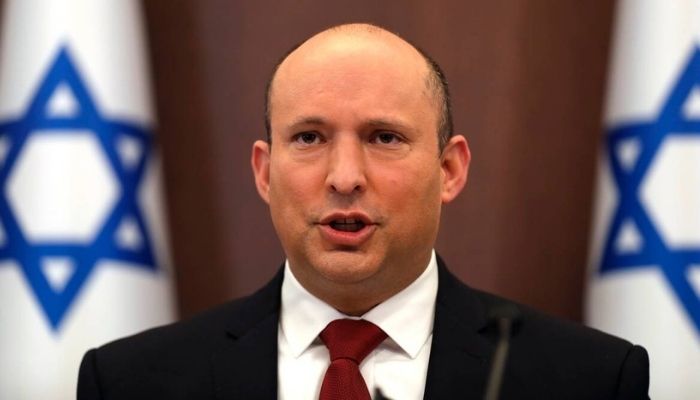
In the run-up to the recent terrorist attacks that have spiked over Israel after the commencement of Ramzan, Israel’s security forces have been set on high alert during the Islamic holy month. In a recent statement, Israeli PM Naftali Bennett claimed that the security forces have foiled more than 15 terrorist attacks in the Jewish state recently.
On Tuesday, PM Bennet said that the recent string of attacks should serve as a wake-up call during a visit to an army outpost on the West bank. “The last two weeks, in which we have been dealing with severe terrorist attacks, are a wake-up call for all of us. The series of attacks must spur officials to take action after years of neglect, and fix what needs to be fixed with all our might,” Bennett said while talking to the media.
Bennett says security forces recently foiled more than 15 terrorist attacks https://t.co/t7RmlOgX1u
— The Times of Israel (@TimesofIsrael) April 5, 2022
From the coming Sunday, Israel is set to host a high-level security meeting to discuss rising tensions due to the activities of Palestinian terrorists on the West Bank and increased fears of violence during Ramzan. Security officials have expressed concerns over a greater escalation in violence during the holy month of Ramzan. Last week, PM Bennett conducted a meeting with the internal security service Shin Bet to assess the situation after a spike in armed attacks and gunfire incidents in the cities along with the West Bank.
השבועיים האחרונים, בהם אנחנו מתמודדים עם פיגועים קשים, הם קריאת השכמה.
אנחנו נחושים לא לתת לגל הטרור הזה לחלוף ולעבור, אלא להתעורר מקריאת ההשכמה הזאת אחרי הדחקה של שנים, ולתקן את מה שצריך תיקון, בכל הכח. pic.twitter.com/3TS79mpzIA
— Naftali Bennett בנט (@naftalibennett) April 5, 2022
The Prime minister said that security officials are currently operating in a very aggressive manner. “So far, the IDF, the Shin Bet, and the Israel Police have foiled more than 15 serious attacks that were planned by terrorist elements in the West Bank and the rest of Israel.” Amidst Palestinian and Arab-Israeli threats, Bennett reported that more than 200 suspects have been arrested, dozens of raids have been carried out, and more than 400 individuals with connections to Islamic State or other “extreme jihadist organizations” have been identified.
Last week, the Isreal Defence Forces (IDF) terminated 3 suspected terrorists during a shootout in the West Bank city of Jenin. According to reports, the team of Palestinian terrorists were was planning attacks in Israel in the near future. During the Jewish Festival of Shabbat, the internal security service Shin Bet, the police, the IDF and anti-terror units stopped an imminent attack rampaging the country.
Israeli Defence Minister Benny Gantz while talking to Palestinians residing in the West Bank had warned, “We are in a difficult period of terror attacks against Israeli citizens, a situation that we cannot accept. We are considering the measures we can take in honour of Ramzan in order to allow you to celebrate the holiday in the best way possible, while we at the same time maintain security.”
Terrorist attacks in Beersheba, Hadera, and Bnei Brak cities in recent weeks, killed more than 11 civilians accounting for the deadliest string of such attacks in Israel in many years. The Islamic State took responsibility for attacks in Beersheba and Hadera. Reports of night riots in the city of Jerusalem have begun since Ramzan with more than dozens injured and arrested during clashes between Palestinians and Israeli security forces.
We strongly condemn the terrorist attacks in Israel. Our condolences to the families of the victims.@IsraelMFA@IsraelinIndia@indemtel
On March 30, New Delhi issued a statement in solidarity with Israel. The official Spokesperson of the Ministry of External Affairs Arindam Bagchi tweeted, “We strongly condemn the terrorist attacks in Israel. Our condolences to the families of the victims.” Naftali Bennett was supposed to be on a visit to India between April 1 and 4, which was later postponed following his undergoing treatment for Covid-19.
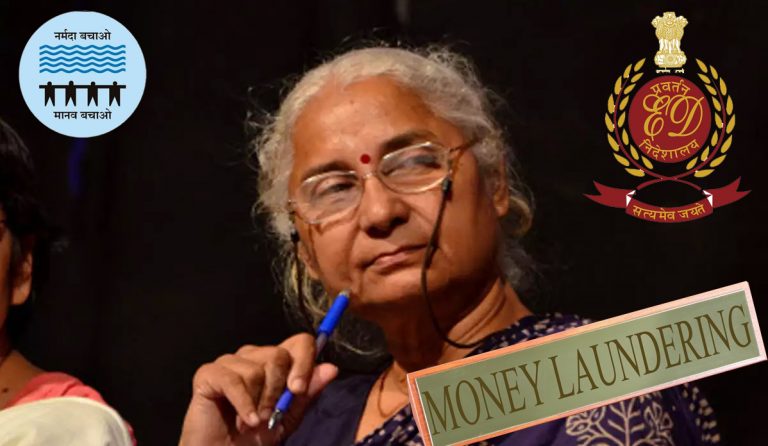
On April 5, Enforcement Directorate (ED) filed First Investigation Report (FIR) against activist Medha Patkar over money laundering charges during ‘Narmada Bachao Andolan’. Patkar played a significant role in delaying the much-needed Sardar Sarovar Dam. The project was delayed for decades and was finally inaugurated in 2017.
Apart from ED, the Department of Revenue Intelligence and the Income Tax Department also have initiated proceedings against Patkar over the suspicious transactions. She is is being probed for unaccounted money donated to her NGO, and the complainant also has accused her of organised crime.
According to a report in The Pioneer, several complaint were lodged with ED, Directorate of Revenue Intelligence, and Income Tax Department against Narmada Navnirman Abhiyan (NNA), an NGO linked to Medha Patkar. It was revealed that the NGO, within a year of its formation in 2004, had received a donation of around Rs 1.2 crores but managed to evade law enforcement agencies for over 17 years.
Source: The Pioneer
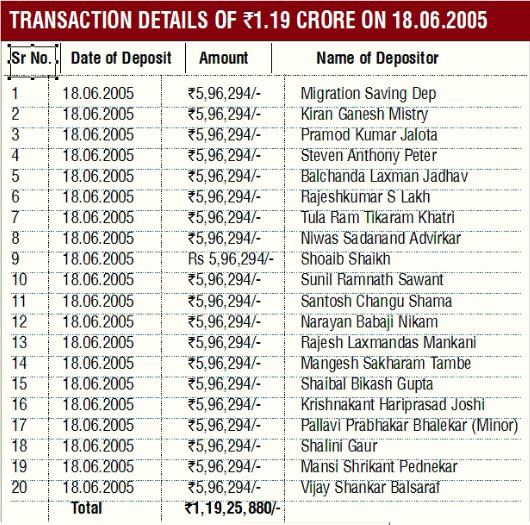
The report raised several suspicions about the donations. As per the documents accessed by the Pioneer, the NGO received the funds in a single day on June 18, 2005, from 20 different sources. Interestingly, the amount of all 20 donations were same, which was Rs 5,96,294. One of the donators, Pallavi Prabhaar Bhalekar, was a minor when the funds were transferred. All the funds totalling Rs 1,19,25,880 were received in Bank of India account number 001010100064503.
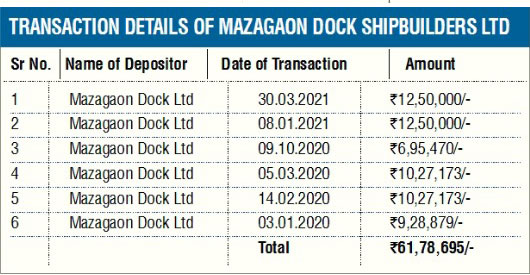
Apart from the Rs 1.20 crore donation, the NGO also received Rs 62 lakhs from Mazagon Dock Shipbuilders Ltd (MDL) from January 2020 to March 2021. A total of six transactions of different amounts were made during that period. The company name raised eyebrows as it is a Central Government undertaking under the Defence Ministry. The company manufactures warships and submarines for the Indian Navy apart from manufacturing offshore platforms and associated support vessels for offshore oil drilling, tankers, cargo bulk carriers, passenger ships and ferries.
Source: The Pioneer
Sanjeev Kumar Jha, who filed the complaint against Patkar, said, “These transactions amounting to crores of rupees clearly indicate that Patkar, who dons a humble and frugal persona, is flushed with money coming in from various sources that have so far escaped the Government’s attention. Patkar and her NGOs have a history of opposing every project/policy of national importance, be it the Sardar Sarovar project, nuclear projects, coal mine projects and recently, the CAA and the farm laws enacted by the Central Government. Such repeated funding from Mazagaon Dock to an organization with such malafide motives is a matter of great concern.”
He further added, “These transaction details raise serious questions as to how 20 different people made identical transactions on a single day amounting to over Rs 1 crore. Generally, donations are made in round figures but what prompted these donors to deposit money in such odd figures is a matter of investigation. It also points toward organized syndicate funding such as self-styled NGOs that have remained unnoticed so far. The source of funding and the mode of transaction is clearly a subject of detailed investigation as also the purpose behind such huge donations.”
Notably, Jha is the same person on whose complaint Patkar’s passport was confiscated by the Regional Passport Officer on the grounds of concealing important facts.
How Sardar Sarovar Dam changed lives in Gujarat
The foundation of the project was laid down in 1961 by then-Prime Minister Jawahar Lal Nehru. It took over 55 years for the waters of Narmada to reach the dry areas of Gujarat. In 2012, then-Chief Minister of Gujarat and now Prime Minister of India Narendra Modi had launched a scheme named ‘SAUNI’ (Saurashtra Narmada Avataran Irrigation) Yojana to provide excess Narmada water to 115 dams across Gujarat.
The dam now provides irrigation and drinking water to dry areas in the state.
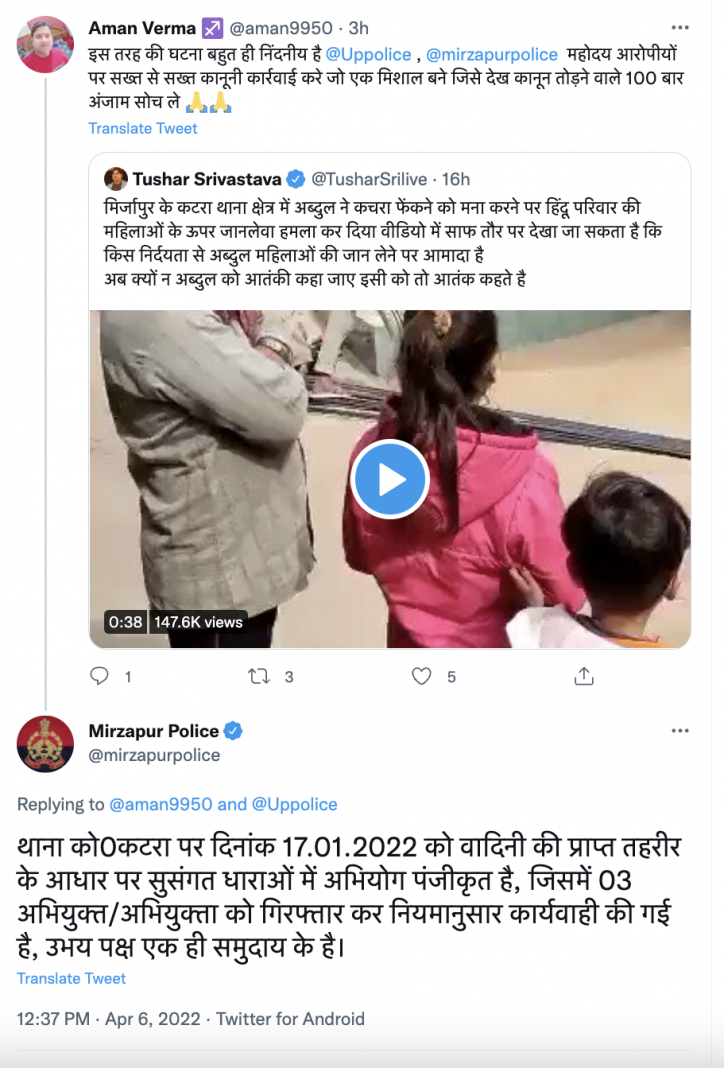
In a shocking incident, an infuriated man, identified as Abdul, went on a rampage against his neighbours residing in the same locality for allegedly keeping garbage outside his house.
According to the reports, the incident occurred in Uttar Pradesh’s Mirzapur, where a man named Abdul attacked his neighbours with a stick and hammer for allegedly placing garbage outside his house.
Shockingly, the bystanders were also thrashed by Abdul and his family. One person recording the act was also seen brutally thrashed by Abdul.
Case filed and accused arrested, informs Mirzapur Police
As the video of Abdul and his family’s attack on their neighbours started doing the rounds on the internet, Mirzapur Police took cognisance of the viral video and issued a response on Twitter. In its tweet, Mirzapur stated that a case has already been filed and 3 accused had been arrested. The police also clarified that both the victims and assailants belonged to the same community.
थाना को0कटरा पर दिनांक 17.01.2022 को वादिनी की प्राप्त तहरीर के आधार पर सुसंगत धाराओं में अभियोग पंजीकृत है, जिसमें 03 अभियुक्त/अभियुक्ता को गिरफ्तार कर नियमानुसार कार्यवाही की गई है, उभय पक्ष एक ही समुदाय के है।
“On the basis of the complaint filed by the plaintiff on 17.01.2022 at Koktra police station, a case has been registered under relevant sections, in which three accused have been arrested and action has been taken as per the rules, both the parties belong to the same community,” the police said.
As per the police, the incident took place in January, but it appears like the video of the same went viral now.
Note: The report has been updated as per latest information in the case.
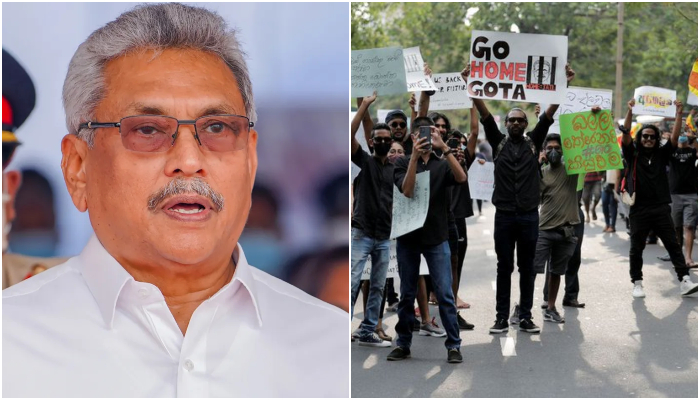
On Tuesday, Sri Lankan President Gotabaya Rajapaksa revoked the state of Emergency with immediate effect on his island nation. With this, the President also withdrew the Emergency rule ordinance which he had declared on April 1 giving security forces sweeping powers to curb any disturbance in the country. Sri Lanka at present is facing a massive economic crisis.
“I, Gotabaya Rajapaksa, President of the Socialist Republic of Sri Lanka, hereby revoke the gazette with effect from midnight on 05 April 2022,” a gazette issued late Tuesday night said, referring to the previous order. This is a day after Rajapaksa’s grip on power weakened as 41 lawmakers of the ruling coalition decided to quit the Parliament.
According to the reports, the Rajapaksa government who had won 150 seats in the 2020 general elections now has 109 seats against the 113 required to maintain the majority. Rajapaksa yesterday also asserted that he won’t resign from his position but agreed to hand over the government to whoever proved the majority of 113 seats in Parliament.
Earlier on April 5, the newly appointed Finance Minister Ali Sabry had tendered his resignation expressing no intentions to take up another post. “After much reflection and deliberation and taking into consideration the current situation, I am now of the view, for your Excellency to make suitable interim arrangements to navigate this unprecedented crisis, fresh and proactive, and unconventional steps need to be taken, including the appointment of a new Finance Minister”, he had said.
Newly-appointed FM of Sri Lanka, Ali Sabry resigns from his post
“After much reflection&deliberation&taking into consideration the current situation I’m now of the view, for your Excellency to make suitable interim arrangement to navigate this unprecedented crisis,” reads letter pic.twitter.com/HIPbRibZ3D
Also, the governor of Sri Lanka’s central bank, Ajith Nivard Cabraal on April 4 had resigned from his post amid the worst economic crisis in decades. Cabraal’s resignation came seven months after he presided over the role to steer the country’s central bank and manage the economy pummelled by the ravages of the coronavirus-induced downturn and soaring debt crisis.
In the context of all Cabinet Ministers resigning, I have today submitted my resignation as Governor, @CBSL to HE President Gotabaya Rajapaksa. @GotabayaR#SriLanka#GoSL
On April 1, President Rajapaksa had declared an Emergency amid massive protests staged over the worst economic crisis in the country. Thousands of citizens during the protest gathered outside the President’s private residence and demanded his resignation.
Sri Lanka is facing the worst economic crisis in its history, with inflation reaching a record high of 17.5% in February 2022. The residents of the island nation are struggling with an acute shortage of food, and cooking gas. Power cuts are frequent and people are seen standing in long queues in the National Capital for buying diesel fuel. The situation is in Sri Lanka so grim that the central bank is forced to buy oil from Iran by bartering tea leaves, as the country does not have any foreign exchange for imports.
The government, headed by President Gotabaya Rajapaksa, has been seeking credit lines from countries such as India, China and even Bangladesh for purchasing milk powder and diesel. India had extended a $1.5 billion credit line for the purchase of 40,000 tonnes of diesel. Meanwhile, Sri Lanka had sought an additional $1 billion credit line for importing essential items.
Earlier, the 26-member Sri Lankan cabinet had submitted letters of resignation. Now, with the government losing its majority in Parliament, protesters across Sri Lanka are demanding the resignations of President Rajapaksa and his brother PM Mahinda, raising slogans of ‘Go Home Gota’. However, the Prime Minister and the President have given no indication that they might step down even as calls for them to go grow louder on the streets.
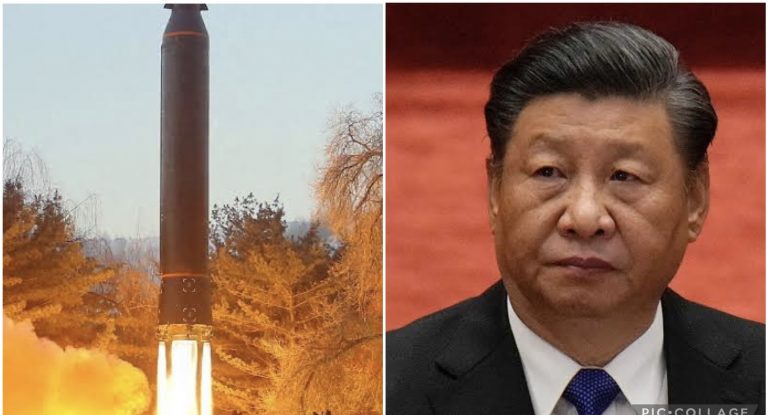
Zhang Jun, China’s envoy to the United Nations, spoke on Tuesday against the AUKUS partnership on developing hypersonic weapons. Speaking on a proposed deal on hypersonic weapons between Australia, the United Kingdom, and the United States, Jun warned of “things which may lead other parts of the world into crisis”, adding that AUKUS countries should avoid creating another “Ukraine-like crisis”.
Jun castigated the recent deal and urged the AUKUS partner countries to refrain from developing hypersonic weapons. He said countries who partner to develop hypersonic weapons could pave the way for another ‘Ukraine-like crisis’. The Chinese envoy also took a swipe at the western nations for entering into a deal that they were against.
“Anyone who does not want to see the Ukrainian crisis should refrain from doing things that may lead the other parts of the world into a crisis like this,” Zhang said regarding the AUKUS hypersonic deal.
“As the Chinese saying goes, if you do not like it, do not impose it against the others,” he said in a cutting remark against the countries. The comments came on the heels of the announcement made on Tuesday regarding the trilateral cooperation on the development of new hypersonic and electronic warfare weaponry between the AUKUS countries.
AUKUS to develop hypersonic weapons
In a joint statement issued on Tuesday, the AUKUS partners said they will work together to accelerate the development of advanced hypersonic and counter-hypersonic capabilities. They also affirmed their commitment to cooperating on developing enhanced techniques to operate in an electronic warfare environment.
“We reaffirmed our commitment to AUKUS and to a free and open Indo-Pacific. In light of Russia’s unprovoked, unjustified, and unlawful invasion of Ukraine, we reiterated our unwavering commitment to an international system that respects human rights, the rule of law, and the peaceful resolution of disputes free from coercion,” the statement added.
It further added that these initiatives will add to the grouping’s existing efforts to deepen cooperation on cyber capabilities, artificial intelligence, quantum technologies, and additional undersea capabilities.
AUKUS is a trilateral security alliance between Australia, the United Kingdom, and the United States, announced last September, seemingly to counter China in the Indo-Pacific region.
The hypersonic missiles travel at the speed of Mach 5 and are known for remarkable manoeuvrability. They are 5 times faster than the speed of sound and have the unique capability of switching paths during flight.
On April 3, a man identified as Manoj Ghosh killed Utpal Ghosh during a scuffle in village Santoshpur of Galsi in district Eastern Burdwan, West Bengal. Reports suggest they had mutual enmity. On Sunday, Manoj had gone to Utpal’s house and taken him for some work. Later, Utpal’s dead body was found on the road with an axe on the side. This led to eruption of violation in the village.
Soon after the incident, the Police detained five people, including Manoj. He confessed to the murder, after which he was formally arrested by the Police. Reportedly Manoj and Utpal had got into an argument, during which Manoj picked up an axe and killed Utpal.
Utpal’s body was sent for post-mortem by the Police. When the dead body arrived at the village on Monday, the villagers got agitated and attacked the houses of Manoj, his uncles Khetranath Ghosh and Haradhan Ghosh. They also burnt down straw outside their houses. The vehicles parked around the houses were also burnt by the agitated crowd.
It is notable that Police were already present at the scene when the incident took place. However, they could not control the crowd. After the agitation and violence, companies of Rapid Action Force (RAF) were deployed to maintain law and order.
Superintendent of Police (SP) Kamnasheesh Sen said in a statement that they had arrested Manoj Ghosh on the charges of murder. The Police also arrested several people involved in violence. He assured all the culprits would be caught soon. So far, 39 people have been arrested in the violence and arson case. Reports suggest many villagers ran away to escape arrest and the possibility of arson.
Utpal’s wife accused Manoj of harassment
A report on Hindi Daily Jagran quoted the wife of the deceased who accused Manoj of harassment. She said Manoj often approached her with bad intentions. Calling him characterless, she added if he found her alone in the house, he would start banging on the door and throw stones inside. Police had arrested Manoj before, but he was let go. She also accused Manoj’s father Kartik Ghosh and his mother of Utpal’s murder and demanded they should be thrown out of the village. She urged the administration to award capital punishment to Manoj.
Forensic team investigating the crime scene
On Tuesday, the forensic team reached Santoshpur to collect evidence. CID inspector Shaival Bagchi and three other officers were in the team. They also examined the axe used to kill Utpal.
Birbhum massacre
West Bengal has seen multiple incidents of violence in the last month. One of the notable incidents was of Birbhum. On March 22, late at night, a group of enraged miscreants set ablaze around 12 homes which resulted in the gruesome death of eight people, including women and innocent children in Birbhum’s Rampurhat. The autopsy report of the burnt bodies shows that the people were beaten before they were locked in their homes before the houses were set on fire. The massacre had taken place in retaliation for the alleged murder of a TMC leader.
The Bengaluru police have issued notice to at least 310 entities, including places of worship, commercial establishments, and industries, for defying court orders and using loudspeakers during banned hours between 10 pm and 6 am.
According to the reports, the Bengaluru police have issued notices to notices to 125 mosques, 83 temples, 22 churches, and 59 commercial establishments, including pubs and bars, for using loudspeakers during banned hours or crossing the limit of 60 decibels of the noise level.
Last year, in April 2021, the Karnataka High Court had pulled up authorities for their failure to regulate the illegal use of loudspeakers at places of worship.
Kamal Pant, Bengaluru City Police Commissioner, said that they have registered over 40 cases for violating a Supreme Court order banning the use of loudspeakers during certain hours.
“We strictly enforce the SC order and regularly monitor places of worship, factories, industries, pubs, bars and commercial establishments,” Pant said, adding that everyone should obey the court order.
Another senior police officer said that the police patrol checks the illegal use of loudspeakers.
According to the Noise Pollution (Regulation and Control) Rules, 2000, there are restrictions on using loudspeakers or public address systems, except for using them after obtaining written permission from the authority. There is a ban on loudspeaker or public address systems at night between 10 pm and 6 am, except in closed premises for communication within auditoria, conference rooms, community halls and banquet halls.
Action against loudspeakers comes amidst the Azaan row
This drive against the illegal usage of loudspeakers comes amidst a growing call by Hindu activists and organisations to enforce a ban on the use of loudspeakers in mosques. Loudspeakers have sprung up across Islamic places of worship, which are used to blare Azaan, the call to prayer, five times a day.
The inappropriate usage of loudspeakers to broadcast Azaan has led to severe noise pollution affecting the lives of many across the country. There has been a growing demand to ban loudspeakers in religious places in the last few years.
Recently, some Hindu groups have started to protest against the loudspeaker Azan by playing the Hanuman Chalisa through loudspeakers in the morning. Hindu activist and Sri Rama Sene chief Pramod Muthalik warned that if the government failed to remove loudspeakers from all the mosques, they would intensify their protest by singing bhajans using loudspeakers in temples.
The halal industry is growing at an alarming rate in India and across the globe. With over 1.8 billion people around the world professing allegiance to Islam, the halal food market currently constitutes 16% of the global food industry. It is expected to grow to 20% of the global trade in food production in near future.
India, which is home to 180 million Muslims (14% of the population), is currently one of the largest exporters of halal meat to the Organisation of Islamic Cooperation (OIC) countries. According to Mufti Tahir of the Halal Council of India, Halal products enjoy overwhelming popularity among non-Muslims due to ‘health and hygiene’.
He has remarked, “Halal is synonymous with being healthy and hygienic…Even large sections of non-Muslims (within India) prefer halal meat for reasons of hygiene and health? In fact, the motto of the Halal Council of India is – Eat healthy, think better.”
Islam classifies dietary products as ‘halal (permissible)’ and ‘haram (prohibited)’ for Muslims based on the Quran and the sayings of Prophet Muhammad (in Hadiths). As such, what counts as Halal in Islam does not apply to practitioners of other Faiths.
Despite this, Halal products enjoy a disproportionate share in the Indian food industry. This is particularly due to a lack of awareness among non-Muslims and the unavailability of alternate food options.
Nevertheless, the Halal meat industry often finds itself at loggerheads with modern industry practices, especially due to its rigid adherence to Islam and inability to adapt to more humane and technologically advanced procedures.
Halal, ‘impurity of blood’ and Quranic sanctions
According to scholars, Muslims are expected to adhere to Islamic dietary restrictions at all times. They must avoid the consumption of:
pigs
animals slaughtered without the name of Allah
animals with long pointed teeth or tusks
insects
primates, reptiles (except spiny-tailed lizards) and amphibians
donkeys, mules (horses are not forbidden) and Lycaonpictus (African wild dog)
aquatic animals that are harmful to human health
blood (from any animal)
The halal system of ‘animal slaughter’, also called Zahiba, lays special emphasis on the ‘bleeding’ of animals. This is particularly due to the Islamic belief that blood is ‘impure’.Blood drainage from slaughtered animals forms the key basis of halal slaughter. There are several Quranic verses, which reiterate that the consumption of blood must be avoided at all costs.
Chapter 2 (Al-Baqarah) Verse 173 of the Quran says:
“He has only forbidden you ˹to eat˺ carrion, blood, swine, and what is slaughtered in the name of any other than Allah. But if someone is compelled by necessity—neither driven by desire nor exceeding immediate need—they will not be sinful. Surely Allah is All-Forgiving, Most Merciful.”
“Forbidden to you are carrion, blood, and swine; what is slaughtered in the name of any other than Allah; what is killed by strangling, beating, a fall, or by being gored to death; hat is partly eaten by a predator unless you slaughter it; and what is sacrificed on altars. You are also forbidden to draw lots for decisions. This is all evil. Today the disbelievers have given up all hope of ˹undermining˺ your faith. So do not fear them; fear Me! Today I have perfected your faith for you, completed My favour upon you, and chosen Islam as your way. But whoever is compelled by extreme hunger—not intending to sin—then surely Allah is All-Forgiving, Most Merciful.“
Say, ˹O Prophet,˺ “I do not find in what has been revealed to me anything forbidden toeat except carrion, running blood, swine—which is impure—or a sinful offering in the name of any other than Allah. But if someone is compelled by necessity—neither driven by desire nor exceeding immediate need—then surely your Lord is All-Forgiving, Most Merciful.”
Chapter 16 (Al-Mai’dah) Verse 115 of the Quran says:
“He has only forbidden you ˹to eat˺ carrion, blood, swine, and what is slaughtered in the name of any other than Allah. But if someone is compelled by necessity—neither driven by desire nor exceeding immediate need—then surely Allah is All-Forgiving, Most Merciful.”
According to radical Islamic preacher Zakir Naik, the Jhatka method causes damage to the spinal cord, resulting in ‘coagulation’ of blood in the heart. As per Naik, the blood stays in the body of the deceased animal instead of being drained out.
According to him, the Halal mode of slaughter facilitates the drainage of blood in a rapid manner. “Today’s science tells us that blood is a carrier of germs and bacteria. We (Muslims) are hygenic people. We don’t like to eat animals, laden with germs,” he remarked.
Naik, who allegedly holds a medical degree, claimed that Halal meat stays fresh for a longer time than jhatka meat.
The slaughter of animals in a ‘halal’ way
As per Islamic law (Sharia), the ‘halal’ slaughter of an animal requires the use of a sharp knife, which is free of nicks and scratches. Although there is no directive to use any special kind of knife unlike kosher, it is recommended that the blade of the knife be 2-4 times larger than the neck of the animal.
The animal must be fed well, provided with drinking water and soothed before turning it lifeless. Sahih Muslim, a collection of Hadiths, states in Book 21, Number 4810:
“Shaddid b. Aus said: Two are the things which I remember Allah’s Messenger (may peace be upon him) having said: Verily Allah has enjoined goodness to everything; so when you kill, kill in a good way and when you slaughter, slaughter in a good way. So every one of you should sharpen his knife, and let the slaughtered animal die comfortably.”
However, the Islamic practice of feeding animals before their slaughter, under the pretext of ‘animal welfare’, is problematic. Such a method increases the volume and the quantity of bacteria in the gut of ruminant animals. Modern industry practices require feed withdrawal for up to 12 hours, prior to slaughter, to avert the risk of carcass contamination.
Halal slaughter must be performed by only a sane, adult Muslim, who is familiar with Islamic rituals. “Animals slaughtered by a Non-Muslim will not be Halal. The name of Allah must be invoked (mentioned) at the time of slaughtering by saying: Bismillah Allahu Akbar,” says the Department of Halal Certification in the European Union.
Quran makes it clear in Chapter 6 (Al An’am) Verse 18: So eat only of what is slaughtered in Allah’s Name if you truly believe in His revelations.
Modern techniques for slaughter
Given that it is difficult for a slaughter-man to chant the Islamic phrase each time while processing 4000-12000 birds in a single line, the Standing Committee for Scientific Research and Issuing Fatwas has issued a diktat saying that it is sufficient to pronounce the Islamic phrase only once while operating a mechanical slaughter machine.
Halal slaughter involves workers over machines, which significantly increases the price of meat. Hand slaughter without stunning animals is unable to keep up with the standard operating procedures of the meat industry.
Even the use of an automatic horizontal rotatory knife for cutting the neck of poultry is considered haram, given that the halal way of slaughter relies heavily on blood loss and animal welfare. Both these aspects might be compromised if an improper cut is made by an automatic slaughter machine.
For hand slaughter, it is crucial that the animal is properly restrained. It should not be agitated or in a state of panic as it may interfere with the accuracy of the incision. As per the halal procedure, the animal must be rested on its left flank to maximise blood loss. It must also be facing the direction of Mecca (Qiblah).
Slaughter practices of different faiths in different countries – Scientific Figure on ResearchGate
Different animals are restrained in different manners. For instance, a sheep is slaughtered in a horizontal position while ruminants are restrained either in by hoisting the animal in a upright position or by the hind leg. Interestingly, most Halal slaughterhouses prefer a position of lateral recumbency (90° angle, lying on their sides).
“The disadvantages of the upright restraint method during the halal slaughter (without stunning) of cattle are the possibility of blood aspiration into the lungs, poor bleeding (clamping of the blood vessels of the neck against the head restraint) and delayed loss of consciousness,” noted Abdullah, F., Borilova in his research paper.
The bleeding is the highest in ruminants slaughtered in the lateral position and lowest when placed in the upright position. Lambs that are hung vertically bleed more than the ones kept upright in a V-restrainer.
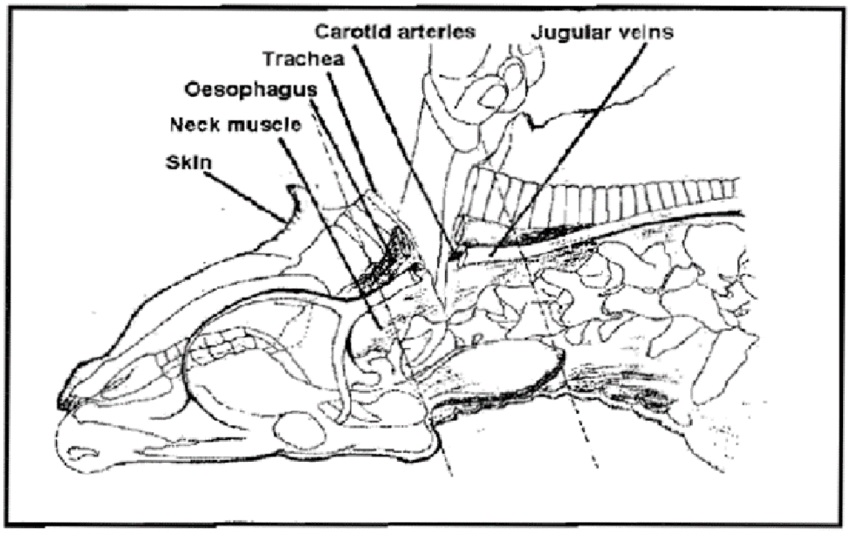
For Halal slaughter, the incision must be made on the neck and below the gullet. The trachea, oesophagus, jugular veins and carotid arteries of the animal must be cut in one continuous movement without any interruption or delay.
“The incision must be performed at the ventral aspect of the neck near the lower jaw and must not reach the spine. This means that the head should not be completely separated from the body during slaughter, which can delay loss of consciousness due to blood continuing to flow to the brain through the vertebral arteries,” stated Abdullah, F., Borilova.
Pre-slaughter stunning of animals and inconsistency with halal
While halal mandates that the animal should be fully conscious at the time of slaughter, stunning raises concerns about the state of consciousness. The process of ‘stunning’ is described as a voluntary process that results in the loss of sensibility, and consciousness (including instantaneous death) of an animal without causing distress, suffering, anxiety and pain.
Stunning of animals pre-slaughter is mandatory in Europe. Although the relatively painless slaughter process finds no mention in Quran and hadiths, the general consensus among the Muslim community is that irreversible stunning is not permissible.
According to researchers Abdullah, F., and Borilova, there are several disadvantages to slaughtering cattle without stunning, especially from the point of animal welfare. The animal experiences stress and pain on being restrained and develops false aneurysms and delayed loss of consciousness.
“Animals that are not mechanically restrained after the cut are likely to endure a slower bleeding process and, thereby, prolonged unnecessary suffering. Animals of bovine, ovine and caprine species are the most common species slaughtered under this procedure. Therefore, ruminants slaughtered without stunning should be individually and mechanically restrained,” he stated.
In the halal poultry industry, stunning is considered ‘unacceptable.’ He stated, “Although the voltage of electrical stunning and the size of the birds have been standardised, some birds die due to the stunning process prior to slaughter or a delay in the time of the slaughter process, leading to poor blood drainage.”
“The ability of poultry to withstand the same voltage current and remain alive after electrical stunning differs even within a particular weight parameter, ” emphasised Abdullah, F., Borilova. Even in cases of nonpenetrative percussive reversible stunning, it has been observed that a large number of cattle develop subarachnoid haemorrhage.
For stunning to be acceptable to Muslims, it must adhere to the standards governing halal. This includes reversible stunning that does not kill the animal or inflict permanent injury. The stunning must be performed by a Muslim man while repeating Islamic phrases. Most importantly, the stunning equipment should not be used on pigs.
Nevertheless, the ‘humane process’ has other challenges in the form of resource shortage, absence of proper stunning tools/equipment and technical training. Currently, pre-slaughter stunning is acceptable in Muslim majority Malaysia (which follows Shāfʿī school of thought) but not in Pakistan (which follows the Hanafi school of thought).
Given that the laws of Islam were promulgated 1400 years ago, it is evident that some modern techniques and norms are not aligned with Islamic rules. Devout Muslims, who believe that Sharia is valid for all times and places, refuse to adapt to the modern technological advancements in the meat industry.
References: Abdullah, F., Borilova, G., & Steinhauserova, I. (2019). Halal Criteria Versus Conventional Slaughter Technology. Animals : an open access journal from MDPI, 9(8), 530. https://doi.org/10.3390/ani9080530
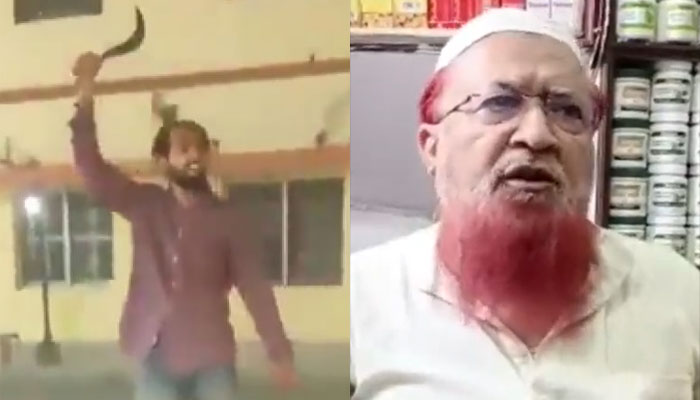
The ex-wife of Ahmad Murtaza Abbasi, accused in the Gorakhnath Temple attack, has claimed that he was not interested in married life. Her father alleged soon after the wedding in 2019, they brought her back as she faced domestic violence at the hands of her mother-in-law.
— TV9 Uttar Pradesh (@TV9UttarPradesh) April 5, 2022
Abbasi, who is currently on Police remand, got married to Shadma in 2019. She claimed during the period she lived with Abbasi, he rarely talked to her. Also, she never got access to his mobile phone or laptop, so she was not aware if he was indulged in any anti-social activity during that period. Furthermore, he was deeply religious and showed no interest in married life.
Speaking to TV9, Abbasi’s ex-father-in-law Muzaffarul Haq said her daughter got married to Abbasi in 2019. Soon after the marriage, they brought her back home as there were incidents of domestic violence for which he blamed her mother-in-law. He said, “We brought her back a few months after the marriage. He gave divorce on the phone, and since then, we did not have any contact with him.”
UP | In 2019 he married my daughter, soon after they divorced due to domestic violence by her mother-in-law. Not in touch with him since then.He was chemical engineer;was normal…I can’t comment on the incident: Muzaffarul Haq, Gorakhnath temple attack accused’s ex father-in-law pic.twitter.com/E9UMiXrw00
Notably, Abbasi’s father has claimed he was mentally unstable, but Haq was quoted by Times Now saying he was completely normal and showed no signs of mental issues when he was married to his daughter. Echoing her father’s statement, Shadma said she sought divorce because her mother-in-law tortured her over minor issues and not because he was mentally unstable.
UP ATS’s investigation in Mumbai
A team of Uttar Pradesh Anti Terrorist Squad (ATS) reached Mumbai on Tuesday to investigate Abbasi’s connections in the city. Reportedly, the address mentioned on Abbasi’s Aadhaar card was in Navi Mumbai. The team visited Millenium Tower in Sanpada node near Vashi and found that the flat mentioned as the address in the card was sold in 2013. During the investigation, they found that his father, Munir Abbasi, had bought another flat at Taj Heights Apartment in sector 50 in Seawoods Darave. That flat is currently on rent, and the Abbasi family had shifted to Gorakhpur in October 2020.
Gorakhpur Temple Attack
On April 3, Ahmad Murtaza Abbasi attacked Gorakhpur Temple and severely injured two Police personnel with a sharp weapon. He was shouting Allah-Hu-Akbar during the attack. Before he could do further damage, Abbasi was overpowered by the officers present at the scene. Initially, Abbasi’s father had claimed that his son was mentally unstable, but both Police and the doctor who treated him after the attack refuted the claims.
During the investigation, Police have reportedly found that he was influenced by banned Islamic preacher Zakir Naik and had possible links to the terrorist organization ISIS. A day before the attack, he had visited Nepal and had bought the weapon on his way back. Abbasi was sent to 7-day Police remand by the court.
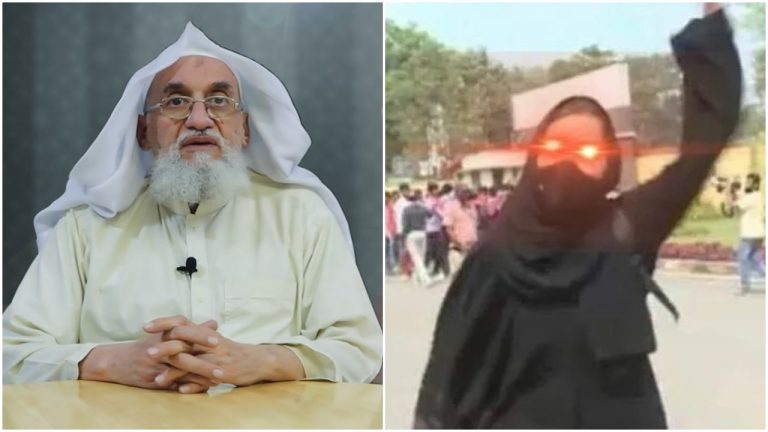
On Tuesday, the chief of Islamic terror organisation Al-Qaeda waded into Karnataka’s hijab controversy by extending its support to the burqa-clad protestor Bibi Muskan Zainab Khan, who had shouted provocative “Allahu Akbar” at Hindu students in Karnataka’s Udupi, reports Times of India.
In a nine-minute video released by Al-Qaeda’s official Shabab media, Ayman al-Zawahiri, the leader of terror outfit Al-Qaeda, praised Muskan Khan, the burqa-clad protestor who came to the limelight after yelling “Allahu Akbar” slogans at Hindu students in Udupi during the hijab protests.
In the video titled “The Noble Woman of India”, which carried an infographic depicting Muskan Zainab Khan, Zawahiri recited and dedicated a poem he had composed to praise Khan.
Seems Ayman al-Zawahiri is alive after all. The al-Qaeda leader has appeared in a ‘proof of life’ video commenting on a February 2022 incident where a college student in India protested he right to wear a hijab pic.twitter.com/JCNuXbYqsD
The jihadi terrorist said he learned about Muskan Khan from videos and social media. Referring to Muskan Khan as ‘sister’, the Al-Qaeda chief said he was so moved by her act, especially the raising of “cries of Takbeer”. Impressed by her chanting provocative Islamic slogans, Ayman al-Zawahiri said he decided to write a poem.
The terrorist also attempted to incite Indian Muslims saying they needed to react to the “oppression” carried out against them by the Indian state. Zawahiri also attacked countries that have banned the hijab, along with Pakistan and Bangladesh, whom he accused of being “allies of the West”.
Interestingly, this is Zawahiri’s first video of Zawahiri since five months. The recent video proves that al-Zawahiri, who is one of the “most wanted” jehadi terrorists, is alive and actively following worldwide affairs.
In 2020, it was speculated that Zawahiri had died of natural cause, however, months later, an undated video surfaced suggesting he was alive. He is supposedly located somewhere in Afghanistan.
Who is Muskan Zainab Khan?
Muskan Zainab Khan is a student of PES College of Arts, Science and Commerce in Mandya in Karnataka. She had come to the limelight after she was seen yelling Islamic slogans “Allahu Akbar” while wearing a burqa as the camera strategically captured the ‘brave moment’.
The Hindu students, who were protesting against the Muslim students in hijab and burqa, chanted “Jai Shree Ram” in response to Islamic slogans raised inside the PES college campus. Bibi Muskan later claimed that “outsiders” troubled her and added that her classmates and authorities at the PES College in Mandya supported her.
Following her theatrics, Muskan Zainab was also hailed as another “shero” by the left-liberal media establishment. It was later revealed that Muskan Zainab has links to the radical Islamic organisation PFI through her father. Bibi Muskan Zainab is the daughter of PFI leader Abdul Sukoor.
Following her ‘brave’ act, Muskan Khan became a household name amongst Muslims, who showered praise and gifts on her. Maharashtra Congress MLA (Bandra) Zeeshan Siddique had paid a visit to her residence in Mandya and handed Khan an iPhone and a smartwatch for her’ courageous act’. Islamic outfit Jamiat Ulama-i-Hind had also announced a cash reward of Rs. 5 lakh to Muskan Khan.
Not just that, the Mayor of Malegaon Municipal Corporation (MMC), Tahera Shaikh Rasheed, had also announced that the ‘Urdu Ghar’ in the city would be named after Muskan Khan.