On April 3, a man identified as Manoj Ghosh killed Utpal Ghosh during a scuffle in village Santoshpur of Galsi in district Eastern Burdwan, West Bengal. Reports suggest they had mutual enmity. On Sunday, Manoj had gone to Utpal’s house and taken him for some work. Later, Utpal’s dead body was found on the road with an axe on the side. This led to eruption of violation in the village.
Soon after the incident, the Police detained five people, including Manoj. He confessed to the murder, after which he was formally arrested by the Police. Reportedly Manoj and Utpal had got into an argument, during which Manoj picked up an axe and killed Utpal.
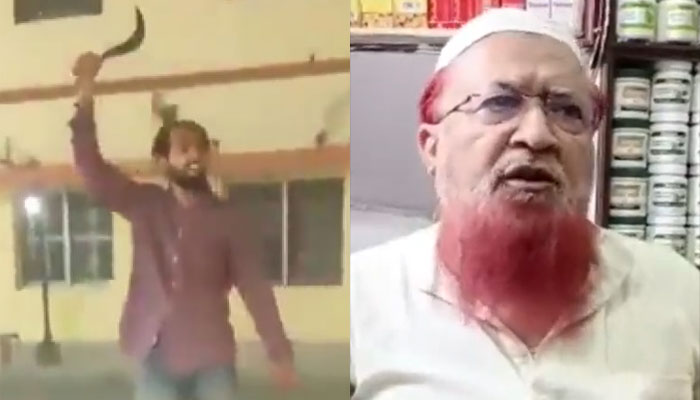
Utpal’s body was sent for post-mortem by the Police. When the dead body arrived at the village on Monday, the villagers got agitated and attacked the houses of Manoj, his uncles Khetranath Ghosh and Haradhan Ghosh. They also burnt down straw outside their houses. The vehicles parked around the houses were also burnt by the agitated crowd.
It is notable that Police were already present at the scene when the incident took place. However, they could not control the crowd. After the agitation and violence, companies of Rapid Action Force (RAF) were deployed to maintain law and order.
Superintendent of Police (SP) Kamnasheesh Sen said in a statement that they had arrested Manoj Ghosh on the charges of murder. The Police also arrested several people involved in violence. He assured all the culprits would be caught soon. So far, 39 people have been arrested in the violence and arson case. Reports suggest many villagers ran away to escape arrest and the possibility of arson.
Utpal’s wife accused Manoj of harassment
A report on Hindi Daily Jagran quoted the wife of the deceased who accused Manoj of harassment. She said Manoj often approached her with bad intentions. Calling him characterless, she added if he found her alone in the house, he would start banging on the door and throw stones inside. Police had arrested Manoj before, but he was let go. She also accused Manoj’s father Kartik Ghosh and his mother of Utpal’s murder and demanded they should be thrown out of the village. She urged the administration to award capital punishment to Manoj.
Forensic team investigating the crime scene
On Tuesday, the forensic team reached Santoshpur to collect evidence. CID inspector Shaival Bagchi and three other officers were in the team. They also examined the axe used to kill Utpal.
Birbhum massacre
West Bengal has seen multiple incidents of violence in the last month. One of the notable incidents was of Birbhum. On March 22, late at night, a group of enraged miscreants set ablaze around 12 homes which resulted in the gruesome death of eight people, including women and innocent children in Birbhum’s Rampurhat. The autopsy report of the burnt bodies shows that the people were beaten before they were locked in their homes before the houses were set on fire. The massacre had taken place in retaliation for the alleged murder of a TMC leader.
The Bengaluru police have issued notice to at least 310 entities, including places of worship, commercial establishments, and industries, for defying court orders and using loudspeakers during banned hours between 10 pm and 6 am.
According to the reports, the Bengaluru police have issued notices to notices to 125 mosques, 83 temples, 22 churches, and 59 commercial establishments, including pubs and bars, for using loudspeakers during banned hours or crossing the limit of 60 decibels of the noise level.
Last year, in April 2021, the Karnataka High Court had pulled up authorities for their failure to regulate the illegal use of loudspeakers at places of worship.
Kamal Pant, Bengaluru City Police Commissioner, said that they have registered over 40 cases for violating a Supreme Court order banning the use of loudspeakers during certain hours.
“We strictly enforce the SC order and regularly monitor places of worship, factories, industries, pubs, bars and commercial establishments,” Pant said, adding that everyone should obey the court order.
Another senior police officer said that the police patrol checks the illegal use of loudspeakers.
According to the Noise Pollution (Regulation and Control) Rules, 2000, there are restrictions on using loudspeakers or public address systems, except for using them after obtaining written permission from the authority. There is a ban on loudspeaker or public address systems at night between 10 pm and 6 am, except in closed premises for communication within auditoria, conference rooms, community halls and banquet halls.
Action against loudspeakers comes amidst the Azaan row
This drive against the illegal usage of loudspeakers comes amidst a growing call by Hindu activists and organisations to enforce a ban on the use of loudspeakers in mosques. Loudspeakers have sprung up across Islamic places of worship, which are used to blare Azaan, the call to prayer, five times a day.
The inappropriate usage of loudspeakers to broadcast Azaan has led to severe noise pollution affecting the lives of many across the country. There has been a growing demand to ban loudspeakers in religious places in the last few years.
Recently, some Hindu groups have started to protest against the loudspeaker Azan by playing the Hanuman Chalisa through loudspeakers in the morning. Hindu activist and Sri Rama Sene chief Pramod Muthalik warned that if the government failed to remove loudspeakers from all the mosques, they would intensify their protest by singing bhajans using loudspeakers in temples.
The halal industry is growing at an alarming rate in India and across the globe. With over 1.8 billion people around the world professing allegiance to Islam, the halal food market currently constitutes 16% of the global food industry. It is expected to grow to 20% of the global trade in food production in near future.
India, which is home to 180 million Muslims (14% of the population), is currently one of the largest exporters of halal meat to the Organisation of Islamic Cooperation (OIC) countries. According to Mufti Tahir of the Halal Council of India, Halal products enjoy overwhelming popularity among non-Muslims due to ‘health and hygiene’.
He has remarked, “Halal is synonymous with being healthy and hygienic…Even large sections of non-Muslims (within India) prefer halal meat for reasons of hygiene and health? In fact, the motto of the Halal Council of India is – Eat healthy, think better.”
Islam classifies dietary products as ‘halal (permissible)’ and ‘haram (prohibited)’ for Muslims based on the Quran and the sayings of Prophet Muhammad (in Hadiths). As such, what counts as Halal in Islam does not apply to practitioners of other Faiths.
Despite this, Halal products enjoy a disproportionate share in the Indian food industry. This is particularly due to a lack of awareness among non-Muslims and the unavailability of alternate food options.
Nevertheless, the Halal meat industry often finds itself at loggerheads with modern industry practices, especially due to its rigid adherence to Islam and inability to adapt to more humane and technologically advanced procedures.
Halal, ‘impurity of blood’ and Quranic sanctions
According to scholars, Muslims are expected to adhere to Islamic dietary restrictions at all times. They must avoid the consumption of:
pigs
animals slaughtered without the name of Allah
animals with long pointed teeth or tusks
insects
primates, reptiles (except spiny-tailed lizards) and amphibians
donkeys, mules (horses are not forbidden) and Lycaonpictus (African wild dog)
aquatic animals that are harmful to human health
blood (from any animal)
The halal system of ‘animal slaughter’, also called Zahiba, lays special emphasis on the ‘bleeding’ of animals. This is particularly due to the Islamic belief that blood is ‘impure’.Blood drainage from slaughtered animals forms the key basis of halal slaughter. There are several Quranic verses, which reiterate that the consumption of blood must be avoided at all costs.
Chapter 2 (Al-Baqarah) Verse 173 of the Quran says:
“He has only forbidden you ˹to eat˺ carrion, blood, swine, and what is slaughtered in the name of any other than Allah. But if someone is compelled by necessity—neither driven by desire nor exceeding immediate need—they will not be sinful. Surely Allah is All-Forgiving, Most Merciful.”
“Forbidden to you are carrion, blood, and swine; what is slaughtered in the name of any other than Allah; what is killed by strangling, beating, a fall, or by being gored to death; hat is partly eaten by a predator unless you slaughter it; and what is sacrificed on altars. You are also forbidden to draw lots for decisions. This is all evil. Today the disbelievers have given up all hope of ˹undermining˺ your faith. So do not fear them; fear Me! Today I have perfected your faith for you, completed My favour upon you, and chosen Islam as your way. But whoever is compelled by extreme hunger—not intending to sin—then surely Allah is All-Forgiving, Most Merciful.“
Say, ˹O Prophet,˺ “I do not find in what has been revealed to me anything forbidden toeat except carrion, running blood, swine—which is impure—or a sinful offering in the name of any other than Allah. But if someone is compelled by necessity—neither driven by desire nor exceeding immediate need—then surely your Lord is All-Forgiving, Most Merciful.”
Chapter 16 (Al-Mai’dah) Verse 115 of the Quran says:
“He has only forbidden you ˹to eat˺ carrion, blood, swine, and what is slaughtered in the name of any other than Allah. But if someone is compelled by necessity—neither driven by desire nor exceeding immediate need—then surely Allah is All-Forgiving, Most Merciful.”
According to radical Islamic preacher Zakir Naik, the Jhatka method causes damage to the spinal cord, resulting in ‘coagulation’ of blood in the heart. As per Naik, the blood stays in the body of the deceased animal instead of being drained out.
According to him, the Halal mode of slaughter facilitates the drainage of blood in a rapid manner. “Today’s science tells us that blood is a carrier of germs and bacteria. We (Muslims) are hygenic people. We don’t like to eat animals, laden with germs,” he remarked.
Naik, who allegedly holds a medical degree, claimed that Halal meat stays fresh for a longer time than jhatka meat.
The slaughter of animals in a ‘halal’ way
As per Islamic law (Sharia), the ‘halal’ slaughter of an animal requires the use of a sharp knife, which is free of nicks and scratches. Although there is no directive to use any special kind of knife unlike kosher, it is recommended that the blade of the knife be 2-4 times larger than the neck of the animal.
The animal must be fed well, provided with drinking water and soothed before turning it lifeless. Sahih Muslim, a collection of Hadiths, states in Book 21, Number 4810:
“Shaddid b. Aus said: Two are the things which I remember Allah’s Messenger (may peace be upon him) having said: Verily Allah has enjoined goodness to everything; so when you kill, kill in a good way and when you slaughter, slaughter in a good way. So every one of you should sharpen his knife, and let the slaughtered animal die comfortably.”
However, the Islamic practice of feeding animals before their slaughter, under the pretext of ‘animal welfare’, is problematic. Such a method increases the volume and the quantity of bacteria in the gut of ruminant animals. Modern industry practices require feed withdrawal for up to 12 hours, prior to slaughter, to avert the risk of carcass contamination.
Halal slaughter must be performed by only a sane, adult Muslim, who is familiar with Islamic rituals. “Animals slaughtered by a Non-Muslim will not be Halal. The name of Allah must be invoked (mentioned) at the time of slaughtering by saying: Bismillah Allahu Akbar,” says the Department of Halal Certification in the European Union.
Quran makes it clear in Chapter 6 (Al An’am) Verse 18: So eat only of what is slaughtered in Allah’s Name if you truly believe in His revelations.
Modern techniques for slaughter
Given that it is difficult for a slaughter-man to chant the Islamic phrase each time while processing 4000-12000 birds in a single line, the Standing Committee for Scientific Research and Issuing Fatwas has issued a diktat saying that it is sufficient to pronounce the Islamic phrase only once while operating a mechanical slaughter machine.
Halal slaughter involves workers over machines, which significantly increases the price of meat. Hand slaughter without stunning animals is unable to keep up with the standard operating procedures of the meat industry.
Even the use of an automatic horizontal rotatory knife for cutting the neck of poultry is considered haram, given that the halal way of slaughter relies heavily on blood loss and animal welfare. Both these aspects might be compromised if an improper cut is made by an automatic slaughter machine.
For hand slaughter, it is crucial that the animal is properly restrained. It should not be agitated or in a state of panic as it may interfere with the accuracy of the incision. As per the halal procedure, the animal must be rested on its left flank to maximise blood loss. It must also be facing the direction of Mecca (Qiblah).
Slaughter practices of different faiths in different countries – Scientific Figure on ResearchGate
Different animals are restrained in different manners. For instance, a sheep is slaughtered in a horizontal position while ruminants are restrained either in by hoisting the animal in a upright position or by the hind leg. Interestingly, most Halal slaughterhouses prefer a position of lateral recumbency (90° angle, lying on their sides).
“The disadvantages of the upright restraint method during the halal slaughter (without stunning) of cattle are the possibility of blood aspiration into the lungs, poor bleeding (clamping of the blood vessels of the neck against the head restraint) and delayed loss of consciousness,” noted Abdullah, F., Borilova in his research paper.
The bleeding is the highest in ruminants slaughtered in the lateral position and lowest when placed in the upright position. Lambs that are hung vertically bleed more than the ones kept upright in a V-restrainer.
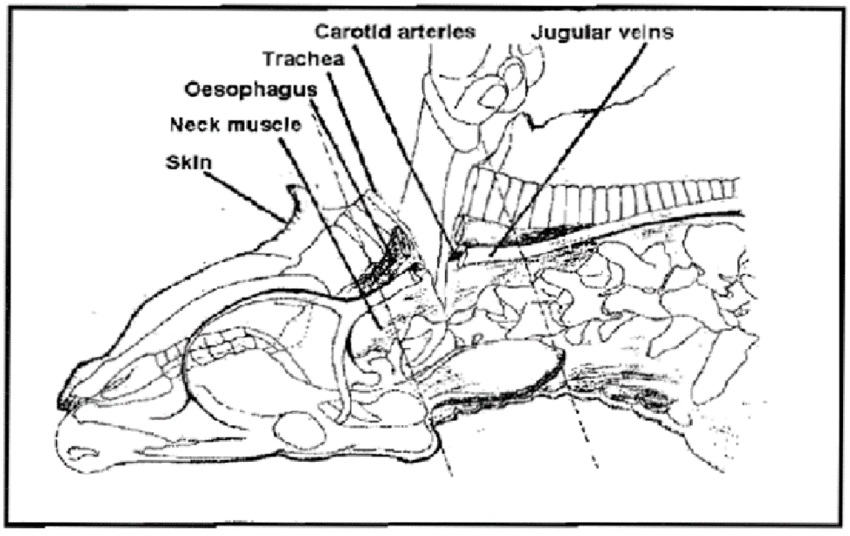
For Halal slaughter, the incision must be made on the neck and below the gullet. The trachea, oesophagus, jugular veins and carotid arteries of the animal must be cut in one continuous movement without any interruption or delay.
“The incision must be performed at the ventral aspect of the neck near the lower jaw and must not reach the spine. This means that the head should not be completely separated from the body during slaughter, which can delay loss of consciousness due to blood continuing to flow to the brain through the vertebral arteries,” stated Abdullah, F., Borilova.
Pre-slaughter stunning of animals and inconsistency with halal
While halal mandates that the animal should be fully conscious at the time of slaughter, stunning raises concerns about the state of consciousness. The process of ‘stunning’ is described as a voluntary process that results in the loss of sensibility, and consciousness (including instantaneous death) of an animal without causing distress, suffering, anxiety and pain.
Stunning of animals pre-slaughter is mandatory in Europe. Although the relatively painless slaughter process finds no mention in Quran and hadiths, the general consensus among the Muslim community is that irreversible stunning is not permissible.
According to researchers Abdullah, F., and Borilova, there are several disadvantages to slaughtering cattle without stunning, especially from the point of animal welfare. The animal experiences stress and pain on being restrained and develops false aneurysms and delayed loss of consciousness.
“Animals that are not mechanically restrained after the cut are likely to endure a slower bleeding process and, thereby, prolonged unnecessary suffering. Animals of bovine, ovine and caprine species are the most common species slaughtered under this procedure. Therefore, ruminants slaughtered without stunning should be individually and mechanically restrained,” he stated.
In the halal poultry industry, stunning is considered ‘unacceptable.’ He stated, “Although the voltage of electrical stunning and the size of the birds have been standardised, some birds die due to the stunning process prior to slaughter or a delay in the time of the slaughter process, leading to poor blood drainage.”
“The ability of poultry to withstand the same voltage current and remain alive after electrical stunning differs even within a particular weight parameter, ” emphasised Abdullah, F., Borilova. Even in cases of nonpenetrative percussive reversible stunning, it has been observed that a large number of cattle develop subarachnoid haemorrhage.
For stunning to be acceptable to Muslims, it must adhere to the standards governing halal. This includes reversible stunning that does not kill the animal or inflict permanent injury. The stunning must be performed by a Muslim man while repeating Islamic phrases. Most importantly, the stunning equipment should not be used on pigs.
Nevertheless, the ‘humane process’ has other challenges in the form of resource shortage, absence of proper stunning tools/equipment and technical training. Currently, pre-slaughter stunning is acceptable in Muslim majority Malaysia (which follows Shāfʿī school of thought) but not in Pakistan (which follows the Hanafi school of thought).
Given that the laws of Islam were promulgated 1400 years ago, it is evident that some modern techniques and norms are not aligned with Islamic rules. Devout Muslims, who believe that Sharia is valid for all times and places, refuse to adapt to the modern technological advancements in the meat industry.
References: Abdullah, F., Borilova, G., & Steinhauserova, I. (2019). Halal Criteria Versus Conventional Slaughter Technology. Animals : an open access journal from MDPI, 9(8), 530. https://doi.org/10.3390/ani9080530
The ex-wife of Ahmad Murtaza Abbasi, accused in the Gorakhnath Temple attack, has claimed that he was not interested in married life. Her father alleged soon after the wedding in 2019, they brought her back as she faced domestic violence at the hands of her mother-in-law.
— TV9 Uttar Pradesh (@TV9UttarPradesh) April 5, 2022
Abbasi, who is currently on Police remand, got married to Shadma in 2019. She claimed during the period she lived with Abbasi, he rarely talked to her. Also, she never got access to his mobile phone or laptop, so she was not aware if he was indulged in any anti-social activity during that period. Furthermore, he was deeply religious and showed no interest in married life.
Speaking to TV9, Abbasi’s ex-father-in-law Muzaffarul Haq said her daughter got married to Abbasi in 2019. Soon after the marriage, they brought her back home as there were incidents of domestic violence for which he blamed her mother-in-law. He said, “We brought her back a few months after the marriage. He gave divorce on the phone, and since then, we did not have any contact with him.”
UP | In 2019 he married my daughter, soon after they divorced due to domestic violence by her mother-in-law. Not in touch with him since then.He was chemical engineer;was normal…I can’t comment on the incident: Muzaffarul Haq, Gorakhnath temple attack accused’s ex father-in-law pic.twitter.com/E9UMiXrw00
Notably, Abbasi’s father has claimed he was mentally unstable, but Haq was quoted by Times Now saying he was completely normal and showed no signs of mental issues when he was married to his daughter. Echoing her father’s statement, Shadma said she sought divorce because her mother-in-law tortured her over minor issues and not because he was mentally unstable.
UP ATS’s investigation in Mumbai
A team of Uttar Pradesh Anti Terrorist Squad (ATS) reached Mumbai on Tuesday to investigate Abbasi’s connections in the city. Reportedly, the address mentioned on Abbasi’s Aadhaar card was in Navi Mumbai. The team visited Millenium Tower in Sanpada node near Vashi and found that the flat mentioned as the address in the card was sold in 2013. During the investigation, they found that his father, Munir Abbasi, had bought another flat at Taj Heights Apartment in sector 50 in Seawoods Darave. That flat is currently on rent, and the Abbasi family had shifted to Gorakhpur in October 2020.
Gorakhpur Temple Attack
On April 3, Ahmad Murtaza Abbasi attacked Gorakhpur Temple and severely injured two Police personnel with a sharp weapon. He was shouting Allah-Hu-Akbar during the attack. Before he could do further damage, Abbasi was overpowered by the officers present at the scene. Initially, Abbasi’s father had claimed that his son was mentally unstable, but both Police and the doctor who treated him after the attack refuted the claims.
During the investigation, Police have reportedly found that he was influenced by banned Islamic preacher Zakir Naik and had possible links to the terrorist organization ISIS. A day before the attack, he had visited Nepal and had bought the weapon on his way back. Abbasi was sent to 7-day Police remand by the court.
On Tuesday, the chief of Islamic terror organisation Al-Qaeda waded into Karnataka’s hijab controversy by extending its support to the burqa-clad protestor Bibi Muskan Zainab Khan, who had shouted provocative “Allahu Akbar” at Hindu students in Karnataka’s Udupi, reports Times of India.
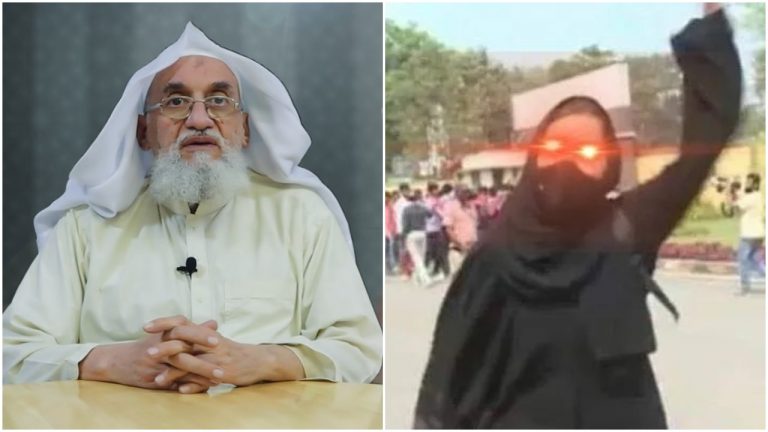
In a nine-minute video released by Al-Qaeda’s official Shabab media, Ayman al-Zawahiri, the leader of terror outfit Al-Qaeda, praised Muskan Khan, the burqa-clad protestor who came to the limelight after yelling “Allahu Akbar” slogans at Hindu students in Udupi during the hijab protests.
In the video titled “The Noble Woman of India”, which carried an infographic depicting Muskan Zainab Khan, Zawahiri recited and dedicated a poem he had composed to praise Khan.
Seems Ayman al-Zawahiri is alive after all. The al-Qaeda leader has appeared in a ‘proof of life’ video commenting on a February 2022 incident where a college student in India protested he right to wear a hijab pic.twitter.com/JCNuXbYqsD
The jihadi terrorist said he learned about Muskan Khan from videos and social media. Referring to Muskan Khan as ‘sister’, the Al-Qaeda chief said he was so moved by her act, especially the raising of “cries of Takbeer”. Impressed by her chanting provocative Islamic slogans, Ayman al-Zawahiri said he decided to write a poem.
The terrorist also attempted to incite Indian Muslims saying they needed to react to the “oppression” carried out against them by the Indian state. Zawahiri also attacked countries that have banned the hijab, along with Pakistan and Bangladesh, whom he accused of being “allies of the West”.
Interestingly, this is Zawahiri’s first video of Zawahiri since five months. The recent video proves that al-Zawahiri, who is one of the “most wanted” jehadi terrorists, is alive and actively following worldwide affairs.
In 2020, it was speculated that Zawahiri had died of natural cause, however, months later, an undated video surfaced suggesting he was alive. He is supposedly located somewhere in Afghanistan.
Who is Muskan Zainab Khan?
Muskan Zainab Khan is a student of PES College of Arts, Science and Commerce in Mandya in Karnataka. She had come to the limelight after she was seen yelling Islamic slogans “Allahu Akbar” while wearing a burqa as the camera strategically captured the ‘brave moment’.
The Hindu students, who were protesting against the Muslim students in hijab and burqa, chanted “Jai Shree Ram” in response to Islamic slogans raised inside the PES college campus. Bibi Muskan later claimed that “outsiders” troubled her and added that her classmates and authorities at the PES College in Mandya supported her.
Following her theatrics, Muskan Zainab was also hailed as another “shero” by the left-liberal media establishment. It was later revealed that Muskan Zainab has links to the radical Islamic organisation PFI through her father. Bibi Muskan Zainab is the daughter of PFI leader Abdul Sukoor.
Following her ‘brave’ act, Muskan Khan became a household name amongst Muslims, who showered praise and gifts on her. Maharashtra Congress MLA (Bandra) Zeeshan Siddique had paid a visit to her residence in Mandya and handed Khan an iPhone and a smartwatch for her’ courageous act’. Islamic outfit Jamiat Ulama-i-Hind had also announced a cash reward of Rs. 5 lakh to Muskan Khan.
Not just that, the Mayor of Malegaon Municipal Corporation (MMC), Tahera Shaikh Rasheed, had also announced that the ‘Urdu Ghar’ in the city would be named after Muskan Khan.
A 22-year-old youth Chandru was brutally stabbed to death by three youths, reportedly for not speaking Urdu. The incident took place on Monday in Bengaluru’s JJ Nagar police station limits.
According to the reports, the deceased, identified as Chandru, a resident of Jaimaruthinagar, had attended a party with his friends on Monday. At around 2:30 AM, he went out to have a snack.
As he passed by Haleguddadahalli, his bike touched another bike. The bike rider, identified as Shahid Pasha, picked up an argument with Chandru. The arguments took an ugly turn when the accused attacked Chandru with a knife.
According to the Kasturi News report, Shahid Pasha was joined by a few other accomplices. The mob thrashed and stabbed him after Chandru spoke to them in Kannada and not Urdu. The severely injured Chandru was rushed to the hospital, where he succumbed later.
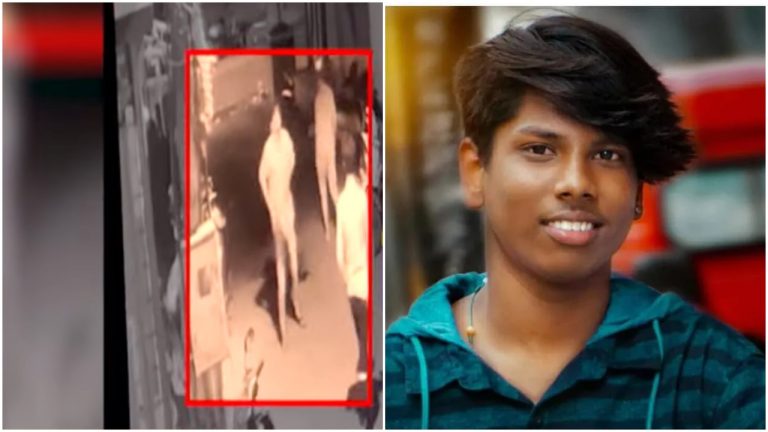
The incident was captured on CCTV, in which it was seen that Chandru was brutally stabbed by the accused Shahid Pasha and his friends, who brandished swords and knives. Chandru was seen severely injured and pleading with the accused to let him go.
The police have now arrested 21-year-old Shahid Pasha, 22-year-old Shahid Goli, and a juvenile for stabbing Chandru to death. The police arrested the accused based on the CCTV footage and local intelligence gathered from the crime scene.
Kamal Pant, Bengaluru Police Commissioner, tweeted, saying that Shahid stabbed Chandru on his right thigh, and the assailants fled from the spot. The police commissioner said Chandru belonged to the Christian community and had gone to an eatery on Mysore Road along with his friend Simon Raj.
It led to a quarrel, which was joined by others. During the fight, Shahid stabbed Chandru on his right thigh and assailants fled from the spot. Chandru was shifted to Victoria hospital, where he succumbed to injury. All the 3 accused persons are arrested. 2/2
— Kamal Pant, IPS. ಪೊಲೀಸ್ ಆಯುಕ್ತರು, ಬೆಂಗಳೂರು ನಗರ. (@CPBlr) April 5, 2022
All the three accused have been booked for murder and taken into custody for further investigation, the police added.
Update: Police has denied that Chandru was killed for ‘speaking only in Kannada’.
Former head of Amnesty India, Aakar Patel has been stopped at Bengaluru airport from boarding a flight to the USA. He took to Twitter to say that he is on exit control list. Patel tweeted that he obtained the passport back through court order.
immigration says CBI has put me on the list why @PMOIndia
Patel said that the CBI officer informed him that he is on a Look Out Circular because of the case against Amnesty International India regarding the FCRA violations.
In November 2019, the CBI officers raided Amnesty India offices in New Delhi and Bengaluru where it had come to the fore that the organisation allegedly violated the FCRA (Foreign Currency Regulation Act) provisions. It was reported that activities carried out by Amnesty India were not commensurate to activities of for-profit company. These activities by Amnesty India were allegedly either prohibited or were regulated under the FCRA. The CBI had said that Amnesty International (UK) invested approximately 10 crore as fixed deposit (FD) in Amnesty India Private Limited, Bengaluru, by subscribing to the debt instruments, debentures.
In February 2021, the Enforcement Directorate attached movable properties of Amnesty India worth Rs 17.66 crore in a money laundering case. During the investigations, ED had found that after the cancellation of the FCRA license by the Indian government, Amnesty International India Foundation Trust and Amnesty entities adopted ‘new methods’ to receive money from abroad.
ED had registered case based on CBI’s FIR
Central Bureau of Investigation (CBI) had registered an FIR against AIIPL, IAIT, Amnesty International India Foundation Trust (AIIFT) and Amnesty International South Asia Foundation (AISAF) under sections of the Foreign Contribution Regulation Act (FCRA) and the Indian Penal Code (120-B which denotes criminal conspiracy). Based on CBI’s FIR, ED had registered a money laundering case against the NGO.
Aakar Patel has often taken to Twitter to share images of Modi bobbleheads and dolls where he is often seen scolding those dolls of PM Modi.
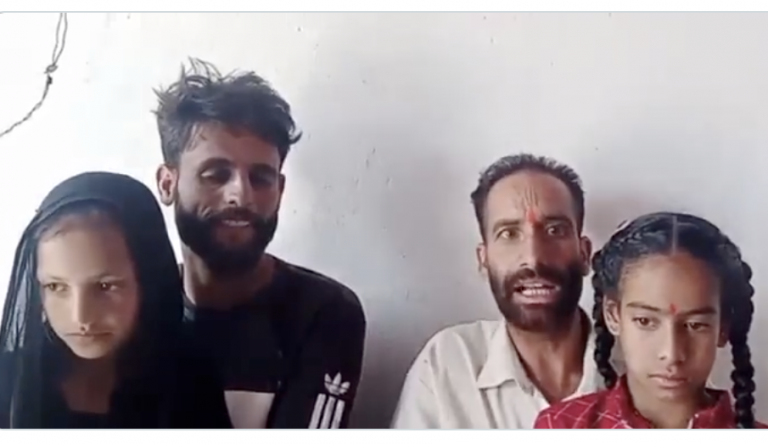
Family of a Hindu girl has accused that her school teacher, one Nisar Ahmed, beat her up when she went to school wearing a tilak as they had a puja at home for the ongoing Navratri.
In a video clip shared by CNN News 18 journalist Tejinder Singhi Sodhi, the family can be heard talking about their ordeal.
The family of a Hindu girl in Rajouri has accused that her daughter was beaten by a school teacher Nisar Ahmed as she went to school wearing a Tilak on her forehead as she had Pooja at her home for Navratras. The teacher has been placed under suspension by the Government pic.twitter.com/orAgF8njIi
— Tejinder Singh Sodhi ?? (@TejinderSsodhi) April 5, 2022
“I would like to say that if this kind of thing continues in the name of religion, we will all end up breaking each other’s heads,” he said.
The teacher, Nisar Ahmed was posted in Government Middle School Khadurian in Draman Panchayat of Kotranka subdivision. After the allegations surfaced, Rajouri district administration has initiated action in the matter and the teacher has since been suspended.
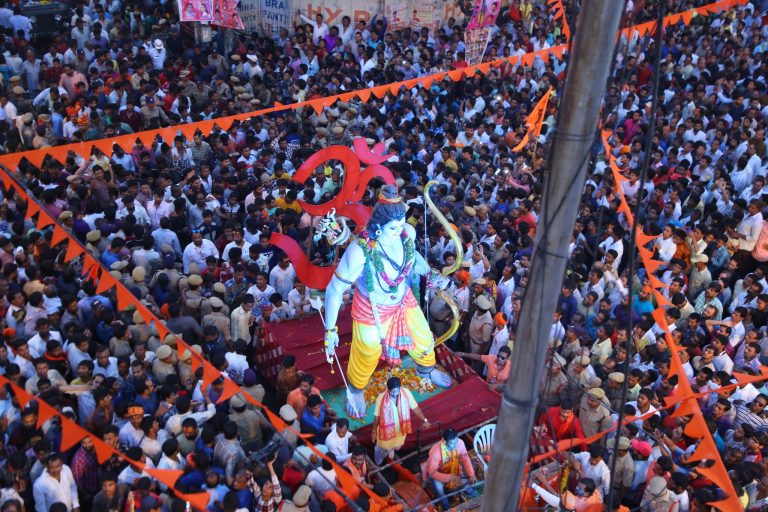
On this Ram Navami, the Vishwa Hindu Parishad (VHP) is planning to carry out over 1,000 rallies or Sobha yatras throughout the state of West Bengal, a report published in India Today said.
Speaking about their plans to have grand celebrations with over 1,000 Shoba Yatras in West Bengal on Ram Navami, Sourish Mukherjee, the senior spokesperson of VHP’s Bengal Mandal, told India Today that the VHP will be going extravagant this year after they could not celebrate Ram Navami in a magnificent manner following the construction of Ram Mandir in Ayodhya because of the COVID-19 situation.
“We are planning to carry out over 1,000 Shobha yatras in West Bengal. As many as 20 rallies will be taken out in Kolkata as well on the Ram Navami,” said Mukherjee.
The VHP spokesperson further added that instead of seeking police permission, they will intimate local administration and police station about the rallies planned in their respective areas.
Responding to the question of what would the VHP do in case they are not permitted to carry out the rallies, Mukherjee said they would organise the Shobha Yatras regardless of whether they are granted permission or not. “We don’t think that permission is required for taking out a Shobha Yatra but we will notify the police. Even if they don’t allow it, we will still take out rallies on Ram Navami,” said Mukherjee.
When asked if the Ram Navami rallies will see the participation of supporters carrying arms such as swords, bows and arrows, Mukherjee stated that it is the public that brings the weapons to the rallies as a way to pay tributes to Lord Ram who himself carried a bow and arrow. “VHP does not bring weapons or provide its supporters with weapons in the rallies,” said Mukherjee.
Mukherjee also asked the West Bengal Police to ensure that miscreants and mischief-makers are not allowed to impede any event of VHP during the Ram Navami celebrations.
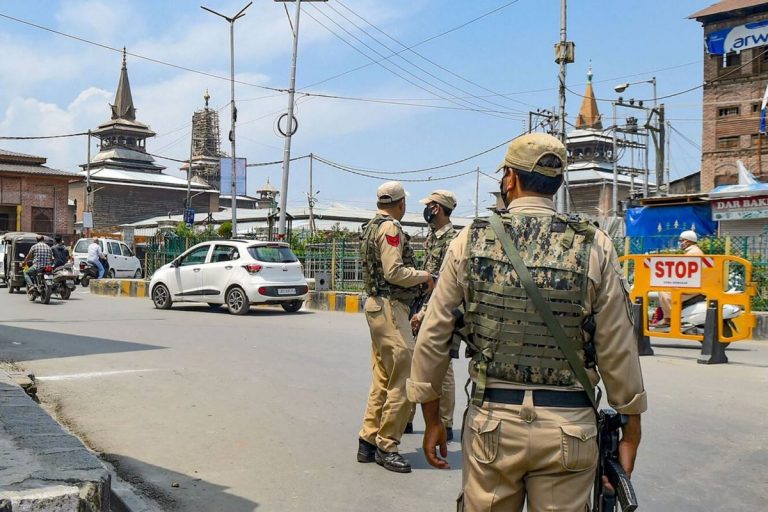
Police has been deployed in the Chotigam village of Shopian district to protect the two remaining Kashmiri Pandit families after one of them was attacked on Monday, 4th of April 2022. When most Hindu families in the village left Kashmir during the ethnic cleansing of the 90s, the two families had decided to stay back in the valley.
As per reports, one of those remaining Hindus, Anil Kumar Bhat, was sitting outside his medical shop when he saw two youths drive up on a motorcycle and one of them got off and entered the shop. Anil thought they had come to buy some medicines but soon after, his brother Bal Krishan Bhat came out screaming having been shot at by the intruder.
A critical Bal Krishan Bhat was rushed to the Army’s 92 Base hospital in Srinagar where he is reported to be stable.
The Bhat family used to live under the protection of Police in their village till 2016, however, after Burhan Wani was killed, these small Police posts became vulnerable to terror attacks, and were hence withdrawn. After this attack, a team of Jammu & Kashmir Police returned to the village to guard the 2 Hindu families.
The police officials have said that they are working on some leads, and have provided security cover to the 2 families in the meanwhile.
A protest was also held in Jammu against these targeted attacks against the few remaining Kashmiri Hindus and Bihari migrants in the Union Territory. Led by the Muthi Migrant camp president Anil Bhan, a rally was taken out to protest against the selective attacks on the Hindus in Kashmir.
The recently released film ‘The Kashmir Files‘ has put a spotlight on the atrocities against Kashmiri Hindus, but looks like it will take a long time for things to change on the ground.