French Aviation company Dassault Aviation has entered into an agreement with Tata Advanced Systems to make fuselage of the Rafale fighter jet in India. In a statement, Dassault Aviation said, “Dassault Aviation and Tata Advanced Systems Limited have signed four Production Transfer Agreements to manufacture the Rafale fighter aircraft fuselage in India, marking a significant step forward in strengthening the country’s aerospace manufacturing capabilities and supporting global supply chains. “
It added, “This facility represents a significant investment in India’s aerospace infrastructure and will serve as a critical hub for high-precision manufacturing.”
This is the first time Rafale fuselage will be made outside France. Dassault Aviation’s Chairman and CEO Eric Trappier said, “For the first time, Rafale fuselages will be produced outside France. This is a decisive step in strengthening our supply chain in India. Thanks to the expansion of our local partners, including TASL, one of the major players in the Indian aerospace industry, this supply chain will contribute to the successful ramp-up of the Rafale, and, with our support, will meet our quality and competitiveness requirements”.
Under the partnership, Tata Advanced Systems will set up a cutting-edge production facility in Hyderabad for the manufacture of key structural sections of the Rafale, including the lateral shells of the rear fuselage, the complete rear section, the central fuselage, and the front section.
Dassault said that the first fuselage sections are expected to roll off the assembly line in financial year 2028. The facility is expected to deliver up to two complete fuselages per month.
The company added, “The signing of these contracts reflects Dassault Aviation’s strong commitment to India’s ‘Make in India’ and AtmaNirbhar initiatives. This partnership aims to strengthen India’s position as a key player in the global aerospace supply chain while supporting its goal of greater economic self-reliance.”
Talking about the deal, Tata Advanced Systems CEO and MD Sukaran Singh said, “This partnership marks a significant step in India’s aerospace journey. The production of the complete Rafale fuselage in India underscores the deepening trust in Tata Advanced Systems’ capabilities and the strength of our collaboration with Dassault Aviation. It also reflects the remarkable progress India has made in establishing a modern, robust aerospace manufacturing ecosystem that can support global platforms.”
Notably, Indian Air Force has already acquired 36 Rafale fighter jets after a deal was signed in 2016. Earlier this year, orders were placed for 26 Rafale-Marine aircraft for Indian Navy.
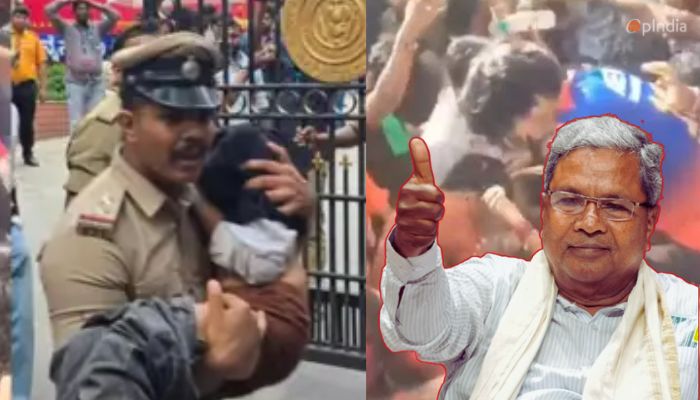
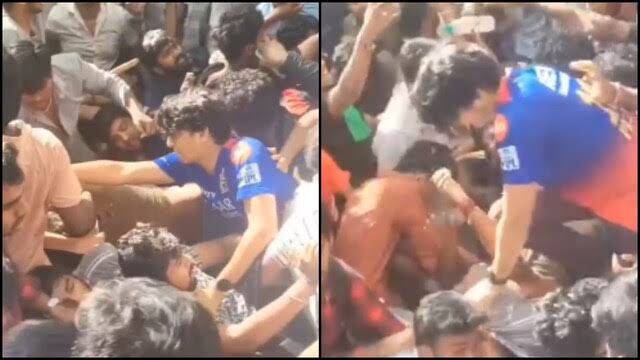
The show must go on, even as innocent people die. The evening of 4th June 2025 became the worst nightmare for thousands of people gathered in Bengaluru to attend sudden celebrations for the first-in-18-years IPL victory of Royal Challengers Bengaluru (RCB). Overwhelming crowd, chaos and gross mismanagement at the Chinnaswamy Stadium resulted in a deadly stampede that claimed 11 lives and left dozens injured.
The tragedy, marked by sheer mismanagement, chaos and a glaring lack of preparedness by the Congress government in Karnataka, has a cast a dark shadow of RCB’s historic win. The apathy of the Karnataka government, coupled with inadequate crowd control measures turned the moment of collective joy into one of immense sorrow, raising questions over public safety and accountability.
#WATCH | Bengaluru, Karnataka: Visuals from outside Chinnaswamy Stadium, where the slippers and shoes are scattered. A stampede occurred here, claiming the lives of 11 people and injuring 33 people. pic.twitter.com/5DBhW9IFli
A wave of euphoria prevailed in Bengaluru after Royal Challengers Bengaluru defeated Punjab Kings on 3rd June in the final match at Ahmedabad to clinch their maiden Indian Premier League trophy. To celebrate the IPL franchise’s triumph, a victory parade on 4th June was announced, starting from Vidhan Soudha, where the RCB team was felicitated by Karnataka Chief Minister Siddaramiah and Deputy CM DK Shivakumar.
Followed by this, there were celebrations at the Chinnaswamy Stadium. However, the event drew an unprecedented crowd, far exceeding the stadium’s capacity of 32,000. The massive turnout, passion of RCB fans to have a glimpse of Virat Kohli and other team members and lapses in crowd management led to catastrophic consequences.
Eyewitness accounts and viral videos show uncontrolled crowds, bottlenecked entry points, and a visibly underprepared security apparatus. The injured persons were taken to the Bowering Hospital in Shivajinagar from the stadium area. Anticipating the arrival of the RCB team from Vidhana Soudha to Chinnaswamy Stadium, fans had jam-packed the roads and alleys between the two places, causing traffic chaos and a law and order situation.
Victory parade taken out despite local police’s refusal
It is being reported that the victory parade was taken out despite the Bengaluru Police stating that there will be no such parade. The RCB on the team’s social media pages on Wednesday posted that the victory parade will take place at 5 pm and also announced limited free passes. This came hours after the Bengaluru Police had stated that no such parade will take place due to security reasons. The local police also denied permission for an open-top bus parade.
Some social media users highlighted that the Bengaluru traffic police had posed on X saying that no victory parade will take place. However, after RCB franchise’s official handle posted that the parade will indeed take place, the Bengaluru traffic police deleted its post.
at 1:08PM- Bengaluru City Traffic tweeted that there will be no victory Parade.
at 3:14PM- RCB Tweeted that victory parade will happend at 5pm.
As per the police, over 50,000 fans had gathered within a one-kilometre radius of the stadium, and many of them tried to push through the gates and climb barriers installed by the authorities. It is due to the inability to manage such a huge crowd in a small area that the police had denied permission for victory parade. This aspect was also pointed out by sports journalist Vikrant Gupta in a video.
While questions must be raised over the local administration’s failure, the management of the RCB is also to be questioned for unusual hurry to fly the team to Karnataka and organise a the celebration in haste. There was serious communication gap.
As per Karnataka deputy CM, while the Chinnaswamy stadium’s capacity was of 32,000, over 3 lakh people had gathered there. Although the severe backlash Karnataka government is receiving has compelled the minister to ‘apologise’, this sensitivity was missing when the stampede happened.
Death toll increased outside Chinnaswamy stadium, celebrations continued inside
Even as the news of a stampede broke, Deputy CM DK Shivakumar arrived at the stadium for celebrations and said how he is very proud of RCB and Karnataka and Kohli’s loyalty has paid royalty.
Inside the stadium, celebrations were going on, with Karnataka CM and deputy CM and RCB players and management rejoicing, all while the fans of the same team were dying, enduring injuries and battling to come out alive. While it is being said that people inside the stadium were largely unaware of what tragedy unfolded outside the stadium, however, it is impossible that the state’s chief minister and deputy chief minister, who are responsible for ensuring the safety of their people, especially during such massive events, were unaware of the stampede.
The least the authorities could have done is stop the celebrations and take swift action to disperse the crowd properly. However, the Karnataka ministers decided to let the show go on, make reels and hog limelight with cricketers.
The deputy CM posted on X giving out open invitation to everyone to join the celebrations of RCB’s victory despite knowing the fact that the fan frenzy was uncontrollable. The Congress government hastened the celebrations even as there was a lack of adequate security and crowd management arrangements.
The state government and RCB should have coordinated to hold the celebrations and even victory parade after two or three days in well-planned manner just as NDA government in Maharashtra did after India’s T20 World Cup in last year, so that the Bengaluru police and administration could get enough time to make necessary arrangements. However, communication gap and the state government’s apparent desperation to encash the moment and emotions of fans resulted in hurried celebrations that eventually transformed into a gut-wrenching tragedy.
Despite knowing the popularity of RCB in Bengaluru and the significance of the franchise’s first IPL title, the state government grossly underestimated the turnout or perhaps they were not much concerned about the possibility of a stampede-like situation as they were engrossed in encashing the triumphant moment.
While the Bengaluru Police initially denied permission for an open-bus parade due to safety reasons, the event proceeded regardless, with insufficient security measures. Reports say that around 5,000 police personnel were deployed, however, this number was woefully inadequate for a crowd of lakhs in such a small place. There was a lack of proper barricades, entry protocols, and crowd dispersal strategies leading fans who were already running high on emotions to breach gates, climb over barriers. Meanwhile, the collapse of a temporary slap over a drain under the weight of the crowd near the stadium also contributed to escalating panic.
Besides, rumours of free tickets being distributed at the main entrance became nothing less than a death trap as massive crowd turned over to claim their free tickets even though there no such official announcement.
Notably, the Chinnaswamy stadium has 21 stands with 13 gates. Gates 9 and 10 were reserved for state cricket association members. The gates 5, 6, 7, 19 and 20, located along the team’s main entry route witnessed the highest concentration of crowds. Reports say that maximum deaths happened at gate 7.
“There was an ambulance with 40 injured people. I was lucky to get out in time. Even police were struggling to manage the crowd,” said Avinash from RR Nagar.
Another eyewitness Sinchana N, who got caught in the melee, said, “I could avoid the worst only because I reached late. Cops were not controlling the crowd in the real sense, and were just pushing people around.”
The visuals of the stampede and eyewitness accounts describe scenes of desperation, with people trampled and unconscious before finally help arrived. As the crowd was beyond the expected estimates of the authorities, emergency services were overwhelmed, with ambulances struggling to navigate through crowded streets and police had to do lathi-charge to disperse the crowd.
Delayed response to crisis, overwhelming crowd, communication gaps, prioritising publicity over public safety, rumours, disastrous crowd control and the state government’s apathy collectively caused the stampede that turned a day meant to be remembered for celebration of a historic victory into a day of unimaginable tragedy.
While the stampede unfolded outside Chinnaswamy stadium, the state’s Chief Minister, Deputy CM and other leaders appeared disconnected from the crisis. Their celebratory mood persisted even as the reports of the stampede emerged, with the event inside the stadium continuing as if nothing tragic happened at all. A lap of honour and brief speeches continued for about 30 minutes and eventually the program was abruptly halted.
The Karnataka Chief Minister announced Rs 10 lakh compensation for the families of the deceased and ordered a magisterial inquiry into the incident. The Chief Minister acknowledged the unexpected scale of the crowd, however, this situation would never had arose if instead of announcing celebrations in a haste, the Congress government took a few days to plan the event well and then organise celebrations. This too little, too late response is essentially useless now that so many people who came to a part of a celebration lost their lives.
Also, in a country like India, where cricket celebrations are predictable spectacles, giving excuses like ‘we did not expected this much crowd’ does not make sense. It is rather, the most convenient way of evading accountability.
RCB has a issued a statement mourning the loss of lives, cricketers will also issue statements on Instagram with a heartbreak emojis and thick-skinned politicians will play blame game, compensations and inquiry have already been announced, massive social media outrage is ongoing, but those who lost their lives in the stampede will never return. Their families are devastated all because of the state government’s misplaced priorities and criminal negligence. This tragedy serves as a painful lesson that no victory, no celebration, however historic, is worth a human life. The dystopian scenes from Bengaluru on 4th June 2025 will haunt the city and India for a long time, and remind the people that for apathetic leaders, people are just crowd, just numbers and nothing more.
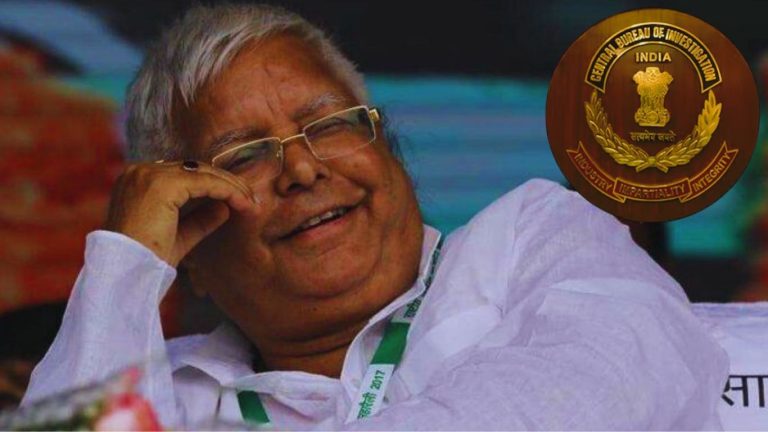
During a hearing of the land for jobs scam case in the Rouse Avenue Court in Delhi on Wednesday (4th June), the Central Bureau of Investigation (CBI) made some shocking submissions against Rashtriya Janata Dal (RJD) supremo Lalu Prasad Yadav who is an accused in the case.
Special Public Prosecutor (SPP) DP Singh, appearing for the CBI, said before Special Judge Vishal Gogne that during his tenure as the Railway Minister under the UPA-I government between 2004 and 2009, Lalu Prasad Yadav exploited job aspirants from underprivileged backgrounds by giving them Group-D jobs in railway in exchange for their lands. The central agency said that these job aspirants transferred their lands to Lalu Prasad Yadav and his family members at extremely lower prices in exchange for jobs. Notably, all the transactions were done using cash to avoid scrutiny.
Job aspirants had forged documents: CBI
The SPP highlighted that the job aspirants were primarily from Bihar and owned land that the Yadav family found beneficial. “We have a clear cash trail. These people were seeking government jobs and were willing to part with their land in return,” said Singh. The agency further said that no public notice or advertisement was issued before making these appointments. It pointed out before the court that many approvers had confirmed that there was “enormous pressure from the top” of the Ministry to approve these appointments.
The CBI counsel said that many candidates out of those selected for appointments could not even write their names and had forged their documents. He said that a school existed for the sole purpose of issuing forged certificates. “As quid pro quo candidates directly or through their relatives sold lands to Lalu Prasad Yadav on highly discounted rates,” Singh said.
Pointing out the irregularities in the appointment process, the SPP said that so many candidates were selected for the jobs in one single day. “It is a tedious process, yet multiple applications were cleared at lightning speed. There was neither an advertisement nor any emergency justifying such mass hiring,” Singh added.
The CBI Counsel also said that the jobs were given as substitutes, a category normally reserved for temporary replacements in the absence of regular employees. “There’s no justification for hiring so many substitutes so quickly,” Singh said.
Even illiterates were given Railway jobs
Central Bureau of Investigation told the Delhi Court that those who couldn’t even write their own names were given Railway jobs during Lalu Prasad Yadav’s tenure as the Railway Minister. CBI says that these people were given Group-D jobs in the Indian Railways after gifting land parcels to former Bihar chief minister Lalu Prasad Yadav and his family.
These fraudulent appointments in question were allegedly made in the West Central Zone of the Railways, based in Jabalpur, Madhya Pradesh, between 2004 and 2009.
3 chargesheets filed in the case
An FIR was registered in the case in May 2022 against Lalu Prasad, his wife Rabri Devi, sons Tejashwi Yadav and Tej Pratap Yadav, and daughter Hema Yadav. Over 80 other persons, including public servants and private persons associated with the Railway Ministry, were also named in the FIR for allegedly facilitating illegal appointments in various railway zones.
Three chargesheets have been filed by the CBI in the case so far. The first chargesheet was filed on October 7, 2022, after which 16 accused were summoned. This was followed by a second chargesheet filed on March 27, 2024, and summoning of 17 individuals including Lalu Prasad Yadav’s son Tej Pratap Yadav. The RJD chief, his family members and 78 other accused, including 30 government officials, were summoned when the last chargesheet was filed by the CBI on June 7, 2024. However, all of them were granted bail on a bond of ₹50,000 each.
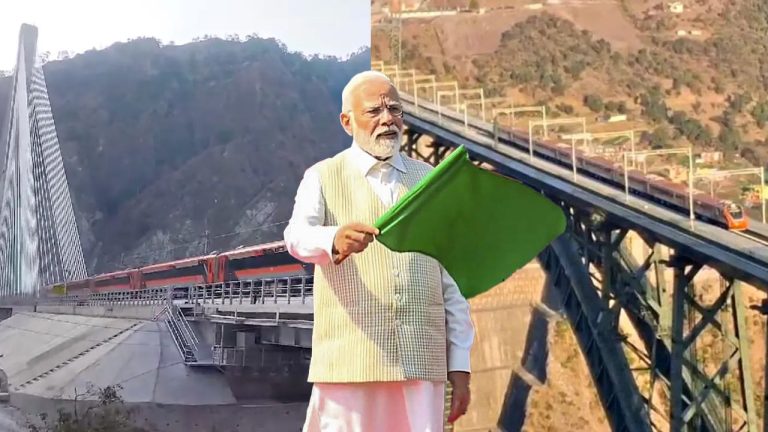
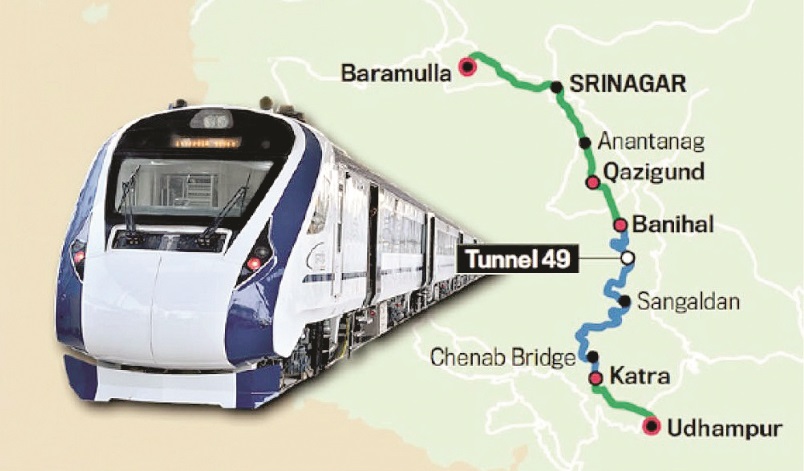
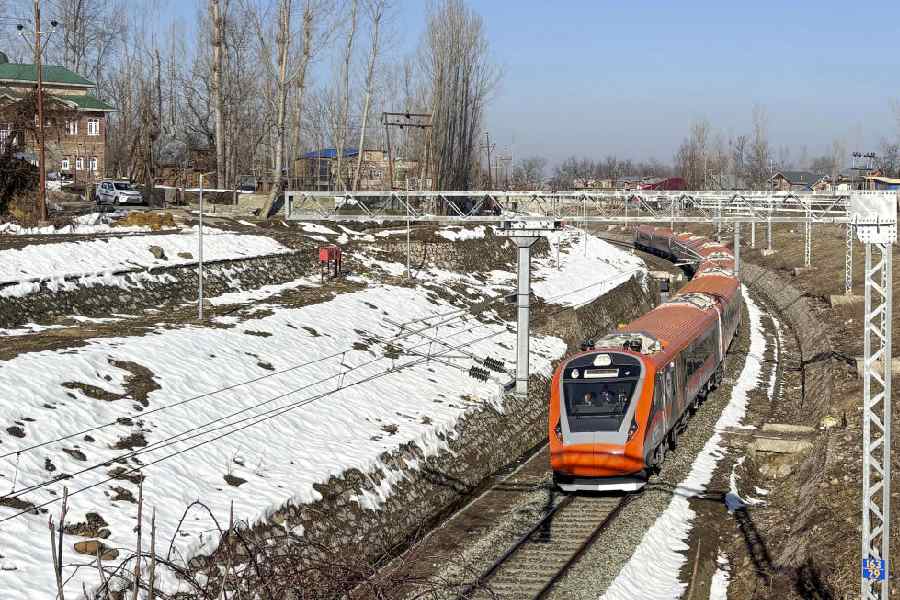
The Vande Bharat Express is anticipated to traverse swiftly between Katra and Srinagar, shortening travel time and setting a new standard of comfort for the inhabitants of Jammu and Kashmir. Prime Minister Narendra Modi is set to flag off the first Vande Bharat train service to Kashmir on the Udhampur–Srinagar–Baramulla Rail Link (USBRL) on 6th June.
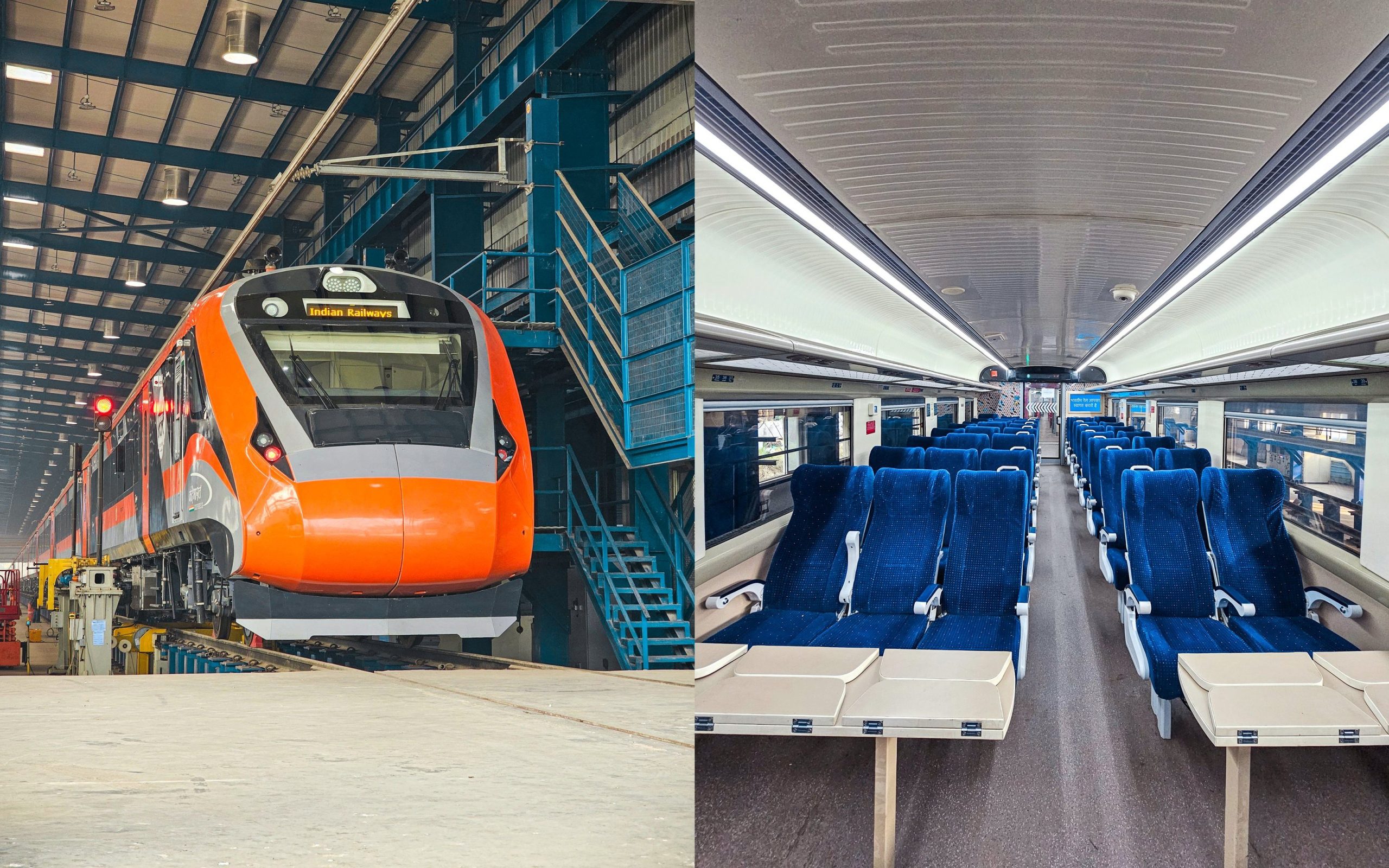
The new semi-high-speed train will travel 150 kilometers between Shri Mata Vaishno Devi in Katra and Nowgam station in Srinagar. It will be fitted with automatic doors, anti-spall layers and heating systems. On 23rd January, the Indian Railways ran a test run of the Vande Bharat train between Katra and Srinagar.
Image via Rising Kashmir
The project was originally scheduled to launch on 19th April, however due to unfavorable weather, it was postponed. The inauguration was further delayed as a result of the 22nd April Pahalgam terror attack. PM Modi was supposed to attend its opening in Srinagar prior to the Pakistan-sponsored assault. According to officials, he will now flag off the train from Katra in the Jammu region.
There are currently train services running between the Kashmir’s Baramulla-Srinagar to Sangaldan. Officials stated, “Trains can now run between the entire stretch since Sangaldan and Katra in Jammu have been connected via rail.”
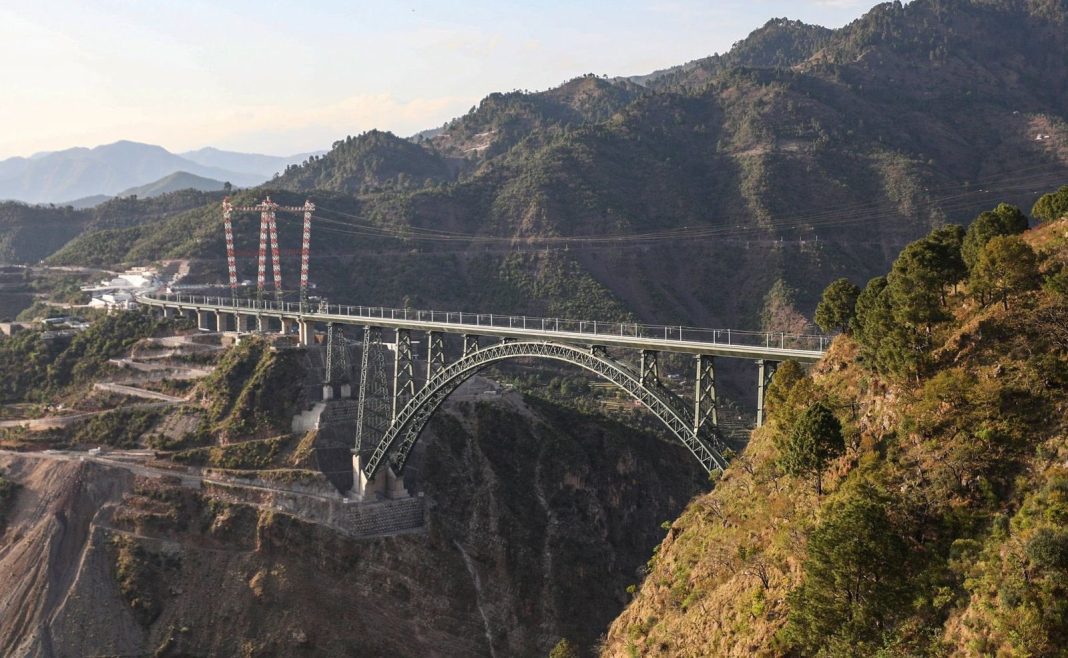
Chenab Bridge
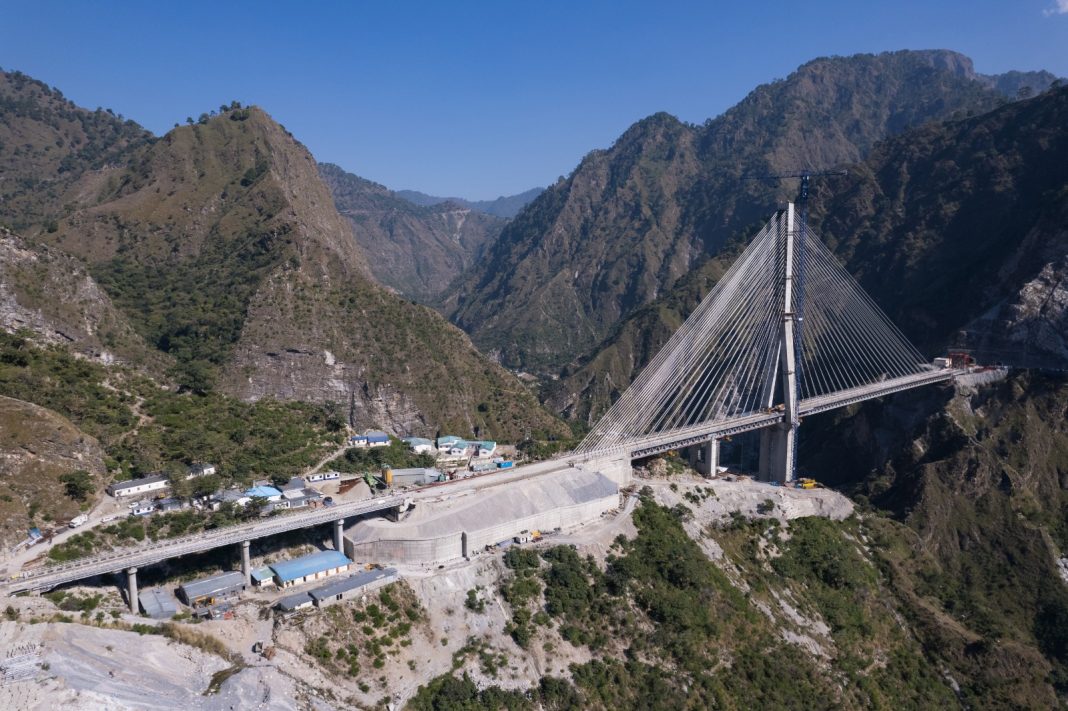
Additionally, PM Modi will also inaugurate two engineering wonders: India’s first cable-stayed rail bridge at Anji Khad and the highest railway bridge in the world over the Chenab.
The railways successfully conducted its first “trial special train” last month, which transported soldiers on the Katra-Qazigund section, including the Chenab Bridge which is in the last segment that connects Kashmir to the rest of India through rail.
Anji Khad Bridge
An extraordinary engineering achievement
The Udhampur-Srinagar-Baramulla Rail Link (USBRL) stands as one of the most significant railway projects ever pursued in independent India. The project, which is 272 kilometers long and runs across the untamed Himalayas, was constructed for ₹43,780 crore. It connects valleys, ridges and mountain passes.
Ballast-less tracks were laid over bridges and tunnels, crossing deep valleys as part of the USBRL project. 90% of the route passes over 943 bridges and 36 major tunnels totaling 119 kilometers, including the T-50, India’s largest railway tunnel which is more than 12.7 kilometers long.
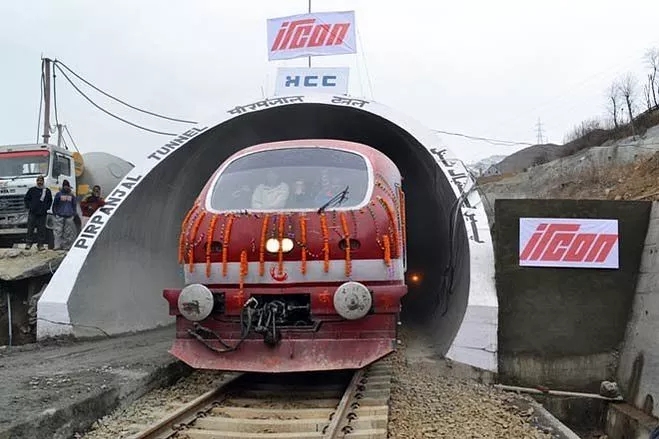
Another important component of the USBRL is the prominent Banihal-Qazigund Railway Tunnel, often called the Pir Panjal Railway Tunnel. Located in the Pir Panjal Range of the Himalayas, this 11.215 kilometre long tunnel is an essential part of the railway line that connects Jammu and Kashmir to the rest of India.
Pir Panjal Railway Tunnel
The train unites remote places with the national rail network and ushers in a new era of mobility, trade and tourism for Jammu and Kashmir. It has been designed to overcome the region’s harsh geography. The introduction of the Vande Bharat Express between Jammu and Srinagar is intended to optimize the impact of this connectivity. It is engineered to withstand the severe Himalayan winters. As low as minus 20 degrees Celsius can not affect its operation.
History in the making: For the first time ever, #Kashmir is connected directly, seamlessly to Jammu, New Delhi and the rest of India by train on 6 June 2025. @PMOIndia@narendramodi to flag off the first passenger train (Vande Bharat) at Katra. The world's highest railway… pic.twitter.com/qismUnm3ph
The train’s year-round functioning and comfort are guaranteed by heated windshields, sophisticated heating systems and insulated restrooms. A snow removal train that travels ahead to clear the tracks supports this route, guaranteeing year-round operation. Likewise, seismic dampers have been placed to absorb shocks, making travel in this high-risk area safer and more comfortable.
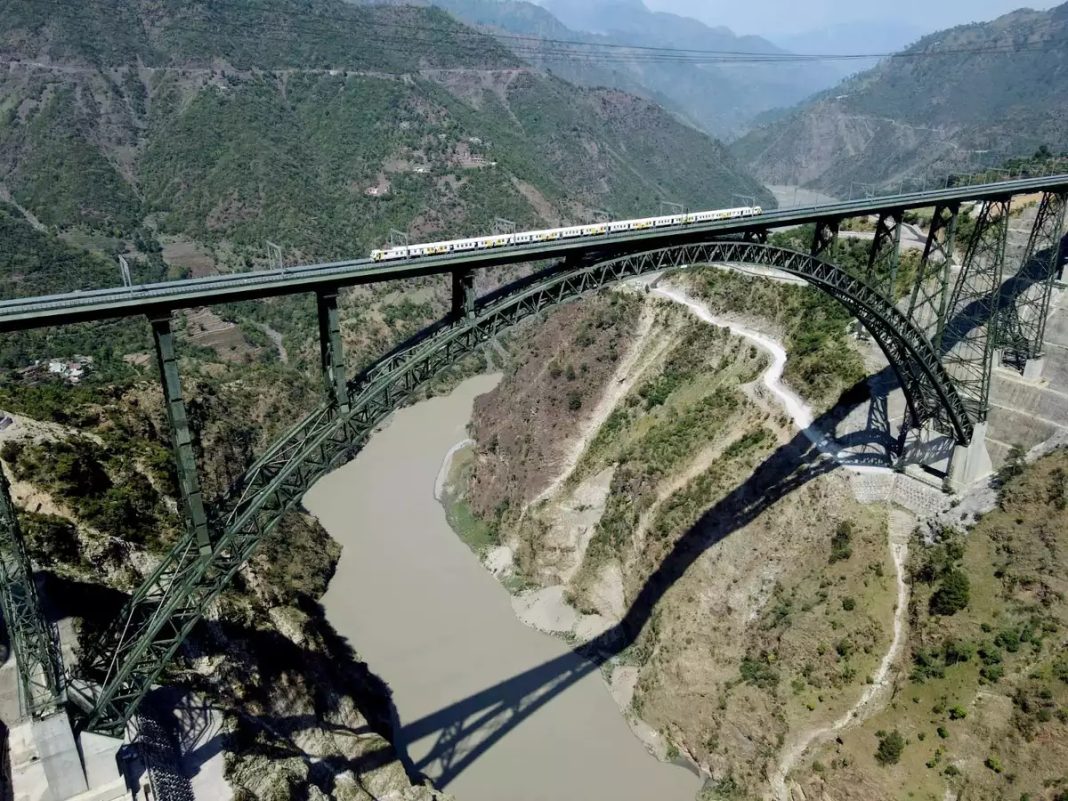
The train has climate-specific modifications to enable clear visibility during the brutal winter months, providing advanced heating systems in below-freezing conditions and have heating elements incorporated in the driver’s front looking glass for defrosting. The Vande Bharat train will traverse the Chenab Bridge, which is positioned 359 meters above mean sea level.
Together, these measures are revolutionizing Jammu and Kashmir’s public transportation system to make it more dependable, resilient and equipped for the future. The train will also cross the Anji Khad bridge, India’s first cable-stayed bridge on the Katra-Banihal route. The 725-meter bridge, which is 331 meters above mean sea level is supported by 96 cables.
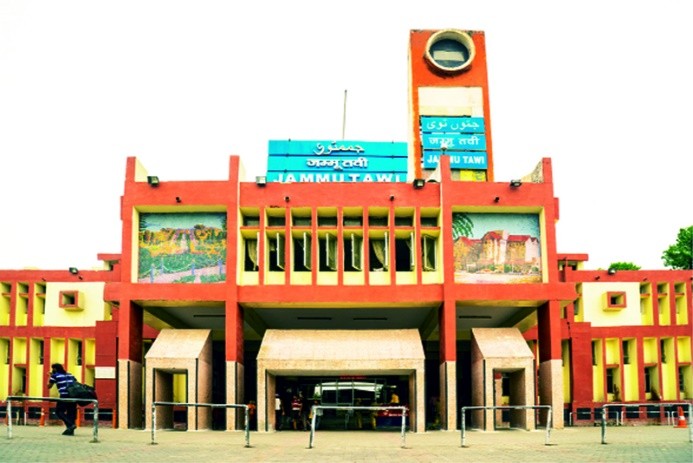
It is higher than the Eiffel Tower rising 1,178 feet over the Chenab River. An official stated, “The trains and the security apparatus are in place for operation.” There will only be four stations, Srinagar, Banihal, Jammu Tawi and Shri Mata Vaishno Devi Katra, between Srinagar and Jammu.
Timings and schedule
The Ministry has authorized four Vande Bharat trains, specifically the Jammu Tawi-Srinagar Vande Bharat Express (26401/26402) and the Jammu Tawi-Srinagar Vande Bharat Express (26403/26404), two from Srinagar and two from Jammu, according to an official announcement.
The Srinagar-Jammu Tawi Vande Bharat Express (26402) would depart Srinagar at 2 pm every day, with the exception of Tuesdays and arrive in Jammu at 6:50 pm, based on the communique’s approximate schedule. A similar service would be provided by the Srinagar-Jammu Tawi Vande Bharat Express (26404), which leaves Srinagar at 8 am and arrives in Jammu at 12:40 pm every day except Wednesday.
With the exception of Wednesday, the Jammu Tawi-Srinagar Vande Bharat Express (26403) will operate every day. It leaves at 1:20 pm from Jammu and arrives in Srinagar at 6:00 pm. Similarly, the Jammu Tawi-Srinagar Vande Bharat Express (26401) will depart from Jammu at 6.20 am and arrive in Srinagar at 11.10 am every day except Tuesday.
The order stresses a timely launch with a convenient date and describes the introduction of new train services based on Northern Railway’s proposals. It’s possible that the inaugural train could be a special service that eventually links to the normal timetable. It also pointed out the importance to ensure that the changes are executed in accordance with these guidelines.
High speed train trial on Chenab Bridge
The Vande Bharat Express train’s fare from Katra to Srinagar has not yet been formally declared, but according to railway input, it could be around Rs 1600 for an AC chair car and Rs 2500 for an executive chair car. It would accommodate 530 passengers and features seven luxury class coaches and one executive class coach.
A separate goods train service will also operate in accordance with seasonal needs, particularly to facilitate the transportation of fresh vegetables and other necessities. Furthermore, Prime Minister Modi will launch passenger service between Baramulla in North Kashmir and Katra.
According to other reports, the prime minister is expected to flag off two Vande Bharat trains: one from Katra to Srinagar and the other from Srinagar to Katra. These trains will currently only run between the two cities. There is now no direct Vande Bharat service between Jammu and Srinagar due to ongoing development at the Jammu Railway Yard. Passengers will need to change trains at Katra to continue their journey until this work is completed, which should be concluded by August or September.
Vande Bharat brings development
The road trip from Katra to Srinagar takes at least six to seven hours whereas the Vande Bharat train journey would only require three hours. People will be able to travel from Jammu to Srinagar and back that same evening owing to the Vande Bharat trains, per Union Minister of Railways, Ashwini Vaishnaw.
The train would help the people of Kashmir by making it easier and less expensive to transport items like apples, dry fruits, pashmina shawls, handicrafts, etc. to other regions of the nation. It is also expected that the cost of shipping everyday items from other parts of the nation to the valley will drop dramatically. Land was also identified for three of the four cargo terminals to be constructed between Banihal and Baramulla.
Vande Bharat train in Kashmir during trial run
The Katra and Srinagar segments of the Vande Bharat Express will enable smooth travel to and from 18 significant stations for the convenience of residents along the route, including Reasi, Bakkal, Dugga, Sawalkote, Sangaldan, Sumber, Khari, Banihal, Shahabad Hill Halt, Qazigund, Sadura, Anantnag, Bijbehara, Panzgam, Avantipora, Ratnipora, Kakapora and Pampore.
How the ambitious project came to fruition
The Himalayas are young, and the seismically most active Zones IV and V are home to the geologically unstable Shivalik Hills and Pir Panjal mountains. Bridge and tunnel building were greatly hindered by the challenging terrain which receives a lot of snow in the winter.
Over 205 kilometers of motorable roads, including 320 bridges and a tunnel, were constructed at a cost of Rs 2,000 crore to move personnel, heavy equipment and building supplies to construction sites, many of which were on steep mountain slopes with an elevation of 70 degrees or more.
Image via @trainwalebhaiya/X
Given the difficulties in building enormous bridges and intricate tunnels in hazardous mountainous terrain, railway engineers developed a revolutionary technique called the Himalayan Tunneling Method (HTM), in which horseshoe-shaped tunnels were constructed rather than the more common D-shaped ones. With this approach, the site curves downward, strengthening the structure where loose soil is present above it.
The broad gauge railway line possesses a ruling gradient of 0.5-1 percent, thus avoiding the need for bank engines in a region characterized by mountains. Originally, diesel engines were supposed to power the trains with the option to electrify them later. Every significant bridge, tunnel and train station will have CCTV cameras and lighting. The tunnels and track have been constructed to require minimal maintenance.
Transformation of railways in Jammu and Kashmir
A 48-kilometer line that ran through Khari and Sumber from Banihal to Sangaldan was put into service in February 2024. Additionally, the 185.66-kilometer Baramulla-Srinagar-Banihal-Sangaldan segment was electrified. PM Modi inaugurated services between Sangaldan and Baramulla and marked the start of the valley’s first electric train.
In January 2025, the 111-kilometer Banihal-Katra section’s final safety assessments went underway. This section consists of 4 seven-kilometer bridges and 97 kilometers of tunnels. On the other hand, Jammu Railway Station which is being renovated would include eight platforms and contemporary conveniences.
Image via INSIGHTS IAS
Indian Railways also opened the new Jammu Railway Division in January, which is part of Northern Railway and has its headquarters in Jammu. It will serve Jammu and Kashmir, Ladakh, Himachal Pradesh and portions of Punjab. Large portions of the former Firozpur Division have been reallocated to this 70th division of Indian Railways which will improve operations in the area and oversee significant portions of the USBRL.
A 25 kilometer section between Udhampur and Katra, as well as 184 kilometres of the completed route between Sangaldan in Jammu and Baramulla in Kashmir are currently served by local trains. The remaining portion, the final 63-kilometer Katra-Sangaldan section is also now open to the public.
In 1983, the Congress government, then headed by Prime Minister Indira Gandhi, placed the first foundation stone for the Udhampur-Srinagar rail line. However, it wasn’t until the Atal Bihari Vajpayee-led National Democratic Alliance (NDA) government declared it a national project in 2002 when actual work commenced.
Connecting India via Railways
The USBRL has been finished in stages since it was approved in 1994-1995 and certified as a National Project in 2002. The following important portions have already been commissioned: Banihal-Qazigund (2013), Udhampur-Katra (2014), Banihal-Baramulla (2009) and Banihal-Sangaldan (2020). Last year, a successful Mainline Electric Multiple Unit (MEMU) train trial run was also carried out on the electrified Reasi-Sangaldan line.
There is more to this development than merely a new train service. It serves as a testament to the advancements made in the area’s railway system during the previous eleven years of Modi government. The railway map of Jammu and Kashmir has been meticulously and intentionally redrawn. Once viewed as far-flung aspirations, projects have evolved into valuable links between people, livelihoods and locations.
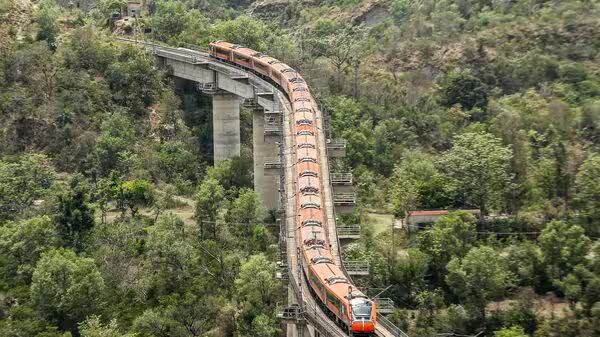
A Vande Bharat passenger train runs across a green valley on the outskirts of Jammu. (Source: Mint)
A dedicated railway division, station modernization and complete electrification have put the area squarely on track for faster, cleaner and more equitable expansion. Furthermore, the Modi government has successfully linked the valley with the rest of the country. The railway network has seen significant expansion since 2014, connecting parts of India that previously had only a distant dream of such services.
From the northeast to Kashmir, the railways have played a crucial role in linking even the most isolated regions to the rest of the country, providing people with both comfort and convenience. The railways have notably connected remote regions, aiding in economic growth and development. The project will greatly improve the lives of locals while also advancing industries including horticulture, tourism, agriculture and education.
Once considered isolated, the north-east region along with the underdeveloped and terror-affected Kashmir, has now integrated into the mainstream of India’s success story under Modi government and the recent developments stand as evidence of this transformation. Moreover, the current focus on bolstering rail infrastructure in these areas signifies a commitment to integration and inclusive development. This new train link would fulfill a seven-decade-old dream of national unification by connecting Kashmir and Kanyakumari with a continuous railway line.
China’s move of imposing restrictions on the export of rare earth magnets has posed a major challenge before companies engaged in the manufacturing of automobiles, semiconductors and other equipment in which the magnets are used.
In April this year, China put curbs on the export of seven medium to heavy rare earth elements and several magnets by mandating exporters to obtain licenses citing national security and non-proliferation concerns. The rare earth magnets form a crucial component of electric and petrol vehicles, defence equipment, and clean energy systems. These are used in the manufacturing of systems of motors and steering, brakes, wipers, and audio equipment. The mandatory licensing, which can take months, is going to cause delays in supply of rare earth magnets, consequently impacting the global production lines.
What are rare earth magnets
Rare earth magnets magnets are a form of permanent magnets made from alloys of rare earth elements such as neodymium and samarium-cobalt. These are the strongest type of permanent magnets and have significantly stronger magnetic fields compared to other magnets. Two main types of rare earth magnets are- Neodymium-iron-boron (NdFeB) and samarium-cobalt magnets (SmCo). Due to their unique properties, the magnets have vital industrial applications across sectors including automobile, aerospace and semiconductor industries. As a result, any shortage or disruption in the supply of the magnets can impact the entire production line.
How does China dominate the sector
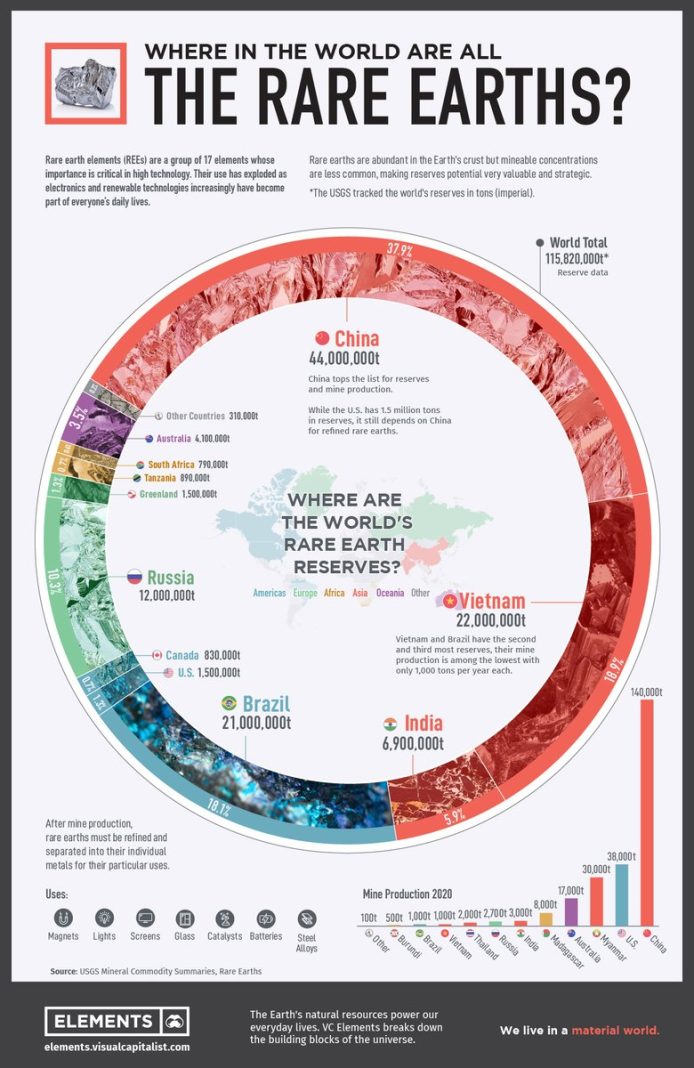
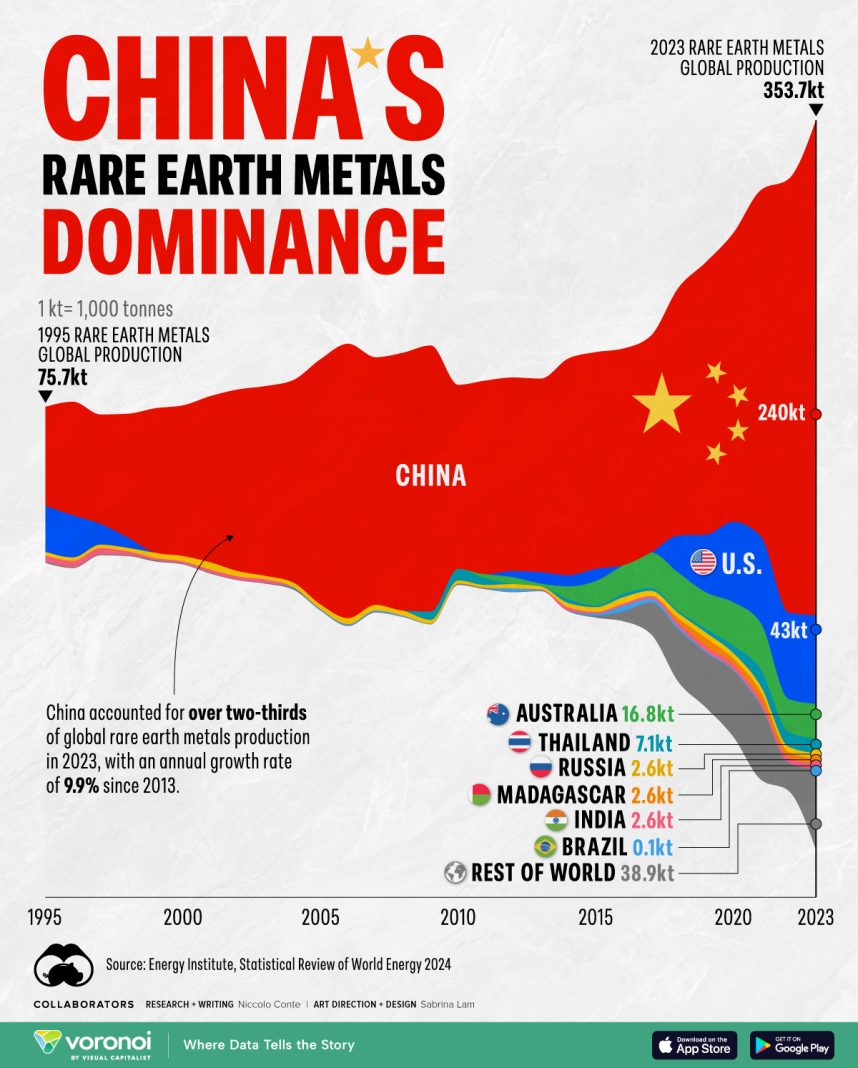
China is the world’s biggest rare earth elements supplier, accounting for 60% of the total global supply of the rare earth elements and 90% supply of the rare earth magnets. What provides China an advantage in the production and supply of rare earth elements is not the scarcity of the elements in other countries but the country’s developed capacity to extract these elements. China dominates this sector because they have mastered the difficult process of extracting rare earth elements. The country has been working on refining its rare earth elements extraction technologies since the 1980s. Besides, availability of cheap labour and lenient environmental regulations provide China an added advantage by reducing the cost.
“People understandably tend to think that rare earth mineral deposits are what’s scarce, given the name. That is false. They’re everywhere. As with lithium, what China has that others lack is the heavy industry of refining the minerals,” said business tycoon Elon Musk commenting on China’s decision to impose restrictions on the supply of rare earths.
China has suspended exports of certain rare earth minerals and magnets to the US and around the world.
China is drafting a new regulatory approach to the minerals to prevent them reaching American companies pic.twitter.com/WX8Uh89gkO
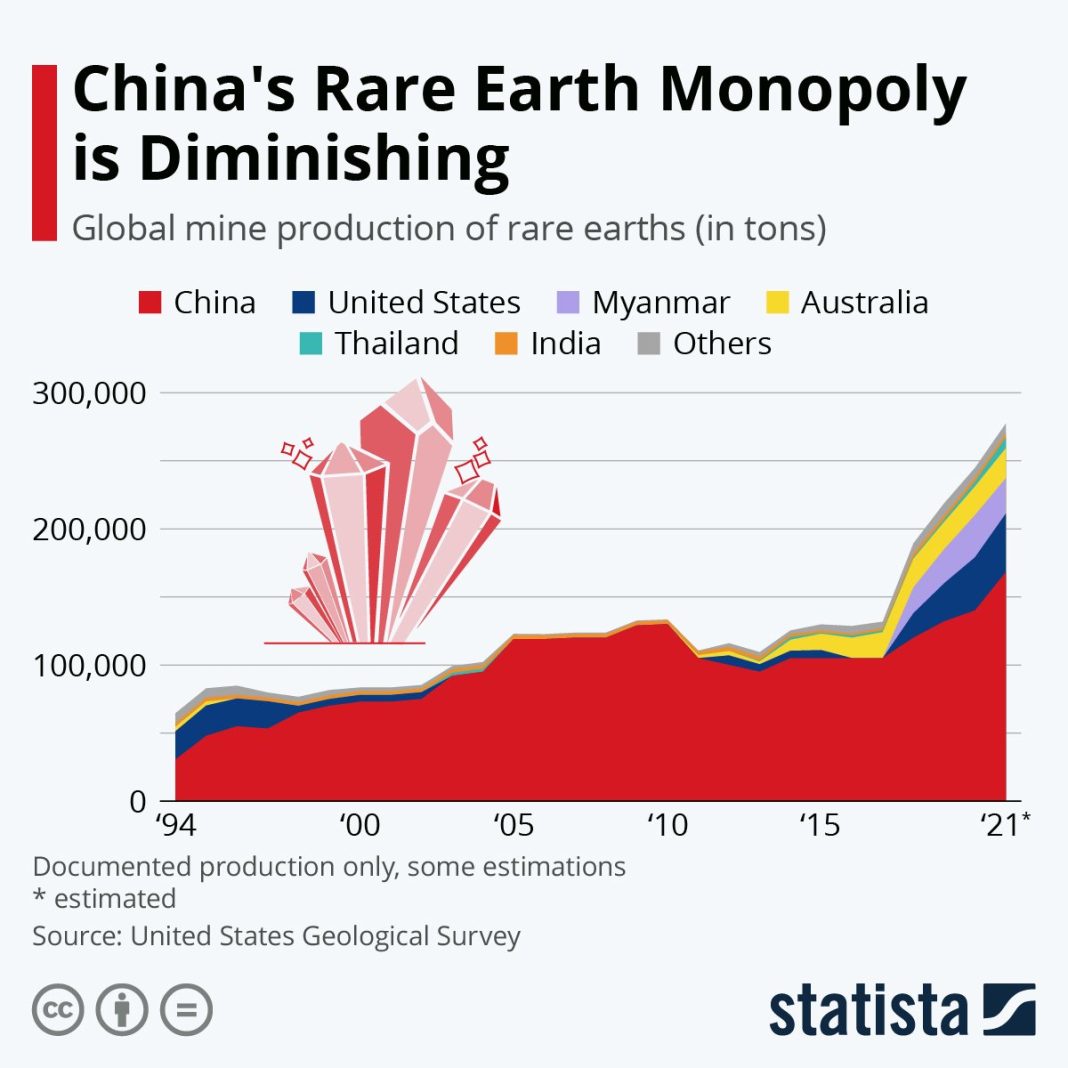
In recent years, China’s dominance of the rare earths market is reducing. From 98% market share in 2010, it has reduced to around 70% now. This has happened as more and more countries are developing technology and capability to extract these elements.
Image via Statista
In order to secure its dominant position in the area with increased competition, China imposed a ban on the export of the rare earth elements extraction technology in 2023. The US has been trying to develop new technologies for rare earth element extraction since 1950s but the technologies developed by it so far are not widely used becuause of the radioactive waste generated in the process.
How China’s restrictions have posed challenges for Indian automobile industry
China’s restrictions have sent ripples across various industries at the global level, including the automobile industry. Several global manufacturers from Japan, South Korea and Europe and diplomats are seeking meetings with Chinese officials to expedite the halted export licenses.
Indian automobile industry, which is the third largest in the world, is also facing adverse consequences of the Chinese restrictions. For the last two months, India has experienced a halt in the import of rare earth magnets. In addition to that, further delays in supply of the rare earth magnets due to mandatory licensing are disrupting the automobile production. With their depleting stocks of rare earth magnets, the Indian automobile makers are facing the challenge of keeping the production lines running.
India’s emerging electric vehicle sector is also staring at a potential shortage of the rare earth magnets due to Chinese restrictions. The electric two-wheeler sector is expected to take a major hit due to delays in the supply of rare earth magnets. India’s estimated annual demand for rare earth magnets in the electric vehicles industry is 6,000 to 7,500 tonnes, for which India entirely depends on China.
This has prompted the Indian government and the automobile makers to reach out to Chinese officials to extradite the stalled supply of rare earth magnets. As per reports, a delegation from the Society of India Automobile Manufacturers (SIAM) and the Automotive Component Manufacturers Association (ACMA) is planning to meet Chinese officials. The Indian government is also making efforts to resolve the issue through diplomatic channels. Seventeen Indian automobile component makers, including Continental Automotive, Hitachi Astemo, Mahle Electric Drives, Varroc Engineering, and Flash Electronics submitted their import applications to China last month. However, the supplies have not resumed due to lack of approval by the Chinese commerce ministry. Nine of these import applications have been endorsed by the Chinese embassy.
Additionally, the supply period is expected to be further increased due to the introduction of China’s new tracking system for rare earth magnet sector. The system, which came into effect last week, mandates the producers to submit additional information, including trading volumes and client names online.
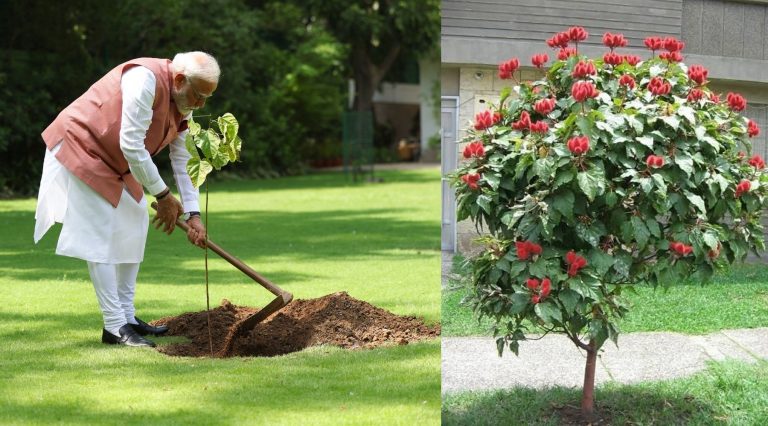
On World Environment Day, Prime Minister Narendra Modi planted a Sindoor sapling at his 7 Lok Kalyan Marg residence. The sapling was presented to him by a group of women who had displayed exceptional courage during the 1971 war.
Over 300 women had gathered at Indian Air Force airstrip in Bhuj to rebuild the airstrip during the 1971 Indo-Pak war.
1971 के युद्ध में साहस और पराक्रम की अद्भुत मिसाल पेश करने वाली कच्छ की वीरांगना माताओं-बहनों ने हाल ही में गुजरात के दौरे पर मुझे सिंदूर का पौधा भेंट किया था। विश्व पर्यावरण दिवस पर आज मुझे उस पौधे को नई दिल्ली के प्रधानमंत्री आवास में लगाने का सौभाग्य मिला है। यह पौधा हमारे देश… pic.twitter.com/GsHCCNBUVp
Prime Minister Narendra Modi was on a two-day visit to Gujarat from May 26, where he inaugurated and laid the foundation stones for a series of development projects worth over Rs 82,950 crore across Dahod, Bhuj, and Gandhinagar.
Meanwhile, while addressing the gathering, he extended heartfelt greetings to the people of Kutch and paid deep respects to revolutionaries and martyrs, particularly the great freedom fighter Shyamji Krishna Varma.
The Prime Minister conveyed his regards to the sons and daughters of Kutch, acknowledging their resilience and contributions.
PM Modi also paid homage to Ashapura Mata, acknowledging her divine presence on the sacred land of Kutch and expressed gratitude for her continuous blessings upon the region and extended his respects to the people.
Reflecting on his deep connection with Kutch, PM Modi recalled his frequent visits across the district and emphasised how the land had shaped his life’s direction. He remarked that while living conditions have improved significantly, the past presented considerable challenges. He also recalled how fortunate he was when the waters of the River Narmada reached the Kutch region.
Even before assuming the role of Chief Minister, PM Modi said he often visited Kutch, engaging in various programs at the district office.
He also highlighted the unwavering determination of the farmers in Kutch, noting that their spirit has always been remarkable and stated that his years of experience in the region greatly contributed to his efforts toward its development.
Emphasising that Kutch has demonstrated the power of hope and relentless effort in achieving remarkable success, the Prime Minister recalled the devastating earthquake that once led many to doubt the region’s future. However, he had unwavering faith that Kutch would rise from the ashes, and the people made it happen.
“Today, Kutch stands as a major hub for trade, commerce, and tourism”, stated the Prime Minister, highlighting that in the coming years, the region’s role will expand further. He expressed his joy in witnessing Kutch’s rapid development and supporting its progress.
(This news report is published from a syndicated feed. Except for the headline, the content has not been written or edited by OpIndia staff)
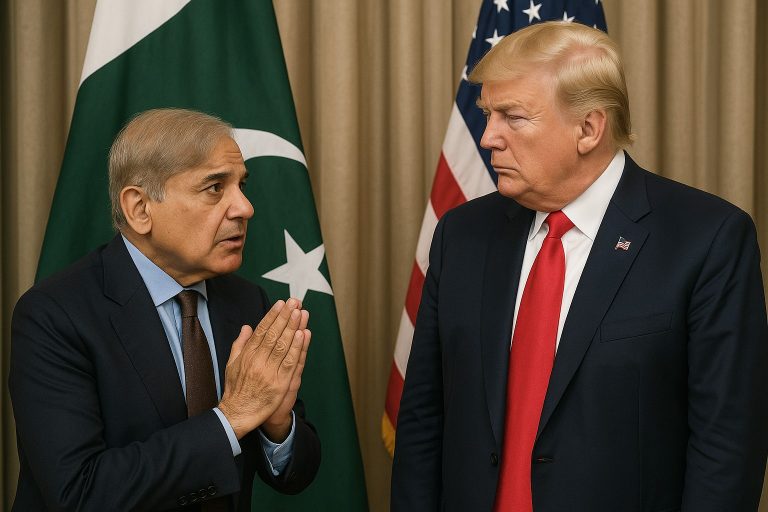
Faced with growing global isolation on the issue of terrorism, Pakistan is making an all-out effort to seek the help of US President Donald Trump to try and achieve peace with India.
Addressing an event at the US Embassy in Islamabad, Pakistan Prime Minister Shehbaz Sharif praised Trump for his role in helping de-escalate the situation with India and urged Washington to facilitate a comprehensive dialogue between the two nuclear neighbours.
The Pakistan PM was echoing former foreign minister Bilawal Bhutto Zardari, who had claimed that Trump “deserves credit” for helping facilitate the cessation of hostilities between the two nations.
“On 10 different occasions, he has taken credit for facilitating the ceasefire between India and Pakistan — and rightly so. He deserves that credit because it was his efforts that helped make the ceasefire possible. So, if the US is willing to help Pakistan in maintaining this ceasefire, it is reasonable to expect that an American role in arranging a comprehensive dialogue would also be beneficial for us,” Bhutto said.
India has publicly denied that President Trump played any role in the ceasefire agreement and consistently rejects third-party mediation on bilateral issues.
“I think the US has understood for some time now that India has a very clear position that there will be no talks with a gun pointed at our head… The problem is that we will not deal with people who are pointing a gun at our heads. I mean frankly, if your neighbour unleashes his Rottweilers* to bite your children and in fact to do worse to your children, and then says, let’s talk. You think he’s going to talk to him until he either unleashes those Rottweilers* or locks them up in a kennel or puts them to sleep. It’s as simple as that. You’re not going to talk to people who are pointing guns at your temples. It’s not going to happen,” said Congress MP Shashi Tharoor, who is leading the all-party delegation to the United States.
The Indian delegation also slammed the Pakistani side for making claims that it was as much a victim of terrorism as India was.
Congress MP Shashi Tharoor said, “This (Pakistan) delegation is going around saying we are also victims of terrorism, we have lost more lives to terrorism than India has. We turn around and say- Whose fault is that? As Hillary Clinton famously said 10 years ago. You can’t breed vipers in your backyard and expect them to bite only your neighbours…That’s why they (Pakistan) are now getting terrorists attacked by the Tehrik-i-Taliban Pakistan, but who created the Taliban from which the Tehrik-i-Taliban broke off? We all know the answer to that, so let Pakistan look inside it and let it do some serious interior reflection before it goes around pleading innocence and deniability and everything else.”
Echoing that sentiment, BJP MP Tejasvi Surya said, “Bhutto has been calling his delegation a peace delegation, and it is quite ironic that the Pakistani delegation is speaking the language of peace. It’s like the Devil quoting from the scriptures. For a country that is trying to create fake heroes by promoting failed generals to field marshal, they don’t know what true leaders look like. Pakistan has been surviving on cheap Chinese imports, including military hardware, which spectacularly failed on the battlefield.. So perhaps it is hard for them to digest high-quality, high-calibre military hardware as well as strong democratic leadership on the other side of the border.”
Even as Bhutto and his copycat delegation try to make a pitch for peace, India’s anti-terror stand has already been endorsed by House Foreign Affairs Committee Chairman Brian Mast.
“The world was holding its breath, watching what had taken place, both in disgust and also in anticipation of the response. When you are attacked, you have no choice but to respond. The world does not allow anything else, and those responses needed to take place. We have a great friendship and partnership between our nations, and we see nothing but growth and expansion in the future,” Mast told reporters in Washington, DC.
(This news report is published from a syndicated feed. Except for the headline, the content has not been written or edited by OpIndia staff)
The Punjab Police has successfully busted a cross-border weapon smuggling module with connections to Pakistan on Thursday. The operation, conducted by Tarn Taran Police, led to the arrest of Surajpal Singh and Arshdeep Singh from Village Lakhna.
The police recovered six sophisticated firearms, including two PX5.30 pistols and four 9 mm Glock pistols, all loaded with live cartridges.
The operation was carried out after receiving a specific tip-off about the illegal smuggling activities. In a statement shared on the microblogging platform X, DGP Punjab Police confirmed that an FIR has been registered. Further investigation is underway to identify the full network of backwards and forward linkages related to the smuggling operation.
“Acting on a specific tip-off, Tarn Taran Police busts a cross-border weapon smuggling module with links to Pakistan and arrests Surajpal Singh & Arshdeep Singh from Village Lakhna, and recovers six sophisticated weapons. Recovery: Two sophisticated PX5.30 pistols and four 9 mm Glock pistols with live cartridges. FIR has been registered. Further investigation is being carried out to identify all backwards and forward linkages. Punjab Police India remains committed to neutralising such modules and ensuring the safety and security of the state,” read the post on X.
Meanwhile, to review the performance of all districts amid the ongoing Yudh Nashian Virudh campaign, a high-level review meeting-attended by all Spl. Director Generals of Police (DGPs), Additional Director Generals of Police (ADGPs), Inspector Generals of Police (IGPs), Deputy Inspector Generals of Police (DIGs), and all Senior Superintendents of Police (SSPs)/ Commissioners of Police (CPs)-was held on Wednesday.
The state’s law and order and internal security situation were also reviewed.
“A key focus of our meeting was a detailed review of the past three months’ performance under the Yudh Nashian Virudh campaign,” Punjab DGP, Gaurav Yadav, wrote in an X post. He added that the Anti-Narcotics Task Force ADGP gave a “comprehensive presentation”, followed by “district-level updates by respective CPs/SSPs”.
Yudh Nashian Virudh’s campaign emphasises both intensified enforcement and robust community-based prevention to effectively tackle drug abuse across Punjab.
“The @ANTFPunjab outlined an action plan that balances strict law enforcement with rehabilitation and grassroots engagement, ensuring a comprehensive approach to eradicating drugs from our communities,” DGP Yadav’s post further read, adding, “I urge all officers and units of the @PunjabPoliceInd to continue working with dedication, integrity, and a proactive spirit. Our collective mission is to ensure a safer, healthier Punjab, free from the menace of drugs.”
Acting on a specific tip-off, @TarnTaranPolice busts a cross-border weapon smuggling module with links to #Pakistan and arrests, Surajpal Singh & Arshdeep Singh from Village Lakhna, and recovers six sophisticated weapons
— DGP Punjab Police (@DGPPunjabPolice) June 5, 2025
Earlier on May 28, Punjab’s Anti-Narcotics Task Force (ANTF) arrested three drug traffickers- Maninderjit Singh, Peter, and Lovejit Singh @ Raja near Shankar Dhaba on Attari Road, Amritsar.
Acting swiftly on a tip-off, the team seized “four PX5 Storm pistols, 521 grams of heroin, 7 magazines & 55 live cartridges,” DGP Punjab Police posted in a tweet.
An FIR under the Narcotic Drugs and Psychotropic Substances (NDPS) Act and the Arms Act has been registered at PS ANTF, SAS Nagar.
The DGP also wrote, “@ANTFPunjab is actively pursuing both forward and backwards linkages to dismantle the entire network.”He further added, “@PunjabPoliceInd remains firmly committed to eradicating drug syndicates, seizing illegal arms, and building a #NashaMuktPunjab.”
(This news report is published from a syndicated feed. Except for the headline, the content has not been written or edited by OpIndia staff)
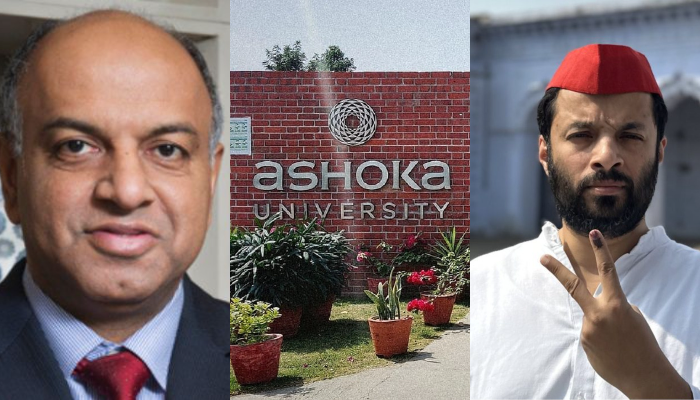
Co-founder and trustee of Ashoka University Sanjeev Bikhchandani has openly voiced his increasing dissatisfaction with continuing with the university, calling it “too much of a headache” and admitted that he has thought about leaving. The development transpired after criticism from an alumnus about how the institution handled the controversy surrounding Professor Ali Khan Mahmudabad, a Samajwadi Party leader.
He is a professor and the director of the political science department at Ashoka University in Sonipat of Haryan. His social media post on the press briefing on “Operation Sindoor” by Wing Command Vyomika Singh and Colonel Sofiya Qureshi led to his arrest last month. The institution came under fire from liberals for failing to take a stance for him.
Bikhchandani, in an internal email that has now been revealed, expressed that he and his fellow trustee, Pramath Raj Sinha and founding chairperson Ashish Dhawan, have earnestly contemplated stepping down from their positions. The concerns of the alumnus regarding the university’s lack of support for Mahmudabad were addressed by him.
He asked, “Why don’t you and other alumni offer to step in and take over? Pramath, Ashish, and I have seriously discussed the option of walking away. Ashoka is too much of a headache. Is it worth the effort,” in his email. “Teaching a course at Ashoka is academic scholarship. Research published in a peer-reviewed academic journal is academic scholarship. An oped published by an academic in a mainstream newspaper is journalism and not academic scholarship,” he underlined.
“A political opinion expressed on Facebook or Twitter (X) or Instagram is not academic scholarship. Consequently, any public outcry about a political opinion an academic may express on social media is not an attack on academic freedom, even if the person expressing that opinion has a day job as an academic,” he emphasised.
Bikhchandani added, “If a regulator or the government or law enforcement goes after you for a social media post, it is not an infringement of academic freedom. It might be an infringement of freedom of speech, however, there are provisions within the Constitution and the law where you can find protection.”
He also lashed out at Mahmudabad and remarked, “You are a grown-up adult. You are responsible for your actions and any consequences thereof. Ashoka is not obliged to support you for political opinions you express in your personal capacity. You did not seek Ashoka’s consent before posting on social media, you cannot now present Ashoka with a fait accompli and expect support. Cruel as it may sound, you make your choices and you live with the outcome.”
Activism not embedded to a liberal arts university
“Activism and a Liberal Arts University are not joined at the hip. Ashoka is a Liberal Arts and Sciences University. Whether to be activists or not is a conscious choice people make,” Bikhchandani added. He highlighted that previously he has raised concerns regarding the activism at Ashoka and on each occasion, he has faced backlash from the activists and their supporters, both from within and outside Ashoka including students, faculty and activists, among others.
He stated that they claimed, “If you are running a liberal arts university, then activism goes with the territory,” “I am an arrogant owner,” “dirty filthy capitalists don’t understand how a university runs (they somehow forget that the same capitalists are paying their salaries).” He dismissed these claims, arguing that the stance was “spurious” and at odds with his own educational background. “I went to a liberal arts and sciences college and there was little or no activism and we got along just fine. In fact, some of us excelled,” he contended.
The trustee outlined, “You can be a great liberal arts university and not be activist. Anyone who tells you otherwise is a liar. As an institution, Ashoka cannot take an activist position. It is governed by the law of the land. It is answerable to regulators and to government authorities. It is not a political party or movement. It is an educational institution.”
“Ashoka is a university under the Haryana Private Universities Act. It is not a political party or movement, it is an educational institution. It cannot take an activist position, and if any of its office-bearers wish to take an activist position personally, they may resign their offices before doing so,” he declared.
He further asserted, “Appropriate timing of what to say, where, when and to whom and how is a sign of intelligence (beyond academic scholarship). If you end up offending a whole bunch of people, even though you were not technically incorrect in what you said, then an expression of regret and an apology is a sign of good grace and decency. Hijacking an institutional platform to make it subordinate to your political agenda is an act of institutional capture and selfishness. Expecting the institution to then support you is an act of entitlement and arrogance.”
Bikhchandani even pointed out a “policy issue” that Ashoka’s ruling council needed to consider and asked, “Can a full-time academic also pursue a political career? In the private sector, we generally stay away from what are termed as ‘politically exposed persons.’ Should Ashoka have such a policy?”
Although the Supreme Court granted interim bail to Mahmudabad, it condemned his comments as “dog-whistling” and devoid of “neutral and respectful” language. The court stressed that while free expression is guaranteed, these kinds of situations call for accountability rather than popularity.
He accused that Wing Command Vyomika Singh and Colonel Sofiya Qureshi’s representation of the armed forces as “optics and hypocrisy” unless it was demonstrated through what he termed real justice for “marginalised” individuals, specifically highlighting Muslims residing in India. He further justified his comments, asserting that his statement had been misconstrued and was not intended to be misogynistic. He expressed his support for the inclusion of women officers and urged right-wing advocates to show equal concern for ordinary Indian Muslims.
Ashoka University: Liberal activism and woke ideology
The arrest of Mahmudaba, along with the remarks from the apex court and now Bikhchandani’s letter has brought the leftist activism at the university into the spotlight, however, it has long been a hub for the woke epidemic and leftist politics. From anti-Israel activism, Brahmin animosity to false claims of election manipulation, the institution’s students and faculty have left no stone unturned to promote their deceptive narrative.
In May 2024, Ashoka University students showcased pro-Palestine placards at their convocation ceremony. A video capturing the event gained significant traction on social media, featuring students attired for their degree conferral, holding signs that proclaimed “Free Palestine” and “Stop Genocide” above their heads. Importantly, the Ashoka University Student Government (AUSG) was advocating for the severance of ties with Tel Aviv University in Israel.
In March 2024, Ashoka University students were reported to have raised Hinduphobic slogans, notably “Brahmin-Baniyawaad Murdabad,” within the university’s premises. Videos of these students gained significant traction on social media. In addition to disparaging the Brahmin and Baniya communities, they also shouted slogans including “Jai Bheem-Jai Meem” and “Jai Savitri-Jai Fatima”. Furthermore, they called for a caste census and reservation at Ashoka.
In February 2024, the AUSG released a statement denouncing Israel’s military actions in Gaza and insisted that the “genocide” occurring in Gaza must cease. The social media post characterized the horrific terror attack on 7th October by Hamas terrorists within the Jewish state as the “events taking place on 7th of October 2023.” Predictably, there was no reference to the murder of 1,300 Israeli and foreign nationals, the rapes of women, or the taking of hostages to Gaza. All atrocities of Hamas were conveniently overlooked.
Even the faculty members of the University have encountered criticism due to their negligent research practices and conduct. In August 2023, a research paper alleging that the Bharatiya Janata Party (BJP) engaged in election manipulation gained widespread attention on social media after being promoted by Congress leader Shashi Tharoor. It was published by Professor Sabyasachi Das. The study was riddled with errors and in light of the scrutiny directed at the paper, he chose to resign from his position. Notably, AUSG expressed its support and alleged that the research conducted by the professors is “cutting-edge.”
In November 2021, Professor Neelanjan Ircar made inaccurate assertions that the portrait of Netaji Subhas Chandra Bose located at Rashtrapati Bhavan depicted Bengali actor Prosenjit Chatterjee. He employed this narrative to ridicule Lord Ram in the name of criticizing the BJP. Sircar, who serves as an Assistant Professor of Political Science at the university, stated in a now-deleted tweet, “Totally amazing! This isn’t Netaji Subash Chandra Bose. It’s a picture of the renowned Bengali actor Prosenjit Chatterjee portraying Netaji in a film.”
His tweet was already saturated with falsehood when he decided to mock Hindu beliefs and claimed, “And this after yelling ‘Jai Shri Ram’ at a Netaji event. The bankruptcy of political appropriation of independence-era leaders.”
Considering the university’s woke-infested track record, Mahmudabad’s recent actions and the criticism aimed at Bikhchandani are not unexpected.
What should have been a euphoric moment in Bengaluru’s history turned into a grim spectacle of mismanagement and tragedy. At least 11 people lost their lives and dozens more were injured in a stampede outside the M. Chinnaswamy Stadium, as Royal Challengers Bengaluru (RCB) celebrated their first-ever IPL title after 18 long years. The celebration quickly descended into chaos, laying bare the abject failure of crowd control by the Congress-led Karnataka government.
The tragedy occurred during the culmination of RCB’s much-anticipated victory parade, which had drawn tens of thousands of fans. Eyewitness accounts and viral videos show uncontrolled crowds, bottlenecked entry points, and a visibly underprepared security apparatus. What was planned as a moment of pride for the city ended as a black mark on the administration’s record.
Tragic Turn Amidst Celebration for #RCB Sadly, the joyous roar of the #RCB parade was shattered as a stampede outside the #chinnaswamystadium left 11 people dead and over 20 injured. What should have been a day of victory and cheer turned into heartbreak — a painful reminder… pic.twitter.com/UA1eYFmHbr
This disaster becomes even more jarring when compared with the seamlessly managed victory parade held in Mumbai last year, after Team India returned home victorious from the T20 World Cup hosted in the US and Caribbean Islands. In that instance, Mumbai Police worked closely with city officials to execute an open bus parade for the Indian team, where players displayed the World Cup trophy to a crowd that flooded the iconic Marine Drive—also known as the Queen’s Necklace.
How NDA govt in Maharashtra efficiently managed Mumbai’s victory parade after T20 World Cup
Images from the Mumbai parade had gone viral across social media: a sea of fans stretching from Nariman Point to Chowpatty, cheering from roads, balconies, and rooftops, with not a single major incident reported. The successful event was a testament to the foresight, discipline, and coordination under the Eknath Shinde-led NDA government in Maharashtra.
Historic Mumbai Photos of Team India T20 World Cup Victory Parade Celebrations at Marine Drive Mumbai Jai Hind Jai Bharat ?? pic.twitter.com/D9uB0YXa8y
— Ujwal Puri // ompsyram.eth ? (@ompsyram) July 4, 2024
In contrast, Siddaramaiah’s Congress government in Karnataka has faced a barrage of criticism—not just for this tragedy, but for an ongoing pattern of administrative lethargy and poor urban planning in Bengaluru. Whether it is pothole-ridden roads, mismanaged festivals, or civic apathy, the government appears perpetually caught on the back foot.
Allu Arjun Arrested in Separate Stampede Incident
Worryingly, the RCB stampede is not an isolated incident. Just months earlier, Tollywood superstar Allu Arjun was arrested in connection with the death of a fan during a stampede at a screening of his latest film, Pushpa 2, in Hyderabad, Telangana. The event, meant to be a grand premiere, lacked basic crowd control mechanisms. The tragic outcome—another young life lost—further highlights the disturbing trend of authorities failing to anticipate and manage crowd behaviourduring high-profile public events in the state.
The RCB stampede was not a natural disaster. It was a man-made failure—the result of complacency, poor planning, and an apparent disconnect between the enthusiasm of the people and the preparedness of the administration. Unlike Mumbai, no open bus parade was planned in Bengaluru, yet even a stationary stadium event led to fatalities—underscoring how ill-equipped the Congress government was to handle public enthusiasm.
Mere condolence statements and compensation cheques are not enough. There must be accountability. A high-level probe is essential, and if the findings point to lapses in coordination or failure to follow protocol, those responsible—regardless of rank—must be held to account.
India is a country where cricket celebrations are predictable spectacles. That makes tragedies like this inexcusable.
What happened in Bengaluru wasn’t a one-off mishap. It was symptomatic of governance that collapses under pressure, unlike the capable handling seen in other states. The difference is not in the crowd—it is in the government.