Home Blog Page 3761

Sana Khan, who left film industry after marrying a Maulvi, promotes halal make up: All you need to know about halal beauty products

In October last year, actress Sana Khan quit the entertainment industry after being enlightened by the ‘teachings of Islam’. The decision came at the backdrop of her depression phase, following her ‘bitter breakup’ with dancer Melvis Louis. Thereafter, she found ‘Halal love’ in a Gujarati businessman named Anas Sayed and tied the knot with him in November 2020.

After her return to Islamic fold, far from the ‘sinful’ world of entertainment, Sana Khan was seen promoting Halal beauty products and makeup. She had even launched her luxury skincare range of products and treatments.

Halal makeup, certification and business model

Unlike conventional makeup, Halal makeup adheres to Islamic standards i.e. they are free from pig-derived and other forbidden ingredients. They are also wudufriendly (permeable to water) as required by Islamic standards. Halal beauty products can range from eyeshadows, foundations, nail polishes, and even fragrances.

As per ISWA Halal Certification Department, halal makeup must be free from alcohol, najs ingredients (filthy and unclean), forbidden animals in Islam or animals that have not been slaughtered as per Sharia law. According to its director Habib Ghanim, the slaughter of an animal is considered Halal when it is done in the name of Allah, followed by the recital of prayer (Kalma). The animal must be killed with bare hands or a specific method of cutting.

“Your skin is the biggest organ in your body. It absorbs everything, so you’re consuming [ingredients] indirectly,” says Habib Ghanim. Although Halal makeup is not new in the world of cosmetics, it has gained prominence among the Muslim community who comprise 23% of the world’s population. Reportedly, more and more Muslims are now searching for Halal alternatives to commonly used makeup and other beauty products.

However, the mere use of Halal ingredients is not sufficient to receive a Halal certification. A makeup brand needs to meet lengthy requirements at every stage of production and distribution for it to be certified as Halal. It may take up to 2 years for a brand to receive such a certification. In the United States, Amara Cosmetics for instance have been producing halal makeup products. The largest certification organisation in the country is the U.S. Halal Certification.

According to Habib Ghanim, all products are tested in associate labs to check for traces of pork or its byproducts before for certification. The certification costs around $2000, depending on the number of products that are certified. To be able to use the trademark, logo and copyright of the US Halal Certification, a brand needs to pay for it extra. The certification agency also requires brands to notify if product ingredients are changed. It also undertakes an independent audit of products sold by halal-certified companies.

“Singapore was one of the first countries in the world to formalize halal certification for cosmetics. It was one of the first countries to have government regulations and a whole department that supervises and ensures that everything is in compliance with the law,” Ghanim heaped praises on the Singapore halal certification industry. As per Karine Estelle, the founder of cosmetic brand Klarity, the halal certification has allowed them to serve their Muslim customers who can rely on their credibility.

She said that non-Muslims too could also use the same halal-certified products as they are less harmful and ‘cruelty-free.’ According to Imam Latif of Honest Chops, halal is a lifestyle that is not limited to meat or food. Reportedly, he oversees not only the butcher’s adhering to Islamic traditions during slaughter but also the humanitarian ethics behind it. He highlighted the environment-friendliness of Halal products by sourcing the animals from the right place, selling every edible part of the animal and eliminating wastage. “The preservation of life is one of the primary objectives of Islamic law,” remarked Latif.

He regretted that Muslims at times buy vegan alternatives to conventional cosmetics due to a lack of Faith in halal-certified products. “There are a lot of Muslims who become vegan, vegetarian, or adopt a kosher lifestyle because they are frustrated with halal products on the market…There isn’t a national certification system that is so recognized that if you don’t have it, you’re not given credence,” Latif added. However, both Ghanim and Latif are convinced that Muslim consumers will continue to buy halal products and the industry, which is worth billions of dollars, will witness a boom.
‘Those raising the partition issue are supporting the Taliban, beware of them’: UP CM Yogi Adityanath

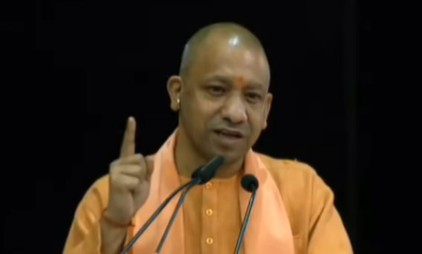
Uttar Pradesh CM Yogi Adityanath said that those who are raising the issue of partition are in a way supporting the Taliban, and he cautioned people against those who support the Taliban. While speaking at ‘Samajik Pratinidhi Sammelan’ in Lucknow, he said, “Even today there are many people in our country who are supporting Taliban. Supporting Taliban means insulting women, insulting Lord Buddha. There is a need to be careful with such people”.

The CM’s comment on partition came after Suheldev Bharatiya Samaj Party (SBSP) chief Om Prakash Rajbhar blamed the Rashtriya Swayamsevak Sangh (RSS) for the country’s partition. The Samajwadi Party ally made the comments a day after saying that if Muhammad Ali Jinnah was made the first prime minister of India, the partition of India would not have happened.

Yogi Adityanath said, “Those who are speaking about the partition are in a way extending support to the Taliban. As soon as the Taliban resurfaced in Afghanistan, a number of voices started to come up in its support. When strong action was taken, these voices went soft.”

“Supporting the Taliban means supporting a power that works against humanity, against Lord Buddha’s message of ‘maitri’ (friendship). Certain people are moving in that direction and we need to be aware of them,” the CM added.

Referring to Akhilesh Yadav and his allies using the name of Jinnah repeatedly, the BJP leader said, “The opposition does not have any issue to raise…. Rashtranayak Sardar Patel is on one side and Jinnah, who divided the country, is on the other. They support Jinnah and insult Patel. But we support Patel. He is a rashtranayak while Jinnah will remain a villain for centuries. Will you support those supporting Jinnah?”

Yogi Adityanath further mentioned in his speech that there has been no riots in the state because everyone knows that seven generations of the rioters would be made to pay for the cost of damages in case of any violence.

CM Yogi also noted, “20 years ago in Afghanistan Taliban Statue of Buddha was blown up by cannon because they wanted to hurt the soul of India,” and said that the Taliban had forgotten that action had a reaction which was seen in the plight of the same Taliban later when the US attacked them with drones. “You must have seen that just a few days after that the US dropped bombs there and Talibanis began getting killed. We had said that the God is punishing them for what they did to the statue of Gautam Buddha.”

Yogi Adityanath noted, “Buddha never imposed war on the world, he will always be the source of inspiration for the humanity and the centre of devotion. But no Indian, or anyone supporting peace & harmony anywhere in the world, should forget the scenes of his statue being destroyed by Taliban”

CM Yogi said that the world has seen the barbarism of Taliban and warned people against those who support Taliban. Furthermore, the UP CM claimed that our history was distorted and the historians remained silent when a foreign invader like Alexander was called great instead of Chandragupta Maurya, “How is history distorted! History didn’t call Chandragupta Maurya great, whom did it call great? The one who lost from him. They call Alexander, the great. The nation has been cheated. But historians are silent on it”

With newfound legitimacy under Uddhav Govt, Raza Academy is emboldened enough to reassert itself in civil society: Why it is dangerous

0

The Islamist inclinations of Raza Academy is no secret. Over the years, they have been involved in a series of violent protests. While they appeared to have grown quiet in recent times, the organisation reared its ugly head again after Uddhav Thackeray became the Chief Minister of Maharashtra.

Since then, the Raza Academy has targeted France for defending the right to make cartoons of prophet Mohammed. They also called for Islamic countries to issue a fatwa against ‘devil’ French president Emmanuel Macron. More recently, they held demonstrations against Saudi Arabia over its decision to open cinema halls at Madina City. All of this was, of course, the group’s gradual progression on the road to perdition.

Raza Academy first gained notoriety after its morcha at the Azad Maidan ground in 2011 turned violent. The protest was held against the alleged atrocities committed against Rohingyas by the Burmese Army. The protest subsequently turned into a riot and two were killed in retaliatory firing by the police.

Thus, it is not the first time this year that a protest organised by the Islamist group turned violent. Terrible scenes have been observed in Maharashtra and curfew has been imposed in some parts of the state. The group’s influence was particularly felt in Nanded where they had called for a sit-in protest.

During the same, some youths attempted to barge into mixed-residential areas. When they were stopped by the police, they resorted to stone-pelting. Subsequently, the police had to use force to control the mob. BJP MLA Nitesh Rane described the group as a “terrorist organisation” and demanded a ban on the same. On Sunday, he announced that he would lodge a formal complaint against the group.

While the violence appears to have been controlled for now, the antecedents of the group does provide great cause for concern. When a group believes Saudi Arabia’s harsh interpretation of Islam is not stringent enough and multiple protests called by the group have turned violent a decade apart, it is indeed cause for grave concern.

Thus, some serious questions have to be asked here. Why is the Raza Academy witnessing a sudden revival under the current ruling dispensation in Maharashtra? What has happened between 2011 and now that the group suddenly feels confident enough to publicly advocate its hardline stance? Some serious questions have to be asked here.

Uddhav Thackeray met Raza Academy leaders

In January 2020, Maharashtra Chief Minister Uddhav Thackeray met leaders from Muslim organisations, including the Raza Academy, over the Citizenship Amendment Act and the NRC. They demanded that the Government pass a resolution against the CAA and NRC in the state Assembly.

While no such resolution has been passed, it did provide the Islamist organisation with the legitimacy that they so crave. Later in October, Raza Academy threatened to move Court if the Eid-e-Milad procession was not permitted during Covid-19. In April this year, the group wrote to Uddhav Thackeray and requested that Mosques be kept open during Covid-19.

The Islamist group has tasted quite a bit of success in recent months. In July 2020, the Maharashtra Government accepted its demand to ban the movie ‘Muhammad: The Messenger of God’. The Iranian movie was the country’s for the Best Foreign Language Film category at the 88th Academy Awards. But the group took objection to the fact that the movie portrayed prophet Mohammed as a child and that was not considered permissible.

In February this year, the British Broadcasting Corporation (BBC) issued an unconditional apology towards the Muslim community following a complaint by an Indian Islamic organisation backed by the Raza Academy. The allegation was that the BBC had displayed a portrait of the prophet of Islam.

Nothing succeeds like success

A wise man once said, “Nothing succeeds like success.” And that is precisely what we are seeing here. Emboldened by their newfound legitimacy and occasions where its demands have been complied with, Raza Academy feels confident enough to assert itself with newfound vigour.

They believe that they can continue to assert itself on civil society and they can win crucial concessions for itself in the process. It has already worked for them once or twice, why would they believe it will not work for them again?

The downside of it, of course, is the fact that their ranks comprise of zealots who can easily cross the line into unlawful conduct. That is what we observed during its call for a sit-in protest at Nanded. And shop owners and the police had to bear the costs of it.

Recent events in Maharashtra once again demonstrate the danger in providing legitimacy to such Islamist groups. They are never satisfied with what they have and their thirst of imposing hardline Islamic values on others is never satiated. Until and unless they are relegated to the fringes of society with harsh restrictions and strict measures, there is the serious threat their influence will continue to grow and their credibility will be augmented.

Now is a good time to take efficient measures to curb the group’s growing influence. Or the country will have to pay a huge price later.

Madhubani: Five arrested in the murder case of journalist Avinash Jha who was working to expose a fake medical clinic mafia

0

Madhubani police have arrested five persons including a nurse in connection with the heinous murder of RTI activist and journalist Buddhinath Jha alias Avinash Jha. He was found dead yesterday after he went missing four days ago.

“Madhubani police have arrested five persons and they are being questioned. Very soon police will disclose details of suspects and the motive of the crime,” Benipatti SDO Ashoka Mandal told the Opindia. Sources told OpIndia that nurse of a clinic and four others have been arrested.

But local residents are quite furious over Madhubani SP Dr. Satyaprakash terming his murder as a fall out of a love affair that gone wrong. “Medical mafias killed my brother now police and SP are doing character assassination of Avinash that there was a love angle involved in this case. Whom Madhubani SP and his police are serving? We ask Madhubani police to at least read the FIR. We have named some nursing homes we doubt,” his brother Trilok Nath Jha told OpIndia.

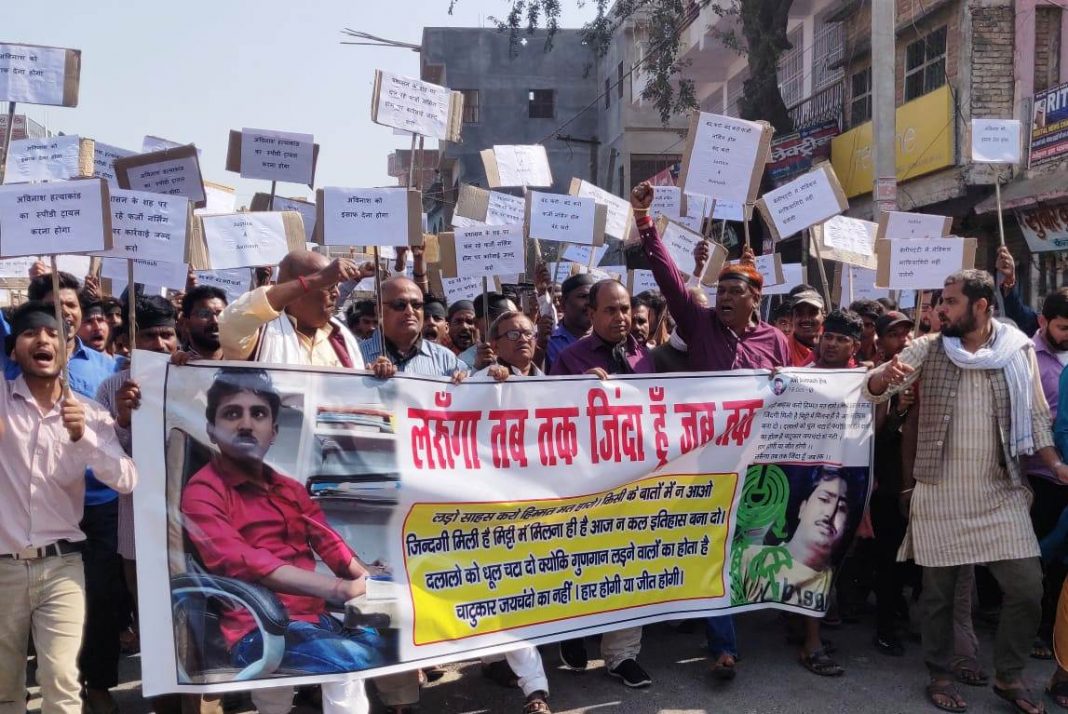
In the morning today a large number of people hit the road at Benipatti along with banners and placards. Demanding justice for Avinash Jha, they blocked the road. Local BJP MLC Ghanshyam Thakur and others joined the protest. They accused Madhubani SP of allegedly diverting the case.

People joining protest march at Bdenipatti block of Madhubani district against the brutal killing of Buddhinath Jha alias Avinash Jha

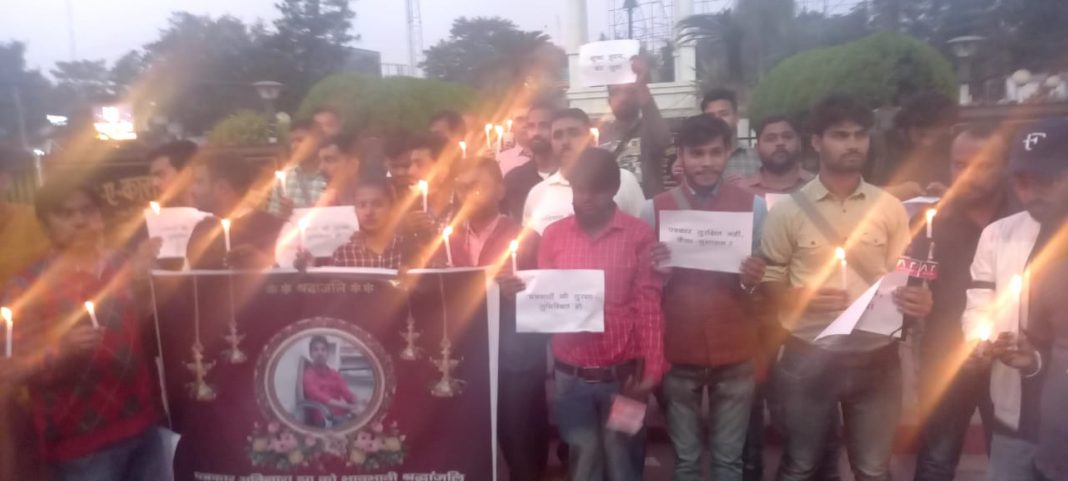
Candle march for Buddhinath Jha alias Avinash Jha

Protesters, later on, submitted a memorandum to the SDO office and demanded SP to tender an unconditional apology for making it a case of a love affair. “People have no trust in the police and we feel that Madhubani police are trying to save medical mafias. Avinash Jha had no enemy except medical mafias against whom he was speaking and acting. As an RTI activist and journalist, he was regularly writing against illegal activities of nursing homes in Benipatti. We demand a high-level investigation of this matter,” said Abhishek Jha a local resident.

Lalit Kumar Jha, a local journalist, said that the Madhubani police have not yet properly secured the spot for the forensic analysis where his dead body was found. The SSP did not respond to repeated phone calls.

A native of Benipatti block of Madhubani district in Bihar, Avinash Jha was last seen on the night of November 9 while speaking to a person over the phone. His half-burnt body, tied and packed in a sack, was found under a peepal tree in the Uren village near Benipatti-Basaith highway number 52 on the night of Friday, November 12.

He had been continuously raising the issue of the private hospital mafia and trying to expose the mafia operating fake medical clinics in his district. Therefore, his family alleges that he has been killed by this private hospital mafia. In fact, before the body of Avinash Jha was found, his brother Chandrashekhar Kumar Jha had filed a kidnapping case with the police, where he had named several hospitals and nursing homes. Chandrashekhar said that his brother was trying to bust the nexus of private hospital operators, staff and authorities scamming the people of the district, due to which he was on the radar.

Avinash Jha had recently exposed several ‘fake’ medical clinics, which had led to the closure of some of the clinics, and some others had to pay heavy fines. While exposing the clinics, Jha har reportedly received threats and offers of bribes to not pursue the matter. Two days before he went missing, he had named several private hospitals on Facebook.

Maharashtra: BJP MLA Nitesh Rane announces he will lodge complaint against Raza Academy over involvement in violence

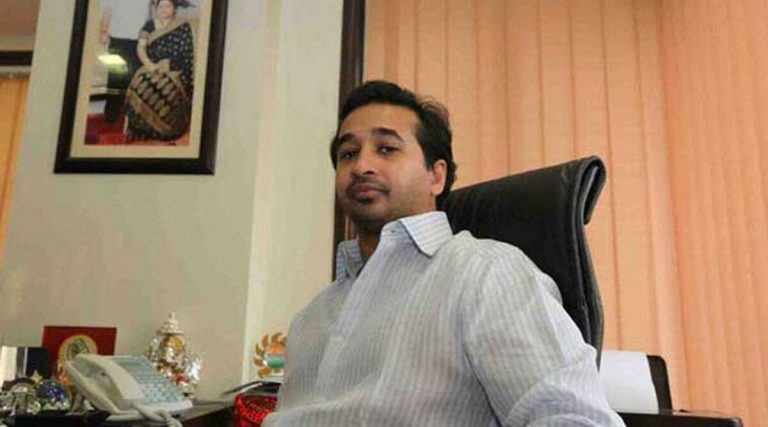
BJP MLA in Maharashtra, Nitesh Rane, has declared that he will lodge a formal complaint against Shiv Sena leader Arjun Khotkar and the Raza Academy for “provoking” riots in the state and the consequent “looting” of Hindu shop owners.

Nitesh Rane has said that if the Maharashtra Police ignores the same, then he will take up the matter with the Bombay High Court and Home Minister Amit Shah, demanding an NIA probe and compensation for the Hindu shop owners.

When a user asked him if he believed ‘they’ will do anything, Rane responded saying ‘let them ignore’ and ‘then we will do the rest’.

Maharashtra has been in the grips of communal violence since the 12th of November when protests against the alleged violence in Tripura turned violent themselves. In Nanded, the Raza Academy had called for a sit-in protest. Some of the youths were stopped by the police when they made an attempt to enter mixed-residential areas, subsequently they resorted to pelting stones at the police.

Following the violence, Nitesh Rane described the group as a “terrorist organisation” who have been involved in numerous incidents of violence in the past. He also called for the Maharashtra Government to ban the outfit. Now, the BJP MLA has decided to lodge a complaint against Raza Academy.

Quint journalist complains about negative Muslim character in Sooryavanshi, Rohit Shetty gives extra befitting reply

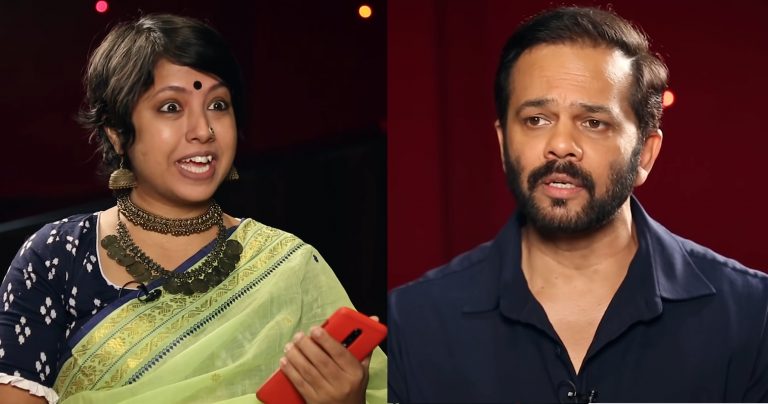
In a recent interview with The Quint, director-producer Rohit Shetty talked about the recently-released film, Sooryavanshi starring Akshay Kumar and Katrina Kaif. During the interview, when the journalist pointed out that the ‘good Muslim’ and ‘bad Muslim’ scenario in the film is problematic, Shetty countered her with a befitting reply. He asked her why the identity of the three villains in his previous films, who were Hindus, was not a problem.

The problem of ‘good Muslim’ and ‘bad Muslim’

Quint journalist Abira Dhar questioned Rohit Shetty that in his latest film Sooryavanshi, Muslims are shown in both good and bad light. She called the sequence ‘problematic’. However, Shetty was not pleased with the question. He questioned why the Hindu villains from the previous films were not objected to because of their caste. He said, “If I ask you one question… Jaikant Shikre (in Singham) was a Hindu Marathi. Then a second film came where a Hindu godman was there. Then in Simba, Durva Ranade was a Maharashtrian again. In these three, negative forces were Hindu, why isn’t that a problem?”

When Dhar tried to counter him, he interrupted her and said, “If there is a terrorist who is from Pakistan, what caste will he be?” Shetty said that such controversies had changed his point of view about many journalists. He said, “It changed my point of view of a few journalists whom I used to like. That oh, they are portraying it like I have seen in brackets somebody writing bad Muslims being preached by upper-caste Hindus, which is very wrong. We never thought that way.”

It is notable that the plot of the movie Sooryavanshi, which has been released in theatres, is about Pakistani terrorists plotting more attacks in India after the 1993 Mumbai blasts, and the hero’s efforts to stop them. Therefore, it is natural that the villains in the movie, the Lashkar terrorists, are portrayed as Muslims. Filmmakers often take creative liberty to distort reality, but to portray Lashkar terrorists from Pakistan belonging to any other religion will be too much for any filmmaker.

‘If it is wrong, everybody would have objected’

Shetty further added that while making the film, a lot happened in the background. For him, it is important to keep the consciousness clear while making the film. He said, “When our conscious is clear, and we did not think that way, why are people talking about it?” He further added, “If there is a sleeper cell that we are talking about, what caste that sleeper cell would be? Why is the good or bad person being linked to his caste? If it was wrong, everybody would have objected. It is not the point of view of everyone but only a small segment. If they are objecting, it is them who need to change the perspective and not us.”

‘Police must be respected for their work’

When Dhar asked Shetty about his point of view on Police brutality, he said people do not appreciate the good work Police is doing out there. He said, “Most of our sequences, of course except the climax, have originated from the real-life stories. They [Police] do not publicize what they are doing on a daily basis as we do. There are a lot of incidents that do not make it to the eye of the Public.”

He further said, “Whoever asks me about my viewpoint on Police brutality, I only ask them to shut down Police headquarters for one day. You dial 100, and there is no one to answer.” He said even when the traffic lights stop functioning, it causes traffic jams almost immediately. The police do a lot of good work, and people need to acknowledge that.

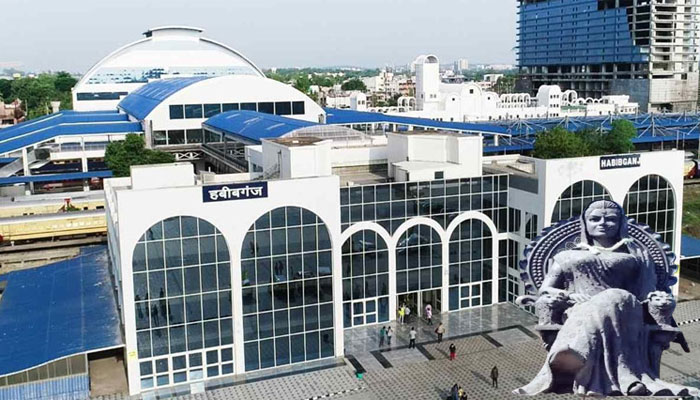
Rani Kamlapati: Read about the queen from the Gond tribe in whose name the Habibganj railway station will now be known as

On November 15, Prime Minister Narendra Modi is going to inaugurate the ultra-modern, redeveloped Rani Kamlapati Railway Station in Bhopal. Previously known as Habibhanj Railway Station, it was recently named after the Gond queen. Shivraj Singh Chouhan, Chief Minister, Madhya Pradesh, thanked Prime Minister Narendra Modi for the decision to rename the railway station.

In his statement, CM Chouhan hailed Rani Kamlapati as the pride of the Gond tribe. She was the last Hindu queen of Bhopal. Dost Mohammad, an Afghan commander, took over her kingdom.

The newly renovated Rani Kamlapati Railway Station is located in Bhopal city. It is part of the West Central Railway. In the statement, CM Chouhan said, “It is a moment of pride, joy and enthusiasm that Prime Minister Shri Narendra Modi Ji got the railway station renovated with world-class facilities and now its name has been changed from Habibganj to Rani Kamalapati Ji of the last Hindu queen Gond tribe. We all thank the Prime Minister from the heart.”

Who was Rani Kamlapati?

Rani Kamlapati was the Gond queen of the Bhopal region in the 18th century. She was one of the seven wives of Gond ruler Nizam Shah. Her father’s name was Chaudhari Kirpa Ramchandra. Rani Kamlapati was known for her bravery and beauty.

Reports suggest that she built a seven-storey ‘Kamlapati Palace’. It is currently under ASI as one of the protected monuments in Madhya Pradesh. The architecture of the palace was secular. It was made out of Lakhauri bricks. The merlons in the palace were designed in the form of water lotuses to honour the queen.

Death of Rani Kamlapati’s husband

According to the Gond legends, Alam Shah, Nephew of Nizam Shah, was jealous of his uncle’s wealth and the beauty of Rani Kamlapati. He had proposed to the queen, but she refused. Irked by the refusal and filled with jealousy, Alam poisoned his uncle.

After the death of Nizah Shah, Rani Kamlapati shifted to her castle with her son Naval Shah to save herself from Alam. The queen wanted to avenge the death of her husband, but at that time, she neither had an army nor money.

Dost Mohammad Khan, who was once part of the Mughal army, was approached by the queen for help in avenging the death of Nizam Shah. Khan agreed but demanded Rs. 1 lakh in return, to which the queen agreed. Legends say that the queen tied Rakhi on Khan’s wrist in return for a promise that he would safeguard her honour.

Khan led the Gond and Afghan army to the battle and killed Alam Shah. Rani Kamlapati took over the empire after Alam’s death. When the time came to pay Dost Mohammad Khan, Rani could not arrange the amount and gave away a part of her empire to Khan. He was also named as the administrator of Kamlapati’s empire. By the time Kamlapati took over the empire, her son Naval Shah was an adult. He was not pleased with the decision of handing over part of the empire to Khan. As a result, a battle broke between Shah and Khan.

According to the stories, Khan poisoned Shah and killed him. Some stories suggest the queen died of suicide by jumping into the lake of her palace in 1723. The last days of the queen were full of struggle, but there is no written record of it. There are only stories that are told among the tribes.

The Gond Tribe

Gond tribe is one of the largest tribal groups in India, with a population of around 1.2 crores. They belong to the GondiManda subgroup of the Dravidian language family’s South Central branch.

Archive video shows Nehru celebrating his own birthday with great fanfare, Children’s Day didn’t become a thing after he died

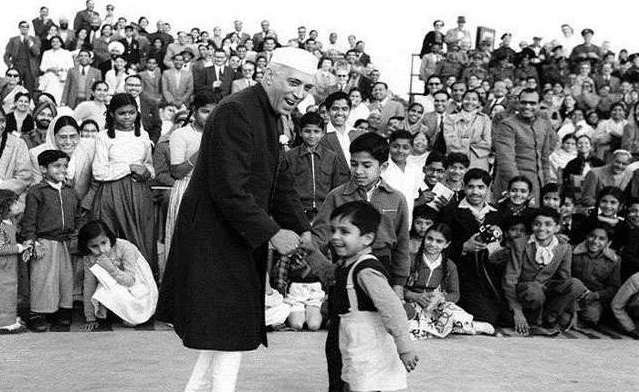
On Jawaharlal Nehru’s birth anniversary on 14th November, an archive video of the celebrations of his birthday back in 1954 as Prime Minister of India has gone viral on social media.

As per British Pathé, a UK-based producer of documentaries and newsreels from 1910 to 1970, the above video was part of celebration of Jawaharlal Nehru’s birthday in 1954. In an almost personality cult-like celebrations, Nehru had arrived to a huge, cheering crowd accepting garlands from all. He then moved to New Delhi stadium where a huge crowd of about 50,000 had gathered to celebrate his birthday.

Nehru, like one sees in movies where Mughal emperors threw their necklaces and jewellery towards the servants out of sheer happiness, was seen throwing away the garlands from around his neck for the crowd to collect. The crowd was chanting ‘Chacha Nehru’, a moniker that was bestowed on him.

About 2,000 youths had gathered to show off their calisthenics to celebrate Nehru’s birthday.

Over the years, our history textbooks and media and so-called historians have made us believe that 14th November, Nehru’s birthday, is celebrated as ‘Children’s Day’ after his demise and that too ‘because he loved children’. However, that is not true.

One VM Kulkarni, who was a United Nations Social Welfare Fellow, was carrying out a study on the rehabilitation of children who had been victims of crimes in the UK. He realised that India has no such mechanism to take of underprivileged children. He got inspired by the fact that in England, June 19, Queen Elizabeth II’s birthday, is observed as Flag Day to raise money for Save the Child Fund and suggested that Jawaharlal Nehru’s birthday too, be observed as Flag Day to raise money.

Kulkarni’s proposal to the UN was accepted It is reported that while Nehru was ’embarrassed’ at first, he accepted it too when his permission was sought. An international fair was organised by the Indian Council for Child Welfare (ICCW) in 1951 and it was in 1951 that the day started being observed as Children’s Day.

So in 1954, when above video was shot, it was already the third year Nehru’s birthday was celebrated as ‘Children’s Day’.

Further, ICCW was not an independent body as one might believe, either. It was inextricably linked to the political dispensation and the Nehru-Gandhi family.

The first President of ICCW, from 1952 to 1958 was Rajkumari Amrit Kaur. Amrit Kaur became part of Jawaharlal Nehru’s first Cabinet and was the first woman to hold Cabinet rank. The next President of ICCW, from 1958 to 1964 was former Prime Minister Indira Gandhi herself.

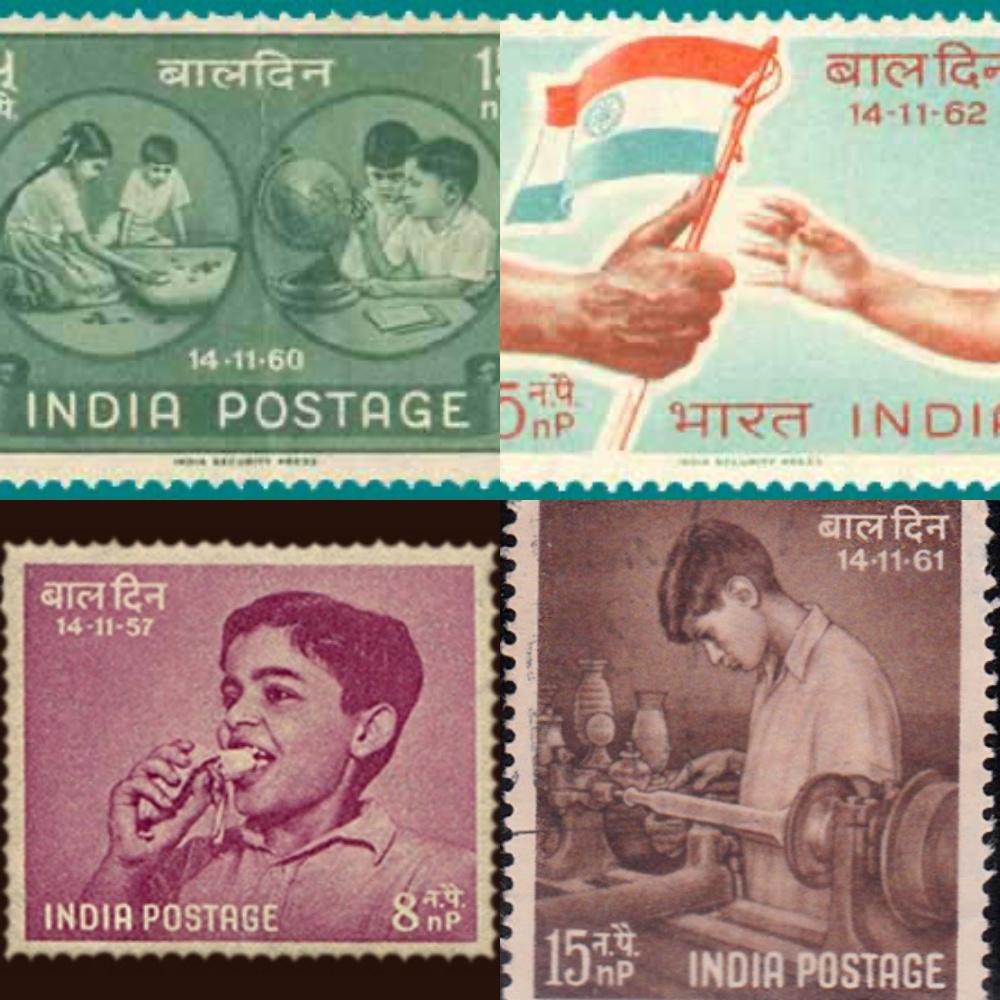
Not just historical accounts, there are stamps commemorating ‘Children’s Day’ that were issued as early as 1957, which go on to prove beyond doubt that Children’s Day was celebrated while Pandit Nehru was alive.

Bal Diwas stamps

Above stamps were issued by India post before 1964, the year in which Jawaharlal Nehru died. The celebration of Children’s Day as a means to glorify Pandit Nehru is nothing but a persona created by Nehru courtiers and the Dynasty. 

Gaya: Naxals brutally kill four members of a Dalit farmer’s family, detonate their house accusing them of being police informers

0

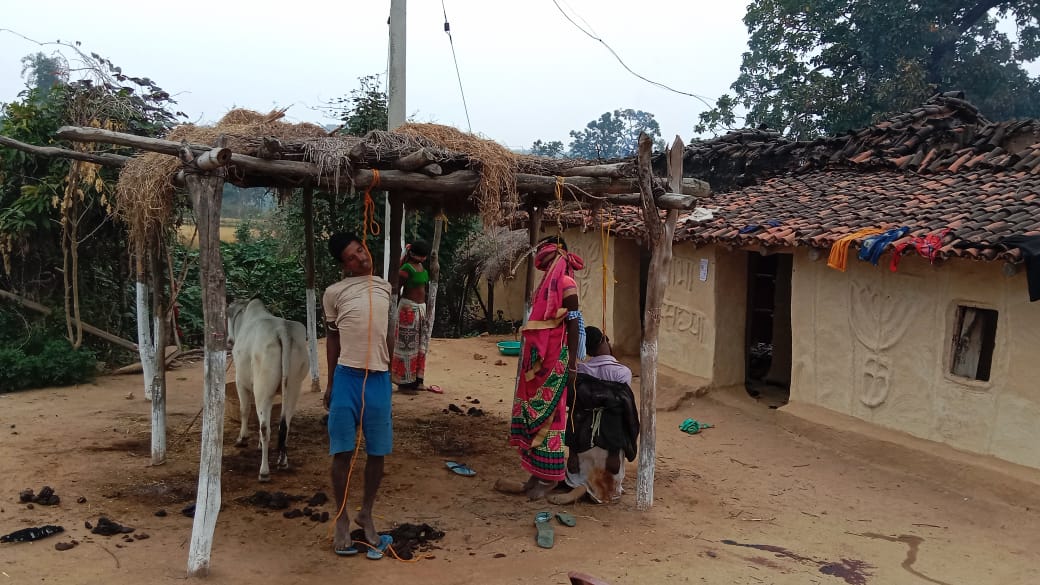
Armed Naxals hanged to death four persons of a Dalit family on Saturday night at Monbar village under Dumaria police station of Gaya district about 70 km from the district headquarter in Bihar.

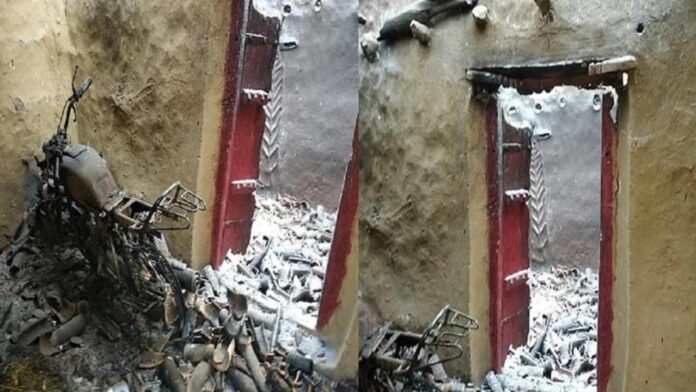
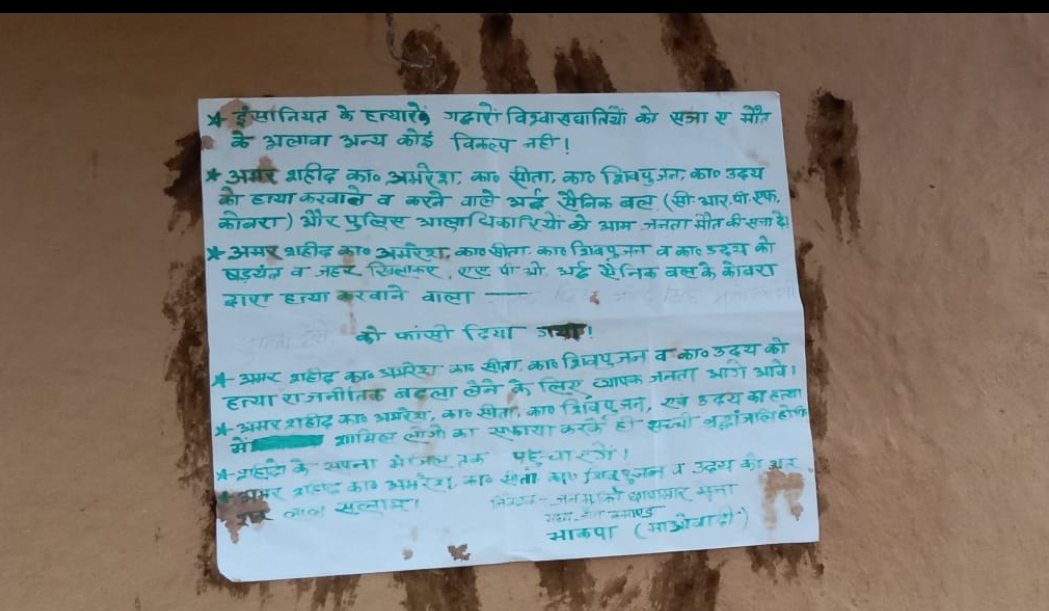
The Naxals of CPI (Maoist) also detonated the house of the victims identified as Satendra Singh Bhokta, Mahendra Singh Bhokta and their wives Manorama Devi and Sunita Singh. Taking responsibility for the barbarous killing, the Naxals placed a poster in the village stating that they have avenged the killing of their comrades namely zonal commander Amresh Singh alias Tuntun Bhokta (Gaya), sub-zonal commanders Shivpujan Yadav alias Pramod, Uday Paswan and Sita Bhuiyan (all from Aurangabad district).

Naxals accused that the deceased had conspired with police and CRPF to poison their men to death while serving them food and later on police shot them to show that it was an encounter.

The crime was executed by the armed squad of Gaya zone of CPI (Maoist) and understood to have escaped towards Jharkhand which is barely three km from the village.

“We were getting information of the movement of the armed squad of CPI (Maoist) and there was information that Naxals are also triggering explosions. Naxals attacked the family around 11.30 PM. We got the information of the murder at around 2.30 AM and immediately forces were rushed. All four were hanged to death but one of them have a bullet injury also. Combing operation is going on,” Gaya SSP Aditya Kumar told the OpIndia.

Deceased are sons and daughters-in-law of Sarju Singh Bhokta. SSP said that Sarju Singh Bhokta along with his two other sons lives away from the village.

When asked about the allegation of Naxals that deceased persons were police informers who killed their men, the SSP termed it untrue.

“The house Naxals detonated is the same house where police had neutralized these four Maoists where they were hiding. Naxals always force villagers for food and shelter and even extort money. Deceased persons were poor farmers. These were top Naxals who died during the encounter that took place in March this year,” SSP informed.

Congress and other opposition ruled states like West Bengal, Kerala have not yet cut VAT to make fuel cheaper for citizens

On November 3, the Centre had announced a tax cut on the eve of Diwali where excise duty on petrol was reduced by Rs 5, and the excise duty on diesel was cut by Rs 10. Following the announcement, as many as 25 states, most of them ruled by the NDA government and Union Territories have undertaken value-added tax (VAT) reduction.

BJP-ruled states like Gujarat, Uttar Pradesh, Karnataka, Tripura, Goa, Uttarakhand, Manipur, Assam, Bihar and Haryana announced VAT reduction hours after the Centre’s excise cut on petrol and diesel.

The States which have not lowered their VAT in Petrol and Diesel include Maharashtra, NCT of Delhi, West Bengal, Tamil Nadu, Telangana, Andhra Pradesh, Kerala, Jharkhand, Chhattisgarh and Rajasthan.

Notably, the eleven states which have not undertaken tax reduction of VAT are all non-BJP states. Punjab has witnessed drop in the petrol price by Rs 16.02 per litre after VAT reduction followed by Rs 13.43 in UT of Ladakh and Rs 13.35 in Karnataka.

The price of petrol is cheapest in Andaman & Nicobar at Rs 82.96 per litre and Rs 92.02 per litre in Itanagar, Arunachal Pradesh. However, petrol is priced at Rs 117.45 per litre in Jaipur, Rajasthan and at Rs 115.85 in Mumbai, Maharashtra. Congress is the ruling party in Rajasthan while Maharashtra is ruled by the Congress-Shiv Sena and NCP alliance government.

Diesel price has dropped most in UT of Ladakh by Rs 19.61 per litre, followed by Rs 19.49 in Karnataka and Rs 19.08 in Puducherry. Like petrol, diesel is cheapest in Andaman & Nicobar at Rs 77.13 per litre and at Rs 79.55 per litre in Aizwal, Mizoram. The price of diesel is at Rs 108.39 per litre in Jaipur, Rajasthan and at Rs 107.48 in Vizag, Andhra Pradesh.

Earlier, Pinarayi Vijayan led Kerala government had refused to reduce tax on petrol and diesel after Centre’s tax cut while the Yogi Adityanath government in Uttar Pradesh declared a flat cut of Rs 12 per litre in the prices petrol and diesel. Chief Ministers of Karnataka, Assam, Tripura, Goa, Gujarat, Sikkim and Manipur had announced VAT reduction by Rs 7 per litre on petrol diesel. NDA-ruled Haryana government also reduced VAT, making petrol and diesel cheaper by Rs 12 per litre and Madhya Pradesh announced a reduction of 4 per cent VAT on petrol and diesel. BJP-JD (U) government in Bihar had announced a tax relief of more than Rs 3. BJD ruled Odisha, too, reduced VAT on fuel.

The prices of petrol and diesel have shown a sharp increase in the last few months as a result of the price rise in global oil prices. This in turn has triggered a price rise of almost every other commodity because of cascading effects. Both the excise duty and VAT levied by centre and state governments respectively constitute the major part of the fuel price in India with taxes comprising more than 50% of the retail fuel prices.