Home Blog Page 3774

Uttarakhand: A confident CM Pushkar Singh Dhami says BJP will return to power in the state for the second time

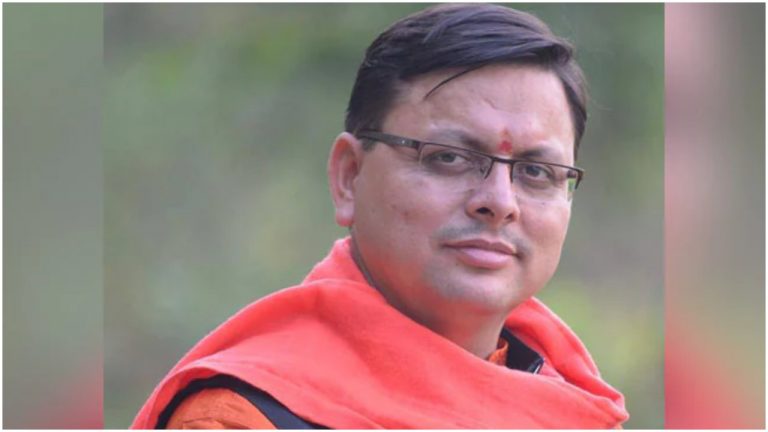
With roughly four months to go for Uttarakhand elections, the ruling BJP is raising the slogan of ‘Yuva Pradesh, Yuva Chief Minister’ as it appointed a young face Pushkar Singh Dhami as the Chief Minister. The two-term MLA from Khatima assembly seat, he is the third chief minister the BJP has appointed after the party won this state in the 2017 assembly election.

In an interview given to News18, Pushkar Singh Dhami claimed that the BJP will break the jinx by returning to power if in the last four assembly elections the ruling party failed to get a second term. Besides, he also spoke on other issues concerning Uttarakhand and the future of the BJP.

The BJP is all set to contest the upcoming assembly election under his leadership who was appointed as chief minister in July this year. As a chief minister, he has less time to perform and to meet the expectations of the voters. But he is quite confident that even in the given little time he will perform to make the party win.

He is aware that in the neighbouring state Himachal Pradesh, the BJP suffered a crushing defeat in the recently held by-elections for Mandi parliamentary seat and Fatehpur, Arki and Jubbal-Kotkhai assembly seats. The Congress has emerged stronger after winning all four seats in Himachal Pradesh.

But Pushkar Singh Dhami claims that as far as Uttrakhand is concerned, the Congress party is not a political force to reckon with. Congress in Uttarakhand, he said, is troubled by bitter infighting whereas the BJP is well focused on its plan to take the state forward.

He said that he has the support and blessings of top leadership and being the youngest one he tries to learn from seniors and give due respect to mentors and seniors. Uttarakhand was carved out as a state 21 years ago and the development of the state in the last two decades will remain the poll issue. The BJP CM pointed out that the state has made a great stride in terms of road connectivity. He said that the state was greatly benefitted by the Pradhan Mantri Gram Sadak Yojana as villages have now road connectivity. “Prime Minister Narendra Modi recently said in Kedarnath that this is the era of Uttarakhand. We have been getting rail and air connectivity in the hills. Border areas are getting special attention,” he said.

In the 21 years, Uttarakhand has witnessed 11 chief ministers. The BJP alone replaced three chief ministers since 2017. The BJP and the present chief minister surely have to face this uncomfortable question.

Pushkar Singh Dhami said that certain decisions are taken out of political compulsions. He said that the change of guard has not affected the pace of ongoing development works. If the national leadership gave him an opportunity to serve the state he would accelerate development. He believed Uttarakhand will achieve new milestones when it completes 25 years of formation.

In the house of 70 seats, the BJP in 2017 had won 57 seats, and this time the BJP has set the target to win 60 plus seats which looks like a very big target. But Pushkar Singh Dhami claimed the BJP will achieve the target. Uttarakhand is dominated by families of serving and retired army personnel and they are strongly connected with the BJP.

While heading the party in the poll, he will be confronted with controversy over the Devasthanam Board Act as priests have threatened political consequences. “A committee headed by senior leader Manohar Kant Dhyani has given an interim report, and the final report is awaited. We will take a call after getting feedback and suggestions from all stakeholders,” he said on the matter.
India hosts security dialogue on Afghanistan: NSAs from 7 nations including Russia meet Ajit Doval in Delhi

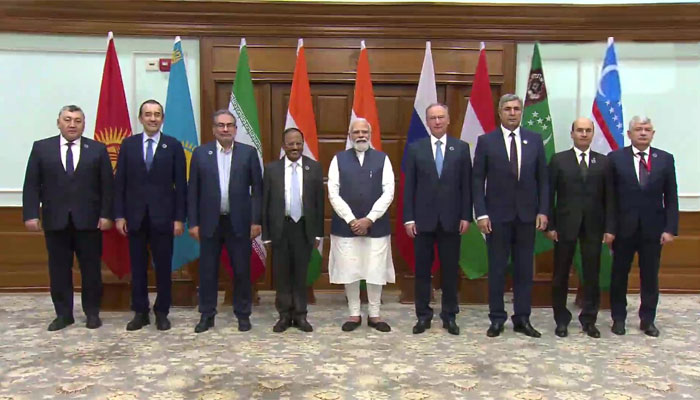
On November 10, National Security Advisor (NSA) Ajit Doval chaired the “Delhi Regional Security Dialogue on Afghanistan” in New Delhi. National Security Advisers of Russia, Iran, Tajikistan, Kyrgyzstan, Kazakhstan, Uzbekistan, and Turkmenistan attended the event.

Prime Minister Narendra Modi also met the Security Advisors. In the meeting, Doval said that the developments in Afghanistan have important implications not only for the people living there but also for the neighbouring countries and the region.

Notably, an invitation to Afghanistan was not extended. India has had a healthy bilateral relationship with the erstwhile government of Afghanistan and after the Taliban takeover, it has not recognised the radical Islamist organisation as the governing body of the war-torn nation.

None of the 8 nations participating in the dialogue has recognised the Taliban ‘government’ yet, though Russia is still maintaining a functional embassy in Kabul.

During the meeting, Doval said, “We are meeting today to discuss the matters relating to Afghanistan. We all have been keenly watching the developments in that country. These have important implications not only for the people of Afghanistan but also for its neighbours and the region.”

Earlier, the Ministry of External Affairs had said that the NSA from the attending countries would review the security situation in the region following the recent developments in Afghanistan. Iran had also hosted dialogues in a similar format earlier. Iran started a dialogue in this format in 2018 and 2019. However, this is the first time seven nations are participating in the dialogue that is happening in India.

In its press release, MEA had said, “The high-level Dialogue will review the security situation in the region arising from recent developments in Afghanistan. It will deliberate upon measures to address the relevant security challenges and support the people of Afghanistan in promoting peace, security and stability.”

It further added that India has traditionally enjoyed close and friendly ties with the people of Afghanistan. It said, “India has called for a unified international response to address the security and humanitarian challenges facing Afghanistan. The forthcoming meeting is a step in that direction.”

Furthermore, it has to be kept in mind that the aim of the dialogue was not to form a formal security architecture for the region but to bring all participating countries on the same ground to determine the threat posed by the instability in Afghanistan.

A News18 report stated that the focus of the dialogue would remain around terrorism, radicalization and extremism, cross-border movement, the impact of drugs and trafficking on the region. Another major concern is the large number of weapons and equipment that US forces left behind in the country.

Regular similar meetings on Afghanistan by Security Advisors

The Security Chiefs and Advisors from Russia, Britain and the US have held similar meetings with NSA Doval in recent months. In September 2021, the British MI6 chief, the CIA chief and the Russian NSA had all visited India to hold dialogue with NSA Doval over the situation in Afghanistan after the Taliban took over the country. CIA Chief Bill Burns arrived in India on September 7 to have a discussion on key security issues with Ajit Doval.

Following the visit by the US NSA, Russian NSA Nikolay Patrushev also visited New Delhi for talks with Indian NSA Doval. The conversation between Burns and Doval was centred on Terrorism from Pakistan and the situation that is unfolding in Afghanistan. Following his visit to India, Burns also visited Pakistan. Before the meetings, India had already shared notes on Taliban-ruled Afghanistan with the security chiefs from the US and UK.

Pakistan and China skipped NSA level dialogue in India

China and Pakistan were extended invitations to join the dialogue. Reportedly, China could not attend due to “scheduling issues”. Pakistan also refused to attend the dialogue that attracted sharp criticism from the Indian government. News18 quoted a source saying that the participating countries had a viewpoint that Pakistan is the actual problem for Afghanistan.

The Pakistan government’s refusal to attend the NSA-level talks in Delhi was another development in what is seen as the strategic isolation of the Islamic country in the region. After the Taliban takeover, Pakistan has been facing wide international criticism for providing strategic and tactical support to the Taliban. There is a growing consensus, especially in the USA that Pakistan has played a duplicitous role, taking US funds while helping the enemies of the USA in the 20-year war. Pakistan’s role in promoting instability and terrorism in the region has also been evident in recent months.

Jammu and Kashmir: Terrorists gun down salesman Ibrahim Khan in Srinagar mistaking him for his Kashmiri Pandit employer

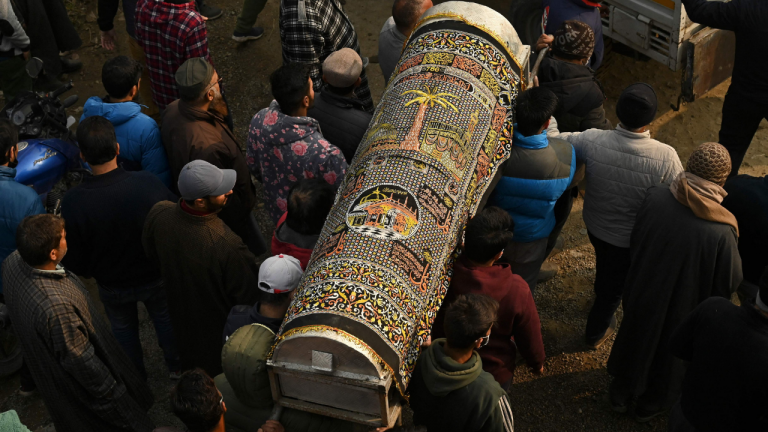
Islamic terrorists on Monday gunned down a Kashmiri salesman, Mohammad Ibrahim Khan (45) in the old city area of Srinagar. Khan worked as a salesman at a grocery shop run by a Kashmiri Pandit in Bohri Kadal. 

The salesman who was shot in the chest and abdomen succumbed to the injuries during treatment. 

However, the victim’s family has claimed that their son was killed by ‘mistake’, as the terrorists actually wanted to kill the Kashmiri Pandit shopowner. Journalist Aditya Raj Kaul posted a video on Twitter where the family members are heard saying that since the businessman was away, terrorists thought Ibrahim Khan is the owner of the shop and killed him instead.

‘I will not leave Kashmir’

The shop owner Dr Sandeep Mawa was well aware of the ploy and was alerted by the police. In an exclusive interaction with News18, Dr Mawa revealed, “I have an XUV (vehicle). I got a call around 3 in the afternoon from the police that I could be targeted. So, I left home in my small car.”

Narrating the case of mistaken identity, Mawa said, “Ibrahim (Khan) went to take my XUV from the store around 8 pm. The terrorist was lurking there in the dark. He thought it was me and pumped four bullets in him (Khan).” A guilt-ridden Mawa said, “I don’t know how to face his family. It feels as if I am responsible for his death.”

However, Mawa said that he will not leave Kashmir due to fear of terrorists. “I will not leave (Kashmir) and be silenced by the gun,” asserted Mawa whose father was shot at by the terrorists in the 1990s. 

“My father is in Delhi. I am in Srinagar with my wife and two children. They are very scared after the latest incident but I am trying to convince them,” Mawa said further. 

Mawa’s family had resettled in Jammu and Delhi after his father was shot by terrorists, however, he decided to return to Kashmir in 2019 with his family. 

‘Father and son the real target’

Defunct terrorist group Muslim Janbaz Force has taken the responsibility for killing Khan. In an unsigned letter, the Islamic terrorists confessed that the father-son (Sandeep Mawa and his father Roshan Lal Mawa) were the real targets as they are working for the ‘Indian agencies.’ 

“They were involved in bringing non-locals to Kashmir,” the letter read.

Second killing post-Diwali

This was the second killing by terrorists in the valley post the festival of Diwali. A day before Khan was gunned down, the terrorists had killed the 29-year-old police constable Tawseef Ahmad Wani in the Batamaloo area. 

Srinagar has been on high alert since the month of October after as many as 10 Hindu civilians were murdered by Islamic terrorists. The Centre has deployed additional 5,000 paramilitary personnel in the valley. 

Candle light protest in Srinagar

The Councillors of Srinagar Municipal Corporation on Tuesday had carried out a candle light protest against the recent killings of civilians in the valley.

The protest was held at Lal Chowk in Srinagar.

Taslima Nasreen is disappointed after Malala married a Pakistani guy instead of a ‘handsome progressive Englishman’

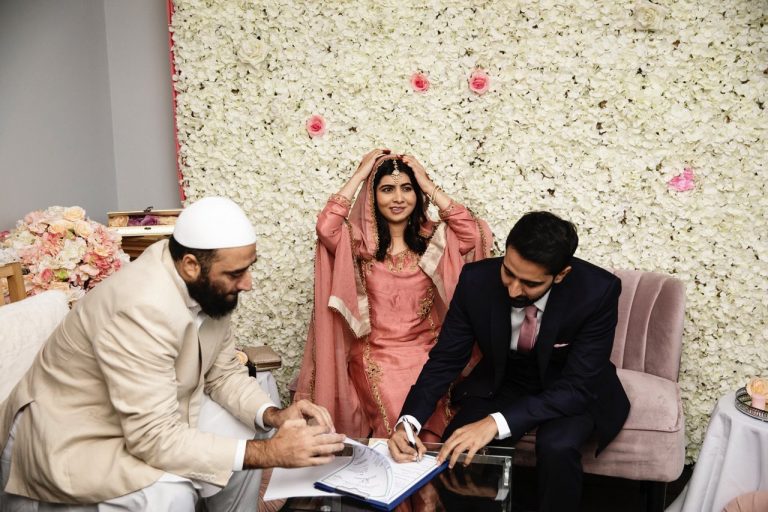
The ‘progressive’ Bangladeshi writer Taslima Nasreen on Tuesday expressed her shock after Nobel Peace Prize laureate and education ‘activist’ Malala Yousafzai (24) married a Pakistani man Asser Malik instead of a handsome progressive English man.

“Quite shocked to learn Malala married a Pakistani guy. She is only 24. I thought she went to Oxford University for study, she would fall in love with a handsome progressive English man at Oxford and then think of marrying not before the age of 30. But..” Taslima posted on her Twitter timeline.

In her statement, she seems to be saying that she expected Malala’s education at Oxford University will broaden her view and she will marry not before the age of 30. Her post triggered a salvo of comments as some criticized for meddling into the personal life of Malala whereas some said that Malala is a Sharia Barbie and there was nothing surprising in her marrying a Pakistani man.

On Tuesday (November 9) Malala made the official announcement of her nikah (Islamic marriage contract) ceremony. “Today marks a precious day in my life. Asser and I tied the knot to be partners for life. We celebrated a small nikkah ceremony at home in Birmingham with our families. Please send us your prayers. We are excited to walk together for the journey ahead,” she posted information on her Twitter handle.

Malala married barely six months after she questioned institution of marriage

In June this year, Malala had questioned the institution of the marriage in an interview given to British magazine Vogue. “I still don’t understand why people have to get married. If you want to have a person in your life, why do you have to sign marriage papers, why can’t it just be a partnership?” Quite little is known about Asser Malik except he works for the Pakistan Cricket Board. It seems that both were known to each other from the past few years.

Malala gained prominence after Taliban shot at her in Pakistan

Malala a native of Mingora in Swat district of northwestern Pakistan is settled in Britain. She fled to Britain after being shot in the head by Talibani terrorists in Pakistan on October 9, 2012. She and two of her classmates were shot when they were traveling home from school in a bus. She was airlifted to Queen Elizabeth Hospital Birmingham and she survived. It is said that Talibani shot her since she was insisting to go to school. In 2014 she got Nobel Peace Prize. Malala despite speaking for girls, gender issues and claiming to be a liberal, remained a true Muslim who refused to discard her scarf.

Malala often accused of maintaining silence on the issue of Islamic fundamentalism

Despite she was attacked by Taliban, there have been occasions when she remained silent on Islamic fundamentalism or spoke quite late and too little. While speaking at Jaipur Literature Festival she spread the falsehood that the Muslims and Dalits are minorities in India and are at risk.

In August 2019 after the Narendra Modi government scrapped Article 370 from Jammu and Kashmir (J&K), Malala meddled in the internal matter of India and said that she was worried people of J&as South Asia was her home. Again in September 2019, she spread fake news about the arrest of a large number of people in J&K and how a girl could not appear for her examination due to security restrictions.

Even when the Taliban took over Afghanistan amid gross violations of human rights, Malala maintained a stoic and deafening silence as the world watched. A few days later, she broke her silence and said she was ‘worried’ about the situation developing in Afghanistan.

Farmer linked with BKU faction found hanging at Singhu border

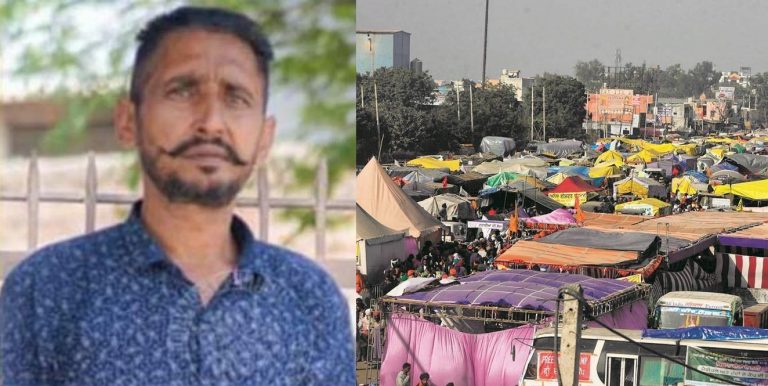
One protesting farmer said to be associated with the Bhartiya Kisan Union (BKU) was found hanging from a tree at the Singhu border farmer protest site on Wednesday. The deceased, a regular protestor against the three farm laws, has been identified as Gurpreet Singh (45), a resident of Amroh district in Punjab’s Fatehgarh Sahib.

Reportedly, Gurpreet was associated with the Jagjit Singh Dallewal faction of Bhartiya Kisan Union, Sidhupur. He is survived by his wife and a 20-year-old son, who is on his way to Sonipat from Punjab.

‘A case of suicide’

The Kundli Police has sent the body of the deceased for post-mortem and launched an investigation into the death. While speaking with OpIndia, SHO of Kundli Police Station, Ravi Kumar said, “The people associated with him (Gurpreet) have informed that it is a case of suicide. They said he was troubled since a past few days.”

A statement issued by the police station says that they have been told that the farmer was mentally disturbed. The police also informed that Gurpreet Singh was a frequent visitor at the farmer protest site, and was at the site for the last 5-6 months.

As per an Indian Express report, BKU’s Ekta Sidhupur district convener Gurjinder Singh informed that Gurpreet was upset over the prolonged protests. “He had returned to the Singhu border site after visiting his village on Monday. In his conversation with farmers over the past two days, he had mentioned that he was upset regarding the impasse over the repeal of farm laws and that despite farmers protesting for over a year, the government had not been listening to the demands of farmers,” claimed Gurjinder. 

The farmer leader informed that as soon as he received information of the incident (around 6 am today), he rushed Gurpreet to a hospital where he was declared dead.

As of now, the police have maintained that it is a case of suicide. Virender Singh, deputy superintendent of police (DSP), law and order, Sonipat, said, “As per preliminary information, it appears to be a case of suicide. A probe has been initiated.” Reports suggest that the police are recording statements of the eyewitnesses.

Both self-acclaimed farmer leader Rakesh Tikait and BKU have not issued any statement on the incident. However, Tikait did put out a Tweet on Tuesday talking about the deaths that took place in the past year allegedly due to the ongoing protests. “750 farmers have been martyred and not a single condolence message has come from the Government of India. So the farmers of the country feel that the Prime Minister is not the Prime Minister of the farmers,” Tikait Tweeted in Hindi.

The death came weeks after the brutal murder of Lakhbir Singh at the protest site by Nihang Sikhs accusing him of blasphemy.

‘The government should repeal the black laws’

Using the death of a protestor to further their demand, Jagjit Singh Dallewal, BKU Ekta Sidhupur, Punjab State President said, “This is a very unfortunate incident. The government should repeal the black laws immediately.”

“He was regular at volunteering at morcha meetings and was part of protests in the village. He had been camping at the Singhu border since last year. He owned a small amount of land and to make ends meet, he used to drive a school van before Covid-19 hit,” Dallewal informed. 

BKU eyes Uttar Pradesh

Meanwhile, Tikait is eyeing a large-scale event in soon-to-be poll-bound Uttar Pradesh. To mark the completion of one year of farmers’ protests, Tikait has organized a Mahapachayat in Lucknow on November 22. 

He announced another gherao using tractors at multiple locations in the country to intensify the protest.  

Madhya Pradesh: NCPCR uncovers conversion racket in Christian missionary-run girls’ hostel, orders probe

0

On November 9, Priyank Kanoongo, Chairperson, National Commission for Protection of Child Rights (NCPCR), said in a statement that the Commission has uncovered an alleged conversion racket going on in the Christian Missionary Girls’ Hostel in Raisen, Madhya Pradesh.

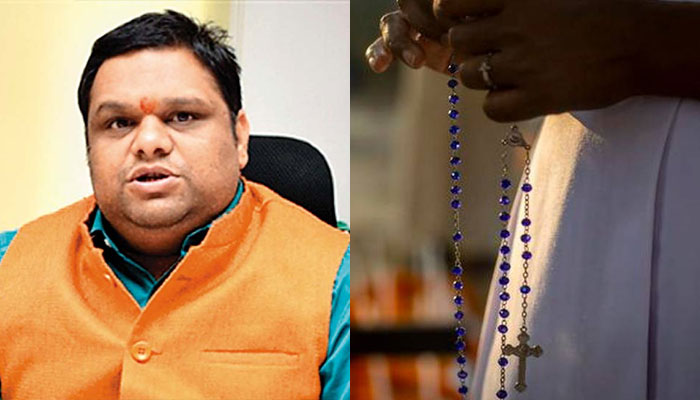
The hostel is located in Intkhedi village, Sultanpur, District Raisen, Madhya Pradesh. Kanoongo had gone to inspect the hostel, where he found that the tribal Hindu girls were brought to the hostel and were being taught Christian religious books to convert them to Christianity.

The commission chairman also checked the registers kept in the hostel. He found that there were 15-20 Hindu Tribal girls in the hostel premises. Some of them were from North-East. They were being taught books related to Christianity. Kanoongo also found Bible that was handed over to District Magistrate after inspection.

Kanoongo shared the information about the inspection and what he had found on Twitter and said, “Surprise inspection of the hostel of Christian Missionaries. They were running a conversion racket”.

The chairman gave a statement in the video. He said, “We found that there were 15-20 Hindu tribal girls living in the premises of Christian Missionary hostel. They were taught Christian religious text. We found copies of the Bible in their beds that we handed over to the district administration. We also came to know that some of them were from North-Eastern states. There were indications that these children were being groomed for some special training. These children are studying in government schools as there is no school on the hostel premises. It is a matter of investigation how these children reached this hostel. It should be investigated how they were living here and were being subjected to religious conversion. It is not only illegal but unethical. The Commission has instructed the administration to send students back to their homes and take strict action against those who were running the conversion racket.”

NCPCR has sought a report in case where a tilak-wearing boy was assaulted

Recently, NCPCR also sought a report from the Raisen Police in the case where a tilak-wearing boy was assaulted by a teacher named Nishaad Begum. Reports suggest that the child was thrashed by the teacher for sporting a Tilak earlier this year.

The Commission, in its letter, said the family of the victim was not satisfied with the investigation in the matter. The family has alleged that officers who are probing the matter had not contacted them or the victim. The letter further mentioned that statement of the victim had been recorded at the direction of the Commission’s Chairman and in the presence of SDM, Tehsildar, Chairman of the Child welfare committee and police officers. The Statutory body had asked the police to take cognizance of the victim and his family’s statement and submit a report within two days of receiving the letter.

Glass ceiling broken: Woman-led fashion unicorn Nykaa makes a robust debut at share market, market cap crosses Rs 1 lakh crore

Personal and Body care brand Nykaa made an outstanding debut on the Indian stock exchanges on Wednesday, with shares listing at a premium of up to 79 percent compared with the issue price.

On Bombay Stock Exchange, the stock of FSN E-Commerce Ventures — the parent organisation of Nykaa — was listed on the secondary market at Rs 2,001, a premium of 77.9 percent over the issue price of Rs 1,125. On NSE, Nykaa shares debuted at Rs 2,018, a premium of 79.4 percent.

Meanwhile, the initial trade session on Wednesday saw Nykaa shares touching the Rs 2,063 levels on the BSE, taking the market capitalisation of the company to over Rs 1 lakh crores. At the time of posting this report, the share price was trading at above Rs 2,200.

As a result of the spectacular performance of the stock, Nykaa founder Falguni Nayar has become India’s wealthiest self-made female billionaire. As she owns around half of the company, she is now worth around $6.5 billion.

IPO issue subscribed by over 82.42 times

The robust listing on its debut can be attributed to the strong demand from investors as the Rs 5,352-crore public issue was subscribed by 82.42 times during October 28-November 1, receiving bids for 216.59 crore equity shares against the offer size of 2.64 crore equity shares.

The qualified institutional investors (QII) drew bids for 131 crore equity shares, or 92.17 times the shares on offer while the non-institutional category, which also includes high net-worth individuals(HNIs), was subscribed 112.51 times. Demand from retail investors, who can invest up to ₹2 lakh in an IPO, stood at 12.29 times.

Falguni Nayar-promoted Nykaa intends to sweep Rs 5,351.92 crore through IPO. The offer comprises a fresh issue of Rs 630 crore and an offer-for-sale of Rs 4,721.92 crore worth of shares by the promoter and investors. The price band for the offer has been fixed at Rs 1,085-1,125 per share.

Nykaa plans to use the raised capital to expand its business by setting up new retail stores and establishing new warehouses. It also aims to reduce its debts, which should bring down cost incurred in interest and boost its profitability. 

Nykaa, founded in 2012 by Falguni Nayar, among a few start-ups to achieve profitability

Nykaa has a diverse portfolio of beauty, personal care and fashion products, including products manufactured by its parent company, FSN E-Commerce Ventures. It has established itself not just as an online destination for beauty and personal care products but also as a consumer brand. 

The company conducts its businesses chiefly through arrangements with beauty, personal care and fashion brands, delivery companies, manufacturers, distributors and other vendors, including suppliers of packaging material.

Nykaa was founded in 2012 by Falguni Nayar, an Indian businesswoman who worked as an Investment Banker at Kotak Mahindra for 19 years. Unlike most startups, Nykaa has managed to achieve profitability, posting a consolidated net profit of Rs 61 crore for the year ending on March 31, 2021 (FY21) as compared to a loss of Rs 16.3 crore in FY20. Bollywood actors Katrina Kaif and Alia Bhatt had last year made undisclosed investments in the company. Kaif had made the investment days after she launched her beauty line ‘Kay Beauty’ on the e-tail platform.

‘Gorakhpur Wale Baba Hain’: How popular singers are hailing CM Yogi’s work in UP ahead of elections

Uttar Pradesh Assembly Elections are just around the corner, and Bharatiya Janata Party (BJP) has already announced incumbent Chief Minister Yogi Adityanath as the CM face. Though there has been a trend in UP that no chief minister managed to win elections for consecutive terms, BJP is hoping to put an end to it and come back to power.

The ‘Brand Yogi’ that the party is trying to build is getting unexpected support from the singers hailing from Uttar Pradesh.

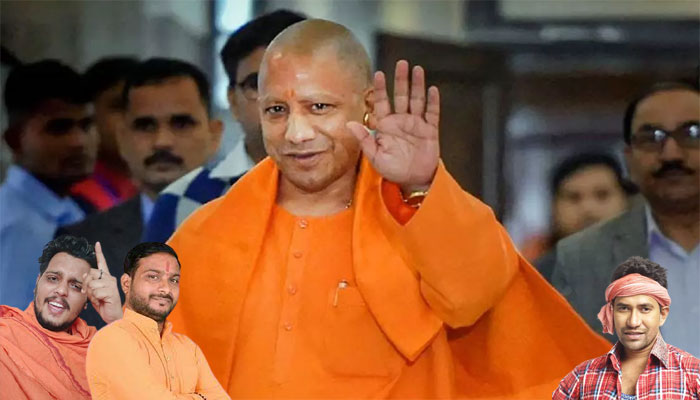
There are many songs that could be found on YouTube that hail CM Yogi Adityanath’s tenure as Chief Minister and hope for his return in the upcoming assembly elections. From BJP’s own Dinesh Lal Yadav aka Nirahua to Sandeep Acharya and Prem Krishnavanshi, there are many singers who have released songs in favour of CM Yogi Adityanath.

Dinesh Lal Yadav, aka Nirahua, a prominent Bhojpuri singer, has recently launched a song with the title ‘Ayenge to Yogi hi’ (Yogi will come back for sure). In the song that has already gained over 1.8 million views since its launch in September this year, Nirahua talked about how the CM Yogi-led government worked extensively to control crime in the state.

Apart from the Kumbh Mela, Ayodhya and UP Model of Covid management, different schemes like electricity, toilets, pension, free ration, roads etc., are prominent parts of the song. Notably, Yadav had contested the Lok Sabha election against SP Chief Akhilesh Yadav in 2019 but could not win.

Another song by singer Varun Bahar titled ‘Yogi baba badey ladahiya, phir se CM diyo banaye’ extensively talked about how crime went down under the leadership of CM Yogi Adiytanath. The song has visuals of buildings linked to criminals being demolished.

Singer Sandeep Acharya has released several songs promoting CM Yogi Adityanath for the upcoming elections. The song ‘Gorakhpur wale baba hai Ghar nilaam kara deinge’ (The saint from Gorakhpur will auction your house) talks about how the Yogi government took possession of the properties linked to criminals and demolished buildings built on encroached land across UP. It shows the posters where the government had put up posters of rioters. The lyrics goes:

UP main gundai karoge toh aukaad dikha denge, Gorakhpur wale baba hain, ghar nilaam kara denge..” (Criminals in UP will be shown their place, the Baba from Gorakhpur will have their properties auctioned off).

In another song titled ‘Yogi UP Ki hain Shaan’ (Yogi is the pride of UP), Acharya urged people to vote for BJP in the 2022 Assembly Elections. He talked about Bhavya Ram Mandir that is being built in Ayodhya and also emphasized on the reduced crime rate in the state.

OpIndia reached to Sandeep to talk about his songs for the upcoming elections. He said, “I am releasing songs for Hindu causes including Ayodhya Ram Mandir, Mathura Kashi, Gau Hatya and others. I also sing songs about social evils like female feticide, dowry etc. We love CM Yogi’s work in Uttar Pradesh and want him to become Chief Minister again.” He further rejected the allegations that BJP was financing the singers to sing songs in praises of CM Yogi and said, “These songs are not from the party but from the Hindus. My followers finance my songs as they are a devotee of the Hindu religion. We all want BJP to come back in power in UP.”

While talking to OpIndia, Singer Prem Krishnavanshi said that he has released over 100 songs on CM Yogi in the past few years and continues to do so as he is impressed by his work and wants him to get re-elected as Chief Minister of the state. His new song, ‘Thoda sa Bal Thackrey thoda sa Atal Bihari hai’, is gaining a lot of attention on social media platforms.

His other songs, like ‘Goonj rahe hai Shri Yogi Yogi’, has crossed lakhs of views on YouTube and is being widely shared on social media platforms, including WhatsApp.

Allegations drawn by opposition

According to a report in Hindustan Times, Zeeshan Haider, spokesman, Congress, called these singers party cadres. He said, “It is all very nice to get party cadres to sing songs in praise of anyone. But the point is, what are the people saying.”

BJP refuted the allegations

OpIndia reached out to Rakesh Tripathi, BJP State Spokesperson, Uttar Pradesh, for comments. While talking about the songs, Tripathi said that these songs not only inform people about the work BJP has done in the state but also connect followers of CM Yogi to the singers. He said, “The allegations that BJP is paying these singers to release songs praising CM Yogi are baseless. These singers hail from Uttar Pradesh and have seen the difference first hand that BJP has brought in terms of crime rate, electricity and more.”

He further added, “CM Yogi is popular among the singers as people love to see and listen to him. It is one of the reasons such songs gain a lot of traction on social media. It not only helps the singers to gain viewership but also in strengthening CM Yogi’s image in the state. These songs definitely help in promoting the work BJP has done in the state among the masses.”

More surreal scenes emerge from Delhi as barricades with gaps are being put to prevent toxic foam floating towards ghats

More unbelievable scenes have now emerged from the national capital after ‘barricades’ are being put up to ‘prevent’ toxic foam from floating towards the ghats for Chhatth puja.

It must be noted that the barricades have gaps and it is very very unlikely the foam will be prevented from floating because of the said ‘barricade’.

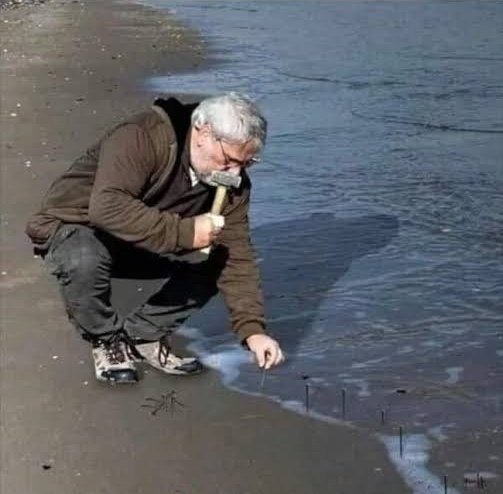
Another visual representation of above brilliant brainwave would be this viral image where a man can be seen putting nails on a beach to prevent waves.

Man preventing waves with help of nails

Delhi government, it seems, has officially turned itself into a meme.

Earlier in the day Delhi Jal Board employee was found sprinkling water on the river Yamuna in a bid to dissipate the toxic foam.

Prior to that, a ‘boat’ was used to clear off the toxic foam from Yamuna river by Delhi government.

One must reiterate here that it is not parody or satire but actual measures taken by Delhi government for cleaning the river Yamuna and the toxic foam floating on it.

As some Twitter users suggested, it seems the next solution to air pollution would be to feed entire Delhi population with Rajma Chawal and fart in the general direction of Pakistan to send the stubble smoke towards the neighbouring Pakistan. And if it does happen, you know where you read it first.

IIM Ahmedabad set to launch course on Bhagwad Gita for corporates, will teach management and leadership

0

The Indian Institute of Management (IIM) Ahmedabad is all set to launch a course on Bhagwad Gita for corporate professionals to teach management lessons. 

The program that will commence from December 13 will include lessons and chapters from Gita to ‘to explore contemporary management concepts, conflicts, dilemmas, and trade-offs in business.’

The great Indian epics of Mahabharata and Gita has inspired many institutions and corporates to extrapolate the life lessons learnt from the epics in real life. As per the IIM-A website, ‘Lessons from Bhagawad Gita suggest powerful ways to promote management practices that are consistent with the business model and yet ethical.’

“Lessons from Bhagawad Gita suggest powerful ways to promote management practices that are consistent with business models and yet ethical. This course is focused on early reflections on those learnings,” said an IIM official while speaking with Ahmedabad Mirror

About the course

The course has been divided into 06 sessions of 03 hours each. The objective of the course is to develop insights into making effective choices, strengthen concepts of contemporary management and value-based leadership, develop an understanding of leadership excellence and more. 

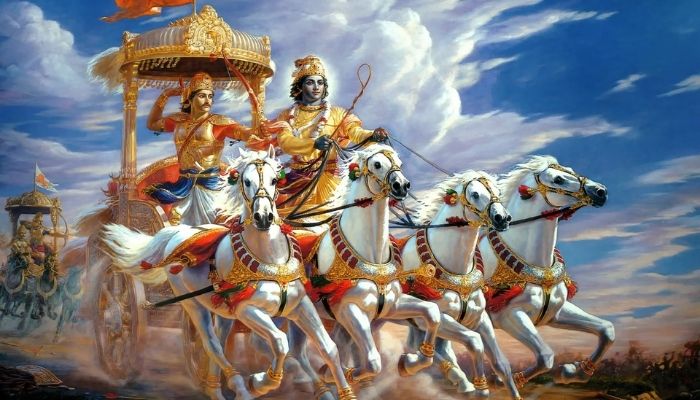
Anyone familiar with Bhagwad Gita would already be well aware of the great learnings from the Krishna-Arjun Samwad, Arjun’s dilemma before stepping into the battle and Krishna’s role as a guide. 

“The course will also enable participants to develop competence to face challenging times in their career with confidence. The program aims to sensitize them on ways to develop themselves into effective leaders in the corporate world,” the official had added further. 

The content that will be taught using a mix of case discussion and video films, will include value lessons from the Gita, understanding behavioural orientation, role conflict and outcome amongst others. 

The program is intended for professionals having 5 years of work experience. Anyone wanting to learn management techniques in decision making, leadership, motivation, strategy planning, negotiation, persuasion and building teams can enrol for the course. 

The program fee is Rs 64,000 and the registration for the same closes on November 29.

‘If we have to teach managers, what better way than the life of Lord Krishna?’

While speaking with the media, course creator Professor Sunil Maheshwari said, “We teach through a case study method. And if we have to teach managers these skills, what better way than the life of Lord Krishna? His is the best life example to teach effective leadership.”

While speaking of the course, the professor informed that he conducted a survey amongst corporates before designing the course. “What struck me the most is that the credibility score was very poor, meaning there should be more credible managers and leaders in corporations if we want to move in the right direction.”

“Lessons from Bhagavad Gita help managers live a purposeful life leading to excellence in everything they do. They need to have high credibility, ethics, and a value system,” he said further.