Home Blog Page 4103

Court sanction, police apathy and political patronage to conversions: Human Rights report sheds light on the abysmal state of Hindus in Pakistan

A 2019 field investigation report by the Human Rights Commission of Pakistan has reaffirmed an unpleasant reality that is already known for far too long—minorities in Pakistan live under constant fear of persecution as their perpetrators enjoy court sanctions, support from the influential and affluent section of the society and patronage from political leaders.

In May 2019, the fact-finding team of the Human Rights Commission of Pakistan visited Ghotki district with the purpose of assessing complaints regarding the forced conversions of Hindu girls, with reference to the case of Reena and Raveena, two underage Hindu girls who disappeared from their homes in Daharki city and were later found to be married to Muslim men after being converted to Islam.

The Hindu community protested against the incident but the local police reportedly refused to file a complaint. An FIR was filed in the case only after heavy protest from the Hindu community and after the video of the two girls went viral on social media in which they claimed that they had converted to Islam and married two Muslim men from their locality.

The family of the two girls claimed that they were underage but the commission formed by the Islamabad High Court to ascertain the facts of the case found that the girls were of marriageable age. The Islamabad High Court ordered the Ghotki sisters to return back to their Muslim husbands Safdar Ali and Barkat Ali after two girls allegedly confessed in front of the court that they had willingly converted to Islam given they were impressed by the Islamic teachings.

A High Court bench led by Chief Justice of IHC Athar Minallah made the decision after a five-member commission had submitted the report, which was tasked to probe whether the conversion of the Hindu sisters to Islam was forced or otherwise. The High Court had also ordered earlier that the two sisters be shifted to a shelter home in Islamabad until the hearing was completed.

Against the backdrop of these developments, the Human Rights Commission of Pakistan met with the Hindu residents of the Ghotki district and understand the apprehensions harboured by them. The leaders or the mukhis of the Hindu Panchayats of various districts admitted to being victims of the high-handedness of certain powerful groups and individuals. A majority of them complained that they faced some kind of discrimination from the ‘powerful’ or the ‘influentials’.

Pakistani Hindus admit they are victims of the high-handedness of certain powerful and influential people

The commission found that most Hindu residents who once lived here migrated to India after facing frequent cases of banditry and forcible seizures of their property. Many others who met the fact-finding team lamented that be it for political or religious issues, the support for the community when a case of forced conversion occurred was not forthcoming.

One of the leaders who met the Human Rights Commission said that Hindu girls were held in captivity for several days for seemingly piddly mistakes and testimony were coerced out of them after their conversion. It was also alleged by others that such girls were subjected to rapes and torture while in the custody of kidnappers. Even the courts, including the Supreme Court, they claimed, were unsympathetic to the predicament of the Hindu girls.

Some of the Hindu residents also bemoaned the dichotomy of Pakistan’s constitution of granting equality of citizens but not allowing non-Muslim residents from holding the highest positions in the state and government. They further added that properties belonging to Hindus were forcibly seized by powerful individuals and that there was always an ‘element of coercion’ involved in the conversion of Hindu girls to Islam.

Police officials, bureaucrats and authorities turn a blind eye to the atrocities meted out on Hindus: Human Rights Commission report

The brother of Reena and Raveena, Mr Shaman Das Meghwar, attended the meeting with the Human Rights Commission and stated how the administration and the police refused to act to their family’s complaint. He said neither the police nor the government had responded to their protests. The SSP only visited three days later, he said, adding that the NADRA office did not issue birth certificates for his sisters despite ten days of continuous efforts by the family. Instead, the SSP proceeded to whitewash the case of forced conversion of Reena and Raveena. He asserted that there was a willingness on the part of Hindu girls to choose Muslim boys.

Furthermore, the Commission of Human Rights found out that authorities in Pakistan were more concerned about Pakistan being maligned globally after cases of forced conversions came to the fore rather than providing justice to the victims of said atrocities.

Additionally, there was also general apprehension among minorities in Ghotka districts that Mian Mithoo was using his heft with the shrine of Bharchundi Sharif and frequenting cases of conversion of Hindu girls in the region. Mithoo was also present in the Islamabad High Court during the hearing of the Reena and Raveena case. The political patronage enjoyed by the culprits and the lack of action by the administration was also considered as one of the reasons behind the rampant conversions in the Ghotki district.

The Commission also found that the fear was so widespread among the Hindu community that many cases of forced conversions went unreported. The panchayats and the Hindu community were even reluctant to follow up cases of conversions that were previously reported, for the fear of retribution.

About 90 per cent of the cases of conversion were forced, the members of the Hindu community told the fact-finding team. While the conversions of Hindu girls were celebrated, but the conversion of Hindu boys was seen with disapproval and they were often forced into destitution. As the conversions continued to take place across the district, the administration officials and the police officers in the region were either involved in the act or remained mute spectators, the residents alleged.

Court sanction to the abductions and rampant forcible conversions of Hindu girls

The Hindu leaders also highlighted the Court sanction to the rampant forcible conversions taking place in their region. In this regard, they pointed out the case of one Rinkle Kumari who was allegedly kidnapped and married off to a Muslim man in 2012. They contended that the converted girl had at one stage expressed her desire to go with her mother but she was not allowed to do so.

The courts in Pakistan have consistently failed in providing justice for Hindus in Pakistan. In fact, in some cases, the courts have empowered the culprits responsible for abducting and forcibly converting the Hindu and Christian minorities. In the case of Reena and Raveena, the Supreme Court granted only 5 minutes for the mother to meet her daughters. The mother later reportedly said that both her daughters were continuously weeping and looked fearful. Similarly, in June 2020, a district magistrate allowed a Muslim man to keep his Hindu wife even after the parents of the girl alleged that their daughter was kidnapped and forcibly married off to the man.

Even Pakistan’s civil society turns a blind eye to the sufferings of the Hindu families whose daughters are abducted, forcibly converted and married off to older Muslim men. Most good lawyers hesitated in taking on such cases, fearing social ostracism, the residents lamented. The lack of access to legal counsel was also exacerbated by the fact that most of the Hindus in Pakistan lived in abject poverty, which severely hampered their ability to afford legal services.

Political patronage to conversions emboldened perpetrators and normalised violence and persecution of Hindus in Pakistan

The Commission found that the districts of Ghotki and Daharki were among the most affected by the scourge of rampant conversions was because they were business-oriented towns and were, therefore, accessible to trade routes and networks of madrassas. As a consequence, there was considerable political influence in these districts, which the victims said played a part in normalising and legitimising the unceasing incidents of abductions and conversions of Hindu girls in the region.

The perpetrators often tended to target non-Muslims and enjoyed political support due to the state’s economic interest in the local areas. The businesses of non-Muslims were also targeted if they went against Muslim residents for the kidnapping and conversion of their daughters into Islam.

3,841 Kashmiri Pandits have returned to the valley in recent years, taken up jobs under the PM’s Rehabilitation Scheme

The Ministry of Home Affairs has confirmed that 3,841 Kashmiri Pandits have returned to Kashmir in the last few years and have taken up jobs there under the PM’s Rehabilitation Scheme, as they are feeling more secure after the Abrogation of Article 370. Interestingly, 1,997 migrants selected for jobs under the same package in April 2021, are preparing to move to the valley soon as well. 

For the uninitiated, under Prime Minister Narendra Modi’s package for Jammu and Kashmir, over 30,000 Kashmiri Pandits have applied for around 2,000 re-allocated government jobs in January 2021.

According to reports, the Jammu and Kashmir Lieutenant Governor Manoj Sinha has been taking proactive steps to facilitate the return of the Kashmiri Pandits to the valley. In the latest move, under the guidance of Sinha, the Jammu and Kashmir administration has approved the transfer of 278 canal lands in 5 districts for the construction of over 2600 flats as transit accommodation to ensure the return of Kashmiri migrant employees. 

Prime Minister Narendra Modi had donated the land to the Disaster Relief Rehabilitation, and Rebuilding department in 2015 as part of an Rs. 80,000-crore development package for Jammu and Kashmir aimed at creating a modern, progressive, and prosperous region.

The Jammu and Kashmir administration, working towards fulfilling the commitment made by the central government to resettle all displaced Kashmiri Pandits in the Valley by 2022, is planning to set up 6000 transit accommodations in all for the migrant Kashmiri Pandits at an estimated cost of Rs 920 crores. This included 208 in south Kashmir’s Kulgam and 96 in central Kashmir’s Budgam. Another set of 1,200 transit flats are being constructed in Ganderbal, Shopian, Bandipora and north Kashmir’s Baramulla and Kupwara districts.

The L-G administration has set up new deadlines for readying the transit accommodations. The construction work at Shopian will be completed by March 2022 and in north Kashmir’s Baramulla and Bandipora by November 2022.

“There are many families living in Delhi, Mumbai, Chennai, and other parts of the country and abroad who are willing to return home or register themselves. An extensive exercise must be rolled out to reach out to them through proper means of communication,” Manoj Sinha had said.

In the 1990s, hundreds of Kashmiri Pandits had fled the Valley due to growing terrorism in J and K and settled in various regions of the country.

Central govt creating as many 25,000 jobs for Kashmiri Pandits, plans to resettle them by 2022: HM Amit Shah

HM Amit Shah had in February 2021, reiterated in the Lower House that the central government intends to re-settle all Kashmiris Pandits, who have been displaced from the valley over the years, by 2022. He said that the government also had plans to create as many as 25,000 jobs for these migrants and ensure train connectivity to the region.

Along with providing Rs 13,000 per month to the 44,000 families of Kashmiri pandits with relief cards, Shah had asserted that the central government has also been providing free ration to them and has plans to settle them back in their house in the valley by 2022.

Amidst the ongoing Assam-Mizoram border conflict, bots mostly from the USA trend #ShameOnAssam on Twitter

On July 26, six police officers from Assam were killed and 65 people, including civilians, were injured in the fresh violence that broke out at the disputed Assam-Mizoram border. Tensions had risen along the Assam-Mizoram border after reports of firing between the police of both states emerged. According to Assam Police, their Mizo counterparts opened fire at them at Lailapur.

Like always, the recent clash was also a fallout of the altercation that occurred over land encroachment between the people of the two states. The Ministry of Home Affairs has called for a meeting with the Chief Ministers of Mizoram and Assam in a bid to solve the border dispute that dates back to several decades. 

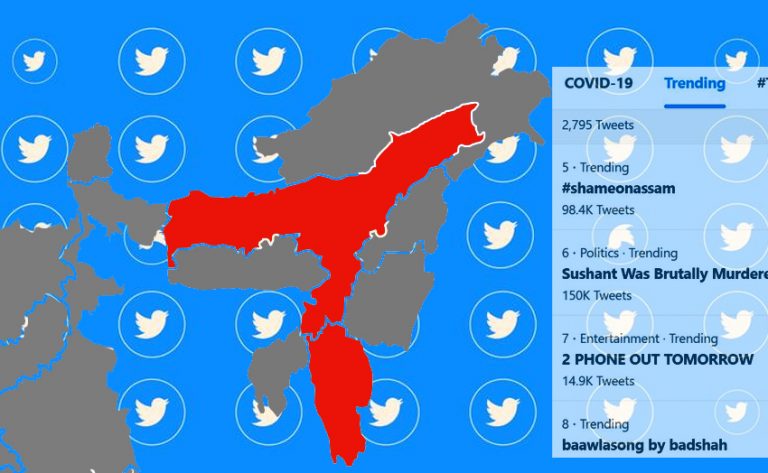
Amid this tension in the North-Eastern states, some social media users are trying to increase the tension by spreading anti-Assam views, probably because of their hatred for CM Himanta Biswa Sarma. Even though it is Assam which has lost 6 police officials and several others are injured, hashtag #ShameOnAssam was seen trending at number 5 on Twitter, with 98.4K tweets employing it by Wednesday evening.

#ShameOnAssam trending with 98.4K Tweets on Twitter

Pointing out the same, one Twitter user going by the handle @vikrantkumar posted an interesting observation regarding the ongoing trend.

He shared a screenshot of the search result of the trending hashtag #ShameonAssam on the social media analytics and monitoring platform Talkwalkers. The search results showed that most of the Twitter handle that posted the hashtag were from the USA. While data shows that 28K handles are mapped to India, almost double of that i.e 43.3K handles are mapped to the USA.

Data showing 28K handles that trended the hashtag are mapped to India
Data showing 43.3K handles that trended the hashtag are mapped to the USA

Moreover, the data showed that the hashtag managed to garner only 2.6 million reaches, which proves that mostly bots were used with the aim to fan internal tension in India.

Engagements and potential reach of the hashtag

If one searches the hashtag on Twitter, it can be easily seen that bots from mostly outside India and some within India have been tactically used to peddle the anti-India narrative. Interestingly, mostly all the Twitter handles posting the hashtag, belonging to non-Indians are unverified with not more than 10-11 followers.

In one observes carefully, these bots have mostly retweeted each other posts to trend the hashtag #ShameOnAssam.

Though it is unclear who might be behind this unscrupulous act, it is sufficiently clear that the recent border clash has been craftily used by propagandists to once again peddle a dangerous anti-India narrative on the microblogging website and bots, which buy legitimacy with fake names and accounts, have been engaged to fan internal conflicts in India.

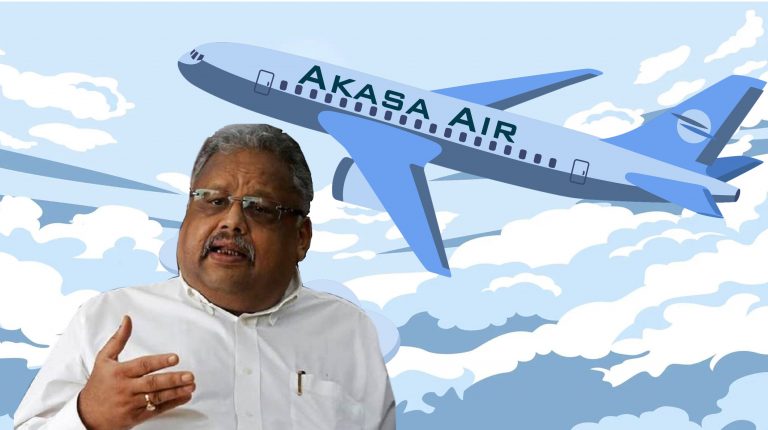
Big Bull Rakesh Jhunjhunwala to foray into aviation sector with low-budget ‘Akasa Air’, plans to add a fleet of 70 aircraft in 4 years

Indian business magnate and ace investor Rakesh Jhunjhunwala has decided to take a plunge in the aviation industry with his all-new budget airlines ‘Akasa Air’. The billionaire is planning on having a fleet of 70 aircraft within four years for the new airline he wants to set up in India. It was revealed by Jhunjhunwala in an interview with Bloomberg Television.

Jhunjhunwala, who according to Forbes has an estimated net worth of about $4.6 billion, is considering investing $35 million in the venture and would own 40% of the carrier. He expects to get a no-objection certificate from India’s aviation ministry in the next 15 days. Speaking about the development, the business mogul spoke on how optimistic he is about the future of the aviation sector, which has been hammered by the ensuing restrictions around the Covid-19 pandemic: “For the culture of a company to be frugal you’ve to start off fresh,” Jhunjhunwala said. “I’m very, very bullish on India’s aviation sector in terms of demand.”

The budget airlines which would be named Akasa Air and the team would include a former senior executive of Delta Air Lines Inc. and will be looking at planes that can carry 180 passengers, as per the report.

Questioned on his views over how, after and even before the pandemic, some airlines in India, like fugitive businessman Vijay Mallya’s Kingfisher Airlines, which ended operations in 2012 or Jet Airways have not been able to cope with the market, Jhunjhunwala said, “I think some of the increment players may not recover,” he said. “I’ve got some of the best airline people in the world as my partners.”

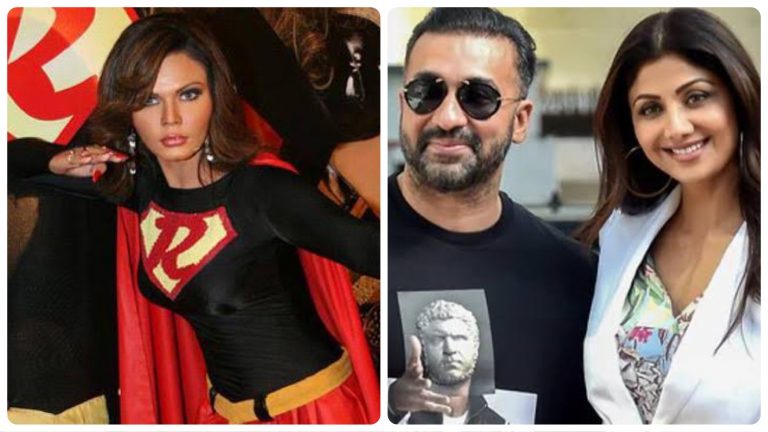
Rakhi Sawant jumps to the defence of businessman Raj Kundra, says he did not force anybody to shoot for porn

Ever since businessman and Shilpa Shetty’s husband Raj Kundra was arrested in connection with a case related to creating and publishing pornography, he has been the object of ridicule and criticism on social media websites. But actor Rakhi Sawant, who has been a part of Bollywood for over a decade, has recently come out in support of the beleaguered businessman, stating that he did not force anybody to shoot porn.

In an interview with the E-Times, Sawant said that Raj is being targeted only because he is the husband of actor Shilpa Shetty and felt sad for his predicament.

“I am not against anyone. Nobody points a gun at your head and forces you to shoot for pornography. It is a consensual act and those undertaking it know what they are getting into. So, please don’t blame anyone,” said Rakhi, who was last seen in the TV reality show Bigg Boss. “Nobody is lifting you and asking you to shoot. It’s a free country, people do different kinds of work. There are so many people in the world, who are doing so many things but why is only Raj Kundra being blamed? Because he is a celebrity’s (Shilpa Shetty) husband, a business tycoon? I really feel sad. I won’t say who is innocent or who is the culprit.”

Rakhi Sawant also questioned the women who have levelled allegations against Raj Kundra of being forced to shoot porn films, saying they were offered roles based on their profile. “I feel very sad for Raj Kundra ji. But time does not always favour you. One should always look inwards. Please don’t judge Raj Kundra. I stand by Shilpa Shetty. Please go and judge your reality show,” she added.

Rakhi then drew a parallel between the Sushant Singh Rajput case and the arrest of Raj Kundra. She said just like during the time of Sushant’s death actor Rhea Chakraborty was vilified, similarly, Raj Kundra is being attacked now and his reputation is being tarnished.

Rakhi further said, “He has small kids and we have no right to destroy anyone’s lives. Supreme Court, High Court, Session Court are there to see if he (Raj) is at fault. Why is he being labelled the “accused” way beforehand? If he’s done something wrong, God is there. He did not force anybody to shoot for porn. It takes two to quarrel. Why do people who feathered their nest by creating pornographic content are now coming out and speaking against Raj? I am not against anyone, I am just supporting the truth.”

Earlier in a video, Rakhi Sawant had said that the entire controversy surrounding Raj Kundra’s arrest reeks off a malevolent attempt to besmirch the good name of Shilpa Shetty. “Friends, don’t you think that Shilpa ji has worked so hard in Bollywood and someone is trying to malign her name?” Sawant had asked in her video.

She further added, “I refuse to believe that Raj Kundra is guilty. He is a respectable man, he is Shilpa Shetty’s husband, we should respect him. He is a businessman, someone is blackmailing and trying to defame Shilpa Shetty. I feel like crying when I hear such things, that someone is trying to lead a good life and they are not being allowed to.” 

Arrest of Raj Kundra in pornography case

On July 19, actor Shilpa Shetty’s husband, Raj Kundra, was arrested by Mumbai Police for his alleged role in creating and publishing pornographic films on mobile application HotShot.

Mumbai Police Commissioner Hemant Nagrale said, “Businessman Raj Kundra has been arrested by the Crime Branch in a case relating to the creation of pornographic films and publishing them through some apps. We have arrested Raj Kundra in this case on July 19, 2021, as he appears to be the key conspirator of this. We have sufficient evidence regarding this. The investigation is in progress.”

Rajasthan: Hindu man forcefully converted to Islam, was threatened at gunpoint and given electric shocks on resisting

Nitin Pant, a resident of Uttarakhand was lured on the pretext of money and a job, taken to Rajasthan and forcefully converted to Islam to become Ali Hassan. In yet another case of forceful religious conversion, Pant who landed in Rajasthan’s Bhiwadi in 2010 in search of a job was taken to Mewat by some local Muslims. There he was forced to give up his religion and accept Islam by promising a job and marriage.

When resisted, Pant was beaten up and was threatened with dire consequences. He was also trained to trap Hindu girls and convert them to Islam. Pant was also taken to Muzaffarnagar, from there he was taken to Meerut where Pant was made to sign an affidavit. Eventually, he was made to lodge in a madrasa in Saharanpur’s Umahi village.

pant is still mortified by the incident, according to Bajrang Dal leader Nipun Bharadwaj.

As per reports, Pant successfully managed to escape from their clutches and approached members of the Hindu organization. He was immediately rehabilitated by the members and brought back to the Hindu-fold by organizing a ghar vapsi program. 

Pant who is currently lodged at Saharanpur’s Balaji Ghat narrating his ordeal informed that the accused used to threaten him at gunpoint, beat him up and even give electric shocks when he tried to resist or revolt against conversion.

A case has been registered against the miscreants and the members of the Hindu organization have demanded strict action.

SP Rajesh Kumar informed, “We have received the information. As the case is related to Rajasthan, we will send an intimation to the Rajasthan Police once we receive the complaint. The local police will also take action when the allegations will be found to be true.”

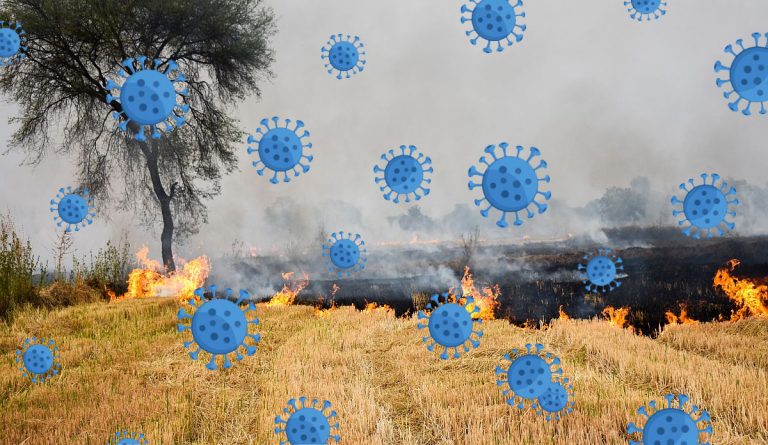
Stubble burning and Covid-19 surge in Delhi: Read what Indian Institute of Tropical Meteorology scientists said in their paper

The surge in the Covid-19 cases in Delhi towards the end of last year could have been caused by the pollution caused by stubble burning, a research paper has suggested. According to a research paper published by researchers at the Indian Institute of Tropical Meteorology (IITM) in Pune, it has been concluded that the pollutants present in the air caused by the stubble burning increase the spread and infection rate of Covid-19 in multiple ways, and the surge in October and November in 2020 has been attributed to the same.

Indian Institute of Tropical Meteorology is an autonomous institution under the Ministry of Earth Sciences of the Government of India. It is tasked with research in monsoon, weather systems and climate-related processes in the tropical region.

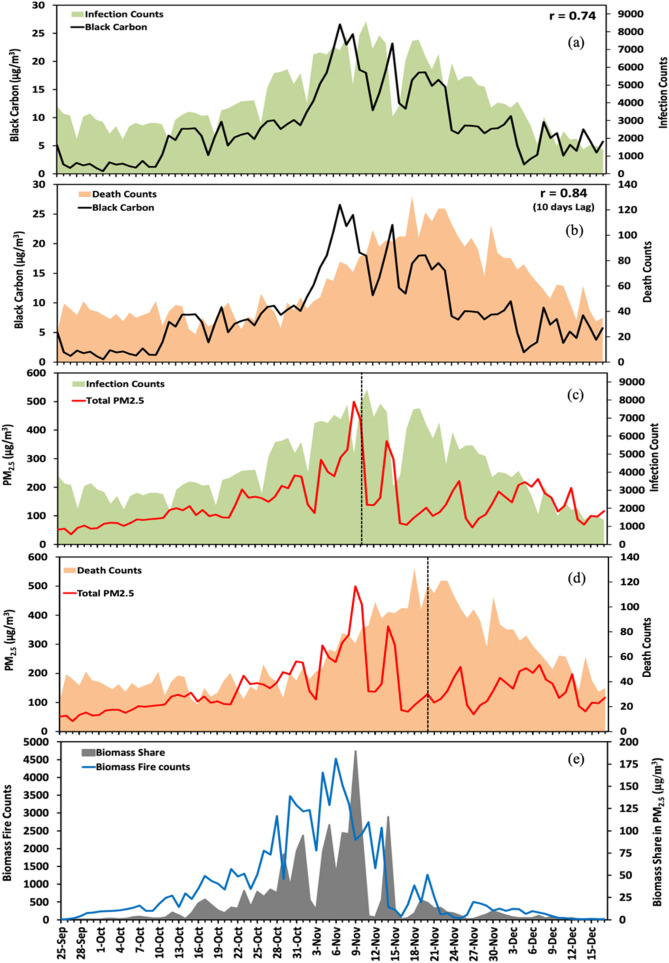
The peer-reviewed paper authored by Aditi Rathod and Gufran Beig says that the Covid-19 numbers in Delhi were declining in the second half of last year, but it suddenly started to rise in October, which coincided with the burning of stubble by the farmers mostly in neighbouring Punjab and Haryana. The researchers wanted to find out if there is any direct correlation between the level of particulate pollutants, mainly Black Carbon (BC), in the air with the spread of microbes that cause various diseases including Covid-19. Most of the Black Carbon in the air comes from the burning of biomass like crop stubble, and it is the main component of soot.

The study was conducted using pollution data for Delhi from September to December, 2020, and analysing the same with the daily Covid-19 numbers for the city in that period.

The researchers have arrived at shocking conclusions after the study, which shows that the stubble burning contributed heavily to the rising cases of Covid-19, which happened in multiple ways. The stubble burning produces black carbon, which gets ‘aged’ as it travels towards Delhi. During its ageing process, it gets combined with other pollutants, which increases its size. The aerosolised virus gets attached to these particles, piggybacks on them to remain suspended in air and also to spread to wider areas. As the number and size of such BC particles increase in the air, the number of viruses on them also increases. Such viruses attached to black carbon particles have been called carbonised virus.

The pollution also increases the level of nitrates and sulphates in the atmosphere, and they help the SARS-CoV-2 virus to reproduce at a faster rate. Thus, the polluted air provides the Covid-19 virus an ideal scenario to multiply and spread at a faster rate.

When people inhale these Black Carbon particles, the virus particle also goes deep down into the respiratory system, thereby increasing the total dose delivered and total duration for which the virus stays there.

The soot caused by stubble burning also causes inflammation of the lungs, which can cause asthma and other respiratory diseases. This causes serious damage to the functions of the lungs. When such an already compromised lung is infected with the Covid-19 virus carried by the Black Carbon particles, it becomes a double whammy for the lungs and increases the complications of the Covid-19 infection.

The research found that BC concentration directly corresponds to the speed of the spread of the Novel Coronavirus at the onset of winter and stubble burning period. Moreover, the infections came down gradually after December in Delhi, when the stubble burning in the farms had declined. The study also found direct correlation of total PM2.5 level in the air with Covid-19 numbers and the deaths caused by Covid-19.

Intestinally, the PM2.5 level in the air remained high even after stubble burning had ended, but this didn’t cause an increase in Covid-19 infections. This shows that the black carbon particles that originated from stubble burning are specifically responsible for the spread of the virus, and the same particles coming from other sources may not be that responsible.

 Based on this analysis of data, the study concluded that SARS-CoV-2 has the potential to be transmitted aggressively through an aged Black carbon-rich environment with fire’s microbial content rather than any particulate pollution.

Although the researchers have not tested the infectivity of the carbonised virus clinically, they have proposed that SARS-CoV-2 may have the potential to be more lethal when piggybacking on aged black carbon as the black carbon particles themselves cause serious damaging effects to lungs. As a result, the study points out that atmospheric and public health sciences need to expand their perspectives to include the potential impact of smoke’s black carbon and microbial cargo on human populations.

Blinken hails Indo-US ties, says India’s democracy is a force for good in defence of a free and open world

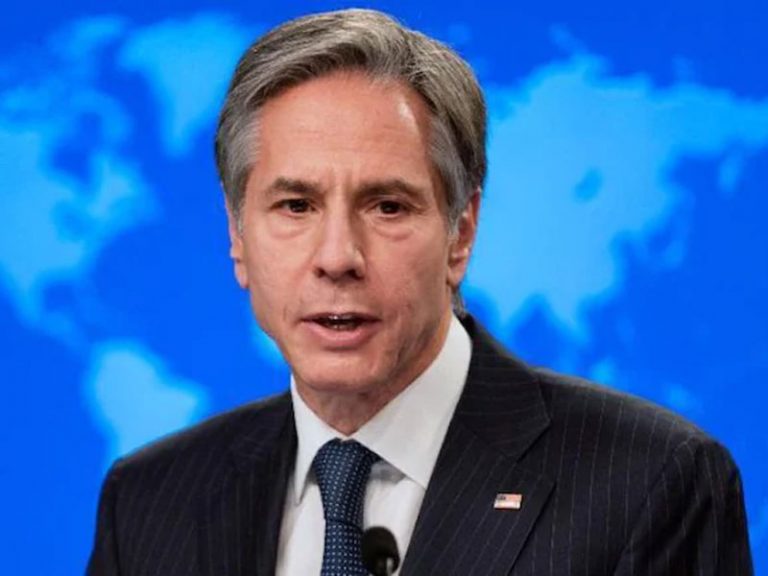
On July 28, Antony John Blinken, Secretary of State, United States, hailed India-US ties and said that India’s democracy is a force of good in a free and open world. He said the democracy in India is powered by free-thinking citizens, and the US applaud that. “We view Indian democracy as a force for good in defence of a free and open Indo-Pacific and a free open world,” he added.

Blinken further added that every democracy, including that of America, is a work in progress. While discussing the issues, it should be done from starting point of humility. He said, “We recognize that every democracy, starting with our own, is a work in progress. When we discussed these issues, I certainly do it from starting point of humility. We’ve seen challenges our own democracy faced & faces today. This is in a sense to all democracies.”

He said, “We talk about in our founding document, search for a more perfect union that means that we are not perfect. Our quest is to get closer to the ideals we set for ourselves. At times, the challenge is painful & ugly, but as democracies, we do it openly.”

While talking about India and the US relationships, he said that both the countries talk about the issues and challenges faced while renewing and strengthening the democracies. He said, “As friends (India and the US), we talk about these issues, we talk about challenges we face in renewing & strengthening our democracies. Humbly we can learn from each other. No democracy, regardless of how old or large has it all figured out.”

Blinken met MEA S Jaishankar and NSA Ajit Doval

State Sec Blinken met Minister of External Affairs Dr S Jaishankar. During the meeting, they discussed India and US cooperation against the Covid pandemic. They discussed the peace and prosperity in the region and to work for democratic stability in Afghanistan. In a tweet, the EAM said, “A wide-ranging and productive discussion today with Sec Blinken. Useful in mapping out the next steps in our bilateral partnership. Strong convergence of views on many regional concerns. Agreed to work closely on multilateral and global issues.”

The meeting between Blinken and NSA Doval lasted for around an hour. Reportedly, the main focus was on global and regional security and long term measures to take Indo-US relationships to the next level.

It is notable here that Blinken’s visit is considered strategically important because the USA has been increasingly concerned about China’s attempts to dominate the Indo-Pacific region. The 4-nation Quad containing India, Japan, the USA and Australia had its first formal meeting earlier this year.

‘Isolated incident’, says Pakistan’s President on Hindu boy forced to chant Allahu Akbar: Here is how his claim is nothing but codswallop

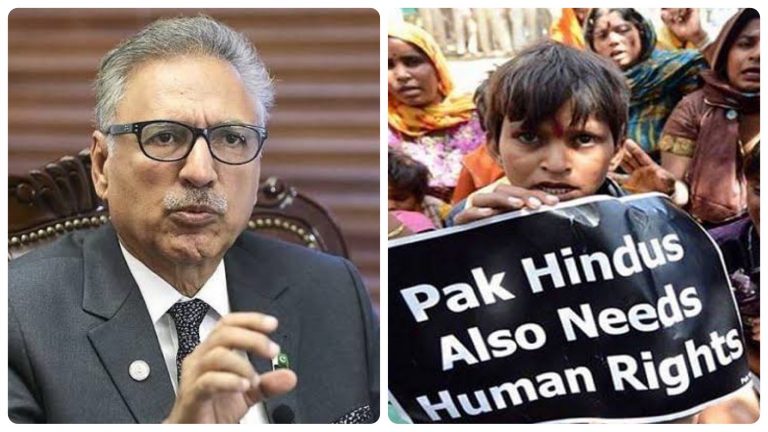
After the egregious video of a Pakistani Muslim man coercing and threatening a Hindu boy into chanting Allahu Akbar and abusing Hindu Gods and Goddesses went viral on the internet, triggering widespread outrage and concerns over the plight of minorities in Pakistan, the President of the country took cognisance of the incident and took to Twitter to comment about it.

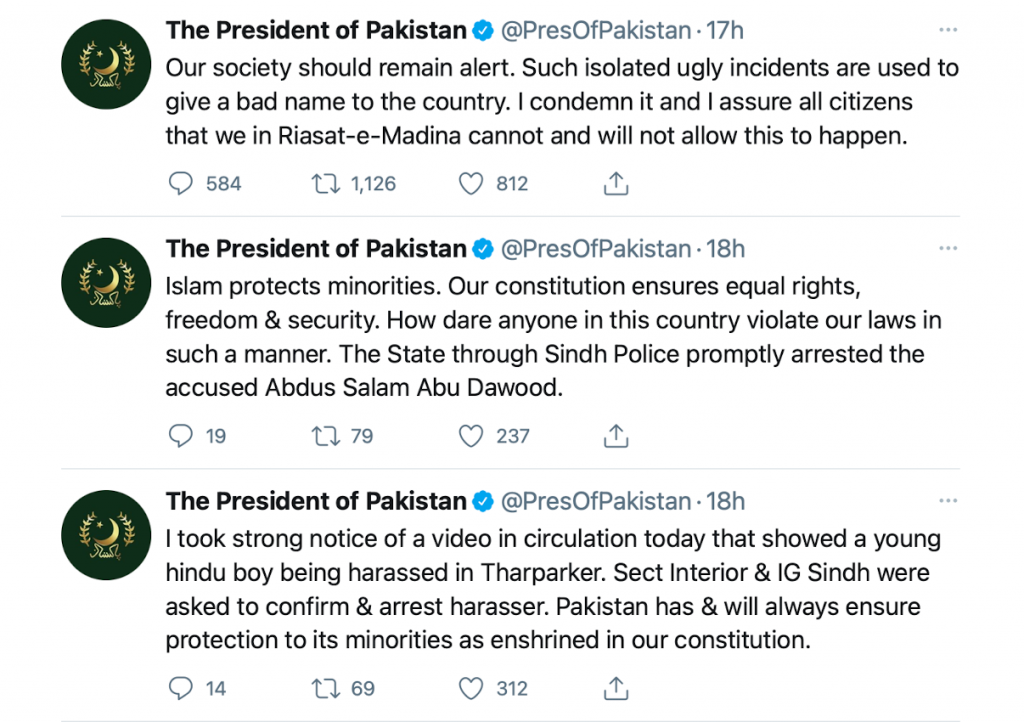
In a tweet, the official Twitter account of the President of Pakistan informed that President Dr Arif Alvi took serious note of the incident of the harassment of a Hindu boy in Tharparkar, Sindh and on his directions, the accused, Abdul Salam Abu Daud was arrested by the Sindh Police.

However, this was not before social media users and activists expressed their outrage over the incident, raising larger questions about the predicament of minorities, especially Hindus, in Pakistan. As the video of the Hindu boy being intimidated and threatened into chanting Allahu Akbar and abusing Hindu Gods and Goddesses went viral, concerns regarding the fragile safety of minorities in Pakistan began to be raised, prompting the President of Pakistan to condemn the incident.

In a bid to allay the mounting criticism about Pakistan’s inability to safeguard the rights of its minorities, the President of Pakistan posted a string of tweets denouncing the harassment of the Hindu boy.

However, the President of Pakistan’s condemnation came with a caveat. Instead of issuing an unconditional denouncement of the incident, the President termed it as an “isolated” occurrence that he claimed was used to vilify the country.

“Our society should remain alert. Such isolated ugly incidents are used to give a bad name to the country. I condemn it and I assure all citizens that we in Riasat-e-Madina cannot and will not allow this to happen,” the President’s official Twitter account posted.

The President was more concerned about the bad name that the incident brought to the country instead of the harassment meted out to the Hindu boy by the member of the majority. In the subsequent tweet, the Pakistani President tried to water down the religious bigotry of the aggressor, holding forth on the cliches about Islam protecting minorities and the constitution ensuring equal rights, freedom and security.

“Pakistan has and will always ensure protection to its minorities as enshrined in our constitution,” he said in another tweet.

While the Pakistani President called it an “isolated” incident, a look at the perpetrator’s social media handle tells that the man is a habitual offender. His social media comments are full of blatant Hinduphobia and hatred against Hindus. There was another video where he was interacting with a Hindu child, claiming to the camera that he could have assaulted the Hindu child, but he was not doing so because he is a ‘virtuous’ man.

The systematic persecution of religious and ethnic minorities in Pakistan

While the President of Pakistan would have his followers believe that the harassment of a Hindu boy in Tharparker was just a stray incident and that the state of Pakistan works scrupulously to uphold the rights of the minorities and ensure their protection, the incidents of persecution since its inception in 1947 do not jibe with his recent assertions.

From 14 August 1947 Hindus in the country have been systematically persecuted, a trend that reached a crescendo during the Bangladesh liberation war in 1971 when millions of Hindus in Bangladesh were maimed, raped, brutalised, and killed. The trend continued well into the 1980s, the decade when Pakistan was Islamised under the rule of Islamic fanatic Zia-ul-Haq.

Later in the 1990s, the Islamic radicals and terrorists gained prominence as the United States egged them on to wage a jihad against the Soviet forces that had invaded neighbouring Afghanistan. The radicalisation of the population and the romanticism with the idea of jihad inevitably gave rise to Islamic terrorism and a growing number of radical fanatics started gaining currency. As a consequence, the country became a breeding ground for terrorists and radicals who believed in the puritanic version of Islam.

Subjugation of Ahmadiyya sect of Muslims within Pakistan

Since then, the persecution of minorities in Pakistan has only escalated. In fact, not just other religious minorities but Ahmadiyya, a minority group within Muslims, have also been subjected to violence, subjugation and brutality. Sectarian conflicts between Muslim groups have marred Pakistan as different radical groups vie to dominate the country’s larger Islamic doctrine.

The Ahmadiyya community in Pakistan is prohibited from referring to themselves as such, and from practising aspects of their faith under Pakistan’s strict blasphemy laws. A recently published report in Al-Jazeera said there has been a spike in the persecution of Ahmadiyya in Pakistan in the last two years.

Last year, at least five Ahmadis were killed in targeted attacks by terrorists across Pakistan, while at least seven others were wounded in unsuccessful attacks, the community data says. Since 2017, at least 13 Ahmadis have been killed, and more than 40 wounded, as per the data.

Religious minorities, especially Hindus, in Pakistan living under the persistent shadow of fear and persecution

The threats faced by members of other religious minority communities in Pakistan are even more dangerous. Sikhs, Hindus and Christians in Pakistan lead a particularly vulnerable life in Pakistan, with the strict blasphemy laws being used by the members of the majority community as a tool to persecute them and settle personal scores.

Hindus, in particular, live under a constant threat of persecution. Attacks on Hindus, kidnapping of Hindu daughters and their forcible conversions have become par for the course in Pakistan. Among Hindus, girls are especially targeted by the Islamic fanatics that run amok in Pakistan. The kidnappings, forced conversions and marriage of Hindu girls have become frequent in Pakistan, especially in the Sindh province. The Islamic fanatics routinely abduct Hindu girls, forcefully convert them into Islam before marrying them against their wish.

Recently, a case of a Muslim neighbour kidnapping, converting and marrying his Hindu neighbour was reported in Pakistan’s Kadio Ghanour. Reena Meghwar, a Hindu girl was forcibly converted and married after being abducted by a Muslim neighbourhood man she used to tie Rakhi to.

In March this year, a 13-year-old Hindu girl named Kavita Oad from the Kandhkot area of Sindh was reportedly abducted and then forcibly converted to Islam. A couple of days later, her house was set on fire by unidentified miscreants.

In the same month, a journalist in Pakistan was shot dead by unknown assailants for exposing the role of politicians and clerics in facilitating the forceful conversions of Hindu girls. A report published by Associated Press in December 2020 estimated that more than 1,000 girls, mostly Hindus, are abducted, raped and converted to Islam every year in Pakistan.

Families of the victims have accused the administration and the police of not acting against the culprits. Even the courts fail to do justice for Hindus in Pakistan. In fact, in some cases, the courts have actively participated in the injustice meted out to the Hindu and Christian minorities. In June 2020, a district magistrate allowed a Muslim man to keep his Hindu wife even after the parents of the girl alleged that their daughter was kidnapped and forcibly married off to the man.

So while the President of Pakistan might make light of the recent case of harassment of the Hindu boy by terming it as an “isolated” incident, the facts don’t add up with his assertions. On the contrary, they point towards a sinister pattern of unceasing persecution of minorities, carried out by Islamists and abetted by the judiciary, government authorities and members of civil society.

The Pakistani President might have resorted to using platitudes and laid claims to the lofty ideals of democracy but is it is an established fact that Pakistan is a dysfunctional country, much less a democracy. Therefore, his claim that the bullying of a Hindu boy into chanting Allahu Akbar is nothing but a shoddy attempt to whitewash the unspeakable atrocities meted out Hindus while shielding the perpetrators behind it.

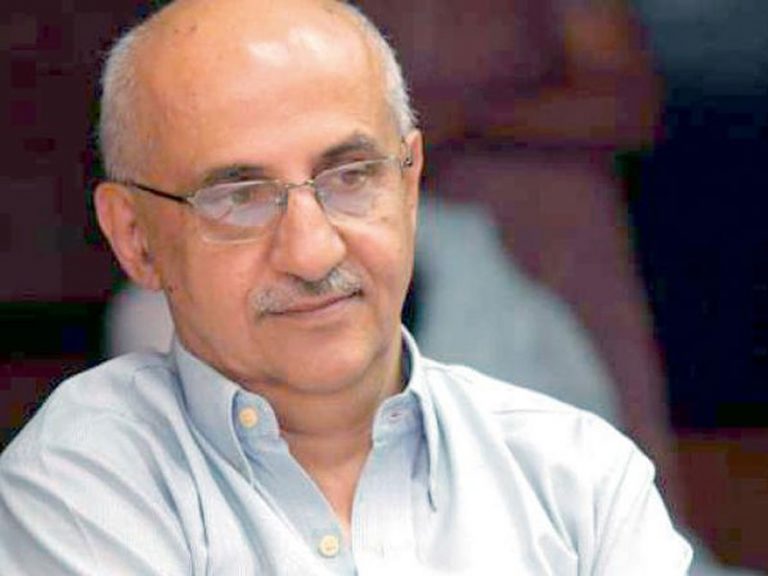
‘Modi only listens to Hindus’: How children from Harsh Mander-linked Children’s homes were fed poison against Modi govt

On July 27, the National Commission for Protection of Child Rights told the Delhi High Court that they had recommended action against two children’s homes linked to Harsh Mander only after they found various discrepancies and violations. The two homes under investigation are Ummeed Aman Ghar for Boys and Khushi Rainbow Home for Girls. An FIR was registered against Mander in February 2021.

According to the NCPCR, children informed that elder boys were sent to sit in protests against CAA and that one child even said that PM Modi only listens to Hindus and fights with Pakistan. The commission said that one of the girls informed the commission that she, along with 4-5 girls, went to Jantar Mantar during the CAA protest. They also found that elder boys were also sent to protest sites. Sending children for protests is a violation of Section 83(2) of the Juvenile Justice Act, 2015.

NCPCR said that the children were taken to the protest sites, including Jantar Mantar, which is a violation of the regulations. The reply by the commission was submitted as a response to the plea filed by the Centre for Equity Studies’ (CES) which runs the children’s homes. Mander is a director at CES. In the plea, they have requested the court to quash the inspection reports submitted by NCPCR.

In its reply, NCPCR said that prima facie, they found several violations of the Juvenile Justice Act, 2015 and its Model Rules, 2016, along with other irregularities. They said, “During the inspection, prima facie many violations of Juvenile Justice (Care and Protection of Children) Act, 2015 and its Model Rules, 2016 and various other irregularities came to the notice of NCPCR, including financial irregularities as the institution was reluctant in disclosing their sources of funding and other relevant documents to the inspection team.”

The action was taken based on a complaint filed by one Kalinga Rights Forum that alleged violations of the Juvenile Justice Act at the two homes run by Mander. In the complaint, it was alleged that children from a particular religion were being catered to in the homes. It also alleged that CES received hefty funding that was being used for illegal activities like religious conversions.

NCPCR, in its reply, mentioned several alleged violations, including expiration of the registration of one of the houses, inadequate staff and infrastructure, no age segregation among children and allowing foreign nationals on employment and tourist visas to give voluntary services at the homes, among others.

‘Inaction against complaints of child sexual abuse’

NCPCR told the court that in the boys’ home, an employee informed the commission about child sexual abuse cases reported. However, the management did not take any action in such a complaint. They said, “The Commission observed this to be a gross violation of the provisions of the POCSO Act, 2012 and had immediately reported this to Delhi Police for further investigation as well.”

CES failed to disclose details of funds

The commission alleged that the homes received funds from multiple sources. CES did not disclose that the funds were received from Rainbow Foundation India and Association for Rural and Urban Needy (ARUN) under the Rainbow Homes Program.

NCPCR raided homes in October last year

In October 2020, the NCPCR acting on a complaint had raided the children’s homes run by CES, where Mander is a director. Mander alleged that the questions asked by the commission included if children participated in protests such as anti-CAA protests, foreign funding received by the homes and if Rohingya children are lodged in the two homes.

In January 2021, NCPCR said in a statement that they found many violations of the Juvenile Justice Act and other regulations at the two homes. The allegations, including the incidents of child sexual abuse at the home for boys, were denied by CES. They said that the allegations were raised in order to tarnish the reputation of Mander, who is a director at CES.

DCPCR defended Mander-linked homes

Delhi Commission for Protection Child Rights (DCPCR) that comes under the Aam Aadmi Party-led Delhi government had defended the two homes. They said in their statement that most of the regulations were being followed at the homes. NCPCR, in response to the DCPCR inspection, said that the latter’s inspection took place after the former’s inspection.

In a reply, the Delhi Commission for Protection Child Rights (DCPCR) defended the two homes and said they were adhering to most norms. DCPCR said, “All citizens including children are well within their right to know, discuss, debate on any issue facing India and form their own conclusions. The fear expressed by the NCPCR is rooted in the belief that children are stupid, have no agency and cannot think at all. DCPCR vehemently opposes such a belief and expects greater dignity to be accorded to children.”

The NCPCR responded that the DCPCR inspection had taken place after its own inspection.