Home Blog Page 4126

South Africa: Indian community takes up arms to defend their businesses as violent riots break out, here is why they may be targeted

South Africa is in a state of chaos and unrest ever since the arrest of former President Jacob Zuma on July 7. As riots, arson, violence and lootings escalate in the country, the Indian community living there faces dangers to their homes and businesses. In a desperate attempt to protect their businesses from looting, Indians have now stepped up their fight against the arsonists and looters.

The Background of the violence

Zuma, once known for his fight against apartheid, was imprisoned in the Estcourt Correctional Center for 15 months for disobeying court’s orders. Reportedly, he failed to testify before the judicial commission that was investigating accusations of corruption against him between 2009-2018. When the country’s apex Court i.e. Constitutional court refused to postpone his jail term, a series of pro-Zuma protests broke out in South Africa. It soon escalated to arson, and killings on the streets of Gauteng, and KwaZulu-Natal (KZN) provinces.

Shopping centres, pharmacies were looted and the supply chain and Coronavirus vaccination drives were disrupted. In all, 6 people have been killed so far and a total of 489 suspects have been arrested. In a statement, incumbent South African President Cyril Ramaphosa said, “What we are witnessing now are opportunistic acts of criminality, with groups of people instigating chaos merely as a cover for looting and theft. We will not hesitate to arrest and prosecute those who perpetrate these actions and will ensure that they face the full might of our law.”

On Monday, the African National Congress (ANC) informed that the poor people had to bear the consequences of the destruction caused during the pro-Zuma riots. The former President is accused of corruption in a $2 billion dollar arms deal in 1999. He has also been accused of helping the three brothers of the Indian-origin Gupta family i.e. Atul, Ajay, and Rajesh Gupta in plundering State resources and peddling influence over government policy. His supporters, however, deny such allegations and claim that Zuma is a victim of a political witchhunt.

As per reports, in several places of the country, residential communities have formed armed groups to defend their homes and businesses from the rioters. Armed groups of civilians have reportedly been formed in several parts of Durban city as community members try to defend themselves. As police forces and private security provisions are stretched beyond their capacity, residents and business owners seem to be taking the law into their own hands to save lives and property.

The Indian community arms itself to protect homes and businesses

Ex-President Jacob Zuma’s association with the Gupta brothers and their role in the corruption cases is being used as an excuse to target many Indian businesses and Indian communities living in Durban and Johannesburg, as per some reports. One such Twitter handle, instigating riots against Indians, wrote, “Let us not forget that Jacob Zuma sold our country to Indian monopoly capital (IMC).” The Twitter handle had shared an image of the tainted Gupta brothers.

Twitter user, Enemy Slayer, shared visuals of how Indian and white property owners resorted to gunfire to protect their shops from looting as chaos broke out in several cities of South Africa.

Members of the Indian community were seen armed with guns and artillery to ward off rioters, looters, and arsonists. Willem Petzer, the Chairman of Taxpayers Union of South Africa, tweeted, “I have to say, after watching everything that happened today, I am looking at the Durban Indian community in a whole different light. These guys showed us they are willing to go all the way to defend their communities when they are threatened, whatever it takes.”

In another video, Indian private security was seen hunting down rioters in South Africa.

Seeing the courage and fight put up by the Indians in an act of self-defence, Dawie Malan said, “Tonight I salute the Indian communities for taking law into their own hands.”

Netizens blamed the incumbent President for his failure in stopping the arson, looting and riots. Crime Stoppers International VP, Yusuf Abramjee, tweeted, “What is President Cyril Ramaphosa waiting for? Do they want more malls to burn? Do they want more looting? This lawlessness is not stopping. ACT!! The country is on fire.”

Ex-Johannsensberg Mayor Herman Mashaba wrote, “The SANDF (South African National Defence Force) is being deployed. Why did it take President Ramaphosa so long to realise the levels of lawlessness? Why did it take him so long to see how overwhelmed our law enforcement authorities are? What we have seen this morning, is the cost of indecisive leadership!”

As per latest reports, the South African government has decided to deploy the military at some places to curb the violence. Military sources have confirmed the development.
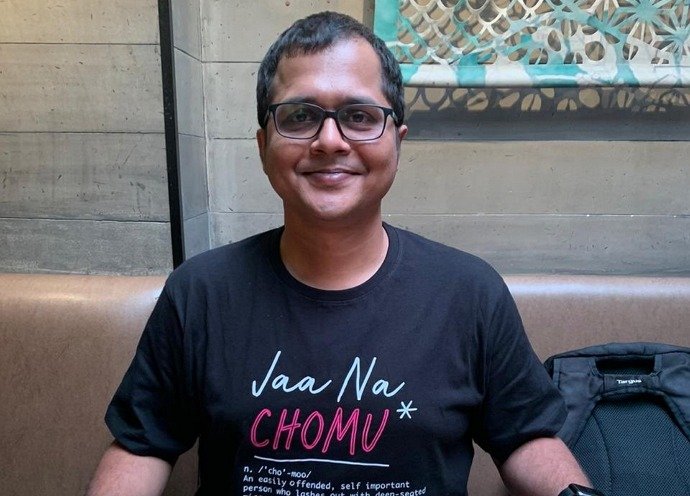
Delhi HC directs Congress supporter Saket Gokhale to delete defamatory tweets against ex-IFS officer Lakshmi Puri, restrains him from repeating

Delhi High Court on Monday directed Congress supporter Saket Gokhale to take down the defamatory tweets casting aspersions of impropriety against ex-IFS officer Lakshmi Puri for her house in Switzerland. The court has also restrained him from posting further such tweets in future. Further, Justice Harishankar has also directed Twitter to take down his tweets should Gokhale fail to delete them within 24 hours of pronouncement of the order.

Earlier, the High Court had come down heavily on Gokhale for putting out allegedly defamatory tweets against former diplomat Puri without due diligence. Puri, though her lawyer, had also described Gokhale’s crowdfunding modus operandi where he seeks funds from people on social media to ‘fight the good fight’.

Her lawyer Singh said this is a new way to earn money, a new business method to first embarrass and harass somebody who’s retired after serving for years. “When when he gets a notice, he says, “Oh, oh, you’re intimidating me.” New business model. Our prayer is he has to remove this defamatory material,” Advocate Maninder Singh said on Gokhale’s ‘crowdfunding’ initiatives.

Coming down heavily on Gokhale, the court had asked, “So any Tom, Dick and Harry can write anything vilification against anyone on the internet”. Saket Gokhale claimed that he had a right to know information as a voter, to which the court asked him to go to the Election Commission to be satisfied. “Before you throw mud at someone, you must do a due diligence exercise,” pointed out High Court.

Former Indian Diplomat Lakshmi Puri, the wife of Union Housing and Urban Affairs Minister Hardeep Singh Puri, had sent a legal notice to Gokhale for his posts on Twitter casting aspersions that the couple had undisclosed income through which they purchased property in Switzerland. Lakshmi M Puri had earlier slammed Saket Gokhale for creating a mischievous Twitter thread filled with baseless allegations against her.

Subsequently, Puri sent a legal notice to Gokhale and sought an apology for the same. However, after the hearing last week, Gokhale had brazened it out and claimed he will not voluntarily take down his tweets.

The court remarked that the right to reputation is a protected fundamental right under Article 21 of the Constitution of India, the court had said that while it is not restraining Gokhale or any other citizen to comment on public servant or retired public servant, the law did not permit any person aggrieved by retired public servant’s or officer’s declaration of assets to publish allegations without seeking clarification from the person or approaching authorities.

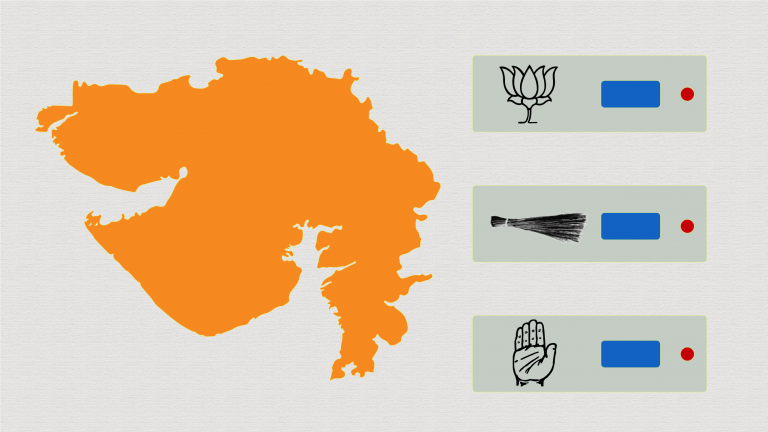
As AAP has jumped into Gujarat’s political arena, who has more to lose – BJP or Congress?

Buoyed by the winning as many as 27 seats in local body polls in Surat held earlier this year, Aam Aadmi Party has now trained its guns on Gujarat Assembly elections scheduled for December 2022. In the Surat Municipal Corporation elections held in February 2021, the BJP got the highest seats (93 out of 120) but AAP won as many as 27 seats emerging as the opposition. Congress went out for a duck.

So now, AAP is confident that it can lure the enterprising Gujaratis by offering freebies as it does in Delhi. This, despite the disastrous governance by the Delhi government led by AAP supremo Arvind Kejriwal himself. To make some noise ahead of the elections, AAP has roped in moneybag realtor Mahesh Savani, who is accused of kidnapping and extortion, and a Gujarati journalist Isudan Gadhvi, perhaps to offset the venom that has come out of its leader Gopal Italia.

Gujarat has traditionally been a two-party state – people are either BJP (or in recent times Modi) loyalists or Congress loyalists. There is no in-between. This is why there is no significant regional party. Further, Since 1998 when Keshubhai Patel led the BJP to victory, Gujarat has always had a BJP government. An entire generation has grown up in only BJP ruled stated. So with AAP jumping into the arena, here is what we can expect.

Ugly hood of caste politics

Kejriwal may have promised that he will change politics, but he never said he would change it for the better. This is why caste politics is being raised. You see, Congress in Gujarat was the pioneer of caste politics. Former Chief Minister and tall Congress leader Madhavsinh Solanki had brought in the ‘KHAM (Kshatriya, Harijan, Adivasi, Muslim)’ theory for vote bank politics.

AAP is just taking it forward. Ahead of the 2017 Gujarat assembly elections, AAP had sided with the Patidar community where now Congress leader Hardik Patel was leading an agitation for reservation as OBC community. Italia is one such Patidar leader who was a close Hardik Patel aide and now President of the Aam Aadmi Party in Gujarat.

An RSS leader in Surat while speaking to OpIndia said that Aam Aadmi Party has tried to consolidate the Patidar and Muslim voters. Patidars are disgruntled with BJP and Muslims has been a traditional vote bank for Congress. “Aam Aadmi Party is not a direct threat, but it will definitely create a dent and BJP will have to fight harder to retain the power. It is an unprecedented 25-year anti-incumbency the BJP is facing. Gujaratis may just want to give AAP a chance,” he said.

Can AAP form government in Gujarat?

A senior journalist from Gujarat while speaking to OpIndia said that it would be too much of a fantasy to imagine AAP will actually form the government in Gujarat. “AAP is making disgruntled BJP supporters join its party by creating a ‘mahaul‘. Kejriwal wanted to tap into the Patel vote bank during the Patidar agitation. There is an artificial discontent amongst the Patels where they want to become leaders themselves, like Hardik Patel, who played the caste card to emerge as a leader. Patel community got carried away by his rhetorics but when he joined Congress, they were disillusioned,” he said.

He further added that in the 2017 elections, the Patidar community voted for Congress instead of BJP. However, this time around, they may vote for AAP, making Congress come out as a bigger loser. “AAP is relying on the 25-years anti-incumbency. Kejriwal thinks people are fatigued by BJP presence. For the first time in 2017, the BJP seat tally went below 100 even though there was a slight increase in vote share,” he added that while AAP may get a couple of seats, those 10-15 seats it may win would be traditional Congress seats.

“There is no sign of revival of Congress in Gujarat,” an RSS leader from Surat said. He, however, expressed fears that while AAP and Congress may not form government in Gujarat on their own, if BJP fails to cross the majority mark, the two parties may forge an alliance and come to power. “If Congress can ally with Shiv Sena in Maharashtra, what can stop it from joining hands with AAP,” he said.

BJP does not even consider AAP significant enough to take them seriously

The BJP in Gujarat, however, is unperturbed with Aam Aadmi Party making noise. “We do not take them seriously. They are too insignificant to even be considered a real threat. They must fight elections as India is a democracy and if they do win seats, good for them. Robust democracy is important. But Gujaratis are logical and hardworking people. These promises of free electricity which has voltage fluctuation other issues won’t sit well with Gujaratis,” a senior BJP leader told OpIndia.

Gujarat is a two-party state

Gujarat has traditionally been a two-party state. Till Keshubhai Patel formed the first-ever BJP government in the state in 1995, Gujarat had only one non-Congress Chief Ministers. Babubhai Patel of Janata Party, who was CM for a little less than a year in 1975 during Indira Gandhi imposed Emergency and again for about three years in 1977.

In 1996, Shankersinh Vaghela, a former BJP leader quit the party and floated his own political party, Rashtriya Janata Party. With the external support of Congress he became the second non-Congress Chief Minister of Gujarat. He had to step down after Congress threatened to withdraw support and another RJP leader Dilip Parikh became the CM. Later, the party was merged into Congress.

In 2007, Gordhan Zadafia, who was the Gujarat Home Minister when the 2002 Gujarat riots broke out, floated his own political party Mahagujarat Janata Party. In 2012, ahead of state assembly elections, Keshubhai Patel floated a political party, Gujarat Parivartan Party. Zadafia later merged his party with Gujarat Parivartan Party which eventually merged into the BJP.

Since March 1998, Gujarat has only had a BJP chief minister.

While it may be too soon to make predictions on who may win the elections, but one thing seems sure that Congress may end up being pushed further into oblivion as BJP may continue to gain from AAP’s entry.

With Kanwar yatra, media is trying to deflect blame from failures of Kerala and Maharashtra : Watch out!

It happened the last time as well. The BJP’s election rallies in Bengal, as well as the Kumbh Mela in Uttarakhand, led to the devastating second wave of Coronavirus in India. Beginning in April from West Bengal, the virus began spreading all over Maharashtra, Kerala and Chhattisgarh in March, which led to the second wave in May. It is one of the few known instances of time flowing backwards and then forwards again.

Of course, time does not flow backwards, but the next best thing does. It’s called narrative. In mid-March itself, cases had begun rising in Maharashtra again, especially in the regions bordering Chhattisgarh. But that didn’t suit the narrative. In any case, the Chief Minister of Chhattisgarh was away on important business, camping in Assam. He was the designated fall guy who would have to take the blame for the impending defeat of Congress in the state.

So the media waited. Meanwhile, the exponential curve was creeping upwards. By mid-April, it reached Gujarat and soon after, Uttar Pradesh. For the media, it was finally time to strike. Images of the Kumbh mela in Uttarakhand went viral. Because where there is saffron, there is blame. And of course there were the BJP campaign rallies in West Bengal. There was saffron in that as well.

We never got a satisfactory explanation for why the liberal governments of Maharashtra and Kerala failed so spectacularly in containing the virus. The second wave hit Chhattisgarh exceptionally hard, because that is roughly where it started, on their border with Maharashtra. All liberal ruled states. Instead, the trolls in both mainstream and social media, were armed with images of Kumbh Mela and BJP rallies. Along with the age old expression with no relevance to the current context: two wrongs don’t make a right.

Indeed they don’t. But when you deliberately ignore one of the supposed wrongs, it exposes you as a dishonest actor.

Throughout the pandemic, the sheer dishonesty of the media coverage in India (as well as worldwide, mind you) has been breathtaking. Just look at the fact that Congress ruled Punjab has maintained the highest case fatality ratio (2.6%) among all states in the country, when no other major state crossed even 1.5%. The numbers from Punjab are an outlier, and they point to exceptional mismanagement on part of the state government. But you would not know this from the media coverage. It has been blacked out. Almost literally, because Punjab right now is facing a massive power crisis, with industries and govt offices ordered to shut down. You probably don’t know this either, because of, well, let’s just say liberalism.

Take Maharashtra. While the second wave has subsided almost everywhere else, Maharashtra is still reporting nearly 10,000 cases per day. Maybe that is because Maharashtra is a highly industrialized state with big urban centers. But the cases are not coming from the big urban centers; they are coming from places like Kolhapur. And if Maharashtra is a highly industrialized state, so are Gujarat and Karnataka. In Gujarat, there are not even 100 cases a day right now. Clearly, there is a governance gap, which nobody in the media will dare to mention.

If you think about it, the second wave began in Maharashtra. It was the first state to go into lockdown. As such, it should have been the first state to leave the lockdown. But most of the rest of the country has left the lockdown behind, while Maharashtra still suffers. But who will dare say this to the face of the Maharashtra government and alleged ‘best CM’?

If you think Maharashtra government has it easy, the CPIM government of Kerala could teach a masterclass to politicians around the world on how to get away with huge accolades for doing nothing. With a population of just 3 crore, Kerala is now No. 1 in daily new Covid cases. Across the land, common sense has been suspended to give a pass to the Communists. They say Kerala is reporting ‘honestly,’ while other states are not. Yes, all the other state governments had a secret meeting at which they decided to coordinate their efforts across every district to hide cases. Why didn’t Kerala show up to the meeting? Perhaps they were on strike that afternoon…

The test positive rate in Kerala is 10%, compared to the all India average of barely 2%. No other large state crosses even 5% and most are in the 1-2% range. This shows that, compared to the spread of the disease, Kerala is testing the least of all. But who will talk sense to those that are drunk on high “literacy”?

As for Kerala’s low case fatality ratio, it turned out to be a case of data hiding. An RTI filed by the Times of India showed that the real case fatality ratio was 1.11% (roughly same as the all India average of 1.1%) and not 0.36% as reported by the Kerala health department. One should note that these are not estimates of possible unreported Covid deaths. These are Covid deaths that have already been officially certified by doctors, but the state health department just hasn’t listed them. If there are unreported Covid deaths in Kerala, as alleged in a number of states, that would be over and above the certified Covid deaths that the Kerala government is hiding in plain sight.

Instead of asking real questions, the media made poor states into a punching bag during the second wave. Uttar Pradesh and Bihar are backward states with large populations and few resources. For a couple of weeks in between, their systems became overwhelmed, as would be expected. But these were BJP ruled states, and so their misery became the focal point of media coverage.

See how quickly Gujarat recovered. Karnataka is between Maharashtra and Kerala, the two states which together account for half of all new Covid cases in the country. Why is Karnataka doing so much better? Clearly, there is a governance gap.

And now, this is going to happen again. You can shield Kerala and Maharashtra governments from criticism, but you cannot hide the virus itself. A third wave is coming and who knows how deadly it is going to be.

The media knows this too. And that is why the hunt for scapegoats has already begun. For a while, the media kept us busy with images of people crowding in Manali. The plan was of course to deflect from the systemic failure of liberal governments in Kerala and Maharashtra. Another national newspaper has given front page coverage to rising Covid cases in the North East. Yeah, blame the least developed states with the least resources. Maharashtra government may be the richest in the land, but why blame them? Kerala was supposed to do just one thing right. And they didn’t even manage that. But, who cares?

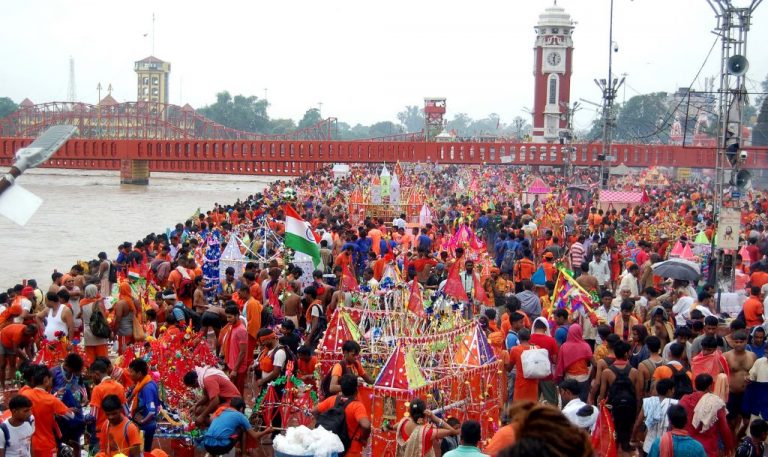
But all those were just Plan B. Their real hope is something else. Now they have already taken up the issue of Kanwar yatra in a big way. Hindu youths in BJP ruled Bihar and election bound Uttar Pradesh going on a pilgrimage wearing saffron shirts? This ticks all the boxes and the media is salivating. With some “luck,” the third wave beginning from Maharashtra will reach Gujarat and Uttar Pradesh around the time of the Kanwar yatra. And then, they can blame all the problems on saffron.

If anyone asks what about Maharashtra or Kerala, there is always the stock response: two wrongs don’t make a right. If that doesn’t silence people, accusing them of whataboutery always will.

Blanket ban on cow slaughter, no beef within 5 km of Hindu, Jain or Sikh temples: Details of Assam’s new cow protection bill

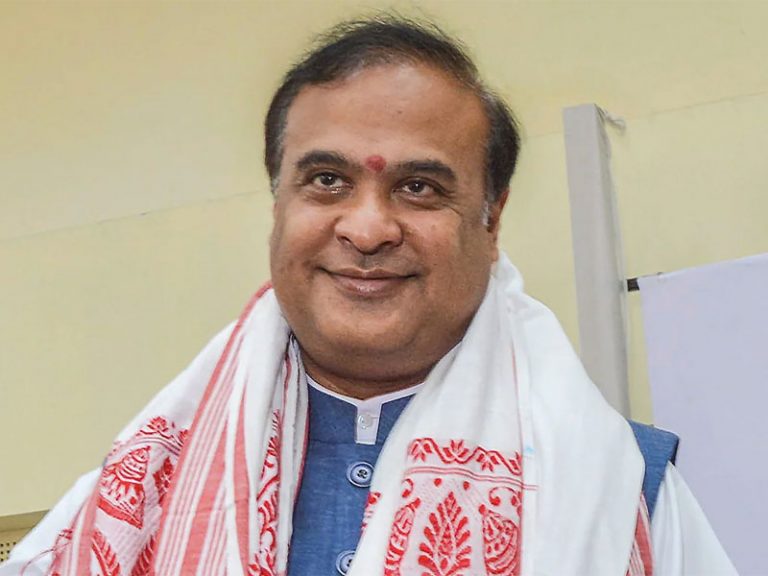
On July 12, a new bill was tabled in Assam Legislative Assembly by Chief Minister Himanta Biswa Sarma. As per the proposed clauses, if passed, the law would ban the sale and purchase of beef and beef products in areas where Hindu, Sikh, Jain and other non-beef-eating communities are in higher concentration. Also, the proposed bill would ban the sale of such products within a radius of 5 KM of any temple or Sattra.

Titled Assam Cattle Preservation Bill, 2021, the proposed bill aims to regulate the slaughter, consumption, illegal transportation of cattle in the state. Sarma had earlier pointed out that the Assam Cattle Preservation Act, 1950 does not have sufficient legal provisions to regulate the slaughter, consumption and transportation of cattle. If this bill is passed, the previous law would be repealed. It has to be noted that in the states where anti-slaughter laws are in place, there is no provision to exclude specific areas similar to what the Assam government has proposed.

Opposition raised objection

Congress’s Debabrata Saikia, leader of the opposition, said the bill has a lot of ‘problematic areas’, and the party is getting it examined by the legal experts. As per a report in Indian Express, Saikia said, “For example, the 5 km rule about beef. A stone can be laid, and a ‘temple’ can be ‘built’ anywhere by anyone — so it becomes very ambiguous. This may lead to a lot of communal tension.”

The opposition has alleged that the aim of the government is not to protect or respect cows but to hurt the sentiments of the Muslim community. Aminul Islam, All India United Democratic Front (AIUDF), said, “This is not a Bill to protect cows or even respect cows. This has been brought to hurt the sentiments of the Muslims and polarise communities further. We oppose it and will try and bring in amendment resolutions.” The opposition said they would push for amendments to the bill.

All members of the bovine family included

In the majority of the states, including Rajasthan and Madhya Pradesh, only cow slaughter is banned. However, the bill proposed by the Assam government bans the slaughter of all members of the bovine family, including bulls, bullocks, cows, heifer, calves, male and female buffaloes and buffalo calves. It also prohibits inter-state transport of the cattle without valid documents. Notably, Sarma had earlier pointed out that the proposed bill would ban the movement of cattle to ensure there is a check on cattle smuggling to Bangladesh. Assam shares a 262-KM border with the neighbouring country.

According to the 1950 Act, a cattle can be slaughtered only if it has attained the age of 14 and has been deemed unfit to work. A veterinary officer issues a “fit-for-slaughter” certificate. However, under the new law, it would be required for all cattle. In the case of a cow, regardless of age, it cannot be slaughtered.

The bill reads, “No certificate shall be issued unless the Veterinary Officer is of the opinion that the cattle, not being a cow, is over fourteen years of age; or the cattle, not being a cow, heifer or calf, has become permanently incapacitated from work or breeding due to accidental injury or deformity.”

Though the bill would make it compulsory to have permission for inter-state movement of cattle, no permission would be required to transport cattle for grazing, agriculture or animal husbandry purposes, including movement to and from registered animal markets within the district.

Police will have the power to inspect premises

The proposed bill gives power to police officers of sub-inspector and higher rank or any person authorized by the government to enter and inspect any premises within their jurisdiction in case they have a reason to believe that an offence under the act has been or might be committed.

Double punishment for repeat offenders

Under the proposed bill, if anyone is found guilty, the person can be jailed for a minimum of three years that can be extended to eight years. There is a provision of a fine of Rs.3 lakh to Rs.5 lakh fine. The accused can be punished with a jail term, fine or both. If the accused is a repeat offender, the punishment would be doubled.

Exclusions in the bill

In the proposed bill, there are some exclusions, such as religious occasions where slaughter is allowed. However, even in those cases, the slaughter of cow or heifer or calf would not be allowed in any circumstances.

More gaushalas to be established

The government has also proposed to establish more gaushalas to take care of the sick, stray and recovering cattle.

Though Nagaland and Mizoram have not yet reacted to the proposed bill, Conrad Sangma, Chief Minister, Meghalaya had said last week that the state would approach Union Government in case the new law affects the supply of beef to the state. He said, “We have not seen the copy of the law what it says, we will need to examine what the terms and conditions are and how they plan to do it. We will try to ask the central government to intervene in the matter if there is an issue that is going to hamper our people and our economy.”

Fugitive Mehul Choksi granted bail on medical grounds by Dominican court, to go to Antigua for treatment

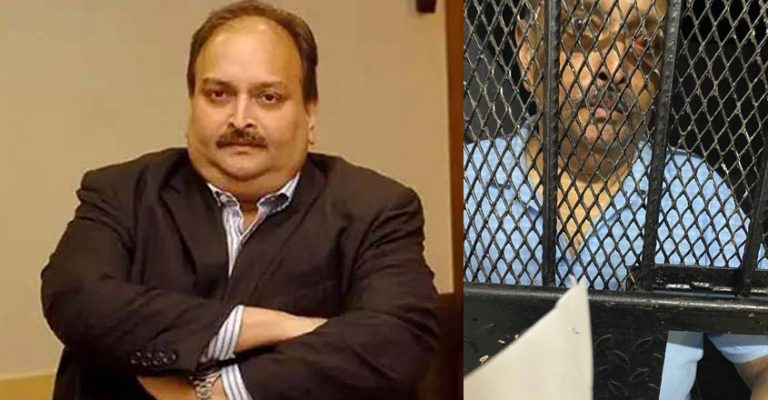
Fugitive diamantaire Mehul Choksi was on Monday given an interim bail by the Dominican High Court on medical grounds. He will be allowed to go to Antigua and Barbados for treatment of his neurological condition. He has been granted bail until he is fit for travel.

Choksi is also asked to deposit Eastern Carribean Dollars 10,000 (approximately Rs 2,75,000) as bail money to seek medical treatment. The court has also stayed his ongoing trial over his alleged illegal entry into Dominica on May 23 until his return.

Indian investigative agencies have sought his repatriation to India in the Rs 13,500 crore Punjab National Bank (PNB Scam) which was unearthed in February 2018. Choksi along with his nephew Nirav Modi are the prime accused. Choksi had argued that he is no longer an Indian citizen as he took Antiguan citizenship in 2017. However, Antigua has agreed to send him back to India to face the law.

Earlier, Choksi’s family had alleged that he was abducted from Jolly Harbour in Antigua by Indian agencies and forcibly taken to Dominica in May. He was subsequently arrested in last week of May and Indian agencies sent a CBI officials on a private jet to get him back to India.

Kerala HC dismisses plea of two accused in palm chopping case, PFI members had attacked prof over reference of Prophet Muhammad in exam

Kerala High Court on Monday dismissed plea of the two accused in sensational palm-chopping case of 2010. A Division Bench of Kerala HC was hearing pleas of two accused for deferring the second phase of trial scheduled before the Ernakulam NIA Special Court.

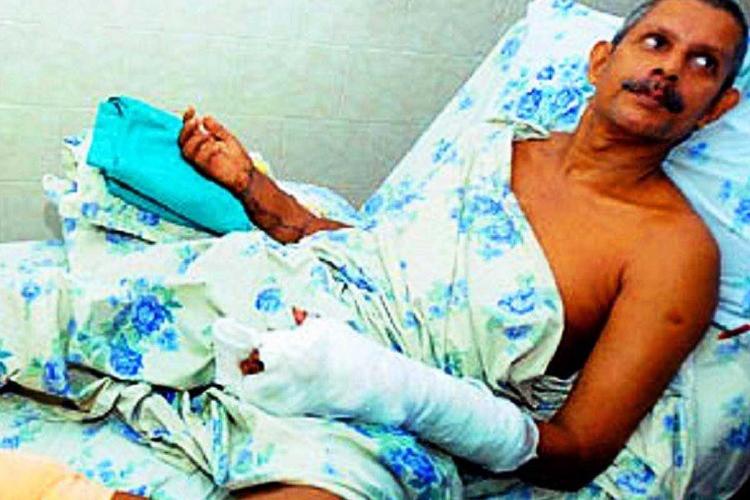
As per reports, two accused had chopped off the right palm of T. J. Joseph, then a teacher in Newman College, Thodupuzha on 4th July 2010 when he was returning home from church with his family. He was accused of preparing a question paper for second year B.Com students containing a reference to Prophet Muhammad.

Of the 51 accused, 45 were chargesheeted by the NIA and 31 were put on trial. Of that, 13 were convicted in 2015. The accused were members of radical Islamist group PFI.

The appeal was filed by the accused, Sajil of Muvattupuzha and M.K. Noushad from Aluva, challenging an order of the NIA Special Court, Ernakulam, declining to postpone the trial. The duo wanted to postpone the trial due to COVID pandemic.

As per reports, Sajil was amongst the seven member group that attacked Joseph. Other than him, M K Nazar, one of the key conspirators, Shafeeq, Najeeb, Asiz Odakali, Mohammed Rafi, Subair T P, M K Noushad, Mansoor, P P Moideen Kunju and P M Ayoob will be facing the trial in the case. Saved, the accused who chopped off the palm of the teacher is still on the run. The case has over 200 witnesses.

T. J. Joseph’s palm chopped off

As per reports, on 4th July 2010, Joseph was returning home from Church with his family. His car was blocked by the seven member group near his residence in Muvattupuzha. The mob first attacked his car and broke windows and assaulted other family members of Joseph. Later, Saved allegedly pulled Joseph out and chopped off his palm accusing him of ridiculing Islam using his hand and that he should not write with his hand anymore.

Chicago’s decision to provide condoms in elementary schools from fifth grade triggers heated debate

When schools in Chicago open for the first time since the start of the pandemic next month, they will be stocked with disinfectants, hand sanitisers, masks, forehead thermometers and air purifiers. But besides all these things, almost every school, including the elementary schools, will also have menstruation products and condoms.

As per the new policy passed by the CPS Board of Education, schools that teach fifth grade and up must maintain a condom availability program as part of an expanded vision of sexual health education. That means all but a dozen, which enrol only younger grades, of the more than 600 CPS schools will have access to condoms.

The policy that was passed recently was years in the making and had often hit roadblocks owing to its controversial nature. A significant section of lawmakers believes the policy is a step in the right direction. “Young people have the right to accurate and clear information to make healthy decisions,” said Kenneth Fox, a CPS doctor and a paediatrician for 30 years, told Chicago Sun-Times.

Netizens react after Chicago decides to provide free condoms in schools

While the administration claims that the new policy would help create awareness about unwanted pregnancies and serious illnesses such as HIV AIDS, critics claim familiarising children from fifth graders with condoms could prove counterproductive.

The decision to provide free condoms in schools elicited a sharp reaction from the critics, who questioned the rationale behind teaching sexual education to children of 10-12 years by providing them with free condoms. “I’m for realistic sex education in public schools, but fifth graders are 10 and 11 years old. What is being taught?” questioned one social media user.

Similarly, many other people on social media were taken aback by the decision to offer free condoms in elementary schools. One of them said it is not only ridiculous that children studying in elementary schools are being provided with condoms, but it is being done so on taxpayers’ expense.

Another Twitter user appeared thoroughly befuddled with the decision of providing free condoms to children as young as 10 to 11 years of age.

However, there were others who welcomed the decision and hailed the new policy. One of the social media users commented “Excellent” on Chicago’s decision to include condoms and menstruation products to teach children about sexual education and diseases such as HIV AIDS.

Another Twitter user said since children start menstruating at the age of 8 or 9 these days, it is sensible decision to educate them about menstruation products and condoms.

The policy so far has been that the principal of the school decides on matters related to sexual health and education. However, with the new policy, the principal’s discretion is set aside and all the schools will have to stock menstruation products and condoms as a part of their sexual health education.

Inspired by China’s gold medal demand for human rights, English fan who inserted flare inside anus demands gallantry award for bravery

Hua Chunying, spokesperson for the Foreign Ministry in China, has suggested that the Communist Party of China should be awarded “gold medals and medals” for its record on human rights. The demand comes at a time when efforts are being made to mount global pressure on the CPC for the concentration camps it has established in Xinjiang where it is reported that Uyghur Muslims have been locked up for ‘reeducation’.

Inspired by China’s demand, an English football fan who was captured on camera with flares inside his anus has demanded that he be awarded with a gallantry award for bravery. The fan argued that he demonstrated impeccable skills to pull off the unimaginable feat but cautioned that such stunts are performed by professions under expert guidance and should not be tried at home.

Meanwhile, Nike, the footwear manufacturing company and a renowned sports apparel brand, has decided to hire the English football fan as its brand ambassador. The CEO of the company says that his actions are a stunning advertisement for their tagline “Just do it”.

The fan was sad over England’s defeat against Italy in the Euro 2020 final but confessed that he could not participate in the proud British tradition of hooliganism because he could not get off his bed after the flare stunt. He said that if England manager Gareth Southgate was half as brave as him in his tactics during the match, and chose to use his attacking strength on the bench instead of his overly defensive approach, then England would have won the game.

When others told him that his actions were insane and downright stupid, the fan replied that it was surely not as foolish as letting Bukayo Saka take the 5th penalty in the shooutouts, a 19-year-old who had never taken any penalty in any competitive match at the highest level.

“If China can hope to win a gold medal for its human rights record, then why should I not expect to receive a gallantry award for bravery? You are out of your wits, mate,” he told a reported. When some questioned the Police for not arresting the man for public obscenity and such dangerous conduct in full public view, the Police said they already had too much on their hands, pointing towards a trashed restaurant.

China, meanwhile, has offered to counsel the man in one of their ‘reeducation camps’ in Xinjiang, and thereby further boost their human rights credentials. Hua Chunying also believed that the gesture would help garner goodwill for the CCP across the world.

Another man who was photographed naked on the streets with an England flag has been arrested for his conduct. He has offered to insert flares inside his anus as well to escape spending too much time in custody. He considers himself unlucky, complaining that the flare man is being treated as a national treasure while he faces an extended time in prison.

He argues that the flare stunt can be broadcast live across new channels, which will give people some joy and help them forget the tragic defeat in the Euro 2020 final. It’s unclear as of now whether his request will be accepted.

Note: The above article is a work of satire and should be treated as such.

‘Human waste dumped from Chinese ships in South China sea visible from space’: Why experts think China is causing catastrophic damage to Coral Reef

Satellite data imagery reveals that hundred of Chinese ships have been dumping human waste and wastewater every day for years in the South China Sea and parts of the West Philippine Sea, where they are anchored.

Human waste dumped from Chinese ships visible from space

Liz Derr, founder and CEO of Simularity, a software company based in the USA which specialises in creating artificial intelligence technologies and analysing geospatial imagery and data, said that the accumulation of human waste in these areas are so intense that it can see it from space.

Satellite images showing human shit dumped in the South China Sea (source: GMA News online)

Using satellite images collected in the last five years to back her claim, Liz Derr warned that this piled up waste from the Chinese ships in the South China Sea and parts of the West Philippine Sea is prompting the growth of algae, which, in turn, is damaging the coral reef, that will take decades to recover even with active mitigation.

Dumped human waste causing catastrophic damage to coral reef in South China Sea

Speaking at a Philippine online news forum on China’s actions in the South China Sea, over which China has been claiming sovereignty for years, Dirr said that at least 236 ships were spotted in what is internationally known as Union Banks, on June 17 alone. “When the ships don’t move, the poop piles up,” she said, adding that the “hundreds of ships that are anchored in the Spratlys are dumping raw sewage onto the reefs they are occupying.”

“The damage to the reefs in the last five years is visible and dramatic”, said Derr.

“This is a catastrophe of epic proportions and we are close to the point of no return,” Derr further added warning that schools of fish, including migratory tuna, which breed in the reefs that are being damaged could cause fish stocks to decline considerably. This she said will prove disastrous as fishes are a key regional food source.

Simularity CEO added that human waste is behind the increase in Chlorophyll-a in some areas of the Spratly Islands. According to the company, Chlorophyll-a concentration can mean there is harmful algae activity in the maritime territory.

“In water, Chlorophyll-a concentration is a measure of phytoplankton. Excess phytoplankton that cannot be consumed by the reef inhabitants dies off and sinks to the seafloor, where it is consumed by bacteria. These bacteria consume oxygen that would normally be available to the fish, creating a ‘dead zone,'” it said.

Philippines demands withdrawal of over 200 Chinese vessels from a South China Sea reef

Pertinently, in March 2021, the Philippines Defense Secretary Delfin Lorenzana had demanded a complete withdrawal of over 200 Chinese vessels from a South China Sea reef which is claimed by the Philippines. “We call on the Chinese to stop this incursion and immediately recall these boats violating our maritime rights and encroaching into our sovereign territory,” said Defense Secretary Lorenzana in a statement.

According to a Philippine government watchdog, about 220 Chinese vessels are moored at Whitsun Reef, a reef that China also claims. Pictures of these Chinese vessels on Whitsun Bay were released by the watchdog.