Home Blog Page 4144

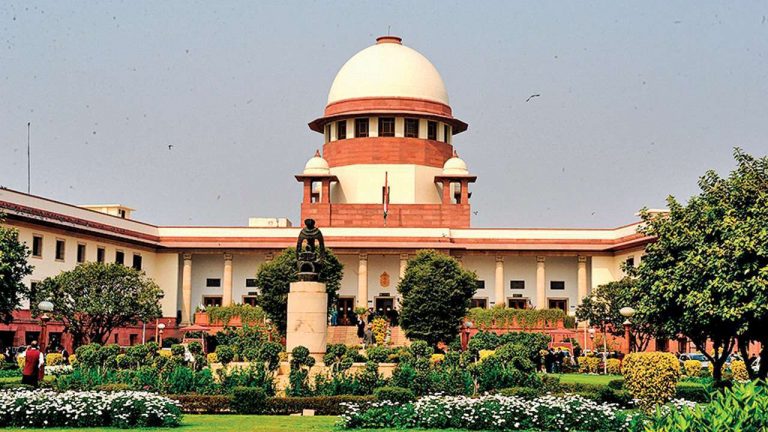
Supreme Court curtailing the inherent powers of the High Courts: Neither legal, nor justified

0

Every High Court in India has Inherent power to pass orders to meet the ends of justice which is the ultimate goal. This power is not conferred by anyone – not even by the Constitution. It is inherent in the court.

So far as criminal law is concerned, even statute has recognized this right as provided in section 482 of the code of criminal procedure which reads “Nothing in this code shall be deemed to limit or affect the inherent powers of the High court to make such orders as may be necessary to give effect to any order under this code, or to prevent abuse of the process of any court or otherwise to secure the ends of justice”- see (Judgement of Justice Rohinton Nariman in the case of  Asian Resurfacing Road Agency Vs CBI (2018) 16 SCC 299).

Hence, none, not even the Supreme Court has right to curtail / restrict / or withdraw such inherent power vested in the High Courts which are courts of record. Only pre-condition for exercising this power is that it must be exercised either (1) to prevent abuse of process of law or (2) to meet ends of justice. It is not permissible to add more conditions or stipulations which have the effect of restricting this power.

Restricting the powers of the High Courts

Some of the recent rulings of the Supreme Court, of course- reiterating earlier views in some cases – have the effect of curtailing this power by requiring the same to be exercised only “in rarest of rare cases” (equating it to cases of death sentence) or to be exercised only in exceptional cases, that it is an extraordinary power to be sparingly used.

These rulings have resulted in curtailing/restricting the powers of the High Courts without justification. These rulings are rendered on account of total lack of knowledge of ground realities regarding happenings in police stations and Magistrate Courts. The judges of Superior courts dealing with criminal matters must have practiced before Magistrate Courts at least for 2 to 3 years which enables them to gain practical experience and knowledge of activities in police stations and Magistrate courts.

Otherwise, if a judge who has no practical knowledge in criminal matters ventures to lay down guidelines sitting as a Supreme Court judge or High Court Judge purely on the basis of his knowledge acquired from text books or papers presented by eminent academicians who also totally lack practical experience, the consequence will be disastrous.  

Supreme Court judges write eloquent judgments incorporating lofty ideals emphasizing the importance of personal liberty as enshrined in Article 21 of the Constitution, and evil and dangerous consequences of its deprivation. Such judgments are rendered mostly in cases of few celebrities who are lucky enough to have their cases heard by the Supreme Court directly by invoking Article 32 of the Constitution.

But an ordinary citizen is always shunted straight away to the High Court to get relief under Article 226 of the Constitution or Section 482 of the Code of Criminal Procedure, and when he approaches the High Court, he is confronted with the judgments of the Supreme Court drastically curtailing the powers of the High Courts by using expressions such as “rarest of rare cases” or “extraordinary” or “exceptional circumstances”.

If the police entertaining frivolous complaints and registering FIRs are rare events, cautioning the HCs to invoke their power only in rare cases may be justified. But, as a fact, common experience is, a substantial number of complaints filed resulting in FIRs are frivolous and vexatious and in many cases on the basis of prior understanding between the complainant and the police, mostly in disputes arising out of contracts, family disputes etc.

In many cases object is only to harass the accused and force him to come to terms with complainant or face further harassment at the hands of the police who have vast powers which they can easily misuse under protective umbrella.  Power to arrest is so frequently misused, notwithstanding the noble object of amended Section 41 of the Code of Criminal procedure and also the guidelines issued by the Supreme Court in the case of Arnesh Kumar Vs State of Bihar reported in (2014) 8 SCC 273 as also in the case of D.K.Basu Vs State of WB reported in (1997) 1 SCC 416.

In fact these guidelines are rarely observed and their breach has become order of the day. In many cases, the purpose of the complainant is achieved, if accused is arrested and detained in custody for few hours (they have power to detain for 24 hours which power is generally utilized to the fullest extent either to satisfy the complainant or otherwise) Such cases of misuse are certainly not uncommon or rare.

M/s Neeharika Infrastructure Vs State of Maharastra

In recent case of M/s Neeharika Infrastructure Vs State of Maharastra D.D.13.04.2021, the Supreme Court has ruled that while dismissing petition under section 482 of the code of Criminal procedure or article 226 of the Constitution, the High Court has no power to pass such orders as directing police “not to arrest” or “not to take coercive action” in a given case. It is settled law that police need not arrest an accused merely because they have power to arrest.

Power to arrest must be exercised only if the same is absolutely necessary for the purpose of investigation.  I have come across few cases when charge sheets have been filed without arresting the accused, mentioning that accused have not been arrested in the case.

If in a given case, the High Court on examining the material finds that arrest in the case is wholly unnecessary and arrest if effected will be totally unjustified, why should not the court pass such an order to meet the ends of justice even though at that stage it may not be inclined to quash the proceedings. The Supreme Court now debars the High Courts from passing of such orders on the basis of purely theoretical proposition that it amounts to interference with power of the police to investigate, which includes power to arrest.

If in a given case police intend to misuse the power to arrest in violation of the fundamental right of  the citizen, who else other than High Court can protect the citizen?. (His approaching Supreme Court under Article 32 of the Constitution can only be a dream for practical reasons) Supreme Court has also injuncted the High Courts from issuing such orders as “not to take coercive action” or “not to precipitate”.

The apex court is oblivious to the need for police reforms

Apart from legal niceties involved in such orders, in large number of cases, such orders have prevented the police from abusing their power and harassing poor and innocent citizens who have rushed to the High Court seeking justice. Generally High Courts pass such orders giving brief reasons. Now the Supreme Court by its unwarranted general directions (no doubt made with good intentions but without realizing its disastrous consequences on poor and innocent litigants who cannot approach the Supreme Court) has placed embargo on the natural inherent right of the High Courts to pass such orders.

On the whole, it appears, the Supreme Court has reposed greater confidence in police, whose so called right to investigate, it wants to protect, ignoring the plight of common man who is the victim of police excesses and atrocities, indirectly expressing lack of faith in High Court judges who pass such orders only to protect the liberty of citizens. It is a case of trust deficit on the part of the Supreme Court in relation to the exercise of power by the High Courts.

The Supreme Court is oblivious to the need for police reforms and the recommendations and directions in the Prakash Singh’s case which are never implemented even after so many years. The result is, police excesses go on unabated as seen from press reports. It is felt that the Supreme Court in its anxiety to protect the so called right and power of Police to investigate appears to be in the dark on the dangerous consequence of its orders on innocent citizens, whose precious right of personal liberty is violated with impunity by the police who will now be more emboldened to continue the same with wrong notion of implied encouragement of the Supreme Court.

Why restricting the power of High Courts is not desirable

While the Supreme Court has the power, nay a duty to come down heavily on orders which are illegal, arbitrary or unjust, it is not desirable that it should making general observations restricting the power of the High Courts and other courts to pass just orders and instill in them a sort of fear and thereby deny benefit of just orders in favour of thousands of citizens in deserving cases.

The High Courts in the country pass hundreds of orders exercising power under Section 482 of the Code of Criminal Procedure or under Article 226 of the Constitution of India and there may be some erroneous orders and few may be arbitrary, unjust or even capricious. That does not justify general orders barring the courts from passing particular type of orders which they consider just and proper to meet the ends of justice.

Every such order must be tested on the touchstone of Section 482 of the Code of Criminal Procedure viz., whether the order passed by the High Court was to prevent abuse of process or to meet the ends of justice.  If a given order satisfied one of the two criteria referred to above, the order deserves to be sustained, even if the case is not a “rarest of rare case” or “exceptional one”, not giving rise to “extraordinary situation”.

Unwarranted addition of these requirements, not contemplated by law only leads to miscarriage of justice in large number of cases, apart from adding to the problem of docket explosion, which the judiciary is not in a position to check.  

The Supreme Court in the recent decision in Krishnalal & others Vs.State of U.P.(D.D.08.03.2021) has made the following observation:

“The justice dispensation machinery in India is plagued with backlogs, with 70% of the pendency before the subordinate courts being on the criminal side. A significant factor in this backlog is the vast mass of frivolous litigation instituted year after year by litigants with an intent to use the courts of justice for their own mischievous ends.  Curtailing such vexatious litigation is, thus a crucial step towards a more effective justice system – a step that cannot be taken without the active involvement of the lower judiciary, especially in criminal proceedings”.   It further observed “that the trial judge has duty under the constitution and under Code of Criminal Procedure to identify and dispose of frivolous litigation at an early stage by exercising substantially and to the fullest extend powers conferred on him”.

Otherday, to be, exact on 01.06.2021, a Bench of the Supreme Court (comprising Dr.D.Y.Chandrachud and M.R.Shah JJ) lamented how nearly 95% of the cases listed before them on that day were frivolous cases and further observed “system becoming dysfunctional due to frivolous  cases, unable to hear matters of national importance”.

This is the situation in the Supreme Court as the judges themselves say. The position in subordinate criminal  courts throughout the country is no different. Institution of large number of frivolous cases has resulted in the courts being unable to give attention to the genuine criminal cases.

Having regard to heavy pendency, attempt should always be, to cut short, frivolous cases and not prolong them. While the Supreme Court was very enthusiastic in safeguarding the statutory power of the police to investigate (including power to arrest which is often misused) it has not shown similar concern to protect the inherent powers of the High courts so as to prevent abuse of process of law and to meet the ends of justice.  

Conclusion

The expression “inherent power” is not capable of precise definition and its ambit and width also cannot be explained easily. Hence, Section 482 of the code of criminal procedure, while recognizing such power, has only specified the object of exercise of such power. Any exercise of such power, should be to prevent abuse of process of law or to meet the ends of justice. Inherent power is vested in such high Authority as the High Courts, and not the subordinate criminal courts, and the former can be trusted to exercise the same judicially and only in appropriate cases.

The power may have to be exercised, under varying situations and different facts and circumstances and hence may necessitate passing of variety of types of orders, to achieve the object. Therefore, the High Courts, must have the freedom, to pass such orders as may be necessary or desirable to meet the ends of justice, in a given situation.

Interest of justice requires that the Supreme court, should not curtail this (freedom) choice of the High courts, in any manner either with regard to the nature of the orders to be passed or the situations and circumstances in which they may be passed, as it is not possible to foresee or contemplate all eventualities.

Exercise of such power can be effective and meaningful to protect the liberty of a common man/ordinary litigant and save him from police excesses or other illegal actions, only if the High Courts have such freedom without restrictions. Interest of justice demands, that this position should be clarified by the Supreme court in a strongly worded judgement at the earliest.

Note: The article was authored by B.V. Acharya, senior advocate and former Advocate General, Karnataka.

Bengal: Mamata Banerjee announces ‘Khela Hobe Diwas’, to celebrate slogan that unleashed bloodbath against political rivals

Two months after the Trinamool Congress (TMC) swept the West Bengal State Legislative polls, Chief Minister Mamata Banerjee has announced to commemorate her election slogan in the form of ‘Khela Hobe Diwas‘.

While speaking about the matter in the state assembly, she said, “People have appreciated ‘Khela Hobe’, so we will have ‘Khela Hobe Diwas’.” Written by Debangshu Bhattacharya, Mamata Banerjee had coined the term ‘Khela hobe’ (we will have a match) as Trinamool Congress’ election slogan, ahead of the West Bengal Vidhan Sabha polls.

‘Khela Hobe’ and the weaponisation of political violence

Initially, the slogan appeared as a harmless jibe against the opposition but soon started to showcase its true colours. At the very onset, TMC members made a wall painting in Bengal wherein Mamata Banerjee was seen hitting PM Modi’s head instead of a football. During her election rallies, the West Bengal Chief Minister continued to provoke her party workers to retaliate against the central armed forces and BJP workers. Several instances of violence were thus reported during the various stages of polling.

State BJP president Dilip Ghosh alleged his convoy was attacked in Cooch Behar with not just stones and bricks but also bombs by TMC workers. The residence of scientist Govardhan Das was also ambushed by the miscreants, resulting in him being trapped in his own house along with other family members. Women in West Bengal have moved the Supreme Court narrating the details of the horrifying gang-rapes they were subjected to in the post-poll violence by the members of the ruling party. They had sought SIT probe into all the incidents as well as alleged inaction of the police.

‘Khela’ was bloody and violent in Bengal

During post-poll violence, over two dozen BJP karyakartas were killed. In a report submitted by the Group of Intellectuals and Academicians (GIA), it was mentioned that those who suffered the wrath of TMC workers after winning the elections were from marginal sections of Hindu society who had voted for the BJP. Last month, the fact-finding committee, constituted to inquire about the post-poll violence in West Bengal following a Calcutta High Court order, revealed that the violence in Bengal was not sporadic or spontaneous but well-planned and premeditated.

Sharing further details, the committee informed that many supporters of a political party were forced to flee their homes due to a targeted attack. Houses were burnt and ransacked with the victims made to give in writing that they will not support a particular political party. The members further revealed that the perpetrators also disrupted the water connection and destroyed the bridge that led to a village as the villagers supported one political party. Additionally, the victims were denied work and made to apologize for their support to the opponent party.

How Mamata Banerjee plans on celebrating post-poll violence?

When the Trinamool Congress came forward with the ‘Khela Hobe’ slogan, little did the BJP know about the lasting implication of such a game of bloodbath. The slogan, though it sounds harmless, became a war cry for Trinamool Congress goons to loot, maim, slaughter, and rape the rival BJP workers in an act of political vengeance. The more the slogan was repeated by the highest echelons of the TMC, the party’s foot soldiers were more bolstered to go about their activities unabated.

Despite being well-aware of the implications of the slogan on the lives of countless people, the West Bengal Chief Minister has decided to set aside a day to celebrate her election slogan of ‘Khela Hobe’. An elected government doesn’t represent those who voted for it but also those who didn’t. But, keeping aside all moral and ethical obligations required to run a government, the Trinamool Congress dispensation has decided to celebrate the carnage that it successfully unleashed during and after the West Bengal Vidhan Sabha polls.

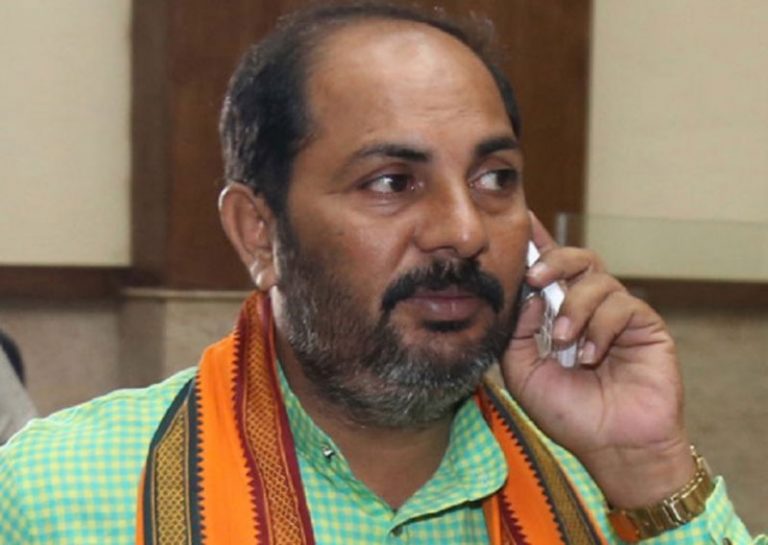
SP workers threaten and abuse UP Minister Upendra Tiwari’s family, 90-yr-old mother, sister, wife, and daughters also targeted

A July 3 (Saturday) video of Samajwadi Party workers had emerged on social media networks after the Zila Parishad election results in which they were seen abusing Uttar Pradesh Minister Upendra Tiwari and his family. In the viral video, the SP workers were raising victory slogans that quickly shifted to obscene slogans against Tiwari, his 90-year-old mother, wife and daughters. Tiwari is Minister of State (Independent Charge) Sports & Youth Affairs and Panchayati Raj (MoS) Uttar Pradesh.

‘Shame to society & democracy’

In a statement to ANI, Upendra Tiwari said, “My 90-yr-old mother, sister, wife, daughters were verbally abused in the form of slogans. This was planned by Ambika Chaudhary & Narad Rai. They sought to vent their frustration by planning a scheme to abuse me, bringing shame to society & democracy.”

Tiwari’s wife, who became a target of SP workers, questioned why families of political leaders are dragged into politics. She said, “Regardless of which party you belong to, family should not be dragged into politics. This is a very disgusting act. I want to ask Akhilesh Yadav, Dimple Yadav how they (SP workers) got such liberty.”

‘People call these ‘red hats’ goons’

UP CM’s Information Advisor Shalabh Mani Tripathi condemned the incident. He said, “these Samajwadi Party workers are openly abusing mothers and sisters of Brahmins and BJP leaders. They are angry about how they lost the elections. This is the trick of the socialists of UP, this is their face, and this is their character. People call such ‘red hats’ goons.” Tripathi shared the video of the incident in which the workers could be heard raising slogans like, “We had F***ed Upendra Tiwari’s mother”.

In a follow-up tweet, he mentioned how opposition parties were trending anti-Brahmin hashtags on Twitter. He said, “See the fury of losing the election, the anarchists who abused the Brahmins in Ballia are promoting a hateful hashtag today. It is surprising that Twitter India and Manish Maheshwari didn’t see anything wrong with it.”

Ballia Police arrest five accused, more arrests would follow

Ballia Police took swift action in the case and arrested five SP workers in the case.

Sanjay Kumar Yadav, Additional Superintendent of Police, Ballia, said, “A video had gone viral on social media in which a few people had used obscene language. A case has been filed on July 4 in Ballia Police Station under Section 147, 148, 149, 342, 500, 504 and 506 of the Indian Penal Code. Ten persons were named in the FIR, out of which five have already been arrested after swift action of Police.”

He further added that there were many unidentified persons in the video who were raising slogans. The police are trying to identify them. Investigation into the case is underway.

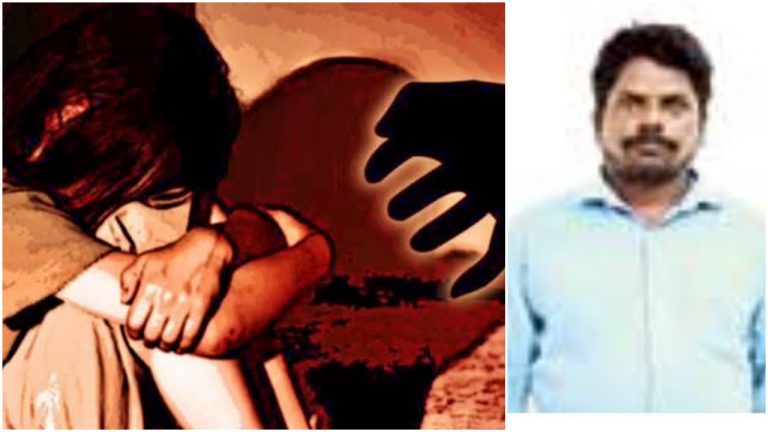
Andhra Pradesh: 46-year-old pastor arrested for sexual assault on a 10-year-old, had tried to bribe the child to keep quiet

46-year-old pastor Alavala Sudhakar has been arrested by the Sarpavaram police in Kakinada, Andhra Pradesh over allegations of sexual assault on a minor girl. As per reports, Alavala Sudhakar is a pastor in a village in the Kakinada rural zone of East Godavari district, Andhra Pradesh.

The pastor allegedly assaulted the minor girl on June 22. When the 10-year-old victim’s mother got to know of the incident, she filed a police complaint in the Sarpavaram police station. After which, the pastor was arrested and a case was filed against him under various provisions under the Protection of Children from Sexual Offences (POCSO) Act. Pastor Sudhakar has been remanded to judicial custody by the court.

Sarpavaram circle inspector B Rajasekhar said: “The Kakinada-based pastor, identified as Alavala Sudhakar, attended a function in the city on June 22. While the function was in progress, Mr Sudhakar reportedly sexually abused the victim in a nearby thatched house.”

According to a local news report, the pastor attended a function on June 22, where the 10-year-old girl was also present. Sudhakar convinced the victim to go with him to a field away from the church, where the function was underway. Upon reaching the field, the pastor sexually assaulted the minor.

When the 10-year-old girl started screaming for help, Pastor Sudhakar stuffed a fifty rupee note in her hand and asked her to not tell anyone about the incident.

Only after the villagers and her family members exerted pressure on the minor did she divulge her ordeal, after which the victim’s mother approached the police with a complaint against the pastor.

Based on her complaint, Sudhakar was arrested and sent to judicial custody.

Crimes of sexual abuse of minors perpetrated by Christian priests has been a long-standing issue, which the Church authorities have often tried to brush under the carpet. Recently, a Catholic Church in Poland, which has been accused of covering up crimes of sexual abuse of minors by members of the clergy, acknowledged that it had received complaints of abuse from 368 boys and girls in the last three years.

Admitting the cover-ups, the Polish church’s Archbishop Wojciech Polak, pleaded for forgiveness from “those wronged and all those shocked by the evil in the church”. 

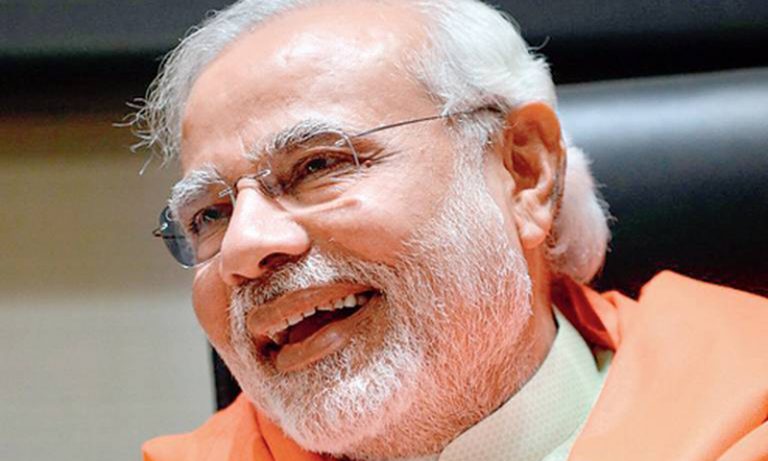
Dextrodiwas: PM Modi wishes his fan on her birthday, makes her day

Prime Minister Narendra Modi on Tuesday took to Twitter to wish his fan.

Twitter user @dextrocardiac1 while interacting with her friends on Twitter expressed her desire to receive birthday wishes from Prime Minister Modi.

She asked her friends to request PM Modi to wish her, since they both are followed by the PM on Twitter. However, what she said as a joke turned out true when the Prime Minister actually did wish her.

Replying to the tweet, he said, “Happy Birthday… or as you are describing it – Dextrodiwas… 🙂 Have a great year ahead.”

Twitter user Dextrocardiac1 was elated by the unexpected surprise.

I am the luckiest human alive, she tweeted. Speaking to OpIndia, she said, “I’m on cloud 9 still pinching myself that the prime minister wished plus called it dextrodiwas, absolutely unbelievable.” Dextrocardiac1 (she chooses to stay anonymous on Internet) is a 25-year-old doctor working in a government facility. We wish her the best.

Maharashtra government tables farm bills seeking suggestions from public regarding amendments, were facing pressure to oppose it

After weeks of ‘yes, no or maybe’, the Maharashtra government tabled the three Farm Law Amendment Bills in the Maharashtra Assembly on the second day of the monsoon session. The government has sought suggestions from the public regarding amendments if needed in the proposed bills. As per an ANI update, a time period of two months has been given to send suggestions.

This comes shortly after NCP supremo Sharad Pawar making a u-turn over the farm laws passed by the centre. Pawar had recently said that there was no need to ‘reject them.’

“Instead of rejecting the laws in their entirety, we can demand amendment in the part about which the farmers have an objection,” Sharad Pawar had said while weighing on his views about the farm laws at a private university program in Mumbai on Thursday.

However, NCP leader Nawab Malik claimed that Pawar’s reported comments on amending the farm laws were in reference to the farm laws in Maharashtra and not the Centre.

Bills were not scheduled to be tabled for the session

Earlier this month, speculations were rife that the  Maharashtra government may not table its proposed farm bill in the monsoon session of the state legislature for approval. Nationalist Congress Party (NCP) supremo Sharad Pawar had last week hinted that the state’s proposed bill may not come up during the upcoming monsoon session as ‘it should be brought up after deliberations with all stakeholders.’ 

“I am not sure if the farm bill can be brought in the two-day session. It is unlikely to come. It would be better if it is brought with desired changes after holding deliberations with all stakeholders,” Pawar had told reporters.

Pressure on state government to oppose the Bills

Reportedly, there has been increasing pressure from various farmers’ groups and activists on the state government to pass a resolution opposing the three farm laws in the ongoing session. 

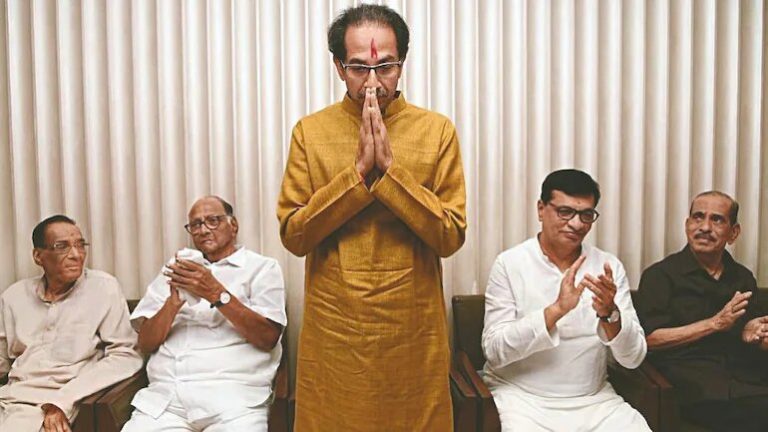
A few days ago, Raju Shetti founder of the Swabhimani Shetkari Sanghatana and activist Medha Patkar had allegedly met Maharashtra CM Uddhav Thackeray and demanded that the MVA government should pass a resolution against the three laws to express solidarity with the agitating farmers.

“The Centre introduced the farm laws in a hurry in Parliament. We want the state government to introduce amendments after due discussions in the state legislature,” remarked Shetti.

To this Thackeray reassuring the farmers said, “Let the Centre do whatever they want to, but the state government will not do anything which is against the interest of the farmers,” while addressing an event in the backdrop of Maharashtra Agriculture Day on July 1.

In the hindsight, a cabinet subcommittee chaired by Revenue Minister Balasaheb Thorat has been constituted by the state government to enact its own law to ensure the payment of minimum support price to the farmers and act against traders for its non-payment.

Replicating the intent of provisions from the Centre’s Law, this new law envisages imprisonment up to three years for those for cheating farmers, said a senior minister. 

Farmer protestors cause loss of ₹2000 crores to toll plazas: Reports

The anti-farm law agitation has caused a toll revenue loss of ₹2000 crores in the States of Punjab and Haryana, reported News18.

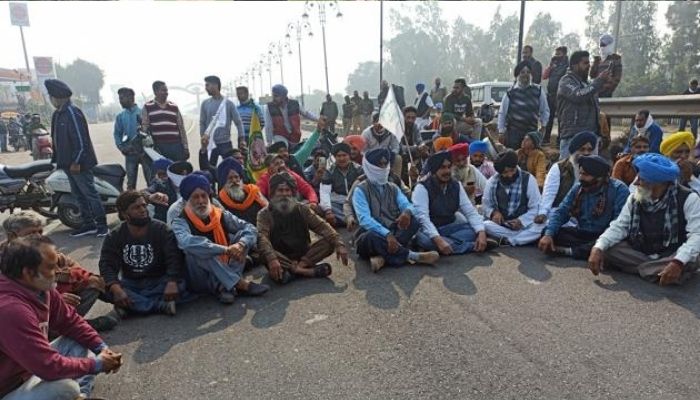
For the past 8 months, toll plazas on National Highway 44 have been converted into protest sites by farmers. About 50 toll plazas in Punjab and Haryana have been rendered non-functional by the farmer protestors, resulting in an estimated daily loss of ₹5 crores. This has been the longest period during which toll plazas have remained closed on the National Highway. The Union government has asked the States to resume collection of fees at toll plazas.

However, the Punjab and Haryana governments have so far not intervened, fearing a law and order crisis by frenzied farmer protestors. A Central government official said, “It seems a complete surrender by both these states to this unprecedented unlawful act of farmers.” Meanwhile, farmer protestors have set up temporary tea stalls, tents, chairs, fans, coolers, and cooking equipment at toll plazas. A few lanes have been kept empty to allow vehicular movement. The demonstrators have also parked their SUVs, bearing the flags of Bhartiya Kisan Union (BKU), at the toll plazas.

Posters of farmer leaders have also been set up. Besides, the protestors are now building concrete structures to protect them from heat. An official said that States are not bothered about the losses incurred by toll plazas as they are built on National Highways. While speaking to News 18, one farmer named Satnam Singh said, “We are not hurting the people; they have a free pass and are thankful to us for saving us the cost of paying the toll when fuel prices have hit over Rs 100. No one from the public is complaining at all. We are hurting the government which hasn’t accepted our demands since eight months.”

NHAI has suffered toll-revenue loss of Rs 814 crore till March 16

In a written reply to the Rajya Sabha, Nitin Gadkari, Union Minister for Roads, Transport, Highways, and MSMEs informed that the National Highways Authority of India suffered a toll revenue loss of Rs 814.4 crore till March 16 as a result of farmers’ agitation in three states. Taking into account the heavy revenue loss, state administrations have been requested to reinitiate user fee collection at the tolls. On March 22, the Minister, “Loss of revenue due to farmers’ protest has primarily occurred in the States of Punjab and Haryana and at a few plazas in Rajasthan.”

Punjab witnessed the highest loss of Rs 487 crore, followed by Rs 326 crore in Haryana and Rs 1.40 crore in Rajasthan. Nitin Gadkari further informed, “no loss of revenue is reported on account of farmers’ protest in other States”. Drawing the Punjab government’s attention to the matter, he added, “Request has been made to Government of Punjab for urgent intervention for the smooth functioning of toll plazas in Punjab”.

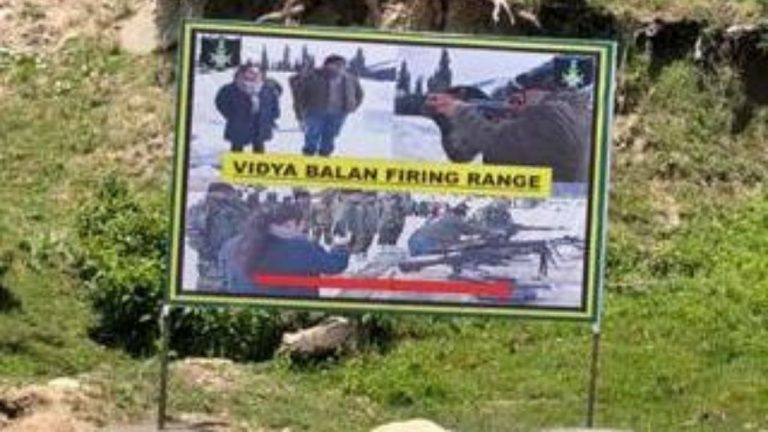
Indian Army firing range named after Bollywood actress Vidya Balan, people express disappointment

The Indian Army has named one of its firing ranges in Kashmir after Bollywood actress Vidya Balan. The Vidya Balan firing range is situated at Gulmarg in the Baramulla district of Jammu & Kashmir.

The decision was taken in recognition of her contribution to Indian cinema, reports say. Earlier in the year, the actress and her husband Siddharth Roy Kapoor had attended the Gulmarg Winter Festival organised by the Indian Army.

People on social media, however, are not happy over the matter and believe that the firing range could be named after someone more appropriate.

Major Manik M Jolly, however, has denied that the firing range has been named after the actress. According to him, a temporary welcome board was put up when she visited the site and somehow, the matter was twisted to peddle the narrative that it was named after her.

The actress, who has featured in superhits such as Kahaani and Bhool Bhulaiyaa, is yet to comment on the matter.

Germany: Shouting Allahu Akbar, Afghan refugee kills Azerbaijan refugee in knife attack, injures another person

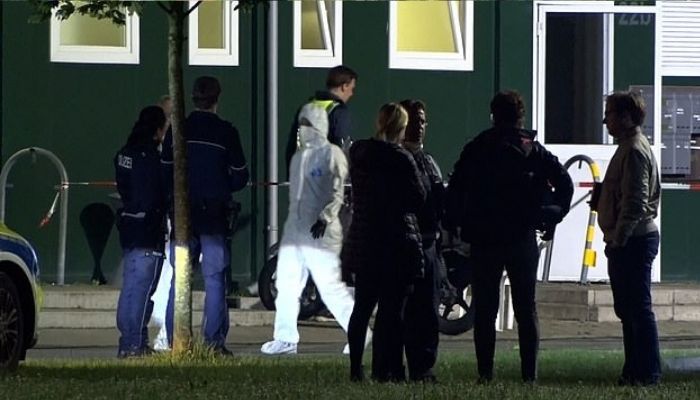
On Sunday (July 4), a 25-year-old Afghan refugee killed a man and injured another in a knife attack in Greven in North Rhine-Westphalia in Germany.

As per reports, the Afghan refugee had been living in a refugee centre with a German man and a 35-year-old Azerbaijani. On Sunday, he attacked both of them with a knife. While the Azerbaijani died on the spot, the German man sustained critical injuries and was rushed to the hospital. Following the murder, the accused ran into a nearby field but was tracked down during helicopter surveillance. He was eventually caught and was produced before the court on Monday (July 5).

According to the public prosecutor, the accused had been living in the same accommodation since January 2018. “The alleged perpetrator entered Germany in 2015 and has lived in this facility since January 2018. Possibly he was under the influence of alcohol and drugs at the time of the crime,” the prosecutor added. The motive behind the crime couldn’t be ascertained but witnesses heard the accused shout ‘Allahu Akbar’ before attacking the victims. The accused had come to Germany in 2015 and had been living in the country since then.

Somali immigrant goes on a stabbing spree in Germany

This is the second such incident in Germany in a matter of weeks. On June 25, a Somali immigrant went on a stabbing spree, killing 3 people and injuring 5 others, in the Wurzburg city of Germany. The deadly attack took place at around 5 pm in Barbarossa Square, which lies at the centre of the city.

As per reports, the unnamed accused has been identified as a 24-year-old immigrant from Somalia. He had been staying in Wurzburg city since 2015. According to eyewitnesses, the accused had a big knife, which he used to stab the passersby. During the attack, three people including a child and one of his parents was killed. An eyewitness informed that the accused shouted ‘Allah hu Akbar’ prior to attacking the victims. Germany had opened its borders for refugees from poverty-stricken and war-torn countries in the year 2015. Coincidentally, the accused began living in Wurzburg city from the same year itself.

While speaking about the matter, Bavaria’s security official Joachim Herrmann informed that the police were aware of the accused. “His condition had been noticed in recent months, including violent tendencies, and a few days ago he was put into compulsory psychiatric treatment,” Herrman added. He further informed that the ‘Islamic extremist motive’ behind the attack could not be ruled out as eyewitnesses heard him yelling ‘Allah hu Akbar.’

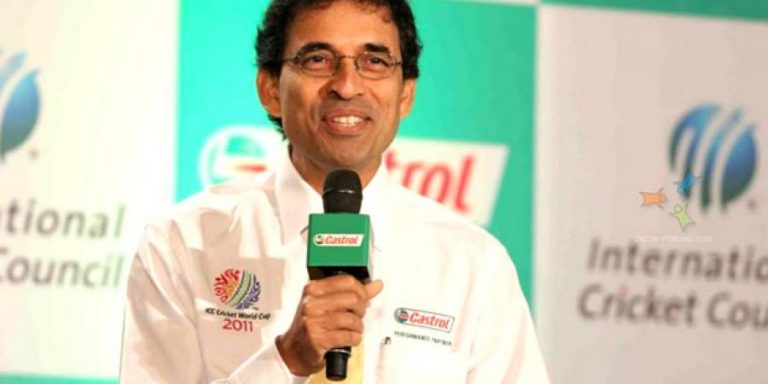
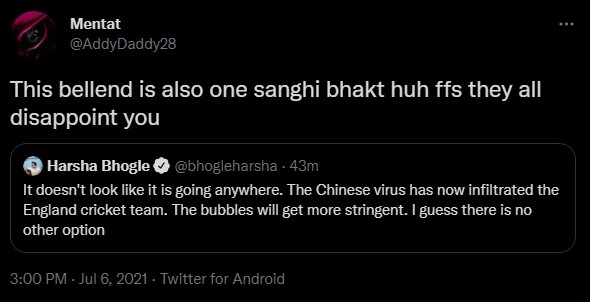
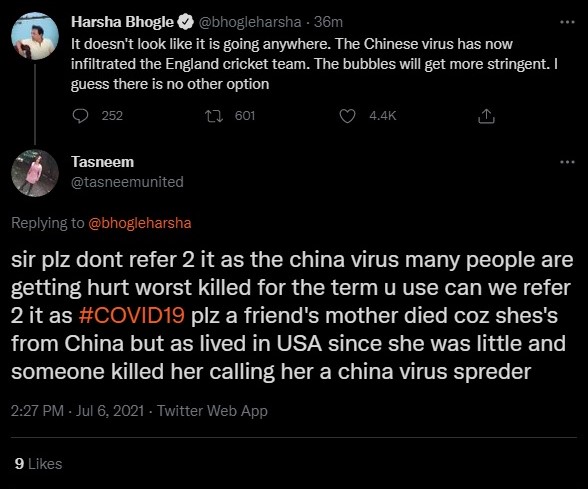
Harsha Bhogle branded ‘Sanghi’ for calling SARS-COV-2 the ‘Chinese virus’, commentator defends himself: Here’s what he said

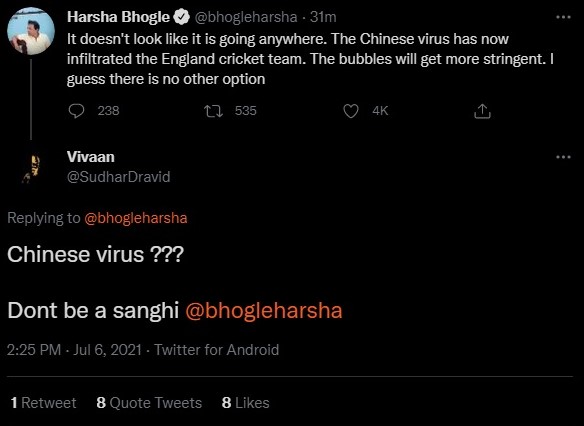
Cricket commentator Harsha Bhogle earned brickbats on social media after he called SARS-COV-2, the virus that causes Covid-19, the ‘Chinese Coronavirus’. The Covid-19 virus originated in China, however, the Chinese Communist Party has taken strong objection to the association of virus with it.

Unfortunately, some have decided to call Harsha Bhogle a ‘Sanghi’ for calling it the Chinese virus, a name first popularized by former US President Donald Trump.

Harsha Bhogle calls Covid-19 'Chinese virus'
Source: Twitter

One user called him a ‘Sanghi Bhakt’ and expressed his disappointment with Bhogle.

Harsha Bhogle calls Covid-19 'Chinese virus'
Source: Twitter

Others were more polite in asking him not to use the term ‘Chinese virus’.

Source: Twitter

However, quite a few people were upset at Bhogle’s usage of the term.

Some said that Harsha Bhogle sounded like Donald Trump.

He was also accused of being ‘xenophobic’ among other things.

Nonetheless, by and large, people appreciated him for using the ‘correct’ name of the virus. However, they feared that he will soon delete the tweet.

Harsha Bhogle, however, defended himself saying, “I noticed the use of the South African variant, the Brazil variant and the Indian variant. I guess it is the norm to refer to something by the country of origin.”

There has been great debate about the origins of the novel Coronavirus that causes Covid-19. It is suspected, and believed by many, that the virus leaked out of a lab in Wuhan and was created by scientists there. China, obviously, denies such claims and accuses of racism those who point towards its links to the virus.