Home Blog Page 4151

With Kanwar yatra, media is trying to deflect blame from failures of Kerala and Maharashtra : Watch out!

It happened the last time as well. The BJP’s election rallies in Bengal, as well as the Kumbh Mela in Uttarakhand, led to the devastating second wave of Coronavirus in India. Beginning in April from West Bengal, the virus began spreading all over Maharashtra, Kerala and Chhattisgarh in March, which led to the second wave in May. It is one of the few known instances of time flowing backwards and then forwards again.

Of course, time does not flow backwards, but the next best thing does. It’s called narrative. In mid-March itself, cases had begun rising in Maharashtra again, especially in the regions bordering Chhattisgarh. But that didn’t suit the narrative. In any case, the Chief Minister of Chhattisgarh was away on important business, camping in Assam. He was the designated fall guy who would have to take the blame for the impending defeat of Congress in the state.

So the media waited. Meanwhile, the exponential curve was creeping upwards. By mid-April, it reached Gujarat and soon after, Uttar Pradesh. For the media, it was finally time to strike. Images of the Kumbh mela in Uttarakhand went viral. Because where there is saffron, there is blame. And of course there were the BJP campaign rallies in West Bengal. There was saffron in that as well.

We never got a satisfactory explanation for why the liberal governments of Maharashtra and Kerala failed so spectacularly in containing the virus. The second wave hit Chhattisgarh exceptionally hard, because that is roughly where it started, on their border with Maharashtra. All liberal ruled states. Instead, the trolls in both mainstream and social media, were armed with images of Kumbh Mela and BJP rallies. Along with the age old expression with no relevance to the current context: two wrongs don’t make a right.

Indeed they don’t. But when you deliberately ignore one of the supposed wrongs, it exposes you as a dishonest actor.

Throughout the pandemic, the sheer dishonesty of the media coverage in India (as well as worldwide, mind you) has been breathtaking. Just look at the fact that Congress ruled Punjab has maintained the highest case fatality ratio (2.6%) among all states in the country, when no other major state crossed even 1.5%. The numbers from Punjab are an outlier, and they point to exceptional mismanagement on part of the state government. But you would not know this from the media coverage. It has been blacked out. Almost literally, because Punjab right now is facing a massive power crisis, with industries and govt offices ordered to shut down. You probably don’t know this either, because of, well, let’s just say liberalism.

Take Maharashtra. While the second wave has subsided almost everywhere else, Maharashtra is still reporting nearly 10,000 cases per day. Maybe that is because Maharashtra is a highly industrialized state with big urban centers. But the cases are not coming from the big urban centers; they are coming from places like Kolhapur. And if Maharashtra is a highly industrialized state, so are Gujarat and Karnataka. In Gujarat, there are not even 100 cases a day right now. Clearly, there is a governance gap, which nobody in the media will dare to mention.

If you think about it, the second wave began in Maharashtra. It was the first state to go into lockdown. As such, it should have been the first state to leave the lockdown. But most of the rest of the country has left the lockdown behind, while Maharashtra still suffers. But who will dare say this to the face of the Maharashtra government and alleged ‘best CM’?

If you think Maharashtra government has it easy, the CPIM government of Kerala could teach a masterclass to politicians around the world on how to get away with huge accolades for doing nothing. With a population of just 3 crore, Kerala is now No. 1 in daily new Covid cases. Across the land, common sense has been suspended to give a pass to the Communists. They say Kerala is reporting ‘honestly,’ while other states are not. Yes, all the other state governments had a secret meeting at which they decided to coordinate their efforts across every district to hide cases. Why didn’t Kerala show up to the meeting? Perhaps they were on strike that afternoon…

The test positive rate in Kerala is 10%, compared to the all India average of barely 2%. No other large state crosses even 5% and most are in the 1-2% range. This shows that, compared to the spread of the disease, Kerala is testing the least of all. But who will talk sense to those that are drunk on high “literacy”?

As for Kerala’s low case fatality ratio, it turned out to be a case of data hiding. An RTI filed by the Times of India showed that the real case fatality ratio was 1.11% (roughly same as the all India average of 1.1%) and not 0.36% as reported by the Kerala health department. One should note that these are not estimates of possible unreported Covid deaths. These are Covid deaths that have already been officially certified by doctors, but the state health department just hasn’t listed them. If there are unreported Covid deaths in Kerala, as alleged in a number of states, that would be over and above the certified Covid deaths that the Kerala government is hiding in plain sight.

Instead of asking real questions, the media made poor states into a punching bag during the second wave. Uttar Pradesh and Bihar are backward states with large populations and few resources. For a couple of weeks in between, their systems became overwhelmed, as would be expected. But these were BJP ruled states, and so their misery became the focal point of media coverage.

See how quickly Gujarat recovered. Karnataka is between Maharashtra and Kerala, the two states which together account for half of all new Covid cases in the country. Why is Karnataka doing so much better? Clearly, there is a governance gap.

And now, this is going to happen again. You can shield Kerala and Maharashtra governments from criticism, but you cannot hide the virus itself. A third wave is coming and who knows how deadly it is going to be.

The media knows this too. And that is why the hunt for scapegoats has already begun. For a while, the media kept us busy with images of people crowding in Manali. The plan was of course to deflect from the systemic failure of liberal governments in Kerala and Maharashtra. Another national newspaper has given front page coverage to rising Covid cases in the North East. Yeah, blame the least developed states with the least resources. Maharashtra government may be the richest in the land, but why blame them? Kerala was supposed to do just one thing right. And they didn’t even manage that. But, who cares?

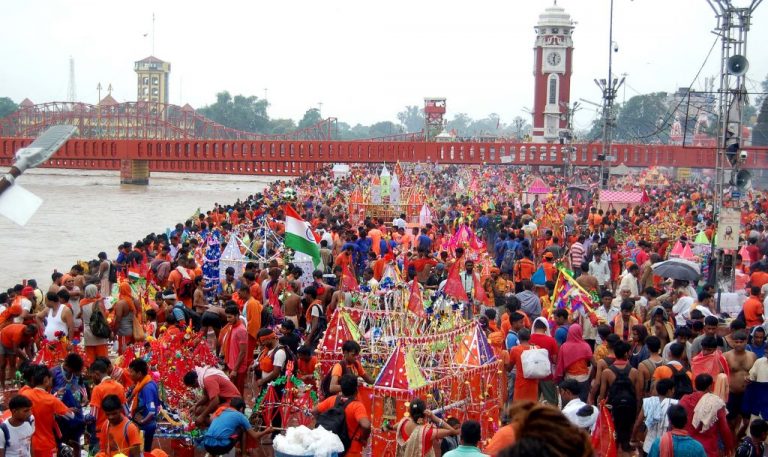
But all those were just Plan B. Their real hope is something else. Now they have already taken up the issue of Kanwar yatra in a big way. Hindu youths in BJP ruled Bihar and election bound Uttar Pradesh going on a pilgrimage wearing saffron shirts? This ticks all the boxes and the media is salivating. With some “luck,” the third wave beginning from Maharashtra will reach Gujarat and Uttar Pradesh around the time of the Kanwar yatra. And then, they can blame all the problems on saffron.

If anyone asks what about Maharashtra or Kerala, there is always the stock response: two wrongs don’t make a right. If that doesn’t silence people, accusing them of whataboutery always will.
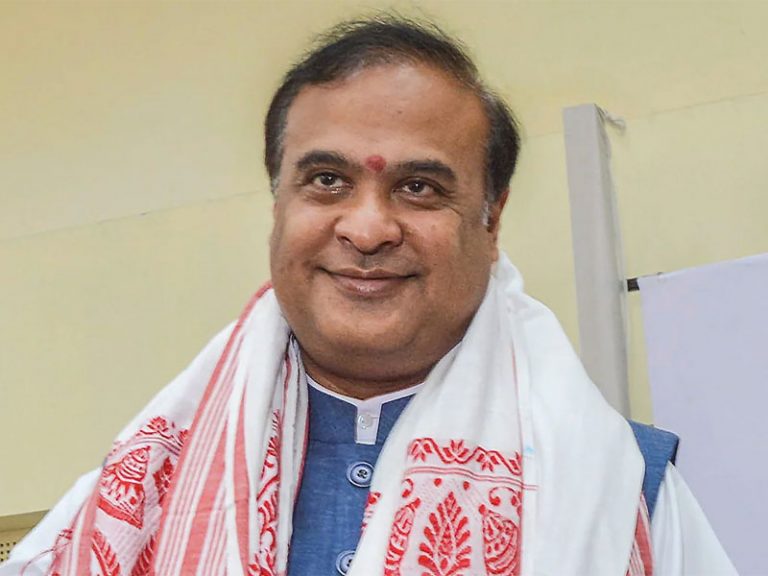
Blanket ban on cow slaughter, no beef within 5 km of Hindu, Jain or Sikh temples: Details of Assam’s new cow protection bill

On July 12, a new bill was tabled in Assam Legislative Assembly by Chief Minister Himanta Biswa Sarma. As per the proposed clauses, if passed, the law would ban the sale and purchase of beef and beef products in areas where Hindu, Sikh, Jain and other non-beef-eating communities are in higher concentration. Also, the proposed bill would ban the sale of such products within a radius of 5 KM of any temple or Sattra.

Titled Assam Cattle Preservation Bill, 2021, the proposed bill aims to regulate the slaughter, consumption, illegal transportation of cattle in the state. Sarma had earlier pointed out that the Assam Cattle Preservation Act, 1950 does not have sufficient legal provisions to regulate the slaughter, consumption and transportation of cattle. If this bill is passed, the previous law would be repealed. It has to be noted that in the states where anti-slaughter laws are in place, there is no provision to exclude specific areas similar to what the Assam government has proposed.

Opposition raised objection

Congress’s Debabrata Saikia, leader of the opposition, said the bill has a lot of ‘problematic areas’, and the party is getting it examined by the legal experts. As per a report in Indian Express, Saikia said, “For example, the 5 km rule about beef. A stone can be laid, and a ‘temple’ can be ‘built’ anywhere by anyone — so it becomes very ambiguous. This may lead to a lot of communal tension.”

The opposition has alleged that the aim of the government is not to protect or respect cows but to hurt the sentiments of the Muslim community. Aminul Islam, All India United Democratic Front (AIUDF), said, “This is not a Bill to protect cows or even respect cows. This has been brought to hurt the sentiments of the Muslims and polarise communities further. We oppose it and will try and bring in amendment resolutions.” The opposition said they would push for amendments to the bill.

All members of the bovine family included

In the majority of the states, including Rajasthan and Madhya Pradesh, only cow slaughter is banned. However, the bill proposed by the Assam government bans the slaughter of all members of the bovine family, including bulls, bullocks, cows, heifer, calves, male and female buffaloes and buffalo calves. It also prohibits inter-state transport of the cattle without valid documents. Notably, Sarma had earlier pointed out that the proposed bill would ban the movement of cattle to ensure there is a check on cattle smuggling to Bangladesh. Assam shares a 262-KM border with the neighbouring country.

According to the 1950 Act, a cattle can be slaughtered only if it has attained the age of 14 and has been deemed unfit to work. A veterinary officer issues a “fit-for-slaughter” certificate. However, under the new law, it would be required for all cattle. In the case of a cow, regardless of age, it cannot be slaughtered.

The bill reads, “No certificate shall be issued unless the Veterinary Officer is of the opinion that the cattle, not being a cow, is over fourteen years of age; or the cattle, not being a cow, heifer or calf, has become permanently incapacitated from work or breeding due to accidental injury or deformity.”

Though the bill would make it compulsory to have permission for inter-state movement of cattle, no permission would be required to transport cattle for grazing, agriculture or animal husbandry purposes, including movement to and from registered animal markets within the district.

Police will have the power to inspect premises

The proposed bill gives power to police officers of sub-inspector and higher rank or any person authorized by the government to enter and inspect any premises within their jurisdiction in case they have a reason to believe that an offence under the act has been or might be committed.

Double punishment for repeat offenders

Under the proposed bill, if anyone is found guilty, the person can be jailed for a minimum of three years that can be extended to eight years. There is a provision of a fine of Rs.3 lakh to Rs.5 lakh fine. The accused can be punished with a jail term, fine or both. If the accused is a repeat offender, the punishment would be doubled.

Exclusions in the bill

In the proposed bill, there are some exclusions, such as religious occasions where slaughter is allowed. However, even in those cases, the slaughter of cow or heifer or calf would not be allowed in any circumstances.

More gaushalas to be established

The government has also proposed to establish more gaushalas to take care of the sick, stray and recovering cattle.

Though Nagaland and Mizoram have not yet reacted to the proposed bill, Conrad Sangma, Chief Minister, Meghalaya had said last week that the state would approach Union Government in case the new law affects the supply of beef to the state. He said, “We have not seen the copy of the law what it says, we will need to examine what the terms and conditions are and how they plan to do it. We will try to ask the central government to intervene in the matter if there is an issue that is going to hamper our people and our economy.”

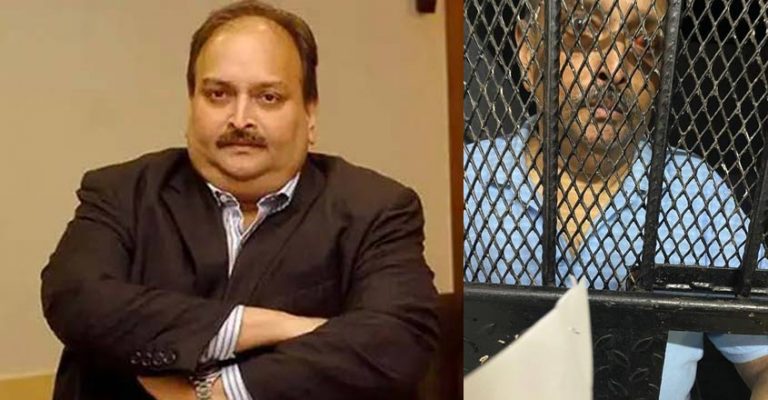
Fugitive Mehul Choksi granted bail on medical grounds by Dominican court, to go to Antigua for treatment

Fugitive diamantaire Mehul Choksi was on Monday given an interim bail by the Dominican High Court on medical grounds. He will be allowed to go to Antigua and Barbados for treatment of his neurological condition. He has been granted bail until he is fit for travel.

Choksi is also asked to deposit Eastern Carribean Dollars 10,000 (approximately Rs 2,75,000) as bail money to seek medical treatment. The court has also stayed his ongoing trial over his alleged illegal entry into Dominica on May 23 until his return.

Indian investigative agencies have sought his repatriation to India in the Rs 13,500 crore Punjab National Bank (PNB Scam) which was unearthed in February 2018. Choksi along with his nephew Nirav Modi are the prime accused. Choksi had argued that he is no longer an Indian citizen as he took Antiguan citizenship in 2017. However, Antigua has agreed to send him back to India to face the law.

Earlier, Choksi’s family had alleged that he was abducted from Jolly Harbour in Antigua by Indian agencies and forcibly taken to Dominica in May. He was subsequently arrested in last week of May and Indian agencies sent a CBI officials on a private jet to get him back to India.

Kerala HC dismisses plea of two accused in palm chopping case, PFI members had attacked prof over reference of Prophet Muhammad in exam

Kerala High Court on Monday dismissed plea of the two accused in sensational palm-chopping case of 2010. A Division Bench of Kerala HC was hearing pleas of two accused for deferring the second phase of trial scheduled before the Ernakulam NIA Special Court.

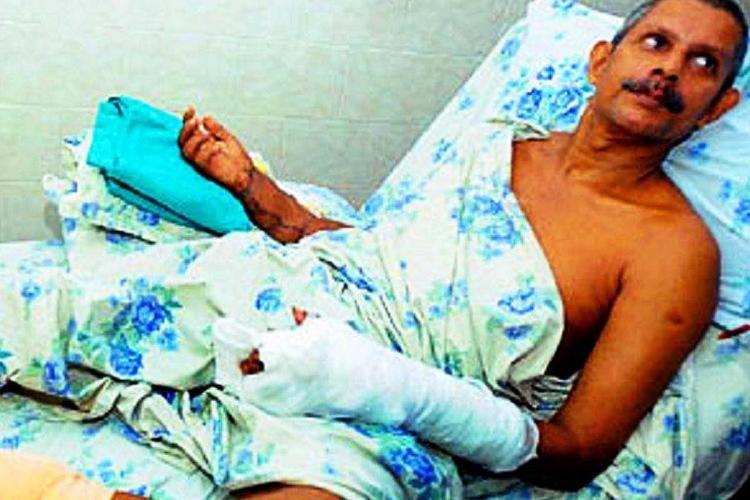
As per reports, two accused had chopped off the right palm of T. J. Joseph, then a teacher in Newman College, Thodupuzha on 4th July 2010 when he was returning home from church with his family. He was accused of preparing a question paper for second year B.Com students containing a reference to Prophet Muhammad.

Of the 51 accused, 45 were chargesheeted by the NIA and 31 were put on trial. Of that, 13 were convicted in 2015. The accused were members of radical Islamist group PFI.

The appeal was filed by the accused, Sajil of Muvattupuzha and M.K. Noushad from Aluva, challenging an order of the NIA Special Court, Ernakulam, declining to postpone the trial. The duo wanted to postpone the trial due to COVID pandemic.

As per reports, Sajil was amongst the seven member group that attacked Joseph. Other than him, M K Nazar, one of the key conspirators, Shafeeq, Najeeb, Asiz Odakali, Mohammed Rafi, Subair T P, M K Noushad, Mansoor, P P Moideen Kunju and P M Ayoob will be facing the trial in the case. Saved, the accused who chopped off the palm of the teacher is still on the run. The case has over 200 witnesses.

T. J. Joseph’s palm chopped off

As per reports, on 4th July 2010, Joseph was returning home from Church with his family. His car was blocked by the seven member group near his residence in Muvattupuzha. The mob first attacked his car and broke windows and assaulted other family members of Joseph. Later, Saved allegedly pulled Joseph out and chopped off his palm accusing him of ridiculing Islam using his hand and that he should not write with his hand anymore.

Chicago’s decision to provide condoms in elementary schools from fifth grade triggers heated debate

When schools in Chicago open for the first time since the start of the pandemic next month, they will be stocked with disinfectants, hand sanitisers, masks, forehead thermometers and air purifiers. But besides all these things, almost every school, including the elementary schools, will also have menstruation products and condoms.

As per the new policy passed by the CPS Board of Education, schools that teach fifth grade and up must maintain a condom availability program as part of an expanded vision of sexual health education. That means all but a dozen, which enrol only younger grades, of the more than 600 CPS schools will have access to condoms.

The policy that was passed recently was years in the making and had often hit roadblocks owing to its controversial nature. A significant section of lawmakers believes the policy is a step in the right direction. “Young people have the right to accurate and clear information to make healthy decisions,” said Kenneth Fox, a CPS doctor and a paediatrician for 30 years, told Chicago Sun-Times.

Netizens react after Chicago decides to provide free condoms in schools

While the administration claims that the new policy would help create awareness about unwanted pregnancies and serious illnesses such as HIV AIDS, critics claim familiarising children from fifth graders with condoms could prove counterproductive.

The decision to provide free condoms in schools elicited a sharp reaction from the critics, who questioned the rationale behind teaching sexual education to children of 10-12 years by providing them with free condoms. “I’m for realistic sex education in public schools, but fifth graders are 10 and 11 years old. What is being taught?” questioned one social media user.

Similarly, many other people on social media were taken aback by the decision to offer free condoms in elementary schools. One of them said it is not only ridiculous that children studying in elementary schools are being provided with condoms, but it is being done so on taxpayers’ expense.

Another Twitter user appeared thoroughly befuddled with the decision of providing free condoms to children as young as 10 to 11 years of age.

However, there were others who welcomed the decision and hailed the new policy. One of the social media users commented “Excellent” on Chicago’s decision to include condoms and menstruation products to teach children about sexual education and diseases such as HIV AIDS.

Another Twitter user said since children start menstruating at the age of 8 or 9 these days, it is sensible decision to educate them about menstruation products and condoms.

The policy so far has been that the principal of the school decides on matters related to sexual health and education. However, with the new policy, the principal’s discretion is set aside and all the schools will have to stock menstruation products and condoms as a part of their sexual health education.

Inspired by China’s gold medal demand for human rights, English fan who inserted flare inside anus demands gallantry award for bravery

Hua Chunying, spokesperson for the Foreign Ministry in China, has suggested that the Communist Party of China should be awarded “gold medals and medals” for its record on human rights. The demand comes at a time when efforts are being made to mount global pressure on the CPC for the concentration camps it has established in Xinjiang where it is reported that Uyghur Muslims have been locked up for ‘reeducation’.

Inspired by China’s demand, an English football fan who was captured on camera with flares inside his anus has demanded that he be awarded with a gallantry award for bravery. The fan argued that he demonstrated impeccable skills to pull off the unimaginable feat but cautioned that such stunts are performed by professions under expert guidance and should not be tried at home.

Meanwhile, Nike, the footwear manufacturing company and a renowned sports apparel brand, has decided to hire the English football fan as its brand ambassador. The CEO of the company says that his actions are a stunning advertisement for their tagline “Just do it”.

The fan was sad over England’s defeat against Italy in the Euro 2020 final but confessed that he could not participate in the proud British tradition of hooliganism because he could not get off his bed after the flare stunt. He said that if England manager Gareth Southgate was half as brave as him in his tactics during the match, and chose to use his attacking strength on the bench instead of his overly defensive approach, then England would have won the game.

When others told him that his actions were insane and downright stupid, the fan replied that it was surely not as foolish as letting Bukayo Saka take the 5th penalty in the shooutouts, a 19-year-old who had never taken any penalty in any competitive match at the highest level.

“If China can hope to win a gold medal for its human rights record, then why should I not expect to receive a gallantry award for bravery? You are out of your wits, mate,” he told a reported. When some questioned the Police for not arresting the man for public obscenity and such dangerous conduct in full public view, the Police said they already had too much on their hands, pointing towards a trashed restaurant.

China, meanwhile, has offered to counsel the man in one of their ‘reeducation camps’ in Xinjiang, and thereby further boost their human rights credentials. Hua Chunying also believed that the gesture would help garner goodwill for the CCP across the world.

Another man who was photographed naked on the streets with an England flag has been arrested for his conduct. He has offered to insert flares inside his anus as well to escape spending too much time in custody. He considers himself unlucky, complaining that the flare man is being treated as a national treasure while he faces an extended time in prison.

He argues that the flare stunt can be broadcast live across new channels, which will give people some joy and help them forget the tragic defeat in the Euro 2020 final. It’s unclear as of now whether his request will be accepted.

Note: The above article is a work of satire and should be treated as such.

‘Human waste dumped from Chinese ships in South China sea visible from space’: Why experts think China is causing catastrophic damage to Coral Reef

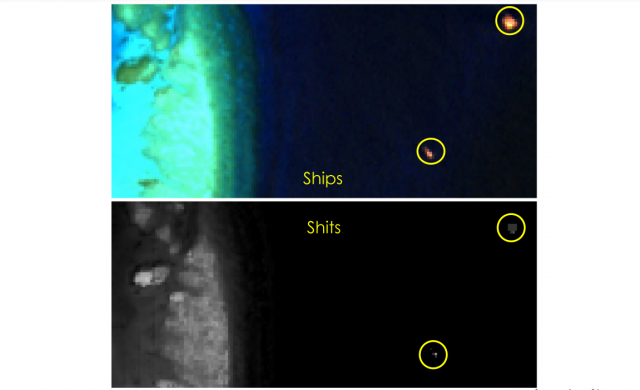
Satellite data imagery reveals that hundred of Chinese ships have been dumping human waste and wastewater every day for years in the South China Sea and parts of the West Philippine Sea, where they are anchored.

Human waste dumped from Chinese ships visible from space

Liz Derr, founder and CEO of Simularity, a software company based in the USA which specialises in creating artificial intelligence technologies and analysing geospatial imagery and data, said that the accumulation of human waste in these areas are so intense that it can see it from space.

Satellite images showing human shit dumped in the South China Sea (source: GMA News online)

Using satellite images collected in the last five years to back her claim, Liz Derr warned that this piled up waste from the Chinese ships in the South China Sea and parts of the West Philippine Sea is prompting the growth of algae, which, in turn, is damaging the coral reef, that will take decades to recover even with active mitigation.

Dumped human waste causing catastrophic damage to coral reef in South China Sea

Speaking at a Philippine online news forum on China’s actions in the South China Sea, over which China has been claiming sovereignty for years, Dirr said that at least 236 ships were spotted in what is internationally known as Union Banks, on June 17 alone. “When the ships don’t move, the poop piles up,” she said, adding that the “hundreds of ships that are anchored in the Spratlys are dumping raw sewage onto the reefs they are occupying.”

“The damage to the reefs in the last five years is visible and dramatic”, said Derr.

“This is a catastrophe of epic proportions and we are close to the point of no return,” Derr further added warning that schools of fish, including migratory tuna, which breed in the reefs that are being damaged could cause fish stocks to decline considerably. This she said will prove disastrous as fishes are a key regional food source.

Simularity CEO added that human waste is behind the increase in Chlorophyll-a in some areas of the Spratly Islands. According to the company, Chlorophyll-a concentration can mean there is harmful algae activity in the maritime territory.

“In water, Chlorophyll-a concentration is a measure of phytoplankton. Excess phytoplankton that cannot be consumed by the reef inhabitants dies off and sinks to the seafloor, where it is consumed by bacteria. These bacteria consume oxygen that would normally be available to the fish, creating a ‘dead zone,'” it said.

Philippines demands withdrawal of over 200 Chinese vessels from a South China Sea reef

Pertinently, in March 2021, the Philippines Defense Secretary Delfin Lorenzana had demanded a complete withdrawal of over 200 Chinese vessels from a South China Sea reef which is claimed by the Philippines. “We call on the Chinese to stop this incursion and immediately recall these boats violating our maritime rights and encroaching into our sovereign territory,” said Defense Secretary Lorenzana in a statement.

According to a Philippine government watchdog, about 220 Chinese vessels are moored at Whitsun Reef, a reef that China also claims. Pictures of these Chinese vessels on Whitsun Bay were released by the watchdog.

Solar storm to hit Earth on Monday, should you be concerned? Here’s what we know

On Monday (July 12), a high-speed solar storm will approach our planet at a speed of 1.6 million km/hour and affect electricity supply and communication infrastructure. As per the latest prediction, mobile phone signals, Satellite TV, power grids and GPS navigation will be affected. According to the Space Weather Prediction Centre of the United States, the solar flare is expected to be at X1 level. Solar flares are categorised under A-class, B-class, followed by C, M and X. As such, X-class flares are the biggest in magnitude. The numerical suffix of 1 denotes the strength of the solar flare.

Earlier on July 3 at 10:29 am, the Sun emitted an intense solar flare which was categorised as X1.5-class flare. It caused temporary blackout over the Atlantic.

On Saturday (July 10), the Planetary Society had tweeted, “The Sun’s power should never be underestimated. In March 1989, the entire Canadian province of Quebec suffered a 12-hour electrical power blackout caused by a solar storm.” Today’s solar fare is unlikely to cause a geomagnetic solar flare or create blackouts of 12-hours in length.

Solar flares are intense explosions that take place on the surface of the sun. They are caused when energy stored in magnetic fields is suddenly released. As such, they send radiation across the length and breadth of the solar system. These radiations, which are in the form of radio waves, x-rays and gamma rays, then move towards the planets in the solar system. They transfer their energy into the Earth’s magnetic field and ionize the top of the planet’s atmosphere.

When fast-moving solar flares hit the Earth’s magnetosphere, they might trigger a geomagnetic storm. Such a storm affects satellites, disturbs GPS navigation, cell phone signals and Satellite TV. They can also affect power grids in some parts of the world. The largest solar storms are associated with Coronal Mass Ejections (CMEs), during which tonnes of plasma move in the direction of planets including Earth. CMEs might take days to reach Earth, however, some arrive within a span of 15-18 hours.

Reportedly, the biggest solar storm till date had occurred in 1859 during the Carrington Event. At that time, the Coronal mass ejections (CMEs) fried telegraph poles across the world. In 2014, NASA had warned that such a flare would tremendously impact the modern power grids and telecommunication channels in the world. National Academy of Sciences estimated a loss of more than £1.45trillion ($2trillion) in damages. Interestingly, the Earth narrowly avoided a Carrington-level CME in July 2012.

Bihar Govt challenges High Court acquittal to accused in Senari Massacre: When Maoists committed a massacre of Hindus

The Supreme Court on Monday accepted the Bihar government’s plea challenging the acquittal of 13 Maoists by Patna High Court, accused of the killing of 34 upper-caste people in the 1999 Senari massacre.

Out of the 13, 10 were sentenced to death by the trial court. The Supreme Court has asked the state to serve notice to all the acquitted accused persons.

Patna High Court in its judgment had acquitted the 13 accused citing a lack of adequate evidence. All 13 were released from jail after the two-member bench of Justice Ashwani Kumar Singh and Justice Arvind Srivastava also cast doubts over the identification process of the accused despite the witnesses identifying them in the court. 

Bihar’s advocate General Lalit Kishor immediately after Patna High Court’s verdict had given an indication of filing an appeal in the Supreme Court. In a media statement, he said, “I have suggested to the state government through the department of law that an appeal should be filed before the Supreme Court. And an appeal will be filed at the earliest.”

The night of the massacre

On the night of 18 March 1999, 500-600 militants of the banned Maoist Communist Center (MCC) entered the village of Senari, dragged the Bhumihar men out of their homes, divided them into three groups and slit their throats and stomach. The Senari village now falls in Arwal district, which was created later.

Dainik Bhaskar in an interview with the survivors and eyewitnesses had reported the account when one Rakesh Sharma narrated that he was hit hard by the Maoists who were intoxicated and that they went around slashing throats. Another survivor shared that he too was beaten up by the attackers but was thrown in a pile of dead bodies in a rush. 

The period of massacres 

The Senari massacre is said to be a fallout of the Laxamanpur-Bathe massacre in which 57 Dalits were killed in 1997. The Dalit victims of the Laxamanpure Bathe massacre too have been raising voices for justice, not being fully satisfied by the trial.

Of the 91 massacres between 1977 and 2000, 76 took place between 1990 and 2000, in which over 350 people were killed. Districts of central Bihar such as Gaya, Jehanabad, Aurangabad and the Shahabad region of Bhojpur were the worst affected.

‘Bhuj: The Pride of India’ trailer released: What we know about the movie so far

Bollywood actor Ajay Devgn on Monday unveiled the trailer of his much-anticipated movie Bhuj: The Pride of India. The movie, which takes a slice out of the Indo-Pak war of 1971, is packed with patriotism and action. The film is directed by Abhishek Dudhaiya and Ajay Devgn plays the role of Squadron Leader Vijay Kumar Karnik, who was in charge of the Bhuj airbase during the war.

Besides Devgn, the film also stars Sanjay Dutt as Army Scout Ranchordas Pagi, Sonakshi Sinha as social worker Sunderben Jetha Madharparya, Ammy Virk as Flight Officer Vikram Singh Baj Jethaaz and Nora Fatehi as Indian spy Heena Rehman. The film is all set to release on OTT platform Disney+ Hotstar on August 13, ahead of India’s 75th Independence Day.

Source: YouTube

In line with the expectations, the trailer of Bhuj: The Pride of India is high on patriotic sentiments and packs powerful dialogues that are bound to raise goosebumps and stir up a feeling of patriotism. The 3-minute-20-seconds long trailer gives a glimpse into how Squadron Leader Vijay Kumar Karnik and his team fought the Pakistani military when they raided the Bhuj airfield 35 times in 14 days and staved off an impending capture by re-constructing an entire IAF airbase with the help of 300 women from a local village in Madhapar.

While Ajay Devgn plays the role of the Air Force officer in charge of the Bhuj airport, Sanjay Dutt and Sonakshi Sinha play the characters of villagers who join hands with the Indian Armed Forces to ward off the Pakistani threat. Sharad Kelkar and Ammy Virk enact the roles of characters who are a part of the Indian Army.

Sharing the trailer on Twitter, Ajay Devgn called it “the greatest battle ever fought”. “When bravery becomes your armour, every step leads you to victory! Experience the untold story of the greatest battle ever fought, #BhujThePrideOfIndia,” Devgn tweeted.

The history behind ‘Bhuj: The Pride of India’

Bhuj: The Pride of India is based on real-life incidents that took place against the backdrop of the Indo-Pak war of 1971, also dubbed as the Bangladesh liberation war. The hostilities between the two countries formally began on December 3, 1971, when the Pakistan Air Force (PAF), launched pre-emptive airstrikes on 11 Indian airfields, with the aim to cause irreparable damage to India’s superior air power and create a deterrence for India to officially help East Pakistan, now Bangladesh, in its independence movement.

However, the preemptive airstrikes did little to unnerve India from helping Bangladesh liberate itself from the clutches of the Pakistani Army, which committed grave atrocities against those who sought freedom and independence from West Pakistan. As India threw its weight behind the liberation of Bangladesh, the Pakistani air force continued targeting airbases located in the western states of the country.

On the night of December 8, a squadron of Sabre jets dropped more than 14 Napalm bombs on the Indian Air Force airstrip in Bhuj. As a result, the airstrip was severely damaged and the Indian combat aircraft could not take off. The Indian Air Force asked the Border Security Force to restore the airstrip but time was ticking, and resources were scarce.

At this point in time, 300 villagers, mostly women from Madhapur in Bhuj, decided to help the IAF repair the damaged airstrip. Armed with nothing but the determination to help the country, they took up the seemingly impossible job of restoring the airstrip and fixing it enough so that it can be used by India’s combat aircraft.

Besides the District Collector who encouraged women to step out of their homes and join the noble cause of helping the IAF repair the airstrip, Squadron Leader Vijay Kumar Karnik played an instrumental role in motivating the women to come to the aid of the army.

Karnik was in charge of the erstwhile Bhuj airport during the war. He, along with two senior officers, 50 IAF and 60 Defense Security Corps personnel ensured the airstrip was operational despite the damage the bomb blast had caused.