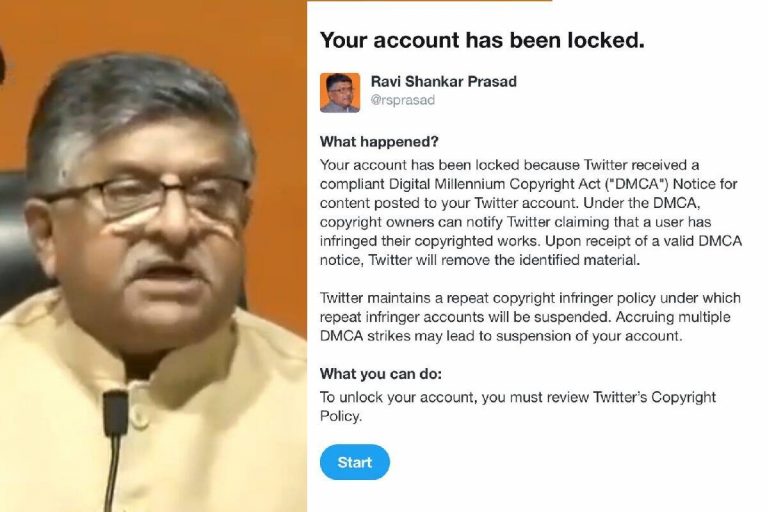
Twitter India has failed to respond to the notice sent by the Parliamentary Standing Committee on Information and Technology, reportedNews 18. The micro-blogging site was given a period of 48 hours to respond in writing about the locking of the accounts of Minister for IT Ravi Shankar Prasad and Congress leader Shashi Tharoor.
Twitter blocks Ravi Shankar Prasad
On June 25, the micro-blogging site Twitter again came under the scanner for blocking Union Minister of Law and Justice, Electronics and Information Technology Ravi Shankar Prasad (RS Prasad) for allegedly violating the copyright act of the United States of America. The action against him was taken in connection to a video that he posted on Vijay Diwas in 2017 and had allegedly used copyrighted music ‘Maa Tujhe Salam.’
This information came to the fore after Twitter published the Lumen data where it showed clearly that it was based on this post that access to Ravi Shankar Prasad’s Twitter handle was blocked on June 25, 2021. The post by RS Prasad that used Maa Tujhe Salaam as the background music was flagged as a copyright violation by the International Federation of Phonographic Industry (IFPI) as can be seen from the ‘sender’ information on the DMCA notice. The post was reported by Sony Music Entertainment.
Parliamentary Committee pulls up Twitter
The Parliamentary Panel for IT headed by senior Congress leader Shashi Tharoor had directed the Secretariat to seek an explanation from Twitter in writing regarding the locking of the accounts of Minister for IT Ravi Shankar Prasad and Shashi Tharoor. Twitter was asked to submit an explanation within two days. In the absence of a satisfactory answer from Twitter, the Committee can summon an official from the company.
Shashi Tharoor said, “As Chairman of the Parliamentary Standing Committee on Information Technology, I can state that we will be seeking an explanation from @TwitterIndia for the locking of @rsprasad’s & my accounts & the rules & procedures they follow while operating in India.” Twitter has been going through a tough time since the passage of the Information Technology (Intermediary Guidelines and Digital Media Ethics Code) Rules 2021. Following its refusal to obey Indian laws, it has lost its intermediary status after which multiple FIRs have been filed against the platform.
In a surprise move on Friday night, Uttarakhand Chief Minister Tirath Singh Rawat submitted his resignation to state governor Baby Rani Maurya nearly four months after assuming the top post in the Himalayan state.
According to the reports, Tirath Singh Rawat reached the Governor House around 11 pm on Friday and submitted his resignation papers. Earlier, he held a press conference to inform that he would be meeting Governor Baby Rani Maurya on Saturday.
Earlier in the day, Tirath Singh Rawat had met BJP party leadership amidst the speculations over leadership change in Uttarakhand. His resignation comes amidst a lack of clarity over the Election Commission announcing by-elections in Haldwani and Gangotra – the two vacant seats.
Constitutional crisis in Uttarakhand
Tirath Singh Rawat, a BJP MP, needs to be elected as an MLA in the next two months. However, observers in the BJP feel that EC may not order a by-poll for the vacant seats in Uttarakhand as the term of Uttarakhand Assembly is scheduled to come to an end in March, which is just nine months away.
To avoid the constitutional crisis, Tirath Singh Rawat has stepped down from his post as Chief Minister, and the BJP intends to elect a sitting MLA for the post of Chief Minister this time. Reportedly, the names of senior BJP leaders – Satpal Maharaj, Banshidar Bhagat, Harak Singh Rawat and Dhan Singh Rawat are doing the rounds as probable replacements for Rawat.
The BJP plans to elect a new legislature head at a party meeting scheduled to be held on Saturday. Meanwhile, the Uttarakhand BJP will also hold its legislature party meeting on Saturday. State BJP president Madan Kaushik will chair the meeting, state BJP media in-charge Manveer Singh Chauhan said. All party MLAs have been asked to attend the meeting, he added.
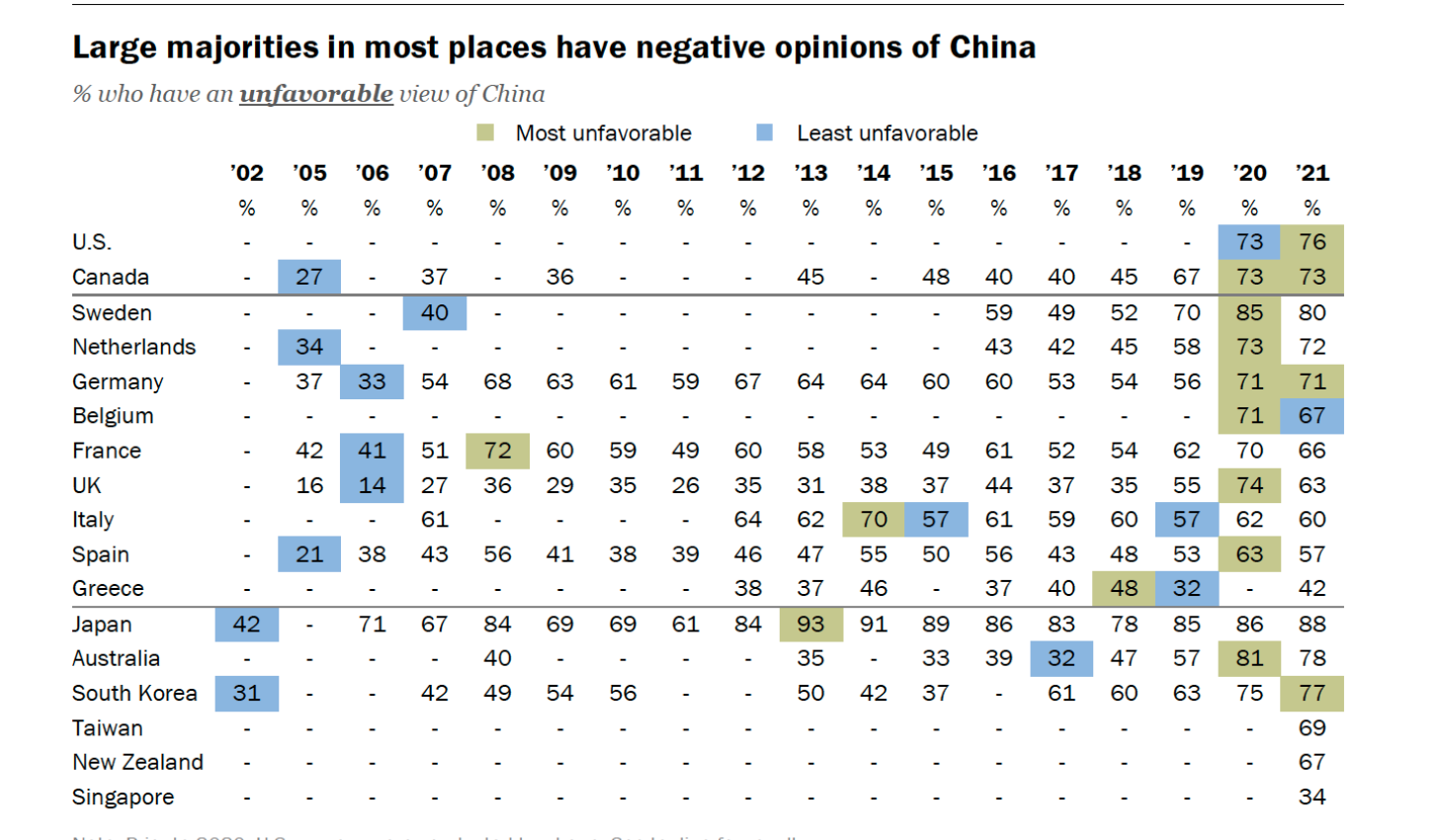
Unfavourable views of China hover at record-high levels across the countries in the developed world, the latest study conducted by Pew Research study has said.
The United States-based research organisation, recently carried out a survey among the 17 biggest economies of the world, in Europe, the Asia Pacific and the North America region, which gave extremely negative and unfavourable opinions about China. Out of the 17 biggest economies, 15 hold negative views of China, including Canada, Germany, Italy, and the Netherlands.
About 76 per cent of respondents in the United States said they viewed the most populous country unfavourably in February, up three percentage points from last year. The percentage of people with negative views about China was even higher in countries such as Japan (88 per cent), Sweden (80 per cent), Australia (78 per cent) and South Korea (77 per cent)—all countries that have had bitter disputes with Beijing in recent months. Only Greece (42 per cent) and Singapore (34 per cent) have mostly favourable views toward China.
Source: Pew Research Study
As for other advanced countries, most of them have broadly negative views about China, which have more or less remained the same since 2020.
The findings were drawn from nationally representative surveys conducted between February 1 to May 26 this year among 18,850 people in 17 advanced economies.
Majorities in all but one of the 17 publics surveyed have little or no confidence in Chinese President Xi Jinping
In all 17 public surveyed except for 1, majorities say they have little or no confidence in Chinese Premier Xi Jinping. Approximately eight in ten in both North American countries lack confidence in the Chinese president. Among both Canadians and Americans, this is a significant increase from 2020.
Similarly, in European countries too, Xi Jinping is not a very likeable figure. At least seven in ten adults say they have no confidence in Xi in all but one European country surveyed. Be it Sweden, Belgium, the United Kingdom, Italy and Germany, more than 70 per cent expressed no confidence at allin China’s president.
Confidence on Xi Jinping
Likewise in the Asia Pacific, the public surveyed in Japan(86), South Korea(84), Australia(82), New Zealand(73), and Taiwan(68) have held no confidence in the Chinese Premier. In Singapore, 70 per cent of respondents have reaffirmed their faith in Xi Jinping.
Confidence in Xi is related to China’s handling of the coronavirus outbreak. With the initial cover-up and China’s reticence in revealing the complete details of the pandemic early on, the trust in Beijing and its leader has taken a severe beating, which is reflected in the latest research study.
Most prefer close economic ties with the US over China
When asked which country—the United States or China—would they prefer to have economic ties with, around half or more in 15 of 16 publics surveyed preferred the United States. Those in Canada are most inclined to prefer ties with the United States over China, possibly because of the close proximity and a growing strain in its relationship with China.
Even Europeans surveyed have overwhelmingly considered the United States as a more important partner over China. More than 75 per cent of Swedish respondents hold this view, and over two-thirds or more in the Netherlands, the UK and Italy agree with the view that the US is a more important partner than China.
In the Asia Pacific too, views over economic ties are in favour of the United States. 8 in 10 respondents in Japan and South Korea have chosen ties with the United States over China. In Australia, which came into Beijing’s crosshairs after it demanded a fair inquiry into the origins of the coronavirus outbreak, 59 per cent of the respondents chose the United States as against 31 per cent that preferred China as their economic partner.
Most people believe China does not honour personal freedom
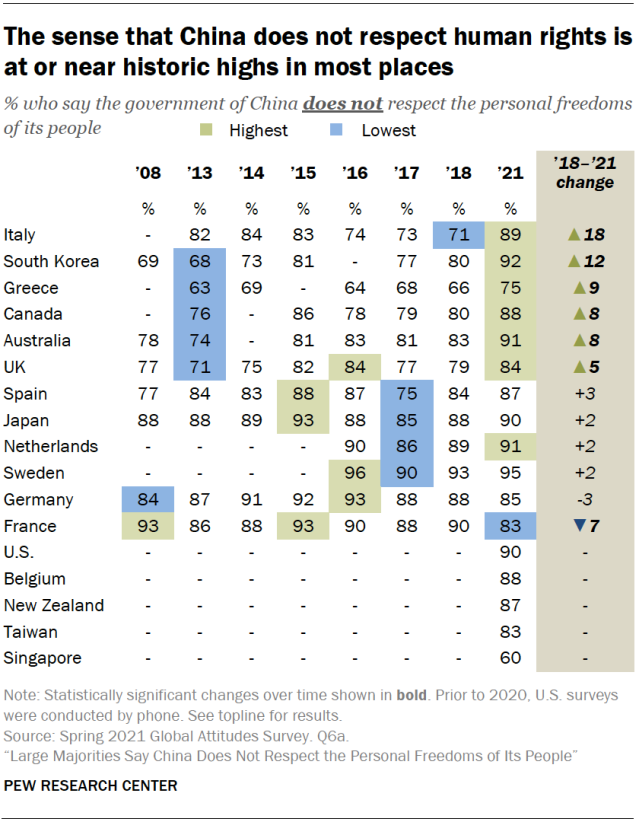
A large majority of the people in the surveyed 17 countries said that the government of China does not respect the personal freedoms of its people. This view was express by 90% or more people in the US, Australia, Sweden, South Korea and Japan. Apart from two countries, the figure was above 80% in all the other countries. The lowest figure was 60% for Singapore.
% of people who think China does not respect freedom of people
The study found that the view that China does not respect the personal freedoms of its people is also at or near historic highs in most publics surveyed. Even though for last several years majority of people are believing that China does not grant personal freedom, the share of people with that believe has gone up.
The Pew Research study also found that opinions about China’s treatment of its people and their views of China as a whole are closely related. In countries where more people think China does not respect its citizens, unfavourable views of the country are also higher.
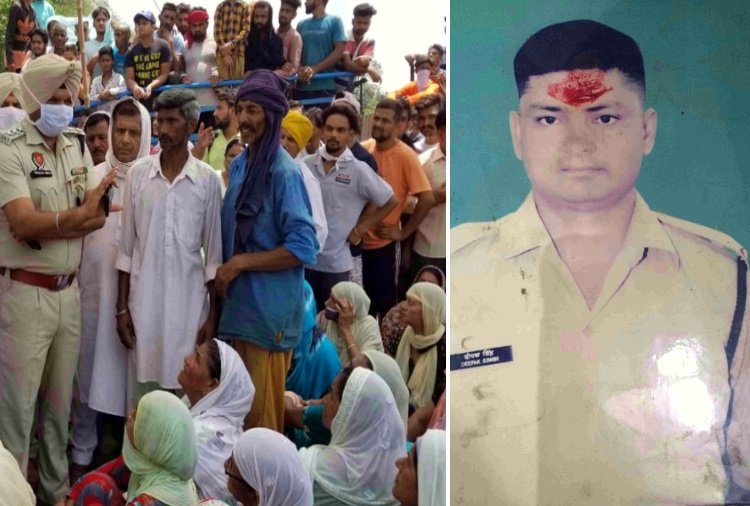
An Army man was lynched to death by a mob at a Gurudwara in Gurdaspur, Punjab on suspicion of theft in the intervening night between the 1st and 2nd of July. According to reports, the incident occurred at the Gurudwara at Tibri Road in Gurdaspur and the mob was led by the manager of the Guruduwara. The victim has been identified as Deepak Singh.
Deepak Singh was a resident of Lahri Sarmon station Taragarh. He was posted at Arunachal Pradesh and worked for GREF. He was to return home after six months. According to his father, Onkar Singh, he got off at the Amritsar Airport and was traveling to Pathankot by bus.
Deepak Singh mistakenly got off at the Kahnuwan Chowk. According to reports, his father said that Deepak called him late at night and told him that he was beaten on the suspicion of theft. At this time, the call was cut off and subsequently, his phone was switched off. He had gone to the Gurudwara at around 11 pm in the night to drink water.
Reportedly, the Police somehow managed to rescue Deepak from the situation and admitted him to a hospital. However, he passed away there. According to the father, his son was murdered by Gurjeet Singh and Dalbir Singh among others.
Initially, the Police registered a case of negligent homicide following which the family of the deceased and villagers registered their protest by blocking the Pathankot-Amritsar national highway. They kept the dead body of the deceased on the road during their protest.
Ultimately, the Police was forced to register a case of murder against two accused following which the protest was called off. The father claims that the Police is trying to shield those responsible for his son’s death.
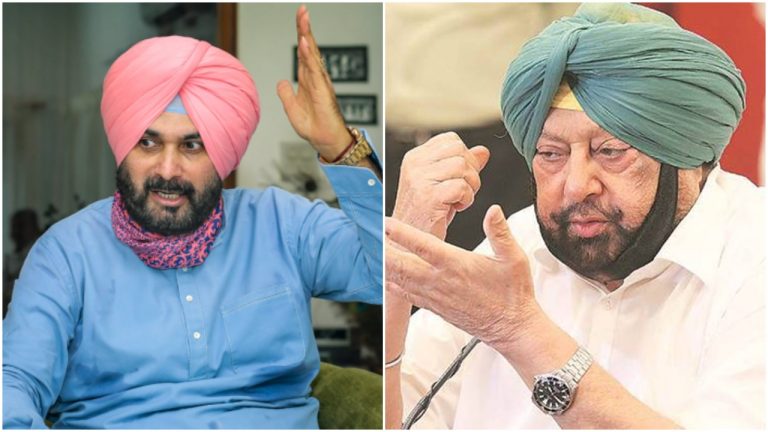
The rift between Punjab Chief Minister Amarinder Singh and Congress leader Navjot Singh Sidhu seems to have widened as disgruntled leader Sidhu put out a series of tweets attacking Punjab Chief Minister Amarinder Singh over the looming power crisis in the state.
In a series of tweets, disgruntled Congress leader Navjot Singh Sidhu “offered” advice to the Amarinder Singh government to deal with the power crisis in the state. The Congress-led government in Punjab is facing massive criticism for failing to prevent frequent power cuts in the state.
Congress leader Navjot Singh Sindhu posted a tweet saying there was no need for power cuts in Punjab or for the Chief Minister to regulate office timings if the government acted in the right direction. It may be noted that the Punjab CM has ordered that govt offices will run from 8 am to 2 pm to save electricity consumption. The state govt has also ordered to shut down the industries in several parts of Punjab, so that the farmers can power to save their irrigation dependent crops.
Truth of Power Costs, Cuts, Power Purchase Agreements & How to give Free & 24 hour Power to the People of Punjab:- 1. There is No need for Power-Cuts in Punjab or for the Chief Minister to regulate office timings or AC use of the Common People … If we Act in the right direction
The cricketer-turned-politician continued attacking Amarinder Singh, who is also in charge of the power ministry in the state, saying Punjab was paying more to buy power at an average cost of Rs.4.54 per unit when the national average cost is Rs.3.85 per unit. The rebel Congress leader said Punjab’s over-dependence on three private thermal plants at Rs.5-8 per unit made Punjab pay more than other states.
“Power purchase agreements (PPAs) – Badal Govt signed PPAs with 3 private thermal power plants in Punjab. Till 2020, Punjab has already paid 5400 crore due to faulty clauses in these agreements and is expected to pay 65,000 Crore of Punjab People’s Money just as fixed charges,” Sidhu tweeted.
3. Power Purchase Agreements (PPAs) – Badal Govt signed PPAs with 3 Private Thermal Power Plants in Punjab. Till 2020, Punjab has already paid 5400 Crore due to faulty clauses in these Agreements and is expected to pay 65,000 Crore of Punjab People’s Money just as fixed charges
Suggesting a new power purchase policy, Sidhu claimed that the Punjab government must bring a law capping power purchase costs to those on the National Power Exchange at any time, with a retrospective effect. He said that Punjab could purchase power from National Grid at much cheaper rates, however, the PPAs signed by the previous government was acting against Punjab’s Public Interest.
“Punjab may not be able to re-negotiate these PPAs due to them having legal protection from Hon’ble Courts, But there is a way forward,” Sidhu tweeted.
5. Punjab Vidhan Sabha can bring in New Legislation with retrospective effect to Cap power purchase costs to prices available on the National Power Exchange at any given time … Thus, By amending the Law, these Agreements will become Null & Void, saving People of Punjab’s Money
Further, in his tweet, Sidhu claimed that Punjab’s revenue per unit of consumption is one of the lowest in India due to gross mismanagement of the complete power purchase and supply system.
Lashing out at the Capt Amarinder Singh government for 8-hour power cuts in Punjab, rebel MLA Navjot Singh Sidhu explained the trouble in Punjab’s power model in a string of tweets and said that Solar and Biomass energy gas remains untapped in Punjab.
7. Renewable Energy is becoming cheaper along with being environmental-friendly, But Punjab’s potential from Solar & BioMass Energy remains unutilised even though Central financial schemes can be availed for these projects. PEDA spends its time just on energy efficiency awareness
Navjot Singh Sidhu tweeted, saying Punjab was already giving Rs.9,000 crore as a power subsidy. However, Delhi gives only Rs.1,699 crore as a power subsidy. “If Punjab copies Delhi Model, we will get merely 1600-2000 Crore as Subsidy. To better serve the People of Punjab – Punjab needs an Orignal Punjab Model, Not a copied Model,” Sidhu said, taking a dig at Aam Aadmi Party’s Delhi model.
9. Punjab Model for Power – Money spent on giving unreasonable & exuberant profits to Private Thermal Plants should be utilised for welfare of People i.e Giving Power Subsidy for Free Power for Domestic use (Upto 300 Units), 24 hours supply & to invest in Education & Healthcare !
Punjab has been witnessing severe power outages after Punjab State Power Corporation Limited (PSPCL) failed to meet rising demand in the state. The PSPCL is giving just up to six to eight hours in rural areas and for up to three hours in all major cities, as it is unable to meet the rising demand for electricity amidst a paddy sowing season and soaring temperatures due to reduced generation.
Due to excess demand, the Punjab government has reduced the timings of government offices and ordered a cut down on power supply to high energy-consuming industries as the electricity demand. Meanwhile, Akali Dal has hit the streets to protest against the power cuts claiming that the Punjab government was indifferent to the plight of the farmers.
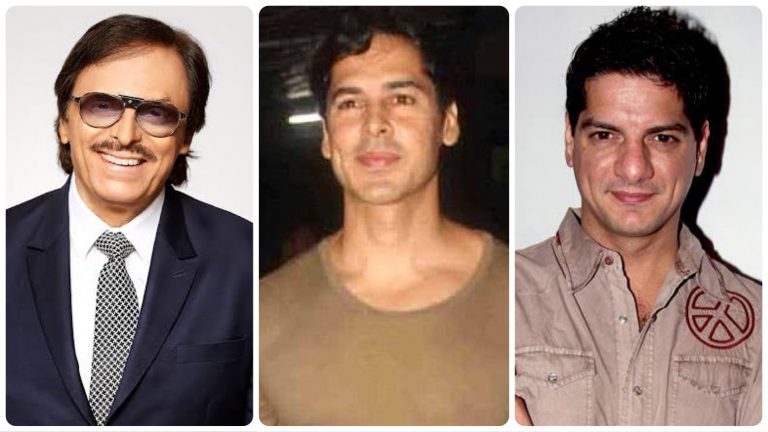
The Enforcement Directorate on Friday attached assets of actors Dino Morea and Sanjay Khan, DJ Aqeel, and son-in-law of late Congress leader Ahmed Patel in a money laundering case involving Gujarat-based pharmaceutical company Sterling Biotech group.
The official Twitter account of the Enforcement Directorate informed about the development. It said properties worth Rs 8.79 crores has been attached under the Prevention of Money Laundering Act(PMLA) in the Sandesara Group case. So far, a total attachment of Rs 14,521.80 crores has been done in the case.
Enforcement Directorate has provisionally attached movable & immovable properties worth Rs. 8.79 Crore under PMLA in Sandesara Group case. With this attachment, the total attachment reached to Rs 14,521.80 Crore. pic.twitter.com/8SEPTxCRZf
Divulging the details of the assets it has seized, the central agency said the value of attachment of properties for Khan is Rs 3 crores, for Dino, it is Rs 1.4 crores, for DJ Aqeel, it is Rs 1.98 crores and for Irfan Ahmed Siddiqui, the son-in-law of Ahmed Patel, it is Rs 2.41 crores.
The agency further said that Nitin Sandesara and Chetan Sandesara, absconding promoters of the Sterling Biotech group, had “diverted” proceeds of crime to the four people. It also said that brothers Nitin Sandesara, Chetan Sandesara, Chetan’s wife Dipti Sandesara and Hitesh Patel have been declared fugitive economic offenders by a special court.
The case
The money-laundering case relates to the alleged Rs 14,500 crore bank loan fraud, believed to have been carried out by Sterling Biotech and its main promoters and its directors. According to the probe, Sterling Biotech Limited (SBL) had obtained a loan worth over Rs 9000 crores from foreign branches of Indian banks. The loans were taken in both Indian and foreign currencies from a consortium of banks namely UCO Bank, Allahabad Bank, Andhra Bank, State Bank of India, and Bank of India.
The promoters of SBL had allegedly then diverted the money raised from loans to non-mandated purposes, carefully layered and laundered through a number of domestic and offshore entities. The Sandesaras had not only siphoned off the funds to finance their Nigerian oil business but also for personal expenses.
Earlier, ED had attached several offshore properties belonging to the promoters of SBL totalling over 9000 crores. The properties include four oil rigs and an oil field in Nigeria named OML 143, 4 ships namely Tulja Bhawani, Vrinda, Bhavya and Brahmani, that were registered in Panama under Atlantic Blue Water Services, a 200 Gulfstream aircraft registered in the USA, and residential property in London. Before that, ED had attached assets worth Rs 4700 crores belonging to the Sterling Biotech in December 2018, bringing the the total attached properties to approximately Rs 13000 crore, close to the total outstanding dues to banks which is over Rs 13,371 crore rupees.
Late Congress leader Ahmed Patel was also questioned by ED in relation to the case, as the ED had found Sterling group’s links with Ahmed Patel. Several persons questioned by ED in relation to the case had revealed the involvement of Ahmed Patel, his son, Faisal Patel, and his son-in-law, Irfan Siddiqui in the scam.
Yami Gautam summoned by ED over forex violations of Rs 1.5 crores
In a separate case, actor Yami Gautam was summoned by the Enforcement Directorate over alleged forex violations of over Rs 1.5 crores. The agency had reportedly found foreign exchange transactions to the tune of ₹ 1.5 crores in her bank account.
According to the reports, Ms Gautam was summoned earlier too, but she could not appear before the agency. The investigation is being carried out under the civil proceedings of the Foreign Exchange Management Act, said sources.
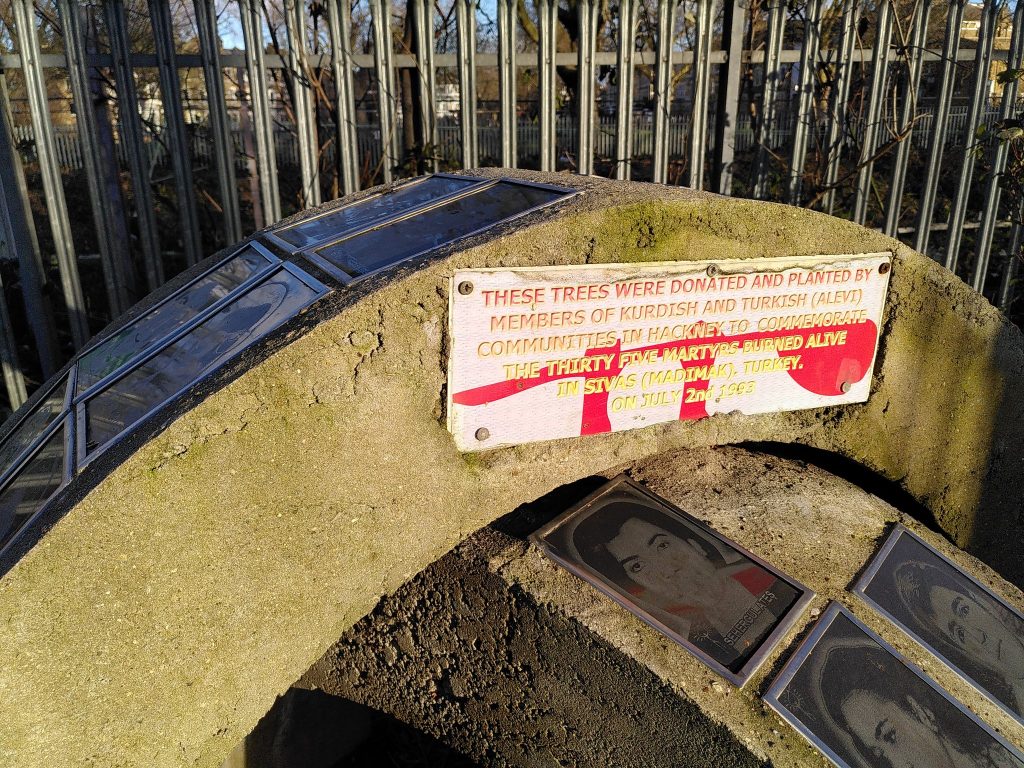
The day was July 2, 1993. 28 years ago, a group of 35 people was burnt alive by radical Islamists, belonging to the Sunni sect of Islam, in Turkey. The only mistake that the deceased committed was that they were followers of Alevism. Each year, thousands of people gather in the city of Sivas to remember the ones who perished in one of Turkey’s deadliest massacres, the Sivas Massacre.
The followers of Alevism, also called Alevis, constitute about 10-15% of the Muslims in Turkey. Unlike the majority Sunni sect, Alevis adhere to the teachings of Haji Bektash Veli who espoused the teachings of Ali (a central figure in Shia sect). Given their distinct practices from the majority sect, they were subject to widespread resentment in Turkey.
Nevertheless, several Alevi intellectuals had decided to gather at the Hotel Madimak (Otel Madımak) on July 2, 1993, in Sivas to commemorate the life of the poet and religious leader Pir Sultan Abdal. The conference had a special invitee, in the form of Aziz Nesin, who tried to introduce the book ‘The Satanic Verses’ in the country. As such, the event drew the attention of radical Islamists from the very start. Nesin, a comedian, was unpopular among the hardliners for his work against religious fundamentalism.
Prior to the event, flyers and leaflets were handed out, thereby ensuring enough time and planning for the radical Islamists to lay siege. With Alevi poets such as Hasret Gültekin and Metin Altıok at the conference, it was expected to be a great hit. However, the plan was soon disrupted by a frenzied mob of radical Islamists. Following the conclusion of the Friday Namaaz (prayers), thousands of Sunni Muslims marched in the direction of the hotel. They broke through the police barricades and gheraoed the hotel premises from all sides.
https://www.youtube.com/watch?v=E-40lnt3Vx4
(Video Courtesy: Youtube/Ihlas News agency)
Harrowing visuals of the fateful day show how a large mob surrounded the hotel from all sides and set it ablaze, amidst chants of ‘Allahu Akbar’. The human shield formed on all sides meant that the trapped Alevi intellectuals could not escape. The ordeal lasted for over 8 hours, during which neither the police nor the Fire Department intervened. By the time the authorities acted, most of them died to smoke inhalation and burns.
However, Aziz Nesin managed to escape the wrath of fire using a ladder. When the firefighters realised that he was alive, they tried to attack him. He survived to tell the story and died two years later in a heart attack. The incident was condemned by the secular section of the society and led to a growing concern about the rising Islamism in the country.
The trial of the case began on October 11, 1993, with a total of 190 accused. On November 28, 1997, the State Security Court found 33 accused guilty and condemned them to death. However, Turkey abolished the death penalty in 2002 and as such, their punishment was commuted to life sentences. The accused were awarded 35 life sentences, one for each of the victims killed by them.
In January last year, Turkish President Erdogan commuted the aggravated life sentence of one of the convicts, Ahmet Turan Kılıç, on health grounds. The 87-year-old was allowed to walk scot-free by Erodgan, known to be an Islamist sympathiser. According to the critics of the Sivas trial, the real perpetrator of the crime is the Turkish deep state that had been pitting Sunnis against Alevis for political gains.
A memorial made for the victims of Sivas massacre
Audit report finds Turkish govt responsible for the massacre
In July 2014, the State Audit Board (DDK) of Turkey presented a report highlighting the negligence of the authorities in preventing the massacre. It had squarely blamed the Turkish government for the arson at Hotel Madimak (Otel Madımak) and the delay in the prosecution of the accused. DDK said, “Despite the obvious social crisis developing (in Sivas) … the incident was caused after serious negligence and failures of the governor’s office to take preventive measures such as the cancelation of the event, the dispersal of the crowd, the evacuation of the participants from the hotel, or the implementation of a curfew.”
“For the (responsibilities) of its administrative and political organs, all the state dignitaries and their approach were just as responsible as the behaviors that caused the perception of provocation in the Sunni collective memory…The incidents that took place in Sivas … resulted in the death of 35 people inside a hotel by mobs of people who were out of control, who had lost their sense, and who acted with feelings of hate … and should be defined as a ‘massacre,” it emphasised.
The report also found that no public officials were investigated during the trial and that the Ankara court had dropped the case, citing statute of limitations. The audit team concluded, “Unfortunately, due to the lack of any efficient judicial or administrative investigation against public officials, the [lack] of a perception of political responsibility, as well as our insufficient democratic standards, everyone preferred the convenience of pinning the crime on the mobs and society.” There have been growing demands that the now-defunct Hotel Madimak now be converted into a ‘museum of shame’.
Pratik Karpe, Education Committee Member at the Brihanmumbai Municipal Corporation (BMC) and Secretary of BJP Mumbai, has raised questions about the education department in Maharashtra in a press release on the 2nd of July. In the press release, he has said children are suffering due to lack of access to education amidst the Coronavirus restrictions.
Pratik Karpe has raised multiple issues related to the state of education in Maharashtra. He has said that students studying in Government schools do not have access to the internet and the tabs that were provided to them had multiple issues. He said that on an average, only 12-18% of students are benefiting from online education.
The press release stated, “Fees of private schools and private colleges have not been decreased and on the contrary they are charged for infrastructure facilities like library, gymkhana and other many such non-provided facilities.”
Karpe asked, “Is there any proper record of students availing online education in Govt Schools and how are they being monitored on daily basis? What is the provision made for students who are not getting online education in Govt or local body schools?”
The BJP leader also pointed out that teachers are not being provided jobs merely because they studied under Marathi medium schools. He also said that students in Marathi medium are declining year by year. He said that if such was the condition in BMC, then one can only wonder what is the situation like in the rest of the state.
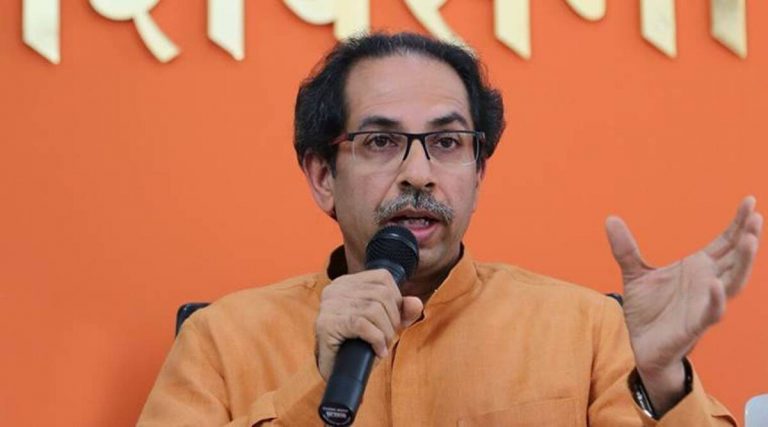
The questions were directed to the Chief Minister of Maharashtra Uddhav Thackeray, who has come under criticism for gross mismanagement of the Coronavirus pandemic in the state.
Sixty-five year old Sayad Ali, accused in the murder and rape of a nine-year old, was shot in Assam while he attempted to flee from police custody on Friday. He made the attempt when he was taken to the crime scene during the course of the investigation.
At Gasarguri point along the Morigaon-Bhuragaon PWD road, the police vehicle was stopped to transfer him to another vehicle. That is when Sayad Ali made an attempt to flee, said Morigaon Superintendent of Police Aparna Natarajan. “The accused tried to flee from police custody at around 2 am. Police resorted to two rounds of firing and he was injured in it,” she stated.
On Friday, Sayad Ali attempted to escape after claiming that he needed to urinate. He sustained bullet injuries to his knees. “While being taken for reconstruction of scene of crime tried to escape under garb of answering nature’s call. Subsequently, Morigaon police had to use lawful minimum force to prevent escape,” Special director-general of police G.P Singh was quoted by The Shillong Times as saying.
The accused has been admitted to the Gauhati Medical College and Hospital for treatment. He was arrested on the 27th of June in connection with a case of suspected gang rape and murder of a nine year old girl whose body was recovered from a Jute field near the Brahmaputra river on the 20th of June.
Residents of the Balidunga village reportedly claim that the accused has been involved in numerous crimes earlier. Some have even demanded capital punishment for the accused.
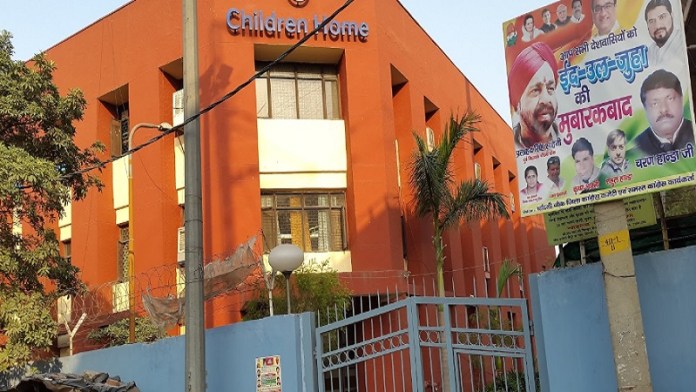
After Delhi police released an advertisement today on Times of India searching for ten ‘kidnapped girls’ from a Children Home of DMRC (Delhi Metro Rail Corporation) run by Salaam Baalak Trust in Delhi’s Tis Hazari area, the corporation has denied the incident. DMRC said that there no girls in the children home, therefore the question of girls going missing from there does not arise.
Earlier it was reported that as many as ten girls have been missing from a children home run by Salaam Baalak Trust in Delhi’s Tis Hazari area. The entire matter came to the fore when the police gave a ‘search of kidnapped girls’ advertisement in The Times Of India’s July 02 edition.
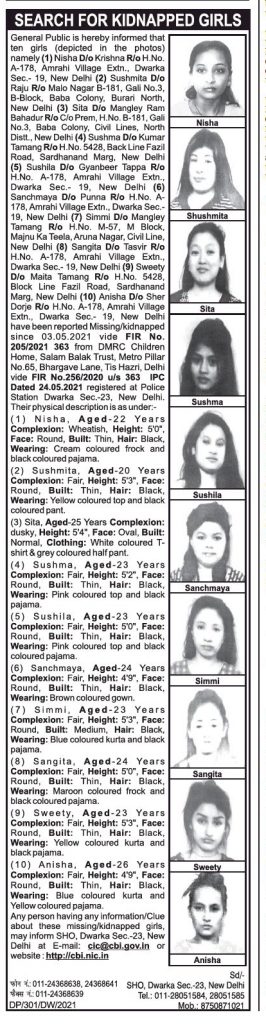
Ad by Delhi Police in The Times of India
According to the ad, the 10 girls have gone missing from DMRC (Delhi Metro Rail Corporation) Children Home of the Salaam Baalak Trust at Tis Hazri in Delhi. The ad said that an FIR has been registered in Dwarka Sector-23 police station in the matter and considering it as a case of kidnapping, the police are on the lookout for the girls.
Sharing details of the missing girls, the police had urged the public to contact if anyone has any information on the whereabouts of the girls.
10 Girls are Missing/Kidnapped from DMRC Children Home, Salam Balak Trust, Metro Pillar,Tis Hazari, Delhi. Anyone having info about these girls can inform Dwarka Sec 23 Police Station or @DCPDwarka@DelhiPolicepic.twitter.com/Hq7u9BbIud
The allegedly missing girls- Nisha, Sushmita, Sita, Sushma, Sushila, Sanchmaya, Simmi, Sangeeta, Sweety and Anisha are all in the age group of 20 to 26 years, as per the information provided by police in the advertisement. All of the ten girls belong to various areas in New Delhi. The advertisement issued by the police included the addresses of the girls, and their physical descriptions, along with their photographs.
it is notable that all the ten girls reported by the Delhi Police to be missing from the Children Home are above 18 years of age, which means they are adults, not children.
An attempt was made by the OpIndia team to get a quote from Delhi Police and Salaam Baalak Trust on this issue, however, both were not available for comment.
DMRC denies report
After the ad was published, the Delhi Metro Rail Corporation denied the report of girls going missing from its children home, saying that there are no girl inmates in the home. A statement issued by the DMRC said, “An advertisement has been issued by Delhi Police regarding the kidnapping of 10 girls allegedly from DMRC Children Home in Tis Hazari. This is to clarify that the Children Home run by Salaam Balaak Trust only accommodates boys and no girls stay there.”
“Therefore, DMRC’s Children Home has no connection whatsoever with this incident”, the DMRC statement added.
About the Salaam Baalak Trust
The children’s home was constructed by DMRC in 2010 and its responsibility was entrusted to Salaam Baalak Trust. A non-profit organization, Salaam Baalak Trust was formed in 1988 with the proceeds from the film ‘Salaam Bombay!’ which was about the lives and vulnerabilities of street children and directed by Mira Nair.
The Trust since then has been running several shelter homes and children’s homes in the national capital.
Cases of kidnapping and sexual assault
A few years ago, nine girls including a minor were reported missing from a shelter home in Dilshad Gardens. While the staff of the shelter home claimed that the girls fled for no apparent reason, other girls of the shelter home revealed that they were mistreated by the staff.
Significant numbers of cases of sexual harassment of girls in such shelter homes have been reported in the recent past. We reported in June about the owners and staff of a welfare staff in Jharkhand who regularly tortured and sexually abused minor girls. The children’s home was constructed by DMRC in 2010 and its responsibility was entrusted to Salaam Baalak Trust.