Home Blog Page 4165

President of Haiti assassinated at home in the night, first lady injured in the attack

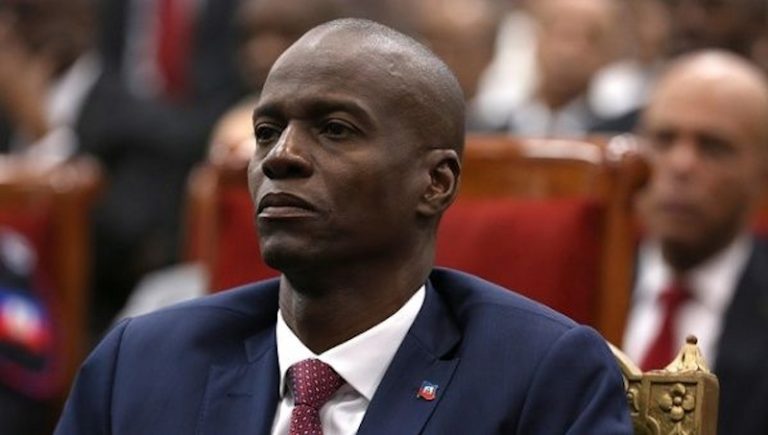
Jovenel Moise, the president of Haiti, was assassinated by unknown assailants at his home last night. The country’s acting Prime Minister Claude Joseph informed about the incident.

In a statement issued by Joseph, he said that that a group of unidentified individuals attacked Moise’s home at around 1 a.m. and fatally wounded the head of state. Although the statement issued by the acting PM does not say how the president was killed, reports say he was shot dead.

The First Lady of the nation Martine Moise was also shot in the attack, and she is receiving treatment, Claude Joseph said. “A group of unidentified individuals, some of them speaking Spanish, attacked the private residence of the president of the republic and thus fatally wounded the head of state,” the interim PM said.

The Prime Minister called the assassination a “heinous, inhumane and barbaric act”, and appealed to the public to maintain peace. “The security situation in the country is under the control of the Haitian National Police and the Haitian Armed Forces,” the statement said. It further added, “All measures are being taken to guarantee the continuity of the State and to protect the Nation.”

As of now, four assassins behind the attack have been killed and two have been arrested. Three policemen who were taken as hostages have been recovered. Police describe it as a well-planned operation which involved assassins who knew Spanish.

The Caribbean country is already a political crisis, as the president repeatedly failed to hold elections at local and national levels, which have left a significant portion of governance in the country unmanned. Amid the Covid crisis, the country is also facing shortages of food and worsening poverty. The killing of the president can worsen the political situation in the county, which is already unstable. Haiti is the poorest nation in the western hemisphere, and it has grappled with a series of coups and foreign interventions.

53-year-old Jovenel Moise is a former banana exporter, who became the president in 2017. In the recent months, he has facing fierce opposition from opposition parties, who alleged that he was trying to install a dictatorship by overstaying his mandate and becoming more authoritarian.

Moise has been ruling Haiti by decree for more than a year after the country failed to hold legislative elections. He had also wanted to bring a controversial constitutional reform.

Note: Report has been updated with latest information.
Uttar Pradesh: Occult practitioner Afzal Malik and his aides gang-rape minor girl in Amroha, ‘secular media’ refers to him as ‘Tantrik’

An occult practitioner and his friends have brutally gang-raped a 15-year-old girl from the Gajraula town of Amroha in the Meerut district of Uttar Pradesh on the pretext of curing her of an unknown illness.

According to the reports, an occult practitioner identified as Afzal Malik and his three friends Tariq, Aslam and Zulfiqar allegedly gang-raped the minor girl after luring her to his place by claiming that he would cure her illness.

In her complaint, the victim’s family stated that their daughter suffering from an illness for a long time. Tariq, a resident of Bhawanpur and an acquaintance of the family, had introduced them to another occult practitioner man Afzal Malik, a resident of Rashidnagar. Tariq had claimed to the girl’s parents that Afzal could cure their daughter and took them to Afzal, the family said in its complaint.

The survivor’s mother said, “My daughter has been ill for the past eight months. On the advice of an acquaintance, I met Afzal Malik, a resident of Lisari Gate who promised to treat and cure my daughter within two months”.

The girl’s family also said that all three colluded to gang-rape the victim when she visited Afzal’s house for the treatment.

After raping the minor girl, the occult practitioner also threatened the victim not to complain to police about the crime. Apparently, Tariq and Zulfiqar were also learning the occult practises from Afzal at his place.

The victim escaped from the place and informed her parents about the incident, who lodged a complaint against the three accused. The family also accused Afzal of forcing them to sell their land for Rs 26 lakh, claiming that they would make the amount double but has been avoiding contact with them after taking the money.

A case has been registered against the three accused. Meanwhile, the police have launched the hunt for the absconding accused.

‘Secular’ media turns Muslim occult practitioner into ‘Tantrik’

Even as the names of the perpetrator of the crime is clearly visible in their own report, the Times of India resorted to ‘secularise’ the crime by attempting to give a Hindu spin to the crime by referring to the accused as ‘Tantrik’.

In yet another display of how media often shields the real perpetrators of heinous crimes, the Times of India not only attempted to hide the religious identity of the three rape-accused by hiding their names in the headline of their report but also give a Hindu spin to the crime by referring to him as a ‘Tantrik’.

Image Source: Times of India

In its report, the Times of India clearly mentions that the rape accused is an occult practitioner named Afzal. However, in an attempt to ‘secularise’ the crime, the ToI in its report misleadingly refers to the accused as a ‘Tantrik’.

Not just Times of India, even Times Now, resorted to a similar tactic of peddling the same propaganda by claiming that the arrested individual in the cheating case was a ‘Tantrik’.

Image Source: Times Now

In general parlance, the ‘Tantrik’ is a practitioner of the “tantra vidya”, is mainly associated with Hinduism, leading to a perception that a Hindu individual committed the crime.

Times of India – repeat offender of ‘secularising’ crimes

In their leftist and general anti-Hindu bias, media organisations often resort to chicanery by deliberately ignoring complete details and leaving out the identities of the criminals altogether if they belong to one particular community.

The Times of India has caught several times in the past by passing off such criminals as ‘Tantrik’ in an attempt to secularise the crime. For example, in October, the TOI had attempted to give a Hindu spin to a crime perpetrated by an Islamic cleric, who is an accused in the sex racket, by referring to him as a ‘Tantrik’.

In 2018, Time of India reported that a ‘godman’ forced his male devotees into ‘unnatural sex’ in Maharashtra. As per the report, one Asif Noori was the culprit, but TOI had tweeted the same report, using the image of a sketch of a sadhu to mislead its readers. In another case, TOI used the word ‘Swami’ and ‘baba’, other Hindus terms, for a rapist who actually belonged to the Muslim community.

The practice rather hypocritical, because the same media organisations actually go hyper with religious identifications when the victim and accused religions are reversed.

Gujarat’s first Grooming Jihad victim ‘disappears’ after retracting her statement. Details

Days after Gujarat Police registered its first case under the new stringent anti-forced religious conversion law, the 24-year-old Dalit woman has now gone ‘missing’ soon after retracting her statement. As per a report by Free Press Journal, the woman, who had complained that her husband, Samir Qureshi, had forced her to convert her religion, has now filed an affidavit claiming she was pressurised to file fake complaint.

In the affidavit, she has not mentioned who forced her to file the fake complaint. As per the report, the sources in police say that her signature in the original complaint and the affidavit do not match. This happened after she got her statement recorded under section 164 of the Criminal Procedure Code (CrPC) before a magistrate that her allegations against her husband Qureshi were true. Soon after filing the affidavit in local court, she has gone missing. The police is currently looking for her.

FPJ quoted Vadodara ACP (SC/ST cell) DT Rathod that they are trying to talk to her to verify her differing statements. The police is not ‘looking’ for her like they’d look for an accused, since she is a complainant. However, they have informed her parents that she should approach them when she returns. On Monday, Qureshi’s bail plea was rejected by the local court.

Earlier in June, within 72 hours of the new law being enacted, registered a case of forced religious conversion. The woman alleged that she met the individual in February 2019 on a social media platform where he used a fake identity and lured her into a relationship. Police confirmed that Samir Qureshi had made his social media accounts under a fake name, Sam Martin.

Qureshi persuaded the victim into marriage by promising a ‘modern life’ post marriage. Later, he raped her on four occasions at a hotel as well as in the flat of a co-accused, police said.

Donald Trump sues Twitter, Facebook and Google

Former US President Donald Trump on Wednesday announced that he has filed a class lawsuit against tech giants- Google (YouTube), Facebook and Twitter as well as their CEOs for censorship and restriction of free speech.

Addressing a news conference at his Bedminster, New Jersey golf course, Trump informed, “We’re demanding an end to the shadow-banning, a stop to the silencing and a stop to the blacklisting, banishing and canceling that you know so well.”

Trump added that he was serving as lead plaintiff in the class-action suits where-in, he would represent the users of these platforms to highlight the wrongful power held by these companies to unfairly silence users. 

“We’re demanding an end to the shadow-banning, a stop to the silencing and a stop to the blacklisting, banishing and canceling that you know so well,” said Trump while addressing the media. 

The suits that have been filed in US District Court for Florida’s southern district contest that ‘the California-based social media platforms violated the right to freedom of speech guaranteed by the First Amendment of the U.S. Constitution,’ as per a report. 

Trump has filed three lawsuits alleging unlawful censorship against him- one against Facebook and its CEO Mark Zuckerberg, one against Twitter and its CEO Jack Dorsey, and one against Google and its CEO Sundar Pichai.

“We will achieve a historic victory for American freedom and at the same time, freedom of speech,” Trump assured at the same news conference. 

As per a Reuters report, Twitter declined to comment on the lawsuit while Facebook and Google gave no immediate response. 

Trump and other politicians have long argued that Twitter, Facebook and other social media platforms have abused the protection enjoyed under Section 230 of the 1996 Communications Decency Act.

The voices have intensified after Trump was de-platformed early this year after Capitol Hill riots alleging him of flaring violence. Some US politicians believe that these social media giants must lose their immunity, or earn it by meeting the requirements set by the government.

A class action lawsuit is a lawsuit where one of the parties is the representative of a group of people.

It is notable here that social media giants like Twitter, Facebook are facing wide criticism, penalty, or in some cases outright ban in many nations for their biased muzzling of voices. Twitter was recently been banned by the Nigerian government and it was penalised by a Russian court for failing to comply with Russian laws. In India, Twitter has lost its intermediary status and is now legally liable for content published in the platform. It is already facing police cases for offences like promotion of fake news, offences against children and flaring religious violence for failing to take down content.

What is Section 230?

Misusing the bubble of ‘safe harbor created by certain laws across several countries, these internet companies are generally exempt from liability for the material that users post under Section 230. 

This law allows social media platforms to moderate their services by removing posts that, for instance, are obscene, hateful or violate the services’ own standards, so long as they are acting in “good faith.”

July 8: Recapture of Tiger Hill – The battle that won India the Kargil War​

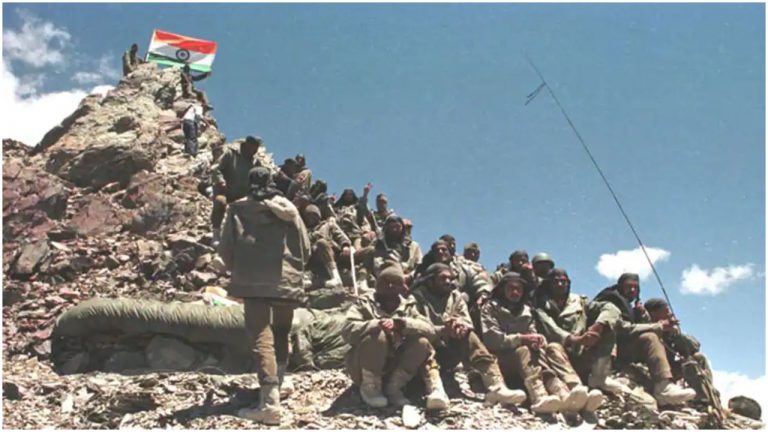
On July 8, 1999, the brave Indian Army soldiers recaptured the majestic Tiger Hills, which lies at 5,307 metres overlooking all other Himalayan mountains and acts as a watchpoint of Drass, one of the most strategic locations near Kargil.

The Battle of Tiger Hill is one of the bravest battles fought around the peak of Tiger Hill by the Indian Army against Pakistan from May to July in 1999, during the Kargil War. Recapturing Tiger Hill was one of the important victories in the entire “Operation Vijay” campaign. The Indian Army had realised that the capture of Tiger Hill would provide a major psychological boost to Indian operations and hurt the morale of Pakistani troops.

The Indian Army had launched a final offensive against the Pakistani intruders and terrorists sitting atop Tiger Hill. The three battalions of the Indian Army, namely 18 Grenadiers, 2 Naga Regiment, and 8 Sikh Regiment, were put into action to capture the peak, with additional support from the artillery.

Considering that Pakistan Army had the advantage of height and precision strikes from the top, the Indian Army had carefully planned the attack on Tiger Hills. The soldiers of Sikh Regiment were asked to launch an attack from the Southern and Northern directions, while the 18 Grenadiers was tasked to capture the western side leading to the hill to prevent the Pakistani Army from sending reinforcement.

On July 6, the final attack to capture Tiger Hill was launched in the dark. First, 18 Grenadiers sub-divided themselves into Alpha, Charlie and Ghatak companies. Then, 8 Sikhs began their attack from the northern and southern end to divert the enemy’s attention. Meanwhile, Ghatak Platoon of 18 Grenadiers silently climbed a steep cliff of over 10,000 feet to reach the top.

The Indian Army surprised the Pakistan soldiers sitting warmly inside their bunkers, who were not at all expecting Indian soldiers to climb the steep rocky mountains. The Pakistani soldiers panicked and began indiscriminate firing, causing severe casualties. Finally, Indian Soldiers managed to regain control of Tiger Hill. The Tiger Hill was declared to be reclaimed on the morning of July 8 as the tricolour was unfurled at the top of the hill.

After a difficult operation, which lasted for nearly three months, the Indian Army re-captured Tiger Hill. In all, 38 Indian troops martyred, while 92 Pakistani troops were killed in action.

Kargil war:

The Kargil war took place between May and July of 1999 in Jammu and Kashmir’s Kargil district. The conflict was orchestrated by the then Pakistan army chief General Pervez Musharraf. While Nawaz Sharif, the then Pakistani Prime Minister claimed he had no knowledge about the planning of the war, Musharraf had later revealed that he knew about the same and was briefed about it 15 days ahead of then Indian Prime Minister Atal Bihari Vajpayee’s visit to Pakistan in February 1999.

The war began with the infiltration of both Pakistani troops and terrorists into Indian territory. The infiltrators positioned themselves in key locations that gave them a strategic advantage during the start of the conflict. After local shepherds became aware of the incursions, the Indian Army was able to ascertain incursion points and launch “Operation Vijay”.

Prime Minister Narendra Modi allocates portfolios to newly inducted ministers, reshuffles some existing ministries: Details

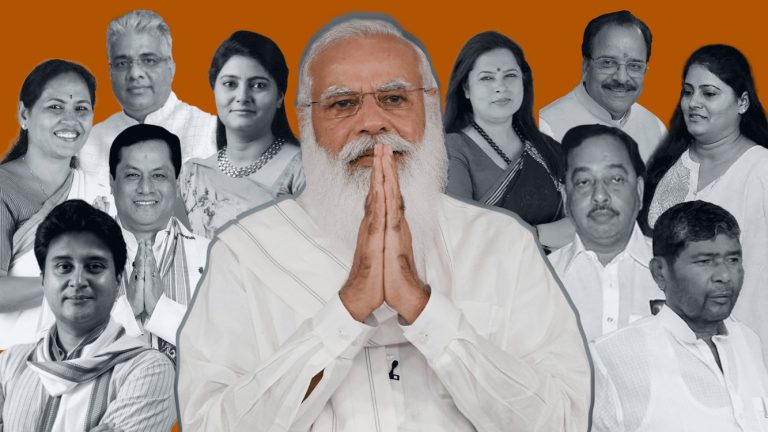
Following the swearing-in ceremony of 43 new ministers inducted into the Narendra Modi government and the resignation of 12 ministers, the portfolio reshuffle of the union cabinet has been announced. While most existing ministers have retained their ministries, some changes have been made in some key ministries. The ministries vacated by the ministers who were dropped from the union ministry have been allocated to new and existing ministers.

New cabinet minister Mansukh Mandaviya has given the ministries of Health & Family Welfare; and Chemicals & Fertilizers. Jyotiraditya M. Scindia has given the Civil Aviation ministry, and the existing minister Hardeep Singh Puri has given two ministries, Petroleum & Natural Gas, and Housing & Urban Affairs.

Ashwini Vaishnaw has been given three big ministries, Railway minister, Communications, and Information & technology. Sarbanananda Sonowal has been made the minister of Ports, Shipping & Waterways, and the AYUSH ministry. Narayan Rane has been given the Micro, Small and Medium Enterprises ministry.

Kiren Rijiju has been elevated to the post of the cabinet minister of Law and Justice, previously held by Ravi Shankar Prasad. Bhupender Yadav got the ministries of Environment, Forest & Climate Change, and Labour & Employment. Parshottam Rupala has been given the responsibility of Fisheries, Animal Husbandry and Dairying. Raj Kumar Singh is the cabinet minister for Power, and New & Renewable Energy.

Anurag Singh Thakur is the new Information and Broadcasting minister, along with the ministry of Youth Affairs and Sports. G. Kishan Reddy has been given Culture, Tourism and Development of North Eastern Region ministries. The Textile Ministry has been transferred from Smriti Irani to Piyush Goyal, who lost the Railway ministry to Ashwini Vaishnaw.

PM Modi has kept the Science and Technology ministry, while the responsibility of the newly formed ministry of Cooperation has been given to home minister Amit Shah.

The Modi government now has 78 ministers. This includes 30 cabinet ministers, 2 Ministers of State with Independent Charge, and 45 Ministers of State, apart from the PM himself. The number of MoS with Independent Charge has come down significantly, as most of them have been promoted to cabinet ranks. Here is the full list of ministers in the union council of ministers, along with their ministries.

Narendra ModiPrime Minister and also in-charge of: Ministry of Personnel, Public Grievances and Pensions; Department of Atomic Energy; Department of Space; All important policy issues; and All other portfolios not allocated to any Minister

CABINET MINISTERS

1. Raj Nath SinghMinister of Defence
2. Amit ShahMinister of Home Affairs; and Minister of Cooperation
3. Nitin Jairam GadkariMinister of Road Transport and Highways
4. Nirmala SitharamanMinister of Finance; and Minister of Corporate Affairs
5.Narendra Singh TomarMinister of Agriculture and Farmers Welfare
6.Dr. Subrahmanyam JaishankarMinister of External Affairs
7.Arjun MundaMinister of Tribal Affairs
8.Smriti Zubin IraniMinister of Women and Child Development
9.Piyush GoyalMinister of Commerce and Industry; Minister of Consumer Affairs, Food and Public Distribution; and Minister of Textiles
10.Dharmendra PradhanMinister of Education; and Minister of Skill Development and Entrepreneurship
11.Pralhad JoshiMinister of Parliamentary Affairs; Minister of Coal; and Minister of Mines
12.Narayan Tatu RaneMinister of Micro, Small and Medium Enterprises
13.Sarbananda SonowalMinister of Ports, Shipping and Waterways; and Minister of AYUSH
14.Mukhtar Abbas NaqviMinister of Minority Affairs
15.Dr. Virendra KumarMinister of Social Justice and Empowerment
16.Giriraj SinghMinister of Rural Development; and Minister of Panchayati Raj
17.Jyotiraditya M. ScindiaMinister of Civil Aviation
18.Ramchandra Prasad SinghMinister of Steel
19.Ashwini VaishnawMinister of Railways; Minister of Communications; and Minister of Electronics and Information Technology
20.Pashu Pati Kumar ParasMinister of Food Processing Industries
21.Gajendra Singh ShekhawatMinister of Jal Shakti

22.
Kiren RijijuMinister of Law and Justice
23.Raj Kumar SinghMinister of Power; and Minister of New and Renewable Energy
24.Hardeep Singh PuriMinister of Petroleum and Natural Gas; and Minister of Housing and Urban Affairs
25.Mansukh MandaviyaMinister of Health and Family Welfare; and Minister of Chemicals and Fertilizers
26.Bhupender YadavMinister of Environment, Forest and Climate Change; and Minister of Labour and Employment
27.Dr. Mahendra Nath PandeyMinister of Heavy Industries
28.Parshottam RupalaMinister of Fisheries, Animal Husbandry and Dairying
29.G. Kishan ReddyMinister of Culture; Minister of Tourism; and Minister of Development of North Eastern Region
30.Anurag Singh ThakurMinister of Information and Broadcasting; and Minister of Youth Affairs and Sports

MINISTERS OF STATE (INDEPENDENT CHARGE)

1.Rao Inderjit SinghMinister of State (Independent Charge) of the Ministry of Statistics and Programme Implementation; Minister of State (Independent Charge) of the Ministry of Planning; and Minister of State in the Ministry of Corporate Affairs
2.Dr. Jitendra SinghMinister of State (Independent Charge) of the Ministry of Science and Technology; Minister of State (Independent Charge) of the Ministry of Earth Sciences; Minister of State in the Prime Minister’s Office; Minister of State in the Ministry of Personnel, Public Grievances and Pensions; Minister of State in the Department of Atomic Energy; and Minister of State in the Department of Space

MINISTERS OF STATE

1. Shripad Yesso NaikMinister of State in the Ministry of Ports, Shipping and Waterways; and Minister of State in the Ministry of Tourism
2. Faggansingh KulasteMinister of State in the Ministry of Steel; and Minister of State in the Ministry of Rural Development
3. Prahalad Singh PatelMinister of State in the Ministry of Jal Shakti; and Minister of State in the Ministry of Food Processing Industries
4. Ashwini Kumar ChoubeyMinister of State in the Ministry of Consumer Affairs, Food and Public Distribution; and Minister of State in the Ministry of Environment, Forest and Climate Change
5. Arjun Ram MeghwalMinister of State in the Ministry of Parliamentary Affairs; and Minister of State in the Ministry of Culture
6.General (Retd.) V. K. SinghMinister of State in the Ministry of Road Transport and Highways; and Minister of State in the Ministry of Civil Aviation
7. Krishan PalMinister of State in the Ministry of Power; and Minister of State in the Ministry of Heavy Industries
8. Danve Raosaheb DadaraoMinister of State in the Ministry of Railways; Minister of State in the Ministry of Coal; and Minister of State in the Ministry of Mines
9. Ramdas AthawaleMinister of State in the Ministry of Social Justice and Empowerment
10.Sadhvi Niranjan JyotiMinister of State in the Ministry of Consumer Affairs, Food and Public Distribution; and Minister of State in the Ministry of Rural Development
11.Dr. Sanjeev Kumar BalyanMinister of State in the Ministry of Fisheries, Animal Husbandry and Dairying
12. Nityanand RaiMinister of State in the Ministry of Home Affairs
13. Pankaj ChaowdharyMinister of State in the Ministry of Finance
14. Anupriya Singh PatelMinister of State in the Ministry of Commerce and Industry
15.Prof. S. P. Singh BaghelMinister of State in the Ministry of Law and Justice
16. Rajeev ChandrasekharMinister of State in the Ministry of Skill Development and Entrepreneurship; and Minister of State in the Ministry of Electronics and Information Technology
17.Su Shobha KarandlajeMinister of State in the Ministry of Agriculture and Farmers Welfare
18. Bhanu Pratap Singh VermaMinister of State in the Ministry of Micro, Small and Medium Enterprises
19. Darshana Vikram JardoshMinister of State in the Ministry of Textiles; and Minister of State in the Ministry of Railways
20. V. MuraleedharanMinister of State in the Ministry of External Affairs; and Minister of State in the Ministry of Parliamentary Affairs
21. Meenakashi LekhiMinister of State in the Ministry of External Affairs; and Minister of State in the Ministry of Culture
22. Som ParkashMinister of State in the Ministry of Commerce and Industry
23. Renuka Singh SarutaMinister of State in the Ministry of Tribal Affairs
24. Rameswar TeliMinister of State in the Ministry of Petroleum and Natural Gas; and Minister of State in the Ministry of Labour and Employment
25. Kailash ChoudharyMinister of State in the Ministry of Agriculture and Farmers Welfare
26. Annpurna DeviMinister of State in the Ministry of Education
27. A. NarayanaswamyMinister of State in the Ministry of Social Justice and Empowerment
28. Kaushal KishoreMinister of State in the Ministry of Housing and Urban Affairs
29. Ajay BhattMinister of State in the Ministry of Defence; and Minister of State in the Ministry of Tourism
30. B. L. VermaMinister of State in the Ministry of Development of North Eastern Region; and Minister of State in the Ministry of Cooperation
31. Ajay KumarMinister of State in the Ministry of Home Affairs
32. Devusinh ChauhanMinister of State in the Ministry of Communications
33. Bhagwanth KhubaMinister of State in the Ministry of New and Renewable Energy; and Minister of State in the Ministry of Chemicals and Fertilizers
34. Kapil Moreshwar PatilMinister of State in the Ministry of Panchayati Raj
35.Su Pratima BhoumikMinister of State in the Ministry of Social Justice and Empowerment
36.Dr. Subhas SarkarMinister of State in the Ministry of Education
37.Dr. Bhagwat Kishanrao KaradMinister of State in the Ministry of Finance
38.Dr. Rajkumar Ranjan SinghMinister of State in the Ministry of External Affairs; and Minister of State in the Ministry of Education
39.Dr. Bharati Pravin PawarMinister of State in the Ministry of Health and Family Welfare
40. Bishweswar TuduMinister of State in the Ministry of Tribal Affairs; and Minister of State in the Ministry of Jal Shakti
41. Shantanu ThakurMinister of State in the Ministry of Ports, Shipping and Waterways
42.Dr. Munjapara MahendrabhaiMinister of State in the Ministry of Women and Child Development; and Minister of State in the Ministry of AYUSH
43. John BarlaMinister of State in the Ministry of Minority Affairs
44.Dr. L. MuruganMinister of State in the Ministry of Fisheries, Animal Husbandry and Dairying; and Minister of State in the Ministry of Information and Broadcasting
45. Nisith PramanikMinister of State in the Ministry of Home Affairs; and Minister of State in the Ministry of Youth Affairs and Sports

Dilip Kumar: From Censor Board under PM Nehru blocking the release of ‘Ganga Jamuna’ to him campaigning for Congress leaders

Muhammed Yusuf Khan, popularly known as Dilip Kumar, breathed his last on Wednesday (July 7) morning. Often referred to as ‘The Tragedy King’, Kumar is credited for introducing a new form of method acting in the Hindi film industry. His demise was mourned by his fans in India and Pakistan. Dilip Kumar was not just a great actor but also a director and a writer. However, he too had to face hurdles in his creative pursuit under the Nehru government.

The Congress party had become the gatekeepers of ‘social morality’ and began interfering in the film industry. Congress MP Lilavati Munshi, who headed the Society for the Prevention of Unhealthy Trends in Motion Pictures, had moved a resolution in the Parliament in 1954 seeking a ban on ‘undesirable’ and ‘objectionable’ scenes. As such, all kissing scenes were banned. The Nehru government thus adopted the resolution in 1959 under the Cinematography Act. Lilavati Munshi also had a problem with Dilip Kumar’s hairstyle. She alleged that it had an ‘adverse’ effect on the youth.

Dilip Kumar’s tryst with censorship under Nehru Raj

When Dilip Kumar’s Ganga Jamuna movie was being made, the actor learnt that it had been banned by the Ministry of Information and Broadcasting (I & B). The then Minister, Dr. BV Keskar, was least bothered about films and also frequently banned the airing of movie songs on All India Radio (AIR). Keskar was firm in his resolve of banning the movie Ganga Jamuna on grounds of violence and vulgarity. The Censor Board had recommended 250 cuts in the movie for it to be released. A desperate Dilip Kumar reached out to PM Nehru for help.

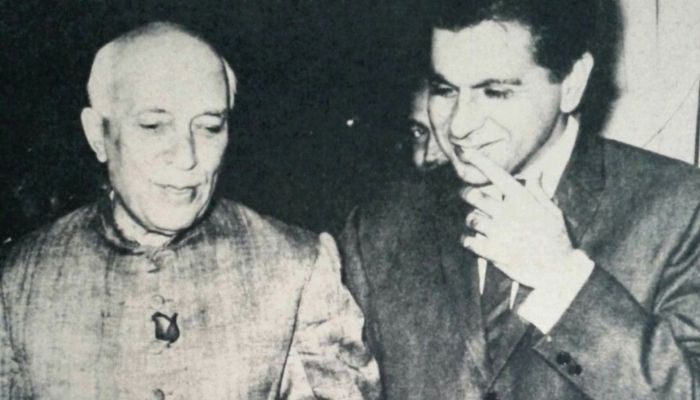
The meeting was scheduled for 15 minutes initially by Nehru’s daughter Indira Gandhi. During the meeting, Dilip Kumar explained how the Censor Board officials behaved like demigods and would not listen to the film directors or producers. He had highlighted several instances where the Censor Board failed to do its job and it somehow impressed PM Nehru. The meeting lasted for over 1.5 hours, following which the ban on his movie Ganga Jamuna was lifted. A few days later, Dr BV Keskar was sacked from the I&B Ministry.

Dilip Kumar – Career in Politics

In his book, ‘Nehru’s Hero: Dilip Kumar in the Life of India’, British Parliamentarian Lord Meghnad Desai wrote that Dilip Kumar was a Nehruvian man and also the hero of the first Prime Minister. PM Nehru invited the veteran actor to address a conference of Indian Youth Congress (IYC) during the 1950s. He even pressurised Dilip Kumar to campaign for VK Krishna Menon in the 1957 Lok Sabha election from the North Mumbai seat. As a result of the actor’s efforts, Menon managed to become an MP. However, Dilip Kumar distanced himself from Menon following India’s loss in the 1962 war.

Reportedly, the actor never joined electoral politics as such and remained committed to the principles enshrined in the Indian Constitution. Kumar was made the Sheriff of Mumbai between 1980-1981 during which he worked for the welfare of the differently-abled people. He had campaigned for several politicians such as VP Singh (1994 fundraiser), Manmohan Singh (1999), and a Congress candidate from Alwar in 1996. It was only in the year 2000 that the veteran actor Dilip Kumar was nominated to the Rajya Sabha by the Congress party from Maharashtra.

During his 6-year tenure, the actor actively participated in parliamentary proceedings and development work. He was also a member of the Standing Committee of the Parliament on Health and Family Welfare. The committee prepared a report, which eventually led to the amendment of the Indian Medical Council Act, 2006. Dilip Kumar also used MPLAD funds for the development of gardens in Bandra Fort, the construction of Jogger’s Park, and the Bandstand Promenade. He was awarded the Padma Bhushan in 1991, followed by Nishan-e-Imtiaz in 1998. The Modi government also awarded him with Padma Vibhushan in 2015.

Cabinet Reshuffle: The new ministers of the Narendra Modi government take oath of office and secrecy at the Rashtrapati Bhavan

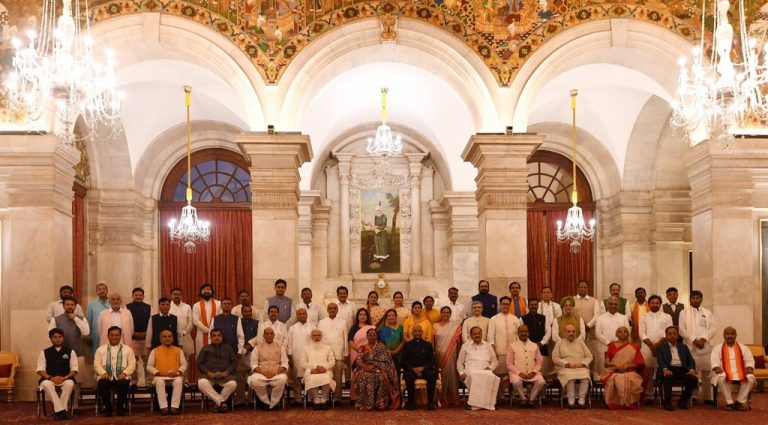
On Wednesday (July 7), a total of 43 leaders of the National Democratic Alliance (NDA) took oath as Ministers in the Narendra Modi government. The oath-taking ceremony started at 6 pm at the Darbar Hall of the Rashtrapati Bhavan. This is the first cabinet reshuffle since the BJP formed the government in May 2019. Among the 43 ministers who took oath, 15 are cabinet ministers, and the rest 28 are ministers of state.

While most of the ministers are new inductions in the ministry, seven existing ministers of state are also taking oath as cabinet ministers, as they have been promoted as cabinet ministers. They are Anurag Thakur, Hardeep Singh Puri, Kiren Rijiju, Parshottam Rupala, G Kishan Reddy, Raj Kumar Singh and Mansukh Mandaviya.

Although 43 new ministers took oath today, the strength of the Modi government will go up by 24 only. This is because, among the 43 ministers who took the oath, 7 are existing Ministers of State promoted to cabinet rank. Apart from that, 12 ministers have resigned from the union ministry today.

The first to take the oath of office and secrecy was former Maharashtra CM Narayan Rane, followed by former Assam CM Sarbananda Sonowal. Senior BJP leader Dr. Virendra Kumar and former Congress leader Jyotiraditya M Scindia were sworn in next.

Here is the full list of new ministers who took oath today:

Cabinet ministers

  1. Narayan Rane
  2. Sarbananda Sonowal
  3. Dr Virendra Kumar
  4. Jyotiraditya Scindia
  5. Ramchandra Prasad Singh
  6. Ashwini Vaishnaw
  7. Pashu Pati Kumar Paras
  8. Kiren Rijiju
  9. Raj Kumar Singh
  10. Hardeep Singh Puri
  11. Mansukh Mandaviya
  12. Bhupender Yadav
  13. Parshottam Rupala
  14. G. Kishan Reddy
  15. Anurag Singh Thakur

Ministers of State

  1. Pankaj Choudhary
  2. Anupriya Singh Patel
  3. Satya Pal Singh Baghel
  4. Rajeev Chandrasekhar
  5. Shobha Karandlaje
  6. Bhanu Pratap Singh Verma
  7. Darshana Vikram Jardosh
  8. Meenakshi Lekhi
  9. Annapurna Devi
  10. A Narayanaswamy
  11. Kaushal Kishore
  12. Ajay Bhatt
  13. B. L Verma
  14. Ajay Kumar
  15. Chauhan Devusinh
  16. Bhagwanth Khuba
  17. Kapil Moreshwar Patil
  18. Pratima Bhowmik
  19. Subhas Sarkar
  20. Bhagwat Kishanrao Karad
  21. Rajkumar Ranjan Singh
  22. Bharati Pravin Pawar
  23. Bishweswar Tudu
  24. Shantanu Thakur
  25. Manjupara Mahendrabhai
  26. John Barla
  27. L. Murugan
  28. Nisith Pramanik

List of Cabinet Ministers who have resigned

Earlier today, as many as 12 ministers tendered their resignations.

  1. Prakash javadekar, Minister of Information and Broadcasting
  2. Ravi Shankar Prasad, Minister for Law and JusticeHarsh Vardhan, Minister of Health and Family Welfare
  3. Ramesh Pokhriyal Nishank, Minister of Human Resource Development
  4. Harsh Vardhan, Minister of Health and Family Welfare
  5. Santosh Gangwar, Minister of State with independent charge in the Ministry of Labour and Employment
  6. Sadananda Gowda, Minister of Chemicals and Fertilizers 
  7. Debasree Chaudhuri, Minister of State for Woman and Child Development
  8. Sanjay Dhotre, Minister of State for Electronics and Information Technology
  9. Thawar Chand Gehlot, Minister for Social Justice and Empowerment
  10. Babul Supriyo, Minister of State for Environment, Forest and Climate Change
  11. Pratap Sarangi, Minister of State for Animal Husbandry, Dairying and Fisheries and Micro, Small and Medium Enterprises
  12. Rattan Lal Kataria, Minister of State for Jal Shakti

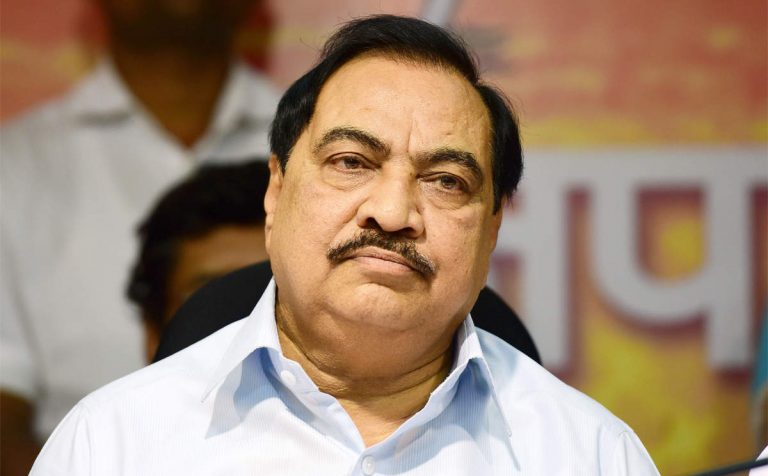
NCP leader Eknath Khadse’s son-in-law Girish Chaudhary arrested by ED in Bhosari land scam

NCP leader Eknath Khadse’s son-in-law Girish Chaudhary has been arrested by the Enforcement Directorate (ED) in a money laundering case pertaining to a land deal in Pune’s Bhosari. 

After being questioned by the agency for 13 hours till late night on Tuesday at the ED office in Mumbai, Chaudhary was arrested by the agency, and he was produced before the special Prevention of Money Laundering Act (PMLA) court. 

As per an ANI update, Chaudhary will be in custody till July 12 for further interrogation. 

In 2017, Maharashtra Anti-Corruption Bureau had registered a case against Eknath Khadse, his wife Mandakini, Girish Chaudhary and the landowner Abbas Aqani after finding irregularities in a 2016 Pune land deal.

When a part of Devendra Fadnavis-led Cabinet, there were allegations against Khadse for misusing his official powers to facilitate the purchase of the Maharashtra Industrial Development Corporation (MIDC) government land by his family in the Bhosari area of Pune. 

The 3.1 acres of land which cost Rs 30 crore was purchased for Rs 3.75 crore, as per reports. 

Following the allegations, Khadse had resigned from the cabinet and then the BJP only to join NCP in 2020. Khadse refuting the allegations had claimed that he had received a clean chit from the ACB in 2018. Khadse also alleged that he and his family are being heckled for quitting BJP and joining the Nationalist Congress Party. 

Advocated Asim Sarode who is fighting a case against Khadse in Pune court has reported the possibility of Khadse and his wife also being arrested. 

Gurdaspur police reject ‘blasphemy’ angle in Army man lynching case in a Gurudwara in Punjab

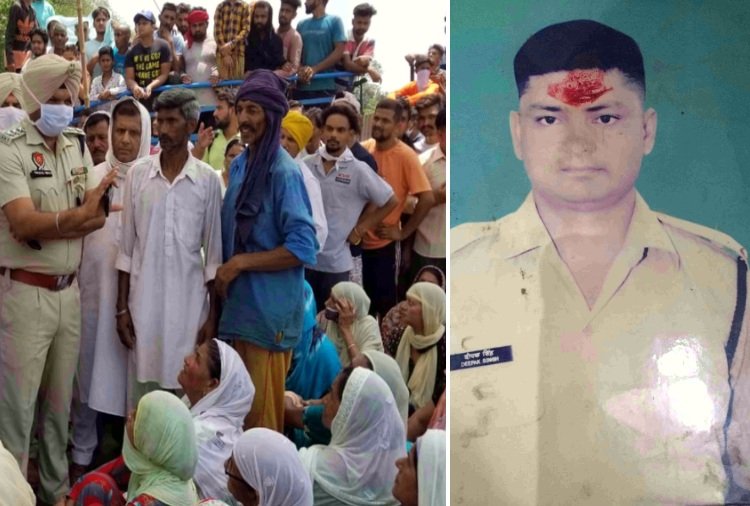
Gurdaspur Police has denied the reports of ‘blasphemy’ angle in the recent murder case of an Army official. While talking to OpIndia, SP Investigation, Harvinder Singh said the reports of blasphemy are baseless. He said, “He [Deepak Singh] deboarded the bus at the wrong location and went to Gurudwara. The lock on the main gate outside Gurudwara was intact, but the strips on the gate were broken. He was drunk at that time. He was beaten up by the caretakers when they noticed him on the premises.” 

When OpIndia asked him if anyone has been arrested, SP Singh said, “We have filed a case in the matter and identified those who were involved in beating him. We will arrest the accused very soon.”

The lynching of Army man in Gurdaspur Gurudwara

On the night between July 1 and July 2, Deepak Singh, an Army staffer, was lynched in a Gurdwara located in a village near Gurdaspur, Punjab. A section of radicals reportedly said that Singh was killed as he had committed sacrilege against the Guru Granth Sahib. Daljit Singh Kashmir alias Bobby was booked as the main accused in the case, among others. Bobby is currently on the run. Damdami Taksal Jatha Rajpura, actor-turned-activist and Republic Day riots accused Deep Sidhu, and several others came in support of Daljit Singh and justified the lynching.

It was also reported that a few days earlier to the incident, Sikh religious leader Baba Ravinder Singh Joni had published a video in which he had called to burn the blasphemer and contact him afterwards. He claimed he would fight the case for the person who burns the blasphemer alive. However, in a recent interview with Seerat Punjabi Di, Baba Joni said as there is no proof of blasphemy in this case, why would he stand with the accused? He said he had sent some learned Sikhs to get more information on the case, and if blasphemy is proved, he would definitely help the accused.

However, he repeated his stand that he would stand with anyone who burns the blasphemer and reward him as well. Joni was reportedly questioned by the Police after his video went viral on social media. Facebook also removed the video from its platform, but it has surfaced repeatedly over the past few weeks.

A separate case of alleged ‘blasphemy’ reported in Mohali, Punjab

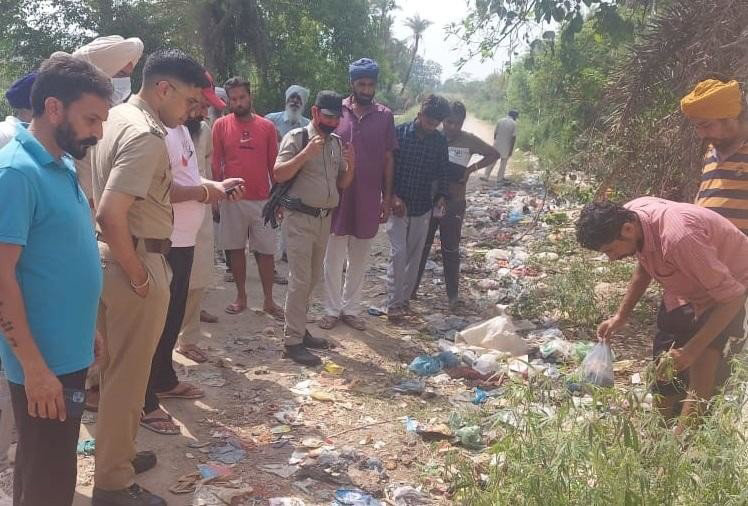
Another case of alleged ‘blasphemy’ has been reported in Mohali district, Punjab. As per reports, the incident took place in Manauli village, near Mohali IT city. The villagers found torn pages of Gutka Sahib (a short version of Guru Granth Saheb that is kept in homes) in several locations in the village. The Police were informed, and as the matter was sensitive, SP City Harvinder Singh took charge of the case. The investigation team from Sohana Police Station also reached the location with forensic teams.

Police searching for the torn pages of Sikh holy book, image via Amar Ujala

According to a report on Daily Post Punjabi, the villagers found out about the incident at around 8 AM. The Granthi of the Gurudwara was informed, who rushed to the location. The Granthi told Daily Post, “We reached the location at around 8 AM. So far, we have found 70+ pages of Gutka Sahib.” When the reporter asked him if they have found all the pages, he said, “No, we are still searching for the remaining pages.” He further added that two days ago, a woman had found two pages on her roof, which she kept at the place of worship in her house. Those pages were also recovered by the Granthi.

OpIndia reached out to SP City Harvinder Singh Virk to learn more about the case. He said, “Police was informed about the torn limbs of Gutka Sahib that were found in Manauli village. A case has been registered based on the complaint of the Sarpanch under Sections 295(a) and 120 of the Indian Penal Code against the unknown person(s). As the investigation is in its initial stage, it would not be correct to make any assumptions. Forensic experts have collected the samples. There was only one CCTV camera in the region, and we are checking the footage to find evidence.”

While talking to Daily Post, SP Virk said that they have full support from the locals and the case would be solved peacefully.

It is notable here that the pages of the Sikh holy book are referred to as ‘ang’ or limbs.