Home Blog Page 4184

Ghazipur border: BKU’s ‘farmer protestors’ attack BJP convoy with sticks, swords and guns, 200 booked

The Uttar Pradesh Police have registered an FIR against 200 alleged farmer protestors for turning violent and attacking BJP workers during a welcome ceremony for the newly-elected BJP general secretary near the Ghazipur border.

200 unidentified Bharatiya Kisan Union (BKU) workers have been booked under IPC section 147, 148, 323, 352, 427 and 506 on the complaint of BJP general secretary Amit Valmiki and other party workers.

Copy of FIR filed by BJP leader.

Valmiki alleged that around 200 BKU workers disrupted the procession held Wednesday noon on the Delhi-Meerut Expressway with black flags, sticks, swords and revolvers. 

The procession reportedly passed from the same area where the protesting farmers have been camping since November 2020 resulting in a brawl between the two parties. 

The protestors are said to have vandalized the cars, attacked BJP workers and hurled casteist slurs. 

President of the BJP’s Ghaziabad unit Sanjeev Sharma revealed, “There were about 300-400 workers including 20-25 women…We were on the other side of the expressway (Delhi-Ghaziabad carriageway), near the starting point of the Hindon elevated road. The farmers were on the other side in their camps. Suddenly, hundreds of them attacked us.”

Following the attack, Valmiki registered an official police complaint at Kaushambi police station.

BKU blames BJP

The Bhartiya Kisan Union on the other hand claim that the entire episode was a conspiracy by the ruling BJP and the Rashtriya Swayamsevak Sangh to delegitimize their seven-month-old protest against the three Farm Bills. The BKU claimed that it was BJP workers who had started raising anti-protest slogans and when stopped by farmer protestors, they had attacked the farmers.

On Wednesday, Rakesh Tikait, the self-acclaimed leader of the farmers also accused the BJP of planning caste-based riots.

Farmers turn violent in Haryana

We had reported earlier how the farmers camping at Hisar, Hayarana got violent and tried to disrupt a Covid-19 facility inauguration event attended by Chief Minister Manohar Lal Khattar in May.

The farmers protesting the Farm Bills had charged at police personnel near a toll close to the event location which resulted in a lathi-charge. The farmers also attacked DSP Abhimanyu, leaving him seriously injured. 

The farmers who were protesting near the Ramayan Toll travelled 18 kilometres to ransack the event. They also charged at the security barricades using tractors to pave their way to the event. As per reports, a huge crowd gathered at the site all of a sudden charging at the security forces which resulted in a clash.
“Mommy, he ain’t giving me votes”: With multiple state assembly elections slated, AAP is behaving like nothing but a cry baby

“Muskuraiye AAP Delhi me hai.” <shudders>

And Kejriwal is readying himself with a smile, which invokes many emotions especially rage, to campaign for your votes in other states as well. Be it Gujarat, Punjab or Uttar Pradesh the Aam Aadmi Party has adopted a unique political campaign, different from the rest to nudge you to cast your vote for them. Here are some of the tricks deployed by the circus that AAP is to stay constantly in the news cycle (other than paid advertisements in national dailies, of course).

I Promise….

Just like how a lover makes endless promises to provide a better and comfortable life, AAP to promises to provide “Free bijli, free pani (free electricity, free water)” to voters in every state they set their foot in. After promising and somewhat fulfilling their word in Delhi (well almost) Arvind Kejriwal has promised the people of Gujarat and Punjab to dispense ‘free bijli pani’ (well almost).

But with the ‘well almost’ level of fulfilling ‘a’ promise and faltering on the others, will the voters overlook the utter failure of the AAP government in Delhi for freebies? What failures you ask? Let’s have a look.

Tareekh pe Tareekh

Delhi Chief Minister Arvind Kejriwal in 2015 had promised to clean the Yamuna river within 5 years. And this was the promise made on the banks of the river when Kejriwal, along with his cabinet colleagues and senior Delhi government officials, had taken part in the first ‘Yamuna Aarti’ held at the Kudesia Ghat.

As per the 2015 Mint article, Kejriwal boasted, “We will revive Yamuna within five years,” adding that the government has a plan to stop the flow of drains in the Yamuna in the next 1-2 years. The aarti was conducted in a very Dharmic style with priests from Varanasi who were specially invited for the program chanting Vedic hymns. 

Seven years later, this is the condition of Yamuna river in Delhi with Kejriwal once again promising that the Yamuna will be ‘nirmal’ again in the next five years.

Kejriwal’s next promise of ‘free pani’ too turned out to be costly for the citizens of Delhi. Black water to no water. One does not know when he will run after a water tanker to get a bucket of water in the scorching heat and amidst the pandemic.

Seems like the AAP leader has made ‘offering freebies’ his life mission for every state they venture in. But as wise people said, there is no such thing as free lunch.

So, with toxic foam making the Yamuna look more like a piece of the sky than a river, videos of polluted water, sorry condition of the redundant Mohalla Clinic, a voter has much to deliberate on to cast its vote for the AAP.

Delhi choking

Other than toxic Yamuna water and subpar drinking water and the lack of it, another problem that plagues Delhi is pollution. Once again, the AAP government has assured to free the national capital from pollution in the next few years and all it does is implement ‘odd-even’ rule every time the stubble is burnt by farmers in neighbouring state, especially Punjab.

And if that was not enough, the Kejriwal government has allowed ‘farmer’ protestors to choke Delhi again from all borders, disrupting livelihoods and lives of people who regularly commute on those roads. In 2019-2020 too he let the anti-CAA protestors sit in middle of the road holding up traffic movement for months on end. 

And then the oxygen crisis during the second wave of COVID pandemic. Let us never forget the Delhi state government sat tightly without even making an effort to arrange transport chain of oxygen being arranged by Centre. Interim report of audit committee states that the state government may have exaggerated oxygen demand. This may have triggered chaos amid the crisis. Perhaps lives could have been saved had Kejriwal government not sat pretty in their offices and did something.

The blame game 

Aam Aadmi Party leaders live in a world where they think that the entire world is conspiring against them. Like the damsel in distress in a Bollywood movie, AAP is fighting with the ‘evil BJP’.

Promises not fulfilled? Blame BJP. Agencies scrutinising your financial records to check for evasion, fraud? Blame BJP. Their corporator gets accused of murdering a cop? Blame BJP. Their MLA endorses violence and beheading of someone in name of religion? Blame BJP.

Take a look.

Screenshot of India.com article
Screenshot of Hindustan Times article
Screenshot of Republic article
Screenshot of OpIndia article

And latest:

AAP has not hesitated for blaming the opposition parties for their failure to conduct rallies, conferences. The latest example being Punjab.

However, this is a permanent trick up Kejriwal’s sleeves- ready to be used whenever convenient.

Screenshot of Hindustan Times article

How could AAP not blame the neighboring states for the pollution and water crisis? Deflecting the blame once again, an AAP MLA passed the buck to Haryana for the water shortage in Delhi.

Screenshot of Times Now article

Dusting responsibility off one’s shoulder, Kejriwal has consistently blamed Punjab and Haryana for the rise in pollution in the national capital.

Screenshot of Hindustan Times article

Any indefensible attack on AAP leaders, and the party is ready with a new headline to blame the BJP for it. Fascinating, when a party leader blamed the Bhartiya Janta Party for her divorce even.

This is not it, Delhi CM Kejriwal once even blamed Prime Minister Narendra Modi for traffic jam, thereby, attracting trolls for his hysterical attack.

Screenshot of India.com article

That is not all. AAP leaders are regularly subjected to dubious ‘attacks’ where someone usually throws ink on them or just slaps them. The motley of ‘activists’ and ‘journalists’ who refuse to accept testimonies of rape victims in Bengal just because they supported the BJP will lap up the ‘ink attacks’ on AAP leaders. These ‘ink attacks’ on AAP leaders in BJP ruled states is the ‘proof of fascism’ under Narendra Modi.

This is how it is. The drama that surrounds Aam Aadmi Party.

No wonder they say you elect a joker, you get a circus.

Pakistan’s poor quality Made In China missiles ‘not working’: Report

In response to India’s robust air defense capabilities, Pakistan had inducted a Chinese-made Low-to-Medium Altitude Air Defence System (LOMADS) LY 80 on March 12 this year. However, in a major embarrassment to Pakistan, the low-quality Chinese-made missiles are reportedly ‘not working.’

As per a Times Now report, the Chinese technicians are in Pakistan for the past two months making an attempt to repair the systems. To add to it, Pakistan has placed an order for six more such systems. 

LOMADS LY-80 capability includes intercepting and destroying aerial targets flying at low and medium altitudes. Pakistan has deployed the LOMADS at nine locations in the country with a Chinese technician team sent to each of these locations to fix the systems.

As per the Times Now report, Pakistan is desperate for the Air Defence System and has signed a contract with China for six more of such systems.

India successfully test-fires Agni P

On the other hand, India successfully carried out the test-firing of Agni P- a new missile in the Agni series off the coast of Odisha on Monday. 

DRDO had updated after the successful test, “Various telemetry and radar stations positioned along the eastern coast tracked and monitored the missile. The missile has followed textbook trajectory, meeting all mission objectives with a high level of accuracy.”

Prior to that, the Defence Research and Development Organisation (DRDO) successfully test-fired an extended range version of indigenously-developed Pinaka rocket last week at the Integrated Test Range (ITR) in Chandipur.

8 European nations accept Covishield in their Green Pass after India’s warning to quarantine their citizens. Details

Seven EU nations and Switzerland have accepted India’s Covishield in their ‘Green Pass’, that is, persons vaccinated with Covishield will be allowed to travel in those nations.

The development has come after India had told EU nations that it would allow EU travellers in India without mandatory quarantine only on the basis of reciprocity. India had conveyed to the EU that they need to include India-made Covishield and Covaxin in their ‘Green Pass’ that comes into effect from July.

Earlier, India had cautioned against the European Union’s reluctance in accepting Indian-made vaccines for its ‘vaccination passport’. The Indian government had categorically stated that it will not recognise the EU’s digital Covid certificate until it recognises Indian vaccines Covishield and Covaxin in the certificate, reports Hindustan Times.

In what seemed to be the first diplomatic retaliatory move against vaccine nationalism, the Indian government had said it will only recognise the EU digital Covid certificates on a reciprocal basis.

The reciprocal approval means that EU’s vaccine certificates will not be accepted in the country, and people from the EU will have to face mandatory quarantine upon arrival in India unless the European Union accepts Covishield and Covaxin certificates in its digital certificate, also known as “Green Pass”.

“We have requested the EU Member States to individually consider extending the similar exemption to those persons who have taken Covid-19 vaccines in India, that is, Covishield and Covaxin, and accept the vaccination certificate issued through the CoWIN portal,” a senior MEA confirmed to the Hindu.

The EU digital Covid certificate or “Green Pass” will exempt those who are fully vaccinated with a vaccine approved by the EU from mandatory quarantine. The EU “Green Pass” is expected to come into effect from July 1.

Meanwhile, the EU has claimed that SII had not applied for the permissions with the European Medicines Agency, and had promised to consider its case as soon as it applied. However, New Delhi contended that the EMA must consider the Indian-made vaccines by accepting the CoWin certificate, regardless of the applications.

On Tuesday, Serum Institute applied for EU’s authorisation for the use of Covishield through its European partner, AstraZeneca. However, European Medicines Agency said they have not received a request for the approval of Covishield.

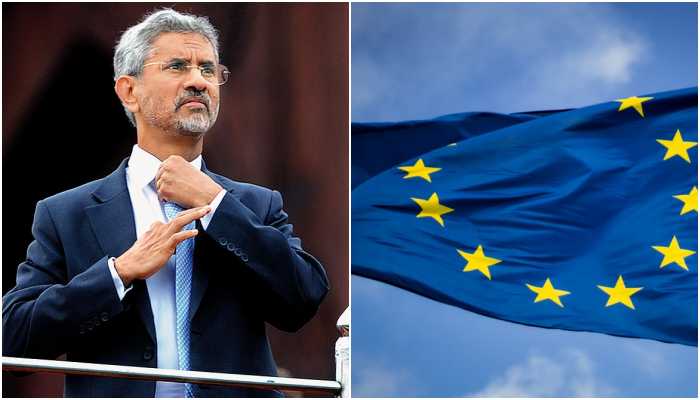
Dr Jaishankar takes up issue of ‘vaccine passport’ with EU’s top officials

On Tuesday, during his meeting with top EU officials, Foreign Minister Dr S Jaishankar took up the issue of the inclusion of Covishield in the vaccination passport initiative of the European Union. “Discussed vaccine production and access. Took up ‘Covishield’ authorisation for travel to Europe. Will be following up,” Dr Jaishankar tweeted.

The European Union’s ‘vaccine passport’ programme has approved only four vaccines, Vaxzevria (Oxford-AstraZeneca), Comirnaty (Pfizer-BioNTech), Spikevax (Moderna) and Janssen-Johnson & Johnson. Interestingly, Covishield, which is exactly the same as AstraZeneca’s – Vaxzevria, has failed to make the cut. Covaxin has not been considered, largely because it is yet to get WHO approval.

Meanwhile, the EU also clarified on Tuesday that the “Green pass” is not a mandatory condition to travel to Europe as individual member states are free to accept vaccines approved by WHO such as Covishield.

74% Indian Muslims prefer Sharia over Indian laws: Pew Research

On June 29, Pew Research Centre published findings of a survey that stated 80% of Muslim men do not want their women to marry non-Muslims. The study titled ‘Religion in India: Tolerance and Segregation’ talked about religion across India. The survey was based on face-to-face interviews of 29,999 Indian adults that included 22,975 Hindus, 3,336 Muslims, 1,782 Sikhs, 1,011 Christians, 719 Buddhists, 109 Jains and 67 who belonged to another religion or identified themselves as religiously unaffiliated. It was conducted under the direction of RTI International between November 17, 2019, and March 23, 2020.

Indians are religiously tolerant, respecting other religions is seen as a core value of being an Indian

Over 84% of the people who participated in the survey emphasized religious tolerance. However, they asserted the fact that the majority of Indians live religiously segregated lives. For most people, respecting all religions is a part of their identity as an Indian. The survey stated, “People in all six major religious groups overwhelmingly say they are very free to practice their faiths, and most say that people of other faiths also are very free to practice their own religion.” Notably, due to differences between the religious practices, the majority of the Indians prefer to stay in a closed circle of people from their own religion.

Source: Pew Research Center

‘There is a need to stop interfaith marriages’

A large share of Muslims is against interreligious marriages. As per the survey, 80% of Muslims say it is very important to stop Muslim women from marrying outside their religion. 76% want to stop Muslim men from marrying non-Muslim women. In the case of Hindus, while 67% did not want Hindu women to marry non-Hindus, 65% were not in favour of Hindu men marrying non-Hindu women.

80% of Muslims want to stop interfaith marriages. Source: Pew Research Center

The link between national identity, religion and language

According to the survey, 64% of Hindus believe to be truly Indian, it is important to be a Hindu. 80% of these individuals link the Hindi language to the national identity as well. The idea of such an interlinked connection among Hindus is most visible in the Hindi belt, where Hindi is the major one of over a dozen spoken languages.

Dietary laws and religious identity go hand-in-hand

Muslims consider eating pork as Haram. In the survey, 77% of Muslims believe that a person cannot be a Muslim if they consume pork. On the other hand, as Hindus traditionally see cows as sacred, a large share of Hindus (72%) believe that a person is not Hindu if they eat beef. 

Muslims prefer Shariah over regular courts

As per the survey, 74% of Muslims are in support to have access to the existing system of Islamic courts. Notably, since 1937, they have the option to resolve family and inheritance-related cases in officially recognized Islamic courts, known as dar-ul-qaza. Religious magistrates identified as Qazis oversee these courts and follow Shariah principles. However, decisions taken by these courts have no legal binding.

Muslims prefer Shariah courts. Source: Pew Research Center

While the majority of Muslims want access to Islamic courts, the followers of other religions are not in favour of allowing Muslims to have a separate court system.

Washington Post author supports inclusion of kinks in Pride marches, celebrates taking her minor children to Pride rallies attended by kinksters in gay bondages

In an article published recently in the Washington Post, author Lauren Rowello batted in favour of keeping the kink community in Pride month rallies. She also argued in favour of exposing children to various acts performed by kinks in the Pride rallies, apparently to help children learn about the “scope” and “vitality” of the queer life. Lauren Rowello is a writer and activist, who describes herself as a ‘former sex worker’ in her Twitter bio. The ‘gendervague’ author’s prefered pronoun is ‘they’, although this report will use the ‘she’ pronoun for the sake of simplicity.

According to its definition, kink is “unconventional sexual taste or behaviour” and includes a wide variety of behaviours and preferences. That includes BDSM — a subset of kink — which stands for bondage and discipline, dominance and submission, sadism and masochism. There is a raging debate in the western countries whether they should allow kink in Pride as their inclusion is bound to have an effect on children and minors who attend the Pride marches.

As Pride Month draws to a close, author Lauren Rowello defended in her article the inclusion of kink in Pride. To drive her point home, author Rowello proudly cites one of the instances when she took her children to attend a Pride rally. The author says her elementary-schooler curiously pointed in the direction of bare-chested men showcasing gay bondage and was inquisitive about what they were doing when one of the partners playfully spanked the other with a flog. She also took her other child, a toddler, along with her to attend the Pride rally.

Source: Washington Post

While the author admits that her children were not old enough to understand the nuance of the situation, she nevertheless took them to the rally, supposedly to make them realise that the people whom they saw in the march were members of community celebrating who they are and what they like to do.

Every year as Pride Month approaches, a fierce debate erupts as to whether kink belongs to Pride at all. For a long time now, kinks are considered pariahs as far as Pride month rallies are concerned. The critics who want to keep kinksters out of the Pride often cite the presence of children as their primary concern. They have argued that kink is a highly sexualised experience that children should not be subjected to, at least at their tender age. Many have supported this stand, arguing that Pride rallies are attended by minors and therefore kinksters should not be allowed to be a part of it.

The self-expression of kinks is mistaken as obscenity: WaPo author

But for the author, these concerns of impressionable children getting influenced by the kink culture is not a worthy enough reason to preclude kinksters from attending Pride rallies. The author contends that policing how others turn up at the Pride rallies would not protect or uplift young minds. Instead, she terms the exclusion of kink from the pageantry of queers as an attempt to homogenise self-expression and would be more harmful to the children.

“When my own children caught glimpses of kink culture, they got to see that the queer community encompasses so many more nontraditional ways of being, living, and loving,” the author wrote in her Washington Post column.

Defending the presence of kinksters in Pride rallies, the author says their self-expression is mistaken as obscenity by the anti-kink advocates, stating that they are not engaged in sex acts in the rallies. She also said that manipulative language regarding safety and privacy is used by the critics to allege that attendees are exposed to vulgarity and overt displays of sexuality without their permission or consent.

Inclusion of kink in Pride would expose children to alternative experiences of sexuality: Washington Post article

When children are exposed to kink culture, the author says, they realise the existence of alternative experiences and behaviour of sexuality that they would otherwise find it hard to accept and reconcile with their reality as they grow old. This experience, author alleges, provides children with the confidence to overcome their hesitance in embracing their true self.

“Children who witness kink culture are reassured that alternative experiences of sexuality and expression are valid — no matter who they become as they mature, helping them recognize that their personal experiences aren’t bad or wrong, and that they aren’t alone in their experiences,” the article says.

“If we’re afraid to talk about kink with our children, we prioritize the status quo — sanitizing and censoring their access to information about appropriate and normal self-expression. These are the very attitudes that made Pride necessary — and life-affirming — for so many of us in the first place, and we have no business imposing them on the next generation” the author said while arguing about straitjacketing children with the limited worldview and blocking their access to the reality of kink culture.

CPI(M) leader arrested in the Kozhikode airport gold smuggling case

Communist Party of India (Marxist) leader and party’s social media cell member Arjun Ayanki was arrested by the Customs Department in Kerala’s Kochi on Monday for his involvement in a gold smuggling case. The Communist leader Arjun Ayanki is the prime suspect in the recent gold smuggling attempt at the Kozhikode International airport in Karipur.

According to the reports, the Customs Department arrested CPI (M) social media campaigner Arjun Ayanki, who is also the former Kannur unit secretary of the party’s youth wing DYFI, for alleged connection with the smuggling of 2.23 kg gold from Dubai to Kozhikode.

On June 21, Customs officials had seized 2.33 kilograms of gold from a Malappuram native named Mohammed Shafeeque Melethil from the Karipur airport in Kozhikode. On the same day, five people had died in a road accident in Ramanattukara of the Kozhikode district. Later, it was revealed that the accident had occurred when these five youths had chased another rival smuggling gang, thinking that they had possessed the gold allegedly attempted to smuggle by Mohammed Shafeeque.

The deceased youth was not aware that the accused Mohammed Shafeeque was already arrested. In a statement, the Customs Department had said that CPI(M) leader Arjun Ayanki had links with the accused Mohammed Shafeeque. The latter had stated that Arjun had been waiting for him outside the Karipur airport.

According to the police, Arjun maintained close links with the smuggling racket and allegedly went to Kozhikode airport to receive the smuggled gold from Mohammed Shafeeque.

Many CPI(M) leaders suspected to be involved in gold smuggling

The arrest of a CPI(M) leader has resulted in a major embarrassment for the party, especially Kerala Chief Minister Pinarayi Vijayan, as the initial investigation has revealed names of a few other CPI(M) and DYFI leaders in Kannur. The car used by Arjun was allegedly owned by DYFI leader C Sajesh, who is incidentally a gold assayer with a CPI(M)-controlled cooperative bank. The role of another Communist leader, Sreejesh Das, is under investigation.

Meanwhile, a local court in Ernakulam has granted seven days custody of Arjun Ayanki to the Customs department. In its submission, the Customs said that the initial investigation has revealed that Ayanki was living a luxurious life without known sources of income. He lured many youngsters into gold smuggling and used them as carriers for snatching smuggled gold and giving protection for smuggled gold.

Earlier on Sunday, the Kannur police had traced the car used by Arjun near Pariyaram Medical College Hospital in the city. The police suspect that the car was used for the smuggling of gold. 

World’s second-largest kids’ apparel manufacturer Kitex Group withdraws projects worth Rs 3,500 crore in Kerala, alleges witch-hunt by authorities

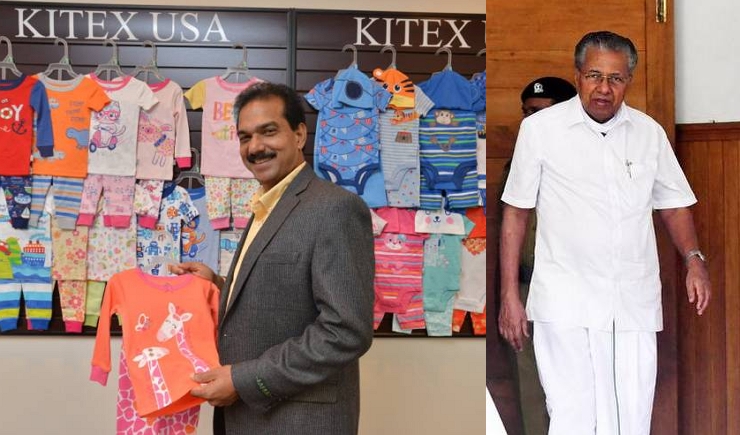
On June 29, Kitex Group, the largest private-sector employer in Kerala, announced the withdrawal of an Rs.3,500 crore investment project from the state. Kitex Group alleged that the state authorities are running a witch-hunt against the company. Notably, Kitex Garments is the second-largest kids’ apparel manufacturer in the world.

The company has announced that it is scrapping the planned projects to open an apparel park in Kochi and establish industry parks at Thiruvananthapuram, Kochi and Palakkad. The memorandum of understanding for the said project was signed with the Kerala government at the ‘Ascend Global Investors Meet’ in Kochi in January 2020. The company was to invest Rs 3,500 in these projects.

Sabu M Jacob, chairman and managing director of Kitex group, said that the company has already acquired 30 acres of land for the apparel park at Kizhakkambalam in Kochi. If completed, the project would have provided jobs to over 20,000 people. The three industrial parks that were supposed to be established in the state would have promoted start-ups by providing them with all infrastructural facilities. Each of these parks would have had the potential to generate over 5,000 direct job opportunities.

Jacob added, “The decision to scrap the project has been taken as I am fed up with the continuous harassment at the hands of the authorities. Whoever invests in Kerala will lose peace of mind and will be driven to suicide.” He further stated that 11 teams of officers from various departments raided the company in the last month, including teams from the Department of labour, factories and boilers, and even a team led by the district collector.

He said, “On Tuesday, it was the turn of the pollution control board. Each team has 40 to 50 officers and searches every nook and corner of the company. They grill employees for hours but do not reveal what violations they have found. The Kitex factory has been functioning here for the past 26 years, and we have 11,000 employees. They arrive with a huge team violating Covid protocols and bring camera teams of online media.”

While calling out the Kerala government for a non-business-friendly environment in the state, he said, “While our neighbouring states give a red carpet welcome to investors, the Kerala government treats them as traitors. They are branded as bourgeoisie, exploiters, encroachers, capitalists and criminals and humiliated in public.”

Sabu further added that the other states also provide additional facilities like free land, water, power, tax holiday to investors, which are not provided by the Kerala govt. He said, “There are states that provide the PF and ESI share of the employees. Some states even offer Rs 5,000 salary for the employees for five years. We don’t demand any benefits from the government. At least they can stop harassing us. If the situation continues, Kerala will turn into a graveyard of industries.”

Kitex’s shares plunged after the announcement

The announcement had an adverse effect on the share price of Kitex Group. The share price went down by 10% in the initial hours but recovered a bit later in the day. The share price at NSE reached Rs 111.35 earlier in the day, compared to the closing price of Rs 124.80 yesterday. The stock ended at Rs 114.05 today, marking a decline of around 8%.

Another reason for the fall in the share price was its Q4 results. The reported a 49.3% decline in net profit of Rs 9.73 crore in January-March 2021 quarter, as against a net profit of Rs 19.22 crore in the same quarter previous year. For the full financial year 2020-21, the net profit of the company fell 45% to Rs 59.9 crore, against Rs 108.67 crore in the previous financial year.

Kerala ranks 28th in Ease of Doing Business

Out of 29 states, Kerala ranks 28th in Ease of Doing Business. Jacob said, “The only other state lagging behind Kerala in Tripura and it is evident from this fact that how far Kerala is business-friendly. States which had been traditionally lagging behind, like Uttar Pradesh, Assam, Orissa and Jharkhand, had improved their rankings. UP which was far behind in the rankings, has come to the second place, emerging as a hot destination for investors.”

He further added that during the 1970s and 1980s, trade unions killed the industries in the state. However, now it is the pseudo-environmentalists, bureaucrats and politicians who do not want the projects to flourish in the state. “They will try to scare away those who won’t yield to their interests,” he said.

UP: Supreme Court praises Yogi government for providing help to migrant workers amid Covid-19 crisis

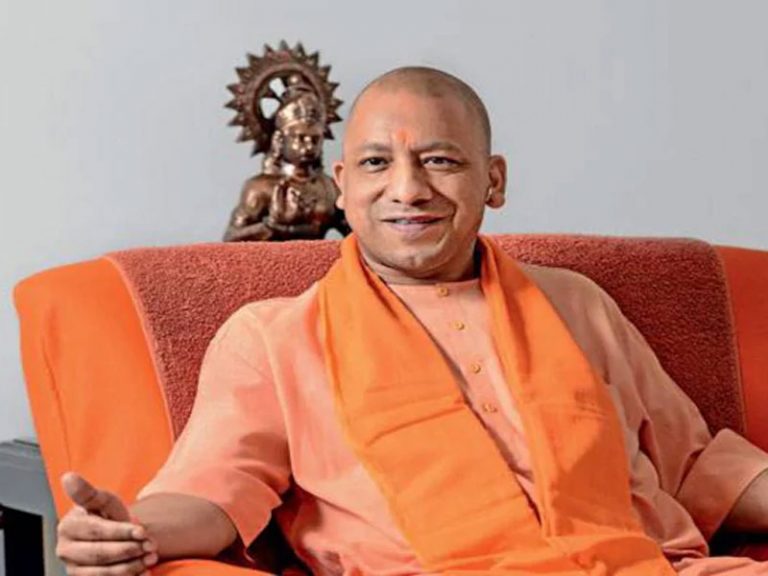
On June 29, the Supreme Court acknowledged the Uttar Pradesh government’s efforts to manage the migrant crisis during the Covid-19 pandemic. A government spokesperson said that the apex court praised the government for establishing a “robust system of registration of migrant workers” when they returned to the state after the lockdown was imposed across the country in 2020.

On May 22, 2021, the UP government had submitted a detailed affidavit in which the steps govt took for the migrants were mentioned. The affidavit was mentioned in the order passed by the court while disposing of two petitions related to the migrant crisis last year. The court said, “A portal of the Relief Commissioner has been created on which all relevant details of all migrant workers are to be uploaded in real-time.”

In its observation, the court quoted the data submitted by the director, Training and Employment (UP). The data states that 37,84,255 migrant workers came back to their native places during the Covid-19 pandemic period. Based on the data, the court noted, “Their skill mapping has been completed, and 10,44,710 labourers have already been given employment under different schemes of the state government.”

It further noted that as per the data available from April 1, 2021, to June 8, 2021, details of 3,79,220 migrant workers have already been registered and their skills mapped on the portal (rahat.up.nic.in) launched by the UP government.

Notably, the Uttar Pradesh government is also providing financial support to migrant workers under DBT. The Relief Commissioner’s portal is being used to ensure the money reaches the migrant workers. The decision about the fund transfer was taken by the state cabinet on May 15.

In its statement, the spokesperson said that the court had issued certain guidelines and asked states and UTs to follow them to take care of the migrant workers. He added, “The court had taken suo motu cognizance of the plight of the migrants and later added an intervention application in the writ petition.”

Uttar Pradesh achieved several milestones while providing support to migrants

Since the pandemic kicked in, the Uttar Pradesh government acted swiftly to ensure support is provided to all migrant workers who come back to their native places amid the nationwide lockdown. In May 2020, when migrant workers started to return to UP, CM Yogi set up a migrant commission to find ways to provide jobs to the workers. He also directed the officials to ensure no migrant have to leave UP once things get normalized. A lot of steps were taken for the benefit of migrant workers.

In November 2020, it was reported that UP ranked number one in providing jobs to migrant workers by generating ten crore person-days under Gareeb Kalyan Rojgar Abhiyan. The said scheme was announced by PM Modi in May 2020 to provide jobs to migrant workers.

In May 2021, CM Yogi Adityanath had directed officials to start community kitchens to provide food for the poor amid lockdown. He asked them to ensure there is no scarcity of food for labourers, daily wage workers, street vendors, handcart pullers and others and that they are provided with proper meals during the course of lockdown.

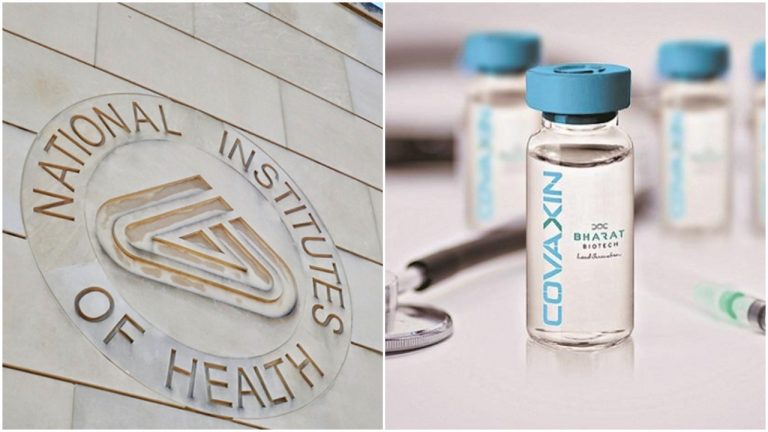
US govt’s primary health research institute NIH says Covaxin is highly effective against Alpha and Delta variants of Covid-19

In a massive endorsement to the Indian-made Covid-19 vaccine Covaxin, the top medical research agency of the United States government has stated that India’s first indigenous Covid-19 vaccine effectively neutralises both the Alpha (B.1.1.7) and Delta (B.1.617) variants that caused the second wave of the Chinese pandemic across the country.

The National Institute of Health, the primary agency of the US government responsible for biomedical and public health research, has endorsed Covaxin, developed by Bharat Biotech in collaboration with the Indian Council of Medical Research, stating that the vaccine effectively neutralises both Alpha and Delta variants of coronavirus.

Following its latest results, the NIH said their analysis of blood serum from two people who had received Covaxin showed them that the vaccine generated antibodies that effectively neutralise the B.1.1.7 (Alpha) and B.1.617 (Delta) variants of Sars-CoV-2.

It is worth noting that according to a significant discovery made by scientists, the origins of the B.1.617 strain of the Sars-Cov2 virus are traced to the United States and Denmark. The B.1.617 strain is largely responsible for the ongoing second wave in India, and it was being dubbed as the Indian variant. However, now scientists have determined that the mutations present in the variant had first emerged in California and Denmark.

According to WHO, Delta is the most transmissible of the variants identified so far, which has been identified in at least 85 countries.

Adjuvant developed with a partnership with Bharat Biotech contributed to success: NIH

The top American health research institute also said that an adjuvant developed by Bharat Biotech with funding from the institute contributed to the success of Covaxin, which has been inoculated to nearly 25 million people in India and abroad.

Adjuvants are substances formulated along with the vaccine to increase immune responses and enhance the effectiveness of the vaccine. An adjuvant named Alhydroxiquim-II, developed the biotech company ViroVax LLC of Lawrence, Kansas with support from the NIAID Adjuvant Development Program, was used in Covaxin.

According to NIH, Bharat Biotech’s Covaxin comprises a disabled form of Sars-CoV-2 that cannot replicate, however still stimulates the immune system to make antibodies against the virus. “The published results from a phase 2 trial of the vaccine indicate that it is safe and well-tolerated,” the NIH said, adding that safety data from a phase 3 trial of Covaxin will be made public by this year end.

“Meanwhile, unpublished interim results from the phase 3 trial indicate that the vaccine has 78% efficacy against symptomatic disease, 100 per cent efficacy against severe Covid-19, including hospitalisation, and 70% efficacy against asymptomatic infection with Sars-CoV-2, the virus that causes Covid-19,” it said.

Further, the NIH said, “The results from two studies of blood serum from people who had received Covaxin suggest that the vaccine generates antibodies that effectively neutralise the B.1.1.7 (Alpha) and B.1.617 (Delta) variants of Sars-CoV-2, first identified in the UK and India, respectively,” the NIH said.

Earlier, Anthony S Fauci, America’s top pandemic expert and the director of the National Institute of Allergy and Infectious Diseases (NIAID), which is part of NIH, had said that India’s indigenous Covid-19 vaccine Covaxin has been found to neutralize the B.1.617 variant of the deadly virus.

“I am pleased that a novel vaccine adjuvant developed in the US with NIAID support is part of an efficacious Covid-19 vaccine available to people in India,” Dr Fauci said reacting to the recent studies.

Covaxin and Covishield effective against all four variants of Covid-19: Indian govt

The centre has stated that both Indian-made vaccines – Covishield and Covaxin work against Sars-CoV-2 variants Alpha, Beta, Gamma and Delta, while effectiveness tests against the Delta Plus variant are ongoing, the government said on Friday. Currently, there are four variants of concern of the coronavirus disease, Alpha, Beta, Gamma and Delta, with Delta Plus being a sub-lineage of the Delta variant has also caused concerns for health experts in the country.

Addressing a press conference, ICMR Director General Balram Bhargava said reduction of neutralisation capabilities of vaccine with different variants, which is based on global literature, shows that Covaxin does not change with the Alpha variant at all and so it is same as it is with the standard strain.

“Covishield reduces slightly with Alpha, by 2.5 times. “Covaxin is effective for the Delta variant, but antibody response is slightly reduced to a three-fold reduction for Covishield, a two-fold reduction for Pfizer and Moderna, and a seven-fold reduction for Pfizer and Moderna,” he said.