Scientists from the Council of Science and Technology and the Scientific Council, Madhya Pradesh, Indian Institute of Technology, Indore, and Indian Institute of Tropical Meteorology (IITM) have reportedly started working on a project to find out whether the Vedic ritual of Som Yagya, which is said to bring rain, is effective.
As per reports, around 15 scientists arrived with their equipment at the Mahakaleshwar temple in Ujjain in Madhya Pradesh on 24th April to experiment. There, they performed a Som Yagya as per the Vedic rituals. After the Yagya, they measured multiple parameters, including the release of gases, changes in temperature and humidity, aerosol behaviour, and cloud condensation over a period of six days from 24th April to 29th April.
In Som Yagya, the yagya (havan) is performed with the juice of a medicinal plant called Samovalli (Sarcostemma brevistigma, a kind of oleander). The juice of the plant, when offered into the fire after mixing with the ghee obtained from the milk of an indigenous cow, is said to purify the environment and promote cloud condensation and thus cause rain. The scientists said that the intention behind the project was to validate the religious beliefs and traditions. The project was facilitated by an NGO called Akshay Krishi Pariwar, which works to link modern and traditional agricultural practices.
The project to continue for years
Rajesh Mali, one of the scientists and a retiree from the Indian Meteorological Department, said that the project will continue for a few years. “This is a unique project which started on April 24 and will go on for the next few years. In this project, we are measuring various things by using at least 13 instruments. The two main instruments are the Cloud Condensation Nuclei Counter (CCN counter) and a Tethersonde (an instrument that measures atmospheric parameters). CCN measures the concentration of aerosol particles in the air to build blocks of cloud droplets. Tethersonde, a balloon with a sensor, measures pressure, temperature and humidity in the area where the Yagya is being performed, Mali said.
Scientists are trying to find evidence for the centuries-old practice
Dr Yang Lian, another scientist from the regional office of IITM, said the team of scientists is constantly recording the data to conduct a comparative study. “After measurement, we will analyse the effect of Yagya on the environment. We are noting down the data four times a day — two times during Yagya and in the morning and evening. The comparative data will help us to conclude our study.” Anil Kothari, the director of the Madhya Pradesh Council of Science and Technology and a part of the team, said, “This study will work as a bridge between science and ancient practices of India. It will offer new insights in the field of environment and science.”
Gajanand Dange, convener of Akshaya Krishi Pariwar, said that if the study failed, then the team would look for new machines for measuring atmospheric pressure. He added that the purpose of the project is to provide “scientific evidence” for the centuries-old traditional beliefs. “Our motive is not to question the efficacy of Yagyas and their effect mentioned in the Vedas. Our effort is to provide supportive scientific evidence so that these traditional methods can be used by the scientists to deal with problems such as global warming and drought,” he said.
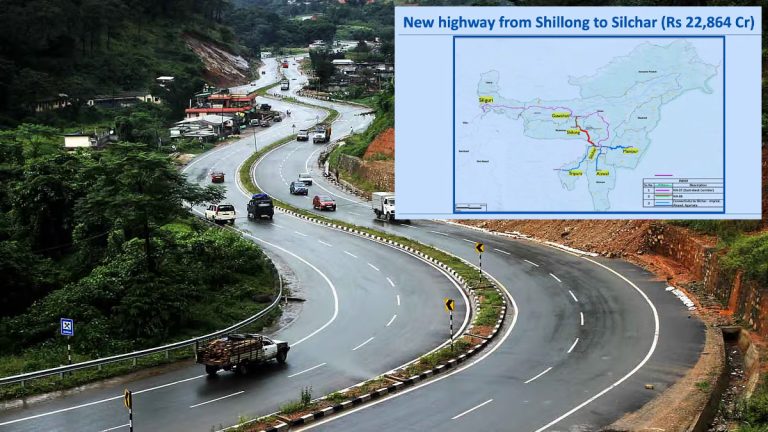
The Cabinet Committee on Economic Affairs, chaired by Prime Minister Narendra Modi, on Wednesday approved a greenfield highway to improve connectivity on the Guwahati-Shillong-Silchar route. The govt approved the proposal for the Development, Maintenance and Management of a 4-lane Greenfield access-controlled 166.80 km of National Highway No. 06 from Mawlyngkhung near Shillong in Meghalaya to Panchgram near Silchar in Assam.
The access-controlled greenfield High-Speed Corridor on Hybrid Annuity Mode will have a total capital cost of ₹22,864 Crore. The length of the route is 166.80 km, of which 144.80 km lies in Meghalaya, and the rest 22 km lies in Assam.
The proposed Greenfield high-speed corridor will improve the service level for the traffic moving from Guwahati to Silchar, said a statement issued by the Cabinet Committee on Economic Affairs. The development of this corridor will improve the connectivity to Tripura, Mizoram, Manipur and the Barak Valley region of Assam from the mainland and Guwahati with substantially reduced travel distance and travel time. This will, in turn, contribute to the enhancement of the logistics efficiency of the nation.
The corridor will improve connectivity between Assam and Meghalaya and will spur economic development, including the development of industries in Meghalaya, as it passes through the cement and coal production areas of Meghalaya. This corridor will cater to the national and international tourists coming from well-connected Guwahati Airport, Shillong Airport, and Silchar Airport (via existing NH-06) connecting Guwahati to Silchar. This would connect scenic places of tourist attraction in the North-East and promote tourism.
This critical infrastructure project will improve inter-city connectivity between Guwahati, Shillong & Silchar, traversing through Ri Bhoi, East Khasi Hills, West Jaintia Hills, East Jaintia Hills in Meghalaya and Cachar district in Assam, reduce congestion on existing NH-06 and enhance transport infrastructure development in line with the PM Gati Shakti National Master Plan.
The project alignment integrates with major transport corridors, including NH-27, NH-106, NH-206, NH-37, providing seamless connectivity to Guwahati, Shillong, Silchar, Diengpasoh, Ummulong, Phramer, Khlieriat, Ratachera, Umkiang, and Kalain.
The current Guwahati–Silchar route often sees massive traffic stagnation, and the road is prone to landslides in many places. The new 4-lane road is expected to resolve these issues. Apart from Guwahati, Shillong and Silchar, other major towns to be connected by the road are Diengpasoh, Ummulong, Phramer, Khlieriat, Ratachera, Umkiang, and Kalain.
Upon completion, the Shillong-Silchar Corridor will play a pivotal role in regional economic growth, improving connectivity between Guwahati, Shillong, Silchar, Imphal, Aizawl and Agartala. The project aligns with the government’s vision of Atmanirbhar Bharat, enhancing infrastructure while generating employment and fostering socio-economic development in Meghalaya, Assam, Manipur, Mizoram and Tripura.
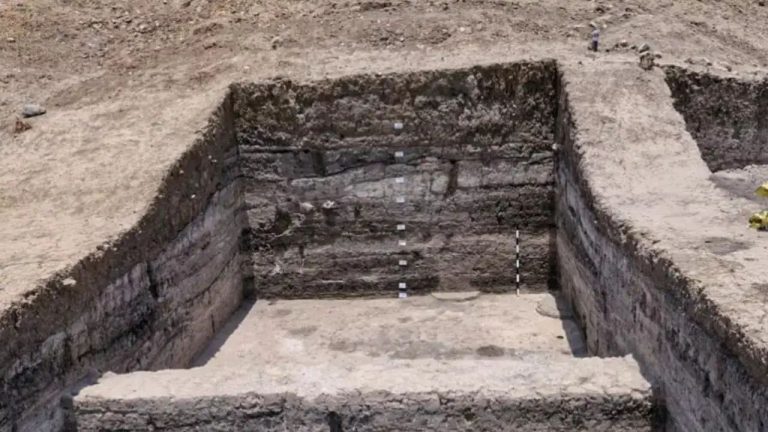
In a discovery that could reshape the history of early human habitation in central India, researchers from Nagpur University have unearthed what appears to be a 3,000-year-old Iron Age settlement in Maharashtra’s Yavatmal district. The excavation, led by Dr. Prabash Sahu from the university’s Department of Ancient Indian History, Culture and Archaeology, was conducted at Pachkhed village under Babulgaon taluka during the 2023–24 academic year.
An ancient mound with millennia of secrets
The dig site—an 8.7-metre-high mound just outside Pachkhed—revealed cultural layers spanning several historical periods. Archaeologists identified four distinct phases of human occupation: the Iron Age, the Satavahana period (2nd century BCE to 3rd century CE), the Medieval era, and finally the Nizam period (18th–20th century).
The earliest layer, dating back to the Iron Age, yielded iron tools, pottery, and round house foundations with limestone floors—hallmarks of early agrarian communities. Notably, researchers uncovered a full house layout with a chulha (mud oven), offering rare insight into ancient domestic life.
A Glimpse into ancient daily life
The site teemed with artefacts: pottery of varying styles, iron implements, bone tools, terracotta and semi-precious stone beads—evidence of a society engaged in craft, trade, and possibly rituals. The presence of decorative beads hints at a network of cultural or commercial exchange extending beyond the region.
Confirming a 3,000-year timeline
To scientifically verify the site’s age, organic samples have been sent to New Delhi’s Inter University Accelerator Centre for AMS carbon dating, with results expected by June 2025. If confirmed, the site would represent one of the oldest Iron Age settlements in the Vidarbha region, vastly enriching our understanding of early life in central India.
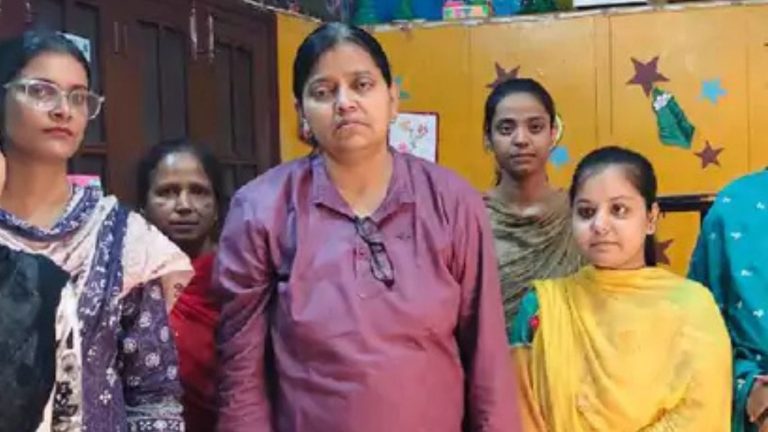
After a preliminary investigation into a complaint filed by private school manager Sabina Jahid in Bareilly, Uttar Pradesh, alleging that her Muslim neighbours oppose the national anthem in her school, the police have found that the matter relates to an old dispute, and the allegation regarding the national anthem was not true.
As per reports, Sabina Jahid had submitted a complaint to the District Magistrate and the SSP on Tuesday (29th April). In the complaint, Jahid, who runs a private school named Blooming Dales located in a Muslim dominated area, alleged that for the past week, local Muslims have been protesting outside her school, pressuring her to stop the singing of the national anthem. She submitted CCTV footage as proof. Jahid further alleged that they threatened her that if she wanted to run the school, she should hold Islamic prayers in the school instead of the national anthem.
Moreover, Jahid alleged that her Muslim neighbours started troubling her even more after the Pahalgam terror attack. She added that the local Muslims said that the school was located in a Muslim-dominated area, and the majority of students in the school were Muslims and therefore, the national anthem should not be sung in the school.
They allegedly asked her to make the students sing “Lab pe ati hai dua banke tamanna meri”, a song written by poet Allama Iqbal in place of the national anthem. Jahid’s school, which is up to the 5th standard, reportedly received affiliation in 2016. At present, around 400 students, including Hindus, Muslims and Christians, are enrolled in the school.
Police found no issue related to the national anthem
After receiving Jahid’s complaint, the police started investigating the matter. Interestingly, the police found that the matter was not related to the singing of the national anthem. SHO, Qila Police Station, Rajesh Kumar, said that the school is located in a narrow street, which causes inconvenience to locals.
Probe found that there are frequent disputes over drainage and water in the area, and both parties keep complaining against each other.
यूपी : बरेली में स्कूल संचालिका सबीना जाहिद ने आरोप लगाया कि पड़ोसी मुस्तफा मियां और शकूर स्कूल में राष्ट्रगान नहीं गाने देते। पुलिस जांच में पता चला कि सबीना स्कूल के पास वाली जमीन खरीदना चाहती थी, जिसके मालिक शकूर ने जमीन बेचने से मना कर दिया था।
The police said that Sabina wanted to buy a piece of land adjacent to her school. However, the owner of the land, Mustafa Mia, was not willing to sell it to her. This led to a dispute between Sabina Jahid and Mustafa, and she filed a complaint against Mustafa Mia and another person, Shakur. To sensationalise the case, she added the allegation regarding the national anthem, the police said.
The investigation also revealed that some people provoked the school owner and presented this incident by linking it to the national anthem. Information about these people is being sought.
An RTI reply has revealed that the BJP-led-NDA government (2014-2024) had constructed ~120% more National Highways than the previous Congress-led UPA regime (2004-2014).
The revelations were made in a RTI reply filed by activist Vivek Pandey. According to him, the Modi government constructed more than 91,680 km of National Highway between 2014 and 2024.
Additionally, it spent ₹10.82 lakh crores on building this road connectivity. If we compare it to the Congress-led UPA era, only about 41,700 kilometres of National Highway were constructed in the span of a decade (2004 -2014).
Road Development in India ?️#BJP-led NDA (2014–24): 91,680+ km NH built, ₹10.82L Cr invested. Highway construction up 120% in a decade, boosting connectivity#Congress-led UPA(2004–14) 41,700 km NH built,Nearly ₹2.47L Cr invested
According to National Investigation Agency (NIA) sources, the terrorists based in Pakistan were able to carry out the attack in Pahalgam with the assistance of the network of Farooq Ahmad alias Farooq Teedwa, a leading Lashkar-e-Taiba commander. His residence in Kalaroos of Kupwara, was one of ten structures demolished by security authorities last week as part of a broader campaign against the terror ecosystem in the valley. It is suspected that he has been in Pakistan since 1996.
Over the past two years, Ahmad, who is presently believed to be in Pakistan-occupied Kashmir (PoK), has been instrumental in planning several terror acts in the region using his web of sleeper cells. The Pahalgam attack, which claimed the lives of 26 Hindu tourists, has been deemed the most deadly of these operations. He has also been supporting infiltration into Kashmir from three sectors of Pakistan, according to sources. The mountainous routes of the valley are well known to him.
Ahmed connected the Pakistani group with his network of overground workers in Jammu and Kashmir, according to intelligence details. Authorities are attempting to identify the people who assisted the attackers from Pakistan. According to intelligence, he has maintained communication with overground workers in Kashmir and has also used the network to support Pakistani terrorists in past operations. According to sources, more than 2,000 overground workers have been questioned following extensive interrogation, and 15 of them are currently being investigated.
Intelligence reports indicated that Ahmad travelled back and forth between India and Pakistan between 1990 and 2016. Several of his aides were arrested following the Pahalgam incident. Additionally, he has been working from Pakistan for the past two years and contacting his network in Kashmir via secure communication applications, based on sources. According to authorities, three terrorists carried out the horrifying assault in the Baisaran valley. The forests around the tourist destination might have also harboured a fourth Pakistani terrorist.
The three terrorists responsible for the attack have had their sketches made public by the police, who have also offered a reward of Rs 20 lakh for any information that leads to their capture. Hashim Musa, also known as Suleiman, and Ali Bhai, alias Talha, are the two Pakistani terrorists. Adil Hussain Thoker, the local Lashkar-e-Taiba recruit who is suspected to be the third attacker in has been identified. He returned to Jammu and Kashmir sometime last year after visiting Pakistan in 2018 and receiving training in terror camps.
The terrorists spent the first week of April scouting hotels in Pahalgam. After two days of unfavourable weather, they struck on 22nd April, the day when many tourists went to the attractive Baisaran Valley. They shot dead Hindu men at the spot after waiting for tourists at the location, asking them to recite the Kalima and forcing them to take off their pants to confirm their religion. Officials are speaking with eyewitnesses, analysing the horrifying videos that have surfaced from the location and assembling evidence. Furthermore, there has been a large search and crackdown on the properties of terrorists in Jammu and Kashmir.
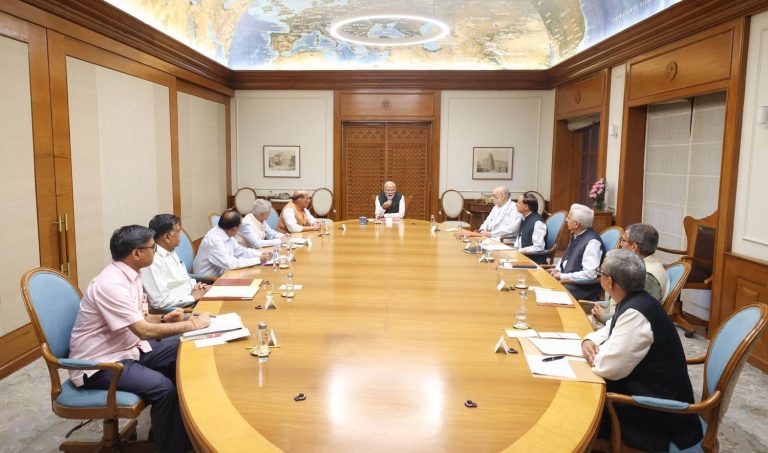
The Union Government on Wednesday announced that caste census will be conducted along with the next general census. The Cabinet Committee on Political Affairs took the decision today after a meeting in Delhi.
Announcing the decision, Union Minister Ashiwini Vaishnaw said that while some states have conducted caste surveys, they have done so for political motives and in non-transparent matter. Therefore, Cabinet Committee on Political Affairs has decided today that Caste enumeration should be included in the forthcoming census, he said.
While Rahul Gandhi and his Congress party have been demanding caste census in recent times, Ashiwini Vaishnaw said that Congress governments always opposed it. He said that caste was not included in all the censuses conducted after the independence.
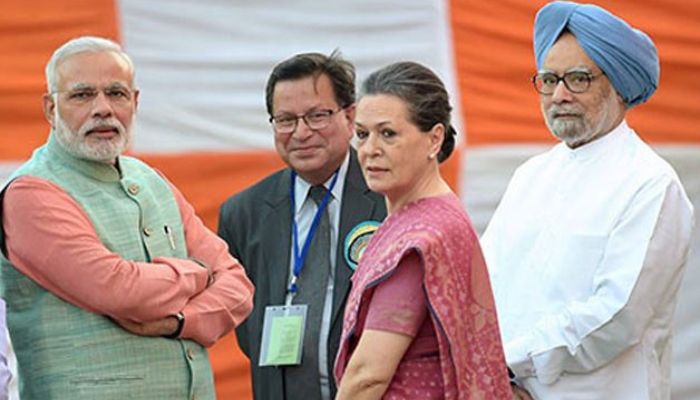
In 2010, then PM Manmohan Singh had assured the Lok Sabha that the matter of caste census should be considered in the cabinet, and a group of ministers had formed for it. Ashiwini Vaishnaw added that while most political parties recommended caste census, the Congress governments decided to conduct only a caste survey, known as SECC, instead of a full census.
“It is well understood that Congress and its INDI alliance partners have used Caste Census only as a political tool”, minister Vaishnaw said. He stated that as per article 246 of the Constitution of India, the subject Census is listed at 69 in the Union list in Seventh Schedule. Therefore, according to Constitution of India, Census is a union subject.
He added that Some states have conducted surveys to enumerate castes. Some states have done this well, while some others have conducted such surveys purely from a political angle in a non-transparent way. “Such surveys have created doubts in society,” the minister said.
Ashiwini Vaishnaw announced, “Considering all these facts, and to ensure that our social fabric is not disturbed by politics, caste enumeration should be transparently included in the Census instead of surveys. This will strengthen the social and economic structure of our society while the nation continues to progress. Under the leadership of Prime Minister Shri Narendra Modiji, the Cabinet Committee on Political Affairs, has decided today (30th April, 2025) that caste enumeration should be included in the forthcoming Census.”
He further added, “This demonstrates that our government is committed to the values and interests of our society and country, like in the past when our government had introduced 10% reservation for the economically weaker sections of the society without causing stress in any section of the society.”
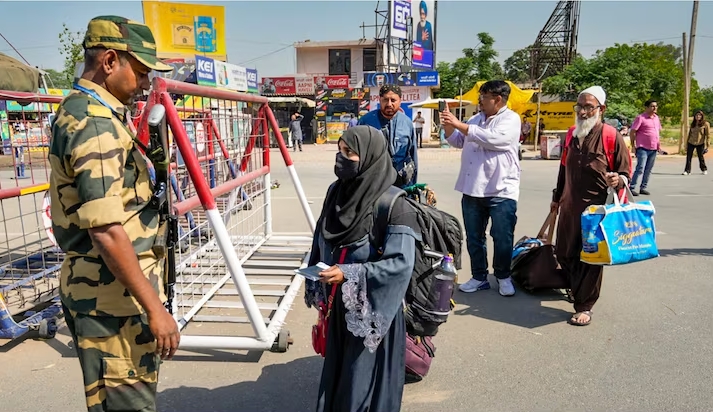
After the Indian government revoked visas issued to Pakistani nationals and ordered Pakistanis living in the country to leave, a shocking reality has come to light – a huge number of Pakistanis who came on valid visas decades ago are still living in India. In fact, former Jammu and Kashmir CM Mehbooba Mufti herself admitted that thousands of Pakistanis have been living in the country for 30-40 years, and opposed the centre’s decision to deport them.
PDP president Mehbooba Mufti tweeted yesterday, urging the government to reconsider the decision and “adopt a compassionate approach”. She said, “The recent government directive to deport all Pakistani nationals from India has raised serious humanitarian concerns, particularly in Jammu & Kashmir. Many affected are women who came to India 30–40 years ago, married Indian citizens, raised families, and have long been part of our society.”
The recent government directive to deport all Pakistani nationals from India has raised serious humanitarian concerns, particularly in Jammu & Kashmir. Many affected are women who came to India 30–40 years ago, married Indian citizens, raised families, and have long been part of…
She further added, “We urge the government to reconsider this decision, and adopt a compassionate approach regarding, women, children and elderly. Deporting individuals who have lived peacefully in India for decades would not only be inhumane but would inflict deep emotional and physical distress on families who now know no other home.”
Notably, it has come to light that Pakistanis who entered Jammu and Kashmir legally were granted long term stay permits when Jammu and Kashmir was a state before abolition of Article 370. One such Pakistan youth named Osama has admitted that he has been staying in India for 17 years, after he was granted request to stay in Jammu in Kashmir just 15 days after he arrived on a Pakistani visa. Osama also says he has Indian Voter card, Aadhaar card, Ration card, and has voted in elections, have studied in India, and he has no future if he forced to return to Pakistan.
He said, “I have a Pakistani passport. I am a citizen of Pakistan. I came to India legally by applying for a visa. I have been here since 2008. After 15 days of coming here, I had applied to stay, and I got the permission because Jammu and Kashmir had statehood status at that time. I know families who have been staying here for 20, even 30 years. We have voted in elections.”
Not just students, Pakistanis living in Kashmir have also revealed that they are working as govt employees, including as cops. A video has gone viral on social media where a Pakistani woman living in Kashmir says that her husband is in Jammu and Kashmir Police, and his name has been listed in the deportation list.
? One more Pakistani family entered India ILLEGALLY in 1965.
By 1999, they were in the J&K Police. Not citizens, Not vetted, Not even background-checked.
The woman added only her husband Iftikar Ali has been asked to leave, but no deportation order has been issued for her and their kids. She said that her husband joined the state police 26 years ago. The family said that they came to India after the 1965 war and have been living here.
Similarly, another Pakistani woman said that she came from Karachi 41 years ago and has been living in India since then. She said that she has been forced to leave her children back in India, and she has no family, no house left in Pakistan.
Another woman Parween Akhtar returned to Pakistan via Attari border after living in India for 40 years. She is married to an Indian man and they have three children. Notably, Parween Akhtar’s husband Ghulam Masood said that like him, his son also married a Pakistani woman. He said that both of them entered India on valid visas, and they are from Muzaffarabad in PoK.
One Pakistani woman, mother of a Shaurya Chakra awardee, is not being deported. Earlier reports claimed that Shameema Akhtar, mother of slain Constable Mudasir Shaikh, was among the Pak nationals being deported. But later the administration clarified that she had not been asked to leave India.
Reports circulating on social media regarding the alleged repatriation of mother of martyr Constable Mudasir Ahmad @ Bindaas are false, baseless, and categorically denied: District Police HQ Baramulla pic.twitter.com/Huo9uTiSrR
Constable Mudasir Shaikh was part of the team of undercover operatives of the Jammu and Kashmir Police, and was killed in May 2022 while confronting terrorists. Mudasir was posthumously honoured with the Shaurya Chakra by the president of India. Mudasir’s uncle said that their family is from Pakistan-occupied Kashmir, and only Pakistanis should be deported.
As per reports, some of the Pakistani’s living in India for years are wives and children of former terrorists who returned to the valley under a 2010 rehabilitation policy for former ultras. Around 60 such women and children were deported to Pakistan through the Wagah border yesterday.
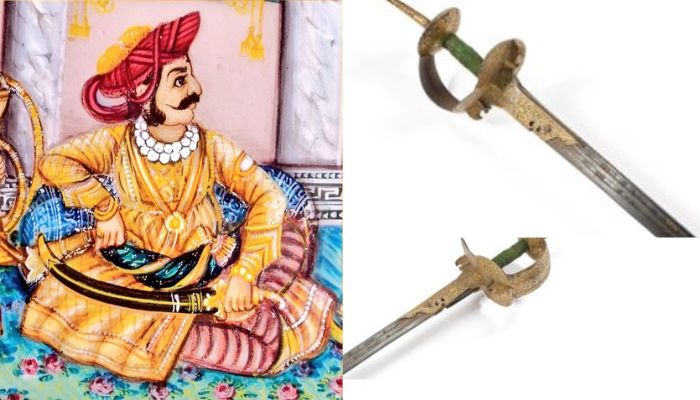
In yet another step towards reclaiming the glory of the Marathas, the Maharashtra government has acquired the iconic sword of Raghuji Bhosale I, the formidable Maratha warrior and the founder of the Nagpur Kingdom. The firangi-style sword, adorned with a Mulheri hilt and gold inlay, was bought by the Maharashtra government at a London auction for Rs 47.15 lakh. Near the hilt of the sword, ‘Shrimant Raghoji Bhosale Senasaheb Subha Firang’ is written in Devnagari script.
The reclamation of Raghuji Bhosale’s blade is a historic feat not only as a step towards Maratha heritage preservation but also because the sword signifies the valour and legacy of the Maratha general who expanded the Maratha Empire across east-central India.
Taking to X, Maharashtra Chief Minister Devendra Fadnavis informed about the purchase of the iconic sword belonging to the Nagpur Bhosale dynasty’s founder, calling it a “valuable and historical treasure” of the Maratha Empire.
“I am delighted to announce that the historical sword of Raje Raghuji Bhosale, the founder of the Nagpur Bhosale dynasty, which was put up for auction in London, has been purchased by the state government. As a result, a valuable and historical treasure of our Maratha Empire will now return to Maharashtra,” CM Fadnavis wrote.
He further highlighted the valorous deeds of Raghuji Bhosale, lauding him as a great military commander and political leader.
“Raghuji Bhosale was a significant commander in the Maratha army during the era of Chhatrapati Shahu Maharaj. Impressed by his war strategies and valor, Chhatrapati Shahu Maharaj bestowed upon him the title of ‘Senasahibsubha.’ In the 1740s, Raghuji Bhosale led military campaigns against the Nawabs of Bengal, expanding the Maratha Empire to Bengal and Odisha. He also established his military and political dominance in South India. Our Cultural Affairs Minister, Ashish Shelar, the Additional Chief Secretary of the Cultural Affairs Department, and Vikas Kharge, who works in my office, swiftly coordinated efforts to accomplish this feat. There were some technical difficulties, so the purchase was made through an intermediary. The state government will pay 47.15 lakh rupees for this,” Fadnavis added.
नागपूरच्या भोसले घराण्याचे संस्थापक राजे रघुजी भोसले यांची लंडनमध्ये लिलावात निघालेली ऐतिहासिक तलवार ही राज्य सरकारने खरेदी केली आहे, हे सांगताना मला आनंद होतो. त्यामुळे आपल्या मराठा साम्राज्यातील एक मौलिक आणि ऐतिहासिक ठेव आता महाराष्ट्रात येणार आहे. रघुजी भोसले हे छत्रपती शाहू… pic.twitter.com/rQlt06cKme
Describing the features of Raghuji Bhosale’s sword, CM Fadnavis said, “This sword is an exquisite example of a Maratha-style Firangi sword. Its single-edged blade and gold engravings are its distinctive features. European-made blades were renowned during that period. On the lower part of the blade’s spine, ‘Shrimant Raghuji Bhosale Senasahibsubha’ is inscribed in gold. Experts believe that this sword was likely taken during the East India Company’s looting of the Bhosale treasury in Nagpur in 1817.”
Raghuji Bhosale: The founder of the Nagpur Bhosale dynasty and a great military commander
Raghuji Bhosale I (also spelt Raghoji Bhonsle) was a Maratha ruler and military commander born in 1695. He played a significant role in the expansion of the Maratha Empire in the 18th century, carving out the Nagpur Kingdom in east-central India under Chhatrapati Shahu I. Raghuji hailed from the Hingankar Bhosale clan, and his family had deep roots in Maratha military tradition. His ancestors had served under Chhatrapati Shivaji Maharaj.
Raghuji Bhosale’s rise started under the mentorship of his uncle Kanhoji Bhosale. Raghuji extended his authority over the Berar and Gondwana regions. Demonstrating his bold and decisive leadership, Raghuji Bhosale never shied away from exploiting political chaos in neighbouring territories, without requiring much pretext.
The Maratha warrior’s strategic acumen and undeterred ambition earned him the prestigious title of Senasahib Subha from none other than Chhatrapati Shahu Maharaj. This cemented Bhosale’s position as a strong and trusted commander.
By the time of his death in 1755, Raghoji Bhonsle had created an indelible mark on the great Maratha history. The Maratha warrior established a legacy that continued till 1853 through his successors and continues to inspire the people to this day.
The military campaigns undertaken by Raghuji Bhosale were a masterclass in seizing opportunities amidst regional tumult. Among the many successful military campaigns of Raghuji Bhosale were the Bengal expeditions from 1741 to 1748. These were a series of six incursions that banked on the power vacuum created after the death of Murshid Quli Khan, the governor of Bengal in 1727.
In 1742 and 1745, Raghuji Bhosale led the charge himself, joined by generals like Bhaskar Ram Kolhatkar and annexed Orissa and some parts of Bengal, expanding the Maratha control to the eastern seaboard.
Being an unmatched political strategist, Raghuji Bhosale smartly capitalised on the disgruntlement of the servants of his enemies. One such disgruntled servant of Bengal’s nawab Alivardi Khan was Mir Habib, who sought Bhosale’s help to overthrow the nawab Alivardi Khan. By the year 1751, Raghuji Bhosale struck a deal with Alivardi Khan. Under this deal, he secured control of Cuttack up to the Survarnrekha River as well as a tribute of Rs 12 lakh for Bihar and Bengal’s Chauth. Raghuji Bhosale’s success in Bengal reflected not only his ability to navigate complex political landscapes but also his ability to balance military might with diplomacy.
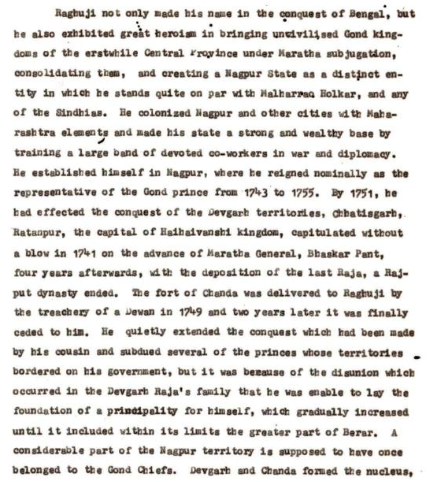
In the book Life and Times of Raghuji Bhonsle I of Nagpur, Shanta Aathana wrote that Raghuji not only made his name in the conquest of Bengal, but he also exhibited great vision in bringing uncivilised Gond kingdoms of the erstwhile Central Province under Maratha subjugation, consolidating them, and creating a Nagpur State as a distinct entity in which he stands quite on par with Malharrao Holker, and any of the Sindhias.
When Chand Sultan, the ruler of the Gond kingdom of Devgarh (also spelt Deogarh) died in 1739, his widow invoked Raghuji’s help to enthrone her sons, Burhan and Akbar Shah. Chand Sultan’s illegitimate son, Wali Shah, had usurped the throne. Consequently, Raghuji defeated Wali Shah and placed Burhan and Akbar on the Devgarh throne
Meanwhile, closer to home, Raghuji Bhosale transformed Nagpur into a grand capital and consolidated power over the region extending as far as Berar to the Narmada and Bhagirathi rivers. The Maratha warrior also subdued local Gond kings, bringing territories like Chanda, Sambalpur and Chhattisgarh under the Maratha Empire.
In the book Life and Times of Raghuji Bhonsle I of Nagpur, Shanta Aathana also writes that Bhosale colonised Nagpur and other cities with Maharashtra elements and made his state a strong and wealthy base by training a large band of devoted co-workers in war and diplomacy. He established himself in Nagpur, where he reigned nominally as the representative of the Gond prince from 1743 to 1755.
“By 1751, he had effected the conquest of the Devgarh territories, Chhattisgarh,. Ratanpur, the capital of the Haihaivanshi kingdom, capitulated without a blow in 1741 on the advance of Maratha General Bhaskar Pant. Four years afterwards, with the deposition of the last Raja, the Rajput dynasty ended. me fort of Chanda was delivered to Raghuji by the treachery of a Dewan in 1749, and two years later it was finally ceded to him. He quietly extended the conquest which had been made by bis cousin and subdued several of the princes whose territories bordered on his government, but it was because of the disunion which occurred in the Devgarh Raja’s family that he was unable to lay the foundation of a principality for himself, which gradually increased until it included within its limits the greater part of Berar. A considerable part of the Nagpur territory is supposed to have once belonged to the Gond Chiefs. Devgarh and Chanda formed the nucleus, as it were, of the Bhonsle dominion,” Shanta Asthana writes in Life and Times of Raghuji Bhonsle I of Nagpur.
Excerpt taken from the book Life and Times of Raghuji Bhonsle I of Nagpur
Raghuji Bhosale’s impactful campaigns in South India (Deccan)
Raghuji Bhosale also led successful military campaigns in the South of India. In the year 1740, in response to Chhatrapati Shahu Maharaj’s call to the excesses of Dost Ali Khan, the Carnatic Nawab, Raghuji Bhosale led a 40,000-strong army alongside Fatehsingh Bhosale to the Carnatic. On 20th May, 1740, the forces of Maratha Senasahib Subha and the Nawab of Carnatic fought a fierce battle known as the Battle of Damalcherry. In consequence of this battle, the Marathas emerged victorious and Nawab Dost Ali Khan was killed, his capital, Arcot, was plundered, and its treasures seized.
Following this, Raghuji Bhosale-led Maratha forces marched on Tiruchirappalli, outmanoeuvring the Carnatic Nawab’s forces in an intense nine-hour battle at Mannapparai. In this campaign, too, Raghuji’s forces triumphed and established Maratha dominance. In addition to this, Bhosale’s successful campaigns against the Nawabs of Kurnool and Cuddapah reinforced Maratha authority in the Deccan.
Interestingly, several modern historians like Jadunath Sarkar in their works, tried their best to tarnish Raghuji Bhosale’s legacy with claims of Maratha forces under his leadership raping Bengali women during the Bengal expeditions. OpIndia, however, earlier debunked these lies, which the leftist historians passed off as factual eyewitness accounts.
While the internal disputes among the successors of Raghuji Bhosale for claiming the Nagpur throne weakened the Nagpur Bhosales, his legacy of sprawling a sprawling domain and expanding the Maratha influence to new frontiers remains unmatched and unforgotten. The blade of Raghuji Bhosale returning to his motherland is not a mere relic; rather, it symbolises a warrior who shaped and bolstered an empire with a unique blend of grit and guile.
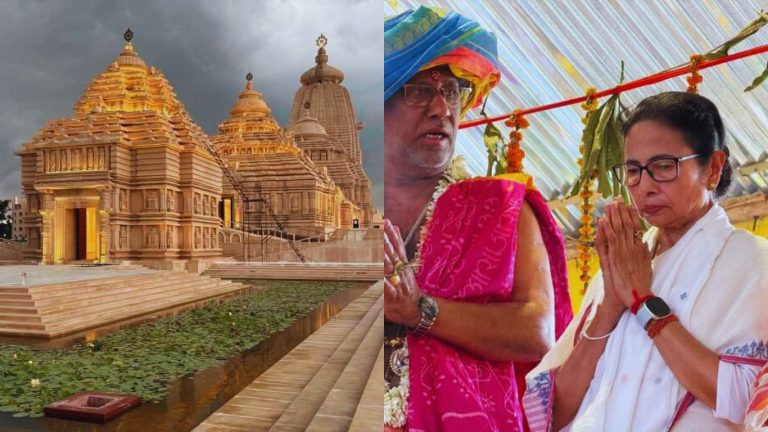
Days after the horrible communal violence in Murshidabad district of West Bengal, which forced the local Hindus to migrate from the area, West Bengal Chief Minister Mamata Banerjee is set to inaugurate a replica of Odisha’s Puri Jagannath temple today (30th April) in the coastal town of Digha in Purba Medinipur district. Banerjee will be integrating the Digha Jagannath Temple on the occasion of Akshaya Tritiya in a grand ceremony between 3 pm and 3.10 pm.
The preparations for the inauguration of the temple began days in advance with the commencement of Maha Yajna on 25th April. Yesterday (29th April), Banerjee also took part in the Maha Yajna.
Today, as the sacred Dhwaja rose above the Jagannath Temple in Digha, I witnessed a vision conceived in 2018 come to life.
With the Maha Yajna complete, we wait with bated breath for the Lord of the Universe to grace His humble abode by the sea.
Sharing the pictures of the Maha Yajna, Banerjee wrote on X, “A moment to be cherished for eternity. Today’s Dhwaja Uttolana and Maha Yajna set the tone for tomorrow’s Prana Pratishtha, as the Jagannath Temple in Digha prepares to welcome the Lord of the Universe to His sanctified abode.”
A moment to be cherished for eternity.
Today’s Dhwaja Uttolana and Maha Yajna set the tone for tomorrow’s Prana Pratishtha, as the Jagannath Temple in Digha prepares to welcome the Lord of the Universe to His sanctified abode.
The temple will be open to all religions, say reports
Interestingly, while only Hindus are allowed inside the Puri Jagannath temple in Odisha and rightly so as the temple belongs to the Hindu deity Lord Jagannath, an incarnation of Lord Vishnu, it is being said that people of all faiths will be allowed inside the Digha Jagannath temple.
Tanmoy Ghosh, All India Trinamool Congress State General Secretary, wrote on X that the Digha Jagannath temple will be open to people belonging to all religions. “A few glimpses from today – the day before of ‘Darodghatan’, the Grand Inauguration of Jagannath Dham, Digha by Hon’ble CM @MamataOfficial di. This isn’t just a temple, it’s a symbol of UNITY. Open to all, beyond religion. This is Bengal — we believe in humanity and brotherhood”, he posted.
A few glimpses from today – the day before of 'Darodghatan', the Grand Inauguration of Jagannath Dham, Digha by Hon'ble CM @MamataOfficial di. This isn’t just a temple, it’s a symbol of UNITY. Open to all, beyond religion. This is Bengal — we believe in humanity and brotherhood.… pic.twitter.com/HuHDzhhPbH
Leader of Opposition, Suvendu Adhikari, raised questions regarding the status and management of the Digha Jagannath Temple. He questioned West Bengal Chief Secretary, H.K. Dwivedi, whether it was a temple or a cultural centre. Pointing out that the invitation card for the ceremony referred to the temple as “Jagannath Dham Sanskriti Kendra”, Adhikari said that he would attend the inauguration ceremony only after his concerns were addressed. He added that the documents of the West Bengal Housing Infrastructure Development Corporation mention that “Jagannath Dham Sanskriti Kendra” has been built at Digha.
“The tender documents of West Bengal Housing Infrastructure Development Corporation Ltd. (WBHIDCO) reveal that “Jagannath Dham Sanskriti Kendra” has been built at Digha. You are inviting me to attend the ‘Prana Pratistha’ Ceremony. Will you clarify whether “Jagannath Dham Sanskriti Kendra” (cultural centre) is being inaugurated or Jagannath Temple is being inaugurated? You must reprint the Invitation Card with proper clarity. You can also send me a reply clarifying whether HIDCO has built a Temple or a Cultural Centre, “Adhikari wrote on X.
Dr. H.K. Dwivedi, I.A.S (Retd.); I am in receipt of the Invitation Card sent by you as the Vice Chairman of WBHIDCO Ltd. for attending the inauguration ceremony of 'Jagannath Dham' at Digha.
I will gladly attend the ceremony, if the following concerns are addressed by you:-
Adhikari pointed out that if WBHIDCO is to be responsible for the management of the Digha Jagannath Temple, then why was the name of WBHIDCO’s chairman, Firhad Hakim, not printed on the invitation card? “You are extending an invitation as the Vice Chairman of WBHIDCO. So HIDCO (being the custodian) will be responsible for the maintenance, management and upkeep of the “Jagannath Dham Sanskriti Kendra” or Jagannath Temple. Who is the Chairman of WBHIDCO? The HIDCO Website reveals that Janab Firhad Hakim is the Chairman. I have annexed the screenshot of the HIDCO website, taken this morning, along with the link. Why isn’t his name printed on the Invitation Card? Can you specify what association is Janab Firhad Hakim Sahib going to have with the “Jagannath Dham Sanskriti Kendra” or Jagannath Temple? There were murmurs in some media reports a few months earlier that Firhad Hakim was removed unceremoniously as the HIDCO Chairman. If so, who is the current Chairman, and why is Firhad Hakim’s name still mentioned as the HIDCO Chairman?”
The BJP MLA raised some pertinent questions regarding the management of the donations that will be made by the devotees and the possibility of the appointment of non-Hindus in the management of the temple. “What will happen to the donations made by the devotees in future? Will it be considered as ‘Temple property’ or HIDCO’s source of income from the Cultural Centre? Who will appoint the workers at the site? Will Non-Hindus be appointed? Since the WB Govt or HIDCO (a Public Sector Understanding Firm) is the controller of the site, can it differentiate while appointing someone on the basis of religion?” Adhikari questioned.
The temple architecture
The Digha Jagannath Temple is made of pink sandstone from Rajasthan and is built in the Kalinga architectural style. Its design is inspired by the Puri Jagannath Temple, having similar architectural features like the Singhadwar, Byaghradwar, Hastidwar and Ashwadwar. The construction of the temple spread across 20 acres, started in 2022. The cost of construction of the temple, which is around ₹250 crore, is borne by the state government.