Home Blog Page 4433

Major bites again: US President Joe Biden’s dog bites the second person in a month

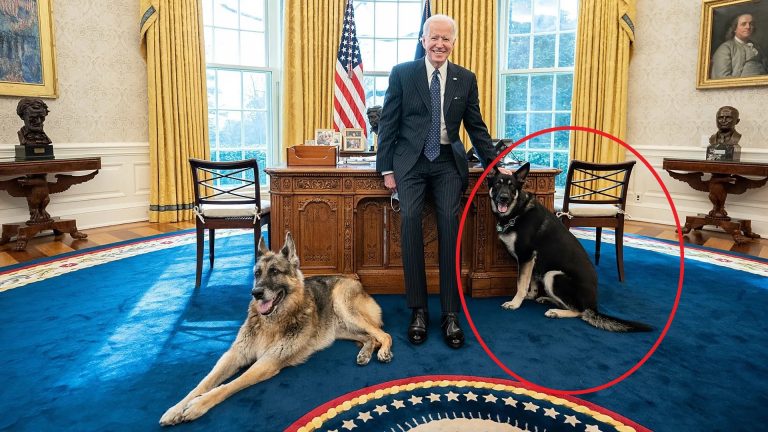
US President Joe Biden’s dog, named Major, was involved in a 2nd biting incident just a few weeks after another biting incident involving a Secret Service employee, according to the White House.

Major, a 3-year-old German Shephard, was out for a walk when the incident occurred according to the First Lady Jill Biden’s press secretary, Michael LaRosa. Major is one of Joe Biden’s two German Shephard dogs, the other dog named Champ.

In an email statement, LaRosa clarified that the person who was bitten was treated by the White House medical unit “out of an abundance of caution” and that the person later went back to work “without injury.” Jill Biden’s press secretary also gave an explanation for Major’s behavior.

“Major is still adjusting to his new surroundings and he nipped someone while on a walk,” said LaRosa.

The biting incident took place on Monday afternoon on the White House South Lawn and the person bitten is said to be a National Parks Service employee.

A few weeks ago, Major was involved in another biting incident in which he bit a Secret Service employee at the White House, causing a “minor injury”, according to White House Press Secretary Jen Psaki. After this incident, both the dogs, Major and Champ were sent back to Joe Biden’s home state of Delaware. However, the dogs had since then returned to the White House.

In an interview with ABC News after the first biting incident, Joe Biden had said that the bite did not penetrate the victim’s skin and that Major was receiving additional “training” at home in Delaware.

“You turn a corner, and there’s two people you don’t know at all,” he said. “And he moves to protect. But he’s a sweet dog. Eighty-five percent of the people there love him. He just — all he does is lick them and wag his tail.” said U.S. President Biden.

The Biden family adopted Major in 2018 from the Delaware Humane Association, after fostering him as a puppy. Major is first dog from a dog shelter to occupy the White House and has appeared alongside Biden numerous times.

‘Ishrat Jahan was a terrorist, no evidence of otherwise’: CBI court discharges last three cops accused of fake encounter

On March 31, a special CBI court in Ahmedabad discharged three police officers who were accused in the alleged extrajudicial killing of four, including Ishrat Jahan, Javed Shaikh alias Pranesh Pillai in June 2004. IPS officer GL Singhal retired police officer Tarun Barot and Anaju Chaudhari, the last three accused in the case, had filed the discharge applications on March 20.

‘Nothing on record suggest Ishrat Jahan and four others were not terrorist’

While narrating the order, Special CBI judge VR Raval noted that prima facie, there is nothing on the record that may suggest that Ishrat Jahan and three others, who were killed in the encounter, were not terrorists.

The court said, “The order is passed with the application of mind and Government has also come to the conclusion that the offences committed by the present applicants are such which have been committed while discharging their official duties as police officers and also the investigation against the accused is not proper and there is no evidence against the accused.”

CBI did not appeal against the discharge of four officers earlier

As the proceedings against the three were dropped, and the trial came to its end, the proceedings can only be resumed if CBI decides to appeal against the discharge orders. However, going by the track record in the case, the chances of such appeal are dim. Notably, CBI had not appealed against the discharge of four other officers earlier, and those discharge orders were also cited as a ground for the discharge of the last three accused.

Ishrat Jahan Encounter Case

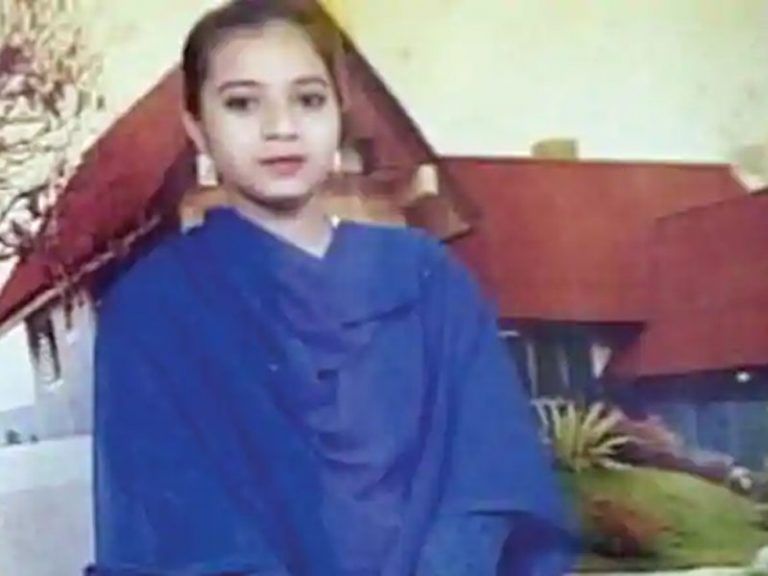
On June 15 2004, Ishrat Jahan, Pranesh Pillai, Amjad Ali Rana and Zeeshan Johar were killed near Kotarpur waterworks on the outskirts of Ahmedabad. They were believed to be Pakistani nationals. Ahmedabad City Detection of Crime Branch led by Vanzara was involved in the encounter. DCB had claimed that the four were operatives of Lashkar-e-Taiba and were on a mission to kill then-Chief Minister Narendra Modi.

In 2013, the Central Bureau of Investigation had filed a charge sheet in the case and named seven police officers P P Pandey, Vanzara, N K Amin, J G Parmar, Singhal, Barot, and Chaudhary as the accused. They were charged with abduction, murder and destruction of evidence. In 2018, Pandey, who was then- commissioner of police (crime), Ahmedabad City, was discharged from the case. In May 2019, the Special CBI court discharged Vanzara and Amin from the case. Parmar was abated from the case following his death in September 2020.

When Amin and Vanzara were discharged, the CBI court had relied on the fact that the Gujarat government did not give permission to prosecute them. CBI did not oppose or challenge the discharge orders. However, Shamima Kauser, mother of Ishrat, had opposed the orders at that time. Under section 197 of the CrPC, the government’s sanction is necessary for the prosecution of a public servant for an act done as part of the official duty.

On March 20, the special public prosecutor of CBI submitted a sealed report in which the state government had refused to grant permission to prosecute the last three accused in the case. Taking the discharge of the other accused into consideration, the discharge orders were passed by the court on March 31 for Singhal, Chaudhari and Barot.

Media reports of Bihar farmer growing a unique vegetable that costs Rs 1 lakh per kg is false, claims a report

0

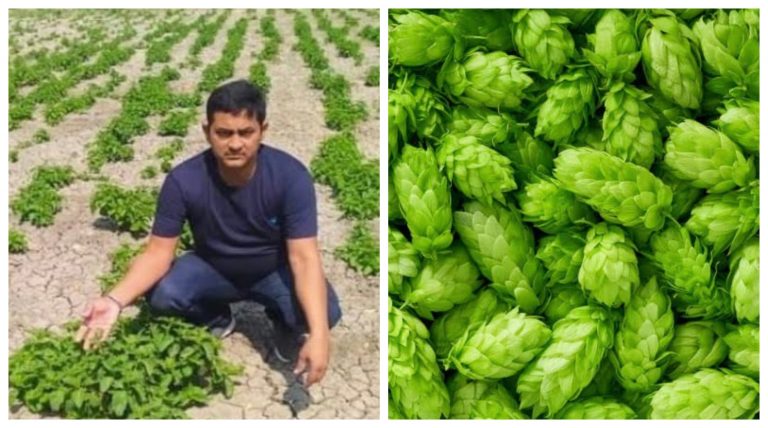
According to several media reports, a farmer from Bihar has started the cultivation of a unique vegetable that is sold at a very high price in the international market. The reports claim that Amresh Singh, a 38-year old farmer from Karamdih village under Navinagar block, had started the cultivation of a vegetable named ‘hop-shoots (humulus-lupulus) on a trial basis in Aurangabad district of Bihar. One kilogram of this vegetable reportedly costs around Rs 1 lakh.

Intermediate-pass Amresh Singh is the first person to grow the vegetable on 5 kathas of land

According to the New Indian Express, Amresh Singh who is an intermediate-pass from St. Columbus College, Hazaribagh is the first person to start hop-shoots cultivation on 5 kathas of land. The vegetable used to be sold for 1000 pounds per kg in the international market about six years ago. It is rare to find in Indian market and is bought by placing a special order. 60 per cent of the vegetable’s cultivation has been successful as told by Singh.

Hop-shoots cultivation should be promoted by the government, says Singh

Singh said that if PM Modi made a special arrangement for the promotion and cultivation of hop shoots, the farmers would earn 10 times more than their current forms of agriculture within a span of about 2 years. Agricultural scientist Dr Lal of the Indian Institute of Vegetable Research, Varanasi has been supervising the cultivation of hop-shoots. “I have planted the saplings of this vegetable two months ago after having brought it from the Indian Vegetable Research Institute at Varanasi. I hope it will be a grand success and turnaround agriculture in Bihar too”, Singh said.

Hop-shoots is used in beverage making and medicine

Singh told that the fruit and stem of hop-shoots are used in beverage making, beer making and for medical purposes such as in preparing antibiotics. The medicine prepared from the stem of hop-shoots is said to have a high curative effect in the treatment of Tuberculosis (TB).

“Its flower is called ho-cones or strobile, which is used as a stability agent in the making of beer. The rest of the twigs are used for food and medicine purposes”, Singh said. For its richness of antioxidants, the vegetable is used in European countries for keeping the skin young and glowing. Singh also grows many other medicinal and aromatic plants. “In the farming sector, taking a risk with the self-confidence ultimately helps the farmer to win. I have taken the risk for experimenting with cultivation of hop-shoot in Bihar and hope, it will set a benchmark”, Singh said.

Hop-shoots is effective in killing cancer cells in the human body

Hop-shoots was reportedly discovered in the early 11th century when it was used as a flavouring agent in beer, as per the Indian Express article. It then came to be used in food and medicines. The vegetable has acids called humulones and lupulones in it that is said to kill cancer cells in the human body. It is also used in medicines for improving the digestive system, as a relaxant in depression, anxiety, as an analgesic and for curing insomnia. Hop-shoots are cultivated in European countries like Britain, Germany. Its cultivation had started in Himachal Pradesh but it was not successful as its high price made it difficult to be sold.

Report says they could not find the farm

After several media houses reported on the farming of the crop by Amresh Singh, a report by Jagaran on 2nd April claimed that the reports are false, as they could locate neither the farm nor the crop. The report said that they visited the place as mentioned in the reports, but could not find the farm. Jagaran claims that the officials of the Agriculture department were shocked after seeing the reports, and they were not aware of the crop being cultivated in the area.

The report also said that they found that there is no scientist named Dr Lal at Indian Institute of Vegetable Research, and the institution has not developed any seed for the crop. Interestingly, the report also claimed that crop seen in the photographs is not hop-shoot, but a simple search on the Internet shows that it is a wrong claim, as the crop is indeed hop-shoot, and it is actually a very expensive crop. According to a Guardian report, it costs €1,000 a kilo, which would be more then ₹80,000.

World Bank revises India’s GDP growth forecast from 5.4% to 10.1% for the financial year 2021-22

The World Bank has recently increased its projections for India’s economic growth by 4.7 percentage points to 10.1 per cent for Financial Year 2021-22, citing a strong rebound in private consumption and investment growth. The latest estimate is significantly higher than the 5.4 per cent growth rate predicted by the World Bank in January this year.

However, given the uncertainty that plagues the world, the World Bank has provided a range of economic growth for India— 7.5 to 12.5 per cent, according to its South Asia Economic Focus Spring update report.

“Given the significant uncertainty pertaining to both epidemiological and policy developments, real GDP growth for FY’22 can range from 7.5 to 12.5 per cent, depending on how the ongoing vaccination campaign proceeds, whether new restrictions to mobility are required, and how quickly the world economy recovers,” it said.

The report also forecasts the Indian economy to decline by 8.5 per cent in FY 2021, higher than eight per cent as estimated by India’s National Statistical office.

The World Bank said Government consumption is projected to rise by 16.7 per cent 2021, chiefly indicating strong fiscal stimulus in India. As the vaccination drive is expected to improve business activities and spur investments, other demand categories are also revised up.

The report stated that growth is expected to stabilise within the 6-7 per cent range. It said public consumption will contribute positively, however, suppressed private demand is expected to fade by the end of 2021. The investment will then pick up gradually, especially on the back of a large government capital expenditure push.

The premier bank observed that India’s growth in foreign direct investment in 2020 was enough to make South Asia the only major region in the developing world to witness an upsurge in FDI investments. The World Bank said India was the only country in the region to see an increase in FDI during 2020, though from a low base. FDI in India was equivalent to 1.5 per cent of the GDP.

Sectors such as IT consulting, digital sectors including e-commerce platforms, data processing services and digital payments are strongly contributing towards the economic growth, the World Bank said. However, it said that the uptick in growth has thus far come from mergers and acquisitions and not greenfield investment.

A combination of FDI, capital inflows and dampened import demand resulted in the net international reserves almost doubling to 17.3 months of imports of goods and services from an already comfortable 10.7 in 2019, the report said.

Regarding the South Asia region, the report predicted the region to grow by 7.2 per cent in 2021 and 4.4 per cent in 2022, propelled by the firm bounce-back from a very low base in mid-2020 (from a revised GDP decline of 5.4 per cent in 2020).

As IMA president proceeds to play victim, Haggai deleted interview and tweet where he had spoken about converting people to Christianity

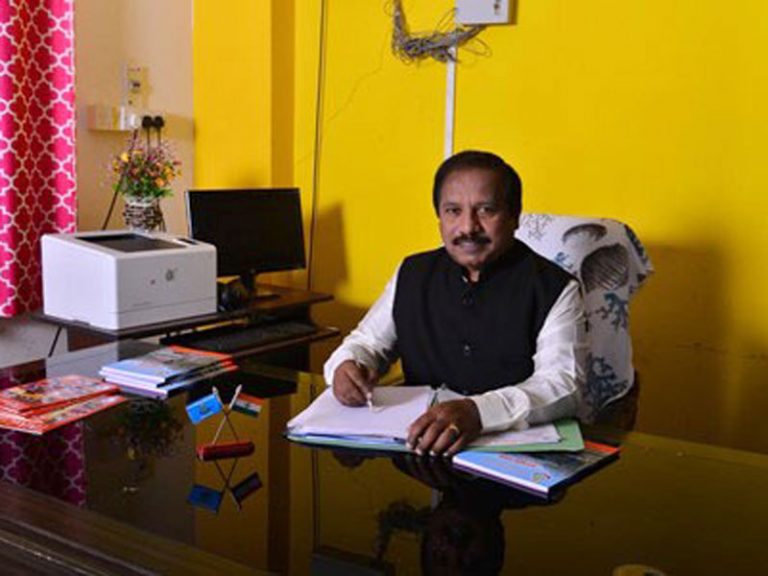
Dr Johnrose Austin Jayalal, President of the Indian Medical Association, has decided to play victim over the reports that he wanted to use hospitals as a ground for conversion to Christianity. In his response, in the form of an official reply from IMA, he threatened to take “necessary action” against those who tried to “run a false propaganda” against him.

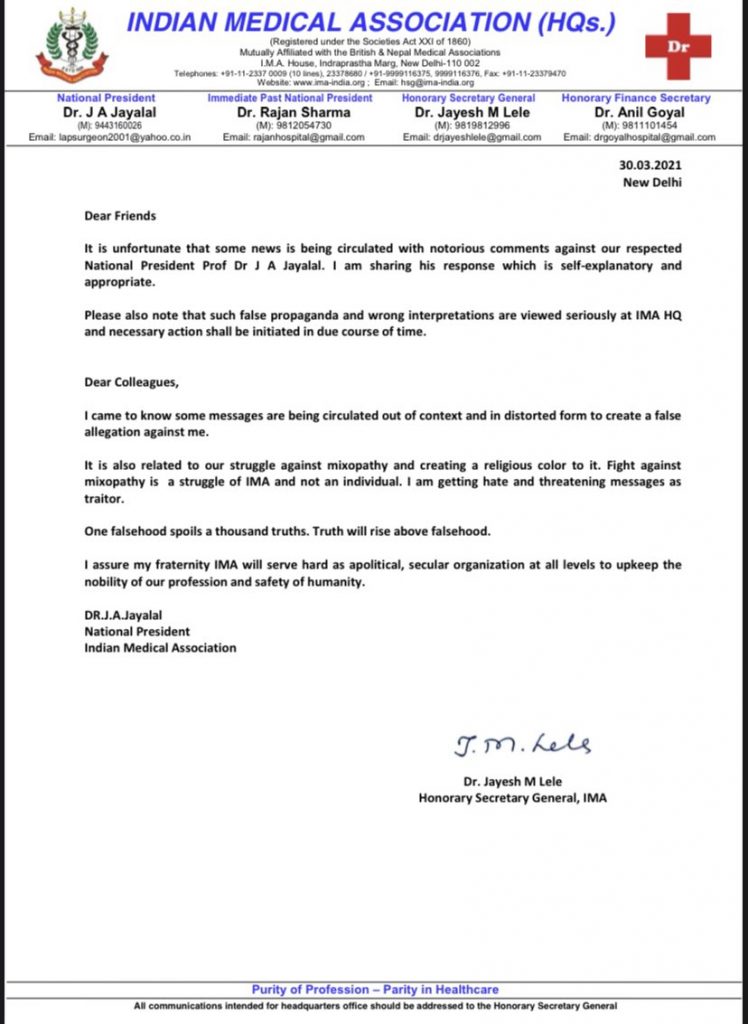
Reply from IMA

In the official reply, IMA said that some news is being circulated with notorious comments against Dr Jayalal. His response was shared, which was supposed to be self-explanatory and appropriate. Further, in a subtle threatening tone, it was mentioned that IMA HQ takes such “false propaganda” and “wrong interpretation” very seriously, and it will take necessary action in due course of time.

IMA’s reply on allegations against Dr Jayalal

Reply from Dr Jayalal

Jayalal claimed that his answers, interviews and profile are being taken out of context and in “distorted form” to create “false allegations” against him. He claimed that the reports that suggest he wants to use hospitals as conversion ground are related to the “struggle against mixopathy”. He further alleged that it is an attempt to give their struggle a religious colour.

Notably, he was the one who had said in an interview that he wanted to “encourage young medical students and doctors to receive Jesus as their personal saviour.” But now he is claiming that those who spoke against him are giving the struggle against mixopathy a religious colour.

Playing the victim card, Dr Jayalal further alleged that he had been getting hate and threatening messages. He also said he had been called a traitor. Towards the end of the message, he said, “One falsehood spoils a thousand truths. Truth will rise above falsehood” and assured the fraternity that IMA would serve hard as apolitical, secular organisation at all levels to “upkeep the nobility of our profession and safety of humanity”.

Allegations against Dr Jayalal

Dr Jayalal is serving as President of the Indian Medical Association, which is a non-government group of doctors. Notably, only doctors that practice modern medicine are part of these organisations, and they have locked horns with the central government over several issues, including integration of alternate medicinal practices in modern medicine.

In several interviews, especially with Christian organisations, Dr Jayalal has made several statements that show how he wants to use the hospitals to bring junior doctors and patients “closer to Jesus”. In a now-deleted article on Haggai International, he said, “I deeply desire to be a living witness to God and encourage young medical students and doctors to receive Jesus as their personal saviour. I aim to be a witness for God in the secular organisation I serve.”

Interestingly, there is nothing “out of context”, as alleged by Dr Jayalal. An archived version of the now-deleted article is available here, and one can notice how he fondly talks about integrating Christianity in medicine. He had said, “When leprosy, cholera, and other pandemics devastated the world, it was Christian doctors and churches who stood against it, showing Christian compassion.” In one stroke, Dr Jayalal has completely ignored the role of doctors belonging to any other faith. Haggai International also deleted the post from social media platforms that were linked to the article. The Archived tweet can be seen here.

Even in his Presidential address, which is still available on IMA’s website, he did not flinch from expressing his Christian evangelism and hailing controversial characters such as Mother Teresa, regarded by many as a predatory Christian proselytiser responsible for industrial-scale conversions of the indigenous people to Christianity.

In an interview for Christianity Today, Dr Jayalal saw a silver lining in an otherwise dreary and bleak coronavirus outbreak. According to him, despite the hardships, difficulties and restrictions that came in the wake of the pandemic, Christianity was growing.

While talking about mixopathy, doctors who practice modern medicine, sometimes subtly and sometimes openly, criticise ancient Hindu practices, including Ayurveda. Dr Jayalal has been one of the frontrunners in such campaigns. While opposing Ayurveda, he had said, “The government of India, because of their cultural value and traditional belief in the Hindutva, believes in a system called Ayurveda. For the last three or four years, they have tried to replace modern medicine with this. Now, starting in 2030, you will have to study this alongside Ayurveda, Unani, Siddha, homoeopathy, yoga, and naturopathy.”

Australia: Young boys forced to apologize for “rapes committed by their gender” to female classmates

A school in Victoria, Australia caused a huge outcry from students and parents alike by forcing its young male students to apologize to their female counterparts on the behalf of the ‘male gender’.

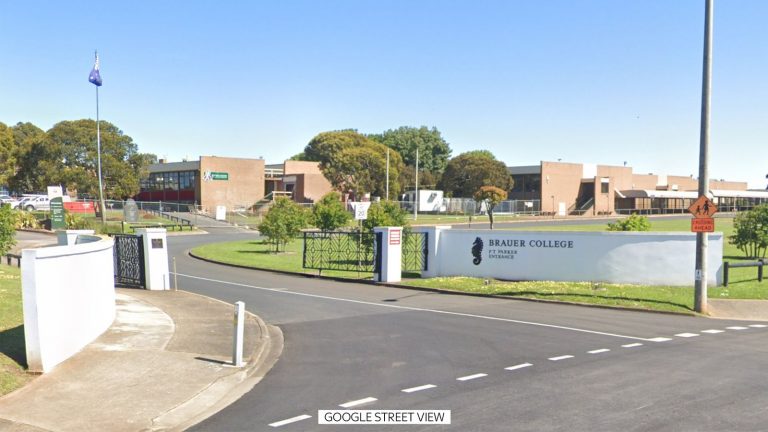
Brauer College, the school in question, held a school assembly about a week ago, where boys were told to stand up and apologize to girls and women on behalf of their entire gender.

One of the parents said that her son in 7th class felt confused as to why he had to issue this bizarre apology, wherein boys were expected to say sorry to girls and women who are raped and sexually assaulted by the male gender.

‘He said that he was made to stand up and basically apologize… it wasn’t explained properly to the male students what they were doing or why they were doing it,’ the mother Danielle Shephard told 7News. They really should have made more of an effort to notify the parents,’ Ms. Shephard added.

On a Facebook post, Ms. Shephard shared another parent’s complaints regarding the school-sponsored apology, which the parent described as a “joke”.

‘Wow just wow… this is actually disgusting Brauer College… not at all impressed that you made my son apologize for something he’s never done nor considered doing,’ the parent wrote.

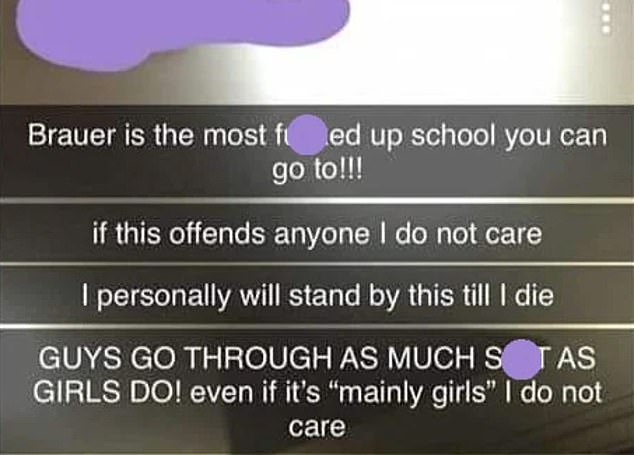
A male student took to Snapchat in order to criticize and denounce the school’s assembly forcing male students to apologize for something they haven’t done.

‘Today at Brauer they made every guy stand up and apologise to every girl for rape, sexual assault,’ the student said.

‘Guys go through as much s**t as girls do.’ 

Response for Brauer College

The Principal of Brauer College Jane Boyle said regarding the controversy that whilst the assembly itself was “well-intended”, she recognized that the symbolic apology part of the assembly was “inappropriate”.

“Schools play an important role in the promotion of safety and respect of all students, and discussions in schools around respect towards girls and women are a key part of this vital work,” the principal said.

The Principal later explains the context within which the male students were forced to apologize, “The assembly included the screening of a video message by Brisbane Boys’ College Captain Mason Black about being proactive in stopping incidents of sexual assault and harassment.”

“As part of this discussion boys were asked to stand as a symbolic gesture of apology for the behaviors of their gender that have hurt or offended girls and women. In retrospect, while well-intended, we recognize that this part of the assembly was inappropriate.” the principal Jane Boyle said.

Principal Jane Boyle has also made it clear that the school will contact parents to “explain the reasons behind the assembly” in order “to ensure that any student who requires support is aware that it is available.”

Has Pakistan proposed resumption of trade with India after unilaterally snapping ties in the wake of Article 370? Read details

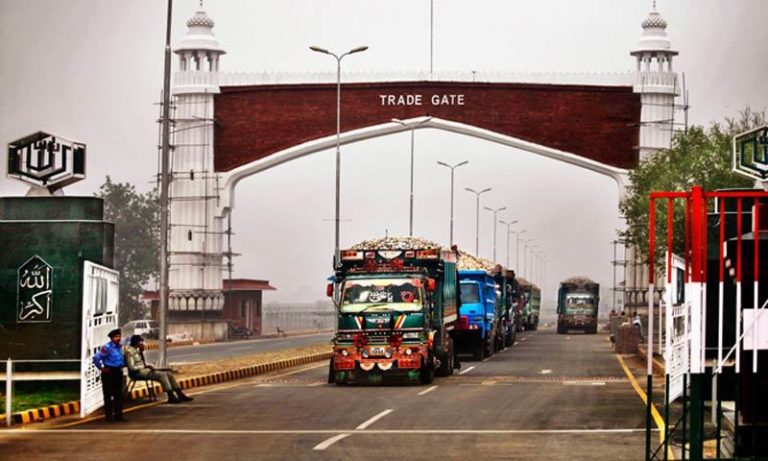
Almost two years after abruptly snapping ties with India, Islamabad is reportedly considering to resume trade ties with New Delhi, a report published in the Indian Express said.

Pakistan’s cabinet committee on economic affairs is met on Wednesday at 11:30 am Pakistan time to mull over reestablishing trade link with India. The committee is believed to take a decision on importing sugar and cotton from India.

It is imperative to note here that Pakistan, in August 2019, cut off trade ties with India unilaterally after India abrogated Article 370 to remove all riders for Jammu & Kashmir being integral part of India.

India desires normal trade ties with neighbours, including Pakistan

The meeting of Pakistan’s cabinet committee over the resumption of trade ties with India comes a week after Minister of State in the Ministry of Commerce and Industry, Hardeep Singh Puri, while replying to a question on whether bilateral trade is likely to resume after a ceasefire agreement was reached between both the countries, said in the Lok Sabha that India desires normal relations, including on trade with all countries, including Pakistan.

Puri also added that the onus of reviving the relationship between the two countries is on Pakistan, since it had unilaterally suspended bilateral trade with India in August 2019. However, he added in his response in the lower house of the parliament that the Indian government has, so far, not received any kind of proposal from Pakistan to reestablish trade relations.

However, many media houses and social media users interpreted the same as India making effort to normalise trade relations with Pakistan. Some of them even did not specify that it was Pakistan which had cut off the ties unilaterally.

Pakistan snaps ties with India after the abrogation of Article 370

In August 2019, Pakistan had suspended all ties with India after the latter abrogated Article 370 that granted separate status to Jammu and Kashmir and passed legislation that turned the state into two independent union territories. Rattled by India’s move, Pakistan called an NSC meeting that arrived at the decision of severing trade between the two countries, downgrading bilateral diplomatic ties with India and raising the issue of Kashmir in the United Nations Security Council among other things.

Besides, Pakistan NSA has also decided to close the Wagah border and suspend Bus services to India. Pakistan will also be declaring August 15 (India’s Independence Day) as ‘Black Day’ to protest against the action taken by India vis-a-vis Jammu and Kashmir. A review of the bilateral arrangements with India has also been asked for. Along with these, they have also expelled the Indian envoy to Pakistan.

However, days after severing all ties with India, Pakistan felt the heat as the prices of vegetables, most notably tomatoes, started to soar. In August 2019, days after Pakistan abruptly cut off trade ties with India, tomato prices in Pakistan went through the roof, triggering a domestic crisis in the country. The prices of tomatoes in Pakistan had soared to Rs 300 per kg. Prices of various other vegetables, including potatoes, onions and green vegetables in Pakistan had also risen considerably, given its high dependence on exports from India.

Almost a month after snapping ties with India, the Imran Khan government in September 2019 made an about-face as it partially restored trade ties with India. The Pakistan government then gave its approval for importing life-saving drugs for maladies such as cancer, tuberculosis and cardiac ailments from India.

Looming economic crisis forces Pakistan to reconsider its belligerence against India

The hostility between the two countries rose, with the marked increased in the ceasefire violations along the highly volatile border between the two countries. Pakistan PM Imran Khan ran pillar to post, approaching the UN, other global forums and western nations to get them to pushback against India’s abrogation of Article 370. In this pursuit, Khan routinely launched shrill attacks against the Indian government, including PM Modi, in a bid to persuade western governments to pressurise India into revoking the abrogation of Article 370.

However, several international forums and western countries ignored Khan’s pleas, partly because of Pakistan’s notorious record of supporting terrorism, its inclusion in the FATF grey list and its depleting economic fortunes. Pakistan is teetering on the edge of an imminent financial collapse and is suffering from an acute debt crisis.

The crisis is so severe that creditors have started using unconventional methods to claw money back from Pakistan. In January 2021, Malaysian authorities seized a Pakistan International Airlines Boeing 777 plane, with passengers still on board, at Kuala Lumpur airport for not paying leasing fees worth $15 million. The condition in Pakistan is so grim that it is compelled to borrow money from domestic and foreign sources to pay its bills, including repayments on old loans. But, many countries have stopped granting any additional loans to Pakistan.

With economy in dire straits, prolonging belligerence with India did not have any temporary gains for a cash-strapped Pakistan. On the other hand, a thaw in the relationship between the two countries would help Pakistan to a certain extent to get a handle on its ballooning economic difficulties. It is to this end that Pakistan agreed for a ceasefire agreement at the border with India some time ago and is now eyeing to resume trade relations between the two countries.

Pakistan PM Imran Khan once again rakes up the Kashmir issue

However, even while reconsidering its decision to revive trade ties with India, Pakistan PM Imran Khan did not shy away from raising the Kashmir bogey. Recently, Khan wrote to PM Modi, thanking him for conveying greetings on Pakistan Day. But, he once again raked up the Kashmir issue, stating that the two countries should resolve all the outstanding issues, including Jammu and Kashmir.

“The people of Pakistan also desire peaceful, cooperative relations with all neighbours including India. We are convinced that durable peace and stability in South Asia is contingent upon resolving all outstanding issues between India and Pakistan, in particular, the Jammu and Kashmir dispute,” he said

India stripped Pakistan of the MFN status in the wake of Pulwama attack

India, on the other hand, had made it amply clear that negotiating on the sovereignty of Jammu and Kashmir is strictly off the table. Ever since PM Modi came to power at the centre, the government has turned the tables and placed emphasis on reclaiming the parts of Jammu and Kashmir illegally occupied by Pakistan. It has also demonstrated zero tolerance to the terrorism emanating from Pakistan and conveyed to Islamabad in no uncertain terms that terrorism and talks cannot go hand in hand.

For India, the external and internal security of the country takes primacy over the cultural and trade ties. In the aftermath of the bloody Pulwama terror attack that took place in February 2019, India withdrew the non-discriminatory market status it had unilaterally granted Pakistan in 1996, popularly known as Most Favoured Nation, and imposed a customs duty of 200% on all goods originating from Pakistan. India also suspended cross-LoC trade in April 2019 on receiving reports that these routes were being misused by Pakistan-based elements for funnelling illegal weapons, narcotics and fake currency.


‘Writer’ Ravinder Singh compares ban on sale of meat on Tuesday to ‘Hindu Taliban’

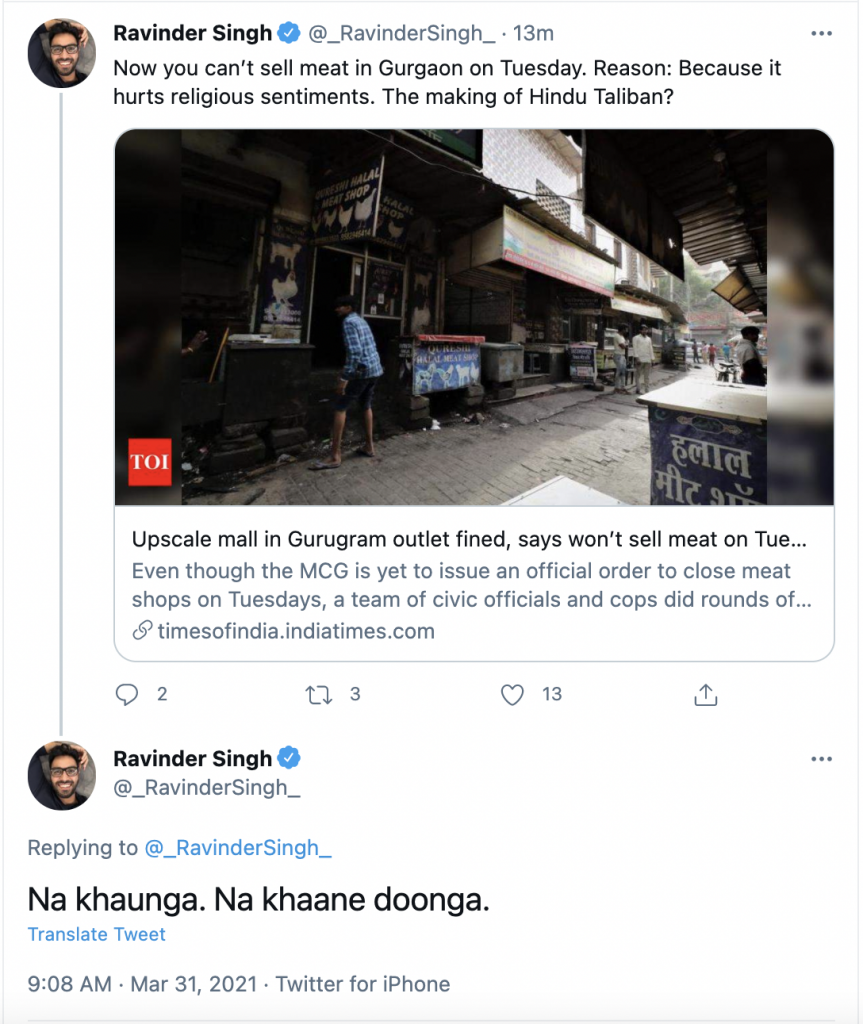
While ban on sale of meat on Tuesdays may have irked some, ‘writer Ravinder Singh is particularly unhappy. While retweeting a news article on Municipal Corporation of Gurugram (MCG) decision to close down meat shops on Tuesdays in the city, Ravinder Singh questioned whether the ban is ‘making of Hindu Taliban’. His tweet read, “Now you can’t sell meat in Gurgaon on Tuesday. Reason: Because it hurts religious sentiments. The making of Hindu Taliban?”

Ravinder Singh’s Tweet on MCG’s decision to keep meat shops closed on Tuesdays in Gurugram

Ravinder compared the decision to ban the sale of meat on a particular day in a Hindu majority area to the military establishment of the Taliban in Afghanistan and parts of Pakistan. Among other things, the Taliban indulged in punishments such as public stoning to death, barring women from talking out loud in public, banning girls above eight from receiving education, imposing a ban on all forms of entertainment and tearing down a 6th-century monument amongst other diktats.

Singh see the ban as a “religious imposition” apparently as violent as that of Taliban.

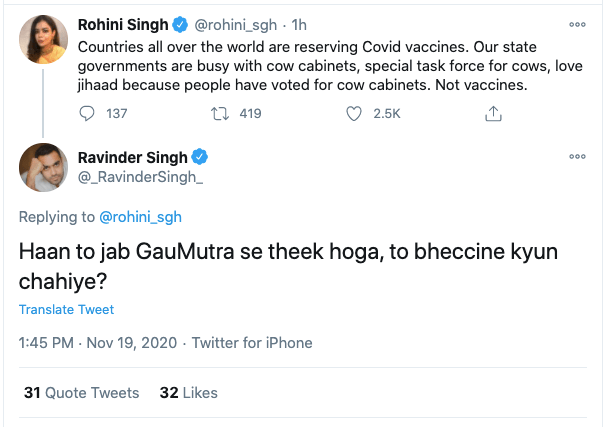
Prior to this, he made it to the headlines with his ‘gaumutra‘ jibe while mocking the coronavirus vaccine. Responding to The Wire employee Rohini Singh’s tweet on coronavirus vaccines, Ravinder Singh said why would we (Indians) need vaccines when we have Gaumutra (cow urine) as a cure. Singh was expressing concern whether state governments in India have reserved their share of vaccines when countries around the world are doing so.

Ravinder Singh’s ‘gaumutra’ jibe

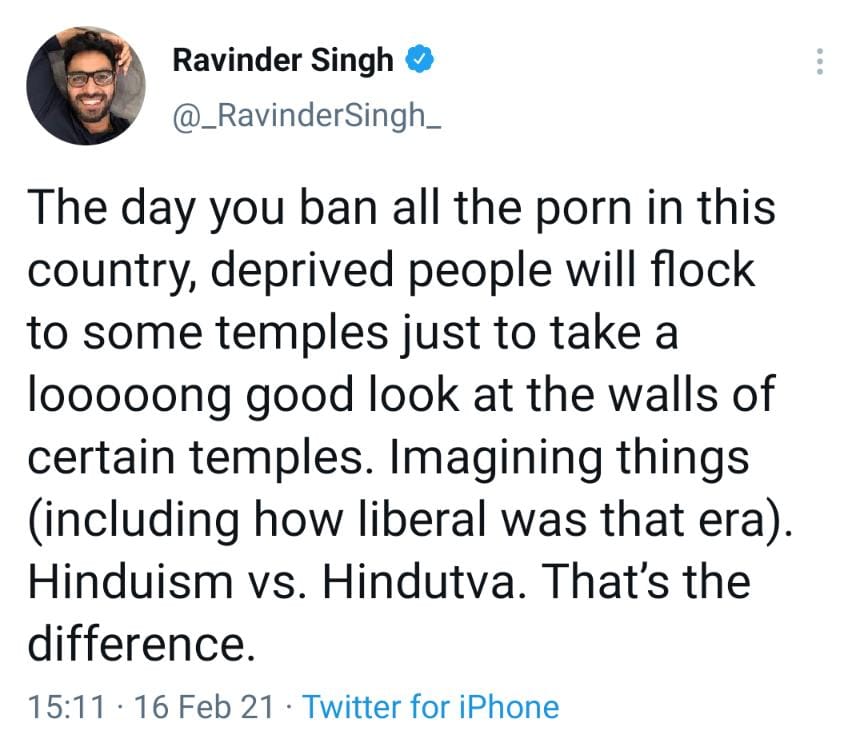
Singh has time and again resorted to insulting Hinduism and the culture. Last month, Ravinder Singh in a poor attempt to explain to his 1 million followers the difference between Hinduism and Hindutva, Singh compared temples like Khajuraho to ‘porn films’.

Ravinder’s tweet on Hindu temples

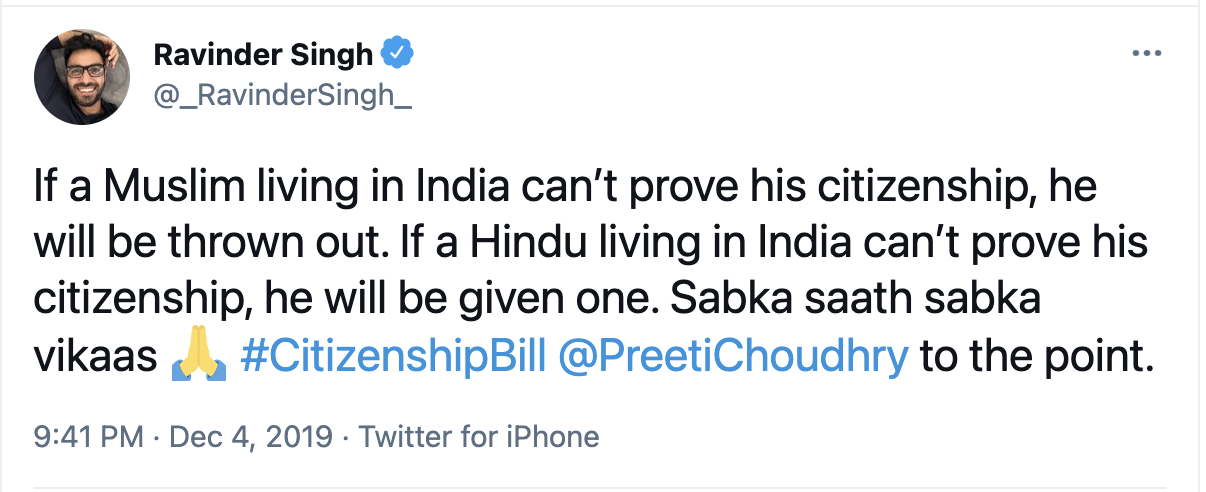
He has also indulged in spreading fake news and misinformation regarding the Citizenship Amendment Act that fast-tracks Indian citizenship to persecuted religious minorities including Hindus, Sikhs, Jains and Christians in the three neighbouring Islamic countries.

Ravinder Singh on CAA

It must be noted that CAA is not applicable to any Indian, Muslim or otherwise, irrespective of their religion. The whole point that ‘if Muslim living in India can’t ‘prove’ his citizenship, he will be thrown out’, as per the CAA is a lie.

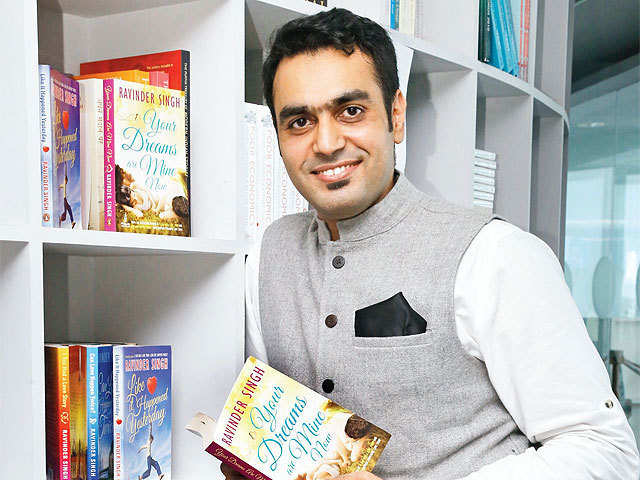
Ravinder Singh is a ‘best-selling’ writer and written 9 books so far. He has over a million followers on Twitter and over a lakh on Instagram who get exposed to the bigotry and misinformation on regular basis.

North Delhi Municipal Corporation mandates meat shops and restaurants to display whether meat sold by them is ‘Halal’ or ‘Jhatka’

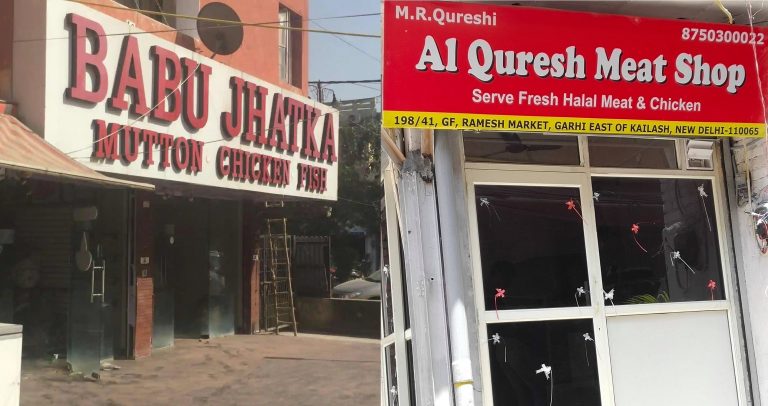
The BJP-led North Delhi Municipal Corporation cleared a proposal on Tuesday that mandates all the meat shops and restaurants in North Delhi to display whether the meat being sold or served by them is halal or jhatka.

North Delhi Mayor Jai Prakash said that halal meat is prohibited in Hinduism and Sikhism. Therefore, the proposal has been passed. “In Hinduism and Sikhism, ‘halal’ meat is prohibited. So we approved a proposal, making it mandatory for all restaurants, dhabas and meat shops in North Delhi Municipal Corporation to put up posters stating whether they serve/sell ‘halal’ or ‘jhatka’ meat”, said Prakash.

The Standing Committee of the North Delhi Municipal Corporation (NDMC) had moved the proposal recently which was cleared today. The proposal stated, “Thousands of restaurants are in operation in 104 wards of four zones falling under North Delhi Municipal Corporation. Out of these, meat is being served in about 90% of restaurants but it is not displayed by them whether the meat being served by the restaurants is halal or jhatka. Similarly, it is not ascertained about the meat being sold at meat shops that whether the same is halal or jhatka. According to Hindu and Sikhism, eating halal meat is forbidden and against religion. Therefore, this meeting resolves that this direction be given to restaurants and meat shops that it should be written mandatorily about the meat being sold and served by them that jhatka or halal meat is available here.”

The NDMC followed in the footsteps of the South MCD and the East MCD, which had implemented the same policy earlier. The BJP is in power in all the three municipal corporations. A similar proposal was passed by the South MCD in December 2020 and by the East MCD in 2018.

Earlier this year, the central government had removed the word ‘Halal’ from its Red Meat Manual issued by the Agricultural and Processed Food Exports Products Development Authority (APEDA). The step was taken to ensure that the word is not misunderstood to mean that the government mandates Halal products in any way.

What are Halal and Jhatka ways of slaughtering?

Halal is a discriminatory religious practice of slaughtering animals that can only be performed by a Muslim man. Clear guidelines regarding the practice available on the website of halal certification authority in India. Besides the brutal manner in which an animal is given a slow and painful death in Halal process, it requires only the participation of Muslim men at every stage of the entire process. Thus, non-Muslims are automatically denied employment in Halal firms.

Jhatka, on the other hand, is a rather painless way of killing an animal. In this method, an animal is slaughtered in one go.

‘Picking up broom and cleaning will not make you less of a Darbari’: Cricketer Ravindra Jadeja’s wife urges men to help women in household chores

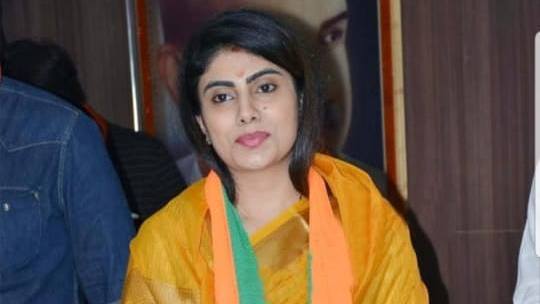
Rivaba Jadeja, wife of Indian cricketer Ravindra Jadeja, while educating people about various schemes for development for girls to the women of a village, made a statement that has drawn quite a bit of attention. Rivaba Jadeja is also a BJP leader who joined the party ahead of 2019 general elections.

Rivaba was heard encouraging the villagers to participate in household chores irrespective of gender. Addressing the mentality of ‘women belong in the kitchen’, she gave an example of her cricketer husband. She said while there is no need for him to work at home, he still comes to the kitchen to help her out and makes tea while she cooks food.

The viral video which is being well accepted by many also stressed the fact that we need to bring about certain reforms in the way we think as a society. She says sweeping the house will not make Darbaris (Rajputs) any lesser. Rivaba added that while we teach our daughters how to live in a society, educate them and teach them about our culture, we seldom teach the same to our boys.

While her message was welcomed by most, some stood in disagreement. To clarify the same, she gave an interview to Gujarati news channel VTV where she can be seen determined about her approach and messaging.

Rivaba Jadeja’s TV interview

She explained that we talk about ‘kanya kelavni’ (making girls skill-developed), why do we not talk about ‘kunwar kelavni’ (making boys skilled-developed). Why can’t boys be made self-reliant. Citing an example, she said, “When a family has a boy and a girl, they will tell the girl to put the plate in the sink. However, people don’t tell their sons to put their own plates in the sink. Doing your own work should not hurt your ego.”

However, the video clip that went viral is just 30 seconds of her 2.5-hour long discussion with the villagers. Rivaba opines that her message was not directed to any particular caste, community or gender but simply meant that basic survival chores should be learnt by all irrespective of gender.

Rivaba Jadeja had joined the Bharatiya Janata Party (BJP) in 2019 just before the Lok Sabha elections in the presence of Gujarat Agriculture Minister RC Faldu and MP Poonam Mahajan at Jamnagar in Gujarat.