Home Blog Page 4669

ASI approves underwater research project to determine how and when the Ram Setu was formed

The debate about whether the Ram Setu is natural or a man-made bridge is going on from years. Now, after the Central Advisory Board on Archaeology, a body that comes under the Archaeological Survey of India (ASI), approved the proposal for an underwater exploration project to determine how and when the Ram Setu was formed, research on the subject is likely to begin this year, reports TOI.

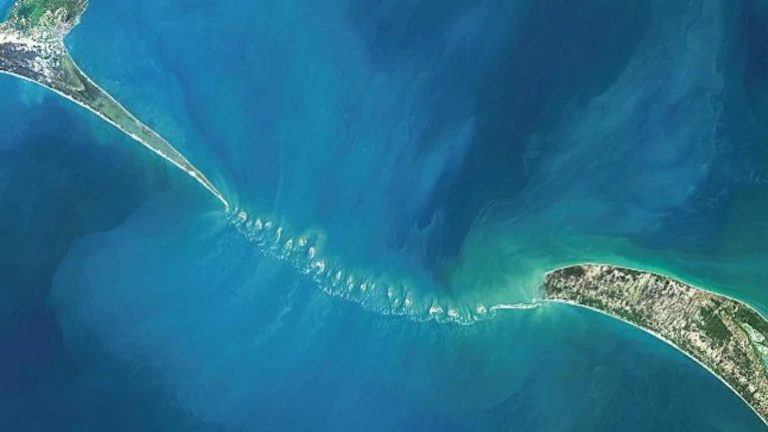
Ram Setu, also known as Rama’s Bridge, Adam’s Bridge, Nala Setu and Setu Band is a chain of shoals between Pamban Island (Rameswaram Island) off the south-eastern coast of India and Mannar Island off the north-western coast of Sri Lanka.

The study which would be conducted by the Council for Scientific and Industrial Research (CSIR) and National Institute of Oceanography (NIO) Goa, will focus on the process behind the formation of Ram Setu and also whether there are any submerged habitations around Ram Setu.

“The historicity and the date of ‘Ramayana’ remain a debatable subject among historians, archaeologists and scientists. It is proposed to carry out scientific and underwater archaeological studies to understand the nature and formation of the Ram Setu and its surrounding area,” the proposal note says.

The research vessels of NIO named Sindhu Sadhana or Sindhu Sankalp will be used in this project to collect samples of the sediment situated at 35 to 40 metres below the water level.

“The proposed study will be based on archaeological antiquities, radiometric and thermoluminescence (TL) dating for geological time scale and other supporting environmental data,” Prof. Sunil Kumar Singh, Director, NIO, told TOI, furthering that “Radiometric technique will be used to ascertain the age of the structure which is reported to consist of coral or pumice stones. Corals contain calcium carbonate that will help us find the age of the structure and of course the period of Ramayana.” 

Congress does not believe in the existence of Shri Ram nor the historical veracity of the Ram Bridge

Ram Setu has been embroiled in controversy since 2005 after the then Congress-led government proposed the Sethusamudram Shipping Canal Project and Manmohan Singh inaugurated the project. The project proposed a shipping canal across the Gulf of Mannar, Palk Bay, and the Palk Straits to link the Arabian Sea with the Bay of Bengal. For this, a channel, passing through the limestone shoals of Adam’s Bridge (which is also known as Rama’s Bridge, Ram Setu, and Ramar Palam), was to be dredged in the Sethusamudram sea between Tamil Nadu and Sri Lanka.

However, the project was opposed by environmental groups as well as some Hindu groups and national parties like the BJP as they said that the project would damage the Ram Setu.

In 2007, the Congress Party, which does not believe in the existence of Shri Ram, had filed an affidavit in the Supreme Court to argue that Ram Setu which is believed to have been built by Lord Ram, lacked scientific and historical veracity. However, ten years later, Modi government scrapped UPA’s stand on Ram Setu and decided to leave the Ram Setu untouched.

The affidavit incidentally came close on the heels of a research-based programme in the US-based Discovery Science channel which showed that the Setu is man-made and not natural. Moreover, studies of Oceanography has also suggested that the bridge is 7000 years old. And the carbon dating of beaches near Dhanushkodi and Mannar Island roughly matches the dates of Ramayana.
Big tech Unites: If censorship wasn’t enough, Wikipedia founder Jimmy Wales wonders why Twitter and Facebook didn’t censor Trump sooner

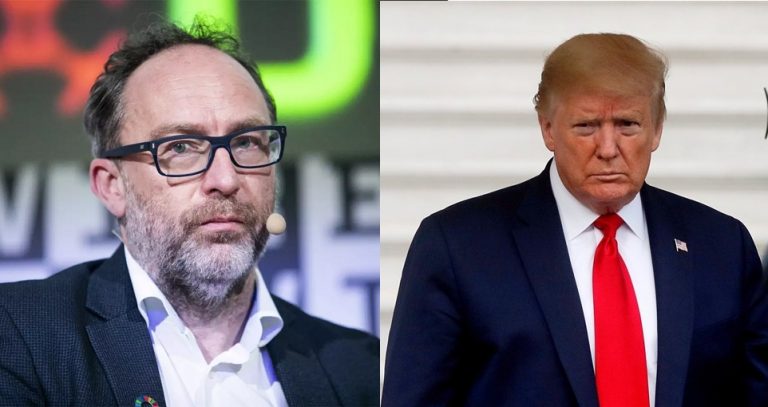
A week after Facebook and Twitter suspended the accounts of US President Donald Trump permanently, Wikipedia founder Jimmy Wales has said that these actions have come too late. He blamed the social media giants for allowing Trump to allegedly spread misinformation for a long time, saying the president was being abusive to people.

In an interview with AFP, Jimmy Wales said, “With Donald Trump, they did a poor job of dealing with him for a very, very long time.” He added, “He was clearly spreading disinformation, he was clearly being abusive to people.”

Wales said that Twitter and Facebook had consistently “struggled with misinformation, disinformation” allegedly peddled by Donald Trump. He asserted that the responsibility for the unprecedented events in Washington DC rested “100 percent at the feet of Donald Trump”.

The Wikipedia founder, who has known bias towards the left like the Twitter and Facebook executives, said that the Social Media platforms will struggle due to their business model. “They have a business model that says, ‘We need as many eyeballs as possible, we need as many page views as possible’. Now it’s also damaging for their brand. So they have to deal with that. But I think they’re going to struggle,” he said.

After the supporters of Donald Trump had stormed the Capitol Hill in Washington DC last week, Facebook and Twitter had permanently suspended the accounts of Donald Trump, accusing of him inciting violence. After that, several other platforms have banned Donald Trump and his supporters from their sites. These include Instagram, YouTube, Snapchat, Twitch etc. Several other platforms like Reddit, TikTok, Pinterest, Discord etc have restricted content related to Trump.

Rahul Gandhi visits Tamil Nadu only 5 days after returning from Italy: Is he breaking quarantine rules?

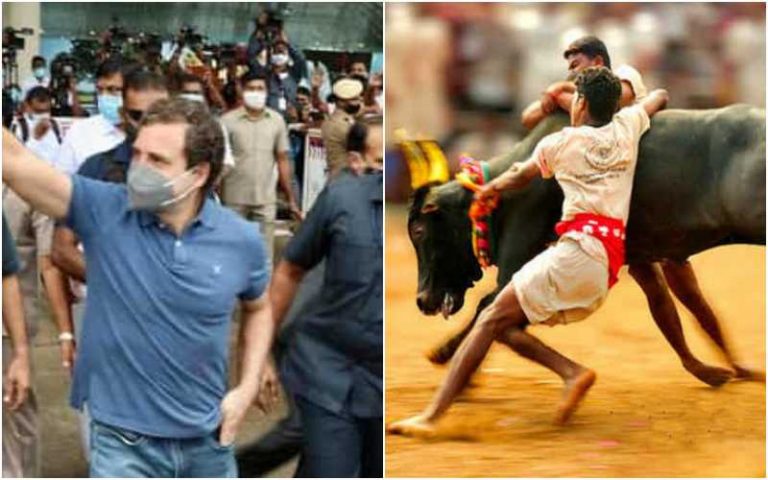
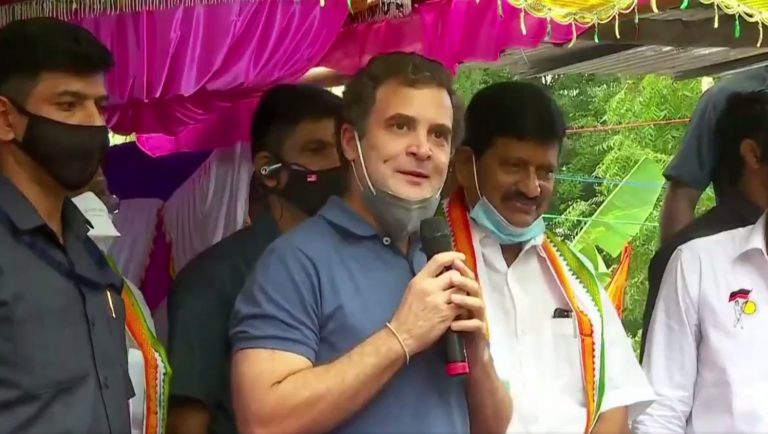
Congress scion Rahul Gandhi, who had returned to India on Sunday from his international trip to Italy, was spotted participating in Pongal celebrations and having lunch with people in Madurai on Thursday. In a desperate attempt at image makeover, he had also attended the Jallikattu festival, despite the track record of the party in opposing the tradition tooth and nail.

However, on seeing Rahul Gandhi amidst a public gathering just after 5 days from his arrival to India, netizens questioned whether the Congress scion had been flouting quarantine and social distancing guidelines. Advocate Chandni Shah inquired, “Aren’t you suppose to quarantine yourself, Mr Rahul Gandhi, after returning from a trip outside India? No obligations towards Covid-19 rules? Or is it your favourite tune to jeopaπdize the Nation and it’s a citizen in whatsoever manner and dance upon it?”

Other users wondered whether the Congress dynast was exempted from quarantine, unlike the common public. “Why did Rahul Gandhi not quarantine himself like all others returning to India do? Or had he gone to get himself vaccinated overseas? Why this ‘law does not apply to me’ attitude?” another user asked.

Twitter user Hari Mallabadi wondered whether Rahul Gandhi observed a 14-day quarantine period. He asked, “Why was he not stamped for quarantine since he came from a European country? Rules are only for general public? Not for VIPs?”

What does the rules say?

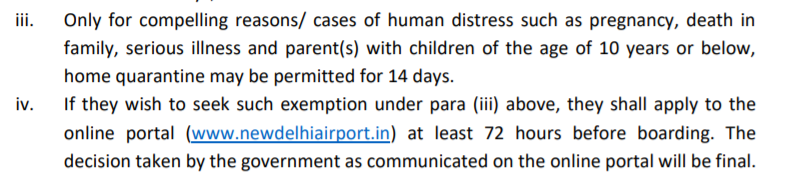
As per reports, Rahul Gandhi returned to India on January 10 while his visit to the State of Tamil Nadu took place today (January 14). While it has just been 5 days, the guidelines issued by the Ministry of Health and Family Welfare calls for 14-day quarantine (or self-monitoring) period either at home/institutional facility. However, there are certain exceptions to the rules.

Home quarantine for 14 days can be granted, in place of institutional quarantine, only in case of certain situations such as pregnancy, death of family members, serious illness or if individuals are parents of children who are below the age of 14. Such individuals must communicate the same at least 72 hours (3 days) prior to boarding. The decision taken by the government authority will be final in the case.

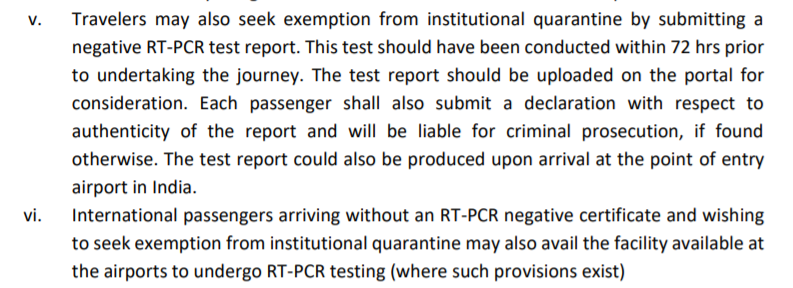
Similarly, individuals travelling to India from abroad can be exempted from institutional quarantine if they submit a negative RT-PCR (Real-Time Reverse Transcription–Polymerase Chain Reaction) report on the online portal. The individual should take the test within 3 days of boarding and also provide a declaration reinstating the authenticity of the report. Such individuals might also submit the certificate at the airport or take an RT-PCR test at the airport itself to seek exemption from institutional quarantine.

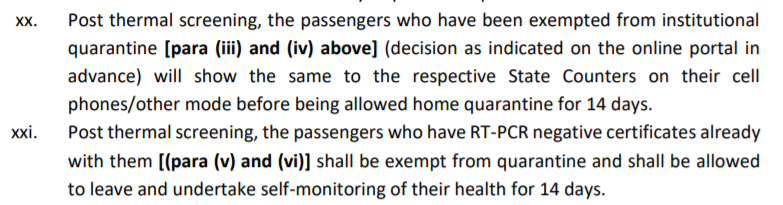
As discussed above, home quarantine can be availed and institutional quarantine can be avoided, post thermal screening, in case of pregnancy, death of family members, serious illness or if individuals are parents of children who are below the age of 14. Assuming that this is not the case with Rahul Gandhi, he might still get an exemption from quarantine altogether if he has a negative RT-PCR certificate. Such a certificate is valid only if the test was conducted with 72 hours of his boarding the flight. And all individuals, who are exempted from quarantine, are thus advised to undertake self-monitoring instead.

As such, it is quite possible that Rahul Gandhi might have furnished his negative RT-PCR certificate to the government portal to claim such an exemption to travel to Madurai. However, even in this case, a self-monitoring of one’s health is required. While netizens have questioned whether Rahul Gandhi had been violating quarantine protocols, nothing can be said with certainty at this point.

Having said that, it is important to note that the Congress scion was seen surrounded by Congress workers on several occasions, while openly flouting the social distancing guidelines. Such a spectacle was witnessed when he sat to have his lunch. While Rahul Gandhi might not be required to undergo quarantine, the violation of social distancing rules was indeed a glaring one.

Firangi lord Rahul Gandhi realises the glory of Hindu festival after witnessing it, makes superb U-turns while making zero sense

Congress Prince Rahul Gandhi had visited Madurai today and had attended Pongal celebrations and a Jallikattu event. It was a massive self-goal in itself as it was the Congress which had tried and tried, using every possible method to ban the Jallikattu festivities when it was in power. It was only after the Tamil Nadu government passed an ordinance with the express support of the Modi government that the sport got back its legal status in Tamil Nadu.

Rahul Gandhi’s ‘visits’ are always stereotypical like a Bollywood movie. As he was having the ‘Tamil’ experience tour, Congress’ state unit had done everything possible to give Rahul Gandhi a ‘Tamil’ experience. He was first seen eating rice with his hands, on banana leaf, sitting with a row of Tamil women who thankfully paid no attention to the Italian saheb trying to eat rice like Jhalmurhi.

Firangi lord finally said ‘ok’ to Jallikattu

After the Jallikattu viewing part was over, Rahul Gandhi addressed the media. As expected, the firangi lord gave his verdict about the brown people playing the brown people sport. Turns out, firangi saheb liked it, and he was even benevolent enough to say that he thinks it is ok if brown people play this sport, because he has come to realise that it is not as “barbaric” and “brutal” and all the other bad things that Congress leaders had called it. Firangi lord was also feeling kind, so he ‘allowed’ Tamils to celebrate their festival as they have been doing for centuries. How very kind and compassionate of him.

Rahul Gandhi addressing the media about Jallikattu

But that was not all. Firangi lord is so kind and good that his kindness knows no bounds. Rahul Gandhi not only said it is ok to play Jallikattu, he even admitted that he was wrongly told that bulls are harmed. He acknowledged that bulls are not harmed in Jallikattu.

Wait a minute. So Congress carried out its long campaign against Jallikattu without knowing or bothering to know that?

Rahul Gandhi has just admitted that the Congress government’s relentless campaign and efforts to get Jallikattu banned was just a glitch, a minor error that has been omitted and rectified by a Gandhi family scion’s kind verdict. Years of politics, attacks, bad-mouthing, slanders and shaming campaign against a Hindu tradition is just supposed to be forgotten now because Rahul baba has decided to change his mind and support it.

Here is what the Congress has done to get Jallikattu banned:

In 2011, the Ministry of Environment and Forest under the Congress-led UPA government had banned the use of bulls in the festivities. However, under the Tamil Nadu Regulation of Jallikattu Act No 27 of 2009 the festival continued. In 2014, the Supreme Court of India then struck down the state’s law and banned Jallikattu. Since then, the people of Tamil Nadu have been fighting for their traditional event. Between 2014 and 2017, Jallikattu was held but it was deemed against the orders of the apex court.

Notably, in 2017, the Tamil Nadu government passed a bill with the support of the Prime Minister of India that exempted Jallikattu from Prevention of Cruelty to Animals Act (1960). First legal Jallikattu celebration was held on February 1, 2017, in Madurai district. Manmohan Singh, Shashi Tharoor and Jairam Ramesh are the Congress leaders who had repeatedly called Jallikattu ‘brutal’ and ‘barbaric’. Ramesh had later even criticised the BJP’s efforts to let the festivities continue. He had called it a ‘barbaric practice’ and had said the BJP was supporting some local leaders to appease them ahead of the elections.

But no issues, we are supposed to forget all that because firangi lord has just okayed it.

‘Suppressing Tamil spirit’ is the new ‘RTI and women empowerment’

Not just entertainment and a sudden bout of kindness, watching Jallikattu in Madurai today has also inspired Rahul baba to discover some new vocabulary. The new magic words are ‘suppressing the Tamil spirit’. In his media statement, Rahul Gandhi used the words ‘suppress’ and ‘Tamil spirit’ like five times in 1.5 minutes. For some of us, it was the unpleasant reminder for the (in)famous interview with Arnab Goswami before the 2014 elections, where for almost every question, Rahul baba’s reply was ‘RTI and women empowerment’.

But, thank God for small mercies. At least he has not tried to speak Tamil.

NCP leader Nawab Malik’s son-in-law Sameer Khan sent to NCB custody till January 18 after his arrest in drug case

0

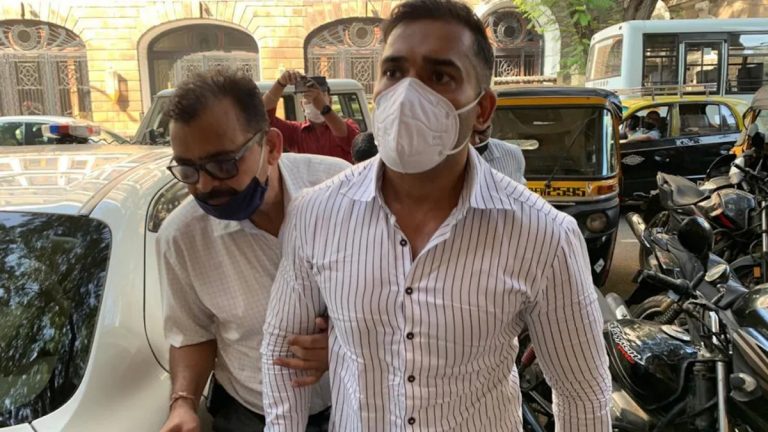
A court Thursday sent Sameer Khan, who was arrested in a drugs case, to the custody of the Narcotics Control Bureau till January 18. Sameer Khan is the son-in-law of NCB leader and Maharashtra Minority Affairs and Skill Development Minister Nawab Malik, who had ‘predicted’ that Republic Editor Arnab Goswami will commit suicide after getting frustrated with numerous cases filed against him by the Maharashtra govt.

Before being produced in the court earlier in the day, he was taken for a medical check-up. Sameer Khan was arrested yesterday after long hours of questioning at the NCB office in Mumbai. He was summoned after the agency found an online monetary transition between Khan and British national Karan Sajnani, which the NCB believes was a payment for drug purchase.

Karan Sajnani and two others were arrested with 200 kgs of banned drug last week. The other two persons arrested along with Sajnani were Rahila Furniturewala and her sister Shaista Furniturewala. Rahila Furniturewala is former manager of activist and film actress Dia Mirza.

Following the arrest of Sameer Khan, NCB has intensified the probe in the drugs case. Multiple teams of the NCB are conducting raids in Mumbai since last night.

NCB which has been probing the alleged Bollywood-drugs nexus ever since the untimely demise of actor Sushant Singh Rajput has made several arrests in connection with the case. Recently, Mumbai’s renowned ‘Muchhad Paanwala’ was arrested in connection with the drug case. Komal Rampal, sister of Bollywood actor Arjun Rampal, was also interrogated by the NCB office in Mumbai on Monday for interrogation in the case.

Arjun Rampal was also probed in a drug-related case. He was questioned by the NCB on November 13, after raids were conducted at his residence on November 9. His girlfriend Gabriella Demetriades was later questioned for six hours on the same day. 

Pakistan notoriously constructs 150-m long tunnel along the Indo-Pak border in Kathua, second in the last two months

0

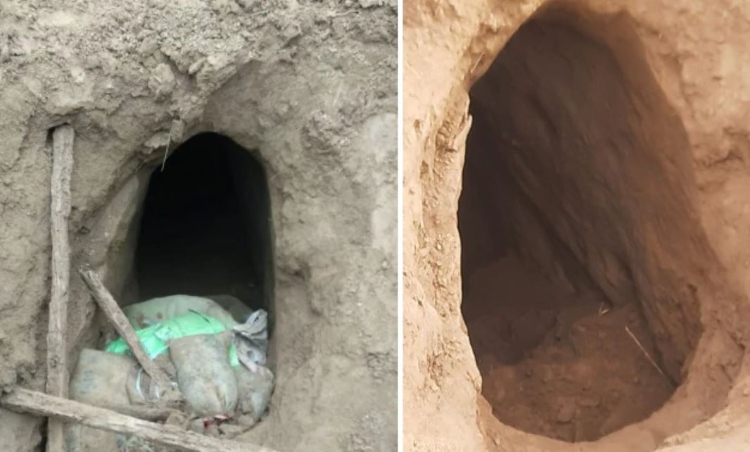
The Indian security forces once again thwarted the nefarious attempt by Pakistan to infiltrate into the Indian territory. During an operation on Wednesday morning, the BSF team detected a 150-meter long cross border tunnel near the Indo-Pak border in Jammu and Kashmir’s Kathua district.

The tunnel was detected during anti-tunnel drive following intelligence inputs about the possibility of the existence of an underneath tunnel along the border in Samba and Kathua districts.

BSF Inspector-General (Jammu Frontiers) N S Jamwal said the tunnel, found at Hiranagar sector’s Bobbiyan village on Wednesday morning, had a 3 feet diameter opening and was nearly 25-30 feet deep. He said the tunnel originates in Pakistan and opens nearly 20-30 meter inside the barbed wire fence on the Indian side.

The IG BSF said that “It shows Pakistan’s hand in the tunnel which has started from Shakargarh in Pakistan. This district is notorious for such kinds of activities especially for launching militants across the border.”

This is not the first time that a tunnel has been found. Earlier, also Pakistan has attempted to sneak into India through secret tunnels. However, Indian security forces have foiled Pakistan’s efforts time and again. 

Tunnel which had its starting point in Pakistan was used by terrorists eliminated during Nagrota encounter

In November last year, a tunnel was discovered near the international border between India and Pakistan at the Samba district of Jammu and Kashmir. The tunnel was reported to be 150 meters long and was reportedly used by the terrorists who were eliminated during the Nagrota encounter. On December 1 2020, the Indian security forces entered as far as 200 meters inside Pakistan territory to find the starting point of the tunnel. Reports suggested that the security forces had recovered mobile phones from the four terrorists killed during an operation in Nagrota that helped in uncovering the tunnel.

The tunnel was covered in thick bushes carefully and meticulously concealed with soil and wild growth. The security forces found sandbags that were used to strengthen and reinforce the mouth of the tunnel. Those bags had markings of Karachi, Pakistan. The tunnel was made by skilled personnel with proper engineering effort.

Explained – The political crisis over crop procurement in Chhattisgarh and why paddy procurement has been stopped in the state

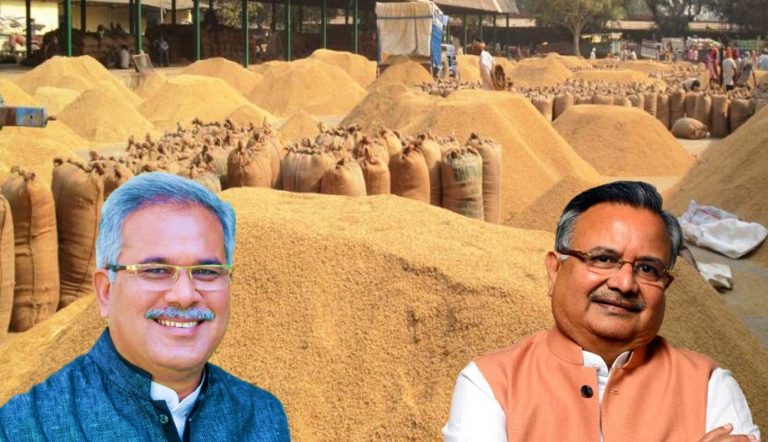
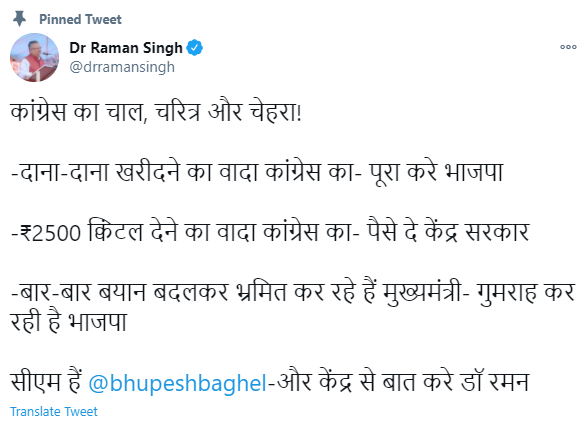
While farmer protests are not waning in Delhi, a political thunderstorm is taking place in the state of Chhattisgarh where CM Bhupesh Baghel and ex-CM Dr Raman Singh are at loggerheads on the question of mismanagement in paddy procurement. At many places, paddy procurement has been stopped due to allegedly shortage of tare and store capacities. BJP has alleged that Congress has failed to deliver its promise of buying farmers produce at Rs. 2500/- quintal MSP while Congress has blamed BJP for creating confusion.

How was management in BJP era?

When Dr. Raman Singh promised to provide rice at Rs. 3 per kilo (later Rs 1 per kilo) to lakhs of families, it was considered an extra-ordinary political stroke, likes of which later inspired the Food Security Bill in UPA era. It was a huge success only because of a robust PDS system which was developed over time. It also created debt. The Govt borrowed money from RBI at zero interest if it is repaid in four months, so to save interest, they developed a system where paddy was procured quickly within four months, thus saving money on interest.

They used to provide immediate supply to Food Corporation of India (FCI) in comparison to other states and the remaining was directly supplied to ration shops with three months surplus. Tax collection on excise duty also increased five times from 2004. With increased Computerization, payment to farmers was also swift and Chhattisgarh used to procure about 80% of grains produced in comparison to about 20% in other states.

What changed?

During election campaign of 2018, Congress promised to pay Rs. 2500 per quintal as MSP to farmers instead of Rs. 1825 as then declared by centre, which proved a key factor to win them elections.  Although Raman Singh in previous years had also offered to pay Rs. 300 as bonus increasing MSP to Rs. 2100, it was disallowed by Central Govt when Modi came in power.

Modi Govt has a policy of ‘no bonus’ but instead they increased the MSP over years. Hence, in order to meet the poll promise, CM Bhupesh Baghel offered to pay the difference of Rs. 675 per quintal out of state exchequer’s pocket. But this was again considered as bonus with a different avatar and FCI refused to lift grains from the state.

Last month, Bhupesh Baghel had written to the Prime Minister asking to pick up the paddy the state government has procured under the central pool. But the centre had clarified that FCI can’t pick up paddy beyond the limit of 24 lakh tonnes as the state has declared bonus above the MSP. According to MOU the centre has signed with states and UTs in regard of crop procurement, if the states and UTs announce bonus above MSP, FCI will not procure crop beyond a fixed quantity, and the rest has to be procured by the states/UTs themselves.

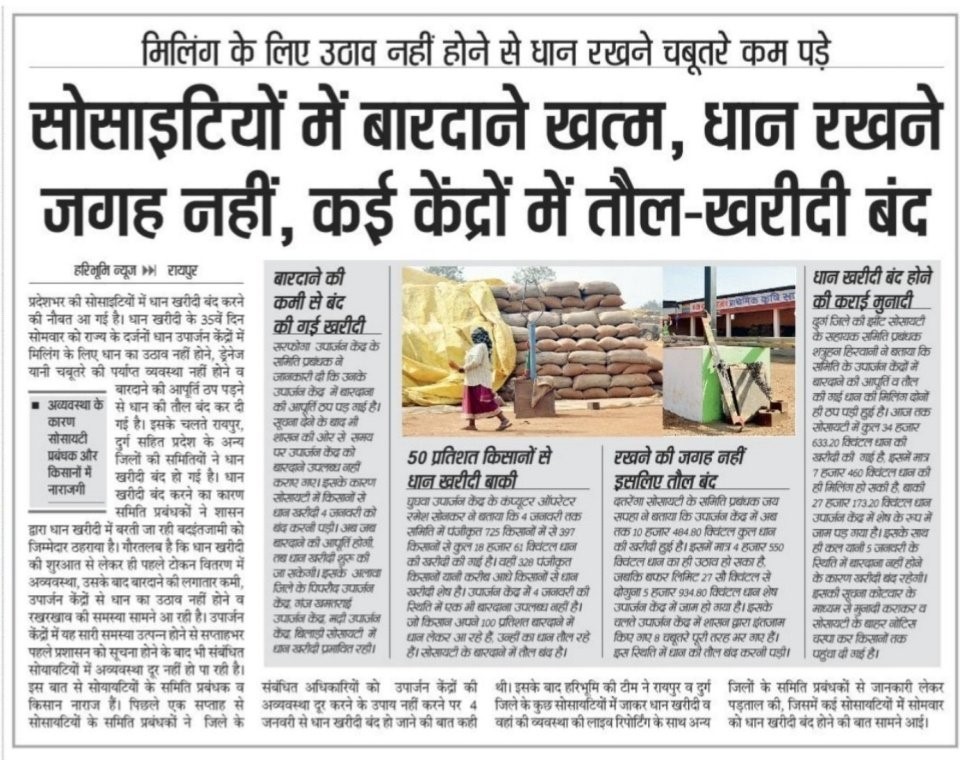
As a result, the mandis had an overflow of grains and officials were not able to accommodate the excess supply from farmers. At many places, the procurement was halted citing a shortage of tare and farmers were asked to bring their own sacks for storage or were simply returned.

Political War of Words

Bhupesh Baghel Govt declared that Congress Govt is giving more money to farmers under a different scheme called Rajiv Gandhi Kisan Nyay Yojana where they are giving Rs. 10000 per acre to sugarcane, maize and paddy farmers, thereby effectively increasing MSP but not technically so. After things reached crisis level, communication was established between centre and state and FCI promised to pick up 24 lakh MT for which CM thanked the PM and hoped they would take more (60 LMT) as assured earlier.

But the political storm had already taken place in Raipur where Congress has blamed BJP for acting against the interest of farmers and BJP has alleged mismanagement in the procurement process. Dr Raman Singh has questioned – why did Congress promise to buy every grain at Rs. 2500 on its own when it cannot fulfil its own promise and is now running to the centre for aid and making excuses. He also asked why has Congress Govt not been able to fulfil its pending quota of 24LMT of last year, and alleged a complete collapse of the system.

Whereas Congress has alleged that Centre is advised by state BJP Unit which is creating obstacles in procurement process. When BJP in-charge of Chhattisgarh D. Purandeshwari asked what happened to the Rs. 9000 crore facilitated by Centre for procurement process, the Congress leaders deflected it as loan by Markfed and not aid by the Centre. Bhupesh Baghel also dared BJP to stage a protest in Delhi, while Dr. Raman Singh pointed out a complete collapse of system.

Former Home Minister Brijmohan Agrawal also questioned that while Congress is busy in blame game, grains worth crores have been wasted because they were not procured. CM Bhupesh also lost his temper and said “Raman Singh ko murkho jaisi baatein nahi karni chaiye” (Raman Singh should not speak like idiots). But it appears that war of words between the two parties is not de-escalating.

Procurement economics

Any delay in procurement causes an increase interest which is ultimately borne by state exchequer. With a lucrative promised MSP by Congress before the election, the number of farmers registered to sell paddy has almost doubled form 15 lakh in BJP era to 31.5 lakhs now. This is likely to cause an extra burden on state and debt is likely to rise. Crop rotation has now stopped because farmers are incentivised to grow only paddy which gets a plum MSP. As a result, health of soil is believed to take a toll.

There are also cases of smuggling in border areas with UP and Jharkhand where farmers sell to middlemen in cheaper prices in order to obtain the MSP in Chhattisgarh. Reportedly, there are some fraudulent committees involved in Govt procurement process and they are continued to do so this year and questions are asked whether it reeks of a scam. Moreover, does it make sense to buy grains at a very high MSP and sell them in PDS for Rs. 1 per kilo? The difference to be paid by state tax is huge and is at the cost of many other development activities which could have otherwise propelled the state to a more progressive one.

Pakistan mirrors Congress, asks for a ban on RSS at UNSC, calls it a ‘violent extremist supremacist group’

0

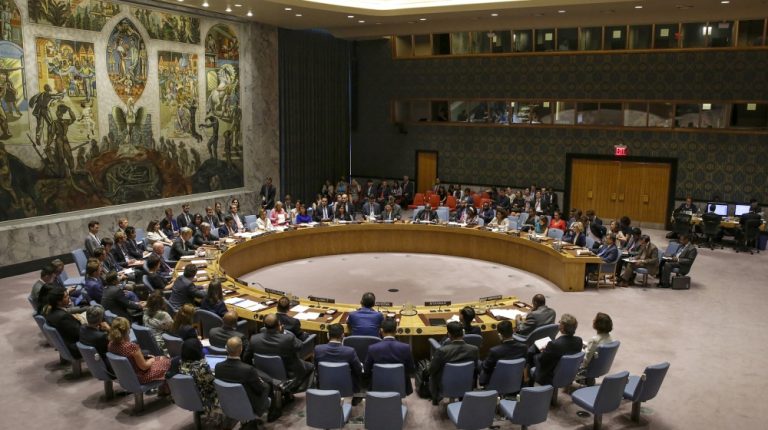
Despite itself being placed in the ‘grey list’ by the Paris-based international terror financing watchdog FATF for financing and providing a safe haven for terrorists, the terror-state Pakistan has amusing called the Rashtriya Swayamsevak Sangh (RSS) a “violent extremist group” during its address at the United Nations Security Council (UNSC) and has demanded a ban on it.

Continuing its habit of raving and ranting against India on every international platform, the Permanent Representative of Pakistan to the United Nations Munir Akram claimed on Tuesday that RSS poses a ‘clear danger to regional and international peace and security’. “Such violent racist and extremist terrorism will inevitably breed counter-violence and validate the dystopian narrative of terrorist organisations such as ISIS/Daesh and Al-Qaeda,” Akram reportedly said at the UNSC, asking the council to declare RSS as an extremist group just as the world has done in case of Al-Qaeda/ISIS and their affiliated groups.

Despite being repeatedly rebuked for its ridiculous assertions about internal affairs in India, Pakistan once again accused the ruling Bharatiya Janata Party (BJP) and ideological parent-body RSS of posing an ‘existential threat’ to Indian Muslims and sought initiation of “immediate domestic actions” to counter alleged propagation of Indian right-wing groups’ violent ideologies.

Pakistan parrots Congress’ views on RSS

It is important to note how Pakistan has often synchronised its views and spoken the language of the Congress Party when it comes to the BJP and the RSS. Congress has also, multiple times in the past made unsavoury remarks against the RSS and called for its ban. It may be recalled how Congress stalwart and a close aide of Rahul Gandhi Digvijaya Singh had exonerated Pakistan and pushed the blame of 26/11 attack in Mumbai on RSS and Hindu extremists. The Congress had then timidly “distanced” itself from Singh’s remarks. No top leader (read from Gandhi clan) had stepped out to condemn Singh. Though this particular comparison was highly condemnable, one could clearly not expect anything better from Congress Party whose chief Rahul Gandhi himself went on to compare RSS to the Islamic Brotherhood.

Those unaware, the Muslim Brotherhood is a global Islamist Sunni organization that was founded in Egypt. The group which has been labelled a terrorist organization in various countries managed to capture power in Egypt before it was removed from power through a coup and was subjected to a severe crackdown.

Congress shenanigans do not end here. In May 2018, Congress had demanded that the entry of RSS chief Mohan Bhagwat be banned in Bihar stating that he ‘represents hateful ideas’. When former President and Congress leader Pranab Mukherjee addressed RSS cadres at Nagpur, he received a lot of flak from his former colleagues. The party had also promised to ban RSS ‘shakhas’ from government buildings in its election manifesto ahead of the Madhya Pradesh assembly elections in 2018.

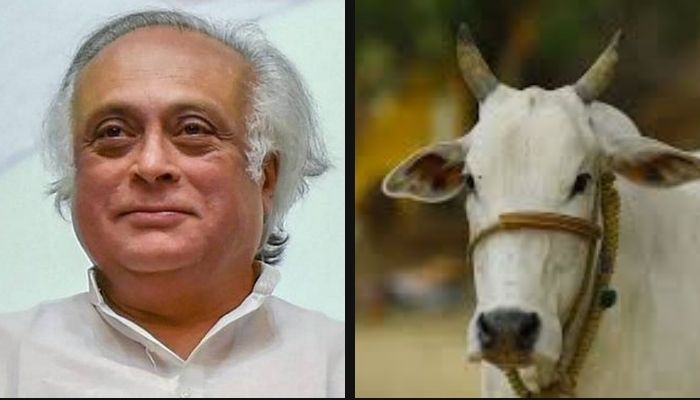
Once upon a time: How Congress leader Jairam Ramesh ended up admitting that his family contributes to global warming by eating beef

Ahead of the third phase of 2015 Bihar elections, Congress leader and former ‘Environment Minister’ Jairam Ramesh decided to milk the politically motivated ‘intolerance debate’ and ‘beef controversy’ to maintain the party’s stronghold over the Muslim vote bank.

Although Laws banning cow slaughter were implemented by various Congress governments in respective states even before BJP came into existence in 1980, Jairam Ramesh decided to put forth his ‘secular’ credentials by hailing it as a choice that cannot be stopped through legislation. Emphasising that ‘beef consumption’ was a matter of choice, he said, “Whether you eat beef or not, these are personal issues. There are people in my family who eat beef. I happen to be a vegetarian not because I am a Hindu (but) by choice.”

Jai Ram Ramesh further added, “I lived abroad for five years. I was a vegetarian not because I am a Hindu. But my children are not vegetarians. So, I don’t enforce my own eating values. It s their free choice. You can’t legislate. You can t say that you can t eat beef.” Hailing the controversy over beef consumption as ‘nonsensical’, the Congress leader blamed the RSS for exhibiting its ‘anti-democratic’ nature.

Screengrab of the India TV article

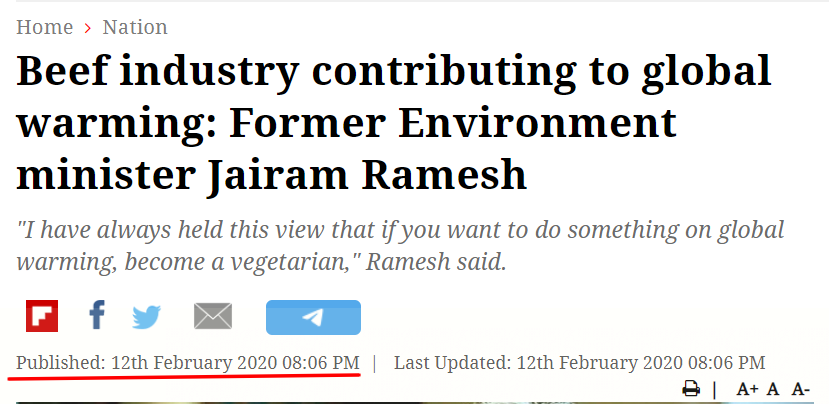
Although Jairam Ramesh made a case for ‘beef consumption’ by dubbing its as a matter of choice in 2015, the former ‘Environment Minister’ seemed to realise how harmful the beef industry could be for the climate. In February last year, the Congress leader discouraged ‘beef-eating’ due to its contribution to the menace of global warming. Of course, there is no guarantee that he was only concerned about the environment and was not setting the stage for Congress’ soft-Hindutva plank.

The advocate of ‘beef consumption’ conceded, “I know that the beef curry is a very important element in Kerala’s diet but there is no doubt in my mind that the carbon footprint of a non-vegetarian diet is greater than the carbon footprint of a vegetarian diet.” While answering a question about the significance of veganism in fighting climate change, the pro-choice leader emphasised, “I have always held this view that if you want to do something on global warming, become a vegetarian.”

Screengrab of the New Indian Express article

The former ‘Environment Minister’, whose environmental consciousness seemed to be missing for 5 years, reinstated the importance of curbing the beef industry. But by doing so, he essentially implied that his ‘beef-eating’ family members are harming the environment with their food choices. Although a glaring contradiction of past statements is not a new phenomenon for Congress leaders, electorates are now aware of the fact that the party, which cares for the environment at one instance, might go back to appeasing its minority vote bank at any instance.

Beef consumption and its effects on the environment

Globally, beef is responsible for 41 per cent of livestock greenhouse gas emissions, and livestock accounts for 14.5 per cent of total global emission. In fact, according to one expert, eating less red meat, particularly beef, would be a better way for people to cut carbon emissions than giving up their cars.

The production of beef requires 28 times more land than pork or chicken, 11 times more water and results in 5 times more climate-warming emissions. As compared to staples like potatoes, wheat, and rice, the impact of beef per calorie is far more extreme. It requires 160 times more land and produces 11 times more greenhouse gases.

As such, a university in London had planned to pull down beef from its canteen menu in September 2019 to fight against the global climate crisis. Goldsmiths, a constituent college of University in London, will be scrapping all beef products from its campus menu, the institution’s new chief has announced, as it seeks to become carbon neutral by 2025.

Congress supporter and BKU leader Bhupinder Singh Mann recuses himself from Supreme Court ordered committee on farm laws

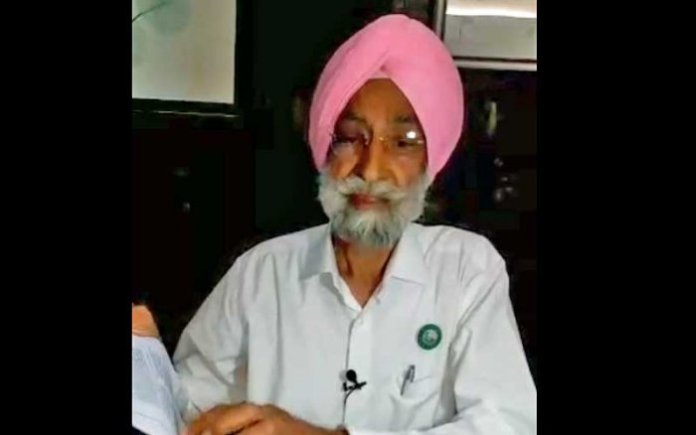
National President of Bharatiya Kisan Union, Bhupinder Singh Mann has recused himself from the four-member committee formed by the Supreme Court. On January 12, the Supreme Court stayed the implementation of the Agriculture laws and named four committee members that will talk to all the stakeholders and submit a report in the apex court. The report will be considered part of the ongoing cases on recently enacted Agriculture Laws.

‘I am ready to sacrifice any position offered’ said Mann

In his statement, Mann said that he is recusing himself over “prevailing sentiments and apprehensions amongst the farm unions and public in general”. He further added that he is ready to sacrifice any position offered or given to him, so he does “not to compromise the interests of Punjab and farmers of the country.”

A three-judge Bench of Chief Justice of India (CJI), SA Bobde and Justices AS Bopanna and V Ramasubramanian, formed the said committee. The three other members named by the Supreme Court were Dr Pramod Kumar Joshi, Ashok Gulati (Agricultural Economist) and Anil Ghanwat (President of Shetkari Sanghatana).

Mann had supported Congress Party in the past

There were reports that the Supreme Court’s selected committee members had shown support for the reforms in the Agriculture laws. However, it has to be noted that Bhartiya Kisan Union leader Bhupinder Singh Mann and the BKU had supported Congress Party in the 2019 general elections. There is even a video of Bhupinder Singh Mann shared by Bharatiya Kisan Union where he announces his support for the Congress party.