Home Blog Page 4783

Six firms that supply manpower to Wistron’s iPhone plant may be blacklisted for non-payment of wages that led to vandalism by workers

0

In the aftermath of the recent vandalism by employees in the Wistron’s Apple iPhone plant near Bengaluru in Karnataka, six staffing firms that supplied labour to the factory may be blacklisted for failing to pay wages to the workers. The protests by workers over non-payment of salaries had taken a violent last week, who had vandalised the factory, damaging factory equipment and vehicles. Now it has emerged that the workers who were not paid salaries are temporary workers hired by Wistron from several manpower companies, and those companies are responsible for payment of salaries to those employees. Wistron is also accused of not having a proper HR system.

According to a preliminary report of the State government’s Department of Factories, Boilers, Industrial Safety & Health, there were violations of labour laws at the Wistron Factory. As per reports, the preliminary report claims that 10,500 workers were employed at the factory but no adequate HR department was set up with members having sound of knowledge of labour laws. The working hours were reportedly increased from 8 to 12 without assessing the repercussions.

According to a Mint report, government officials have said that the violence at the factory was not pre-planned and it was a sudden outburst. “There are around 8,500 temporary workers at the Karnataka factory. The manpower was supplied by five-six staffing firms, and it was their fault to exploit the workers by not paying or defaulting on salary payments”, the reports quoted a government official.

Chief Labour Commissioner (Central) and Senior Labour and Employment Advisor, DPC Negi informed that the Union Labour Ministry is monitoring the situation. “The Union Labour Ministry is in touch with the State government and is monitoring the situation. The manpower suppliers seem to be at fault. We are evaluating the situation, and appropriate action will be taken”, said Negi. He expressed equal concern about the investor sentiment and the violation of laws and non-payment of wages and overtime to workers. Condemning violence, Negi said that the government has taken steps so that workers can get their dues on time.

Now, heavy penalty could be imposed on the staffing firms, and they may even be blacklisted. “The manpower suppliers will face action for violating rules and holding back wage dues”, the official said, without naming the companies.

The panel inquiring the incident said that the HR personnel did not address the workers’ concern regarding their wages and work hours inclusive of overtime. The overtime hours and the wages in respect of 12-hour shift were not explained to the workers. Besides, a fault in the attendance system to mark the attendance of the workers had also not been addressed despite having continued for the past two months. The practices in place regarding the payment of wages and overtime work were reportedly not in compliance with laws.

The Central government has asked the Karnataka government to complete the inquiry into the incident.

K.R. Shyam Sundar, a labour economist and professor at XLRI said that the violence by the aggrieved workers seems to be the result of failings of the staffing firms. He said that there should not be a liquidity issue as the firm is making high end phones. He said that the Wistron case is both an industrial relation and human resource crisis.

Attack by a mob of thousands on the factory

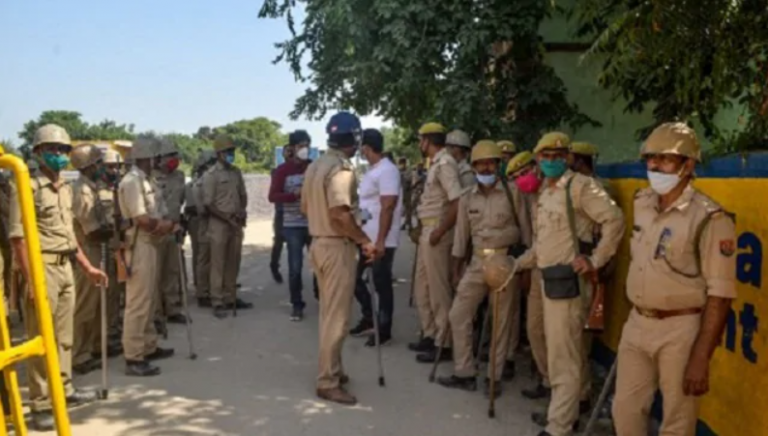
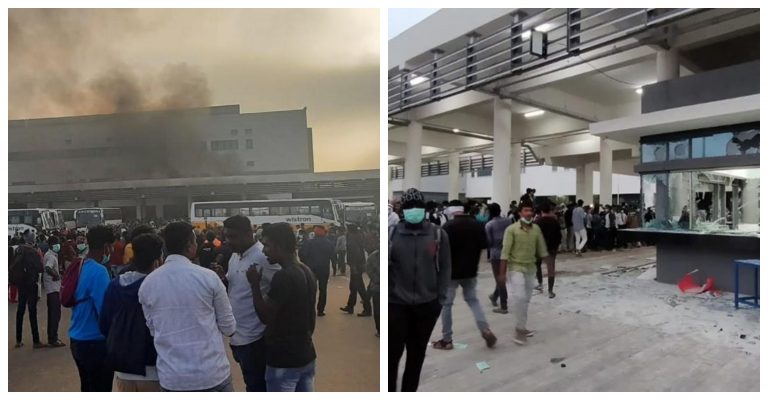
On December 12, hundreds of factory workers wreaked havoc on the factory damaging the facilities’ equipment and vehicles at the Narasupara situated factory of Wistron Infocomm India Pvt Ltd. Wistron, which is Taiwanese design manufacturer, has been making iPhones in India since 2017. In an FIR filed by Wistron against 7000 people including its 5000 contract workers, the company claimed that it suffered losses worth Rs 437 crore. However, it later revised the losses to Rs 50 crore. According to reports, thousands of iPhones were also looted from the factory during the vandalism.

The incident happened at a time when India is trying to attract investments from big companies across the world. Karnataka Chief Minister BS Yediyurappa said that Prime Minister Modi has expressed concern over the incident. Yediyurappa condemned the incident and that it was a very important company.
BJP leader claims threat to life from ex father-in-law TMC MP Kalyan Bannerji, locked in Covid isolation ward with patients

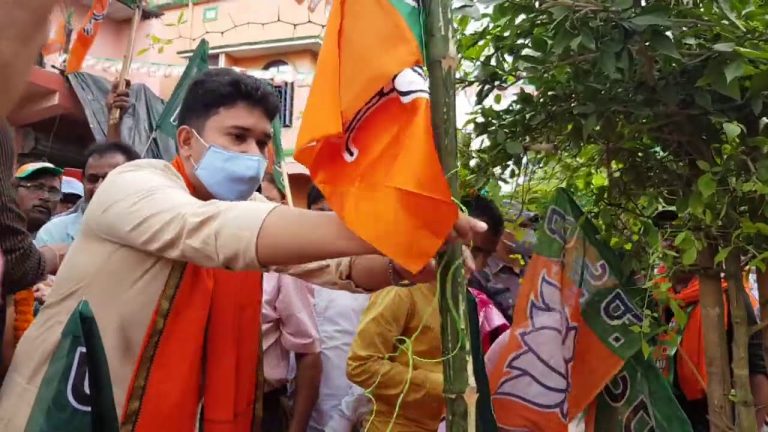
BJP leader in West Bengal, Kabir Shankar Bose, has filed a petition in the Supreme Court accusing Kalyan Bannerji, a Member of Parliament from the Trinamool Congress, and the state government of unleashing “political vengeance” against him. Kabir Shankar Bose is a spokesperson of the Bengal BJP.

The petition alleges “political vengeance and specific targeting of the Petitioner by the State Government of West Bengal, Trinamool Congress and Mr. Kalyan Bannerji, a sitting TMC MP due to the political and personal rivalry” and made an appeal to the Supreme Court to “safeguard the Petitioner from the threats to his life and liberty which he faces from the State Government of West Bengal; Trinamool Congress and Mr. Kalyan Bannerji.”

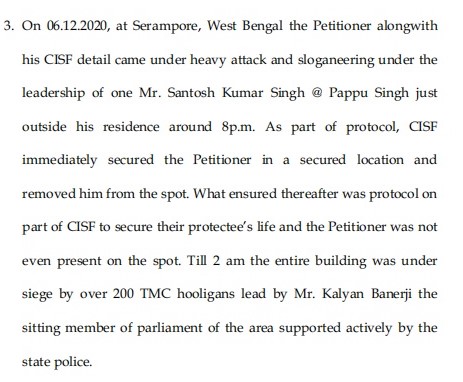
Bose said in the petition that on the 6th of December, he along with the CISF security detail he has been accorded came under “heavy attack and sloganeering” led by one Santosh Kumar Singh outside his residence at around 8 p.m. in the evening. The CISF then initiated the necessary security protocol to protect him.

Kabir Shankar Bose petition

The petition further alleges that until 2 a.m. into the night, his house was under siege from around 200 TMC “hooligans” led by Kalyan Bannerji with assistance from the state police. The next morning, Bose alleges, he was prevented from leaving his house by the state police citing law and order reasons. A request for food and medicine and required first aid for the injured CISF personnel was also denied, he claims.

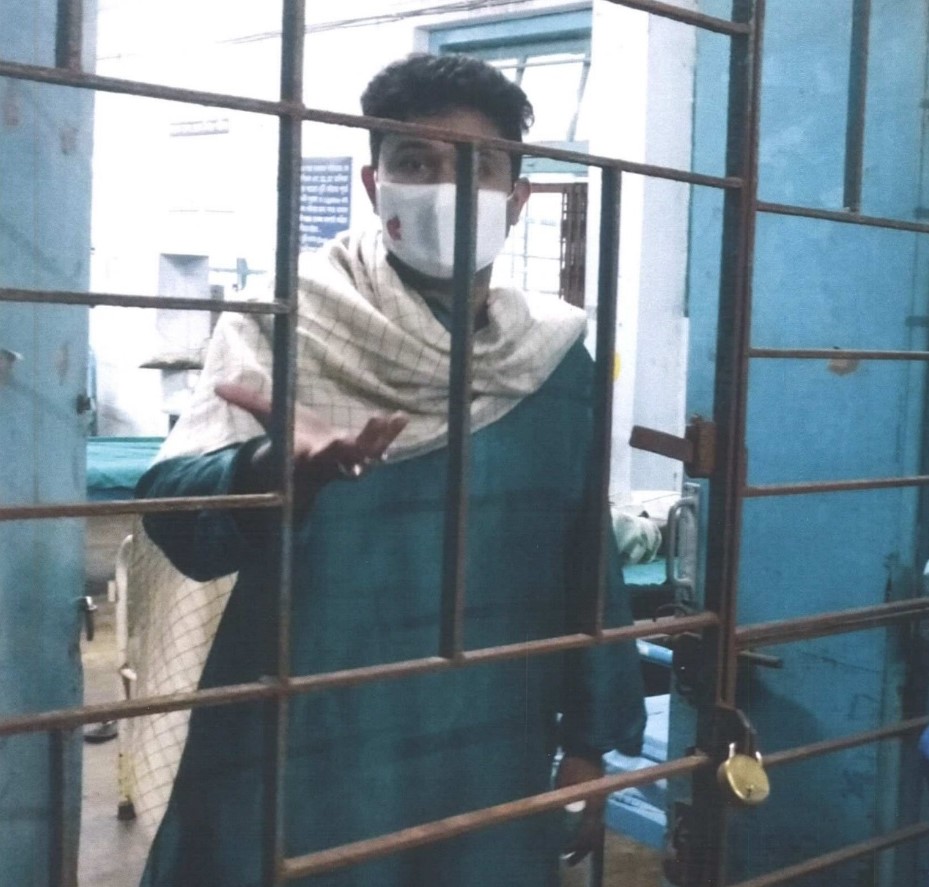
At around 1 p.m. on the 7th, the police requested Bose to visit the police station to prevent “law and order problems”. Furthermore, the police officials communicated to him that they were under immense pressure from the Trinamool Congress MP to arrest him. Then, he was confined to a Covid isolation ward with other patients, thereby, threatening his life.

Kabir Shankar Bose was locked in a Covid isolation ward

Bose claims to be a “victim of extreme torture, repression and political vendetta by the State Government of West Bengal and the Petitioner is presenting some glaring facts which will establish complete misuse of state power and use of the state investigating agency as a private army by the state administration and by the ruling party against the Petitioner.”

“The State investigating agency is acting at the behest of their political masters who are miffed with the Petitioner because of being an active member of the BJP and due to some personal disputes with some members of the ruling Trinamool Congress in West Bengal and is actively working at the grassroot level in Serampore district of West Bengal since May 2019,” he adds in the petition.

Personal issues between Kabir Shankar Bose and Kalyan Bannerji

The personal issues between the two pertain to the marriage between Bose and Bannerji’s daughter and their eventual divorce. The two married in 2010 and divorced five years later in 2015. It led to “registration of multiple FIRs and enmity between the Petitioner and the family of his ex-wife.” Bose also claims to have received threats from his ex-wife’s family his former father-in-law.

He also claims to have suffered attacks during the 2019 Lok Sabha Elections and apparently, Bannerji has “openly threatened” to ‘finish’ his life. The petition also claims that bombs were planted to kill Bose as well. “The Petitioner was granted a CISF security detail owing to the political vendetta and threat posed on Petitioner by the State Government of West Bengal and Mr. Kalyan Banerjee after the threat assessment was done by Intelligence Bureau, Ministry of Home affairs, Government of India,” it says.

It also mentions that on the basis of a complaint filed by Santosh Kumar Singh, an FIR was registered against Kabir Shankar Bose on the 7th of December under Sections 341/ 323/ 325/ 326/ 307/ 354/ 504/ 506/ 34 IPC “for the alleged action of the CISF Security detail of saving the life of the Petitioner from the TMC goons.”

Bengal: BJP writes to ECI seeking deployment of female CPF personnel to verify identity of Burkha-clad voters

In a letter to the Election Commission of India (ECI), the State unit of the BJP has expressed concerns over identity verification and vote fraud by ‘Burkha-clad voters’ ahead of upcoming elections in West Bengal.

“From the draft electoral list that was made public on 18 November, it was noticed that there has been a sharp rise in the numbers of electors, especially in many parts that are very close to the Bangladesh border and those that are predominantly minority voters,” the letter emphasised.

The BJP pointed out that there has been a 10% rise in the number of voters in the ward No. 66 of the Kasba Vidhan Sabha constituency, despite no ‘new township or settlement’. The party alleged that a similar increase in electorates has been observed in Metiabruz constituency and Sonarpur Uttar in South 24 Parganas district in West Bengal.

“Also, we find that dead voters and those who have changed their dwelling place are not struck out from the voter’s list. In the past elections, it has been seen these votes have also been cast,” the letter added.

Need female CPF forces to verify Burkha-clad voters, demands BJP

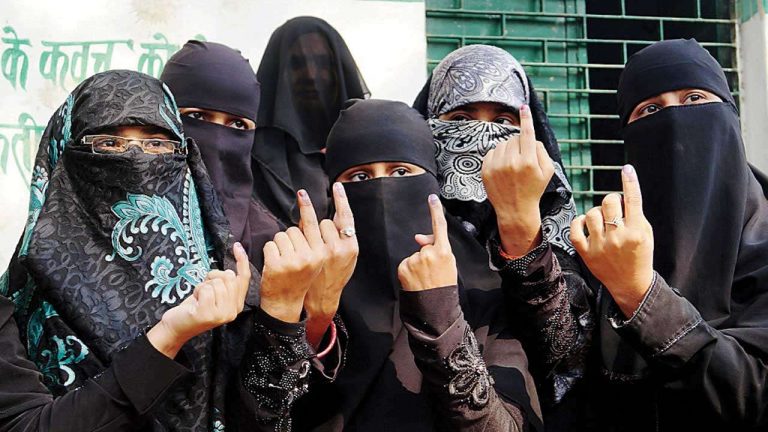
The BJP pointed out that female voters in Muslim-dominated constituencies, often come to polling stations wearing full Burkha. The party stated that as such, their identity cannot be verified by male CPF jawans, deployed to maintain law an order situation during elections.

While demanding the deployment of female CPF jawans, the BJP emphasised, “In minority (Muslims) areas female voters normally come clad in (a) burqa. It is not possible for the CPF jawans to establish their identity before permitting them entry in the booth. You are requested to ensure that these areas are mapped in advance and an adequate number of female CPF are deployed.”

BJP made several other demands to the ECI

In a letter dated December 17, the party has drawn the attention of the nodal election body to the declaration of Model Code of Conduct (MCC) as per the provisions in Section 15 of the Representatives of People Act. The party has also complained about the blatanat politicisation of the police force and the deteriorating state of law and order situation in West Bengal.

The BJP has also highlighted the ‘discrepancies’ in the draft voter list, and the State Employees Federation giving ‘assurance of victory’ to West Bengal Chief Minister Mamata Banerjee in the upcoming polls.

BJP had sought verification of Burkha-clad voters in UP in 2017

Earlier, the BJP has asked the Election Commission to deploy women cops, in order to check the identity of Burqa clad persons, in the last two rounds of the civic polls in UP in 2017. The letter in connection with this demand was sent to the State Election Commission in Lucknow by a BJP delegation which includes BJP state vice-president JPS Rathore and BJP’s election commission communication head Akhilesh Kumar Avasthi.

As per Rathore, such a demand was made to ensure a transparent election process and eliminate false voting. The party had also clarified that verification would only be required in those cases where the party cadre suspects foul play.

Trump administration set to add dozens of new Chinese companies to its trade blacklist, chipmaker SMIC to be one of the new entrants

0

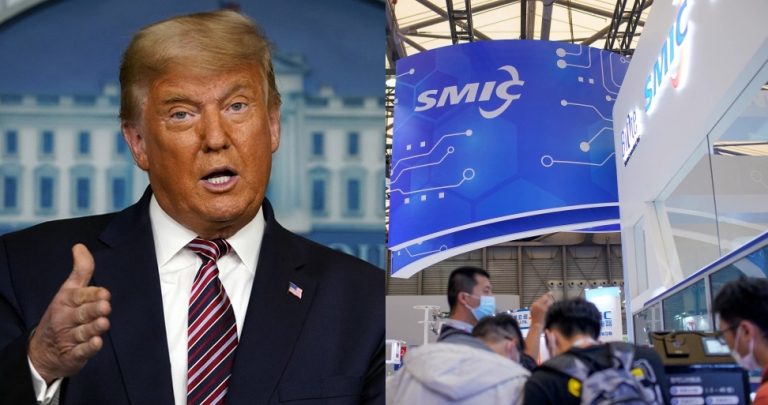
President Donald Trump is planning several new hard-line moves against China in the remaining weeks of his term. Weeks before Democratic President-elect Joe Biden is set to take office on January 20, the United States is set to blacklist dozens of more Chinese companies including the Chinese chipmaker company Semiconductor Manufacturing International Corp (SMIC). In total, the US is expected to add around 80 additional companies and affiliates to the list of blacklisted companies, nearly all of them Chinese, reports Reuters.

“The designations by the Commerce Department are expected to name some Chinese companies that Washington says have ties to the Chinese military, including some helping it construct and militarise artificial islands in the South China Sea, as well as some involved in alleged human rights violations,” the sources familiar with the matter was quoted by Reuters as saying.

The Trump administration’s entity list which includes more than 275 China-based firms and affiliates, comprises the names of Chinese companies like the telecoms equipment giants Huawei Technologies Co and 150 affiliates, and ZTE Corp over sanction violations, as well as surveillance camera maker Hikvision over suppression of China’s Uighur minority. And after today, the country’s top chipmaker company SMIC will be a new entrant in the list of these blacklisted Chinese companies.

Trump imposes fresh restrictions on Chinese diplomats, calls other nations to join ban on Chinese apps

In September, the US had called for a ban on Chinese apps and had urged other nations to join in. This move came a day after the Indian government banned 118 Chinese mobile apps including PUBG. US Under Secretary of State for Economic Growth, Energy, and the Environment Keith Krach had called on other nations to join its “clean network”.

The “Clean Network” program is a comprehensive approach of the Trump administration to guarding US citizens’ privacy and protecting most sensitive information from aggressive intrusions by malign actors, such as the Chinese Communist Party.

Moreover, the Trump administration, carrying on a tough line against Beijing had in September also imposed fresh restrictions on the Chinese diplomats. Secretary of State Mike Pompeo had then said that the US diplomats faced constant barriers to their work in China and hence the Trump administration was responding by imposing new guidelines on senior PRC diplomats in the US.

Reports contradicting earlier media reports emerge, farmer did not die due to biting cold and was not protesting for days: Details

0

A man named Bhim Singh, who had joined the farmers’ protest on Wednesday, was found dead under suspicious circumstances yesterday morning. Singh, 36, had died at the Kundli border on Wednesday night after he fell into a ditch, said Gurmeet Singh, a leader of the Bhartiya Kisan Union (Dakaunda) from Jhaneri.

According to the reports, on Thursday morning, a day after Singh joined the farmers’ protest at the Delhi border, when some protesters were passing along the Delhi-Haryana border, they saw a body of a young man lying motionless. They informed the police about the dead body after which they reached the spot and cordoned it off, reported Bhaskar.com.

Earlier, it was widely reported by mainstream media organisations that Singh had died because of biting cold which had enveloped large swathes of northern India, including the NCR region, where protesters are continuing their agitation against the central government over the newly introduced farm bills. Several media organisations such as India Today, NDTV, The Federal and many others had echoed the same claims that Singh had died due to “freezing cold” conditions. However, it was later found out that he had died after falling into a drain.

Before this incident, the farmers’ protest took a tragic turn when another protester, a Sikh priest, allegedly committed suicide near the Delhi-Haryana border against the new agriculture laws. However, a nurse working at his dispensary had alleged that Sant Baba Ram Singh was actually killed and could not have committed suicide by shooting himself.

With the talks between the squatting protesters, who have blocked the highways and roads into the national capital, and the Centre hitting a stalemate, an attempt is being made to hustle the government into acceding to the protesters’ demand of complete rollback of the farm bills. The central government has been blamed for the unfortunate deaths and maladies suffered by the protesters due to prolonged exposure to frigid temperatures while protesting at the Singhu border.

Notably, the protests which were apparently carried out for the welfare of the farmers have been hijacked by opportunist opposition politicians in cahoots with pro-Khalistani supporters. On several instances, the protests witnessed pro-Khalistani slogans being chanted and posters of Khalistani terrorist Jarnail Singh Bhindranwale were also found in the protests.

The dangerous resemblance to Shaheen Bagh protests where deaths of protesters were used to mount pressure against the Centre

This treacherous game of proxy-war against the Modi government reminds one of the diabolical Shaheen Bagh protests earlier this year when infants and children were used as a prop by the protesters to garner sympathy from the masses and pressurise the government into repealing the Citizenship Amendment Act.

The anti-CAA protests at Shaheen Bagh had witnessed the tragic death of a 4-month-old infant due to severe cold and congestion after being exposed to the bitter cold that swept the national capital region earlier in January. The infant, Mohammad Jahan, who died on January 30, was taken to protest site at Shaheen Bagh almost every day. The Supreme Court had fumed over the incident, questioning how can a 4-month-old baby participate in a protest.

If this wasn’t enough, a video of children holding posters of Mohammad Jahan had gone viral on the social media websites. In the video, while the gullible children were holding Jahan’s pictures, Shaheen Bagh protesters in the background could be heard rationalising Jahan’s death as a ‘Qurbani’ or sacrifice for the anti-CAA movement.

This sordid ploy of using minors to coerce the central government was also used in the ongoing farmers’ protests, where children of impressionable and tender age partook in the protests in inclement weather conditions holding banners and raising slogans against the government, asking the Centre to repeal the agriculture laws.

What are the farm laws? 

One of the biggest factors plaguing the growth of agriculture sector in the country is the inability of the farmer to find a market and to get a fair price to his produce. To address the issue, the erstwhile governments of different states enacted the Agricultural Produce Market Regulation Acts (APMC Acts), which authorised them to set up and regulate marketing practices in wholesale markets. 

The objective of these markets was to ensure that farmers get a fair price for their produce. However, with each passing year, the APMCs turned out to be inefficient with increasing cartelisation of middlemen, ban on private players to enter the trade, increasing corruption etc. 

The Modi government recently introduced three bills to promote much easier trade for the farm produce and to provide a competitive market for the producers outside the existing APMC system. The three laws were: 

  1. The Farming Produce Trade and Commerce (Promotion and Facilitation) Bill, 2020: This law aims at creating additional trading opportunities outside the APMC market yards to help farmers get remunerative prices due to additional competition
  2. The Farmers (Empowerment and Protection) Agreement on Price Assurance and Farm Services Bill, 2020: This law relates a framework for contract farming through an agreement between a farmer and a buyer prior to the production or rearing of any farm produce. 
  3. The Essential Commodities (Amendment) Bill, 2020: This law aims to regulate the supply of certain food items only under extraordinary circumstances.

It is pertinent to mention that the farm laws are set of three laws that allow farmers to sell their products outside APMC act (most states make it compulsory for the farmers to sell at APMC mandis). It also allows farmers to directly have a contract with corporate houses.

That farm laws don’t do away with APMC, and if someone is not willing to trust markets outside the current system, they are free to stick to the ongoing system. It doesn’t do away with MSPs either. However, the prevalent narrative that seems to be motivated by political concerns falsely claims that APMCs and MSP are being done away with. 

They also allege that due to these laws, big corporations would have the upper hand in a deal with farmers, however, that again is a lie. In fact, The Farmers (Empowerment and Protection) Agreement on Price Assurance and Farm Services Bill, 2020 ensures that a contract is agreed upon and gives the farmer the power to even cancel contracts.

Hathras Case: CBI files chargesheet against 4 accused, for murder and gangrape, on the basis of last statement of victim

0

The Central Bureau of Investigation (CBI) has filed a charge sheet in the Hathras Case against the four accused on the basis of the final statement made by the victim on the 22nd of September. The 19-year old woman was allegedly gang-raped by the accused on the 14th of September.

The Yogi Adityanath government in Uttar Pradesh had made way for a CBI probe into the matter after opposition party leaders and the media attempted to use the Hathras case to target the state administration. The senior leadership of the Congress party and organisations such as the Bhim Army and Islamist PFI attempted to politicise the matter for their own objectives.

The CBI, during the course of their investigation, met the doctors at the Jawaharlal Nehru Medical College and Hospital where the victim received treatment following her alleged gang rape. One of the accused was also found to be a minor, based on the school marksheet.

The victim died on the 29th of September at the Safdurjung hospital in Delhi. The initial medical report showed no signs of rape and the victim’s brother had made no mention of rape in the complaint that was registered on the 14th of September. It was on the September 22 when the Police recorded the statement of the victim that the rape allegations first surfaced.

The CBI report has been filed at a special SC/ST Court and has been filed under the SC ST Atrocities Act. IPC Section 376 D, which pertains to rape; Section 302, which pertains to murder; and Sections 354 and 376 have also been invoked.

Pakistan: Hindu boy attacked by an Islamist mob, bullets fired at 3 Hindu businessmen in Sindh market

0

On Friday, Pakistani Human Rights activist Rahat Austin shared a disturbing video from Umarkot in Sindh wherein a Hindu boy was being brutally assaulted by an angry Muslim mob.

In the video, the boy could be seen surrounded by an angry mob who held him by the hair and slapped him continuously. While one attacker cuffed him by his jacket, the other pulled his head down.

Rahat Austin tweeted, “Muslim neighbourhood is beating a Hindu youth in Umerkot Sindh-Pakistan. Yesterday Hindu shops were attacked in the same area in which 3 Hindu businessmen got gunshots and admitted in the hospital. The situation is getting worse as Muslims demanding Hindus to leave their properties and town.”

In another incident shared by Austin, Islamists reportedly attacked three Hindu businessmen in a Muslim-dominated neighbourhood in Aisha Market in Umerkot, Sindh. The victims, identified as Raja Malhi, Anand and Ashok Mali, have sustained gunshot wounds.

Highlighting the menace of encroachment of non-Muslim properties by Islamists, he emphasised, “Properties of Non-Muslims are considered as booty by the majority of Pakistanis so they try to snatch it one way or another.”

Islamists attack homes of Hindus in Sindh

Rahat Austin had informed on Monday that homes of Hindus belonging to Bheel community were attacked and looted by Islamists in Sindh, Pakistan. The Bheel community in Pakistan is highly marginalised and socio-economically backward. He informed that one Muhammad Aslam along with a few others from the neighbourhood allegedly tortured the impoverished Hindus living in that area and forced them to leave their houses.

These persecuted Hindus who are now scared to return to their respective homes have submitted a request for protection to the Session Judge and the SSP police Badin, Pakistan. The video shared by Rahat Austin shows these troubled Hindus raising slogans against the continuous atrocities meted out to them.

Clown to clown conversation between Rohini Singh and her comrade: Why do rich liberals hate the Middle Class so much?

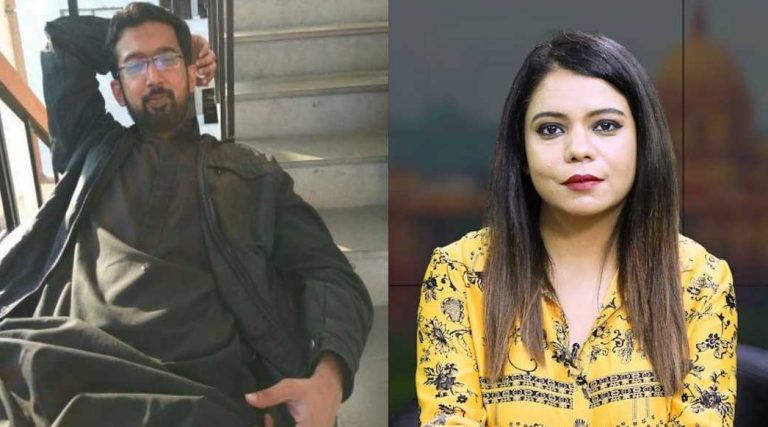
There was a remarkable conversation between alleged propagandist, and self-proclaimed ‘journalist’, Rohini Singh and her comrade Aditya Menon. It was remarkable because it is not everyday that the liberal hatred for the middle-class can be observed in full public display.

Rohini Singh declared that ‘Middle Class India’ has always been the “most immoral”. Menon agreed, and said, “The responses to your tweet only vindicated what you’ve written.” What triggered such a response was the apparent dislike for the ‘farmers protests’ and the anti-CAA protests among the Middle Class in Delhi.

Clown to Clown conversation between Rohini Singh and Aditya Menon

The hate for the Middle Class is particularly pronounced in case of Rohini Singh.

Rohini Singh will blame the Middle Class for near about everything

The ‘journalist’ does not believe the Middle Class even has the right to complain about perceived injustices.

Keep quiet and suffer in silence

It is a universal phenomenon among rich liberals and not limited to Rohini Singh and Aditya Menon. There is an undeniable disdain that rich liberals feel towards the Middle Class. But why is this so? The reasons are fairly simple, to be fair. The Middle Class is the biggest ideological adversary that rich liberals have to encounter.

Rich liberals and the Middle Class are extremely antagonistic to each other. The former is a revolutionary force, the latter, by and large, a stabilizing one. The former advocates and seeks radical transformation of society, the latter believes in incremental change and wants nothing more than the simple joys of life.

Rich liberals seek glory and pursue a policy of self aggrandizement in their personal lives while the Middle Class is more interested in attending to his duties and responsibilities. There is no boundary that the former would not cross and no cost that is big enough to dissuade them from pursuing individual ambitions. For the latter, however, rules and restrictions are the realities of life within the boundaries of which they must navigate.

Most importantly, however, social norms and traditional mores are perceived as obstacles to be overcome by rich liberals. The Middle Class, on the other hand, believes that these values lend meaning to their existence and they would like nothing more than passing on the world they inherited from their parents to their children.

Naturally, rich liberals are well aware that they do not have the numerical strength required to defeat the Middle Class, either electorally or in a revolution. Therefore, they rely on disenfranchised and marginalized sections of society to do the ‘dirty work’ for them. Therefore, what emerges is what Bertrand de Jouvenel described in his theory about the mechanism through which power operates.

While Jouevenel did not provide a name for it, it has been named by others as ‘High and Low versus the Middle’, that is, a section among the rich allies with the marginalized sections in their effort to seize power from power centers that lie in the middle. This was postulated as the mechanism that operates in revolutions.

The exact same theme cannot be said to operate in Indian society or a Democratic one but it is a fair idea about the mentality that operates here. People such as Rohini Singh are well aware that the ones protesting at Singhu Border or those involved in the anti-CAA protests do not subscribe to their view of the world. Nonetheless, such rich liberals seek to enforce their worldview by riding on the back of protesters.

It is also pertinent to mention here that it is the Middle Class that has the most to lose in any revolution and that is precisely why there’s such a lack of support for protests among the Middle Class. In case violence breaks out, it will be the Middle Class that suffers losses. The rich can hire private security to defend their assets, and even if they sustain some damages, they are more than capable of sustaining them without a collapse.

The Middle Class, on the other hand, does not have such luxuries. In revolutions, it is their way of life which will be most affected. It can also be observed that in the Western world currently, a rise in the popularity of radical ideas and a ‘populist uprising’ coincides perfectly with a declining Middle Class. It is especially true in case of the USA. For all such reasons, Rich liberals and the Middle Class are natural enemies. And that is why, the hate.

Bengal elections: Rahul Gandhi and Priyanka Vadra to campaign for Congress-Left Front alliance from next month

Congress scions Rahul Gandhi and Priyanka Gandhi Vadra are likely to lead the Congress campaign in the upcoming West Bengal Assembly elections. As per Jitin Prasada, Congress in-charge in West Bengal, the duo is likely to start the campaign in the TMC ruled state next month. Prasada told that Congress will be fighting the State Assembly elections along with the CPI(M)-led Left front.

Several meetings have been held by Prasada and state Congress chief Adhir Ranjan Chowdhury with the state leadership to take stock of the party organisation in the state. Prasada said that his party is conducting joint programmes with the Left front in the state. “We are conducting joint programmes with the Left Front in the State. We, along with the Left, will put up a strong fight against the TMC and the BJP in the next Assembly polls”, said Prasada.

BJP is sending central leaders because they don’t have strong leaders in the state: Congress

When questioned about why the AICC central leadership did not visit the state unlike the BJP, Jitin Prasada said that there is a difference in the functioning of two parties. He said that unlike the BJP his party had a long association with the state at the grassroots with local leadership. He said that the BJP does not have a face in the State therefore their central leadership has been frequenting the state, Congress’ state leadership was quite strong. “But in Congress, we believe in strong State leaders. In Bengal, we have strong leadership so we never felt to bring in central leaders here”, he said. “But as elections are approaching, from January onwards, senior AICC leaders including Rahul Gandhi and Priyanka Gandhi Vadra are likely to campaign in the State regularly.”, he added.

It is noteworthy that after Congress’ miserable performance in Bihar Assembly elections, 23 senior Congress leaders had written a letter to Congress Chief Sonia Gandhi pointing out that at the peak of the campaign during the Bihar elections and even on the result day, Rahul Gandhi and Priyanka Gandhi Vadra were holidaying in Shimla instead of being with the party.

Union Ministers Amit Shah and JP Nadda to visit Bengal every month till elections

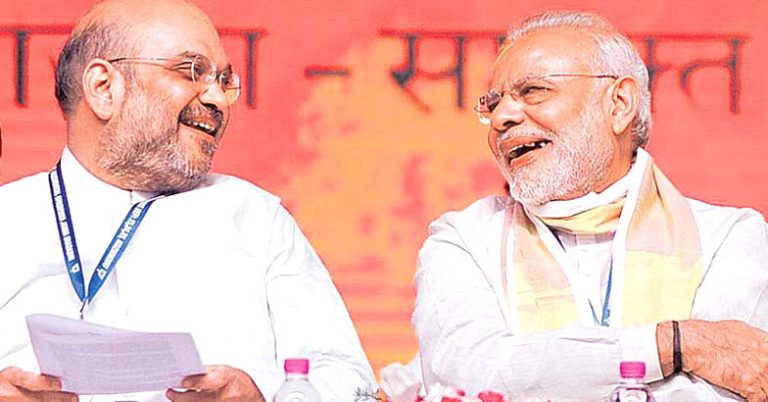
State BJP President Dilip Ghosh had announced last month that Union Ministers Amit Shah and JP Nadda would be visiting the state every month till the Assembly elections. Shah is likely to arrive in the state on December 19. This will be his second visit to the state since November this year. Recently, the convoy of BJP chief JP Nadda and party’s national general secretary Kailash Vijayvargiya headed towards Diamond Harbour was attacked in West Bengal. Some protesters gathered on the streets and attempted to block the road to stop their convoy from passing and had also pelted stones at vehicles. BJP had started its Bengal campaign immediately after the Bihar elections.

Kerala: RSS, BJP offices vandalised, party workers assaulted allegedly by CPIM workers: Reports

0

Following their victory in the local body elections, the Communist Party of India (Marxist) workers have weaponised violence against the opposition BJP in the State.

As per reports, BJP offices were attacked by CPIM goons in the latter’s stronghold in Kanjangaadu in Kasargod district of Kerala. Similar attacks were carried out in Appatti and Puthiyakotta. Party workers from the CPIM attacked BJP offices in Arayi Karthika and Arayi Palakkal. During the act of vandalism, window panes and doors were broken, followed by the destruction of materials kept within office premises.

Two BJP party workers, who were at the office at that time, was also brutally assaulted by the CPIM goons. Reportedly, they also pelted stones at the residence of BJP leader Umanatha Rao’s daughter. The goons also threw crackers into the house of a BJP candidate from Nelikkat, Madhavan. As a consequence, his wife sustained critical injuries during the attack.

RSS offices attacked in Alleppey

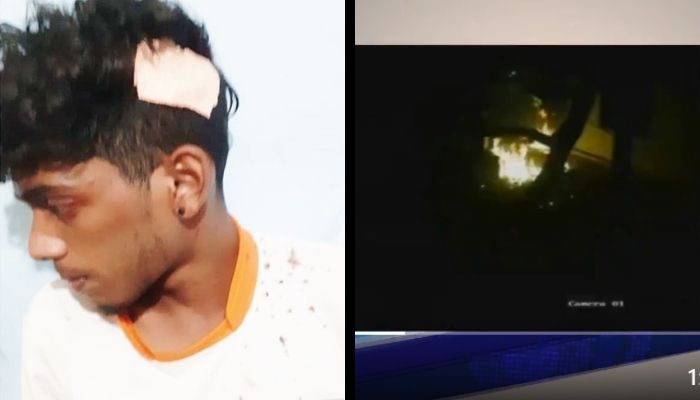
Times Now reported that a Rashtriya SwayamSevak Sangh (RSS) office in Karthikapally in Alappuzha was allegedly attacked by CPIM workers on December 16 (Wednesday). The police have now lodged a case against 5 miscreants involved in the attack. CCTV footage, that has emerged following the attack, shows goons barging into the office premises.

As per the report, the accused came on two-wheelers and hurled bombs into the office. Visuals from the footage show a fire breaking out outside the office. Such incidents are becoming commonplace in Kerala, especially in the Northern areas of Malappuram. However, violent attacks are now being witnessed in central parts of Kerala such as Alappuzha.

CPIM’s onslaught against the BJP comes after the party made inroads in Kerala, with 13.28% votes, through Trivandrum corporation and Palakkad municipality. BJP has also won seats in Kannur and Kasargod, thereby creating a situation of panic for the incumbent Communist party.