Home Blog Page 48

The Great Nicobar Project should have been done decades ago: Read how India has underutilised its maritime potential and neglected the blessings of geography

Soon after the events at Euromaidan, when Russian President Putin knew that Ukraine might soon be lost to a hostile government, one of his first moves was to annex Crimea. Kremlin cited historical, cultural and social reasons for the move. But anyone who has ever studied the geopolitics of the region can clearly see why annexing Crimea was crucial for Russia. Russia has gone to war for Crimea in the past, and it will do so again and again, whenever needed, because Crimea has Sevastopol.

Sevastopol is the critical, and in a way, the only major warm-water port for Russia. Technically, there can be others, but Novorossiysk on Russian territory is storm-prone and not that deep. Sevastopol is the focal point where Russian navy and commercial vessels access the Black Sea, without needing ice-breakers and risking winter-time limited operational status. Despite being the biggest nation on the planet, most other Russian ports are either on freezing waters, but Sevastopol is the exception.

Geography was the main character when Catherine the Great ruled in the 1700s, that fact hasn’t changed under Putin’s regime either. 

Civilisations have risen and fallen through ports. Empires are built through ports and maritime routes. Any nation that wants to be a global power needs to become a maritime power first. 

Alfred Thayer Mahan’s famous idea, that sea power determines the rise and fall of nations, was valid during the reign of ancient Rome, the advent of the Spanish and British empires in the Middle Ages, and the brutal history of colonisation in the last few centuries to this day. 

Land-locked or maritime-hesitant nations inevitably find themselves at the mercy of those who command the oceans. For India, blessed with one of the longest coastlines and a commanding position astride the Indian Ocean, the imperative is stark: it must fully realise its maritime potential or risk remaining a continental giant overshadowed by true blue-water powers.

India has underutilised its maritime potential for decades 

India is geographically one of the most blessed nations for maritime activities. With over 10,000 km of coastlines, a central position astride key Indian Ocean trade routes, numerous natural deep-water harbours, and favourable monsoon winds historically aiding navigation.

We have an entire Ocean named after us, but we are, ironically, not even using 50% of our maritime potential, letting our geographical blessings go unharnessed while our neighbours profit from our waters. For decades, we have been lagging behind other smaller or less advantageously placed nations like Singapore, the Netherlands, South Korea, or even China.

Criminal underutilisation of coastline, marine resources and capabilities

The neglect of naval power and maritime trade literally caused India years of occupation and colonial exploitation at the hands of global powers. Despite this, successive governments have learned no lessons even after Independence. India has, for decades, criminally underutilised its maritime capabilities and potential.

Shipbuilding

As of 2025–26, India holds less than 1% of the global shipbuilding market, ranking a distant 16th in a world dominated by China, South Korea and Japan who control over 92% of the shipbuilding market.

India’s annual output is tiny, around 40,000–47,000 Gross Tonnage per year on average, that too only in recent years, while global leaders produce millions of gross tonnage. 

The Modi government has rightfully identified and understood the lacuna. Policies have been brought to rectify those mistakes and the current government is willing to invest capital and willpower into shipbuilding. The NDA government is aiming for 5% global share in shipbuilding by 2030 and a global top 5 rank by 2047, both ambitious goals, but much-needed.

Merchant Fleet & Shipping Capabilities

Indian-flagged ships carry only 5–7% of the country’s export-import trade. Foreign vessels handle the remaining 93–95%, leading to significant forex outflow and dependency. The picture is even more concerning when we look at global tonnage capacity. Globally, India accounts for less than 1% of total world shipping tonnage. 

In 2025-26, a record performance, India’s merchant fleet and shipping capacity crossed 14.2 million Gross Tonnage, with the addition of 92 cargo ships, a roughly three-fold increase compared to 2024-25. But we are still far, far behind where we should be. India-owned and India-flagged vessels are currently around just 1500, keeping us at the 17th or 18th in the global cargo-carrying capacity rankings. This needs to improve a lot if we aspire to become a world leader.

Ports & Cargo Handling

Ports and Cargo Handling are the most concerning sector in the overall maritime capabilities debate for India. As discussed above, few other nations in the world have been blessed with a coastline and geographic maritime potential as we are, yet, we have preferred to live detached from the oceans for generations. 

“India’s proud maritime heritage is well known. We were always known for shipbuilding and coastal trade. We are the land of the Cholas and the Marathas, whose naval might, trading impact and strategic brilliance became pathways of progress and power. Their vision showed us how the oceans can serve as bridges of opportunity. However, a decade ago, when we assumed office, India’s maritime sector was filled with outdated laws and limited capacities. This was not acceptable to us”, PM Modi had written in October 2025.

India has over a dozen major ports, but only two of them, namely JNPA and Mundra, consistently rank in the worldwide top 40–50 by container throughput. In 2025-26, India’s major ports handled 915.17 million tonnes (MT) surpassing the target of 904 MT.

In the World Bank’s Container Port Performance Index (CPPI 2024, referenced in 2025–26 reports), JNPA ranked 23rd and Mundra 25th among the top 30 globally. Nine Indian ports (including non-major ones) feature in the global top 100. Giant ports like Shanghai (47+ million TEUs) and Singapore are dwarfing India’s ports by miles. Vessel turnaround times have improved, but still lag world-class benchmarks. Capacity utilisation often hovers around 50% for India. 

Why the Galathea Bay International Container Transhipment Port and the Great Nicobar Project is not just crucial, but an absolute national security necessity

The Strait of Malacca is a narrow chokepoint through which over 40% of global trade currently passes. Great Nicobar, located just 40 Nautical Miles from the Strait, sits at one of the most critical maritime arteries on the planet. And have just watched global trade pass us by. 

Image via Ministry of Ports Shipping and Waterways

Galathea Bay is a natural deep-water harbour on the southeastern coast of Great Nicobar Island. With its over 20 metres draft, this geological blessing sits right there on Indian territory, unutilised and ignored for decades while Singapore, Colombo flourished as global ports. 

The Bay can accommodate the largest container vessels without the limitations faced by many competing hubs. Galathea Bay International Container Transhipment Port (ICTP) is not just a peripheral port project; it is going to be India’s strategic anchor in the eastern Indian Ocean, transforming the Andaman & Nicobar archipelago from a remote outpost into a forward-operating springboard for both commerce and defence.

Commercially speaking, the ICTP will directly address India’s chronic vulnerability. Currently, around 75% of India’s containerised cargo is transshipped through foreign ports like Colombo and Singapore, causing not just a massive foreign exchange outflow, but a colossal logistical dependency. 

The proposed Galathea Bay ICTP will internalise this traffic, slash costs, boost export competitiveness, and position India as a major hub for Asia-Europe, Asia-Africa, and Asia-US trade routes. The larger Great Nicobar Project proposes a civil-military airport, 450 MVA renewable-heavy power plant, and an integrated township to complete the ecosystem, creating a self-sustaining maritime node.

The government has cited the Galathea Bay ICTP and Great Nicobar project as an “unsinkable aircraft carrier”, an ambitious but critical move that secures trade lifelines, projects naval power, counters encirclement, and cements India’s emergence as a true maritime superpower.

Even if the historical instances of key trade routes making and breaking empires were not sufficient, the ongoing hostilities in West Asia, where the closure of the Strait of Hormuz sent economic and logistical shockwaves through the entire world, should be enough to stress the criticality of a marine trade choke point. Galathea Bay is not just commercially prudent for India; it is a strategic military and commercial master move against China. 

As PM Modi had said earlier, this is not the era of war. But this is the era of technological advantage and consistent, relentless global competition for resources and power. India has lost not years or decades, but centuries due to political turmoil and colonisation by foreign powers. Geography has ordained us as the guardian of the Indian Ocean, it is high time we asume that role strategically and officially. That Ocean belongs to us, if we do not move to claim it, someone else will. 

From Punjab, not India: How Diljit Dosanjh’s response at ‘The Tonight Show’ feeds into problematic narratives and encourages Khalistani separatism

The global stage is never just about performance; it is about projection. Identity, politics, and symbolism travel with every word, every pause, and every omission. When someone like Diljit Dosanjh appears on a platform as influential as The Tonight Show Starring Jimmy Fallon, hosted by Jimmy Fallon, he is not merely entertaining, he is signaling.

And increasingly, those signals demand scrutiny. At first glance, Dosanjh’s articulation of Punjab; its music, its culture, its energy, appears harmless. No one disputes the legitimacy of regional pride.

India’s civilizational strength lies precisely in its layered identities. But what raises concern is not the celebration of Punjab. It is the systematic erasure of India from that celebration.

On one of the most watched platforms globally, Dosanjh introduced himself simply as “from Punjab.” Not India. Not even in passing. This is not an isolated lapse; it is a pattern repeated across global appearances, from Coachella to Western media interviews.

Patterns are rarely accidental.

Punjab is not a sovereign entity. It is a state within India, with a history, identity, and contribution deeply intertwined with the Indian nation. To repeatedly present it as a standalone identity on global platforms, without contextual anchoring, is not just incomplete, it is politically loaded. No American popstar or celebrity refers to themselves from their respective states. They proudly wear their American identity on their sleeves, instead of foregrounding their regional identities. But in India, there are some sections of society for whom regional chauvinism takes precedent over national allegiance. Though it might appear as frivolous, the issue is deeply problematic.

Because in today’s geopolitical reality, such framing does not exist in a vacuum.

The Khalistan movement is not about cultural assertion; it is an explicitly political project with terror roots that seeks the territorial dismemberment of India.

It constructs India as an adversary, calls for the balkanisation of the country, and has historically justified violent means to carve out a separate state. While marginal within India today, it continues to find resonance in pockets of the diaspora, where distance often amplifies distortion.
And this ecosystem does not operate alone.

There is a long-documented pattern of Pakistan, particularly through its intelligence apparatus like the ISI, seeking to exploit such fault lines to destabilize India. Cultural narratives, diaspora activism, and identity politics become instruments in that larger strategic play.

This is where Dosanjh’s messaging becomes more than just artistic choice.

By consistently foregrounding Punjab while omitting India, he is, whether consciously or not, contributing to a narrative architecture that separatist elements thrive on. His articulation aligns, uncomfortably, with the very framing that Khalistani groups have spent decades attempting to normalize: Punjab as distinct, detached, and politically separable from India. Not to mention Dosanjh has been accused of softballing Khalistani ideology, most notably with his support for the antisocial elements during the farmers’ protests and his spat with actor Kangana Ranaut back then.

Nevertheless, intent, at this point, becomes secondary to effect.

Defenders will argue that this is branding, that Dosanjh is simply globalizing “Punjab” as a cultural identity. But this argument collapses under scrutiny. Artists across the world do not erase their national belonging to amplify regional pride. They contextualize it. The sequence matters because it signals political belonging before cultural specificity.

Dosanjh reverses or entirely omits that sequence. Why? The answer likely lies in his audience.

His fandom is not limited to India. It spans a transnational Punjabi diaspora, including significant numbers of Pakistani-origin Punjabis who share linguistic and cultural ties but not Indian nationality. His concerts across the world routinely see participation from this cross-border demographic. By positioning himself as “Punjabi first,” Dosanjh taps into a market that transcends borders.

Commercially, it is astute. Politically, it is deeply irresponsible.

Because this very transnational Punjabi identity, detached from India, is a core ingredient in the Khalistani narrative mix. It blurs national boundaries, dilutes political belonging, and creates a cultural foundation upon which separatist ideology can be layered. What begins as branding can easily become ideological scaffolding.

And in that ecosystem, even silence becomes a statement.

But beyond the geopolitical implications lies an even more glaring contradiction, the intellectual dishonesty that underpins this entire posture.

Figures like Diljit Dosanjh and others in similar cultural circuits are often quick to indulge in virtue signalling when politicians in India appeal to cultural or religious identities. Such appeals are routinely dismissed as divisive, regressive, or majoritarian. The argument is that identity-based mobilisation is inherently dangerous to a plural society.

Yet, on international platforms, the same individuals unapologetically foreground a hyper-specific regional identity, Punjab, while erasing the national context altogether.

This is hypocrisy of the highest order.

If identity assertion is problematic in principle, it should remain so regardless of geography. If it is legitimate as cultural expression, then that legitimacy must apply consistently, including when Indians assert broader national or civilizational identities.

Instead, what we see is selective validation. When identity aligns with certain ideological comfort zones, it is celebrated. When it doesn’t, it is condemned. Domestic discourse demands abstraction; global branding thrives on specificity. The principles shift with the audience.

That is not consistency; it is calibration. And in a sensitive context like Punjab, this calibration is not without consequence. Because the repeated decoupling of Punjab from India feeds into a narrative space already occupied by separatist ideologies seeking legitimacy.

The contradiction, therefore, is not just rhetorical; it is structural.

You cannot decry identity politics at home while practicing a refined version of it abroad. You cannot dismiss civilizational assertion as regressive in India and then market regional exceptionalism as progressive on the global stage.

At some point, this ceases to be about expression and becomes a question of intellectual honesty.

None of this negates Dosanjh’s artistic success. He has undeniably taken Punjabi music to global audiences and broken barriers that few before him could. But influence is not a selective privilege. It comes with responsibility, especially when operating in a contested narrative environment.

Because on the world stage, identity is not just what you say.

It is also what you choose to omit, and who benefits from that omission.

And in Diljit Dosanjh’s case, that omission is beginning to align far too conveniently with narratives that seek not cultural celebration, but political fragmentation.

Bombay HC quashes FIRs against Shekhar Suman and Bharti Singh for the words “Ya Allah, Rasgulla, Dahi Bhalla”: Read what the court said about invoking criminal law

The Bombay High Court recently quashed the FIRs filed against actor Shekhar Suman and comedian Bharti Singh for a joke made during a popular comedy show, “Comedy Circus Ka Jadoo”, aired on Sony TV in November 2010. The decision passed on Wednesday (29th April) came during the hearing on the petitions filed by Suman and Singh, seeking the quashing of the FIR filed against them.

A Bench of Justice Amit Borkar held that no offence was made out against the petitioners under Section 295-A of the Indian Penal Code, as alleged in the FIR.

Notably, the FIRs were lodged in November 2010, under Section 295-A, read with Section 34 of the Indian Penal Code, based on a complaint filed by one Mohd Imran Dadani Rasabi, owner of the Raza Academy, at the Pydhonie Police Station. The FIRs arose from Episode No.18 of the show, in which Bharti Singh performed a character styled as “Umrao Jaan”, inspired by the title character from the Hindi movie of the same name. Her co-performer enacted a character of a police officer inspired by a role from the Hindi film ‘Dabangg’.

During the performance, Singh uttered a joke containing the words “Ya Allah! Rasgulla! Dahi Bhalla!”. The use of the word ‘Allah’ irked the complainant, who submitted a complaint against Bharti Singh, along with Shekhar Suman, who was participating in the show as a judge.

Criminal law should not be invoked in a casual manner: HC

Bharti Singh and Shekhar Suman approached the Bombay High Court, challenging the validity of the FIRs. The High Court slashed the criminal proceedings against the petitioners on the dual grounds of merit of the case and the legality of the criminal procedure. Criticising the criminal proceedings initiated against the petitioners, the High Court cautioned that the criminal law should not be invoked in a “casual manner”.

“I am also mindful of the fact that criminal law should not be invoked in a casual manner against an artist or a programme judge merely because somebody feels insulted by a performance viewed out of context. There must be deliberate targeting of religious feeling. There must be a malicious object. There must be sufficient material to connect the petitioner with that object. On the present record, the connection is missing,” Justice Borkar remarked.

In arriving at the decision, the court examined the facts of the case to ascertain the nature of the television show, the intent of the artists in making the joke, and the presence of elements required for constituting the alleged offence. After hearing the submissions of the parties, the High Court concluded that the necessary elements of deliberate and malicious conduct required to constitute the offence were not present. The court also held that the manner in which the criminal proceedings were initiated against the petitioners also suffered a legal flaw.

The joke was not made with malicious intent: HC

In the order quashing criminal proceedings against the petitioners, the High Court noted that the joke, containing the expressions “Ya Allah! Rasgulla! DahiBhalla!”, was made during a light entertainment programme and was not made with malicious intent. The court said that the words were uttered to rhyme and give a comic effect, and there was no premeditation.

“In the present case, from the complaint and from the episode as described, I do not find any material showing such deliberate or malicious intention on the part of either Petitioner. The performance appears to have been made in a theatrical manner, with the object of entertainment. That does not by itself create criminality,” the judge stated.

The High Court took notice of the fact that the show was telecast as a family entertainment programme and had been running for a considerable time. Examining the format of the case, the High Court also noted that performers and judges in such programmes are supposed to create laughter while following the script of the episode.

“The Petitioners say that the performers and judges in such a programme are meant to create laughter. I find this to be a relevant surrounding circumstance. A judge in a comedy show does not stand in the position of a speaker making a declaration against a religious group. A performing artist on such a stage also performs according to the script of the episode,” the court asserted.

The show is meant for humour, and the artists follow the script: HC

Accepting the petitioners’ submissions, the court agreed that the programme was a light-hearted show involving comic exchanges by performers meant to create humour. “The learned counsel submits that no reasonable reading of the episode would show a deliberate design to insult any religion or religious belief. This submission has substance. The Court cannot ignore the context of the programme. A comedy show is not judged by the same standards as a doctrinal speech or a political statement. A performance of this nature is to be read as a whole, and not by selecting stray expressions from it,” the court said.

Criminal proceedings initiated without mandatory sanction: HC

The High Court reminded that for taking cognisance of an offence under Section 295A of the Indian Penal Code, a previous sanction of the state government is mandatory under Section 196 of the Code of Criminal Procedure. “The provision is mandatory. It is intended to prevent abuse of prosecution in matters of sensitive public expression. Here, the record as placed before me does not show that such a sanction was obtained before the matter was proceeded with in the manner in which it was done. This omission goes to the legality of the prosecution,” the court pointed out.

“When the complaint itself does not disclose the ingredients and when the mandatory sanction is not shown, continuation of criminal proceedings would amount to misuse of process,” the Court noted, quashing the criminal proceedings against the petitioners.

Former cricketer and Trinamool Congress MP Yusuf Pathan challenges Gujarat High Court order declaring him encroacher of government land: Read details

0

Former Indian cricketer and Trinamool Congress MP, Yusuf Pathan, has reportedly filed an appeal challenging a Gujarat High Court single-judge Bench order declaring him an encroacher on government land. According to Ahmedabad Mirror, Pathan has also challenged a notice of the Gujarat government dated June 6, 2024, which rejected Vadodara Municipal Corporation’s (VMC) proposal to lease him a plot for 99 years without public auction.

The notice directed the VMC to remove the encroachment urgently. The High Court had rejected Pathan’s proposal to purchase the land he had been illegally occupying, holding that municipal land must be sold through auction. The court added that he can take part in the auction.

The Background of the Land-Grabbing Case against Pathan

In August 2025, Justice Mauna Bhatt dismissed a petition filed by Pathan challenging orders passed by the VMC and the state government asking him to vacate a piece of land illegally occupied by him. The matter relates to a piece of government-owned land in Vadodara, which, according to authorities, was encroached by Pathan. 

On March 30, 2012, the VMC’s standing committee had agreed to allot the encroached plot to Pathan at a rate of ₹57,270 per square metre after a valuation exercise. The decision was also approved by the general body of the corporation in June 2012. Since the allotment was to be made without an auction, a recommendation was sent to the state government seeking its approval for the same. The state government, however, rejected the proposal in June 2014, but Pathan continued to illegally occupy the piece of land. Subsequently, in 2024, the VMC Commissioner ordered him to vacate the land, prompting him to approach the High Court against the order.

Pathan claimed adverse possession over the land

In his petition, Pathan had argued for the implementation of the VMC’s 2012 proposal to allot him the land without auction. He contended that the VMC is an independent body under the Gujarat Provincial Municipal Corporations Act, 1949, and has full authority to lease property without requiring the state government’s approval. He invoked the 74th Constitutional Amendment, which grants autonomy to local bodies, and claimed that the state’s interference was unconstitutional.

He clarified that he did not object to the VMC seeking the approval of the state government because everything appeared positive to him. Pathan claimed that the lack of approval by the state government did not affect the power of the municipal corporation to allot the land to him. Additionally, he claimed adverse possession over the land, arguing that the VMC’s silence regarding the possession of land by him for 12 years implied that his occupation should be considered valid.

Pathan cited his cricket career and position as an MP before the court

Pathan also tried to win the favour of the High Court by pointing out that he was an international cricketer and a Member of Parliament. He said that he was willing to purchase the land at market price. The land in question lies right next to Pathan’s bungalow, and he cited personal and family security concerns to lay his claim on it.

The VMC and the state government opposed Pathan’s claims

The Counsel appearing for the corporation and the state government submitted that Pathan had no right to occupy government or municipal land without proper approval. He emphasised that if the land was to be allotted to him without auction, the approval of the state government was mandatory, but it was not given.

He highlighted that despite the state government’s rejection of the VMC’s proposal, Pathan fenced the plot and kept occupying it. The counsel informed the court had not paid the corporation a single rupee in the last 12 years, and that his current offer to pay market rates could not undo the illegality.

Dismissing Pathan’s claims regarding security concerns, the counsel said that Pathan never sought security from the state nor provided evidence of any threat. He argued that Pathan, being a public figure and people’s representative, is expected to follow the law even more strictly than ordinary citizens.

The High Court dismissed Pathan’s petition, citing a lack of a legal right

The High Court dismissed his petition, emphasising that he had no legal right to the land and that his possession constituted encroachment. The court said that holding land unlawfully for a long time does not create ownership rights. The court turned down Pathan’s request to acquire the land at market price, saying that allowing the request would set a dangerous precedent of regularising illegal occupation. The court clarified that prolonged illegal possession of government land does not give rise to title.

The court asserted that celebrities have a greater accountability as they serve as role models to many and wield an influence on public behaviour and social values. It added that showing leniency towards such persons would send out a wrong message. The High Court called out the VMC for not remaining vigilant and failing to take timely action against Pathan. It did not impose any fine on Pathan as the corporation delayed in taking action against him, but it did not accept Pathan’s plea.

Global propaganda against Great Nicobar project: From ‘rushed permissions’ to ‘Faustian bargain’ – GlobalAsia’s lies dismantled

The article in GlobalAsia by Nirmal Ghosh is finely written, intensely felt, and practically pointless as a policy critique. He characterises the Great Nicobar project as a ‘Faustian bargain’ in which India sells its ecological soul in exchange for strategic benefits that he describes as ‘theoretically persuasive though tactically questionable.’ It’s a remarkable display that he dismisses environmental safeguards as insufficient in one breath and then questions whether the strategic rationale really makes sense in the next. He leaves the reader with an atmosphere rather than an argument, one of romantic environmental sadness that, no matter how deeply felt, cannot serve as the foundation for a country of 1.4 billion people making decisions about its sovereign development and territorial security.

Let’s take a careful and in-depth look at his real claims since they are worthy of more than a dismissal and because the facts as a whole provide a totally different story.

‘Rushed through safeguards’: A claim that cannot survive scrutiny

The project was ‘rushed through various safeguards,’ according to Ghosh’s worst claim. This is now the standard statement used by all project critics, and it is said so frequently that it is taken for granted. It isn’t.

On November 11, 2022, MoEF&CC granted the Environmental Clearance, which is a 30-page document with 42 specific conditions. These include conservation of leatherback sea turtles, protection of Nicobar Megapodes, coral translocation, management of saltwater crocodiles, mangrove restoration, tribal welfare for the Shompen, three independent monitoring committees, and a 30-year wildlife conservation program that is fully funded by the project proponent. Independent, long-term research tasks were given to the Wildlife Institute of India (WII), the Zoological Survey of India (ZSI), the Botanical Survey of India (BSI), and the Salim Ali Centre for Ornithology and Natural History (SACON) until 2052, the project’s completion year. These exercises don’t include checking boxes. They are institutionally endorsed, financially protected, and legally bound.

As part of the mitigation efforts, three new wildlife sanctuaries were created. A leatherback turtle sanctuary on Little Nicobar Island, a Megapode Sanctuary on Menchal Island, and a Coral Sanctuary on Meroe Island. Water withdrawals from the Galathea River were strictly prohibited. Eight wildlife corridors were established along the east coast. A Special Medical Unit with a budget of ₹100 crore was established to protect tribal communities from invasive diseases.

Then, in February 2026, a six-person National Green Tribunal court led by Justice Prakash Shrivastava considered petitions contesting these very clearances and rejected them, concluding that there was no good ground for intervention. The NGT is not a rubber-stamp organisation; rather, its purpose is to resist when governments take shortcuts. It found no cut corners here. It discovered both substantive and procedural compliance to Indian environmental law. Referring to something as ‘rushed’ is not environmentalist. That’s revisionism.

The coral argument

Corals are a key component of Ghosh’s and his intellectual camp’s most sentimental exhibit. The optics are striking, coral reefs inspire colour, fragility, and irreplaceability. Again, however, the science is more complicated than the rhetoric.

The ZSI conducted its own investigation and discovered no substantial coral reef formations inside the proposed port building zone. There are dispersed coral colonies within 15 metres of the project area, totalling roughly 16,150 colonies that are suggested for relocation. Importantly, ZSI referenced its own previous experience; effective reef systems were created through coral translocation in the Gulf of Kachchh, which had over 90% survival rates. The NGT accepted the evidence. The tribunal urged MoEF&CC to ensure coral regeneration using ‘proven scientific methods’ and ZSI, which is familiar with these waters, has a track record of successfully achieving precisely that.

Sovereignty, UNCLOS, and the strategic argument Ghosh cannot quite dismiss

This is when Ghosh’s analysis becomes most intellectually evasive. He describes the national defence justification as ‘theoretically persuasive though tactically questionable,’ but he does not present the tactical case. He dismisses the strategic case without addressing it.

So, let us confront it. Great Nicobar Island is around 40 nautical miles from the Strait of Malacca, across which nearly 80% of China’s oil imports pass. According to the United Nations Convention on the Law of the Sea (UNCLOS), India’s Exclusive Economic Zone extends 200 nautical miles from its baseline. Without sufficient infrastructure in Great Nicobar, India cannot meaningfully exercise its sovereignty over this zone. A country’s exclusive economic zone (EEZ) is more than just a legal concept; it is an economic and strategic reality that requires physical presence, monitoring capabilities, and maritime enforcement. Without a port or an airport, India’s EEZ in the southeastern Indian Ocean is essentially an unguarded frontier.

China’s People’s Liberation Army Navy has progressively expanded its presence in the Indian Ocean through what strategists refer to as the ‘String of Pearls.’ Gwadar in Pakistan, Hambantota in Sri Lanka, and Kyaukpyu in Myanmar. These aren’t hypothetical threats. They are recorded infrastructural investments that allow the PLA Navy access to the Indian Ocean’s littorals. Against this backdrop, India’s development of its own island its own territory, within its own sovereign powers, does not constitute aggression. It is basic strategic prudence that is perfectly in tune with international law.

This is the headquarters of the Andaman and Nicobar Command (ANC), the only tri-service integrated command in India. By upgrading Great Nicobar, it becomes a real force multiplier rather than just a symbolic outpost. Ghosh may refer to this as ‘tactically questionable,’ but he should explain to the reader what exactly is dubious about protecting one’s own maritime frontier in a period when global power competition is fierce.

The 8000 people nobody talks about

The 8,000 people, out of which 7,000 are settlers from the mainland, who truly reside on Great Nicobar must finally be taken into consideration in any article regarding the island’s biodiversity. At the moment, they lack dependable road access to the rest of the island, are only reachable by air and water, have subpar medical services, and almost no economic opportunities. By 2052, the project’s Environmental Clearance anticipates 51,000 direct jobs and more than 1,28,000 potential jobs. The 160 MLD water system being constructed, township development, and water supply infrastructure are not abstract advantages, rather, they are the difference between an isolated population and one that is linked to the country’s mainstream.

Ghosh’s perspective leaves no room for these 8,000 people. Inhabited islands are sometimes viewed in the conservation literature as issues that need to be resolved rather than as communities with rightful development claims. That framing, however unintended, indicates whose interests the environmental critique eventually serves.

The monitoring architecture

A truly ‘rushed’ environmental clearance would not require a project monitoring committee led by the Chief Wildlife Warden, three independent monitoring committees that meet twice a year with site visits, biodiversity committee reviews before any road expansion, and six-monthly compliance reports submitted to the MoEF&CC Regional Office. It would not require the project proponent to pay and maintain WII research stations in Campbell Bay and Kamorta for a period of 30 years. It would not be necessary to install 150 satellite tags on leatherback turtles in the first five years of the initiative.

This oversight architecture is imperfect; no document is perfect, but it is not insignificant. It is hardly an honest environmental analysis to attack it as a ‘Faustian bargain’ without first acknowledging its existence.

Conclusion

Ghosh concludes with grief, which is an understandable reaction to large-scale change in ecologically valuable environments. However, grief alone cannot be used to shape policy. The government’s choice to develop Great Nicobar is not a concession to development lobbyists. It is the result of a collaborative process that included WII, ZSI, BSI, SACON, the EAC, the NGT, a public hearing in Campbell Bay, and the courts. Every institution under Indian environmental legislation was used. All agreed that the project, with its conditions, was acceptable.

A nation’s sovereignty over its own area, whether biological, economic, or strategic, is not negotiable. It’s a right. The challenging, unglamorous, institutionally controlled task of simultaneously pursuing security and the environment is what India has attempted at Great Nicobar, not a choice between the two. Critics who fail to acknowledge the problem do not safeguard nature. They’re simply making noise from a safe distance.

Inside The Timothy Initiative: ‘Pray for safety against evil spirits and Hindu Gods’ – How TTI manual trains missionaries to enter Hindu villages, bypass resistance, and counter core beliefs

0

On 18th and 19th April, the Enforcement Directorate conducted raids at several locations linked to an organisation named The Timothy Initiative, TTI. According to the investigation agency, in just six months, TTI withdrew 95 crores using foreign bank debit cards across different states, including 6.5 crores in Naxal-affected Chhattisgarh’s Bastar and Dhamtari regions. While doing so, TTI bypassed FCRA regulations. Notably, this organisation is not registered under FCRA.

OpIndia is doing a series of reports on how TTI functions. During our research, we found that TTI has published 10 books that its members follow to convert Hindus and members of other communities. While nine books do not mention any religion directly, the tenth book of TTI presents a training text for “church planting leaders” on how to approach Hindus, enter villages that have a dominant Hindu population, and convince them to convert.

Chapter 3 of the book, titled World Religions and Cults, asks the church planters to examine religions against the “standard of Scriptures”. The book gives suggestions for apologetic responses and witnessing while coercing Hindus to convert to Christianity. It is essential to understand how TTI has spoken about Hinduism, posing it as the main target. The section on Hinduism in the book is not written as an academic survey or a neutral theological comparison. It is written as a practical guide for engaging Hindus and advancing missionary work among them.

How TTI targets Hindu villages as conversion ground

The book lays down the plan to target the core beliefs of Hindus, including the existence of many Gods. It pushes the idea that Jesus should be shown as an avatar to Hindus, which apparently makes it easier to lure Hindus to convert. Furthermore, it talks about the idea that sin is ignorance rather than moral rebellion, and that the doctrines of karma and reincarnation should be discussed in such a way that Hindus depart from their beliefs.

The book perfectly explains that the “ultimate goal of a Hindu” is release from the cycle of karma and rebirth, and it presents Hindu scriptures as a long and layered tradition centred around the Vedas, Upanishads, and Bhagavad Gita. However, this doctrinal summary is only the first part. Immediately after it, the book shifts into a section titled “Apologetic Responses and Witnessing Suggestions”, making it clear that the purpose is not just description but intervention.

Source: TTI

The structure of the text matters, as it does not just explain what Hindus believe, but also how missionaries should answer them. In simple terms, Hindu communities are treated as mission territory and Hindu belief as a field to be worked upon through argument, persuasion, and carefully designed outreach. It is not just theology but a conversion playbook.

‘Pray before entry’ – Demonisation of Hindu Gods and local beliefs

The most problematic aspect of the book is the way it demonises Hindu beliefs and Gods. The book reads, “Understand that most Hindu villages are possessed with evil spirits, or a Hindu god that watches over them.” It then adds, “Missiologists call this a territorial spirit. The spirit that has power for that particular village only.” The instruction that follows is direct, “When you enter into the village pray for protection and power from the Holy Spirit to remove any sort of disruptions that the evil spirits may attempt.”

This is not incidental word choice. Instead, it frames Hindu villages not merely as places where people hold different beliefs, but as spiritually hostile spaces under dark influence. Notably, “evil spirits” and “a Hindu God” are placed in the same frame, which clearly states that, for them, Hindu Gods are “demonic”. The village is thus portrayed as being under supernatural control that the missionary must confront before meaningful work can begin.

Notably, not only TTI, but many hardcore Christians and evangelists describe Hindu Gods as ‘demons’, especially when it comes to Maa Kali and Bhagwan Shiv. Same goes for self-proclaimed atheists, ex-Muslims and Islamists. Social media posts by Christians calling Maa Kali a demon are common and are often not removed by platforms despite the fact that they hurt the religious sentiments of Hindus.

A social media post from October 2025 targeting Maa Kali. Source: X

Step by step entry strategy to avoid suspicion in villages

The book clearly says that missionaries face hostility in Hindu-dominant villages and often get accused of forceful conversions. It notes that “many times the people you witness to are unable to read or write” and then warns that “in many places it may attract suspicion or cause problems to carry a Bible or show the Jesus film.” The book clearly shows that the people behind TTI know that open Christian proselytisation may not be welcomed and that visible missionary tools can generate doubt or opposition.

However, instead of reconsidering the outreach model because of the suspicion Hindus have against missionaries, the book offers an alternative entry strategy. It tells missionaries to “memorise Scriptures so that you are rich in the word of God” and to proceed orally rather than through overt material symbols. In other words, the concern is not whether entry is ethically appropriate in a resistant environment. The concern is how to continue the mission in a way that attracts less notice and invites fewer questions.

Soft tactics over direct preaching: Songs, bonding, gradual messaging

The book tells missionaries to “witness with the Word of God in your heart and mind, tell Bible stories, quote Scripture, sing songs, and pray with them.” It is a clear tactic of using softer methods of religious insertion. Instead of leading with a Bible in hand or a film screening, the missionary is told to rely on stories, songs, prayer, and remembered scripture. While the message remains the same and the aim revolves around converting Hindus, the process becomes more socially acceptable and less visibly confrontational.

Such instructions show how carefully the outreach is calibrated. Songs and stories are not suggested merely because they are culturally warm or pastorally gentle. They are suggested in a context where carrying explicit Christian material “may attract suspicion”. That makes these methods part of a tactical adjustment. The text is effectively training missionaries to rely on gradual messaging and interpersonal embedding when direct preaching is likely to be resisted.

Countering Hindu beliefs – Focus on karma, reincarnation, core philosophy

The manual is equally direct in how it wants missionaries to challenge Hindu belief itself. It describes karma as a system in which actions lead to consequences across rebirths, then adds the sharp line that “karma does not allow forgiveness”. This interpretation becomes the basis for the missionary response. The text then says Christians should explain that Christ frees people from “shame, guilt, and trying to work off debt from karma.”

Source: TTI

The same pattern appears in its treatment of sin and salvation. The book says Hindus see sin as “the result of ignorance, not moral rebellion”, but then instructs missionaries to argue the opposite. It tells them to say that sin is “personal”, that it is “not merely a matter of ignorance, but of disobedience”, and that the human problem is a “broken relationship with God”. The next step is to present confession and forgiveness in Christ as the sole answer. This is not casual comparative religion. It is a targeted attempt to dismantle core Hindu philosophical categories and replace them with Christian ones.

From religious teaching to organised conversion playbook

In short, the book, especially the sections on Hinduism, reveals a pattern that is difficult to dismiss as routine evangelism. The way the process has been orchestrated shows that TTI’s mission is not to get caught or come face to face with law enforcement agencies.

The implications of such ideas are serious. It is not about personal belief, but about the way TTI has a well-structured training module where it treats Hindu communities as conversion ground. They portray Hindus’ sacred landscape as spiritually polluted. The book teaches missionaries how to enter, adapt, persuade, and neutralise suspicion.

TTI was established in 2007. Its founder, David Nelms, first visited India around 1992. Since its establishment, David has visited India several times. Now, his son Jared Nelms serves as the president of the organisation and follows in his footsteps to plant churches in India and convert as many Hindus as possible to Christianity.

In coming chapters of this series, we will discuss how the organisation functions and how it establishes connections with other missionary programmes to convert Hindus across states.

Bombay HC grants bail to Sharad Kalaskar in Narendra Dabholkar murder case, expresses grave concerns over statements of primary witnesses, chastises CBI: Read details

On 29th April (Wednesday), 29-year-old Sharad Kalaskar was granted bail by the Bombay High Court in the murder case of atheist, rationalist and anti-superstition “activist” Dr Narendra Dabholkar. Notably, the move transpired after the court highlighted his extended incarceration and cited prima facie suspicions regarding his identity as one of the attackers. He is directed to provide a ₹50,000 bail bond.

The pronouncement had been made by a division bench consisting of Justices Ajay Gadkari and Ranjitsinha Bhonsale. The Central Bureau of Investigation (CBI) wanted the decision to be stayed for 4 weeks, but was denied, and Justice Gadkari further countered, “Since we have already raised doubts over the identity of the applicant Kalaskar as the assailant, there is no question of staying this order.”

The court points out the flawed inquiry

The court outlined the testimony of a key prosecution witness, Kiran Kamble, who reported being alerted by sounds resembling firecrackers but expressed uncertainty regarding the interval between gunshots during his cross-examination. The trial court also documented that he was “not clear between the seconds and minutes.”

“An omission that, ‘he had stated to police that, on hearing noise like firecrackers his attention was drawn towards the noise. I had also stated that, out of the two boys one was heighted and another was somewhat of short height’ has been brought on record. That, the time gap between the bullets was one to two minutes or one to two seconds,” the division bench conveyed.

Kamble had recognised the palm-sized photographs. The images depicted two individuals, with two photographs of each. However, he acknowledged that he could not discern the identifying marks on the faces of those individuals. He asserted that they had moustaches, and the fleeing boys were approximately 60 feet away from the deceased. He observed them from a distance of about 15 feet.

The court conveyed, “The police had shown him sketches of persons in addition to the sketch drawn as per the description by him. This witness has admitted that he did not remember whether the sketch was shown to him on 2nd September 2013.” More importantly, Kamble was presented with another sketch, however, he remarked that this did not resemble the one that was created according to his description.

His statement was recorded by the Judicial Magistrate First Class in Pune on 12th April 2019. Subsequently, he was summoned to the office of the Commissioner of Police in Pune to provide information regarding the occurrence. “At that time, he had told the police that, he had seen nothing of the said incident,” the court highlighted.

Glaring shortcomings command the bench’s attention

The second prime witness Vinay Kelkar was called to the CBI Office situated in Khadki, where he was shown a number of photographs. He selected 2 images from a group of 10 to 12, which he expressed were of the people he spotted at the time of the incident. He assured that the faces in the pictures matched to an extent of 80 to 85%.

During his cross-examination, he disclosed that the police had initially sketched the persons on the day of the instance with his aide. However, Kelkar was unable to recall if a second sketch had been produced on the basis of his information on 30th January 2015. He, along with a man named Meenanath, was invited to the CBI Office in Khadki about a year after the incident where they were shown some sketches.

Their signatures were collected on the reverse side of the papers and Kelkar stated that the resemblance was estimated to be between 70 to 80%. Nevertheless, he revealed that the sketch did not accurately reflect the details he offered. On 20th August 2013, a drawing was made following his account of the person who was behind the wheel.

The court mentioned, “This witness has given an admission that, it did not so happen that, during inquiry by CBI Officer he told that, the person in the sketch was driving the vehicle and he passed from his house.” The statement provided to the investigating agency on 4th September 2016 was read to him and he responded that it was incorrect.

Moreover, he has had spectacles since the year 2015-2016 for reading purposes and went to the crime scene nearly 20 to 25 minutes after the occurrence following a bath. He was even planning to visit his office, which is next to his residence.

“He did not wait to see whether anybody is helping the injured. He did not disclose the incident immediately to anybody in the house. This witness has admitted that it would be correct to say that, after taking bath he was about to leave for office and with that preparation he came out of the house,” the court observed. Kelkar was in the same position on the balcony as the assailants proceeded towards him and started the two-wheeler. The bench also termed his inability to react swiftly after the incident as inappropriate.

It reiterated that he saw the instance from his balcony, around 500 metres away. “I, Vinay Kelkar, hereby declare that assassination incident took place 5 years ago and the distance it took place is too far away from me. I declare that suspects resemble the faces of criminals, however, I cannot be identified entirely by me,” the court then quoted his statement delivered on 27th December 2018 after identifying Kalaskar’s picture.

The court reprimands the CBI and decides in favour of the applicant

The court mentioned that the prosecution had extensively relied on two eyewitnesses to establish his identity as an attacker, which was an essential concern in the application. They characterised them as chance witnesses whose actions following their purported observation of the shooting were at odds with usual human behaviour after carefully reviewing their testimony and cross-examinations.

“Though they (witnesses) had seen the ghastly assault on the deceased (Dabholkar), both the witnesses chose to give preference and complete their daily chores of life and thereafter leisurely approached the police to give information. According to us, the conduct of these two witnesses is not of the men of common prudence and raises doubt in the mind of the court about their witnessing the incident,” the bench declared.

It was pointed out that the murder transpired on 20th August 2013, while Kalaskar was arrested on 3rd September 2018. The court also criticised the CBI’s attempt to use photo identification instead of a Test Identification Parade (TIP) to fix identify and observed, “Though the investigating agency had every opportunity to conduct Test Identification Parade of Kalaskar, the investigating officer chose to establish identity by showing his photographs to the witnesses when he was already in custody,” the court emphasised, holding that such identification loses its sanctity.”

The bench invoked a previous judgement of the Supreme Court and mentioned that “an identification parade is not mandatory, nor can it be claimed by the suspect as a matter of right. That, purpose of pre-trial identification evidence is to assure the investigating agency that the investigation is going on in the right direction and to provide corroboration of the evidence to be given by the witness or victim later in court at the trial. That, if the suspect is a complete stranger to the witness or victim, then an identification parade is desirable unless the suspect has been seen by the witness or victim for some length of time.”

The court also noted that Kalaskar has been behind bars since 3rd September 2018 and has endured more than 7 and a half years of imprisonment at both the pretrial and post-conviction stages. It added that the probability of his petition being addressed for a final hearing soon is unlikely in light of the ongoing appeals.

“After taking into consideration the overall view of the application, we are of the opinion that, during the pendency of his appeal, the substantive sentence imposed upon him can be suspended and the applicant be released on bail,” the bench declared.

Background of the case

Dabholkar (67), who ran an organisation, “Maharashtra Andhashraddha Nirmoolan Samiti,” was shot and killed by two bike-borne men while he was on a morning walk in Pune. Sachin Andure and Kalaskar were declared perpetrators by the CBI which took up the case in 2014 after a Bombay High Court ruling. The matter was being looked into by the Pune Police initially.

A Pune sessions court sentenced them to life in prison and a fine of ₹5 lakh each on 10th May 2024. However, it cleared three other defendants, Dr Virendrasinh Tawade, Vikram Bhave and Sanjeev Punalekar, on the grounds of insufficient proof to connect them to the incident.

Afterwards, Kalaskar initiated a motion with the high court in 2024, contesting the judgment and requesting bail until the submission was eventually heard and concluded.

It is noteworthy that the complete case was overshadowed by a persistent media trial, including a sting operation led by Ashish Khetan, former leader of the Aam Aadmi Party (AAP), including a planchette session intended to communicate with Dabholkar’s spirit to uncover the identities of his killers.

“Sanatan Sanstha” became the primary focus of the media trial because it had opposed Dabholkar’s 2003 anti-superstition bill, which sought to criminalise acts of black magic, sacrifices and other actions classified as religious rituals.

Meanwhile, multiple procedural errors occurred during the inquiry, such as incorrect evidence management and the agency’s failure to perform the required identification parades in accordance with its manual. Likewise, critical questions remained unanswered as the investigators mismanaged or disregarded several leads and pieces of evidence.

The first two arrests made in the case were those of Vikas Khandelwal and Manish Nagori based on ballistic evidence that linked the two to the murder weapon which was allegedly discovered in their custody. However, the development was later deemed inconclusive and the witnesses present at the scene of the crime failed to identify the two leading to their release.

Similarly, the mysterious presence of foreign materials at the crime scene and the final disposal of the murder weapon were never determined conclusively. There were significant gaps in the probe which implied that either incompetence or intentional obstruction had occurred.

Anti-India rhetoric increases in Nepal, govt owned airline publishes map showing Jammu & Kashmir as part of Pakistan and Northeast as part of China: Read how backlash from Indians forced Nepal Airlines to apologise

Since the Balen Shah government came to power in Nepal, another anti-India move has emerged. A controversy has erupted after Nepal’s national carrier, Nepal Airlines, shared a world map on social media that inaccurately depicted parts of India, triggering sharp reactions from Indian users online.

The issue began on 29th April, when Nepal Airlines posted a graphic on its official X account showing its global flight network. Nepal Airlines released a map showing all of Jammu and Kashmir as part of Pakistan and the entire Northeast India as part of China. The post quickly went viral, drawing criticism from Indian social media users, many of whom called out the airline for what they described as a serious and unacceptable error.  

The map specifically depicted all of Jammu and Kashmir as part of Pakistan, which infuriated Indian netizens. Furthermore, the entire Northeast, including India’s northeastern states like Sikkim and Darjeeling, was also shown as part of China. This further angered Indian netizens. The Indian users are also demanding an apology for displaying such a misleading map.

Indian netizens expressed anger at Nepal Airlines

Hashtags related to Nepal Airlines and Jammu & Kashmir began trending, with users questioning how such a depiction could be shared by a national airline.

Several individuals expressed their concerns publicly. One user, Divya Gandotra Tandon, highlighted India’s long-standing ties with Nepal. Sharing a long post on X, she wrote, “India has kept Nepal’s economy breathing for decades… open borders, jobs for lakhs of Nepalis, trade access via Indian ports, fuel pipelines, power projects, disaster relief, infrastructure, scholarships, even military cooperation.”

Another reaction came from the official handle of the Assam Vocational Teachers Association, which termed the depiction “irresponsible” and called for accountability. The group stated that such errors, especially involving sensitive geopolitical boundaries, should be corrected immediately.

Public figures also weighed in. Bhojpuri actor and RJD leader Khesari Lal Yadav also wrote, “Can anyone tell me what Nepal Airlines was thinking in such a way that it tampered with the map of India, and that too with Jammu and Kashmir? This is no ordinary thing; it seems to have been done deliberately. This is called teasing.”  

Meanwhile, another social media handle, “The Darjeeling Chronicle,” also criticised the map and wrote, “The world is different from what Nepal Airlines sees. Looking at their map, it seems that the entire northwest of India, the entire northeast, Darjeeling, Sikkim, and even parts of Myanmar have been incorporated into China. What are people in Kathmandu blowing these days?” 

Nepal Airlines apologised

As the criticism intensified, Nepal Airlines responded with a public apology. In its statement, the airline acknowledged the error and said it “sincerely regrets” the inaccuracies in the map shared on its social media platform. The airline clarified that the depiction of international boundaries in the graphic was incorrect and did not reflect the official position of either Nepal Airlines or the Government of Nepal.

The airline further assured that the issue was being taken seriously and that such mistakes would be avoided in the future. The apology, however, came only after the post had already sparked widespread backlash online.

Nepal’s anti-India stance and the turmoil in the Balen Shah government

It’s worth noting that Nepal’s anti-India stance has been on the rise since the new Balen Shah government took office last month. Recently, the Balen Shah government introduced a new customs policy, under which customs duties were imposed on goods imported from India worth more than 100 Nepalese rupees (approximately ₹63). This also led to protests against the Balen Shah government.

And it’s no secret that the Balen Shah government is facing a deadlock over its own decisions, with several of its top ministers facing corruption charges, forcing them to resign. Overall, the new Balen Shah government is proving incapable of running the country. 

(This article is a translation of the original article published on OpIndia Hindi.)

Supreme Court declines Brinda Karat’s plea seeking ‘hate speech’ FIR against Anurag Thakur and Parvesh Verma, says no cognizable offence made out: Read details

The Supreme Court on Wednesday (29th April) held that no cognizable offence was made out against BJP leaders Anurag Thakur and Parvesh Sahib Singh Verma, who were accused of making hate speeches in January 2020. The decision was made by a Bench of Justices Vikram Nath and Sandeep Mehta on a plea filed by CPI(M) leader Brinda Karat, challenging a Delhi High Court order passed on June 22, 2023, which refused to direct the filing of an FIR against the two leaders.

The Delhi High Court had dismissed the writ petition filed by Karat and upheld the decision of the Additional Chief Metropolitan Magistrate (I), Rouse Avenue Court, dated August 26, 2020. The trial court had declined to issue a direction for registration of an FIR against the leaders under Sections 153A, 153B, 295A, 504, 505 and 506 of the IPC, citing a lack of prior sanction for prosecution.

Allegations made by Brinda Karat

In her plea, Karat alleged that in speeches made by the two politicians, they threatened to use force to remove protestors, who were holding protests at Shaheen Bagh against the Citizenship Amendment Act (CAA). It also alleged that their speeches promoted hatred and enmity against Muslims by portraying them as invaders who will enter houses and rape and kill people.

Karat referred to the speech made by Anurag Thakur on January 27, 2020, where he allegedly raised the slogan “desh ke gaddaron ko, goli maaron saalon ko” (Traitors should be shot dead). She also referred to a speech made by Parvesh Verma on January 27-28, 2020, while campaigning for the BJP and a subsequent interview given to the media.

Background of the case

A complaint was submitted on January 29, 2020, to the Commissioner of Police, Delhi, seeking registration of an FIR against the two politicians. Subsequently, on February 2, 2020, a communication was made to the Station House Officer, Parliament Street Police Station, New Delhi, reiterating the request for immediate registration of an FIR. When no action was taken, the appellants filed a complaint under Section 156(3) of the CrPC before the trial court. In the status report submitted before the trial court, the investigating agency said that no cognizable offence was made out based on the material placed on record.

The trial court dismissed the complaint filed by the appellants, holding that it was maintainable because there was no prior sanction from the competent authority to prosecute the accused. Thereafter, the appellants approached the Delhi High Court via a writ petition filed under Articles 226 and 227 of the Constitution of India, read with Sections 482 and 483 of the CrPC, and challenged the verdict of the trial court. The High Court also dismissed the writ petition, upholding the reasoning of the trial court, which stated that a direction for the registration of the FIR and investigation under Section 156(3) of CrPC could not be exercised in the absence of prior sanction.

What the Supreme Court said

The Supreme Court examined the record and declined to interfere with the Delhi High Court’s order on the merits. However, the apex court disagreed with the legal reasoning given by the High Court in making the order. The court observed that even though it did not find any ground to interfere with or overturn the High Court’s decision, it found fault with the High Court’s observation that prior sanction is required before a Magistrate can order registration of an FIR under Section 156(3) CrPC.

Explaining the point of law, the Supreme Court said that the power exercised by a Magistrate under Section 156(3) of CrPC falls at the pre-cognisance stage and does not require prior sanction. “The scheme of CrPC does not contemplate any embargo on the direction for registration of an FIR or the conduct of investigation at the pre-cognisance stage. To hold otherwise would amount to introducing a restriction not envisaged by the legislature,” the Supreme Court said.

However, after examining the case on the merits, the Supreme Court categorically held that no cognizable offence was made out against the two politicians. “Upon a careful consideration of the material placed on record, including the alleged speeches, the status report dated 26th February, 2020, submitted before the Trial Court, and the reasons recorded by the courts below, we are in agreement with the conclusion that no cognizable offence is made out,” the Court stated, adding that their speeches were not directed against any specific community.

“The High Court has, on an independent assessment, held that the speeches in question do not disclose the commission of any cognizable offence, observing that the statements were not directed against any specific community nor did they incite violence or public disorder,” the top court observed.

“Accordingly, while we disapprove of the reasoning adopted by the High Court on the issue of prior sanction, we find no ground to interfere with the ultimate conclusion. The appeal against the impugned judgment dated 13th June, 2022, therefore, stands partly allowed to the aforesaid extent,” the Supreme Court held.

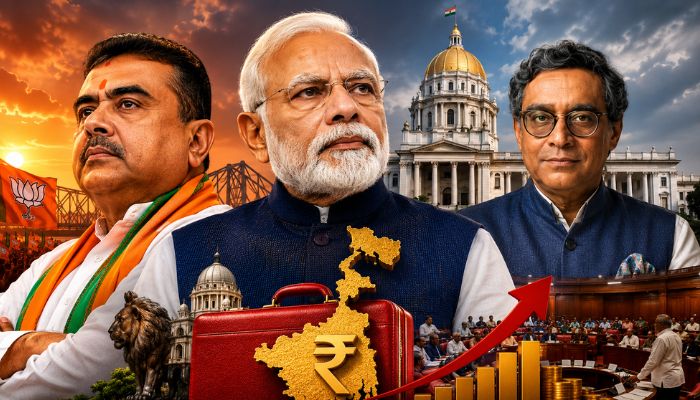
The Great Nicobar Project is something China would never want. Why are Rahul Gandhi and his mother opposing it so strongly? India’s geopolitical trump card explained

A 2003 internal speech by then-President Hu Jintao warned his leadership of what he called the ‘Malacca Dilemma‘, China’s existential reliance on a waterway it does not control and cannot easily avoid, somewhere in the Chinese Communist Party archives.

That problem has continued to grow worse over the past 20 years. As of 2025, more than 80% of China’s oil imports, which are valued at about $312 billion a year, come through the Strait of Malacca, which is only 2.8 km wide at its narrowest point. Approximately $3.5 trillion in global business, or two-thirds of all Chinese marine traffic, travels through these waterways annually. Every day, China uses more than 15 million barrels of oil. Just 3.7 million are transported by its overland pipelines. The maths is harsh. Beijing’s economic engine is based on a bottleneck that it fears and cannot fix.

Now think about India’s position. Geostrategically speaking, the Andaman and Nicobar Islands, a 700+ kilometre stretch that spans the entrance to the Malacca Strait, are a natural aircraft carrier that India was gifted by geography. Great Nicobar, the southernmost island in this series, is nearly equidistant from Singapore, Port Klang, and Colombo. One of the main routes used by ships to enter and exit the strait is the Six Degree Channel, which it overlooks. The waterways around these islands are used for 60% of China’s entire trade. Control of the route is a strategic trump card in any significant battle with China, rather than a negotiation chip. India is finally realising it and moving ahead to use its geographical blessing. And a segment of its own political class is attempting to prevent this.

What the great Nicobar project actually is

The Great Nicobar Island Development Project, devised by NITI Aayog and approved by the Union Cabinet in 2021, aims to make the island one of India’s most important commercial and strategic hubs. There are four main parts to the project, which are expected to cost around ₹81,000 crore (almost $10 billion).

Built on a naturally occurring deep harbour of 18 to 20 meters, the transhipment port in Galathea Bay aims to have a capacity of 4 million TEUs by 2028 and 16 million TEUs by 2058. This would challenge Singapore’s capacity close to the mouth of the strait, which China is most afraid of. An international greenfield airport that can accommodate wide-body aircraft and has a 3,300-meter runway. A 450 MW solar and gas-powered power plant. The Andaman and Nicobar tri-service command will be upgraded into a frontline strategic arm with these dual-use military and civil facilities.

A crucial economic problem is addressed by the port alone. Around 40% of India’s transhipment business is handled by Colombo, and 25% of the country’s cargo is currently transshipped through foreign ports. Every container that travels through Colombo rather than an Indian port costs India money and geopolitical advantage. Galathea Bay would put an end to such reliance and secure India’s place at one of the busiest maritime crossroads in the world. This is India’s counter to China’s ‘String of Pearls’ not through confrontation, but by creating hubs of connectivity and commerce,” stated maritime historian Nick Collins.

The string of pearls and India’s answer

Defence strategists refer to the network of military and commercial port facilities that China has meticulously constructed over the past 20 years as the ‘String of Pearls,’ which stretches from the South China Sea to the Indian Ocean to the Horn of Africa. Although the phrase was originally used in a Booz Allen Hamilton report for the US Department of Defence in 2005, the strategy it refers to has only become more complex since then.

The pearls are well known. Gwadar Port in Pakistan, which is located close to the Strait of Hormuz and serves as China’s western anchor for energy security; Hambantota in Sri Lanka, which was leased to China for 99 years after Colombo was unable to pay its debts, Kyaukphyu in Myanmar, which has pipelines that go straight into Yunnan, and Coco Islands in Myanmar, which is strategically placed to monitor India’s Andaman naval installations. Additionally, China has established military structures in the Maldives and has a permanent military base in Djibouti. Containment is the ring’s obvious purpose. China wants to be able to keep an eye on Indian naval activities, project strength into the Indian Ocean, and, most importantly, safeguard its own supply lines that depend on Malacca by gaining influence around every chokepoint before India does.

India has responded with what observers now refer to as the ‘Necklace of Diamonds‘ strategy, which consists of a series of strategic port access agreements, naval collaborations, and infrastructure investments aimed at encircling China. In addition to strengthening naval cooperation through the Quad (India, US, Japan, Australia), India has gained port access in Oman’s Duqm, Indonesia’s Sabang (a deep-sea port right on the entrance to Malacca), and the Seychelles. A ₹5,650 crore military infrastructure upgrade was given to the Andaman and Nicobar Command in 2019. The command now houses INS Utkrosh at Port Blair, INS Baaz in Great Nicobar, and INS Kohassa in North Andaman. 

The centrepiece of this whole architectural design is Great Nicobar. A full-fledged military and commercial base at Galathea Bay, located at the entrance to the Strait of Malacca, would enable India to monitor and, if necessary, intercept shipping through one of the world’s most important waterways. That is not adventurism. That is the reasonable application of geography.

The Iran lesson 

If anyone requires a practical demonstration of what it means to sit beside a critical strait and have the power to threaten, facilitate and weaponise global trade, Iran has been providing it since February 2026.

When the United States and Israel launched strikes on Iran, Tehran used a weapon it had been keeping in reserve for decades, the Strait of Hormuz. Iran successfully blocked one of the busiest energy routes in the world by using threats, drone attacks, naval mines, and anti-ship missiles. During peacetime, the Strait of Hormuz transports nearly 20% of the world’s seaborne oil and LNG. That flow is now only a trickle.

The effects have been quick and widespread. The price of a barrel of oil has risen past $100. Shipping companies have stopped doing business. Insurance firms withdrew their coverage for war risks. Energy shocks have affected nations ranging from Germany to Japan, which receives 93% of its crude oil from Hormuz. Iran hasn’t had to literally sink every ship as part of the de facto blockade; all it has needed is enough genuine threat to force insurers, captains, and shipping firms to reevaluate the risk.

According to the Atlantic Council in March 2026, Iran has proved that ‘mass-produced drones, limited firepower, and credible threats may be enough for any country positioned along a critical maritime chokepoint to shut down major shipping lanes.’

Even more startling is the fact that Iran has used this location as a bargaining chip. Tehran has made the Strait of Hormuz the currency of a peace deal by offering to reopen it in exchange for the US lifting its naval blockade and ending the conflict. Iran has demonstrated its ability to impose costs on international energy markets through minimal interruption, and the CSIS noted that this ability will continue long after the current war is resolved. Once utilised, geography turns into a long term strategic asset.

Apply this lesson to the Malacca Strait now. 20% of the world’s oil is transported via a strait that Iran controls just one side of. If Great Nicobar is developed, India will be at the mouth of a strait that transports more than 80% of China’s oil imports and two-thirds of its overall trade. By all measures, India has significantly more leverage. And, unlike Iran, India’s posture is defensive, not a threat to close anything, but the ability to ensure freedom of travel or, in a conflict situation, to deny it to an adversary whose entire economic model is based on those waters. The Great Nicobar Project is more than just infrastructure because of this.

Opposition demand, strategic consequences

During his visit to the Andaman and Nicobar Islands, Rahul Gandhi called the Great Nicobar Project ‘one of the biggest scams and gravest crimes against this country’s natural and tribal heritage.’ He referred to it as ‘destruction dressed in development’s language.’ In a September 2025 editorial, Congress Parliamentary Chairperson Sonia Gandhi described it as an existential danger to the islands’ indigenous population, the Shompen tribe, and a threat to their distinctive ecosystem. The party has met with tribal elders who have complained about lack of transparency and displacement.

However, it is important to note what the project’s opponents do not address. Rahul Gandhi has not proposed a revised development plan that respects tribal concerns while maintaining vital infrastructure. He hasn’t offered a rehabilitation timeline. He hasn’t even touched on the military aspect. In its current form, the opposition calls for stopping rather than improving.

The National Centre for Sustainable Coastal Management, the Environment Ministry’s High Powered Committee, and the National Green Tribunal have all approved the proposal. The government claims, with substantial evidence, that the port covers roughly 10% of the island’s total area, and that the strategic imperatives are inextricably linked to the economic imperatives, 25% of India’s cargo passing through foreign ports is both a national vulnerability and a logistics inefficiency.

It is hyperbolic and biased to say that the Nicobar project automatically puts the Shompen people in danger. The 2015 Shompen Policy, geofencing, surveillance towers, and a monitoring committee for tribal welfare are just a few of the safeguards the government has put in place to ensure that the project won’t disrupt Shompen communities. Additionally, it has been stated that the project’s clearances include protections, and the administration as a whole continues to help tribal communities with basic infrastructure, health care, education, and other social services.

Who else wants India to stand down

The most obvious form of opposition to the Great Nicobar Project is the political opposition in Parliament. Beneath it is a larger ecosystem of global advocacy, which merits examination because of what it regularly chooses to highlight, what it routinely ignores, and whose interests its findings just so happen to serve. Survival International, a London-based advocacy group that released its annual report mentioning how India plans to sacrifice one of the world’s most isolated tribes to create ‘the new Hong Kong’ in 2025, has been the most vocal global voice opposing the project. 

The report, which has received widespread coverage in Western media, declares the initiative genocidal and asks for its immediate abandonment. Additionally, 39 worldwide ‘genocide experts’ wrote an open letter on behalf of Survival International, characterising the project as a death sentence for the Shompen. The language used is remarkable.

However, it is worthwhile to pose a straightforward query: where are the comparable Survival International campaigns opposing China’s infrastructure projects in Tibet, Xinjiang, or along its Belt and Road corridor? These projects have uprooted much larger indigenous populations with minimal tribal consultation and regulatory oversight. The response is that those campaigns are hardly non existent. The largest state directed displacement of indigenous populations in the twenty-first century is taking place next door, and a London based organization with the means to launch a persistent international pressure campaign against democratic India’s nationally approved, officially authorised infrastructure project seems to have found no comparable bandwidth.

This trend was first noted by India’s Intelligence Bureau in 2014, when an official report that was leaked revealed that a number of foreign-funded NGOs consistently opposed infrastructure, mining, and nuclear projects, slowing an estimated $2.8 trillion in GDP growth. The structural observation remains true regardless of the accuracy of every aspect of that report that a nation that is democratic, accessible, and whose courts and regulators react to civil society pressure is, by definition, more vulnerable to globally coordinated opposition campaigns than one that is not. China isn’t. India is.

By definition, people who have become accustomed to the status quo will find it inconvenient when a country asserts itself in the global world order. The Indo-Pacific power dynamics would be altered in ways that go far beyond any bilateral rivalry between China and India if India were to establish a significant naval and economic presence near the Strait of Malacca entry point. Beijing’s maritime calculations, established transshipment hubs that profit from India’s current reliance on foreign ports, and an international NGO ecosystem that has more experience managing developing world governments than taking into account their strategic interests are all disrupted by a more powerful India, and this observation is not paranoid. 

Conclusion

China has spent hundreds of billions of dollars and twenty years trying to resolve the Malacca Dilemma. It has constructed ports across the Indian Ocean rim, pipelines through Myanmar, and corridors into Pakistan. It has invested in alternate routes precisely because the Strait of Malacca provides an acute, structural weakness, one that an India with strong Nicobar infrastructure could, in extreme cases, leverage. The single development that would most intensify China’s concerns about Malacca is a fully functional Great Nicobar, complete with a significant transhipment port, a military airport that can accommodate strike and surveillance equipment, and enhanced tri-service command capability. It would imply that India, located at the strait’s entrance, is no longer merely a passive geographical beneficiary. The presence would be strategically active.

The present opposition to this project, which calls for stopping it rather than reforming it or strengthening its tribal protections, coincidentally aligns with Beijing’s preferred conclusion. It might just be a coincidence. It might represent a true, principled, and wholly domestic environmental perspective. It is possible for both to be true. However, in a world where Iran’s geographic location near a strait is worth negotiating a ceasefire, and China’s most acute strategic fear is the waterway outside India’s front door, India’s political leaders owe the country a conversation that is proportionate to the risks.