Home Blog Page 493

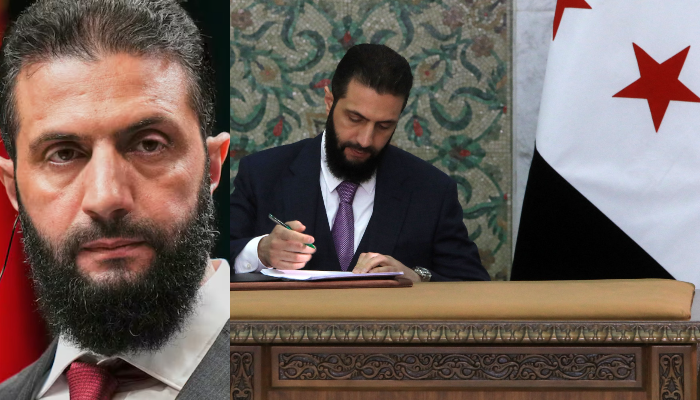
Syria: President Ahmad al-Sharaa, a former al-Qaeda leader, imposes Islamist rule in the country, signs temporary constitution

On 13th March, Syria’s interim president Ahmad al-Sharaa signed a provisional constitution that placed the nation under Islamist governance but claimed to uphold the rights of all Syrians, for a period of five years during a transition. After the hardline Sunni organization Hayat Tahrir al-Sham (HTS), an affiliate of Al-Qaeda, spearheaded an intense insurgency that toppled the 24-year-long dictatorship of President Bashar al-Assad in December, the country’s current rulers have found it difficult to maintain control over a large portion of Syria.

According to the drafting committee, Islamic jurisprudence is “the main source of legislation” rather than “a main source,” and the text states that Islam is the president’s religion, just as the old constitution did. However, it claims to protect women’s rights, freedom of expression and freedom of the media. It also enshrines judicial independence and separation of powers. “We hope it will be a new history for Syria, where we replace oppression with justice,” Sharaa conveyed.

The “moves towards restoring the rule of law” are welcome, according to the United Nations special envoy Geir Pedersen, who also pointed out that “this development potentially fills an important legal vacuum.” However, the constitutional declaration was criticized by the Kurdish-led government in northeastern Syria, which contended it “contradicts the reality of Syria and its diversity.”

A gathering of the armed organizations involved in the campaign against Assad resulted in Ahmad al-Sharaa being proclaimed the country’s leader, in January. The groups decided to abrogate the nation’s previous constitution and promised to draft a new one at the same meeting. They disbanded the parliament, army and security forces of the previous regime and revoked the 2012 constitution of the previous administration.

Sharaa remarked that the constitutional declaration would be “the legal framework regulating the transitional phase” and recently announced the creation of a seven-member team to prepare it. The decision sought to “create a balance between a security society and rights and freedoms,” according to committee member Abdul Hamid al-Awak, a constitutional law specialist who teaches at a Turkish university. He made the statement during a news conference on 13th March.

Assad’s “encroachment” on other parts of government throughout his 24 years in power was cited as evidence of the “absolute separation of powers” that it stipulated. He stated that during the transitional time, the president would have administrative authority but only one “exceptional power,” the right to proclaim a state of emergency. Legislation will be the sole duty of a new People’s Assembly.

A committee appointed by the president will appoint two thirds of its members, while the president himself will appoint one third. Additionally, a panel will be established to develop a new and permanent constitution. It’s, however, uncertain if Syria’s political, religious and ethnic factions will be given more consideration in it.

Attack on minorities

After militants loyal to the former regime ambushed a security patrol last week, gunmen supporting the Sunni Islamist-led government were charged with committing retaliatory killings against members of Assad’s minority Alawite sect in the western coastal province. According to one monitoring group, about 1,500 civilians were killed. Sharaa afterward assured the establishment of a committee to maintain public peace and promised to take those responsible for the crimes to account.

However, his history as the head of al-Qaeda’s former Syrian offshoot and Abu Bakr al-Baghdadi loyalist has made many Alawites and members of other religious and ethnic minority suspicious of his intentions. Sharaa also agreed to a truce and the integration of their military forces with the security services of the central government with the Kurdish-led authorities in northeastern Syria, who are supported by the United States, after the violent event.

According to rights organizations, forces in the counteroffensive massacred hundreds of civilians in counterattacks, primarily from the Alawite minorities and the dwindling Christian population. They were forced to abandon their homes to save their lives.

President Ahmed Hussein al-Sharaa, a former terrorist

Notably, Syrian president Ahmed Hussein al-Sharaa was previously involved with Islamist extremist groups that seek to impose Islamic Sharia laws. In 2012, he founded the al-Nusra Front, an al-Qaeda-affiliated faction fighting against Bashar al-Assad’s regime. He later opposed ISIS when Abu Bakr al-Baghdadi attempted to merge al-Nusra with the Islamic State in 2013, leading to violent clashes between the two groups.

In 2016, he severed ties with al-Qaeda and rebranded al-Nusra as Hay’at Tahrir al-Sham (HTS), shifting its focus to local governance in Syria.
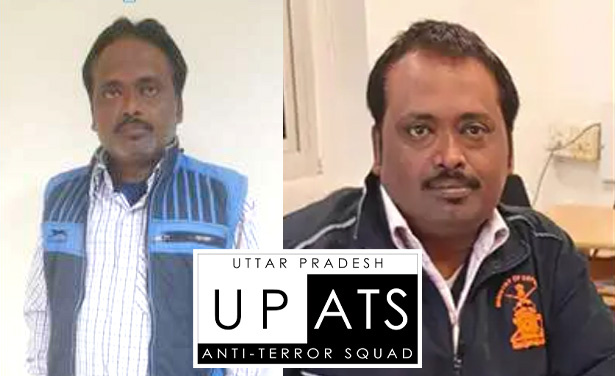

Uttar Pradesh ATS arrests Ordnance Factory worker for leaking sensitive information to Pakistan, was honey-trapped by ISI agent using the name Neha Sharma

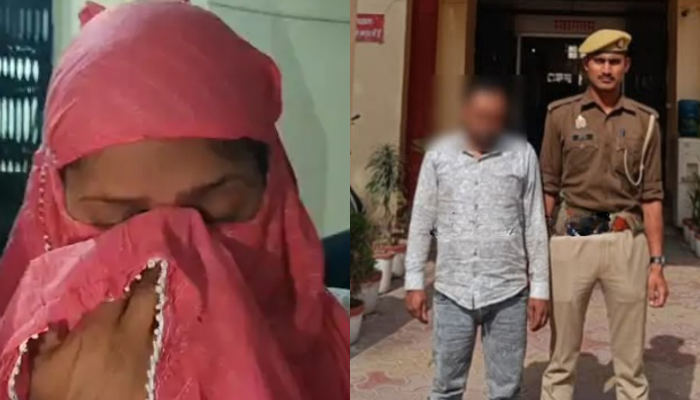
The Uttar Pradesh Anti-Terrorist Squad (ATS) has arrested an Ordnance Factory Employee on charges of espionage on behalf of Pakistan. The man identified as Ravindra Kumar, posted as a chargeman at the Ordnance Factory in Hazratpur, Firozabad, allegedly leaked sensitive information to his Pakistani intelligence handler after he was honeytraped on social media.

Ravindra Kumar was arrested from ATS headquarters in Lucknow late on Thursday after questioning. According to ATS officials, Kumar passed sensitive defence related documents to a woman identified as “Neha Sharma”, mostly likely a fake identity taken by a Pakistani intelligence operative.

A statement issued by ATS said it has been receiving intelligence inputs for the past few days that handlers of Pakistani intelligence agency were using pseudonyms to lure employees of Ministry of External Affairs and Government of India to obtain confidential and classified information and documents related to Indian Army and other government organizations and offices by luring them with money. It could pose a huge threat to India’s internal and external security, the ATS said.

The statement added that on thorough investigation of the intelligence inputs by ATS Uttar Pradesh, it was found that a person named Ravindra Kumar, who is posted as Chargeman in Ordnance Factory Hazratpur, Firozabad, was sending sensitive and confidential information to a Pakistani agent who he befriended on Facebook.

On 13.03.25, after the preliminary interrogation of Ravindra Kumar by ATS field unit Agra, he was called to ATS Headquarters Lucknow for detailed interrogation. During interrogation, sensitive confidential documents sent to Pakistani agent were found from his phone, about which Ravindra could not give any satisfactory answer. Ravindra Kumar was informed about his crime and the case was registered as per rules, after which he was arrested.

During interrogation, Ravindra Kumar told that he is working in Ordnance Factory since 2006 and is working as Chargeman in Ordnance Factory Hazratpur Firozabad since 2009. In June-July 2024, he became friends with a girl named Neha Sharma through Facebook with whom he often did WhatsApp chatting, audio call and video call. He used have romantic conversations with the agent and used to send confidential information related to the Ordnance Factory in greed of becoming rich. Ravindra Kumar further said that while he often used to delete WhatsApp chats, but some chats and confidential documents remained in the phone.

In this regard, an FIR was lodged at Police Station-ATS, Lucknow under Section 148 of BNS and Sections 3/4/5 Official Secrets Act 1923. Further legal action will be taken by presenting the accused before the Court as per rules.

Uttar Pradesh ADG (ATS) Nilabja Choudhury said that there is a possibility of certain classified information being shared, which is under further scrutiny. He said that at this stage, they can’t disclose further details. “Investigations are ongoing regarding other contacts and handlers involved. I urge all authorities to reinforce security drills, update SOPs, and ensure a minimal security check level to prevent such breaches,” he added.

Unnao: Mohammad Aarif storms into the house of a Hindu man testing DJ for Holi, issues death threats to him and his family

In yet another incident of Islamists running amok, a Muslim man in Uttar Pradesh’s Unnao barged into a Hindu man’s house and threatened him and his family with death for testing DJ on the occasion of Holi.

According to the victim, Ajay, the accused Mohammad Aarif stormed into his house when he was testing DJ for Holi. When Ajay asked him to wait, Aarif attacked him and asked him to stop it immediately. Aarif also threatened him and his family with death.

However, this is not the first time Islamists have attacked Hindus for celebrating their festivals. Be it Holi, Diwali, Dussehra, or Ram Navami, Islamists find one excuse or another to attack Hindus and cast a pall over their festival celebrations. They are often emboldened by a section of the political class that mollycoddles Islamists and whitewashes their crimes in the name of “preserving the secular fabric of the nation.”

Over the past four years, there have been 29 reported incidents of attacks on Hindus during the Holi festival by Islamist groups. These incidents span various regions and include physical assaults, threats, and disruptions of festivities.

For instance, in March 2024, Hindu students celebrating Holi at Aligarh Muslim University were attacked by a group of Muslim students. The assailants allegedly abused Hindu deities and demanded a ‘jizya’ (a form of tax) from the Hindu students to celebrate their festival. 

Additionally, in March 2025, a controversy arose in Ratnagiri, Maharashtra, where claims circulated on social media alleging that Hindus had attacked a mosque during Holi celebrations. However, local police clarified that the incident was part of a traditional procession involving a wooden log being placed at the mosque’s steps, a customary practice in the region, and debunked the claims of an attack. These incidents highlight the tensions and challenges faced during the Holi festival in certain areas, reflecting underlying communal issues.

Karnataka: 22-year-old nurse Swathi Ramesh murdered in Haveri, accused Nayaz arrested, police deny communal angle

0

The murder of a 22-year-old woman, identified as Swathi Ramesh Badigere from Masur village in Rattihalli Taluk, has triggered controversy, with calls for justice circulating on social media.

Swathi, who worked as a nurse at a hospital in Ranebennur, had been reported missing at the Hirekerur police station on March 3. Her body was discovered on March 6 near the Tungabhadra River in the Fatehpur village of Ranebennur Taluk, Haveri District.

Initially, Halegari police treated the case as an unidentified body and conducted a post-mortem examination, but later confirmed it was a case of murder.

Swathi’s mother, Shashirekha, filed a missing person complaint on March 7 after searching for her daughter. Upon being shown the body’s photographs, Swati’s family identified her.

On Social media the murder was given a communal twist. Following this, social media posts under the hashtag “Justice for Swathi” began circulating, with allegations linking the case to communal tensions.

However, Haveri Superintendent of Police (SP) Ansukumar clarified that the murder was not related to any communal issue. He stated that the three accused killed Swati due to personal reasons.

A key suspect, Nayaz, has been arrested, and police teams have been formed to apprehend the remaining two accused. Further investigation is underway.

(This news report is published from a syndicated feed. Except for the headline, the content has not been written or edited by OpIndia staff)

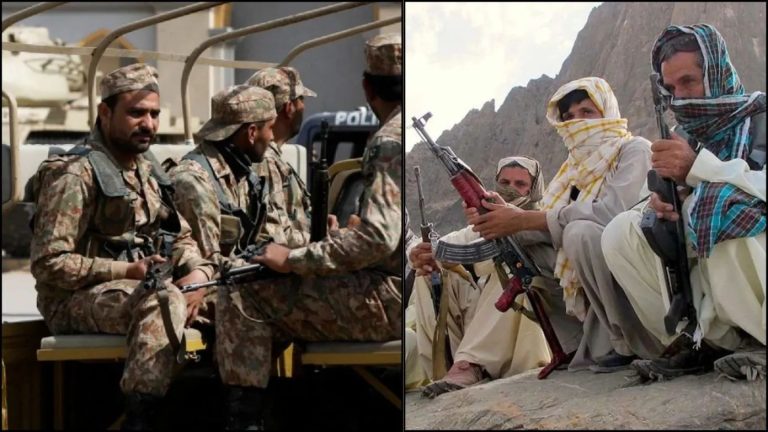
Balochs beating Pakistanis, Taliban attacking them in their home – Pakistan is burning in the fire of terrorism it lit

Recently, Baloch rebels hijacked the Jaffar Express going from Quetta to Peshawar. There were more than 400 passengers on board. A large number of the passengers were Pakistani soldiers. The Pakistani army then launched an operation to rescue the passengers. The Pakistan Army (famous for lying) claimed that the operation was over within 24 hours and 33 rebels were killed. The Baloch rebels denied this and said that they killed more than 100 soldiers and did not suffer any major loss. Amidst the claims of both sides, the reality of the Pakistani army and its claims came to the fore

The failure of the Pakistani army has come to the fore

The incident of train hijacking at Bolan Pass on 11th March once again exposed the incompetence of the Pakistan Army. At every step, it appeared completely unaware and without any action plan. Pakistan’a Army’s first failure was when the Baloch rebels hijacked the train without any resistance.

The rebels carried out an explosion near a tunnel and took more than 400 people present in the train hostage. The Pakistan Army did not even get a hint of this plan of the Baloch rebels. So much so that its soldiers on the train could not even fire a bullet before being captured.

After this, the Pakistan Army claimed to have started an operation. Even Pakistan’s special commandos took part in the operation. However, they faced a lot of problems in reaching the train. The Baloch rebels, who did not have even one-tenth of the weapons of the Pakistan Army, killed the soldiers who came near the train.

To hide its failure, the army banned any news from being published in the Pakistani media. However, this did not help hide its lies. Baloch rebels said that due to its response, the Pakistani army had to run back.

The Pakistani army started the operation immediately after the incident. Neither any talks were taking place nor were the Baloch rebels getting any foreign help, which would have created problems in freeing the hostages, but the Pakistani army failed in the operation despite all the conditions being in its favour, and more than 100 soldiers were killed.

Due to Pakistan Army’s failure, many non-Balochs were also killed. The Baloch rebels had made it clear that the train is in their possession and the hostages were also with them.

How Pakistan Army has failed everywhere

The international media shared that the Pakistan Army gathered 200 ‘kafans’ after the incident. However, this is not the only incident that has shown the failure of the Pakistan Army.

In November last year, a fierce fight broke out between Shias and Sunnis in the Kurram region of Pakistan’s Khyber Pakhtunkhwa province. Due to this, a road was closed and more than 100 people were killed. This road has not been opened since November. Violence is constantly taking place in this area.

Not only this, but also several areas in North Waziristan and Bajaur have been disturbed for the last two decades. A large part of Khyber Pakhtunkhwa is occupied by Tehrik-i-Taliban Pakistan. The rule of the Pakistan government does not work here.

The terrorists coming from there continuously attack from Karachi to Peshawar. The Pakistan army has failed to respond to them. Senior leader Akhtar Mengal has made it clear that Balochistan is now out of Pakistan’s hands. Other leaders have also reiterated the same thing.

There have been attacks on Chinese citizens in Balochistan many times. Due to this, China had even considered sending its army to the area. This was a big example of the failure of the Pakistan Army. Even now, in border areas like Torkham, the Afghan Taliban regularly kills the Pakistan Army soldiers.

Firing goes on for several hours in these areas and the army is unable to stop all this.

Pak army can only fight proxy war

The failure of the Pakistan Army in the areas of Balochistan, Khyber Pakhtunkhwa, and Sindh shows that it is not capable of fighting any direct war at present. It can only fight proxy wars by preparing mercenaries. Notably, Pakistan has suffered a crushing defeat in three direct wars with India in 1948, 1965 and 1971.

In 1999, Pakistan secretly sent its mercenaries and soldiers to Kargil but there too, it had to face defeat. Due to failure in all these wars, it has been trying to incite unrest in Punjab and Kashmir indirectly. Pakistan’s intelligence agency ISI supports the Pakistan Army in these endeavours.

Pakistan supported the Khalistan movement in Punjab. When India crushed this separatist movement, it started running Islamic jihad in Kashmir. Now terrorists in Kashmir are also counting their last breaths. Amidst all this, Pakistan also supported terrorist organisations like SIMI, Hizbul Mujahideen.

After failing in all their efforts to destabilise India, Pakistan’s army only shows its power on innocent people, be it in Bangladesh in the past or present-day Balochistan. Its focus is on innocent people, women and children. A country with nuclear capability cannot defeat anyone in a direct fight.

To prevent its true identity from being revealed, their Army has always opposed democracy in Pakistan. Since the formation of Pakistan in 1947, Pakistan has been ruled by the army for half the time. The rest of the time, the leaders of the country have been working like Army’s puppets.

When the army wanted Nawaz Sharif in Pakistan, it made him the Prime Minister, when Nawaz Sharif tried to work on his own, he was removed. In Pakistan, the army raised Imran Khan but when he turned against the army, he was also removed. This has been going on continuously.

Pakistan is putting the blame of its failure on India

To hide their failure in the train hijacking incident in Balochistan, the Pakistan Army and the government have blamed India. After the attack, the spokesperson of Pakistan’s Foreign Ministry said that India has been trying to spread terror in their country and is still doing so. Pakistan then claimed that the attack on Jaffar Express was carried out from Afghanistan.

This is Pakistan’s old trick to escape its responsibility and hide its failure. India has clearly rejected its allegations. The Foreign Ministry said, “We reject Pakistan’s baseless allegations. The whole world knows where the center of terrorism is.”

India has said that Pakistan should look within itself instead of pointing fingers and blaming others for its internal problems and failures. Afghanistan also rejected these allegations of Pakistan. The fact is that Pakistan dragged the names of India and Afghanistan only to save its face.

Everyone knows the truth. Pakistan, which accuses India of terrorism, still does not stop its support to terrorism. A recent report shows that currently 60 foreign terrorists, who are Pakistanis, are active in Jammu and Kashmir. The rest of the Kashmiri terrorists have also been trained and given weapons by Pakistan.

If Pakistan really wants to be free from terrorism, then it will have to remember the statement of the US Foreign Minister, in which she said, “You cannot keep snakes in your backyard and expect that they will only bite your neighbors. Ultimately those snakes will attack you too.”

Love Jihad in Muzaffarnagar: Majid pretends to be Ansh to lure a mother of two, forcing conversion and looting jewellery; arrested

Another case of love jihad has come to light in Muzaffarnagar, Uttar Pradesh, where a woman from Meerut, who was living separately from her husband along with her two young children fell into the trap of a Muslim man. Her parents also passed away. She left her husband after an abusive relationship and often posted videos on Instagram to express her pain. However, she started to receive messages from an ID named Ansh Chowdhury around 8-9 months ago.

They two eventually became friends and started to interact regularly. However, his real name was Muhammad Majid, a native of Sarwat village who claimed to be the owner of several trucks and gradually caught the victim in his web. He used to follow Hindu traditions and did pooja (worship of Hindu deities) regularly, hence she never suspected him. This man forced the woman to sell two of her residences after they were married and seized all the money in the name of a land parcel. He took at least 10-17 lakh from her. He brought the wife and her kids to Muzaffarnagar and kept them in rented rooms in different locations including Nai Mandi and Gandhi Nagar.

Their time with him turned out to be a nightmare. The woman revealed that he stripped her and her 9-year-old daughter and assaulted them. She and her two kids were held hostages and weren’t allowed to go outside to prevent them from escaping. He made videos during their sexual encounters and threatened to make the footage viral online if she approached anyone or tried to depart from the room. He also destroyed her phone. He took away her gold and silver jewellery worth 7-8 lakh. He even withdrew 5 lakh from her account.

On 3rd March she found his Aadhar card with the name Majid written on it. She confronted him but he threatened to murder her and her kids. Furthermore, he relentlessly pushed the trio to embrace Islam. He forced the woman to observe Ramzan and consume meat in addition to the circumcision of her 6-year-old son to pressure them to comply. He told her to wear a burqa and follow his orders. She feared for her daughter’s safety and believed that he would exploit her.

The culprit used a gun to threaten her and pressurised her to stay with him. He also thrashed them brutally on 11th March. All his documents had his original identity except one with a fake Hindu name. He also claimed to be a thug and boasted that he killed a dealer in a recent robbery in Ghaziabad. He even announced that he was behind a killing that transpired on 1st May of last year and even stabbed a girl to death with a screwdriver. He stated that this is his profession and he would kill her too if she opposed me.

She somehow managed to call her brother-in-law through her neighbours and narrated her entire ordeal. He encouraged her and with the help of the neighbours, she contacted Hindu leaders and unveiled everything. Afterwards, they all reached Nai Mandi police station and complained to the police. Given the gravity of the situation, the police responded promptly.

Superintendent of Police (SP) City Satya Narayan Prajapat declared that the accused had been caught from A2Z Road and brought to the police station. A medical examination has also been performed on the victim. Hindu organizations have also stepped forward to support her and the police are conducting a thorough investigation into the issue.

Idol of Hindu deities vandalised in West Bengal, BJP shares video: Read about two other recent cases of temple attack

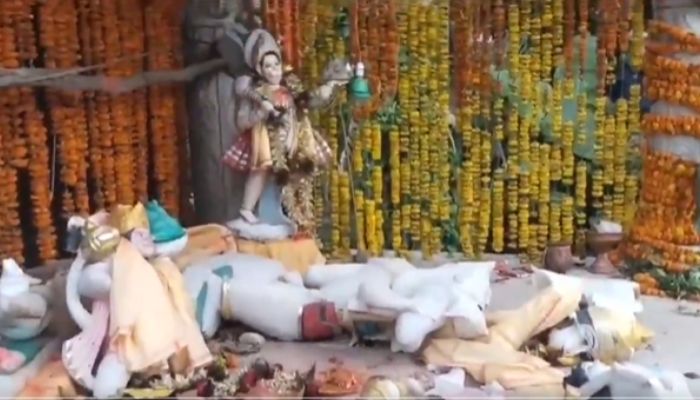
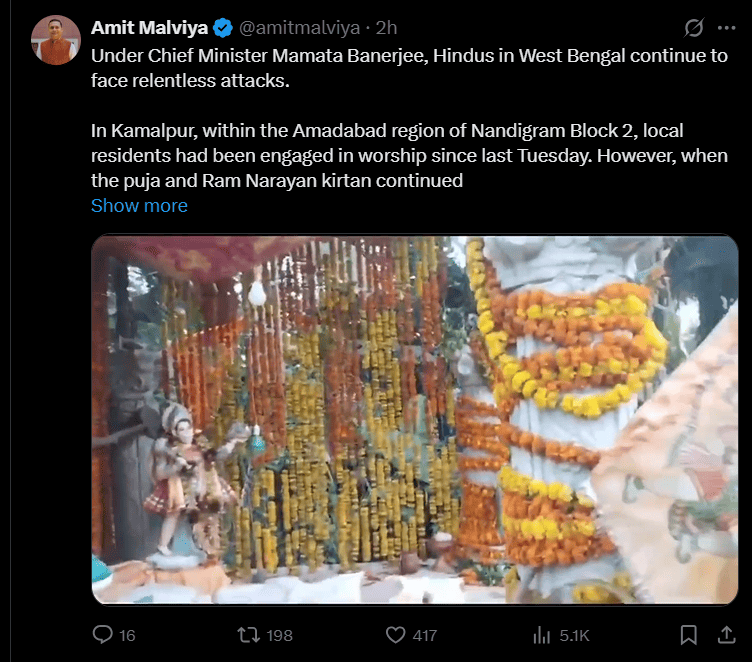
On Friday (14th March), BJP’s national spokesperson Amit Malviya took to X (formerly Twitter) to inform about yet another attack on a Hindu temple. The incident occurred in Kamalpur village in Nandigram Block 2 in Purba Medinipur district of West Bengal.

He shared a video wherein idols of Hindu deities could be seen in a vandalised state. “In Kamalpur, within the Amadabad region of Nandigram Block 2, local residents had been engaged in worship since last Tuesday,” Amit Malviya informed.

“However, when the puja and Ram Narayan kirtan continued uninterrupted, certain individuals—unable to tolerate the chanting of Shri Ram’s name—vandalized the site and desecrated the idols,” the BJP national spokesperson added.

Screengrab of the tweet by Amit Malviya

“This is a critical situation…The response of the police is muted…You can see that the cops are not doing anything,” a man was heard saying in the viral video. A cop was also seen intimidating the man recording the visuals of the desecrated Hindu idols.

Recent cases of idol vandalism in West Bengal

On 7th March, a Muslim man named Sheikh Indu vandalised the idol of Goddess Shitala and then set it on fire. The incident occurred in Baruipur city in the South 24 Parganas district of West Bengal.

Visuals of charred idols and the damaged Hindu temple could be seen in multiple posts on social media. The locals were able to apprehend the accused, Sheikh Indu, who was involved in the vandalism and arson attack.

The Baruipur police posted a tweet on 7th March claiming that the accused is a ‘person of unsound mind’ with ‘mental health issues.’

Screengrab of the tweet by the Baruipur police

“Local people apprehended him and police took custody of the person. A case has been registered and investigation is on. The detained person is an outsider and has mental health issues,” it alleged.

On 9th March, BJP leader Dilip Ghosh took to X (formerly Twitter) to inform about the attack on a Kali temple and the vandalism of the idol of the Hindu deity.

The incident occurred in Shankchura Bazar in Basirhat city in the North 24 Parganas district of West Bengal. The BJP leader stated that the attack on the temple took place under the leadership of local TMC politician Shahanoor Mondal.

Screengrab of the tweets by the Basirhat police district

Hours later, the West Bengal Police on Sunday (9th March) took to social media to claim that there was ‘no communal angle’ behind the heinous crime.

The cops went on to claim that the extremist behind the vandalism of the idol of Goddess Kali has ‘mental health issues.’

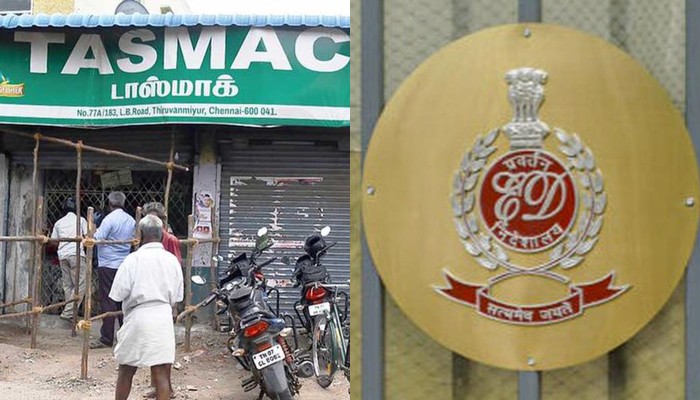
Tamil Nadu liquor scam: ED detects unaccounted cash deals worth over ₹1,000 crore in TASMAC operations 

On 13th March, the Enforcement Directorate (ED) said that distilleries in Tamil Nadu have embezzled more than ₹1,000 crore in unaccounted cash, which was used as kickbacks to obtain “increased supply orders” from the state-run Tamil Nadu State Marketing Company Limited (TASMAC), which holds the liquor sales monopoly. The amount was stolen in collusion with bottle manufacturing companies through false purchases and exaggerated expenses, as documents uncovered by the agency.

The central agency reported in a press conference that the distillery companies SNJ, Kals, Accord, SAIFL and Shiva, as well as the bottling companies Devi, Crystal and GLR Holding, were involved in the carefully designed fraud. ED searched the TASMAC headquarters, depots, distilleries, and the corresponding corporate offices for four days starting on March 6th at multiple locations in Tamil Nadu.

“Bottling companies such as Devi Bottles, Crystal Bottles and GLR Holding, which supply bottles to distilleries, inflated sales figures, allowing distilleries to route excess payments. These payments were later withdrawn in cash and returned after deducting commissions. The financial records of bottling units were manipulated to conceal cash flows and systematic evasion. Unaccounted cash was deliberately generated through inflated and bogus expenses and subsequently utilised by distilleries for purposes leading to huge profits,” the official statement conveyed.

According to the ED, the role of TASMAC personnel and associates, distilleries, and bottle-making businesses was being investigated. “The role of employees and associates related to TASMAC, distilleries and bottle-making companies, along with other key associates in the illicit affairs related to TASMAC, are being probed,” it outlined.

The agency highlighted that it obtained proof that TASMAC’s transport and bar license tenders were manipulated. “The liquor corporation, which pays 100 crore annually to transporters, awarded the contract even though there was just one firm in the final bid,” the agency unveiled.

The discrepancy between the applicant’s KYC information and the Demand Draft (DD) was an apparent issue, indicating that the successful bidder could not have even received the necessary DD prior to the application deadline. Likewise, bar licenses were granted to those without a PAN or GST number or appropriate KYC documentation. Direct correspondence between distillery businesses and higher-ranking TASMAC officials was documented, revealing attempts to obtain more indent orders and unwarranted favors.

According to the press release, the results created Proceeds of Crime (POC) as defined by the Prevention of Money Laundering Act of 2002 and established a number of offenses under the Prevention of Corruption Act of 1988. Incriminating information on transfer posts, transport tenders, bar license tenders, indent orders that favored a select group of distillery companies and Tasmac outlets charging an excessive fee of ₹10 to ₹30 per bottle was found.

The searches were based on formal complaints filed by the DVAC between 2016 and 2021 regarding offenses, including TASMAC stores collecting more than the MRP, distilleries paying its officials kickbacks for supply orders and its senior officials obtaining bribes from its retail stores and using them to transfer and posting of its staff.

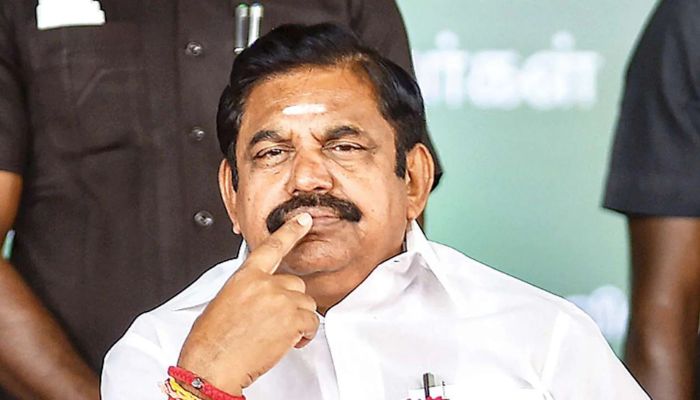
Day after DMK removed Indian Rupee from state budget, AIADMK’s Palaniswami demands DMK govt’s resignation, says there is Rs 40,000 cr TASMAC scam under DMK

0

All India Anna Dravida Munnetra Kazhagam (AIADMK) MLAs walked out of the State assembly on Friday during the budget presentation over the alleged Tamil Nadu State Marketing Corporation Limited (TASMAC) scam.

After the walkout, AIADMK General Secretary Edappadi K Palaniswami addressed the media, alleging that a corruption of over Rs 40,000 crores is possible in TASMAC.

He claimed that the government did not take any action even after a raid by the Enforcement Directorate (ED). He also demanded that the MK Stalin-led DMK government should resign.

“ED has said that there has been corruption of more than Rs 1,000 crore in TASMAC. The investigation is ongoing. It is possible that there has been over Rs 40,000 crore of corruption in TASMAC. The government didn’t take any action even after the ED raid. We demand that the DMK government should resign over this,” he said.

A day earlier, ED Chennai conducted search operations at various premises across many districts of Tamil Nadu under the provisions of PMLA, 2002, for various offenses related to Tamil Nadu State Marketing Corporation Limited (TASMAC) and its associated entities/persons, according to an official statement from the Central agency.

In a post on X, ED said, “ED, Chennai has conducted search operations at various premises across many districts of Tamil Nadu on 06.03.2025 under the provisions of PMLA, 2002, for various offences related to Tamil Nadu State Marketing Corporation Limited (TASMAC) and its associated entities/persons. During the search operations, various incriminating documents were recovered and seized.”
The State’s Finance Minister, Thangam Thennarasu presented the State Budget today in the Assembly. 

(This news report is published from a syndicated feed. Except for the headline, the content has not been written or edited by OpIndia staff)

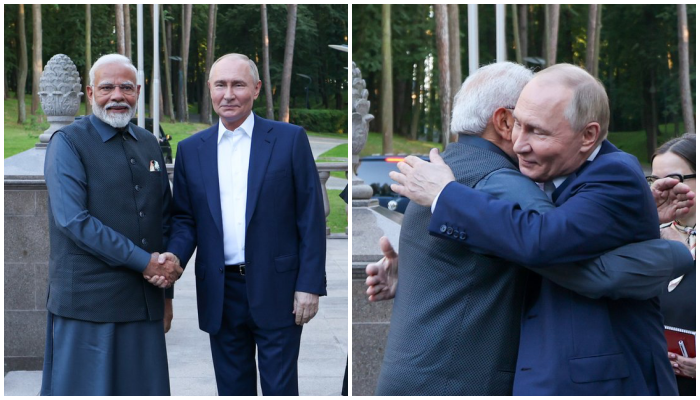
Russian President Vladimir Putin thanks Trump, PM Modi, Xi Jinping and others for efforts to halt Ukraine war and bring peace

 Russian President Vladimir Putin has made his first public remarks on Ukraine’s willingness to negotiate a ceasefire, expressing gratitude to world leaders, including US President Donald Trump, Prime Minister Narendra Modi, and Brazilian President Luiz Inacio Lula da Silva, for their efforts in addressing the conflict.

Speaking at a joint press conference with Belarus President Alexander Lukashenko on Thursday, Putin said that Russia agrees with the proposals to cease hostilities but “proceeds from the assumption that this cessation should lead to long-term peace and eliminate the root causes of the crisis.”

When asked about Ukraine’s readiness for a ceasefire, Putin said, “As for Ukraine’s readiness for a ceasefire, I will tell you how I view it, of course. But I would like to start by thanking the President of the United States, Mr Trump, for paying so much attention to the Ukraine settlement. We all have enough of our own domestic affairs to attend to. But many leaders of states, among them the President of the People’s Republic of China, the Prime Minister of India, the Presidents of Brazil and the Republic of South Africa are addressing this issue and give it a lot of their time. We are grateful to all of them for that because this activity is aimed at achieving a noble mission – the mission of ending hostilities and loss of life.”

He further said, “We agree with the proposals to cease hostilities but proceed from the assumption that this cessation should lead to long-term peace and eliminate the root causes of this crisis.”

He also referred to the recent US-Ukraine discussions in Saudi Arabia, suggesting that Ukraine’s willingness for a ceasefire was likely influenced by American pressure.

“Now, on Ukraine’s readiness to cease the hostilities. You know, on the face of it, the US-Ukraine meeting in Saudi Arabia may look like the Ukrainian side made this decision under pressure from the United States. In fact, I am absolutely convinced that the Ukrainian side should have asked the Americans for this decision most emphatically, in view of the situation evolving on the ground, as has just been mentioned here,” Putin said.

On March 11, Ukraine expressed readiness to accept the US proposal to enact an “immediate, interim 30-day ceasefire,” which can be extended by mutual agreement of the parties and is subject to Russia’s acceptance and concurrent implementation.

US President Donald Trump welcomed Ukraine’s agreement to the ceasefire after the peace talks in Jeddah, Saudi Arabia and further affirmed hope that Russia will also agree to it. Stating that soldiers of both Russia and Ukraine are being killed in this “horrible war”, Trump said reaching a ceasefire is “very important”.

Earlier in February, PM Modi welcomed Trump’s efforts to resolve the Russia-Ukraine conflict and reiterated India’s position that the conflict should be resolved on the negotiating table.

He also reiterated that India’s stance in the conflict is not neutral, but rather it is on the side of peace. The Prime Minister emphasised that he has himself met leaders of both Russia and Ukraine and also pointed to his ‘this is not an era of war’ remark that he made in the presence of Russian President Putin.

“I have always been in close contact with Russia and Ukraine. I have met the leaders of both countries. Many people are in a misconception that India is neutral, but I want to reiterate that India is not neutral; we are on a side, and that is peace,” PM Modi said in a joint presser at the White House.

He further reiterated India’s position that a solution to the conflict can’t be found on the battlefield and appreciated President Donald Trump’s efforts in this direction.

“I have said that ‘this is not a time of war’ in front of the media when President Putin was with me. Even today, my conviction is that the solutions to war cannot be found on the battlefield, and ultimately, we have to be at the table,” PM Modi said.

He added, “India believes that the solution to the war can be found only when the issue is discussed in a forum where both countries (Russia and Ukraine) will be present. The efforts made by President Trump – I support, and welcome it. I hope he succeeds as soon as possible.”

In July last year, PM Modi travelled to Russia to participate in the 22nd India-Russia Bilateral Summit. He also travelled to Ukraine in August last year.

During the bilateral meeting with Ukrainian President Volodymyr Zelenskyy, PM Modi emphasised India’s position of peaceful resolution of the conflict through dialogue and diplomacy.

He said that India was ready to play an active role in the path to peace and progress. Russia and Ukraine have been engaged in war since February 2022.


(This news report is published from a syndicated feed. Except for the headline, the content has not been written or edited by OpIndia staff)