Days after Mumbai police commissioner Param Bir Singh, in an explosive statement, accused Republic TV of ‘TRP manipulation’, Republic TV has accessed the 7-page Hansa research Group complaint, on the basis of which an FIR was registered in the TRP scam case. Contrary to the narrative put forth by the Mumbai Police, the complaint categorically mentions India Today on two occasions but does not make any reference to Republic TV or other channels.
The Hansa Research Group Pvt Ltd. had filed the complaint against unknown persons and two of its employees, namely, Vishal Bhandari and Dinesh Vishwakarma. The company informed that they undertake the Panel Home Operations for a metering company MDL to collect raw data of TV viewership for BARC.
Hansa employee asked panel homes to watch India Today daily for 2 hours
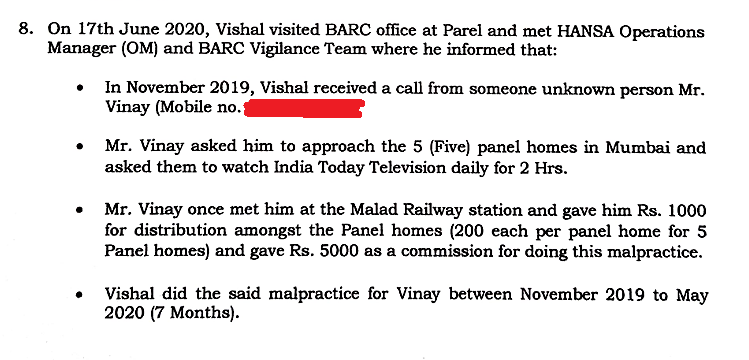
On June 17, Hansa Research Group employee Vishal Bhandari had informed to BARC Vigilance Team that he had received a call from one Vinay in November 2019. As per the complaint, Vinay had asked Bhandari to visit 5-panel homes, where bar-o-meters are installed, and convince them to watch India Today news channel for 2 hours every day. He had received ₹5000 to execute the task and was also paid ₹1000 to equally distribute among the 5-panel homes. Bhandari, who had executed the plan on the behest of Vinay, continued it unabated from November 2019 to May this year.
During the 7-month period, Bhandari would meet different people at the Malad railway station to receive his cash reward. During their internal investigation, BARC cross-verified the claims of Bhandari. Several panel homes have admitted to receiving monetary compensation in lieu of watching ‘certain channels’ and ‘influencing the viewership’.
Screengrab of the Hansa Research Group complaint (Page 3)
Whatsapp chat messages reveal all lies of India Today
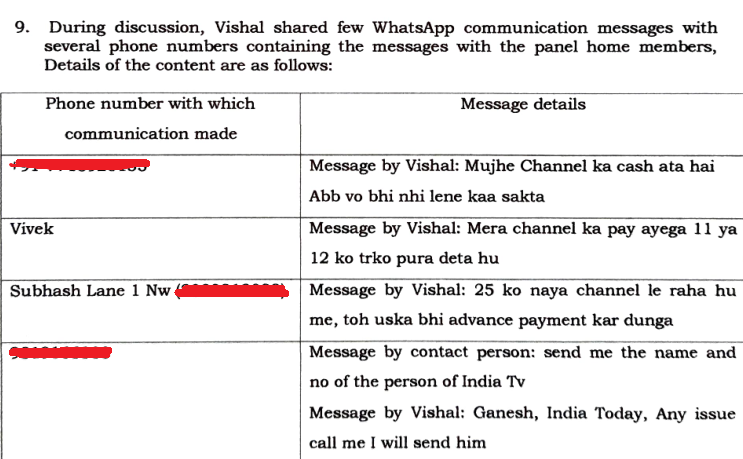
Hansa Research Group employee Vishal Bhandari had shared several Whatsapp chats between panel home members and his contacts. “Mujhe channel ka cash aata hai. Abb vo bhi nhi lene kaa sakta (I get money from the channel. But, its difficult to get the money now)”, a message from Bhandari read. In another Whatsapp correspondence, Bhandari said to one Vivek, “Mera channel ka pay ayega 11 ya 12 ko trko pura deta hu ( The pay for my channel would come on 11th or 12th of this month. I will pay you once I receive the money)”
Bhandari had also messaged another handler with the name ‘Subhash Lane 1 Nw.’ He wrote, “25 ko naya channel le raha hu me, toh uska bhi advance payment kar dunga (Taking up a new channel on 25th of this month. I will make an advance payment to you).” In another Whatsapp correspondence, Bhandari corrected a handler who asked him to send the details of the contact in ‘India Tv’. He said, “Ganesh, India Today, Any issue call me I will send him.”
Screengrab of the Hansa Research Group complaint (Page 5)
It is pertinent to remember that Bhandari had admitted to BARC Vigilance Team that he was working on the behest of one Vinay in favour of India Today. Besides his confession, his Whatsapp communication also reflects how he has been coordinating with his handlers and a ‘contact’ in India Today. Interestingly, the complaint finds no mention of Republic TV network but mentions India Today on at least 2 occasions.
The report matches with the FIR registered by the Mumbai Police on the complaint of Hans Research into TRP manipulation. The FIR, which came to hours after Mumbai Police Commissioner had named Republic TV, also mentions the name of India Today, accusing that money was paid to panel homes to watch the channel for 2 hours a day. The FIR didn’t mention the name of Republic TV, contrary to the claims of the commissioner.
Hansa Research group seeks criminal prosecution of Vishal Bhandari and others
“That the above act of tampering with the actual collection of data by interfering and influencing the households. The persons behind these criminal acts have hatched a criminal conspiracy with the intention to interfere with the legitimate collection of Data and thereby cheat other channels, advertisers and finally the public,” the complaint noted. Hansa Research Group also pointed out that the employees defrauded the company, violated the confidentiality clause of their Non-Disclosure Agreement(NDA) and was thus liable for prosecution under Indian Penal Code IPC Sections 420 (cheating) and 120B (criminal conspiracy).
Republic TV issues statement
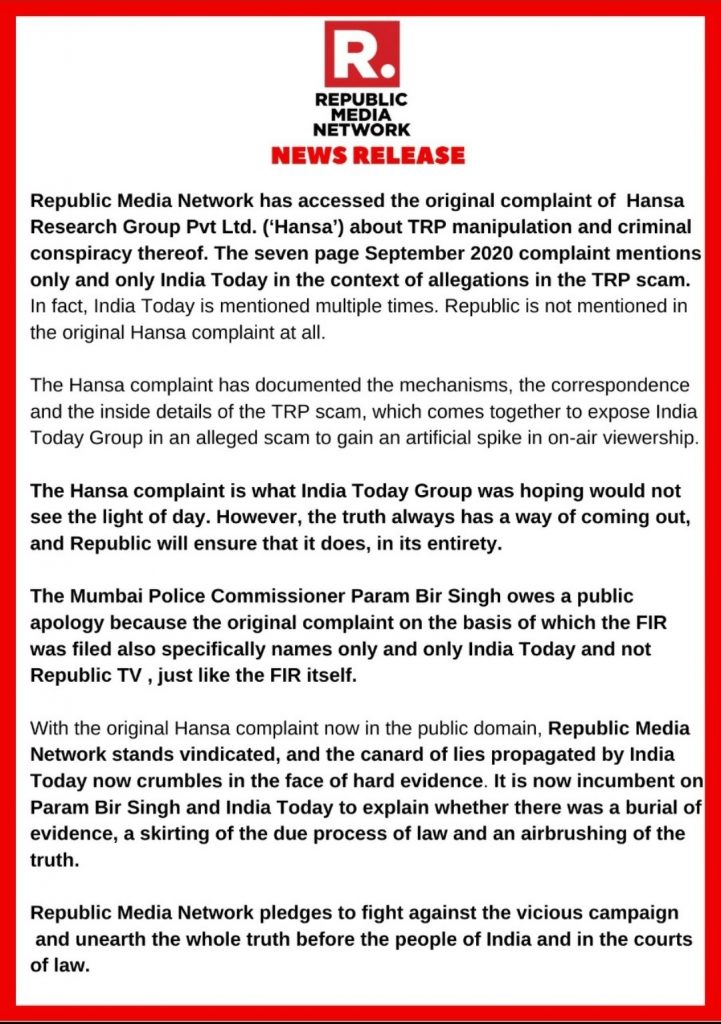
After accessing the complaint by Hansa Research, Republic TV issued a statement, saying that it exposes India Today completely. It says that while the complaint mentions India Today multiple times, Republic TV is not mentioned at all. “The Hansa complaint is what India Today Group was hoping would not see the light of the day. However, the truth always has a way of coming out, and Republic will ensure that it does, in its entirety”, the statement said.
News Release issued by Republic TV
The Arnab Goswami led channel also said that “Mumbai Police Commissioner Param Bir Singh owes a public apology because the original complaint based on which the FIR was filed also specifically names only and only India Today and not Republic TV, just like the FIR itself”.
Republic TV affirmed that it stands vindicated after the original Hansa complaint has been published, and “the canard of lies propagated by India Today now crumbles in the face of hard evidence.” The network asked both Param Bir Singh and India Today to explain whether there was a burial of evidence, a skirting of the due process of law and and airbrushing of the truth.
India Today admits to data manipulation
Earlier, in an OpIndia exclusive news break, it emerged that India Today had been held guilty of ‘viewership malpractice’ back on July 31st and was asked to pay a penalty of Rs 5,00,000 to BARC by the BARC Vigilance Council. India Today, after several hours of the news break, published a statement where they admitted that they were indeed fined for viewership manipulation but said that they will take legal action against BARC since their involvement in the scam was meant to be ‘confidential’.
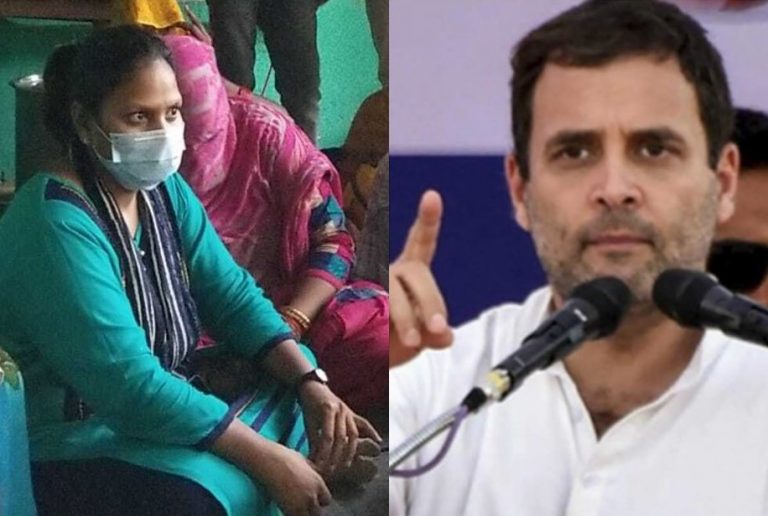
The Hathras Case witnessed a shocking development on Saturday after it was revealed that an alleged Naxal ‘fake Bhabhi’ stayed with the family of the victim for an unspecified duration of time between the 16th and 22nd of September. Our sources, however, revealed that the person could have stayed for much longer.
In a video that has now come to light, the real Bhabhi has claimed that the woman in question was not an imposter but a distant relative. With a ghoonghat (veil) covering her face and a child in one hand, the real Bhabhi stated, “Her (the suspected Naxalite) name is Rajkumari. She has a 10-year-old son. She has a husband and a family. There is nothing like that (what is being portrayed in the media).” On being asked about the residence of the alleged Naxalite, the real Bhabhi stated, “She lives in Jabalpur and has a job there.”
The suspected Naxalite in question has been identified as one Rajkumari Bansal from Jabalpur. She has admitted to being present at the scene. “I was present there (at victim’s house) and if someone identifies me as fake sister in law of the victim, I can’t help,” she told CNN News18. “Did I say that I am the sister in law of the victim. I am not illiterate, I only talk on the basis of evidences,” she added.
The social media accounts of Rajkumari Bansal have also emerged and details of her accounts have gone viral on social media. She is not very active on Twitter and follows only 6 accounts. She is followed by 17 people in turn (as of the time of writing this report). Most intriguingly, she follows and is followed by E.P. Gautam, the national president of the Bharatiya Moolnivasi Sangathan (BMS). She also follows Rahul Gandhi and the Congress party on Twitter.
Source: Twitter
Her Facebook posts reveal problematic aspects of her political ideology. In one Facebook post on the 3rd of October, Rajkumari Bansal says that those who claim to care for the Hindus of other countries have burnt the Hindus of their own country like garbage. This was an obvious reference to the cremation of the Hathras victim.
Rajkumari Bansal on Facebook
In another Facebook post, she says that if the Hathras victim were buried instead of being cremated, then perhaps another post-mortem could have been conducted. She is perhaps casting aspersions on the forensic reports that said that there was no rape involved.
She has also shared fake quotes by Yogi Adityanath and even after people pointed out that she quote she posted was fake, she did not remove it. It is still available on her Facebook account.
Rajkumari bansal shares fake quote by UP CM Yogi Adityanath
Rajkumari Bansal was also busy emphasising on the importance of caste with regards to the Hathras Case.
Continued emphasis on Caste
Rajkumari Bansal does not appear to be very active on social media. However, from the limited number of posts and other activity, she appears to harbour problematic political opinions. She has also come forward with a statement that she went to Hathras to help the victim family since she has experience in forensics.
So the Nakli Bhabhi Dr. Rajkumari Bansal is actually a Forensic Expert who reached Hathras when CBI enquiry was ordered.
Due to the suspicious circumstances of her visit and the manner in which the whole thing has turned out, questions are being asked regarding whether she was there to coach the victim on how and what to tell the media. Speculations are also running rife on whether she was there at the behest of others.
Meanwhile, the real Bhabhi says, “She (the suspected Naxalite) is my Bhabhi’s relative and thus a distant relative of mine. Everyone, who has learnt about the (alleged murder) incident, is coming to our house. We have relatives coming from Bhopal, Ahmedabad and Mumbai. There is nothing strange about this.” Only further investigation will reveal the truth regarding that.
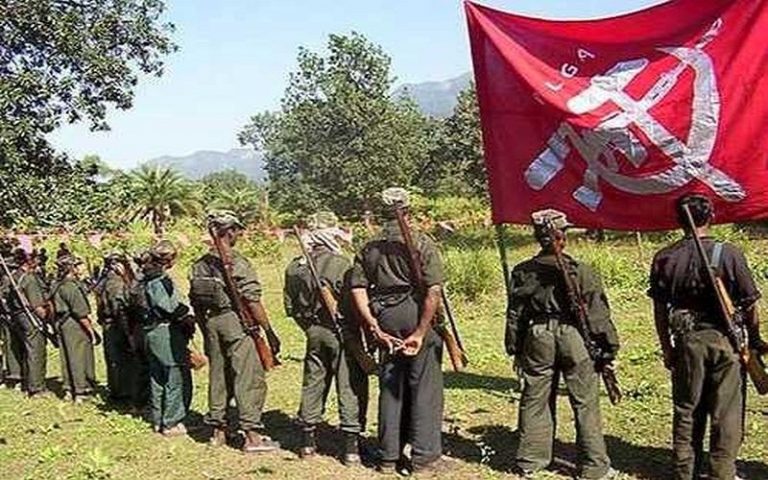
The left-wing terrorists have barbarically killed at least 25 tribals in Chattisgarh’s Bijapur district after blaming them for being police informers. According to reports, a left-wing terrorist group has released a statement on Thursday saying that a “people’s court” has punished at least 25 tribal people after obtaining “clear evidence” against them in Bijapur’s Gangaluru area.
Calling them “traitors” and, “police informers”, a terrorist of the banned organisation identified as Vikalp said those killed included 12 ‘secret agents’, five ‘covert operatives’ and eight ‘police informers’.
The exact number of tribals executed by the Naxals is still unclear, however, Telangana police said they had received intelligence inputs that the Maoists killed 16 villagers near the Telangana-Chhattisgarh in the last week of September.
The Maoists had also forcefully abducted a few other villagers and hid them inside the forests of Bijapur and killed them later, said a Telangana police official to Hindustan Times.
Maoist leader Vijja killed by own group over allegations of being ‘police informer’
The Naxal terrorist Vikalp also reportedly claimed that one of the secret agents working for the police turned out to be senior Maoist leader Vijja.
“Our inquiries revealed that Vijja had been acting as a police agent for the last two years and was entrusted with the responsibility of harming the central committee of the Maoist party. He had provided crucial information about the party meetings to the police four times,” the left-wing terrorist said. according to the HT report.
Reportedly, the 39-year-old Naxal leader Modium Vijja alias Bhadru, who himself was responsible for the killing of tribals in Bijapur, was shot dead by by the left-wing terrorists in the last week of September. Maoists leader Vijja was wanted by the police and carried a cash reward of Rs 8 lakh for his capture.
Naxal killing tribals as their movement is nearing end, says senior cop
Meanwhile, the police have said the left-wing terrorists were targeting innocent tribals as support for their movement in the Bastar region has eroded sharply.
Bastar Range Inspector General of Police Sundarraj P said the terror activities has no takers in the tribal areas and is nearing its end due to the huge anti-Naxal sentiment building up among tribals in the region.
“The fear of getting extinct is very much evident in the activities of the outlawed CPI (Maoist). Having lost public support due to their misdeeds, the Naxal leadership is now clueless and directionless,” the senior police officer added.
For people settled down in one place, or the civilised people as we like to call them, it is necessary to build a home. In fact, the standards of civilisation are often measured, among other things, by the then available scientific planning, longevity of structures built, aesthetic appeal, and successful completion of buildings that range from religious, to the military, to residential structures. So it is not surprising to find Indian writers from ancient times quite taken up with the subject of architecture; and this obsession is evident in all forms of literature varying from the Vedic, to Epics, Puranic, Buddhist, Jain, Agamic, historical, and even the political treatises.
For delving into the depths of ancient Indian city architecture, a glance at the pre, proto, and historic era city/town planning in India (approximately 5500 BCE to the start of the Common Era) will give a good view of how things looked back then.
Looking at the Harappan advanced form of city planning from various excavation sites (photos from the ASI archives in public domain)
The remains include parts of fortifications, well-planned drainage system, houses with many rooms and sometimes double-storeyed, separate bathroom and toilets, and an advanced system of interconnected tanks and reservoirs for elaborate water management.
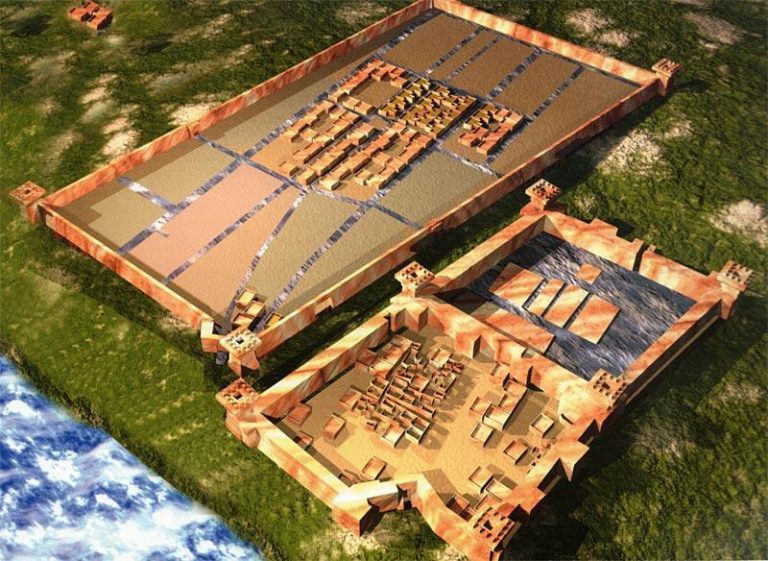
3D reconstruction of Kalibangan showing the citadel and lower town showing the fortifications.
Interestingly from different site excavations, it has been revealed that it was quite likely that many Harappan cities (Mohen-jo-daro, Kalibangan) had a twin mound system (as seen in the 3D reconstruction image above), wherein a raised fort or citadel would lie on the west and the lower town would be in the east. In some cities (such as Lothal) there were no raised mounds for a citadel, and the citadel was separated from the town just by a brick wall. Dholavira, on the other hand, had a middle town between the citadel and lower town.
There are suggestions that the citadel could have been the place for the rich and the powerful (as this part always had the famous buildings such as great bath, granary, house of priests, etc), while the lower town could have been for the common citizens (public buildings, houses, blocks and streets with lanes and bylanes). The citadels and the lower towns were both surrounded by high walls with broad mud foundations having gates and moats. The fortification walls generally were parallelogram in shape with huge towers.
Gate and fortification wall, Dholavira. Dholavira excavations revealed the most elaborate and intricate fortifications among the Harappan cities. Interestingly, here the eastern gate of the citadel showed evidences of a stone pillar base and fragments that had highly polished surfaces. The purpose of these thick walled fortifications are however debatable, with suggestions that they were built more for civic purposes than for defensive ones. With no conclusive evidences of war or armed conflicts it is said that the walled protection could have been more for safeguarding from the massive floods that these cities regularly faced. FirstStreet, Kalibangan.
Most cities of the Harappan sites show neat blocks divided by broad roads running at right angles. Inside the blocks are seen narrow lanes with houses crowding around them. Roads have been found to have been paved with mud bricks with a layer of gravel on the bricks (Lothal). Often the corners houses were fenced off to avoid damages or sometimes rounded off for the same reason.
Curved drain, Mohenjo daro.
A major hallmark of the Harrapan civilisation was the advanced and well-planned drainage system in place, which is unparalleled in any of the contemporary civilisations. Main street drains were covered with bricks and stones, and there were tertiary drains that connected each house to the main drains. Second storeys had drains built inside walls that ended just above the street drains.
There were man-holes and soak pits with covers for removing solid waste. The entire thing then emptied itself into brick culverts to be finally led to the fields outside city limits. Thus, we see an intricate system of intersecting house drainage pipes, public drains, and arterial drains.
Drainage system, Lothal. Parallel drains from a house leading into another drain running perpendicularly. Interestingly the sewage pipes were kept separate from the ones that gathered rain water. Terracotta pipe, DholaviraHouse pattern from early Harappan stage, Rakhigarhi.
Harappan era houses were of different sizes; had many rooms for different purposes; a courtyard; were sometimes double storeyed with staircases leading to the second floor; the floors were either tiled, or plastered, or covered with clay and sand. Bricks used in construction were of uniform ratio and size.
Remains of what was once a bathroom/ toilet.
The Harappans had provisions for a separate bathroom and toilet in each house. Sometimes a group of houses would have a separate common bathroom. Bathrooms had bathing platforms with sloping floors to drain off the water into the drain.
Toilets in Harappan sites would generally be a hole over a cesspit. However, in elaborate styles, a commode-like system would be made out of a big pot that was fixed to the ground. The pot would then have a hole at its base from which the waste would flow out. Sometimes the pot would be connected to a drain via a sloping channel.
A well in Lothal.
Harappan sites show an elaborate system of water management for collection and distribution of potable and bathing water. There were separate channels for freshwaters, rainwater collection, and wastewater drainage. They also had systems for collecting/harvesting rain waters as evident from the numerous reservoirs, cisterns, and wells.
Reservoir, DholaviraElaborate water harvesting system, Dholavira
The Ancient Indian Architectural texts
In the Indian context, the term architecture is included within the realms of Silpasastra; a treatise, which thankfully has survived the ravages of time and tyrannical vandalism. The term Silpasastras, which when literally translated, means the study of fine or mechanical arts, and there are 64 such arts that can be studied. Indian architecture, known as Vastu Sastra, is seen as a part of a subdivision of the Silpasastras, as it encompasses much more than what the term ‘architecture’ generally implies.
Thus, Vastu-sastra would include, besides the basic architecture, all kinds of buildings being built (civil and military engineering); it would also cover laying of parks and gardens; town planning; marketplace designing; digging drains, sewers, wells, and tanks; building dams, bathing ghats, walls and embankments.
Furthermore, it would also be a part of designing furniture suitable for the houses built. Besides these, Vastu Sastra also includes designing of clothing and accessories, such as headgear and various ornaments. Carving of sculptures of deities and famous people are also a part of Vastu Sastra. Even basics, such as selecting a site, testing the soil of the site, and ascertaining the cardinal directions of the site are all part of this ancient science of architecture better known as Vastu Sastra. The treatise that brings together all the varied topics under Vastu Sastra is compiled into 70 chapters and titled as Manasare-vastu-sastra.
Vastu Vidya or Vastu Sastra is so comprehensive and broad in its discourses that it is almost co-extensive with the Silpasastras. As Manasara explains ” Vastu is where the gods and men reside (Sanskrit word vas = reside/sit).” This would include ground or dhara (the principle object as nothing can be built without it), buildings or harmya, conveyance or yana, and an object to rest like a couch or a bed or a paryanka. Town or city planning would primarily involve the planned use of ground and buildings.
Architecture in Vedic Literature
While the concept of town or city planning is undoubtedly a very ancient branch of Indian science, the technical details of building structures appear for the first time in the treatises that deal solely with architecture (Vastu-sastras), and are absent in the non-architectural literature prior to the Vastu-sastras. While there is little about the structural details of a house in the Vedic literature, the early Vedas do carry casual references to this art. That people of this time did not live in caves and had proper houses as their residences are clearly evident from the various synonyms used for a house, and also in the naming of the various parts of a house such as doors, crossbeams, and pillars (Rig Veda I, 13-39).
While details are sketchy, the hymns of the Atharva Veda do give information on the simple house construction, where it is said four upamit (pillars) were set up on a chosen site, and beams were laid angular as props (pratimit), while the pillars were supported with cross beams (parimit). The roofs were made of rib-like structures constructed of bamboos, walls had palada (grass bundles) and the entire structure was held together by bindings of various types (samdamsa, nahana, etc).
These houses had many rooms and it could be securely locked up (Rig Veda VII, 85, 6). A closer look would show that these houses bear similarities to the house of the Todas, and had a similar wagon headed roof in all probability. The Vedic descriptions also bear a striking similarity to the rock cut chaityas and assembly halls of the Buddhist caves in western India, wherein some of the oldest ones the wooden ribs on the vaulted roofs still remain (Fergusson, History of Indian architecture).
Karla Buddhist cave showing ribs on the vaulted roof . Photo from Wikipedia (by Vatsalbhawsinka)A toda tribal house with its wagon vault shape. Photo from Wikipedia (Pratheep PS)
There are also stories in the Vedas of Vashistha wanting to live in a three-storeyed house; an able king “who sits in a substantial and elegant hall with thousand pillars;” and there are mentions of large mansions of wealthy people that had many pillars and doors (Rig Veda I, II, IV). Varuna and Mitra are shown to be living in splendid palaces. From these writings, it is pretty evident that while these descriptive verses tend to exaggerate in an attempt to glorify the deities, but they are certainly based on real buildings that the writers had seen (Muir. 1868).
Furthermore, R L Mitra in his Indo- Aryans opines that while mentions of pillars, doors, and windows may or may not be decisive indicators of masonry buildings, but bricks would not have originated unless they were to be used for specific reasons, and it would be absurd to suppose that bricks were invented but never used for building houses. In this context, if we read the Sulva sutras (supplement to Kalpa sutras), we find that while discussing the details of the vedis or fire-altars, it is mentioned that these altars were made of bricks. These altars for Soma sacrifices were made based on specific principles and precise measurements, and were likely the foundations of religious architecture in India.
The fire altars, first mentioned in the Taittiriya Samhita, had different shapes and were constructed of 5 layers of bricks (sometimes even going up to 10-15 layers too), while each layer had 200 bricks. Precise measurements were given as to the sizes and area to be covered and that were to be followed carefully while constructing these fire-altars.
Fire altar- A modern version. (Photo from wikipedia by Madhu K). Some of the the Vedic altars were more elaborate. Vedic altars were of various shapes: falcon, tortoise, wheel, etc., and followed the prescribed measurements to the t. According to the Veda “He who desires heaven is to construct a fire altar in the form of a falcon. A fire altar in the form of a tortoise is to be constructed by one desiring to win the world of Brahman…”Fire altars found at Kalibangan (Harappan civilisation).
The Vedic literature also frequently mentions villages (Grama), and towns (Pur), of which the Pur is frequently mentioned in the Rig Veda. The Pur also referred to forts and finds frequent mentions with varied names, such as urvvi (wide), prithvi (broad), a stone built fort (asmamayi), of iron built ones (ayasi- though this is more likely to be metaphorical in nature), a fort full of cattle (gomati) denoting that forts were used as strongholds to keep cows, forts used during autumn (saradi– referring to being occupied by the dasyus), and forts having 100 walls or satabhuji.
Instead of being permanently occupied like the medieval forts, these forts could have been used as places of refuge during times of need. Some historians (Pischel and Geldner) opine that these fortifications could be of the Pataliputra type as mentioned by Megasthenes.
Thus, apart from the well developed urban centres in the Harappan sites, and the frequent Vedic references to forts and towns, it is for certain that flourishing cities/townships existed much prior to the start of the Common Era. Megasthenes mentions that the grand city of Pataliputra was more than 9 miles in length. As we learn from details of cities given in various texts and early reliefs (discussed further below), Mauryan era cities like Pataliputra were not any sudden developments, but a continuation of an already established and known urban culture (Coomarasway).
From the Vedic texts, it is quite clear that the writers of these verses were well aware of fortifications, villages, towns, forts, carved stones, stone-built houses, and brick structures. The basics of architecture were already in, which were handed over from generation to generation most likely through oral traditions of memorizing knowledge and facts.
The varna-guild form of social structure saved the knowledge from going extinct, and it was only much later that these were compiled into treatises for the better preservation of traditional knowledge. This is evident from the fact that while the extant Silpasastras are placed at around 5th c. CE, we find from different accounts the presence of an advanced and well developed Pataliputra city in the 3rd c. BCE. Since such large cities cannot be built with a sudden overnight knowledge, it can be safely said that the knowledge and science of architecture were already well present by then; however, compilation in form of books/treatises happened at a later period.
Architecture in Buddhist texts, the Epics, and the Puranas
In Buddhist literature (Mahavagga, Chullavagga, Vinaya texts, Dhammapada Atthakatha, MilindaPañha, etc) there are plenty of references to high walls, ramparts and buttresses, gates, watchtowers and moats alluding to the fortification of towns and cities. Mentions are made of houses opening directly to the streets, thus hinting at a lack of enclosed spaces like gardens in front. These mostly talk of a large group of houses clumped together around narrow lanes, of sacred groves, and vast expanses of rice fields beyond. The Jataka talks of individual houses that remain separate from villages and towns.
In some places, Buddha is found sermonizing on architecture, and in one instance he tells his disciples, ” I allow you O bhikkhus, abodes of five kinds: Vihara (monasteries), Arddhayoga (special Bengal buildings that served both religious and residential purposes), Prasada (storeyed residential houses), Harmya (storeyed mansions or palatial homes), and Guha (small houses)” (ref: Vinaya texts, Mahavagga).
There are detailed descriptions of arama griha (rest houses) for people who liked to lead a quiet life and stay a little away from the hustle-bustle of the towns. As per the books, such houses should be located not too far or too close to the towns, the compounds are to be surrounded by three types of walls (stone, brick, and wooden fencing), and further surrounded by bamboo fences, thorn hedges, and moat-like ditches.
Houses should have living rooms, resting rooms, storerooms, halls for services, halls attached to bathrooms, closet rooms, cloisters, open-faced mandapas, and ponds (Chullavagga, VI). The inner chambers are to be divided into three parts: square halls (Sivika garbha), rectangular halls (Nalika garbha) and dining halls (Harmya garbha). Verandas or alindas were essential for these houses, and were also present in prasada or storeyed houses, which were referred to as a veranda supported on pillars with elephant heads (Chullavagga, VI). Details of doors, windows, stairs, rooms and jaalis on them, and seven storeyed buildings (satta-bhumika-prasada) are frequently found in various Buddhist texts. There is another very interesting structure mentioned in the Vinaya texts.
These are the hot-air baths, which are described in great details; structures similar to the later period Turkish baths. Built on raised platforms, with a facade of stones or bricks, these buildings had stone stairs leading up to a veranda with railings. Roofs and walls were made of wood, with a layer of skin on it, and then a layer plaster over it all. The lower part of the walls was made of bricks. There were antechambers, a hot room, and a bathing pool. Seating arrangements were made in a circle around a fireplace in the hot room, and bathers had water poured over them. Digha Niyaka also speaks of ornamented open-air bathing tanks. Such ancient baths have been found in fairly preserved conditions among the Anuradhapura (Sri Lanka) ruins.
Megasthenes visiting the court of Chandragupta Maurya, painting by Asit Kumar Haldar, early 20.th c. CE
The Epics abound in the descriptions of cities (nagara), large palatial mansions, storeyed buildings, verandas, porches, victory arches, tanks with masonry stairs, prakara or walls, and various other structures which are all indicative of a well developed and flourishing architecture. The city plan of Ayodhya as given in the Ramayana, is found to be similar to the town-plan guidelines as laid down in the Manasara, which included beautiful devayatana (temples), gardens, alms-houses, assembly halls, and mansions.
Ramayana also gives a detailed description of the beautiful city of Lanka in its Lanka-kanda. Mahabharata provides us with short but vivid descriptions of the cities of Mithila, Indraprastha, Dwaraka, among many others. Sabha-parvan provides us with a detailed description of different assembly halls, using examples of Indra sabha, and halls of Varuna, Kubera, Yama, and the Pandavas. In both the epics there are details of lofty buildings (mostly painted in white) and large balconies; windows with lattices; comfortable rooms; king’s palaces; separate mansions for princes, ministers, army officers, and chief priests; smaller houses for common people; assembly halls; courts; and shops.
A vision of ancient Indian court life, using motifs from Sanchi (wood engraving, 1878). (photo from public domain).
The Puranas deal with the topic of architecture in a more serious manner than the casual descriptions as found in the epics. All the 19 Puranas have dealt with the subject, however, 9 of them have dealt with the topic in a more systematic manner, which in turn provided material support to the Silpa-sastras compiled later. Matsyapurana has 8 chapters with detailed discussion on architecture and sculptures. Skanda purana has three extensive chapters that discuss the planning of laying of a large city.
Besides these, the other Puranas that extensively talk on architectural science are the GarudaPurana, Agnipurana, NaradaPaurna, VayuPurana, and BhavisyaPurana (a late Purana). Brihat-samhita composed by Varahamihira also devotes 5 chapters to architecture and sculpture and gives the subject a thorough and masterly treatment. From a definition of the science of architecture to choosing sites, soil testing, plan of buildings, to elaborate and comparative measurements of storeys and doors, carvings. etc., all are dealt with great details in this treatise.
Kautilya Artha-sastra has 7 chapters on the science of architecture, with a focus on structural details. Interestingly, this book gives detailed descriptions of forts and fortified cities, palaces with underground tunnels or surang, military and residential buildings within the scope of town planning.
A closer look at the ancient Indian cities
As we look at the various books that deal with architecture in ancient India, we find that the cities were chiefly built by nagara-vardhaka or city planners/architects, who had help from assistants like itthaka-vardhaki (brick layers), and vaddhaki (carpenters). These workers lived in their own community-based gramas or villages (example a grama where only carpenters lived), and came to cities only for their work. As per some records, there were 18 guilds (seni) that controlled the craftsmen, such as, the vardhakis, cittakara (painters), kammara (smiths), etc., that worked as per the norms laid down in their traditional crafts work.
The most important aspects of a city appears to have been the moat or parikha, walls (prakara), gates (gopura), defense towers (dvara attalaka), gatehouses (dwara-kotthaka), king’s palace (raja-nivesana, prasada), temples (devasthana), and monasteries (panna-sala). Besides these were smaller houses (gaha), other mansions (nivesana), granaries (kotthaka), alms houses (dana-sala), markets (antarapana), shops (apana), saloons, taverns, and slaughterhouses. Other essential components of cities were parks, gardens, lakes and ponds, tanks, sacred trees and groves, a central square (singhataka), main streets (maha-patha, raj-magga), ordinary streets (vithi), crossings (catumahapatha), and alleys (patatthi). There were streets occupied by particular varnas, such as a street for traders/ Vaishyas, a common sight in many parts of India until recently. Outside the cities stood the suburbs (nigama) and villages (grama).
Ancient city of Kapilavastu, Sanchi. (Photo from wikipedia). Seen here is a royal chariot coming out of gate with high towers, the dvara-attalaka, which were towers of defense, as apparent from the number of soldiers seen there.City of Kosala or Sravasti (Sanchi – north torana). A horse ride is seen coming out from the gate. Beyond the gate towers and walls (prakara) are seen the stoyered city buildings. (photo from wikipedia)Ancient city of Rajagriha. (photo from Wikipedia)King of the Mallas of Kushinagara under siege. A double storey building is seen on the left side (photo from wikipedia)City of Kusinagara in the War over the Buddha’s Relics, South Gate, Stupa no. 1, Sanchi. (photo from wikipedia by Photo Dharma). The brick walls of the city, defense towers, soldiers, lofty city buildings beyond are all seen clearly in this relief.
The fortified cities that are seen in Sanchi and on other early reliefs are as per the textual definitions that we read in various old treatises that deal with ancient Indian architectural science. These reliefs when studied closely for architectural features will be found to bear similarities with the later period, medieval, and even modern era architectural forms, in the context that many of the ancient characteristic features are found preserved in these later structures.
While the ancient fortified cities have long disappeared, the reliefs remain behind depicting how they once stood tall, and a walk through any of the medieval city gates such as the Gwalior fort, Bijapur fort gate, or the Gujarat and Jaipur city gates will show the how close the architectural connections are between the ancient, the medieval, and the present.
How an ancient Indian city looked: Reconstruction of Kushinagara city gates and the city beyond at 500 BCE, from a Sanchi relief
From: Percy Brown, Indian Architecture, Buddhist and Hindu, published in 1956 Bombay, India.
References:
Photos from the ASI archives in public domain.
Ananda Coomaraswamy, Early Indian architecture.
Binode Behari Dutta, Town Planning in Ancient India.
John Muir, Original Sanskrit texts on the origin and history of the people of India, their religion and institutions.
Prasanna Kumar Acharya, Architecture of Manasara.
The cover photo is a reconstructed image of the Lothal port, from the ASI archives.
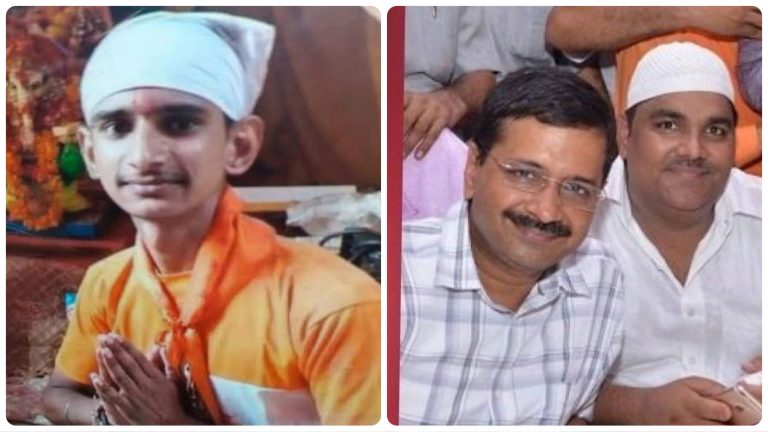
Following the brutal assault on 18-year-old Hindu boy Rahul Rajput by a group of Muslim mob in Delhi’s Adarsh Nagar which unfortunately led to his death, AAP leader Pawan Kumar Sharma issued a statement that deems to understate the religious angle into the gruesome murder.
While assuring that the perpetrators of the gruesome crime will be brought to justice, Sharma attempted to gloss over the religious overtones of the crime by claiming that highlighting it is akin to politicising the murder of the young man.
The Govt will deliver justice to the victim’s family. Please don’t communalise it: Pawan Kumar Sharma, MLA, AAP over the murder of an 18-year-old boy in Delhi. pic.twitter.com/Kppd27eqWO
“We are standing by the side of the victim’s father, Mr Sanjay, ensuring that he faces no difficulties. However, we should not communalise the incident and those who are doing it are actually trying to politicise the incident. The Arvind Kejriwal government remains committed to provide justice to the family and punish the culprits,” AAP MLA Pawan Kumar Sharma said to the media.
Rahul Rajput, a second-year Delhi University student, was brutally hacked to death by Mohammad Afroz, Mohammad Raj and 3 others for having a romantic liaison with a Muslim girl. The brother of the girl, one amongst the 5 arrested in the case, vehemently objected to their inter-faith relationship and orchestrated the assault with one other relative and 3 minors which resulted in the death of Rahul.
The 18-year-old-man was drawn out of his house on Wednesday evening on some pretext, where Mohammad Afroz, Mohammad Raj and 3 others were lurking in the corner to physically assault him. The five assailants rained blows on him and mercilessly flogged him, leaving him mortally injured. The young man somehow managed to crawl back to his house after which he was rushed to a nearby hospital. However, he succumbed to his injuries while undergoing treatment at the hospital.
AAP leaders Tahir Hussain accused of engineering anti-Hindu riots in Delhi
The sanctimonious suggestion by an AAP leader to not “communalise” the death of Rahul Rajput which was clearly driven by objection to the inter-faith relationship between a Hindu boy and a Muslim girl, came even as the Aam Aadmi Party has a long and troubled history of stoking communal passions to further its politics.
A few months back, an AAP leader was amongst those who had conspired to instigate anti-Hindu riots in the national capital under the guise of carrying out peaceful protests against the Citizenship Amendment Act. Then AAP councillor Tahir Hussain was reportedly involved in enabling a Muslim mob that dragged Intelligence Bureau sleuth Ankit Sharma inside the AAP corporator’s house and brutally killed him. Sharma was stabbed at least 400 times for over four to six hours. It was only after an FIR filed in connection with IB staffer Ankit Sharma’s death included Tahir Hussain’s name, the AAP party suspended him.
AAP councillor Tahir Hussain later confessed to having engineered the anti-Hindu riots in Delhi. In his confession to the Delhi Police, Hussain said that Khalid Saifi, who is very close to him, planned the riots with him. He once told him that his political position and money should be used against Hindus and for the community. He promised Saifi that he will always be ready to take any step. After the Supreme Court ruled in favour of Ram Lalla Virajman and the Indian government passed Citizen Amendment Act tabled by Home Minister Amit Shah, Tahir and Khalid met and decided that this is time they have to act.
The charge sheet pertaining to FIR 114 states that Tahir played a vital role in burning several Hindu shops in the Khajuri Khas area along with his accomplices. During the investigation, police found out that he had instigated a mob during the riots of 24th and 25th February 2020 saying that Hindus have killed many Muslims and had set their shops on fire on the Sherpur Chowk. The charge sheet says, “Only 64 live cartridges and 22 empty cartridges were recovered at his instance. During interrogation, he could not give an account of the remaining 14 live cartridges and 22 empty/fired cartridges, when and where the same were fired/used.”
AAP MLA Amanatullah Khan defended Tahir Hussain saying riots will continue to happen in India
Another AAP leader, Amanatullah Khan, is another politician from the Arvind Kejriwal-led party, who is known for making communally provocative statements every now and then. While defending the riotous activities sponsored and supported by former AAP councillor Tahir Hussain, Khan claimed that so long as Muslims are discriminated against, riots will continue to convulse the country.
So while AAP leader Pawan Kumar Sharma pontificates that the death of a young Hindu man by a Muslim mob should not be communalised so as to politicise the incident, his own party members are among those who unabashedly ginned up anti-Hindu frenzy and divided the society on the religious line.
The 2020 Nobel Prize in Physics has gone to three scientists: Roger Penrose, Reinhard Genzel and Andrea Ghenz “for their discoveries about one of the most exotic phenomena in the universe, the black hole.”
Okay, but what does this have to do with the CPIM? What does sophisticated physics have to do with a political party? What if I told you that black holes are against the working class?
Yes, the “working class.” You know, workers on the factory floor, turning out everything we use from cars to cakes of soap. These workers could have a big and powerful enemy: black holes. Those things embedded in the dark recesses of distant galaxies could actually be sitting there and plotting against workers rights.
Cholbe na! We won’t let this happen!
Workers of the world unite. Seize those means of production. From Black Holes.
You must have some questions by now, the first being whether I have lost my mind. Yes, somewhat. Because I have been reading the official website of the Communist Party of India (Marxist). Let me present to you this essay from the CPI(M) website, titled “Dialectical Materialism and the Question of Black Holes.”
“One of the offshoots of this theory is the proposition of the existence of objects, called the black holes, as final stages in the development of certain types of stars. Such astronomical objects defy the principles of dialectical materialism, such as about the knowability of the world or of the existence of contradictory processes within such objects. If the black holes, as posited by the general theory of relativity, exist with the above properties, then it means that dialectical materialism does not hold, and will have to be discarded. Hence the question of black holes is of great importance. Here is a case where the question of defence of dialectical materialism is posed before the working class.“
Among other things, this essay has sections on “The Theory of Relativity and Black Holes” as well as “The Special Theory of Relativity” and “Space time.” The foundations of Marxism are based on something called “Dialectical materialism.” The essay finds that the General Theory of Relativity and black holes are at odds with whatever dialectical materialism is. And therefore, the challenge before the working class is to fight black holes!
Yes, it is nonsensical. It is also on the official website of the CPI(M). And the reason that intellectuals don’t call out the nonsensical, anti-scientific thoughts of the CPI(M) is because the comrades have a stranglehold on media.
One of the ways that leftist intellectuals get you to respect Marxism is that they don’t tell you what it really is. More specifically, they don’t tell you how big Marxism is. They make you think that Marxism is just an economic philosophy, but it is much more than that. Marxism is something that has a prescription for everything : from how to make vaccines to how to do calculus to studying black holes.
If they told you that up front, you would know instantly that Marxism is pure nonsense. In fact, that is one of the telltale signs that something is nonsense: it has a prescription for everything. What if I told you I have this medicine that can cure cancer, AIDS, diabetes, coronavirus, common cold and has the side effect of making you win the lottery? You would know instantly that I’m lying and cheating.
That’s why the Marxist intellectuals don’t tell you that Karl Marx not only discovered the perfect economic system, he also explained the diversity of life, the origin of the universe and the principles of calculus. He might have died before they split the atom or put orbiting telescopes in space. But trust me, all knowledge is in his book. The only book. All discoveries of the past, present and future can be found in his book.
And when something appears to contradict the ideas of Marx, the Communist state has a simple solution for it: put the scientists in concentration camps.
Unlikely, because your history book was probably written by a Marxist who took care to hide such embarrassing facts about the greatness of the Communist state.
Well, Lysenkoism is named after the “scientist” Tromfin Lysenko, who rejected Darwin’s evolution and developed a form of biology consistent with Marxist principles. He was no fringe character. He became the genetics director of the USSR Academy of Sciences and his ideas were proclaimed official doctrine of the Soviet Union as well as Communist East Germany, Czechoslovakia and Poland.
Every biologist finishing a PhD in any of these countries was required to state that their findings were consistent with Lysenkoism. Some 3000 scientists who disagreed were packed off to concentration camps and many were executed. Indeed, the CPI(M)’s heroes have done in the 20th century exactly what the Pope did in medieval times. Give some credit to the CPI(M)’s “historian” allies for managing to write the former out of history.
And here is where the Lysenkoism of the Communists is really not funny. Lysenkoism destroyed crop yields across the Soviet Union, resulting in famines. One of these was the Ukrainian famine of 1932-33, in which over 3 million people starved to death.
Yes, the Communists went against science and 3 million people died. Sadly, facts do not care about Communist superstition.
And that’s how it is. And yet, the comrades, through their control over intellectuals and journalists, have managed to smear the Hindu right as anti-science. Meanwhile, the comrades don’t even try to hide their anti-scientific beliefs. They put it up on their official website, confident that nobody will be able to embarrass them for it. That is how much confidence they have in the power of narrative.
Imagine, for instance, if a Hindu right wing organization were to put up on its official website that Bharatiyas must rise up against black holes and the General Theory of Relativity. Imagine the universal mocking that would follow. Every few days, you will come across a smug liberal mocking some village bumpkin for claiming miraculous properties of gaumutra. You will never see someone asking Comrade Yechury if the CPI(M) intends to hold a nationwide workers strike against black holes.
Come on, Comrade Yechury. We know you are only too comfortable with political lobbying in air conditioned rooms instead of hard fought politics on the ground. But for Lenin’s sake, this time they’ve gone too far. They’ve given a Nobel Prize to scientists studying black holes. Surely, you will stand up for the working class now. Come out and organize a Bharat Bandh at least.
The black holes are out there somewhere, sucking everything in. The black holes are the ultimate form of the bourgeois.
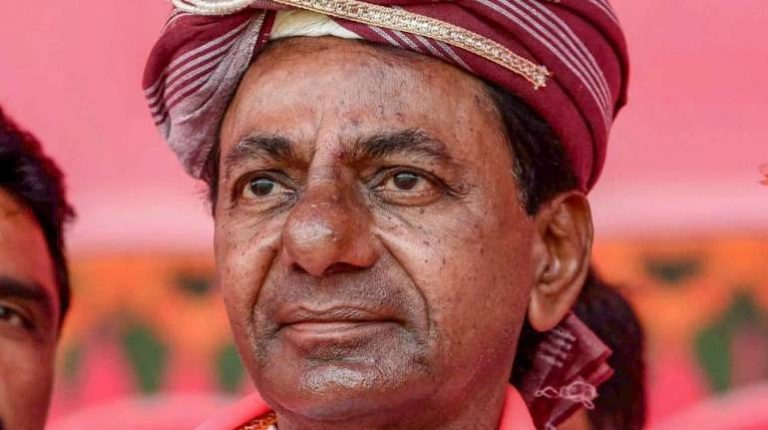
The minority welfare department of Telangana announced a scheme on October 8 to assist youths from minority communities in the state to clear the civil services exam. In order to provide support to economically weaker sections of the minorities, the government announced that it will be providing free coaching classes for civil services examination to selected candidates.
Under the scheme, 100 candidates will be selected from the state through an entrance test who will be sent to the institutions in the state providing coaching classes for civil services. AK Khan, the minorities welfare advisor of Telangana government, said that the selected candidates would choose from the empanelled institutions. The state government will pay their fees and will also provide them with a stipend. The scheme is available for candidates whose parents’ annual income is not above 2 lakh.
Khan informed that the minority welfare department would conduct a written entrance examination for which the process of registration will be online. He said that the selected hundred candidates will be provided proper guidance and encouragement throughout the year. “Inshaallah, we have a scheme ready to provide them with the best training in the best coaching centres in Hyderabad”, said Khan. He said that it is a golden opportunity for the minority candidates and they should make the best use of it.
Last month, there were reports of Telangana government contemplating to extend judicial powers of the Wakf Board. The State minority welfare minister Koppula Eshwar had said that Chief Minister K Chandrashekar Rao would soon be considering the issue of granting judicial status to Wakf Board.
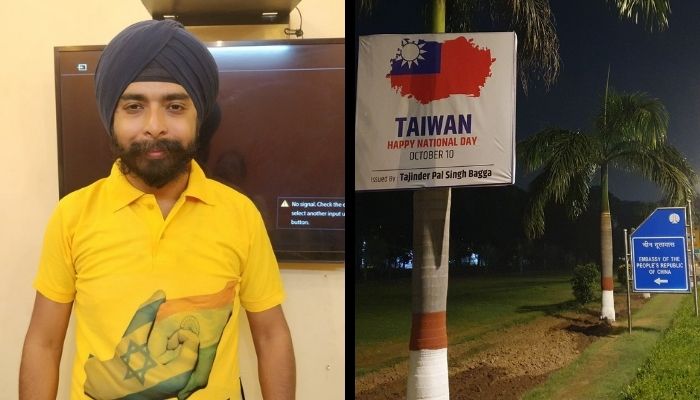
On the occasion of the Double Tenth day, also known as the National Day of the Republic of China, BJP leader Tajinder Pal Singh Bagga slammed the expansionist mindset of China. It is pertinent to remember that October 10 is celebrated as the Double Tenth Day in Taiwan to mark the onset of the Wuchang Uprising of 1911. The rebellion eventually paved the way for the foundation of the People’s Republic of China in 1912. The Republic of China had moved to Taiwan in 1949 after the Chinese Communist Party (CCP) established the People’s Republic of Chinna in mainland China.
Hailing Taiwan as an independent country, the BJP leader put up a hoarding that read, “Taiwan – Happy National Day.” He placed the hoarding just outside the Chinese embassy in New Delhi. Bagga had also posted the image of the hoarding on Twitter. It may be noted that China claims that Taiwan is a part of the People’s Republic of China, and does not recognise it as a sovereign nation. Any mention of Taiwan as an independent country invites protests from the Chinese government.
Bagga’s offensive against the Chinese regime comes in the backdrop of the ongoing border standoff between India and China and the growing discontent among the Taiwanese people against China.
The BJP leader’s tweet received an astounding response, with netizens appreciating him for his gesture. His tweet also caught the eye of sitting Taiwanese Member of Parliament (MP) Wang Ting-yu. While praising Indian friends for their fearlessness and determination, he tweeted, “Thank you to our Indian friends for the kind wishes! The people of Taiwan admire your spirit, your fearlessness and your determination to stand up for what is right.”
Thank you to our Indian friends for the kind wishes! The people of Taiwan admire your spirit, your fearlessness and your determination to stand up for what is right. ???? https://t.co/GfOGrC9qKg
Tajinder Pal Singh Bagga also received an overwhelming response from Taiwanese people. He took to Twitter to share pictures of the residents of Taiwan, holding pamphlets thanking him for his gesture. “10 October, Double Ten Day! Thank you Tajjinder pal Singh Bagga. From Taiwan”, a poster read.
Taiwan wants Indian media to say ‘GET LOST’ to China
Ahead of Taiwan’s national day on October 10, the Chinese mission in Delhi called upon the Indian media not to refer to Taiwan as a “nation”. In the letter, the Chinese embassy said, “would like to remind our media friends that there is only one China in the world” and the “Government of the People’s Republic of China is the sole legitimate government representing the whole of China.”
Reacting to the Chinese diktat to Indian media, Taiwan’s Foreign Minister of Taiwan Joseph Wu on Wednesday said that he hoped the Indian media would ask the Chinese mission to “get lost”. “India is the largest democracy on earth with a vibrant press and freedom-loving people. But it looks like communist China hoping to march into the subcontinent by imposing censorship,” Taiwanese Foreign Ministry said.
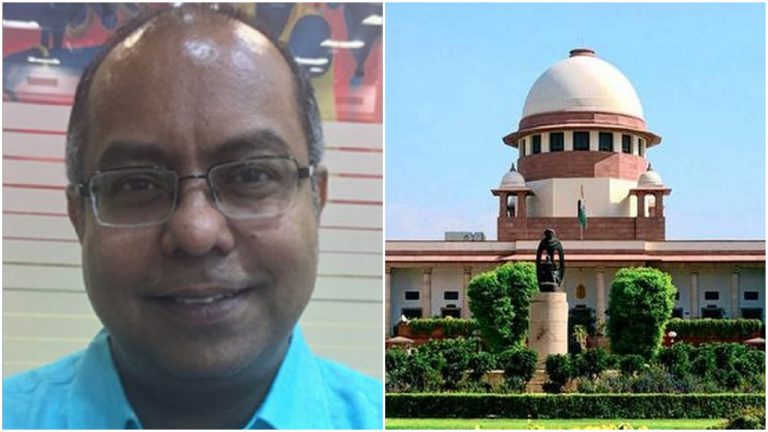
The Chief Financial Officer of Republic TV – S Sundaram has moved the Supreme Court challenging the summons issued to the network by the Mumbai Police in connection with the ‘Fake TRP’ case.
According to the reports, in his plea, Republic TV CFO has challenged the summons issued by the Mumbai Police to him on October 9 in connection with the case.
The CFO has also asked the Mumbai Police to stop investigation against Republic TV and its employees till the matter is heard by the Supreme Court. In his plea, Sundaram has also urged the Supreme Court to hear the case in an early hearing.
Earlier, the Mumbai Police had asked S Sundaram to appear before the Mumbai Police in connection with the investigation into the ‘Fake TRP’ case. The summons to Sundaram came after Mumbai Police had summoned Pradeep Bhandari – the consulting editor of the media network who has been extensively reporting the Sushant Singh Rajput death case.
Will join probe after Supreme Court hearing, says Republic TV CFO to Mumbai Police
However, Republic TV CFO Sundaram has written a letter to Mumbai police stating he would be available to join investigations only by October 14. He also asked the Mumbai police to not proceed with the probe till a writ petition is heard by the Supreme Court.
“I refer to the above summons issued by you on October 9, 2020 asking me to be present at your office on October 10, 2020 at 11 pm for the purpose of your investigation in the subject First Information Report. At the outset, I would express my commitment to cooperate in the said investigations,” Sundaram said in his letter.
[BREAKING] Republic TV CFO, S Sundaram moves Supreme Court challenging the summons issued to the network by Mumbai police in relation to the TRP Scam. Letter to Mumbai police says matter likely to be listed next week@MumbaiPolice@republic#SupremeCourt#TRPScampic.twitter.com/MLYvFQo5ek
“I wish to bring to your notice that a Writ petition under Article 32 has been filed before the Hon’ble Supreme Court of India (Provisional application number 7848/2020) in relation to the above-referred matter and we have requested for an early hearing and it is likely to be listed by next week.”
“Given that the matter is to be listed soon before the Hon’ble Supreme Court, I request you to not proceed any further with the investigations in so far as Republic TV and its employees are concerned. We will join the investigations subject to the orders of the Hon’ble Supreme Court of India,” the letter written to Shashank Sandbhor, ACP Mumbai Police reads.
Republic TV stands its ground on TRP scam propaganda, moves to SC
Following a witch-hunt by the Maharashtra government against Republic TV and Arnab Goswami in the ‘Fake TRP’ scam, Republic TV has decided to take the Maharashtra police and Uddhav Thackeray-led government head-on.
The country’s biggest media network has now decided to approach the Supreme Court against Maharashtra government and the Mumbai Police in the ‘Fake TRP’ case.
In a press release, the Republic TV said, “Acting in malice and conspiracy, the Mumbai Police and the Maharashtra Government on Thursday afternoon launched a fake case against us, without even doing a preliminary investigation”. The media house has vowed to fight this “witch-hunt” tooth and nail and win it.
The channel informed that to fight this “atrocious witch-hunt” Republic TV has approached the Supreme Court and also served notices of our legal action to the Maharashtra government.
In its statement, the media giant warned channels like India Today, who according to them are enjoying the protection of the Mumbai Police and the Maharashtra government. Republic TV warned them that tomorrow if they start doing independent journalism, they might find themselves on the other side of the fence. It also warned those channels which are exulting at this open targeting, should know that this is setting a precedent for the future.
The ‘Fake TRP’ scam
The ‘Fake TRP’ scam has taken a sensational turn in the last two days. On Thursday, Mumbai CP Param Bir Singh, in an explosive statement had accused Republic TV of ‘TRP manipulation’. In a witch hunt attack against Republic TV and Arnab Goswami, the Mumbai Commissioner had claimed, that the channel had illegally paid some households to keep some channels on even if they were not at home to boost their TRP.
However, by the end of the day, it was revealed that in the original FIR, Republic TV did not find a mention anywhere. In fact, it was India Today that had been named in the original FIR. Later, the Joint Commissioner had to admit even India Today was named in the ‘Fake TRP’ FIR.
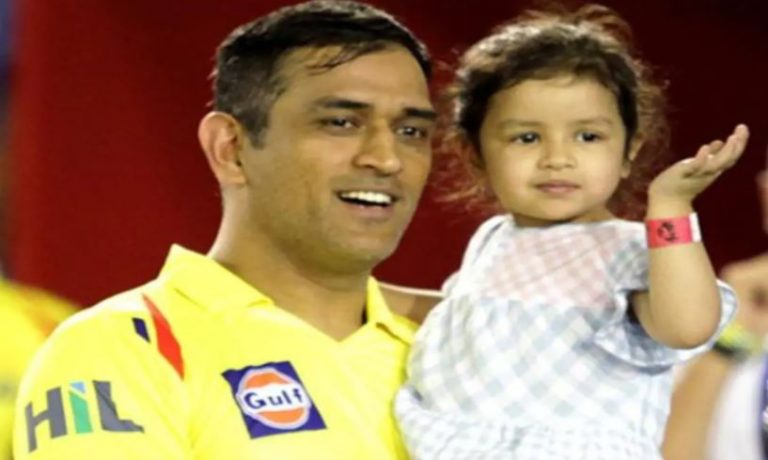
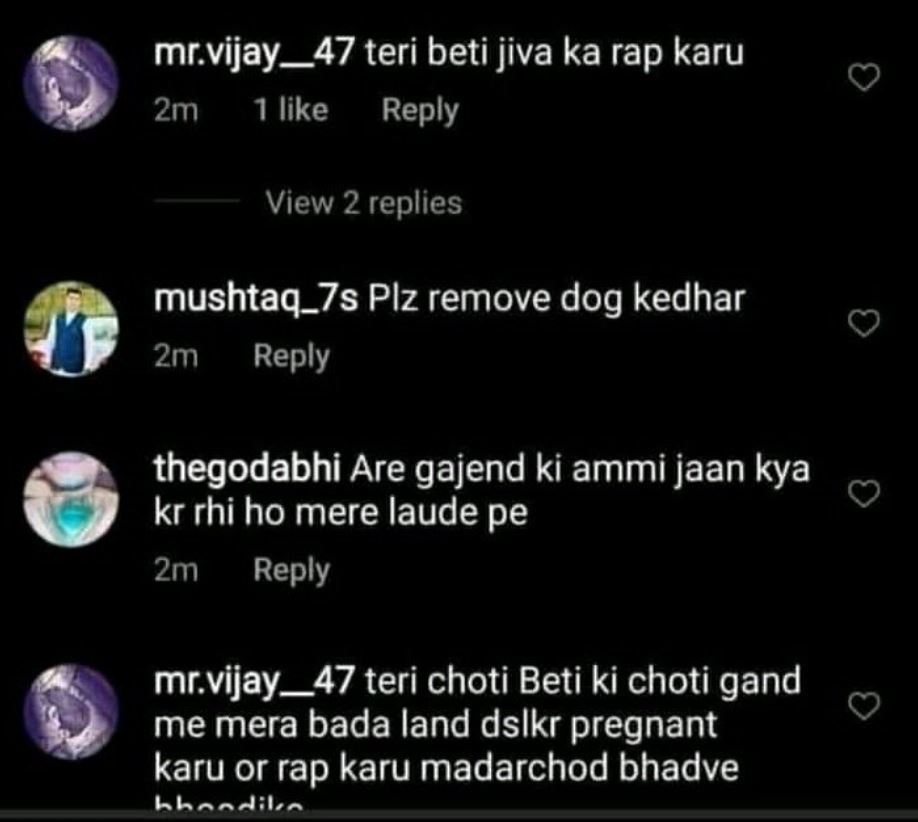
Mahendra Singh Dhoni, the former captain of the Indian cricket team has been on the receiving end of social media trolls after Chennai Super Kings lost a match to Kolkata Knight Riders by 10 runs in the 13th match of the IPL 2020 series in Abu Dhabi on September 7 (Wednesday). However, this time, the trolling went a bit too far. Social media users were furious when they came across posts where rape threats were issued to the five-year-old daughter of Dhoni, Ziva.
The threats appeared on Dhoni and his wife Sakshi’s Instagram accounts following Wednesday’s loss.
Soon after this obnoxious post caught the attention of other social media users, it started circulating widely on various social media platforms. The post created a massive outrage with people from all quarters denouncing such behaviour. Following which, the user, some Vijay Gadhavi, deleted the toxic post and changed the settings of his social media account to private.
Sharing the details of the troll’s social media accounts, many users demanded that strict action must be taken against him which would set the precedence for others.
Though this sought of toxicity is condemnable, but extreme reactions against player by the so-called cricket lovers is not unheard of. There have been innumerable incidents earlier where fans have outraged after the Indian cricket team has lost any match. Players homes have been pelted with stones while their effigies and posters have also been burnt.