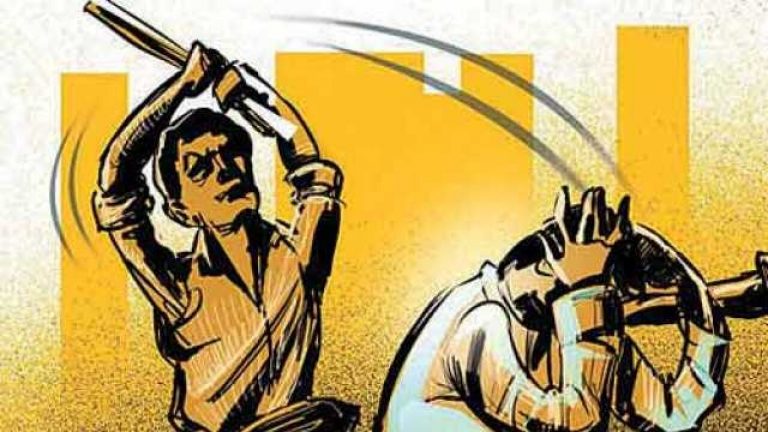
In a shocking incident that is reported to have taken place yesterday in Gautam Buddh Nagar district of Noida in Uttar Pradesh, a man was brutally beaten up by some Muslim men for playing loudspeaker in a temple. Additional DCP of Greater Noida Vishal Pandey said that the victim belonging to Achchheja Bujurg village under Dankaur police station, has filed a complaint against the accused persons. The complaint has been registered and an investigation has been initiated by the police.
A complaint was made by a devotee of himself being beaten up by locals over the issue of playing loudspeakers from a temple in a village under the Dankaur police station limits. His complaint has been registered and a probe has been launched: Vishal Pandey, ADCP, Greater Noida pic.twitter.com/4vqrF3iSr2
According to reports, Swaraj Singh used to visit the local temple in Achchheja village regularly. He used to play devotional songs at the loudspeaker in the temple. Singh informed the police that on September 4 the accused had warned him not to play the loudspeaker in the temple. When he opposed the accused forcibly turned off the loudspeaker.
Thereafter, on September 9 when he was returning from the fields with his daughter, the accused allegedly brutally beat him up with sticks in front of his minor daughter. Before fleeing the spot, the accused also threatened to kill him if he played the loudspeaker again. The names of the accused include Afzal, Gulzar and Sharafat. Some of the accused have reportedly been arrested by the police. A police force has been deployed in the village to prevent any communal tension.
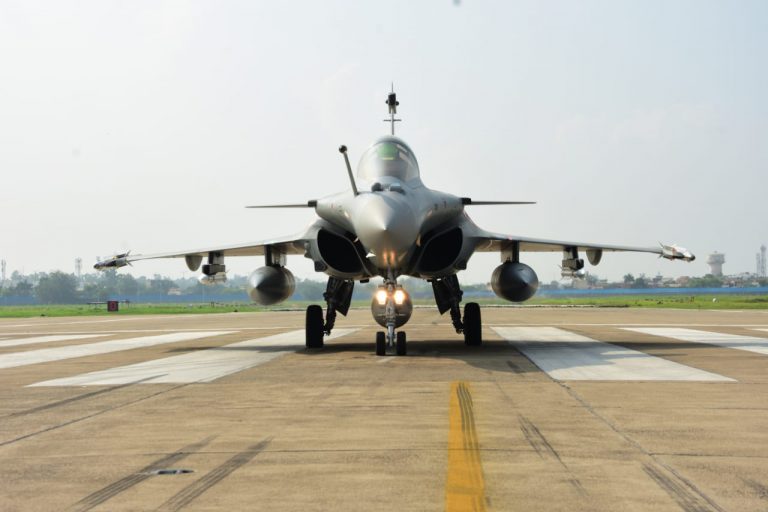
On 10th September, the first batch of five Rafale jets was officially inducted in Indian Air Force at Ambala Air Base, Haryana. The jets left France on 27th July and reached Ambala Air Base on 29th July. Defence Minister Rajnath Singh, his counterpart from France Florence Parly, Chief of Defence Staff General Bipin Rawat, Defence Secretary Ajay Kumar, and Air Chief Marshal RKS Bhaduria attended the ceremony. India is the fourth country after France, Qatar and Egypt to have Rafale jets in its Air Force.
Rafale induction ceremony
At around 8:20 AM, Florence Parly reached Delhi for the induction ceremony. She was the chief guest for the ceremony at Ambala Air Base. Parly received the Guard of Honour on her arrival at the Air Base. After the Sarva Dharma Puja and flypasts by two Sukhoi 30 MKIs and Jaguars, Defence Minister Rajnath Singh officially handed over the jets to Commanding Officer 17 Squadron.
The ceremony began with the traditional Sarva Dharma puja followed by an air display by Rafale and Tejas aircraft along with Sarang aerobatic team.
#WATCH Indian Air Force’s ‘Sarang Aerobatic Team’ performs at the Rafale induction ceremony in Ambala pic.twitter.com/KI4X3cHAl7
In his address on the occasion, Raksha Mantri Rajnath Singh said that Rafale induction is a big and stern message for the entire world, especially to those eyeing our sovereignty. He added, “This induction is important considering the kind of atmosphere at our borders or should I say the kind of atmosphere created at our borders.”
आज इनका induction, पूरी दुनिया, ख़ासकर हमारी संप्रभुता की ओर उठी निगाहों के लिए एक “बड़ा और कड़ा” संदेश है। हमारी सीमाओं पर जिस तरह का माहौल हाल के दिनों में बना है, या मैं सीधा कहूँ कि बनाया गया है, उनके लिहाज़ से यह induction बहुत अहम है: रक्षा मंत्री
— रक्षा मंत्री कार्यालय/ RMO India (@DefenceMinIndia) September 10, 2020
He further said that India rook major steps under the strategic-partnership model for the manufacturing of defence equipment including the establishment of two defence corridors in Uttar Pradesh and Tamil Nadu states.
Strategic-partnership model के तहत Defence equipment की manufacturing, automatic route के द्वारा 74% तक Foreign Direct Investment, Uttar Pradesh और Tamil Nadu states में दो defence corridors की स्थापना, Offsets reforms इस दिशा में उठाए गये बड़े कदम हैं: रक्षा मंत्री
— रक्षा मंत्री कार्यालय/ RMO India (@DefenceMinIndia) September 10, 2020
In her address, Florence Parly said that The induction ceremony is an achievement for both India and France. It is a new chapter in India-France defence ties. She further added that France is fully committed to ‘Make in India’ initiative and further integration of the Indian manufacturers in their global supply chain.
We are fully committed to ‘Make in India’ initiative, as well as, to the further integration of the Indian manufacturers in our global supply chain: Minister of the Armed Forces of France Florence Parly https://t.co/VdwR0NGrno
The ceremony was wrapped up with the official induction of Rafale jets in Indian Air Force as Raksha Mantri Rajnath Singh presented the electronic document and a scroll to commanding officer 17th squadron.
Raksha Mantri @rajnathsingh presented the electronic document and a scroll to commanding officer 17th squadron symbolizing formal induction of Rafale aircraft into Indian Air Force. pic.twitter.com/YXruR8RRXQ
The Rafale jets are India’s first major acquisition in 23 years after Sukhoi jets that were bought from Russia. Rafale can carry deadly weapons, including Scalp cruise missile and MBDA’s Meteor beyond air-to-air missile. Rafale jets are being inducted in the Indian Air Force amid increasing tension between India and China. The Ambala Air Base is considered to be the strategic location to provide air support on the border areas with China and Pakistan.
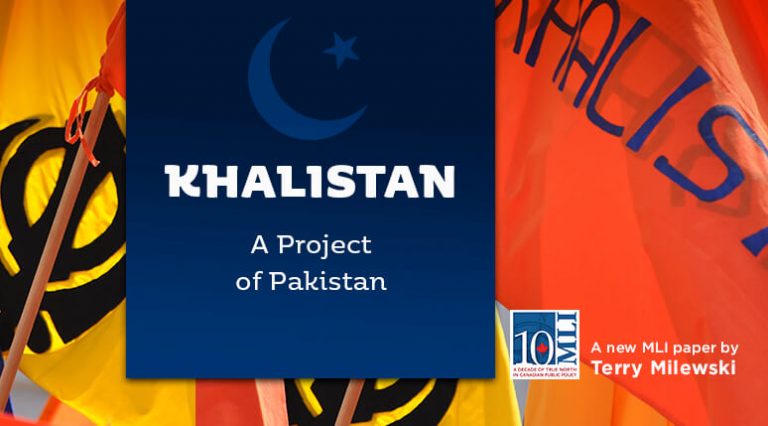
Macdonald-Laurier Institute, a leading Canadian think tank based out of Ottawa, has released a study on Pakistan’s role in nourishing Khalistani extremism. Authored by Terry Milewski, [PDF] a veteran journalist, this research paper covers the Khalistan movement and discovers its reality as a geopolitical project developed and nurtured by Pakistan. The paper studies the threat of the Khalistan movement imposed on the national security of Canada and India.
NEW: What’s really behind the Khalistan movement? @CBCTerry finds that the project is nurtured by Pakistan, and that Pakistani-sponsored Khalistani extremism poses serious national security threats to both Canada and India. #cdnpoli#cdnfp
In the last few decades, especially after the horrifying incident of bombing Air India Flight 182 ‘Kanishka’ by Khalistani terrorists in 1985, the influence of Khalistanis in Canada has been increasing at its own pace. The impact of the extremists and Khalistani supporters in Canada led to the removal of reference to “Sikh (Khalistani) extremist ideologies and movements,” from the Public Report on the Terrorism Threats to Canada by the Ministry of Public Safety in 2018. The Canadian government took a rather drastic step and amended its national security statement and replaced the original language with “Extremists who support violent means to establish an independent state within India.”
Pro-Khalistani Sikh leaders, who enjoy wide-spread political patronage and clout in Canada, for their control over the Gurudwara cash flow and community votes, had reportedly pressurised the Trudeau government into removing the Khalistan reference from the annual report of terrorism threats.
The ML Institute study states that this result was achieved after an elaborate international lobbying campaign.
Why does it matter? In 2018 @Safety_Canada warned that Khalistani extremism was among the top 5 threats to our national security. Yet, following an international lobbying campaign, Ottawa took the unprecedented step of removing this reference from its national security statement.
Role of Pakistan in promoting Khalistani extremism
The report investigates Pakistan’s role in developing and nourishing the Khalistani movement that supports the idea of a separate country for Sikhs named Khalistan. In the report, Milewski said that Pakistan’s continuous support for the movement shows that it is the defining force driving the ‘Khalistan’ bus.
Milewski writes that the Khalistan movement is getting not much traction in Punjab, the home state of Sikhs in India. However, with Pakistan’s support to Khalistani extremists in Canada in the backdrop of the “referendum” scheduled for November 2020 demanding an independent Khalistan, the Sikh communities worldwide are becoming sceptical. He warned in the report that the referendum will provide oxygen to the extremist ideology and will radicalize young Canadians. It will cause “havoc on reconciliation, and usurps legislatures,” he added.
Who is Terry Milewski
Terry Milewski is a veteran journalist. He had first visited India as a student back in 1967. At that time, he interviewed then-Prime Minister Indira Gandhi. Milewski has visited India as a correspondent for CBC TV News several times during his career. He has covered several major events, including the Air India bombing in 1986. He retired as Senior Correspondent for CBC and occasionally guest host on channel’s Power and Politics.
Ujjal Dossanjh, former British Columbia Premier and former federal Liberal Cabinet Minister, and Shuvaloy Majumdar, MLI Program Director and Munk Senior Fellow for Foreign Policy have urged every one to read this report “to understand Pakistan’s influence in guiding the Khalistan proposition, its perversion of the Sikh faith, and its ongoing campaign of extremism and terrorism in two of the world’s important democracies.”
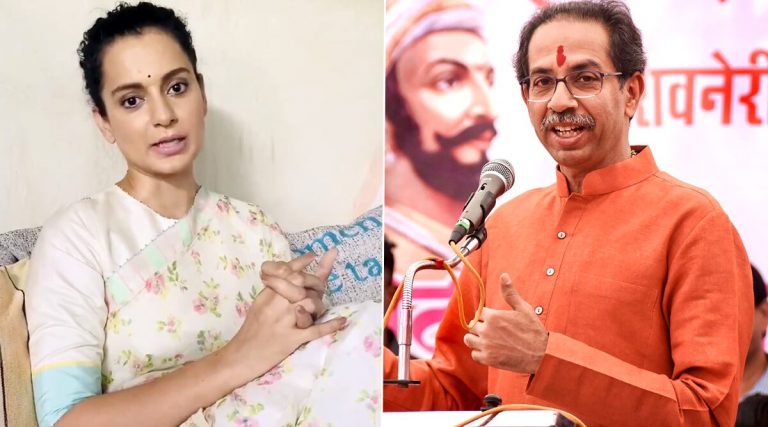
A police complaint has been filed against Bollywood actor Kangana Ranaut for ‘offensive’ remarks against Maharashtra Chief Minister Uddhav Thackeray. As per reports, a complaint has been filed in Vikhroli Police Station in Mumbai. The complaint alleges that Ranaut spoke against the Chief Minister of Maharashtra.
On Wednesday, Ranaut had taken to social media to express her anger and disappointment at Maharashtra Chief Minister after her office in Mumbai was demolished by the Brihanmumbai Municipal Corporation (BMC) ahead of her arrival in the city. This despite the fact that Bombay High Court had stayed demolition till 30th September.
Addressing Shiv Sena head and Maharashtra Chief Minister Uddhav Thackeray, Kangana said her spirits are not dampened after BMC (where Shiv Sena is major party), broke down her house along with film mafia. “This is the wheel of time. Today my house is broken, tomorrow your arrogance will break,” she said.
Kangana vs Shiv Sena
The Kangana vs Shiv Sena standoff escalated after Shiv Sena leaders as well as NCP leaders threatened Kangana Ranaut for referring to Mumbai as Pakistan-occupied-Kashmir after Azadi slogans were spotted on graffiti. Later, Mumbai Commissioner of Police also ‘liked’ a tweet abusing her. Shiv Sena MP and chief spokesperson Sanjay Raut even referred to her as ‘haramkhor ladki’. After the misogynist and sexist tirade against her, Raut claimed ‘haramkhor’ means ‘naughty’.
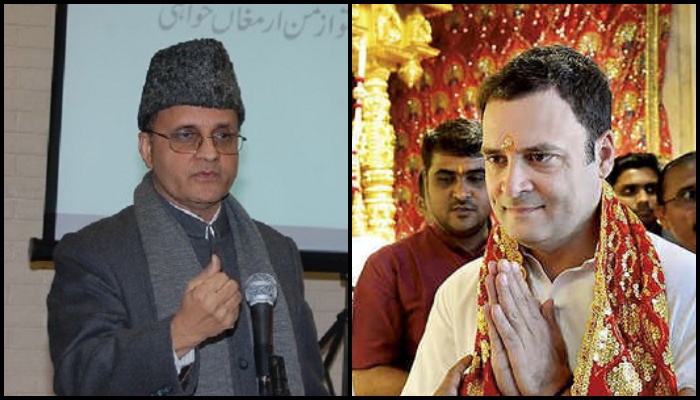
The Zakat Foundation, as we have reported earlier, is linked to the Radical Islamic preacher Zakir Naik and a host of Islamist organisations. Furthermore, they demand ‘proportional representation’ and reservations for Muslims in government jobs. The Zakat Foundation, aside from its extremely problematic views, has been relentless in making their demands heard regardless of which government is in power.
When the Congress was in power in 2013, the Zakat Foundation had met the then PM, Manmohan Singh and demanded that seats where Muslims form a large population be ‘delimited’ and Rahul Gandhi had promised to add it in their 2014 manifesto.
What is Delimitation of seats
Delimitation is the act of redrawing boundaries of Lok Sabha and Assembly seats to represent changes in population. While the delimitation is in process, the number of seats allocated to a state also change depending on the population and demography. The delimitation committee’s decision is considered sacrosanct and cannot be challenged in any court of law.
Initially, when the Delimitation Committee was formed, the idea was to ensure equal representation of every segment of the population and also to ensure that no political party gets an advantage in the electoral process by ensuring that the geographical area was divided fairly.
What does Zakat Foundation want
During the negotiations for Ram Janmabhoomi, the Zakat Foundation was a part of the process. They had posed 8 extremely problematic demands to concede the Ram Janmabhoomi. Eventually, the negotiations failed, however, it is important to understand the mindset of the Zakat Foundation through the demands they made.
One of the demands made by the Zakat Foundation was “The constituencies of Lok Sabha and state assemblies where the Muslim population is very high while the Scheduled Caste percentage is not among the highest should be de-reserved. Instead, reserve those constituencies where SC percentage is among the highest, as recommended by the Sachar Committee.”
This demand stems from the ZFI’s intention of increasing Muslim MPs in the Lok Sabha. The ZFI is of the opinion that the number of Muslim MPs in the Lower House of the Parliament is less than the number it is supposed to be in terms of their proportion to the Indian population. In short, they wish to have Muslim MPs proportional to their share of their population, a demand that was summarily rejected by the Constituent Assembly of India.
Furthermore, the Sachar Committee that is spoken of here is a panel that was set up by former Prime Minister Manmohan Singh to look into alleged Muslim deprivation and Syed Zafar Mahmood actually served in the Committee. Thus, he is promoting the recommendations of a committee he was himself a member of.
The demand for delimitation was not limited to the Ram Janmabhoomi movement and the negotiations thereof. This demand has been one which has been pushed by the Zakat Foundation since a long time. In fact, it is one of the tropes they use to tell IAS aspirants that they need to get into the bureaucracy so that they can make such demands a reality.
What did Manmohan Singh say in 2013 to the Zakat Foundation demand
In a presentation made by the Zakat Foundation President in the year 2016, he reveals that he had met erstwhile Prime Minister Dr Manmohan Singh and demanded that before the 2014 elections, the LS seats should be delimited to ensure that more Muslims get elected to the Parliament.
In 2013, when the 7th Pay Commission was announced, the Zakat Foundation made a representation to the then Prime Minister Dr Manmohan Singh and asked if they Pay Commission can be implemented, then why not the Delimitation demands. Interestingly, Dr Manmohan Singh was reportedly “reminded” of this pending issue while Zakat Foundation had met him in the aftermath of the Muzaffarpur riots.
According to a Times of India report, Zakat Foundation chief said, “The PM told us that in view of the upcoming election how can a delimitation commission be appointed now?”. It is to be noted that Mahmood was also the PM-appointed officer on special duty to the Sachar Committee.
What did Rahul Gandhi promise to the Zakat Foundation
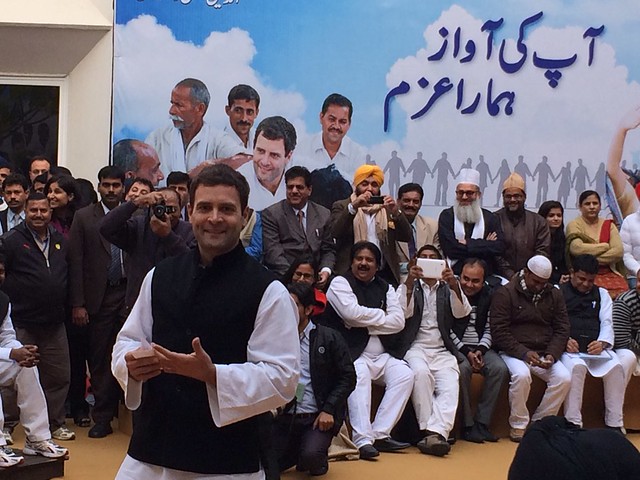
In 2013, Rahul Gandhi had held a detailed discussion with Muslim leaders from across the country. In this discussion, Rahul Gandhi had promised that the issue of delimitation of Muslim seats will be recommended to the committee and that he will also ensure that Congress adds this demand in their 2014 manifesto.
The matter was raised during the meeting with Rahul Gandhi by Dr Syed. Zafar Mahmood, President, Zakat Foundation of India who presented 20 Works to be done for Muslims. These also include the establishment of fast track courts to deal with terror allegations, compensation of Rs 50 lakh to each person who is judicially acquitted of terror allegations, deletion of para 3 from the 1950 definition of scheduled caste, withdrawal of limited competitive examination scheme for recruitment of additional 1400 IPS officers, restoration of minority character of AMU.
Rahul Gandhi with Muslim leaders including Zakat Foundation head in 2013 (source: Twocircles.net)
Essentially, if the Congress had come back to power in the year 2014 or 2019, delimitation of seats was a near certainly. This would mean far more Muslim representatives in the parliament and more importantly, the reservations being taken away from the SC/ST community.
What is interesting to observe is that this demand is not very different from the demand of separate electorates made by Mohammad Ali Jinnah, a demand that was rejected by Jawaharlal Nehru. The demand for a separate electoral essentially meant that Jinnah believed Hindus and Muslims cannot co-exist and that Hindus were incapable of representing the interests of Muslims. This was a direct consequence of the two-nation theory that was espoused by Jinnah. That the Zakat Foundation is pursuing the demand for delimitation specifically of Muslim seats, while not exactly like demanding a separate electorate also points towards the same mindset.
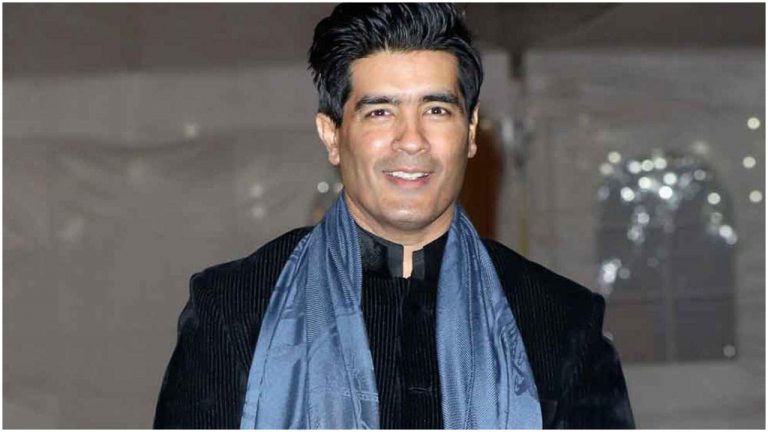
A day after Brihanmumbai Municipal Corporation authorities, in an alleged act of vendetta, brought down a portion of Kangana Ranaut’s office in Mumbai, the BMC has now issued a notice to fashion designer Manish Malhotra over illegal changes to his building.
According to the reports, a property belonging to Manish Malhotra has come under the radar of the BMC after the fashion designer was issued a notice alleging that he too did not obtain the requisite permission to convert his residence into a commercial space.
The BMC has issued a notice over illegal constructions at Manish’s bungalow, located at Nargis Dutt Road at Pali Hill in Mumbai’s Bandra, next to Bollywood actress Kangana Ranaut’s house. The BMC also pasted a stop-work notice at the premises and have him seven days to respond to the allegations of illegal construction.
In its notice, dated September 7, the BMC has pointed out the ‘unauthorised addition’ and alteration by way of erecting partitions/ cabins and ‘unauthorised construction of a structure or shed’ on the first floor of his management office at the bungalow. The fashion designer has been accused of making the alterations ‘without permission from the competent authority’.
The notice has been to sent to Malhotra under section 342 and 345 of the MMC Act, giving seven days time for him to provide a satisfactory response.
Interestingly, the BMC officials had given only 24 hour time to respond to the allegations of illegal construction to Kangana Ranaut before carrying out a demolition drive at her office, which is next to Malhotra’s office. The BMC had issued a notice to Ranaut under Section 354(A) of the MMC Act, that allows the BMC to take action within 24 hours.
BMC demolishes Kangana Ranaut’s office
On Tuesday, the BMC officials had carried out an inspection of Kangana’s office, Manikarnika Films Pvt Ltd, and had pasted a ‘stop work notice’. The actress was asked to produce the permission for the construction within 24 hours.
However, the next day, the BMC officials demolished a portion of the property even as the actor was on her way to Mumbai from Manali. The BMC officials had claimed that there were several alterations on the premises without the due permission from BMC.
The Bombay High Court stayed further demolition when the process was still underway and came down heavily on the BMC.
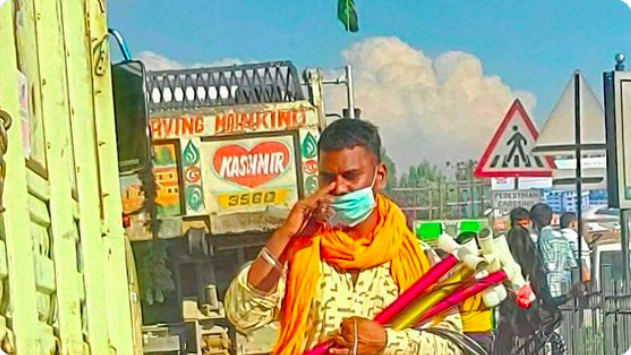
Picture this. Someone is driving down the roads of an Indian city. The car slows down in traffic or has to stop at a signal. Through the glass, the driver sees a poor man on the street, selling little bits of colored paper and other knick-knacks. He realizes the man is from a different religion. He clicks a photo. The photo starts doing the rounds on social media, with a warning that the outsiders are coming to take your land!
That’s Nazism 101. That’s the kind of mentality that starts genocide as in Rwanda.
It’s happening in liberal circles in India right now. See this thread, which is currently gathering hundreds of retweets on the liberal side of Indian Twitter.
Kashmiri Muslim ‘afraid’ on seeing man in saffron scarf
This is Indian secularism and liberalism today. Peek out of your car, see a poor street hawker and then go on a hate rant dehumanizing him for belonging to a different religion.
The Twitter handle appears to belong to one Khaleel Tickoo, who claims to be an accountant and passionate human rights advocate.
‘Passionate human rights advocate’
He is based out of Netherlands and “Tral, IOK.” I leave to your imagination what he could mean by “IOK.”
No, he didn’t stop with this one tweet. What else do these outsiders do? They peek into every car it seems! Imagine that…
Tweets by Khaleel Tickoo
Now, no normal human being would be surprised at a street hawker trying to peek into his car. Or not being able to answer questions about the supply chain of where this or that is manufactured.
Only a mind deeply poisoned by hate would see this as sinister. Or, you know, passionate human rights advocates.
That’s not the end of this thread. The Nazi mind of the Indian liberal is capable of going much lower.
‘Human rights advocate’ stooping lower
This is Indian liberalism today. From their car window, they take photos of poor people on the street. Then, they accuse the “Bihari beggars” of not begging seriously and instead being part of some racial invasion.
You can see all that secularism and humanism is being put to good use by “human rights advocates.” All that liberalism is coming out in racist slurs by dehumanizing poor people they see on the street.
Who are we kidding? The mentality of the 1991 genocide of Hindus in Kashmir is still very much around. That mentality lives on in the heart of Indian liberalism.
As the economy of the country limps back to normalcy with gradual unlocking of the Coronavirus Lockdown, international trade in several key items have displayed positive signs of recovery. The weekly trends for the first week of September are encouraging in this regard.
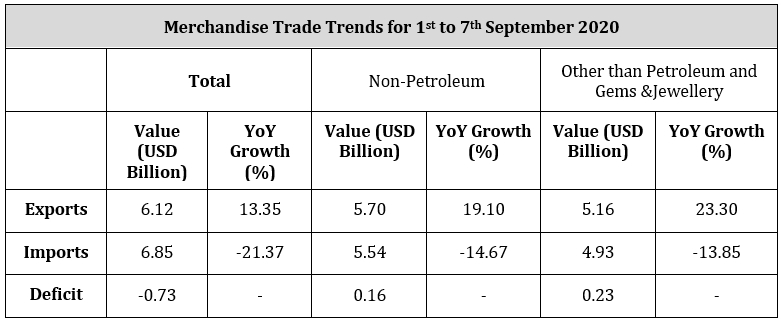
In the week 1st September to 7th September, the value of total commodity export was USD 6.12 billion, registering a year-on-year growth of 13.35%. In this, the export of non-Petroleum items grew by 19.1% to reach USD 5.7 billion and the exports for items other than Petroleum and Gems & Jewellery was valued at USD 5.16 billion, which went up by 23.30%.
On the hand, the value of imports came down significantly across several sectors. The total imports came down by 21.37% during the first week of September and it was valued at USD 685 billion, while the same declined by 14.67% for non-Petroleum items and by 13.85% for items other than Petroleum and Gems & Jewellery.
In terms of individual product groups, exports of Engineering Goods saw an increase of 18.18%, Organic and inorganic chemicals went up by 36.81%, and the exports of Drugs and Pharmaceuticals increased by 33.73%. On the other hand, exports of Petroleum Products, Gems and Jewellery, and Cashew shrunk by the highest amount, at the rates 31%, 10% and 69% respectively.
The imports of Electronic Goods continued upwards trend, which was valued at USD 73.32 million, reflecting an increase of 6%. Imports of vegetable oil and pulses increased significantly, the value of which went up by 39% and 101%. Imports of Petroleum, Crude & products came down by 41%, Machinery, electrical & non-electrical decreased by 43% and the same for Coal, Coke & Briquettes etc came down by 36%.
Despite deteriorating relations between the two countries, economy seems to be insulated from it as China remains a major trade partner of India. During the week, India exported goods worth USD 187.61 million to China, which was an increase of 7.49. Exports to USA went up by 20.15% reaching USD 179.87 million, and Malaysia was at third place with USD 86.86 million, a 2.62% rise. Exports to UAE, Singapore and Belgium saw sharp decline, at 29.13%, 52.14% and 47.75% respectively.
For imports, Indian imports from Ghana was highest at USD 48.99 million, witnessing a massive increase of 1521.26%. Imports from China was 36.38%, which saw an increase of modest 2.72%. Imports from Nigeria, USA and Iraq came down significantly.
Amid the Coronavirus pandemic that is not showing any sign of slowing down, these are encouraging signs for the economy. Increase in export and decrease in import in several sectors indicates that manufacturing activity is picking up with the gradual unlocking.
The first batch of five Rafale fighter jets was formally inducted into the Indian Air Force (IAF) at Ambala airbase on Thursday. The traditional Sarva Dharma Puja was performed as the IAF welcomed the fourth-generation Rafale jets in its arsenal. The Puja involved the recitation of special mantras and religious chants as per the norms of Hindu, Muslim, Christian and Sikh faiths.
The priests chanted lines from religious scriptures and prayed for the victory of Indian soldiers in any challenge they might face.
#WATCH Defence Minister Rajnath Singh and Minister of the Armed Forces of France Florence Parly, witness the traditional ‘Sarva Dharma Puja’ at the Rafale induction ceremony, at Ambala airbase pic.twitter.com/0z74ECflJd
Many special dignitaries including Defence Minister Rajnath Singh, his French counterpart Florence Parly, Chief of Defence Staff General Bipin Rawat, Air Chief Marshal RKS Bhadauria and Defence Secretary Ajay Kumar attended the ceremony.
The French delegation at the ceremony included French envoy Emmanuel Lenain, Air Gen Eric Autellet, Vice Chief of French Air Force, Chairman and Chief Executive of Dassault Aviation Eric Trappier and CEO of missile maker MBDA Eric Beranger.
The Dharma Puja was followed by the Sarang aerobatic team performing various manoeuvres in an air display at the Ambala airbase. Water cannon salute was given to the Rafale fighter jets.
With today’s ceremonies, the Indian Air Force has formally inducted the first batch of the 5 Rafale jets into the 17 squadrons named ‘Golden Arrows’ based in Ambala Air Force Station. From today onwards the Rafale jets are to be fully operational with the IAF.
#RafaleInduction IAF has formally inducted the #Rafale aircraft in 17 Squadron 'Golden Arrows' today, at Air Force Station, Ambala. The ceremony also marks #Rafale’s full operational entry into IAF.
The first batch of five Rafale fighter aircraft had arrived at the IAF Air Force Station in Ambala on 29th July. The five fighter aircraft, which were flown by Indian Air Force (IAF) pilots, landed at Ambala Air Force station after covering a distance of 7,000 km with air-to-air refuelling and a single stop in the United Arab Emirates. India has purchased 36 Rafale aircraft from French aviation major Dassault, which is expected to boost the capacity of the Indian Air Force significantly. “Swagatam”, Prime Minister Narendra Modi had Tweeted as he had posted a video of the jets landing at the air force ground.
The Rafale jets are India’s first major acquisition of fighter planes in 23 year after the Sukhoi jets were imported from Russia.
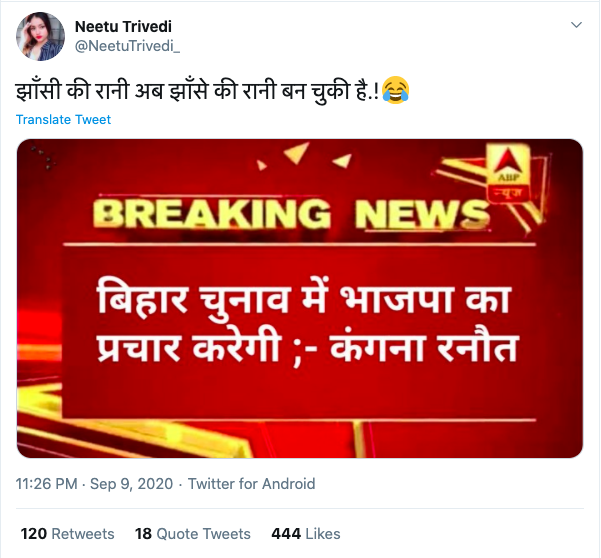
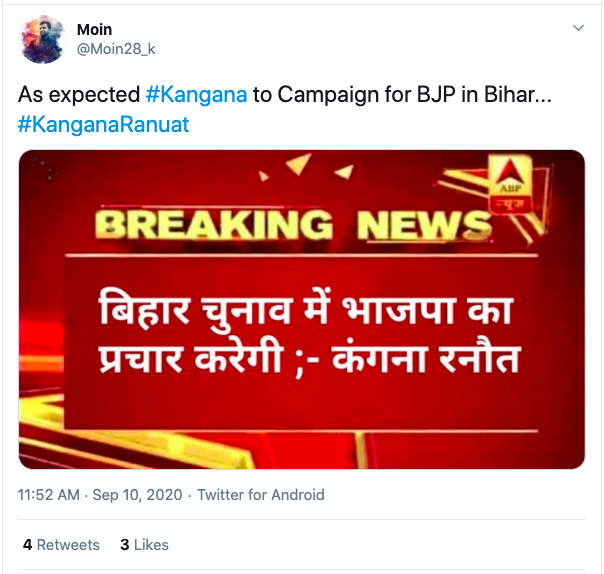
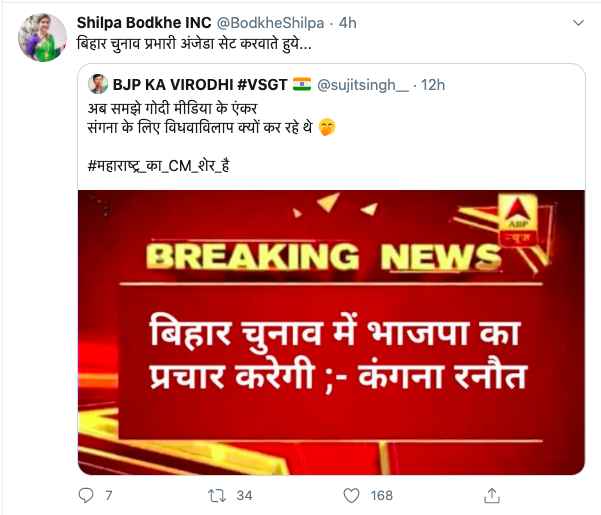
As Bollywood actress Kangana Ranaut and Shiv Sena led Maharashtra government face-off intensifies, pro-Congress social media users and Aam Aadmi Party supporters have taken upon themselves to share fake news that she will be campaigning for the BJP in upcoming Bihar assembly elections.
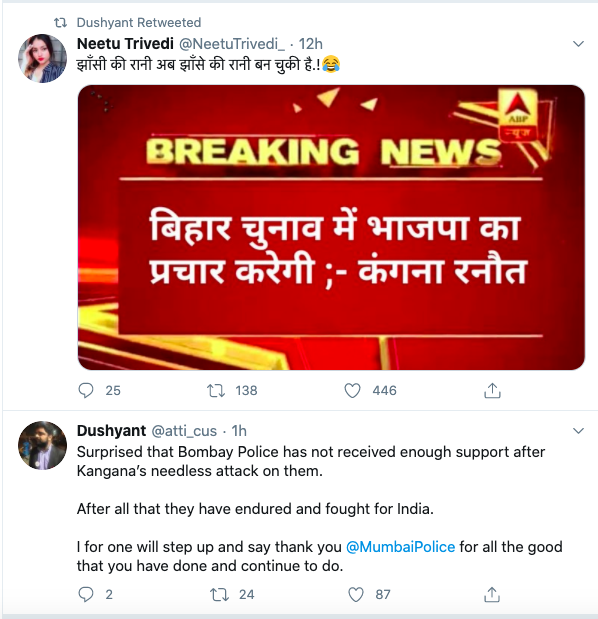
The tweet is shared by one social media handle Neetu Trivedi.
Screenshot of tweet attributing quote to Kangana
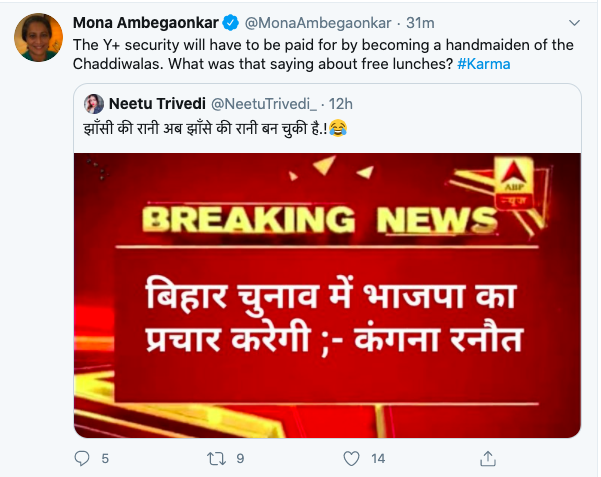
Many other pro-Congress and anti-BJP social media accounts too shared the above same screenshot.
These tweets were further propagated by other Congress and Aam Aadmi Party sympathisers like Bollywood actor Mona Ambegaonkar and lawyer Dushyant Arora.
As one can see, in the above screenshot, the logo of ABP news appears along with the text where it appears like a quote is attributed to Kangana Ranaut that she will campaign for BJP in Bihar elections. However, there are a few discrepancies. To begin with, there is no such screenshot or news clip run by ABP News in past 24 hours. Further, there is a semi-colon before hyphen, thereby suggesting a typo. Next, there are no other reports of the above claims except for this one viral screenshot being shared by fake news peddlers and propagandists.
Further, only last week, Kangana has tweeted that she has never been close to the BJP.
BJP distanced itself from me ? Really @MumbaiMirror ? When was @BJP4India close to me in the first place? Am I a minister or a politician? I have never spoken to anyone ever in BJP, stop with these conspiracy theories #ShameOnMahaGovthttps://t.co/3aA17cyG1L
She has also clarified multiple times that she is not associated with any political party and that her support to PM Modi is irrespective.
From Congress, fortunately after Manikarnika even BJP offered me a ticket, I am obsessed with my work as an artist and never thought about politics so all the trolling that I get for supporting who I want to support as independent thinker need to stop ??
BJP stooge ha ha , I have denied BJP ticket twice, I am Kangana Ranaut my popularity and yearly income is far more than many successful Ministers and politicians, why not sometimes use your intellect Madam intellectual ?…