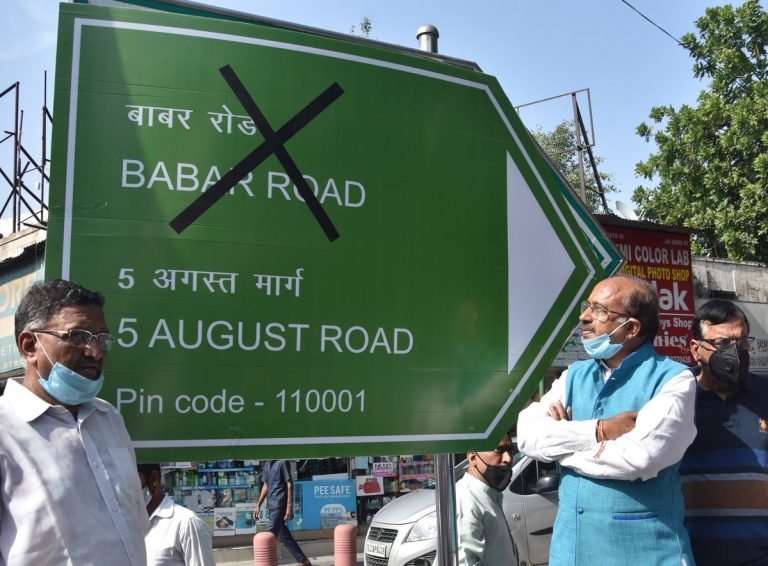
On Tuesday, BJP leader and former Rajya Sabha member Vijay Goel and his supporters unilaterally renamed the Babur road in Delhi to ‘5 August Road.’ The development comes a day before the Bhoomi Pujan event which is scheduled to take place tomorrow at Ayodhya.
The politician superimposed a poster that read ‘5 August road’ on the signboard that earlier carried the name of the Mughal tyrant Babur. As seen in visuals, the name of the erstwhile ruler was struck out with black paint. Besides, he demanded the new signboard be retained or the road to be renamed after an ’eminent personality.’ Reportedly, Vijay Goel had written to the Union Minister of Home Affairs Amit Shah in this regard. As per reports, the road is located 50 yards from the residence of the BJP politician in Delhi.
Vijay Goel urges NDMC rename Babur road
In a tweet, Vijay Goel said, “The name of the road adjoining the Bengali market must be changed to ‘5 August road’ from the existing ‘Babur road.’ Babur was a foreign invader who destroyed the Ram Mandir in Ayodhya. Tomorrow, on August 5, PM Narendra Modi will lay the foundation stone for the Ram Mandir. As such, NDMC should consider changing the name of Babur road.”
दिल्ली के बंगाली मार्किट में “बाबर रोड” का नाम बदलकर “5 अगस्त मार्ग” रखा जाये। बाबर विदेशी आक्रांता था, उसने अयोध्या में राम मंदिर का विध्वंस करवाया।कल 5 अगस्त को अयोध्या में श्री राम के भव्य मंदिर का शिलान्यास प्रधानमंत्री करेंगे ऐसे में NDMC को बाबर रोड का नाम बदलना चाहिए। pic.twitter.com/1dHZk7p8rs
The Bhoomi Pujan will be attended by prominent leaders such as Mahesh Bhagchandka, PM Narendra Modi, Pawan Singhal, RSS Chief Mohan Bhagwat, Nritya Gopal Das Ji Maharaj, UP CM Yogi Adityanath and Governor Anandiben Patel. Prime Minister Narendra Modi will first do Darshan Pujan at Shri Hanumangarhi temple, followed by Puja of Lord Ram at Ram Janmabhoomi. Following this, the Bhoomi Pujan and stage event will be conducted. The Bhoomi Pujan that is scheduled to take place in Ayodhya will witness a total footfall of 175 eminent guests. According to the trust, around 135 priests and Hindu spiritual leaders following several sects and traditions of the faith will participate in the said event.
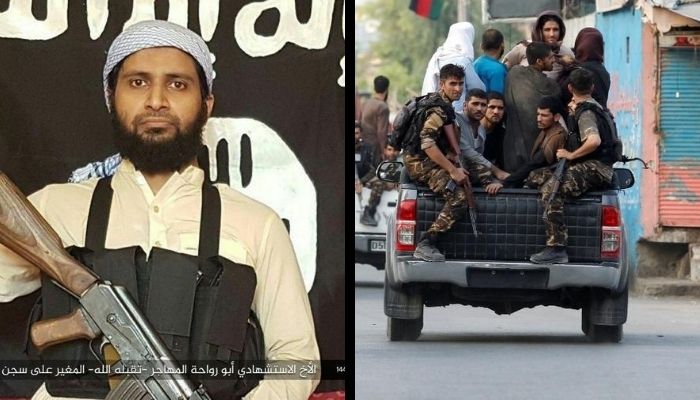
On Sunday, a terror attack perpetrated by the Islamic State (ISIS) at a prison complex in Jalalabad in Afghanistan has reportedly led to the escape of 300 inmates. As per reports, 29 people were killed in the terror attack, and 8 terrorists were neutralised following a 20-hour long gunfight.
The ISIS terrorists detonated car bombs outside the entrance of a prison in Jalalabad that housed 1,793 inmates belonging to the Taliban and the Islamic State. However, it is not clear when the objective of the attack was to free specific jihadists. Reportedly, 1025 prisoners who had initially escaped were brought back to jail and around 50 inmates were injured. As per reports, 430 people were rescued by the Afghan security forces.
Reportedly, jailbreaks are common in Afghanistan but the attack in Jalalabad was a complex and well-cordinated terror attack orchestrated by the Islamic State. The terror outfit has its headquarters in the Khorasan Province (ISKP) since January 2015. As per reports, despite recent loss of territory, the Islamic State has sleeper cells in Kabul and Jalalabad.
According to journalist Rahul Pandita, top intelligence sources have revealed that the suicide bomber involved in the terror attack hailed from Kasargod in Kerala. The terrorist, Kalukettiya Purayil Ijas, had reportedly fled to Khorasan in June 2016 with his family through Muscat. As per Rahul Pandita, the child and wife of the slain terrorist are in the custody of Afghan authorities.
Breaking: top intelligence sources reveal that the suicide bomber in Jalalabad jail attack in Afghanistan is Kalukettiya Purayil Ijas from Kasargod, Kerala. pic.twitter.com/ncJLEbjK4X
Taliban denies involvement in the Jalalabad terror attack
The attack happened on the final day of the temporary ceasefire agreement between the Afghan government and the Taliban, the rival of the Islamic State. Reportedly, the Taliban had declared a ceasefire on the occasion of Bakr Eid. “We have a cease-fire and are not involved in any of these attacks anywhere in the country,” Taliban spokesman Suhail Shaheen was quoted as saying. According to the UN, there are around 2000 ISIS terrorists in Afghanistan. The organisation noted that the terror outfit is still capable of launching high-profile attacks in various parts of the country, including Kabul.
Islamic State attacks hospital in Kabul during Ramzan
Amidst the Islamic holy month of Ramzan when pious Muslims across the world observe dawn-to-dusk fasting, the capital of Afghanistan, Kabul, was rocked with two separate terror attacks, with one of them being carried out on a medical facility in the Shiite-populated area of the capital. Terrorists who swore allegiance to the Islamic State stormed the maternity hospital in the western part of the Afghan capital Kabul and killed 16 people including 2 newborn babies, their mothers, and several nurses.
According to the reports, three armed terrorists entered the 100-bed facility, run by Medicins Sans Frontiers, before hours long fierce gun-fight ensued between the terrorists and the police. The terrorists were eventually neutralised by the police force.
In yet another case of Love Jihad, a Muslim man named Sohail reportedly posed as a Hindu to befriend a Dalit girl in Bhawanpur, Meerut, Uttar Pradesh. The girl’s family came to know about the incident when Sohail’s identity was revealed in front of the Dalit girl, as per a report by Jagran.
Sohail, then along with his friends allegedly went to the girl’s house to kidnap her in an attempt to marry her and convert her to Islam. The family, however, rescued the girl and approached the police at Bhawanpur police station to file a complaint against the Muslim boy. Based on the complaint the police reached the spot and picked up Sohail and took him to the police station.
Family of Dalit girl accuses police of inaction
The girl’s parents have alleged that the police have not been cooperating with them. Initially, when they approached the police, the later was allegedly reluctant to even take down a complaint against Sohail and insisted that the girl family compromises and settles the matter with Sohail and his family without involving the police. Only after the girls’ family created a ruckus, did the police register an FIR in the case, said the Dalit family, furthering that it been three days since police picked up Sohail but still, he has been sitting in the police station and not yet arrested.
According to the report by the Hindi daily Jagran, Sohail had befriended the Dalit girl posing as a Hindu. The girl’s family alleged that Sohail was, for the last 6 months, posing as a Hindu and speaking to their daughter on internet calls. He trapped the girl in his love. When the family got to know about Sohail’s truth, they approached the police. The police, in turn, tried to pacify the matter by asking both sides to reach a compromise.
Sohail, however, did not refrain from harassing the girl. He reached the girl’s residence along with a few of his friends on July 31. He insisted that the girl marries him and converts to Islam. When the girl objected to the same, Sohail allegedly tried to kidnap her. As per the report, the family members opposed the accused and saved the girl.
The girl’s mother has accused the police of not taking any action against the accused. She said that her family had been visiting the police station everyday for the last three days, but the police refused to take any action. Even when after three days, they finally registered a complaint, they booked Sohail under trivial sections of the IPC, alleged the Dalit girl’s mother.
Meanwhile, inspector Raghuraj said that a complaint has been registered and an investigation has been initiated.
Another recent love Jihad case in Meerut
Recently, disturbing videos had surfaced showing how one Shamshad, a Muslim youth from Meerut, who posed as Amit Gurjar to befriend a Hindu girl Priya, buried the corpse of the mother-daughter duo in his own house, after brutally killing them.
It was reported how Shamshad had, posing as Amit Gurjar, allegedly befriended Priya over Facebook in 2013. Both fell in love. The man lured her into marriage and the girl, Priya, who was divorced with a child, left with her two-year-old daughter to live with Amit Gurjar aka Shamshad in Meerut in 2013. Things turned ugly when after five years, Shamshad’s identity was revealed in front of Priya.
Almost after seven years of association, Shamshad mercilessly killed the mother and the daughter and buried them in his own house in an 8-feet deep pit. The story of the mummified and broken skeletons had caused a shockwave across the nation.
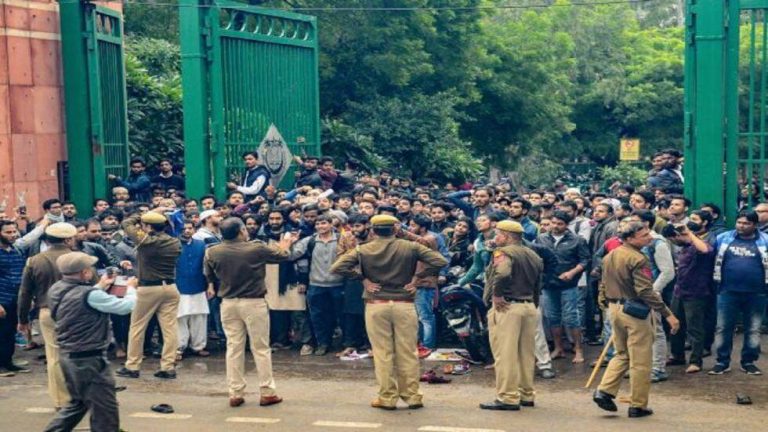
The Delhi High Court today heard a batch of petitions seeking an independent inquiry into the alleged police atrocities in the Jamia Millia Islamia University campus in the backdrop of anti-CAA protests in the national capital.
Advocate Indira Jaising, representing the students of Jamia Millia Islamia, asserted in her submission that there is a need for an independent inquiry into the ‘gross misconduct’ of the police concerning the students of the Jamia University. She argued that even in the face of grave provocation, Delhi Police is supposed to use minimum possible force against the protesting students. Jaising submitted that police was justified in carrying the riot control equipment but were not justified in using them. She further added that the purpose of the police attack was to threaten students to never participate in anti-CAA protests again.
In a bid to understate the provocation caused by the students, senior counsel Indira Jaising contended that stones and bottles hurled at police were not “firearms” and accused the police of acting out of sheer vindictiveness against the University students.
Jaising defends Jamia goons, says they were trying to save themselves from ‘police brutality’
Jaising accused the police of breaching the institutional autonomy of the Jamia Millia Islamia University by barging into the campus and targeting the students who had gathered to march towards the Parliament. She said that Jamia Millia Islamia University has its own physical and legal autonomy.
Jaising further added that institutions are given independence for checking the arbitrary use of police power. Jaising claimed that students were using University Campus to shield themselves from the “police brutality” and that the police should be held accountable for violating the autonomy of the institution by entering inside it without first seeking permission.
“Law has to take its own course against the police as well. Just because you wear a uniform, it doesn’t give you a right to blind a student. Police must be ready to face the trial,” Jaising argued in the court.
Citing Vikas Dubey case and Hyderabad Encounter case, Jaising sought an independent commission with special powers to investigate the alleged police atrocities against the protesting Jamia students in the wake of anti-CAA protests last year.
Delhi Police had sought dismissal of PILs in Jamia case
Earlier in June, the Delhi Police had submitted its affidavit in the HC asking for the dismissal of the petitions asking for the quashing of FIRs against the arrested persons. The Delhi police submitted to the Delhi High Court that the violence that took place on December 13 and December 15 at Jamia Millia Islamia campus was not sporadic but a well-planned attack as all rioters were well-armed with stones, lathis and petrol bombs.
A case of Love Jihad has come into light in Kirari area of Delhi. According to the report published in Hindi daily Jagran, the accused told the girl that he is a Hindu. He raped her for several months and took lakhs of rupees. It has been alleged that the accused forced her to convert and then get married to him. Later he refused to take her to his home. The victim has filed a complaint against Anwar alias Anu at Prem Nagar Police station under several sections including rape, intimidation, fraud and illegal marriage.
What is the case?
According to the complaint filed by the victim, she is 20 years old who used to work as a teacher in a computer center. She met Anwar, who lives in Prem Nagar phase 2, in January 2019 in the computer center. He described himself as a Hindu and befriended her. They used to go out together, and in March, he took her to his room. He gave her a cold drink, and as soon as she drank it, she lost her consciousness. After that, the accused allegedly raped her. He also made a video of her. When she woke up and started crying, he promised that he would marry her. He continued to rape her on the pretext that he will post her video on social media. Later he refused to marry her, but when the victim threatened to file a police complaint, he took her to a temple and got married to her after changing his religion. That was the time when the victim came to know about Anwar’s real identity.
Anwar kept victim away from his home
According to the victim, Anwar did not take her to his home after the alleged marriage. She kept on living with her parents for several months. After pressurizing Anwar for months, he agreed to take her home. He alleged that his parents refused to accept her as his wife and took a house on rent near Pratap Bagh. He used to spend a day with her and then leave her back home.
The victim gave him jewelry and cash
The victim in her complaint alleged that Anwar took jewelry worth lakhs and around 6.5 lakh in cash from her. He allegedly gave the money and jewelry to his father Khalid and brother Iqbal. The victim said that he mortgaged her jewelry to Muthoot Finance Company. When she came to know his real motive, she filed the complaint to the police.
OpIndia tried to get in touch with the police but could not get through. We shall update the report once we have more information.
Love Jihad cases are increasing
This is not an isolated case of Love Jihad, where a person from a particular community changed his name and got involved with a Hindu girl. Recently, OpIndia published the story of Priya who got married to Shamshad under the pretext that he belongs to the Gujjar community.
The great-grandson of the Mughal Emperor Bahadur Shah Zafar, Yakub Habeebuddin Tucy alias Prince Tucy, while speaking in an interview with News X said that it is his family’s wish to see a Ram Mandir built in Ayodhya.
Welcoming the Bhoomi pujan of the Ram Mandir in Ayodhya that is scheduled to take place tomorrow, August 5, Prince Tucy said that his family is elated that the historic wrong committed by Mir Baqi is finally going to be remedied. Tucy also emphasised that it was not his ancestor, Mughal emperor Babur, but his associate Mir Baqi, who on his own discretion, destroyed the temple that stood at the site in Ayodhya in the fifteenth century.
Asaduddin Owaisi is a ‘good for nothing fellow’, a ‘joker’: Prince Tucy
When questioned about the detractors such as Asaduddin Owaisi and other Opposition leaders who have raised questions on Prime Minister Modi’s visit to the site for the ground laying ceremony in Ayodhya, Prince Tucy said that Asaduddin Owaisi is a “good for nothing fellow” and a joker, whose objection to PM Modi’s visit should not be considered.
“PM Modi is the Prime Minister of all communities. Last time, he visited the function of the Bohra community. This time he will be attending a ceremony of Hindus. As I had said earlier, Asaduddin Owaisi is good for nothing fellow, a joker. He belongs to Pandit lineage who got converted to Muslim. Owaisi is only trying to hog cheap publicity with his protestations,” Prince Tucy said.
Prince Tucy claims he is sending a gold brick for Ram Temple construction in Ayodhya
Apparently, Prince Tucy is also donating a gold brick worth Rs 1.8 crore for the construction of Ram Temple in Ayodhya. Speaking about his donation, Tucy said that he is doing it to send a secular message of pluralism and brotherhood. “Islam teaches us to respect all religions. A game was played on Babur and he was vilified for no fault of his. He did not demolish the temple. All Mughals were secular, including me. I am sending a gold brick as a message of cross-community unity and brotherhood,” Tucy said.
Prince Tucy had welcomed Supreme Court’s judgment on Ram Janmabhoomi
Price Tucy had earlier welcomed the decision of Supreme Court last year when the top court put an end to the protracted legal dispute over the rightful possession of Ram Janmabhoomi and allowed Hindus to build a temple at the aforesaid site. He had then pledged to donate a gold brick for the construction of Ram Mandir in Ayodhya.
Tucy, who had rooted for Ram temple, saying ‘Inshallah title will go to Hindu community’ just a day prior to the verdict, greeted the SC’ decision stating that it would finally end the Mandir-Masjid politics.
Prince Tucy and his family’s penchant for medieval-era ensemble
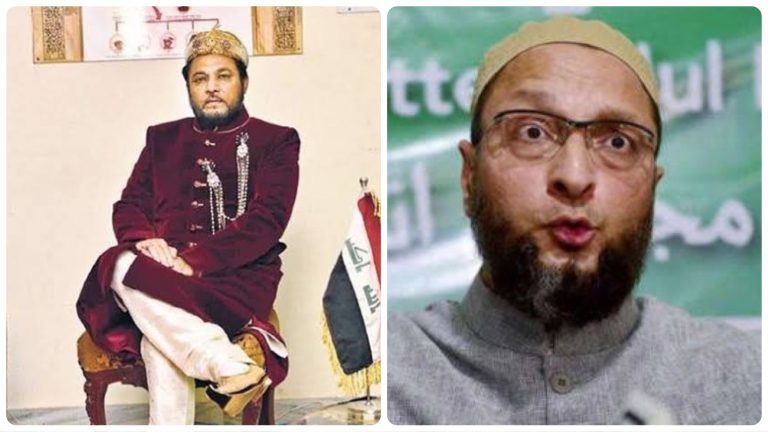
Born into a royal family that once ruled large swathes of India, Prince Tucy has a penchant for adorning garish velvety robes and feathered shiny, bejewelled caps akin to the erstwhile rulers, that gives an impression of one’s royal lineage but do not necessarily jibe with the contemporary times.
Even though India abolished its princely orders in 1971, some families, including that of Prince Tucy, have clung to their titular social prestige, often by bedecking themselves with anachronistic sartorial choices, reminiscent of the medieval era. Be it a visit to Taj Mahal flanked by bodyguards or meeting President of India, Prince Tucy and his family have unapologetically donned their antiquated and lurid attires.
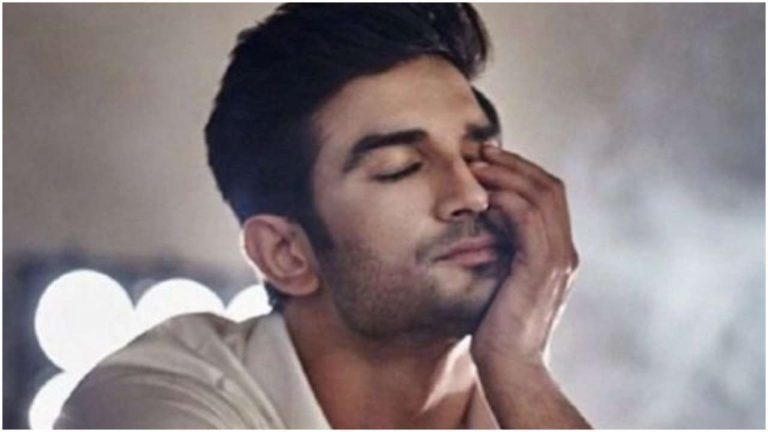
Its been over one and a half months since actor Sushant Singh Rajput died and his case is just getting murkier following new facts emerging every day. On one hand, the death case of the young actor has turned into a tussle between Police departments and governments of two states- Maharashtra and Bihar, while on the other hand, many shocking revelations have been made, which might give the case a completely new direction.
Maha Vikas Agadi govt puts hurdles in front of Bihar Police
The Maharashtra government has reportedly sought legal opinion about the Bihar Police carrying out the parallel investigation in the actor’s death case and has now said that the later has no legal jurisdiction in the case. Times Now reported that top sources within the Maharashtra government have said that they will not be handing over any document to the Bihar police as this case did not fall under their jurisdiction. The Maha government opined that the Bihar Police should register Zero FIR and transfer the case to Mumbai Police.
Bihar govt recommends CBI probe into death case of Sushant Singh Rajput
Meanwhile, the Bihar government led by Chief Minister Nitish Kumar has urged the central government to order a Central Bureau of Investigation (CBI) probe into late Bollywood actor Sushant Singh Rajput’s death case. The decision came shortly after the actor’s father pressed for it in a phone call.
“Since the family has given its consent, we are recommending a CBI probe on the FIR which was lodged in Bihar,” Nitish Kumar told media.
It is pertinent to note here, that Maharashtra Chief Minister Uddhav Thackeray had earlier ruled out a CBI investigation alongside the Mumbai police probe into the actor’s death.
It was earlier reported how amidst the ongoing tussle between the Bihar police and Mumbai Police, Mumbai Police had ruled out any foul play in the actor’s death. Claiming that neither any politician was involved nor was there anything fishy in the financial transactions of Sushant Singh Rajput, Mumbai police had, in fact, alleged that Sushant Singh’s sisters did not help the Mumbai Police in its investigation in the actor’s death.
Meanwhile, Bihar police had claimed that Mumbai police was not cooperating. Senior Bihar Police officer IPS Vinay Tiwari was reportedly sent to quarantine forcefully by BMC officials on reaching Mumbai and were not even provided accommodation in the IPS mess despite request.
Activist claims Sushant’s death is connected to his ex-manager Disha’s death
Giving a completely new twist to the Sushant Singh Rajput’s death case, an activist named Prashant Kumar, running the campaign ‘Insaaf SSR’ demanding justice for the late actor Sushant Singh Rajput has made sensational claims before media on Monday. He has alleged that Disha Salian, the late actor’s ex-manager who had also died of suicide on June 8, merely a week before Sushant’s death, had called up Sushant Singh Rajput an hour before she died. She allegedly spoke of being harassed in a party she had attended on June 8. The party was also attended by several celebrities and politicians. Sushant, according to the activist, was going to hold a press conference to expose what had happened with Disha on the night she died.
Speaking on Republic TV, the activist claimed that he received an anonymous call from someone claiming to be Disha’s friend and informed him about a party which allegedly took place on June 8, the same day when Disha committed suicide. He said that Disha had called up Sushant an hour before her death informing something had happened to her.
“Sushant told her to leave the party and said he will look into it and take action. After a while, Sandeep (Singh) calls Sushant and tells him Disha has committed suicide. Sushant was shocked when he heard this and could not believe it. I was also informed that the next day Rhea and Sushant fought. She was not ready to listen to Sushant. After this fight, they both separated. Everyone knows what happened after that,” Prashant Kumar added while speaking to Republic TV.
It becomes imperative to note here that Mumbai police had said that the folder with details of Sushant’s ex-manager Disha Salian’s suicide investigation had been “accidentally deleted” and cannot be retrieved. This was revealed after the team of Bihar Police in Mumbai requested the city police to provide details of their investigation into Salian’s alleged suicide on June 8. Bihar Police sources have confirmed that folder containing details of Mumbai Police’s probe into Disha’s suicide has now been deleted “by mistake”, by the Mumbai Police.
The Bihar police are now investigating to find if there is any link between Disha Salian and Sushant’s death.
Ambulance driver makes another shocking revelation
In a recent interview, the ambulance driver who carried the mortal remains of late Sushant Singh Rajput to the hospital revealed that before they could reach the spot, Sushant’s body had already been wrapped in a cloth and they only had to bring his body down on the stretcher. Not only this, but he also added that earlier they were told that the body will be taken to Nanavati Hospital but there were last-minute changes and they were asked to go to Cooper Hospital.
Pertinently, the dean of Cooper Hospital, Dr Pinakin B. Gujjar had dismissed all allegations of foul play in the late actor’s death according to the post-mortem.
Shiv Sena leader Sanjay Raut comes out in defence of Mumbai police
While the Mumbai police have been receiving criticism for its shoddy investigation into the Sushant Singh Rajput’s death case, Sanjay Raut has come out in its defence saying that Mumbai police is capable of conducting the probe on its own and that no one has the right to comment on it.
If Mumbai Police is already investigating the case, so anyone not related to Maharashtra govt and not related to the case should not comment on it as Mumbai Police is capable of conducting the probe on its own: Sanjay Raut, Shiv Sena Leader on #SushantSinghRajputCasepic.twitter.com/sMszuaLbar
The Shiv Sena leader was quoted by ANI as saying that anyone not related to the Sushant Singh Rajput case or to the Maharashtra government should not comment on the matter as the matter is already being investigated by the Mumbai Police.
The mystery surrounding the alleged suicide of actor Sushant Singh Rajput is only intensifying with every passing day. Father of Sushant Singh Rajput has released a video where has said that he had registered a complaint with Mumbai Police in the month of February alleging that the life of his son was under threat. The deceased Bollywood actor’s family has been saying from the very beginning that they suspect foul play behind his alleged suicide.
The Bihar Police got involved in the matter after the deceased actor’s father filed a police complaint in the state on the basis of which an FIR was registered.
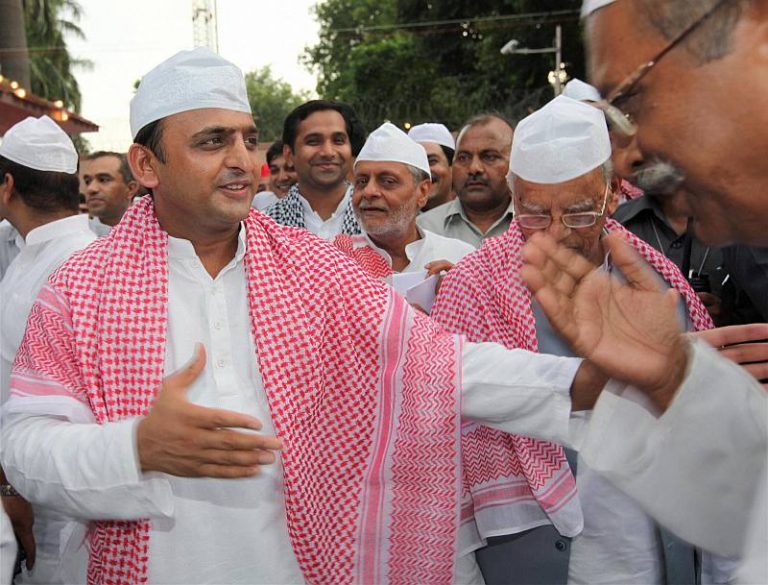
The actions of Mulayam Singh Yadav that earned him the sobriquet of ‘Mullah Mulayam’ is known well enough as of now, what is not known however is that his son Akhilesh Yadav tried his best to prevent Hindus from practising their religious faith with regards to Shri Rama at Ayodhya during his tenure as the Chief Minister of Uttar Pradesh.
In 2013, a Chourasi-kosi parikrama was planned in Ayodhya. The 84-kosi parikrama covers around 135 km around Ram Janmabhoomi and passes through Faizabad, Sant Kabir Nagar, Basti, Bahraich and Shrawasti. There are two other versions of parikrama, the 14-kosi parikrama that extends about 25 km around the Janmabhoomi and the 5-kosi parikrama that covers about 8 km around the same.
On the 3rd of August 2013, VHP Stalwart Ashok Singhal stated, “This yatra is being undertaken for the cause of peace and dharma jagaran and the sant fraternity would lead it from the beginning to the end. The world knows that the sants are by nature peace-loving. We would therefore request the Uttar Pradesh government and the administration not to allow any obstruction to this yatra or obstruct it themselves.”
Leaders of the Vishwa Hindu Parishad (VHP) met Samajwadi Party patriarch Mulayam Singh Yadav and his son Akhilesh Yadav on 17th of August 2013 in order to secure a smooth passage for the occurrence of the parikrama. Ostensibly, no objections were raised then by the father-son duo. Two days later, however, then Home Minister Azam Khan came forward and issued a stern statement against his own party.
Azam Khan issued a statement in public following which Akhilesh Yadav immediately banned the parikrama. The leaders of the VHP were upset at the sudden turn of affairs. They accused the Samajwadi Party of bending to the will of hardline Muslims leaders like Azam Khan and engaging in minority appeasement.
VHP leader and former Union minister Swami Chinmayananda said, “The state government is being run and controlled by Azam Khan, under whose pressure the government is bound to take decisions against the Hindu sentiments.” “The ban imposed on us is only due to Azam Khan who has build pressure on the state government to ban the Parikrama,” he added. Praveen Togadia, too, said that they were assured by Akhilesh Yadav and his father that the parikrama will be permitted but later, they went back on their word.
“The government had no problem with the programme. But some Muslim leaders of the SP like Urban Development Minister Azam Khan are creating hurdles. The fact is that 84-kosi parikrama is done by the saints at regular intervals round the year. On an average, there are not more than 200 saints in parikrama. So there was no threat to law and order. It is 14-kosi and panch-kosi parikrama in which a large number of devotees participate and there is law and order problem,” said VHP leader Ram Vilas Vedanti.
In an interview with DNA, Ashok Singhal stated, “We had met him and told him about the 84 Kosi (old measure of distance) parikrama (circumambulation) programme. That it involves only 270 “sants” (mendicants) and that since the number of people participating wouldn’t be large, it would require about 15 to 18 policemen to oversee the programme.The day after our meeting, Azam Khan gave an angry statement protesting against Mulayam meeting us. Then the SP did an about-turn. They deployed 35 to 40 companies of security forces. Azam Khan is the virtual chief minister and home minister of Uttar Pradesh.”
He went on to add, “The 84 Kosi area covers about five to six districts and spreads over 350km. We want to make Ayodhya a “mokshapuri” (sacred space of salvation) and we are saying that we will not allow a replica of Babri Masjid to be built anywhere in this area. In Mecca, the sacred place of Islam, non-Muslims are not allowed. We want similar status for Ayodhya.”
During the same period, then Member of parliament from Gorakhpur Lok Sabha Constituency Yogi Adityanath was forced to de-board the Kushi-Nagar Express following a ban on his entry to Jhansi. The government was of the opinion that the saffron clad monk’s attendance at the Jal-Abhishek ceremony at the Mahakaleshwar Temple would lead to communal trouble.
Seven years have passed since the incident. Samajwadi Party has suffered catastrophic electoral defeats in the two General Elections held since then and the Assembly Elections in the state in 2017. The VHP’s dream of a Bhavya Ram Mandir at Ayodhya is soon to be realised while the Mahant of Gorakhnath Muth is the Chief Minister of Uttar Pradesh. For the lack of a better phrase, it is indeed the most beautiful form of poetic justice.
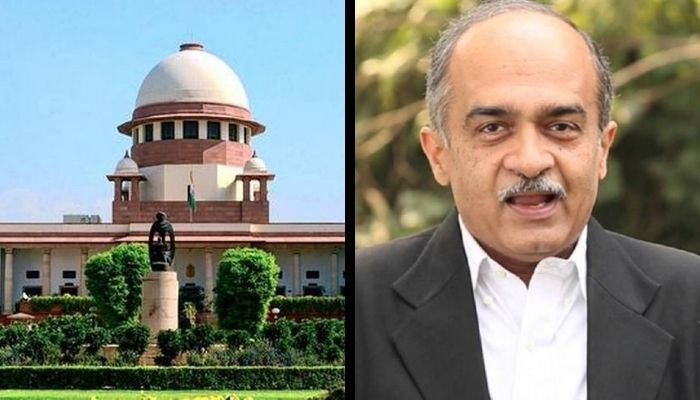
The Supreme Court Tuesday concluded arguments in the decade-old contempt case against advocate Prashant Bhushan. During the in-camera hearing, the three-judge bench headed by Justice Arun Mishra told Prashant Bhushan, that there is a very thin line between freedom of speech and contempt which he may have crossed.
“We’re all for freedom of speech. Then theres contempt. However, theres a thin line that you may have crossed”, Justice Mishra told Prashant Bhushan.
After a brief hearing on the matter through videoconference, the hearing was turned into the in-camera proceeding. While senior advocate Rajeev Dhavan appeared for Prashant Bhushan, Congress leader Kapil Sibal represented molestation accused and the former Tehelka editor Tarun Tejpal, who is also named in the contempt case initiated by senior advocate Harish Salve.
Prashant Bhushan had alleged that half of past 16 CJIs were corrupt
The contempt proceedings were initiated against Prashant Bhushan for comments he had made on the judiciary in an interview to the Tehelka magazine in 2009. He had alleged that half of past 16 chief justices of India (CJIs) were corrupt.
In an interview with the Soma Chowdhury of Tehelka in September 2009, Prashant Bhushan had insinuated that Justice Sarosh Homi Kapadia had committed ‘judicial impropriety’ by being a part of the forest Bench that heard the Niyamgiri Mining lease in Odisha and ruled in favour of Vedanta subsidiary Sterlite industries. He had alleged that Justice Kapadia had a conflict of interest in the case as he owned shares of Sterlite. Prashant Bhushan had implied then that a judge cannot hear cases where he had a conflict of interest and that Justice Kapadia had bypassed it.
Prashant Bhushan refused to apologise in contempt case initiated for his tweets
Yesterday, in yet another contempt case, initiated against him for his reckless behaviour on social media, Bhushan had chosen not to apologise and instead declare in his affidavit: “At the outset, I admit that I did not notice that the bike was on a stand and therefore wearing a helmet was not required. I, therefore, regret that part of my tweet. However, I stand by the remaining part of what I have stated in my tweet.”
Through the entire length of the 134-page affidavit, he refused to express any regret or apology for his conduct. Instead, Prashant Bhushan, through his affidavit, accused the SC of remaining silent during the Delhi Riots in the month of February.
Contempt case against the ‘PIL activist’ over his tweets
Earlier, the Supreme Court of India took Suo Moto against Prashant Bhushan’s Tweets against CJI on 27th June and 29th June and initiated contempt of Court case against him and Twitter India on July 9, 2020. The apex court had issued a show-cause notice to the senior advocate asking him to explain why actions should not be taken against him on contempt of court charges.
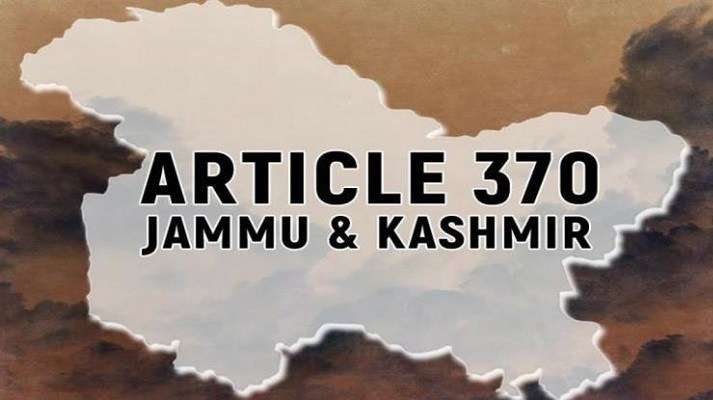
When Article 370 was abolished on Aug 5 last year, I was astonished by how little I knew about my own country. If somebody had told me the day before that a full blown, fully constitutional system of legal apartheid exists in the Republic of India, I would not have believed them.
When the conspiracy of silence around these injustices was blown away in Aug 2019, I was offended by two things. First, that these injustices continued to exist for 69 years into India’s life as a democratic republic. Second, the fact that most people, including me, had never even heard of them.
Tomorrow, it will be exactly one year since that momentous occasion. True to their nature, the usual suspects have come out of the woodwork and are plying people with sob stories about how Kashmir has been suffering in the last one year.
Pay no attention to these voices. For they are not honest actors. For 70 years, they brought us heart warming stories about the childhood of Burhan Wani and Adil Ahmad Dar. Enough.
Let me list before you the five hidden forms of apartheid in Jammu and Kashmir that were ripped apart when Article 370 ceased to exist.
Apartheid against Valmiki community came to an end
In 1957, members of the Valmiki community came to Kashmir on invitation from the state government. The state wanted to break up the strike of the local safai karmacharis. Even 62 years later, those people and their descendants were not allowed to take up any job other than as sweepers.
Read here the story of Eklavya, who had a PhD but was not entitled to any government job other than that of safai karamchari.
This is literally apartheid. It’s a level of injustice that sounds almost unreal. And Indian ‘secularism’ was sitting on it all these years.
Today, Eklavya is free.
Apartheid against Gorkhas came to an end
About one lakh Gorkhas live in Jammu and Kashmir. Their ancestors moved there in the mid-19th century. And they still did not have the right to own land in the state. On top of that, thousands of them have served in the Indian Army.
Imagine serving in the Indian Army and still being a second class citizen of India.
This is the face of battle hardened Prem Bahadur, who served in the Gorkha regiment as far back as 1968. He has done more for the country than 99% of us. Until a year ago, he was less of a citizen of India than almost anyone else.
All these years, Prem Bahadur suffered in silence. Today, he is free.
Apartheid against Jammu came to an end.
The Jammu region is home to 47% of people in J&K. But the state has never had a Chief Minister from Jammu. How is that possible?
Because the J&K Assembly was rigged at birth. In the 87 member legislative assembly, a full 46 seats were allotted to Kashmir. But Jammu was allotted only 37 seats, below its share of the population. This was a very deliberate arrangement, ensuring that Kashmiris and only Kashmiris would control the whole state. In essence, the principle of one person one vote was abandoned to appease a particular group of people.
J&K will now be a Union Territory, with most powers in the hands of the Center. The legislature of J&K will now be reconstituted and delimitation of constituencies will be done on the basis of the 2011 census.
Apartheid against women came to an end
This appears to have been the only form of apartheid that was relatively well known. I don’t know if that is supposed to make it better. The Islamist patriarchy that ruled J&K controlled the life choices of women in very direct ways. A woman choosing to marry outside the state could no longer pass on her property to her children.
In India, we always speak of “motherland” and “mother tongue.” Imagine being told that you have been banished from your mother’s state and her property. When you cannot even inherit your mother’s identity, what is left?
In fact, women of J&K would receive state subject certificates emblazoned with the insulting remark “valid until marriage.” For those who cry Kaagaz Nahin Dikhayenge, how would you like to carry around an official paper stating that your citizenship is temporary, valid only until so and so?
This used to be India. Until 2019.
Apartheid against homosexuals came to an end
In a Sep 2018, the Supreme Court removed penal provisions that used to treat homosexual acts as a criminal offense. The decision was welcomed almost universally, even as three Christian organizations were left carrying the torch for bigoted Victorian era views on sexuality.
Contrary to perception, the 2018 verdict did not apply to every part of India. Thanks to Article 370, homosexuality was still criminal in Jammu and Kashmir.
Not any more.
The end of Article 370 was the end of apartheid in India. We should all celebrate tomorrow. If you are a woman, this is a moment for you. If you are gay, this is a moment for you. If you belong to Jammu, this is for you. If you are from a Gorkha or Valmiki minority, this is for you.
Tomorrow, we celebrate the end of apartheid. Ten days after that, we celebrate Independence Day.