Home Blog Page 5234

Indian Army decides to ban 89 apps for its personnel: Here are the details

Amidst the ongoing border tensions with Pakistan and now China, the Indian Army has decided to ban a total of 89 apps for the Army personnel on both Android and iOS platforms posing security threats. Though these apps would continue to remain accessible by civilians, the Army men will not be able to use these 89 apps henceforth. The Army has claimed that the “all-weather” friends have been trying to trouble India at the LOC and LAC.

Out of these 89 apps, most are Chinese mobile apps, which the Army believes are being used to send out important data and security information to China. Last month, Indian govt had banned 59 apps originating in China in the country.

Other than the Chinese apps, there are other few apps like Facebook, Instagram, Tinder, Tumblr, Reddit, Songs.pk etc which also the Army has banned. The Army has baned these non-Chinese apps for its personnel probably because some of these apps have been used for honey trapping in the past, and some apps have known security issues. Video conferencing app Zoom has also been banned, which has faced lots of privacy and security in recent times.

Social media apps like Facebook used by ISI operatives for honey trapping

It is pertinent to note here, that many incidents in the past have been reported where personnel of the Indian Armed forces have leaked sensitive information related to the Indian armed forces, after they were honey-trapped by the Pakistani ISI operatives on social media. These Pakistani handlers often pose as women and use apps like Facebook and Tinder to honey trap the Indian Army and Navy personnel to take out sensitive information from them.

After one such case, where 13 people including 11 Navy personnel arrested on espionage charges in February this year, the Indian Navy had imposed a strict ban on the use of smartphones and social media applications such as Facebook by its personnel.

The list of 89 banned apps by the Indian Army

The list of all these 89 apps which the Indian Army has decided to ban are:

  • WeChat
  • QQ
  • Kik
  • ooVoo
  • Nimbuzz
  • Helo
  • Qzone
  • Share Chat
  • Viber
  • Line
  • IMO
  • Snow
  • To Tok
  • Hike
  • TikTok
  • Likee
  • Samosa
  • Kwali
  • Shareit
  • Xender
  • Zapya
  • UC Browser
  • UC Browser Mini
  • LiveMe
  • BigoLive
  • Zoom
  • Fast Films
  • Vmate
  • Uplive
  • Vigo Video
  • Cam Scanner
  • Beauty Plus
  • True Caller
  • PUBG
  • NONO Live
  • Clash of Kings
  • All Tencent gaming apps
  • Mobile Legends
  • Club Factory
  • AliExpress
  • Chinabrands
  • Gearbest
  • Banggood
  • MiniInTheBox
  • Tiny Deal
  • Dhhgate
  • LightinTheBox
  • DX
  • Eric Dress
  • Zaful
  • Tbdress
  • Modility
  • Rosegal
  • Shein
  • Romwe
  • Tinder
  • TrulyMadly
  • Happn
  • Aisle
  • Coffee Meets Bagel
  • Woo
  • OkCupid
  • Hinge
  • Badoo
  • Azar
  • Bumble
  • Tantan
  • Elite Sinles
  • Tagged
  • Couch Surfing
  • 360 Security
  • Facebook
  • Baidu
  • Instagram
  • Ello
  • Snapchat
  • Daily Hunt
  • News Dog
  • Pratilipi
  • Heal of Y
  • POPXO
  • Vokal
  • Hungama
  • Songs.pk
  • Yelp
  • Tumblr
  • Reddit
  • FriendsFeed
  • Private Blogs

India bans 59 Chinese apps

In the aftermath of the Galwan Valley standoff, the Indian Government had banned TikTok and 58 other Chinese apps, saying they engage in activities that threaten Indian national sovereignty, integrity and defence. The ministry in its press release said that it has recently been receiving complaints from various sources including several reports about the misuse of some mobile apps available on Android and iOS platforms for stealing and surreptitiously transmitting users’ data in an unauthorised manner to servers which have a location outside India. The compilation of these data poses which threat to national security and sovereignty and is a matter of deep concern said the statement.
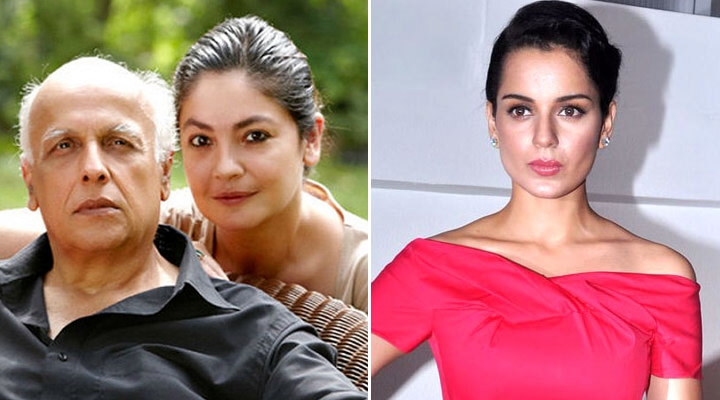
Mahesh Bhatt predicted her end, threw chappal at her: Kangana Ranaut’s team denies Pooja Bhatt’s claims about Bhatts helping Kangana

The sudden and untimely demise of actor Sushant Singh Rajput has sparked the debate over nepotism with many celebrities opening up on how the big and influential families in Bollywood have been propagating it over the years. In the midst of the raging debate, Pooja Bhatt, filmmaker Mahesh Bhatt’s daughter and actress Alia Bhatt’s half-sister, has come up to counter the nepotism allegations aimed at her family. While defending her family, Pooja also cited Kangana Ranaut’s “launch” by Vishesh Films (a film production company owned by Mukesh Bhatt and Mahesh Bhatt) in the movie Gangster. 

Post her claims, Kangana Ranaut’s team hit back at Pooja Bhatt in a series of Tweets. They claimed that Pooja’s home production exploits the new talents, who enter the industry with a dream to be launched under big banners, by offering them work without any pay. Alleging that Mahesh Bhatt had once hit Kangana with chappals, Kangana’s team hit back at Pooja Bhatt by saying that even if they launched her it “did not give your father a license to throw chappals at her”.

Alleging that Mahesh Bhatt had once written off Kangana by announcing her “tragic end”, Kangana’s team accused the former to be involved in actor Sushant Singh Rajput’s death. “Also why was he so invested in Sushant Singh Rajpoot’s and Rhea’s relationship? Why did he announce his end too, some of the questions you must ask him,” further read the Tweet.

Kangana’s team further wrote that alongside Gangster, Kangana had also auditioned for Pokiri, which went on to become an all-time blockbuster. “So your thinking that because of Gangster she is who she is, is totally not working. Water finds it’s level.”

Pooja Bhatt, who was launched into the film industry with her dad’s production ‘Daddy’ in 1989, had claimed that as a family of filmmakers they have always supported newcomers and outsiders. She tweeted: “Toh yeh ‘Nepotism’ shabd se kissi aur Ko zalil karne ki koshish karo doston. The people who have found their way into the movies through the springboard we provided over the decades know what we stand for. And if they have forgotten, It’s their tragedy. Not ours. Have a great day!”

Pooja concluded by saying that people should not try to humiliate them by using the term “nepotism”.

While Pooja Bhatt has defended the nepotism charges meted out at her family by claiming that her family was once accused of “only working with newcomers and not chasing stars”, her argument somehow does not add up considering the number of people in her own family who have used the “Bhatt” surname to launch themselves in Bollywood. Probably half of those on the long list of her family members, who are today a part of the film fraternity, would not have made it if their last name was anything except ‘Bhatt’.

To begin with, Pooja Bhatt’s grandfather- Nanabhai Bhatt, was a well-known Indian film director and producer of Bollywood and Gujarati cinema. He had made innumerable movies in his career, few being the mythological film Lakshmi Narayan (1951) starring Meena Kumari and Mahipal in the leading role, blockbuster movie Kangan (1959), Baazigar (1959), Lal Qila (1960), etc.

Pooja Bhatt’s father Mahesh Bhatt is an acclaimed producer, director, screenwriter. Mahesh Bhatt is one of the biggest names in the Bollywood industry. In fact, Pooja Bhatt was also launched by her father when she was 17.

Robin Bhatt- A writer and assistant director in Bollywood Robin Bhatt is the half-brother of Mahesh Bhatt. Robin Bhatt who is known for films like for Baazigar (1993), Chennai Express (2013) and Koi… Mil Gaya (2003). Robin Bhatt’s debut film as a writer was Aashiqui, which was produced by Vishesh Films, an film producing company owned by brothers, Mahesh Bhatt and Mukesh Bhatt.

Mukesh Bhatt- He has produced several Bollywood films. He is the younger brother of Mahesh Bhatt, and also the co-owner of the production company Vishesh Films.

Vishesh and Sakhi Bhatt- The son and daughter of Mukesh Bhatt. They both are director and producer respectively.

Rahul Bhatt- Rahul is Pooja Bhatt’s brother. He is an aspiring actor who was also a part of celebrity reality show ‘Bigg Boss season 4’.

Soni Razdan- Mahesh Bhatt’s second wife and Alia Bhatt’s mother. Soni Razdan is an acclaimed actress working for Hindi cinema for over 3 decades.

Alia Bhatt- Is a succussful Bollywood actress who made her Bollywood debut with Karan Johar’s ‘Student Of The Year’. She is Mahesh Bhatt’s daughter with his second wife Soni Razdan.

Dharmesh Darshan- An Indian filmmaker and the nephew of Mahesh Bhatt. He made his directorial debut in the year 1993 with the movie Lootere which was produced by his brother Suneel Darshan.

Mohit Suri- Is a film director, as well as an assistant director and member of the Bhatt family. He is the son of Mahesh Bhatt’s youngest sister. He has also made many movies under the Vishesh Film’s banner like Murder 2 and Aashiqui 2.

Emraan Hashmi- The Bollywood actor is the nephew of Mahesh Bhatt and Mukesh Bhatt and the second cousin of Pooja, Rahul, Alia Bhatt on their paternal grandmother’s side. Emraan Hashmi has mostly worked as the lead actor in ‘Vishesh Films’ projects.

It has long been an open secret that Bollywood has prefered to promote its own progeny, and their friends and family. Pooja Bhatt, by not accepting this is only trying to run away from the undeniable fact.

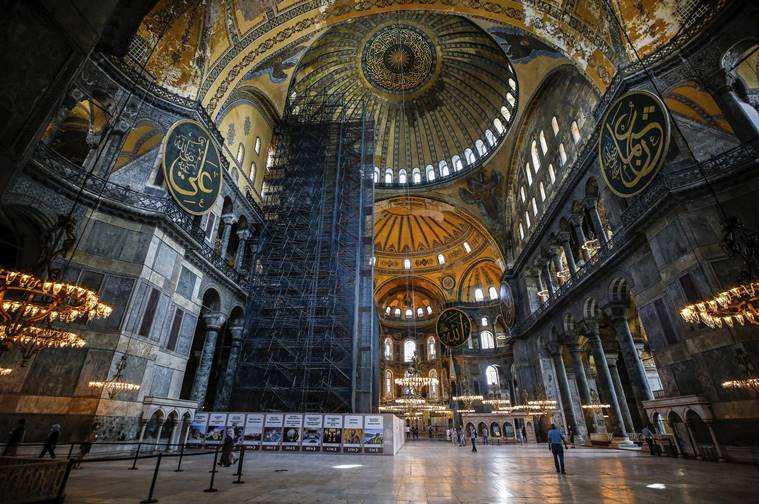
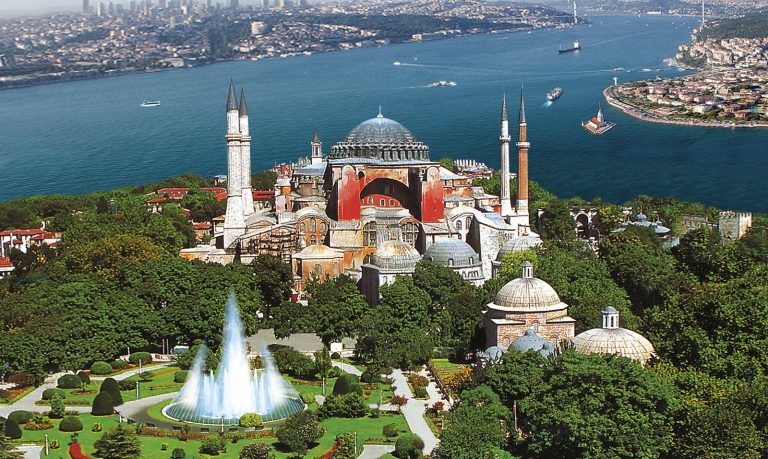
Turkey govt plans to convert Byzantine cathedral Hagia Sophia into a mosque again. Read about this historical symbol of Muslim-Christian rivalry

Recep Tayyip Erdogan headed Turkish government is all set to shun its secular foundations as it plans to convert a 6th-century Byzantine-era cathedral once again into a mosque.

In what is deemed by many as Erdogan’s push towards Islamisation of the country, the Turkish President has made moves to once against turn the 1500-year-old monument —Hagia Sophia, listed as a Unesco World Heritage site—into a mosque yet again. Hagia Sophia has been a Byzantine cathedral, a mosque under the Ottomans and finally a museum, making it an enduring symbol of the cultural rivalry between the Christians and the Muslims.

While the issue of reconverting Hagia Sophia museum into a mosque was nowhere on the list of priorities of Mr Erdogan when he entered the politics three decades ago, however, his gradual shift towards a more radicalised version of Islam, coupled with his defeat in the 2019 municipal elections in Istanbul, catapulted the historical structure right in the centre of Turkey’s politics, with the Turkish president pledging to convert the museum into a mosque again.

Erdogan, hailing from a conservative Muslim background, had presided over the gradual dismantling of Turkey’s secular traditions in recent times. Many believe that Erdogan’s latest gambit to convert the historical site of Hagia Sophia into a Muslim worshipping site is in line with his broader goal of progressive Islamisation of the Turkish society and designed specifically to gain political mileage by catering to his followers’ fundamentalist views which entails that once a mosque is sanctified, it should never be unconsecrated.

What is Hagia Sophia?

Built in the 6th-century and consecrated as the Byzantine cathedral, the iconic structure, known as “Hagia Sophia” was once Christianity’s largest cathedral and the historic seat of the Orthodox patriarch of Constantinople, popularly known as Istanbul.

For about 900 years, Hagia Sophia was considered as an unrivalled pilgrimage centre for the Eastern Christians. The artefacts housed at the pilgrimage destination included alleged pieces of the original cross of Jesus Christ, along with the lance that impaled the Nazarene’s side. For centuries, Christian pilgrims found healing from these and other items.

Byzantine cathedral converted to a mosque following Ottoman conquest of Constantinopole

This is not the first time in history that the iconic cathedral of Byzantine-era will be converted into a place of worship for the Muslims. Earlier too, the cathedral was converted into a mosque.

Hagia Sophia museum in Istanbul

In 1453, the historic Byzantium fell to Sultan Mehmet II’s Ottoman forces, who pillaged the cathedral and turned it into a mosque shortly afterwards as a symbol of dominance over the indigenous Turkish Christians. In the process, the structure was desecrated and plastered upon, covering the Christian murals, mosaics and frescos—and minarets were added to the exterior sides of the building.

For about 500 years, the iconic cathedral served as one of the most important mosques in Istanbul until the founder of modern Turkey, Mustafa Kemal Atatürk, ordered that the mosque be converted into a museum.

Atatürk converted Hagia Sophia mosque into a museum

In 1934, the founder of modern Turkey, Mustafa Kemal Atatürk, as a gesture of goodwill and Turkey’s devotion to secularism, converted the mosque into a museum, as “a monument for all civilization.”

Claiming that the Sultan Ahmed Mosque in Istanbul was just a stone’s throw away from Hagia Sophia, there was no dearth of praying grounds for Muslims, Ataturk argued, paving the way for the conversion of Hagia Sophia into a museum.

With the end of the Ottoman Empire, Ataturk ended the role of religion in the state and closed religious institutions. Byzantine churches, cathedrals were converted into museums and tourist spots where people could come and marvel at the sheer brilliance of the Byzantine architecture without having to espouse a particular religion.

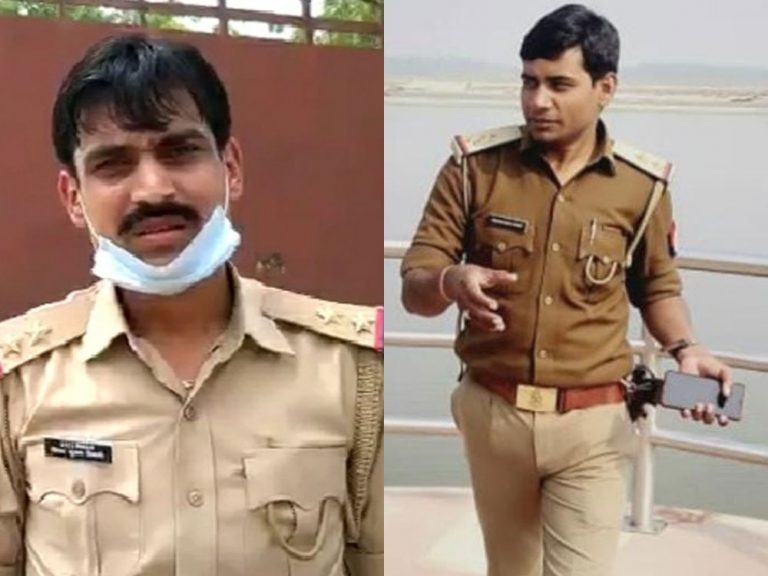
UP police arrest suspended SHO Vinay Tiwari and KK Sharma for tipping Vikas Dubey about the raid

The Uttar Pradesh police have arrested the former station in-charge of Chaubeypur police station Vinay Tiwari and Beat in-charge KK Sharma on Wednesday. Tiwari was suspended on Sunday after investigators suspected that he might have tipped the gangster Vikar Dubey about the raid on the night of 2nd June.

Mohit Agarwal, IG, Kanpur range said that the two policemen were present at the encounter site, but when the exchange of fire started between henchmen of Vikas Dubey and police, both Tiwari and Sharma fled the scene.

News agency ANI posted a video statement of Dinesh Prabhu, Kanpur SSP, saying, “as per the evidence, it has been found that police personnel Vinay Tiwari & KK Sharma had informed Vikas Dubey about the raid beforehand. So, he was on alert and planned to attack police, which resulted in the death of 8 policemen.”

Police today raided a hotel in Faridabad, Haryana, where Dubey was seen, but he managed to escape again. The police have increased the bounty on his head to Rs. 5 lakh from Rs. 2.5 lakh. Police have arrested two of his aides Pathak and Ankur. Pathak is believed to be from his village and worked from him. Ankur was helping him in hiding.

Amar Dubey, a close aide of Vikas Dubey, killed

UP Special Task Force on Wednesday morning gunned down Vikas’ aide Amar Dubey in Hamirpur, Uttar Pradesh. He was involved in Kanpur ambush, in which eight policemen lost their lives.

On the night of 2nd June, three police teams had gone to arrest gangster Vikas Dubey. However, the police teams were trapped in an ambush and were attacked by Vikas’ goons who had showered bullets from rooftops. Eight police personnel were killed, and several were injured. 25 police teams are currently looking for him and border states are on high alert.

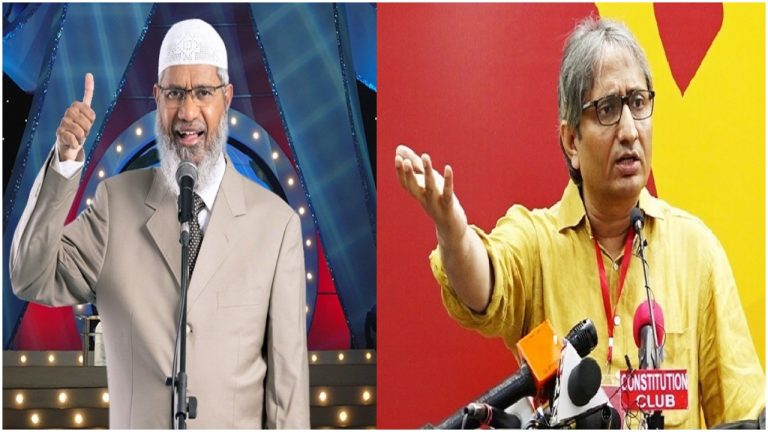
Only Muslims go to heaven, Ravish Kumar-like non-Muslims can only hope for a mild level of hell: Dr Zakir Naik explains

Islamic preacher Dr Zakir Naik has declared that despite his noble efforts of “taking the side of Muslims” and “showing the ugly face of oppressors”, NDTV’s star journalist Ravish Kumar will not find a place in the ‘Jannah’ or Muslim heaven.

Recently, the radical Islamist and terrorist influencer Zakir Naik, who has been hiding away in Malaysia after fleeing from the country, has declared that even ‘good non-Muslims like Ravish Kumar’ will not get to go to ‘Jannah’ after their death as they are still non-Muslims who are doing the crime of ‘Shirk’, meaning idolatry.

On a YouTube video uploaded on June 27, radical Islamist Zakir Naik was seen interacting with his followers and taking various questions from them to explain certain Islamic concepts. In the video titled, “Dr Zakir Naik on the fate of Ravish Kumar who stands for Muslims & Righteous Non-Muslims”, he explained how Ravish Kumar and other ‘good non-Muslims’ did not deserve the Muslim heaven or ‘Jannah’.

Furkan, one of the followers of Zakir Naik posed a question to Naik asking what would happen to good non-Muslims in the country like Ravish Kumar etc, who, according to Furkan, not only speak the truth and take the side of Muslims but also show the truth of oppressors. The part comes in the video at 15.39 minutes.

“It is not just him, there are many others from different professions who are like him. What will Allah do to him if they do not die as Muslims as they do not deserve equal punishment like other ‘bigger wrongdoers’,” asked Furkan to Zakir Naik.

Responding to his follower’s question, Zakir Naik, recalling all his knowledge on Islam, replied with a big ‘No’.

No heaven for non-Muslims

Explaining the rationale behind the concept, Naik elaborated how there is a hierarchy within the ‘Jannah’ (the paradise garden) and all those Muslims who go to ‘Jannah’ will not be on the same level. Similarly, the hell has different levels too.

Explaining further, Naik said that whatever the ‘good deeds’ people like Ravish Kumar may do for the benefit of Muslims, since they have not converted to Islam, they will still go to hell because the crime of ‘shirk’ (heresy, idol worship) is bigger than any other crime.

Naik effectively says that irrespective of their ‘good non-Muslim’ certificate, non-Muslims will still end up in hell, maybe a milder version of hell due to whatever they have done, but hell it will be. He adds that the worst kind of non-Muslims, like Hitler and an ‘unnamed person from India’ will get the worst kind of hell.

Naik, however, does not explain what ‘mild’ levels of hell mean. Maybe sinners only get Tawa-fried and are spared from deep-frying in huge kadahis on those levels.

Islam is the ‘passing marks’, the minimum requirement for heaven

Naik explains in the video that all the so-called good deeds of ‘honesty’, charity, etc are worth just 5 marks or 10 marks in the exam for heaven and they don’t mean much. The 5-10 marks do not ensure qualifying marks. He asserts that only embracing Islam can ensure the passing marks. The Muslims who add the virtues of honesty and charity will get additional benefits, but any person, who is a non-Muslim, can only go to hell.

Regarding Ravish, Naik says that ‘Mushirks’ or infidels like him, if they are doing good deeds, may get earthly rewards like fame and praise in this world. But once they die, since the gates of heaven are closed for them, they will end up only in hell.

Naik ends the session by praying that may people like Ravish get Allah’s message and embrace Islam. So, as per Zakir Naik, no hoors for Ravish Kumar. He can go to hell.

Muslims hurled abuses and casteist slurs, attacked us with sharp weapons: Mahadalits in Begusarai

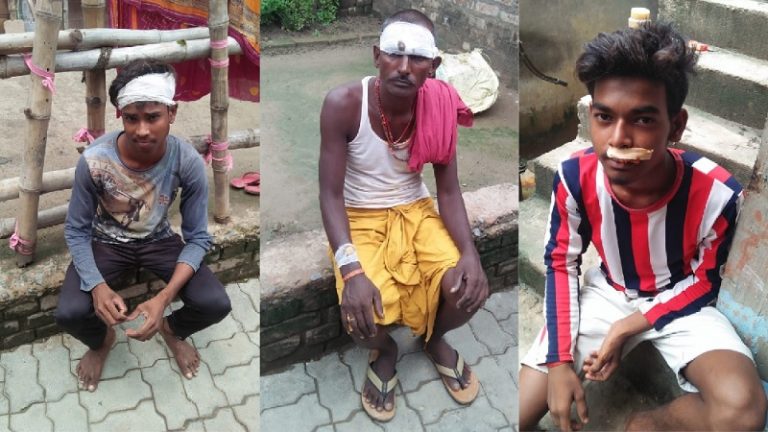
A case has been filed against some members of the Muslim community in Bihar’s Begusarai for perpetrating violence against the Mahadalit community. Shankar Paswan and his family members have accused Muslims in the Pipra Dewas village of committing atrocities against them. Already the area is categorised as highly sensitive and has witnessed several such communal strifes in the past. In this regard, OpIndia talked to the victims to know their side of the story.

Local Hindu organisations and villagers claim Muslims tortured members of Mahadalit community

The members of the Hindu Sangharsh Samiti have alleged that Mahadalits were tortured in ward number 13 of Pipra Dewas Panchayat. A meeting was organised by ‘Hindu Sangharsh Samiti’ under the presidency of Vijay Paswan in the premises of Shiv Temple of Pipra Dewas Panchayat of Barauni block of the district where the victim Shankar Paswan asserted that the Muslims had misbehaved with the Mahadalits.

In the latest incident, the local Muslim youths have been accused of humiliating Mahadalits by making casteist slurs such as ‘Dusadh-Dusadh’, said Paswan alleging that Hindu deities were also subjected to abuse by the anti-social elements of the Muslim community. Paswan further added that when the accused were asked to not indulge in such behaviour, they surrounded their locality with weapons such as swords, batons, iron rods and spears and smashed the widow Munni Devi’s house with brickbats and bottles of liquor.

At the same time, Vijay Paswan also aired his grievances against the local administration. He alleged that the registration of an FIR against the victim shows the collusion of the administration with the anti-social elements. According to him, dozens of Hindu families are forced to suffer because of the administration. He claimed that even after 5 days of the incident, none of the miscreants was arrested, which demonstrated the administration’s apathy towards the sufferings of Hindus.

Another member of the ‘Hindu Sangharsh Samiti’, Bittu Shah, has warned that if corrective action is not initiated against the culprits, large-scale agitation will be launched by the youth. As tensions simmer in the village, BJP Yuva Morcha Mandal President Deepak Poddar appealed to the administration to take cognizance of this matter to avoid any untoward incident.

The FIR lodged in the police station

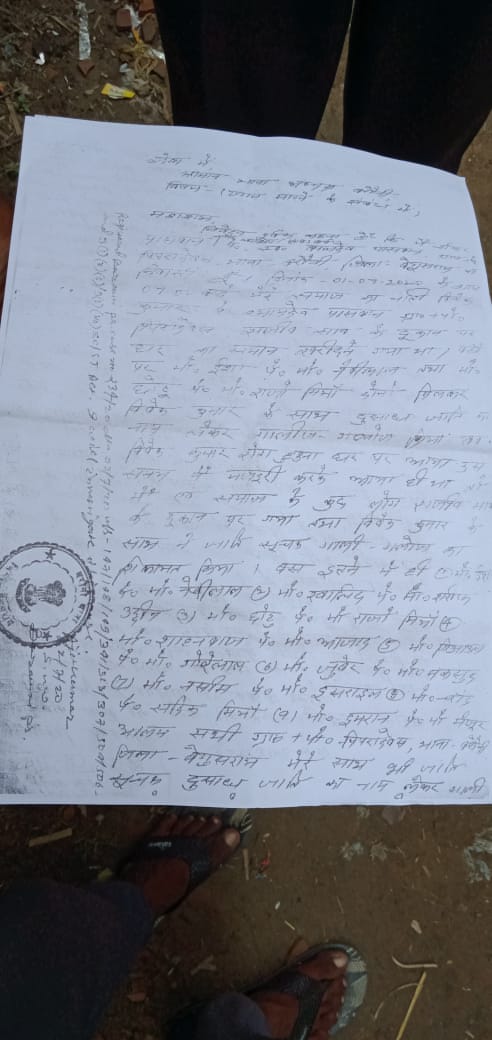
FIRs have been lodged in the police station by both the parties. According to the FIR filed by the victims of the Mahadalit community, some youths from the Muslim community, including Mohammed Chhotu and Raja Mian, abused Vivek Kumar from the Mahadalit community and passed casteist remarks against him. This incident happened when Vivek went to a shop with his other colleagues.

When Vivek came home weeping, Shankar Paswan, along with some members of his society, lodged a protest at the shop. This riled up Mohammad Shahnawaz, Mohammad Khalid, Mohammad Zubair, Mohammad Israel, Mohammad Shadik Miyan, Mohammad Imran and people from other Muslim communities, including Mohammad Manzoor Alam, who were irked by Paswan’s audacity to stand up to their bullying. They all started abusing Paswan and other members of the Mahadalit community and hurled casteist slurs against them.

FIR mentions Muslims accused of perpetrating violence

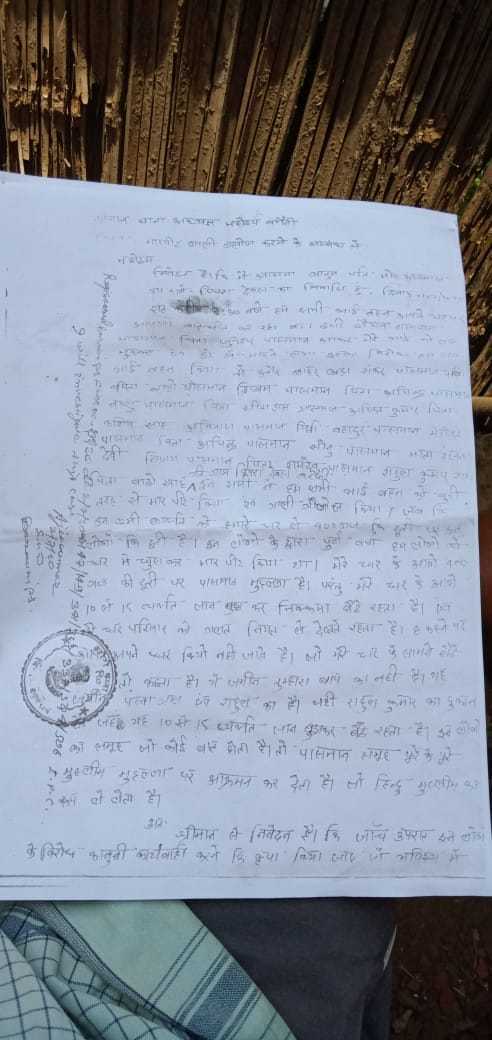
The FIR further mentions that the accused, ostensibly belonging to the Muslim community, also threatened to molest daughters-in-law of the Mahadalit community members, inciting them by asking what would a ‘Dusadh’—a pejorative reference to the adherents of the Mahadalit community—would do against them. Following this verbal altercation, Shankar Paswan was attacked with a brick on his head, while Vivek was also attacked with a sharp weapon. This led to injuries to many others including Amit and Sonu. Shankar Paswan has lodged a complaint that several other accused were constantly throwing bricks and stones from the opposite side.

In addition to making casteist jibes, threatening and attacking Mahadalits, one of the assailants, Mohammad Zubair, also snatched a fake gold necklace donned by Shankar Paswan which was worth Rs 1000. The lodged complaint read that the accused Muslims were constantly abusing the Mahadalits and threatening them of extermination.

OpIndia talked to victim Shankar Paswan

Expressing his fear and anxiety over the treatment meted out to his children, Shankar Paswan while talking to OpIndia said that he is extremely worried about coexisting with the miscreants in the society. Shankar told OpIndia that Vivek had merely gone to fetch some goods from a shop when he was attacked by the Muslim community, adding that he was intimidated saying “no Hindu father will come to save you”.

Paswan further added that his family subsists by earning daily wages. He said that most Hindus are reluctant to raise their voice because of the predominant numbers of Muslims in the area. He revealed that while 20-25 members of Muslims lined up to abuse and attack them, only 4-5 Hindus came in their support. He has also accused Muslims of exploiting the Mahadalits.

The FIR from the Muslim side

While the Mahadalits have filed an FIR against the Muslims for attacking and threatening them, a counter FIR was filed by a woman from the Muslim side. The lady, the wife of Mohammad Abbas, has accused the Mahadalits of molesting her in the FIR. The FIR mentions that members of the Mahadalit community deliberately congregated in front of their house and ogled at the ladies of the house.

FIR filed by the Muslim side

The FIR filed by the Muslim side has laid the entire blame on the Hindus in society. The woman has claimed that the people who came with Paswan attacked the Muslim neighbourhoods which later spiralled into Hindu-Muslim communal flare-up.

We tried to contact the phone number in the FIR filed by the Muslim side. They told us that they currently involved in the court matters and would be able to talk to us later. Opindia is constantly trying to seek a response from the other side. We will update the story as soon as we hear from the Muslim side.

The police version

The police have outrightly denied the allegations of prejudice levelled against them. They said that action was initiated as soon as they were informed about the incident. They have mentioned that the injured from the Mahadalit community were taken to the hospital by a police vehicle from where they were referred to Sadar hospital. An investigation into the matter is underway, after which action will be taken against the culprits.

Viśiṣṭvividhīkaran: Sanatan Dharma and Qualified Diversification

The duality inherent in the Supreme Reality is idiosyncratic and paradoxical: it is contextual and yet transcendent. Advaita Vedanta speaks of the material realm as being illusory, and a manifestation of the Supreme Reality under the influence of Maya – a veil of illusion and ignorance. Seeing the disregard for the illusory (which still had its importance in the world) and based on his own spiritual experiences, Sri Ramakrishna Paramhansa developed this idea to share his Vijñāna Vedanta that says that the Supreme Reality and the apparent illusion of the world are both made of the same essence, of the same truth, and therefore have their own respective places and importance. They were both saying the same thing, just in different ways. I would like to develop this further, to incorporate an active act of discernment, awareness and understanding of these levels of reality, and to highlight what I would like to name विशिष्टविविधीकरण (Viśiṣṭvividhīkaran) or the Principle of Qualified Diversification.

One of the key problems faced by our age is one of parochialism, exclusivism and dogmatic strife. We are born into certain cultures, and our ideas and perspectives are fundamentally defined and guided by this culturing. While this is natural and not a problem in itself, it is when one becomes rigid and confined to these paradigms without the natural inclination to be acceptable to other perspectives, realities and views of the Truth that it becomes problematic. When taken to extremes, this takes the form of conflict and strife. While some may say that is simply due to an illiberal take on life and ideas, I feel it is more fundamental than that. This stems from the absolute value assigned to one’s conception of reality and Truth, as an end in itself, not the Truth itself. Whether the Absolute Truth is personal or impersonal, transient or unchanging, contextual or transcendent is often the basis of convoluted debates about this.  However, what helps in this regard is that each of the primary conceptions of the Truth has resonances.

Chondrobindu
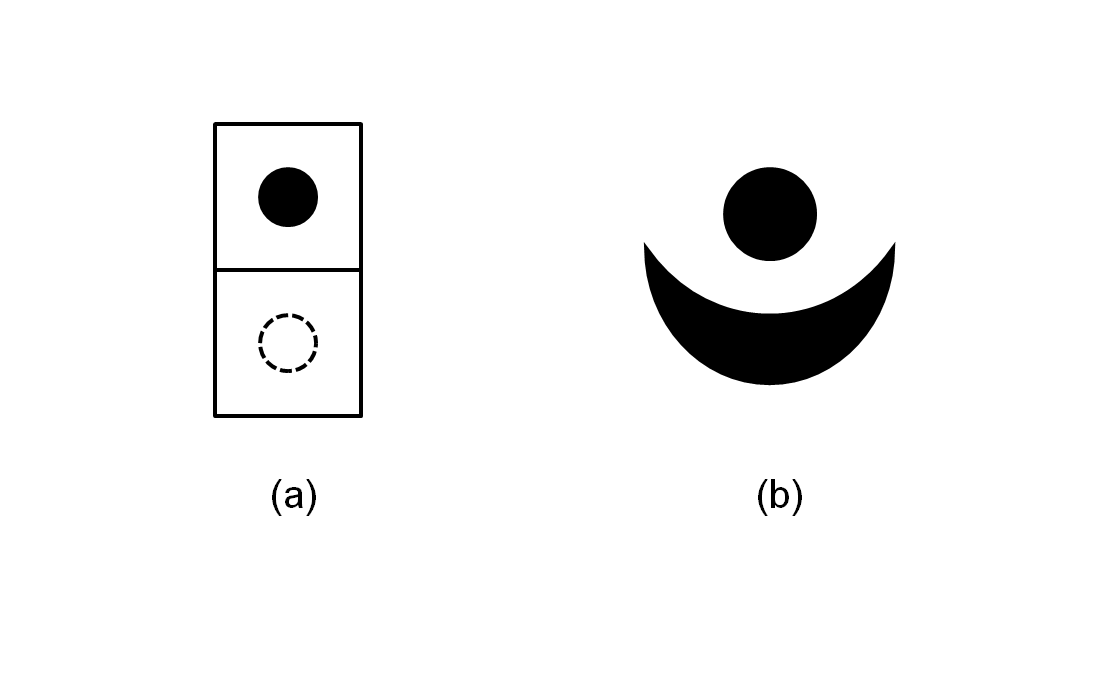
Figure 1: Illustration of the Principle of Qualified Diversification – (a) the upper rung assigned to the Absolute Truth and the lower to any characterization or derivative of the Truth, (b) the symbolism of the Principle of Qualified Diversification in the Chandrabindu, which shows the world and lower realm of (a) in the Chandra (the curve), which is infused with and yet transcended by the Absolute Truth symbolized in the Bindu.

The Absolute Truth is spoken of as indescribable, inconceivable and endowed with paradoxes: it is personal and impersonal, it is transient and unchanging, it is manifested and yet transcendent. It is the basis of all there is, in the Universe, and is the Ultimate Reality that is beyond space, time and causation. The greatness of this Truth is that does not rely on belief. This Truth is as accessible as any reality, through sustained spiritual pursuits.

We have, however, often been fixated on the manifested nuances of this Truth rather than its essence. For the Zoroastrians, the worship of the sacred fire is seen as the path to the Truth, while Jews place an emphasis on the Torah. The Taoists focus on the Tao, the Buddhists on the more utilitarian path of battling the causes of Dukkha (sorrow). The Christians continue the traditions of the Jews with the additional message of universal brotherhood and grace of Jesus Christ, while the Muslims developed the Judaistic and Christian traditions with the teachings and values shared by Prophet Muhammad PBUH. Sanatan Dharma has been a coming together of disparate manifestations and paths to the Truth, with various sects and traditions over the millennia showing a great Diversification. In all these religions and traditions, the preeminence of some ideas, contextualized aspects and cultural addenda has been seen. Jews and Christians have highlighted the special place of Israel (with everyone from Abraham to Moses and Christ having an important link to the geographical region), while the Muslims have safe-kept some inherently Arabic cultural elements (including the Arabic term for God – Allah), and the Dharmic traditions that of the Indian subcontinent (with everyone from Sri Ram and Sri Krishna to Sri Parshuram and Sri Chaitanya Mahaprabhu being associated with inherently Indian cultural elements and ideas).

This is an opportunity rather than a challenge. 

The disparate manifestations of the Absolute Truth are complementary, if one can see the place of binaries and dualities in the manifested world. To explain this easily, let me take the example of a war, where both sides fight, with their unique idea and conception of why they are fighting, with their own perspective on the Truth. One may ask: which is the correct Truth? Neither and both! Both, due to each being a manifestation of the Truth, and neither, since the Absolute Truth transcends the contextual and the cultural of either conception. The manifested world is defined by the play of these binaries and dualities and multiplicities: the spontaneous breaking of unity, symmetry and balance is the very basis of creation of new entities in the Universe, from the creation of elementary particles (along with anti-particles) from the Quantum Vacuum to the fission of unicellular organism to create the next-generation of these organisms. But if we can realize this fundamental point that sides of this (be it the particle or the anti-particle, one or the other organism created at the moment of reproduction, or for that matter, one or the other socio-political or cultural system that one may be born into) are in essence arising from the same Unity, we must not obsess with one side of the Truth only.

diversity-organisation-1366x768
Figure 2: Diversity, based on identities and/or ideologies, are manifestations of the same Truth of life and the Supreme Reality.

And this is what the idea of Qualified Diversification is about: we must actively respect and consider the diversity based on identities and/or ideologies, and yet one must understand that this diversity is not an end in itself. This diversity is itself a manifestation of the same Truth of life and the Supreme Reality. At the end of the day, this Principle of Qualified Diversification is very important, and the true reflection of the Truth, besides being a long-lasting basis for unity, harmony, secularism, tolerance and acceptance. In Figure 1 (a), one can see the illustration of this idea: one can consider any conception or attribution or derivation of the Absolute Truth as the lower realm while the Absolute Truth, which is beyond conception, attribution or characterization, is always above that. The Chandrabindu, shown in Figure 1 (b), symbolises this beautifully – the manifested, representated by the Chandra (curve or crescent), is infused by and yet transcended by the Bindu (dot) that represents the Absolute Truth.

I humbly submit this formulation, arising out of meditation, and hope this can be actively considered and followed in life, by all and sundry, to stand for a truly universalist perspective on the Absolute Truth.

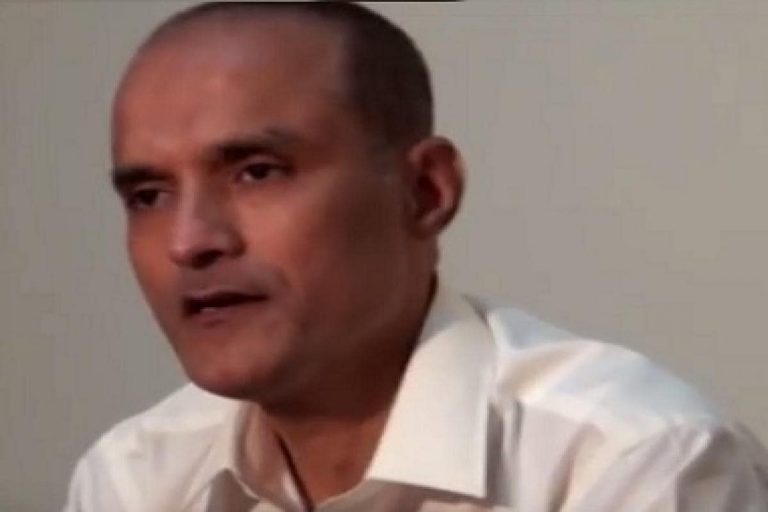
Pakistan claims Kulbhushan Jadhav refused to file a review petition against the death sentence

On Wednesday, 8th July 2020, Pakistan has claimed that Indian national Kulbhushan Jadhav has refused to file a petition for review of his death sentence. Jadhav was arrested in 2016 on alleged charges of espionage. He has been in jail since. Pakistani media outlets have claimed citing government sources that Jadhav preferred to follow up on the pending mercy petition.

Additional Attorney General of Pakistan said, “On June 17, 2020, Indian national Kulbhushan Jadhav was invited to file a petition for review and reconsideration of his sentence and conviction. Exercising his legal right, he refused to file a petition for review and reconsideration of his sentence and conviction.” His statement was published in the Pakistani media reports.

Kulbhushan Jadhav is a 49-year-old retired Indian Navy officer. He was sentenced to death by the military court in Pakistan in 2017 under false charges of espionage and terrorism. Pakistan has claimed that they have offered consular access to Jadhav twice.

The history of Kulbhushan Jadhav’s case and MEA’s strong stand to save him

India has rejected the claims of Pakistan that Jadhav was involved in spying and terrorist activities. Indian officials have asserted that Jadhav was running a business in Iran and was kidnapped from the Iranian port of Chabahar and later handed over to Pakistani authorities. On 3rd March 2016, he was allegedly arrested and sentenced to death in April 2017.

In May 2017, when Pakistan rejected Jadhav’s access, India moved to the International Court of Justice against his trial by the military court. When ICJ stayed Jadhav’s execution, it was seen as a significant win, but there was a lengthy judicial process pending. While the case was pending in ICJ, Pakistan allowed family members of Jadhav to meet him, but their officials were highly criticized for mistreating the family members.

Harish Salve, who fought the case in ICJ for Re.1, presented a strong case. He said that India has never denied the nationality of its citizens. In July 2019, ICJ directed Pakistan to provide consular access to Jadhav. The court also asked Pakistan to review the death sentence effectively. The court noted in the judgment that Pakistan had breached International Law by not providing consular access to Jadhav.

In May 2020, Pakistan issued a statement in which they said they have fully complied with ICJ’s verdict and orders in the Kulbhushan Jadhav case. Jadhav’s arbitrary sentencing and sham trial by a military court in Pakistan was heavily condemned by India.

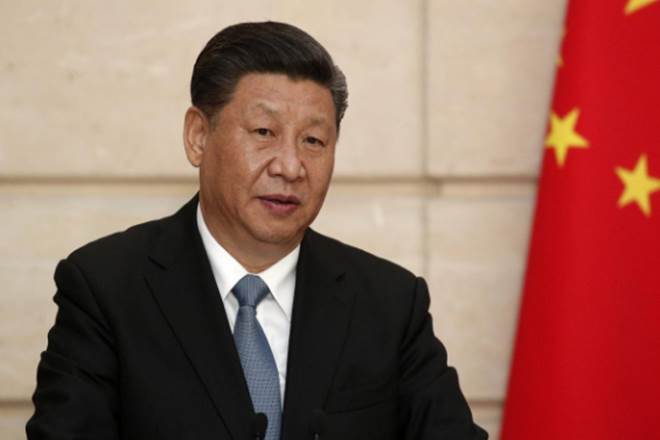
Expansionism was Ravana’s undoing: Uttarakhand minister sends a copy of Ramayana to Chinese Premier Xi Jinping

Amidst the LAC standoff with China, Uttarakhand tourism minister Satpal Maharaj has sent a copy of Hindu epic ‘Ramayana’ to the Chinese President Xi Jinping to warn him of the consequences of harbouring an ‘expansionist’ mindset.

Speaking to the media on Tuesday, Maharaj said, “I am sending a copy of Ramayana to the honourable President of China Xi Jinping. I would request him to read it to draw lessons from the downfall of Ravana, whose intelligence and power was unparalleled but he lost because of his expansionist thinking.”

Expansionist mindset caused Ravana’s downfall, says Satpal Maharaj

The minister further advised the President of China to bear in mind that expansionist attitude results in destruction. “Ravana is said to have ten heads which means he was as intelligent and powerful as 10 men but his end was unfortunate due to his expansionist thinking,” he said.

Maharaj, representing the Chaubattakhal assembly constituency of Pauri Garhwal district, suggested that China should spend its resources to tackle the spread of the coronavirus instead of carrying out imperialistic manoeuvres. He further added that China under the leadership of Xi Jinping has escalated its border disputes not just with India but with other nations such as Japan, Philippines, Russia and many others.

China’s territorial disputes with its neighbours

Drawing a distinction between India and China, Maharaj said that India has not espoused an expansionist policy as it did not annex Bangladesh even after emerging victorious in the 1971 battle. China, on the other hand, had annexed Tibet and is currently embroiled in various territorial disputes with at least half a dozen of its neighbours. Maharaj urged Xi Jinping to read the Ramayana and get wisdom from its lessons.

“The COVID-19 virus which originated in Wuhan of China has spread to almost every corner of the world. I wish he would have helped everybody instead of getting involved in border disputes,” said the BJP leader.

No, Indian PUBG user did not make Chinese player say ‘Hindustan Zindabad’, Times Network’s website fell for satire

With patriotism among Indians at an all-time high, especially amidst the simmering tensions along the Line of Actual Control in Eastern Ladakh in the wake of bloody Galwan valley clashes, Mensxp.com, an Indian lifestyle portal for men which belongs to the Times Internet, published an article, characterising the patriotism of the Indian PUBG users.

The article published on mensxp.com alleged that a patriotic Indian PUBG user demanded his Chinese teammate on the verge of being eliminated from the game to say ‘Hindustan Zindabad’ for reviving him and bringing him back to the game, describing it as one of the way’s of “showing patriotism”. Furthermore, the article said that the aforementioned PUBG user also urged other Indian PUBG players to consider it as a patriotic duty to not revive Pakistani and Chinese players before they utter slogans hailing India.

Source:mesxp.com

“That’s right. According to a report on CISTHETA, an Indian PUBG player made his Chinese teammate say ‘Hindustan Zindabad’ before he reviving him and bringing him back to the game. Well, that’s one way of showing patriotism,” said the article while adding that the Indian gamer had seemingly spoken to the CISTHETHA reporter and made a request to all Indian PUBG players to observe it as their patriotic duty to not revive Chinese and Pakistani players before hearing Hindustan Zindabad from them.

Mensxp.com is a part of Times Internet Group

The portal owned by the Times Internet explicitly quoted CisTheta Global website from where they have sourced the article claiming that an Indian PUBG user has asked his Chinese teammate to chant Hindustan Zindabad for seeking revival. But the fact is, The CisTheta Global is a satirical website, known for its humorous take on contemporary events. A glance on the homepage of the website shows that all articles published by the website are satire articles.

However, the Mensxp.com fell for the satirical website, treating its satire about the Indian PUBG user demanding his Chinese teammate to chant patriotism slogan as truth and published the same in its article. While the Times Internet article did mention that it was unsure about the veracity of the claims made by CisTheta Global, but the satire was clearly lost on them.