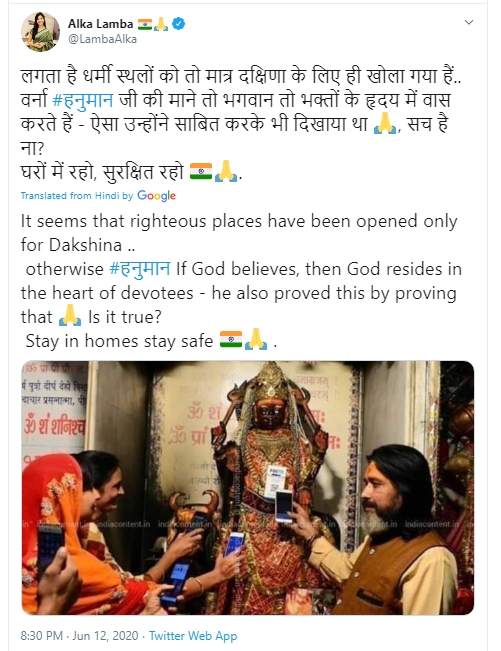
Former Aam Aadmi Party member who had recently returned to Congress, Alka Lamba today shared an image on her official Twitter account to allege that temples were opened after the lockdown for receiving donations from the devotees.
Ms Lamba shared a picture of a Hindu temple where the devotees are seen using their mobiles to donate money digitally to the temple.
“It seems that religious places have been opened only for receiving Dakshina (donations). If Lord Hanuman is to be believed, God resides in one’s heart which he had proved it. Stay in homes stay safe,” the English translation of Alka Lamba’s tweet read.
Truth about Alka Lamba’s shared photo
Casting aspersions on the Hindu temples, Ms Lamba, through the image shared by her on her official Twitter account alleged that the temples have opened for the sole purpose of seeking donations. However, the image attached by Ms Lamba in her tweet was not a recent picture but a four-year-old picture from 2016. Moreover, it is a stock image available for purchase online. Ms Lamba used this 4-year-old picture to besmirch the Hindu temples as rapacious centres that have opened following the lockdown to fill up their coffers. The image used by the Congress leader itself has the familiar copyright protection watermark indicating that the image has been taken from a stock image site.
As can be seen from the above image, the picture was from 2016 where people were seen using PayTM to send donations at Shani temple in Shashtri Nagar in Jodhpur. However, Ms Lamba did not care to verify the origins of the image and went ahead to defame the Hindu temples by claiming that as India entered into ‘Unlock-1’ phase when certain restrictions were being lifted by the authorities, temples were busy collecting donations.
Following multiple rounds of lockdown that ended on May 31, the central government ordered a calibrated re-opening of the country starting June 1 with specific set of guidelines about dos and don’t for the people. By June 8, the country had already completed all three phases including the re-opening of offices, malls, restaurants and religious spots based on the assessment by local law enforcement officials.
Several statues of prominent personalities in London are being covered in boards and steel bars after the demand for removal of them grows from anti-racism protesters. After the Black Lives Matters protesters demolished statues of Christopher Columbus in USA during the ongoing protests after the killing of African American George Floyd by a white police officer, the BLM protesters in UK are trying the demolish statues of persons they allege of being racist and fascists.
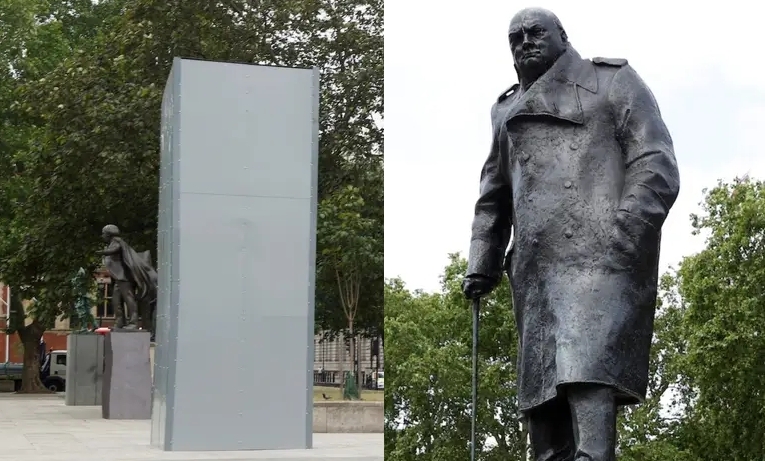
The bronze statue of Mahatma Gandhi which is erected in the London square is being covered and boarded amid the Black Lives Matter protests which erupted after the death of George Floyd in police custody.
As per reports of The News, the anti-racism protestors have demanded the British government to remove statues of Mahatma Gandhi from two prominent places in London and Leicester. The anti-racism protests following the killing of George Floyd in the USA in are gaining pace worldwide and have been successful in dismantling statues of many popular figures, most of them revered by millions.
The protestors smeared ‘racist’ on Gandhi’s pedestal
The demand for the removal of statues of Mahatma Gandhi has emerged amid the removal of controversial monuments and statues which are claimed to be a ‘racist’ in actual life. Gandhi is being seen as a ‘racist’ who allegedly had a hatred for the black people.
Reportedly, in the last week during protests in the UK, the BLM protesters vandalized Mahatma Gandhi’s statue standing in Parliament Square, London. The protestors smeared with ‘racist’ on the pedestal and threw white paint on the burnished bronze.
The Word ‘racist’ on the pedestal of Gandhi’s statue triggered reactions from netizens on social media. A petition in favour of the city’s statue was filed by the Labor party MP Claudia Webbe from East Leicester. She said, “Gandhi has shown us that organized peaceful resistance can be a force for change.”
Apart From Gandhi, Mandela and Churchill’s statue are under threat
Apart from Mahatma Gandhi, Winston Churchill’s statue and Nelson Mandela’s statue are also under threat of being targeted by the anti-racism protests. As a result, those statues are also being boxed to protect them from vandals. Similarly, the Centopath, the war memorial in London, also has been covered for protection.
Taking to twitter, UK Prime Minister Boris Johnson wrote, “The statue of Winston Churchill in Parliament Square is a permanent reminder of his achievement in saving this country- and the whole of Europe- from a fascist and racist tyranny.”
The statue of Winston Churchill in Parliament Square is a permanent reminder of his achievement in saving this country – and the whole of Europe – from a fascist and racist tyranny. 1/8
— Boris Johnson #StayAlert (@BorisJohnson) June 12, 2020
He further added, “It is absurd and shameful that this national monument should today be at risk of attack by violent protestors. Yes, he sometimes expressed opinions that were and are unacceptable to us today, but he was a hero and deserves his memorial.”
He further added that we all understand the legitimate feelings of outrage at what happened in Minnesota and the legitimate desire to protest against discrimination.
To anyone planning to join #BlackLivesMatter protests over the coming days: for you and your families safety, please stay at home and find a safe way to make your voice heard.
To the extreme far-right groups hijacking this crucial cause: Londoners have no time for your hatred. pic.twitter.com/JXs3iwNpUc
London Mayor Sadiq Khan also urged the people to London to maintain distance from participating in protests. He issued statements targeting the Far-right group accusing them of fuming violence. He posted on twitter. He stated, “I’m extremely concerned that further protests in Central London not only risk spreading Covid-19, but also could lead to disorder, Vandalism, and violence. Extreme far-right groups who advocate hatred and division are planning counter-protests which means the risks of the disorder are high.”
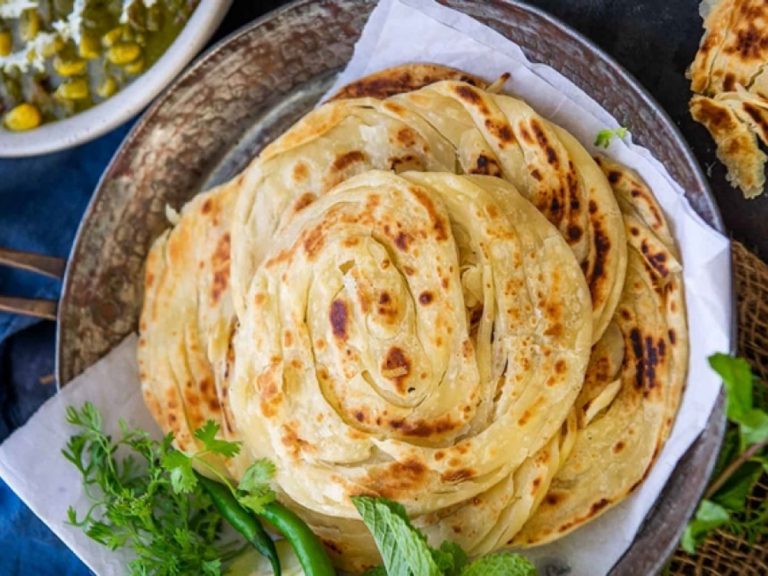
A bizarre taxation ruling has raised a debate on whether the parota can be categorized as roti or not, two popular flatbread that originated in the Indian subcontinent. In a recent ruling, The GST’s Authority of Advance Ruling (AAR) in Karnataka passed an order where they said that parotas are different from rotis, thus, they will attract 18% GST.
The curious case of Parotas vs rotis
A few months back, ID Fresh Food Pvt Ltd from Karnataka applied to the AAR under section 97 of the CGST Act, 2017. The company prepares and supplies a wide range of ready-to-cook foods like idli batter, parotas, curd, paneer, chapattis and more. In the application, the Advance Ruling Authority was asked if Malabar parotas and whole wheat parotas can be classified under Chapter heading 1905. If parotas is classified under chapter 1905, it will attract 5% GST.
The applicant suggested that parotas be considered in the said chapter similar to khakhra, chapatti and roti. In its ruling, AAR said that the items such as roti, bread, pastry, cakes, khakhra, wafers, etc. that are classified under Chapter 1905 are ready-to-consume. The consumers do not have to heat or cook any of these items before eating them. On the other hand, patoras are not completely cooked before packing and the consumer has to heat it. Thus, it is not possible to categorize it under the said chapter. AAR further said that packed parotas would attract 18% GST.
It is important to note that the ruling is for packed ready to cook parotas, and not for the ready to eat parotas we can buy from eateries.
Twitter erupted with quirky replies on the ruling
As soon as the ruling got published on social media, many users made fun of the ruling and posted quirky replies. Some users pointed out that the government has time to decide if parota is roti or not, but they cannot work on improving the country’s economy.
This is what the bureaucracy lives for. First create complex categories for GST-then adjudicate whether your product is a paratha or a roti. Ease of doing business,my foot. pic.twitter.com/uQNvklubRM
Anand Mahindra posted a tweet in which he asked if we should discuss parota during the crisis our country facing or not. Arun Bothra, who often uses his wittiness to raise important issues, said when his dietician told him parota is rich food, he thought she is talking about calories.
With all the other challenges the country is facing, it makes you wonder if we should be worrying about an existential crisis for the ‘Parota.’ In any case, given Indian jugaad skills, I’m pretty sure there will be a new breed of ‘Parotis’ that will challenge any categorisation! https://t.co/IwHXKYpGHG
This is not the first time there has been an argument over tax rates on similar items. Before GST was implemented in India, the Delhi High Court had decided over the difference between chappal and sandal so that the customs department can decide duty on the product.
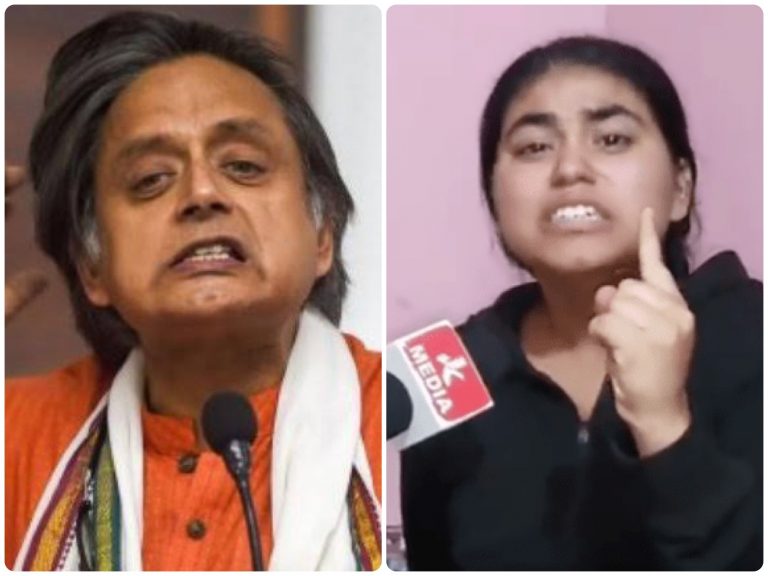
Late Ajay Pandita’s family has launched a blazing attack against Congress leader Shashi Tharoor for attempting to politicise the murder of the Jammu and Kashmir sarpanch. Coming down heavily against the Congress party, late Ajay Pandita’s daughter, Niyanta said on Friday that Congress should not politicise the assassination of the ‘son of India’. She added that there was no need to play politics over her father’s death and that the family demands nothing but justice for Mr Pandita’s murder.
In conversation with Republic TV, Niyanta said, “I couldn’t comprehend the need to politicise the matter. He suffixed Bharti to his name because he wanted to be associated with the country and not with any political party. I am naive about politics but what I do know is that whatever my father did was not anything to politicise. We want justice nothing more.”
#Exclusive | Ajay Pandita’s daughter hits back at Cong MP @ShashiTharoor who politicized killing of the Sarpanch.
Don’t try to politicize this issue, my father was a true Indian. He served this nation: Ajay Pandita’s daughter.
Ajay Pandita’s father also criticised Congress leader Shashi Tharoor for needlessly politicising death of his son. “What does Shashi Tharoor know? Ajay made the supreme sacrifice for the country. Nation trumps politics. His statement is completely wrong. We want justice. Political leadership will twist and turn this incident, but all we want is justice.”
Shashi Tharoor claimed murder of Ajay Pandita was an attempt to create “Congress-Mukt Bharat”
Earlier in the day, Thiruvananthapuram MP–Shashi Tharoor while referring to the killing of Congress sarpanch Ajay Pandita claimed that the murders of the Congress leaders from ‘Kashmir to Kerala’ was an attempt to create a ‘Congress-free Bharat.’ Politicising the unfortunate killing of Ajay Pandita, Mr Tharoor added that party leaders were being killed for upholding secularism and democracy which is what all the enemies of the ‘Idea of India’ want.
“The message is clear: “Congress-mukt Bharat” is what all enemies of the Idea of India want,” the Thiruvananthapuram MP said while alluding to the killing of Ajay Pandita.
Ajay Pandita shot dead in Anatnag
The Kashmiri Pandit Sarpanch was shot dead on Monday by terrorists in Anantnag district of Jammu and Kashmir. Congress Sarpanch of Lokbowan Larkipora, identified as Ajay Pandita, was fired upon by the terrorists who later succumbed to his injuries at a hospital.
According to the police sources, the sarpanch had gone to work in his orchard when he was attacked by the terrorists. The area has been cordoned off soon after the shooting.
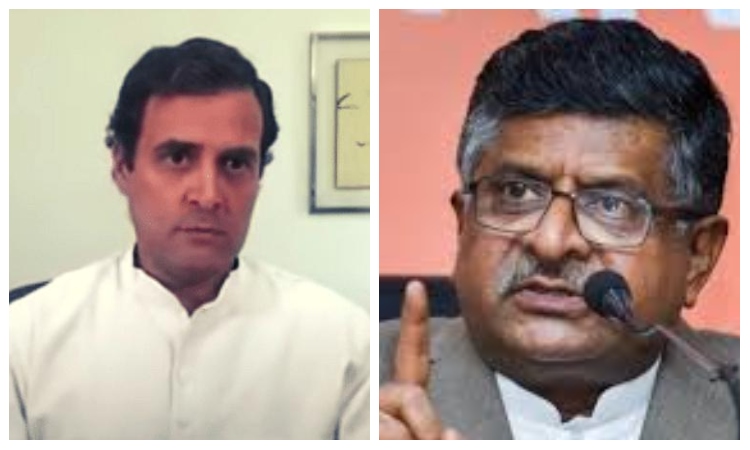
Union Law Minister Ravi Shankar Prasad on Friday lashed out at Congress senior leader Rahul Gandhi for asking PM Narendra Modi to share facts about on the standoff with China in eastern Ladakh.
Sharing an old July 2017 Tweet by Rahul Gandhi where he has acknowledged meeting the Chinese envoys during the Doklam crisis in the year 2017, RS Prasad took a jibe at the former Congress President saying: “Rahul Gandhi is asking the Prime Minister to share in public facts about sensitive China border issues. I think Mr. Gandhi has a parallel information system in place. Did he not meet the Chinese envoy during the Doklam crisis? Denied it initially but accepted it after public outcry”.
RahulGandhi is asking the Prime Minister to share in public facts about sensitive China border issues. I think Mr.Gandhi has a parallel information system in place. Did he not meet the Chinese envoy during the Doklam crisis? Denied it initially but accepted it after public outcry pic.twitter.com/07jLjWmihz
The Union Minister was appalled that Rahul Gandhi wanted to discuss such a sensitive, nation’s defence-related issue over a public platform.
Rahul’s attack on PM
Hitting out at PM Modi, Rahul Gandhi had on Wednesday wrote on Twitter that the PM was “absolutely silent” even as the Chinese walked in and occupied Indian territory in Ladakh.
“The Chinese have walked in and taken our territory in Ladakh. Meanwhile, the PM is absolutely silent and has vanished from the scene,” Gandhi tweeted.
Rahul Gandhi and China
It is pertinent to note here, that the Gandhi-scion, not once but twice, was caught meeting Chinese officials, raising suspicion among the policymakers regarding the intent of his secretive meeting with the Chinese.
The first meeting had taken place in 2017, when Rahul Gandhi had a meeting with Chinese Ambassador to India Luo Zhaohui, especially at a time when India and China were in the middle of a stand-off at Doklam. At first, the Congress party had denied such meetings and had termed news reports suggesting that the Gandhi-scion had indeed met Chinese officials as ‘fake news’.
Again in 2018, Rahul Gandhi had himself revealed regarding the secret meeting with a couple of Chinese ministers during his trip to Kailash Mansarovar in September 2018. The meeting was kept secret initially but later Rahul Gandhi had revealed the details of the meeting accidentally leading to people to speculate even more as to why both the Congress party and China were trying to hide the meeting.
Ravi Shankar Prasad tore into Rahul Gandhi for raising questions on standoff with China over Twitter
Meanwhile, this was not the first time the Gandhi-scion was being castigated for unnecessarily using the Sino-India border issue to target the Modi government. On Wednesday, Prasad had slammed Congress leader Rahul Gandhi for raising questions on India-China border standoff on Twitter.
Rahul Gandhi should know that questions related to international matters like China should not be asked on social media. Also he is the same person who asked for evidence after Balakot airstrikes & over 2016 Uri attack. pic.twitter.com/dD1xIJrKsX
“Rahul Gandhi should know that on international matters, like China, questions should not be asked on social media. Also, he is the same person who asked for evidence after Balakot airstrikes and 2016 Uri attack,” said Prasad.
A group of retired armed force officers had slammed Rahul Gandhi for his “ill-conceived” statement on standoff with China
Prior to this, a group of retired armed force officers slammed senior Congress leader Rahul Gandhi for his “ill-conceived” and “ill-timed” statements and tweets questioning the handling of India-China border disputes by the armed forces and the Government of India.
Lashing out at the Gandhi-scion, they said that the Congress leader’s tweets and statements on border dispute with China “betray his lack of knowledge or are a convenient attempt to ignore historical blunders of Jawaharlal Nehru era”.
Castigating him for the past blunders made by his great grandfather the retired officers asked: “Does Rahul Gandhi not know that Tibet was handed over to China on a platter by Mr Nehru and China constructed roads through Aksai Chin and later occupied it when Nehru was the prime minister.”
Babita Phogat lashed out at the Congress leader over his alleged ‘love for China’
On the same day, wrestling champion Babita Phogat had also lashed out at the Congress leader over his alleged ‘love for China’. She wrote on her Twitter account, “One thing I want to ask Rahul Gandhi. Is he inclined towards India or China? Nowadays his love for China overflowing. Does he have no faith in India?” Phogat had hinted at the Congress party’s strange fixation with China.
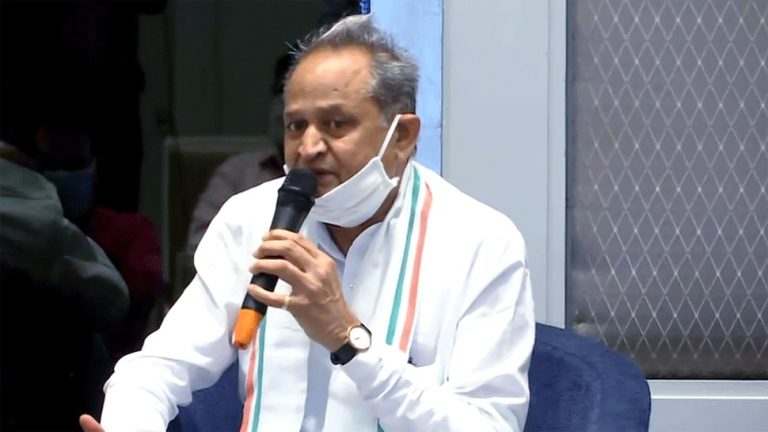
On Friday, Rajasthan CM Ashok Gehlot along with Deputy CM Sachin Pilot accused BJP of delaying the Rajya Sabha elections so that the ruling party can buy MLAs. Chief Minister held a press conference in Jaipur seven days before the Rajya Sabha elections. The elections are scheduled to be held on June 19 on the 3 Rajya Sabha seats in the states.
Ashok Gehlot stated, “The Rajya Sabha elections could have been conducted two months ago, but it was postponed for no reason because the BJP’s horse-trading was not complete.” Gehlot further added, “We are united. Not a single vote of our MLAs will go to anyone else in the Rajya Sabha elections and our two candidates will emerge victoriously. Two CPI(M) MLAs will support us in the election.”
Gehlot said, “A complaint has been lodged with the SOG so that investigation about those who are involved in this organized crime of money transfer could be conducted.” Gehlot said that it is evident from the political scenarios in Karnataka and Madhya Pradesh and now the trick is being applied here in Rajasthan.
We will win two seats-Sachin Pilot
Rajasthan Deputy CM Sachin Pilot said that the Congress will emerge as a winner in the coming Rajya Sabha elections. Statistics show that even the independent MLAs stand with Congress. He said that both of the candidates are going to win the Rajya Sabha elections. Sachin pilot clarified, “We were unable to meet the MLAs in three months due to lock down that’s why we have called a meet in this hotel.”
BJP responds
Rajasthan BJP President Satish Poonia responded to the allegations denounced by the Rajasthan CM. He said, “A political drama has been going on in Rajasthan for the past few days and it is being done by the CM himself. The matter is the Rajya Sabha election. A man in a position of responsibility is saying unnecessary things, he has spoken baseless things.”
I have been observing him since last few days, he has been speaking as a man who has become mentally unstable and says whatever comes to his mind. His statements reflect despair: Rajasthan BJP president Satish Poonia https://t.co/SctaYD1HKJ
Satish Poonia added, “I have been observing him since last few days, he has been speaking as a man who has become mentally unstable and says whatever comes to his mind. His statements reflect despair.”
कांग्रेस का कोई भी विधायक हमारे संपर्क में नहीं है, जो भाजपा के साथ जुड़ना चाहता है, जो मोदी जी की नीतियों में विश्वास रखता है, जो कांग्रेस की नाकारा सरकार को लात मारना चाहता है हम उसका स्वागत करते हैं :राजस्थान भाजपा प्रदेश अध्यक्ष सतीश पूनियां https://t.co/p9h9njvMz4
He clarified that not a single membe of Congress is inncontact with them. He said, “The one wants to join us, the one who trusts the polity of Modiji, the one who wants to leave the inefficient government of Congress, we will surely welcome them.”
Setback to Congress before Rajya Sabha elections
On 19 June, the Rajya Sabha elections will be held countrywide on 18 seats of Upper House. While, in the last three months, a total of eight MLAs of the Congress party resigned in Gujarat that brought down the tally in the state to 65. Five MLAs resigned back in March while three resigned on 4th June just before Rajya Sabha polls scheduled for 19th June.
The remaining Gujarat Congress MLAs were shifted to Wildwinds Resorts at Abu Road in Rajasthan. Earlier, four Congress MLAs were seen at Ambaji that is close to the Gujarat-Rajasthan border. Gulab Singh Rajput, Congress MLAs, said that MLA would discuss the strategy for the upcoming Rajya Sabha elections.
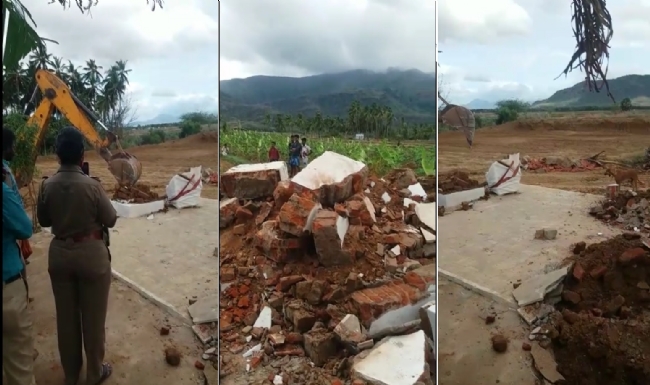
In a shocking incident, the Kattuppasathy Madasamy temple in Sammenkulam village in Tenskasi town of Tamil Nadu was destroyed by the local police, following a complaint by the radical Islamists in the area, reported The Organiser. The Hindu temple, built on a privately owned Patta land, was revered by the Nadar community. The community which is primarily into business and agriculture occupation would conduct poojas and religious festivals annually at the temple. But, in the Muslim-dominated Tenskasi district, the Hindus have been at the receiving end of the apathy of the police, administration, and the facade of communal harmony.
As per locals, radical extremists from Popular Front of India (PFI), Social Democratic Party of India (SDPI), and other Muslim organisations objected to the temple’s renovation work. They claimed that it affected the privacy of Muslim women living in the vicinity. After taking cognisance of the matter, the district administration and the police bulldozed the temple without following due process. Meanwhile, the protests by the Hindus fell on deaf ears.
Pacchaimaal, the son of village head Subbaiah Nadar, had complained about the matter to the District Magistrate. Reportedly, there are 160 Hindu Nadars in the village but they are outnumbered by the Muslims. He said that his community members were illiterate and worked in the agricultural sector for a living. Pacchaimaal said that they had a forest deity temple and would change the earthen base with a new one in the month of Chitrai.
Police in Tenkasi, Tamil Nadu demolished newly constructed Temple on private land bcz Mslims, the majority in particular area didn’t want it there
Sad state of secularism in India, Churches & Mosques can be made on govt land but they can’t even tolerate Temple on private land pic.twitter.com/C11UKbKNd4
Amidst the nationwide lockdown that was imposed in the wake of the Coronavirus outbreak, the festivals had to be cancelled this year. But, the Nadar community had to change the earthen base to protect the existing ones from being eroded during the rainy season. As such, they put up a cement structure at the temple site.
But, radical Islamists objected to the renovation work, claiming that it would give an opportunity to the devotees to stare at their women taking a bath. Pacchaimaal, who said that Hindus lived in harmony with the Muslims in the area, conceded, “Being the majority, they objected and complained to the district administration and police. Within no time, the police descended on the village with JPCs and razed our temple ignoring all our pleas.”
He added that there was no restriction on having the temple on the Patta land and that his family members were the ‘hereditary trustees.’ Pacchaimaal informed that the authorities were reluctant to listen to the Hindus and refused to consider the fact that the Nadar community had been worshipping at the said temple for generations. The cops justified their move by claiming that the temple was on a Promboke land and that no permissions were obtained for the same.
Copy of the complaint to the District Magistrate by Pacchaimaal
Allegations of Muslim Appeasement
Reportedly, the Nadar community felt that the district administration and the police authorities wanted to ‘please the Muslims.’ The incident also legitimises allegations against AIAMDK and Tamil Nadu Chief Minister Edapadi Palaniswamy that he is trying to please the Muslim vote bank, ahead of the assembly polls that are scheduled for the following year. Hindu Maha Sabha leader Tha. Balasubramaniam has assured to rebuild the demolished temple in a grand manner. Several other Hindu organsiations such as Hindu Munnani had also come forward in support of the Hindus in the area.
Pacchaimaal emphasised that they neither encroached upon any government property nor started new construction. He informed that only renovation work was underway at the temple site. He warned that since a mere complaint by the majority Muslim community led to the demolition of the temple, it might have repercussions from the Hindu community. “We assure you that none will be affected by our temple. Only some with connection with fundamental outfits want to destroy communal harmony and hide the truth. We request the authorities to allow us to build a temple on our Patta land immediately” he was quoted as saying.
Bharat Mata Statue Controversy
This is not the first time that such an incident has come to light from the State of Tamil Nadu. A controversy had erupted after a Christian missionary organisation Christians of the Church of South India (CSI) filed an objection over the statue of Bharat Mata with Kanyakumari police claiming that the statue was hurting their “religious sentiments”. After their complaint, the Kanyakumari Police had covered the statue, causing outrage amongst the villagers.
The incident sparked off protests as members of the Bhartiya Janata Party (BJP), Hindu Munnani, and Rashtriya Swayamsevak Sangh (RSS) and other villagers staged demonstrations and later removed the cover. The protest was spearheaded by BJP leader Tarun Vijay and local RSS Swayamsevaks who later secured an order from the District Collector to reinstate the Bharat Mata statue to the original position.
For our media, intellectuals, academics and activists, Gujarat is extra special. Gujarat being one of the worst Coronavirus affected states has come in very handy for India’s ‘secular’ lobby. They desperately needed an excuse for Delhi and Maharashtra.
But early signs have appeared that things are finally beginning to change in Gujarat. Most significantly, the test positivity rate in Gujarat has finally dropped to the national average.
Right away, you can understand what this indicates. Gujarat tested over 6500 people yesterday and found 513 cases. Delhi tested lesser people, around 5000, but found 1877 cases! In other words, the disease has spread much further in Delhi than in Gujarat.
This means at the very least that Gujarat is testing “enough,” or at least right about the national average, compared to the spread of the disease.
What is test positivity rate
Because there is a lot of misinformation around, let us explain in very simple terms what is the test positivity rate. This is the number of confirmed cases detected as a percentage of the number of tests.
In other words, the more widespread the testing, the bigger the denominator. Which would make the test positivity rate drop.
Conversely, if a state were to restrict testing, the test positivity rate would go up. Again, this should be simple to understand. For example, if you tested 100 people who are already in a Covid hospital ward, you would find all 100 of them positive. The test positivity rate would be 100%.
Now suppose you expand testing slightly. You only test those who are already showing severe symptoms such as shortness of breath. Not all of them would have Coronavirus, but the likelihood would be extremely high. The test positivity rate could be as high as 80%.
Suppose you expand testing even further, to those with mild symptoms. The test positivity rate would continue to drop. If you start testing even those who have come in contact with those having a fever, the rate would be even less. The wider you cast the net, the less likely you are to find someone who tests positive. Ultimately, if you tested all 130 crore Indians, the positivity rate would be close to 0%.
Tough questions
We should note here that neither India’s overall test positivity rate of 7.3% nor Gujarat’s 7.8% is reason to relax. Both numbers are still very high. But there is no longer any doubt that when it comes to testing, Gujarat has moved ahead on the curve compared to other hotspot states like Delhi and Maharashtra.
In particular, Delhi is doing the worst of all, with a terrifying test positivity rate of 35%!
That means our intellectuals and activists are going to have to do what they dislike most in the world: ask tough questions to the ‘secular’ governments of Delhi and Maharashtra. If they care about intellectual honesty, that is.
For three months, our intelligentsia has had Arjuna-like sharp focus on just one target: Gujarat. This, however, is a pandemic. So there is more than just one target. This means asking what ‘best CM’ is doing. It will hurt, I know.
Not just other states in India, we will have to look at countries across the world. By now, I hope you have noticed the clever sleight of hand in the way the Indian media reports Coronavirus statistics.
Indian media’s sleight of hand
The number of tests was reported as a percentage of population to show that India is lagging behind in testing.
The number of confirmed cases was reported in absolute numbers to prove that India is among the worst affected nations in the world.
If we strive for consistency instead of opportunism, we would see a very different picture.
India has seen about 6 deaths per million people, which is among the lowest in the world. The US has seen 341 deaths per million, which is more than 50 times as many. The numbers for major European countries are France (449), Germany (104), Italy (564), Spain (580) and UK (605).
In other words, the West has seen Coronavirus deaths at a rate that is generally 50-100 times more than India. The “best” performer is Germany, which has done 17 times worse than us.
Conclusion
No gap in testing and data collection can explain a gap as large as this. We are just going to have to accept that we are doing better than the West. For most Indians, that is cause for celebration. But not for all. Think of those Indians who have to write articles for New York Times, Washington Post and BBC. They need to eat too.
As for Gujarat, our intellectuals will need to find better reasons to criticize than words of some racist Brit from the last century.
The Uttar Pradesh police received a threat message against CM Yogi Adityanath. In a Whatsapp message sent to the social media cell of UP Police’s integrated emergency response centre UP112, a person threatened to kill Cheif Minister Yogi Adityanath “with a bomb”. He has also warned of bomb blasts at 50 different places in Uttar Pradesh.
In the written message on Whatsapp an unidentified person has said that “we will blow up the entire state and the Uttar Pradesh government will keep watching.” The message was sent to the WhatsApp number of UP112.
UP police lodged an FIR
The Lucknow police have taken to Twitter to inform that an FIR, in this case, has been lodged in Gautam Palli police station. The crime branch and cyber team cell have been informed and the search for the unidentified person behind the Whatsapp message has begun.
The police have informed that security around Yogi Adityanath’s residence in Uttar Pradesh’s Kalidas Marg and all VIP areas has been beefed up, and is being monitored by the Lucknow police and concerned authorities.
— POLICE COMMISSIONERATE LUCKNOW (@lkopolice) June 12, 2020
Maharashtra ATS nabbed one Kamran Amin Khan for threatening to kill Yogi Adityanath ‘with a bomb’
It is pertinent to note here, that last month Maharashtra Anti-Terrorism Squad (ATS) apprehended a 25-year-old man named Kamran Amin Khan from the Mhada colony in Chunnabhatti area of Mumbai for threatening to kill Chief Minister Yogi Adityanath ‘with a bomb’. He had sent the death threat to Yogi Adityanath as a Whatsapp message to the social media cell of UP Police’s integrated emergency response centre, UP112.
On being interrogated, Kamran had confessed to the crime.
Maharashtra ATS called it a ‘prank’
Using dump data, the cell phone number used by Kamran to send the threat message to kill Yogi Adityanath was tracked to Chunabhatti. An ATS officer informed that the accused was nabbed using technical expertise and human intelligence. Reportedly, Kamran has no criminal record but has a history of drug abuse. “His actions seem to have been a prank. Even his number is saved on Truecaller as ‘Yogi Ji’,” the officer was quoted as saying.
Earlier threats against CM Yogi Adityanath
On May 5 2020, the Uttar Pradesh Police had nabbed a Bihar constable named Tanveer Khan from Ghazipur after his contentious Facebook post on April 24, calling for the killing of the State Chief Minister Yogi Adityanath, went viral on social media.
Reportedly, there was a state of concern in the police department when it was discovered that the accused was a cop himself. The UP police nabbed Khan from Nalanda with the help of the Dipnagar police in the Nalanda district.
Earlier, on his Facebook timeline, Tanveer Khan has written: “Azaans are not happening in the areas of Dildar Nagar and Kamsarobar, Yogi should be shot dead.”
In the wake of the ongoing anti-racism protests around the West, Bollywood actress Swara Bhasker is trying hard to make the headlines herself. After West Indies cricketer Darren Swamy accused his teammates in the Indian Premier League of calling him by a racist nickname, Swara Bhasker has taken upon the mantle of ‘social justice’ herself. Darren himself snubbed Swara by asking not to use his incident to make a big issue out of it, rather he asked it to be used for educating each other so that it does not happen again.
Amid this, netizens reminded the actress of crass remarks she had used herself in the past for a four-year-old child actor. A user reminded her of the occasion on which she had called a four-year-old child ‘ch**iya’ and ‘kam**a’ on live television.
The incident was narrated by Swara herself during a TV chat show while telling about her first days in the entertainment industry. Talking about an ad film that she was shooting with the child actor, she said in the show that the ‘ch**iya’ and ‘kam**a’ child had called her aunty, while she had just entered the industry.
When this was pointed out today by social media users, Swara Bhasker chose to defend herself saying that she had said the crass word ‘in her head’ and the child did not hear it. She claims that it was a ‘fictional retelling’ of an event.
Listen to the clip. 1. Said it in my head. 2. Child didn’t hear it. 3. It’s a fictional retelling of a comic situation on a comedy show. Don’t make #falseequivalenceshttps://t.co/sRGje7ox2A
However, in another tweet, Swara Bhasker claimed that the child himself was ‘fictional’. And she also adds that the child didn’t hear the abusive words that she had used for him. By saying that the child didn’t hear it, Swara Bhaskar implies that using abusive words for others is OK as long as the subject of such words don’t hear it.
It appears that the actress tied herself in knots while trying to justify using crass words against a child on live television. One time she says that her words were a ‘fictional retelling’ of an event while on other occasions, she claims that the child himself is ‘fictional’, while she also said that child didn’t hear it.
Child was fictional. He never heard the words. Daren is a real person. There’s a difference but go ahead.. false equivalence aapki khaasiyat hai. ?????? https://t.co/QaVQW4CsEB
In the video, however, it is clear that Swara Bhasker is referring to a very real event. She described her experience in one of her initial shoots for an ad for a soap and narrated that she was addressed by a child as ‘aunty’, which prompted her to abuse the child in her head. When the video first surfaced on social media, it created an outrage then as well since people did not take kindly to a child being abused for the purpose of comedy.