Wednesday, April 1, 2026
Home Blog Page 5312

AAP MLA Amanatullah Khan and Kejriwal’s Delhi govt systematically settled 300 illegal Rohingyas in Delhi: Report

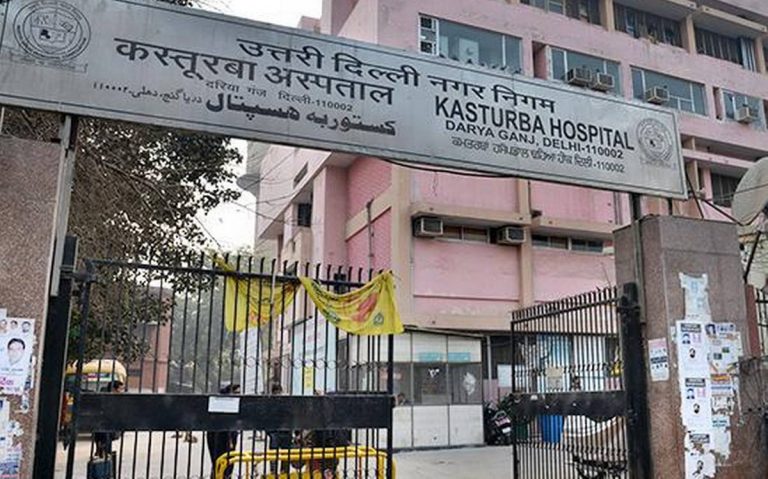
Over 300 Rohingya Muslims have illegally settled in Madanpur Khadar area of Delhi and are expanding their base, a report by Dainik Bhaskar suggests. The report suggests that they are living illegally right across the cremation ground in Madanpur Khadar area of the national capital. Moreover, they have settled on the land of irrigation department of the Uttar Pradesh government which is about 5.2 acre land. The Khasra number 612 land is worth crores of Rupees which has now been taken over by illegal Rohingyas and Bangladeshis.

As per the report, they are also getting all government benefits as well. Amid the lockdown the Delhi Government and Okhla MLA Amanatullah Khan have been providing huge amount of ration to them. Madanpur Khadar falls under Okhla constituency in New Delhi. As per the report, the illegal settlement of Rohingya Muslims here also have stolen electricity through illegal means and also have a boring water.

Meanwhile, other migrant workers who are living nearby are deprived of the ration. OpIndia had recently reported how the poor in Okhla had alleged religious discrimination in ration distribution in Amanatullah Khan’s constituency. The locals had alleged that they were not provided ration because they were Hindus and ‘did not vote for AAP’.

Dainik Bhaskar report further states that the local residents allege that the Kalindi Kunj Police station officers know about the illegal Rohingyas are selling marijuana, smack and other illegal substances but are not taking any action against them. Many RWAs have requested the Delhi Police to remove the illegal settlement but all pleas have fallen on deaf ears, the report states.

Carefully took over UP govt irrigation dept land: Local residents

The local residents allege that AAP MLA Amanatullah Khan very carefully and systematically settled the illegal Rohingyas and Bangladeshis on the government land. As per the Dainik Bhaskar report, prior to settling on UP government land, these illegal Rohingya Muslims were living on an empty plot owned by a Muslim politician in Kanchan Kunj. On 17th April 2018, these jhuggis were allegedly set on fire under a conspiracy. Then the Delhi government got them settled on the land owned by UP government. Around this camp, illegal Bangladeshis were also settled.

These Rohingyas are staying in this area since long now. The report further states that the locals allege that AAP MLA Amanatullah Khan and Delhi government completely backs and supports the illegal Rohingyas settled there. Locals allege that about 300 Rohingyas live in this camp who have illegal power and water connections.

Sarita Vihar ACP washes his hands off the matter

Sarita Vihar ACP Dhal Singh, while speaking to Dainik Bhaskar, reportedly said that if the Rohingyas are illegally staying here then how does it matter. The report cites Kalindi Kunj SHO Sanjay Sinha as saying that while he is aware of the illegal settlement of Rohingyas, he could not do much as it is out of his jurisdiction.

As per the report, former MP Maheish Giri’s PS said that while Giri had written to Delhi Police regarding the issue by AAP MLA Amanatullah Khan had opposed it. He added that under the supervision of Khan, the illegal Bangladeshis and Rohingyas are being settled here. Moreover, Khan also got the Aadhaar cards and voter cards made for them, the report alleges.

Finance minister announces the fifth and last tranche of economic package focusing on ease of doing business, MGNREGS, PSEs, Health and Education

On Sunday, Finance Minister Nirmala Sitharaman announced the fifth and the last tranche of Modi government’s “Atmanirbhar Bharat Abhiyan” package worth Rs 20 lakh crores to restart the economy following the coronavirus lockdown.

Fifth tranche of announcements under “Atmanirbhar Bharat Abhiyan” economic package

Finance Minister Nirmala Sitharman began her Sunday address by quoting Prime Minister Narendra Modi’s speech to the nation. She said, “In order to prove the resolve of the self-reliant India, land, labour, liquidity and laws, all have been emphasised in this package”. She added, “We have announced several reforms in this regard and shall continue with the same today.” 

“As a nation, we stand at a very crucial juncture. Such a big disaster is a signal for India, it has brought a message and opportunity,” Finance Minister said quoting Prime Minister Modi. We need now to build an ‘Atma Nirbhar Bharat’, said FM Sitharaman.

In the last four days of announcements, we have had several reforms addressing the land, labour, liquidity and laws and today’s announcements will be continuing that series, the FM Sitharaman added.

Finance Minister Nirmala Sitharaman said, “Soon after lockdown, we came with PM Garib Kalyan Package, we provided food grains to those who needed it, we did not want to scout for money to search for grains. Pulses too were given 3 months in advance. I appreciate the concerted efforts of FCI, NAFED and states, giving pulses and grains in huge quantities, despite logistical challenges.”

Finance Minister said that the last tranche will focus on 7 sectors- MGNREGS, Health (rural and urban) and Education related, businesses and coronavirus, decriminalisation of Companies Act, Ease of Doing Business, Public Sector Enterprises- related steps and state governments and related resources.

Health

The Finance Minister said that the Modi government would like to show what they have done in the past two months in light of the coronavirus crisis. The FM added that various health-related steps that have been taken by the government. She added that Rs 15,000 crore was released by the PM and an insurance cover of Rs 50 lakhs per person for health professionals was announced.

The government made sure telemedicine comes into play, capacity building exercises have been taken up, for protection of health care workers, amendment of Epidemic Diseases Act was required which was undertaken, she added.

The coronavirus enabled India to prove to the world that we can ramp up our production of protective equipment from 0 producers, we today have more than 300 domestic PPE manufacturers, said Finance Minister. We have given more than 11 crore HCQ tablets, the FM added.

Image Source: PIB

The Modi government also said that several health reforms and initiatives put in place. The Public expenditure on health will be increased, announced Finance Minister.

The investments at grassroots for health and wellness centres both at rural and urban levels will be ramped up and all districts will have infectious disease hospital blocks. The Public health labs to be set up at block levels said FM Sitharaman.

Ease of Doing Business

Finance Minister Nirmala Sitharaman said, during coronavirus, compliance burden was a matter of concern and timely action was taken to reduce the same under various provisions of the Companies Act. 

The FM added, Board meetings were allowed to be online, rights issues can be done digitally, major reform in corporate governance.

Image Source: PIB

The Finance Minister added that debts related to coronavirus shall be excluded from defaults under IBC and no fresh insolvency proceeding will be initiated up to 1 year. “At the moment MCA has extended this by 6 months, we intend to extend this by another 6 months,” FM added.

“For MSMEs, a special insolvency framework will be notified under section 240-A of IBC. The minimum threshold to initiate insolvency proceedings raised to Rs 1 crore from the earlier Rs 1 lakh, which largely insulates MSMEs,” she added.

Minister Sitharmanan said that further key reforms for Ease of Doing Business are in the pipeline including a direct listing of securities by Indian public companies in permissible foreign jurisdictions. Private companies that list non-convertible debentures (NCDs) on stock exchanges not to be regarded as listed companies, the government clarified.

Image Source: PIB

Decriminalisation of Companies Act

The Modi government has also announced decriminalising of Companies Act violations involving minor technical and procedural defaults. The FM announced that a majority of compoundable offences sections to be shifted to internal adjudication mechanism (IAM) and powers of RD for compounding enhanced (58 sections to be dealt with under IAM as compared to 18 earlier). 

The amendments will de-clog the criminal courts and NCLT as seven compoundable offences altogether dropped and five to be dealt with under alternative framework, the centre said.

Image Source: PIB

Education

Finance Minister said that online education has been taken up in a big way. She added that ‘Swayam Prabha’ DTH channels to support and reach those who do not have access to the internet.

On the steps taken for the education sector, the finance minister said, “The direct telecast mode use by schools will now get 12 more channels. This will also help in rural areas. Provision has been made for the live telecast of teachings. We have also tied up with private operators such as Tata Sky and DTH to air educational content.”

“200 new textbooks have been added to e-Pathshala, states, provision has been made for the telecast of live interactive sessions for teachers and students, states are coordinating to share educational air-time,” added Finance Minister.

Image Source: PIB

The Finance Minister announced that PM e-VIDYA programme for multi-mode access to digital or online education to be launched immediately.

She added that one each TV channel will be earmarked for class 1-12 students and extensive use of radio, community radio and podcasts, special e-content for visually and hearing-impaired children.

Top 100 universities permitted to start online courses by May 30, 2020, the FM added. An initiative to extend psycho-social support to students, teachers and families for mental health and emotional well-being to be launched immediately, known as ‘Manodarpan’.

Image Source: PIB

MGNREGS

The Finance Minister said to that budget estimate for MGNREGS was Rs 61,000 crore. To provide a fillip to employment, the government will now allocate an additional Rs 40,000 crore under the scheme.

The additional funds to MGNREGA will generate 300 crore more person days of work and will address need for work for returning migrants.

Image Source: PIB

Public Sector Enterprise policy for ‘Atma Nirbhar Bharat’

The Finance Minister said that the Modi government would like to announce a public sector enterprise policy. The FM added that there is a need for a coherent policy wherein the private sector will be allowed to participate in all sectors while public sector enterprises will continue to play an important role.

The Government of India will announce a new policy which will broadly categorise strategic sectors and others and the list of strategic sectors requiring the presence of PSEs in public interest will be notified.

In such strategic sectors, at least one PSE will be there but the private sector will also be allowed and in other sectors, PSEs will be privatised, Minister Sitharaman announced. To minimise wasteful administrative costs, the number of enterprises in strategic sectors will ordinarily be only one to four, others will be privatised/merged/brought under holding companies, she added.

Image Source: PIB

FM Nirmala Sitharman said that the union government recognises that like the Centre, states also facing a sharp decline in revenues. Despite this, we have extended generous support to states in this hour of need and have devolved Rs 46,038 crore in April as taxes, as per the Budgetary estimates, the FM added.

The revenue deficit grants of Rs 12,390 crore was given to states in time in April despite the centre’s stressed resources. The funds under the State Disaster Relief Fund (SDRF) of Rs 11,092 crore were released in advance in the first week of April, said FM Sitharaman. The Health Ministry released over Rs 4,113 crore for direct anti-coronavirus activities. 

At the centre’s request, the RBI has also increased the Ways and Means advance limit of states by 60 per cent. The number of days states can be in continuous overdraft position was increased from the earlier 14 days to 21 days now. The number of days states can be in overdraft in a quarter increased from 32 to 50 days, said Finance Minister.

Image Source: PIB

The states net borrowing ceiling for 2020-21 is Rs 6.41 lakh crore based on 3% of GSDP, and 75% thereof was authorised to them in March 2020 itself and timing is left to the states, clarified FM.

The states have so far borrowed only 14% of the limit authorised and 86% of the authorised borrowing remains unutilised. In view of the unprecedented situation, the centre has decided to accede to the request of states and increase the borrowing limits of states from 3% to 5% for 2020-21 only. This will give states extra resources of Rs 4.28 lakh crore.

Image Source: PIB

The Finance Minister also said that the part of the borrowing by states will be linked to specific reforms. From 3-3.5%, the 0.5% will be an unconditional increase and the next 1% to be released in 4 tranches of 0.25%, with each tranche linked to clearly specified, measurable and feasible reform actions.

Further 0.5% will be given if milestones are achieved in at least three out of the four reform areas, the Finance Minister stated.

Reforms linkage will be in four areas – universalisation of ‘One Nation, One Ration Card’, Ease of Doing Business, Power Distribution and Urban Local Bodies.

Image Source: PIB

‘Atmanirbhar Bharat Abhiyan’ – A mission for self-reliance

In his fifth address to the nation over the Coronavirus pandemic, on Tuesday Prime Minister Narendra Modi announced an economic package under ‘Atmanirbhar Bharat Abhiyan’ amounting Rs 20 lakh crore to revamp the economy which is facing a serious crisis due to the Chinese epidemic. The economic package includes the recent announcements made by the government and the Reserve Bank of India on supporting key sectors of the country.

In his speech, PM Modi said the economic package would be around the 10 per cent of the GDP.

“I announce a special economic package today. This will play an important role in the ‘Atmanirbhar Bharat Abhiyan’. The announcements made by the government on coronavirus, decisions of RBI and today’s package totals to Rs 20 lakh crore. This is 10 per cent of India’s GDP,” PM Narendra Modi said. 

The Prime Minister also said the package would help every section of society, including workers, farmers, the middle class, industrial units and the MSME sector.

The stimulus will play an important role in the ‘Atmanirbhar Bharat Abhiyan’ (Self-reliant India Campaign), PM Modi said.

“India’s self-reliance will be based on five pillars — economy, infrastructure, technology-driven system, vibrant demography and demand. When India speaks of self-reliance, it does not advocate for a self-centred system. In India’s self-reliance there is a concern for the whole world’s happiness, cooperation and peace,” PM Modi said in his address.

In her first address, Finance Minister Nirmala Sitharaman had announced comprehensive relief measures on Wednesday to support various sectors including Micro, Small and Medium Enterprises, Discoms, NBFCs, Micro Insurance Institutions, etc.

In the first tranche, the Modi government had announced 16 included six measures for MSMEs, EPF, NBFCs and MFIs, discoms, contractors, real estate sector and had also put out some tax measures.

Later, on Thursday, Finance Minister Nirmala Sitharaman had declared the second tranche of the “Atmanirbhar Bharat Abhiyan” package that included relief measures to migrant workers, street vendors, housing, employment generation for tribals and small farmers.

Similarly, Finance Minister Nirmala Sitharaman and MoS Finance Anurag Thakur put out in the public regarding various relief measures in the third trance on Friday in which support measures were announced to on Agriculture and Allied Activities – fisheries, animal husbandry, dairy, etc. Some reforms pertaining to governance and administrative reforms were also announced.

On Saturday, Finance Minister Nirmala Sitharaman had announced the fifth tranche of the economic package which focussed on coal, minerals, defence production, airspace managements/airports/MRO, power distribution companies in UTs, the space sector and atomic energy.

Coronavirus scare: 700 potential ‘superspreaders’ test positive for Coronavirus in Ahmedabad after mass screening of vendors and shopkeepers

On Saturday, a senior bureaucrat in Gujarat reportedly informed that about 700 ‘superspreaders’ had tested positive for the Wuhan Coronavirus in Ahmedabad, while conducting a screening of fruit and vegetable vendors and shopkeepers. Due to their potential of spreading the deadly pandemic to a large number of people, they have been referred to as ‘super spreaders.’

The Massive Screening

The screening of 35,000 people was conducted after the city administration shut down all shops, except dairy stores and pharmacies, on May 7. The shops selling essential items were issued health screening cards which became operational from May 15.

Principal Secretary (Health) Jayanti Ravi said, “This was a special drive that was undertaken in Ahmedabad to ensure containment of the spread of infection. To see that data remains transparent and accurate, this was declared today (after completion of the drive).”

According to Additional Chief Secretary Rajiv Gupta, around 12,500 people were tested for the Coronavirus infection and 700 were diagnosed with the deadly virus and therefore isolated. He had appealed to people to buy items from vendors with valid health cards. Police Commissioner (Ahmedabad) Ashish Bhatia has also requested ‘minority communities’ to cooperate with law enforcement.

As of April 17, Gujarat has reported 10,988 live cases of the Chinese virus and 625 deaths. The city of Ahmedabad accounts for more than 8000 such cases. About 973 people had tested positive for the Coronavirus infection on Saturday.

Lockdown in Ahmedabad

Earlier, all shops except those providing milk and medicines were ordered to shut down in Ahmedabad in the wake of the rising cases of Wuhan Coronavirus pandemic. The shops remained closed from 12 am on the 7th of May to 6 am on the 15th. The order was issued by the Commissioner of the Ahmedabad Municipal Corporation. The order stated that the extreme measures are being undertaken to prevent the spread of the Coronavirus. Shops selling fruit, vegetables, and groceries were also directed to be shut down.

Coronavirus: India shows early signs of recovery, doubling rate improves as cases double 23 days from 11 days on April 30

As India continues to fight the Chinese pandemic grave coronavirus crisis, new data reveals that India has shown some signs of improvement with regards to limiting the growth of coronavirus cases in the country as there is a decline in the rate of growth of new cases. The expert suggests that India is now in the early stages of recovery and can begin to flatten the coronavirus curve in the near future.

According to the average data analysed for states with regards to the confirmed coronavirus cases, there is an improvement in the ‘doubling rate’. According to the data shared by Professor Shamika Ravi, a senior fellow at Brookings Institute, India Centre, and a former member of the Prime Minister’s Economic Advisory Council, the coronavirus cases in India has managed to slow its doubling rate even further to 23 days from the previous 19 days as the total cases cross the 90,000-mark in the country.

According to Prof Shamika, the total number of coronavirus cases reached 90,927 and the active cases of the virus are growing at 3.1% per cent, with the doubling rate at 23 days. In the previous data, Prof Ravi had released, she had suggested that the coronavirus cases was growing at a 3.6 per cent, with the doubling rate at 19 days. The doubling rate on April 30 was 11 days.

The new data suggests that India is seeing an improvement in the overall situation with regards to coronavirus crisis in the country.

Image Source: Prof Shamika Ravi

Recovery rate is good in most of the states

According to Prof Shamika Ravi, in states like Maharashtra, Gujarat, Odisha the infection prevalence is rising and in states like Kerala, the coronavirus cases have started to rise after reaching an all-time low of the number of new infections in the state, which is a sign of worry.

The states like Uttar Pradesh, Rajasthan, Madhya Pradesh, Punjab, Andhra Pradesh, Telangana and Karnataka are showing signs of recovery. West Bengal, Gujarat has seen a higher number of deaths as per the data provided by Shamika Ravi. Prof Shamika Ravi stated that India was in its early stage of flattening the coronavirus curve.

Image Source: Prof Shamika Ravi

The states like Kerala, Bihar, Gujarat, Rajasthan, Jammu and Kashmir, Madhya Pradesh have seen a rise in the number of cases compared to last one week. All these states have seen more cases reported this week in relative to one week before, according to the data provided by Prof Shamika Ravi.

Similarly, states like Punjab, Tamil Nadu and Haryana has seen less number of cases in this week compared to last week.

Image Source: Shamika Ravi

Maharashtra, Tamil Nadu major contributors to the fresh cases

According to the data published by Prof Shamika Ravi, the states which are contributing to the rising cases in the country are Maharashtra, Tamil Nadu, Gujarat and Delhi in increasing order of cases. Prof Shamika Ravi suggested that the only way to reduce new cases is aggressive and contact tracing. 

Image Source: Prof Shamika Ravi

According to the latest update from the Ministry of Health and Family Welfare, the total number of coronavirus cases in the country has climbed to 90,927, including 53,553 active cases. While 2,872 deaths have been reported overall, around 34,224 people have been cured/discharged/migrated. Meanwhile, Maharashtra and Tamil Nadu have the highest number of cases in the country with 30,706 and 10,585 cases respectively. 

Visakhapatnam doctor who was suspended for demanding PPEs thrashed by cops for ‘creating nuisance’ on road

In a ghastly incident on Saturday, the Visakhapatnam police brutally assaulted a doctor, tied his hands and dragged him on the road for allegedly creating nuisance in public and abusing the YSR Congress-led state government in an intoxicated condition.

According to the reports, the videos of a police constable kicking and flooring a bare-chested Dr K Sudhakar had gone viral on social media, drawing ire, not just from the opposition parties but also civil society.

A series of videos showed that the suspended doctor was walking in the middle of the road shirtless. The cops tied his hands up, even as another constable hit him with a stick. The doctor was seen lying down on the road, with his hands tied. Later, the police put him in an auto and took him to the police station.

The doctor was earlier suspended for requesting PPE kits

Reportedly, Sudhakar, an anesthesiologist at Narsipatnam government hospital was suspended by the Jagan Mohan Reddy-led Andhra Pradesh government last month on disciplinary grounds after the doctor had demanded protective gears to treat coronavirus patients. The doctor had alleged that the government was not providing an adequate number of PPE kits and N-95 masks to the doctors.

“We are asked to use the same mask for 15 days before asking for a fresh mask. How can we treat patients risking our lives?” he asked.

A month after his suspension, the police brutality against the doctor has been reported after a police constable was seen attacking Dr Sudhakar in a public road. The doctor’s hand were tied behind his back by the policeman and beat him up before bundling him into an auto-rickshaw.

The opposition parties, especially Telugu Desam Party condemned the attack against the doctor incident, alleging that the incident reflecting the poor state of law and order situation in the state.

TDP General Secretary Nara Lokesh, took to Twitter to attack the YSR Congress-led government in the state. He tweeted, “Dr Sudhakar, who had only asked for a mask, was unfairly suspended. The Dalit doctor has now been tied up and beaten up with a lathi by the Jagan Mohan Reddy government. We condemn this incident.”

Allegation that doctor was in an inebriated condition

According to the New Indian Express report, Dr Sudhakar was allegedly under the influence of alcohol and then caused public nuisance near the Paalem Port Hospital Junction. As per the report, the heavily drunk doctor had arrived in his car near the junction and had allegedly tried to remove the barricades on the main road.

The doctor had tried to stage a sudden protest on the national highway, stating no particular reason. The doctor, who was in his car, reportedly had hit a biker. The police claimed that Dr Sudhakar tore off his shirt, attacked and damaged a constable’s phone.

However, Dr Sudhakar has denied that he was drunk, according to the News Minute report.

Cop suspended

Visakhapatnam police commissioner RK Meena said that the constable who behaved rudely with the doctor was placed under suspension, pending an inquiry.  

The police commissioner said that the police control room had received a call informing that a person was creating nuisance on the highway at Akkayyapalem area. The police rushed to the spot and ascertained that the person was Dr Sudhakar of Narsipatnam government hospital, presently under suspension.

“Sudhakar was in a drunken state and he behaved rudely with the police. He snatched the mobile phone from a constable and threw it away,” the commissioner said. “The doctor is apparently suffering from some psychological problems,” the police commissioner said.

The doctor was later taken to the police station and from there to KGH for alcohol test. A case under section 353 of IPC was filed against the doctor.

As coronavirus cases rise in Maharashtra, MHA deploys nine CAPF companies to replace state police personnel ahead of Ramzan Eid

As coronavirus cases touches 30,000 – mark in Maharashtra, the Union Home Ministry on Saturday ordered to deploy nine companies in Maharashtra to ensure state police get respite from coronavirus-related duties ahead of Ramzan.

According to the reports, the Home Ministry has ordered the withdrawal of 10 companies of Central Armed Police Force (CAPF) from Jammu and Kashmir and sent nine such units to the worst-hit state. The 10 units comprising over 1,000 personnel are being withdrawn from the Jammu region of the Union Territory

Reportedly, the Home Ministry has released nine companies – four from the Rapid Action Force, two from the Central Reserve Police Force and three from the Central Industrial Security Force for deployment in Maharashtra.

The five companies for Maharashtra are drawn from the 10 units, which are being withdrawn from Jammu, the rest four companies will be released from the Mumbai-based unit of the RAF, CRPF’s specialised counter-riots unit.

To be deployed in worst-hit Mumbai, Pune

Maharashtra Home Minister Anil Deshmukh on Saturday said that the CAPF companies will be deployed in worst-hit areas of Mumbai, Pune, Malegaon, Amravati to give some respite for the state police from coronavirus-related duties.

“Some of their companies have come to Maharashtra. Their personnel have been deployed in Mumbai, Pune, Malegaon, Amravati and other places to ensure Maharashtra police gets rest,” Deshmukh said.

Maharashtra had requested 20 companies ahead of Ramzan

Earlier, Maharashtra state government had officially requested the Central Government for the deployment of 20 companies of Central Armed Police Forces(CAPF) to ease pressure on Maharashtra state police personnel.

The request from the Maharashtra state government had come after some police personnel had tested positive for the coronavirus while performing the duty. The coronavirus crisis in Maharashtra is particularly grim, with as many as 1025 police personnel already tested positive for the contagion.

In a video message, Maharashtra Home Minister Deshmukh had said that the rampant infection and fatigue among the overstretched Maharashtra police forces has caused the state government to put in a request with the central government for the requirement of about 20 companies of central forces to ensure law and order is maintained in the state.

Maharashtra is the worst-hit state by the coronavirus epidemic in the country with nearly 30,000 confirmed coronavirus cases in the state and more than 1,000 deaths so far.

Pakistan: Tablighi Jamaat leader kidnaps Hindu boy, demands conversion to Islam as ransom for releasing

In a video shared by a Pakistani lawyer and activist, Rahat Austin, on Twitter, a Hindu woman belonging to the Bheel tribe in Nasarpur village in Matiari in the Sindh province of Pakistan, can be seen putting up a strong resistance against forced conversion to Islam.

As per the video, a Hindu boy was abducted by the leader of Tablighi Jamaat, an Islamic Missionary Movement, in Sindh. Besides, houses belonging to Bheel Hindus have been ransacked and vandalised. Their properties have been illegally grabbed and forced to vacate their own houses.

The mother of the boy can be heard demanding the release of his son. She reiterated, “We will prefer to die but never ever convert to Islam.” It must be mentioned that the kidnappers of the Hindu boy have been seeking the conversion of Hindu families to Islam as a ransom to release the boy.

In the viral video, the woman is seen lying on the ground and expressing her anguish over the abduction of her son by Tablighi Jamaat members. She is surrounded by other Hindus who are seen staging a demonstration against the same with Urdu posters in hand. In another video, the brave Hindu woman speaks to the camera and reiterates her demand to release her son while making it crystal clear that she will not give in demands to convert to Islam

Forceful Conversions of Hindus

This is not the first time that such an incident has come to light. On Friday, a Hindu couple was forcibly converted to Islam at a mosque in the city of Nawabshah in the Sindh district of Pakistan. The conversion was undertaken by a local Imam (Islamic Cleric) named Hamid Qadri. Another Muslim leader associated with the Jamaat Ahle Sunnat was also present at the time of the forced conversion. The couple was handed cash following their conversion to Islam.

ISRO facilities to be opened up for private firms, startups; central govt to bring a new liberal geospatial data policy

While addressing the media on Saturday, Finance Minister Nirmala Sitharaman said that the government wants the private sector to be co-traveller in the space sector journey of the ISRO (Indian Space Research Organisation). Nirmala Sitharaman in a press conference along with Minister of State for Finance Anurag Thakur said, “The Indian Space Research Organisation has brought a lot of laurels to the country. However, the private sector is also doing a lot of work in the arena now. We want the Indian Private sector to be a co-traveller in India’s space sector journey.”

The finance minister said that a liberal geospatial data policy will be announced by the government that will allow tech entrepreneurs to tap Indian remote sensing satellite data to build applications for areas such as agriculture. Currently, most of them are “paying through their nose” to get these data from foreign companies, she said.

She further added, “We will provide a predictable policy and regulatory environment to private players. They will be allowed to use the ISRO facilities and other relevant assets to improve their capacities.”

“We want to help Indian startups that are doing pioneering work,” Sitharaman added.

Indian Space Research Organisation is the space agency of the Indian government and has its headquarters in Bengaluru. Now the facilities and technology the ISRO comprises will be availed by the Private sector as well.

Finance Minister Nirmala Sitharaman announced the fourth tranche of the Modi government’s “Atmanirbhar Bharat Abhiyan” package worth Rs 20 lakh crores to restart the economy following the coronavirus lockdown.

The fourth tranche of the economic package focussed on eight sectors – coal, minerals, defense production, airspace managements/airports/MRO, power distribution companies in UTs, the space sector, and atomic energy.

Islamic propaganda website Alt News lies about OpIndia report, alleges OpIndia invented the recorded comments made by father of murdered minor boy in Bihar

Update: An investigation by Bihar DGP says that there is no communal angle in Rohit Jaiswal’s death. The victim’s father has changed his statements quite a few times. The father had alleged that his son was sacrificed to make the mosque powerful by Muslims, which police investigation has found untrue. Eventually, father has also disowned the allegations.

On Saturday, Islamic propaganda site masquerading as factchecker Alt News published an article accusing OpIndia of spreading lie. Referring to the reports on OpIndia covering the gruesome murder of a minor Hindu boy in Bihar, Alt News alleged that OpIndia invented an allegation that the boy Rohit Jaiswal was murdered as a sacrifice by some Muslim people to make their mosque stronger.

Doing a fact check, the propaganda site concluded that OpIndia had published fake news regarding the murder case, as the FIR registered in the case does not mention about the mosque angle. Even after they say that OpIndia reports had quoted the father of the victim, they still went ahead to allege that the report was incorrect. ‘From where and how OpIndia created this story, only themselves can answer this’, they wrote.

AltNews article

If Alt News had read the OpIndia reports carefully, they would have found the answer to their question in those reports. OpIndia didn’t invent the allegation that Rohit Jaiswal was murdered at a mosque, probably as a sacrifice for the mosque. The reports had merely quoted Rajesh Jaiswal, the father of the boy, who had levelled this allegation. The allegation was made by the father of the boy, and OpIndia report had merely quoted him. When OpIndia had spoken to Rajesh Jaiswal over the phone on May 9, he had alleged that his son was killed in a newly constructed mosque as a sacrifice.

But later when some media reports said that he has made a u-turn now and withdrawn his allegation on the sacrifice, OpIndia had again called him on 14th May, when he had said that his earlier statement was not confirmed, but he had said that on the basis of a suspicion. He didn’t deny that earlier he had made the allegation. Moreover, he did reiterate that the maulvis in the mosque used to sprinkle water on his son, raising the suspicion that they were trying to do something with him.

The Alt News report also quotes the post mortem report to claim that Rohit died due to drowning, there is no mention of any serious injury in the report. Thus, they are claiming that not only OpIndia, but also the grieving parents of a brutally murdered son is lying. They are also conveniently totally ignoring the other angle of the case, which the alleged police inaction and brutality on the parents.

Rajesh Jaiswal had himself alleged that Kateya SHO had admitted to him that he had got the autopsy report changed. The police officer Ashwini Tiwari had refused to register the case and misbehaved with the parents, a fact recorded on video. According to Rajesh, Tiwari threw an open challenge in front of the bereaved family that they could apply all their resources if they want but they would not be able to do him any harm. Rajesh claimed that he kept receiving constant threats from the accused, but did not receive any help from the police or the administration.

In fact, Rohit’s father had already refuted the claim that Rohit died because of drowning. Showing the photographs of his dead son, he had asked, ‘does this photo look like he died of drowning? Has the boy drank even a little water?’ Rajesh had alleged that the police had taken money from the killers and made a false report on the death. The photographs of the deceased indeed do not suggest that the boy had died of drowning.

It may be noted that the SHO of Kateya police station Ashwni Tiwari has been suspended after Bihar DGP visited the place to take stock of the situation. This suggests that there is truth in the allegation of the father that Tiwari misbehaved with them, and probably fabricated the autopsy report.

Therefore, to rely on such a questionable report to allege that the father of the deceased boy is lying and he was not murdered is very unfortunate, that too for someone which claims to be fact-checker. It is Rajesh Jaiswal who had made the mosque sacrifice allegation, who said that his father didn’t die of drowning, and that police had tried to bury the case by fabricating evidence. But in an attempt to malign OpIndia, Alt News didn’t hesitate to label the grieving the father as a liar.

In another laughable to attempt to shield the accused in the case, Alt News also tried to suggest that the practice of sacrifice does not exist in Islam. Quoting one Islamic scholar, they wrote that there is no tradition to sacrifice animal to anyone except Allah, there is no provision of human sacrifice. This is laughable, because the father didn’t say that his son was sacrifice for some other Muslim god, he said his son was sacrificed for mosque, which is nothing but a place of worship to Allah. Every religious activity in a mosque is done in the name of Allah, as Muslims as not allowed to worship anything else. Therefore, if the boy was indeed sacrificed, it would be for Allah only.

The claim that Islam does not have provision for human sacrifice also does not matter here, as no major religion actually allow human sacrifice in the current era. Whatever such sacrifices are done, they are done individually. Moreover, although the animal sacrifice was common in Hinduism, it has almost disappeared baring few temples in eastern India. But widespread animal sacrifice in Islam still continues as the Eid al-Adha or Eid Qurban, also known as Bakrid, where millions of animals like cow, goat, camel etc are sacrificed every year all across the world. Therefore, it is possible that some superstitious people in Islam may also believe in human sacrifice.

In conclusion, it is a fact that the father of the boy had initially made the allegations of sacrificing his son for the mosque, OpIndia didn’t invent it like Alt News was alleging. Plus, the FIR and the autopsy report in this case are not dependable at present as the father has claimed that the police officer had fabricated them, and the police officer has been suspended after that, suggesting that there is some merit in the allegations of Rajesh Jaiswal.

Alt News themselves said that only OpIndia can answer about the questions they are raising, but they didn’t bother to contact OpIndia to know the answers before publishing the report in attempt to slander OpIndia, but in the process, they ended up slandering Rajesh Jaiswal.

Update: An investigation by Bihar DGP says that there is no communal angle in Rohit Jaiswal’s death. The victim’s father has changed his statements quite a few times. The father had alleged that his son was sacrificed to make the mosque powerful by Muslims, which police investigation has found untrue. Eventually, father has also disowned the allegations.

MHA launches National Migrant Information System to monitor the movement of migrants and contact tracing

The Ministry of Home Affairs has launched the National Migrant Information System (NMIS) in order to track the movement of migrant labourers amid the coronavirus lockdown. The portal is based on a central repository on migrant workers to ease their movements towards their native places. The NMIS is based on the existing National Disaster Management Authority (NDMA)’s GIS portal.

MHA has directed all the states to upload data on the NMIS dashboard for better coordination, monitoring the movement of migrants from one state to another, and contact tracing.

Features of NMIS

States can upload batch files of individual migrants with their data such as name, age, mobile no, originating & destination, date of travel – data which has already been collected by states.

The key data pertaining to the persons migrating has been standardized for uploading such as name, age, mobile number, originating and destination district, date of travel, etc., which states are already collecting.

States will be able to visualize how many people are going out from where and how many are reaching destination states.

The mobile numbers of people can be used for contact tracing and movement monitoring during COVID-19.

A unique ID is generated for each migrant, which can be used for all transactions

GOI nodal minitries can also monitor the movement of migrants through this portal.

Shramik special trains

The Indian Railways operated ‘Shramik special trains’ to facilitate the migrant labourers get back to their natives. Earlier on Thursday, the Central government allowed the State and union territories to ferry passengers buses to the migrant workers reaching the railway stations. The centre is claiming the 85 per cent cost of tickets while 15 per cent will be afforded by the state government.

As per reports, the India railways have operated 1704 Shramik special trains which ferried 14 lakh workers.