Home Blog Page 5472

1-week test: PM Modi extends nationwide lockdown, hints conditional relaxations may be allowed in some places after April 20

0

On the last day of the 21-day nationwide lockdown imposed with the aim to contain the spread of the deadly coronavirus, PM Modi, in his address to the nation, today announced the extension of lockdown till May 3. However, soon after announcing the extension, the Prime Minister indicated at easing of lockdown restrictions in places where there is no hotspot after April 20.

“There will be a review of every town, police station, every district and every state by April 20 to see how lockdown rules are being followed there and how much that area has protected itself from the infection,” he said.

Speaking further, the Prime Minister said: “Till 20th April, all districts, localities, states will be closely monitored, as to how strictly they are implementing norms. States which will not let hotspots increase, they could be allowed to let some important activities resume, but with certain conditions.”

Thanking the people of India for following the guidelines and helping in containing the pandemic, PM Modi furthered that the restrictions on nationwide lockdown will be even more stringent in coming weeks. “Whichever area succeeds in this 1-week test, will get some conditional relief and relaxation. Some important and essential movements may be allowed in these areas after 20th,” PM Modi said.

Lockdown extension in India

Urging the citizens to keep their patience and strength, PM Modi asked for support in seven things. He urged the people to take extra care of the elders in the homes especially those who have a prior illness as they are more susceptible to coronavirus. “Second thing, make sure the social distancing is maintained during the extended lockdown. Do not step out of the house without a mask. Third, follow guidelines issued by Ayush Ministry to improve your immunity. Download the Aarogya Setu app to help contain the coronavirus pandemic. Try to help as many poor people as you could. Do not terminate your employees in such time and finally, respect the frontline workers who are fighting the pandemic like the doctors, nurses, healthcare staff, policemen,” PM Modi said.

US approves defence deal for anti-ship missiles and torpedoes worth $155 million with India

0

On Monday, the US Congress was informed by the Trump administration about a defence deal wherein ten AGM-84L Harpoon Block II air-launch missiles, sixteen MK 54 All Up Round Lightweight Torpedoes and three MK 54 Exercise Torpedoes will be sold to India for a whopping $155 million, following a request by the Central Government.

Hardware Capabilities

The Harpoon air-launch missiles supplied by Boeing can be mounted on a P-8I aircraft to safeguard critical sea lanes through anti-surface warfare missions. The Torpedoes provided by Raytheon will help conduct anti-submarine warfare missions.

India will use the enhanced capability as a deterrent to regional threats and strengthen its homeland defense. India will have no difficulty absorbing this equipment into its armed forces”, the Pentagon was quoted as saying. It added that the defence deal would not disrupt the ‘military balance’ in the region and reiterated the significance of the sale of torpedoes and launch missiles in supporting foreign policy and strengthening the capabilities of a major defence partner.

Deepening Ties

Following a meeting at the Hyderabad House on February 25, Prime Minister Modi and US President Trump issued joint statements resolving to deepen the partnership between the two largest democracies of the world. In a very progressive partnership deal between the countries, key agreements for defence purchase and MoUs were signed.

PM Modi emphasised that he and US President Trump want the India-US partnership to be a comprehensive global strategic partnership. Trump also asserted that the defence cooperation of India and the US would be expanded to purchase advanced American military equipment, including Apache and MH-60 Romeo helicopters for US $3 Billion worth and enhance India-US joint defence capabilities.

Babasaheb Ambedkar: A scholar, a Nationalist and a visionary wrongly appropriated by the Left

Whenever life throws up challenges and puts our spirits down, our hearts and minds are on the lookout for an inspiration. An icon who offers hope. An icon whose struggle that one can relate to and derive strength from. If there exists such an icon who resides in the hearts and minds of millions of Indians, it is none other Babasaheb Dr. Bhim Rao Ambedkar, for he remains an eclectic personality and a man of wisdom, who continues to be relevant in our personal and social lives. 

But over time, this great man has been appropriated by the political class and ideological groups that he vehemently opposed. What is saddening is that this revolutionary leader, who set the path for all Indians, has been reduced to a caste leader. As we mark the 129th anniversary of Babasaheb, it is high time we break the shackles tied to this man and bring out the unknown or rather deliberately concealed ideas and wisdom of this man.  

Babasaheb Ambedkar: A scholar par excellence

Most of us know Ambedkar as the person who gave shape to our Constitution. When he was appointed as the Chairperson of the Drafting Committee, he was 57. But his scholarly prowess could be seen just when he was 25 years old. His doctoral thesis on Castes in India brings out a scientific understanding of caste in which he elaborates on its origins, mechanism and development. 

Often we hear the terms like ‘Manuvaad’, ‘Brahmanvaad’ and ‘Jativaad’ from our friends who claim to be champions of equality and justice while all they do is peddle hate against one particular community. If one reads Ambedkar in totem, it would be easy to call out this bluff. While he is severely critical of Manu in the initial portions, he however goes on to say that it would have been impossible for one man (Manu) to ordain the law of caste. He says that Manu was an upholder of the institution, but could not have ordained the present order. Ambedkar says that Manu’s work ended with the “codification of existing caste rules and the preaching of Caste Dharma.” 

For all the hatred that is perpetrated against one community, especially in Tamil Nadu, the following quote from Ambedkar might come as a total surprise to the Dravidian machinery (politicians, intellectuals and media) that thrives on singling out this community for all the misdeeds in society. Speaking about Brahmins, here is what Ambedkar had to say:

“Thespread and growth of the Caste system is too gigantic a task to be achieved by the power or cunning of an individual or of a class. Similar in argument is the theory that the Brahmins created the Caste. After what I have said regarding Manu, I need hardly say anything more, except to point out that it is incorrect in thought and malicious in intent. The Brahmins may have been guilty of many things, and I dare say they were, but the imposing of the caste system on the non-Brahmin population was beyond their mettle.” 

One of the greatest books ever written in the history of humankind would undoubtedly be “Pakistan or Partition of India: Indian Political What is What” reading which will give an understanding of not just modern Indian history but also contemporary Indian politics. In this book, Dr.Ambedkar provides an unapologetic take on the subject and analyses every point of view with such astuteness. Dr.Ambedkar doesn’t pull any punches in the discussion about Islam, Muslim League and Congress.

Such was his grit, nuance and scholastic approach towards every subject that he was an authority on – be it law, economic, society or religion. 

Babasaheb Ambedkar: A believer in the cultural and spiritual unity of Bharat

For every nationalist, there will always be two legends who they revere – Swami Vivekananda and Babasaheb Ambedkar. That is because both of them believed in the spiritual and cultural unity of this great country. In his paper that he presented at the Colombia University Babasaheb details out the cultural unity of India. According to Ambedkar, India possessed a “deeper and a much more fundamental unity – the indubitable cultural unity that covers the land from end to end.” He says that spirituality is the binding fabric of this nation. Swami Vivekananda too says that the “national union of India must be a gathering up of its scattered spiritual forces”.  He adds that “a nation in India must be a union of those whose hearts beat to the same spiritual tune”. Thus one can say that the idea of India that Babasaheb and Swami Vivekananda envisioned was that of an India that is rooted in spirituality and religion and that the unity of this land transcends race and language. 

Read: 10 things Ambedkar said that Indian secularists wouldn’t bear to hear

Contrary to the language spoken by the Dravidian and Left groups, Ambedkar opposed geographical nationalism as a basis for defining nationhood. He also refuted the Aryan Invasion theory, a subject that is dear to heart for the “Dravidian” machinery (media, cinema, politicians, intellectuals). According to Dr.Ambedkar, both Aryans and Dravidians are the original descendants of India. This was the same position taken by other personalities like Swami Vivekananda and Dayanand Saraswati. Having studied the Vedas, Ambedkar comes to a conclusion that there is no evidence in the Vedas of any invasion in India by Aryan race. Rig Veda was seen by Ambedkar as having a “sense of unity and consciousness” that merged different tribes to form an Indo-Aryan nation. Not just that, Ambedkar had even called for making Sanskrit the official language of India. The proposal moved by late LK Maitra in the Constituent Assembly, was supported by Ambedkar. Had he been alive today, he would bury his hand in his face looking at the anti-Sanskrit rhetoric being perpetrated by the Dravidian machinery. 

A timeless legend

If there existed a man in flesh and blood, who not just emancipated the lives of the oppressed but also breathed life into a new nation, it is Babasaheb Ambedkar. He is a man to whom no amount of titles would do justice to the legend that he is. Babasaheb was not just an epitome of knowledge. He was a visionary. If not for Babasaheb and the Constitution he bequeathed upon us, India wouldn’t have had a President and a Prime Minister rising from such humble backgrounds. Had Babasaheb been alive today, he would have certainly felt proud about this Government’s decision to abrogate Article 370 and the passing of the Citizenship Amendment Act 2019 as both these actions provide for equality and justice for the Dalits. 

Honouring the legend, the present Modi Government has taken various initiatives. Be it the BHIM app or the world class Dr.Ambedkar International Centre in Delhi or developing the five major landmarks associated with Babasaheb’s life into the “Panchteerth”, this Government has rightfully accorded a place to one of the greatest Bharat Ratna. As we remember Babasaheb on his birth anniversary, let us strengthen our resolve to establish equality and social justice.

West Bengal: Hospital employee ostracised by villagers and denied meeting with mother over fears of coronavirus infection

0

A 24-year-old employee named Chitra Mondal working in the accounts department of Beleghata ID and BG Hospital was reportedly denied entry in her village in Ranaghat in Nadia when she went to visit her mother and sister. A group of 100 villagers stopped the car provided by the hospital and told her that she could not visit her house. As such, Chitra had to spend the night at a relative’s place.

Denied entry to village

Chitra Mondal stated that she tried to pacify the villagers by informing them that she had followed sanitisation guidelines before reaching the village. However, the group was unmoved. “My mother and sister are fearing ostracism by the villagers. No one is interacting with them. I fear what will happen if they are not allowed to procure essential items from the grocery shops at the village,’’ Chitra sighed.

Deputy chief of the Noapara-Mushundi gram panchayat Nabin Chandra Mondal said that several villagers visited his house and asserted that they will not allow Chitra to enter the village. He reportedly tried to convince the villagers but the majority of them seemed resolute about their decision. It is important to mention that the woman works at a hospital that has been treating the maximum number of Coronavirus patients. This perhaps had triggered fears amongst the villagers about her presence in the village.

Difficulties for frontline workers

Case of ground-level healthcare workers and frontline staffers facing misbehaviour and even abuse by locals have been frequently surfacing since the coronavirus crisis started. Earlier, the news of staffers from Air India facing ostracisation had surfaced. Home Minister Amit Shah had earlier reacted strongly to the reports of AIIMS doctors facing misbehaviour by landlords and had stated that no landlord can ask doctors to vacate their homes. He had instructed police personnel to ensure safety and well being of doctors fighting the pandemic and had ordered the Delhi Police to take action against such landlords.

Coronavirus positive cases in India crosses 10,000 mark, over 1,000 recovered and discharged

As of April 14, 2020, total number of Chinese coronavirus positive cases in India has crossed the 10,000 mark. Of these, 1,035 have been recovered and discharged while 339 people have lost their lives.

Total Coronavirus cases in India

As per the official data released by the Ministry of Health and Family Welfare, India has registered total 10,363 coronavirus positive cases till now. Of these, 8,988 are active while 1,035 have been cured and discharged from hospitals. As per the ministry data, Maharashtra is worst hit with as many as 2,334 positive cases followed by Delhi which has 1,510 cases. Tamil Nadu has 1,173 cases. Maharashtra has also registered highest deaths at 160 cases.

Coronavirus lockdown in India

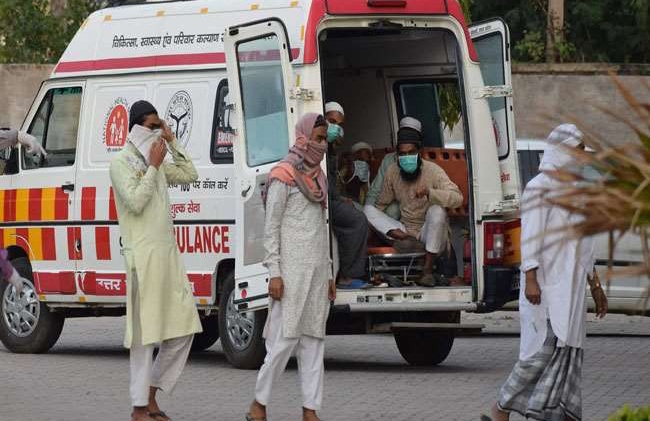
On 24 March, 2020, Prime Minister Modi in his address to the nation announced that the entire country will be under a lockdown to prevent spread of coronavirus. Following the directives, many states sealed their borders to stop movement of passengers from other states. After the lockdown was announced, hundreds of attendees at Tablighi Jamaat in New Delhi’s Nizamuddin were found living inside the markaz, many of whom were foreign nationals. Tablighi Jamaat is an Islamic evangelical event where Muslims are encouraged to live the life as prescribed by Prophet Mohammad. The discovery of Jamaat attendees in Delhi, many of whom had left for other states in India, led to a huge spike in the coronavirus positive cases in India.

In his address to nation today, Prime Minister Modi announced extension of nationwide lockdown till May 3.

PM Modi announces nationwide lockdown extension till May 3, here are the details of the PM’s address

Prime Minister Modi in his address to nation today announced the extension of nationwide lockdown till May 3.

Thanking for cooperation

PM Modi began his address by thanking the people of India for following the guidelines and helping in containing the pandemic. “It is because of your sacrifices that we in India have managed to contain the contagion. I know many faced problems with shortage of food and not being able to move around. But because of the greater good, you continued to march ahead like a dedicated and disciplined soldier of India. The ‘We the people’ we talk about in our Constitution is this,” PM Modi said.

Lives matter more than economic loss

PM Modi said that while the lockdown has been expensive and an added burden on economy, it is insignificant against the precious lives of the countrymen. “The way India is moving forward with limited means, that is being lauded across the world,” PM Modi said. PM Modi said that he had a word with the chief ministers of states and suggestions also poured in from citizens to extend the lockdown. “Many states have already announced extension of lockdown. Hence, after weighing all options, it has been decided that the lockdown should be extended till 3rd May,” PM Modi announced.

Lockdown extension till May 3

“Till 3rd May, everyone must stay home and maintain discipline. We must ensure that till 3rd May coronavirus does not spread to any new region which does not have any positive case. If more people test positive in local areas, then it is a cause of concern for us. Hence, we must be more careful regarding hotspots. Identified hotspots should be more careful and those areas which have a possibility of turning into hotspots should be more alert. Newer hotspots will be a challenge to our efforts,” PM Modi said.

The 1-week test

PM Modi further said that the restrictions will be even more stringent in coming week. “Till April 20, every area, district, city, state will be keenly observed and checked how the lockdown is being followed. We will see how they have tried to save themselves from spreading coronavirus. Whichever area succeeds in this 1-week test, will get some conditional relief and relaxation. Some important and essential movements may be allowed in these areas after 20th,” PM Modi said.

“The poor and needy like daily wage earners are the most affected and I am most concerned about them. My first priority is to ease their lives. The new guidelines will cover them. This is also the season of harvest for Rabi crops. The central and state governments will work together so that farmers do not face any problem,” PM Modi said.

Read: Coronavirus: As three-week lockdown comes to an end, here are the states which have already extended it little longer

Invoking Dr Babasaheb Ambedkar on his birth anniversary, PM Modi said that the collective effort of the citizens and the dedication is the true tribute to him. A lot of states and cultures celebrate various festivals today. PM Modi thanked them for celebrating them at home and not stepping out. PM Modi said that India started airport screening when there were not a single coronavirus positive case in India. And announced a 21-day lockdown when there were about 550 cases. “Because India did not wait for situation to worsen, we took decisive action to stop the conditions to worsen,” PM Modi said.

Support and commitment

Urging the citizens to keep their patience and strength, PM Modi asked for support in seven things. He urged the people to take extra care of the elders in the homes especially those who have a prior illness as they are more susceptible to coronavirus. “Second thing, make sure the social distancing is maintained during the extended lockdown. Do not step out of the house without a mask. Third, follow guidelines issued by Ayush Ministry to improve your immunity. Download the Aarogya Setu app to help contain the coronavirus pandemic. Try to help as many poor people as you could. Do not terminate your employees in such time and finally, respect the frontline workers who are fighting the pandemic like the doctors, nurses, healthcare staff, policemen,” PM Modi said.

Coronavirus: PM Modi changes his profile picture, now dons a homemade mask

Prime Minister Narendra Modi today changed his profile picture on social media networks. He now wears a homemade mask to create awareness of wearing a mask to contain spread of coronavirus.

PM Modi changes his profile image

This was his earlier profile image.

Prime Minister Modi’s old profile image

Narendra Modi also changed his profile picture on other social media networks.

PM Modi Facebook profile picture

PM Modi in his address to nation today extended the nationwide lockdown till May 3 to fight Chinese coronavirus. He also urged strict implementation of lockdown guidelines at least till 20th April. PM Modi also urged the citizens to wear a mask if they step out in times of emergency.

Maharashtra: NCP leader and minister Jitendra Awhad under quarantine after 16 persons associated with him test positive for coronavirus

0

On Monday, Maharashtra Housing Minister and Nationalist Congress Party leader Jitendra Awhad reportedly tested negative for the Wuhan Coronavirus while 16 of his contacts were diagnosed with the deadly infection. The family members of the politician, including his wife and children, had also tested negative.

According to the Thane Municipal Corporation, the infected people include 5 bodyguards, 1 cook, 1 TV journalist, 1 cameraman, 5 police personnel, and NCP workers. They were admitted to the Horizon Hospital in Thane West.

As per reports, of the 28 coronavirus positive cases reported from Thane, half are the people associated with Ahwad. However, some reports say that the number of coronavirus positive persons associated with Ahwad is 14.

Self-Quarantine

Jitendra Awhad who represents the Kalwa-Mumbra Assembly constituency in the Maharashtra Legislative Assembly had earlier decided to self-quarantine after he had come in contact with a Coronavirus positive police officer. He took this decision as a preventive measure even before his test results were announced.

“I have home quarantined myself. I was doing good work of distribution of food packets among the poor, and am worried that it will get infected”, Awhad was quoted as saying. He assured that his contacts who were diagnosed with the Chinese virus would be taken care of and that he was in touch with the concerned authorities.

The ‘Source’ of Infection

On Friday, a senior police inspector who nabbed 21 foreign nationals belonging to the Tablighi Jamaat had tested positive for the Chinese Virus. When he began exhibiting symptoms of the Coronavirus pandemic, he was tested and admitted to the Apollo Hospital in Nashik in Maharashtra. The infected cop is believed to be the source of transmission of the deadly disease to the 16 contacts of NCP politician.

The police inspector had apprehended 8 Malaysians, and 13 Bangladeshis who attended the Nizamuddin Markaz between March 13 and March 15. They were hiding in a mosque and a school in Mumbra in Maharashtra. The foreign nationals had travelled to Maharashtra via Tamil Nadu. Two police cases were registered against the mosque and school authorities for withholding information by Maharashtra police.

Allegations of Assault

Earlier, a First Information Report (FIR) was lodged at Vartak Nagar police station against Maharashtra cabinet minister Jitendra Awhad by a resident of Thane, alleging that two police constables and goons allegedly associated with Awhad had badly assaulted him. As per the complaint filed, the young man had opposed the NCP leader’s call to boycott PM Modi’s request to light a lamp for 9 minutes at 9 PM on April 5.

When a crisis is as big as the Wuhan coronavirus pandemic, we need taskmasters as strong as Yogi Adityanath

When the going gets tough, the tough get going. When a crisis is as big as the Chinese coronavirus, we need taskmasters as strong as Yogi Adityanath. Yogi is leading Uttar Pradesh like a CEO in the last three years and his exemplary leadership against the coronavirus pandemic proves it again. In the last video conferencing with Chief Ministers on the pandemic, PM Narendra Modi especially praised the UP-Model. Let us understand what the UP Model for fighting coronavirus is? And what other states can learn from UP.

Swift and strict action

Uttar Pradesh is the most populous state in India, with high population density and that makes the coronavirus attack event more challenging for UP. Even before the national lockdown was declared on 25th March, 16 districts of UP were locked down from 23rd to 25th March. In any district where more than 6 positive COVID cases were found, hot spots were identified and those areas were locked up completely. The whole area around the hotspots is barricaded, with ways to go in and out only for the essential services staff – for health workers, sanitation workers and delivery staff. Medicines, Vegetables, Milk, Groceries etc were supplied at the door step, to enable complete lockdown. One Magistrate and Police officer is assigned to each hotspot area.

In the hotspot regions, each and every house and the whole area is meticulously disinfected through a medicinal spray using fire-brigade vehicles. All the people who came in primary and secondary contact of the coronavirus patient(s) in the hotspot area are tested. Anyone who flouts the lockdown in a hotspot area is penalised under section-188. Anyone who takes his or her vehicle out, the vehicle gets confiscated after a challan. Details of every household and every resident of the hotspot area is maintained. The whole process is being followed for 14 days and will be extended further if any more COVID cases are found in that area.

Yogi government, known for this strong grip on the law and order, has warned of strict action including jail for those who do not cooperate in the state’s efforts to control the novel Coronavirus outbreak and spread misinformation or rumours to create panic in the society. Six Tablighi Jamaat-linked persons were booked under NSA for misbehaving with nurses in Uttar Pradesh’s Ghaziabad. Masks have been made mandatory. Anyone who steps out of the house will have to wear a mask or cover their face.

Testing and treatment infrastructure

Testing is one the crucial steps in defeating the coronavirus spread. UP started with just 1 coronavirus testing lab and very within a short time state has developed 9 testing labs and 5 more labs will be commissioned soon. Other areas are connecting to these labs through collection centers. Starting from only 100 COVID-19 tests a day, now UP has rapidly geared up to test 2500 samples a day. Infact, now UP has obtained clearance from the Indian Council for Medical Research (ICMR) to start “pool testing”, becoming the first in the country to attempt this method which aims at expediting the testing process for the coronavirus.

The ICMR has permitted the state to start pool testing. In this method, multiple swab samples are pooled together and tested. If the result of a collection of samples comes negative, then that means all the samples in that group are negative. However, if any sample is found positive, then each of those samples is tested individually. Now, the state has 78 level-1 coronavirus hospitals, 64 level-2 hospitals and 6 level-3 hospitals. The state has 9442 isolation beds, 12119 quarantine beds and 931 ventilator beds. State is continuously innovating and daily increasing its capacity on all these fronts.

Protective gear for the health workers, Masks, Sanitizers and Ventilators are four crucial items for the war against coronavirus. The Yogi Government is ensuring that all the production units in the state producing protective gear for coronavirus are being run, with necessary precautions. State has 50 such units for producing PPE and Face Masks, out of which 48 are operational and other 2 will be made active soon. 40 new units for producing sanitizers were given permissions and now 99 sanitizer units are active in the state. In Noida, AgVa Healthcare in Joint Venture with Maruti Suzuki has developed a monthly capacity of producing 10 thousand ventilators. 

Welfare and financial assistance

Strict lockdown undoubtedly is one of the major solutions at hand today to fight against the Chinese virus. But lockdown is also coming heavy on the people who earn their living by the day. Yogi government has taken series of actions to provide a strong safety net to all such sections of the population. Direct Cash transfer of Rs 1000 each is already been done in the bank accounts of 12.25 Lac registered construction workers in Uttar Pradesh. In urban areas, online cash transfer of Rs 1000 each is done to more than 4 Lac street vendors, auto-rickshaw drivers, e-rickshaw drivers and other daily wage earners and in rural areas Rs 1000 online cash transfer is done to more than 2.86 Lac destitute people.

Read: Uttar Pradesh: Yogi Adityanath govt to compensate daily wage earners for loss due to coronavirus

In addition to that, the Yogi government has ensured that the labour forces of more than 28,933 factories in the state are being paid their salaries by their employers. More than 86 Lac beneficiaries of old-age pension, Divyang pension and destitute pension were given two months of advance pension of the new financial year, amounting to Rs 871 crores in total. Ration was distributed to 2.73 Crore ration card holders including 91 lacs beneficiaries in the free ration category. Payment for 27.15 lac MNREGA workers amounting to Rs 611 crore were transferred online to their accounts. These quick cash transfers are being possible only because of the Jan-Dhan-Aadhar-Mobile (JAM) trinity promoted and established by PM Narendra Modi despite huge resistance in the last 6 years. Today it’s proving to be a Sanjivani Booti in the adverse times. 

Managing health services

To strengthen and monitor the health services in the state and provide relief to the affected people, eleven different high-level committees are formed. Senior police and administrative officers are assigned different states to resolve problems of residents of Uttar Pradesh stuck in those states. Helpline at the CM office is constantly in touch with Gram Sarpanch and Municipal Corporators throughout the state, to get regular feedback of the ground situation. Yogi Adityanath does not fail to do a daily follow up with the heads of each of these task forces, before closing the day’s business.

While keeping the tap on the current situation, Yogi has a constant eye on the future for the state. Yogi is looking to woo disenchanted multinational companies looking to shift their manufacturing bases away from China in the backdrop of the coronavirus outbreak.

He has directed top bureaucrats at the industrial development and MSME department to work out a special package, which could be offered to such companies in addition to the existing incentives already in place to attract private sector investment.

Yogi government in 3 years

CM Yogi has earned many difficult victories for Uttar Pradesh on the governance front in the last three years. To name a few – Yogi Adityanath has massively overhauled Public Distribution System (PDS) in Uttar Pradesh by connecting Ration Cards with Aadhar cards of 14.5 Crore beneficiaries and providing POS system to ration Shops. Yogi has made UP transport corporation profitable by meticulously expanding the services to new routes, exploiting technology to its fullest, cracking down on unsafe and un-authorized private bus services, saving on expenditure, tapping effectively on non-fare revenue and providing a quality experience to the passengers.

To educationists’ surprise, Yogi has strongly vouched for ‘learning outcomes’ along with school infrastructure for UP’s primary education. Through its Sabko Bijli, Paryapt Bijli and Nirbadh Bijli’, Yogi has massively overhauled the power infrastructure in Uttar Pradesh. Even after a series of exemplary governance initiatives, many of Yogi’s critics did not give him a breathing space in the last three years. But with his robust planning and execution of Uttar Pradesh’s strong action against COVID, even his ardent detractors are praising Yogi Adityanath and saying that in a crisis like the coronavirus pandemic, the states need a taskmaster like Yogi Adityanath.

Coronavirus: As three-week lockdown comes to an end, here are the states which have already extended it little longer

The three-week nationwide lockdown comes to an end today and Prime Minister Modi is to address the nation at 10 AM where he is expected to chalk out the further course of action on possible extension of lockdown as well as exit strategy in places where the spread of Chinese coronavirus is contained substantially. However, even before the central government makes any announcement, many states in India have already extended the lockdown.

West Bengal chief minister Mamata Banerjee has extended lockdown in Bengal up to 30th April and schools and colleges to remain closed till 10th June. Similarly, Maharashtra, Punjab and Telangana have also extended the lockdowns till 30th April. Delhi Chief Minister Arvind Kejriwal on Saturday, even before any official announcement from the central government, claimed that PM Modi has decided on extending the lockdown till 30th April. Moreover, Maharashtra has announced extension till 30th April with no relaxation. As per ministry data, there are 2334 total confirmed cases in Maharashtra as of 14th April, 2020 8 AM, the highest in India.

Rajasthan and Madhya Pradesh are reportedly going to continue a modified lockdown where some essential shops may be allowed to remain open and activities such as agriculture may be resumed. The farmers may begin the purchase of Rabi crops from 15 April onward. Similarly, in Uttar Pradesh, too, online services and purchase of wheat may begin. However, people will still be strongly advised to stay home. While schools and colleges will continue to remain closed, home delivery of food from restaurants might resume.

In Haryana, while the lockdown may be extended, it may come with partial relaxation. Parts of the state where number of coronavirus positive persons is high may have stricter guidelines while there might be relaxation in parts where the contagion is contained. In Bihar while the lockdown extension may be continued with stricter guidelines, in Jharkhand, the extension may come with some relaxation for farmers. In Chhattisgarh, too, there might be some relaxation as the partial lockdown continues. Gujarat, where the number of coronavirus positive patients is also significantly high, has decided to follow Centre’s directives on the lockdown.

Coronavirus lockdown in India

On 24 March, 2020, Prime Minister Modi in his address to the nation announced that the entire country will be under a lockdown to prevent spread of coronavirus. Following the directives, many states sealed their borders to stop movement of passengers from other states. After the lockdown was announced, hundreds of attendees at Tablighi Jamaat in New Delhi’s Nizamuddin were found living inside the markaz, many of whom were foreign nationals. Tablighi Jamaat is an Islamic evangelical event where Muslims are encouraged to live the life as prescribed by Prophet Mohammad. The discovery of Jamaat attendees in Delhi, many of whom had left for other states in India, led to a huge spike in the coronavirus positive cases in India.