Home Blog Page 5722

Kashi Vishwanath temple: Trial Court rejects Muslim demands, to hear arguments in favour of ASI survey in Gyanvapi Masjid

0

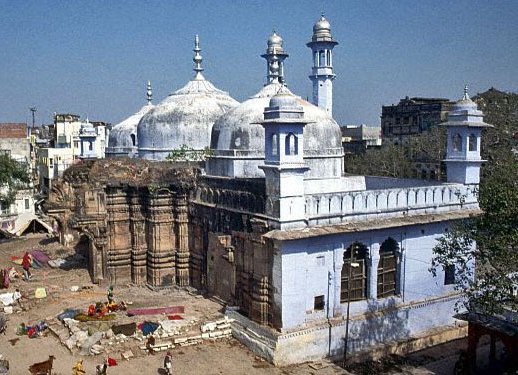
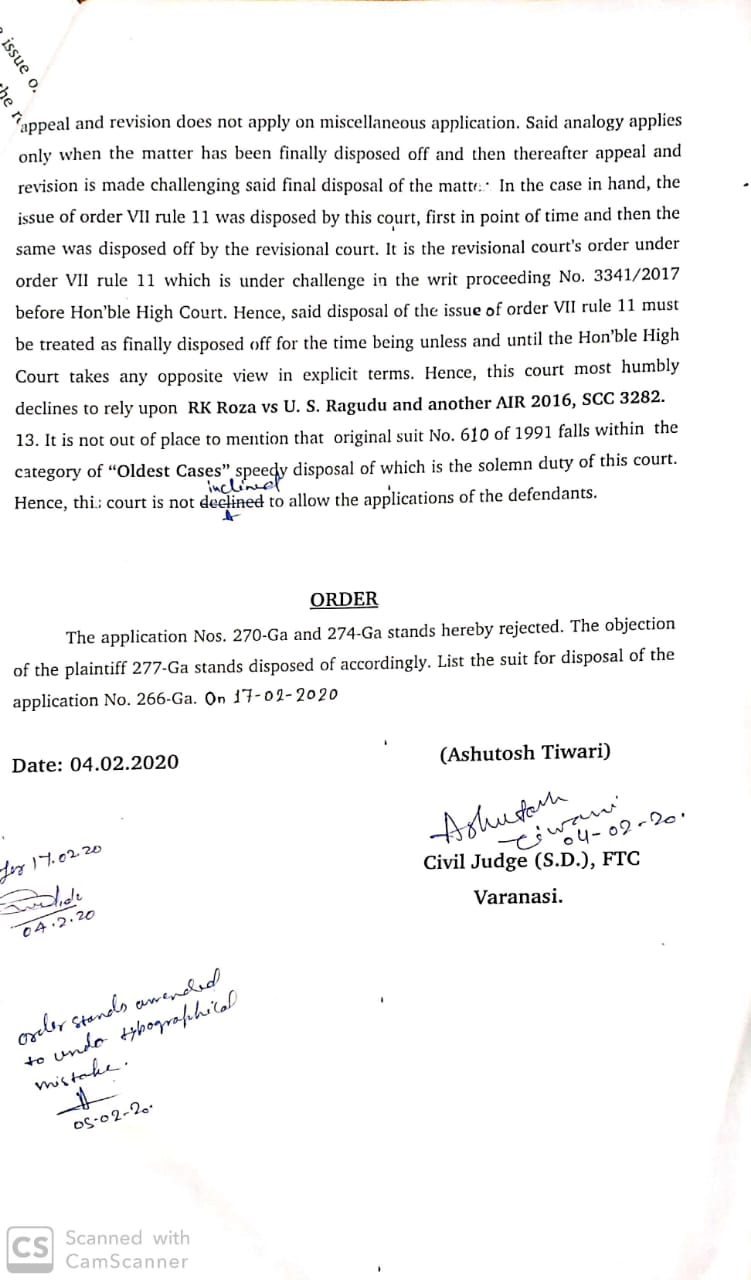
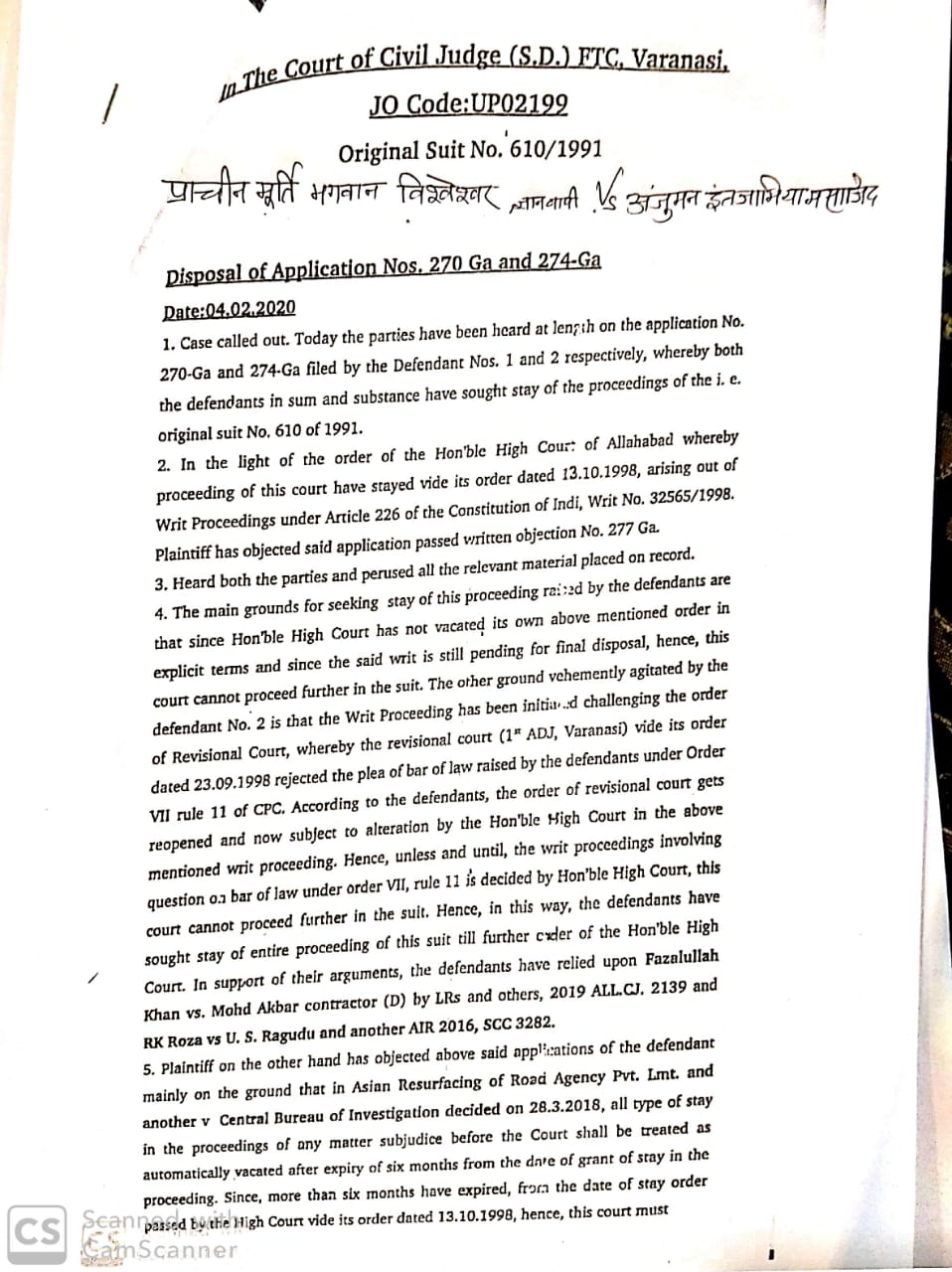
The trial on between Swayambhu Bhagwan Vishwanath and UP Sunni Waqf Board in the fast track court of Varanasi. Anjuman Intejamia Banaras is also with the Waqf Board in this matter. The Muslim side demanded that the stay on the ASI survey of Kashi Vishwanath in the case be maintained, but the court has rejected their demand. Now the next hearing on the demand of the plaintiff side of the Archaeological Survey of Gyanvapi Masjid will be on 17 February. After the dismissal of the petition of the defendants, there is hope among the people that now the matter will be heard at a fast pace.

Senior advocate Rajendra Pratap Pandey is appearing on behalf of Lord Vishweshwar in this case. He said that Anjuman Intejamiya Benaras and UP Sunni Central wanted this action to be postponed and no further hearing. After the court rejected their demands, proceedings will now go on in this case. After the decision in favour of Ram temple in the Supreme Court in November 2019, now there is hope among people that Hindus will get justice in Mathura and Kashi dispute also.

Read: The Reclamation Project: Here’s how the great Maratha warriors fought to reclaim Ayodhya, Prayag and Kashi

The case of Kashi Vishwanath and Gyanvapi Mosque was going on in both the High Court and the Sessions Court. Later the High Court said that the trial will run in the same court and will continue in the sessions court. On behalf of the plaintiff side, an application was made by ASI to conduct a physical survey of the entire Gyanvapi campus, to which the Muslim side objected. He said that according to the 1998 order of the High Court, there is a stay in this case.
[youtube https://www.youtube.com/watch?v=1E5FVNd8lJI]

The Hindu side says that this matter is related to the sentiments of Hindus, hence it is necessary to conduct a survey by ASI. The Gyanvapi Mosque is also located in the Kashi Vishwanath temple complex. Hindus believe that Vishveshwara still sits in the disputed complex.

Court order in the case

Advocate Rajendra Pandey has said the same thing. Pandey said that the Shivalinga is seated in Gyanvapi and that He has manifested Himself. There will be arguments on the matter again on February 17, in which the court will hear the pleas of both the parties to conduct a survey with ASI.

Court Order in the case

Advocate Rajendra Pandey said that Lord Vishweshwar is seated in Gyanvapi since Satyayuga and after the ASI survey, the truth will come to the fore in this matter. He says that Lord Vishweshwar is also the owner of that complex. But after breaking a pavilion, Aurangzeb set up the mosque.

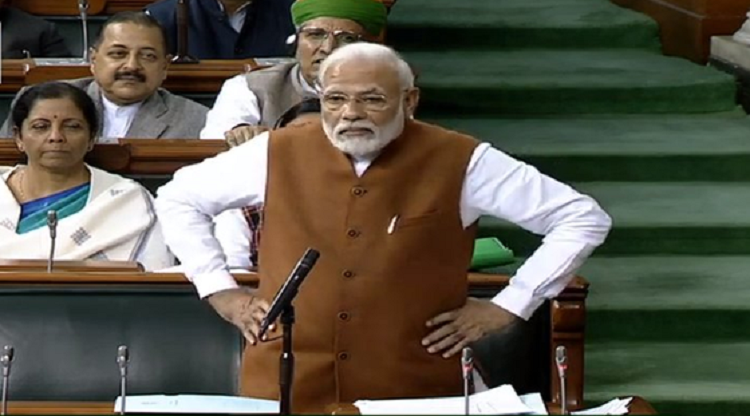
Someone wanted to be PM, so a line was drawn and India was broken into pieces: PM Modi reminds Congress of Nehru’s role in partition

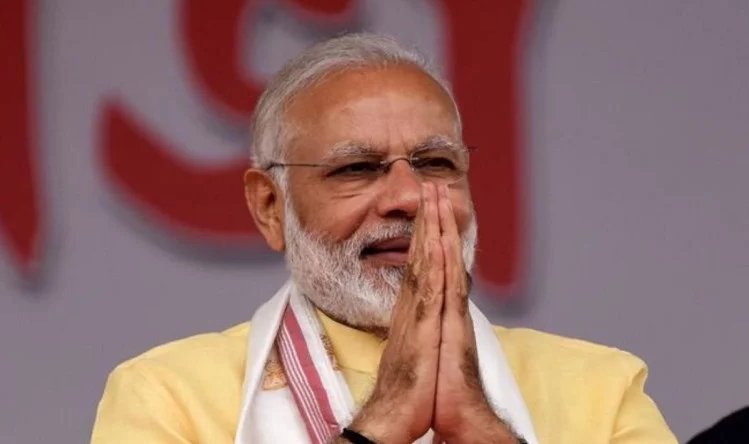
On Tuesday, Prime Minister Narendra Modi launched a scathing attack on the Congress for spreading misinformation on Citizenship Amendment Act and made references to former Prime Minister Jawaharlal Nehru’s role in the partition of the country.

In a veiled reference to Jawaharlal Nehru and the Congress, Prime Minister Narendra Modi said, “For someone’s aspiration to become the Prime Minister of India, a line was drawn on the map and India was divided into pieces.”

“After the Partition, the way how Hindus, Sikhs and other minorities were persecuted is unimaginable,” PM Modi said, replying to a debate on the President’s speech.


 Speaking in favour of the Citizenship Amendment Act, PM Modi also cited Jawaharlal Nehru, saying “Pandit Nehru himself was in favour of protecting minorities in Pakistan, I want to ask Congress, was Pandit Nehru communal? Did he also want a Hindu Rashtra?”

“In 1950, the Nehru-Liaquat Agreement was signed for the protection of minorities living in India and Pakistan. Religious minorities were mentioned in this agreement. Nehru was such a big thinker, then why did he not include all the citizens there in the agreement instead of the minorities there?,” said PM Modi.

Read: From Nehru-Liaquat Pact to Rohingyas: Here are the most important takeaways from Amit Shah’s reply on CAB

The pact between Nehru and Pakistan Prime Minister Liaquat Ali was signed in the backdrop of large-scale migration of people belonging to minority communities between the two countries after Partition. The pact had promised that the two countries will take care of their respective religious minorities.

“Why did Nehru use minorities? He replied to this too, and I know you will abandon him too, whenever the need arises,” said PM Modi as he cited a letter by Nehru to former Assam Chief Minister Gopinath Bardoli.

Responding to the Opposition’s criticism on the Citizenship Amendment Act, Prime Minister Narendra Modi said, “Much has been said about Citizenship Amendment Act (CAA), ironically by those who love getting photographed with the group of people who want ‘Tukde Tukde’ of India.”

Replying on the Motion of Thanks on President Kovind’s budget address, PM Modi also assured lawmakers in the Lok Sabha that “the CAA will not affect any Indian citizen regardless of his/her religion. The minority of India will not be affected.”

Prime Minister Narendra Modi also hit back at the opposition on Thursday for alleging that his government is “destroying” the Constitution of India, saying the Congress should have saved the Constitution in 1975 when the then prime minister Indira Gandhi had imposed Emergency.

Earlier in his speech, PM Modi took a jibe at Gandhi-scion Rahul Gandhi’s remark that youth of this country will “start beating the PM with sticks in six months if they do not get jobs” remark. Responding to Rahul Gandhi, PM Modi said, “I will do Surya Namaskar for six months and toughen myself up to bear the blows.”

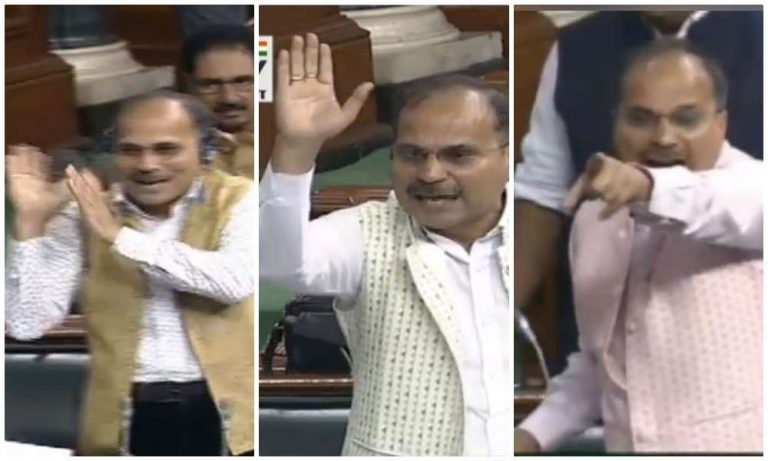
Adhir Ranjan Chowdhury promotes ‘Fit India’ does ‘gymming while delivering speech’, PM pokes fun of Congress leader

The Congress party has been bowling full toss after full toss at Prime Minister Modi in recent weeks. In his reply on the floor of the Lok Sabha, Narendra Modi decided to hit a couple of them out of the park. Leader of the Congress party in the Lower House Adhir Ranjan Chowdhury and its former President Rahul Gandhi were targeted by the Prime Minister during the course of his speech.

Poking fun at Adhir Ranjan Chowdhury, Narendra Modi said that he has done a great job at promoting Union Minister Kiren Rijiju’s ‘Fit India Movement’. The Prime Minister said that Adhir Ranjan does gymming while delivering his speeches.


Adhir Ranjan Chowdhury is a motormouth who frequently lands in trouble due to his words. There is hardly any pertinent issue on which the Congress party hasn’t made an outrageous remark. In the matter of NRC and CAA, he has called Narendra Modi and Amit Shah illegal immigrants. On the matter of the abrogation of Article 370, he claimed it was an international issue. And during his speeches in Lok Sabha, Adhir Ranjan makes complete use of the entirety of his body to make his point.

Amusingly, Chowdhury has a habit of making wild hand gestures while speaking in the Lok Sabha.


Following abrogation of Article 370, Chowdhury had questioned whether Kashmir is an internal matter or an international issue. His wild hand gestures make it appear like he is campaigning for Fit India movement.

Read: Congress leader Adhir Ranjan Chowdhury uses unparliamentary language in Lok Sabha while attacking BJP MP, says ‘Ye Ravan ke aulad hain’

The scion of the Nehru-Gandhi Parivar had said on Wednesday the youth of the country will hit the Prime Minister with ‘Danda’ (sticks). Narendra Modi raised the matter in the Parliament on Thursday and said that he will do more Surya Namaskar to “make my back even stronger to face abuses”. He said, “In any case, I have been abused so much for the past two decades, their negativity hardly matters.”


During the course of his speech, Rahul Gandhi rose to make an intervention. Prime Minister Modi responded saying, “I was speaking for the last 30-40 minutes but it took this long for the current to reach there. Many tube lights are like this.” Narendra Modi spoke on various matters during his speech. He spoke of how Kashmir is being developed and he also spoke out against the politics of hatred being played in the country.

Watch: PM Modi calls Rahul Gandhi a tube light, says was speaking since 40 minutes but he got ‘current’ only now

In his speech in the Lok Sabha on Thursday, PM Narendra Modi threw some pun at Rahul Gandhi. The scion of the Nehru-Gandhi Parivar had on Wednesday said that the youth of the country will hit the Prime Minister with sticks.

At one point, PM Modi hinted that Rahul Gandhi is a ‘tube light’. During the course of his speech, Rahul Gandhi rose to make an intervention when the PM was speaking. The Prime Minister said, “I was speaking for the last 30-40 minutes but it took this long for the current to reach there. Many tube lights are like this.”


The Prime Minister took several potshots at the former Congress president during his speech. Raising Rahul Gandhi’s ‘danda’ remark in the Parliament, Narendra Modi said that he will do more Surya Namaskar henceforth to “make my back even stronger to face abuses”. He said, “In any case, I have been abused so much for the past two decades, their negativity hardly matters.”

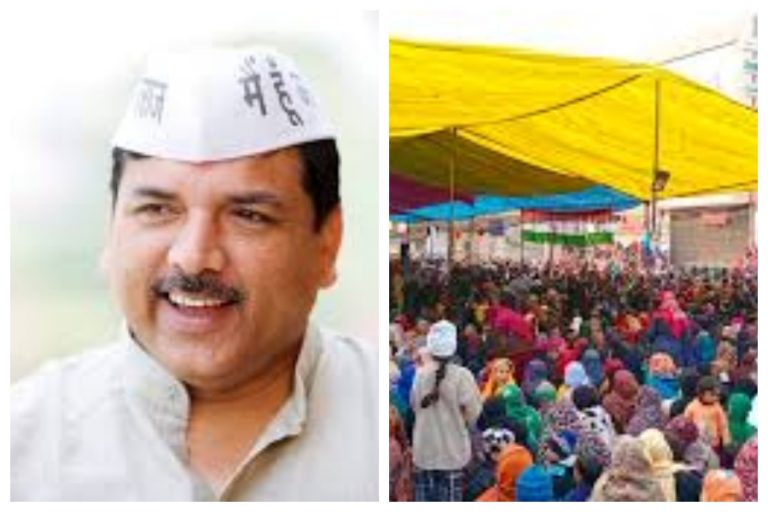
Shaheen Bagh anti-CAA protests funded by Islamist PFI, chief Mohammad Parvez Ahmed’s links to AAP’s Sanjay Singh and Congress’ Udit Raj emerge

Merely two days ahead of Delhi polls, the Enforcement Directorate on Thursday has made an explosive revelation exposing the close nexus between PFI and the Aam Aadmi Party, Congress, Bhim Army and other groups.

According to documents accessed by OpIndia, the Shaheen Bagh anti-CAA protests was funded by Popular Front of India (PFI) and leaders of the Aam Aadmi Party and Congress were in constant touch with the PFI chief.

According to the details produced by ED, a hefty sum of Rs 120.5 crores was credited in 73 bank accounts maintained by the Popular Front of India in 17 different banks. Out of these 73 accounts- 27 were directly maintained by PFI, 9 accounts were in the name of PFI’s related entity- Rehab India Foundation and the other 37 were in the name of certain individuals or entities in 17 different banks.

Majority of the deposits in these bank accounts were through cash deposits, said the details presented by ED sources. In these past several months, out of the donations received by PFI, more than half was received in cash. Out of the cash donations almost two-third was deposited in banks and the rest one-third was stacked in the PFI’s National headquarter situated in G-78, Shaheen Bagh, Delhi.

The PFI activists and members allegedly collected cash from people across India and handed it over to their area-specific handlers, who, then travelled to Delhi to deposit the cash at the PFI National headquarters in Shaheen Bagh.

In the last 10 months, PFI received Rs 30 lakh as a donation in the form of cash, cheque, RTGS, NEFT, UPI, etc. Out of the large sum around 50 per cent was received in cash. Out of the cash donation, approximately 60-65 per cent was deposited in the bank and the rest was kept in PFIs national headquarters in Shaheen Bagh.

The ED documents accessed by OpIndia say that the PFI President of Delhi, Mohammad Parvez Ahmed and it’s other members have actively participated in the anti-CAA protest in Shaheen Bagh.

Most importantly, it divulged that Md Parvez, the PFI chief was regularly in touch with Aam Aadmi Party leader Sanjay Singh through Whatsapp chats, phone calls and also by way of direct meetings. Further, Parvez had also been in touch with many Congress leaders including Udit Raj.

The Enforcement Directorate documents also revealed that Parvez was a member of many Whatsapp groups such as ‘Bhim Army Top-100’, ‘Unification of Muslim Leadership’, etc.

Recently, the Delhi police had also exposed the nexus between the Aam Aadmi Party and the Shaheen Bagh shooter Kapil Gujjar. Pictures were released by the Delhi police which confirmed that Kapil Gujjar, who had fired bullets in Shaheen Bagh on Saturday and his father Gaje Singh were AAP leaders and were inducted into the party in 2019.

Additionally, the sources have revealed that in 10 accounts of PFI and 5 accounts of Rehab Foundation, over 1 crore rupees were deposited in small amounts, ranging from 5 thousand to 49 thousand. These deposits have been made after the Citizenship Amendment Bill was passed in the parliament, mostly through IMPS in mobile apps. The amounts were kept deliberately below the 50,000 limits to avoid detection.

Between 4 December 2019 and 6 January 2020, over 1.34 crores were allegedly withdrawn from these accounts, allegedly to be distributed among violent rioters to incite them to wreak havoc in the name of anti-CAA protests.

Ever since it came to light that the Shaheen Bagh attacker, Kapil Gujjar, who fired three shots in the air on February 1, is an AAP member, Aam Aadmi Party has been in a damage control mode, trying to delink themselves from the assaulter.

However, more and more pictures are emerging that links the shooter to the Aam Aadmi Party. A picture posted by prominent AAP leader Kuldeep Kumar, which was then deleted, had emerged in which it was seen that the party was welcoming Gujjar and his father Gaje Singh Chauhan along with party leaders Sanjay Singh and Atishi Marlena into AAP.

Later, it was found that the Aam Aadmi Party had itself posted images linking the shooter Kapil Gujjar to the party. The AAP had forgotten to remove from their official website an article that confirms that the Shaheen Bagh shooter was indeed an AAP member.  In case the article is pulled down, the archived version can be accessed here. Senior AAP leader Sanjay Singh, who had felicitated Kapil Gujjar, also tried to wash his hands off him stating that the shooting was a BJP ploy.

The radical Islamist outfit, PFI has not only played an instrumental role in the Shaheen Bagh protest but it was also involved in inciting violence during anti-CAA protests in Uttar Pradesh and the funding of the violent anti-CAA protests across several parts of the country that ensued following the passage of the Citizenship Amendment Act by both the houses of the parliament in December 2019.

Read: UP police arrest PFI’s Uttar Pradesh head Waseem for allegedly masterminding violence during anti-CAA protests

While the Uttar Pradesh police had in December, last year, exposed PFIs link to the violence during anti-CAA protest in the state, an explosive investigation by the Enforcement directorate had also exposed that PFI spent about 120 crores in a month to orchestrate the violent riots in the country, naming eminent lawyer and Congress member Kapil Sibal and lawyers Indira Jaising and Dushyant Dave also as the beneficiaries of PFI’s funding.


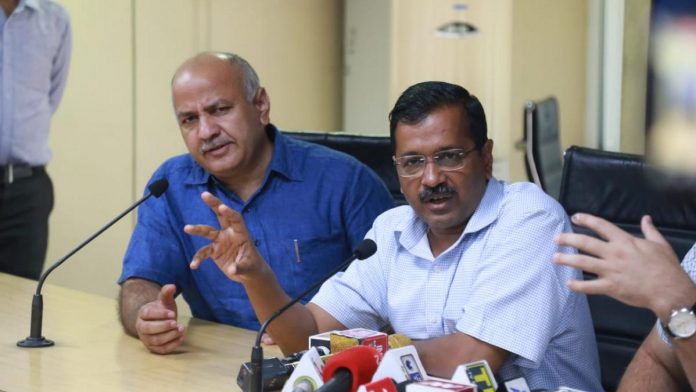
Lawyer seeks FIR against Manish Sisodia for maliciously blaming Delhi Police of setting fire to buses during anti-CAA riots: Here are full details

0

Delhi lawyer Alakh Alok Srivastava has approached the Delhi Metropolitan Magistrate seeking an FIR to be filed against Aam Admi Party senior leader and Delhi Deputy Chief Minister Manish Sisodia for tweeting malicious and false information during the anti-CAA riots that took place in Delhi by Muslim mobs in December 2019.

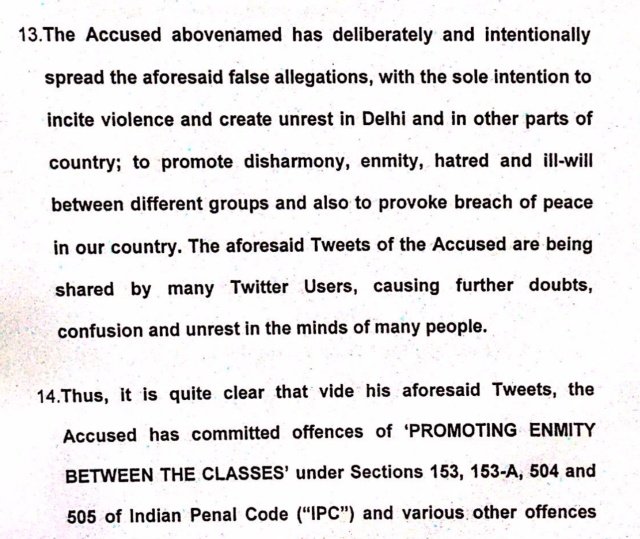
The charges against Manish Sisodia are under sections 153(A), 153, 504 and 505 of the Indian Penal Code.

The complaint says that on 15th December, Delhi witnessed unprecedented violence and arson in the aftermath of the passage of the Citizenship Amendment Act. The complaint said that certain people provoked students and the general population to create a ruckus in the name of protesting against the Act.

Following the riots, the complaint says that as the Deputy Chief Minister, Manish Sisodia was expected to not make irresponsible statements but he failed in the responsibility.

Read: Anti-CAB protests: Delhi Deputy CM and other AAP leaders accuse Delhi Police of setting buses on fire at behest of BJP

The complaint refers to two tweets by Manish Sisodia which were published on the 15th of December. In those tweets, Manish Sisodia had blamed the Delhi police of setting fire to DTC buses in Delhi.


In the tweets, Manish Sisodia blames BJP of playing politics and then goes on to say that in the video, it is evident that the Delhi police is setting fire to busses.

However, if one looks closely, the police are actually helping the firefighters trying to control the fire. He even shared images with red circles to prove a point that the firefighter was actually setting the bus ablaze.

Read: Anti-CAA riots: Police arrests one Furkan for violence in Jamia Millia, AAP’s Amanatullah Khan creates ruckus demanding release

Sisodia’s allegations had come minutes after it was reported that AAP MLA Amanatullah Khan was part of the mob that turned violent. Defying all logic, while Khan had denied leading the mob, he even blamed the BJP for accusing him of being part of violent protests where he is actually participating.

Complained against Manish Sisodia

The complaint says that Sisodia has deliberately spread false information with the sole intention to incite violence and create unrest in Delhi and in other parts of the country. The complaint also says that it is clear that his intention was to promote disharmony, enmity, hatred and ill-will between different groups and provoke breach of peace.

Read: Days before Delhi polls, AAP extends its support to anti-CAA Shaheen Bagh ‘protestors’

Based on this, the complainant has sought that the Court directs the authorities to file an FIR against Manish Sisodia for the tweets.

Incidentally, even after the details were proven fake and malicious, Manish Sisodia has refused to delete the tweets where he falsely accused the Delhi police.

While Clown Kamra got banned after heckling Arnab mid-flight, Uber Driver in Mumbai takes a communist straight to police station

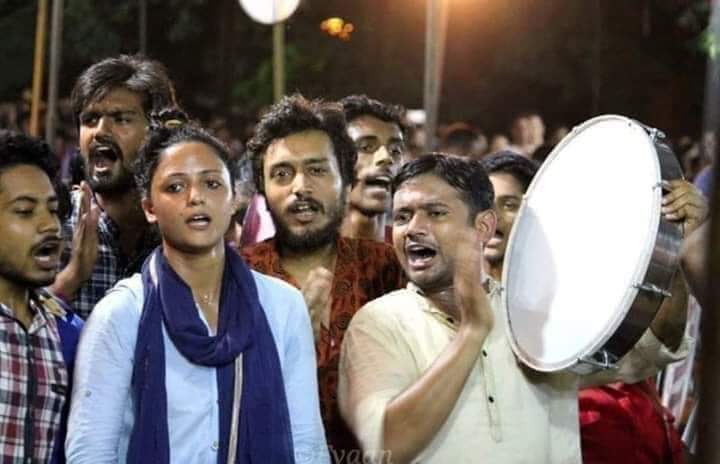
An unusual incident has come to the fore that highlights the extent of polarization in society today and the extent to which communists and liberals are out of touch with the ordinary citizens of this country. Kavita Krishnan, a certified Communist and known Naxal-sympathizer narrated a story on Twitter about how one of her comrades, a poet Bappadittya Sarkar who goes by the Twitter handle @bappadittoh, got dragged to the Police Station by a Uber Driver.

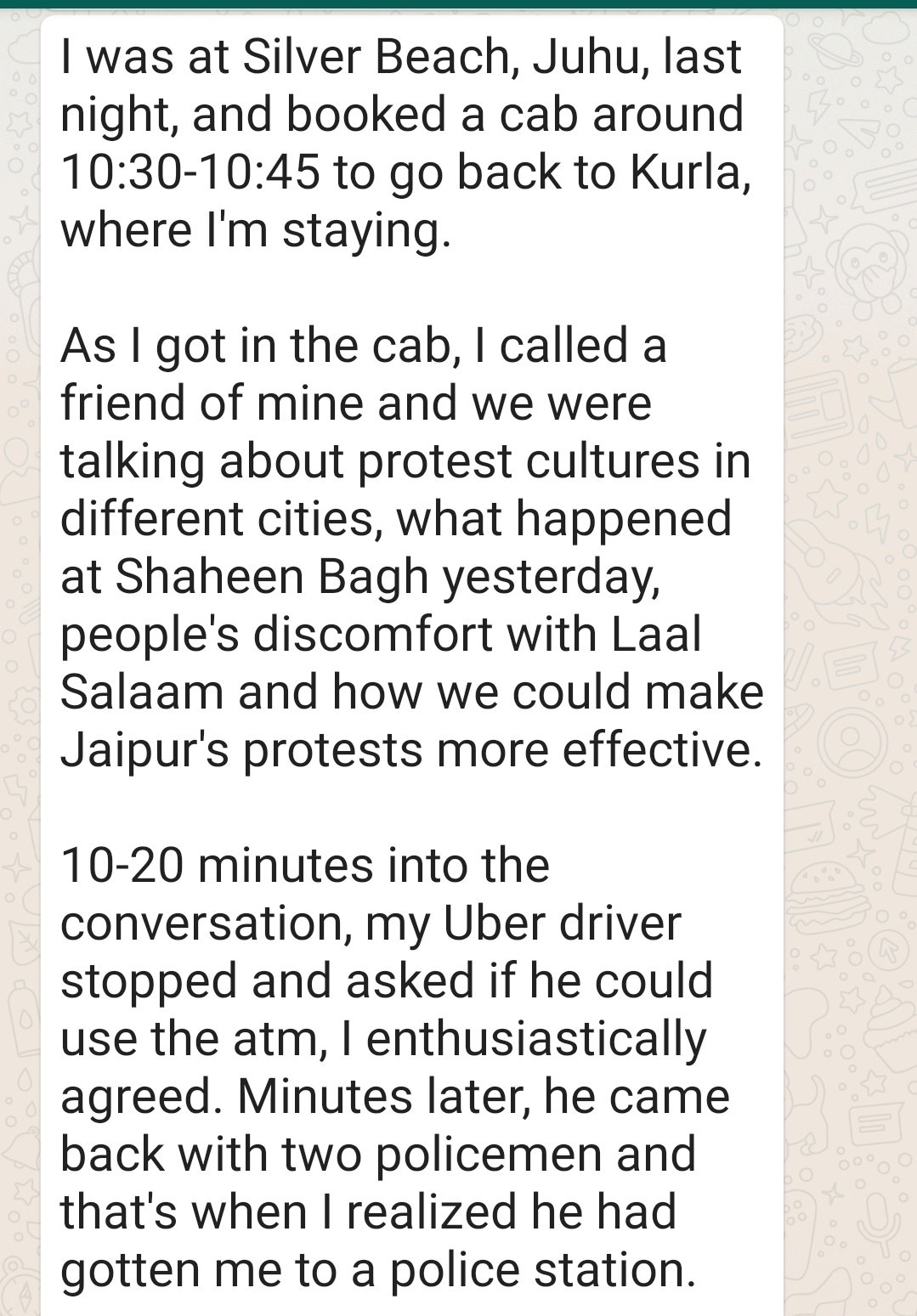
Kavita Krishnan said that Bappadittoh had a “scary episode” in Mumbai during a ride on Uber on Wednesday. She shared screenshots of texts, reportedly from the poet that told exactly what transpired that night. According to Krishnan, it is “a glimpse of scary India under NPR NRC CAA, where every person will be incentivised to suspect & turn in others & police can harass everyone.”

Source: Kavita Krishnan/Twitter

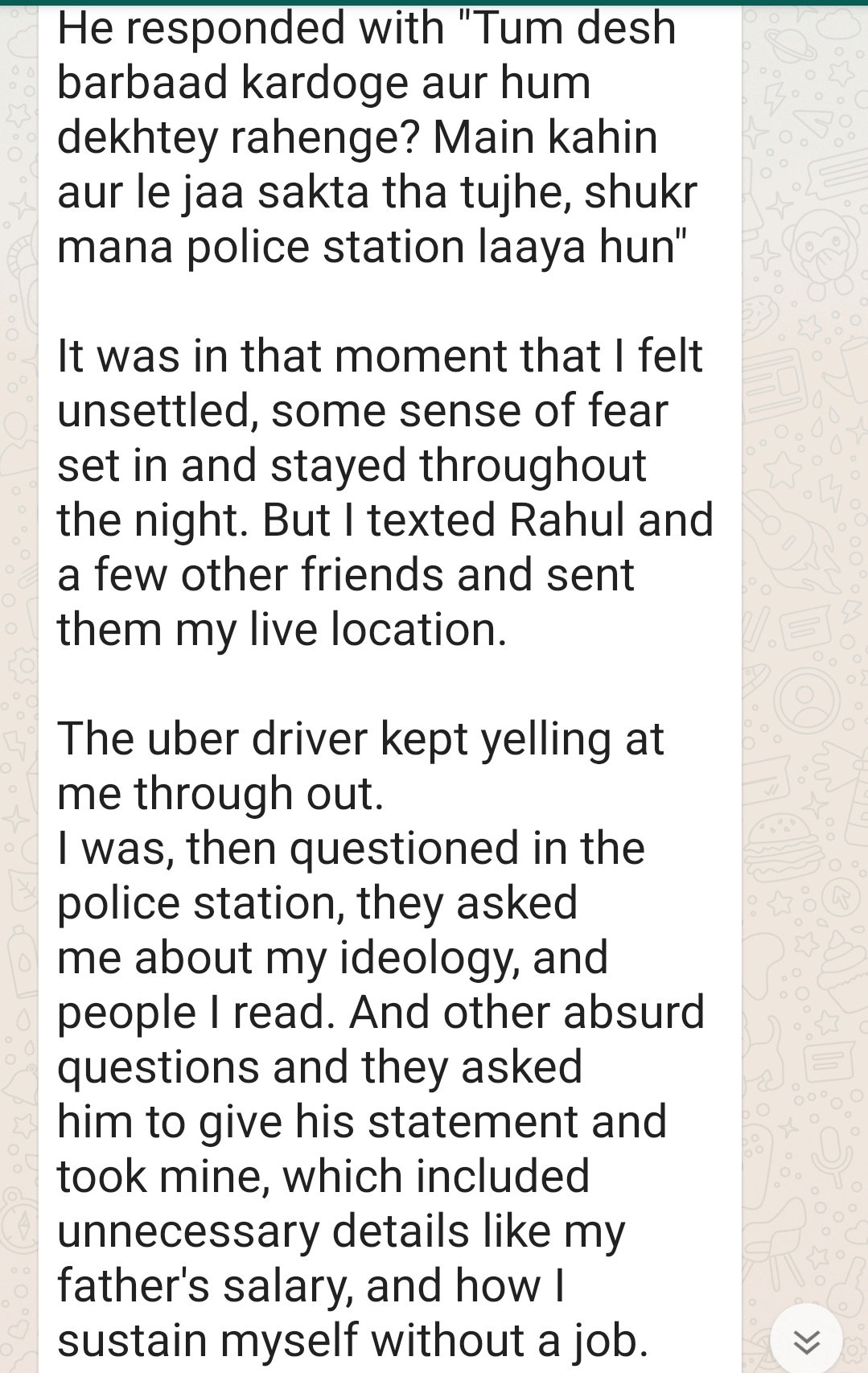
As per the screenshots, Bappadittoh booked a cab from Silver Beach, Juhu to Kurla. During the ride, he called one of his friends and they started talking about the protests in Shaheen Bagh, “people’s discomfort with Lal Salaam” and what they could do to make the protests in Jaipur ‘more effective’. Not too long after, the Uber driver allegedly asked him if he could go to an ATM, to which the poet readily agreed. However, the driver came back with two policemen and it was only then that Bappadittoh realized that the driver had taken him to a police station.

Source: Kavita Krishnan/ Twitter

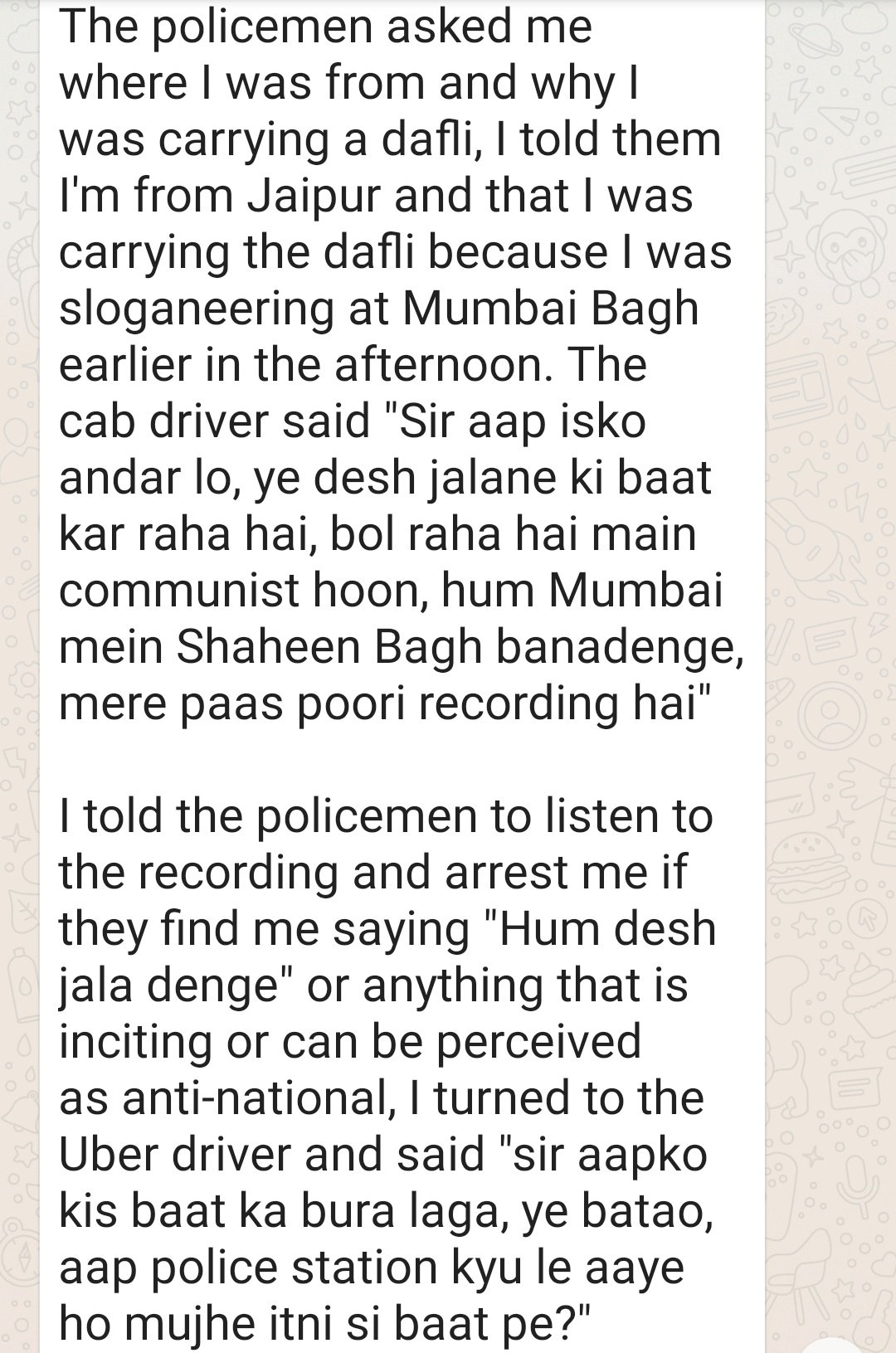
The policemen asked Bappadittoh where he was coming from and why was he carrying a Dafli. Dafli is the most popular musical instrument among Communists. He replied that he was carrying the Dafli because he was sloganeering at ‘Mumbai Bagh’ earlier in the afternoon. The driver then said, “Sir, arrest him. He was talking about burning the country, was saying that he is a communist and will turn Mumbai into Shaheen Bagh. I have the entire thing recorded.”

It is notable here that the so-called ‘Mumbai Bagh’ is a term used by so-called ‘left-liberals’ for a road in Mumbai’s Nagpada area that has been blocked by hundreds of Muslim women trying to mimic Delhi’s Shaheen Bagh in the name of protests against CAA.

Read: Slogans in support of Shaheen Bagh mastermind Sharjeel Imam, ‘Azaadi’ and against CAA raised in Queer Mumbai Pride march 2020

Bappadittoh further claimed that he asked the policemen to listen to the recording and arrest him if they found him saying “We will burn the country” or “anything that is inciting or can be perceived as anti-national”. He asked the Uber Driver why was he hurt and why had he dragged him to a Police station.

Source: Kavita Krishnan/Twitter

The Uber Driver responded, “You’ll speak of destroying the nation and we will remain silent? I could have taken you anywhere else, be grateful that I brought you to a police station.” Bappadittoh then texted a few of his friends and sent them his live location. According to the poet, the driver kept yelling at him throughout. The Police then questioned him about his ideology and the people he read. The policemen then proceeded to record the statements of both of them.

Source: Kavita Krishnan/Twitter

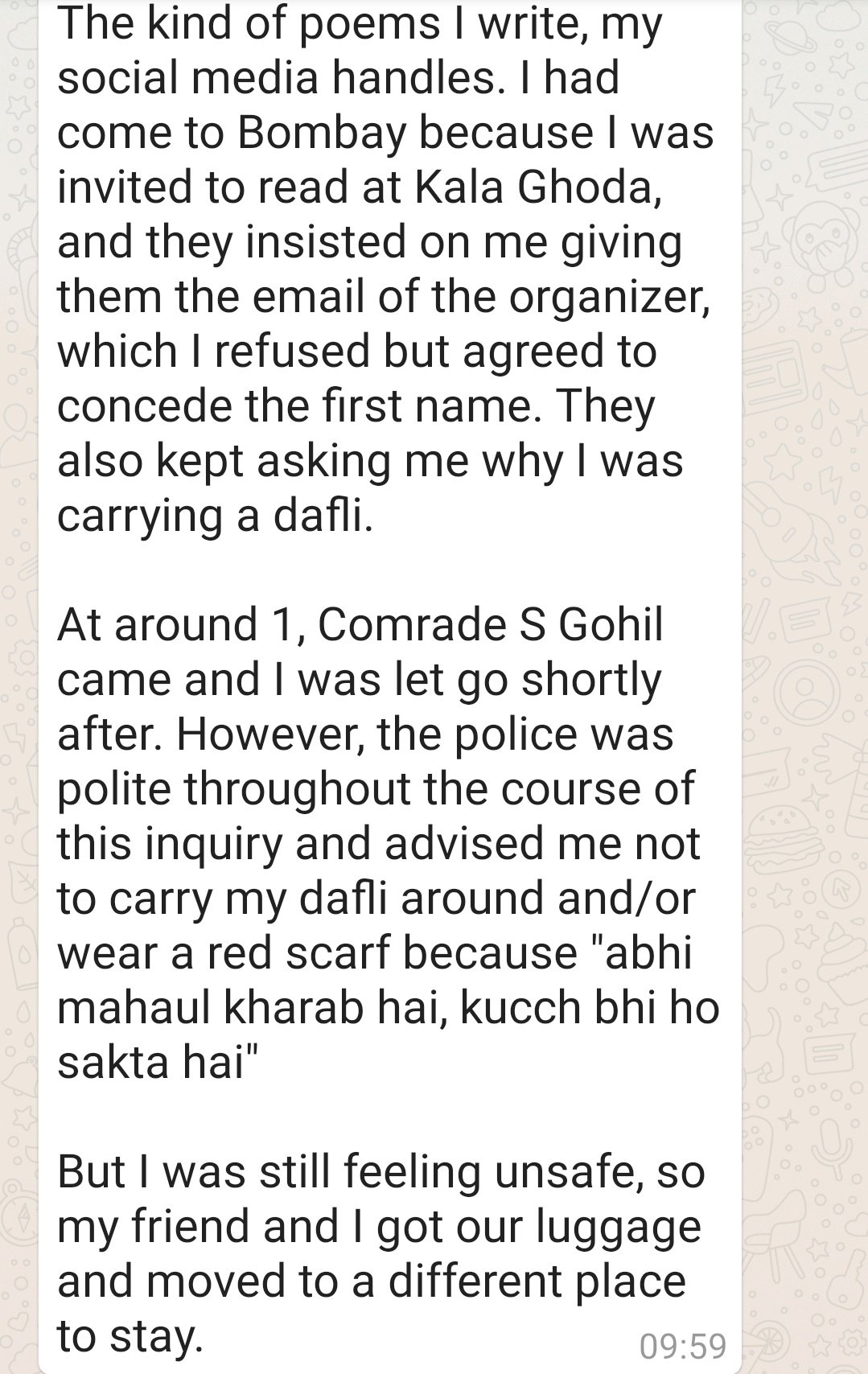
As per the screenshots, Bappadittoh told the Policemen that he had been invited to read at Kala Ghoda and he was asked to give them the email of his organizer but he refused even though he did give them the first name. ‘Comrade’ S Gohil arrived at around 1 a.m into the night and he was let go soon after. Bappadittoh said that the Police were polite throughout the inquiry and advised him to not carry a Dafli around as these are troubled times we are living in. However, still feeling unsettled, they moved to a different place to stay.

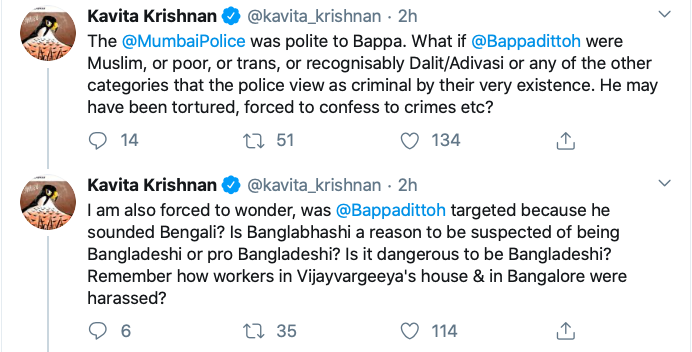
Krishnan, however, did not stop at just naming and shaming the Uber driver and Mumbai Police. She went on a full-blown fear-mongering rant, claiming that her friend was ‘targeted’ because he spoke Bengali. Despite the poet asserting that at no point he was threatened or in any way misbehaved by the police, Kavita had her communist narrative to peddle, so she wondered whether the police have treated him in the same manner if he had been a Muslim or ‘recognisably Dalit or Adivasi’.

Kavita Krishnan on Twitter

As expected, communists and liberals are screeching intolerance about what happened to Bappadittoh. However, they didn’t have any such problem with it when Arnab Goswami got heckled by alleged comedian Kunal Kamra mid-flight. In fact, they were cheering for Kunal Kamra. They had also cheered when journalist Mahesh Vikram Hegde was heckled at the airport and harassed by three women at the airport. They even support the heckling that certain journalists have faced at Shaheen Bagh. Liberals and Communists hadn’t found anything problematic with nationalists being abused and harassed for their ideology. It appears they have a problem only when they have to suffer the consequences of their own tactics.

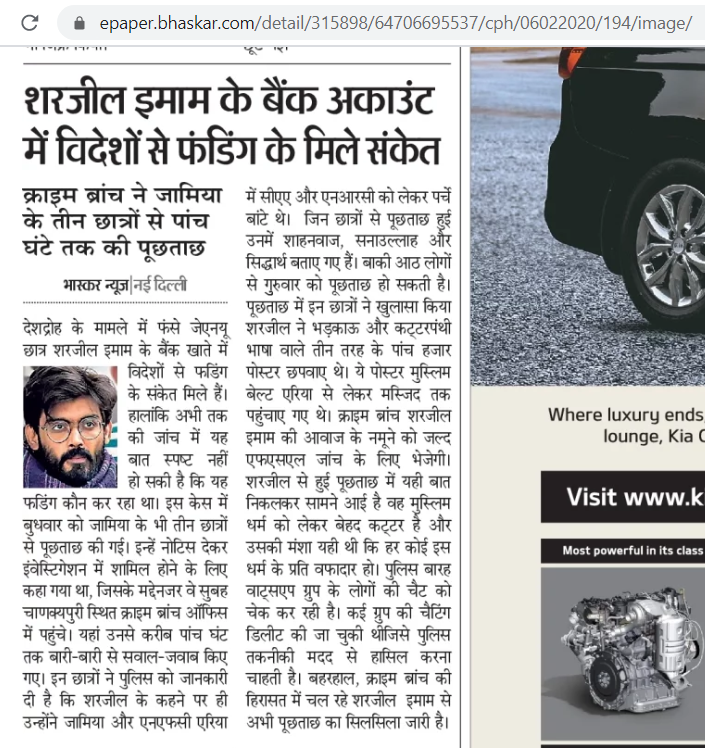
Delhi Police suspects foreign funding links in Shaheen Bagh mastermind Sharjeel Imam’s bank accounts

The Delhi Police has reportedly found foreign funding links in Sharjeel Imam’s banks. As reported by Haribhoomi, the police is still carrying out investigation. In the same matter, 3 students of Jamia Millia Islamia where anti-CAA protestors got violent many times in last two months, were also probed. They were probed by the Crime Branch at Chanakyapuri in Delhi for about five hours. They have revealed that on Sharjeel’s instructions, they distributed anti-CAA and anti-NRC pamphlets in New Friends Colony area in Delhi.

Bhaskar news

As per reports, the names of students interrogated are Shahnawaz, Sanaullah and Siddharth. Eight other students are expected to be interrogated on Thursday. The students have revealed that Imam got 5,000 posters with instigating material published. Moreover, as per reports, close links between Imam and PFI were also unearthed during the investigation. Police is currently trying to find where the foreign funding in his bank account came from.

Earlier, reports had emerged that the police are looking into ShaheenBagh mastermind Sharjeel Imam’s links with radical Islamist outfit PFI and the Islamic Youth Federation. The PFI is suspected of funding violence in the recent spate of violence during the ongoing protests against the Citizenship Amendment Act. The Enforcement Directorate has claimed that the PFI has spent around Rs. 120 crores to fuel riots across the country.

In another major revelation, the Delhi Police has said that they have found evidence of foreign funding in the bank account of Shaheen Bagh mastermind Sharjeel Imam. However, the Delhi police are yet not clear on who was funding it.

The crime branch has found several objectionable items in the laptop and mobile phone recovered from Sharjeel. Reportedly, his laptop had contained controversial posters pertaining to anti-CAA protests, written in Urdu and English. The same posters were distributed among students and mosques ahead of the anti-CAA riots that had occurred in Delhi in December.

Radical Islamist Sharjeel Imam – the brain behind the anti-India protests at Shaheen Bagh was caught making secessionist speeches at Shaheen Bagh. Urging Muslims at Shaheen Bagh, he had vowed to cut off North-east from the rest of the country. Imam had said, “If 5 lakhs Muslims are organised then we can cut the North-east from rest of India. If we cannot do permanently, at least we can cut North-east from India for months.”

Coronavirus hits Surat’s diamond business, likely to face a loss of Rs 8,000 crore

The Coronavirus outbreak in China has now created its first problem for India. Because of this virus, Hong Kong has declared a state of emergency and shut all routes to Mainland China and shut all schools and colleges till the first week of March, or until the virus is not tackled effectively.

The Surat diamond industry is likely to face a loss of Rs. 8,000 crore as Hong Kong is a major business hub for the Surat diamond industry. “Due to the month-long vacation declared by Hong Kong govt, Indian businessmen are returning. The exhibition, going to be held in March in Hong Kong, has been cancelled. It used to set our orders for the year,” news agency ANI quoted Dinesh Navadiya, Regional Chairman of Gems and Jewellery Export Promotion Council in Surat.

According to Navadiya, 37 per cent of the total export comes from here. Now Gujarati traders having offices in Hong Kong are coming back to India. Surat diamond industry polishes about 99% of all rough diamonds. If the situation does not change, it is likely to have a huge impact on the industry.

Another industry expert and diamond merchant Pravin Nanavati told news agency PTI, that there is a possibility of cancellation of an international jewellery exhibition in Hong Kong due to the Coronavirus. ” Polished diamonds and jewellery made in Surat reach across the world through Hong Kong. Now due to vacation there, our business is totally closed.”

Hong Kong is a major transit port for China and the Far east. Orders are placed at that event which sets the manufacturing target for an year. Now, that’s in jeopardy as Hong Kong tries to curtail the deadly virus. Around 18 people have tested positive for the disease, with one death reported so far.

As of now there have been three confirmed cases of coronavirus in India. All three have been in Kerala. India has temporarily suspended e-visa facility for Chinese and foreigners residing in China.

Scope of Article 226 and Article 227: That the same result can be achieved by 2 different processes, does not mean the processes are the same

The writ jurisdiction is a very potent and important tool given to the High Courts under the Constitution of India. The purpose of writ jurisdiction is to ensure that necessary directions in the form of writs can be issued both as administrative orders as well as on the judicial side. In this article, I will not go in detail as to the nature of the writs. As known, Constitution of India has given powers to the High Courts under Article 226 to issue directions or orders or writs in the nature of Habeas Corpus, Mandamus, Prohibition, Quo Warranto and Certiorari as per the respective requirement and the necessity. Under Article 227, the High Courts are vested with the powers of General Superintendence over all Courts and Tribunals. The powers vested to the High Courts under Article 227 are wider than the one conferred on the High Court by Article 226. This is because the power of Superintendence under Article 227 is not subject to the technicalities of the procedure or traditional fetters which are found in writ jurisdiction.

Difference between Article 226 and Article 227

The Hon’ble Supreme Court in a decision reported in (2017) 5 SCC 533 titled Ram Kishan Fauji vs State of Haryana has explained that under Article 226, the High Courts have the power to issue directions, orders and writs to any person or authority including any Government.  Under Article 227, every High Court has the power of Superintendence over all Courts and Tribunals throughout the territory in relation to which it exercises jurisdiction. However, the power to issue writs is not the same as the power of superintendence. There is a fine line of distinction between the two. Sometimes there has been confusion that while challenging a decision passed by an administrative authority, whether the petition is to be filed under Article 226 or under Article 227. There have been instances where a lawyer to avoid this objection from the Court, labels the petition both under Article 226 and 227 of the Constitution.

The said situation was comprehensively explained by the Hon’ble Supreme Court in the matter titled “Umaji Keshao Meshram vs Radhika Bai” reported in 1986 (Supp) SCC 401. The Hon’ble Supreme Court held that these two Articles stand on an entirely different foundation. It was explained that the fact that the same result can at times be achieved by two different processes does not mean that these two processes are the same. Their source and origin are different and models upon which they are patterned are also different. It was also held that the power to issue writs under Article 226 is not the same as the power of Superintendence under Article 227. The power of superintendence conferred upon every High Court by Article 227 is a supervisory jurisdiction and is in addition to that conferred upon the High Court by Article 226.

The basic difference which was drawn was that in Article 226, the person, authority or state against whom the direction, order or writ is sought is a necessary party. However, under Article 227, what comes up before the High Court is the order or judgment of a subordinate Court or Tribunal for the purpose of ascertaining whether in giving such judgment or order that subordinate Court or Tribunal has acted within its authority and according to law. Further, under Article 227, the High Court in addition to setting aside of the judgment or order of the Tribunal can further issue directions to such subordinate Court or Tribunal to act in a particular manner whereas no such power is conferred to the High Court under Article 226.

The proceeding under Article 226 is an original proceeding when it concerns civil rights of a person whereas a proceeding under Article 227 is not an original proceeding.

Therefore, if an order passed by a subordinate Court or a Tribunal is being challenged before the High Court where there is no remedy of filing an appeal, it has to be judged that whether it is seeking a simpliciter setting aside an order or that in addition to the setting aside / quashment of the order, certain directions are also prayed for. If along with the prayer of setting aside/quashment certain directions are prayed, a petition can only be filed under Article 227 of Constitution of India.

In the aforesaid circumstances, even if the petition is labelled under Article 226, then it is the duty of the High Court to consider the same under Article 227 and not under Article 226. Similar shall be the result if a petition is labelled both under Article 226 as well as 227 of the Constitution.  However, if any civil rights of a person have been infringed by any Government authority or state then the remedy lies only under Article 226 and certainly not under Article 227.

Provision of Writ Appeal

The High Courts by virtue of their own rules have provided a right of appeal against the order passed under Article 226. It has also been a matter of debate that whether an order passed by the High Court while deciding a petition under Article 227 can be challenged by way of appeal before the Division Bench of the concerned High Court.  The said situation was dealt with by the Hon’ble Supreme Court in (2008) 15 SCC 233 titled “State of Madhya Pradesh vs Visan Kumar Shiv Charan Lal”.  The Hon’ble Supreme Court while deciding the said issue held that the nomenclature is of no consequence and it is the nature of the relief sought for and the controversy involved which determines the Article which is applicable, i.e. whether a Petition is to be treated under Article 226 or Article 227.  As stated by above, if the nature of the prayer relates only to quashing or issuance of a specific writ against the state, the same shall be considered under Article 226 irrespective of its nomenclature.  Therefore, even if a petition was filed and labelled as Article 227 but the same after examining its contents comes out to be that of a petition under Article 226 certainly the litigant has a right for filing the appeal as provided under the rules of a respective High Court.

Conclusion

Therefore, it is the paradox that there is no difference between Article 226 and 227.  Rather this is no more res-integra that both Articles 226, as well as 227, operate under different situations and different areas. The jurisdiction of a Court under Article 226 as well as 227 are also different and the powers under both the Articles vary.  At the risk of repetition, it is stated that under Article 226, High Courts have powers to issue directions, orders and writs to any person or authority including any Govt whereas under Article 227, every High Court has a power of Superintendence offered to Courts and Tribunals throughout the territory in relation to which it exercises jurisdiction.

The power of superintendence conferred upon every High Court by Article 227 is a supervisory jurisdiction intended to ensure that subordinate Courts and Tribunals act within the limits of their authority and according to law.  The orders, directions and writs under Article 226 are not intended for the purpose and power of superintendence conferred upon the High Court by Article 227. Rather the powers given under Article 227 are in addition to the power conferred upon the High Court by Article 226. The fact that the same result can at times be achieved by two different processes does not mean that these two processes are the same.

(This article has been written by Sameer Vashisht who is a B.Com, LLB (Hons), LLM and Additional Standing Counsel (Civil), GNCTD)