Home Blog Page 5793

Human Development Index 2019: Pakistan ranks lowest among South Asian countries

0

Pakistan ranks lowest amongst all the comparable South Asian countries in the Human Development Index 2019, says the latest report released by the United Nations Development Programme. Pakistan has slipped one rank down to 152 as compared to the 2018 report, out of the total 189 countries considered for the survey.

According to the UNDP’ report that was released on Thursday- “Pakistan is languishing at 13 per cent below the average HDI of South Asia including Bangladesh and India. Pakistan grew steadily over the period 2000 to 2015 but its progress slowed down afterwards.”

The neighbouring countries India and Bangladesh are at 129 and 135 positions respectively. Myanmar too is above Pakistan at 145th rank whereas Nepal is at 147th position. Collectively, all the above nations including Pakistan have been bracketed into “Medium Human Development”. India’s southern neighbour, Sri Lanka, is grouped under “High Human Development” category and is ranked at 71, 14 places higher than the People’s Republic of China which is at 85.

The report analyses that Pakistan’s HDI value marginally improved to 0.56 in 2018 as compared to 2017 stat of 0.558. Pakistan’s HDI improved by 25 per cent in the period from 2000 to 2015 with an average annual growth of 1.2 per cent but it slowed down after that. The report mentions that the improvement could be credited largely to education and income pointers.

Read: All roads lead to Gilgit-Baltistan: The tensions between India and Pakistan and what it could really mean

However, despite some advances, Pakistan Human Development Index 2019 continues to remain 13 per cent lower than than the comparable economies of South Asian countries and 12 per cent below the average HDI of the Medium Human Development category. Pakistan performed poorly on account of life expectancy at birth, expected years of schooling, mean years of schooling and GNI per capita with all the regional countries of South Asia.

With regards to the Inequality-adjusted Human Development Index (IHDI) too, Pakistan’s performance shrunk as it had an IHDI of 0.386 in 2018. In addition, Pakistan suffered a loss of 31.1% due to inequality in the distribution of HDI dimension indices.

Read: Former Pakistan MP who now sells peanuts in Haryana recalls how he was being forced to convert to Islam, celebrates CAB

One of the prominent parameters that defined the Human Development Index is education. While the expected years of schooling in India was at 12.3 years and in Bangladesh at 11.2, in Pakistan, however, it was only 8.5 years.

Pakistan is also accused of gross human rights violations in its illegally held Balochistan province along with federally administered Pakistan occupied Kashmir. Besides, Pakistan is also considered a breeding ground for Islamic terrorism and it holds the dubious distinction of sheltering the most dreaded terrorists from across the world.

Tech-giant Google recognises success of India’s UPI, recommends US Federal Reserve to implement similar model

Recognising the success of one of the flagship initiatives of Narendra Modi government – United Payment Interface (UPI), the tech-giant Google has recommended that the US Federal Reserve implement a real-time payments platform similar to India’s UPI.

According to a Bloomberg Quint report, the board of governors of the Federal Reserve published a paper in August this year, where it had proposed to develop a new inter-bank 24×7 real-time gross settlement service to support faster payments in the US.

The central bank had invited suggestions from relevant stakeholders on what the design and features of the ‘FedNow’ Service could look like.

In response to the Federal Reserve’s letter, Google has cited the experience of the UPI model used in India. “UPI was thoughtfully planned and critical aspects of its design led to its success,” said Google’s Vice President of Government Affairs and Public Policy Mark Isakowitz.

Read: UPI saw the highest number of transactions worth Rs 1 trillion in December 2018, reports NPCI

In a letter to Federal Reserve’s board of governors, VP Mark Isakowitz has written, “After just three years, the annual run rate of transactions flowing through UPI is about 19 per cent of India’s Gross Domestic Product, including 800 million monthly transactions valued at approximately $19 billion”.

He added that Google Pay, the company’s flagship payments application in India, is now one of the three leading UPI mobile applications. Google LLC has recommended that the Federal Reserve must pursue a similar model of open-payments, which is what UPI is based on so that the private entities are given the flexibility to collaborate to find unique solutions, which can best serve the end-users.

Additionally, Google has also asked that technology companies in the US should be permitted to access the end-users’ bank account information at the request of the customer.

Read: Bhim app, RuPay card and UPI based remittance app goes international, launched in Singapore

The Google has also recommended that the current FedNow Service should enable “push” or “pull” transaction requests so that technology companies can build a platform to assist users to initiate payments services with the bank executing transactions at the back-end, similar to UPI’s design.

What is Unified Payments Interface (UPI) that Google has recommended to the US Federal Reserve?

Unified Payments Interface (UPI) is a system that powers multiple bank accounts into a single mobile application of any participating bank, merging several banking features, seamless fund routing and merchant payments into one hood.

UPI also caters to the “Peer to Peer” collect request which can be scheduled and paid as per requirement and convenience. India’s United Payment Interface system allows banks, e-wallets and payment service providers to connect to the platform and build services on a mobile application. It also functions as a payments gateway for websites.

The system is UPI is based on ‘open-payments framework’, which means UPI is the base platform on top of which customers can either use the NPCI’s BHIM app, their banking applications or any of the numerous payments apps that have emerged in the last few years like Paytm, PhonePe or Google Pay.

UPI transactions in India has increased to a record high of Rs 1.91 lakh crore by the end of October 2019, from close to Rs 75,000 crore in October 2018. In November 2019, there were 1.2 billion transactions worth Rs 1.89 lakh crore flowing through the UPI platform.

Citizenship Amendment Act protests: Muslim mob continues rampage in Bengal, three more Railway stations and toll plazas set ablaze

The rampage of the Muslim mob continues in West Bengal under the watch of Chief Minister Mamata Banerjee as Islamists have now vandalised more railway stations and set fire to a toll plaza in Murshidabad district on Saturday during their protest against the Citizenship Amendment Act (CAA).

According to India Today reporter Indrojit Kundu, the mob have set a toll plaza on fire at Suti crossing in West Bengal’s Murshidabad district today. The law and order situation in West Bengal has gone completely out of control.


The Muslim mob continues to go on a rampage by attacking railway stations in the state. After vandalising and burning railway stations in Murshidabad and Howrah, the Muslim mob on Saturday attacked Sujnipara railway station under Malda division of Eastern Railways.


The Anti-CAA Muslim mobs also attacked the ticket counter at Sankrail railway station in Howrah district and set fire to the station.


The attacks on Railway infrastructure continues unabated in West Bengal as Muslim mobs have once again vandalised the Nimtita station on Saturday morning.

It is important to note that Muslim mobs had gone on a rampage in West Bengal’s Howrah district earlier in the day. They resorted to extreme violence by blocking tracks at the Uluberia railway station. The Muslim mobs had vandalised the complex and some trains by resorting to stone pelting, injuring a driver, officials said. The violence affected train services in Sealdah division of the Eastern Railway.

In the state of West Bengal, many members belonging to various Muslim organisations have resorted to violent protests following the passing of the historic Citizenship Amendment Act (CAB).

Read: Muslim mob pelted stones, poked rods, laughed sadistically: Survivor shares harrowing tale from Bengal anti-CAB protests

Protests against the CAB were planned soon after Friday prayers across mosques in the State and other various parts of the country which has resulted in extreme violence in parts of West Bengal.

The Muslim mobs have pelted stones at public properties and policemen along with burning of railway infrastructure in the state. Mobs pelted stones on ambulances and torched several vehicles, A cop was injured in the violent protests against Citizenship Amendment Act.

After protests against CAB in Jamia Millia Islamia turn violent, all semester exams postponed, winter break announced

0

Most of the protests happening against the Citizenship Bill are being hijacked by various Muslim groups who are unleashing extreme violence across the country. In one of the incident, the protests took a communal turn in Delhi on Friday after ‘students’ of the controversial Jamia Millia Islamia (JMI) University resorted to mob violence against the police officials and shouted Islamic slogans “Allah-o-Akbar” during their protests. As many as 50 students were detained who were later released at around 8:30 pm.

Taking into view these violent protests by unruly students of the Jamia university, the authorities have decided to defer all semester exams scheduled on Saturday and announced winter break from December 16 to January 5. “University will open on January 6, 2020,” said Azeem Ahmed, Public Relations Officer of the university.

“All the semester exams scheduled today have been postponed,” a senior varsity official said.

Jamia students have called a university lockdown on Saturday and had planned to boycott the exams to protest against CAB and also against Friday’s violence following clashes with police during their march.

Reach: Watch: Protests against CAB in Jamia Millia Islamia turn violent amidst chants of Allaho Akbar, Nara-e-Taqbeer and La ilahi illilah

The students were heard sloganeering against Prime Minister Narendra Modi-led Central government and demanded that the Act which has been passed and notified earlier this week, should not be implemented.

Video’s had emerged where Jamia Millia Islamia University students could be seen raising ‘Allaho Akbar’ and ‘Nara-e-Taqbeer’ slogans. They are also heard saying, “Ye shahar zagmagaega, nur-e-la-illaha se, Ye desh zagmagaega, nur-e-la-ilaha se.Nara-e-takbir, Allahu Akbar”.

The ‘students’ of the Jamia Millia Islamia University in Delhi were also seen abusing police with provocative words as they used tear gas to disperse the violent mob.

In another video shared by one of the radical Islamic groups known as Tehzeeb Committee of Jamia Millia Islamia college, a ‘student’ can be seen making communal and provocative statements by claiming that ‘those who want to protect Muslims will have to protect Islam’. There were also several provocative statements that demanded Muslims to take to the streets. The “speech” was followed by a worrying slogan, “tera mera rishta kya, La ilahi illilah”. Similar statements were heard in Kashmir with respect to Pakistan by terrorists where they chanted “Pakistan se rishta kya, La ilahi illilah”.

Read: Muslim mob pelted stones, poked rods, laughed sadistically: Survivor shares harrowing tale from Bengal anti-CAB protests

Around 2,000 Jamia ‘students’ in Delhi were protesting against the CAB. The Jamia protesters against CAB had called for a march to Parliament House from the university campus to express their opposition to the legislation. However, they resorted to violence and broke police barricades.

As the police began to lathi-charge the students to calm down the situation, the protestors resorted to stone-pelting against these police officials. Several policemen have been injured in the mob attack of the students and three policemen are in critical condition in the ICU.

Naseem Ahmad Khan, the Exam Controller, said today: “We had scheduled our classes but there is no attendance. The students studying in this University feel that this Act will be discriminatory against them. We cannot help it. The protesters want the government to rethink on that.”

The Digital Hindu: 2019 Bharat Niti Summit to be held in Bengaluru to strengthen Hindu dharma and culture

0

The 2019 Bharat Niti Summit will be held on 15th December in Bengaluru under the theme of ‘The Digital Hindu’. The event is scheduled to be held at RV Teachers College at Bengaluru.

Delhi-based thinktank Bharat Niti which has organised the event said that the national summit titled “The Digital Hindu” intends to pave the way to unite various agents and organisations working towards achieving the eradication of the misconceptions about Hindu religion in masses.

The event will allow the exchange of ideas relating to strengthening Hindu dharma and culture through modern technological means, building dialogues for conflict resolution through modern communication, facing challenges of information and misinformation campaigns.

“Realising that the growth of digital communication channels has opened up many new opportunities to showcase and learn the rich cultural heritage of Hinduism and our civilisation at large. These new communication channels and mediums of volunteerism can be very helpful in eradicating the misconceptions about Hindu religion in masses,” the organisers stated.

The event will be attended by prominent spiritual leaders like Art of Living founder Sri Sri Ravi Shankar, Swami Sukhabodhananda and Dr Santosh Guruji along with many thinkers and intellectuals of the country including Retd Major General GD Bakshi, filmmaker Vivek Ranjan Agnihotri, Professor-Scientist Anand Ranganathan, Indian-American Author Rajiv Malhotra.

Rahul Roushan, the CEO of OpIndia, Author Sandeep Balakrishna will be sharing their ideas on the issue of synergising the Hindu narrative on digital space. Prasanna Vishwanathan of the Swarajya, IISc Professor Abhishek Banerjee will also be discussing the topic of ‘Defending the Hindu on social media’.

Bangalore South MP Tejasvi Surya will also be delivering a keynote address on the issue of being a Hindu in the age of social media at the Bharat Niti Digital Hindu Summit. Karnataka Deputy CM Ashwatnarayan will also grace the occasion along with other political leaders Muralidhara Rao – the National General Secretary of BJP, senior BJP leader Arvind Limbavli, Delhi BJP leaders Kapil Mishra and Tajinder Pal Singh Bagga.

Various debates and discussion on the issues such as digital media, ways to preserve and promote Hindu values and traditions in social media have been organised during the day-long Bharat Niti summit in Bengaluru.

CBI books close aide of the Gandhi family, Leela Samson, for financial irregularities worth over Rs 60 lakhs

0

The Central Bureau of Investigation has booked the former Chairperson of Sangeet Natak Akademi and Padma Shree awardee, Leela Samson for alleged “unfruitful expenditure” in Rs 7.02-crore renovation project of Koothambalam auditorium of Kalakshetra Foundation, Chennai, officials said Saturday. It was alleged that the Foundation under her watch, spent Rs 62.20 lakh more than the estimated amount of Rs 7.02 crore project.

Leela Samson, who was previously a dance teacher to Priyanka Gandhi Vadra, has been booked along with the then officers of the Foundation: Chief Accounts Officer TS Murthi, Accounts Officer S Ramachandran, Engineering officer V Srinivasan and proprietor of CARD and Chennai Engineers.

Samson was the Director of the Foundation between May 06, 2005, and April 30, 2012. It was felt in 2006 that the auditorium built by the Foundation in 1985 needed renovation, they said. The project aimed to upgrade the sound system of the Koothambalam auditorium, built-in 1985, followed by civil engineering works, electrical works, air conditioning and architectural features, the CBI FIR said.

Read: Who Muted Bombay? Leela Samson or Pahlaj Nihalani?

The enquiry was launched in 2017 by the CBI following a complaint by the then Chief Vigilance Officer of the Culture Ministry, Mahesh Sharma.

Sharma, in his complaint, had alleged that the officials of the Foundation awarded the contract for the renovation work to consultant architect CARD in violation of General Finance Rules.

After conducting an inquiry in 2016, the Culture Ministry alleged that the officials of the 84-year old Foundation awarded the contract for the renovation work to consultant architect CARD in violation of General Finance Rules and that the Foundation spent Rs 62.20 lakh more than the estimated amount of Rs 7.02 crore project.

The ministry also alleged in the complaint that the open tender process was not followed in awarding the contracts and that Samson failed to apprise the non-official members of the Works Committee about the GFR norms and inform the Works Committee about the CAG Inspection Report received in August 2011.

Read: 10 Things you should know about Leela Samson

Leela Samson, who is considered as one of the most influential persons of the Lutyens club, was appointed as the director of Kalakshetra by the Congress-led UPA in April 2005. She was subsequently also appointed as the chairperson of the Sangeet Natak Akademi in August 2010 and as the chairperson of the Central Board of Film Certification (an autonomous body that censors and certifies films in India) in April 2011.

But most importantly, she was a very close aide of the Gandhi family. She is said to have taught Bharatanatyam for some years to Priyanka Gandhi Vadra. In fact, many media houses have alleged that her close proximity with the Gandhi family acted as the catalyst in her appointment as the chairperson of the censor board by UPA govt in 2011.

She received the Padma Shri (1990), the Sanskriti, Nritya Choodamani, Kalaimamani (2005) given by Government of Tamil Nadu, and the Sangeet Natak Akademi Award (1999–2000) for contributions to Bharatanatyam.

But in the year 2012, Samson, a rabid anti-Hindu, resigned from her position as director of Kalakshetra. She also resigned from her position as chairperson of the censor board after the Film Certification Appellate Tribunal overturned her attempt to ban the movie MSG: The Messenger of God featuring Dera Sacha Sauda founder Gurmeet Ram Rahim Singh in a lead role and gave it clearance.

Jammu and Kashmir: Farooq Abdullah detention extended by three months under PSA

0

The detention of NCP leader Farooq Abdullah has been extended by 3 months. He has been under house arrest since the abrogation of Article 370 that removed the special status accorded to Jammu and Kashmir. The Modi government had also bifurcated Jammu and Kashmir into three union territories – Jammu and Kashmir and Ladakh. Farooq Abdullah has been put under house arrest under PSA (Public Security Act).


Under the Public Safety Act, a person can be under detention without trial for up to two years.

It was Mr Abdullah’s father Sheikh Abdullah who brought the law in 1978 to prevent timber smuggling.

Along with Farooq Abdullah, his son and former chief minister Omar Abdullah, and another former chief minister Mehbooba Mufti.

Read: Congress kept Farooq Abdullah’s father in jail for 11 years, we will not do that: HM Amit Shah takes on Opposition on Kashmir situation

Recently, Home Minister Amit Shah had said in the parliament that leaders like Farooq Abdullah, Mehbooba Mufti and Omar Abdullah will remain under detention till the local administration deems fit and that there will be no interference from the central government in this decision.

Kashmir has been largely peaceful with sporadic incidents of stone-pelting. The Left, in their tirade, had asserted that young children had been detained in the valley and thrown in jails, trying to paint the central government as a fascist regime.

Read: Supreme Court upholds the report of JK Juvenile Justice Committee, nails the lies spread by leftist media over ‘detention of children in Kashmir’

However, the Supreme Court which went through the fresh report submitted by the Juvenile Justice Committee (JJC) from the Jammu and Kashmir High Court, over the alleged detention of children in Jammu and Kashmir post the abrogation of Article 370 in the Valley, has today reiterated that there seems to be misinformation being spread on this issue and concluded that no minor has been detained.

The SC’s observation came after the JJC, comprising of HC judges Ali Mohammad Magrey, Dhiraj Singh Thakur, Sanjeev Kumar and Rashid Ali Dar, in its fresh report submitted, stuck to its earlier findings which had found no basis on the claims made by many Leftist media portals claiming that 144 minor boys were ‘arrested’ in Jammu and Kashmir since August 5.

Maharashtra ATS arrests two SIMI terrorists, Illyas Akram Shaikh and Ejaz Akram Shaikh, absconding since 2006 Mumbai blasts

0

The Maharashtra Anti-Terrorism Squad (ATS) on Friday arrested two members of the banned organisation, Students Islamic Movement of India (SIMI), who had been absconding for a long time.


One of the two arrested terrorists, Illyas Akram Shaikh, is a relative of Indian Mujahideen leader Abdul Subhan Qureshi, who was arrested by Special Cell in 2018. The other one arrested is identified as Ejaz Akram Shaikh. Both the brothers were residents of Kurla in Mumbai. They allegedly fled from Mumbai after the 2006 serial train blast in the city.

Read: SQR Ilyas, who announced AIMPLB’s decision to file review petition in Ayodhya case, used to be a member of terror org SIMI

The ATS Maharashtra had booked the accused duo for anti-national terror activities in 2006 after a crackdown on members of the banned terror outfit SIMI and its offshoot Indian Mujahideen (IM) was initiated by security agencies. An FIR was registered on July 29, 2006. During the raids conducted then, the ATS had claimed to have recovered a large number of explosives and objectionable material from the house of one, Ehtesham Siddiqui in Mira Road in Mumbai, Maharastra, after which he was subsequently arrested.

Siddiqui was the main accused in the July 11, 2006, serial train bomb blasts in the city which killed 188 people and left several persons injured. He was sentenced to death in 2015 by the MCOCA court.

Read: Hubli railway station blast: Police arrest one suspect with links with banned SIMI

Reportedly, Siddiqui’s interrogation led to Illiyas’s arrest from Delhi’s Shaheen Bagh area late on Friday night. His brother was nabbed from Burhanpur in Madhya Pradesh. Both were brought on transit remand to Mumbai where they were produced in court and remanded to three-day police custody.

The two terror suspects were arrested with the help of MP ATS and Delhi police on the basis of a tip-off.

Read: Batla House: The encounter where killing of two Indian Mujahideen terrorists made Sonia Gandhi ‘cry bitterly’

The duo was a part of the module run by former General Secretary of Students’ Islamic Movement of India (SIMI) Safdar Nagori, along with terror convict Ehtesham Siddiqui and Abdul Subhan Qureshi alias Tauqeer who is also known as Osama Bin Laden of India.

Ehtesham Siddiqui has been convicted in two cases related to terror activities, while Tauqeer, who was arrested from Delhi last year and is awaiting trial in cases of serial blasts in Uttar Pradesh, Jaipur, Ahmedabad and Delhi between 2007 and 2008.

The ATS Maharashtra believes the arrests to be a major breakthrough as it will bring to light details about the sleeper cells of terror outfits like Indian Mujahideen and SIMI and other associates working with them.

Bharat Bachao Rally: Congress whips up frenzy with rhetorical assertions and theatrical exaggerations

After witnessing inordinate delays and multiple deferrals, the Congress party today finally organised the Bharat Bachao rally, touted as a demonstration to protest against the Modi government’s handling of the Indian economy and “India’s deteriorating condition”.

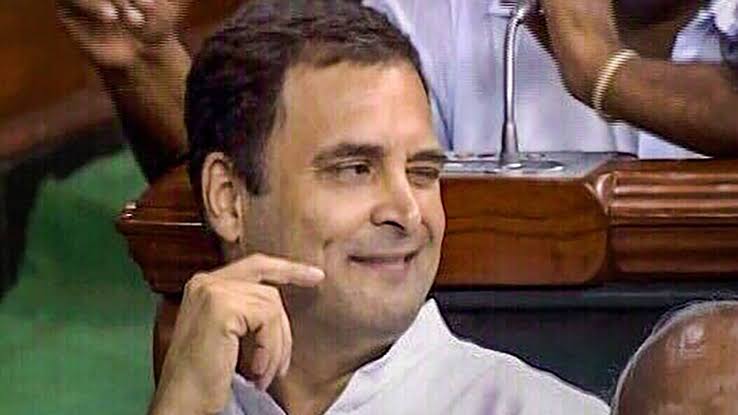
Speaking at the Bharat Bachao rally, the former Congress President Rahul Gandhi blustered that he is Rahul Gandhi and not Rahul Savarkar to apologise for his recent remarks on rapes in India. A couple of days ago, Rahul Gandhi’s appropriation of the government initiative’s name-‘Make in India’ to comment “Rape in India” stirred a furore amongst the BJP ranks who condemned the Gandhi scion for his insensitive remarks against the rape incidents and asked him to apologise for the same.


However, Gandhi brazened out his remarks, claiming that he did not speak anything untruthful about the rape incidents. Mocking the RSS ideologue VD Savarkar, Rahul Gandhi said, “My name is Rahul Gandhi. I am not Rahul Savarkar and I will not apologise for saying the truth,” Gandhi exclaimed.

It is noteworthy to mention that Rahul Gandhi tendered an unconditional apology to the Supreme Court of India for wrongly attributing his election-time rhetoric-“Chowkidar Chor Hai” to the apex court.

Read: Partition, Savarkar and Citizenship Amendment Bill: The lies, the conjectures and history whitewashed by Congress

In addition, Rahul Gandhi also attacked the government on the shrinking economy saying that the real GDP of the country lies somewhere around 2.5 per cent and not 4 per cent. He also launched an attack on the government for legislating the Citizenship Amendment Bill which seeks to grant a dignified way of life and citizenship of India to the religiously persecuted minorities in the neighbouring countries.

Read: Read Indira Gandhi’s letter referring to Veer Savarkar as ‘remarkable son of India’

Rahul Gandhi was not the only one to whip up paranoia with his pompous statements. Sonia Gandhi, the interim president of the Congress party, too joined her son in making wild assertions and hyperbolic claims against the BJP government.


In what sounded like a melodramatic appeal straight out of a Bollywood film, Sonia, in her stilted Hindi asked people to prime themselves for a hard struggle against the current dispensation. “There comes a time in life when an individual, society has to shun ambivalence and take a resolute decision. This is the time to enlist oneself for a hard struggle to salvage our country,” Sonia thundered.


In yet another exaggerated assertion, Sonia Gandhi claimed that the Citizenship Amendment Bill, that aims to grant citizenship to persecuted minorities, will shred the soul of India and that Modi and Shah are indifferent to it.

Rajasthan: Camp organised in Jaisalmer to help refugees from Pakistan to avail Indian citizenship, 15 refugees complete process

Following the historic passing of Citizenship Amendment Act, which gives citizenship to persecuted minorities of three neighbouring countries, the Jaisalmer district administration has organised a camp on Friday to help refugees from Pakistan to avail the citizenship of India, reports ANI.

According to the reports, the Jaisalmer district administration led by Sub Divisional Magistrate (SDM) Om Prakash Bishnoi had organised the camp in which 15 refugees from Pakistan completed the procedures and formalities necessary to obtain the Indian citizenship rights.

SDM Bishnoi stated that such camps are frequently organised to bring all concerned departments under one platform. He said that the reporting and clearance process is controlled online by the Centre.

Read: Majnu Ka Tila: Hindu refugee family from Pakistan name their daughter ‘Nagrikta (Citizenship)’, father says she is ‘India’s daughter’

On Thursday, the Citizenship (Amendment) Bill, 2019 became an act of law after President Ram Nath Kovind gave his assent to the historic legislation.

Prior to this, both the houses of Parliament had passed the bill after the much-heated debate. The Citizenship (Amendment) Bill was passed by Rajya Sabha on Wednesday and by Lok Sabha on Monday.

The Citizenship Amendment act seeks to give Indian citizenship to the members of Hindu, Sikh, Buddhist, Jain, Parsi and Christian communities who have come from three neighbouring Islamic countries – Pakistan, Afghanistan, and Bangladesh after facing religious persecution.

Read: ‘Like a bird who has been freed from a cage’ says Hindu refugee from Majnu Ka Tila on CAB: OpIndia Exclusive

The Act states the refugees of the six communities will be given Indian citizenship after residing in India for five years, instead of earlier requirement of 11 years. The Act also proposes to give immunity to such refugees facing legal cases after being found as illegal migrants. The cut-off date for granting citizenship will be December 31, 2014.

The law will not be applicable to the tribal areas of Assam, Meghalaya, Mizoram, and Tripura as included in the Sixth Schedule of the Constitution. Further, the law will not cover the areas covered under the Inner Line Permit (ILP), notified under the Bengal Eastern Frontier Regulation, 1873. The ILP regime is applicable in Arunachal Pradesh, Nagaland, and Mizoram.