After a long and heated debate, voting on the Citizenship Amendment Bill in the Upper House of the Parliament (Rajya Sabha) has finally been completed. The Rajya Sabha has passed the CAB with 125 votes in favour and 105 against. The Bill will now be law once the President signs on it.
The historic Citizenship Amendment Bill, after being passed by Rajya Sabha and Lok Sabha both, paves the way for hundreds and thousands of persecuted minorities from the three neighbouring countries who have been residing in India for the past many years.
The Bill had faced intense opposition from the Congress and like-minded parties who had earlier vouched for the provisions enshrined in the Bill during past regimes before doing a complete U-Turn in 2019. Shiv Sena, a party that claims to be a Hindutva party, walked out as the voting began.
‘Activists’ and ‘Intellectuals’ had joined the liberal mob in opposition to the Bill. Numerous bizarre arguments have been made to oppose the Bill. Certain people have deemed it to be anti-Muslim even though the Bill had nothing to do with Indian Muslims.
There was a meltdown among the ‘Liberal’ crowd on social media after the Bill was tabled and eventually passed in the Lok Sabha. Such opposition to the Bill has been rejected by both Houses of the Parliament and President Kovind will soon sign the historic Bill into law.
A minor girl, a victim of gang rape in Ghazipur area of Fatehpur district, has filed a complaint with the police claiming that the family members of the accused have threatened her with “Unnao-like” fate if she did not withdraw her complaint against the accused.
According to the police sources, about 25 days ago, a 16-year-old Dalit teenager from a village under Ghazipur police station was allegedly abducted and raped by four youth belonging to the same village. After registering a complaint with the charges of gang-rape, the police arrested the main accused Pradeep and sent him to jail, while the remaining three accused are still absconding. The police have intensified their search operations to locate the remaining three accused.
On Tuesday, the gang-rape victim, along with her entire family, reached the office of the Additional Superintendent of Police and lodged a complaint against the family of the accused for threatening to kill her like the Unnao gang-rape victim if she did not withdraw her complaint.
Jafarganj Circle Officer Shripal Yadav said that the probe is underway to determine if the victim was threatened. If the facts mentioned in the complaint are found out to be true, a fresh case of criminal intimidation will be registered against the accused, he said.
The father of the victim has alleged that the family members of the accused, who hail from the same village, are pressurising him into accepting money for settling the case. “The families of the accused are intimidating my daughter of dire fate like the Unnao gang-rape victim if she does not reconcile the matter,” he said.
On the early hours of Thursday, December 5, the 23-year-old Unnao rape survivor was set on fire by pouring kerosene on her by five men, including the duo who are accused of raping her a year ago. The incident occurred at Sindupur village under the Bihar police station area on the wee hours of Thursday and has caused tension in the area.
The rape accused and his friends dragged the woman outside of her village, took her into the fields and doused her in petrol before setting her on fire. She was raped by the five men in March while the police could manage to arrest only three of them and two others were still on the run.
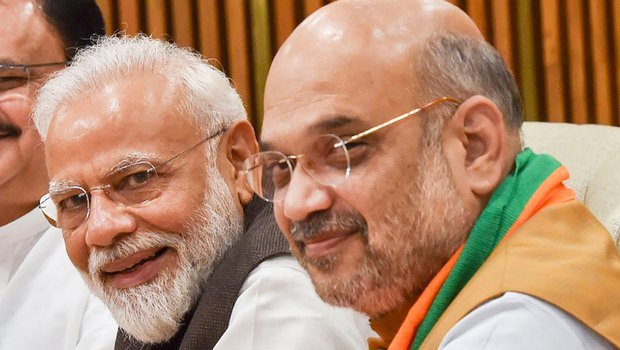
Home Minister Amit Shah revealed that the Narendra Modi-led NDA government has provided citizenship to 566 Muslims since it came to power in 2014. The revelation made by Amit Shah dispels the narrative that persecuted Muslims from the three neighbouring Islamic States will not be able to acquire Indian Citizenship going forward.
#CitizenshipAmendmentBill2019 | Present laws have provision for giving citizenship to persecuted Muslims; 566 Muslims given Indian citizenship, says Home Minister Amit Shah at Rajya Sabha
Home Minister Amit Shah has always maintained that the CAB, introduced by the Modi government is by no-means anti-Muslims. The Bill only seeks to provide Citizenship to the persecuted minorities from Pakistan, Bangladesh and Afghanistan on a priority basis. The Muslims from these countries can still seek citizenship from India but they have to follow due process, failing which they will be treated as illegal immigrants.
CAB is a special one-time measure for the religious minorities who have already come to India after facing persecution in the three specified countries. The amendment does not cancel the existing naturalisation laws.
Any person from any foreign country seeking to be Indian citizen can apply for the same under the existing laws. There is no bar on Muslims from anywhere in the world to seek Indian citizenship under existing laws, CAB does not prohibit that. They can apply for Indian citizenship under section 6 of the Citizenship Act, which deals with citizenship by naturalization.
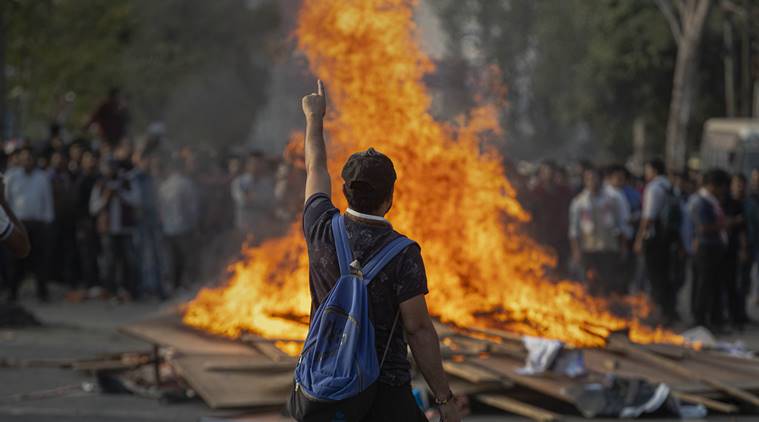
Even as the upper house of the Indian parliament discusses and deliberates the provisions of the newly proposed Citizenship Amendment Bill 2019 (CAB), the protest against the legislation have taken an ugly turn in the Northeastern state of Assam. Thousands of protestors opposing the CAB took to the streets of Assam and clashed with police. Angry protestors indulged in arson to register their opposition to the Citizenship Amendment Bill 2019.
The civil administration in Tripura and Assam have requisitioned three Army columns to contain the violence accompanying the protests. Indefinite curfew has been imposed in the city of Guwahati to prevent the situation from escalating further.
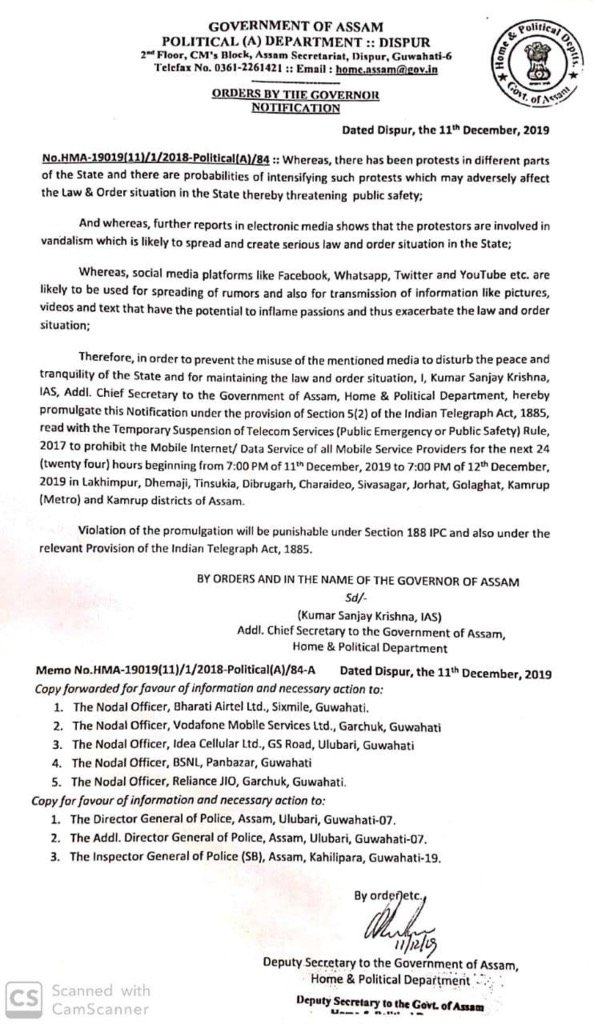
Mobile Internet services have been suspended for 24 hours from 7 pm today to 7 pm December 12 in Lakhimpur, Tinsukia, Dhemaji, Dibrugarh, Charaideo, Sivasagar, Jorhat, Golaghat, Kamrup(Metro) and Kamrup districts of Assam.
Mobile Internet suspended for 24 hours from 7pm, today to 7pm, 12 December in Lakhimpur, Tinsukia, Dhemaji, Dibrugarh, Charaideo, Sivasagar, Jorhat, Golaghat, Kamrup (Metro) and Kamrup districts of Assam. #CitizenshipAmendmentBill2019pic.twitter.com/9rBAiSqEjj
The order issued by the government of Assam says that in order to prevent the misuse of social media platforms such as Whatsapp, Facebook, Twitter in the propagation of rumours and lies, the decision to suspend the Mobile Internet/Data services in select districts for 24 hours has been taken.
The District Magistrate Dibrugarh has also ordered shutting down of liquor licensed premises from 4 pm today for ‘preservation of public peace and tranquillity’.
Residents in ethnically diverse northeastern states have launched a protest against the CAB bill as it stands to grant citizenship to a large number of minorities who have migrated from Bangladesh in the past decades. Numerous trains have been cancelled as a consequence of the protests and exams scheduled till December 16 in Gauhati University and Dibrugarh University have been postponed.
A 22-year-old man was allegedly raped on early hours of Monday, by four people who used a post put up by the victim on his Instagram account to trace his location and later abduct him. According to the Mumbai Police, the youth was allegedly assaulted in a moving car for almost three hours before being dumped on the road by the accused on Sunday night.
According to a report by India Today, the Mumbai Police has registered a First Information Report (FIR) under Section 377 (unnatural sex) of the Indian Penal Code and has arrested all the four suspects. One of the suspects, who is a minor, has been sent to a child remand home.
According to police officers from the VB Nagar police station, the four accused stalked the 22-year-old victim on Instagram. On Sunday, the man, who lives in the central suburbs of Mumbai, had posted a selfie outside a restaurant in the city.
The four accused used the details of the restaurant on his post to trace the victim’s location. The four then allegedly reached the restaurant and approached the man, telling him that they followed him on Instagram and were huge “fans” of him. After he fell for the trick, the accused took him for a bike ride.
The five people, including the four accused and the victim, rode for around 20 minutes until they reached a hotel near the Mumbai airport. There the victim was forced into a car, which was driven off by the accused. They then allegedly raped the victim in the moving car for three hours before dumping him on a road.
The victim then called his parents and along with them approached the police and registered a complaint. The police managed to nab all the four suspects later that day. While the three adults were produced in a court and sent to police custody, the minor accused was sent to a child remand home.
Senior police officer Madhuri Pokle of the VB Nagar police station said further investigations are on. “All the accused are remanded to police custody. We are taking down further statements in the case and investigating the sequence. We are awaiting reports from the hospital as well,” she said.
A dubious attempt is underway in the opposition to the Citizenship Amendment Bill. Efforts are being, especially by Congress, made to either put the entire blame on Savarkar and proponents of Hindutva for the ‘two-nation theory’ that led to the partition of the country in 1947 or share the blame equally between Hindu Nationalists and Islamic fundamentalists.
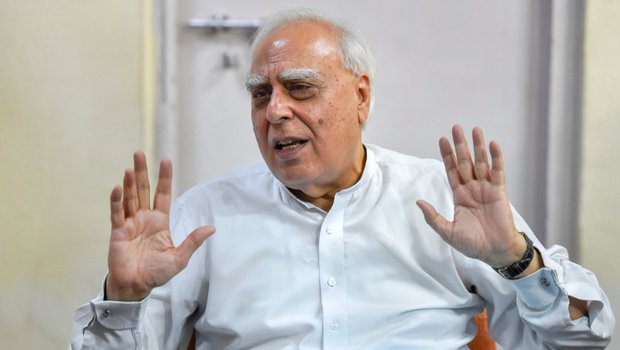
Kapil Sibal said in the Rajya Sabha that the CAB will realize “Savarkar’s two-nation theory”. Sitaram Yechury called the CAB a “bill of Jinnah and Savarkar’s dreams”. Anand Sharma of the Congress went a step further and absolved the Radical Muslims of all sins and put the blame for the partition of the country at Savarkar’s feet. He said, “Two nation theory was never brought in by Jinnah…it was introduced by Hindu Mahasabha in Gujarat in 1937”.
The Two-Nation Theory was introduced by the Founder of AMU
The stand taken by the respective opposition parties reflects a gross denial of history and facts. In reality, the ‘two-nation theory’, as is understood conventionally, was first touted by Sir Syed Ahmed Khan. Even Pakistani textbooks credit him for the founding of the theory. He was, of course, the founder of the Aligarh Muslim University.
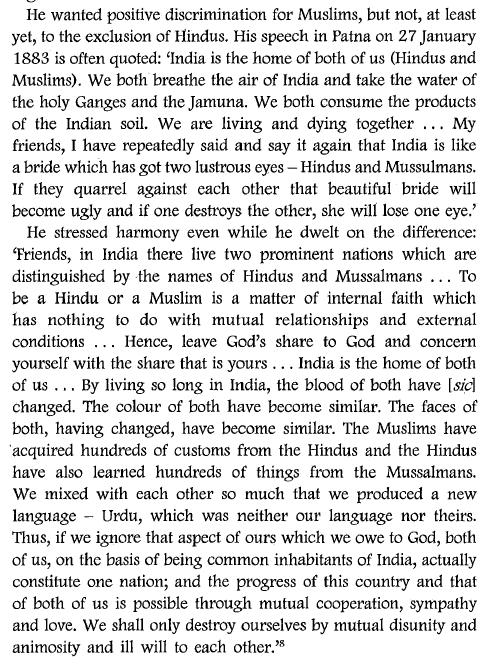
Syed Ahmed said as far back as in 1876, “I am convinced now that Hindus and Muslims could never become one nation as their religion and way of life was quite distinct from each other.” Seven years later, he voiced similar sentiments. He said, “Friends, in India, there live two prominent nations which are distinguished by the names of Hindus and Mussalmans…To be a Hindu or a Muslim is a matter of internal faith which has nothing to do with mutual relationships and external conditions…Hence, leave God’s share to God and concern yourself with the share that is yours…India is the home of both of us…By living so long in India, the blood of both have [sic] changed.”
Source: ‘Tinderbox: The Past and Future of Pakistan’ by MJ Akbar
He continued, “The colour of both have become similar. The faces of both, having changed, have become similar. The Muslims have acquired hundreds of customs from the Hindus and the Hindus have also learned hundreds of things from the Mussalmans. We mixed with each other so much that we produced a new language – Urdu, which was neither our language nor theirs. Thus, if we ignore that aspect of ours which we owe to God, both of us, on the basis of being common inhabitants of India, actually constitute one nation; and the progress of this country and that of both of us is possible through mutual cooperation, sympathy and love. We shall only destroy ourselves by mutual disunity and animosity and ill will[…]”
The first segment was made in 1876 and the second in January 1883. Vinayak Damodar Savarkar was born in May 1883. It appears that the opposition parties want us to believe that Vinayak Damodar Savarkar was a supernatural entity who was capable of introducing a theory years before he was even conceived in his mother’s womb or while he was still an unborn baby.
In 1888, Syed Ahmed Khan again said, “Now, suppose that the English community and the army were to leave India, taking with them all their cannons and their splendid weapons and all else, who then would be the rulers of India?… Is it possible that under these circumstances two nations—the Mohammedans and the Hindus—could sit on the same throne and remain equal in power? Most certainly not. It is necessary that one of them should conquer the other. To hope that both could remain equal is to desire the impossible and the inconceivable. But until one nation has conquered the other and made it obedient, peace cannot reign in the land.”
Will the Congress party now argue that Veer Savarkar came up with the ‘two-nation theory’ as a five-year-old?
Muhammad Iqbal and the Two-Nation Theory
Muhammad Iqbal took forward Syed Ahmed Khan’s idea and advocated for the creation of Pakistan as well. He said, “India is a continent of human beings belonging to different languages and professing different religions…I, therefore, demand the formation of a consolidated Muslim state in the best interests of the Muslims of India and Islam.” He made the statement in his presidential address at the 25th Annual Session of the All India Muslim League on the 29th of December, 1930. He is believed to be the first politician to advocate for the two-nation theory.
In the same address, Muhammad Iqbal also said, “I would like to see the Punjab, North-West Frontier Province, Sind and Baluchistan amalgamated into a single State. Self-government within the British Empire, or without the British Empire, the formation of a consolidated North-West Indian Muslim State appears to me to be the final destiny of the Muslims, at least of North-West India.”
Even as Iqbal exalted India, it became clear that it’s only the Muslims that he cared about. He stated, “We have a duty towards India where we are destined to live and die. We have a duty towards Asia, especially Muslim Asia. And since 70 millions of Muslims in a single country constitute a far more valuable asset to Islam than all the countries of Muslim Asia put together, we must look at the Indian problem not only from the Muslim point of view but also from the standpoint of the Indian Muslim as such.”
It is a grave insult to India’s honour that the opposition parties only remember Iqbal for his ‘Saarey Jahaan Se Achcha’ but work hard to whitewash his contribution towards the partition of India on a religious basis and the consequent civil war and genocide. Jinnah, of course, took the ideas to their natural conclusion.
Islam and Hinduism: Always Two Nations?
A section of Pakistani historians often traces the origins of the ‘two-nation theory’ to medieval history. From Muhammad Bin Qasim to Mahmud Ghaznavi, there are numerous Islamic invaders which certain Pakistanis consider as the progenitors of the theory that led to the creation of Pakistan. Other Islamic scholars such as Sheikh Ahmed Sirhindi and Shah Wali Ullah who lived during the Mughal era are also credited as the founders of the theory. The textbooks, however, continue to maintain that the theory was first propounded by Syed Ahmad Khan, the founder of AMU.
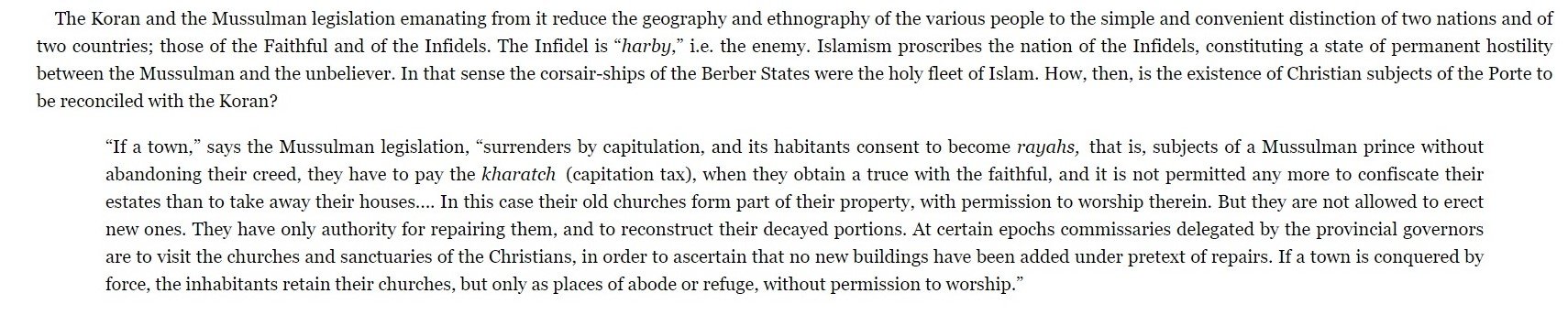
However, the idea that Islam and Hinduism constitute two different nations has also been asserted by numerous other philosophers and intellectuals of yore. Karl Marx, the Godfather of Communism and an intellectual the Congress party undoubtedly loves, said as far back as in 1854, “The Koran and the Mussulman legislation emanating from it reduce the geography and ethnography of the various people to the simple and convenient distinction of two nations and of two countries; those of the Faithful and of the Infidels. The Infidel is “harby,” i.e. the enemy. Islamism proscribes the nation of the Infidels, constituting a state of permanent hostility between the Mussulman and the unbeliever.”
What Karl Marx said
Thus, in many ways, the source of the ‘two-nation theory’ lies in the religious scriptures of Islam itself. Over time, it has been observed by non-Muslims and preached by Muslims such as Syed Ahmad Khan at different points in history. To take Karl Marx’s notions of Islam to its logical conclusion, the ‘two-nation theory’ is not only a feature of Islam but also Christianity and Judaism.
We see this playing out perfectly in Pakistan. While Ahmaddiyas and Balochs and Shias got the Islamic State they so craved, they are now being persecuted for their identity by the Sunni population of Pakistan. It’s an inevitable consequence of the nature of Islam and Monotheism in general. There will always be another nation to persecute. The Muslims in Pakistan carved a separate state for themselves in 1947, therefore, now they are oppressing other Muslims along with non-Muslims.
The creation of Bangladesh in 1971 was the most obvious evidence of the fact that the ‘two-nation theory’ is integral to Islam. On certain occasions, the two nations are Hindus and Muslims. And on others, the two nations are Bengali-speaking Muslims and Urdu-speaking Muslims.
Demonizing Hindus: A characteristic feature of the Congress party
One would have thought that the Congress party had fallen as low as it possibly could when it tried to bring into existence the mythical ‘Hindu Terror’ by using the entire might of the state machinery. However, it appears there’s always a new low that the Congress can sink to. Even the partition of India in 1947 is now sought to be blamed on Hindus. Syed Ahmed Khan came up with the ‘two-nation theory’, Muhammad Iqbal carried it forward and Jinnah ensured the creation of Pakistan.
In all of this, the Congress party sing odes to Syed Ahmad Khan, cannot look beyond ‘Saarey Jahaan Se Achcha’ when it comes to Iqbal, its leaders praise Jinnah and then blame Savarkar for the partition of the country. It is rather disgusting to even claim that Hindu Nationalists are responsible for the partition of the country when it was the ‘Secular’ heroes of the liberal establishment that ruled the roost at the time.
Furthermore, it is also argued that the Congress party never agreed to the ‘two-nation theory’. It is also claimed that the Congress party accepted the partition but never accepted the ‘two-nation theory. Such arguments are nothing more than clutching at straws. Acceptance of the creation of Pakistan is an agreement with the ‘two-nation theory’ and every other argument is nonsense. The creation of Pakistan was based on the ‘two-nation theory’, how could anyone then accept Pakistan’s creation but not the argument on which it was based?
Of course, the Congress party and their followers would argue that such a contradiction is possible. But the fact remains that the Congress party did officially recognize the ‘two-nation theory’ the moment it conceded to the creation of Pakistan. Without the ‘two-nation theory’, there was no valid argument for the creation of an Islamic State at that point of time. Therefore, that the Congress party still chooses to blame Hindu Nationalists for the partition only goes on to demonstrate the ingrained Hinduphobia that has gripped the party and perfectly explains its capitulation in the General Elections.
The passage of Citizenship Amendment Bill (CAB) in Lok Sabha has given hope and a lifeline to persecuted Hindus of Pakistan, who are currently living in the country as refugees.
While several Pakistani Hindu refugees staying across India have been cheering for the Citizenship Bill and thanking PM Modi and Amit Shah, the Pakistani Hindus living in Majnu Ka Tila, a refugee camp in Delhi, have particularly been ecstatic with the news. They believe that if the bill is cleared, it will help them get Indian citizenship and end their life in exile.
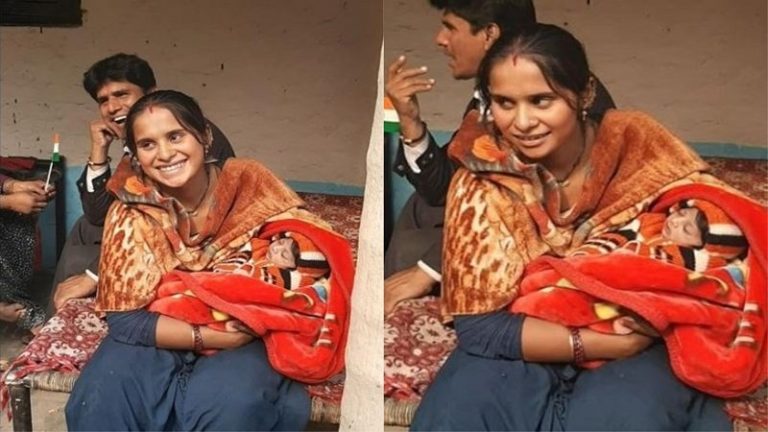
Hoping to now get the Indian citizenship after the long struggle, the Hindu refugees celebrated at Majnu Ka Tila by dancing and playing the drums. These Hindu refugees from Pakistan were so happy that a Hindu refugee family living there for the past 7 years, on Tuesday (December 10, 2019) named the daughter born to them as ‘Nagrikta (Citizenship)’. The girl’s father said – She is India’s daughter.
While the new born’s mother, Aarti said, “By getting citizenship, one will get freedom. We can do some good business. Today is the day we have been waiting for seven years”, the child’s father said that he was very happy with this bill, so he named his daughter citizenship. He hoped that now after living in India for the last 7 years they will get citizenship easily. Meanwhile, other family members said that they request to all other political parties not to oppose the bill.
When OpIndia team approached another Hindu refugee living there and asked him about the oppression he faced while living in Pakistan, he got very emotional. He said that the life of Hindu in Pakistan is miserable and that it is a punishment for Hindus to live there.
He said that Hindus are treated like garbage in Pakistan. “Here in India, Hindus, Muslims, Sikhs and Christians are all brothers. India is the place where we Hindus are safe, so we have come from Pakistan to live here, said the refugee. He also requested all political parties to support the Citizenship Amendment Bill in Rajya Sabha so that their future that of their children’s can be improved.
These Hindus from Pakistan hope that they will soon get Indian citizenship and their refugee identity will end. Most of these refugees say that the decision to leave their home in Pakistan was not easy for them. But they had no other way. These Pakistani Hindus had to leave their country due to religious discrimination and forced persecution.
On Monday, the Citizenship (Amendment) Bill, 2019 was passed with a majority of 311 votes against 80 votes in Lok Sabha. It seeks to grant Indian citizenship to non-Muslim refugees who came from Pakistan, Bangladesh, and Afghanistan on or before December 31, 2014. Today, it is facing scrutiny in the Rajya Sabha.
The proposed legislation applies to those who were forced to seek shelter in India due to persecution on the ground of religion. It aims to protect such people from proceedings of illegal migration. The cut-off date for citizenship is December 31, 2014, which means the applicant should have entered India on or before that date.
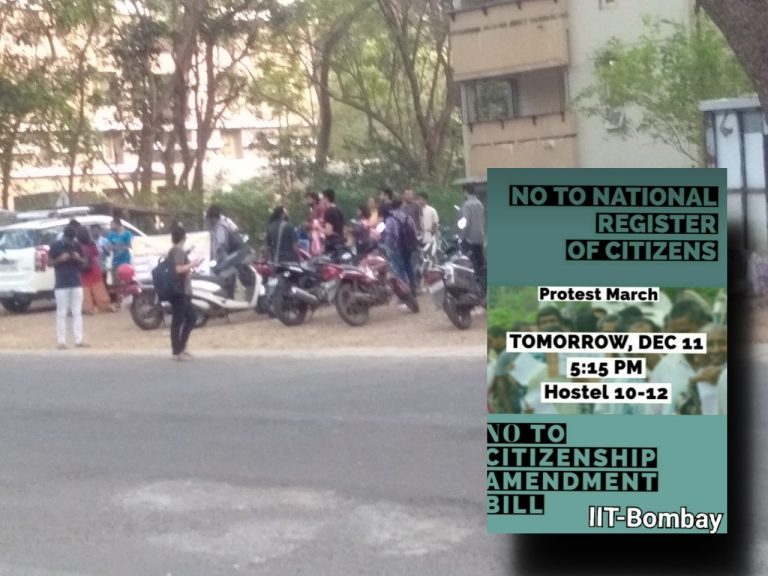
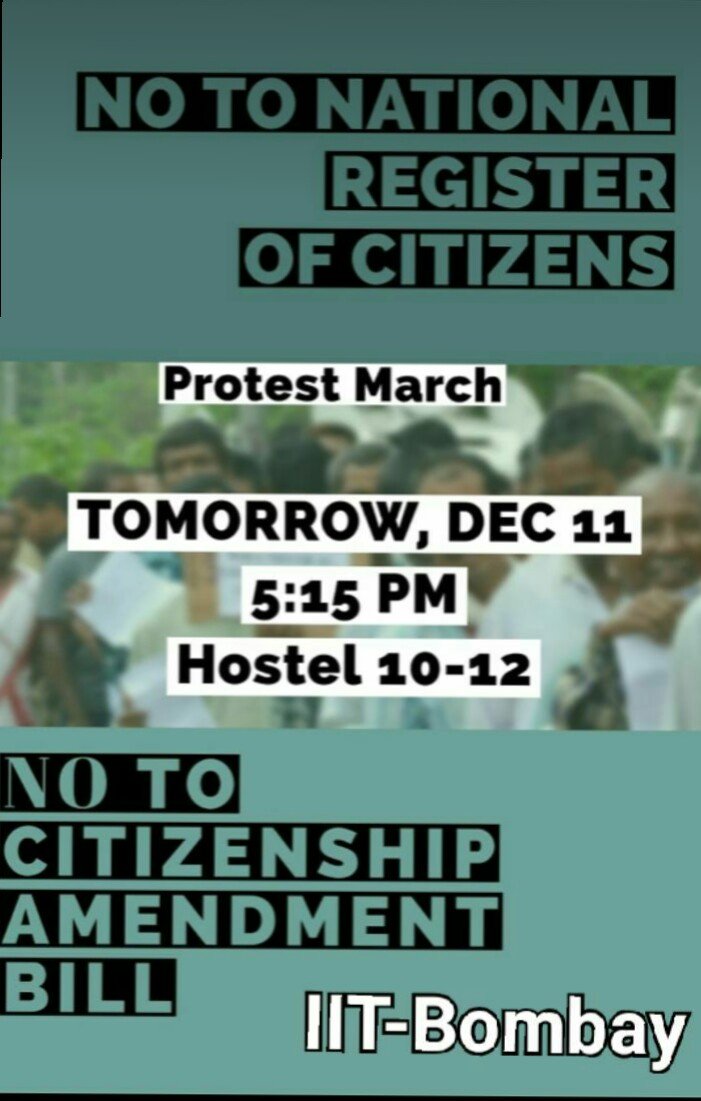
IIT Bombay has been gripped with yet another controversy as Leftist student groups try to protest the Citizenship Amendment Bill even as IIT B students support the bill. The limited protests have been mainly organised by Leftist circles like the Ambedkar Periyar Phule Study Circle (APPSC), Ambedkarite Students’ Collective (ASC) etc. The paltry number of students who are protesting against the Citizenship Amendment Bill are mainly PhD students from the Humanities department and belong to Leftist student bodies.
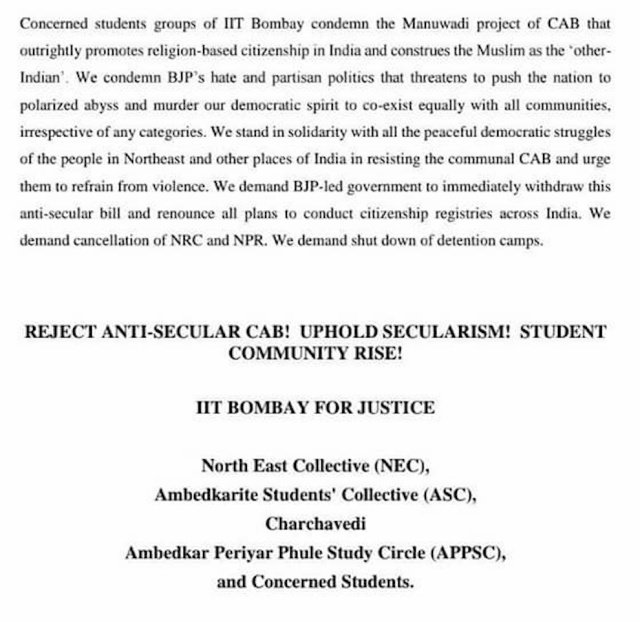
The Leftist students’ group even released a press note earlier today that spoke about upholding the ‘secular values’ by opposing the Citizenship Amendment Bill. Though they are few in number, their press note almost gives an impression that the entire student population of IIT-B are protesting against the Citizenship Amendment Bill.
In their press note, while talking about opposing the Citizenship Amendment Bill, the few students belonging to Leftist organisations say that CAB aims to provide persecuted sections like Hindus, Sikhs, Buddhists, Jains, Christians etc from countries like Pakistan, Afghanistan and Bangladesh but ignores that far more persecuted communities like Rohingyas, Ahmadiyyas, Tamils from Sri Lanka etc. Further, the note says that CAB is exclusionary and is a threat to the secular fabric of India. Repeating arguments of the constitution that were earlier debunked by veteran advocate Harish Salve, the press note mentions that this is just another step towards the establishment of ‘Hindu Rashtra’. Speaking about NRC, they further fearmonger and allege that fears are growing that Muslims would be the only ones to lose their citizenship.
Press Note by Leftists
The last part of the press note is especially hilarious where they apparently oppose the ‘manuwadi’ project of CAB. While signing the press note, the handful of PhD students from the Humanities department of IIT B sign it off as “IIT Bombay for Justice”.
OpIndia reached out to some students from IIT-B to understand if this protest is actually one that is driven by most students of IIT-B or just some Leftist students belonging to specific organisations.
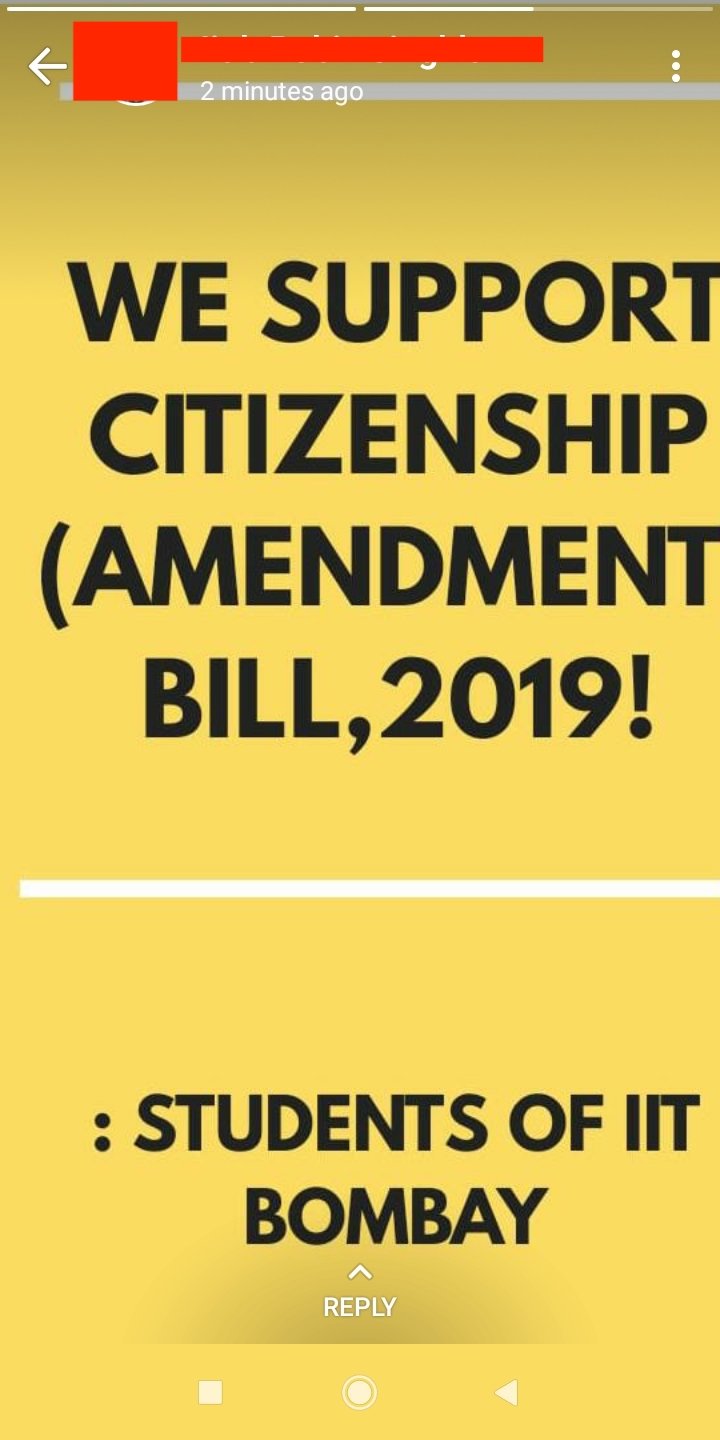
Common students of IIT Bombay have started an online campaign in support of Citizenship Amendment Bill 2019. Wherein they are uploading there WhatsApp, facebook statuses in favour of the Bill.
The students we spoke to sent us some screenshots of their campaign.
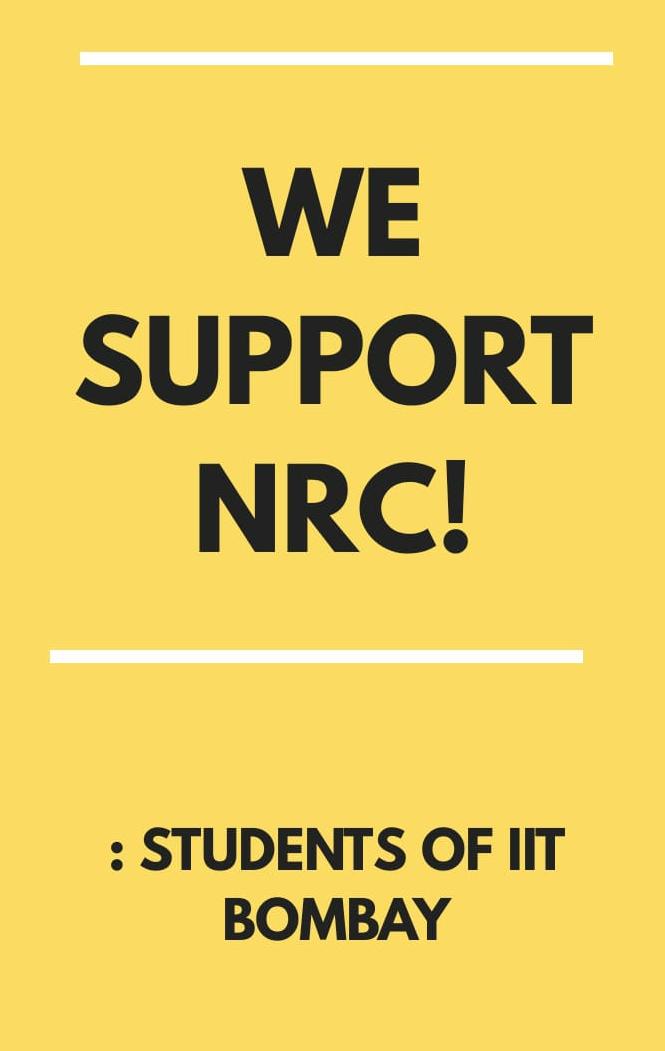
WhatsApp status of IIT-B students supporting CABScreenshot of Pro CAB status of IIT-B studentOne of the posters being used by IIT B students in their Pro-CAB, Pro-NRC campaign
The students of IIT Bombay that we spoke to did not want to reveal their identity fearing repercussions from left-leaning faculty.
The students that spoke to OpIndia said, “Today a left-leaning group is planning to disturb the atmosphere of the campus by organising an unwanted protest. They are trying to play smart by not giving their names in posters but they have been organising various anti-social activities on campus.”
Poster by Leftist students without their names to obfuscate who is organising the protests
The other student belonging to PhD in CSE said “This is the best time for them to organize a protest as Undergraduate students are not on campus. Some left-leaning newspapers will pick the story and it’ll seem like the entire IIT Bombay is against the Bill which is not the case. I think the world should know that the common students of IIT Bombay are with the sentiment of the Nation.”
Essentially, several students of IIT-B that OpIndia spoke to said that the “students” organising this so-called protest belong to Leftist organisations and are mainly PhD students from the Humanities department. They also said that they have chosen this time to organise these protests because other BTech students are on vacation and they can easily present their one-sided narrative to Left media thereby defaming not only IIT-B but also the nation.
The fear that the IIT-B students express is that this limited protest by Leftist students will be used by the Left media to paint the entire institution with the same brush as was done before.
Here are the number of Leftist students protesting against CAB.
Students ‘protesting’ against CAB
Earlier as well, The Wire had tried to take a limited protest by Leftist student organisation in IIT B, Ambedkar Periyar Phule Study Circle (APPSC), and tried to paint the protest as one by the entire student population of IIT-B. On 11th August 2018, Prime Minister Modi addressed the 56th convocation of the Indian Institute of Technology-Bombay (IIT-B).
The Wire had at that time published an article headlined “IIT Bombay students question the decision to invite Modi to Convocation ceremony”. Amongst questioning what the government had done, this anonymous group of students, according to The Wire asked whether the Prime Minister wants education for all, or is he more interested in “promoting the Brahmanical idea of education only for a few people, belonging to upper caste and upper-class backgrounds”. The anonymous students had also, according to The Wire questioned Prime Ministers’s silence on hate crimes in the country.
However, when OpIndia had spoken to students of IIT B, it was revealed that the student group that had issued the statement was APPSC – The Ambedkar Periyar Phule Study Circle. One student, on condition of anonymity, had told us that “these kinds of groups needlessly create trouble in the campus and create instability in the institute by talking about caste and religious issues that have no importance in student life”.
“Our campus doesn’t have politics. When we have student elections, unlike in JNU type campuses, we don’t have party-affiliated organizations. This is an attempt to poison the academic atmosphere. I don’t trust ‘The Wire’ at all. Aren’t they the same publication that tried to bring caste into cricket? now they want politics into IITs,” another student had said.
It is thus reasonable for students of IIT-B to fear that this limited protest by a handful of Leftist students of IIT-B might turn into a campaign by the Left media to tarnish the institution and incorrectly insinuate that the entire institution is against the passage of Citizenship Amendment Bill.
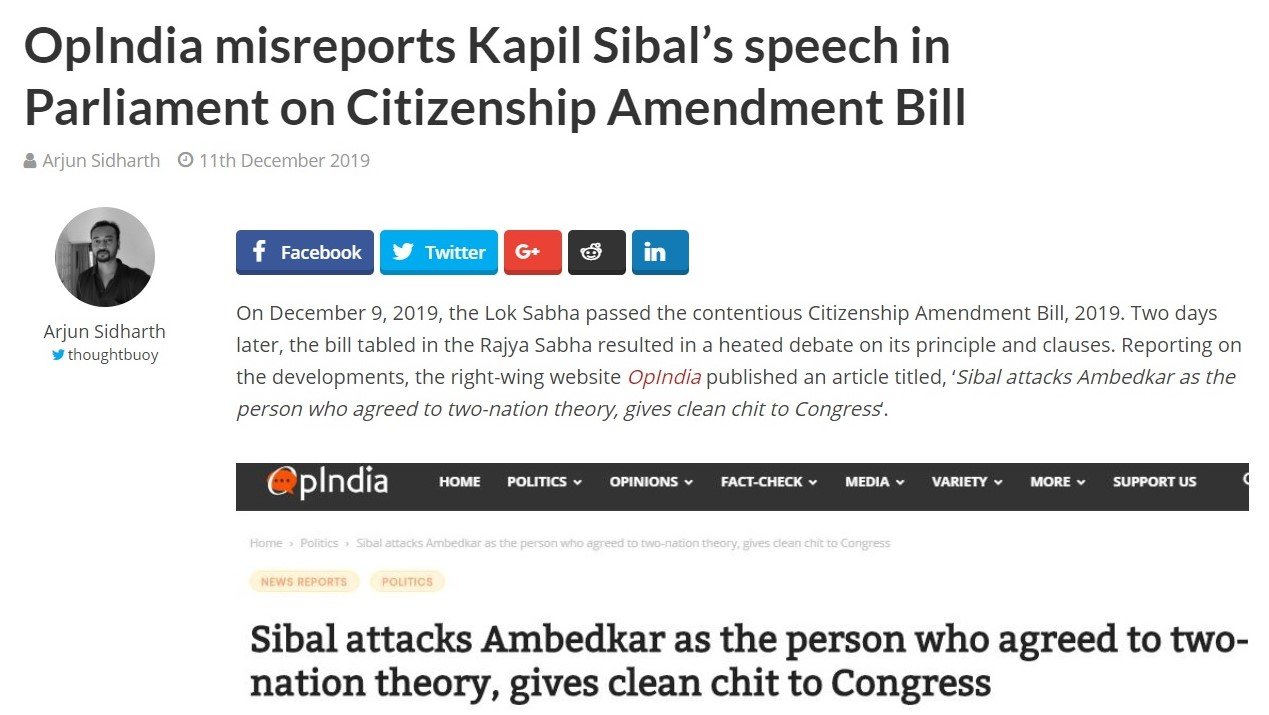
Far-Left propaganda website AltNews proudly claimed that OpIndia misreported Kapil Sibal’s quote in the Rajya Sabha. As it turns out, even a broken clock is right twice a day, and we did err. However, our mistake was expecting the media to at least report accurately what Kapil Sibal was saying in the Rajya Sabha. However, as it turns out, the mainstream media is not competent enough even for that. That was our mistake.
MoneyControl quoted Kapil Sibal as saying, “I rise to oppose the CAB bill. The two-nation theory wasn’t ours, it was perpetrated by Savarkar and B R Ambedkar agreed too. Congress believes in one nation. I want Home Minister to withdraw the two-nation statement.” We quoted the same in our report. As it turns out, Kapil Sibal was a little more elaborate than that and Moneycontrol failed in capturing accurately what the senior Congress leader actually said. And consequently, we erred too by placing our trust in them.
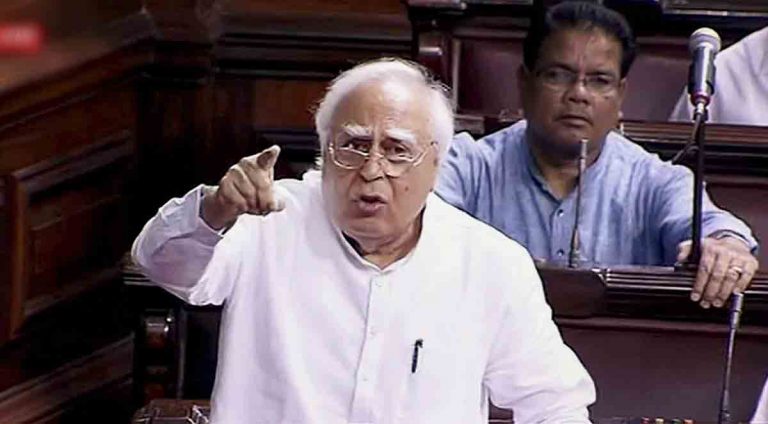
Kapil Sibal said, “I rise to oppose this bill. Sir, I was very disturbed the other day when the distinguished Home Minister said the other day in the other House, why do we need this bill? After independence, if Congress had not done partition on the basis of religion, then we would not have needed this bill today. The Congress did partition on the basis of religion. I don’t understand which history books the learned Home Minister has read, which authors he has consulted, but I would like to remind him of what Savarkar said.”
He then continued, “The two-nation theory was not our theory, you are going to fulfill it today with the passing of this bill, if it is passed. Savarkar said, “There are two antagonist nations living side by side in India. Several infantile politicians commit the serious mistake in supposing that India is already wedded into a harmonious nation or it could be welded thus for the mere wish to do so. These are well meaning but unthinkable friends take their dreams for realities, that is why they are impatient of communal tangles and attribute them to communal organizations”. The two nation theory was perpetuated by Savarkar.”
Recalling Ambedkar, Sibal stated, “And this is what Ambedkar said, “Strange as it may appear, Mr. Savarkar and Mr. Jinnah, instead of being opposed to each other in the one nation vs two nation issue, are in complete agreement about it.” Shame. Both agree, not only agree but insist there are two nations in India- one the Muslim nation, another the Hindu nation. I request the Home Minister to withdraw that allegation because we in the Congress believe in that one nation. You don’t believe in it.”
Thus, astonishingly enough, while AltNews accuses OpIndia of misreporting, it does not fact-check the erroneous claims made by Kapil Sibal in his speech in the Rajya Sabha. Savarkar’s opinion on the two-nation theory is much more complicated than what the Congress leader made out to be. And to dispel it, we shall quote Babasaheb Ambedkar himself on the matter. In a remarkable slight of hand, Kapil Sibal only misrepresented Ambedkar’s views by selectively quoting Ambedkar from his book ‘Pakistan or Partition of India’.
In the book, the portion from where Sibal has randomly picked up the sentence is actually part of a much larger section where Ambedkar attempts to present Savarkar’s opinions on the matter. Here’s how he actually summarized the opinions of the Hindutva Stalwart: “Strange as it may appear, Mr. Savarkar and Mr. Jinnah, instead of being opposed to each other on the one nation versus two nations issue, are in complete agreement about it. Both agree, not only agree but insist, that there are two nations in India—one the Muslim nation and the other the Hindu nation. They differ only as regards the terms and conditions on which the two nations should live. Mr. Jinnah says India should be cut up into two, Pakistan and Hindustan, the Muslim nation to occupy Pakistan and the Hindu nation to occupy Hindustan. Mr. Savarkar, on the other hand, insists that, although there are two nations in India, India shall not be divided into two parts, one for Muslims and the other for the Hindus; that the two nations shall dwell in one country and shall live under the mantle of one single constitution; that the constitution shall be such that the Hindu nation will be enabled to occupy a predominant position that is due to it and the Muslim nation made to live in the position of subordinate co-operation with the Hindu nation. In the struggle for political power between, the two nations the rule of the game which Mr. Savarkar prescribes is to be one man one vote, be the man Hindu or Muslim. In his scheme a Muslim is to have no advantage which a Hindu does not have. Minority is to be no justification for privilege and majority is to be no ground for penalty. The State will guarantee the Muslims any defined measure of political power in the form of Muslim religion and Muslim culture. But the State will not guarantee secured seats in the Legislature or in the Administration and, if such guarantee is insisted upon by the Muslims, such guaranteed quota is not to exceed their proportion to the general population. Thus by confiscating its weightages, Mr. Savarkar would even strip the Muslim nation of all the political privileges it has secured so far.”
Furthermore, Ambedkar appears to hold Savarkar’s point of view in higher regard than the stance of the Indian National Congress. He says, “This alternative of Mr. Savarkar to Pakistan has about it a frankness, boldness and definiteness which distinguishes it from the irregularity, vagueness and indefiniteness which characterizes the Congress declarations about minority rights. Mr Savarkar’s scheme has at least the merit of telling the Muslims, thus far and no further. The Muslims know where they are with regard to the Hindu Maha Sabha. On the other hand, with the Congress, the Musalmans find themselves nowhere because the Congress has been treating the Muslims and the minority question as a game in diplomacy, if not in duplicity.”
Ambedkar also clearly stated that Savarkar did not want a partition. He stated, “Mr. Savarkar adopts neither of these two ways. He does not propose to suppress the Muslim nation. On the contrary, he is nursing and feeding it by allowing it to retain its religion, language and culture, elements which go to sustain the soul of a nation. At the same time he does not consent to divide the country so as to allow the two nations to become separate, autonomous states, each sovereign in its own territory. He wants the Hindus and the Muslims to live as two separate nations in one country, each maintaining its own religion, language and culture. One can understand and even appreciate the wisdom of the theory of suppression of the minor nation by the major nation because the ultimate aim is to bring into being one nation. But one cannot follow what advantage a theory has which says that there must ever be two nations but that there shall be no divorce between them.”
Thus, quite clearly, the views of Savarkar aligned with Jinnah only in so much as that he accepted that Islam is a separate nation. Agreeing to the view that Hindus and Muslims formed two different nations does not automatically lead one to endorse the position that India should be partitioned. And Ambedkar, quite eloquently, elaborates how this is true. Savarkar, clearly, did not support the partition of the country and Kapil Sibal is being dishonest when he misrepresents Ambedkar’s view on purpose to portray Savarkar in poor light.
As a matter of fact, even Karl Marx concluded that Islam believed in separate nationhood. Will Kapil Sibal now blame Karl Marx for the partition? Furthermore, the Congress party has lied on numerous occasions during its opposition to the Citizenship Amendment Bill. According to News18, Kapil Sibal said that India was not partitioned on the basis of religion. But AltNews did not find the time to fact-check that blatant lie from Sibal.
Anand Sharma of the Congress went a step further and absolved the Radical Muslims of all sins and put the blame for the partition of the country at Savarkar’s feet. He said, “Two nation theory was never brought in by Jinnah…it was introduced by Hindu Mahasabha in Gujarat in 1937”. AltNews did not find the time to fact-check this monstrous lie as well. Even Pakistan acknowledges Sir Syed Ahmad Khan as being the founder of the two-nation theory, someone who passed away while Savarkar was still a child.
We understand that the propaganda website has an axe to grind with OpIndia. However, it is utterly dishonest for them to accused OpIndia of misreporting for merely citing a quote that was reported by a mainstream media outlet and then proceeding to entirely ignore the blatant distortion of Savarkar’s opinions by Sibal while misrepresenting Ambedkar’s views. Thus, in a ‘fact-check’ that accused OpIndia of misquoting Sibal, AltNews gives Sibal a free pass for misrepresenting Ambedkar’s views. That is a remarkable sleight of hand indeed but nothing less than can be expected from a propaganda outlet such as AltNews.
It has been months after the 2019 general elections and months after Rahul Gandhi resigned from Congress presidentship. The grand old party is still without an official party president, Sonia Gandhi continues to be the interim president.
While a few leaders from Rahul Gandhi’s camp wants him back as president if Sonia Gandhi does not want to carry on as interim president, the syndicate of Sonia Gandhi’s coterie think otherwise.
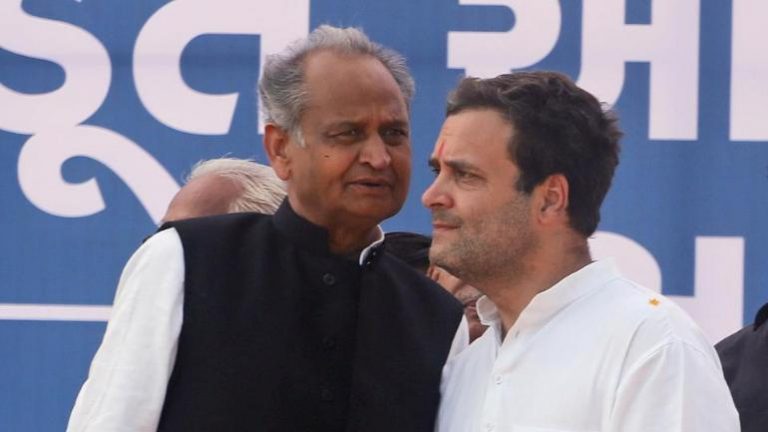
In what could be seen as an effort to lay the groundwork for bringing Rahul back at the helm of affairs, Congress leader Ashok Gehlot has jumped in support of the senior party leader Rahul Gandhi saying that if anyone could challenge PM Modi it ought to be Rahul Gandhi.
In an interview to PTI, Gehlot said Rahul Gandhi is the only opposition leader who can counter Modi and Home Minister Amit Shah “courageously and fearlessly”.
Describing the Gandhi family as the “cementing force” for the 134-year-old party and rejecting the charge that it practised dynastic politics, the Rajasthan CM said that Rahul Gandhi has to come to the forefront despite the party’s drubbing in the Lok Sabha polls as he is the only alternative to Prime Minister Narendra Modi.
Praising the entitled prince who chose to quit as Congress president after his party’s poor performance in the April-May Lok Sabha polls, Gehlot said Gandhi raised key issues related to farmers, youth, employment and inflation during the campaign.
“It is wrong to say that there is no alternative leadership to Modi. Rahul Gandhi is an alternative. It is true that people could not connect with him since Modi’s style and approach is different,” said the Rajasthan chief minister, known as one of the staunchest Gandhi family loyalists.
Gandhi worked so hard for the 2017 Gujarat polls that people felt the BJP will lose, he said.
“But, Modi ran a sentimental campaign, misconstrued Mani Shankar Aiyar’s comments (his derogatory remarks against Modi following which he was suspended from the Congress), travelled in a seaplane. He can do anything to win elections,” Gehlot said.
Rahul Gandhi campaigned extensively for the Lok Sabha polls and before that for the Gujarat elections, he noted.
It is pertinent to note here, that according to journalist Rasheed Kidwai, Rahul Gandhi is rarely sought as a poll campaigner, and his own defeat in Amethi in Lok Sabha election is a big negative for his image among the party workers.
In his article in The Tribune, the journalist said that the top leadership of the party is clearly divided into two camps, one belonging to Rahul and the other is the set of loyalists belonging to his mother. He writes that Rahul’s style of functioning is not liked by most Congress leaders.
While many within the party have been resisting Rahul to once again become the party’s face, Ashok Gehlot, probably belonging to Rahul’s camp, went on to say: the core issues of farmers, youth, employment, inflation, raised by Gandhi during the Lok Sabha polls were overshadowed by surgical strikes and ‘narrative around nationalism’.
Despite Rahul’s repeated lies on the Rafale deal, Gehlot said in his support: “Rahul Gandhi only asked why procurement of Rafale jets was brought down from 126 to 36 and why the price was raised from Rs 526 crore to Rs 1,600 crore per jet”.
Meanwhile, journalist Rasheed Kidwai notes that Rahul Gandhi relied on lies during the election campaign, and the party leaders are not very happy about it. He writes that “from Rafale to Doklam, Rahul’s allegations lacked facts, figures and details.” Kidwai also notes that “Rahul miserably failed to influence undecided voters, disgruntled farmers and millions of those who make up their voting decision closer in the 2019 General Election.”
On the issue of the Congress being a Nehru-Gandhi family-centric party, Gehlot said the BJP’s agenda has been to try and damage his party leaders so that the organisation collapses, but this has not happened.
“The Gandhi family is the cementing force for the party. If the party’s rank and file have trust and faith in the family, why should the BJP have any objection?” he asked.
How much ever hard Rahul’s coterie tries to project him as the deserving face of the Congress party, writing in Tribune India, Kidwai narrated the internal thoughts of the country on the matter of president.
According to him, Sonia Gandhi is emulating Indira Gandhi in many ways, including promoting her son in politics. But unlike Sanjay and Rajiv Gandhi, Rahul Gandhi has not become the most acceptable leader withing the Congress party, let alone among the voters.