Home Blog Page 6329

Mohammad Amir makes a comeback to World Cup Squad

Pakistan chairman of selectors Inzamam ul Haq told the media on Monday about three changes made in the provisional squad. Pakistan has called up Asif Ali, Mohammad Amir and Wahab Riaz to their final 15-man World Cup squad.

“The lack of potency of our frontline bowlers against England meant that a change was needed,” said Inzamam-ul-Haq.

“We now know we will encounter batting wickets in the World Cup.”

Asif Ali, who lost his daughter due to cancer is also called up.

“We are with Asif in this tough time,” added Inzamam. “He will return to Pakistan and then go back [to England] before the warm-up matches.”

The selection has irked pace bowler Junaid Khan. “I dont want to say anything. Truth is bitter. (Sach karwa hotha hai),” Junaid wrote on Twitter (later deleted).

Truth is Bitter – Junaid Khan on Twitter

Mohammad Amir was sensational against India in Champions trophy final in 2017 when he dismissed India’s top 3. But since then his form deteriorated took only 5 wickets in 10 matches in the last 2 years. Wahab Riaz played last International match for Pakistan in 2017.

“The bowling unit during the England ODIs has not clicked as anticipated or expected,” said Inzamam.

“If we have at our disposal the vastly experienced pace duo of Amir and Wahab, then it will be foolish not to include them.”

Pakistan squad: Sarfaraz Ahmed (capt & wk), Asif Ali, Babar Azam, Fakhar Zaman, Haris Sohail, Hasan Ali, Imad Wasim, Imam-ul-Haq, Mohammad Amir, Mohammad Hafeez, Mohammad Hasnain, Shadab Khan, Shaheen Afridi, Shoaib Malik, Wahab Riaz.

Congress mouthpiece National Herald claims ‘moral victory’, says even if Modi wins, he has emerged ‘weaker and diminished’

In a striking revelation, the Congress mouthpiece National Herald has claimed a ‘moral victory’ and conceded its defeat in the 2019 Lok Sabha elections even before the counting o votes have even started. Against the backdrop of all exit polls claiming that PM Modi will again serve as the Prime Minister, the National Herald today said that even if Modi wins the elections, he will emerge ‘weaker’ and ‘diminished’.


In an opinion piece published on the National Herald website, the author begins his diatribe against PM Modi by claiming how dubious the exit poll results have been and how “80% of exit poll seat predictions for all parties in large state elections since 2014 were wrong”. Though the author continues to assail PM Modi in the post based on unsubstantiated and prejudiced allegations, however, the author eventually agrees that the PM Modi will be in a position to form a government at the centre.

According to the exit polls released yesterday, PM Modi is all set to once again be elected as the Prime Minister of the country with many polls granting BJP absolute majority to form a government on its own. The exit poll data also shows that though the Congress party would be able to send a higher number of MPs to parliament than the dismal tally of 44 in 2014, the improvement is rather marginal and not drastic, and nowhere near forming a government even with the help of allies.

This admission from Congress mouthpiece that PM Modi may become the Prime Minister of the country once again reveals that though outwardly the Congress party leaders have chosen to disregard the exit polls and place their faith in the dubious internal surveys according to which they are winning 160 seats, secretly they have resigned to the fact that they will again have to endure Narendra Modi for another 5 years as the Prime Minister of the country.

As it dawned upon them that Narendra Modi’s re-election as PM is inevitable, the Congress party, in their attempt to deflect the blame away from their leader Rahul Gandhi’s incompetence responsible for another imminent disaster, have now claimed ‘moral victory’ by asserting that though Modi might be PM again but their party has been successful in curtailing him by ‘clipping his wings’. Congress party can seek temporary salvation by asserting that they have hamstrung Modi, for it might be essential to keep the party together and quell rebellions, but deep down they know it very well that they have been let down again by their dynasty prince.

Tamil Nadu CM reiterates state government’s commitment to release Rajiv Gandhi’s killers

Tamil Nadu Chief Minister Edappadi K. Palaniswami on Monday reiterated his government’s commitment to release the seven convicts involved in the assassination of former Prime Minister Rajiv Gandhi. He hopes that Governor Banwarilal Purohit will act on the recommendation of his cabinet for setting them free.

Palaniswami’s statement comes at a time when calls have intensified, both from the opposition and Tamil groups, for the release of the seven, after the Supreme Court recently disposed of a plea of the kin of those killed along with the former Prime Minister in 1991 opposing their release. All seven are serving a life sentence.

The decision by Tamil Nadu government in 2014 to release the seven convicts, was challenged by the kin. The state cabinet had adopted a resolution recommending Governor Purohit to release them in September 2018.

Speaking to reporters Palaniswami said the cabinet resolution that was passed, reflected the popular public sentiment on the issue. “We wanted the seven to be released and that is why adopted a cabinet resolution and sent it to the Governor. The Governor has to decide (on the matter),” he said.

“We took the decision based on public sentiment, adopted a cabinet resolution and sent it to Governor. We hope he will take action,” he added.

The AIADMK government, on September 9, 2018, recommended Governor Purohit to release all seven people, Murugan, Santhan, Perarivalan, Jayakumar, Ravichandran, Robert Payas, and Nalini, convicted for the assassination of Gandhi.

In June 2018, President Ramnath Kovind had rejected Tamil Nadu government’s proposal to release the seven convicts serving sentences for Gandhi’s assassination. According to a report in The Hindu, the President had conveyed to the state government that Centre does not agree with their views on the matter.

The state government had previously written to the Centre twice for the release of the seven convicts ‘on humanitarian grounds’ for, which the Centre had objected.

Gandhi was assassinated in a suicide bombing attack during his interaction with the public in Tamil Nadu’s Sriperumbudur on May 21, 1991.

Former NDTV journalist uses an unnamed ‘clued in Congress leader’ to assert that Exit Polls are declaring Congress’ demise ‘too soon’

As soon as the numbers from the Exit Polls painted a dim picture of Congress rout in the 2019 Lok Sabha elections, many liberals and journalists sympathetic of the Congress party jumped into the fray, underplaying the predictions made by the Exit Polls and trying to rescue their preferred political party by the dint of obfuscation and deflection.

Earlier NDTV journalist Ravish Kumar proceeded to discredit the Exit Poll results by casting doubts on the veracity of the data collected. Now, the former NDTV journalist Sunetra Choudhary, who felt excited on the rumours of PM Modi contracting swine flu, conjured up an unnamed ‘clued in Congress leader’ to insinuate that the Exit Polls are prematurely declaring Congress’ demise.


According to this unnamed source within the Congress party, BJP is winning 230 seats while Congress alone is winning 160 seats. Apart from this, the unknown source also asserts that the regional parties combined will be able to secure 150 odd seats. It is noteworthy to mention that the regional parties also include Shiromani Akali Dal, Shiv Sena, JDU and other small regional parties which are part of the NDA coalition.

However, the bloated numbers showing Congress alone winning 160 seats is where lies the rub. According to even the most optimistic exit poll, the combined UPA tally stands at somewhere around 135(Discounting the Neta-NewsX numbers since it is under scanner for employing imperfect methods to arrive at the numbers). The Congress tally would be further diminished as these are the numbers for the UPA coalition. Perhaps, the unnamed source is either entirely disconnected with the reality or figment of Sunetra’s fertile imagination.


Sunetra also quotes a ‘clued in BJP leader’ who is confident of his party winning 230 seats. In case of the NDA alliance, the most conservative exit poll shows that they will win 267 seats(ABP poll). Thus, the NDA alliance which comprises of strong regional parties such as Shiv Sena and JDU would be in a comfortable position to stake a claim at the government even by the most conservative estimates. In a scenario where the NDA forms a government at the centre and Modi continues another term as PM, what is it if not the demise of the Congress?

The Exit Polls suggesting Congress’ demise are obliging their sympathisers to prepare for their funeral in advance. Meanwhile, Congress apologists can discredit the exit polls, cast aspersions on their procedures and methodology, conjure up unnamed ‘clued in leaders’ to salvage their favoured party’s fate but by doing so they are advertently or inadvertently flogging the dead horse.

AAP goes insane, alleges that there will be attempts to open strong rooms and manipulate or replace EVMs

As the Lok Sabha elections inch towards a finale, political parties eagerly await the results that will divulge their fate. The exit polls have predicted 0-1 seat for the Aam Aadmi Party (AAP) in Delhi leading the party to prepare excuses to dump the blame, in case the predictions come true.

From ‘Muslims’ to ‘EVMs’ to floating the ‘election should be cancelled’ theory, AAP is busy trying different tricks up its sleeves. In its latest move, compelled by the frustration of electoral loss, the party has written to the Election Commission of India (ECI) with bizarre allegations. The party claims they have information that their political opponents will “attempt to open strong rooms housing EVMs to manipulate or replace machines.”

Requesting for additional security at the counting centre of Jija Bai, ITI for women, Siri Fort, New Delhi, AAP claimed to have information from credible sources that political opponents have planned to gerrymander with EVMs either on the night of May 21, 2019, or May 22, 2019, to the hours leading up to the actual counting on May 23, 2019.


Furthermore, to avoid such situation, AAP urged the EC to take the following actions:

  • Appointment of another additional observer to oversee the entire electoral process.
  • Additional CRPF security at the Jija Bai institute where South Delhi’s EVMs are housed.
  • Strict enforcement of entry permission.

The exit polls have predicted a gloomy number for AAP. As soon as the numbers were out,  party’s MP to Rajya Sabha Sanjay Singh started raising questions over the elections. He suggested the elections should be cancelled in case of a mismatch between VVPAT and EVM vote count.

His demand is not surprising considering their party chief, who had probably conceded defeat even before the last phase of voting, started cooking up excuses to fall back on, just in case his party did not perform well in the ongoing polls.

Arvind Kejriwal while talking to Indian Express had said that Muslim votes “shifted” to Congress at the last minute during the Lok Sabha polls in the capital.

This is not the first time Congress or AAP have indulged in this kind of mudslinging. It was earlier revealed that Congress had asked Muslims not to vote for Atishi Marlena, AAP’s candidate, because “she was a Jew.”

In response to a question about his opinion on overall results, the AAP chief displaying his obsession with the EVM’s said “If they do not tamper with the EVMs, Modi ji should not come back… but I do not know whether they would do it or not.”

Interestingly Kejriwal’s obsession with EVM tampering theory is not exclusive to this election season. He has been trying to peddle this theory for years. In fact in 2017, after AAP faced defeat in the Punjab Assembly elections it had tried using a similar excuse. The ECI had then sent a detailed response to AAP, which had claimed that EVMs could have been tampered with.

However, the apprehensions and the jitters all the political party members are going through at this moment will soon be put to rest when the results of the Lok Sabha elections, manifesting India’s mandate, will be declared on May 23.

‘J&K Invisible Faultlines’- a book that attempts to correct the skewed narrative on Jammu and Kashmir

The book titled ‘J&K Invisible Faultlines’, published by Pentagon Press and edited by Sandhya Jain, attempts to correct the skewed narrative on Jammu & Kashmir by focusing on important but neglected issues like: the strategic importance of Jammu and Ladakh, the sidelining of Maharaja Hari Singh, the Dogra ruler, who made the State’s accession to India possible, unequal delimitation of Constituencies, the ethnic cleansing & forced exodus of Kashmiri Pandits and the demographic threat posed by the Rohingya influx in Jammu. Sandhya Jain, in her preface, calls the Kathua Incident the “immediate trigger” for this effort to present facts that have always been suppressed by the ‘officially’ sanctioned version of the ‘Kashmir Issue’.

Amongst the slew of publications on ‘Kashmir’, what makes this one stand out is that it focusses on the other two parts of the State, Jammu and Ladakh. It seeks to acquaint readers with Maharaja Hari Singh’s real stature in the contemporary history of J&K, a position he has been denied by politicians, media and writers from the Valley. Hari Singh was an able and astute Administrator, a fact acknowledged and recorded by the British Resident of that period. J&K was one of the well-administered Princely States. Yet, after Accession, he was sidelined due to the Nehru-Abdullah nexus. Had Jawaharlal Nehru included Hari Singh in the negotiations with Sheikh Abdullah and not gone to the UN over the Pak incursion in 1947, perhaps the unnecessary dispute over Kashmir could have been averted.

The chapters providing the background to the ‘Kashmir Problem’, highlight how the people of Jammu and Ladakh have been consistently marginalized due to the Kashmir-centric approach of successive regimes in J&K. Jammu, despite being the first communication route to the Valley and Ladakh, has always ended up being on the sidelines. Whether it is media coverage of the State, allocation of Central funds or developing the tourism potential, the peaceful regions of the State have always been given short shrift. Sialkot being very close to Jammu, makes Pakistan more vulnerable from this side, added to this is the fact that River Chenab, the lifeline of Pakistan, flows through Jammu region. It is for this reason that our neighbouring country has been trying to carry out a demographic shift by targeting the Hindus of Poonch, Doda, Rajouri and Udhampur. After the ouster of Kashmiri Pandits from Kashmir, people from these areas are being forced to leave their homes. As if this wasn’t enough, constant shelling from the Pak side of the International Border has made life hell for the Indians living on this side.

For a change, Ladakh gets its fair share of focus in this book on J&K. This region, comprising the biggest share of land mass in the State, has always been ignored perhaps, because of its sparse population and modest people. This area is strategically of prime importance, with boundaries touching China, Tajikistan, Afghanistan and Pakistan which give it the potential of being India’s bridge with Central Asia, South Asia and China. Coupled with this strategic value is the non-confrontationist attitude of the peaceful population which makes Ladakh the most promising part of this fractured State. Unfortunately, the Centre has not given Ladakh the attention it deserves, as is evident from the fact that it took seven decades for a university to be sanctioned in Ladakh in December 2018, under Governor’s Rule. The portions devoted to Ladakh bring out interesting aspects like the now unused route from Leh to Kailash-Mansarover being the shortest and easiest, reopening this route would do wonders for Ladakh’s economy. Granting of Union Territory status is a longstanding demand of this region, the fulfilment of which is prevented by the existence of Article 370.

The crux of this book lies in the painstakingly researched chapters on the Kathua Rape Case that shook the nation with its potential of getting turned into a communally divisive spark in an already fraught situation. The details provided by the team of social activists who went to Rassana, met the people involved and inspected the ‘crime scene’, give a chilling insight into this incident that was given a religious angle and misrepresented at the national and international level. The truth, behind what turned out to be a carefully constructed conspiracy, is laid bare by conducting interviews with local people, meticulous collection of background information and uncovering of the way facts were deliberately distorted by certain sections of the media and some powerful people. This fact-finding team reveals how the reputation of the peace-loving people of Jammu was sought to be tarnished by implicating several local people and a place they held sacred.

Another problem plaguing the security of Jammu and the well-being of its people is the illegal settlement of the Rohingyas from Myanmar in areas of Samba and Jammu. It is a wonder how those who bristle at the very mention of Art 370 have never complained about how and why these illegal aliens were settled in a sensitive place like Jammu. This Rohingya influx poses a security threat not only to Jammu, but the whole of India given their tendency towards radicalization and their involvement in illegal activities. Their presence and the ease with which they have acquired Aadhar and Voter Cards points to a deliberate and diabolical attempt at tilting the demography in this area.

The Articles of contention, Art 370 and Art 35A, are both explained in detail, along with how they have proved detrimental to the progress and development of the State. While Art 370 prevents assimilation of J&K with the rest of India and alienates the people by bestowing ‘special’ and unfair privileges, Art 35A impinges on the basic rights of J&K women and their progeny. Valuable inputs are provided for those who want to know how these two obsolete Articles are “suffocating” development and closing the doors to “an era of prosperity” in the whole State.

Coming to the issue of the Internally Displaced Kashmiri Pandits, the most sharply etched faultline in the fabric of this troubled State, this book recounts how growing Islamic fundamentalism impacted their existence. Decades of persecution culminated in a “swift and shrill campaign of violence and intimidation” forcing them to flee their homes and take refuge in other parts of the nation. Important and decisive events, which played a big role in the eventual decimation of this intellectual community, are briefly mentioned. The Kabali invasion of September 1947 that marked the first act of Jihad, Sheikh Abdullah’s controversial Big Landed Estates Abolition Act, 1950 which aimed at depriving Kashmiri Pandits of their land, political downsizing of Constituencies where KPs were numerically significant and depriving them of educational and employment opportunities despite merit, were just some of the ways in which the gradual ethnic cleansing of this community was carried out. A list of some of the Kashmiri Pandits killed in the run-up to the 1990 exodus is also provided.

There is so much that the book talks about, detailing problems along with their causes and also attempting to suggest some of the steps that could be taken to rid the State of these man-made faultlines that must be repaired and rectified for this important and sensitive State to regain the glory and prosperity that history bestowed on this land. Highly recommended for every Indian who wishes to know more about J&K, apart from the media-driven, hyped half-truths that are generally peddled about the ‘Kashmir Issue’. As this book amply illustrates, Kashmir cannot be understood without knowing about the whole State, which should rightfully have been called ‘JAMMU, KASHMIR & LADAKH.


By Renuka Dhar, who tweets at @DharRenuka

Dubious NewsX Neta Exit Poll gave NDA 242 seats while being overdependent on a less than popular mobile app

The Exit Polls for the 2019 Lok Sabha Elections were released by various agencies after voting in the final phase was completed. While a majority of the pollsters predicted the NDA to secure a majority in the Lower House of the Parliament, conspicuously, there were two which predicted the NDA to come up short.

One of them was the ABP-Nielsen Exit Poll that gave the NDA 267 seats, 5 short of a majority. It was later revealed that they possibly manipulated the data to reach their favoured conclusions.

The other poll that predicts the NDA to fall short of 272 is the NewsX Neta Exit Poll. NewsX Neta predicts the NDA to secure 242 seats, 30 short of the 272 required for a majority. The UPA is predicted to win 164 while Others are expected to win 136.

“The BJP, which had won 71 of the 80 seats in Uttar Pradesh in 2014, is set to suffer huge loss at the hands of the Mahagathbandhan. The saffron party is expected to win only 33 seats this time, a loss of more than 50 per cent over 2014. The Mahagathbandhan is expected to win 41 seats (BSP 22, SP 20 and RLD 1) and the Congress 4 seats,” the exit poll said.

“The Congress is likely to witness a resurgence in all the states where it is fighting the BJP directly, which include Assam, Delhi, Gujarat, Madhya Pradesh, Rajasthan, Karnataka and Maharashtra. However, one interesting thing to note is that states like Madhya Pradesh and Rajasthan, which recently went the Congress way in the Assembly elections, seem to be voting strongly for the BJP in the Lok Sabha elections, highlighting the popularity of Prime Minister Narendra Modi in these regions,” it stated.

The funny bit is the predictions appear to base a lot on their app. Pratham Mittal, Founder, Neta App said, “Over 47 lakh voters participated in the Neta exit poll while over 2.5 crore voters participated in its opinion poll across all the 542 constituencies. These results are a statistical derivation based on the two. To ensure a pertinent sample size, the Neta app has used multiple mediums like the app, IVR calls and SMS to gather data on evolving political inclinations”.

The app currently has only 1 million downloads. And yet, since yesterday, the NDA numbers have fallen by 2 seats already and is now predicted to win 240. More of a problem is the fact that there’s no guarantee that the data received through the app is authentic, it’s not too difficult to imagine how it can be hoodwinked. For instance, a single person can very easily own multiple phones and register the app on their phones which in turn can affect the authenticity of the data.

Also, if the data can change within the space of 24 hours, one ought to question their methodology and the over-dependence on easily manipulated app results. Again, the data itself appears to be tainted with too many falsities and too much is left to the internal biases of the interpreters of it.

For Exit Polls to be accurate, not just the size of the sample, but also the quality of the sample would matter greatly. The sample would need to be a representative sample of all demographics, economic strata, a mix of educated and the uneducated, age variety etc. One would also need to ensure that the sample size has an equal representation of all stratas of the society from all constituencies.

The app has 10 lakh downloads while the Neta Exit Polls claims to have surveyed 47 lakh voters. Thus, more than 20% of the data surveyed could well be inauthentic. If the percentage of inauthentic is even half that or one-fourth of that or even one-tenth, it’s more than enough to completely scar the results.

Thus, the 242 given to the NDA by the NewsX Neta Exit Poll ought not be taken too seriously. Like the ABP Nielsen Exit Poll where the Director admitted to manipulating the data, this exit poll, too, suffers from serious flaws.

2019 World Cup preview: England – Overwhelming favourites but that bowling attack will keep opponents interested

The biggest show in Cricket is set to begin in just 10 days in England and the hosts start as overwhelming favourites to lift the trophy for the first time ever in history.

Since the debacle of 2015, when England failed to make it past the group stages and managed to beat only Scotland and Afghanistan, English ODI side has completely changed their approach and have built a tremendously successful side with an attacking approach. Most of the success has been built around their batting, which boasts of arguably the most aggressive batting line-up in ODI cricket history. On flat pitches and smaller grounds, they become absolutely unstoppable as they take apart one bowling attack after another.

In Bairstow and Roy, they have an outstanding opening pair. The pair has opened together in 26 games and they already have 7 century stands and 7 half-century stands with an overall average of 64. These runs are coming at a very brisk rate with both batsmen having a career strike rate well over a 100. The momentum of the innings is set right at the top with these 2 putting the bowling line-up on the backfoot, enabling the middle order to cash in later.

Once you get past the openers, they have 2 excellent ODI batsmen in Root and Morgan who can keep things ticking over by manipulating the field for 1s and 2s, and both are very capable of hitting the boundaries when required, especially Morgan. They invariably ensure that the run rate doesn’t drop once the openers depart and it sets up nicely for the big hitters to come later.

Speaking of big hitters, they have the best of the current lot in Jos Buttler. With a batting average of 41.6 and strike rate of 120, Buttler is in a class of his own. Maxwell and Russell are the only ones with better strike rate than him in ODIs, but they are nowhere close to the consistency of the Englishman who now has 5 out of the 10 fastest centuries by an English batsman.

The thing with this English batting line up is that the batsmen just don’t stop coming, you have the all-rounders Stokes and Moeen coming in at 6 and 7 who can shore up the innings after a collapse or provide late blows to add some crucial runs, as per the situation. Then you get Curran, Woakes, Rashid who are all very capable with the bat. If somehow you get them 9 down and get a chance to bowl to Willey or Plunkett, you can still expect to leak boundaries as both are very capable of smashing a few boundaries, there is just no respite for the bowling team.

While the batting line up appears formidable and looks likely to cross 350 in every game, their bowling line-up looks like conceding the same every time they bowl on the flat pitches expected during the World Cup. They have conceded 300+ on 25 occasions since the last World Cup.

Lack of death overs specialists and wicket taking options in the middle overs means they often end up conceding huge totals. Adil Rashid is the only wicket taking option they have through the middle overs allowing the opposition to build their innings for a late flourish relatively risk-free.

West Indies collared their bowling in the Caribbean earlier this year when even a total of 418 looked insufficient at one point before Rashid picked 4 wickets in an over, while Pakistan has scored over 340 in 3 out of 4 matches in the ongoing series against them.

They may bring in Jofra Archer due to his death bowling abilities in addition to some big hitting lower down the order but the question is, who misses out from the bunch that has been together over the past 2 years, Willey or Plunkett? They are the 2 players who must be fearing for their spot and have already voiced concerns over the inclusion of Archer just ahead of the World Cup.

While that bowling attack remains somewhat of a concern, as long as that batting order keeps firing, everything is fine for England as they chase down one 350 score after another with remarkable ease.

England squad: Eoin Morgan (captain), Moeen Ali, Jonny Bairstow (wicket-keeper), Jos Buttler (wicket-keeper), Tom Curran, Joe Denly, Liam Plunkett, Adil Rashid, Joe Root, Jason Roy, Ben Stokes, David Willey, Chris Woakes, and Mark Wood.

The first surgical strike was carried out by the armed forces in September 2016: Lt Gen Ranbir Singh

Putting to rest the controversy surrounding the surgical strike once and for all, GOC Northern Command Lt Gen Ranbir Singh today said that a surgical strike was carried out for the first time by the armed forces in September 2016, to avenge the Uri attack.

Refusing to comment on the statements of political parties about surgical strikes, Lt Gen Singh said that the government would answer them. He also cited the reply given by the Director General of Military Operations (DGMO) in an RTI which confirmed his statement.


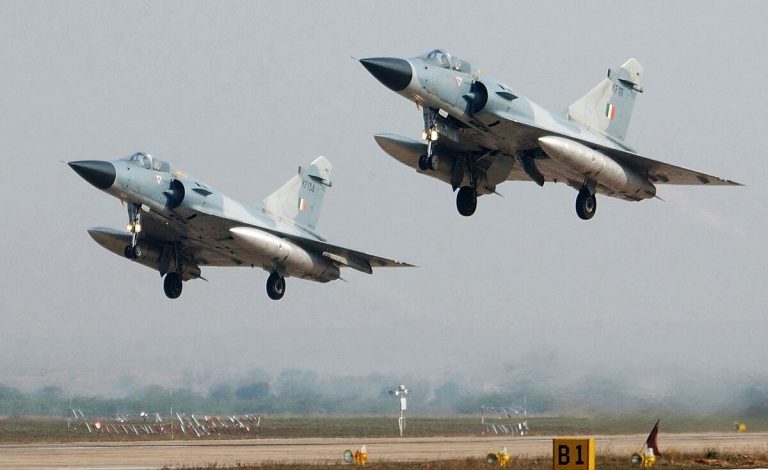
“A few days ago the DGMO said in a reply to an RTI that the first surgical strike happened in September 2016. I don’t want to go into what political parties say, they’ll be given an answer by government. What I told you is a statement of fact”, he said while addressing a press conference. Lt Gen Singh lauded the Balakot airstrikes which were carried out by the Indian Air Force to destroy the terrorist camps located in Balakot, Pakistan.


He said that the Balakot airstrikes were a major achievement wherein our aircraft entered deep inside the territory of Pakistan and destroyed the terror launchpads. The Congress Party had questioned the surgical strike conducted by the current Modi government and had demanded evidence for the same. Later the party claimed that surgical strikes were conducted during UPA regime as well.

However, the numbers of the surgical strikes carried out during the UPA regime, as claimed by the party kept changing. It was claimed by Congress leader Rajiv Shukla that half a dozen surgical strikes were conducted under the UPA government. This was followed by Congress President Rahul Gandhi’s claim of 3 surgical strikes. This was further contradicted by Rajasthan Chief Ashok Gehlot who said that 15 surgical strikes were conducted by the Congress government during its rule. The statement by Lt Gen Ranbir Singh has confirmed that no surgical strike was conducted by security forces during the UPA government, and the first strike happened in 2016 during the term of Modi government.

MJ Akbar denies having met Priya Ramani in hotel room during his cross examination in his defamation case against Ramani

The second day of Former Union Minister MJ Akbar’s cross-examination in his defamation case against journalist Priya Ramani resumed on Monday morning at the Rouse Avenue Court. Senior Advocate Rebecca John represented Priya Ramani whereas Senior Advocate Geeta Luthra and Advocate Sandeep Kapur (Partner, Karanjawala & Co) appeared for MJ Akbar.

In response to the series of questions asked by Rebecca John on allegations of sexual harassment, MJ Akbar has said that he did not receive a phone call from Ramani and denied that he had asked her to visit him in his room at the Oberoi hotel. He had further denied opening the door for Ramani and having met her in any circumstance on that day.

Akbar had also denied having asked any personal questions to Ramani, including allegations of having asked her about her family, study abroad, her first job and of marriage. He has claimed their meetings were only professional in nature. In response to further questions posed to him on his alleged meeting with Ramani, Akbar reiterates that he had not met her on that day.

On being asked whether Ramani left unnerved by Akbar, he responded, “I did not meet her on that day, I do not know if she felt unnerved by my behaviour”. Luthra objected to the line of questioning and said, “it is about the accused, how can MJ Akbar answer it”.

On being asked whether Ramani had gone home from the hotel, Akbar replied that he didn’t know since he hadn’t met with her. Akbar also denied that he was tutored to give false answers.

“I am not sure if Priya Ramani was offered a job in New Delhi office of The Asian Age in 1994. It was 25 years ago”, said MJ Akbar on being asked if Ramani was offered a job. He couldn’t recall the details of her transfer request and also denied knowing that Ramani was a journalist for 20 years.

Despite Luthra’s objections Akbar was further asked whether he was aware of the various articles written about allegations of sexual harassment against Harvey Weinstein. Ramani’s counsel said that only a portion of Ramani’s Vogue article refers to Akbar. Akbar protested by pointing out that Ramani had herself confirmed that the entire piece was about him.

John further questions Akbar on other articles of Weinstein trying to draw in the point that Priya Ramani’s Vogue article was extracted from them, referring to other male bosses. Akbar replied that a “male boss” was used in the article for which John replied that it was a generic term.


Referring to the tweet where Ramani had shared the Vogue article, John said that she had said “he didn’t do anything” in a sarcastic manner. Akbar denied this and said that he counted this as an admission in his complaint.

John tries to clarify that Ramani meant that nothing physical happened in the hotel room. Akbar once again denies meeting her in the hotel room.

John later brings up allegations of misconduct raised up by other women, to which Akbar denied having read some of them and denied some other allegations that he been aware of. “Such questions cannot be asked. They can only come within the four corners of defence of criminal defamation”, Luthra objects.

To which John replied that cross-examination need not be confined to questions asked in Chief Examination, referring to Sec 138 of the Evidence Act.

Akbar was asked whether he knew Majlie de Puy Kamp, to which he replied the affirmative. John raised up the story carried by Huffington Post India on the harassment faced by Kamp, she asked, “Is it correct that you apologized to Kamp’s father when he confronted you about the sexual harassment incident through an email?”. She showed him the contents of the email.

“I cannot confirm the content of the email.. there was no question of sexual harassment. I recall that there might have been a mention of some misunderstanding which was accepted”, replied Akbar.

The case has been adjourned to 10 am on 6th July and the cross-examination would be completed in a day.

MJ Akbar had filed a defamation case after Priya Ramani had accused him of sexual harassment in the wake of the #Metoo movement which had gathered considerable attention last year, to which the journalist pleaded not guilty on April 10. Following the allegations, he was forced to resign from the Union Cabinet on 17 October 2018.

On May 4, a Delhi court had recorded Akbar’s statement regarding the defamation case against Priya Ramani. He was also partly cross-questioned for which his response to most of them was “I do not remember”. The court had also deferred the cross-examination till May 20.