Home Blog Page 6507

Scathing sting: Congress leader says Rahul Gandhi will win from Wayanad because Hindus are a minority in the constituency

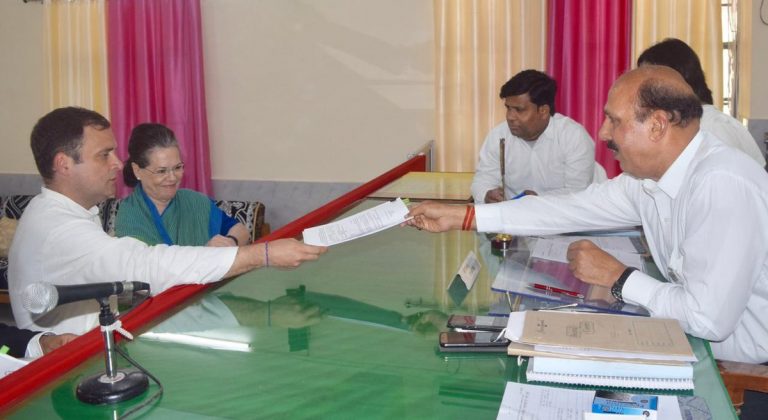
With just days left for the Lok Sabha elections, the Congress party seems to be still in a state of confusion over finding a safe seat for its President Rahul Gandhi. As Smriti Irani’s acceptability in Amethi has grown in the last few years, Congress party believes that it is extremely tough for Rahul Gandhi to retain his seat.

According to a Times Now report, Congress Party has finally arrived at a decision to field Rahul Gandhi from Wayanad Lok Sabha constituency as it is believed to be a traditional Congress bastion comprising of over 50 per cent of minority votes.

In a sting video, a senior Congress Party leader can be seen saying Congress President Rahul Gandhi is facing pressure in Amethi and has to find a safe seat, implying that he should contest from Wayanad as Hindus form a minority in Wayanad constituency which will ensure an easy victory for Rahul Gandhi.


“The total Christian-Muslim vote is about 50%. It comes to around 54% which makes easier for Rahul. And the thing is there are 8% Adivasis who are with us. Actually, Wayanad has been a Congress stronghold since 1957,” said a Congress leader in Times Now sting video.

“We have done the preliminary steps. If Rahul Gandhi decides to comes here. If Rahul Gandhi decides to fight from here, there is no need for campaigning,” added Kerala Congress leader.

The Congress leader said that BJP is taking all measures to corner Rahul Gandhi as several leaders even from Amethi Congress have now joined BJP, so Rahul Gandhi is surely looking for a safe seat to contest from. He also said that from Wayanad, SDPI would also support the Congress party.

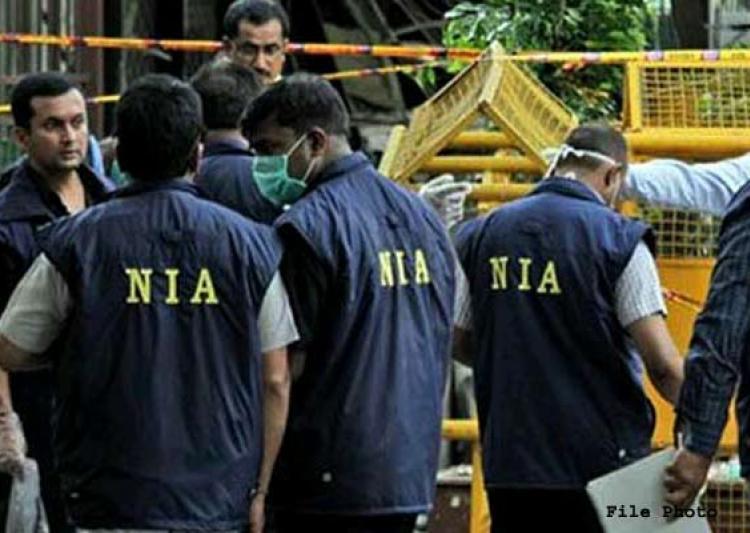
It should be remembered that members of Islamist outfit SDPI were arrested for the brutal murder of 20-year-old student leader Abhimanyu. Social Democratic Party of India (SDPI), the political wing of the Muslim extremist organisation Popular Front of India (PFI), which has been accused of spreading Islamist terror, has also been accused of sending death threats to Kerala based inter-faith couple Harrison, a Christian and Shahana. Its parent organisation, PFI has been indicted in several cases. For example, the NIA in its chargesheet had indicted PFI members for a larger conspiracy behind the murder of Munnani activist. India Today had even exposed the organization for engaging in the brainwashing and conversion of Hindu women through its network of illegal financing

Congress President Rahul Gandhi is reportedly looking for a safe seat as Congress party believes that winning Amethi against Union Minister Smriti Irani will be a herculean task for Rahul Gandhi. Hence, Congress Party is on a contingency plan to field Rahul Gandhi from Wayanad Lok Sabha constituency, which has 29% Muslim votes and another 21% Christian votes.

It is interesting to see that Congress President Rahul Gandhi, who had indulged in soft-Hindutva with a ‘Temple run’ right before Gujarat elections and claims to be Janeudhari Brahmin, has lately toned down his pro-Hindutva image to garner the traditional Congress votes of Muslims and Christians. Addition to that, Congress party leaders also believe that Rahul Gandhi victory is easily ensured only in those constituencies where half of the total voters are either Muslims or belong to other minorities groups.

Congress party seems to have understood that Rahul Gandhi will be facing a tough fight in Amethi as not only Smriti Irani has better traction in these regions but also these constituencies are majorly comprised with Hindu vote bank. As the chances of Rahul Gandhi defeating Smriti Irani in Amethi is getting tough day after day, Congress party seems to have realised that it is easy for Rahul Gandhi to pull an easy victory from constituencies where minority votes are much larger compared to Hindu votes.

Maharashtra: Congress MLA Abdul Sattar takes away 300 chairs after party denies him ticket

Sillod MLA and Congress leader Abdul Sattar, on being denied a ticket for the upcoming Lok Sabha elections, has taken 300 chairs from the party office with him. Sattar, who quit the party for not being given a ticket, took away the chairs from the local party office claiming they ‘belonged to him’.

As per reports, the local Congress unit had called for a joint meeting with its ally, NCP at party office ‘Gandhi Bhawan’. However, ahead of this meeting, Sattar, along with his supporters removed about 300 chairs. Following this, the meeting was held at the NCP office.

Sattar was miffed at being denied the Lok Sabha ticket for Aurangabad constituency. Nomination of MLC Subhash Zhambad by Congress added fuel to the fire which triggered Sattar to take away the chairs. As per reports, Sattar has claimed that the chairs were his and he was providing them to Congress for the meetings. Now that he has left the party, he took the chairs with him. He added that those who have secured the candidature should make arrangements for the chairs.

Meanwhile, Zhambad, while downplaying the incident, gave Sattar the benefit of doubt. He justified Sattar taking away chairs from party office by saying that perhaps he was in need of those chairs.

Interestingly, a day before he got the chairs removed from party office, he had claimed that Congress had promised him a Lok Sabha ticket from either Aurangabad or Jalna. He had said that the state party chief Ashok Chavan was in touch with him following his resignation and will offer him either of the two seats.

After devout Muslims, ‘AMU scholars’ attack Muslim journalist for promoting ‘Holi with Bismillah’

0

Last week, senior editor at The Wire, Arfa Khanum Sherwani had posted a tweet wishing Holi, where she mentioned that she would play Holi saying Bismillah. This had attracted severe criticism for her from many Muslims, who were offended that a Muslim was going to celebrate Holi, and that she used the word Bismillah along with Holi.

Now it seems harassing The Wire journalist on social media for her one tweet was not enough, as students of Aligarh Muslim University are protesting her presence on the university campus due to the same tweet.

Founding editor of the leftist website Siddharth Varadarajan informed on Twitter that AMU students are protesting against Sherwani’s visit to the university.


Arfa K. Sherwani is among the speakers invited for the Women Leadership Summit 2019 organised by the Aligarh Muslim University Women’s College Students Union. The summit is scheduled to take place from 26th to 28th March, and includes left-leaning usual names like Arundhati Roy, Vrinda Grover, Teesta Setalvad as speakers invited to participate in various events.

It is ironical that Arfa is facing protests from radical Muslims for her Holi tweet, who herself showed radical feelings by opposing “Bharat Mata Ki Jai” chants. According to her, this slogan forces a certain mythological idea of motherland being a Devi, a Hindu deity. She had tweeted that this does not suit those people who believe in monotheism i.e. Muslims. Now Muslims at the AMU are finding her not Muslim enough.

There is another irony in the fact that AMU students are opposing the senior editor from the same website, which was defending the university students when they had heckled a female journalist from Republic TV. The Wire had then insinuated that the Republic journalist had provoked the students, and the students were justified in assaulting the crew of the TV channel.

The AMU students, who are favourites with “progressive liberals”, often take offence against comments they think insult Islam. Earlier, they had objected to a Facebook post by freelance JNU protestor Shehla Rashid, and had even postponed an event she was scheduled to participate in AMU. According to AMU students, Shehla Rashid had indulged in blasphemy when she talked about free speech; it was alleged that she made insulting statements about religious figures.

Arfa Khanum Sherwani was scheduled to participate in a panel discussion at 2 PM today during the summit at AMU, but it is not clear whether that event was cancelled due to these protests.

The response of AMU students to such social media posts highlights the menace of intolerance towards Hindus and Hindu festivals by a specific section of the Indian population. While “liberals” dedicate their overwhelming resources towards combating nonexistent radicalization among Hindus, they turn a blind eye towards the radicalization that has gripped the minority community. The latest episode is symptomatic of dangerous levels of radicalization in the educated section of the community.

Jaya Prada joins BJP, to contest from the Rampur constituency against Samajwadi Party strongman Azam Khan

Putting an end to the on-going speculations, veteran actor turned politician Jaya Prada joined the BJP today, two weeks before the Lok Sabha elections. The BJP, in its list of candidates for Uttar Pradesh and West Bengal named the former Samajwadi member Jaya Pradesh to contest from Rampur constituency against the Samajwadi Party strongman Azam Khan.


Jaya Prada was officially inducted in the BJP at party headquarter in New Delhi. “This is a significant moment for me. Be it cinema or politics, I have worked with all my heart and dedicated my life to it. Thankful to the BJP for this respect,” Jaya Prada said at the press conference.

“Today I am working with that brave leader in whose hands the country feels safe… PM Modi. I thank the BJP and Amit Shah for this,” Jaya Prada said.

Now, with Jaya Prada’s official induction into BJP, she would be facing SP stalwart Azam Khan in Rampur constituency with whom Jaya Parda has never shared a very cordial relationship. In fact, earlier Jaya Prada had revealed that Azam Khan had attempted an acid attack on her. She had also stated that due to Khan, she had once perceived a threat to her life and was under severe trauma.

The 56-year-old actor started her political career by joining the TDP before joining SP and had won the important Lok Sabha seat of Rampur in 2004 against the sitting MP, Begum Noor Bano. She won the seat again in 2009 Lok Sabha election.

However, in a faction conflict in the Samajwadi Party following differences with Mulayam Singh Yadav, Jaya Prada’s decision to side Amar Singh had resulted in her expulsion from the party in 2010.

After being expelled from the Samajwadi Party, Jaya Prada and Amar Singh, who recently expressed vocal support for Prime Minister Narendra Modi by following PM Modi’s “Mein bhi Chowkidar” campaign, and adding Chowkidar” to his Twitter title, formed the Rashtriya Lok Manch. The party fielded a number of candidates in 2012 Uttar Pradesh assembly polls, but won none. However, ahead of the 2014 national elections, both of them joined Ajit Singh’s Rashtriya Lok Dal.

Later, in 2014, she contested the Lok Sabha polls on an RLD ticket from Bijnor but lost in the elections.

Moreover, BJP leader Arun Singh also announced today that Maneka Gandhi and Varun Gandhi would be contesting from Sultanpur and Pilibhit respectively.

“Maneka Gandhi to contest from Sultanpur and Varun Gandhi to contest from Pilibhit. Ram Shankar Katheria to contest from Etawah. Rita Bahuguna Joshi to contest from Allahabad. Jaya Prada to contest from Rampur (UP), Jagdambika Pal from Domariagan (UP). Humayun Kabir to contest from Murshidabad (West Bengal),” BJP leader Arun Singh said while addressing the media.

In 2014, BJP had won a remarkable 71 seats to register a historic mandate in Uttar Pradesh. This time too Uttar Pradesh will be the main battlefield where the BJP will face an acid test since many believe that coming together of SP-BSP will present a big challenge for BJP.

Saradha Chit Fund case: SC says CBI has made ‘very very serious’ allegations against Kolkata police chief in its status report

The Supreme Court on Tuesday said that the Central Bureau of Investigation (CBI) has in its status report made ‘very very serious’ revelations on the interrogation of former Kolkata Commissioner Rajeev Kumar in the Saradha chit fund scam.

SC also asked the agency to file an application within 10 days to press its charges. Kumar and others can respond to the plea within seven days after that.

A three-judge bench headed by Chief Justice Ranjan Gogoi said it cannot “close its eyes” if some “very very serious facts” are disclosed to it. However, it added that as the CBI’s status report was filed in a sealed cover, it cannot pass any order at the moment without hearing the other side. “We will later determine the charges and counter-charges after hearing both sides,” the apex court said.

The Supreme court was hearing the CBI’s contempt petition against various senior officials of the West Bengal government, including the State’s DGP and the then Kolkata police commissioner on the ground of non-cooperation in its probe into the Saradha chit fund scam and alleged destruction of evidence.

In the last hearing, the Supreme Court had directed the CBI Director, Rishi Kumar Shukla to provide information in support to the allegations that Kumar had tampered with and destructed call data records, who was then heading the West Bengal Special Investigation Team (SIT) while probing the chit fund scam.

In an affidavit submitted to the court, the CBI had alleged that in 2009 the Centre had cautioned West Bengal government about the possibility of chit fund companies cheating people but the state government took no action and “allowed” it to thrive.

Referring to two instances to reinforce its claims the CBI pointed to a “larger conspiracy” behind the scam. The first instance the agency cited was that Rs 6.21 crore was given to a TV channel that is part of the Saradha Group, secondly, the agency referred to the sale of West Bengal Chief Minister Mamata Banerjee’s paintings amounting to Rs 6.5 crore by a newspaper run by the Trinamool Congress.

The buzz around the scam escalated after Kolkata Police had forcefully detained eight CBI officials who had gone to visit police commissioner Rajeev Kumar to obtain crucial information regarding the scam.

Following this, CM Mamata Banerjee had resorted to ‘dharna’ politics accusing Modi government of indulging in vendetta politics and using CBI to plot a ‘coup’, though the fact was that Mamta Banerjee was allegedly trying to protect Kolkata Commissioner who is accused of destroying key evidence against the perpetrators of the Saradha Chit-fund scam.

Several opposition parties came in the support of Mamata Banerjee-led TMC government.

However, CBI had then approached the Supreme Court, alleging that the state machinery and police were deliberately obfuscating facts and hampering the investigation into the Sardha Chit Fund Scam.

The West Bengal government and police had rejected in the top court allegations made by the CBI that they had obstructed the inquiry into the chit fund scam. The West Bengal Police claimed the CBI had forcibly tried to enter Rajeev Kumar’s official residence on February 3 without valid papers.

SC had given CBI a big relief and had asked Rajeev Kumar to appear before the agency, in Shillong, a place which it deemed was politically neutral. SC had also directed CBI to not to exercise coercive actions like arrest against Kumar.

The Saradha Scam was brought to light in 2013. Many political leaders were connected with this Ponzi scheme that was run by a consortium of over 200 companies. The Saradha Group had reportedly collected more than 200 billion rupees from lakhs of small investors. The Group had collapsed in April 2013 and a year later, the Supreme Court of India had ordered the CBI to take over the investigation from the state SIT.

Fiscal deficit will shoot up, Rahul Gandhi hasn’t thought about impact on economy: Niti Aayog VC on Congress’ Minimum Basic Income

Rahul Gandhi announced yesterday his plan to award Rs. 72,000 annually to every family below the poverty line. While the promise of a dole has been deemed a fantasy that the Indian Economy cannot afford right now, the Congress party continues to promote its harebrained idea as profound wisdom.


NITI Aayog Vice Chairman Rajiv Kumar, however, has sounded the alarm bells after the Congress made the announcement yesterday. He said that the fiscal deficit may actually increase from 3.5% to 6%. “All the credit rating agencies may bring down our ratings. We may not get loans from outside and eventually, our investments might be blocked,” he said


He added how in 2008 when P. Chidambaram was the union minister of finance, the fiscal deficit had gone up from 2.5% to 6%. He added that the sops handed out by Congress President Rahul Gandhi was not a well thought out plan. An inevitable consequence of the dole would be that the middle class is likely to be forced to pay higher taxes to fund the minimum basic income only months after the Modi government reduced their tax burden. Inflation, which the current government has been successful in controlling, is also likely to shoot up.

Moreover, the minimum basic income could very well mean the end of all other subsidies. Common people will likely have to forfeit their subsidies on gas, fertilizers, electricity, crop prices and MNREGA. The Ayushman Bharat scheme which currently provides for free treatment of poor people in dire need of money may also have to be scrapped. In spite of all that, the promised dole provides for ample opportunity to scam the public and costs could very well escalate beyond what’s feasible.

Significantly, however, there doesn’t appear to be any agreement on the matter within the Congress party itself. While Rahul Gandhi says one thing, the chairperson of Data Analytics Department of the Congress party, Praveen Chakravarty, says something entirely the opposite. It appears there’s significant confusion within the Congress party itself on how it will be implemented.

One thing is for certain. Should the Congress come to power and the scheme, in whatever form, does get implemented, the greatest sufferers will be the middle class. The poor, too, will suffer as infrastructure will crumble and the cost of living will shoot up.

AAP candidate for Gautam Buddh Nagar disqualified for failing to arrange 10 persons to back her nomination

The AAP candidate for UP’s Gautam Buddh Nagar, Shweta Sharma, has been disqualified for failing to produce enough people to back her nomination. As per a report in Times Now, she failed to arrange the 10 required number of proposers to back her nomination as per EC norms.


AAP had declared Shweta Sharma, a professor, as its candidate for UP’s Gautam Buddh Nagar. As per reports, as the AAP is not recognised as a national party by the EC, their candidate has to arrange a minimum of 10 people as proposers at the Returning Officer’s office to back her nomination. However, on Monday, which was the last day of filing nominations, the candidate failed to arrange 10 persons as proposers.

BN Singh, the DM of Gautam Buddh Nagar, has informed Times Now that Sharma’s nomination papers had only 1 proposer. The report quotes the officials saying that the AAP candidate was given enough time to arrange proposers but she could not come up with enough proposers.

Her nomination has been dismissed today after scrutiny. As per a report in Times Now, of the 21 candidates who had filed nomination for the Gautam Buddh Nagar seat, 8 have been disqualified.

AAP had declared Shweta Sharma as a candidate on Sunday. Upon the disqualification of her nomination, the AAP candidate has reportedly stated that it is a conspiracy by the BJP.

Fantasy better than Game of Thrones: 10 lies by Rahul Gandhi in one speech at Rajasthan

Rahul Gandhi addressed a rally at Suratgarh in Rajasthan today as part of his campaign for the 2019 General Elections. His speech, as has become the norm, was replete with half truths and complete fiction as he made a last-ditch effort to avert a defeat in the upcoming polls. At this point, we are convinced that if Rahul Gandhi chose to pursue a career in writing fantasy, he would sell more copies than the Harry Potter series and Lord of the Rings combined.

Here, we examine 10 lies peddled by Rahul Gandhi in his speech at Rajasthan.

1. The ‘Vichardhara’

The Congress President began his speech by terming the Lok Sabha elections as a battle of ideologies, as he has done so often in the past. He claimed that the BJP endorsed the idea of two nations and spread hatred while his party advocates for brotherhood, love and unity. As the saying goes, the elephant has two sets of teeth, one for chewing and the other for display.

The Congress party is the same party that created the myth of Saffron Terror and jailed innocent Hindus to achieve their political objective. It’s the same party whose member goes to Pakistan and says that the enemy country should get rid of Prime Minister Modi if it wishes for dialogues to happen between the two countries. It’s the same party that tried hard to drive the Lingayats out of the Hindu fold. It’s the same party which has tried time and again to divide Hindus on the basis of language and region. The Congress’ stance on ‘brotherhood’ appears to be pretty clear: Divide Hindus on the basis of caste, creed, language and region while indulging in blatant minority appeasement for the sake of vote-bank politics.

2. The MNREGA Lie

The scion of the Nehru-Gandhi dynasty also claimed that the Narendra Modi government had destroyed the MNREGA and other welfare schemes launched by the UPA government. In reality, the NDA government has strengthened the MNREGA and has augmented its budget to Rs. 60,000 crores, its highest ever allocation, in the interim budget presented earlier this year. The scheme has also been strengthened by implementing structural reforms to ensure that the benefits are given directly to the poor.

3. No, Rahul Gandhi, MiG-21 jets did not ‘attack Pakistan’

He again displayed his lack of knowledge when he claimed that Mig-21 Jets manufactured by HAL had ‘attacked Pakistan’. In reality, the cross-border counter-terrorism operation was conducted by the Mirage 2000 jets which are manufactured by Dassault. Furthermore, while it is true that the Mig-21 is manufactured by HAL, parts of it are sourced from Russia. Furthermore, the HAL whose capabilities Rahul Gandhi appears to trust so blindingly was admonished by a Parliamentary Committee that’s headed by a senior leader of Congress, Mallikarjuna Kharge, himself. The Panel had expressed “serious concerns” over HAL’s inefficiency.

4. The Rafale Saga

Another issue which Rahul Gandhi has relied on time and again despite the Supreme Court giving the Government a clean chit on the issue is the Rafale Deal. He claimed in the rally that the UPA government had two conditions for the construction of the jet. Firstly, they had to be manufactured in India and secondly, they will be bought at a price of just over Rs. 500 crores. However, the Congress President fails to mention that his government was unable to reach a deal on the matter despite negotiations and the IAF’s dire need for cutting edge aircraft. Speculations have also been made that one of the reasons Rahul Gandhi is so against the Rafale Deal is because of his intimate links to Eurofighter lobbyists, the competitor to the Rafale.

The Rafale is one issue on which Rahul Gandhi has lied over and over and over again. In the past, various ministers of the Government of India and both Dassault Aviation and Reliance had clarified on the matter and punctured his various lies. Things had reached such a stage that even the French government had to come out and dismiss his frivolous allegations. Even the Supreme court has debunked all the allegations made by Rahul Gandhi about the Rafale deal, reiterating the same points the Indian Government and others have been repeating continuously. But it appears that the Congress President is in no mood to relent.

Rahul Gandhi also claimed that Narendra Modi had insisted that Dassault partner with Reliance as Anil Ambani was ‘his man’. He based his assertion on the claims allegedly made by former French President Hollande whom he wrongly addressed as the current President of France. Hollande’s claims were rubbished by Dassault and despite repeated denials by Dassault of any pressure on it to choose Reliance as one of the numerous offset partners, Rahul Gandhi continues to lie on the matter.

Even the late Manohar Parrikar was not spared by the Congress President. He used the Fake News story of N Ram at the Hindu to claim that the Ministry of Defense officials had registered their complaint with the manner in which the deal was negotiated. The Hindu had published a cropped image of the document and Rahul Gandhi had chosen to run ahead with the fake narrative. However, when the whole document surfaced, it came clear that the then Defense Minister Manohar Parrikar was aware of the negotiations and remarked that both PMO and French President offices were monitoring the government to government deal, and the comments of the secretary is an overreaction.

5. The 30,000 crores lie

Since Rafale had been brought up, the Rs. 30,000 crore lie could hardly be far behind. As the price of the aircraft, Rahul Gandhi keeps changing the amount he claims that ‘Modi has gifted to Ambani’. Sometimes he says it is ₹1 lakh crore, while sometimes it goes up to ₹1.30 lakh crore, both the figures substantially more than the total value of the contract for 36 aircraft. Even the ₹30,000 crore is more than the total offset of around ₹29,000 crore in the deal, while the share of Dassault in offset obligations is much lower, as other vendors in the deal – MBDA, Thales and Safran – also have offset obligations against their respective shares in the deal.

Dassault will be investing around €100 million in the joint venture with Reliance as part of offset obligations related to the Rafale deal, which is less than 3% of the total offset obligation. Reliance is not getting US$20 billion or even US$4 billion as Rahul Gandhi seems to believe, the current investment is less than USD$ 120 million.

6. The Industrialists Loan Waiver Lie

Repeating another of his lies from his ‘Hall of Fame’ record, Rahul Gandhi said, “Narendra Modi and Arun Jaitley has waived off loans worth Rs. 3.5 lakh crore of the top 15 industrialists in the country.” However, that figure has been changing constantly and moreover, he hasn’t bothered to offer any evidence for his claims whatsoever. In November 2016, addressing a large group of Congress activists in Bhiwandi, Rahul Gandhi claimed that the Modi government had then waived off loans worth Rs 1.1 lakh crores of big industrialists. During campaigning for Gujarat assembly polls in 2017, Rahul Gandhi inexplicably increased this figure by astounding 20,000 Crores to Rs 1.3 lakh crores and repeated the same trite. In Karnataka, he went a step ahead and conjured up another grand figure- Rs 2.5 Lakh crores of industrialists’ ‘loans’ being waived off by the Modi Government, again with no proof whatsoever.

The truth, of course, is polar opposite to the lies that Rahul Gandhi peddles. As in November, 2018, the Insolvency and Bankruptcy Code implemented by the Modi government had led to the recovery of Rs. 3 lakh crore in 2 years. Therefore, the NDA government has not waived off the loans of capitalists, he had recovered from them a great deal of money that was owed.

7. The Farmer Loan Waiver Lie

Rahul Gandhi also claimed that the Congress governments in Madhya Pradesh, Chhattisgarh and Rajasthan had waived off the loans of farmers in “2 days”. What he did not mention was the complete sham the loan waiver was. A farmer who was under a debt of Rs. 24,000 got a waiver of only Rs 13. Days after the waiver in MP, a farmer had committed suicide as he wasn’t eligible. Farmers went so far as to threaten mass suicides over the loan waiver.

Dubious cases of non-existent farm loans being waived off have been reported in Congress led Rajasthan as well. Scores of names have appeared in the list of beneficiaries for the farm loan waiver scheme who had no loans against their names.

In Karnataka as well, which is another Congress-ruled state, farmers have been complaining against the government after several instances of farmers receiving repayment notices came to light despite Congress’ claims to have waived-off farm loans.

After the Congress-JDS government came in power, for the longest time, the loans of farmers were not waived off. When they were, it then emerged that it was mere lip-service by the coalition government. It emerged that the farmers were still getting recovery notices from banks for the loans they had availed. The government had also admitted that out of the Rs. 44,000 crore farmer loan waiver, only a paltry 800 farmers had benefited.

8. The Arun Jaitley-Vijay Mallya ‘meet’ Lie

The Congress President also claimed that Arun Jaitley met with the disgraced business tycoon Vijay Mallya before the latter fled to the United Kingdoms. The matter initially surfaced when Mallya made the comment at a London Court. Jaitley had already clarified the matter and asserted that the businessman had misused his privilege as a parliamentarian to approach him and that he had never given him any appointment.

Then, a Congress leader claimed that he had personally witnessed the two of them having an intimate discussion for at least 20 minutes. However, it was conclusively proven that Jaitley’s schedule on that day made it impossible for him to have that particular discussion for so long.

Moreover, the UK government has approved the extradition of Mallya. His properties are being attached by Law Enforcement Agencies as well and preparations are being made to sell them off as well. On certain days, Mallya can be spotted on Twitter weeping profusely saying that the NDA government is being too harsh on him.

9. The CBI War

Rahul Gandhi claimed that the Supreme Court had directed the government to reinstall Alok Verma as the chief of CBI. He also said that Narendra Modi had removed the CBI chief soon after he was reinstated. In reality, the SC had reinstated Verma only on a technicality and asserted that the government should have referred the matter to the high-level Select Committee consisting of the Chief Justice of India, Prime Minister and Leader of Opposition to initiate Alok Verma’s removal. And it was this select committee which had removed Verma from his position.

10. The Jay Shah lie

The Congress President insinuated that Jay Shah, son of BJP President Amit Shah, had benefited greatly from the policies of the NDA government and that his business worth Rs. 50,000 crores transformed into a business that generated Rs. 80 crores on a monthly basis. It was based on a dubious claim published by alleged journalist Rohini Singh for which she is now facing a defamation suit. We had completely busted the Fake News report here.

Conclusion

Rahul Gandhi’s strategy for General Elections appears clear. Inundate the news cycle with repeated lies to mislead the voters with assistance from ‘Pliant Media‘ that never raises a question and sprinkle just enough doles such as the unrealistic minimum income dole to keep people interested. Whether he will be successful in his endeavour, only time will tell.

China destroys 30,000 world maps showing Arunachal Pradesh as part of India

Customs authorities in Quindao, China, destroyed almost 30000 world maps last week for showing Arunachal Pradesh as part of India and Taiwan as an independent country,  reports said.

According to reports, “A total of 803 boxes of 28,908 maps were seized and destroyed, the largest amount to be disposed of in recent years.”

The crackdown came after the customs officials of Qingdao in China’s Shandong province seized 28,908 world maps kept in 800 boxes. The maps were taken to a secret location in Qingdao and shredded on the orders of the natural resources and planning bureau, the report said.

This is being considered the largest such exercise in recent years and was carried out to protect China’s “territorial integrity”, said the reports.

According to the Global Times report, the maps were produced by a company in East China’s Anhui Province and were on the way to being exported to an unspecified foreign country.

Ma Wei, from the Department of Geographical Information Management at the Ministry of Natural Resources, was quoted as saying, “If there are ‘problematic maps’ which harm national sovereignty and territorial integrity, especially foreign printed products or products destined for import or export, they will be intentionally used or speculated on by the international community.”

Global Times quoted Liu Wenzong, a professor from the Department of International Law of China Foreign Affairs University as saying, “If the wrong maps were circulated inside the country and abroad, it would have caused great harm to China’s territorial integrity in the long run.”

Beijing has claimed the Indian state of Arunachal Pradesh to be a part of China and has depicted it on its official maps as a part of south Tibet Autonomous Region (TAR). It also considers Taiwan, a self-governing democracy, as a breakaway province to be eventually unified.

The Indian government under PM Modi, however, has been pushing infrastructure development and outreach programmes in Arunachal Pradesh actively, ignoring China’s regular ‘warnings’.

In April 2017, Tibetian spiritual guru Dalai Lama had visited the state to attend an event in Arunachal Pradesh, to which China had taken a strong objection. India, however, has been conveying to China firmly that Arunachal Pradesh is and will remain an integral part of India.

During the Doklam standoff, where Indian and Chinese troops were engaged in a tense staring down contest, India, with is a non-compromising stand, had made it clear that India under PM Modi will not be bullied by China.

The two countries have so far held 21 rounds of talks to resolve the border dispute covering 3,488-km-long Line of Actual Control (LAC).

Digital India: How the Modi govt took massive strides in turning India into a digitally empowered economy

A push towards a Digitally empowered economy by PM Narendra Modi is giving rise to many products based on the 3 building blocks of Digital India. Initiatives such as National Optics Fibre Network project and Computer Emergency Response Team in Kerala and, e-Pragati in Andhra Pradesh have given a boost to the initiative. But to truly become a Digital leader in the World, the Digital India initiative requires the active support of the entire nation.

Introduction

The world has transformed from knowledge-centric to technology-centric. All information which any person can think of is available in a single click. It has become necessary for a good governing body to have a good communication platform to communicate with the stakeholders directly and efficiently. The most efficient way to communicate with the citizens of the World’s largest democracy with a population of 1.2 billion is only possible by communicating with everyone on a digital platform.

The Digital India drive is a dream project of the Indian Government to remodel India into a knowledgeable economy and digitally empowered society, with good governance for citizens by bringing synchronization and coordination in public accountability.

‘Digital India’ is a step by the Modi government to inspire and connect Indian Economy to such a knowledge savvy world to techno knowledge savvy world. The program was launched on 1st July 2015 by Prime Minister Narendra Modi to make Government services available to people digitally and enjoy the benefit of the newest information and technological innovations.

The vision of Digital India

Digital India has 3 major aims:

  1. To create a digital infrastructure as a utility to every Indian citizen

This includes providing high-speed internet, mobile phone and bank account enabling participation in digital & financial space, shareable private space on a public cloud, and creating safe and secure cyberspace. The government is planning to provide high-speed internet connectivity to 2,50,000 gram panchayats, which will be a core utility for digital inclusion.

  1. Digital empowerment of citizens

This program aims to empower citizens through digital literacy and universal access to digital resources e.g. Mygov website for crowdsourcing ideas and will focus on finding ways to encourage people to opt for cashless financial transactions.

  1. Governance and services on demand

The initiative also aims at seamless integration across government departments/jurisdictions and ensuring availability of services in real time from online and mobile platforms. It will also result in real-time service delivery from an online platform.

Building blocks of Digital India

The following table emphasizes the importance of Infrastructure, Demand-based products and empowerment of citizens as the building blocks of Digital India. In order to move towards the goal of Digital India; high-speed internet, mobile banking, cloud storage infrastructure is required that will facilitate secure payments, ease of doing business, and real-time access to data. These steps are essential in enhancing digital literacy and motivating the public to adopt Digital and cloud-based platforms.


Nine Pillars of Digital India

The 3 building blocks of infrastructure, demand-based products and empowerment of public, form the foundation on which the 9 pillars of Digital India can be built upon. The 9 pillars are listed as below:

1. Broadband highways

The government with the vision of digital India has allocated 5 billion to build high-speed broadband highways connecting all the villages, government department, university etc. For faster implementation and growth of this project, the participation of private players is very important to cover all the geographical area of this country.

2. E-governance

The national e-governance plan has been formulated by the department of electronic and information technology, and department of administrative reforms and public grievances. This project works in both centralized and decentralized way. There are many different initiatives from central Government as well as state government under this project to ensure government services are available to citizen’s electronics.

3. E-Kranti

The government has allocated 5 billion for the e-Kranti project with an objective of providing electronic delivery of services to the citizens which include: e-health, e-education and technology for farmers, technology for planning, technology for security, technology for financial inclusion and technology for justice.

4. Universal Mobile Access

Government is specially preparing to connect unconnected areas and speedy use of technologies like network technologies like 3G, 4G and 5G etc. The general public will access the online government services with the help of handheld devices so that the nation will be well connected, efficient and more productive.

5. Public Internet access

Superior technologies that support cost containment, collaboration, and security, social connect and in-built intelligence that deliver remote access to any information or service available across the domain.

6. Information for all

Everything is connected through virtual networks for which fast workflow and no delays will be there due to waiting in queues. Websites and mobile apps will convey data and practical participation and even through social media at large.

7. Electronics manufacturing

The empowerment of manufacturing through the internet of things will enable intelligent workshops that demonstrate data-driven operational excellence and decentralised production control systems within and beyond the physical factory walls.

8. IT for jobs

The government is preparing to provide training and teaching skills to the youth for employment opportunities in the IT sector. BPO industries will be established for the fastest growing segment of the IT-enabled services industry which offers e-services 24/7 in every field and gives more jobs potentials.

9. Early Harvest programmes

This program will generate short timeline projects where every manual service is altered by e-service. E-services like educational books to e-books, public Wi-Fi, sports to access online game.

Projects and Products of Digital India

The three building block and nine pillars have contributed to many pilot projects and products for Digital India, such as:

  • A Digital locker system to minimize usage of physical documents and enable their e-sharing via registered repositories.
  • in as an online platform to engage citizens in governance through a “Discuss, Do and Disseminate” approach.
  • Swachh Bharat Mission Mobile app to achieve the goals set by this mission.
  • E-Sign framework to allow citizens to digitally sign documents online using Aadhaar.
  • E-Hospital system for important healthcare services such as online registration, fee payment, fixing doctors’ appointments, online diagnostics and checking blood availability online.
  • National Scholarship Portal for beneficiaries from submission of an application to verification, sanction and disbursal.
  • Digitize India Platform for large-scale digitization of records in the country to facilitate efficient delivery of services to the citizens.
  • Bharat Net programme as a high-speed digital highway to connect all 250,000-gram panchayats of the country — the world’s largest rural broadband project using optical fibre.
  • BSNL’s Next Generation Network to replace 30-year old telephone exchanges to manage all types of services like voice, data, multimedia and other types of communication services.
  • BSNL’s large scale deployment of wi-fi hotspots throughout the country.
  • ‘Broadband Highways’ as one of the pillars of Digital India to address the connectivity issue while enabling and providing technologies to facilitate delivery of services to citizens.
  • Outsourcing Policy to create such centres in different north-eastern states and in smaller towns across the country.
  • National Centre for Flexible Electronics to promote research and innovation in the emerging area of flexible electronics.
  • Centre of Excellence on Internet on Things (IoT) as a joint initiative of the government agencies and private institutions such as Nasscom.
    • To make Post Offices multi-service centres.
    • To connect all schools with broadband and free wi-fi.

Impact of Digital India

A nationwide scheme such as Digital India has the potential to impact various sectors of society. Following are some key impacts where Digital India can provide a sustained benefit.

Impact on Technology

The Digital India project provides a huge opportunity to use the latest technology to redefine India the paradigms of the service industry. A digitally connected India can help in improving the social and economic condition of people living in a different geographical area.

Impact on the Economy

It can play a key role in macro-economic factors such as GDP growth, employment generation, labour productivity, growth in a number of businesses and revenue leakages for the government.

Impact on Social sector

Social sectors such as education, healthcare, and banking are unable to reach out to the citizens due to obstructions and limitations such as middleman, illiteracy, poverty, lack of funds, living locality and investments. Modern ICT makes it easier for people to obtain access to services and resources. The penetration of mobile devices may be highly useful as a complementary channel to public service delivery apart from the creation of entirely new services.

Impact on the Environment

The major changes in the technology space have not only brought changes to the economic system but are contributing to the environment changes. The next generation technologies are helping in lowering the carbon footprint by reducing fuel consumption, waste management, greener management, greener workplaces and thus leading to a greener ecosystem.

Impact on Agricultural Sector

The governance will shift from e-governance to m governance i.e. is mobile governance. Farmers can access all kind of information through their mobile phones as when required which will boost this sector also.

Impending Challenges

The Digital India initiative is the most ambitious project of the NDA Government. There are many challenges that could come in the way of successful completion of the project. These are as follows:-

·     High cost of implementation

The dream project Digital India requires new infrastructure for successful implementation which involves high cost as some are ongoing projects and some are yet to start.

·     Time overrun

Some projects will take more time to harvest and the delayed project may lead to delay in other dependent projects and meeting the budget limit will be difficult.

·     Poor private participation

Private participation in government projects in India is poor because of long and complex regulatory processes.

·     Lack of coordination among departments

In order to implement any new project, support and coordination from top to bottom is highly essential. It involves the participation of several departments and demanding commitment and efforts. Hence, strong leadership and timely support of all the involved entities will play a critical role.

·     Uniform and fast adoption of internet

Despite the lowest data tariffs in the world, adoption of the internet in India will be difficult due to illiteracy, affordability and availability of mobile devices.

Success stories of Digital India

Kerala – India’s first digital state

In February 2016, former President Pranab Mukherjee declared Kerala as the first digital state of India owing to its achievement of high e-literacy and mobile penetration. It was also the first state to complete the National Optical Fibre Network (NOFN)project, granting high-speed Internet access to all its gram panchayats. This achievement is significant especially in the area of rural development. Kerala has been setting benchmarks in terms of achievement of digitization targets.

Some of the marquee initiatives of Kerala are:

Aadhaar Enabled Citizen Services (AECS)by Kerala State IT Mission and the e-district project deliver all district-level services for citizens in a state-owned portal or through Common Service Centres (CSCs).

The Accelerating Change and Transformation in Organisation and Networking (ACTION)initiative has been developed to track high-priority projects, their status and areas needing the attention of senior authorities.

Computer Emergency Response Team-Kerala (CERT-K)is another important initiative which deals with cybersecurity threats and issues warnings to concerned departments as and when necessary. It works in coordination with the CERT-In application. The Kerala Spatial Data Infrastructure project has created a centralised infrastructure and a repository of geospatial data across the state.

Andhra Pradesh: Setting up centres of excellence

To meet all objectives of Digital India, the Andhra Pradesh government is working on the fibre grid initiative. Also, with the e-Pragatiinitiative, Andhra Pradesh has embarked on a journey to become the first to have a statewide enterprise architecture.

Gujarat: The working model of India’s first digital village

India’s first digital village, Akodara, is located in Gujarat. The Government of Gujarat partnered with ICICI Bank, which adopted the village and converted it into a working model for Digital India. From setting up bank accounts and going cashless to installing CCTV cameras, the village is a perfect example of what a digital village would look like.

Conclusion

The Digital India campaign has laid the foundation for substantial and powerful digital infrastructure. This campaign will not only provide internet connectivity to people but also create jobs, eServices, eGovernance, Digital identity, e-education and e-health while strengthening India’s position as a pioneer in IT solutions. More employment prospects for the youth will, in turn, boost the nation’s economy.

The success of a digital transformation of the nation rests on some of the aforementioned projects which are under various stages of implementation. These projects may require some transformational process reengineering, refinements and adjustment for successful implementation to achieve the desired objectives.

The Modi Government has taken into account the recommendation of the Council on Digital Government strategies as entrusted in the OECD 2013 at this stage of implementation of Digital India program. This program has fostered inter-ministerial co-operation and collaboration towards the outlined priorities to make this initiative, state of the art. A digitally empowered India has the potential to mend social and economic condition through the development of non-agricultural economic activities while also providing access to education, health and financial services. How far the strategy would yield results would largely depend on factors which are outside the realm of technologies and tools for digitization. These might be rooted in the organization maturity and commitment of the systems within the government but are heavily dependent on public support.

The success of this dream project lies not only in the hands of government but in the hands of citizens and other stakeholders of the nation. A big scale project such as Digital India which has a great potential to enhance the lives of every citizen is not without its share of challenges. Any great initiative needs full public support to succeed, and this initiative is no different. We as Indian citizens must work together to carve a niche for India in the knowledge economy. Let us join hands for the successful implementation of this project for the brighter and prosperous India.