On Friday, October 25th, three hotels in Andhra Pradesh’s Tirupati district received bomb threats over email. Responding to the threats, police and sniffer dogs conducted comprehensive searches of the hotels, confirming that the threat was a hoax.
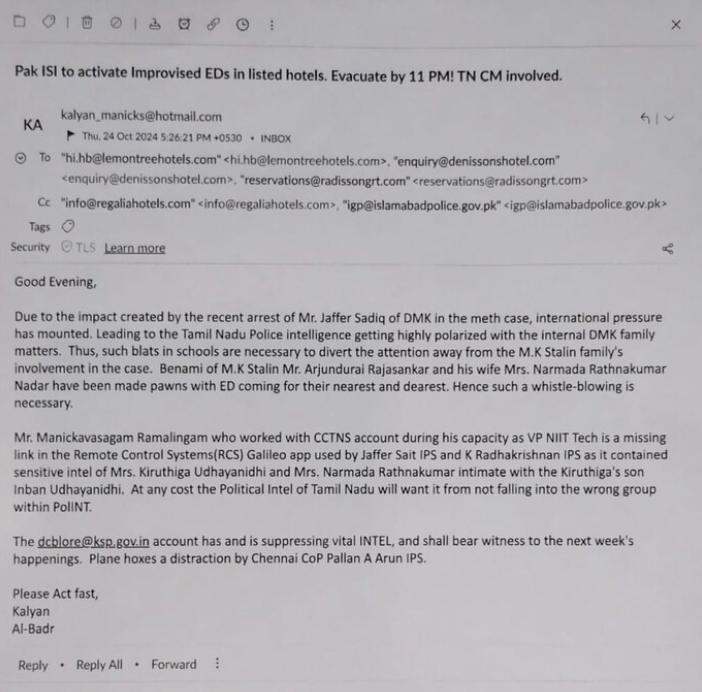
As per the reports, 3 private hotels in the Leela Mahal, Kapila Theertham, and Alipiri regions received threats via email on Thursday evening. The menacing email’s subject line read: “Pak ISI to activate Improvised EDs in listed hotels, Evacuated by 11 pm! TN CM involved.” The emails were sent to a few hotels on Thursday, October 24th, 2024, at about 5:30 pm.
The police were seeking to determine the source of the threats.
The email stated that international pressure had increased as a result of Jaffer Sadiq’s imprisonment, and that “such blats (sic) in schools are necessary to divert attention away from the M.K Stalin family’s involvement in the case.” Jaffer Sidiq, a former DMK functionary, was arrested in February of this year for drug trafficking in Tamil Nadu.
Circle Inspector Srinivasulu of Tirupati East Police Station commented on the issue and said that an FIR had been filed in the case. “We are investigating the case from various angles, and efforts are underway to trace the culprits behind the email,” Srinivasulu stated.
Sadiq is a Tamil film producer and a former office bearer of the DMK NRI wing who was expelled from the party in March this year. The NCB in Delhi busted the sprawling drug trafficking network on February 15th this year; however, the officials shared this information on Saturday (February 24th).
The operation was led by NCB officials in conjunction with the Delhi Police Special Cell. Three accused hailing from Tamil Nadu were arrested and the agencies seized 50 kilograms of pseudoephedrine, a key chemical used in the production of methamphetamine. It was revealed that the Tamil film producer Jaffer Sadiq is the mastermind of the racket who went absconding.
It is crucial to note that for the past several months, numerous bomb threats have been targeting flights, as well as schools and colleges. Just a day ago, 85 flights were threatened, including 20 from Air India, 20 from IndiGo, 20 from Vistara, and 25 from Akasa. Delhi Police’s Cyber Cell is actively monitoring activity on X (formerly Twitter) and other social media platforms in response to the increasing threats. In less than a week, over 170 flights have been impacted by these threats. Meanwhile, the government is considering legislative measures to address bomb threats directed at airlines, including adding perpetrators to a no-fly list.
On 24th October, the Supreme Court declined to consider a petition claiming that the authorities of Uttarakhand, Rajasthan, and Uttar Pradesh had violated its ruling over the demolition of houses. A bench consisting of Justices BR Gavai, PK Mishra and KV Viswanathan stated that it was not inclined to consider the petitioner’s plea, which it highlighted was submitted by a party who was neither directly nor indirectly impacted by the alleged act. “We do not wish to open a Pandora’s box,” Justice Gavai remarked.
The bench asked how the petitioner was directly harmed by the alleged demolitions during the hearing after considering arguments from Additional Advocate General Shiv Mangal Sharma, representing Rajasthan, and Additional Solicitor General KM Natraj, representing Uttar Pradesh. “In the facts of the present case, and particularly at the instance of the present applicants who are not directly or indirectly concerned with the alleged acts, we are not inclined to entertain the present petition,” the court pronounced. The petition was filed by an NGO named the National Federation of Indian Women (NFIW).
Three demolition incidents from Haridwar in Uttarakhand, Jaipur in Rajasthan, and Kanpur in Uttar Pradesh were mentioned in the plea. The contempt plea included the district magistrates of the three cities as parties. The NFIW’s attorney contended that three incidences had occurred in defiance of the court’s decision since 1st October when it extended the stay on demolition measures without prior approval.
“Even if the concerned state authorities were of the opinion that the structures were illegal, the said structures were not covered by the categories carved out by this hon’ble court as exceptions to the general prohibition on demolition imposed viz. unauthorized structures in any public place such as road, street, footpath, abutting railway line or any river body or water bodies or cases where there is an order for demolition made by a Court of law,” the plea claimed.
The petitioner presented the bench with details on the instances, emphasizing that the UP incident was connected to the case of a restaurant that was demolished after accusations of mixing vegetarian and non-vegetarian cuisine were made against it. Appearing on behalf of the Uttar Pradesh government, Additional Solicitor General KM Nataraj argued that NFIW is a third party that filed the Public Interest Litigation (PIL) in response to newspaper articles. He added that the purported incident involved clearing a walkway of encroachment.
On 19th October, the Haridwar district authorities took down an illegal mazar (mausoleum) at Mirpur village, Bahadarabad, Uttarakhand, under heavy security. On 20th October, a section of a building that was unlawfully built on temple property was dismantled by authorities. The building was built by a father-son duo who were arrested for stabbing ten Rashtriya Swayamsevak Sangh (RSS) workers at a Sharad Purnima ceremony held on the temple grounds three days prior. On 21st October the authorities demolished a Muslim man’s restaurant in Uttar Pradesh’s Kanpur after the Bajrang Dal protested and charged that the proprietor had disguised his identity and served non-vegetarian food.
NFIW was merely bringing the cases to the attention of the court, which has the authority to take suo motu cognizance of the facts, the petitioner’s counsel contended. He further justified his client’s position by claiming that those impacted by two of the reported occurrences are currently incarcerated. However, Justice Gavai didn’t find any merit in their charges and noted, “Their family can come, somebody who is from that place can come. We can appreciate a PIL from a litigant coming from Haridwar, who has at least some facts within his knowledge. Otherwise, only on the basis of newspaper reports, we will be opening a Pandora’s box.”
An unconvinced Justice Gavai responded, “Let the journalists come before the court, we will examine,” when the attorney alleged how difficult it is now for journalists to report on such instances. The petitioner then claimed that those who are suffering frequently lack access to the court and that rejecting the petition on the grounds that NFIW is a “third party” could prevent other individuals from approaching it who are not directly involved but are from the impacted area. The court strongly objected to the assertion and expressed, “Don’t say that. Please don’t say that. There are public-spirited citizens everywhere now.”
“Let persons who have suffered by that demolition come before the court. If in spite of our orders, somebody’s structure is demolished, we will take care of that. You are not directly affected. If somebody genuinely comes, we will consider it,” the court pointed out regarding the matter of locus.
The Supreme Court has postponed rulings on a number of petitions asking the union and state governments to refrain from using extrajudicial penalties, such as demolishing the homes or businesses of defendants in criminal cases. The court continues to enforce the temporary injunction it previously issued prohibiting authorities from destroying the properties of people suspected of committing crimes without first obtaining its approval.
The apex court had declared in its 17th September order, which barred demolitions till 1st October without its permission, that the same would continue till it decides the matter. It did, however, make clear that unapproved structures on public roads including sidewalks, railroad tracks, or public areas like water bodies, among other things would not be subject to its order. It then recommended creating national guidelines for property demolition and stated that religious buildings in the centre of a road, whether they were temples or “dargahs” (shrines), had to be razed because the public interest came first.
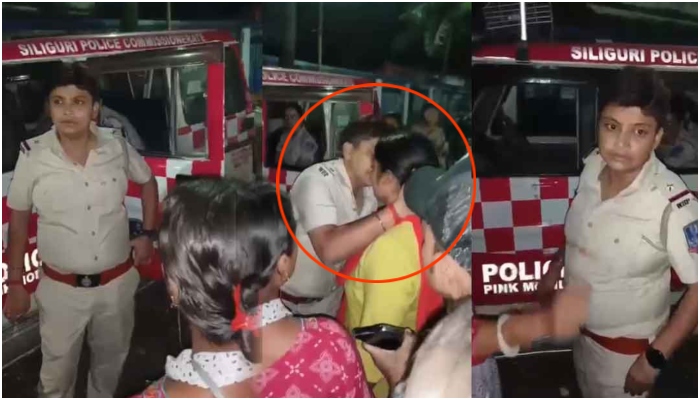
On Wednesday, 24th October, a bizarre video from the Siliguri area of West Bengal appeared showing a woman police officer pulling a woman towards her and kissing her. The incident has sparked outrage among the people who have demanded strict action against the accused woman police officer.
The Siliguri Police Commissionerate recently established Pink Patrol Vans to boost women’s safety in the city, which operates 24/7. Siliguri Police Commissioner C Sudhakar flagged off two of these vans in an effort to improve security for women throughout the city.
???? ?? ?? ?????? ??? ??? !! Legs wobble while patrolling, a woman hugged & kissed by WB police, suspended on complaint.
The Siliguri Metropolitan Police launched a pink police van for the Women's Safety. According to sources, the pink van hit a gambler on… pic.twitter.com/UG7VU7yqQJ
However, a female officer in charge of one of the Pink Patrol Vans allegedly harassed a woman while on duty creating massive public outrage on 24th October.
In the viral video, the woman police officer could be seen grabbing a woman and kissing her on the lips. The officer, as per the reports was in an inebriated state while on duty. This has further sparked outrage among the public.
As per the social media claims, the woman officer in charge of the Pink Patrol Vans has been identified as ASI Tanya Roy. The officer has now been suspended after the video went viral. Local reports suggest that the officer also allegedly assaulted two minors who were talking in the school area at night in Siliguri.
The parents of the minors and the local residents stated that the two minors, one girl and a boy, were just talking and that they were not caught committing any indecent behaviour. The officer in an inebriated state, however, abused the minors without questioning. Later a woman civilian was also sexually harassed.
On contacting the senior officers over the matter, they informed the locals that the officer had already been suspended and that a departmental inquiry against her had been initiated. The locals have demanded strict punishment against the accused officer, seeking the safety of women and minors in the area.
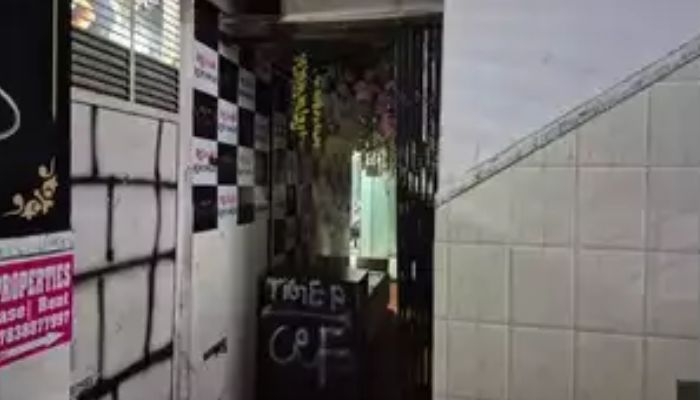
The Uttar Pradesh Police has uncovered a racket that used dating apps to lure people only to rob and threaten them. On Thursday (24th October), police arrested eight people including five women, a manager, and two café owners, for their role in the scam. The arrests occurred following a raid at Tiger Café near Kaushambi Metro Station. According to the police, the main suspects have been identified as Khalid alias Imran from Shaheednagar and his associates Sumit and Nadeem from Delhi.
Taking to X, Ghaziabad Police Commissionerate informed about the matter and said: “Kaushambi Police Station team arrested 03 accused and 05 female accused who were wanted for calling men through dating app to a cafe in the name of meeting girls and charging higher price on food items and then holding them hostage and demanding money when the bill was not paid.”
थाना कौशाम्बी पुलिस टीम द्वारा डेटिंग एप के माध्यम से लड़कियों से मिलने के नाम पर कैफे में बुलाकर खाने के सामान पर मूल्य से अधिक बिल लगाने व बिल न देने पर बन्धक बनाकर पैसे मांगने में वाँछित 03 अभियुक्त व 05 अभियुक्ता गिरफ्तार ।@Uppolicepic.twitter.com/wD5I3zMAA3
— POLICE COMMISSIONERATE GHAZIABAD (@ghaziabadpolice) October 24, 2024
The police said that the accused used to invite people to the cafe via dating apps to ‘meet girls’ and charge them exorbitant amounts for the cost of food. When the victim refused to pay the amount, they would take him hostage and demand payment. After receiving a complaint, the police arrested eight persons, including five girls.
On Tuesday, a man called Vikas Gupta, a resident of Dayalpur, Delhi, filed a complaint alleging that he was chatting with a girl online for a few days and that on 21st October, they met at Kaushambi metro station and walked down to Tiger Café. In the FIR, the victim said that when the duo arrived at the café, it was empty and his date (one of the arrested girls) ordered a soft drink. However, as the two were leaving the café, the staff handed them a bill of Rs 16,000 just for a soft drink.
The victim sensed the scam and sent his live location to a friend seeking his help. He claimed that when he did not pay the bill, he was held hostage by the café staff and they now demanded Rs 50,000. Meanwhile, the victim’s friend informed the police about the matter at around 7 pm, and by 8 pm, the police had rescued the victim. The victim said that by the time police rescued him, the scamsters had taken Rs 4500 from his pocket and compelled him to make an online payment of Rs 2000.
In response to the complaint filed by the victim, Kaushambi police registered an FIR on 23rd October and arrested three youths: Khalid alias Imran, a resident of Sahibabad; Nadeem, a resident of Shastri Park, Delhi; and Sumit, a resident of Kalyanpuri, Delhi, as well as five girls: Sanjana Gujjar, Nisha Rana, Deepanshika, all of whom are from Delhi, and Aksha, a resident of Ghaziabad. Initially, the accused managed to escape and were later caught by the police.
Meanwhile, Nimish Patil, DCP Trans-Hindon, said the FIR was filed at Kaushambi police station against all the accused under BNS sections 127 (2) (wrongful confinement), and 308 (2) (extortion). The officer said that another investigation into police negligence has been initiated to find out the reason why the police didn’t take action when the victim’s friend dialled 112 for help.
In August this year, a similar dating scam was reported after Mid-Day sent some reporters posing as men looking for dates on dating apps and published a report based on the findings. After receiving complaints on the scam from readers, the publication in July got its correspondences to open accounts in dating apps. Within 24 hours of opening, they received a large number of matches, with women offering to meet them at pubs and clubs. In every incident where the reporters arrived for the date, the women ran up hefty bills by ordering expensive drinks in a short period of time, and then fled using some excuse. The reporters also saw the same women going back to the same establishment with a different man after some time. Eventually, the kingpin of the scam Ankur Meena was arrested from Delhi by Mumbai Police.
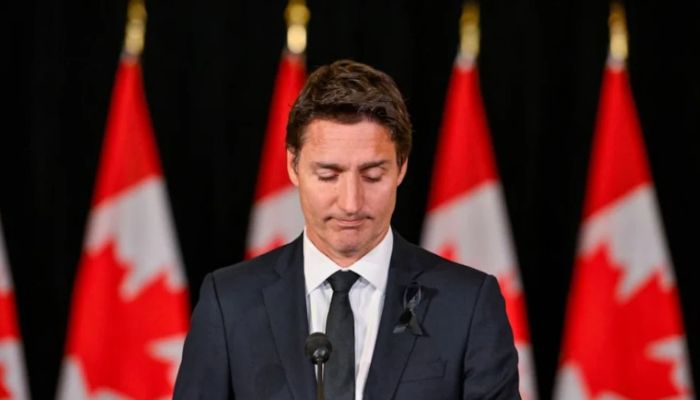
On Thursday (24th October), Justin Trudeau, the blue-eyed ‘liberal’ hero of the global left ecosystem, took a U-turn on mass immigration to Canada. He announced an 18% reduction in the number of Permanent Residents (PRs) the country will accept in 2025.
The Trudeau government initially proposed half a million PR acceptance for the next year. The number has now been revised to 3,95,000. Similarly, PR intake has been reduced to 3,80,000 for 2026 and 3,65,000 for 2027.
In a tweet, Justin Trudeau announced, “We’re going to significantly reduce the number of immigrants coming to Canada for the next two years. This is temporary — to pause our population growth and let our economy catch up. We have to get the system working right for all Canadians”
We’re going to significantly reduce the number of immigrants coming to Canada for the next two years. This is temporary — to pause our population growth and let our economy catch up.
We have to get the system working right for all Canadians.
The development comes amid growing opposition to the high levels of immigration to Canada, which was facilitated by Justin Trudeau after he came to power in 2015. Interestingly, his ‘Liberal government has taken in 1.32 million new immigrants between 2016 and 2021
Until recently, Justin Trudeau was mouthing platitudes about encouraging immigration in the country. In November 2022, he tweeted, “Last year, Canada welcomed more than 405,000 newcomers – the most we’ve ever welcomed in one year.”
“We’re building on that and setting higher targets in the years ahead, because immigration is critical to growing our economy and helping businesses find the workers they need,” he had assure to continue to allow influx of immigrants to Canada.
Screengrab of the tweet by Justin Trudeau
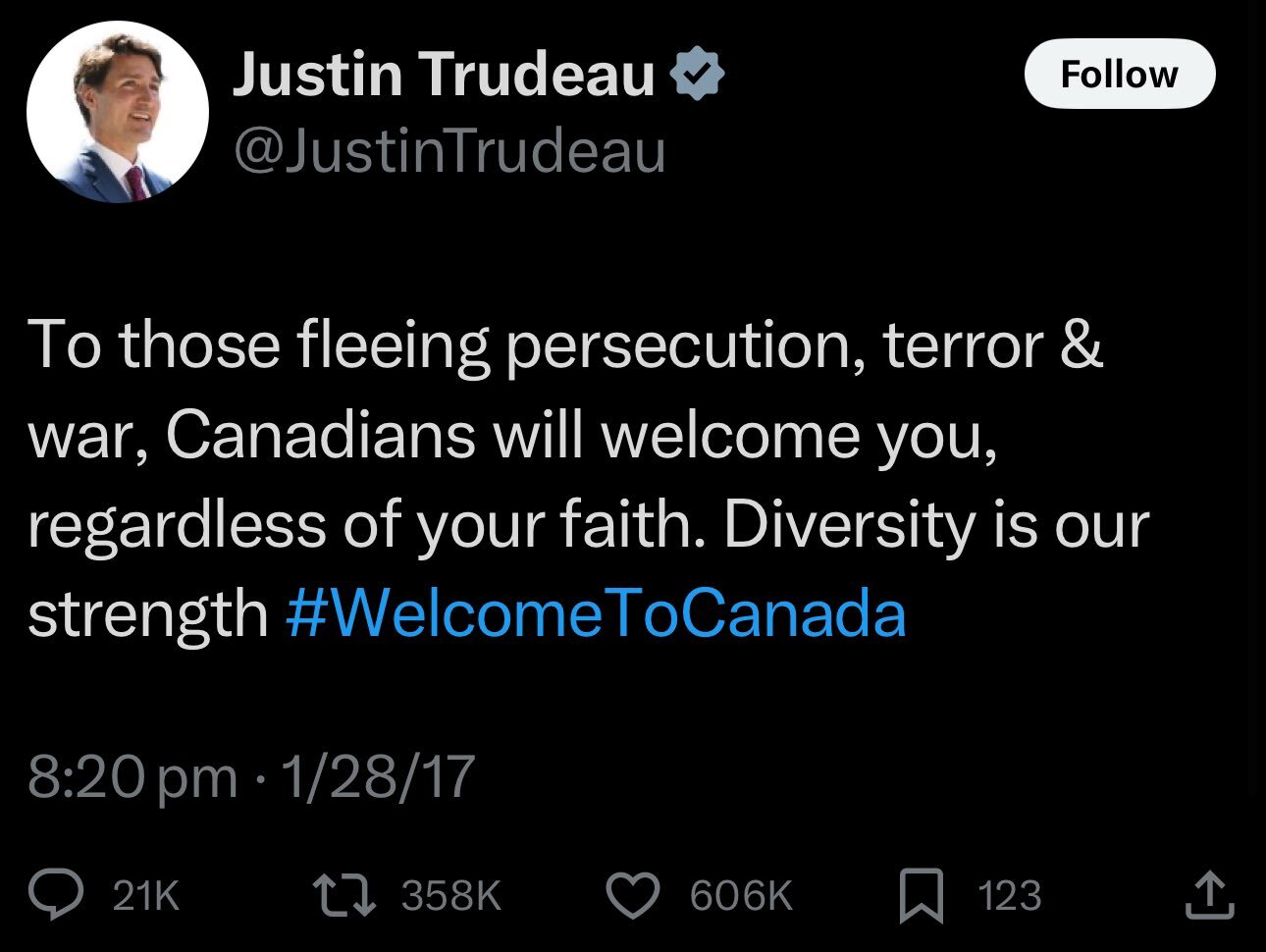
Within 2 years of taking office, Justin Trudeau had opened the doors of Canada to those facing persecution across the world.
“To those fleeing persecution, terror & war, Canadians will welcome you, regardless of your faith. Diversity is our strength #WelcomeToCanada,” he had infamously tweeted in January 2017.
While Justin Trudeau has been actively supporting immigration in Canada since 2015, his ‘liberal’ politics eventually caught up with him.
Screengrab of the tweet by Justin Trudeau
Canada is going through a period of economic stagnation, worsened by high unemployment, rising housing prices and living costs. With stiff opposition from citizens, Trudeau had no choice but to backtrack from his ‘liberal’ policies.
As per the 2021 Census, foreign-born immigrants constitute a whopping 23% (8.36 million) of the population in Canada.
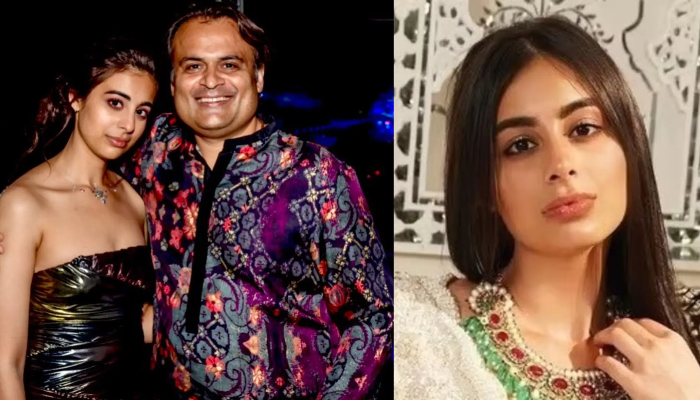
Vasundhara Oswal, the daughter of Indian-origin Swiss billionaire Pankaj Oswal has been imprisoned in Uganda for more than three weeks. The 26-year-old is accused of kidnapping and killing Mukesh Menaria, a domestic helper in her family’s residences around the world as well as on their private jet. Maneria is from Rajasthan and has worked for Oswal family since 2017. However, the relationship between Menaria and the Oswal family soured earlier this year.
Vasundhra Oswal has been working at her family’s factory in Uganda, East Africa, for the last three years. On 1st October, she was “seized by around 20 armed men” from an extra-neutral alcohol facility that the family had established in the country. Vasundhra was apprehended when she was touring the factory, which is a component of the $100 ($150 per some reports) million Oswal Group commitment to build the first grain-based Extra-Neutral Alcohol (ENA) production plant in East Africa.
Armed men took her away while posing as interrogators from law enforcement. She has been arrested by Ugandan police on a number of allegations, including criminal and commercial offences. Her family has charged that she was “illegally” held, blaming “corporate and political manipulation,” but officials claimed that her arrest was the result of an investigation into a missing individual. Authorities reportedly snatched her phone and prohibited her from communicating with her lawyers and family.
In an appeal to the United Nations Working Group on Arbitrary Detention (WGAD), Pankaj Oswal has called for immediate action in relation to what he claims is his daughter’s unlawful detention. Her family insisted that she was arrested without formal charges because the men did not produce a warrant or identity. Rita Ngabire, the company’s attorney, was also taken into custody.
Mukesh is alive and well: Oswal family
According to the billionaire Oswal family, the ‘bogus’ accusations against Vasundhara are the work of a disgruntled employee who has since acknowledged the truth and is still alive and well in Tanzania. He was nabbed in the largest city in Tanzania, Dar es Salaam, and he has since signed an affidavit stating that his employers never abused or abducted him.
“He has openly admitted that his stay in Uganda was entirely voluntary, and he left the country of his own accord before being apprehended in Tanzania. This further disproves the baseless accusations made against Vasundhara,” highlighted Riddhi Oswal, younger daughter of Pankaj Oswal.
She added, “While Menaria is currently under investigation in Tanzania for his own actions, he has still provided support by his former employers by submitting an affidavit, which has been duly notarized by the Commissioner of Oaths.”
According to the affidavit, there were “misunderstandings and disputes” between Mukesh Menaria and the Oswal family. Menaria declared in his signed affidavit that the disagreements led him to act in ways that would be deemed “dishonesty, breach of confidentiality and/or misappropriation of trade secrets” against his employers.
As per the two parties’ agreement, Menaria chose to remain in Uganda on his own accord. His son, however, was infuriated and reported the family to the Ugandan police for harassment.
Pankaj Oswal writes to the Ugandan President and further allegations
In a letter to Ugandan President Yoweri Museveni, Pankaj Oswal stated that his daughter’s imprisonment was due to unfounded charges brought by a former Oswal family employee who took out a $200,000 loan using the Oswals as guarantors and stole important valuables. Oswal emphasised that Vasundhara was arrested as a result of this person’s frivolous allegations which were made in an effort to evade the payment.
Menaria was apprehended at the Shaka police station close to the Ugandan border after reportedly being abducted in Uganda and brought into Tanzania. His family contacted a local media outlet to confirm the arrest. The development followed Pankaj Oswal’s open letter accusing extortionists of blackmailing him, which resulted in the arrest of his daughter Vasundhara and attorney Rita Ngabire. Ngabire and Vasundhara were both formally remanded to Nakasongola prison on 9th October on suspicion of kidnapping Menaria with the intent to kill.
Ridhi pointed out, “As we now know, this ordeal began when armed corrupt officials took her away in a car under the pretense of questioning, after already conducting an unwarranted raid at the plant, where they found nothing.” She added, “We even filed for contempt of court after yet another day, but instead of releasing her, they took her to a lower court and charged her with inadmissible crimes like kidnapping and murder, immediately sending her to prison.”
According to the Oswal family, dishonest Ugandan officials colluded with their rival companies. “It has been absolutely shocking to see how much power these corrupt officials have and how they are clearly working in collaboration with business competitors who are determined to destroy our family and my sister at any cost,” Ridhi said.
She also conveyed, “My parents’ hands are tied because they can’t even go to Uganda without facing immediate arrest by the highly corrupt officials there. As we’ve come to learn, the police in Uganda have too much power and can arrest people on a whim, even without warrants or proper court procedures. If my parents are arrested, they won’t be able to fight for my sister, who has essentially been cut off from everything and is already being treated like a convicted criminal.”
Vasundhara’s sister further informed, “My parents have essentially locked themselves in a secret location, devoting all their time to fighting for my sister’s release. They barely eat more than one meal a day and are surviving on the hope and faith that they can get their daughter free.”
It has been reported that Vasundhara has experienced severe and hazardous conditions while incarcerated. She has underlying medical problems but has been compelled to live in filthy conditions with no access to clean water or adequate facilities. According to her family, she has been abruptly transferred between jails, making it difficult for them to get in touch with her or offer legal assistance. She has also had to share a small room with several convicted criminals and has been refused vegetarian food.
Citing allegations of business and political influence by the family, Ugandan authorities have added charges against Vasundhara in order to keep her from obtaining bail, even though a court judgment has ordered her unconditional release.
The Oswal Family
The Oswal family, led by businessman Pankaj Oswal, is well-known throughout Africa for both their opulent lifestyle and their petrochemical companies. Abhay Kumar Oswal founded Oswal Agro Mills, and Pankaj, his son, grew the family business into a number of industries, including mining, petrochemicals, real estate, and fertilizers. The Oswal family recently made headlines when they paid $200 million (about Rs 1649 crore) for their Villa Vari, a 4.3 lakh square foot home in Switzerland, solidifying their place among the wealthiest families in the world.
The executive director of the group’s subsidiary PRO Industries, Vasundhara Oswal, is instrumental in advancing sustainability measures at both Axis Minerals and PRO Industries. She established PRO Industries in her second year of graduation. She received many accolades including the 2023 Global Youth Icon Award and the Economic Times’ Woman of the Year title. Ridhi Oswal, her younger sister, is a singer-songwriter.
Recalled Indian High Commissioner to Canada, Sanjay Verma on Thursday shared a terrifying moment when Khalistanis attacked him with a sword in Alberta while he was along with his wife.
In an exclusive interview with ANI, Verma said that the Khalistani ‘goons’ came very close to bodily harm him adding that they were not carrying the ‘kirpan’, a religious object, but a sword that could potentially harm him.
“Yes, a couple of times they came very close to bodily harm us…They were carrying a sword, it was not a Kirpan…When I was in Alberta a sword came around 2-2.5 inches close to my body…,” said Verma.
The recalled Indian envoy also said that he was accompanied by his wife. “When I was in Alberta my wife was also with me…,” he said.
Verma said the Khalistanis surrounded the exit gate and attacked him. “I was in a city in Alberta. And there the Indians had a dinner party which also had cultural programs, where it was expected that I would meet the Indians. And that was a business event. So many businessmen from Canada were there. And the main thing was how we could advance the business relationship, what new things we could bring, what new sectors we could bring. This was in a convention hall. Outside, around 150 people were there who were doing bad things in the name of Khalistan. And they surrounded the entrance from which I had to go. When I entered, there were RCMP and local police. Alberta is our good friend. Local police were present there. But maybe they didn’t think that they would do such a bad thing. My wife was accompanying me. When I was passing, there was a sword. And it was not a kirpan. They may not know the difference between sword and a kirpan. But we Indians who have seen Sikhism, who are so patriotic, where we have seen them, by the grace of Wahe Guru, we know the difference between a sword and a kirpan. So this was a sword, which came about 2 to 2.5 inches away from my body,” he said.
Verma said that the local police held an interrogation later, and he was not given the details about the same.
“The local police got into action immediately and pushed them back. They also held an interrogation. I was not informed about the final results. We also informed the Global Affairs of Canada about the incident. They also believed that this is not right. And we also tried to explain to them that there is a difference between a sword and a kirpan. There is a difference between a spear and a kirpan. And this is not a religious belonging that they carry,” he said.
Verma said that as per Canada’s own assessment was that the Indian diplomats could be harmed. So, they were given protection from the Royal Canadian Mounted Police (RCMP).
“Let’s look at their own assessment. The very fact that I was given a close protection detail of RCMP and my two consul generals were given the same, also shows that their assessment was that we could be bodily harmed. I’m talking about their assessment,” he said. Verma added, “So there are a couple of such incidents. But my main purpose is that the relationship between the two countries should be restored.”
Verma said that Khalistani goons threaten peace-loving Indo-Canadians and vandalise their place of worship.
“Indo-Canadians are being threatened by the hooligans who are Khalistani goons. They are Khalistani terrorists and extremists. They go in our society of peace-loving Indo-Canadians and threaten them. They go to our places of worship and vandalize them. So if that is being tolerated by the system, the present system in particular, then how can you assure them for normalcy? So probably someone will have to sit down, look at it. Why is it unfair for those Indo-Canadians who believe in a certain religion, in a certain faith, and want to live peacefully and contribute to the growth and development of Canada, being threatened by a handful of goons. That has to be looked at,” he said.
Verma was recalled from Canada after the country said he was a person of interest in the Hardeep Singh Nijjar murder case; however, he denied all charges levelled against him by Ottawa in connection with the killing of Khalistani terrorist Hardeep Singh Nijjar.
The ties between India and Canada soured after Prime Minister Justin Trudeau alleged in the Canadian Parliament last year that he has “credible allegations” of India’s hand in the killing of Nijjar.
India has denied all the allegations, calling them “absurd” and “motivated” and has accused Canada of giving space to extremist and anti-India elements in their country.
Nijjar, who was designated a terrorist by India’s National Investigation Agency in 2020, was shot and killed outside a Gurdwara in Surrey in June last year.
Amid worsening ties between the two countries, India had earlier this month “strongly” rejected a diplomatic communication from Canada suggesting that the Indian High Commissioner and other diplomats were “persons of interest” in an investigation and termed it as “preposterous imputations” and part of the political agenda of the Justin Trudeau government.
In a hard-hitting statement, India said Prime Minister Trudeau’s hostility to India has long been in evidence and his government has consciously provided space to violent extremists and terrorists “to harass, threaten and intimidate Indian diplomats and community leaders in Canada”.
India had had expelled six Canadian diplomats hours after it summoned Canada’s Charge d’Affaires Stewart Wheeler and conveyed that the “baseless targeting” of the Indian High Commissioner and other diplomats and officials in Canada was completely unacceptable.
(This news report is published from a syndicated feed. Except for the headline, the content has not been written or edited by OpIndia staff)
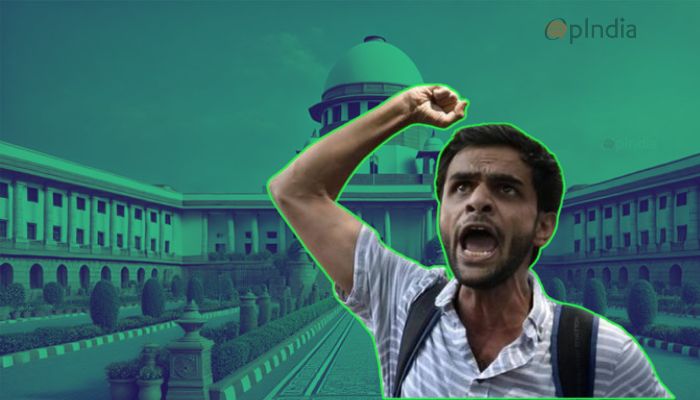
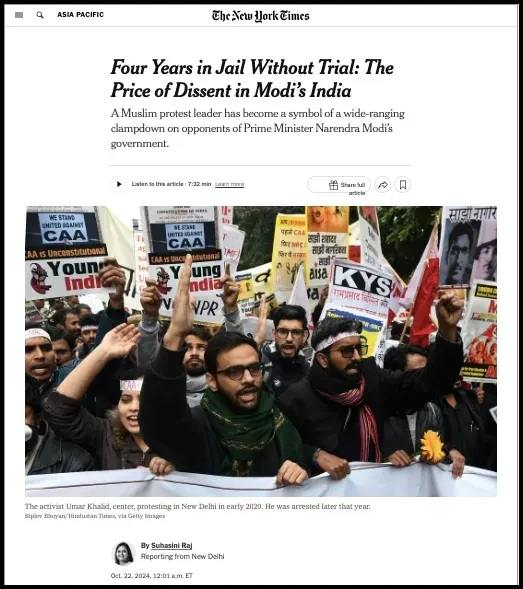
In the typical Islamo-leftist propaganda peddling, facts go for a toss when a mendacious narrative has to be created in favour of one of their own. In an article written with deep chagrin in heart, the New York Times dedicated a eulogy to the Delhi anti-Hindu riots case accused Umar Khalid on 22nd October 2024. The New York Times has a penchant for hailing anti-Hindu and anti-India elements as ‘heroes’, ‘fearless dissenters’ and ‘defenders’ of democracy while projecting the Modi government as a ‘fascist’ Hindu ‘hardliner’ regime.
In a propaganda piece titled Four Years in Jail Without Trial: The Price of Dissent in Modi’s India, the New York Times blended all the usual ingredients the leftist propagandists use to evoke sympathy for the likes of Umar Khalid; victimhood, Muslim minority card, projecting the Muslim accused as an angry young man ‘fighting’ the system, the unending wait for trial, the family emotions and so on.
While the New York Times reporter Suhasini Raj lamented that ‘political activist’ Umar Khalid has been languishing in jail since his arrest on 14th September 2020 for his alleged involvement in anti-Hindu Delhi riots that broke out on 24th of February that year, she did not delve into why there has been an inordinate delay in his hearings. Contrary to the narrative NYT and its propaganda allies in India have been weaving that Umar Khalid’s hearing is being deliberately delayed, the judiciary is inherently biased against ‘Muslim’ activists and even that the Modi government somehow is not letting Khalid get bail, it is solely due to the accused himself that he is languishing in jail since the past 4 years.
It was only in April 2023 that he approached the Supreme Court. Before that, Umar Khalid had got a 1-week reprieve to attend his sister’s marriage in December 2022. If NYT is so concerned about Umar Khalid rotting in jail without trial, they should ask why Umar Khalid waited 6 months before moving the Supreme Court for bail, after the rejection by the High Court. Also, while there were screeches about the delay in the hearing, there were several times when his lawyer Kapil Sibal himself wanted the case to be adjourned. Notably, OpIndia found that out of the 14 adjournments in 2023 and 2024, 7 delays and adjournments were sought by Umar Khalid himself. It therefore becomes evident that the withdrawal was certainly not because of the famed “delay” in hearing. While the Islamo-leftist ecosystem continues to cry ‘injustice’, it is the alleged failed forum shopping attempts of the accused’s lawyer that has Khalid rotting in jail for so long.
Unsurprisingly, a person booked under the Unlawful Activities (Prevention) Act or UAPA and relative provisions of the Indian Penal Code (IPC) for being the masterminds of the anti-Hindu riots is a “symbol of the wide-ranging suppression of dissent under Prime Minister Narendra Modi.”
The NYT article goes on to loathe the stringent UAPA saying that it was invoked earlier and used only to quell violent insurgencies. The propaganda piece continues to establish that somehow Umar Khalid did not incite violence but is only an activist and dissenter. Moving forward, the article claims that somehow the Modi government is bending the judicial system to its will, to back its assertion, NYT linked an article about Congress MP Rahul Gandhi’s conviction and two-year prison sentence in the 2019 criminal defamation case regarding defaming the “Modi” surname. It, however, failed to explain how come the Modi government be blamed for a court verdict. Was PM Modi the judge? Also, if the judicial system was indeed biased against the adversaries of PM Modi and the BJP, the Supreme Court wouldn’t have stayed Gandhi’s conviction.
Alongside garnering sympathy for the anti-Modi political leaders, the New York Times article goes on to claim that since Umar Khalid is a Muslim, the government is extra harsh towards him. Again, the author failed to elaborate as to is the government is responsible for the situation Khalid has landed himself in, did the Modi government ask him to incite riots? Did the Modi government ask him to oppose a law that had nothing to do with Indian Muslims?
The NYT went on to blatantly blame the Hindus for the 2020 Anti-Hindu Delhi Riots saying that Hindu mobs killed Muslims. NYT, however, does not find IB officer Ankit Sharma’s brutal murder or that of police officer Ratan Lal or that of the Hindu youth Dilbar Negi during the 2020 anti-Hindu Delhi Riots, horrific enough to be talked about since they were not Muslim.
Continuing the anti-Modi rant, the NYT piece claims that after the historic win in the 2019 elections, Prime Minister Modi “moved swiftly on a slate of divisive policies advancing the longtime wishes of his Hindu-nationalist support base.”
While it has been a few years since Article 370 and Article 35a were revoked discontinuing Jammu and Kashmir’s special status, the agony of Islamo-leftists is yet to subside. The NYT opined that the Modi government’s decision to revoke Kashmir’s special status was a move to fulfil the wishes of its ‘Hindu nationalist’ supporters, none but Kashmiri people have benefitted the most from it as the region once marred in Islamic terrorism, stone-pelting and anti-India protests is now witnessing an unprecedented wave of economic development.
An average leftist’s anti-Modi rant is complete without lamenting PM Modi doing the pran-pratishtha of Ram Mandir in Ayodhya. The NYT for reasons best known to them, did not care to mention that it was the Supreme Court that allowed the Hindu side to build a grand temple at the rightful birthplace of Lord Ram. It further perpetuated the falsehood that somehow the National Register of Citizens (NRC) would strip Indian Muslims of their citizenship even though, the provisions of the NRC were not even announced when anti-CAA-NRC protests by leftists and Islamists erupted. OpIndia reported how opposition parties, left-liberals and propagandists were instrumental in establishing the apocryphal narrative against CAA and NRC and fear-mongering among the Muslim community.
The NYT also suggested that even the Citizenship Amendment Act was somehow a step taken to appease the Hindu support base and was discriminatory against Muslims as “Muslims were pointedly excluded”. However, NYT does not want its readers to know why Muslims were ‘pointedly excluded’. Notably, Pakistan’s persecuted Shias and Ahmadiyas identify as Muslims, thus their persecution is the Islamic Republic’s law and order issue. Meanwhile, Rohingyas persecuted in Myanmar come to India via Bangladesh, they enter India for material benefits and no longer remain a persecuted group, thus, they are excluded from CAA, not due to any anti-Muslim agenda or hatred.
The New York Times went on to glorify Umar Khalid as a ‘Gandhian’ activist fighting against the Hindu ‘fascists’ and blamed the BJP leaders and Hindus for making ‘provocative’ statements against the anti-CAA protestors even as it was found that elements like the then AAP councillor Tahir Hussain and other Islamists not only incited but also participated in the anti-Hindu Riots in 2020. The NYT concluded its eulogy for Umar Khalid by calling his bail hearings as “empty exercises” and that his family is forced to endure a “torturous wait” for Khalid. However, for all the obvious reasons, the NYT does not care about the torturous and unending wait IB officer Ankit Sharma, police officer Ratan Lal and the families of other Hindus killed in the riots endure.
Indian leftists using NYT propaganda piece to mock CJI Chandrachud
Unsurprisingly, the Indian leftists are widely circulating the NYT’s full-page propaganda piece dedicated to Umar Khalid. In this vein, Sushant Singh, the Consulting Editor of Caravan India, a leftist propaganda outlet, mocked Chief Justice of India DY Chandrachud and said: “Here is the actual legacy of “talking to God” CJI DY Chandrachud, on a full page of the New York Times.”
Here is the actual legacy of "talking to God" CJI DY Chandrachud, on a full page of the New York Times. pic.twitter.com/vosV2SuZNp
Meanwhile, lamenting over the Umar Khalid ‘zakham’, Islamo-leftist propaganda portal TheWire’s Arfa Khanum Sherwani said: “Wish CJI had asked for a divine intervention on Umar Khalid too. Would he have been a free man now ? Four Years in Jail Without a Trial: The Price of Dissent in Modi’s India. A full page on Umar Khalid in The New York Times.”
Wish CJI had asked for a divine intervention on Umar Khalid too. Would he have been a free man now ?
Four Years in Jail Without a Trial: The Price of Dissent in Modi's India
Notably, this ‘divine intervention’ jibe stems from CJI Chandrachud’s recent statement wherein he said that he sat before the God and prayed for a solution to the Ayodhya Ram Janmabhoomi dispute. Even while criticising the CJI, the leftists do not fail to mock his religiosity.
New York Times and its anti-Hindu propaganda
The New York Times has a pathological obsession with targeting Hindus and whitewashing the crimes of Islamists. A recent demonstration of the same was seen in its coverage of anti-Hindu violence in Bangladesh. The New York Times shamelessly attempted to pass off the violence against Hindus unleashed by Islamists as “political revenge attacks”. Contextualising the Islamist onslaught, NYT claimed that Hindus were not being attacked because of their religious identity but because they were traditionally the supporters of ousted PM Sheikh Hasina’s Awami League. NYT’s cruel lies came even as Hindu temples were being vandalised and idols were being broken by Islamists who were also collecting Jizya in exchange for sparing the lives of Hindus.
Earlier this year, NYT blamed Hindus for ‘attacking’ Muslim sites after Islamist mobs went on a rampage following the demolition of a madrassa and a mosque in Uttarakhand’s Haldwani, which was built on encroached lands.
In October 2023, the New York Timestargeted the Akshardham Mahamandir in Robbinsville in the New Jersey State of United States to further already debunked caste ‘discrimination’ allegations.
While NYT talks about ‘dissent’ and ‘freedom of expression, democracy and whatnot, OpIndia reported last year how its own journalists could not tolerate three people who confronted them on their censorship of Seymour Hersh, Uhuru, Julian Assange, Tucker Carlson, Russiagate. The “dissenters” here were pushed to the ground and silenced while the NYT’s executive editor joined by some other journalists silently watched.
NYT’s hatred for the Modi government is also not new. It regularly platforms anti-Modi elements to further its propaganda even if that means peddling blatant lies. Back in March 2023, Anuradha Bhasin, the Executive Editor of The Kashmir Times, wrote an op-ed in the New York Times criticizing PM Modi’s stance against the Indian media and its freedom of expression. The NYT allowed Bhasin to make false claims that the Modi government had ‘locked down’ the newspaper’s office in Srinagar in an illegal manner. The truth, however, was that The Kashmir Times was allocated two offices by the government, one of which she was required to vacate after the demise of Ved Bhasin, the publication’s founder.
The NYT earlier platformed alleged comedian Kunal Kamra to blame the Modi government for the surge in Covid cases even as the country succeeded in suppressing the ferocious wave of resurgent coronavirus. It also used covid pandemic to spread Hinduphobia.
During the covid pandemic, NYT had published an article insinuating that the dead bodies floating in the river Ganga and buried on its shores reflect the deaths that happened due to COVID-19 that had gone undetected and undercounted by the state government. However, OpIndia reported that immersing the dead in the Ganga and burying them along its shores is an age-old practice that Indians living along the banks of the Ganga have been practising for years.
The Modi and Hindu blaming of the NYT for the anti-CAA protests and the 2020 anti-Hindu riots has been ongoing for years. Even during the Farmers’ Protest, the NYT was at the forefront of villainising PM Modi and the Indian government and defended the rabble-rousers. The New York Times had in 2017 published an anti-Modi rant because his government instituted stern rules to stop the foreign-based NGOs from compromising India’s national interest. The opinion column titled “Narendra Modi’s Crackdown on Civil Society in India” extrapolated the muzzling of funds to foreign NGOs as an attack against the Civil Society in India. In 2017, the NYT carried an article that claimed saree to be a symbol of Hindu nationalism. A detailed OpIndia report on NYT’s anti-Hindu and anti-India propaganda over the years can be read here.
The New York Times and the brown sepoys it has deployed have over the years been and will continue to defend and glorify Islamists, riot-enablers and anti-Hindu/anti-India elements. The Western media has been playing a sinister role in maligning the image of India worldwide and painting Hindus as the cruel oppressors of poor and meek Muslim minorities. The Western media publications furthering Islamo-leftist propaganda not only ideologically but also monetarily beneficial for them. However, OpIndia is here to dismantle the propaganda of anti-Hindu and anti-India elements.
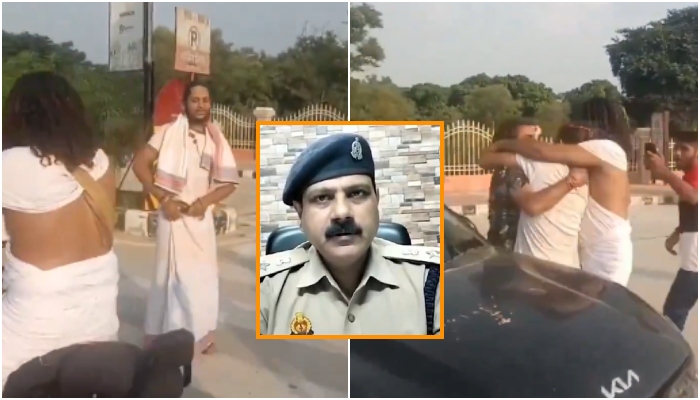
On Wednesday, 24th October, the Samajwadi Party attempted to target the Hindu community by sharing a fake video claiming that two Hindu sages from Ayodhya had been caught eve-teasing a woman. The video shared by the Samajwadi Party media cell on X also claimed that the two Hindu sages were beaten by the youths for disrespecting women.
“In Ayodhya, UP, 2 alleged sadhus were beaten up on the charge of teasing a girl. CM Yogi should tell whether this is the so-called Ram Rajya in his regime where criminals are roaming around in the guise of saints and committing crimes. In the BJP government, demons have arrived in Ayodhya directly from Lanka in the guise of saints. Ravana had kidnapped Mother Janaki in the guise of a saint, now in Yogi’s raj, criminals in the guise of saints are molesting sisters and daughters. Shame on you CM Yogi, shame on you,” the party claimed.
यूपी के अयोध्या में 2 कथित साधुओं को लड़की छेड़ने के आरोप में जमकर पीटा गया?
सीएम योगी बताएं कि क्या यही उनके राज में कथित रामराज है जहां साधु भेस में अपराधी घूम रहे और अपराधों को अंजाम दे रहे ?
योगीराज/भाजपा सरकार में लंका से सीधा अयोध्या साधु भेस में राक्षसों की आमद हो चुकी… pic.twitter.com/uL3SY8k1HM
However, the claim that the Hindu sages had been eve-teasing the women in Ayodhya was false. Ayodhya Police confirmed that there was a fight between two groups as a result of which the ruckus happened on the road, the video of which was erroneously shared on social media. “No complaint of eve-teasing has been reported in Ayodhya on that day. Two people in connection with the video have been taken into custody. Interrogation is underway,” the police said.
थाना कैण्ट क्षेत्रान्तर्गत चौराहे पर मोटर साइकिल सवार द्वारा वीडियों रील बनाते समय दूसरे पक्ष के साथ हुयी कहासुनी व मारपीट की घटना में पुलिस द्वारा की जा रही कार्यवाही के सम्बन्ध में #SPcity की बाइट। कृपया भ्रामक सूचना न फैलायें।#UPPolice#ayodhyapolicepic.twitter.com/tMv9czLc8D
The police in the video also said that the said assault is believed to have happened as a few persons involved were making video reels. “The two groups crossed each other’s paths and engaged in a fury. Please do not spread misleading information,” Police said.
Several netizens slammed the Samajwadi Party for sharing fake videos and targeting the Sanatan Dharma. One of the users said, “How wicked you people have become. You defame innocent sadhus by making fake videos. You even beat them, abused them, and defamed them. UP Police shall, first of all, file an FIR against these IDs for spreading fake news and causing riots.”
जा रे समाजवादी…कितना हरामी हो गया तुम लोग..झूठ का वीडियो बना के बदनाम करता है बेकसूर साधु लोगों को।उल्टा मारा भी, गाली भी दिया, या बदनाम भी किया। @Uppolice पहले तो इस आईडी को फेक न्यूज फैला के दंगा करवाने के मकसद से करने के लिए FIR karo.
— जय श्री राम जय श्री कृष्णा (@Prahladbhardw19) October 24, 2024
Another one claimed that the minds of Samajwadi Party leaders were filled with hatred so much so that they were sharing fake videos to target Hindus.
जहर देखो इनके मन में कितना भरा हुआ है, लाल टोपी वालो के
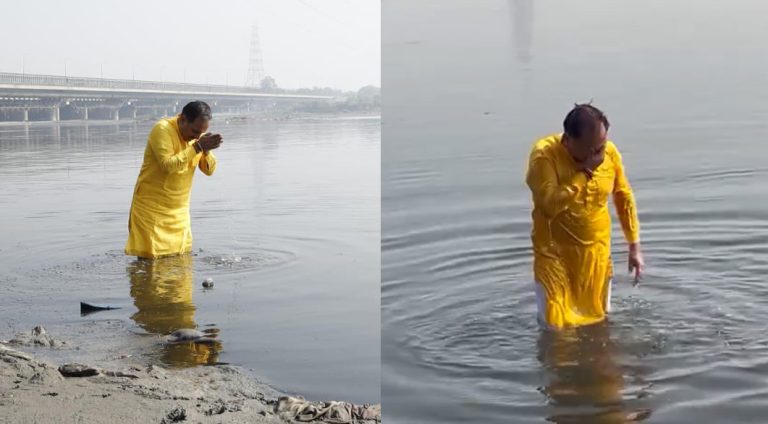
Delhi BJP chief president Virendra Sachdeva on Thursday took a dip in highly polluted waters of Yamuna as a mark of protest against the AAP government’s failure to clean the river. Hours after the innovative protests, he suffered several skin ailments and had to visit a hospital for treatment.
As per a Tweet by Delhi BJP, Virendra Sachdeva visited Ram Manohar Lohia Hospital after experiencing red rashes, itching and mild difficulty in breathing after taking the dip. The party posted the prescription from the government hospital, showing that he has been prescribed medications by a dermatologist to treat the conditions.
दिल्ली भाजपा अध्यक्ष श्री @Virend_Sachdeva ने आज दिल्ली सरकार के 8500 करोड़ रुपए के Yamuna सफाई घोटाले को उजागर करते हुए यमुना मईया में डुबकी लगा कर दिल्ली सरकार की गलतियों के लिए क्षमा प्रार्थना की थी।
The prescription states that he has generalised itching all over the body, and has been prescribed Levocetirizine tablet and a lotion to be used for 3 days. The doctor mentioned ‘exposure to water’ as the cause for the condition, and advised some tests.
“Delhi BJP President Shri @Virend_Sachdeva today exposed the Rs 8500 crore Yamuna cleaning scam of the Delhi Government and took a dip in the Yamuna River and sought forgiveness for the mistakes of the Delhi Government,” Delhi BJP said in the tweet.
Sachdeva on Thursday went to the ITO Ghat and staged a protest against the AAP government for failure to curb pollution in the river. He took a dip in the Yamuna and “sought forgiveness” for the “corruption” of the Delhi government, alleging that AAP govt looted ₹8500 crore allotted by the centre to clean the river.
प्रदेश अध्यक्ष श्री @Virend_Sachdeva ने गंदे यमुना घाट पर डुबकी लगा कर माँ यमुना से क्षमा मांगी की दिल्ली की अरविंद केजरीवाल एवं आतिशी मार्लेना सरकार ने यमुना सफाई फंड के 8500 करोड़ रुपये लूटकर खा लिये पर यमुना जी की सफाई नहीं की। pic.twitter.com/boUzyeWOPG
He challenged Chief Minister Atishi and AAP national convener Arvind Kejriwal to visit and inspect the condition of the river. Sachdeva said, “We have arranged a red carpet as people who used to live in ‘Sheesh Mahal’, they are accustomed to the red carpet as they are ‘Shahi’ people. We have arranged two chairs as this tradition was initiated by Atishi herself, so if she comes, she will need two chairs. And if Arvind Kejriwal comes, we will be happy. Although he is on bail, he was the chief minister of Delhi. We will wait for some more time if they come.”
He further said, “They should give an account of Rs 8,500 crores that was given by the Central government to clean the Yamuna.”
Notably, soon after coming to power in Delhi AAP government had promised to clean Yamuna River. But the condition of the river is worsening every year, with the water covered with toxic foam. Now days before Chhath festival, in which devotees took a dip in rivers, the matter of the condition of Yamuna water has again become a matter of debate.
While opposition parties are targeting AAP for failure to keep the promise of cleaning the river, AAP is blaming neighbouring states of releasing pollutants in the water.