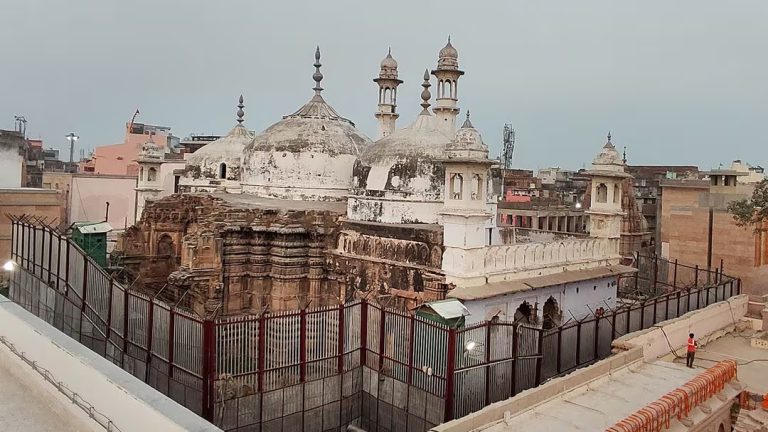
The Court of Civil Judge (Senior Division) Fast Track Court, Varanasi on Friday dismissed the Hindu side’s plea for an additional survey by the Archaeological Survey of India (ASI) at the Gyanvapi complex.
Hindu side advocate Vijay Shankar Rastogi said, “The court has rejected our application for an additional survey of the protection of the whole Gyanvapi area by the ASI… We will go to the High Court against this decision…within the time limitation, within 30 days.”
The Hindu side claimed that there is a 100-foot Shivling present under the central dome and requested a 4×4 feet excavation and an ASI survey at the Gyanvapi complex and present its report in the court, but the Senior Division Fast Track Court of Varanasi has rejected their application.
Meanwhile, Hindu side Advocate Rastogi said that he is upset over the decision, adding that they will go to the High Court on an immediate basis.
“This decision is against the rules and facts. I am upset with this and will go to the upper court and challenge it… According to the order of 8.4.2021, a 5-member committee was to be appointed to the ASI for the survey, in which one person would have been of the minority community and an expert from the central university. All of them had to conduct the ASI survey. The previous survey was done only by the ASI. The High Court had confirmed that the survey was not in compliance with that order (of 8.4.2021)… We will go to the High Court on an immediate basis,” the Hindu side Advocate said.
Hindu Side lawyer Subhash Nandan Chaturvedi said that they will go to the district court or High Court for revision against the order.
“The civil court has rejected and the order is also out… We will go to the district court for revision against this order… The ASI survey of almost all areas is complete but a survey of some places where the machines could not reach is remaining… Hence, an additional survey was demanded… We will go to the Civil Court and succeed. The survey will take place… We will make sure that the survey every inch of the temple complex takes place… This is not a setback… We have already presented all the evidence… There is the district court, High Court, all the paths are open yet,” Chaturvedi said.
This case of Lord Visheshwar vs Anjuman Intezamiya Masjid Committee has been going on since 1991. The Hindu side had sought permission to give the right to worship and build a temple within the Gyanvapi premises.
The case was filed regarding the construction of a new temple in Gyanvapi and granting Hindus the right to worship. The case has been pending for 33 years, and today the lawyer for the Muslim side concluded their arguments.
(This news report is published from a syndicated feed. Except for the headline, the content has not been written or edited by OpIndia staff)
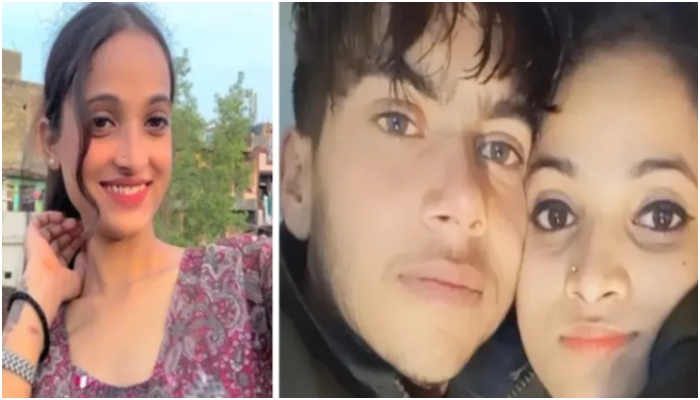
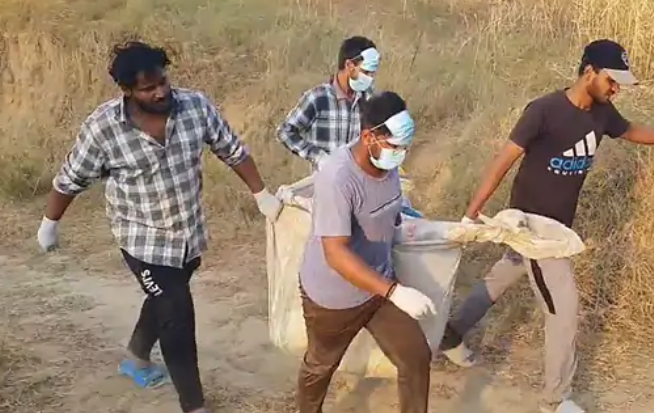
The Delhi Police on Monday, 21st October, recovered the dead body of a 20-year-old girl identified as Sonia, a resident of the Nangloi region in Delhi. The girl was reportedly murdered by accused Salim who had posed himself as a Hindu named Sanju. The accused trapped the girl in a love affair by claiming that he was a Hindu. He made her believe that he was in ‘love’ with her. Later he sexually assaulted the girl, resulting in her pregnancy. When the girl asked the accused to marry him, he called her to meet and murdered her with the help of two of his friends.
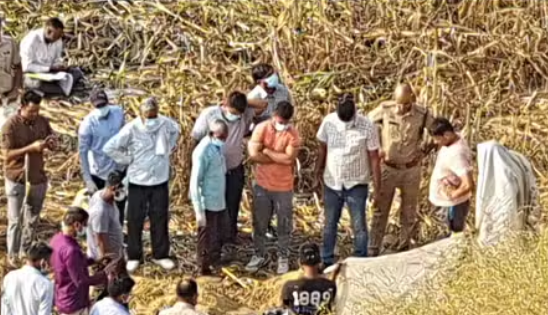
The incident came to the fore after the girl went missing on Sunday, 20th October and the family members of the girl lodged a missing person complaint. The family suspected that the accused who had identified himself as ‘Sanju’ was behind their daughter’s kidnapping. The police lodged an investigation into the case to find the dead body of the girl from the Rohtak area of Delhi. The accused had murdered the girl on 20th October and buried her body in the ground 6 ft deep.
The police eventually arrested the accused Salim who confessed that he had introduced himself as a Hindu to the girl. During the interrogation, he confessed that he had trapped the girl in a love affair. As per the initial reports, the accused and the girl had been knowing each other for several months. The accused had introduced himself as ‘Sanju’ to the girl and had made her believe that he was in love with her.
The girl used to talk to the accused over the phone and had saved her number as ‘bhoot’. The family members of the girl meanwhile knew that she was getting romantically involved with someone but were unaware that he was a Muslim. The girl also had a habit of using Instagram, where she had shared some reels with the accused saying, ‘I love bhoot’. Later the family members of the girl found out that the girl had been talking to some ‘Sanju’.
The family members of the girl claimed that ‘Sanju’ was not a good person to be with but the girl was so much in ‘love’ with him that she didn’t heed what they said. The siblings of the girl also insisted that she stay away from the accused but to no avail. She continued her ‘relationship’ with the accused who eventually began demanding sexual favors. He promised the girl of marriage and established sexual relations with the girl as a result of which she became pregnant.
The girl then asked the accused to marry him after which he decided to murder her. He told the girl that they would get married on 20th October, at the Hindu festival of Karwa Chauth. He asked the girl to keep a fast for him and asked her to meet on that day night to break the fast. The girl left her home to meet the accused on 20th October, but she never returned.
The accused took the woman in a car with his two friends, Ritik and Pankaj on the pretext of breaking the Karwa Chauth fast. However, Salim strangled the girl to death. The three then took the dead body of the girl to the ground in Rohtka where they buried her in a 6ft deep grave.
On the other hand, the family members of the girl waited for the girl to return. Further, on 21st October they filed a missing persons complaint suspecting ‘Sanju’. The brother of the girl said that she had been talking to a boy named ‘Sanju’ and suspected that he was behind her ‘kidnapping’. The family members of the girl also searched for ‘Sanju’s home and went there to ask for the girl but it was then that they learned that the man who had introduced himself as ‘Sanju’ to the girl was actually a Muslim and that his name was Salim.
The brother of the girl said that they didn’t believe at first what the family of the accused was saying. Later the family of the accused showcased original documents of Salim to prove that he was a Muslim.
The police have launched an investigation into the case and have arrested accused Salim. The other two youths who helped Salim have also been detained. The police are interrogating the case further to know whether the girl was already aware of the original religious identity of the accused. The police have filed a complaint against Salim under the relevant sections of the law.
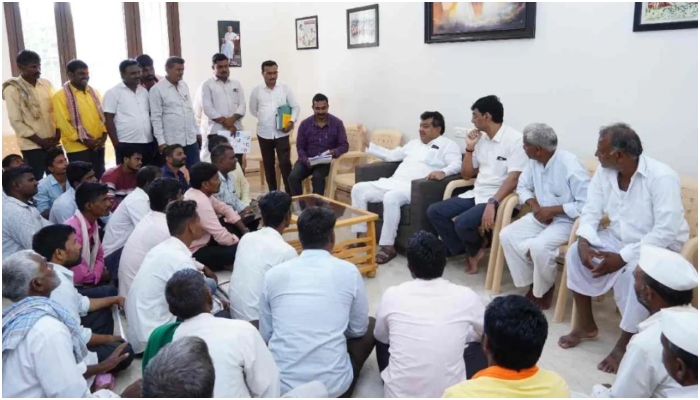
On Thursday, 24th October, the farmers in Vijayapura district of Karnataka filed a petition to the district in-charge Minister MB Patil after receiving notices indicating that their lands belonged to the Waqf board. The controversy concerns 1,200 acres in Honwada village, Tikota taluk, with farmers claiming that officials are attempting to designate the area as the Shah Aminuddin Dargah, a religious institution. According to the reported notices sent by the tehsildar, the lands belong to the Waqf board citing old government records.
As per the reports, Minister for Housing, Waqf, and Minority Welfare Department Jameer Ahmed Khan met with Waqf officers earlier this month to discuss ‘encroachments’ on Waqf lands. Following these discussions, officials made efforts to remove ‘illegal encroachments’, resulting in the issue of controversial notices.
EXCLUSIVE BREAKING: Is there a move to grab hundreds of acres of land by Waqf Board in Vijayapura district of Karnataka just days ahead of Parliament taking up the WAQF Amendment Bill?
Vijapura district farmers make startling disclosure to @harishupadhya
“The notice claimed that the land belonged to Shah Aminuddin Dargah, but this dargah hasn’t existed for centuries, and our families have owned this land for generations. Around 41 farmers have received notices, asking them to provide ownership records, but we are the rightful owners. If the government doesn’t withdraw these notices, we will launch a massive protest,” Suneel Shankarappa Tudigal, vice president of Honwada gram panchayat, said.
However, officials from the Waqf Board claimed that the notices were based on a 1974 gazette announcement. “The land was marked as Waqf property by the state government, and this was documented in the gazette. However, a few notices were mistakenly sent to farmers. If they have valid land records, the Waqf board will not take any action against them,” Tabassum, an official from the Vijayapura Waqf board was quoted as saying.
Farmers have warned of large-scale protests amid rising tensions, insisting that their grievances must be addressed. Notices have already been issued in parts of Vijayapur district, sparking concerns that more farmers may face similar challenges. Farmers in Honwada have declared they are ready to fight to protect their rights, pledging to continue their struggle until they receive justice.
“We have seen no justice yet. The district administration is quietly working to take our land away. If this continues, we will have no choice but to protest. Our land is our livelihood, and we will not let anyone take it from us,” said another concerned farmer.
In response to the mounting discontent, Karnataka’s district in-charge minister, M.B. Patil, addressed the issue on social media, assuring farmers that no private land or properties unrelated to Waqf would be affected. “If any land is incorrectly marked as Waqf property, necessary steps will be taken to correct it. I have already discussed this with the district administration, and a meeting will be held to address farmers’ concerns,” he said. Patil urged farmers to remain calm and promised that their rights would be protected. Despite these assurances, tensions remain high as many farmers continue to worry about the possible loss of their land.
In response to the claims, state Bharatiya Janata Party (BJP) officials have accused the state government of backing the Waqf board’s actions at the expense of farmers.“The Waqf board, under the Congress government’s encouragement, is now attempting to seize farmers’ land. This is nothing but appeasement politics,” read a tweet from the BJP. The party also stated that Prime Minister Narendra Modi’s NDA government intends to change the Waqf Act, which the Congress has opposed.
ಇಷ್ಟು ದಿನ ಸರ್ಕಾರಿ ಜಮೀನು, ಆಸ್ತಿಗಳಿಗೆ ಕಣ್ಣು ಹಾಕುತ್ತಿದ್ದ ವಕ್ಫ್ ಬೋರ್ಡ್ ಇದೀಗ ರೈತರ ಜಮೀನನ್ನೂ ಕಬಳಿಸಲು ಹೊರಟಿದೆ.
ಒಂದು ಕಡೆ ಪ್ರಧಾನಿ ಶ್ರೀ @narendramodi ಅವರ ಎನ್ಡಿಎ ಸರ್ಕಾರ ವಕ್ಫ್ ಕಾಯಿದೆಗೆ ತಿದ್ದುಪಡಿ ಮಾಡಲು ಹೊರಟಿದ್ದರೆ, ತುಷ್ಟೀಕರಣ ರಾಜಕೀಯಕ್ಕಾಗಿ @INCIndia ಇದನ್ನು ವಿರೋಧಿಸುತ್ತಿದೆ.
BJP’s Tejasti Surya also commented on the issue criticizing the state for targeting the farmer’s lands. “Over 1,500 acres of their ancestral agricultural land with valid documents have been unilaterally claimed by the Waqf Board, threatening these farmer’s livelihoods and generational property rights. For vote-bank politics & minority appeasement, the Congress government has empowered the Waqf Board with unbridled power to claim land across the country. Both in 1995 and 2013, Congress governments gave the Waqf Board unchecked powers to declare any land as Waqf after a quick inquiry, rule through its own tribunal with final authority, and also remove encroachments under Section 54,” he said.
“Modi 3.0 Govt is committed to bringing in systemic reforms through the JPC on The Waqf (Amendment) Bill, 2024. We are also escalating such cases to the committee’s attention to ensure justice and bring in lasting solutions. Will fight such cases in the High Court to safeguard farmer’s rightful ownership and ensure no one is deprived of their land. No injustice will be tolerated,” he added.
Interacted with farmers of Honvada village, Tikota Taluk, Vijayapura District this morning.
Over 1,500 acres of their ancestral agricultural land with valid documents have been unilaterally claimed by the Waqf Board, threatening these farmers livelihoods and generational… pic.twitter.com/OnHsoGVPWf
“If the farmers have valid ownership records predating this, their lands will not be affected,” MB Patil meanwhile reiterated. The intensifying controversy has fueled calls for greater openness in Waqf property management and fairness to landowner rights. The government must act quickly to address farmers’ concerns, protecting their rights while providing a clear and transparent strategy for managing Waqf lands.
A case of brutality against a 7-year-old girl has come to light in Jaigaon town of Alipurduar district of West Bengal. She was taken to the market under the pretext of buying her chowmein, then raped and burnt alive to death. The corpse was discovered on 22nd October. The next day, the 50-year-old prime accused, Bablu Miyan Munir who had absconded was caught near the Nepal border. Two others have also been captured.
Bablu didn’t use a mobile phone and couldn’t be tracked. However, the authorities nabbed him by forming a network of CCTV surveillance and with the help of informers. The shocking incident enraged the locals who took to the streets to demand justice and punishment for the perpetrator.
According to media reports, the child went missing on 15th October and her family filed a missing person’s report. However, she was not found anywhere which led to great distress among the family members and the entire neighbourhood. According to the family, the child never came home after Bablu led her to the Jaigaon bus stand. Suddenly, word got out in the area that her half-burnt body had been found in a deserted area. Police unveiled that sexual assault has been verified by the scratch marks uncovered on her body and the injury marks detected on the accused. Superintendent of Police (SP) Y Raghuvanshi and Sub-Divisional Police Office (SDPO) Prashant Debnath informed that the forensic team is also consulted and that the accused’s DNA is being tested to provide solid evidence.
“The accused does not use a phone. He hardly has any links with his family. As a result, it was difficult to track him. We got information that he worked in a brick kiln in Kishanganj in Bihar and had come home recently. We started looking for him in brick kilns in the area. Today (on 23rd October), we were alerted that he was spotted near the Nepal border. That is where we detained him. During interrogation, he admitted to killing the girl. The post-mortem report of the girl will confirm whether she was raped,” the authorities confirmed.
A police source stated, “So, we had to depend more on our informers. We found that he worked at a brick kiln, but we didn’t have the location of the said facility,” The police gathered CCTV recordings from several homes and conducted a search operation at nearly all of the brick kilns in the neighbouring districts of Coochbehar, Raiganj and even Kishanganj in Bihar. They received a tip-off that he was spotted in Nepal and then conducted a covert operation to track him by sending a few local villagers to the neighbouring country.
When the locals encountered Bablu, he admitted to the crime after which they informed the authorities upon returning to India. According to the police, Bablu was trying to flee to Nepal but was caught on time. A team was sent to the Nepal border and he was caught while trying to enter India, per other reports. The cops first arrested Bablu who was acquainted with the girl’s family and had taken her with him and later apprehended two more suspects. All three are now in police remand and under interrogation during which Bablu made alarming disclosures. “The accused confessed his guilt and stated that two other people were involved in the crime,” police conveyed.
He mentioned that the victim was first brought to an isolated location where she was raped and then reportedly set ablaze. He added that he disposed of the body in a bush near Daldabari. The situation in Jaigaon remains tense. The police are constantly appealing to maintain peace, but people want immediate justice. They closed their shops and came out on the road in protest of the instance. They raised slogans outside the police station asking for swift punishment to the offenders. “This incident has not only claimed our daughter but also violated our humanity. We will not sit quietly until the culprits are punished,” voiced a demonstrator.
Questions have also been raised regarding the conduct of the police. People expressed that they did not take the girl’s disappearance seriously, even after her family submitted a report. They were unable to find any clue for multiple days and only became active after the body was spotted. The cops even had a tough time catching Bablu. They saw him taking the little girl on CCTV footage and laid a trap for him. He was eventually arrested from the India-Nepal border.
I am deeply angered and anguished at the tragic case of a 7-year-old girl who was found raped and murdered in the Indo-Bhutan border region of Jaigaon, under Alipurduar District. This incident is another example of the complete failure of the West Bengal government, led by Chief… pic.twitter.com/kCQ1LZHr9r
Bharatiya Janata Party’s (BJP) Darjeeling Lok Sabha MP Raju Bisht also made serious allegations against the state government and Chief Minister Mamata Banerjee. He charged that the law and order situation in West Bengal has significantly deteriorated. He was going to meet the victim’s family, but the police stopped him, which further angered the people. BJP leader and Lok Sabha MP from Balurghat Sukanta Majumdar also accused Mamata Banerjee’s government of trying to protect the criminals involved in such occurrences.
Prashant Debnath informed, “Her body was found behind the bushes in a field in Daldabari, Jaigaon on Tuesday. An FIR (First Information Report) has been filed under BNS (Bharatiya Nyaya Sanhita) sections of kidnapping, murder, and Section 6 of the POCSO (Protection of Children from Sexual Offences) Act.” The local villagers were commended by the police for their assistance in the case.
Amidst the crackdown on illegal Bangladeshi and Rohingya Muslims across the country, 50 Bangladeshi nationals living illegally in Ahmedabad, Gujarat, have been identified and arrested. Besides, the Gujarat Crime Branch is questioning over a hundred people to find the intruders. Earlier, illegal Bangladeshis were apprehended in Pune and Tripura.
Informing about the arrests of illegal Rohingya and Bangladeshi Muslims, DCP Ajit Rajiyan of the Crime Branch of Gujarat Police said: “We are continuously taking action against people living illegally. Along with this, more than 200 people are being questioned.” According to the report, all of them were involved in making fake Aadhar cards, prostitution and many other illegal activities.”
Pune Police of Maharashtra also apprehended 21 Bangladeshis on October 21, 2024, during a search operation in Rajangaon based on intelligence information. Speaking about what was recovered from the arrested accused, Superintendent of Police Pankaj Deshmukh stated, “Nine of them had bogus Aadhaar cards, PAN cards, and one had a voter ID card. The Bangladeshi citizen possessed a voter ID card that he had obtained in Gujarat.”
The SP stated that all of them either crossed the border on foot from West Bengal or arrived illegally by sea in boats. He continued, “Some of them have children between the ages of three and five. After entering India, they visited Gujarat and Mumbai. They reached Pune a few days ago.” He stated that an investigation is currently underway and that the outcome will be known in 2-3 days.
The names of those arrested by the police are – Ajmul Sharat Khan alias Hasif Khan (50), Mohammed Akbar Azeez Akbar Sardar (32), Shafikul Alimiya Sheikh (20), Hussain Mukhid Sheikh (30), Tarikul Atiyar Sheikh (38), Mohammed Omar Farooq Babu alias Babu Bukhtiar Sheikh (32), Shaheen Shahjan (44), Mohammed Hussain Sheikh (32), Rauf Akbar Dafadar (35), Ibrahim Kajol Sheikh (35).
The accused, Farid Abbas Sheikh (48), Mohammed Saddam Abdul Sakhawati (35), Mohammed Abdul Habib Rehman Sardar (32), Alimiya Tohkil Sheikh (60), Mohammed Israel Fakir (35), Feroza Mutaqeen Sheikh (20), Lipiya Hasmukh Mulla (32), Salma Malik Roshan Malik (23), Hina Mulla Zulfiqar Mulla (40), Sandeep alias Kajol Basudeep Vishesh (30) and Yenur Shahdata Mulla (25) have also been arrested.
“We are finding out for how long they have been in India. Preliminary investigation suggests that they have been in the country for 6 months to 10 years. We are finding out what is their purpose of staying in this country. Many of them are involved in labour activity and are doing wage labour. Therefore, it is too early to comment on their actual status,” SP Pankaj Deshmukh said.
“We have seized documents like voter ID cards, PAN cards and Aadhar cards from them. Apart from this, information about people living illegally has also been received from many people. We are also investigating this aspect whether there is any organized racket or agent who is bringing Bangladeshi citizens and establishing them in our country,” he added.
Similarly, on the morning of 22nd October 2024, security authorities seized three Rohingya Muslims and two Bangladeshi nationals at Agartala railway station in Tripura’s capital. Tapas Das, the officer-in-charge of the Government Railway Police (GRP), stated that they had information that several Rohingya and Bangladeshi nationals would arrive at Agartala railway station to leave Tripura.
Tapas Das went on to say that during interrogation, it was discovered that the Rohingya citizens were going to Hyderabad, while the Bangladeshi citizens were planning to go to Mumbai. He stated, “We seized Bangladeshi currency, documents, and some mobile phones from them.” We will put them in court and request police remand for additional investigation.”
Notably, a large gang of human traffickers operates on the Indo-Bangladesh border in West Bengal, allowing such persons to enter India from the Bangladesh border for a mere four thousand rupees. Following this, the infiltrators, including both Bangladeshis and Rohingya Muslims are given bogus identities and relocated to other parts of the country, including Jammu & Kashmir, Maharashtra, Gujarat, and Delhi.
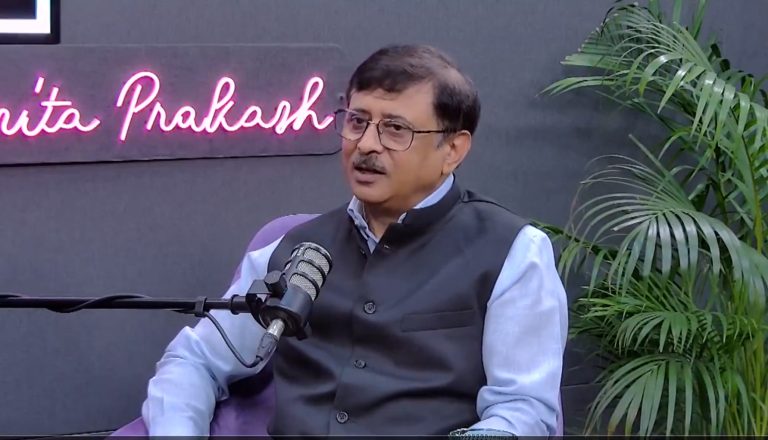
Recalled Indian High Commissioner to Canada Sanjay Verma on Friday in an exclusive conversation with ANI clearly said that only a small percentage of Canadian Sikhs supported the Khalistani cause and if Canada cared about that then they should “give a place to them and call it Khalistan”.
Sanjay Verma asserted Khalistani extremists and terrorists are challenging Indian territorial integrity and sovereignty.
“These are Canadian citizens challenging Indian territorial integrity and sovereignty. As long as these people, these Khalistani extremists and terrorists keep talking about Canada, I have no issues. That’s their domestic issue. They can do whatever they want. As soon as they look at dividing India, then it is my problem. And that problem, I will certainly take to the Canadian authorities to say that listen, you have to resolve this,” Verma said
“They want a country for themselves. I would say if Canada wants them to be there and they are so kind to them, Canada is a huge country. Give a space to them, call it Khalistan,” Verma said.” Verma added.
He affirmed that “if Khalistan is to be made, it is in Canada, never in India.”
Verma said that the Khalistani elements had managed to build a narrative that they represented the Sikh community in Canada which was not true.
“Indo-Canadian community is those people who are Canadian citizens of Indian origin. 98% of them go about doing what they do living peacefully, taking care of the family, contributing to the Canadian economy, etc. But others are very vocal. And as we have said that those babies who cry louder will get attention. So they get fed. And somehow they have been able to build a narrative that these 10,000 of the Khalistani terrorists and extremists represent the Sikh community, which is absolutely incorrect and falsehood. Then the Indian community, which is Indian diaspora, is also seen as being led by these Khalistanis. And these narratives which had been built over a period of time tells the regime of the day that they are important,” he said.
“Secondly, what they have been able to achieve is to put their own people in the parliament, in positions of authority in various departments, including at the lower levels and the upper levels. So they have been able to influence not only the political dimension, but also the executives in Canada. So the institutions in Canada, most of the institutions, they also have got recruitments done from, they’re Canadians, so they have right to get recruited. So I’m not saying that they cannot. But amongst them, there are many who side with the Khalistani terrorists and extremists and therefore propagate the narrative in the organizations there,” he added.
The recalled envoy also reitrated that no evidence had been shared by the Canadian government on the alleged involvement of any Indian citizens in the killing of NIA designated terrorist Hardeep Nijjar.
“Zero zilch. Nothing. So, so far what I have heard is what they keep saying in the media. That India, credible allegations are there. No, come on. We are also English speaking country in a way. So, what is credible allegations? Either they are credible or they are allegations. So no evidence present, shared with us, no evidence, nothing which is judicially, legally acceptable presented to us. Okay. So that is why you always kept saying that you are a country of rule of law. We are a country of rule of law. So if you want to act upon an evidence that you give to us, it has to be legally acceptable,” he sid.
Sanjay Verma was recalled from Canada after the country said he was a person of interest in the Hardeep Singh Nijjar murder case; however, he denied all charges levelled against him by Ottawa.
The ties between India and Canada soured after Prime Minister Justin Trudeau alleged in the Canadian Parliament last year that he has “credible allegations” of India’s hand in the killing of Nijjar.
India has denied all the allegations, calling them “absurd” and “motivated” and has accused Canada of giving space to extremist and anti-India elements in their country.
Nijjar, who was designated a terrorist by India’s National Investigation Agency in 2020, was shot and killed outside a Gurdwara in Surrey in June last year.
(This news report is published from a syndicated feed. Except for the headline, the content has not been written or edited by OpIndia staff)
Ahead of Diwali festival, a team of food safety officers in Madhya Pradesh’s Ujjain district confiscated 300 kg of adulterated Mawa (Khoa) being transported from Ahmedabad, Gujarat in the district on Friday morning, a food officer said.
According to the officers, the Mawa was brought through bus parcel service. Based on the input about the consignment, the team reached Dewas gate bus stand in the district at around 7 in the morning and recovered the adulterated mawa.
District Food Safety Officer, Basant Dutt Sharma told ANI, “In view of the upcoming Diwali festival, we are continuously working to confiscate adulterated items. This morning, we received information about adulterated mawa (Khoa) being transported here in the district and being sold at cheaper rates. When I reached Dewas gate bus stand at around 7 am today, I saw a suspect and traced him. As soon as the mawa was deported from the bus, we confiscated it. A total of 300 kg mawa in 10 sacks containing 30 kg mawa each were recovered from the spot,” said Basant Dutt Sharma, District Food Officer.
“The suspect has been identified as Praveen Jain, a resident of Vidyapati Nagar in the district. He neither has a food licence nor any shop of his has been detected in the area. We are further interrogating him to ascertain whom he supplies the mawa with. The mawa was brought from Ahmedabad, Gujarat and we are investigating the matter,” the officer said.
Further action into the matter will be taken accordingly, he added.
(This news report is published from a syndicated feed. Except for the headline, the content has not been written or edited by OpIndia staff)
A US-based media organisation, Pirate Wires, has unearthed how Wikipedia is being exploited by pro-Hamas and pro-Hezbollah editors to distort the ongoing Palestine-Israel conflict and downplay the acts of terror perpetrated by Islamists against the Jews.
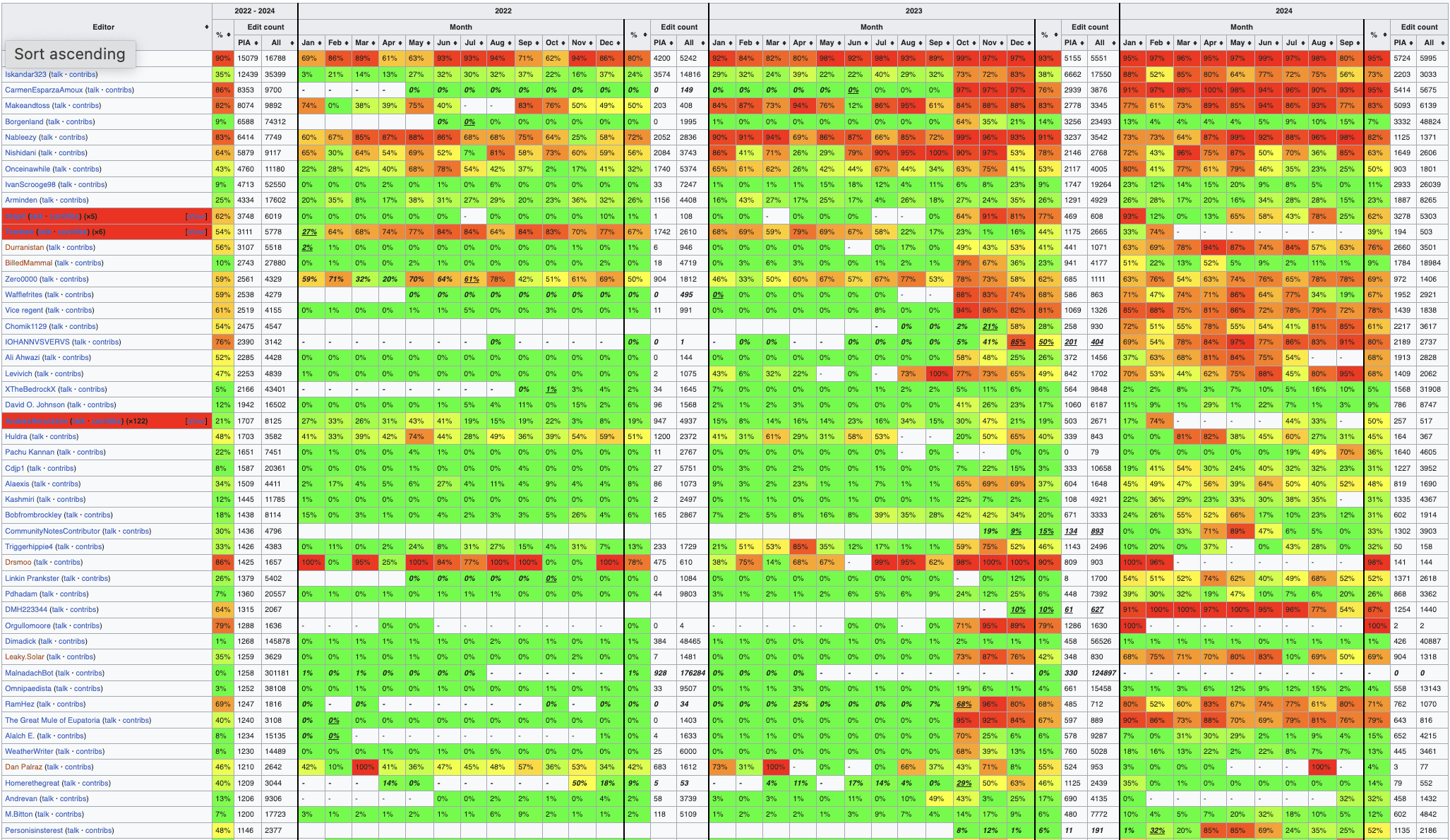
Pirate Wires found that at least 40 Wikipedia editors are actively involved in vandalising ‘Palestine-Israel Articles (PIA)’ and altering public perception about the ongoing Israel-Hamas war, which broke out on 7th October 2023.
The sinister objectives include delegitimising the Jewish State, portraying Islamic terror outfits Hamas and Hezbollah in a positive light and subtly mainstreaming anti-Semitic views through a concerted effort.
NEW WIKIPEDIA INVESTIGATION: How Wikipedia’s Pro-Hamas Editors Hijacked the Israel-Palestine Narrative
• A seemingly coordinated campaign led by around 40 Wikipedia editors has worked to delegitimize Israel, present radical Islamist groups in a favorable light, and position… pic.twitter.com/Dfuq0sEcX5
Although Wikipedia advocates a ‘Neutral Point of View (NPOW)’ in theory and bars ‘Gaming the System’, ‘Tag Teaming’ and ‘Canvassing’, the pro-Islamist editors were able to demonise the Jewish State of Israel in a targeted fashion.
Pirate Wires stated, “They work in small clusters, with only two or three active in the same article at any given time. On their own, many of these edits appear minor, even trivial.”
“But together, their scope is staggering, with two million edits made to more than 10,000 articles, a majority of which are PIA or topically associated. In dozens of cases, the group’s edits account for upwards of 90% of the content on an article, giving them complete control of the topics,” it emphasised.
Wikipedia ‘editors’ behind vandalising Palestine-Israel articles
During the course of their investigation, Pirate Wires found that an 8000-member Discord group dubbed ‘Tech for Palestine (TFP) has been at the helm of this information warfare.
The group operated between 6th February and 3rd September this year and distorted atleast 112 articles in a concerted manner. Based on its vandalism of Wikipedia pages, the group even attempted to coerce British Parliamentarians to change their positions on Israel and the war against Hamas in Gaza ahead of the July elections.
“The plan called for scraping data on visits by MPs to Israel and Israel-related donor information, to create a dedicated Wikipedia article using the data to inform ‘voters to put pressure ahead of the next elections’, Pirate Wires stated. Itidentified one of the Wikipedia editors and a member of TFP as ‘Iskandar 323’
In the words of the US-based media organisation, “Far from a lone wolf, however, Iskandar is part of a group of editors that uses coordinated “swarm” tactics that, taken together, invert Wikipedia’s founding vision, turning the site’s perceived neutrality and authority into an attack vector that can be hijacked to advance ideological aims at a mass scale.”
Between January 2022 and September 2024, ‘Iskandar 323’ made a whopping 12,000 edits to PIA articles. In the same period, an editor who goes by the name ‘Selfstudier’ made more than 15,000 edits.
Other members of ‘Tech for Palestine’ also made several edits to propagate Hamas and Hezbollah’s propaganda in the grab of disseminating information. These include:
CarmenEsparzaAmoux – 8,353 edits
Makeandtoss – 8,074 edits
Nableezy – 6,414 edits
Nishidani – 5,879 edits
Onceinawhile – 4,760 edits
Zero0000 – 2,561 edits.
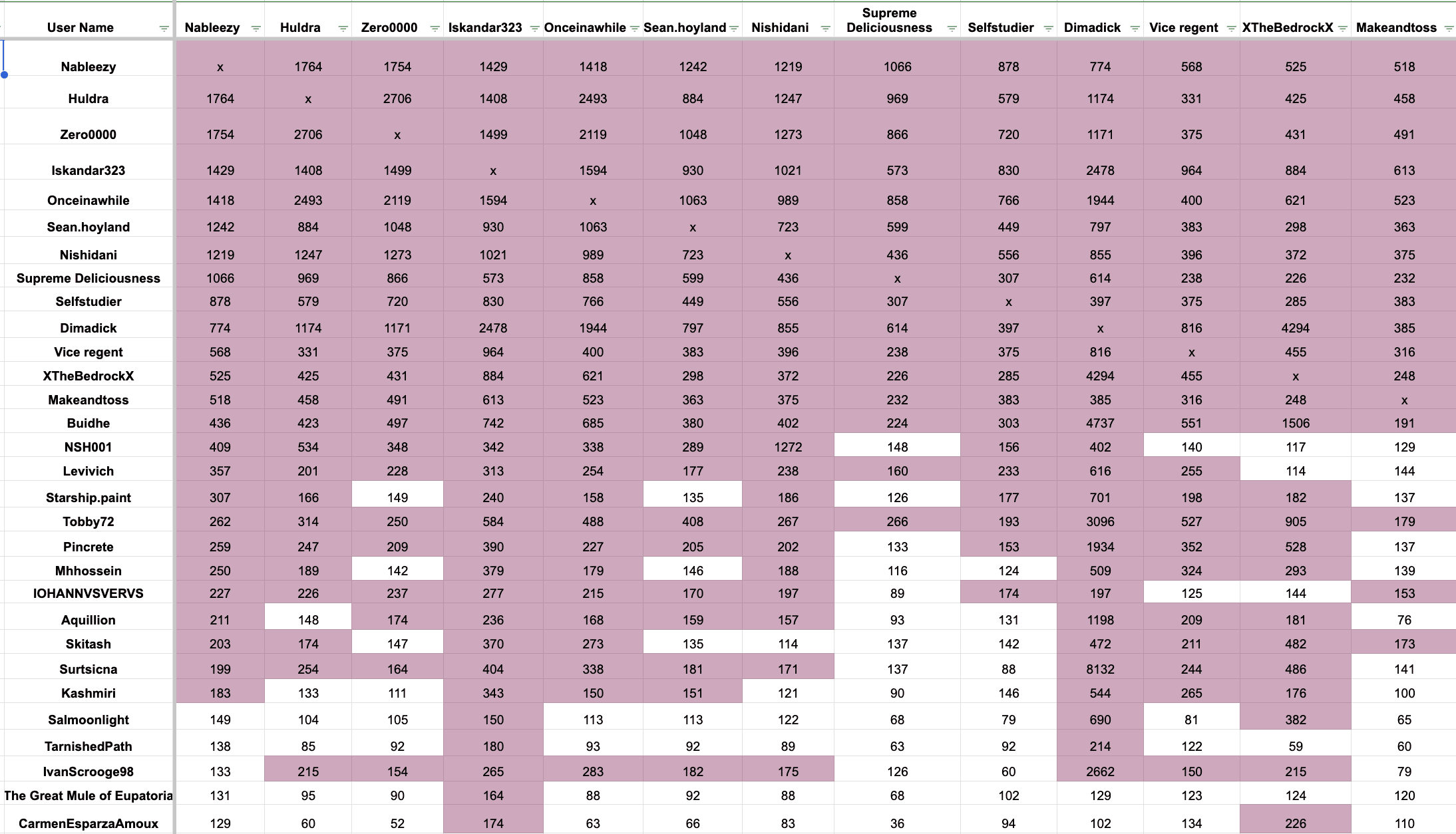
List of co-edited articles by various Wikipedia Editors belonging to ‘Tech for Palestine’
“All together, the top 20 editors of this group made over 850,000 edits to more than 10,500 articles, the majority of them in the Palestine-Israel topic area, or topically connected historical articles,” Pirate Wires noted.
While describing the modus operandi of TFP, the media organisation added, “The shifting of language, the torturing of settled definitions, and positioning fringe academic theory as mainstream — an approach developed by the radical left, in concert with global Islamist movements, in the wake of 9/11, when the attacks put Islamism on the moral back foot.”
The Wikipedia editors employed tech modalities such as strategy planning sessions, ticket creations, and group audio “office hour” chats to achieve their ulterior motives.
They avoided detection by working in small groups on articles and aiding one another in case of pushback from neutral editors, not associated with TFP.
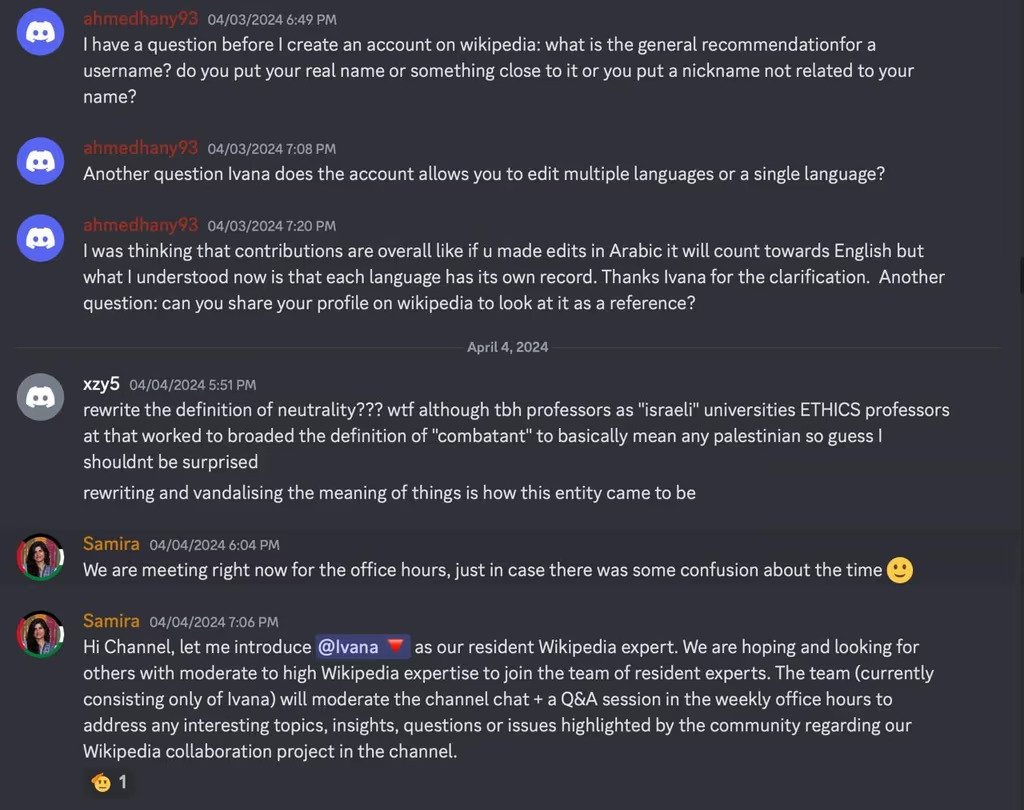
Discord chat in TFP
Although ‘Tech for Palestine’ was founded by Paul Biggar, the two main coordinators of the 8000-member-Discord group were Samira and Samer.
They coordinated with other members to vandalise Palestine Israel Articles (PIA) in a concerted manner. They recruited volunteers, conducted formal orientation, dealt with issues of troubleshooting, work on ideation to carry out digital information warfare.
However, the real work was guided by the in-house expert and veteran Wikipedia editor ‘Ivana.’ Pirate Wires stated, “Their activities ranged from editing celebrity articles by adding pro-Palestine statements they made to creating new articles out of whole cloth, like a proposed article called Palestine: The Solution.”
“They also put special emphasis on articles concerning sexual violence perpetrated by Hamas on October 7, with Ïvana questioning the veracity of reports of rape from that day, while adding to other articles claims that Israeli soldiers raped Palestinians,” it added.
Impact made by TFP on Wikipedia articles about Jews and Israel
Many members of the ‘Tech for Palestine’ Discord group, who also happen to be Wikipedia editors, vandalised several pages concerning Jews and the State of Israel.
For instance, the editor ‘Iskandar 323’ removed ‘land of Israel’ from a reference to the origin of Jewish people. He also changed the short description of the article on ‘Jews’ from ‘Ethno-religious group and nation from the Levant’ to ‘Ethno-religious group and cultural community.’
By removing reference to ‘nation’, the pro-Hamas Wikipedia Editor conveyed that the ethno-religious group did not necessarily require a separate nation of their own. Additionally, he downplayed the terror antecedents of Hamas and its resolve to eradicate Jews and Israel.
‘Iskandar 323’ shrewdly omitted reference to the 1988 charter of Hamas from its Wikipedia article, a significant change that prevents a user from knowing about the true anti-semitic nature of the Islamist outfit.
“He removed mention of Hamas’ 1988 charter in at least three other articles,” noted Pirate Wires. Additionally, the Wikipedia editor removed 22000 characters from a ‘critical section’ of an article about the controversial Amnesty International.
He also deleted a 1000-word-passage criticising its stance on Israel. In one case, ‘Iskandar 323’ removed a paragraph critical of Iran’s Islamic regime from the Wikipedia article titled ‘History of Israel’ article.
‘Iskandar323’ collaborated to remove human rights violation from articles concerning Iranian officials. The notorious editor also deleted an account of the 16th-century immigration of Jews to Israel.
He also whitewashed Amin Al-Husseini, the Mufti of Jerusalem from 1920s and 1950s who allied with Nazi leader Adolf Hitler. ‘Iskandar 323’ was helped by ‘Zero0000’ and ‘Nishidani’ to remove negative content about the radical Mufti from his Wikipedia page.
‘Nishidani’ also worked with another member of TFP to paint parallels between ‘Zionism’ and ‘Nazism,’ a ploy often used by Islamists to rationalise their calls for extermination of Jews for being potential Nazis.
Another Wikipedia editor dubbed ‘Mhhossein’ vandalised the page concerning the anti-hijab protests following the death of Mahsa Amini in Iran. He corrupted the page by adding dubious information in support of the Islamic Republic Party (IRP).
According to Pirate Wires, one TFP member named ‘Nableezy’ is a proud supporter of Hezbollah. He has worked consistently to remove any references to terrorism attributed to the Iran-backed Islamic terrorist organisation. He has also peddled anti-Semitism through his malicious edits and deliberate vandalism of Wikipedia pages pertaining to Israel.
The members of ‘Tech for Palestine’, serving as editors of Wikipedia, were able to exploit Google’s preference for the free encyclopedia to distinctly feature articles on Zionism with the ‘knowledge panel’ of the search engine.
The said Wikipedia article is edited by the members of TFP but gives the false impression to a visitor that the knowledge panel is based on information vetted by Google and not Wikipedia editors.
The aftermath of ‘Tech for Palestine’
Deep down, some of the Wikipedia editors belonging to ‘Tech for Palestine’ knew that they were flouting Wikipedia norms about ‘Neutral Point of View (NPOW)’, ‘Gaming the System’, ‘Tag Teaming’ and ‘Canvassing.’
Earlier this year, a researcher published a detailed report on Tech for Palestine in a blog titled ‘The Wikipedia Flood.’ The report was titled “How Pro-Hamas Operatives Collaborate to Rig Wikipedia.”
After his expose followed by that of a magazine called ‘Jewish Insider’, the in-house expert at TFP aka Ivana deleted all her chats from the Discord channels as well as the Wikipedia talk pages and Sandboxes staging pages created by her.
In September, the group locked down the ‘TFP Wikipedia Collaboration’ Discord channel following revelations of concerted vandalism of Wikipedia pages.
Wikipedia and anti-India propaganda
In a detailed dossier prepared in September 2024, OpIndia found that Wikipedia is not a free, editorial intervention-free encyclopaedia which relies on the voluntary work of thousands of unpaid, passionate volunteers across the globe, as claimed by the Wikimedia Foundation.
Larry Senger, the co-founder of Wikipedia has categorically stated that Wikipedia has a pronounced Left bias. In several interviews and talks, he has spoken extensively about how Wikipedia skews the scale of balance, leading to the information being an inaccurate representation of reality, ridden with Left bias.
Wikimedia Foundation has intimate financial connections with the clandestine Tides Foundation, which is accused of funding the pro-Hamas protests in US Universities along with George Soros. Wikimedia and Tides Foundation also fund several organisations which specifically work against the interest of India and undermine its sovereignty on various levels.
Connections between the Wikimedia Foundation and Tides Foundation have been found with dubious organisations like Hindus For Human Rights, Equality Labs, Art+Feminism, Access Now, the Hindenburg hitjobs against Indian industrialists and others.
In India, the Wikimedia Foundation has no presence. The presence they had in the form of a registered society was closed in 2019.
Despite folding in India, the Wikimedia Foundation not only collects lakhs from India in the form of donations but also funds NGOs in India which furthers the business interest of the Wikimedia Foundation. All of these organisations funded by the Wikimedia Foundation and Tides Foundation are Left organisations.
As far as the content on Wikipedia is concerned, it is found in this research that a small group of editors and administrators skew the content in India, including one editor who has been booked in the state of Manipur for spreading disaffection and creating strife.
The editors often stonewall attempts to add inconvenient facts and a different perspective to the Wikipedia articles.
Further, there is a specific anti-Hindu and anti-India bias which is perpetrated by the editors, reflected in the content which defines the subjects due to the partnership between Google and Wikimedia Foundation.
On 13th October a Muslim mob attacked the visarjan procession of Goddess Durga idol and viciously killed a 22-year-old young man named Ram Gopal Mishra in Bahraich, Uttar Pradesh. Many other devotees were critically wounded in the attack which was launched from the residence of prime accused Abdul Hamid who is also considered the brain behind the violence. When OpIndia gathered ground information about the incident, it was discovered that the land where the house now stands was formerly owned by a Hindu around thirty years ago. Today, the same Hindu family is harassed by Abdul Hamid.
The anti-Hindu riot took place in the Maharajganj market which connects Sitapur-Bahraich road to Mahsi market. The procession also passes through this route traditionally every year. Maharajganj market was originally famous for the jewellery business. Abdul Hamid also worked with gold and silver and earlier lived in a house within the market. Ram Prasad Jaiswal then used to own the majority of the land on the main road. Santosh Tiwari, a neighbour of Abdul Hamid who was injured in the unrest, told OpIndia that about 30 years ago the latter purchased the land from Ram Prasad Jaiswal to build a house on it.
Ram Prasad Jaiswal had proposed to sell his land situated on the main road for money. Some Hindus, including Santosh Tiwari, had bought a portion of this land at the time. Abdul Hamid also declared his intention to have a part of this property as soon as he learned about the sale. Abdul Hamid referred to himself as secular at the time, spoke politely and greeted Hindus in accordance with their traditions.
According to a local citizen who spoke on condition of anonymity, other members of the Hindu community then appealed to Ram Prasad Jaiswal to give them his land to someone else and not Hamid. He, however, paid more than the other bidders and obtained a sizable parcel of the land registered in his name. Now his place sits between the houses of Santosh Tiwari and Ram Prasad Jaiswal.
Ram Prasad Jaiswal has now passed away. He had three sons, one of whom also died. His other two sons Pappu Jaiswal and Moon Jaiswal live in separate parts of the house which are adjacent to the wall of Abdul Hamid’s residence. Pappu repairs tyre punctures while Moon is in the readymade garments and footwear business. The latter also acknowledged that his father made a mistake and shouldn’t have sold the land to Abdul Hamid irrespective of his compulsion.
According to Moon, he and his brother reside in different areas of their remaining land, but Abdul Hamid frequently harassed the duo. We noticed an extensive quantity of water accumulated in front of Pappu’s puncture repair shop and after inquiring learned that Abdul Hamid and his sons are to blame for all of this. They have also repeatedly threatened Moon who expressed, “What has happened before cannot be undone now.”
A Hindu family from Maharajganj market has been featured in the mainstream media for the past few days as the government has issued a demolition notice for their home, along with the properties of Abdul Hamid and a few other Muslims. The notice has been sent to Moon and even his brother Pappu. They have emptied the goods from their shops. A video regarding the notice is being shared vigorously by leftist, socialist, Islamist and Congress handles on social media.
Abdul Hamid’s other Hindu neighbour, who works for the government, spoke to us behind the camera and unveiled that Abdul Hamid wielded his gun to threaten others. According to what we were told, the latter had threatened to shoot the victim’s elderly father during an incident that happened a few years ago. The elderly man retaliated at the time, saying he would not be intimidated by such threats.
Additionally, Ram Gopal Mishra was murdered at Abdul Hamid’s home, most likely using the same licensed firearm that he had been using to terrorize the local Hindu population. The Hindu person also seeks an investigation into the time, date and reason along with the identity of the officer who gave the weapon’s license to him. People further asserted that the permitted firearm was merely a display for Abdul Hamid since if a thorough check is conducted, a stock of illicit weapons can be unearthed from that market.
Many locals told OpIndia that Abdul Hamid’s older son is an international criminal with ties to anti-national groups. People reportedly disclosed to have witnessed numerous police raids at Abdul Hamid’s home over the past ten years. We were also informed that he had evicted his older son from will to avoid legal issues. Though people said his son continued to visit their home despite the alleged eviction. He also got married somewhere in Nepal. People suspect Abdul Hamid of having a hand in his son’s black money because of how swiftly his wealth had grown as compared to other goldsmiths in the market. They also voiced that the father of an international criminal cannot get a gun license without jugaad (unlawful/non-conventional way).
Canadian Prime Minister Justin Trudeau is facing opposition from 24 Liberal Party MPs of 153, who have called for his resignation by October 28 or face penalties. The rebellion against Trudeau occurred during a meeting of the Liberal Caucus, coinciding with a significant decline in Trudeau’s popularity ratings amidst a diplomatic spat with India. However, on Thursday (October 24th), he announced he would lead the Liberal Party in the upcoming elections.
It was reported earlier that a growing number of party leaders are unhappy with the party chief, and want him to step down. The dissident MPs have been holding secret meetings, garnering support against Trudeau, and have signed a document calling for him to step down. The dissent grew after the party’s loss in byelections Toronto—St. Paul’s and Montreal, as per reports. However, now Justin Trudeau has finally responded to the dissidence, and announced that he is not going to resign.
#FPVideo: Canadian PM Justin Trudeau is facing internal pressure from his party to resign as leader, with reports indicating that 24 out of 153 Liberal MPs have called for his ouster. During a closed-door meeting, MPs urged Trudeau to step down by October 28. pic.twitter.com/uy3jPUH8rN
One member of his caucus has termed Trudeau’s announcement “disappointing.” Speaking to reporters, PM Trudeau said, “We’re going to continue to have great conversations about what is the best way to take on Pierre Poilievre in the next election.”
He further said, “But that will happen with me as leader going into the next election.” Asked directly if he would stay on after the October 28 date, some caucus members had reportedly asked for a clear answer, and Trudeau answered with just one word: “Yes.” He was also asked whether he would expel anyone from the caucus if dissent about his leadership continued. Trudeau said they have had “robust conversations” on how to go ahead.
Liberal MP Sean Casey, who was one of three members of the caucus who confirmed that they signed the document calling for the prime minister to resign, termed Trudeau’s announcement that he will stay on as leader just hours after MPs expressed their discontent “disappointing.” Sean Casey said, “I don’t think that he felt that he needed to reflect, consolidate. His mind was made up.” Casey said he is now putting the issue behind him, according to Global News report. He said that he had expressed what he had been hearing from his constituents and stressed that it will take his energy to win the seat.
He said, “I did my job by voicing what I was hearing from my constituents. Now it’s going to take my energy and to direct them to winning my seat and not on internal party matters. As far as I’m concerned, it’s closed.” The Charlottetown MP said that it’s ultimately the decision that the Prime Minister makes. However, he noted that he does not see the decision paying off. Casey stated, “I wouldn’t call it delusional, but he’s seeing something that I don’t see, that my constituents don’t see.” He added that while he disagrees with Trudeau. However, he still believes that the Poilievre government would be the worst outcome and called on his colleagues not to vote against the current government. He said, “Anything that we do that makes [a Poilievre government] more likely is dumb.”
Trudeau made the remarks after he met with his caucus on Wednesday, where some Liberals called on him to step down amid the party’s lagging in the elections and the two recent byelection losses in former Liberal strongholds. Between 20 and 30 MPs had signed an internal document urging Trudeau to step down as leader. These leaders also voiced their concerns to Trudeau during the meeting. After the meeting, several MPs said the party was united. However, they did not share details on what exactly happened behind closed doors.
Internal calls for Justin Trudeau’s resignation as Liberal leader intensified on Wednesday as Liberal MPs convened on Parliament Hill. During the closed-door meeting, dissenting MPs conveyed their grievances to Trudeau, reflecting growing discontent within the party. This gathering was part of the weekly caucus meetings that take place while the House of Commons is in session. The Wednesday meeting served as a platform for MPs to voice their concerns and frustrations directly to PM Trudeau.
Trudeau is facing mounting pressure from within his own party, with dissident Liberal MPs giving him an ultimatum to decide his future by October 28. During the caucus meeting on Wednesday, a document was presented outlining the case for Trudeau’s resignation, but it didn’t specify any consequences if he fails to meet the deadline. The latest political rift in Canada has indeed been fuelled by the escalating tensions between India and Canada. The ties between India and Canada soured after Trudeau alleged in the Canadian Parliament last year that he has “credible allegations” of India’s hand in the killing of Khalistani terrorist Hardeep Singh Nijjar
India has denied all the allegations, calling them “absurd” and “politically motivated” and has accused Canada of giving space to extremist and anti-India elements in their country. Nijjar, who was designated a terrorist by India’s National Investigation Agency in 2020, was shot and killed outside a Gurdwara in Surrey in June last year. The recent diplomatic row erupted when Canada labelled India’s High Commissioner and other diplomats as “persons of interest” in the investigation of Nijjar’s death.
It has been alleged that Trudeau is attacking India to deflect attention from the reports indicating a Chinese interference in Canada’s last two federal elections. In addition, the Liberal Party is also trying to appease its Khalistani votebank.