Home Blog Page 7381

Mizoram church announces cash rewards for couples who have at least 4 babies

0

A local Baptist church in Mizoram has decided to announce incentives for those couples who decide to have at least four babies. The cash prize will be provided in an incremental manner with the church paying Rs 4,000 for the fourth baby, Rs 5,000 for the fifth baby and so on.

There is no upper limit to this incentive scheme and more the babies, more cash will be provided. This scheme has been announced by the Baptist church’s Bazar Veng branch in Mizoram’s Lunglei town.

Apart from this ‘initiative’, newly wed couples are also being felicitated by the Baptist church with a cash prize of Rs 5,000.

The ‘justification’ provided for such a scheme is that, there is a concern about the low birth rate among the dominant Mizo tribe of the state, which is now being shared by the state’s churches. The has a total population density of 52 people per square kilometre as per the 2011 census, which makes Mizoram the second least densely populated state in India.

This justification has been refuted by various critics of the church’s move, who claim that Mizoram is already congested and doesn’t need a baby boom. The critics claim that even though the population density of Mizoram is low as per Indian standards, when one goes global, it’s quite normal.

This logic stands true as Norway, a country which tops the global Human Development Index, has a mere population density of 13.2 people per kilometre. Even countries like Australia and Canada have a low population density of 3.1 and 3.7 people per square kilometre respectively.

The Presbyterian and Baptist which are two of the largest churches in Mizoram have repeatedly been asking their members to have more kids. Though unlike the Baptist church, the Presbyterian church has not announced any cash incentives.

The state of Mizoram demographically comprises of a 87% christian population, and the church as per reports, plays a significant and powerful role in all aspects of Mizo life. 

Beyond outrage – What’s the Tribune Aadhaar hack and consequent FIR is all about

0

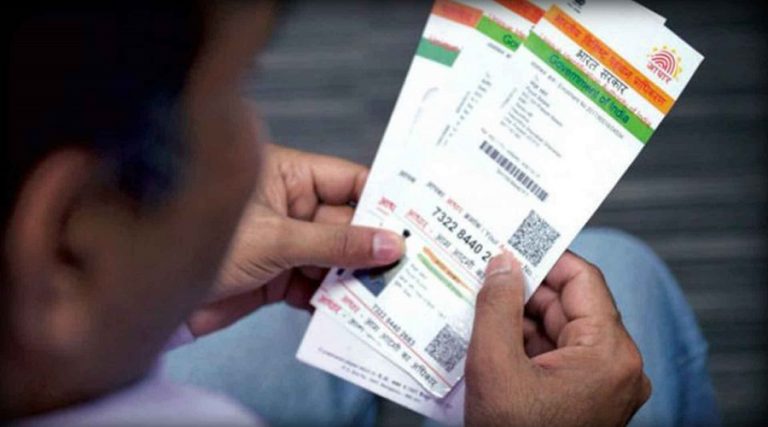
On 4th Jan, The Tribune published a story titled “Rs 500, 10 minutes, and you have access to billion Aadhaar details”. The story claimed that you can “purchase” a “service” being offered by anonymous sellers over WhatsApp that provides unrestricted access to all details of every Aadhaar number generated in India so far.

This is how it worked: the journalist anonymously contacted an Aadhaar agent who installed a software on her computer using “Team Viewer”, a remote desktop software. The journalist also received an username and password on her mail. And bingo, she had access to “all Aadhaar details”.

If true, this is a very serious security flaw. This should be brought to the authorities notice as soon as possible to fix the lapses before the data ends up in wrong hands. Also, the report suggests that the journalist was able to access the Aadhaar data using credentials generated specifically for her. Now this is pretty embarrassing.

Sensitive data should always be protected using multiple layers of security and not just a user id and password. This is a standard practice in banks where apart from the credentials, an employee has to punch his fingerprint to log in into the core banking system. What this means is, even if you get an SBI employee’s credentials and get access to SBI’s intranet, you still can’t log into the system unless you are an employee of SBI authorized to use the system you are trying to log into.

Systems that deal with sensitive data are always authenticated through multiple layers to ensure no foul play. To think that something like Aadhaar data, where security is being questioned day in and day out, will leave the security perimeter for the agents to just an user id and password. This is some serious lackadaisical approach from the authorities towards privacy & data security.

However, some of the claims of the news report is questionable. For example, the report then claims that, using this security vulnerability, one can get a SIM on someone else’s name or withdraw money from someone else’s account. Both these require biometrics and as per UIDAI claims, biometrics data was not breached, though it agrees that some details (non biometric) may have been exposed, which is a security flaw nonetheless.

UIDAI press note on the said security breach

UIDAI maintains that this is a case of “misuse” of the grievance redressal search facility provided to some designated personnels. Subsequently, on 4th Jan, UIDAI registered an FIR with cyber cell, Delhi Police in this matter, under Aadhaar act [pdf] 36 and 37 and other IPC sections which names Unknowns, Anil Kumar & Sunil Kumar (the people who installed the app on the journalist’s machine and gave her access privileges), Rachana Khaira (the journalist who installed the “app” and allegedly accessed UIDAI details) and Tribune newspaper. As law bound, UIDAI has disclosed all the details of the case that is known to it in the FIR. The FIR names everyone in the chain of events leading to commission of the crime.

Section 36 and 37 of the Aadhaar act

Everyone, who thinks this is an attack on press freedom, here are few submissions.

  • Some quarters in the press maintain that the people are actually whistleblowers who exposed the vulnerabilities in the system. However, Sunil Kumar and Anil Kumar (assumed names I believe) are not whistleblowers. They are authorised agents by UIADI, who have misused their access privileges to allow access to a 3rd party for exchange of money. This is not whistleblowing, this is rather monetising the known vulnerability of the system to their own benefit, without bringing it to authorities notice. Even if we consider them whistleblowers, there could be others like them (referred to as the ‘Unknowns’ in the FIR, I will presume) doing the same, whose actions need to be investigated to find out and address any misuse of data.
  • A reading of above mentioned sections of Aadhaar act clearly establishes that a crime has been committed. UIDAI neither has investigating nor prosecution power. The natural course of action demands an investigation for which FIR is the first step in the process. For the investigating agency to conduct a free and fair investigation, it is imperative for them to know the full details of the case. Hence, the FIR had to name all of them. Whether everyone is actually charged or not will be decided by the investigating team while filing chargesheet. However, a proper enquiry demands the journalist and her team to be questioned to understand the modus operandi and chain of events. Do the journalist fraternity expect UIDAI to partially report the crime so that a fellow journalist is not named? Won’t that jeopardise the investigation? As UIDAI rightly points out, if someone is named in the FIR, it doesn’t necessarily mean he is guilty or is being targeted. That will be decided only after police investigations are over.
  • At times, to unearth scams or expose vulnerabilities, occasionally law has to be bypassed. Sting operations where journalist try to offer bribe to govt officials are an example. Though bribing a govt official is a crime under PCA, this is done in larger public interest to expose the malaise. However, who gets to decide whether the wrong you committed to bring out the “bigger wrong” is actually in public interest? The honourable Supreme Court in Rajat Prasad vs C.B.I case makes it clear that, a crime does not stand obliterated or extinguished merely because its commission is claimed to be in public interest. It will depend on the facts and circumstance of the case. So, let the court decide on the public interest part.
SC judgement on Sting operation and criminality

While we all want the Aadhaar system to be foolproof, we also need people to be punished for misusing their privileges and violating Aadhaar act. So, before making a hue and cry about journalistic freedom being trampled, please go through the merits of the case and understand the intention of filing the FIR. Union Minister for Information Technology Ravi Shankar Prasad and UIDAI too have clarified that the FIR is not about prosecuting the journalist or the newspaper but to seek their assistance in nabbing real culprits.

We all want a foolproof resilient system and at the same time we also want the culprits to be brought to the book. One would expect the newspaper to cooperate with the authorities to nab the culprits and tighten the loose screws. That will be some public service, a cause you dedicate yourself to.

Weeks after Shehla Rashid bullied a Republic TV journo, another Republic TV journo heckled at Yuva Rally

0

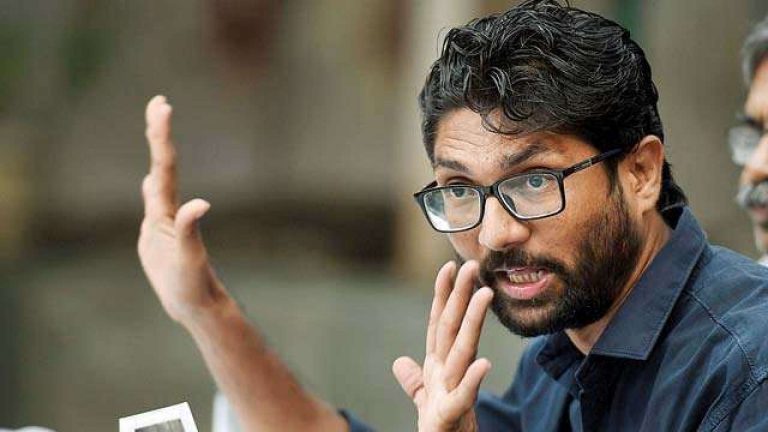
It’s amusing when the champions of freedom of speech and freedom of press are the first ones to cheer when a reporter from rival news channel with opposing views gets heckled by their clan masquerading as activists. Few days back, JNU Students’ Union President Mohit Pandey and ‘social activist’ Nadeem Khan heckled a Republic TV reporter, who was covering Jignesh Mevani’s press conference at the Press Club of India.

Many came out in support of Khan and Pandey, complimenting them for taunting a reporter who was just doing his job. Propagandist Kunal Kamra under the pretence of being a comedian, cheered the duo and mocked the reporter.


He then tried to normalise heckling by indulging in whataboutery.


Yesterday, after Jignesh Mevani’s flop ‘Yuva Hunkar Rally’, which was carried out despite refusal of permission by the Delhi Police, another Republic TV journalist was heckled and shown lewd gestures.


Shivani Gupta, a journalist with Republic TV was threatened with provocative and sexual gestures. And not surprisingly, there is radio silence from the champions of freedom of press. However, all hope is not lost. Support poured in from a few journalists who condemned such behaviour.


Some even came in support of Shivani, who stood her ground and didn’t let the bullies bring her down.


While many even questioned the silence of the prominent journalists.


Even the ones who called out Shehla Rashid who had bullied a Republic TV journalist in September, 2017, were silent.

Repeated intimidation of Republic TV reporters shows how thin skinned ‘liberals’ are

0

This happened again yesterday, a group of ‘liberals’ surrounding a Republic TV reporter, chanting slogans, intimidating her:


The journalist in question had gone to cover Jignesh Mevani’s “Yuva Hunkar Rally”. Now, the “yuva” of the country mostly stayed away from the so called rally, possibly because not everyone gets (nor wants) a lifetime scholarship from the government to study “Hindu Zionist fascism” or something. As such, the handful of career protesters at the venue were left to direct their “hunkaar” at Republic TV reporters.

By standards of Communist violence (mass murder of 400 lakh people), what Shivani Gupta faced is relatively little.

But incidents such as this are mounting in frequency, turning almost into a norm. The reporters of perceived right wing channels such as Republic TV, Times Now and Zee TV are being booed and intimidated and even physically harassed by ‘liberals’, sometimes even by members of the journalist fraternity.

Who can forget Mani Shankar Aiyar last month snatching the Republic TV mike and journalist Mausumi Singh of India Today backing him up.

[youtube https://www.youtube.com/watch?v=Ux2GeXLCTQE?version=3&rel=1&fs=1&autohide=2&showsearch=0&showinfo=1&iv_load_policy=1&wmode=transparent]

Incidents such as this, have brought to the fore the real truth about the liberals and their much vaunted “tolerance.”

The real truth is that liberals are extremely thin skinned. The mere existence of Republic TV and Times Now is driving them over the edge.

When was the last time you saw Modi supporters intimidate say an NDTV reporter the way Republic’s Shivani Gupta was treated at Jignesh Mevani’s rally yesterday. In case the left wingers haven’t noticed, the crowds at Narendra Modi’s Hunkar Rally in, say Patna in Oct 2013, were slightly bigger than Jignesh Mevani’s Hunkar rally.

I must mention here that I am in no way endorsing or suggesting that BJP supporters should go out and intimidate left wing journalists. I am merely acknowledging the obvious fact that we observe all around us. There are hundreds of BJP rallies drawing lakhs of supporters, but none of them is threatening or intimidating left wing journalists.

It simply doesn’t happen. The closest we have come is ONE instance with Rajdeep Sardesai in New York. And even there, it was Rajdeep who threw the first punch and got violent.

Meanwhile, Republic and Times Now reporters are facing threatening mobs of ‘liberals’ whenever they show up at an event with an opposing view. And this is not just coming from faceless mobs, it is coming right from top Congress leaders and journalists from other channels.

And ‘liberals’ come back home and brazenly celebrate their conduct:

This confirms what I have always suspected. Liberals may harangue you with their discourses on “tolerance” and allowing “dissent”, but there is nobody more thin skinned in the whole world than liberals themselves.

The reasons for this are simple. Contrary to what intellectuals want you to believe, a Hindu right winger learns tolerance as a way of life. As a child, he/she reads textbooks by Romila Thapar that belittle his culture in every way possible. On the 14th of November, all his friends must assemble in school to venerate Prime Minister Nehru, a ritual that would be considered horrifying and North Korea like if it had not become the norm over decades. One day, the child grows up and goes off to college where he/she meets more and more left wing professors.

As part of growing up, the person hears over and over again about the fascism of Hindus. Even though Hindus have never actually ruled India in the last 1000 years. Even though he sees temples all across his land that have been destroyed and desecrated by invaders, the apparent brutality of Hindu society is the only thing worth talking about. Even though the Professors who tell him that are Communists, fans of Stalin. So what if Stalin murdered 30 lakh people? But, Hindutva is ‘fascism’., of course!

The key here is that while the right winger may not agree with most of these views of the elite, he/she has no choice but to hear them every single day. Much like the blaring of Azaan from loudspeakers.

And thus, for the right winger, tolerance for opposing views becomes ingrained in their daily life in a way no liberal will ever understand.

Asking a Hindu right winger if he/she can tolerate opposing views is like asking a fish if it can “tolerate” the water it lives in. We grow up in it, we are constantly immersed in it, we have never known any state of existence other than constant immersion in a sea of left wing views.

The liberal leaning person has the exact opposite experience. Every school textbook, every college lecture, every newspaper column and every TV show has always told him that he is correct, that he is nothing but always correct all of the time. That anybody with an opposing view, if they exist at all, is either mentally retarded, of unsound mind or somebody with a diabolical agenda of destroying the world.

That’s why liberals have begun to act so crazy the moment they see a Republic TV reporter hanging around. Relax, liberals, it’s just a TV channel and the reporter is just a person. Believe me, he/she breathes in air just like you.

Liberals had gotten used to a monopoly in the intellectual space. Suddenly there is a right wing government with a Lok Sabha majority. With power behind them, suddenly there are all these new guys and girls in the media who have showed up with dissenting views.

It’s making liberal heads explode everywhere! A channel that can actually criticize Sonia Gandhi? WHAT!! No way! They never thought it was possible. And now that it’s become a reality, liberals are going absolutely nuts.

This is why I have always held that the best way to expose liberals in India is to get rid of every single law that restricts freedom of expression. Disband the censor board, repeal the laws against hurting religious sentiments, laws against defamation and the like.

There’s no downside here for right wingers. What new humiliation can possibly be heaped on Hindus? Our goddesses are drawn naked and they already chant Bharat ki barbaadi. If these laws go away, is there something new that the liberals can do that they haven’t already done before?

But the day we have real freedom of expression in India, I say with confidence that liberals will find it hard to live here. Can liberals live with cartoons of  “….. ” (you know who) ? Can they tolerate a Charlie Hebdo style takedown of their icons?

Of course not! Today a liberal can’t stop crying for a year if some anonymous trolls calls him/her a “presstitute” on Twitter. They rush to the police station to file a complaint. Have you seen how much liberals cry about an army of “Bhakts” mocking them on Twitter? All they have to do is press the Mute or Block button to make all the criticism go away. But the mere existence of criticism somewhere out there gets under their thin skins. I have two words for you: “Chaitanya Kunte.”

Ha! These snowflakes will melt under the heat of free expression.

Give us total freedom of expression and watch the masks of liberalism slip away. We will have liberals begging in the streets for a return of censorship.


In a big boost, World Bank claims India has enormous potential and projects a solid 7.3% growth in 2018

0

The World Bank has come out to be bullish about India’s economic prospects, after projecting that the nation will clock a GDP growth of 7.3% in 2018. It has claimed that having an ambitious government undertaking comprehensive reforms means that India has enormous potential, as compared to other emerging economies.

The world bank has continued its positive projection till 2020 by claiming that the country will grow at about 7.5% in the next two years. This projection was announced by the world bank in its 2018 Global Economics Prospect.

This outlook comes after India suffered disappointment in 2017 by growing at about 6.7% as a result of measures like Demonetisation, and the introduction of Goods and Services Tax (GST).

Ayhan Kose the Director of Development Prospects Group, World Bank claimed that rather than looking at the short term numbers, he would focus at the big picture which is telling him that India has enormous potential.

As per Kose, what also works in India’s favour is its demographic profile but India needs to improve the participation of its female labour force which still remains low as compared to other emerging economies. Plus reducing youth unemployment and pushing for private investment is critical.

This shot in the arm by World Bank comes in a series of validation which India has received from prominent foreign agencies.

Ratings agency Moody in November had upgraded Government of India’s local and foreign currency issuer ratings to Baa2 from Baa3 and changed the outlook on the rating to stable from positive. India’s short-term local currency rating was also upgraded from P-3 to P-2 by the ratings agency. With that, Moody had upgraded India’s rating for the first time since 2004.

Apart from that, we had reported in October how global financial luminaries had maintained a positive projection of India when various corners were signalling doom for the Indian economy.

These luminaries included, IMF chief Christine Lagarde, World Bank President Jim Yong Kim, Global financial services firm Morgan Stanley, Standard Chartered’s Regional CEO, ASEAN & South Asia and the European Commission.

Shia Wakf board chief claims that Madrassas are a breeding ground for terrorists

0

Wasim Rizvi, chief of the Shia Central Wakf Board, has stirred the hornets nest after imploring PM Modi to shut down Madrasas, whose education allegedly encourages students to become terrorists. He thus called for replacing Madrasas with schools affiliated to CBSE and ICSE, where Islamic education will be an optional subject. He also addressed a similar letter to Uttar Pradesh Chief Minister Yogi Adityanath.

To further his theory, he gave the example of West Bengal where he claims some Madrasas were giving training about how to make bombs. He also called the Madrasas a ‘curse’ and claimed that they created an Islamic atmosphere which influenced the students’ mind towards fundamentalism and terrorism.

Rizvi also claimed that most Madrasas in the country aren’t recognised and students studying there, gyrate towards unemployment. He also wrote to all the District Magistrates, Superintendent of Police and managers of Shia Wakf properties, asking that all unregistered madrasas be removed from Shia lands by 31st January.

Regardless of Rizvi’s allegations it has been noted that Madrasa in the country have been involved in serious controversies in the past.

We had reported how the UP police had raided a Lucknow madrasa where girls were allegedly held hostage and molested by the Madrasa’s manager. A total of 51 girls were rescued by the police during the raid and the manager was also arrested.

Also the Shia Wakf board in recent times has become synonymous with taking a ‘politically incorrect’ stance when it comes to Muslim related matters.

The board had called for the construction of a Ram temple on the Ram Janmabhoomi and had proposed the setting up of a mosque in a Muslim dominated area, at a reasonable distance from Lord Ram’s birth place.

It has since then modified its request by proposing an out of court settlement where a Ram Mandir is built in Ayodhya and the Masjid in-turn is built in Lucknow, for which the state government can allot 1 acre of land in the city’s Husainabad area, away from the religious territory of the Hindus (sic).

It had also decided to donate 10 silver arrows for the quiver of lord Ram’s upcoming statue in Ayodhya.

We had also reported how the board had called for a ban on triple talaq and had issued a fatwa against cow slaughter.

Senior journalists accompanying Mamata Banerjee to London fined £50 for stealing cutlery

0

In a major embarrassment for the West Bengal government and to India, senior journalists who were accompanying West Bengal Chief Minister Mamata Banerjee on a tour to London, were caught stealing cutlery in a luxury hotel. Caught live on CCTV camera, the hotel staff was perplexed as they saw the live footage of the journalists accompanying an elected representative from India who were attending an official dinner, stealthily stuff the silverware from the table and putting into their bags and purses. Other prominent citizens from India and the UK, including politicians, journalists and industrialists were also present during the dinner.

The Indian journalists, who were caught stealing the cutlery, were reportedly handpicked by the organizers. As per reports, one of the first things to be flicked off the table was a dessert spoon by a very prominent senior journalist, a reporter with a respected Bengali newspaper. The said reporter, whose name could not be confirmed, is reportedly a regular on Banerjee’s tours. Following the senior journalist’s footsteps, many other journalists then tried to flick the silverware off their tables, without realising their act was being caught on camera. A Bengali reporter, commenting on the embarrassing act by the journalists, took a dig at Mamata Banerjee and said that they must have thought the cameras were not working, as often that is the case with Bengal.

After much deliberations, the hotel security staff decided to confront the journalists and inform them that their act was caught on camera and that they must return the cutlery. While most returned the items they had stolen, one journalist even refused to accept that he had stolen anything and even dared to ask the hotel staff to check his pockets. What he didn’t realise is that while he stole the goodies from the table and stuffed his colleague’s bag with it, hoping to pin the blame on him in case he gets caught, the entire thing was caught on camera.

That was when the hotel staff put their foot down and threatened him that they will report the crime to police. The journalist then confessed to flicking the cutlery and he was eventually let off after he was asked to pay a fine of 50 pounds. It is reported that the said journalist has a history of flicking silverware and other goodies from the hotel. Without naming him, the reports say that he is a son of a well known Bengali author who has no merit as a journalist and used his father’s connections to land in the job.

Meanwhile, Twitter was abuzz with people mocking the journalists.


Some even speculated the names of the journalists who were caught in the act (no pun intended).


The names first appeared in a report published in ABP Bangla, which has now mysteriously disappeared.


Considering their ingenuity, one wishes they’d have tried to bring back the Kohinoor instead.

Kin claims ‘missing’ roommate of AMU-scholar-turned-terrorist is not missing at all

0

On Monday we had reported how Mannan Wani, a ‘research scholar’ from Aligarh Muslim University (AMU), hailing from Kupwara in Jammu & Kashmir has allegedly gone on to join terrorist organization Hizbul Mujahideen. In a photograph that went viral on social media, Wani was holding a gun, displayed a message that ‘Mannan Wani, son of Bashir Ahmed Wani, joined Mujahideen on January 5’. Hizbul later is reported to have ‘confirmed‘ Wani joining them.

Wani at AMU was pursuing a PhD in ‘Structural and Geo-Morphological Study of Lolab Valley, Kashmir’. But he since then has decided to break the structures of Kashmir by joining the Mujahideen, and has even been compared to slain Hizbul commander Burhan Wani.

After the whole story blew up, the AMU administration proceeded to expel him. The Uttar Pradesh police conducted raids in the campus and it is believed that suspicious material has been found from in Wani’s room. The recovered materials include books, photocopies, and pen drives. The AMU administration in its capacity has launched an inquiry in this matter and has also proceeded to tighten the security its hostels.

Following this development, Times of India reported that Wani’s roommate had also gone missing and the said roommate was now being investigated. Times of India had also named the roommate. At least four other mainstream media organizations — Financial Express, NewsX, ABP News, and Firstpost — also published this report and name of the allegedly missing roommate with ABP putting the name of the ‘missing roommate’ in the headline. Times of India later removed the name while other media organizations were still carrying his name at the time we updated this report.

After the same information was put up by us at OpIndia.com, we got a message from a person introducing himself as the brother of the ‘missing roommate’ for a clarification. The person requested us to remove the name of the brother as this whole information about him “missing” after Wani joined Hizbul Mujahideen was false.

The person told us that his brother named in media reports was indeed Wani’s roommate for approximately 10 months during 2015-2016, but he left AMU way back in September 2016 itself. His brother i.e. the ‘missing roommate’ was called up for a job at a reputed corporation in Maharashtra. At which point, he discontinued his PhD and chose to go for the job. His brother told us that he joined his job on October in 2016.

The person, requesting us to remove his brother’s name from our report, further told us that his brother had not travelled to Aligarh much after having left the AMU campus. He said that his brother’s name being mentioned in such media reports would jeopardize his career as he will be seen as a terror suspect.

Although the media report quote police officers about the roommate being missing, we believe that it could as well be a case of communication gap between the student and AMU, where the records of the university still show him a student at the university while in reality the student has dropped out of the course.

In wake of this, we are removing the name of the ‘missing roommate’ in deference to the family’s request (an earlier version of this report by us had his name mentioned, as carried by other media houses) and hope that the university and the police can officially clarify that the said roommate is innocent and not under radar for any investigations.

Poor turnout at Jignesh Mevani’s ‘Yuva Hunkaar Rally’ leaves people in splits

0

Controversial Gujarat MLA Jignesh Mevani, has in a very short amount of time managed to be in the news for all the wrong reasons.

First he was captured on national television making derogatory statements against PM Modi. Soon after that he decided to attend the 200th celebration of a British victory over Peshwas. There as per Republic TV, he was seen inciting people by calling them to participate in street fights.

Possibly to maintain his ‘momentum of errors’ he decided to participate in a “Yuva Hunkaar Rally” in Delhi along with other leftists like freelance protesters Shehla Rashid and Kanhaiya Kumar.

This rally was shrouded in controversy even before it had begun, with the Delhi police exposing the lies of leftists over the granting of permission for the rally. This tug of war between the police and the leftists meant that the rally kept getting a lot of publicity, thereby opening the possibility of it drawing a heavy crowd.

Things though turned out to be the opposite, and as per a variety of reports, the gathering turned out to be a sombre affair.

According to various journalists who shared their observations on Twitter, barely 200 people turned up at the event, while the total expected crowd was about 5000. Sensing the lack of response, the Delhi police decided to relax its security measures and withdrew 80% of its forces.

The people who had managed to turn up, kept leaving the venue even before the so called star speakers like Jignesh Mevani and Kanhaiya Kumar had made their speeches. Things were so bad that reports claimed that there were more media persons and police personnel than the actual attendees of the rally.

These are some of the pictures from the rally:

Image via ANI
Image via Zafar Abbas

Things were so laid back that even journalists covering the event decided to rest in the afternoon sun, which provided a welcome relief from the bitter cold which has engulfed the national capital:


This poor show by Mevani and co, gave twitter users a chance to start cracking jokes:


It remains to be seen as to what excuses do the leftists come up with for the low voter turnout, and whether they somehow manage to link it to the Modi government.

With inputs from @attomeybharti

Don’t worry NYT, our Economy is doing way better than your failing editorial standards

0

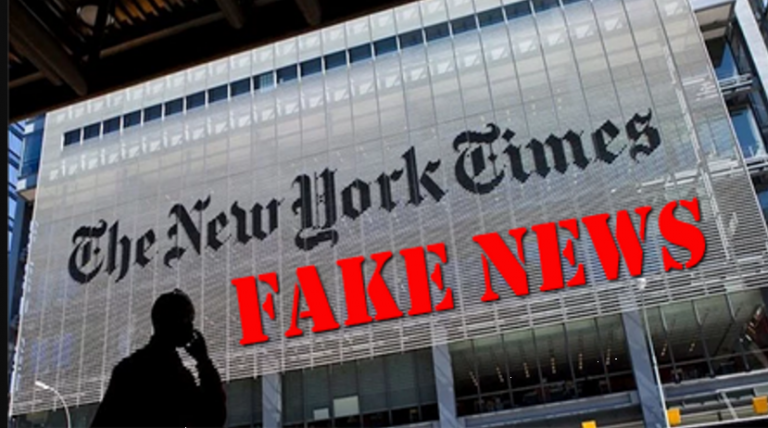
This seems to be the season of predicting how India is doomed to fail in 2018. Earlier this month, controversial historian Ramachandra Guha made a similar prediction. The New York Times did not want to be seen as falling behind in joining this bandwagon, so they came up a longish article titled– “India’s Economic Woes Are Piercing Modi’s Aura of Invulnerability”

And one of their first analysis is the following:

“Just about all economists agree that two of the prime minister’s biggest policy gambles — abruptly voiding most of the nation’s currency and then, less than a year later, imposing a sweeping new sales tax — have slowed India’s meteoric growth.”

Read the last line again – “Imposing a sweeping new sales tax”! First of all, GST is not a sales tax. GST stands for Goods and Services Tax. It is baffling how the New York Times could merrily classify this as a sales tax.

Second of all, this “new sales tax” was never “imposed”. This has been decided and implemented by the GST Council – which includes governments of all states and the central government. And therefore, by extension, includes almost all major political parties in India (In this context, unfortunately I have to bracket AAP also as a major party).  A total of 23 meetings of the council have happened so far. All decisions of the meetings have been unanimous. Yes, unanimous. And yet miraculously, the New York Times wants to call this as an “imposition”.

The typical sweeping generalization has been the hallmark of the liberal gang from a long time. NYT attributes the observations to “Just about all economists”. Now, what kind of quantification is this? Just so that we don’t have to worry too much about this quantification, the NYT provides us an answer in the very next paragraph:

“Things have been worsening, worsening, worsening,” said Himanshu, an economics professor at Jawaharlal Nehru University in New Delhi, who uses only one name.”

There you go. The professor who uses only one name is our data point. The professor from the nearest accessible university, JNU, is our data point to arrive at the conclusion that a “sweeping sales tax” has been “imposed” on the country! And before we forget, “things are worsening, worsening, worsening”.

The next paragraph is even more baffling. Because one would expect a follow up to how “things are worsening, worsening, worsening”.

“Still, the economy here is far from failing. The stock market continues to soar, major rail, road and port projects are unfolding across the country, and foreign investors poured $25.4 billion into India from April to September, up 17 percent from the period in 2016.

The government on Friday predicted that the country’s gross domestic product would grow by 6.5 percent in the 2017-18 financial year. While that is the lowest number the country has seen in four years, India’s economy is one that most countries would love to have.”

Now I am slightly flummoxed. Is our economy doing terrible or well? If “India’s economy is one that most countries would love to have”, then why this scaremongering of “economic woes”. If the “economic woes” are indeed worse and real, then why would most countries “love to have” our economy?!

Unsure of how to continue the article further, the NYT immediately falls back on another standard argument.

“But it does not feel that way to the huge number of Indians negatively affected by Mr. Modi’s policies, and the grumbles are growing. So are social tensions, especially those that divide Hindus from Muslims, and upper caste from lower caste.”

Again, no quantification on “Huge number of Indians”. A mere opinion, perhaps based on interactions with some JNU students? So they move to their next best bet – the Gujarat elections!

“Even in Gujarat, the state considered the strongest of Mr. Modi’s strongholds, where people have been cheering his rise for the past 20 years and line up in dusty fields by the thousands just to catch a glimpse of his saffron scarf and groomed white beard, many feel betrayed.”

I often wonder the need for so much prose, when things can be told in simple terms too! But then we digress. Here’s more:

“In December, in an election that the entire country was watching because it was seen as a referendum on Mr. Modi’s governance, Gujarati voters elected a new State Assembly. Mr. Modi’s party maintained its majority but lost 16 seats.”

No mention of the victory in Himachal. Or of the 49% vote garnered. Or of the fact that a majority was “maintained” even after being in power for 22 years. A couple of responses by those who were not happy with Modi were printed; some examples from Surat were given but no mention was made of the fact that the BJP swept the elections in Surat. The piece then enters the GST territory (and here the correct abbreviation is given!), and the all too familiar complaints are again repeated. Yet no mention of the facts that many of these complaints (rate changes, process headaches, GSTN etc) were acted upon; many of the suggestions were incorporated; and the feedback process is robust and continuous (Details of all GST council meetings can be found here).

The article ended as pompously as it started.

“If economic maneuverability is limited,” said Ashutosh Varshney, a political-science professor and India specialist at Brown University, “then the communal card, the Hindu-Muslim card, is a massive political temptation.”

What or who exactly is a “India specialist”. Is that even a title? But hold on though, because in the next para, NYT gives an even better title to Pakistan.

“One example was Mr. Modi’s accusations that opposition leaders were in cahoots with Pakistan, India’s rival and a nation with a strong Islamic identity, after some opposition leaders met some Pakistani officials at a recent social event.”

Oh boy – Pakistan is merely a “nation with a strong Islamic Identity” it seems. Perhaps they should rename their country to “Strong Islamic Republic of Pakistan” then?

Is this rebuttal trying to deny the fact that there are no problems with the economy? Of course not! Which economy does not have a problem? Certain indices have gone down and certain indices have gone up (for example, as indicated in the NYT article itself!) – if I write a glowing article based on only the many rising indices not mentioned in the NYT article too, the liberal cabal will pounce on me saying that I am repeating the “India Shining” campaign.

The dip in the GDP growth rate is real. No one, including the Prime Minister, has denied this fact. The outlook of growth is also real. Something that doomsayers wouldn’t like to acknowledge. One of the doomsayers is a deputy editor of The Hindu and his lies have been exposed before. In 2008, the GDP growth rate fell down to 3.9% – do you folks recollect so much of negativity floating around. In 2012, GDP was 5.5% (fell from 10% in 2010) – do you folks recollect so much of negativity then?

It is one thing to express concern regarding setbacks and giving relevant feedback. It is a totally different thing to predict gloom and doom for the country, based on limited understanding and worse, lies.