Home Blog Page 91

The Kerala Story 2 narrates stories of Love Jihad from three different states, read why every Hindu parent should watch this film

“The Kerala Story 2: Goes Beyond” is no longer an ordinary movie. The questions it raises make it worth watching. The movie’s director, Kamakhya Narayan Singh, and producer, Vipul Amrutlal Shah, have successfully portrayed the social and ideological implications of the problem of Love Jihad, which has plagued the country.

3 states-3 stories

The movie tells the stories of three girls from three different parts of the country. These stories expose how these Hindu girls are emotionally and socially exploited, labelled and pushed into a dark abyss because of their Hindu identity.

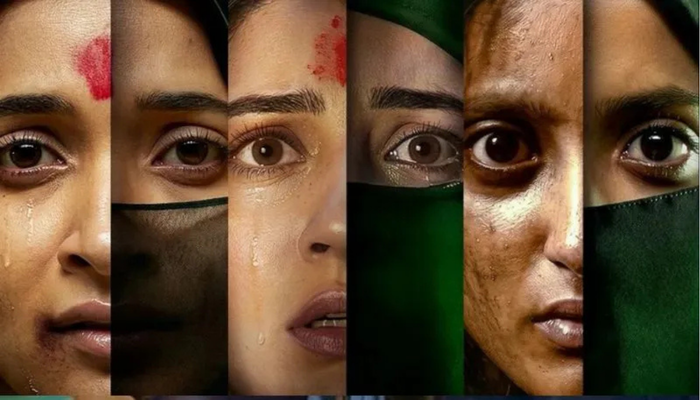
The pre-release promo videos showed three Hindu girls, Divya Paliwal from Rajasthan, Surekha Nair from Kerala, and Neha Sant from Madhya Pradesh as the victims. These three characters have been immaculately played by Ulka Gupta, Aishwarya Ojha, and Aditi Bhatia, respectively. The movie is Aditi Bhatia’s big-screen debut.

Character and acting

Surekha’s story demonstrates that education alone isn’t enough to protect Hindu girls against such heretics. Neha Sant’s story shows that even if you love your religion, you can still be ensnared by lies. Similarly, Divya Paliwal’s story teaches how young girls are brainwashed and trapped.

The three actresses portray Divya, Surekha, and Neha effectively. As a viewer, you see how a Love Jihad victim is ensnared and brainwashed through various stages.

Highlights of the film and news reports

The special feature of “The Kerala Story 2: Goes Beyond,” which follows “The Kerala Story,” is that its story isn’t limited to a single state, but connects with incidents of Love Jihad emerging from various parts of the country. It also depicts the plight of victims who have now come forward to share how their lives were ruined, how they were tortured to convert, and how they were forced to eat beef.

As a parent, some scenes may disturb you, but this discomfort will be less than the pain that a parent feels after losing a daughter or seeing the inhuman incidents that happened to them.

After many heartbreaking scenes, the final scenes may leave viewers feeling a little satisfied. The final scenes show a song “Har Har Shambhu” playing in the background, Manoj Muntashir’s voice echoing with warnings, and a bulldozer and police in action.

What is special about the film

The movie’s songs and the background music reinforce the suffering of the victims and the impact and emotion of each scene. While some transitions from one scene to another may seem abrupt, these are what keep the audience engaged. The cross-cutting technique has been used to connect the three different stories, allowing the entire film to move forward in a smooth flow.

In addition to that, the film’s dialogues are exceptional and impactful, which compels the viewers to reflect deeply on many issues. These dialogues can’t be called overly dramatic, as they define current events. For example,

‘These infidel Hindus are dying to be called secular’
while Our people are spreading love everywhere in the country’
There are no atheists among us, only you infidels are atheists’ ‘
6 months of love outweighed years of love and care’
‘You will thank me on the day of doom’
‘don’t you trust me, baby?.’

Why watch this movie

The film is being opposed by those who have turned a blind eye to the bitter reality of the evil of Love Jihad in society. However, if you ever think about the suffering of victims in the news, then you should definitely watch the film.

Watch it to develop an understanding of how to raise your daughters with awareness. From the movie, you can learn how to protect them from heretical elements. It is for you to decide whether you want to live under the illusion of secularism or accept the harsh reality of being a Hindu.

It’s worth noting that a petition was filed in the Kerala High Court against the film, which subsequently blocked its release. However, on Friday (February 27, 2026), the Kerala High Court lifted the ban, and the film is now releasing nationwide as scheduled.

(The article is a translation of the original article published at OpIndia Hindi.)

As PM Modi launches nationwide HPV vaccination drive, rampant fear-mongering and anti-vaccine misinformation fill social media: Read the truth

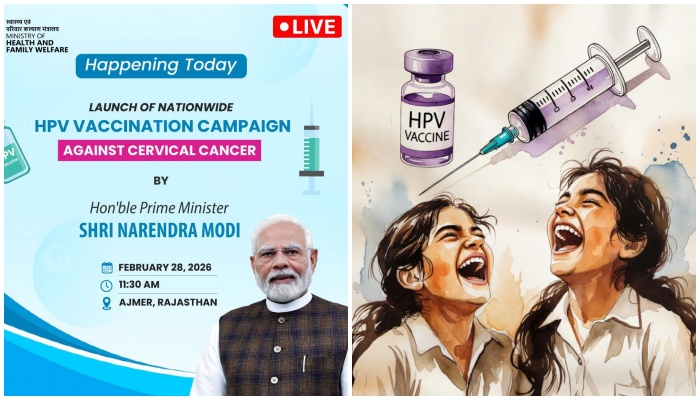
PM Modi is launching the nation-wide HPV vaccination program for teenage girls at an event today, on February 28, in Ajmer, Rajasthan. The campaign presents a landmark initiative by India’s Ministry of Health and Family Welfare (MoHFW) to combat cervical cancer through prevention.

Cervical cancer, primarily caused by persistent infection with high-risk Human Papillomavirus (HPV) strains, remains one of the leading cancers among women in India. The campaign by the government of India focuses on vaccinating young girls, specifically targeting 14-year-olds, to provide early and effective protection before potential exposure to the virus. 

The nationwide rollout aims to significantly reduce cervical cancer incidence by promoting widespread HPV vaccination, building on global evidence that HPV vaccines are safe and highly effective in preventing infection and related cancers when administered prior to the years where young girls might be exposed to sexual contact, thereby running the risk of contracting the Human Papiloma Virus. 

It is notable here that with today’s launch, India will join over 160 countries that have introduced HPV vaccination into their immunisation schedules. More than 90 countries are implementing single-dose HPV vaccination schedules, improving coverage, affordability, and programme efficiency.

Rampant social media misinformation against the HPV vaccination drive

While the nation-wide launch of the immunisation campaign has garnered praise and support from the medical community, there is a significant level of misinformation and negative campaigning on social media, wherein people are suggesting that the vaccine might be unsafe, that it ‘is a project by evil Bill Gates’ or that the government is somehow putting young girls under risk by launching a vaccination campaign.

A lot of these claims against the HPV vaccination drive are the result of common myths and superstitions, aided by modern conspiracy theories. There are educated, privileged social media users who have been spreading misinformation against the vaccination drive and trying to peddle fear by using unrelated claims, half-baked theories and a lot of general misinformation.

Let’s break down some of these false claims and get some clarity about the vaccines 

A number of social media handles have cited media reports and claims regarding a study conducted in India that involved two different vaccines, Gardasil, manufactured by Merck/MSD, and Cervarix, manufactured by GlaxoSmithKline/GSK. The study was a larger demonstration project, not strictly a “clinical trial”, because the traditional clinical trials of both the above-mentioned vaccines were already over by then. 

Point to be noted here that both Gardasil and Cervarix were already licensed, and commercially available in India since 2008. The PATH study was done to test large-scale adminstration and preparedness for borader population groups, for potential nationwide roll outs at a later stage. 

The study was conducted by PATH (Program for Appropriate Technology in Health), in collaboration with the Indian government, the State governments of Andhra Pradesh and Gujarat, and the Indian Council of Medical Research between 2009 and 2010. The vaccine doses of both Gardasil and Cervarix were donated by the respective manufacturers. 

The PATH study, starting around 2009, aimed to assess feasibility, acceptability, coverage, and implementation of HPV vaccination strategies for potential future inclusion in public immunization programs. 

In Andhra Pradesh, approximately 14,000 girls under the 10-14 age group received the Gardasil vaccine manufactured by Merck. 

In Gujarat, approximately 16,000 girls in the same age group received Cervarix manufactured by GSK. 

Following the study, there was some opposition, fuelled by similar anti-vaccine sentiments, activism, human rights, women rights groups and political support to such sentiments, driven by contemporary politics and some public concerns. The main objections raised was on the ‘ethical’ aspects of these studies, because there were some aspects of “improper” way of obtaining consent forms. In some places, school headmasters, or hostel wardens had signed the consent forms, while ideally it should have been parents.

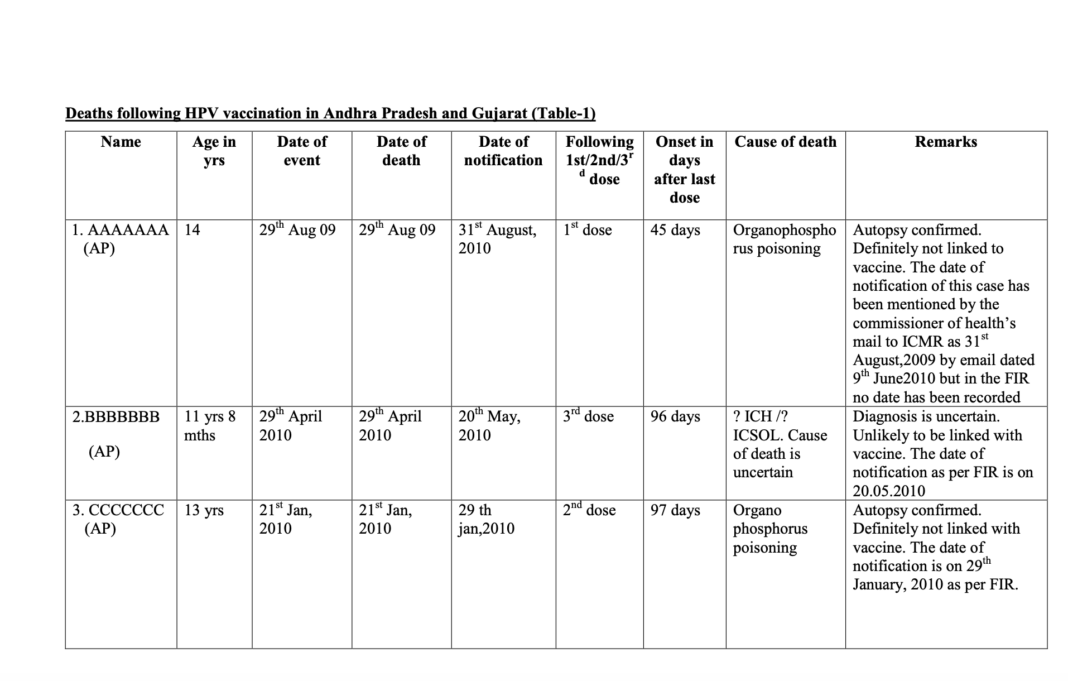
There was also some nationalistic sentiments attached, because the governments, Central and State governments both, were accused of ‘collaborating’ with foreign companies and organisations to hand over crucial health data. The negative sentiments were fuelled further when activists highlighted that 7 girls, two in Gujarat and 5 in Andhra Pradesh have died following the HPV vaccination.

The news and furore around the deaths caused further political noise. An all Parliamentary Standing Committee on Health and Family Welfare (72nd Report) harshly criticized PATH, ICMR, and the Drugs Controller General of India (DCGI). It accused PATH of acting as a “willing tool” for foreign vaccine manufacturers (Merck and GSK) to push inclusion in India’s Universal Immunization Programme (UIP) for commercial gain, rather than genuine public health aims.

The reality behind the claims of “deaths after vaccination”

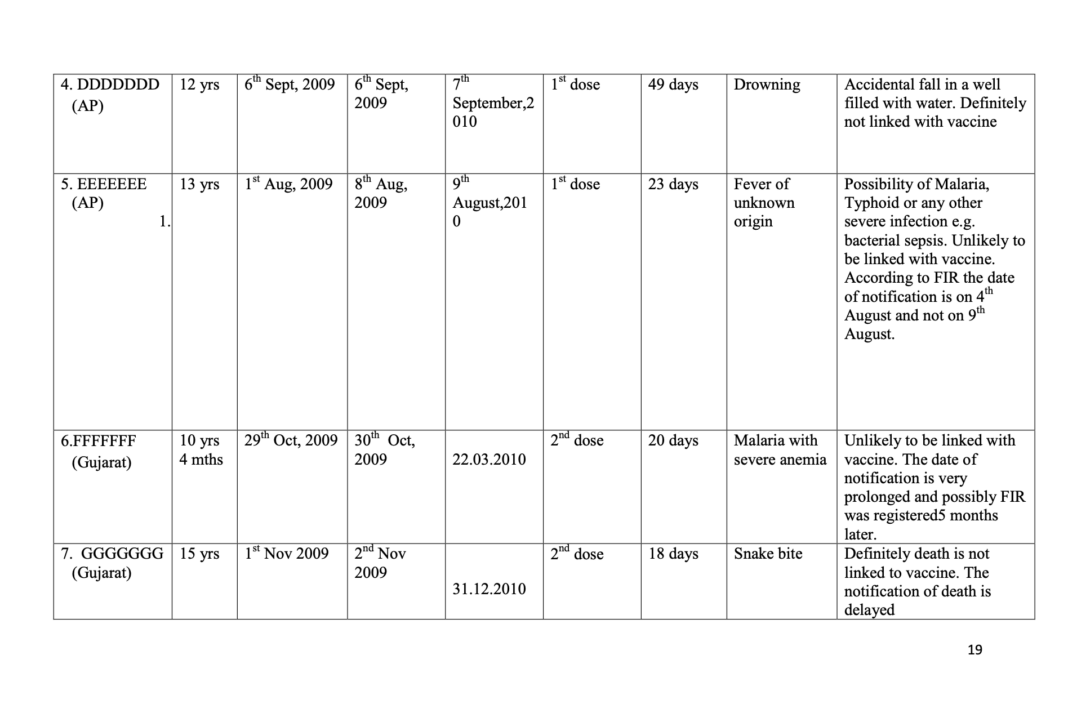
ICMR took the allegations of deaths seriously, and a detailed investigation was launched to examine the claims. In 2011, ICMR submitted its final report. The final report examined the autopsies, health records, local data and timelines of each death. The result? None of the 7 deaths was found to be linked to or caused by vaccines in any way.

In Andhra Pradesh, the causes of deaths found were Organophosphorus poisoning (possible pesticide consumption by a 14-year-old girl), another similar case of suspected pesticide consumption by a 13-year-old girl, one case where the exact medical diagnosis was uncertain but unlikely to be caused by vaccine, a case of accidental drowning of a 14-year-old girl, a case of malaria and typhoid.

In Gujarat, where Cervarix was administered, one death was caused by snakebite, and another was due to malaria and severe anaemia.

ICMR investigation into PATH study of HPV vaccination in Gujarat and AP

Claims of ‘ethical lapses’ may have been valid, but that does not mean the vaccines were dangerous or ineffective

It is notable here that the 2013 Parliamentary committee report did raise significant concerns and criticised the governments for the lapses, but that does not mean that the vaccines are ineffective or ‘dangerous.’

Here is why.

  • An extensive study by ICMR, as cited above, found no correlation between the vaccines and deaths. Blanket labelling the vaccines as ‘dangerous’ because of certain ‘ethical’ or procedural irregularities flagged in a study that involved 30,000 recipients and hundreds of health workers, NGO workers and staff across two states does not make a scientific, logical argument.
  • Global and Indian data at the time (and since then) has showed HPV vaccines had strong safety profiles, with no causal deaths linked anywhere.
  • The parliamentary report itself has been critiqued by experts (for example, The Lancet Oncology) for ignoring extensive pre-existing evidence on HPV vaccine safety and efficacy from clinical trials and post-licensure surveillance.
  • Over 15+ years and hundreds of millions of doses worldwide of HPV vaccines like Gardasil have demonstrated high efficacy (93–100% against targeted HPV types causing most cervical cancers.
  • The vaccine has a an excellent safety record, with mostly mild side effects (like injection-site pain) and rare serious events.

Why is the current nationwide campaign using Gardasil, manufactured by Merck?

Some might ask: while the PATH study tested both Gardasil and Cervarix, why is the current Government program launched nationwide using Gardasil exclusively? Here are the main reasons.

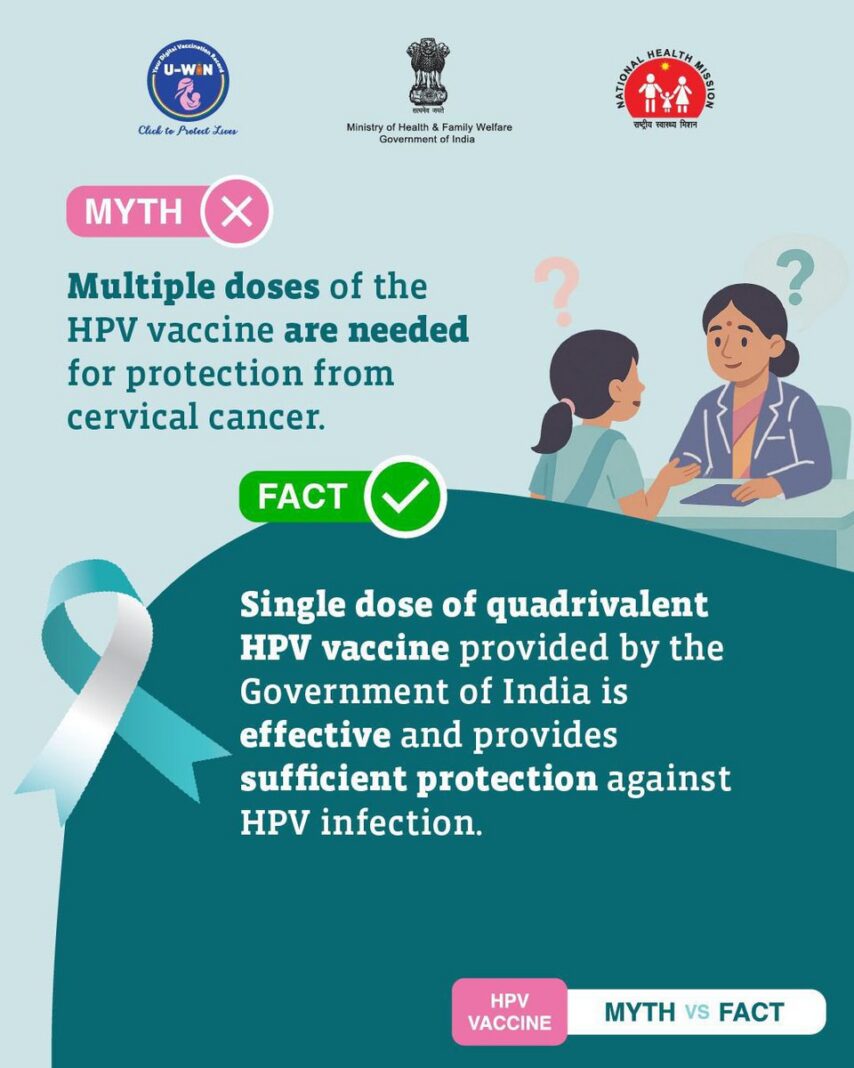
Gardasil needs only a single dose, in contrast to GSK’s Cervarix, which needs multiple doses. The single-dose efficacy is well-established, with multiple WHO studies and has a proven record after over a decade of usage globally. Gardasil has been extensively studied and administered in over 500 million doses worldwide since 2006, with a well-established safety profile and proven impact in reducing HPV infections. 

The government of India has secured Gardasil supplies through a transparent, globally supported mechanism in partnership with GAVI, the Vaccine Alliance, ensuring uninterrupted, quality-assured doses with cold-chain integrity and adequate storage facilities across the nation.

There is a Made In India HPV vaccine coming too, currently being studied

It is notable here that India already has options in the pipeline when it comes to large-scale immunisation against HPV. Serum Institute of India has developed Cervavac, another quadrivalent HPV vaccine. The vaccine has already cleared trials and is commercially available since 2023. However, it is yet to be inducted into the nation-wide immunisation program because Cervavac also needs two doses. The ICMR is conducting an immunobridging study comparing single-dose Cervavac to Gardasil for non-inferiority.

When Cervavac clears that study, it is likely to be included in the government’s campaign too. Cervavac is significantly cheaper and produced domestically by the Serum Institute of India, in contrast to Gardasil, which has to be imported. It is notable here that NTAGI has already approved Cervavac for NIP inclusion (initially as a two-dose regimen), and the Health Ministry and parliamentary panels have urged fast-tracking indigenous vaccines like Cervavac for broader UIP rollout.

Why is vaccine misinformation and fear-mongering dangerous to society?

HPV causes nearly all cervical cancers, plus many cases of anal, penile, vulvar, vaginal, and oropharyngeal cancers, as well as genital warts. India sees over 120,000 new cervical cancer cases and ~80,000 deaths annually, making prevention via vaccination a high-stakes priority.

Misinformed, half-baked and unscientific social media claims spread fear and make parents hesitant, leaving children vulnerable to preventable diseases. Usually, myths and misinformation spread fastest in vulnerable groups, the poor and uneducated families, where young girls might have a chance to stay immune to cervical cancer, are the ones most likely to suffer the worst outcomes. An affluent family can change its mind at any time and get a commercially available vaccine for their daughter. But if girls from poor families miss out on the free vaccine doses given in the nationwide campaign, they are unlikely to get it again. 

Are the general negative sentiments against Bill Gates working to fuel the anti-HPV vaccination drive?

Billionaire philanthropist Bill Gates, who started the Bill and Melinda Gates Foundation, has been receiving a lot of flak recently over his links with convicted sex offender Jeffrey Epstein. The amplified anti-Bill Gates sentiments are, in a way, fuelling the global anti-vaxxer narratives, aided by conspiracy theorists who use the Epstein link to vilify Gates, and use that link to portray the overall healthcare initiatives by the Bill and Melinda Gates Foundation as some sort of sinister global corporate project.

The Bill and Melinda Gates Foundation plays a crucial role in global vaccination efforts. It provided the initial USD 750 million funding to launch GAVI with the support of WHO, UNICEF and World Bank in 1999-2000. Total contribution to GAVI by the Foundation has exceeded USD 7.7 billion so far, as per some reports. GAVI is a noble global stand against preventable diseases that has vaccinated over 1.2 billion children globally, preventing over 20 million deaths. BMGF also supports research and development, supply, pricing and procurement efforts to enable poor nations to access vaccines.

The personal life and professional conduct of Bill Gates are indeed under scrutiny over Epstein links. But that does not mean that governments across the world and organisations like GAVI, which have been saving millions of lives globally through extensive vaccination drives, will condemn teenage girls across 160 nations to uncertain dangers through some sinister vaccination agenda. Vaccines go through extensive studies, safety trials and research before they are made available to the public. The robust scientific record of HPV vaccinations and their potential efficacy against a preventable cancer should not be ignored for the sake of some unverified and unscientific conspiracy theories.

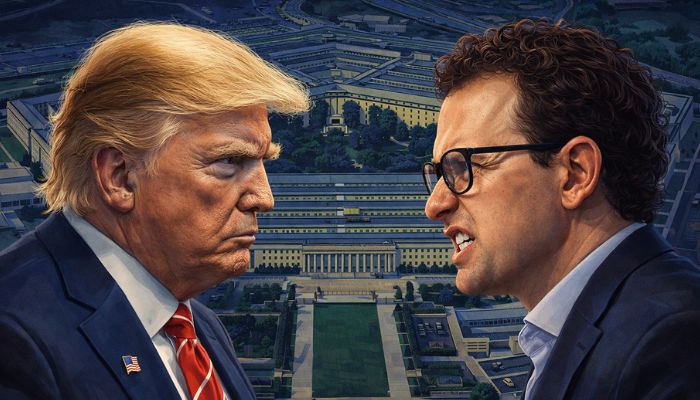
How Trump administration is crushing Anthropic after it refused unrestricted military usage of AI

A public showdown between the Trump administration and Anthropic, maker of the Claude AI model, has escalated into a sweeping federal ban, a Pentagon blacklist and a state based squeeze that appears to be designed to force the company to abandon its safety restrictions.

On 27th February, the President of the United States, Donald Trump, announced a ban on Anthropic in a long social media post on Truth Social in which he called the company a threat to national security. His stand was followed by Secretary of War Pete Hegseth in his social media post. Both the leaders framed the restrictions imposed by Anthropic as an unacceptable attempt by a private company to dictate how America fights wars.

The dispute between the White House and Anthropic is not about whether Anthropic should work with the US military. According to the company’s statement, it already does on an extensive level. The fight is about whether the US military should get access with no guardrails at all, which includes mass domestic surveillance and fully autonomous weapons that remove humans from the loop.

Anthropic says those two use cases are dangerous, incompatible with democratic values and beyond what today’s AI can safely deliver. However, the US President does not agree with the company’s stand.

What triggered the standoff

Chief executive of Anthropic, Dario Amodei, said in a statement that Claude is already deployed across the Department of War and other national security agencies for mission critical work that includes intelligence analysis, modelling and simulation, operational planning and cyber operations.

He further claimed that Anthropic has taken national security aligned decisions that hurt its own revenues, including cutting off use by firms linked to the Chinese Communist Party and supporting stronger chip export controls.

Despite that, the Department of War demanded that Anthropic remove safeguards and accept a broad standard that would permit “any lawful use”. Hegseth articulated that the administration’s position is that suppliers cannot impose operational terms, and that “lawful” national security needs should be the only boundary.

Anthropic’s red lines, mass surveillance and all AI weapons

What Amodei said in his statement draws a sharp line around two categories. The first is mass domestic surveillance. Anthropic says AI driven surveillance at scale creates novel risks to fundamental liberties. It argues that the law has not caught up with AI’s ability to stitch together scattered, individually innocuous data into an intimate, comprehensive picture of a person’s life, automatically and at massive scale. In short, it fears an internal dragnet made dramatically more powerful by frontier models.

Internal dragnet can be defined as a wide, sweeping surveillance net aimed inward at a country’s own people, not foreign targets. In this context, it implies the state using powerful tools like AI to collect, combine and analyse massive amounts of data about citizens at scale to map their movements, contacts, behaviour and associations, often without individualised suspicion. To understand it in simple terms, think of it as a fishing net thrown over the whole population, rather than a targeted investigation.

The second is fully autonomous weapons, systems that select and engage targets without human involvement. Anthropic says today’s frontier AI is not reliable enough to power such weapons safely. Furthermore, without proper oversight, these systems cannot be trusted to exercise the judgement that trained troops apply. Anthropic, reportedly, has offered to work on research and development to improve reliability but that offer was rejected by the government.

The company’s position is not that autonomous capabilities will never be needed. It is that the technology and the oversight structures are not there yet, and the costs of being wrong are catastrophic.

Trump’s order, immediate halt and a six month phase out

After the Pentagon deadline passed, Trump posted on Truth Social ordering every federal agency to immediately cease all use of Anthropic’s technology. The order included a six month phase out for the Department of War and other agencies where Anthropic’s tools are embedded. This move is intended to prevent disruption while forcing a rapid transition.

The confrontational language Trump used has an unmistakable political tone. He accused Anthropic of trying to strong arm the Department of War and called it a “radical left” company. Trump warned of using “the full power of the presidency” with “major civil and criminal consequences” if the company did not cooperate during the phase out.

Whatever the rhetoric, the practical effect is simple. A company that was reportedly integrated into sensitive systems now faces a government directed offboarding across the federal ecosystem.

The supply chain risk label, a death choke for a contractor ecosystem

Trump’s attack on Anthropic was not all. Hegseth announced that the Department of War would designate Anthropic a “supply chain risk to national security”, and that effective immediately, no contractor, supplier, or partner that does business with the US military may conduct any commercial activity with Anthropic.

This can be seen as the key escalation. It is not just the government stopping its own usage. It is effectively telling the sprawling universe of defence contractors and military linked vendors that they cannot touch Anthropic at all, even at a commercial level. According to Anthropic, that sort of designation has historically been reserved for US adversaries, and its use against an American firm is unprecedented.

In effect, the label operates like a choke point. A huge slice of corporate America sells something to the Pentagon, directly or indirectly. If those firms are barred from dealing with Anthropic, the company’s access to partnerships, distribution channels, cloud arrangements and integration pipelines can be crippled.

Pressure on partners, divestment rumours and the chilling message to industry

Anthropic is not the only company facing pressure and the wrath of the “almighty” White House. According to some reports, Hegseth is pressuring major technology firms, including Nvidia, Amazon and Google, to divest their shares and unwind partnerships with Anthropic. The logic is straightforward. If Anthropic is branded a supply chain risk, then any large firm that depends on defence business may find it safer to cut ties rather than risk procurement blowback.

The move is less of a procurement decision and more a coercive campaign. It should be seen as a warning shot to the entire AI industry dealing with the US government, especially in terms of military contracts. Sign the contract on the government’s terms or face a blacklist that can make other firms abandon you.

Anthropic’s response, court challenge and refusal to fold

Anthropic has said it will challenge the supply chain risk designation in court. The company has called the move legally unsound and warned that it sets a dangerous precedent for any American company that negotiates with the government. The company also says it will work to enable a smooth transition to other providers so military planning and operations are not disrupted. However, it has insisted it cannot in good conscience remove the two safeguards.

In other words, Anthropic is offering cooperation on offboarding, but not surrender on principle.

Why this matters beyond Anthropic

This episode is not just about Anthropic and its stand off with the US government. The administration is asserting that the military must have full control over the tools it buys and no company can impose constraints on its use. Anthropic is asserting that certain capabilities are too dangerous to enable, especially when AI is still prone to errors and hallucinations. When the use cases involve either turning the state’s gaze inward or delegating lethal decisions to machines, lack of human oversight can be catastrophic.

Even supporters of a strong national security posture should pause at the precedent. A state that can blacklist a domestic firm as a supply chain risk for refusing to enable mass surveillance or human out of the loop weapons is a state signalling that private sector dissent on ethics will be punished through procurement power.

The most worrying part is not the rhetoric. It is the mechanism. The supply chain risk label is not just a contract dispute tool. It is designed to isolate an entity from a defence linked ecosystem. Used this way, it turns national security procurement into leverage that can reshape the AI industry by force.

The bottom line

Anthropic claims that it has built its brand on AI safety, and it has drawn clear red lines around domestic mass surveillance and fully autonomous weapons without human oversight. The Trump administration has responded with an aggressive two step strike, a federal wide cease use order and a Pentagon backed “supply chain risk” designation that threatens to cut Anthropic off from partners and contractors across the defence economy.

For the moment, the message from Washington is blunt. Either an AI company gives the military unrestricted access on the government’s terms, or it risks being treated like an adversary, with consequences that can choke its business to death.

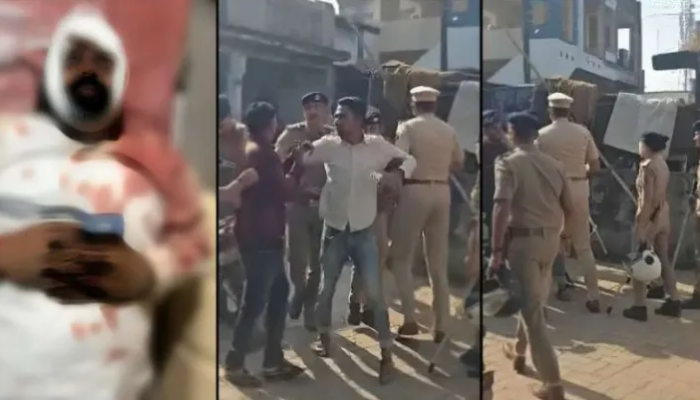
Surat: Muslim mob attack gau rakshaks and police during operation to stop cow slaughter, 40 named in FIR and 22 arrested

A group of gau rakshaks (cow protectors) and a police unit that had come to prevent cow slaughter faced an attack from local Muslim butchers in Hathoda village, Mangrol taluka of Surat district in Gujarat. As a result, a cop and a gau rakshak sustained serious injuries. Afterwards, a substantial contingent of Surat district police arrived in the hamlet and took 22 Muslims into custody, forcibly removing them from their residences, on 26th February (Thursday). The matter is currently under investigation and the police have lodged an FIR (First Information Report) by acting as the complainant.

The complaint was submitted by Constable Govindsingh Shivabhai Jaliya at the Kosamba police station, leading to the immediate registration of an FIR. According to the submission, the incident transpired on 25th February (Wednesday). A man named Satyaprakash Yadav alerted the authorities regarding the occurrence of cow slaughter in Kosamba village after which a police team along with him, proceeded to the area. OpIndia has a copy of the FIR.

A search operation was in progress when a group of Muslim men arrived on two motorcycles and started to verbally abuse the police, asserting that they could not enter Kosamba. The situation intensified, and they assaulted the police and also targeted a cow protector dressed in civilian attire with the intent to kill.

Meanwhile, they summoned other local Muslims to the village as a mob of approximately 50 local butchers assembled. According to the FIR, all the assailants were equipped with weapons such as swords and pipes as they launched a direct attack on the police. During this time, individuals of the Muslim community present at the location assaulted Yadav with sharp instruments, declaring, “We will not spare anyone, will eliminate all.”

The perpetrators inflicted a cut on his head, while the complainant also sustained severe wounds. They managed to flee in a PCR (Police Control Room) vehicle and were taken to the hospital.

Raids conducted following formal orders, 22 arrests made

Jai Patel, the Bajrang Dal coordinator and gau rakshak for the Surat district, recounted the entire incident to OpIndia. He mentioned that with the onset of Ramzan, Islamists get even more radicalised and engage in acts, including cow slaughter. Now, both the police and gau rakshaks have been targeted. He also noted that stringent measures were slapped under the directives of Surat Superintendent of Police (SP) Rajesh Gadhiya on the day following the incident.

A team of 15 police officers, comprising seven Police Inspectors (PIs) and 15 Police Sub-Inspectors (PSIs) under the leadership of Surat Rural Deputy Superintendent of Police BK Vanrani, carried out a combing operation in the village. Afterwards, multiple suspects were nabbed and transported to the Kosamba police station for additional interrogation. The police have formally arrested 22 people.

Patel also outlined that the administration caught 25 individuals; however, they showed no fear of the police personnel. He voiced his frustration, pointing out that these persons refer to the month of Ramzan as sacred while indulging in such activities. A similar event recently took place in Kosamba, and similar incidents are frequent in various regions of Surat during the Islamic month. He called for strict measures regarding the matter.

In an interview with OpIndia, PI Khachare from Kosamba Police Station remarked that prompt action was initiated, resulting in the arrest of 22 males, and the case is presently under investigation, while 40 persons have been identified as suspects in the FIR.

Usman Mirza, also known as Ussu Rasool, Syed Sardar, Asif Fafdo, Atiq Aslam Master, Faisal Dabhalo, who is also referred to as Faisal Pathan, Anas Jina, Irfan Alauddin Mirza, Sagir Ahmed, Nashir Malek, Riaz Maqbool Mirza, Mohammad Jan, Sabir, Sufiyan, Shahabuddin, Mohammad Abdul Wadiwala, Shahal Siraj, Zubed, Akram, Ansh, Imtiaz, Bilal, Munir and his sibling, Junaid, Riaz, Mohsin, Yaqoob, Tariq, Nashir Jaffer, Sajid, Akram Ayub, Imran, Sohil, Irfan, Mohammad Zakaria as well as Ismail Malek have been booked along with other unidentified individuals.

The authorities have filed a case against all them under sections 109(1), 121(1), 126(2), 132, 189(4), 190, 191(2), 191(3), 195(1), 221, 296(B) and 351(3) of the Bharatiya Nyaya Sanhita (BNS).

Exemplary action will be taken: SP Gadhiya

SP Rajesh Gadhiya confirmed the arrests to OpIndia and noted that the inquiry is still in progress to locate the remaining offenders. He conveyed that all names earlier listed as “unknown persons” in the FIR have now been disclosed, and the police have initiated action with the intention to take exemplary action.

The senior official mentioned that 6 cops accompanied the informant to the location upon receiving information regarding cow slaughter in Hathoda village between 1:30 and 2:00 am. They executed a search using battery-powered lights when 6 men arrived at the spot on two motorcycles and started a conversation with the police. Subsequently, these men called nearly 50 others to the scene and the deadly attack transpired after an exchange with them.

He further stated that a case involving attempted murder, rioting and obstruction of duty has been lodged based on the complaint. A unit under the leadership of DySP Vanarani is presently conducting the probe. He stated that scientific evidence will be gathered with assistance from the Forensic Science Laboratory (FSL), firm steps will be taken and assured that those who take the law into their own hands will suffer harsh consequences.

SIM-binding rule for WhatsApp, Telegram and other messaging apps to be implemented from 1st March: Read what it means and how it will impact users

On 28th November, popular communication applications like WhatsApp, Telegram, Signal, SnapChat, ShareChat, JioChat, Arattai and Josh were formally ordered by the Department of Telecommunications (DoT) to ensure that their services only function when the correct Subscriber Identity Module (SIM) card is in the phone. They were allotted a period of 90 days to implement the measure, which is going to end on 28th February, and the report had to be submitted in 120 days. Hence, the development will take effect on 1st March (Sunday).

The guidelines were released by DoT’s AI & Digital Intelligence Unit, which has been given more power to govern Telecommunication identity User Entities (TIUEs), online services that employ a phone number as an identity. The government issued a warning that noncompliance could result in legal action under the Telecom Cyber Security Rules, the Telecommunications Act of 2023 and other relevant laws.

“The SIM-binding regulation stands and we hope all service providers will come on board,” Minister of Communications Jyotiraditya Scindia expressed during a conversation at Rising Bharat Summit 2026, referring to the move as “need of the day.”

The new telecom safety standards require messaging apps to certify that, when used on different devices, individuals are immediately logged out of web-based services like WhatsApp Web every six hours. However, this logout will not happen on devices here the SIM is installed.

The apps must verify that the primary mobile device has the registered SIM card linked to the account. If the registered SIM is not present, services must cease to operate. The centre clarified that users who are roaming will not be impacted if the SIM card remains active in the device.

What is SIM-binding

Currently, an OTP (one-time password) provided to the user’s mobile number during installation is used by the majority of messaging apps to verify users. The platform continues to work after verification, even if the SIM is taken out, changed or deactivated. Similarly, web versions of the apps work by OTP or QR code-based verifications, where the app can be used on a device, like a computer, without the presence of the SIM card used to register for that account.

The intention of the new rule is to alter this practice, as the government deems that this has led to widespread fraud and misuse of the feature.

Therefore, a security measure called SIM-binding, which connects a messaging software to the SIM card, has been introduced. The app will only run after activation when the registered SIM remains inserted in the same smartphone. This implies that removing the SIM would cause applications to stop working.

This directive followed the centre’s notification of the Telecommunications (Telecom Cyber Security) Rules in November 2024, which required telecom service providers to report security incidents within 24 hours. They were also told to put in place thorough cybersecurity measures, including designating a Chief Telecommunication Security Officer to supervise adherence to the new regulations. It allowed the government the authority to obtain non-content and traffic data from telecom entities to improve cybersecurity protocols.

The official release highlighted that, according to observations made by DoT, certain app-based communication services that use Indian Mobile Numbers to identify their clients or users or to provision or deliver services permit users to use their services without the underlying SIM on the device running the service. Cybercriminals are abusing this advantage, particularly when they operate from outside.

An interministerial panel and other government organisations brought up the topic of SIM binding in messaging apps and their misuse. DoT discussed the viability and significance of this issue on several occasions with a major provider of app-based communication services. An order was eventually pronounced to prevent the exploitation of telecommunication identifiers and protect the integrity, along with the security of the telecom ecosystem. According to requirements, these app-based communication services must:

  • Make sure the app-based communication services are always connected to the SIM card (which is linked to the mobile number used for customer or user identification, service provisioning, or delivery) that is installed in the device. This will bar the app from opening without that particular active SIM.
  • Make sure that, if offered, the mobile app’s web service instance is periodically logged out (no later than six hours) and with the option to reconnect the device via a QR code.

“DoT’s SIM‑binding directions are essential to plug a concrete security gap that cybercriminals are exploiting to run large‑scale, often cross‑border, digital frauds. Accounts on instant messaging and calling apps continue to work even after the associated SIM is removed, deactivated or moved abroad, enabling anonymous scams, remote digital arrest frauds and government‑impersonation calls using Indian numbers,” the notification read.

The important role of SIM-binding in thwarting online thefts

Long-lived web or desktop sessions make it difficult to trace and take down accounts of the victims since they allow fraudsters to control them from a distance without possessing the original device or SIM. A session can be validated once on an Indian device at present and then continue to function from overseas, allowing crooks to use Indian phones to conduct scams without any additional authentication.

The auto-logout feature, which only applies to the web version and not the app version, ends lengthy web sessions and requires periodic re-authentication with device or SIM control. This drastically reduces the possibility of account takeover, remote access abuse and mule-account activities. Moreover, regular re-authentication increases detectability and friction by asking offenders to repeatedly illustrate control of the device or SIM.

Every active account and web session is linked to a live, SIM-validated through Know Your Customer (KYC) owing to regular SIM–device binding and periodic logouts, which restore the traceability of numbers used in lending, phishing, investment and digital arrest schemes.

“With cyber‑fraud losses exceeding ₹22,800 crore in 2024 alone, these uniform, enforceable directions under the Telecom Cyber Security Rules are a proportionate measure to prevent misuse of telecom identifiers, ensure traceability, and protect the trust of citizens in India’s digital ecosystem,” the notice further conveyed.

Device binding and automatic session logout are commonly used in banking and payment apps to steer clear of account takeover, session hijacking and improper usage from untrusted devices. As a result, they have been expanded to app-based communication platforms, which are now at the heart of cyber crimes.

The reaction to the government’s instruction

According to reports, Meta, the parent company of WhatsApp, is testing beta versions of the app that alert users to the need to determine whether their registered SIM card is in the phone. Code references to the SIM-binding commands have been discovered on these versions.

A prompt on the sign-in screen is part of the fresh code, which was revealed by WABetaInfo, an independent blog that monitors changes in WhatsApp’s code frequently prior to it is made public. It informed, “Due to regulatory requirements in India, WhatsApp needs to check that your SIM card is in your device.”

On the other hand, the Indian government is facing a legal challenge from a group that represents the major messaging services in the globe, such as Google and Meta, accusing the new SIM-binding restrictions of being unconstitutional and an unlawful extension of state power, reported Business Today.

The corporations wrote to DoT and alleged that the effort is illegal and goes beyond the authority given to the ministry by Parliament. The letter claimed that the government has taken action outside of its legislative jurisdiction concerning the Telecommunications (Telecom Cyber Security) Amendment Rules 2025.

“No reason for extension of SIM-binding deadline. SIM binding is essential for preventing fraud and ensuring security. There can be no compromise on national security,” CNBC TV18, meanwhile, quoted an insider who added that they are a national security precaution and were developed following public engagement.

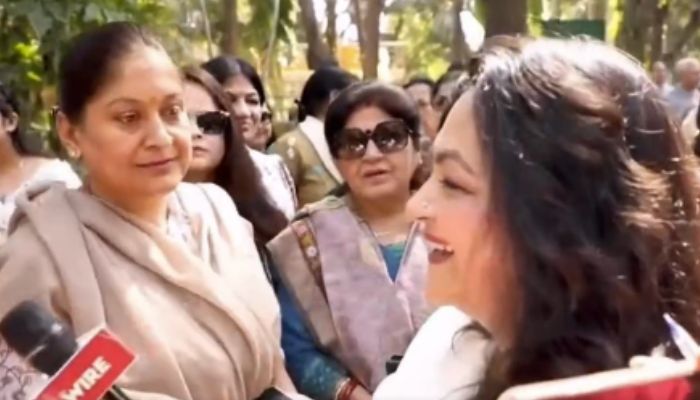
‘Don’t peddle your political agendas here’: How TheWire’s Arfa Khanum was shown the mirror by Hindu women in Noida’s Sector 15A

The Islamo-leftist cabal has a penchant for inserting its ideological agenda into any issue that concerns Hindus. As several Hindu residents of Noida’s Sector 15A demanded the construction of a temple in a part of a park, Arfa Khanum Sherwani of the leftist propaganda outlet The Wire arrived at the spot to peddle her usual ‘Hindu majoritarianism’ bogey. However, she was shown the mirror by local Hindu women.

Arfa asked local women, “If it is assumed that other than the 90 per cent Hindus, there are at least 10 per cent non-Hindus, may Muslims, Christians, or atheists, don’t they have the right to have their places of worship, like a small mosque or something?”

In response to this, a Hindu woman said, “First, let us think about the 90 per cent ones (Hindus).”

Arfa had also asked whether elected governments should construct religious sites, and if so, then should mosques and churches also be constructed.

Responding to this, the Hindu woman said, “Yes, according to the needs of a particular area. But here, we only need a temple.”

Arfa quickly labelled the Hindu woman’s response as ‘majoritarianism’, saying that in political science, this mindset is called majoritarianism or the rule of the majority.

However, Arfa’s attempt at guilt-tripping Hindus fell flat, as a woman stated that The Wire propagandist was trying to portray Hindus as criminals for merely wanting a temple.

“By using words like ‘majoritarianism’, you (Arfa) are trying to bully us. We are getting the feeling that there is an attempt to make us feel like criminals for taking God’s name. Also, this land was designated for a temple 40 years ago in Noida’s master plan,” a Hindu woman said, further emphasising why a temple is needed in the area.

Further dismissing Arfa Khanum Sherwani’s ‘majoritarianism’ propaganda, the Hindu woman said, “There is no majoritarianism. Rather, despite being the majority community, we are giving clarifications. The situation is such that even the media is coming and portraying things as if we are committing a crime.”

In conversation with an elderly Hindu woman, Arfa tried to suggest that if she managed to worship without a temple in the locality for so many years, what is the sudden need to have a temple constructed and visit there. She directly asked, “Don’t you have a temple at your home?”

It was hypocritically audacious for Arfa to ask such a question because she is the same person who often justifies Muslim offering namaz on roads due to the supposed lack of space in mosques on Jummah and otherwise.

Arfa was strictly called out when she tried use the case of an elderly Muslim woman resident and say that even she is unable to walk to a masjid to offer namaz, so should a small mosque also be built.

Basically, Arfa has a problem with the construction of a Hindu temple, and the ‘trees would be felled’ is only a convenient excuse. It would have been absolutely fine with her if the Hindus agreed to the construction of a mosque as well.

Also, Arfa Khanum Sherwani’s use of a Muslim elderly lady’s inability to visit a mosque and offer namaz is ridiculous because in Islam, offering namaz at home is deemed superior and more rewarding for women, because most mosques do not allow the entry of women. In addition, they are also exempt from the obligation of congregational namaz that men have.

While The Wire’s propagandist attempted to invoke ‘democracy’ and ‘referendum for temple construction’ agenda, the local Hindus strongly objected, saying that this is a local issue that concerns the residents of the area and that Arfa Khanum should refrain from using the issue to run her political agenda.

“Don’t bring democracy into this. This is an issue of the temple. Let it stay like that. We very well know you are very much biased towards one side. Don’t impose it here. You are gradually taking the issue in that (Hindu-Muslim) direction.

Counter-protest and the background of the issue

While a significant section of local residents demands a temple, there is also a group of people opposing it, citing environmental concerns. On Sunday, a counter-protest was held against the “Scheme for Setting up Religious Places/ Sites” launched by the Noida Authority on 5th February 2026.

A petition has also been filed in the Allahabad High Court on behalf of  Sector 15A 59 locals.

Notably, the scheme to set up religious places was launched after some residents of two sectors – 15A and 93 requested temples on a plot in each of these sectors. In Sector 15A, the land is a 300-sq-m plot numbered 226B/1, worth Rs 2.77 crore. Meanwhile, the land in Sector 93 measures 600 sq m, with an estimated value of Rs 4.18 crore.

“The selected entity shall get the land for a lease of 90 years on an interview basis after the applications have been scrutinised by the screening committee of the Noida Authority. The date of the interviews is still awaited,” the scheme’s document states.

While those opposed to the scheme say that it is a ‘ploy’ to construct a temple on the parkland, the CEO of Noida Authority, Krishna Karunesh, said that the land in question is a “facility land” which can be used for various purposes, including community centres or religious sites.

“It is facility land. We have facility plots in nearly all sectors in Noida. These lands can be used for any facility, including an electric substation, a community centre, a skill development centre or a religious site. It can be anything – a temple, a mosque, a church or a gurdwara,” the Noida Authority CEO said, adding that temple construction was approved because residents demanded it; if they would oppose it now, the plan would be cancelled.

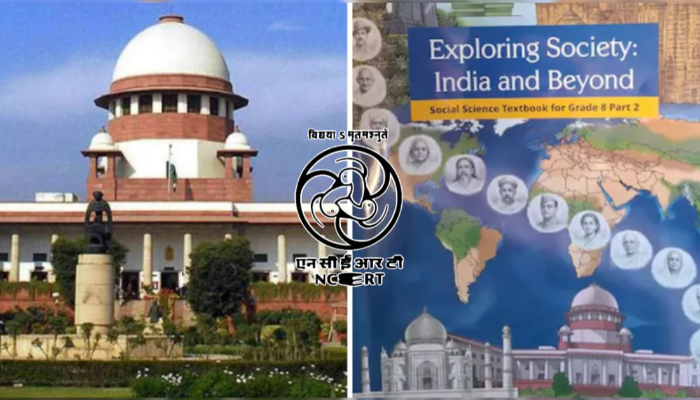
Supreme Court bans NCERT textbook over chapter on judicial corruption: Read how the serious issues plaguing Indian courts are not allowed to be discussed

On 24th February (Tuesday), the National Council of Educational Research and Training (NCERT) released “Exploring Society: India and Beyond (Part 2, First Edition),” a class 8 textbook that featured updated chapters addressing challenges encountered by the judiciary, including corruption and the accumulation of pending cases.  

The move did not sit well with the Supreme Court as it announced a complete ban on the publication on 26th February (Thursday). It remarked that the inclusion of such material in a textbook intended for high school pupils was a deliberate attempt to discredit and undermine the judiciary’s dignity and pronounced that the scandalisation of the institution seemed to be tantamount to criminal contempt.

NCERT and Ministry of Education under fire

A three-judge panel, led by Chief Justice of India Surya Kant and consisting of Justices Joymalya Bagchi and Vipul M Pancholi, referred to the new release as criminal contempt of court. Furthermore, the NCERT Director, the Ministry of Education and the Secretary of School Education were also served with a contempt notice, which required them to explain why they should not be charged with contempt of court.

The NCERT Director was also told to provide the identities of those who prepared the controversial chapter. The original meeting minutes from the section where the same was discussed and decided upon must be presented on the following hearing date in accordance with the direction.

“It shall be the personal responsibility of the NCERT Director and the principal of every school where the book has reached to effectuate immediate seizure and sealing of all copies of the book in their premises, and submit a compliance report. Ensure that no instruction is imparted based on the subject book. Principal Secretaries of all states are to comply. Compliance to be sent within 2 weeks,” the justices declared.

They added, “Any attempt to circumvent this order through electronic means or altered titles shall be seen as direct interference, willful breach and defiance of directions.” The court also directed that people who authored and defended the chapter will not be associated with the NCERT or any other ministry in future and stated, “Thats very little consequence. They fired a gunshot, the judiciary is bleeding today.”

Heads must roll: CJI’s furious reaction

According to Kant, the judiciary’s distinguished past and its contributions to the preservation of legal help, access to justice, the basic structural doctrine and constitutional morality have been ignored. He mentioned that the book opted not to explore the court’s revolutionary efforts and actions. He stressed that exposing impressionable young minds to such a biased narrative could result in long-lasting misconceptions and added that the book is going to reach not only students but also teachers, parents and the next generation.

The chief justice wanted heads to roll because the book was a part of a long-running, carefully planned plot to discredit the court but insisted that the goal was to preserve the integrity of the national curriculum and the institution’s reputation, not to quell valid criticism.

The apex court forbade the book from being published, reprinted or distributed digitally in any manner. It also warned that any attempt to get around the directive by using electronic means or changing the title would be viewed as a wilful violation and direct interference with the administration of justice.

Additionally, it mandated that all existing physical and digital copies, including those in storage, retail stores and educational institutions, be immediately confiscated and removed from public access.

Solicitor General Tushar Mehta, representing the centre, issued an unqualified apology on the part of the government and NCERT. He promised that individuals in charge of the chapter would not be connected to the Ministry of Education or NCERT in the future and promised to release an even more unequivocal public apology. He disclosed that just 32 physical copies had been distributed and would be retrieved.

The root of the row

A dearth of judges, extensive case backlogs and judicial corruption were touted as the three main issues facing the judiciary in Chapter 4, “The Role of the Judiciary in Our Society.” It outlined hundreds of complaints brought against judges and even mentioned the statement by a former Chief Justice of India to highlight that even the judiciary had admitted the structural corruption.

“Sadly, there have been instances of corruption and misconduct that have surfaced even within the judiciary. Such occurrences inevitably have a negative impact on public confidence, potentially eroding faith in the integrity of the system as a whole,” the book cited B R Gavai’s last July’s remark. 

He had further conveyed, “However, the path to rebuilding this trust lies in the swift, decisive and transparent action taken to address and resolve these issues. Any erosion of this confidence risks weakening the judiciary’s constitutional role as the ultimate arbiter of rights. Transparency and accountability are democratic virtues.”

The art of avoiding accountability, responding with hostility to the barest reference of severe issues that blemish the judiciary

The judiciary, which purports to be the “protector of democracy,” simultaneously defends itself aggressively against even the slightest attempts at scrutiny and accountability. It claims to welcome criticism but reacts defensively when asked to confront the longstanding issues that have plagued it for decades and even pointed out by its own members, such as Gavai.

The latest NCERT edition sought to educate the students about the genuine challenges encountered by one of the key constitutional institutions. However, this was perceived as contempt of court which essentially suggested that the judiciary is infallible, and anyone, including the elected government, who dares to shed light on the legitimate concerns will be brought to heel.

Critique, opposition and backlash are part and parcel of a democratic nation like India which is directed at everyone, from the most powerful politicians to local politicians, media personalities, doctors, actors and individuals from various other fields. It is regarded as the true spirit of freedom of expression.

However, the Indian courts which pride themselves as the guardians of fundamental rights and the Constitution cannot be subjected to the same liberties, as any disagreement or dissent could be classified as their “contempt,” delivering a tight slap to the ideals they assert to uphold.

The judiciary has created a distinct set of regulations that enable them to function in line their preferences, safeguard their own interests and intervene in dieffrent matters. However, it remains immune to any examination as even the most innocuous conversations about its corruption is abruptly silenced without a moment’s pause.

The judiciary appears to operate beyond the reach of all laws and even the Constitution, where all are answerable to its jurisdiction but it bares no such obligation towards anyone. Can such a country truly be called a democracy when one institution possesses unrestrained power while others must remain in fear of when and how the authority might be wielded against them?

Judge Yashwant Varma’s cash scandal

On 14th March 2025, a significant sum of unaccounted money was found during a fire at Delhi High Court Justice Yashwant Varma’s residence on Holi. Videos of partially burnt notes appeared online, resulting in inquiries over the surfacing of such a large amount at the place of a sitting judge. The controversy continued to intensify forcing then Chief Justice of India (CJI) Sanjeev Khanna to launch a 3-member committee for an internal probe.

Varma’s judicial duties were suspended while the investigation was conducted and he was repatriated to the Allahabad High Court. The panel presented its findings which prima facie marked him guilty. Khanna submitted the report to the president and the prime minister for further action after Varma refused his request to resign.

The judge was just transferred to a different court and instructed to vacate his position, which he blatantly rejected. Moreover, the matter is currently under investigation while he lives a life of ease. Importantly, no judge has ever been impeached in independent India, even after grave allegations of corruption made by individuals like Gavai and proceedings started against multiple names.

The initial judge who was targetted with an impeachment motion was Justice V Ramaswami who would have been the first to be dismissed if the opposition’s resolution had been accepted by the Lok Sabha. The proposal failed when 205 members of Congress and a few members of other parties abstained. Ramaswami later rose to join the Supreme Court, despite a controversial career.

Likewise, the first person to be declared guilty by the Rajya Sabha was Justice Soumitra Sen of the Calcutta High Court. However, he resigned before the resolution reached the Lok Sabha, avoiding official impeachment. The most extreme penalties for guilty judges seem to involve transfer, retirement or resignation.

Does a common individual possess the same privilege in the eyes of the law? Would he or she also have been spared with a similar reprimand without facing any real-life consequences? What else could this be but a flagrant misuse of authority and power to shield even the most compromised elements of the judiciary, while the lives of ordinary citizens can be shattered for minor infractions, and in some cases, even innocents have to spend decades in prison.

No public asset declaration for the judiciary

It is not possible to address Varma’s case independently without considering the repeated Supreme Court verdicts observing that public disclosure of the assets owned by judges is not required and is optional owing to the 1997 verdict. They unveil their possessions but to the chief justice and the details can be accessible to public only voluntarily. This implies that a judge has the option to decide whether or not to reveal their holdings to the Indian public.

The court’s emphasis on privacy under the Right to Information (RTI) Act, 2005 reflects the fact that the revelation is not compulsory. The position has also been maintained in a number of cruicial decisions, such as the one rendered in 2019, which supported disclosure only after the illustration of a greater public interest.

The apex court has admitted that judges are public servants but its decisions such as Chief Justice of India K G Balakrishnan’s 2008 ruling and Lokpal’s conclusion on 3rd January 2025 affirmed otherwise. It is important to note that declaring assets is critical for all other public servants, including MPs and MLAs. It is mandatory for candidates before running for office and legal actions transpire if the statement is regarded suspicious.

This conveys that only judges are not legally required to share the data about their properties, unlike politicians, bureaucrats, lawyers or ordinary persons, serving as a major reminder of the inequality that exists inside the country. Does this not position judges above all other citizens and also create a potential loophole for them to engage in dubious activities and accumulate vast wealth with impunity?

The repeated judgements act as insulated armour against any charges irrespective of the merits providing undue advantage. Thus, how can the claims of impartiality, honesty and justice be accepted as truthful when the evidence points to the contrary?

The alarming admission of bench fixing

Anti-Hindu Delhi riots accused Umar Khalid’s father, SQR Ilyas, a former member of banned Students Islamic Movement of India (SIMI), acknowledged that their lawyer, Kapil Sibal, was attempting to bench fix during the hearings, in an article of “The Indian Express.” OpIndia had reported the same which was also verified by former Chief Justice DY Chandrachud.

“In normal practice, if a hearing is postponed in the Supreme Court, the case is reassigned to a new bench. Yet, in Khalid’s case, the matter repeatedly appeared before the same judge for six consecutive hearings. Faced with this, his lawyers eventually withdrew the plea, resolving to try their luck again in the lower courts. Since bench allocation is determined by the Chief Justice, it is evident that this repeated assignment was not a coincidence. Now, following the high court’s latest rejection, the only option once again is to approach the Supreme Court,” he wrote in his piece “India needs a people’s movement against UAPA (Unlawful Activities Prevention Act).”  

Umar Khalid and his attorney Kapil Sibal took 7 of the 14 adjournments because the accused did not want the case to be heard by Justice Bela Trivedi, which is a typical case of bench-fixing, prompting these adjournments. They even went so far as to urge the chief justice to personally hear the case but he rejected their attempt at forum shopping. Hence, similar to Ilyas in the column, Sibal withdrew the appeal from the Supreme Court alleging delay.

It is easy to comprehend that the corrupt practice of “bench fixing,” “bench hunting,” or “forum shopping,” which aims to have case sassigned to certain judges or court for a beneficial decision is also prevalent in India. What could more profoundly impact the objectivity of the legal system than verdicts pronounced with the client or counsel in mind rather than the veracity of the arguments or the evidence? What does this entail for an ordinary citizen who struggles within the legal system, while the influential and privileged not only secure the judge they desire but also massively enhance their chances of a favourable ruling?

The collegium system

The collegium system, which allows a collective of senior judges to suggest appointments and transfers to India’s higher judiciary is a primary example of how the judiciary operates as a network of interconnected and tightly-knit group who meticulously protect their system and all its members. The system does not have a clear basis in the Constitution or its amendments.

A collaborative approach between the executive and judiciary is implied by Articles 124(2) and 217(1), which require the president to select judges of the Supreme Court and High Courts after consulting with the Chief Justice of India and other specified judicial leaders. However, this consultation was changed into acquiescence by judicial interpretations, particularly the Second Judges Case (1993) and the Third Judges Case (1998), which gave the judiciary precedence and reduced the role of the executives.

The Chief Justice of India and the four most senior Supreme Court justices form the collegium, which was established by the Memorandum of Procedure in 1947 and developed over many years. With rare exceptions, their recommendations have almost a binding force.

The Modi government wanted to rectify this opaque system with the pivotal National Judicial Appointments Commission (NJAC) Act. It was a 6-member constitutional body tasked with supervising the appointment of judges to the Supreme Court and High Courts, including the Chief Justice of India, two senior judges, the Law Minister and two distinguished individuals.

The intention was to establish a more open, inclusive, and responsible system for selecting judges. However, the act was struck down by the apex court and the development was dubbed as “tyranny of the unelected” by late Arun Jaitley in 2015. Clearly, even a minimal attempt at accountability and transparency is rejected by the judiciary, which espouses these virtues but when it applies to others.

Conclusion

The aforementioned instances do not even scratch the surface of the deep-seated problems within the Indian judiciary. The current controversy regarding the NCERT textbook is a continuation of its decades-old conduct, which demands accountability from others yet becomes furious at the mere reference to the issues that afflict it and already been addressed by other judges. It exhibits an uncanny tendency to not only protect its own interests but also to project a pristine image even while its actions are ridden with shocking hypocrisy and double standards.


 

Varsha Gandikota declares PM Modi an ‘anti-national’ for visiting Israel: Inside her organisation Progressive International and the Newsclick connection

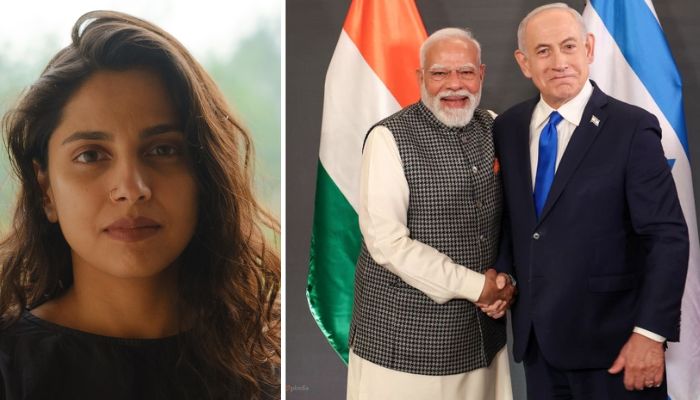
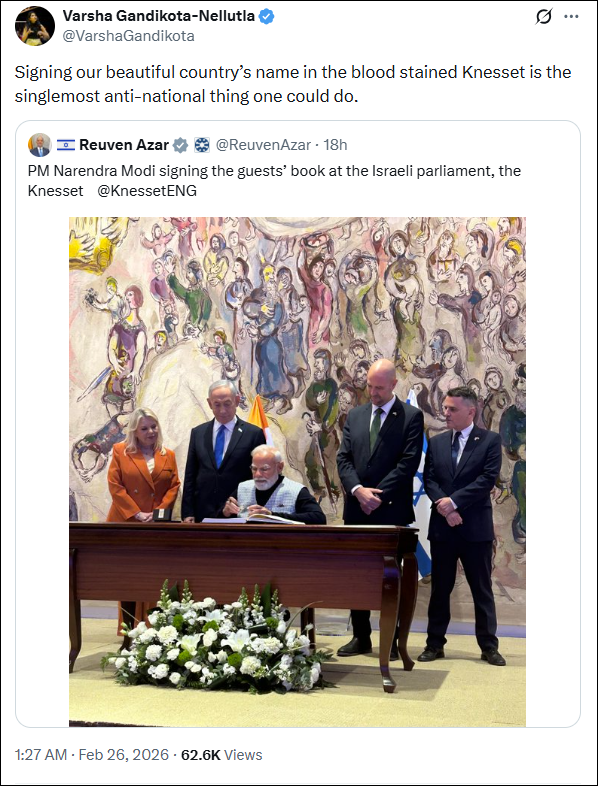
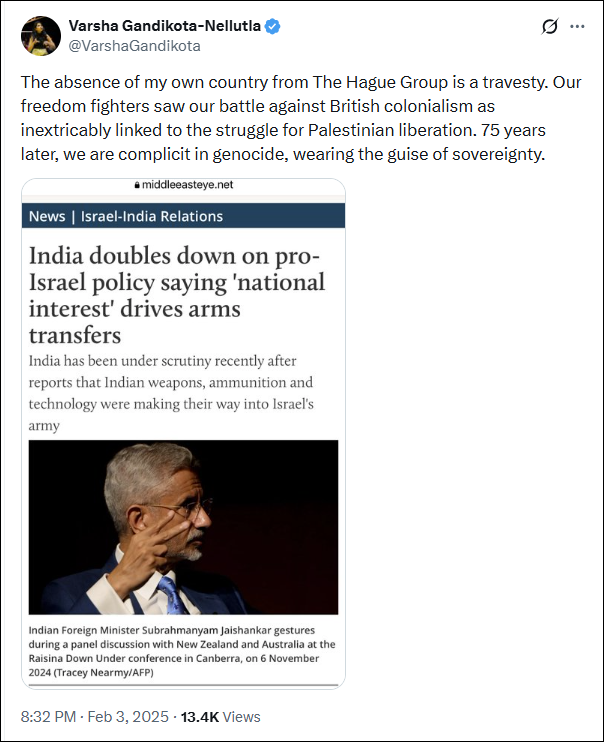
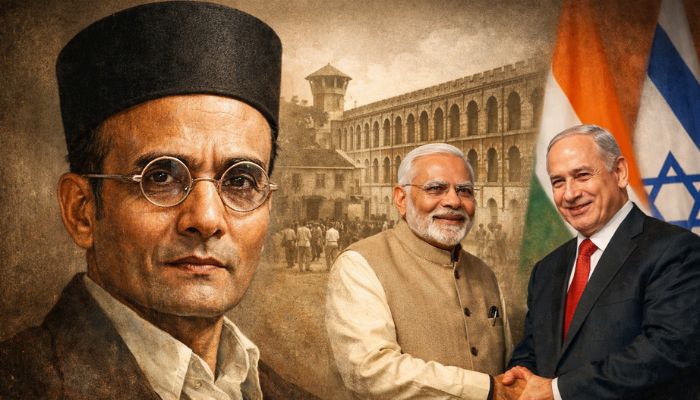
The historic visit of Prime Minister Narendra Modi to Israel has attracted global attention. While India and Israel are bolstering their partnership in various sectors, from trade to defence, the ‘Free Palestine’ Islamo-leftist cabal is irked. From Islamists, pretentious ‘secular’ politicians, leftist propaganda outlets, and the wider leftist ‘intelligentsia’, all are mindlessly condemning PM Modi for visiting Israel and addressing the Knesset. In this vein, Varsha Gandikota-Nellutla, the Co-General Coordinator at Progressive International, labelled PM Modi ‘anti-national’ for signing the Israeli Knesset’s guests’ book.

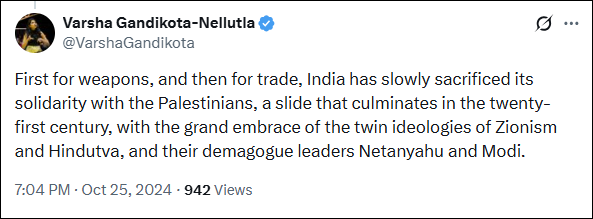
“Signing our beautiful country’s name in the blood-stained Knesset is the singlemost anti-national thing one could do,” Nellutla wrote on X on 25th February.

Notably, on 25th February, PM Modi addressed the Israeli Knesset, wherein he strongly reaffirmed India’s support for Israel, underlining the deep friendship between the two countries, their shared stand against terrorism, and growing cooperation in defence, trade and technology.

The Prime Minister minced no words and explicitly named and condemned the Palestinian Islamic terror group, Hamas’s October 7 (2023) massacre of over 1200 Israeli civilians during a local festival.

“We feel your pain; we share your grief. India stands with Israel firmly, with full conviction in this moment and beyond. No cause can justify the murder of civilians. Nothing can justify terrorism,” PM Modi said.

At the end of Modi’s speech, the Knesset awarded him the “Speaker of the Knesset Medal,” which is the highest award given by the Knesset, in recognition of his efforts in enhancing the strategic relationship between the two countries. 

Varsha Gandikota-Nellutla, Progressive International and the NewsClick connection

Varsha Gandikota serves as the Co-coordinator General at the Progressive International (PI), an international organisation that mobilises leftist activists and groups globally. “The Progressive International launched in May 2020 with a mission to unite, organise and mobilise the world’s progressive forces,” PI’s website states.

Varsha leads the PI’s “Blue Print” policy work and The Hague Group. The Progressive International is a hardcore Israel-hater and actively indulges in pro-Palestine advocacy, even if that means supporting or downplaying Hamas’s Islamic terrorism.

Upon checking Progressive International’s website, we came across numerous propaganda articles and statements peddling the insidious Muslim victimhood narrative to slander the Modi government. In one of its statements issued in 2023, the PI portrayed bulldozer action against houses of Muslim rioters after the anti-Hindu violence in Haryana’s Nuh as ‘demolition of India’s democracy’. The statement was signed by Islamists like British Labour MP Zarah Sultana and Jeremy Corbyn.

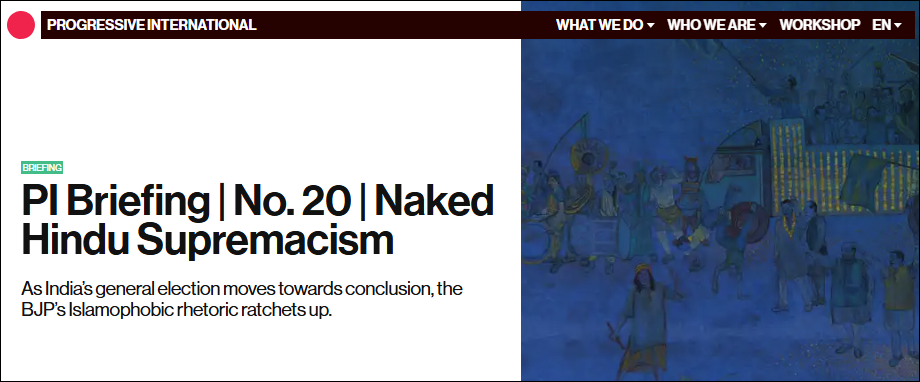
The Progressive International hosts a dozen anti-India, particularly anti-Hindu propaganda pieces. In one such briefing titled Naked Hindu Supremacism”, PI vilified Hindus to peddle the Muslim victimhood bogey.

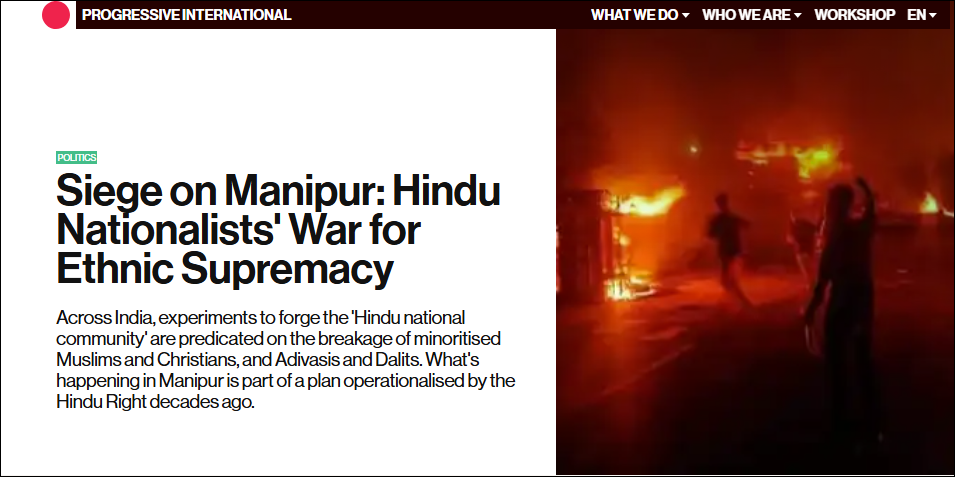
The PI has constantly been vilifying Hindus, Hindutva, BJP-RSS and the Modi government. In one such article on the Manipur crisis, Progressive International blamed ‘Hindu nationalists’, accusing them of waging a  ‘supremacy war’.

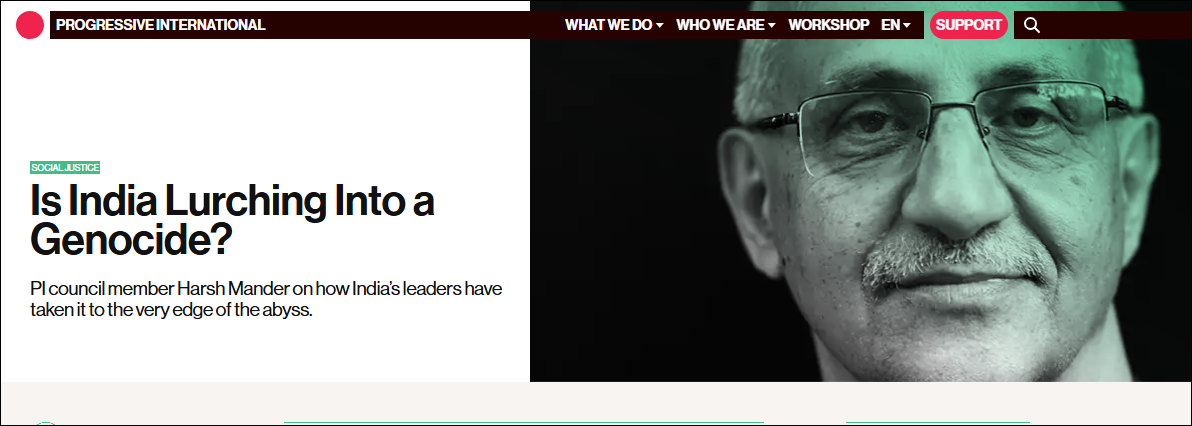
The Progressive International has the likes of Harsh Mander as its council member. Mander had written several articles slandering Hindutva and, by extension, Hindus. In one such article headlined, Is India Lurching Into a Genocide?, Mander cited Gregory Stanton to falsely suggest that a “genocide of Muslims in India could take place”.

Notably, Harsh Mander had worked in the Indian Administrative Service (IAS) for almost two decades and quit the service in protest against the ‘state-sponsored riots’ in Gujarat in 2002. After quitting as an IAS, Mander later worked in Sonia Gandhi’s National Advisory Council (NAC) that drafted the anti-Hindu Communal Violence Bill.

Mander has also served as the Director of the Centre for Equity Studies (CES), which received funds from Christian Evangelical Organizations and he has openly batted for religious conversions in the past. 

Harsh Mander’s article, designed to fuel the victimhood complex among Muslims, was shared by the Prime Minister of Pakistan, Imran Khan. He had written in the article published in 2018, “Muslims are today’s castaways, political orphans with no home, for virtually every political party. This is despite India being home to a tenth of the world’s Muslims, around 180 million people, making it the largest Muslim country after Indonesia and Pakistan. There has never been a harder time to be a Muslim in India, not since the stormy months that followed India’s Partition.”

Harsh Mander is also a known Ishrat apologist, the female LeT operative who was killed in an encounter along with three others by Crime Branch Officials in Gujarat.

Harsh Mander was also one of the forty ‘activists’ who had filed a review petition in the Court against the Ayodhya Verdict that paved the way for a Bhavya Ram Mandir at Ayodhya. He is also part of the coterie and has filed a petition against the Citizenship Amendment Act. Mander had also incited Muslims to riot during anti-CAA protests.

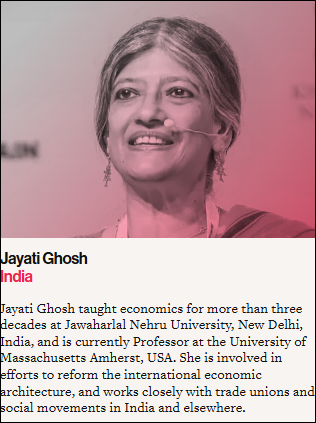
The Progressive International also has former JNU professor and Islamic terrorist Afzal Guru’s fan, Jayati Ghosh, as its council member.  Back in 2016, Ghosh criticised the Modi government for suppressing protests organised to commemorate the death sentence of terrorist Afzal Guru. In addition, Ghosh has also been named alongside Sitaram Yechury and Yogendra Yadav in the supplementary chargesheet of the 2020 Delhi Riots case.

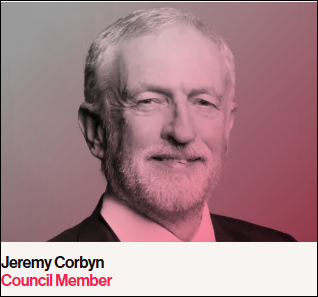
In its “Cabinet”, the executive body, the Progressive International has Jeremy Corbyn, the former leader of the UK’s Labour Party. Corbyn is a man of controversy. Back in 2023, he refused to call Hamas a terror organisation during an interview with Piers Morgan. In 2009, Jeremy Corbyn invited terrorists belonging to the radical Islamic outfits, Hezbollah and Hamas, to the UK Parliament. Previously, Corbyn had supported the “Free Riaz and Qayyum Campaign”, which sought to get Mohammed Riaz and Abdul Quayyam Raja, convicted of kidnapping and murdering an Indian diplomat, Ravindra Mhatre, on British soil, released from prison.

In 2022, Corbyn was photographed with Congress leader Rahul Gandhi during the latter’s controversial UK visit. A massive row had erupted over Gandhi meeting Corbyn as the former Labour leader has a history of supporting Kashmiri separatist narratives, echoing Pakistan’s position on Jammu and Kashmir, and endorsing calls for international intervention in India’s internal affairs.

Notably, the PI’s “emeritus” advisory members comprise of the likes of Noam Chomsky and NewsClick-linked Marxist journalist Vijay Prashad.

Interestingly, the Progressive International formerly had Vijay Prashad as its council member. He was a part of the founding interim council of the Progressive International. Vijay Prashad is central to the Neville Roy Singham-funded leftist network. Prashad, who is the director of Tricontinental, is reported to have received funding from Singham for Tricontinental. Singham also poured millions into various pro-China and anti-India propaganda outlets, including People’s Dispatch, where Vijay Prashad has contributed propaganda articles.

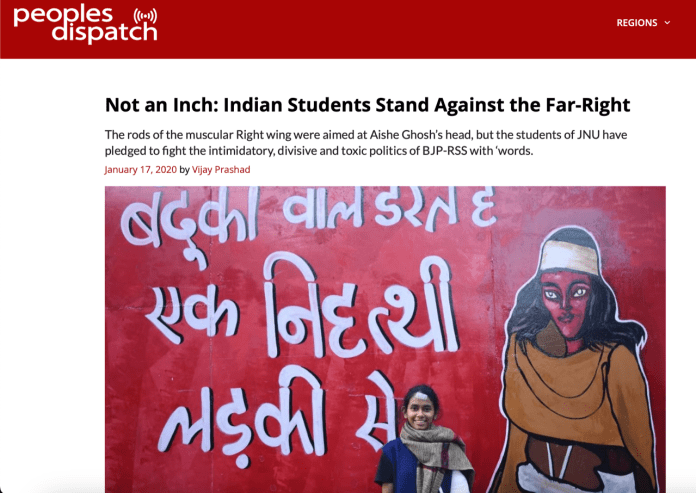
People’s Dispatch, a media portal that touts itself to be an “international media project with the mission of bringing to the world voices from people’s movements and organisations across the globe.” In one of the articles from January 2020, Prashad has sympathised with the JNU protesters and inveighed against the Modi government.

Among Indians introduced by Neville Roy Singham to his larger team, who worked with Tricontinental, one of the nonprofits that the New York Times said was involved in pushing Chinese talking points, were Prabir Purkayastha, Srujana, Prasanth, and Vijay Prashad

 Prashad also has close ties with Urban Naxal P Sainath, whose propaganda portal PARI recently removed references to Singham after his connection with the Chinese propaganda arm had come to light.

Newsclick’s anti-Hindu bias is not hidden. Moreover, Newsclick is also under scrutiny for its alleged connections with the Chinese Communist Party (CCP). In 2023, an investigation by the New York Times uncovered an ecosystem of activist organisations, non-profits, shell corporations, and their intimate ties to China and Chinese propaganda, with Neville Roy Singham at its helm. A Delhi Police chargesheet filed in 2024 called the Chinese state the “ultimate paymaster”, with funds routed to stoke anti-India narratives, especially regarding Kashmir, and farmers’ protests. The case is ongoing in the court.

In 2021, OpIndia conducted a detailed investigation into the links of NewsClick and uncovered how it was linked to several individuals who regularly spew venom against India, from Urban Naxals to those like Teesta Setalvad, Abhisar Sharma and several others. That investigation by OpIndia can be read here.

Progressive International’s Tides Foundation connection

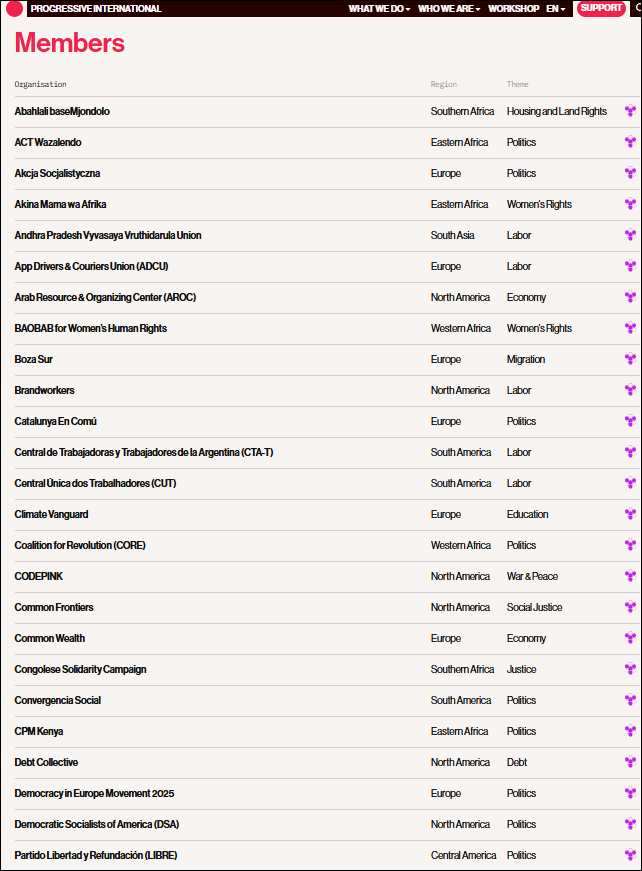
As per the Progressive International’s website, it has over 70 organisations as its members. These include the pro-Hamas group Arab Resource and Organising Centre, which is sponsored by the Tides Foundation.

Interestingly, OpIndia earlier traced the links between the Tides Foundation and Newsclick. Tides Foundation is notorious for funding several anti-Hindu, anti-India organisations and elements. The Foundation gave grants to Hindus for Human Rights (HfHR), which has links to Islamists and Khalistanis, and was formed in 2019 by two Islamist advocacy groups, the Indian American Muslim Council (IAMC) athe nd Organisation for Minorities of India (OFMI).

Tides also funded AMAN Public Charitable Trust (AMAN). This trust is connected to the NewsClick-China funding scandal, where it is alleged that Chinese entities funded NewsClick to disrupt Indian sovereignty.

Varsha Gandakoti’s anti-Hindutva and pro-Hamas viewpoints

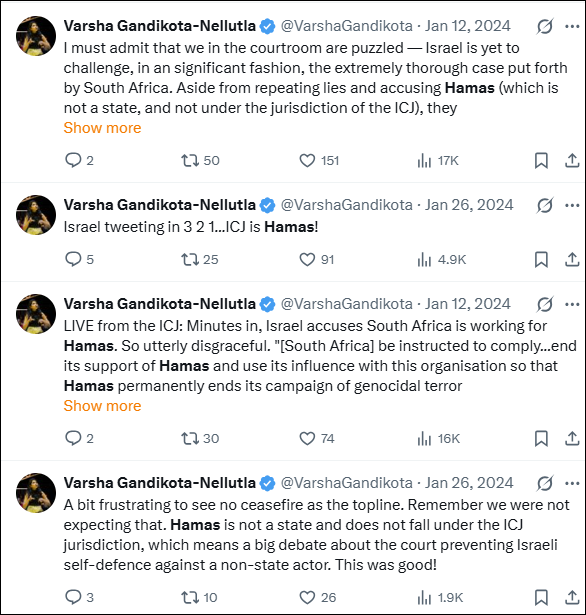
Using the excuse that Hamas is a non-state actor, Varsha Gandikota-Nellutla has continuously been defending the Palestinian Islamic terror group that has essentially declared Israel a Waqf property in its Charter, and vowed to fight until the last of the Jews are killed.

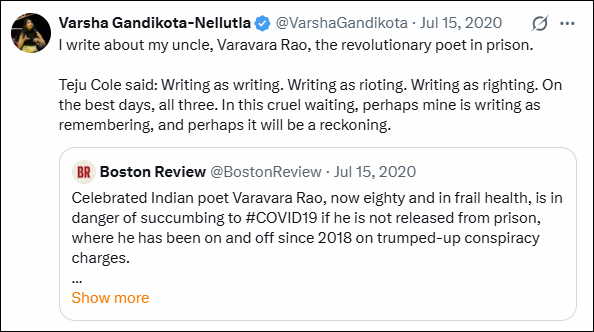
Interestingly, as per one of the posts by Varsha Gandikota-Nellutla, Bhima Koregaon violence accused Varavara Rao is her uncle. Sharing an article she wrote for the Boston Review, Varsha posted, “I write about my uncle, Varavara Rao, the revolutionary poet in prison.”

Varavara Rao was accused of alleged inflammatory speeches made at the Elgar Parishad conclave that was held in Pune in December 2017. The Police arrested Rao because his speech on 31st December 2017 was one of the reasons that triggered violence the next day near the Koregaon-Bhima war memorial on the outskirts of Pune. The Police also alleged that the organisers of the event have Maoist links. NIA was handed over the investigation in the matter.

On August 28, 2018, Rao was arrested at his Hyderabad residence. FIR against him was lodged by Pune Police on January 8, 2018, under several Sections of the IPC and UAPA. He was later granted bail.

Islamo-leftists have long been maligning Hindutva. Varsha Gandikota-Nellutla had also previously equated Hindutva with Zionism. While the ilk of Varsha, Zionism is a genocidal ideology, she never really explained that if Hindutva is a twin of Zionism, which genocide have the ‘Hindu nationalists’ ever committed.

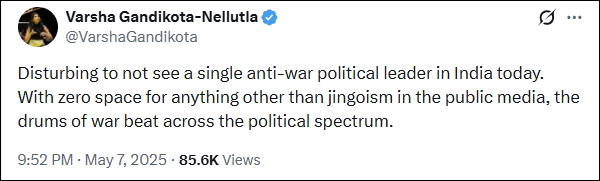
Unsurprisingly, Varsha, who supports Palestine and the Islamic terrorist group Hamas, was upset with India attacking Islamic terror establishments in Pakistan in May 2025 after the Pahalgam attack. “Disturbing to not see a single anti-war political leader in India today. With zero space for anything other than jingoism in the public media, the drums of war beat across the political spectrum,” she wrote.

Varsha’s social media and work at Progressive International largely revolve around the Israel-Palestine conflict and the supposed ‘genocide’ in Gaza. She, however, never raised her voice for Hindus being persecuted in Pakistan and Bangladesh by Islamic fanatics.

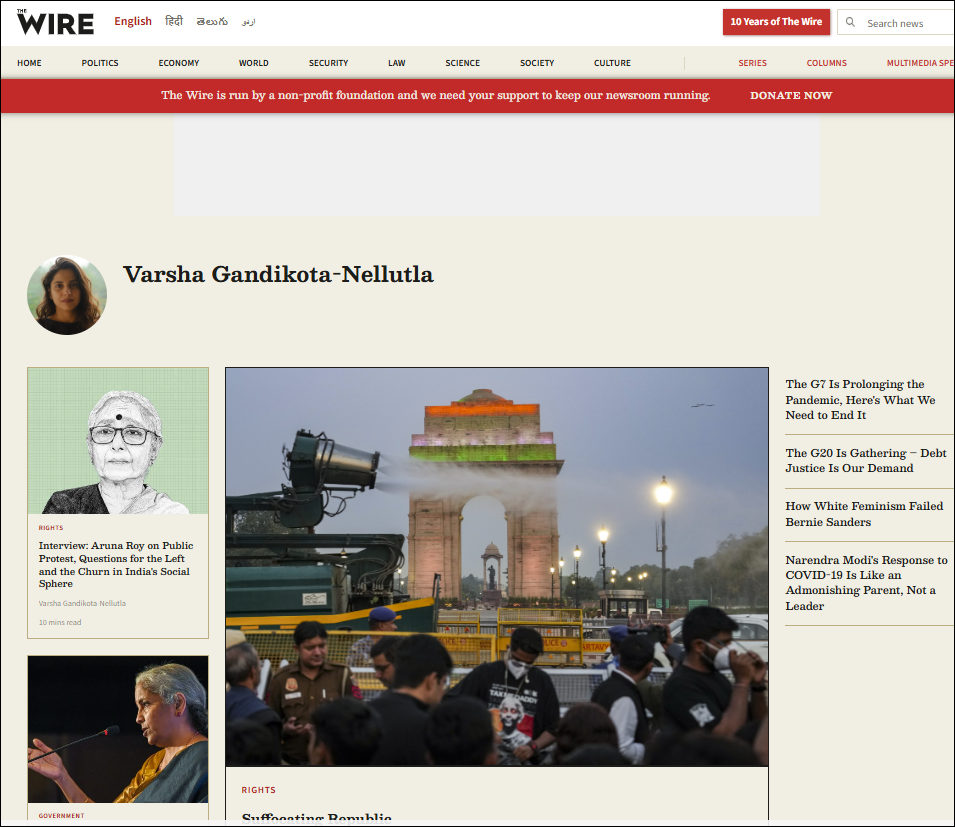
Varsha also contributes to leftist propaganda portal The Wire.

“Innovation goes to die in bureaucracy”: How Sweden’s migration system forced an Indian Founder to sell his Startup and leave the country

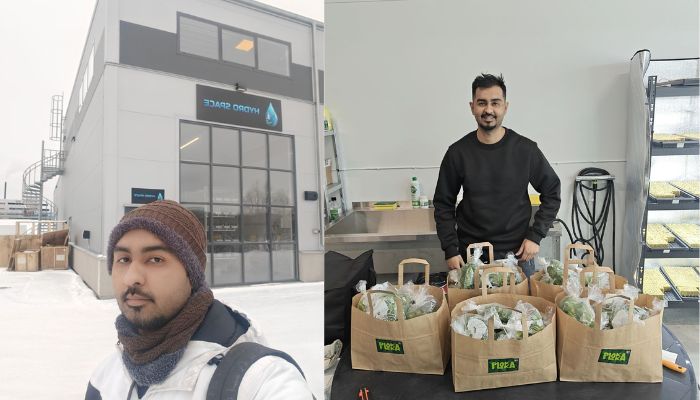
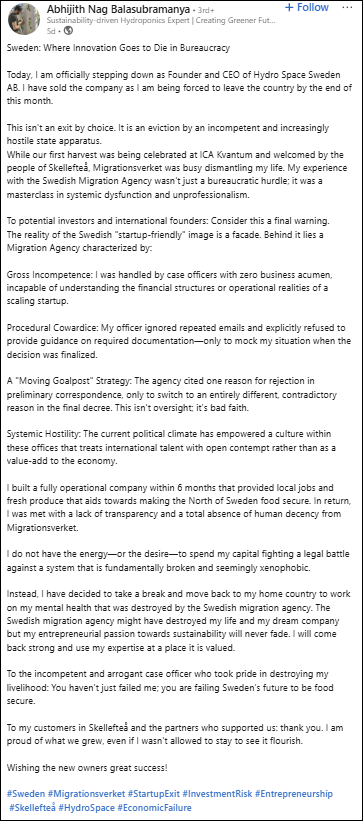
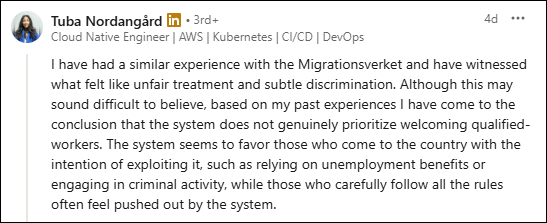
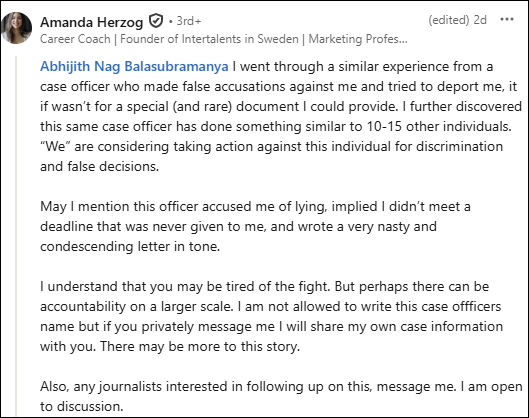
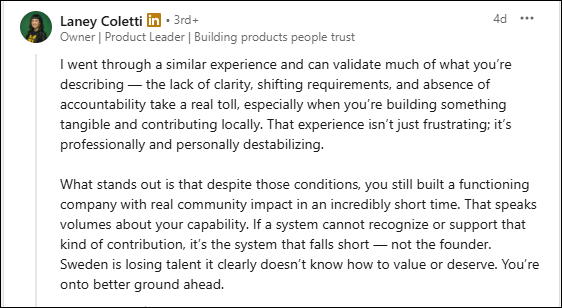
Abhijit Nag Balasubramanya, an Indian entrepreneur based in Sweden, has announced that he is stepping down as founder and CEO of his startup Hydro Space Sweden AB, a microgreens company in the Swedish city of Skellefteå. Abhijit blamed Sweden’s “hostile” and “dysfunctional” immigration process for his decision.

In a LinkedIn post published on 21st February, Abhijit Nag Balasubramanya gave a detailed account of what forced him to sell his microgreens company in Sweden and return to India.

In the post titled, Sweden: Where Innovation Goes to Die in Bureaucracy, Abhijit said that he is “officially stepping down as Founder and CEO of Hydro Space Sweden AB.” He added that this exit is not by choice, but rather forced.

“I have sold the company as I am being forced to leave the country by the end of this month. This isn’t an exit by choice. It is an eviction by an incompetent and increasingly hostile state apparatus,” he said.

The Indian entrepreneur said that while his company was making progress, Migrationsverket was busy “dismantling” is life. Abhijit Nag Subramanya further stated that his experience with the Swedish immigration authorities was not just a bureaucratic hurdle, but also “a masterclass in systemic dysfunction and unprofessionalism.”

“While our first harvest was being celebrated at ICA Kvantum and welcomed by the people of Skellefteå, Migrationsverket was busy dismantling my life. My experience with the Swedish Migration Agency wasn’t just a bureaucratic hurdle; it was a masterclass in systemic dysfunction and unprofessionalism,” Balasubramanya said.

He went on to warn potential investors and international founders that Sweden’s “startup-friendly” image is a “façade”.

Gross incompetence, procedural cowardice, goalpost moving strategy and systemic hostility: How Indian entrepreneur Abhijit Nag Subramanya described Sweden’s Migration authorities

Abhijit Nag Balasubramanya described the Swedish Migration Agency as being characterised by gross incompetence, procedural cowardice, a moving goalpost strategy, and systemic hostility.

“To potential investors and international founders: Consider this a final warning. The reality of the Swedish “startup-friendly” image is a facade. Behind it lies a Migration Agency characterized by: Gross Incompetence: I was handled by case officers with zero business acumen, incapable of understanding the financial structures or operational realities of a scaling startup. Procedural Cowardice: My officer ignored repeated emails and explicitly refused to provide guidance on required documentation—only to mock my situation when the decision was finalized,” the Indian entrepreneur wrote.

“A “Moving Goalpost” Strategy: The agency cited one reason for rejection in preliminary correspondence, only to switch to an entirely different, contradictory reason in the final decree. This isn’t oversight; it’s bad faith. Systemic Hostility: The current political climate has empowered a culture within these offices that treats international talent with open contempt rather than as a value-add to the economy,” he added.

Built a company within six months to help make North Sweden food secure, got “absence of human decency” from Migrationsverket in return: Indian entrepreneur’s worrying experience with Swedish migration agency

Abhijit Nag Balasubramanya further stated that while he delivered a fully functional company within six months, it not only generated local jobs but also helped tackle Northern Sweden’s food security issue. However, in return, Sweden’s migration agency Migrationsverket offered him nothing but “a lack of transparency and a total absence of human decency.”

He also called the Swedish migration system “broken” and “xenophobic”.

“I built a fully operational company within 6 months that provided local jobs and fresh produce that aids towards making the North of Sweden food secure. In return, I was met with a lack of transparency and a total absence of human decency from Migrationsverket. I do not have the energy—or the desire—to spend my capital fighting a legal battle against a system that is fundamentally broken and seemingly xenophobic,” Subramanya wrote.

 “Swedish migration agency destroyed my mental health”: Abhijit Nag Balasubramanya says he will return to India after Swedish authorities destroyed his livelihood and mental health

Devastated with the alleged disturbing experience he had with Swedish migration agency officials, Abhijit Nag Balasubramanya said that he will move back to his home country, India. He said that the Swedish migration authorities may destroyed his mental health, his dream company, but not his entrepreneurial passion.

“Instead, I have decided to take a break and move back to my home country to work on my mental health that was destroyed by the Swedish migration agency. The Swedish migration agency might have destroyed my life and my dream company but my entrepreneurial passion towards sustainability will never fade. I will come back strong and use my expertise at a place it is valued.  To the incompetent and arrogant case officer who took pride in destroying my livelihood: You haven’t just failed me; you are failing Sweden’s future to be food secure,” he wrote.

As Abhijit Balasubramanya‘s story goes viral, people share their experiences of racism and discrimination in Sweden

Abhijit Nag Balasubramanya’s LinkedIn post elicited over 165 comments. Several people from diverse national and racial backgrounds shared their disappointing experiences of discrimination or racism-like treatment with the Swedish migration authorities.

One Tuba Nordangård commented, “I have had a similar experience with the Migrationsverket and have witnessed what felt like unfair treatment and subtle discrimination. Although this may sound difficult to believe, based on my past experiences I have come to the conclusion that the system does not genuinely prioritize welcoming qualified-workers. The system seems to favor those who come to the country with the intention of exploiting it, such as relying on unemployment benefits or engaging in criminal activity, while those who carefully follow all the rules often feel pushed out by the system.”

Another one, named Amanda Herzog, also shared her story and commented under Abhijit’s post that one of the officials at the Swedish migration agency allegedly levelled false accusations against her to get her deported. She added that the same officer had harassed 10 to 15 other individuals in a similar manner.

 “Abhijith Nag Balasubramanya I went through a similar experience from a case officer who made false accusations against me and tried to deport me, it if wasn’t for a special (and rare) document I could provide. I further discovered this same case officer has done something similar to 10-15 other individuals. “We” are considering taking action against this individual for discrimination and false decisions.
May I mention this officer accused me of lying, implied I didn’t meet a deadline that was never given to me, and wrote a very nasty and condescending letter in tone…”

Another LinkedIn user, Lana Coletti, corroborated Abhijit’s allegations against the Swedish migration agency and wrote, “I went through a similar experience and can validate much of what you’re describing — the lack of clarity, shifting requirements, and absence of accountability take a real toll, especially when you’re building something tangible and contributing locally. That experience isn’t just frustrating; it’s professionally and personally destabilizing…”

One Jennie Ly said that she could totally relate to Abhijit’s ordeal as she had a similar experience with the Swedish migration authorities that took a serious toll on her mental health.

“I can totally relate to you — I was forced to uproot and leave a year ago after the court rejected my appeal through a lawyer, without providing any justification against my lawyer’s arguments. I admire you for having the courage to speak up; I just stayed quiet and left. My mental health was also deeply affected by this, but after leaving Sweden, I travelled to India twice during that year, explored its beautiful nature, meditated with monks, and recovered a bit. I have to say that my mental health was much better when I was back in Asia than here in Sweden, where I was dealing with migration uncertainty and bureaucracy — a system that often feels based on the discretion of case officers rather than the transparency of the law,” she wrote.

There are many such comments under Abhijit Nag Balasubramanya’s original LinkedIn post, indicating that the allegations he levelled against Migrationsverket may not be an isolated case, but a larger problem.

It must be noted that Sweden has a serious racism and xenophobia problem. In 2022, the police recorded 2,695 hate crimes, with 53% classified as racist or xenophobic.

Indian freedom fighter Veer Savarkar supported Jewish nationhood decades before India recognised Israel: Revisiting history on his death anniversary

26th February marks the death anniversary of Veer Savarkar, one of Bharat’s most formidable revolutionaries, whose life and legacy remain deeply intertwined with the nation’s struggle for freedom and civilisational self-assertion. Today, the event is even more important, as Prime Minister Modi is visiting Israel to strengthen a partnership that has become India’s most crucial strategic ally.

A degree of transparency and clarity that was not always apparent in India’s foreign policy during its early decades as an independent nation is reflected in the current India-Israel relationship, which is based on defence cooperation, intelligence sharing, and technology partnership.

Often, people remember Veer Savarkar primarily through the lens of political controversy, but he was a thinker who was profoundly interested in issues of nationhood, civilisational identity, and geopolitical realism. In early 1923, Veer Savarkar had publicly supported the Jewish people’s right to regain their ancestral country. This was more than two decades before Israel was established in 1948. Savarkar’s stance demonstrated a steadfast confidence in national self-determination grounded in historical and civilisational continuity at a time when the Jewish question was still open and political opinion around the world was divided.

However, Savarkar has always been portrayed by the left lobby as a sympathiser of Nazi Germany despite his proven support for Jewish nationhood, an allegation that tries to shape public perception without sufficient analysis of the historical background or his real works. To distinguish between historical reality and political narrative, it is vital to review Savarkar’s documented views on Jews, Zionism, and the geopolitical circumstances of his day as India intensifies its strategic engagement with Israel.

Veer Savarkar: Revolutionary, scholar, and uncompromising nationalist

On 28th May 1883, Veer Savarkar was born to Shrimati Radha and Shri Damodhar Savarkar in Bhagur, a village of Nashik district. From a young age, he loved to read and was skilled at poetry writing. He emerged as one of the first and most steadfast supporters of complete independence from British rule at a time when the concept of Purna Swaraj had not yet gained popularity in Indian political discourse. From an early age, Savarkar demonstrated extraordinary intellectual ability, showing a strong interest in history, literature, and political ideas. His scholastic prowess was matched by an equally fervent commitment to national liberation, which quickly turned into structured revolutionary activity.

In 1904, Savarkar established the Abhinav Bharat Society as a covert revolutionary organisation dedicated to overthrowing British rule through armed resistance. When he arrived in London, where he assumed a prominent role at India House, a centre of the Indian nationalist movement, his efforts went beyond India’s borders. Through his writings, lectures, and organisational efforts, Savarkar encouraged a generation of young Indians to see independence as an urgent goal rather than a far-off dream. By portraying the 1857 rebellion as a cohesive national insurrection rather than a simple mutiny, his groundbreaking book The Indian War of Independence, 1857, questioned British colonial narratives.

Savarkar’s revolutionary activities came at a high personal cost. When the British arrested him in 1910, he was placed in the Cellular Jail in the Andaman and Nicobar Islands, one of the worst prisons run by the colonial government, and given a life sentence of transportation. He endured years of solitary confinement, forced labour, and harsh treatment. Even under such oppressive conditions, he remained intellectually and politically active. His imprisonment came to represent colonial oppression as well as the unwavering spirit of defiance that characterised India’s liberation movement.

In addition to his revolutionary work, Savarkar was a prolific writer who developed a holistic conception of national identity based on political sovereignty, cultural unity, and the continuation of civilisation. His opinions on world affairs, particularly his early and unwavering support for the Jewish people’s right to regain their ancient homeland, were shaped by this broader conceptual framework.

Savarkar’s early and unequivocal support for Jews and the Jewish homeland

Veer Savarkar had publicly stated his support for the Jewish people’s right to reclaim their ancestral country before even the establishment of Israel in 1948 and decades before India officially recognised the Jewish state.  Savarkar was one of the first Indian political figures to acknowledge the legitimacy of Jewish national aspirations during a period when the nations were hesitant to endorse the Zionist movement. His stance was based on his broader conviction that nations are characterised by cultural identity, historical ties, and civilizational continuity, as well as by political arrangements.

In his work Hindutva: Who is a Hindu? In which was published in 1923, he clearly supported Zionism. He stated that “If the Zionists’ dreams are ever realised—if Palestine becomes a Jewish State—it will gladden us almost as much as our Jewish friends.” This statement came at a time when the creation of a Jewish state was far from certain, which actuallyreflects Savarkar’s clear and principled support for Jewish self-determination. He acknowledged Palestine as the Jewish people’s historical and cultural birthplace and saw their attempts to reestablish a national home as right and lawful.

Savarkar’s understanding of the past suffering and dislocation of the Jewish people also influenced his sympathy for the cause.  He continuously praised the Jewish people’s tenacity in maintaining their national identity and culture in the face of centuries of persecution and exile. In the Indian context, Savarkar held Indian Jews in high regard, noting that they had lived in India for centuries without causing political or social conflict and had integrated peacefully into the broader fabric of Indian society.

Today, as India and Israel continue to deepen their strategic partnership through defence, intelligence, agriculture, and technological innovation, Savarkar’s early support for Jewish nationhood appears remarkably prescient. PM Modi ‘s visit to Israel reflects the full maturation of a relationship built on mutual respect and shared strategic interests. During the visit, Israeli Prime Minister Benjamin Netanyahu praised PM Modi, calling him not only a friend but also a brother.  He also thanked India for its years-long friendship, saying that India is the only civilisation where Jews were welcomed and not persecuted. It also shows that a partnership whose moral and civilisational foundations had found recognition in Savarkar’s writings decades before it became formal state policy.

The Nazi myth: Understanding Savarkar’s position in its historical context

Even with his document support for Jewish nationhood and the sympathy for the Jewish people, Veer Savarkar has frequently portrayed as a sympathiser of Nazi Germany by the leftist gang. This assertion is mostly based on a few quotes from his August 1, 1938, presidential speech in Pune, in which he said that Germany had the right to embrace Nazism, just as other countries had done to adopt governmental structures appropriate to their own circumstances. A more thorough analysis of his speech, however, shows that Savarkar’s position was grounded in geopolitical realism rather than in ideological support.
 
The central point of Veer Savarkar was that India’;s foreign policy should be based on its own national interests rather than emotional or ideological alignment with any particular political system abroad. He maintained that every country chooses its form of governance based on its unique historical and political circumstances, and it was neither practical nor strategically sound for India to dictate or interfere in those choices. Let’s understand his remark with proper historical context. In 1938,  Nazi Germany’s authoritarian character and anti-Jewish policies were known, but the full extent of the Holocaust, the systematic extermination of millions of Jews, had not yet unfolded. The industrial  genocide that later came to define Nazi Germany began during World War II and became fully known to the world only after Allied forces liberated concentration camps in 1945.
 
Notably, Savarkar’s own writings explicitly rejected the core radical ideology that underpinned Nazism. In his work, Hindutva: Who is a Hindu?, he stated that “There is but one race—the human race,” which actually rejects the idea of racial purity and superiority that formed the foundation of Nazi doctrine. This philosophical position stood in direct contrast to the racial exclusivism propagated by Hitler’s regime.

When considered collectively, Savarkar’s writings, actions and larger intellectual framework paint a far more nuanced and complex picture than the oversimplified accusation of Nazi sympathies implies. His opinions were influenced more by geopolitical realism and civilizational thinking than by ideological affinities with Nazism, as evidenced by his early support for Jewish nationhood, rejection of racial purity beliefs, and strategic emphasis on national interest.

Nehru’s hesitation and India’s delayed embrace of Israel

 While Savarkar advocated Jewish national restoration as early as the 1920s, India’s official posture toward Israel became significantly more cautious under Prime Minister Jawaharlal Nehru. When the United Nations voted in 1947 on the Partition Plan, which suggested establishing a Jewish state in Palestine, India voted against it. The Indian leadership at the time lobbied for a federal or unified arrangement.

This decision was influenced by numerous geopolitical reasons. Nehru was highly committed to placing India among the leaders of newly decolonised nations and strove to preserve close ties with Arab countries.  There were also domestic factors, such as resentment from the country’s Muslim population. In that context, India’s foreign policy was crafted with caution toward issues that could potentially inflame internal or regional tensions.

India formally recognised Israel in September 1950. However, full diplomatic relations were not established for decades. In 1992, India and Israel opened embassies in each other’s capitals and normalised ties at a comprehensive diplomatic level. For over four decades after independence, the relationship remained limited and largely low-profile.

The contrast is notable. Savarkar had openly supported the idea of a Jewish homeland decades before Israel became a reality. Yet independent India, guided by greed to be happy to a particular community or fear of being offended, moved to embrace the Jewish state. Today, as India and Israel share a robust partnership spanning defence cooperation, intelligence collaboration, agriculture, and technology, the trajectory of this relationship reflects a strategic clarity that took time to mature within India’s official foreign policy framework.

Conclusion: Savarkar’s foresight and the evolution of India–Israel relations

On his death anniversary, Veer Savarkar remains one of the most crucial figures in the Indian freedom movement.  His life was marked by an uncompromising dedication to national sovereignty and the preservation of civilisation, combining revolutionary courage with strategic thinking. Savarkar had publicly acknowledged the validity of Jewish national aspirations and backed their right to regain their ancestral country decades before Israel became a contemporary nation-state. His opinions aligned with a broader philosophy that holds that nations have an inalienable right to political self-determination because they are united by a common history and culture. Examining Savarkar’s opinions in the appropriate historical context is equally crucial. Geopolitical realism served as the foundation for his remarks on international political systems, which emphasised that national interest, rather than ideological alignment, should guide India’s foreign policy. His rejection of racial purity ideas further demonstrates that his main focus was on India’s strategic strength rather than loyalty to foreign ideological frameworks.

On the other hand, after independence, India’s formal relationship with Israel gradually changed. India recognised Israel in 1950, but it took decades for diplomatic ties to fully develop. Prime Minister Narendra Modi’s visit to Israel today represents a clear turn towards a more practical, interest-driven foreign policy, as it strengthens cooperation across military, technology, and shared strategic interests.