


On 18th July, the hotly anticipated second season of Neeraj Pandey’s Kay Kay Menon-starrer Special Ops 2 was released on JioHotstar. The season came after a gap of five years from Season 1, which was released in 2021. Menon plays the role of seasoned RAW agent Himmat Singh in the series. Other prominent names include Tahir Raj Bhasin (playing the role of the villain of the season, Sudheer), Saiyami Kher, Karan Tacker, and others. This time, the show pivoted to high-tech warfare with a focus on cyber-attacks and AI targeting India’s UPI (codenamed UBI in the series) payment system, while taking the spy action from Budapest to Azerbaijan to Jordan.
In the final episode of the series, the plot hinges on a nuclear power plant meltdown where the narration suggests that if there is no cooling system, it will lead to a full-blown “nuclear explosion”. Sudheer warns Dr Piyush Bhargava in an attempt to get access to NBDI servers (name used for NPCI in the series) that China and CIA are forcing him to disable cooling system of the nuclear reactors which will cause nuclear blast leading to death of lakhs.
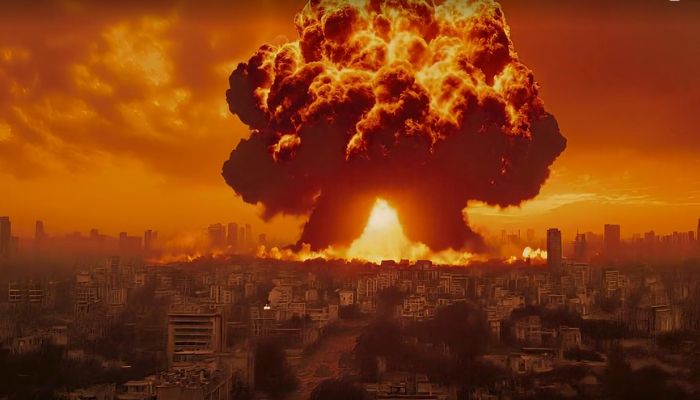
The graphical representation, while narrating the background of a cyber attack on a nuclear plant, showed that if the attack was not stopped, it could have led to a full-blown nuclear explosion resulting in thousands, if not lakhs, of deaths.
However, there is a fundamental scientific mistake. A civilian reactor cannot explode like a nuclear bomb. Worst case scenario, it can lead to a meltdown like the one that happened in Chernobyl.
What actually happens in real nuclear plants
When a nuclear power plant loses its cooling system, the immediate danger is not a bomb-like explosion but a meltdown. After reactor shutdown, fuel rods still generate decay heat, around 5–6% of full power. Without cooling system to absorb it, fuel cladding overheats and reacts with steam. It produces hydrogen, and eventually melts into a molten mass known as “corium”.
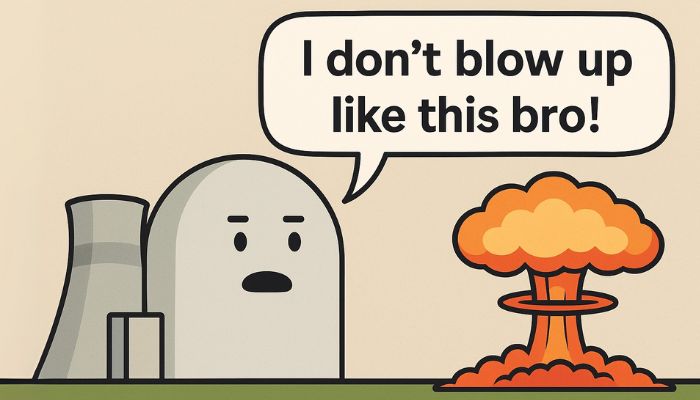
Even in severe incidents like Chernobyl or Fukushima, the worst outcomes were meltdowns and not nuclear detonation. Research reactors are engineered to automatically shut down under rising temperature due to their negative temperature coefficient, making runaway fission impossible and ensuring there is no chance of a nuclear blast. In case of Chernobyl, the molten mass formed the infamous “elephant’s foot”, a layman’s term used for toxic mass of corium.
Modern reactors are ‘Chernobyl-proof’
Notably, the modern reactors built today are effectively “Chernobyl-proof”. They incorporate multiple failsafe systems to prevent the kind of chain of events that led to the 1986 disaster. Contemporary designs feature passive cooling systems, automatic shutdown mechanisms, double containment structures, and control rods that drop into place without human intervention during emergencies.
These systems are engineered to function even during power loss or operator error. The RBMK reactor at Chernobyl had design flaws and lacked a containment dome, whereas modern reactors prioritise containment, redundancy, and self-regulation, making large-scale meltdowns exceedingly rare.
The science the ‘top scientist’ should’ve known
The character who claimed cooling system failure could lead to a nuclear explosion is telling it to Dr Bhargav, who is an expert in the series, but the writer clearly skipped the basics. It is hard to believe that Dr Bhargav, who has worked with Indian Government’s experts on nuclear plants do not know that such incidents cannot lead to nuclear blasts.
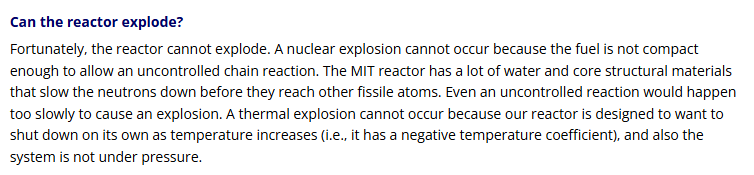
Civilian reactors use low-enriched uranium, typically under 5% U-235, which is far from the 90%+ enrichment required for a nuclear weapon. Moreover, the reactor’s design deliberately spreads fuel and inserts control materials so that prompt criticality, the rapid neutron-driven chain reaction seen in bombs, cannot occur. Without the unique, compact geometry and high purity of bomb-grade assemblies, the core simply won’t explode. Even MIT’s reactor FAQ bluntly states, “Even an uncontrolled reaction would happen too slowly to cause an explosion”.
Real-world implications of such disinformation
It may be argued that the narrative was set to give the series a dramatic feel. However, the idea that a nuclear plant might explode like a bomb fuels public fear and deepens mistrust in nuclear energy, this, at a time when the Government of India is pushing for the establishment of nuclear power for electricity in every state.
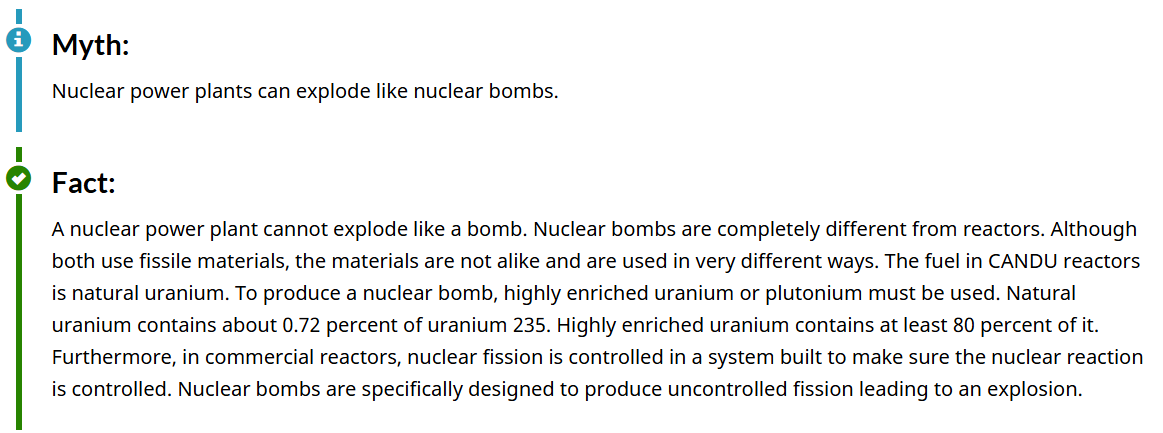
This artificial scare warps public policy. Decisions around clean energy, climate change, and energy security get affected by emotion as much as facts. The Canadian Nuclear Safety Commission even maintains a “mythbusters” on its website confirming that reactors are not bombs.
Not to forget, the scuffle between Western powers like the US and Iran over nuclear energy is because Iran is enriching uranium to the level where it can create nuclear bombs, and it is no longer limited to the clean energy aspect of nuclear power. Iran earlier had only 3–5% enrichment, which is enough for a nuclear power plant, but it now has 60% enrichment, which is much closer to the 90% required for a nuclear bomb.
Conclusion – Thrill doesn’t justify scientific ignorance
While Special Ops 2 delivered high tension and cinematic flair, it fails its audience by blurring the line between nuclear meltdown and nuclear detonation. Real reactors are complex, heavily engineered systems built with multiple layers of safety. They are not ticking time bombs. It would have taken minimal research to get the science right while preserving drama. Instead, the makers chose a shortcut and invoked scare tactics, not facts. This cannot be deemed as storytelling. It is misinformation masked as thrill that can very easily take the shape of disinformation.
It is worth asking, if global hits like The Big Bang Theory and Chernobyl hire real scientific consultants, why cannot a RAW-inspired series tap a physics intern? It is a fact that a meltdown is scary and can render an area unliveable for decades. But a nuclear blast? That’s too much.


